California Sets Precedent: No More Hiding Behind Bogus PEOs – Workers Rights Compliance, Precedent Set: Employers Can’t Outsource Accountability – Workers Rights Compliance, DLSE Draws the Line: Fraudulent PEO Coverage Doesn’t Cut It – Workers Rights Compliance, New Legal Benchmark: PEO Schemes Won’t Shield Employers – Workers Rights Compliance, Garcias Pallets Case Becomes First-Ever DLSE Precedent – Workers Rights Compliance, Historic First: California Labor Commissioner Issues Precedent Ruling on PEO Fraud – Workers Rights Compliance, DLSE Makes It Official—No Valid Workers’ Comp, No Excuses – Workers Rights Compliance, Real Coverage for Real Workers: Fraud Won’t Fly in California – Workers Rights Compliance, Workers Deserve Real Protection—Bogus Insurance Doesn’t Count – Workers Rights Compliance, Precedent Protects Workers from Fake Insurance Scams – Workers Rights Compliance, 50+ Workers, No Coverage—California Says Never Again – Workers Rights Compliance, Labor Law Victory: Worker Safety Over Corporate Shell Games – Workers Rights Compliance, $1.3M Lesson: Ignorance of the Law Is No Defense – Workers Rights Compliance, Certificates Can Lie—Employers Are Still on the Hook – Workers Rights Compliance, Fraudulent Coverage = Real Fines – Workers Rights Compliance, The Bill Comes Due: $1.3M in Fines for Workers' Comp Evasion – Workers Rights Compliance, Subcontracting Liability Doesn’t Mean Subcontracting Responsibility – Workers Rights Compliance, A Win for Honest PEOs, a Loss for Cheaters – Workers Rights Compliance, Leveling the Field: Fraudulent Operators Face Real Consequences – Workers Rights Compliance, PEO Accountability Is Here—Honest Brokers Applaud – Workers Rights Compliance, No More Free Ride for Fraudulent PEOs – Workers Rights Compliance, Justice for Legitimate Employers—Fraudsters Pay the Price – Workers Rights Compliance, From CompOne to CompassPilot—The Shell Game Ends Here – Workers Rights Compliance, How a Bogus Insurance Scheme Cost One Company $1.3 Million – Workers Rights Compliance, Unmasking the PEO Scam: California Cracks Down – Workers Rights Compliance, One Employer, Three PEOs, Zero Coverage—The Precedent Tells All – Workers Rights Compliance, DLSE Precedent Highlights Deep Industry Scams – Workers Rights Compliance, Fake Insurance Certificates Are Not a Defense—They’re a Liability – Workers Rights Compliance, Employers: Verify Your Workers’ Comp Coverage—Before the State Does – Workers Rights Compliance, Don’t Get Burned—Understand Joint Employer Liability Today – Workers Rights Compliance, Legit PEO? Or Just a New Name for the Same Old Scam? – Workers Rights Compliance, Your PEO’s Certificate Might Be Fake—Know the Signs – Workers Rights Compliance, Before You Contract Labor, Read This Precedent Decision – Workers Rights Compliance.
The Automation Avalanche: Is AI Coming for Your Job? (And What to Do About It)
The rise of artificial intelligence and automation is no longer science fiction—it’s happening right now, and it’s reshaping the workforce at an unprecedented pace. From self-checkout kiosks to AI-powered customer service bots, companies are rapidly replacing human labor with machines. The question isn’t if automation will disrupt your career—it’s when.
The AI Repocalypse: Job Displacement on a Massive Scale
Experts warn that we’re on the brink of an #AutomationAvalanche, where AI and robotics could displace millions of workers across industries. White-collar jobs once considered “safe”—like data analysis, legal research, and even creative writing—are now at risk. The #FutureOfWork is looking increasingly automated, leaving many to wonder: Will there be any jobs left for humans?
Silent Layoffs and Economic Collapse
Unlike mass layoffs that make headlines, AI-driven job losses are happening quietly. Companies are opting for #SilentLayoffs, replacing employees with algorithms without fanfare. The result? A growing #AIInequality gap, where tech elites thrive while the middle class crumbles. If this trend continues, we could face an #EconomicCollapse fueled by mass unemployment and dwindling consumer spending.
Reskill or Die: Adapting to the AI Era
The harsh reality is that #ReskillOrDie is the new mantra. Workers must pivot into roles that AI can’t easily replicate—jobs requiring emotional intelligence, creativity, and complex problem-solving. Meanwhile, calls for #UBI (Universal Basic Income) grow louder as a potential safety net for those left behind.
The Ethical Dilemma: People Over Profit
As corporations chase efficiency at all costs, the #TechEthics debate intensifies. Should we prioritize #HumanCentricAI, or are we heading toward a #RobotTakeover? The #AICrisis isn’t just about lost jobs—it’s about mental health crises, societal instability, and the very fabric of human dignity.
Fighting Back: A Human-Centric Future
The solution isn’t to reject AI but to demand policies that protect workers. We need:
The #GreatDisplacement is already underway. The choice we face now is simple: Will we let automation crush us, or will we rise to the challenge and build a future where technology serves humanity—not the other way around?
What’s your take? Are you worried about AI taking your job? Drop a comment below or join the conversation using the hashtags above!
Upon doing the deposition of Joeffery Long Wells Fargo I was amazed that they could be so blatant as against the California Homeowners Bill of Rights but then again it is Wells Fargo
Getting the 50,000 or three times the actual damages
(b) After a trustee’s deed upon sale has been recorded, a mortgage
servicer, mortgagee, trustee, beneficiary, or authorized agent shall
be liable to a borrower for actual economic damages pursuant to
Section 3281, resulting from a material violation of Section 2923.55,
2923.6, 2923.7, 2924.9, 2924.10, 2924.11, or 2924.17 by that
mortgage servicer, mortgagee, trustee, beneficiary, or authorized
agent where the violation was not corrected and remedied prior to the
recordation of the trustee’s deed upon sale. If the court finds that
the material violation was intentional or reckless, or resulted from
willful misconduct by a mortgage servicer, mortgagee, trustee,
beneficiary, or authorized agent, the court may award the borrower
the greater of treble actual damages or statutory damages of fifty
thousand dollars ($50,000).
2923.55. (a) A mortgage servicer, mortgagee, trustee, beneficiary,
or authorized agent may not record a notice of default pursuant to
Section 2924 until all of the following:
(1) The mortgage servicer has satisfied the requirements of
paragraph (1) of subdivision (b).
(2) Either 30 days after initial contact is made as required by
paragraph (2) of subdivision (b) or 30 days after satisfying the due
diligence requirements as described in subdivision (f).
(3) The mortgage servicer complies with subdivision (c) of Section
2923.6, if the borrower has provided a complete application as
defined in subdivision (h) of Section 2923.6.
(b) (1) As specified in subdivision (a), a mortgage servicer shall
send the following information in writing to the borrower:
(A) A statement that if the borrower is a servicemember or a
dependent of a servicemember, he or she may be entitled to certain
protections under the federal Servicemembers Civil Relief Act (50
U.S.C. Appen. Sec. 501 et seq.) regarding the servicemember’s
interest rate and the risk of foreclosure, and counseling for covered
servicemembers that is available at agencies such as Military
OneSource and Armed Forces Legal Assistance.
(B) A statement that the borrower may request the following:
(i) A copy of the borrower’s promissory note or other evidence of
indebtedness.
(ii) A copy of the borrower’s deed of trust or mortgage.
(iii) A copy of any assignment, if applicable, of the borrower’s
mortgage or deed of trust required to demonstrate the right of the
mortgage servicer to foreclose.
(iv) A copy of the borrower’s payment history since the borrower
was last less than 60 days past due.
(2) A mortgage servicer shall contact the borrower in person or by
telephone in order to assess the borrower’s financial situation and
explore options for the borrower to avoid foreclosure. During the
initial contact, the mortgage servicer shall advise the borrower that
he or she has the right to request a subsequent meeting and, if
requested, the mortgage servicer shall schedule the meeting to occur
within 14 days. The assessment of the borrower’s financial situation
and discussion of options may occur during the first contact, or at
the subsequent meeting scheduled for that purpose. In either case,
the borrower shall be provided the toll-free telephone number made
available by the United States Department of Housing and Urban
Development (HUD) to find a HUD-certified housing counseling agency.
Any meeting may occur telephonically.
(c) A notice of default recorded pursuant to Section 2924 shall
include a declaration that the mortgage servicer has contacted the
borrower, has tried with due diligence to contact the borrower as
required by this section, or that no contact was required because the
individual did not meet the definition of “borrower” pursuant to
subdivision (c) of Section 2920.5.
(d) A mortgage servicer’s loss mitigation personnel may
participate by telephone during any contact required by this section.
(e) A borrower may designate, with consent given in writing, a
HUD-certified housing counseling agency, attorney, or other adviser
to discuss with the mortgage servicer, on the borrower’s behalf, the
borrower’s financial situation and options for the borrower to avoid
foreclosure. That contact made at the direction of the borrower shall
satisfy the contact requirements of paragraph (2) of subdivision
(b). Any foreclosure prevention alternative offered at the meeting by
the mortgage servicer is subject to approval by the borrower.
(f) A notice of default may be recorded pursuant to Section 2924
when a mortgage servicer has not contacted a borrower as required by
paragraph (2) of subdivision (b), provided that the failure to
contact the borrower occurred despite the due diligence of the
mortgage servicer. For purposes of this section, “due diligence”
shall require and mean all of the following:
(1) A mortgage servicer shall first attempt to contact a borrower
by sending a first-class letter that includes the toll-free telephone
number made available by HUD to find a HUD-certified housing
counseling agency.
(2) (A) After the letter has been sent, the mortgage servicer
shall attempt to contact the borrower by telephone at least three
times at different hours and on different days. Telephone calls shall
be made to the primary telephone number on file.
(B) A mortgage servicer may attempt to contact a borrower using an
automated system to dial borrowers, provided that, if the telephone
call is answered, the call is connected to a live representative of
the mortgage servicer.
(C) A mortgage servicer satisfies the telephone contact
requirements of this paragraph if it determines, after attempting
contact pursuant to this paragraph, that the borrower’s primary
telephone number and secondary telephone number or numbers on file,
if any, have been disconnected.
(3) If the borrower does not respond within two weeks after the
telephone call requirements of paragraph (2) have been satisfied, the
mortgage servicer shall then send a certified letter, with return
receipt requested, that includes the toll-free telephone number made
available by HUD to find a HUD-certified housing counseling agency.
(4) The mortgage servicer shall provide a means for the borrower
to contact it in a timely manner, including a toll-free telephone
number that will provide access to a live representative during
business hours.
(5) The mortgage servicer has posted a prominent link on the
homepage of its Internet Web site, if any, to the following
information:
(A) Options that may be available to borrowers who are unable to
afford their mortgage payments and who wish to avoid foreclosure, and
instructions to borrowers advising them on steps to take to explore
those options.
(B) A list of financial documents borrowers should collect and be
prepared to present to the mortgage servicer when discussing options
for avoiding foreclosure.
(C) A toll-free telephone number for borrowers who wish to discuss
options for avoiding foreclosure with their mortgage servicer.
(D) The toll-free telephone number made available by HUD to find a
HUD-certified housing counseling agency.
(g) This section shall not apply to entities described in
subdivision (b) of Section 2924.18.
(h) This section shall apply only to mortgages or deeds of trust
described in Section 2924.15.
(i) This section shall remain in effect only until January 1,
2018, and as of that date is repealed, unless a later enacted
statute, that is enacted before January 1, 2018, deletes or extends
that date.
2923.6. (a) The Legislature finds and declares that any duty that
mortgage servicers may have to maximize net present value under their
pooling and servicing agreements is owed to all parties in a loan
pool, or to all investors under a pooling and servicing agreement,
not to any particular party in the loan pool or investor under a
pooling and servicing agreement, and that a mortgage servicer acts in
the best interests of all parties to the loan pool or investors in
the pooling and servicing agreement if it agrees to or implements a
loan modification or workout plan for which both of the following
apply:
(1) The loan is in payment default, or payment default is
reasonably foreseeable.
(2) Anticipated recovery under the loan modification or workout
plan exceeds the anticipated recovery through foreclosure on a net
present value basis.
(b) It is the intent of the Legislature that the mortgage servicer
offer the borrower a loan modification or workout plan if such a
modification or plan is consistent with its contractual or other
authority.
(c) If a borrower submits a complete application for a first lien
loan modification offered by, or through, the borrower’s mortgage
servicer, a mortgage servicer, mortgagee, trustee, beneficiary, or
authorized agent shall not record a notice of default or notice of
sale, or conduct a trustee’s sale, while the complete first lien loan
modification application is pending. A mortgage servicer, mortgagee,
trustee, beneficiary, or authorized agent shall not record a notice
of default or notice of sale or conduct a trustee’s sale until any of
the following occurs:
(1) The mortgage servicer makes a written determination that the
borrower is not eligible for a first lien loan modification, and any
appeal period pursuant to subdivision (d) has expired.
(2) The borrower does not accept an offered first lien loan
modification within 14 days of the offer.
(3) The borrower accepts a written first lien loan modification,
but defaults on, or otherwise breaches the borrower’s obligations
under, the first lien loan modification.
(d) If the borrower’s application for a first lien loan
modification is denied, the borrower shall have at least 30 days from
the date of the written denial to appeal the denial and to provide
evidence that the mortgage servicer’s determination was in error.
(e) If the borrower’s application for a first lien loan
modification is denied, the mortgage servicer, mortgagee, trustee,
beneficiary, or authorized agent shall not record a notice of default
or, if a notice of default has already been recorded, record a
notice of sale or conduct a trustee’s sale until the later of:
(1) Thirty-one days after the borrower is notified in writing of
the denial.
(2) If the borrower appeals the denial pursuant to subdivision
(d), the later of 15 days after the denial of the appeal or 14 days
after a first lien loan modification is offered after appeal but
declined by the borrower, or, if a first lien loan modification is
offered and accepted after appeal, the date on which the borrower
fails to timely submit the first payment or otherwise breaches the
terms of the offer.
(f) Following the denial of a first lien loan modification
application, the mortgage servicer shall send a written notice to the
borrower identifying the reasons for denial, including the
following:
(1) The amount of time from the date of the denial letter in which
the borrower may request an appeal of the denial of the first lien
loan modification and instructions regarding how to appeal the
denial.
(2) If the denial was based on investor disallowance, the specific
reasons for the investor disallowance.
(3) If the denial is the result of a net present value
calculation, the monthly gross income and property value used to
calculate the net present value and a statement that the borrower may
obtain all of the inputs used in the net present value calculation
upon written request to the mortgage servicer.
(4) If applicable, a finding that the borrower was previously
offered a first lien loan modification and failed to successfully
make payments under the terms of the modified loan.
(5) If applicable, a description of other foreclosure prevention
alternatives for which the borrower may be eligible, and a list of
the steps the borrower must take in order to be considered for those
options. If the mortgage servicer has already approved the borrower
for another foreclosure prevention alternative, information necessary
to complete the foreclosure prevention alternative.
(g) In order to minimize the risk of borrowers submitting multiple
applications for first lien loan modifications for the purpose of
delay, the mortgage servicer shall not be obligated to evaluate
applications from borrowers who have already been evaluated or
afforded a fair opportunity to be evaluated for a first lien loan
modification prior to January 1, 2013, or who have been evaluated or
afforded a fair opportunity to be evaluated consistent with the
requirements of this section, unless there has been a material change
in the borrower’s financial circumstances since the date of the
borrower’s previous application and that change is documented by the
borrower and submitted to the mortgage servicer.
(h) For purposes of this section, an application shall be deemed
“complete” when a borrower has supplied the mortgage servicer with
all documents required by the mortgage servicer within the reasonable
timeframes specified by the mortgage servicer.
(i) Subdivisions (c) to (h), inclusive, shall not apply to
entities described in subdivision (b) of Section 2924.18.
(j) This section shall apply only to mortgages or deeds of trust
described in Section 2924.15.
(k) This section shall remain in effect only until January 1,
2018, and as of that date is repealed, unless a later enacted
statute, that is enacted before January 1, 2018, deletes or extends
that date.
2923.7. (a) Upon request from a borrower who requests a foreclosure
prevention alternative, the mortgage servicer shall promptly
establish a single point of contact and provide to the borrower one
or more direct means of communication with the single point of
contact.
(b) The single point of contact shall be responsible for doing all
of the following:
(1) Communicating the process by which a borrower may apply for an
available foreclosure prevention alternative and the deadline for
any required submissions to be considered for these options.
(2) Coordinating receipt of all documents associated with
available foreclosure prevention alternatives and notifying the
borrower of any missing documents necessary to complete the
application.
(3) Having access to current information and personnel sufficient
to timely, accurately, and adequately inform the borrower of the
current status of the foreclosure prevention alternative.
(4) Ensuring that a borrower is considered for all foreclosure
prevention alternatives offered by, or through, the mortgage
servicer, if any.
(5) Having access to individuals with the ability and authority to
stop foreclosure proceedings when necessary.
(c) The single point of contact shall remain assigned to the
borrower’s account until the mortgage servicer determines that all
loss mitigation options offered by, or through, the mortgage servicer
have been exhausted or the borrower’s account becomes current.
(d) The mortgage servicer shall ensure that a single point of
contact refers and transfers a borrower to an appropriate supervisor
upon request of the borrower, if the single point of contact has a
supervisor.
(e) For purposes of this section, “single point of contact” means
an individual or team of personnel each of whom has the ability and
authority to perform the responsibilities described in subdivisions
(b) to (d), inclusive. The mortgage servicer shall ensure that each
member of the team is knowledgeable about the borrower’s situation
and current status in the alternatives to foreclosure process.
(f) This section shall apply only to mortgages or deeds of trust
described in Section 2924.15.
(g) (1) This section shall not apply to a depository institution
chartered under state or federal law, a person licensed pursuant to
Division 9 (commencing with Section 22000) or Division 20 (commencing
with Section 50000) of the Financial Code, or a person licensed
pursuant to Part 1 (commencing with Section 10000) of Division 4 of
the Business and Professions Code, that, during its immediately
preceding annual reporting period, as established with its primary
regulator, foreclosed on 175 or fewer residential real properties,
containing no more than four dwelling units, that are located in
California.
(2) Within three months after the close of any calendar year or
annual reporting period as established with its primary regulator
during which an entity or person described in paragraph (1) exceeds
the threshold of 175 specified in paragraph (1), that entity shall
notify its primary regulator, in a manner acceptable to its primary
regulator, and any mortgagor or trustor who is delinquent on a
residential mortgage loan serviced by that entity of the date on
which that entity will be subject to this section, which date shall
be the first day of the first month that is six months after the
close of the calendar year or annual reporting period during which
that entity exceeded the threshold.
2924.9. (a) Unless a borrower has previously exhausted the first
lien loan modification process offered by, or through, his or her
mortgage servicer described in Section 2923.6, within five business
days after recording a notice of default pursuant to Section 2924, a
mortgage servicer that offers one or more foreclosure prevention
alternatives shall send a written communication to the borrower that
includes all of the following information:
(1) That the borrower may be evaluated for a foreclosure
prevention alternative or, if applicable, foreclosure prevention
alternatives.
(2) Whether an application is required to be submitted by the
borrower in order to be considered for a foreclosure prevention
alternative.
(3) The means and process by which a borrower may obtain an
application for a foreclosure prevention alternative.
(b) This section shall not apply to entities described in
subdivision (b) of Section 2924.18.
(c) This section shall apply only to mortgages or deeds of trust
described in Section 2924.15.
(d) This section shall remain in effect only until January 1,
2018, and as of that date is repealed, unless a later enacted
statute, that is enacted before January 1, 2018, deletes or extends
that date.
2924.10. (a) When a borrower submits a complete first lien
modification application or any document in connection with a first
lien modification application, the mortgage servicer shall provide
written acknowledgment of the receipt of the documentation within
five business days of receipt. In its initial acknowledgment of
receipt of the loan modification application, the mortgage servicer
shall include the following information:
(1) A description of the loan modification process, including an
estimate of when a decision on the loan modification will be made
after a complete application has been submitted by the borrower and
the length of time the borrower will have to consider an offer of a
loan modification or other foreclosure prevention alternative.
(2) Any deadlines, including deadlines to submit missing
documentation, that would affect the processing of a first lien loan
modification application.
(3) Any expiration dates for submitted documents.
(4) Any deficiency in the borrower’s first lien loan modification
application.
(b) For purposes of this section, a borrower’s first lien loan
modification application shall be deemed to be “complete” when a
borrower has supplied the mortgage servicer with all documents
required by the mortgage servicer within the reasonable timeframes
specified by the mortgage servicer.
(c) This section shall not apply to entities described in
subdivision (b) of Section 2924.18.
(d) This section shall apply only to mortgages or deeds of trust
described in Section 2924.15.
(e) This section shall remain in effect only until January 1,
2018, and as of that date is repealed, unless a later enacted
statute, that is enacted before January 1, 2018, deletes or extends
that date.
2924.11. (a) If a foreclosure prevention alternative is approved in
writing prior to the recordation of a notice of default, a mortgage
servicer, mortgagee, trustee, beneficiary, or authorized agent shall
not record a notice of default under either of the following
circumstances:
(1) The borrower is in compliance with the terms of a written
trial or permanent loan modification, forbearance, or repayment plan.
(2) A foreclosure prevention alternative has been approved in
writing by all parties, including, for example, the first lien
investor, junior lienholder, and mortgage insurer, as applicable, and
proof of funds or financing has been provided to the servicer.
(b) If a foreclosure prevention alternative is approved in writing
after the recordation of a notice of default, a mortgage servicer,
mortgagee, trustee, beneficiary, or authorized agent shall not record
a notice of sale or conduct a trustee’s sale under either of the
following circumstances:
(1) The borrower is in compliance with the terms of a written
trial or permanent loan modification, forbearance, or repayment plan.
(2) A foreclosure prevention alternative has been approved in
writing by all parties, including, for example, the first lien
investor, junior lienholder, and mortgage insurer, as applicable, and
proof of funds or financing has been provided to the servicer.
(c) When a borrower accepts an offered first lien loan
modification or other foreclosure prevention alternative, the
mortgage servicer shall provide the borrower with a copy of the fully
executed loan modification agreement or agreement evidencing the
foreclosure prevention alternative following receipt of the executed
copy from the borrower.
(d) A mortgagee, beneficiary, or authorized agent shall record a
rescission of a notice of default or cancel a pending trustee’s sale,
if applicable, upon the borrower executing a permanent foreclosure
prevention alternative. In the case of a short sale, the rescission
or cancellation of the pending trustee’s sale shall occur when the
short sale has been approved by all parties and proof of funds or
financing has been provided to the mortgagee, beneficiary, or
authorized agent.
(e) The mortgage servicer shall not charge any application,
processing, or other fee for a first lien loan modification or other
foreclosure prevention alternative.
(f) The mortgage servicer shall not collect any late fees for
periods during which a complete first lien loan modification
application is under consideration or a denial is being appealed, the
borrower is making timely modification payments, or a foreclosure
prevention alternative is being evaluated or exercised.
(g) If a borrower has been approved in writing for a first lien
loan modification or other foreclosure prevention alternative, and
the servicing of that borrower’s loan is transferred or sold to
another mortgage servicer, the subsequent mortgage servicer shall
continue to honor any previously approved first lien loan
modification or other foreclosure prevention alternative, in
accordance with the provisions of the act that added this section.
(h) This section shall apply only to mortgages or deeds of trust
described in Section 2924.15.
(i) This section shall not apply to entities described in
subdivision (b) of Section 2924.18.
(j) This section shall remain in effect only until January 1,
2018, and as of that date is repealed, unless a later enacted
statute, that is enacted before January 1, 2018, deletes or extends
that date.
2924.17. (a) A declaration recorded pursuant to Section 2923.5 or,
until January 1, 2018, pursuant to Section 2923.55, a notice of
default, notice of sale, assignment of a deed of trust, or
substitution of trustee recorded by or on behalf of a mortgage
servicer in connection with a foreclosure subject to the requirements
of Section 2924, or a declaration or affidavit filed in any court
relative to a foreclosure proceeding shall be accurate and complete
and supported by competent and reliable evidence.
(b) Before recording or filing any of the documents described in
subdivision (a), a mortgage servicer shall ensure that it has
reviewed competent and reliable evidence to substantiate the borrower’
s default and the right to foreclose, including the borrower’s loan
status and loan information.
(c) Until January 1, 2018, any mortgage servicer that engages in
multiple and repeated uncorrected violations of subdivision (b) in
recording documents or filing documents in any court relative to a
foreclosure proceeding shall be liable for a civil penalty of up to
seven thousand five hundred dollars ($7,500) per mortgage or deed of
trust in an action brought by a government entity identified in
Section 17204 of the Business and Professions Code, or in an
administrative proceeding brought by the Department of Business
Oversight or the Bureau of Real Estate against a respective licensee,
in addition to any other remedies available to these entities. This
subdivision shall be inoperative on January 1, 2018.
The surprising decision by regulators to scrap a massive and expensive foreclosure review program in favor of a $10 billion settlement with 14 banks — reported by The New York Times Sunday night — came after a year of mounting concerns about the independence and effectiveness of the controversial program.
The program, known as the Independent Foreclosure Review, was supposed to give homeowners who believe that their bank made a mistake in handling their foreclosure an opportunity for a neutral third party to review the claim. It’s not clear what factors led banking regulators to abandon the program in favor of a settlement, but the final straw may have been a pending report by the Government Accountability Office, a nonpartisan investigative arm of Congress, which was investigating the review program.
Rep. Brad Miller, a North Carolina Democrat, told The Huffington Post that the report, which has not been released, was “critical” and that the Office of the Comptroller of the Currency, which administers the review, was aware of its findings. Miller said that that one problem the GAO was likely to highlight was an “unacceptably high” error rate of 11 percent in a sampling of bank loan files.
The sample files were chosen at random by the banks from their broader pool of foreclosed homeowners, who had not necessarily applied for relief. The data suggests that of the 4 million families who lost their homes to foreclosure since the housing crash, more than 400,000 had some bank-caused problem in their loan file. It also suggests that many thousands of those who could have applied for relief didn’t — because they weren’t aware of the review, or weren’t aware that their bank had made a mistake. Some of these mistakes pushed homeowners into foreclosure who otherwise could have afforded to keep their homes.
Miller said the news that a settlement to replace the review was in the works caught him by surprise, and stressed that he had no way of knowing whether the impending GAO report had triggered the decision.
It’s not clear what will happen to the 250,000 homeowners who have already applied to the Independent Foreclosure Review for relief. The Times, citing people familiar with the negotiations, said that a deal between the banks and banking regulators, led by the Office of the Comptroller of the Currency, could be reached by the end of the week. It wasn’t clear how that money would be distributed or how many current and former homeowners who lost their homes to foreclosure — or who were hit with an unnecessary fee — might qualify.
Bryan Hubbard, a spokesman for the OCC, which administers the program, declined to comment on the Times’ story. Hubbard told HuffPost, “The Office of the Comptroller of the Currency is committed to ensuring the Independent Foreclosure Review proceeds efficiently and to ensuring harmed borrowers are compensated as quickly as possible.”
Since the housing market crashed in 2007, thousands of foreclosed homeowners have complained that their mortgage company made a mistake in the management of their home loan, such as foreclosing on someone making payments on a loan modification plan. The Independent Foreclosure Review emerged from a legal agreement in April 2011 between 14 mortgage companies and bank regulators over these abusive “servicing” practices. It was supposed to give homeowners an opportunity to have an unbiased third party review their foreclosure and determine whether they might qualify for a cash payout of up to $125,000.
The initial response was tepid, at best. Homeowners and advocates complained that the application forms were confusing and that information about what type of compensation they might get was missing. Some told HuffPost that they were so disillusioned by the federal government’s anemic response to widely reported bank errors that they weren’t going to bother to apply.
In one instance, Daniel Casper, an Illinois wedding videographer, applied to the program in January after years of combat with Bank of America over his home loan. As The Huffington Post reported in October, he was initially rejected, because, according to the bank, his mortgage was not in the foreclosure process during the eligible review period. Promontory Financial Group, which Bank of America hired to review his loan, apparently did not double check Bank of America’s analysis against the extensive documentation that Chase submitted. That documentation clearly showed that his loan was eligible for review.
In recent months ProPublica, an investigative nonprofit, has issued a series of damning articles about the Independent Foreclosure Review. The most recent found that supposedly independent third-party reviewers looking over Bank of America loan files were given the “correct” answers in advance by the bank. These reviewers could override the answers, but they weren’t starting from a blank slate.
Banks, if they did not find a “compensable error,” did not have to pay anything, giving them a strong incentive to find no flaws with their own work.
“It was flawed from the start,” Miller said of the review program. “There was an inherent conflict of interest by just about everyone involved.”
Also on HuffPost:
Columbine Shooting Survivor Fighting Foreclosure With Occupy LA’s Help
Facing foreclosure, Perry Laspina of Jacksonville, Florida ended up with a home practically for free after his mortgage lender was shut down by parent company Wells Fargo, <a href=”http://realestate.aol.com/blog/2011/04/14/foreclosure-foul-up-wins-man-a-free-home/” target=”_hplink”>AOL Real Estate reports</a>. Laspina got the home “because of the significant decreased value of the property,” a bank spokesman said.
BofA Forecloses On Building With Own Branch Office
A senior couple in Pasco County, Florida faced foreclosure not for missing payments, <a href=”http://www.huffingtonpost.com/2011/08/22/senior-florida-couple-faces-foreclosure-mortgage-early_n_933147.html” target=”_hplink”>but for making one too early</a>. According to a Bank of America representative, they made themselves ineligible for a mortgage modification under the Home Affordable Modification Program when they did not make their payment in the “month in which it [was] due.”
Foreclosure In ‘World’s Richest Apartment Building’
Mother, Disabled Daughter Forced Out Of Home Even After BofA Modification
Dirma Rodriguez and her disabled daughter<a href=”https://editorial.huffingtonpost.com/entry/?blog_id=2&entry_id=1423883″ target=”_hplink”> were forced to flee their home in minutes</a> after Bank of America sold it to a flipper at a foreclosure auction, even though the bank had already modified her loan. But not all hope is lost; Rodriguez may get her home back after the Occupy Fights Foreclosure movement intervened.
ProPublica: The Independent Foreclosure Review is the government’s main effort to compensate homeowners for harm they suffered at the hands of banks — and, as…
MODESTO — Nearly 50,000 Northern San Joaquin Valley homeowners potentially may be owed compensation for financial losses they incurred because of errors made during foreclosure…
Freddie Mac, the taxpayer-owned mortgage giant, has placed multibillion-dollar bets that pay off if homeowners stay trapped in expensive mortgages with interest rates well above current rates.
Freddie began increasing these bets dramatically in late 2010, the same time that the company was making it harder for homeowners to get out of such high-interest mortgages.
No evidence has emerged that these decisions were coordinated. The company is a key gatekeeper for home loans but says its traders are “walled off” from the officials who have restricted homeowners from taking advantage of historically low interest rates by imposing higher fees and new rules.
Freddie’s charter calls for the company to make home loans more accessible. Its chief executive, Charles Haldeman Jr., recently told Congress that his company is “helping financially strapped families reduce their mortgage costs through refinancing their mortgages.”
But the trades, uncovered for the first time in an investigation by ProPublica and NPR, give Freddie a powerful incentive to do the opposite, highlighting a conflict of interest at the heart of the company. In addition to being an instrument of government policy dedicated to making home loans more accessible, Freddie also has giant investment portfolios and could lose substantial amounts of money if too many borrowers refinance.
“We were actually shocked they did this,” says Scott Simon, who as the head of the giant bond fund PIMCO’s mortgage-backed securities team is one of the world’s biggest mortgage bond traders. “It seemed so out of line with their mission.”
The trades “put them squarely against the homeowner,” he says.
Those homeowners have a lot at stake, too. Many of them could cut their interest payments by thousands of dollars a year.
Freddie Mac, along with its cousin Fannie Mae, was bailed out in 2008 and is now owned by taxpayers. The companies play a pivotal role in the mortgage business because they insure most home loans in the United States, making banks likelier to lend. The companies’ rules determine whether homeowners can get loans and on what terms.
The Federal Housing Finance Agency effectively serves as Freddie’s board of directors and is ultimately responsible for Freddie’s decisions. It is run by acting director Edward DeMarco, who cannot be fired by the president except in extraordinary circumstances.
Freddie and the FHFA repeatedly declined to comment on the specific transactions.
Freddie’s moves to limit refinancing affect not only individual homeowners but the entire economy. An expansive refinancing program could help millions of homeowners, some economists say. Such an effort would “help the economy and put tens of billions of dollars back in consumers’ pockets, the equivalent of a very long-term tax cut,” says real-estate economist Christopher Mayer of the Columbia Business School. “It also is likely to reduce foreclosures and benefit the U.S. government” because Freddie and Fannie, which guarantee most mortgages in the country, would have lower losses over the long run.
Freddie Mac’s trades, while perfectly legal, came during a period when the company was supposed to be reducing its investment portfolio, according to the terms of its government takeover agreement. But these trades escalate the risk of its portfolio, because the securities Freddie has purchased are volatile and hard to sell, mortgage securities experts say.
The financial crisis in 2008 was made worse when Wall Street traders made bets against their customers and the American public. Now, some see similar behavior, only this time by traders at a government-owned company who are using leverage, which increases the potential profits but also the risk of big losses, and other Wall Street stratagems. “More than three years into the government takeover, we have Freddie Mac pursuing highly levered, complicated transactions seemingly with the purpose of trading against homeowners,” says Mayer. “These are the kinds of things that got us into trouble in the first place.”
Freddie Mac is betting against, among others, Jay and Bonnie Silverstein. The Silversteins live in an unfinished development of cul-de-sacs and yellow stucco houses about 20 miles north of Philadelphia, in a house decorated with Bonnie’s orchids and their Rose Bowl parade pin collection. The developer went bankrupt, leaving orange plastic construction fencing around some empty lots. The community clubhouse isn’t complete.
“We’re in financial Jail”
The Silversteins have a 30-year fixed mortgage with an interest rate of 6.875 percent, much higher than the going rate of less than 4 percent. They have borrowed from family members and are living paycheck to paycheck. If they could refinance, they would save about $500 a month. He says the extra money would help them pay back some of their family members and visit their grandchildren more often.
But brokers have told the Silversteins that they cannot refinance, thanks to a Freddie Mac rule.
The Silversteins used to live in a larger house 15 minutes from their current place, in a more upscale development. They had always planned to downsize as they approached retirement. In 2005, they made the mistake of buying their new house before selling the larger one. As the housing market plummeted, they couldn’t sell their old house, so they carried two mortgages for 2½ years, wiping out their savings and 401(k). “It just drained us,” Jay Silverstein says.
Finally, they were advised to try a short sale, in which the house is sold for less than the value of the underlying mortgage. They stopped making payments on the big house for it to go through. The sale was finally completed in 2009.
Such debacles hurt a borrower’s credit rating. But Bonnie has a solid job at a doctor’s office, and Jay has a pension from working for more than two decades for Johnson & Johnson. They say they haven’t missed a payment on their current mortgage.
But the Silversteins haven’t been able to get their refi. Freddie Mac won’t insure a new loan for people who had a short sale in the last two to four years, depending on their financial condition. While the company’s previous rules prohibited some short sales, in October 2010 the company changed its criteria to include all short sales. It is unclear whether the Silverstein mortgage would have been barred from a short sale under the previous Freddie rules.
Short-term, Freddie’s trades benefit from the high-interest mortgage in which the Silversteins are trapped. But in the long run, Freddie could benefit if the Silversteins refinanced to a more affordable loan. Freddie guarantees the Silversteins’ mortgage, so if the couple defaults, Freddie — and the taxpayers who own the company — are on the hook. Getting the Silversteins into a more affordable mortgage would make a default less likely.
If millions of homeowners like the Silversteins default, the economy would be harmed. But if they switch to loans with lower interest rates, they would have more money to spend, which could boost the economy.
“We’re in financial jail,” says Jay, “and we’ve never been there before.”
How Freddie’s investments work
Here’s how Freddie Mac’s trades profit from the Silversteins staying in “financial jail.” The couple’s mortgage is sitting in a big pile of other mortgages, most of which are also guaranteed by Freddie and have high interest rates. Those mortgages underpin securities that get divided into two basic categories.
Anatomy of a Deal
How Freddie Mac structured a deal in which it profited if homeowners stayed trapped in high-interest mortgages.
One portion is backed mainly by principal, pays a low return, and was sold to investors who wanted a safe place to park their money. The other part, the inverse floater, is backed mainly by the interest payments on the mortgages, such as the high rate that the Silversteins pay. So this portion of the security can pay a much higher return, and this is what Freddie retained.
In 2010 and ’11, Freddie purchased $3.4 billion worth of inverse floater portions — their value based mostly on interest payments on $19.5 billion in mortgage-backed securities, according to prospectuses for the deals. They covered tens of thousands of homeowners. Most of the mortgages backing these transactions have high rates of about 6.5 percent to 7 percent, according to the deal documents.
Between late 2010 and early 2011, Freddie Mac’s purchases of inverse floater securities rose dramatically. Freddie purchased inverse floater portions of 29 deals in 2010 and 2011, with 26 bought between October 2010 and April 2011. That compares with seven for all of 2009 and five in 2008.
In these transactions, Freddie has sold off most of the principal, but it hasn’t reduced its risk.
First, if borrowers default, Freddie pays the entire value of the mortgages underpinning the securities, because it insures the loans.
It’s also a big problem if people like the Silversteins refinance their mortgages. That’s because a refi is a new loan; the borrower pays off the first loan early, stopping the interest payments. Since the security Freddie owns is backed mainly by those interest payments, Freddie loses.
And these inverse floaters burden Freddie with entirely new risks. With these deals, Freddie has taken mortgage-backed securities that are easy to sell and traded them for ones that are harder and possibly more expensive to offload, according to mortgage market experts.
The inverse floaters carry another risk. Freddie gets paid the difference between the high mortgages rates, such as the Silversteins are paying, and a key global interest rate that right now is very low. If that rate rises, Freddie’s profits will fall.
It is unclear what kinds of hedging, if any, Freddie has done to offset its risks.
At the end of 2011, Freddie’s portfolio of mortgages was just over $663 billion, down more than 6 percent from the previous year. But that $43 billion drop in the portfolio overstates the risk reduction, because the company retained risk through the inverse floaters. The company is well below the cap of $729 billion required by its government takeover agreement.
How Freddie tightened credit
Restricting credit for people who have done short sales isn’t the only way that Freddie Mac and Fannie Mae have tightened their lending criteria in the wake of the financial crisis, making it harder for borrowers to get housing loans.
Some tightening is justified because, in the years leading up to the financial crisis, Freddie and Fannie were too willing to insure mortgages taken out by people who couldn’t afford them.
In a statement, Freddie contends it is “actively supporting efforts for borrowers to realize the benefits of refinancing their mortgages to lower rates.”
The company said in a statement: “During the first three quarters of 2011, we refinanced more than $170 billion in mortgages, helping nearly 835,000 borrowers save an average of $2,500 in interest payments during the next year.” As part of that effort, the company is participating in an Obama administration plan, called the Home Affordable Refinance Program, or HARP. But critics say HARP could be reaching millions more people if Fannie and Freddie implemented the program more effectively.
Indeed, just as it was escalating its inverse floater deals, it was also introducing new fees on borrowers, including those wanting to refinance. During Thanksgiving week in 2010, Freddie quietly announced that it was raising charges, called post-settlement delivery fees.
In a recent white paper on remedies for the stalled housing market, the Federal Reserve criticized Fannie and Freddie for the fees they have charged for refinancing. Such fees are “another possible reason for low rates of refinancing” and are “difficult to justify,” the Fed wrote.
A former Freddie employee, who spoke on condition he not be named, was even blunter: “Generally, it makes no sense whatsoever” for Freddie “to restrict refinancing” from expensive loans to ones borrowers can more easily pay, since the company remains on the hook if homeowners default.
In November, the FHFA announced that Fannie and Freddie were eliminating or reducing some fees. The Fed, however, said that “more might be done.”
The regulator as owner
The trades raise questions about the FHFA’s oversight of Fannie and Freddie. But the FHFA is not just a regulator. With the two companies in government conservatorship, the FHFA now plays the role of their board of directors and shareholders, responsible for the companies’ major decisions.
Under acting director DeMarco, the FHFA has emphasized that its main goal is to limit taxpayer losses by managing the two companies’ giant investment portfolios to make profits. To cover their previous losses and ongoing operations, Fannie and Freddie already had received $169 billion from taxpayers through the third quarter of last year.
The FHFA has frustrated the administration because the agency has made preserving the value of the companies’ investment portfolios a priority over helping homeowners in expensive mortgages. In 2010, President Barack Obama nominated a permanent replacement for acting director DeMarco, but Republicans in Congress blocked him. Obama has not nominated anyone else to replace DeMarco.
Even though Freddie is a ward of the state, top executives are highly compensated. Peter Federico, who’s in charge of the company’s investment portfolio, made $2.5 million in 2010, and he had target compensation of $2.6 million for last year, when most of these leveraged investments were made.
One of Federico’s responsibilities — tied to his bonuses — is to “support and provide liquidity and stability in the mortgage market,” according to Freddie’s annual filing with the Securities and Exchange Commission. Mortgage experts contend that the inverse floater trades don’t further that goal.
ProPublica and NPR made numerous attempts to reach Federico. A woman who answered his home phone said he declined to comment.
The FHFA knew about the trades before ProPublica and NPR approached the regulatory agency about them, according to an FHFA official. The FHFA has the power to approve and disapprove trades, though it doesn’t involve itself in day-to-day decisions. The official declined to comment on whether the FHFA knew about them as Freddie was conducting them or whether the FHFA had explicitly approved them.
It’s time for me to have an adult conversation with the experienced practicing attorneys in this country. Other grown-ups are welcome to sit in as well, but it’s time for children to be in bed or occupied elsewhere, okay?
If there’s no money to be made solving something… no profit incentive… then for the most part, we don’t quite have a handle on to solving it. For example, we’re not very good at cleaning up our oceans in general, and if there weren’t money to be made cleaning up oceans after oil spills, my guess would be that we wouldn’t be very good at doing that either.
To-date, however, BP has reportedly spent $21 billion cleaning up the Gulf of Mexico since its last mega-disaster, and guess what? The Gulf of Mexico is pretty clean again… just two years later! I remember hearing environmentalists predict that it could take 100 years to clean up the Gulf after the Deepwater Horizon catastrophe. I guess they were underestimating just how much solution $21 billion can often buy.
Well, today we have a mammoth size foreclosure problem in this country, and it’s being talked about like it’s damn near an unsolvable problem… as if solving it would require determining the chemical origins of life, or figuring out whether black holes really do exist in space.
The foreclosure crisis, thank goodness, is not a black hole-type problem as many would have us believe. It is a problem that, political constraints notwithstanding, exists at the juncture of economics and the rule of law. In other words… it’s an oil spill… perhaps the worst oil spill of which the world has ever conceived… the Exxon Valdez meets Deepwater Horizon x 100, if you will… but it’s still just an oil spill.
It’s also important to note that as an economics problem alone, the foreclosure crisis is not a particularly challenging one to solve. Some would rush to remind me that any proposed solution would be rife with “moral hazard,” and while that may be true, it doesn’t make the problem insoluble, by any means.
The elephant in the room is that what we’re facing in this country today is not just a foreclosure crisis, what we’re dealing with with is much better described as a FRAUDclosure crisis.
A couple of years ago, many would have said that my use of the word “fraud” before “closure,” is just hyperbole. Today, however, anyone voicing that sort of opinion is selling something. Even a cursory review of last year’s scathing “consent orders,” that federal regulators issued after months spent investigating mortgage servicers… or a quick perusal of the complaints filed against the servicers by attorneys general in Massachusetts, Nevada, Maryland, or Arizona… or by reading any number of published court decisions favoring homeowners… and one can only conclude that use of the word “fraud” is, if anything, understatement.
Additionally, this past year has been a turning point for the general public as far as FRAUDclosures are concerned. Television’s most venerable news magazine, “60 Minutes,” along with newspaper-of-record, “The New York Times,” joined a long list of others documenting the many ways that banks and mortgage servicers are routinely breaking numerous laws in order to take advantage of homeowners in foreclosure. It’s now widely understood to be something that’s occurring all over the country, and even though the banking industry continues to try to dismiss publicized instances as insignificant dalliances or “isolated incidents,” their sheer number has made such attempts laughable. And the levels of wholesale anger and dissatisfaction with government felt among the populace are both palpable and rising fast.
Today, even forecasts from the likes of Goldman Sachs and Amherst Securities peg the number of foreclosures between 10.4 and 14 million by year-end 2014, and those numbers could easily go higher should home prices continue to fall… which they invariably will. Add those numbers to the millions of foreclosures already water under the bridge, and were talking about a crisis that results in ONE IN FOUR Americans with mortgages losing their homes to foreclosure in the next handful of years.
What I’m describing will unquestionably devastate any hope for recovery in our broader economy for any number of reasons. For one thing, as banks are forced to recognize their losses incurred on the mortgage-backed securities and CDOs that capitalize their balance sheets, they will become insolvent… and this time many will be forced to fail. For another, home prices will continue falling pushing more and more homeowners underwater and consumer spending will continue to decline and that will lead to rising unemployment, which will in turn fuel further foreclosures. And those hopelessly underwater will begin walking away en masse, which will further exacerbate the decline in prices and become impossible to combat.
All of these factors and more will combine to reduce future demand for residential real estate dramatically… perhaps by half, but in addition, with no secondary mortgage market… no ability to securitize debt… even those wanting to buy homes going forward will find credit to be tight and tighter, destroying any potential for recovery in the housing market.
And I’m no longer in a small group of people writing about this deteriorating situation as was the case three plus years ago. Every day others are waking up to the fact that what we’ve been told about foreclosures to-date by our government and the financial services and related industries, has proven itself to be at best mistaken… at worst misdirection… or, not to put too fine a point on it, outright folderol.
As conservative columnist, Peggy Noonan, has pointed out recently, it’s simply impossible to imagine this sort of future without also seeing social unrest on a scale not seen in this country since at least the 1930s. Writing recently about the Occupy Wall Street (“OWS”) movement, Noonan echoes my sentiments on the situation to a tee…
“OWS is an expression of American discontent, and others will follow. Protests and social unrest are particularly likely if people feel they are unfairly losing their homes to support irresponsible, law-breaking institutions that have successfully disregarded the fundamental rules of capitalism and good citizenship.”
The harsh truth is that whatever is done in the future at state or federal levels to mitigate the damage caused by foreclosures, it’s simply too late to prevent our FRAUDclosure crisis from pretty much wiping out our nation’s middle class economy for more than a generation. As a practical matter, the only real question we face today is how many are wounded and how many are killed… none of us is getting out unscathed.
There should be no question in anyone’s mind… there are only two paths ahead from which to choose. Both involve fighting a war… but on one path the battle is fought by lawyers in our courts… on the other, by citizens in our streets.
Make no mistake about it… if we are to mitigate any of the damage being caused, uphold the rule of law, and protect the rights of millions of homeowners… it should be obvious to anyone that WE NEED TENS OF THOUSANDS OF LAWYERS trained in foreclosure defense, loss mitigation and bankruptcy. And yet, more than four years into the FRAUDclosure crisis, we don’t have anywhere near the number of trained, ethical attorneys required to meet the demand.
We’re all adults here, so let’s not kid ourselves about why that’s the case.
We all know why we don’t have the lawyers we need to marshall a more effective defense of homeowners engulfed by the FRAUDclosure crisis… it’s because THERE’S NO MONEY IN IT. Or, at least that’s what lawyers have been told they are supposed to believe. Not only that, but the message has been that there shouldn’t be any money in representing homeowners at risk of FRAUDclosure. It’s as if attorneys profiting from representing homeowners at risk of FRAUDclosure is somehow a bad thing.
AND THAT’S JUST 100% BANKER-INSPIRED B.S.
Don’t you see what’s happened here? We’ve allowed the banks, and the government that’s been bailing them out, to essentially criminalize the profit potential in representing homeowners at risk of foreclosure… and wonder of wonders, miracles of miracles… here we sit with what appears to be an unsolvable problem.
Consider this… bankers say that they’ve been overwhelmed by the millions of homeowners unexpectedly seeking loan modifications and that’s why applying for a loan modification has been such a nightmare. But, what about the number of foreclosures occurring in the same time frame? Haven’t there been an unprecedented and unexpected number of foreclosures too? So,why is it that the banks have no problems accommodating the millions of unexpected foreclosures, but the millions of unexpected loan modifications represent an unsolvable problem?
It’s simple… because on the foreclosure side of the equation, banks allow lawyers to be profitably compensated for handling foreclosures, and sure enough those law firms have figured out how to handle any number of foreclosures that come down the pike… in fact, the more the merrier, as they say. On the loan modification side of the house, however, profits are a dirty word… and wouldn’t you know it, the problem is unsolvable. Why am I not surprised?
Over the TWO YEARS following the Deepwater Horizon disaster, BP spent $21 billion to clean up the Gulf of Mexico. In the FOUR YEARS since the tsunami of foreclosures began, we’ve spent roughly ten percent of what BP spent cleaning up the Gulf… $2.4 billion… and the vast majority of that amount paid to mortgage servicers… and we’re wondering why the problem can’t be solved?
A MESSAGE TO OUR NATION’S LAWYERS…
It’s the biggest financial opportunity for the legal profession
SINCE THE REAR END COLLISION.
The fact is… there is a HUGE OPPORTUNITY today to build a very profitable legal practice based on the ethical and effective representation of homeowners caught in the FRAUDclosure crisis.
From the very beginning of the mortgage meltdown, banks have tried to make sure that homeowners were not represented by attorneys when trying to save their homes from FRAUDclosure. The reason is now apparent: Banks knew it was a FRAUDclosure crisis before the rest of us did because they’re the ones who put the FRAUD into FRAUDclosure. From the earliest days of the crisis, the banks and the Obama Administration have been reinforcing TWO LIES:
Homeowners at risk of foreclosure don’t need lawyers… they can just call their bank directly. That’s like the police telling someone under arrest that he or she doesn’t need a lawyer because any questions can be answered by the District Attorney. It’s a damn lie… homeowners DO NEED LAWYERS to help them save their homes because it’s not just a foreclosure crisis, it’s a FRAUDclosure crisis.
A lawyer who charges a homeowner at risk of foreclosure up front… is a “SCAMMER.” That is not only a LIE, but it’s a lie to achieve two key bank objectives. One – It stopped many homeowners from seeking legal representation, thus allowing the banks to do whatever they wanted as related to foreclosing on their homes. Two – It stopped countless attorneys from building a profitable practice based on representing homeowners at risk of foreclosure.
The California Example…
In California, the efforts to stop lawyers from representing homeowners have been more extreme than in any other state. Here the campaign to malign the legal profession has been driven by legislative committees and supported by the California State Bar Association. In October 2009, California’s SB 94 created a law that has effectively prevented lawyers from offering to represent homeowners who are seeking to avoid foreclosure through modification of their loans. Under the guise of “charging up front makes you a scammer,” SB 94 has made it illegal for a lawyer to charge a homeowner an upfront retainer for legal fees.
Quite predictably, the law has made it difficult or even impossible for California homeowners to find quality legal representation related to seeking loan modifications, forcing those at risk of foreclosure who want to be represented by an attorney into either litigation or bankruptcy. Writing for The New York Times in December 2010, David Streitfeld’s article titled, “Homes at Risk, and No Help from Lawyers,” described the situation in California related to SB 94.
In California, where foreclosures are more abundant than in any other state, homeowners trying to win a loan modification have always had a tough time.
Now they face yet another obstacle: hiring a lawyer.
Sharon Bell, a retiree who lives in Laguna Niguel, southeast of Los Angeles, needs a modification to keep her home. She says she is scared of her bank and its plentiful resources, so much so that she cannot even open its certified letters inquiring where her mortgage payments may be. Yet the half-dozen lawyers she has called have refused to represent her.
“They said they couldn’t help,” said Ms. Bell, 63. “But I’ve got to find help, because I’m dying every day.”
Lawyers throughout California say they have no choice but to reject clients like Ms. Bell because of a new state law that sharply restricts how they can be paid. Under the measure, passed overwhelmingly by the State Legislature and backed by the state bar association, lawyers who work on loan modifications cannot receive any money until the work is complete. The bar association says that under the law, clients cannot put retainers in trust accounts.
To make matters worse, SB 94 has recently become controversial. In late September 2011, Suzan Anderson, who is the supervising trial council of the state bar’s special team on loan modifications, made an unscheduled appearance at the bar’s annual conference, presenting what she purported to be the bar’s new interpretation of SB 94. Literally hundreds of attorneys and legal scholars disagree, however, and litigation has recently been filed against the bar seeking declaratory relief, so we’ll soon see the courts decide the issue.
The core issue is about when a lawyer who represents a homeowner trying to get their loan modified can be compensated. The bar claims the law requires an attorney to wait until the very end of the case, however, the actual language contained in SB 94 doesn’t say that… it says lawyers cannot be paid until completing “any and all services (the lawyer) has contracted to perform…” Up until Ms. Anderson’s presentation at the annual meeting, lawyers were dividing services into separate contractual arrangements and accepting payments from homeowners as discreet sets of services were completed.
Regardless of which side of the debate you’re on, the issue highlights how far the banking lobby will push a state legislature and state bar association in an attempt to prevent homeowners from being represented by legal council when trying to to avoid foreclosure, and it should come as absolutely no surprise that SB 94 was born in the state’s Senate Banking Committee, sponsored by Sen. Ron Calderon, who chairs that committee.
Advocates of SB 94 claim that it was needed to stop “scammers” who were preying on homeowners in distress from accepting up-front fees. As quoted from Streitfeld’s article in The New York Times…
A spokesman for the Mortgage Bankers Association said it simply wanted to protect homeowners from fraud. “Be very careful about anyone who wants you to pay them to help you get a loan modification,” said the spokesman, John Mechem.
The evidence of any sort of army of lawyers-turned-scammers ripping off homeowners has always been thin, and by “thin” I mean nonexistant. In the two years since the bill became law, the bar has taken some type of disciplinary action related to the representation of homeowners in foreclosure against two dozen lawyers, give or take a few. In a state with more than 200,000 lawyers and 2 million homeowners in foreclosure, two dozen lawyers disciplined would hardly seem justification for a law that effectively prevents lawyers from helping homeowners get their loans modified.
Last December, Suzan Anderson, who heads up the bar’s task force on loan modifications, told The New York Times…
“I wish the law had worked,” Ms. Anderson said.
It’s also telling that no other state in the country has a law anything like SB 94, in fact, the rest of the states follow the FTC’s Mortgage Assistance Relief Services rule, MARS, which was adopted on January 30, 2011, and it does allow attorneys representing homeowners seeking loan modifications to accept funds in advance into their trust accounts.
The New York Times article also offered the perspective of several California homeowners seeking legal assistance in a post SB 94 world…
Mark Stone, a 56-year-old general contractor in Sierra Madre, feels differently. A few years ago, he got sick with hepatitis C. Unable to work full time, he began to miss mortgage payments. The drugs he was taking left him “a little confused,” he said.
Mr. Stone knew that his condition put him at a disadvantage in negotiations with his bank. So he hired Gregory Royston, a real estate lawyer in Redondo Beach. It took Mr. Royston nearly a year, but he restructured the loan.
Without the lawyer, Mr. Stone said, “I’d be living under a bridge.
”The legal bill, paid in advance, was $3,500. “Worth every penny,” said Mr. Stone, who is now back at work.
“This law,” Mr. Royston said, “took the wrong people out of the game.”
A Bleak Picture in California…
California’s approach to discouraging lawyers from representing homeowners at risk of foreclosure has not served the state or its residents well at all. California is the “hardest hit” of all 50 states, accounting for one of every five foreclosures in the U.S. Almost half of California’s homeowners are either underwater or effectively underwater today. Since 2008, there have been 1.2 million foreclosures statewide, and that number is expected to exceed 2 million by the end of 2012. And, according to the report published by the California Reinvestment Coalition…
The 2 million foreclosures expected by the end of this year are forecasted to cost the state and its residents $650 billion statewide.
Today, in California alone there are roughly TWO MILLION homeowners in foreclosure. I don’t know exactly how many we have nationwide, estimates vary, but are in the 5 million range. I do know that if two million people needed just 10 hours of legal assistance, it would take 20 million man hours. Assuming a six hour work day and a 260 day work year… that’s just under 13,000 years assuming only one lawyer were involved. To help two million people, assuming 10 hours each, at best would require more than 10,000 lawyers trained and working efficiently.
How many attorneys do we have trained and ready to help loans get modified, represent homeowners in foreclosure defense matters and/or in bankruptcy. Nowhere near 13,000 that’s for sure… in fact, we might not find 1300 either… and many would say the number could be closer to 130, and with the proliferating fraudulent documents… the abuses by servicers… the number of people who are foreclosed on illegally… its become easy to see the disease, and trained ethical lawyers would seem the only cure.
Mandelman out.
~~~
We need a literal army of experienced litigators, and Max Gardner’s Bankruptcy Boot Camp has trained close to 900 attorneys to protect the rights of homeowners in foreclosure. I’ve attended Max’s Boot Camp… I could never recommend it strongly enough… and often do. But, there’s more than legal training that’s required here… and if we’re going to attract the number of lawyers we need to fight this war…
The Answer is Money…
What Was Your Question?
Ohio’s former Attorney General Marc Dann is a highly experienced foreclosure defense attorney and a graduate of Max Gardner’s Boot Camp. He’s proven in his own successful practice that lawyers have the opportunity to DO GOOD… and DO WELL at the same time by learning the ins and outs of this, unfortunately, very fast growing and specialized field. And he’s developed a comprehensive training and ongoing support program that allows experienced foreclosure defense attorneys to immediately access new clients and the right clients, improve operations within their firms, and yes… increase their profitability dramatically.
Marc understands our need for an experienced army of foreclosure defense lawyers, but he also understands the reality that lawyers have to make money in order to operate effectively. In a phrase, a lawyer that can provide effective representation for homeowners at risk of foreclosure today, should not be worried about losing his or her own home to foreclosure because that benefits no one.
So, Marc has developed and employed best practices in building his own successful foreclosure defense practice, and now he’s teaching other attorneys how to make money in foreclosure defense so that ultimately he will have provided countless thousands of homeowners all over the country with access to highly capable, ethical and experienced attorneys.
Marc Dann’s LAW PROFITS program will take experienced and effective attorneys committed to foreclosure defense and protecting the rights of homeowners, and help transform them into vibrant, profitable firms or individual legal practices. Some of the innovative solutions Marc will be delivering include:
How to cut through the noise created by scammers, reaching out to homeowners in a very honest and compelling way.
When and how to sue the bad modification company or bad lawyer.
Suing the foreclosure mills for fun and profits.
Using Fair Debt Collection Practices and State Consumer Protection.
Learn about the new practices available under Dodd Frank.
Harnessing TILA and RESPA inside and outside bankruptcy court.
Unconventional approaches stay one step ahead of servicer practices.
Billing structures, methodologies, and practice accounting.
Designing compensation programs that balance the needs of homeowners with the needs of your firm.
Never lose clients – Ongoing communications program that’s turn-key and educates clients so they become fans.
Fee agreements – for contingency and hourly clients.
Become part of a highly visible network of top foreclosure defense attorneys, and strategic partners.
Communications strategies and tactics proven effective and unavailable anywhere else.
Making little or no money in foreclosure defense isn’t doing your clients any favors because you cannot be your best without it. Marc Dann’s LAW PROFITS is not a pot of gold, or a winning lottery ticket, but it is a proven process and suite of best practices that makes a law practice profitable… essentially immediately. It’s work, no question about it, but it’s important and gratifying work.
I wholeheartedly support Mar’c Dann’s LAW PROFITS initiative. And I strongly urge all of the lawyers reading this to take action now by clicking the link below, so you can find out more about what his LAW PROFITS program for foreclosure defense and bankruptcy lawyers can do for you and your firm. The FRAUDclosure crisis and its ancillary topics, I’m sorry to say, are going to be with us for a long time… a decade plus, if we’re lucky. Longer if we’re not. It’s time to settle in and start capitalizing on being one of the best at solving on of the worst case scenarios.
Lona v. Citibank Docket
Cal.App. 6th Dist (H036140) 12/21/11TRUSTEE‘S SALES: The court reversed a summary judgment in favor of defendants in an action seeking to set aside a trustee’s sale on the basis that the loan was unconscionable. The court held that summary judgment was improper for two reasons:
1. The homeowner presented sufficient evidence of triable issues of material fact regarding unconscionability. Plaintiff asserted that the loan broker ignored his inability to repay the loan (monthly loan payments were four times his monthly income) and, as a person with limited English fluency, little education, and modest income, he did not understand many of the details of the transaction which was conducted entirely in English.
2. Plaintiff did not tender payment of the debt, which is normally a condition precedent to an action by the borrower to set aside the trustee’s sale, but defendants’ motion for summary judgment did not address the exceptions to this rule that defendant relied upon.
The case contains a good discussion of four exceptions to the tender requirement: 1. If the borrower’s action attacks the validity of the underlying debt, a tender is not required since it would constitute an affirmation of the debt. 2. A tender will not be required when the person who seeks to set aside the trustee’s sale has a counter-claim or set-off against the beneficiary. 3. A tender may not be required where it would be inequitable to impose such a condition on the party challenging the sale. 4. No tender will be required when the trustor is not required to rely on equity to attack the deed because the trustee’s deed is void on its face.Pioneer Construction v. Global Investment Corp. Docket
Cal.App. 2nd Dist. (B225685) 12/21/11MECHANICS LIENS: The court held that:
1. A mechanics lien claimant who provided labor and materials prepetition to a debtor in bankruptcy can record a mechanics lien after the property owner files for bankruptcy without violating the automatic stay. (11 U.S.C. §362(b)(3).)
2. A mechanics lienor must, and defendant did, file a notice of lien in the debtor’s bankruptcy proceedings to inform the debtor and creditors of its intention to enforce the lien. (11 U.S.C. §546(b)(2).)
3. The 90-day period to file an action after recording a mechanics lien is tolled during the pendency of the property owner’s bankruptcy. Accordingly, an action to enforce the lien was timely when filed 79 days after a trustee’s sale by a lender who obtained relief from the automatic stay. (The property ceased to be property of the estate upon completion of the trustee’s sale.)Harbour Vista v. HSBC Mortgage Services Docket
Cal.App. 4th Dist., Div. 3 (G044357) 12/19/11QUIET TITLE: Code of Civil Procedure Section 764.010 states that “[t]he court shall not enter judgment by default. . .” The court held that, while default may be entered, Section 764.010 requires that before issuing a default judgment the trial court must hold an evidentiary hearing in open court, and that a defendant is entitled to participate in the hearing even when it has not yet answered the complaint and is in default. Normally, a defendant has no right to participate in the case after its default has been entered.Park v. First American Title Insurance Company Docket
Cal.App. 4th Dist., Div. 3 (G044118) 11/23/11 (Pub. Order 12/16/11)TRUSTEE’S SALES: A trustee’s sale was delayed due to defendant’s error in preparing the deed of trust. However, the court held that plaintiff could not establish damages because she could not prove that a potential buyer was ready, willing and able to purchase the property when the trustee’s sale was originally scheduled. Such proof would require showing that a prospective buyer made an offer, entered into a contract of sale, obtained a cashier’s check, or took any equivalent step that would have demonstrated she was ready, willing, and able to purchase plaintiff’s property. Also, plaintiff would need to show that the prospective buyer was financially able to purchase the property, such as by showing that the prospective buyer had obtained financing for the sale, preapproval for a loan or had sufficient funds to purchase the property with cash.Bardasian v. Superior Court Docket
Cal.App. 3rd Dist. (C068488) 12/15/11TRUSTEE’S SALES: Civil Code Section 2923.5 requires that before a notice of default can be filed, a lender must attempt to contact the borrower and explore options to prevent foreclosure. Where the trial court ruled on the merits that a lender failed to comply with Section 2923.5, it was proper to enjoin the sale pending compliance with that section, but it was not proper to require plaintiff to post a bond and make rent payments. Also, discussions in connection with a loan modification three years previously did not constitute compliance with the code section.Lang v. Roche Docket
Cal.App. 2nd Dist. (B222885) 11/29/11SHERIFF’S SALES: Plaintiff sought to set aside a Sheriff’s sale arising from the execution on a judgment rendered in another action. Defendant had obtained that judgment by default after service by publication even though plaintiff was defendant’s next door neighbor and could easily be found. The court set the sale aside, holding that even though C.C.P. 701.780 provides that an execution sale is absolute and cannot be set aside, that statute does not eliminate plaintiff’s right of equitable redemption where the judgment is void due to lack of personal jurisdiction.Promenade at Playa Vista HOA v. Western Pacific Housing Docket
Cal.App. 2nd Dist. (B225086) 11/8/11CC&R’S: In a construction defect action brought by a condominium homeowners association, the court held that a developer cannot compel binding arbitration of the litigation pursuant to an arbitration provision in the Declaration of Covenants, Conditions, and Restrictions. CC&R’s are not a contract between the developer and the homeowners association. Instead, the provisions in the CC&R’s are equitable servitudes and can be enforced only by the homeowners association or the owner of a condominium, not by a developer who has sold all the units.Alpha and Omega Development v. Whillock Contracting Docket
Cal.App. 4th Dist., Div. 1 (D058445) 11/2/11LIS PENDENS: This is a slander of title and malicious prosecution action brought after defendant’s unsuccessful action to foreclose a mechanics lien. Plaintiff’s slander of title allegation is based on defendant’s recordation of a lis pendens in the prior mechanics lien action. The appellate court upheld the trial court’s granting of defendant’s anti-SLAPP motion and striking the slander of title cause of action, because recording a lis pendens is privileged under Civil Code Section 47(b)(4).Biancalana v. T.D. Service Company Docket Sup.Ct. Docket
Cal.App. 6th Dist. (H035400) 10/31/11 Petition for review by Cal Supreme Ct. filed 12/9/11TRUSTEE’S SALES: Inadequacy of the sale price is not a sufficient ground for setting aside a trustee’s sale of real property in the absence of any procedural errors. The unpaid balance of the loan secured by the subject deed of trust was $219,105. The trustee erroneously told the auctioneer to credit bid the delinquency amount ($21,894.17). Plaintiff was the successful bidder with a bid of $21,896. The court refused to set aside the sale because there were no procedural errors and the mistake was within the discretion and control of the trustee, who was acting as agent for the lender. The court distinguished Millennium Rock Mortgage, Inc. v. T.D. Service Co. because here the mistake was made by defendant in the course and scope of its duty as the beneficiary’s agent, not by the auctioneer as in Millennium Rock.
The case also contains a discussion of the rule that once the trustee’s deed has been delivered, a rebuttable presumption arises that the foreclosure sale has been conducted regularly and properly. But where the deed has not been transferred, the sale may be challenged on the grounds of procedural irregularity.First Bank v. East West Bank Docket
Cal.App. 2nd Dist. (B226061) 10/17/11 Case complete 12/19/11RECORDING: Where two deeds of trust secured by the same real property were simultaneously time-stamped for recording by the County Recorder’s Office but were indexed at different times, the lenders have equal priority. The recording laws protect subsequent purchasers and neither bank was a subsequent purchaser. The court acknowledged that a subsequent purchaser (or lender) who records his interest before the prior interest is indexed has priority, but this rule does not apply when both deeds of trust were recorded simultaneously.Dollinger DeAnza Assoc. v. Chicago Title Insurance CompanyDocket Sup.Ct. Docket
Cal.App. 6th Dist. (H035576) 9/9/11 (Pub. Order 10/6/11 Request for depublication filed 11/4/11TITLE INSURANCE: Plaintiff’s title insurance policy, which was issued in 2004, insured property that originally consisted of seven parcels, but which had been merged into a single parcel pursuant to a Notice of Merger recorded by the City of Cupertino in 1984. The policy did not except the Notice of Merger from coverage. Plaintiff filed this action after Chicago Title denied its claim for damages alleged to result from the inability to sell one of the parcels separately. The court ruled in favor of Chicago, holding:
1. While the notice of merger may impact Plaintiff’s ability to market the separate parcel, it has no affect on Plaintiff’s title to that parcel, so it does not constitute a defect in title. It does not represent a third person’s claim to an interest in the property.
2. Chicago is not barred by principals of waiver or estoppel from denying plaintiff’s claim, after initially accepting the claim, because 1) waiver only applies to insurers that do not reserve rights when accepting a tender of defense and 2) plaintiff failed to show detrimental reliance, which is one of the elements of estoppel.
3. Plaintiff’s claim for breach of the implied covenant of good faith and fair dealing cannot be maintained where benefits are not due under plaintiff’s insurance policy.
4. Since the court held that the Notice of Merger was not a defect in title, it did not need to consider Chicago’s contention that the Notice of Merger was void because the County Recorder indexed it under the name of the City, rather than the name of the property owner. [Ed. note: This case must have dealt with an ALTA 1992 policy. The ALTA 2006 policy made changes to the Covered Risks.]Sukut Construction v. Rimrock CA Docket Sup.Ct. Docket
Cal.App. 4th Dist., Div. 1 (D057774) 9/30/11 Petition for review by Cal Supreme Ct. DENIED 12/14/11MECHANICS LIENS: Plaintiff could not establish a mining lien under Civil Code Section 3060 for removing rocks from a quarry because a quarry is not a mine and the rocks were not minerals. The court did not address whether plaintiff could establish a regular mechanics lien because it held that plaintiff was judicially estopped from asserting that position after leading defendant to believe that it was asserting only a mining claim.UNPUBLISHED: First American Title Insurance Company v. Ordin Docket
Cal.App. 2nd Dist. (B226671) 9/14/11 Case complete 11/17/11TITLE INSURANCE: An arbitrator found that defendants did not lose coverage under their title policy when they conveyed title to their wholly owned corporation, then to themselves as trustees of their family trust and finally to a wholly owned limited liability company. This conflicts with the holding in Kwok v. Transnation Title Insurance Company and this could have been an interesting case, except that whether the ruling was right or wrong was not before the court. The court held only that the arbitrator’s award could not be overturned, even if the the law was applied incorrectly, because there was no misconduct by the arbitrator.Calvo v. HSBC Bank Docket Sup.Ct. Docket
199 Cal.App.4th 118 – 2nd Dist. (B226494) 9/13/11 Petition for review by Cal Supreme Ct. filed 10/25/11TRUSTEE’S SALES: Notice of the assignment of a deed of trust appeared only in the substitution of trustee, which was recorded on the same date as the notice of trustee’s sale, and which stated that MERS, as nominee for the assignee lender, was the present beneficiary. Plaintiff sought to set aside the trustee’s sale for an alleged violation of Civil Code section 2932.5, which requires the assignee of a mortgagee to record an assignment before exercising a power to sell real property. The court held that the lender did not violate section 2932.5 because that statute does not apply when the power of sale is conferred in a deed of trust rather than a mortgage.Robinson v. Countrywide Home Loans Docket
199 Cal.App.4th 42 – 4th Dist., Div. 2 (E052011) 9/12/11 Case complete 11/15/11TRUSTEE’S SALES: The trial court properly sustained defendant lender’s demurrer without leave to amend because 1) the statutory scheme does not provide for a preemptive suit challenging MERS authority to initiate a foreclosure and 2) even if such a statutory claim were cognizable, the complaint did not allege facts sufficient to challenge the trustee’s authority to initiate a foreclosure.Hacienda Ranch Homes v. Superior Court (Elissagaray) Docket
198 Cal.App.4th 1122 – 3rd Dist. (C065978) 8/30/11 Case complete 11/1/11ADVERSE POSSESSION: Plaintiffs (real parties in interest) acquired a 24.5% interest in the subject property at a tax sale. The court rejected plaintiffs’ claim of adverse possession under both 1) “color of title” because the tax deed by which they acquired their interest clearly conveyed only a 24.5% interest instead of a 100% interest, and 2) “claim of right” because plaintiffs’ claims of posting for-sale signs and clearing weeds 2 or 3 times a year did not satisfy the requirement of protecting the property with a substantial enclosure or cultivating or improving the property, as required by Code of Civil Procedure Section 325. The court also pointed out that obtaining adverse possession against cotenants requires evidence much stronger than that which would be required against a stranger, and plaintiffs failed to establish such evidence in this case.Gramercy Investment Trust v. Lakemont Homes Nevada, Inc. Docket
198 Cal.App.4th 903 – 4th Dist., Div. 2 (E051384) 8/24/11 Case complete 10/27/11ANTIDEFICIENCY: After a judicial foreclosure, the lender obtained a deficiency judgment against a guarantor. The court held that the choice of law provision designating the law of New York was unenforceable because there were insufficient contacts with New York. California is where the contract was executed, the debt was created and guaranteed, the default occurred and the real property is located. Also, Nevada law does not apply, even though the guarantor was a Nevada corporation, because Nevada had no connection with the transaction. The court also held that the guarantor was not entitled to the protection of California’s antideficiency statutes because the guaranty specifically waived rights under those statutes in accordance with Civil Code Section 2856.Hill v. San Jose Family Housing PartnersDocket
198 Cal.App.4th 764 – 6th Dist. (H034931) 8/23/11 Case complete 10/25/11EASEMENTS: Plaintiff, who had entered into an easement agreement with defendant’s predecessor to maintain a billboard on a portion of defendant’s property, filed an action to prevent defendant from constructing a multi-unit building that would allegedly block the view of the billboard. Defendant asserted that the easement was unenforceable because it violated city and county building codes. The court held:
1. The easement was enforceable because the property’s use for advertising purposes is not illegal in and of itself. Although the instrumentality of that use, i.e., the billboard, may be illegal, that is not a bar to the enforcement of the agreement.
2. The easement agreement did not specifically state that it included the right to view the billboard from the street, but the parties necessarily intended the easement to include that right since viewing the billboard by passing traffic is the purpose of the easement.
3. Nevertheless, the trial court improperly denied a motion for a retrial to re-determine damages based on new evidence that the city had instituted administrative proceedings to have the billboard removed. The award of damages was based on plaintiff’s expected revenue from the billboard until 2037, and such damages will be overstated if the city forces plaintiff to remove the billboard.Fontenot v. Wells Fargo Bank Docket Sup.Ct. Docket
198 Cal.App.4th 256 – 1st Dist. (A130478) 8/11/11 Depublication request DENIED 11/30/11FORECLOSURE / MERS: Plaintiff alleged a foreclosure was unlawful because MERS made an invalid assignment of an interest in the promissory note and because the lender had breached an agreement to forbear from foreclosure. The appellate court held that the trial court properly sustained a demurrer to the fourth amended complaint without leave to amend. The court held that MERS had a right to assign the note even though it was not the beneficiary of the deed of trust because in assigning the note it was acting on behalf of the beneficiary and not on its own behalf. Additionally, Plaintiff failed to allege that the note was not otherwise assigned by an unrecorded document. The court also held that plaintiff failed to properly allege that the lender breached a forbearance agreement because plaintiff did not attach to the complaint a copy of a letter (which the court held was part of the forbearance agreement) that purportedly modified the agreement. Normally, a copy of an agreement does not have to be attached to a complaint, but here the trial court granted a previous demurrer with leave to amend specifically on condition plaintiff attach a copy of the entire forbearance agreement to the amended pleading.Boschma v. Home Loan Center Docket
198 Cal.App.4th 230 – 4th Dist., Div. 3 (G043716) 8/10/11 Case complete 10/11/11LOAN DISCLOSURE: Borrowers stated a cause of action that survived a demurrer where they alleged fraud and a violation of California’s Unfair Competition Law (B&PC 17200, et seq.) based on disclosures indicating that borrowers’ Option ARM loan may result in negative amortization when, in fact, making the scheduled payments would definitely result in negative amortization. However, the court also pointed out that at trial in order to prove damages plaintiffs will have to present evidence that, because of the structure of the loans, they suffered actual damages beyond their loss of equity. For every dollar by which the loan balances increased, plaintiffs kept a dollar to save or spend as they pleased, so they will not be able to prove damages if their “only injury is the psychological revelation . . . that they were not receiving a free lunch from defendant”.Thorstrom v. Thorstrom Docket
196 Cal.App.4th 1406 – 1st Dist. (A127888) 6/29/11 Case complete 8/30/11EASEMENTS: Plaintiffs were not able to preclude defendants’ use of a well on plaintiffs’ property. The historic use of the well by the common owner (the mother of the current owners) indicated an intent for the well to serve both properties, and an implied easement was created in favor of defendants when the mother died and left one parcel to each of her two sons. However, the evidence did not establish that defendants were entitled to exclusive use of the well, so both properties are entitled to reasonable use of the well consistent with the volume of water available at any given time.Herrera v. Deutsche Bank Docket
196 Cal.App.4th 1366 – 3rd Dist. (C065630) 5/31/11 (Cert. for pub. 6/28/11) Case complete 8/30/11TRUSTEE’S SALES: Plaintiffs sought to set aside a trustee’s sale, claiming that the Bank had not established that it was the assignee of the note, and that the trustee (“CRC”) had not established that it was properly substituted as trustee. To establish that the Bank was the beneficiary and CRC was the trustee, defendants requested that the trial court take judicial notice of the recorded Assignment of Deed of Trust and Substitution of Trustee, and filed a declaration by an employee of CRC referring to the recordation of the assignment and substitution, and stating that they “indicated” that the Bank was the assignee and CRC was the trustee. The trial court granted defendants’ motion for summary judgment and the appellate court reversed. The Court acknowledged that California law does not require the original promissory note in order to foreclose. But while a court may take judicial notice of a recorded document, that does not mean it may take judicial notice of factual matters stated therein, so the recorded documents do not prove the truth of their contents. Accordingly, the Bank did not present direct evidence that it held the note.
Ed. notes: 1. It seems that the Bank could have avoided this result if it had its own employee make a declaration directly stating that the Bank is the holder of the note and deed of trust, 2. In the unpublished portion of the opinion, the Court held that if the Bank is successful in asserting its claim to the Property, there is no recognizable legal theory that would require the Bank to pay plaintiffs monies they expended on the property for back taxes, insurance and deferred maintenance.Tashakori v. Lakis Docket Sup.Ct. Docket
196 Cal.App.4th 1003 – 2nd Dist. (B220875) 6/21/11 Petition for review by Cal Supreme Ct. DENIED 9/21/11EASEMENTS: The court granted plaintiffs an “equitable easement” for driveway purposes. Apparently, plaintiffs did not have grounds to establish a prescriptive easement. But a court can award an equitable easement where the court applies the “relative hardship” test and determines, as the court did here, that 1) the use is innocent, which means it was not willful or negligent, 2) the user will suffer irreparable harm if relief is not granted and 3) there is little harm to the underlying property owner.Conservatorship of Buchenau (Tornel v. Office of the Public Guardian) Docket
196 Cal.App.4th 1031 – 2nd Dist. (B222941) 5/31/11 (Pub. order 6/21/11) Case complete 8/24/11CONTRACTS: A purchaser of real property was held liable for damages for refusing to complete the purchase contract, even though the seller deposited the deed into escrow 19 days after the date set for close of escrow. The escrow instructions did not include a “time is of the essence” clause, so a reasonable time is allowed for performance. The purchaser presented no evidence that seller’s delay of 19 days was unreasonable following a two-month escrow. Diamond Heights Village Assn. v. Financial Freedom Senior Funding Corp. Docket Sup.Ct. Docket
196 Cal.App.4th 290 – 1st Dist. (A126145) 6/7/11 Petition for review by Cal Supreme Ct. DENIED 9/21/11HOMEOWNERS ASSOCIATION LIENS:
1. A homeowner’s association recorded a notice of assessment lien, judicially foreclosed and obtained a judgment against the homeowners. However, it did not record an abstract of judgment, which would have created a judgment lien, nor did it record a writ of execution, which would have created an execution lien. The court held that a subsequently recorded deed of trust had priority because when an assessment lien is enforced through judicial action, the debt secured by the lien is merged into the judgment. The association’s previous rights were merged into the judgment, substituting in their place only such rights as attach to the judgment.
2. After defendant lender prevailed on summary judgment as to the single cause of action naming the lender, trial proceeded as to the owners of the property, including a cause of action for fraudulent conveyance of a 1/2 interest in the property pertaining to a transfer from the original owner to himself and his mother. The trial court ruled in favor of the Association on the fraudulent conveyance cause of action AND held that defendant lender’s deed of trust was set aside as to that 1/2 interest. The appellate court held that trial of those remaining claims was proper, including trial of the Association’s cause of action against the homeowners for fraudulent conveyance of their condominium unit. It was not proper, however, to void the lender’s security interest in the property (in whole or part) when the lender had not been joined as a party to the fraudulent conveyance cause of action, and final judgment had already been entered in its favor.Hamilton v. Greenwich Investors XXVIModification Docket
195 Cal.App.4th 1602 – 2nd Dist. (B224896) 6/1/11 Case complete 8/17/11TRUSTEE’S SALES:
1. Plaintiff/borrower’s failure to disclose, in earlier bankruptcy proceedings, the existence of his breach of contract and fraud claims against the lender bars the borrower from litigating those claims now. The court distinguished several cases that permitted a debtor in bankruptcy from subsequently pursuing a cause of action that was not disclosed in the bankruptcy pleadings on the basis that in those cases the defendant was not a creditor in the bankruptcy and because the schedules specifically asked the debtor to disclose any offsets against the debts that were listed. This action against the lender amounts to an offset against the loan, so by listing the loan and failing to list this claim, the borrower’s bankruptcy schedules were inaccurate.
2. The borrower’s causes of action for breach of contract and fraud fail in any event because the borrower did not allege the essential fact of payment of sums due from the borrower (i.e. performance by the borrower) or set forth an excuse for performance.
3. The borrower cannot state a cause of action for violations of Civil Code Section 2923.5, which requires lenders to contact borrowers to explore options to avoid foreclosure, because the only remedy for such violations is postponement of the foreclosure sale, and borrower’s house has been sold.***DECERTIFIED*** Ferguson v. Avelo MortgageModification Docket Sup.Ct. Docket
Cal.App. 2nd Dist. (B223447) 6/1/11 Petition for review by Cal Supreme Ct. DENIED & DECERTIFIED 9/14/11FORECLOSURE / MERS:
1. A Notice of Default was defective because it was signed by a trustee before recordation of the substitution of trustee substituting it in place of the original trustee. But the Notice of Sale was properly given because it recorded at the same time as the substitution and included the statutorily required affidavit attesting to the mailing of a copy of the substitution to all persons to whom an NOD must be mailed. Since the NOS was valid, the court held that the sale was merely voidable and not void. Therefore, unlike a void sale (such as where a substitution of trustee is not recorded until after the trustee’s sale is completed), where the sale is merely voidable the plaintiff must tender full payment of the debt in order to bring an action setting aside the sale. The plaintiff did not make such a tender, so the trial court properly refused to set aside the sale.
2. Mortgage Electronic Registration Systems (MERS), as nominee of the original lender had the authority to assign the note and deed of trust to defendant, even if MERS does not possess the original note.Creative Ventures, LLC v. Jim Ward & Associates Docket Sup.Ct. Docket
195 Cal.App.4th 1430 – 6th Dist. (H034883) 5/31/11 Petition for review by Cal Supreme Ct. DENIED 8/10/11USURY:
1. The real estate broker arranged loan exception to the Usury Law does not apply were a corporation was not licensed as a broker, even though the officer who negotiated the loan was licensed, where the officer was acting on behalf of the corporation and not on his own behalf.
2. The payee of the note assigned the note to multiple investors. In order to take free of the borrower’s defenses against the original payee, the assignees would have had to be holders in due course. They were not holders in due course because a) the original payee did not endorse the note and transfer possession of the note to the assignees, both of which are requirements for holder in due course status, and b) each investor was assigned a partial interest and partial assignees cannot be holders in due course.
3. The individual investors did not receive usurious interest because the interest rate itself was not usurious. But since the overall interest was usurious when the payee’s brokerage fee was included, the investors must refund the illegal interest each received.
4. The fact that the investors did not intend to violate the Usury Law is irrelevant because the only intent required is the intent to receive payment of interest.
5. An award of treble damages is within the discretion of the trial court, and the trial court properly exercised its discretion not to award treble damages because the conduct of defendants was not intentional.Ribeiro v. County of El Dorado Docket Sup.Ct. Docket
195 Cal.App.4th 354 – 3rd Dist. (C065505) 5/10/111 Petition for review by Cal Supreme Ct. DENIED 8/24/11TAX SALES: “Caveat emptor” applies to tax sales. Accordingly, plaintiff/tax sale purchaser could not rescind the tax sale and obtain his deposit back where he was unaware of the amount of 1915 Act bond arrearages and where the County did not mislead him.The Main Street Plaza v. Cartwright & Main, LLC Docket
194 Cal.App.4th 1044 – 4th Dist., Div. 3 (G043569) 4/27/11 Case complete 6/27/11EASEMENTS: Plaintiff sought to establish a prescriptive easement for parking and access. The trial court granted a motion for summary judgment against plaintiff because it had not paid taxes on the easement. The appellate court reversed because, while payment of property taxes is an element of a cause of action for adverse possession, payment of taxes is not necessary for an easement by prescription, unless the easement has been separately assessed. A railway easement over the same area was separately assessed, but that is irrelevant because the railway easement and the prescriptive easement were not coextensive in use.Liberty National Enterprises v. Chicago Title Insurance Company Docket
194 Cal.App.4th 839 – 2nd Dist. (B222455) 4/6/11 (pub. order 4/26/11) Case complete 6/28/11NOTE: This case is not summarized because it deals with disqualification of a party’s attorney, and not with issues related to title insurance. It is included here only to point out that fact.Barry v. OC Residential Properties Docket Sup.Ct. Docket
194 Cal.App.4th 861 – 4th Dist., Div. 3 (G043073) 4/26/11 Petition for review by Cal Supreme Ct. DENIED 7/13/11TRUSTEE’S SALES: Under C.C.P. 729.035 a trustee’s sale to enforce a homeowners association lien is subject to a right of redemption for 90 days after the sale, and under C.C.P. 729.060 the redemption price includes reasonable amounts paid for maintenance, upkeep and repair. Defendant purchased plaintiff’s interest in a common interest development at a foreclosure sale of a homeowners association lien. Plaintiff sought to redeem the property and defendant included certain repair costs in the redemption amount. Plaintiff asserted that the costs were not for reasonable maintenance, upkeep and repair. The court held that the costs were properly included because the person seeking to redeem has the burden of proof, and plaintiff failed to carry that burden in this case. Plaintiff also asserted that she should not have to pay the repair costs because the work was performed by an unlicensed contractor. The court held that the cost of the repair work was properly included because plaintiff would receive a windfall if she did not have to reimburse those costs and because this is not an action in which a contractor is seeking compensation.McMackin v. Ehrheart Docket
194 Cal.App.4th 128 – 2nd Dist. (B224723) 4/8/11 Case complete 6/9/11CONTRACTS / PROBATE: This case involves a “Marvin” agreement, which is an express or implied contract between nonmarital partners. Plaintiff sought to enforce an alleged oral agreement with a decedent to leave plaintiff a life estate in real property. The court held that since the agreement was for distribution from an estate, it is governed by C.C.P. Section 366.3, which requires the action to be commenced within one year after the date of death. But the court further concluded that, depending on the circumstances of each case, the doctrine of equitable estoppel may be applied to preclude a party from asserting the statute of limitations set forth in section 366.3 as a defense to an untimely action where the party’s wrongdoing has induced another to forbear filing suit.Ferwerda v. Bordon Docket
193 Cal. App. 4th 1178 – 3rd Dist. (C062389) 3/25/11 Petition for review by Cal Supreme Ct. DENIED 6/8/11CC&R’s
In the published portion of the opinion, the court held:
1. The following language in the CC&R’s gave the Homeowners Association the authority to adopt new design standards pertaining to development of lots in the subdivision: “in the event of a conflict between the standards required by [the Planning] Committee and those contained herein, the standards of said Committee shall govern”; and
2. The Planning Committee could not adopt a rule that allowed for attorney’s fees to be awarded to the prevailing party in a lawsuit because such a provision was not contained in the CC&R’s. Adopting the rule was an attempt by the committee to insert a new provision that binds homeowners without their approval.
In the unpublished portion of the opinion, the court held that the Planning Committee acted properly in denying the plaintiff’s building plans. (The details are not summarized here because that part of the opinion is not certified for publication.)Capon v. Monopoly Game LLC Docket
193 Cal. App. 4th 344 – 1st Dist. (A124964) 3/4/11 Case complete 5/5/11HOME EQUITY SALES CONTRACT ACT: In the published portion of the opinion, the court held that plaintiff was entitled to damages under the Home Equity Sales Contract Act because the purchaser was subject to the Act and the purchase contract did not comply with it. There is an exception in the Act for a purchaser who intends to live in the property. The principal member of the LLC purchase asserted that he intended to live in the property, but the court held the exception does not apply because the purchaser was the LLC rather than the member, so his intent was irrelevant.Gomes v. Countrywide Home Loans Docket Cal. Sup.Ct. Docket U.S. Supreme Ct. Docket
192 Cal. App. 4th 1149 – 4th Dist., Div. 1 (D057005) 2/18/11 Petition for review by Cal Supreme Ct. DENIED 5/18/11, Petition for a writ of certiorari DENIED 10/11/11FORECLOSURE / MERS: A borrower brought an action to restrain a foreclosure of a deed of trust held by MERS as nominee for the original lender. A Notice of Default had been recorded by the trustee, which identified itself as an agent for MERS. The court held that 1) There is no legal basis to bring an action in order to determine whether the person electing to sell the property is duly authorized to do so by the lender, unless the plaintiff can specify a specific factual basis for alleging that the foreclosure was not initiated by the correct party; and 2) MERS has a right to foreclose because the deed of trust specifically provided that MERS as nominee has the right to foreclose.Schuman v. Ignatin Docket
191 Cal. App. 4th 255 – 2nd Dist. (B215059) 12/23/10 Case complete 2/23/11CC&R’s: The applicable CC&R’s would have expired, but an amendment was recorded extending them. Plaintiff filed this action alleging that defendant’s proposed house violated the CC&R’s. The trial court held that the amendment was invalid because it was not signed by all of the lot owners in the subdivision. Since the CC&R’s had expired, it did not determine whether the proposed construction would have violated them. The appellate court reversed and remanded, holding that the defect in the amendment rendered it voidable, not void, and it could no longer be challenged because the four-year statute of limitations contained in C.C.P. 343 had run.Schelb v. Stein Docket
190 Cal. App. 4th 1440 – 2nd Dist. (B213929) 12/17/10 Case complete 2/16/11MARKETABLE RECORD TITLE ACT: In a previous divorce action, in order to equalize a division of community property, the husband was ordered to give the wife a note secured by a deed of trust on property awarded to the husband. In this case (many years later), the court held that under the Marketable Record Title Act, the deed of trust had expired. (Civil Code Section 882.020.) However, under Family Code Section 291, the underlying family law judgment does not expire until paid, so it is enforceable as an unsecured judgment.Vuki v. Superior Court Docket
189 Cal. App. 4th 791 – 4th Dist., Div. 3 (G043544) 10/29/10 Case complete 1/3/11TRUSTEE’S SALES: Unlike section 2923.5 as construed by this court in Mabry v. Superior Court (2010) 185 Cal.App.4th 208, neither Section 2923.52 or Section 2923.53 provides any private right of action, even a very limited one as this court found in Mabry. Civil Code section 2923.52 imposes a 90-day delay in the normal foreclosure process. But Civil Code section 2923.53 allows for an exemption to that delay if lenders have loan modification programs that meet certain criteria. The only enforcement mechanism is that a violation is deemed to be a violation of lenders license laws. Section 2923.54 provides that a violation of Sections 2923.52 or 2923.53 does not invalidate a trustee’s sale, and plaintiff also argued that a lender is not entitled to a bona fide purchaser protection. The court rejected that argument because any noncompliance is entirely a regulatory matter, and cannot be remedied in a private action.Abers v. RounsavellMod Opinion Docket
189 Cal. App. 4th 348 – 4th Dist., Div. 3 (G040486) 10/18/10 Case complete 12/20/10LEASES: Leases of residential condominium units required a re-calculation of rent after 30 years based on a percentage of the appraised value of the “leased land”. The term “leased land” was defined to consist of the condominium unit and an undivided interest in the common area of Parcel 1, and did not include the recreational area (Parcel 2), which was leased to the Homeowners Association. The Court held that the language of the leases was clear. The appraisals were to be based only on the value of the lessees’ interest in Parcel 1 and not on the value of the recreational parcel.UNPUBLISHED: Residential Mortgage Capital v. Chicago Title Ins. Company Docket
Cal.App. 1st Dist. (A125695) 9/20/10 Case complete 11/23/10ESCROW: An escrow holder released loan documents to a mortgage broker at the broker’s request in order to have the borrowers sign the documents at home. They were improperly backdated and the broker failed to provide duplicate copies of the notice of right to rescind. Due these discrepancies, the lender complied with the borrower’s demand for a rescission of the loan, and filed this action against the escrow holder for amounts reimbursed to the borrower for finance charges and attorney’s fees. The Court held that the escrow holder did not breach a duty to the lender because it properly followed the escrow instructions, and it is common for escrow to release documents to persons associated with the transaction in order for them to be signed elsewhere.Starr v. Starr Docket
189 Cal. App. 4th 277 – 2nd Dist. (B219539) 9/30/10 Case complete 12/16/10COMMUNITY PROPERTY: In a divorce action the Court ordered the husband to convey title to himself and his former wife. Title had been taken in the husband’s name and the wife executed a quitclaim deed. But Family Code Section 721 creates a presumption that a transaction that benefits one spouse was the result of undue influence. The husband failed to overcome this presumption where the evidence showed that the wife executed the deed in reliance on the husband’s representation that he would subsequently add her to title. The husband was, nevertheless, entitled to reimbursement for his separate property contribution in purchasing the property.Malkoskie v. Option One Mortgage Corp. Docket
188 Cal. App. 4th 968 – 2nd Dist. (B221470) 9/23/10 Case complete 11/23/10TRUSTEE’S SALES: After plaintiff stipulated to a judgment in an unlawful detainer action, she could not challenge the validity of the trustee’s sale in a subsequent action because the subsequent action is barred by collateral estoppel. Because the action was barred, the court did not reach the question of the validity of the trustee’s sale based on the substitution of trustee being recorded after trustee’s sale proceedings had commenced and based on assignments of the deed of trust into the foreclosing beneficiary being recorded after the trustee’s deed.Lee v. Fidelity National Title Ins. Co. Docket Sup.Ct. Docket
188 Cal. App. 4th 583 – 1st Dist. (A124730) 9/16/10 Petition for review and depublication by Cal Supreme Ct. DENIED 12/1/10TITLE INSURANCE:
1. The insureds could have reasonably expected that they were buying a title insurance policy on APN 22, and not just APN 9, where both the preliminary report and policy included a reference to APN 22, listed exclusions from coverage that were specific to APN 22, and attached an assessor’s parcel map with an arrow pointing to both APN 9 and 22.
2. A preliminary report is merely an offer to issue a title policy, but an insured has the right to expect that the policy will be consistent with the terms of the offer.
3. There was a triable issue of fact as to whether a neighbor’s construction of improvements on APN 22 was sufficient to commence the running of the statute of limitations, where the insureds testified that they did not know the precise location of APN 22 and assumed that the neighbors constructed the improvements on their own property.
4. There was a triable issue of fact as to whether Fidelity National Title Insurance Company acted as escrow holder or whether the escrow was conducted by its affiliate, Fidelity National Title Company (only the insurance company was named as a defendant).Chicago Title Insurance Company v. AMZ Insurance Services Docket Sup.Ct. Docket
188 Cal. App. 4th 401 – 4th Dist., Div. 3 (G041188) 9/9/10 Petition for review and depublication by Cal Supreme Ct. DENIED 12/15/10ESCROW: A document entitled “Evidence of Property Insurance” (“EOI”) constitutes a binder under Insurance Code Section 382.5(a). In this case an EOI was effective to obligate the insurer to issue a homeowner’s policy even though the escrow failed to send the premium check. In order to cancel the EOI the insured has to be given notice pursuant to Insurance Code Section 481.1, which the insurer did not do. The escrow holder paid the insured’s loss and obtained an assignment of rights. The court held that the escrow holder did not act as a volunteer in paying the amount of the loss, and is entitled to be reimbursed by the insurance company under the doctrine of equitable subrogation.Vanderkous v. Conley Docket
188 Cal. App. 4th 111 – 1st Dist (A125352) 9/2/10 Case complete 11/3/10QUIET TITLE: 1) In a quiet title action the court has equitable powers to award compensation as necessary to do complete justice, even though neither party’s pleadings specifically requested compensation. 2) Realizing that the court was going to require plaintiff to compensate defendant in exchange for quieting title in plaintiff’s favor, plaintiff dismissed the lawsuit. However, the dismissal was invalid because it was filed following trial after the case had been submitted to the court.Purdum v. Holmes Docket
187 Cal. App. 4th 916 – 2nd Dist. (B216493) 7/29/10 Case complete 10/22/10NOTARIES: A notary was sued for notarizing a forged deed. He admitted that he knew the grantor had not signed the deed, but the lawsuit was filed more than six years after the deed was signed and notarized. The court held that the action was barred by the six-year limitation period in C.C.P. 338(f)(3) even though plaintiff did not discover the wrongful conduct until well within the six year period.Perlas v. GMAC Mortgage Docket
187 Cal. App. 4th 429 – 1st Dist. (A125212) 8/11/10 Case complete 10/10/10DEEDS OF TRUST: Borrowers filed an action against a lender to set aside a deed of trust, setting forth numerous causes of action. Borrowers’ loan application (apparently prepared by a loan broker) falsely inflated the borrowers’ income. In the published portion of the opinion. The court held in favor of the lender, explaining that a lender is not in a fiduciary relationship with borrowers and owes them no duty of care in approving their loan. A lender’s determination that the borrowers qualified for the loan is not a representation that they could afford the loan. One interesting issue in the unpublished portion of the opinion was the court’s rejection of the borrowers’ argument that naming MERS as nominee invalidated the deed of trust because, as borrower argued, the deed of trust was a contract with MERS and the note was a separate contract with the lender.Soifer v. Chicago Title CompanyModification Docket Sup.Ct. Docket
187 Cal. App. 4th 365 – 2nd Dist. (B217956) 8/10/10 Petition for review by Cal Supreme Ct. DENIED 10/27/10TITLE INSURANCE: A person cannot recover for errors in a title company’s informal communications regarding the condition of title to property in the absence of a policy of title insurance or the purchase of an abstract of title. There are two ways in which an interested party can obtain title information upon which reliance may be placed: an abstract of title or a policy of title insurance. Having purchased neither, plaintiff cannot recover for title company’s incorrect statement that a deed of trust in foreclosure was a first lien.In re: Hastie (Weinkauf v. Florez) Docket Sup.Ct. Docket
186 Cal. App. 4th 1285 – 1st Dist. (A127069) 7/22/10 Petition for review by Cal Supreme Ct. filed late and DENIED 9/21/10DEEDS: An administrator of decedent’s estate sought to set aside two deeds on the basis that the grantees were the grandson and granddaughter of decedent’s caregiver. Defendant did not dispute that the transfers violated Probate Code Section 21350, which prohibits conveyances to a fiduciary, including a caregiver, or the fiduciary’s relatives, unless specified conditions are met. Instead, defendant asserted only that the 3-year statute of limitations had expired. The court held that the action was timely because there was no evidence indicating that the heirs had or should have had knowledge of the transfer, which would have commenced the running of the statute of limitations.Bank of America v. Stonehaven Manor, LLC Docket Sup.Ct. Docket
186 Cal. App. 4th 719 – 3rd Dist. (C060089) 7/12/10 Petition for review by Cal Supreme Ct. DENIED 10/20/10ATTACHMENT: The property of a guarantor of a debt–a debt which is secured by the real property of the principal debtor and also that of a joint and several co-guarantor–is subject to attachment where the guarantor has contractually waived the benefit of that security (i.e. waived the benefit of Civil Code Section 2849).Jackson v. County of Amador Docket
186 Cal. App. 4th 514 – 3rd Dist. (C060845) 7/7/10 Depublication request DENIED 9/15/10RECORDING LAW: An owner of two rental houses sued the county recorder for recording a durable power of attorney and two quitclaim deeds that were fraudulently executed by the owner’s brother. The superior court sustained the recorder’s demurrer without leave to amend. The court of appeal affirmed, holding that the legal insufficiency of the power of attorney did not provide a basis for the recorder to refuse to record the power of attorney under Government Code Section 27201(a) and the recorder did not owe the owner a duty to determine whether the instruments were fraudulently executed because the instruments were notarized.Luna v. Brownell Docket
185 Cal. App. 4th 668 – 2nd Dist. (B212757) 6/11/10 Case complete 8/17/10DEEDS: A deed transferring property to the trustee of a trust is not void as between the grantor and grantee merely because the trust had not been created at the time the deed was executed, if (1) the deed was executed in anticipation of the creation of the trust and (2) the trust is in fact created thereafter. The deed was deemed legally delivered when the Trust was established.Mabry v. Superior Court Docket Sup.Ct. Docket
185 Cal. App. 4th 208 – 4th Dist., Div. 3 (G042911) 6/2/10 Petition for review by Cal Supreme Ct. DENIED 8/18/10TRUSTEE’S SALES: The court answered, and provided thorough explanations for, a laundry list of questions regarding Civil Code Section 2923.5, which requires a lender to explore options for modifying a loan with a borrower prior to commencing foreclosure proceedings.
1. May section 2923.5 be enforced by a private right of action? Yes.
2. Must a borrower tender the full amount of the mortgage indebtedness due as a prerequisite to bringing an action under section 2923.5? No.
3. Is section 2923.5 preempted by federal law? No.
4. What is the extent of a private right of action under section 2923.5? It is limited to obtaining a postponement of a foreclosure to permit the lender to comply with section 2923.5.
5. Must the declaration required of the lender by section 2923.5, subdivision (b) be under penalty of perjury? No.
6. Does a declaration in a notice of default that tracks the language of section 2923.5(b) comply with the statute, even though such language does not on its face delineate precisely which one of three categories applies to the particular case at hand? Yes.
7. If a lender forecloses without complying with section 2923.5, does that noncompliance affect the title acquired by a third party purchaser at the foreclosure sale? No.
8. Did the lender comply with section 2923.5? Remanded to the trial court to determine which of the two sides is telling the truth.
9. Can section 2923.5 be enforced in a class action in this case? Not under these facts, which are highly fact-specific.
10. Does section 2923.5 require a lender to rewrite or modify the loan? No.612 South LLC v. Laconic Limited Partnership Docket
184 Cal. App. 4th 1270 – Cal.App. 4th Dist., Div. 1 (D056646) 5/25/10 Case complete 7/26/10ASSESSMENT BOND FORECLOSURE:
1. Recordation of a Notice of Assessment under the Improvement Act of 1911 imparted constructive notice even though the notice did not name the owner of the subject property and was not indexed under the owner’s name. There is no statutory requirement that the notice of assessment be indexed under the name of the property owner.
2. A Preliminary Report also gave constructive notice where it stated: “The lien of special tax for the following municipal improvement bond, which tax is collected with the county taxes. . .”
3. A property owner is not liable for a deficiency judgment after a bond foreclosure because a property owner does not have personal liability for either delinquent amounts due on the bond or for attorney fees incurred in prosecuting the action.Tarlesson v. Broadway Foreclosure InvestmentsDocket
184 Cal. App. 4th 931 – 1st Dist. (A125445) 5/17/10 Case complete 7/20/10HOMESTEADS: A judgment debtor is entitled to a homestead exemption where she continuously resided in property, even though at one point she conveyed title to her cousin in order to obtain financing and the cousin subsequently conveyed title back to the debtor. The amount of the exemption was $150,000 (later statutorily changed to $175,000) based on debtor’s declaration that she was over 55 years old and earned less than $15,000 per year, because there was no conflicting evidence in the record.UNPUBLISHED: MBK Celamonte v. Lawyers Title Insurance Corporation Docket Sup.Ct. Docket
Cal.App. 4th Dist., Div. 3 (G041605) 4/28/10 Petition for review by Cal Supreme Ct. DENIED 7/21/10TITLE INSURANCE / ENCUMBRANCES: A recorded authorization for a Mello Roos Assessment constitutes an “encumbrance” covered by a title policy, even where actual assessments are conditioned on the future development of the property.Plaza Home Mortgage v. North American Title Company Docket Sup.Ct. Docket
184 Cal. App. 4th 130 – 4th Dist., Div. 1 (D054685) 4/27/10 Depublication request DENIED 8/11/10ESCROW / LOAN FRAUD: The buyer obtained 100% financing and managed to walk away with cash ($54,000) at close of escrow. (Actually, the buyer’s attorney-in-fact received the money.) The lender sued the title company that acted as escrow holder, asserting that it should have notified the lender when it received the instruction to send the payment to the buyer’s attorney-in-fact after escrow had closed. The court reversed a grant of a motion for summary judgment in favor of the escrow, pointing out that its decision is narrow, and holding only that the trial court erred when it determined the escrow did not breach the closing instructions contract merely because escrow had closed. The case was remanded in order to determine whether the escrow breached the closing instructions contract and if so, whether that breach proximately caused the lender’s damages.Garcia v. World Savings Docket Sup.Ct. Docket
183 Cal. App. 4th 1031 – 2nd (B214822) 4/9/10 Petition for review and depublication by Cal Supreme Ct. DENIED 6/23/10TRUSTEE’S SALES: A lender told plaintiffs/owners that it would postpone a trustee’s sale by a week to give plaintiffs time to obtain another loan secured by other property in order to bring the subject loan current. Plaintiffs obtained a loan the following week, but the lender had conducted the trustee’s sale on the scheduled date and the property was sold to a third party bidder. Plaintiffs dismissed causes of action pertaining to setting aside the sale and pursued causes of action for breach of contract, wrongful foreclosure and promissory estoppel. The court held that there was no consideration that would support the breach of contract claim because plaintiffs promised nothing more than was due under the original agreement. Plaintiffs also could not prove a cause of action for wrongful foreclosure because that cause of action requires that the borrower tender funds to pay off the loan prior to the trustee’s sale. However, plaintiffs could recover based on promissory estoppel because procuring a high cost, high interest loan by using other property as security is sufficient to constitute detrimental reliance.LEG Investments v. Boxler Docket
183 Cal. App. 4th 484 – 3rd Dist. (C058743) 4/1/10 Certified for Partial Publication Case complete 6/2/10PARTITION: A right of first refusal in a tenancy in common agreement does not absolutely waive the right of partition. Instead, the right of first refusal merely modifies the right of partition to require the selling cotenant to first offer to sell to the nonselling cotenant before seeking partition. [Ed. note: I expect that the result would have been different if the right of partition had been specifically waived in the tenancy in common agreement.]Steiner v. Thexton Docket
48 Cal. 4th 411 – Cal. Supreme Court (S164928) 3/18/10OPTIONS: A contract to sell real property where the buyer’s performance was entirely conditioned on the buyer obtaining regulatory approval to subdivide the property is an option. Although plaintiffs’ promise was initially illusory because no consideration was given at the outset, plaintiffs’ part performance of their bargained-for promise to seek a parcel split cured the initially illusory nature of the promise and thereby constituted sufficient consideration to render the option irrevocable.Grotenhuis v. County of Santa Barbara Docket
182 Cal. App. 4th 1158 – 2nd Dist. (B212264) 3/15/10 Case complete 5/18/10PROPERTY TAXES: Subject to certain conditions, a homeowner over the age of 55 may sell a principle residence, purchase a replacement dwelling of equal or lesser value in the same county, and transfer the property tax basis of the principal residence to the replacement dwelling. The court held that this favorable tax treatment is not available where title to both properties was held by an individual’s wholly owned corporation. The court rejected plaintiffs’ argument that the corporation was their alter ego because that concept is used to pierce the corporate veil of an opponent, and not to enable a person “to weave in and out of corporate status when it suits the business objective of the day.”Clear Lake Riviera Community Assn. v. Cramer Docket
182 Cal.App. 4th 459 – 1st Dist. (A122205) 2/26/10 Case complete 4/29/10HOMEOWNER’S ASSOCIATIONS: Defendant homeowners were ordered to bring their newly built house into compliance with the homeowners association’s guidelines where the house exceed the guidelines’ height restriction by nine feet. Even though the cost to the defendants will be great, they built the house with knowledge of the restriction and their hardship will not be grossly disproportionate to the loss the neighbors would suffer if the violation were not abated, caused by loss in property values and loss of enjoyment of their properties caused by blocked views. The height restriction was contained in the associations guidelines and not in the CC&R’s, and the association did not have records proving the official adoption of the guidelines. Nevertheless, the court held that proper adoption was inferred from the circumstantial evidence of long enforcement of the guidelines by the association.Forsgren Associates v. Pacific Golf Community Development Docket Sup. Ct. Docket
182 Cal.App. 4th 135 – 4th Dist., Div. 2 (E045940) 2/23/10 Petition for review by Cal Supreme Ct. DENIED 6/17/10MECHANIC’S LIENS: 1. Owners of land are subject to mechanic’s liens where they were aware of the work being done by the lien claimant and where they failed to record a notice of non-responsibility.
2. Civil Code Section 3128 provides that a mechanic’s lien attaches to land on which the improvement is situated “together with a convenient space about the same or so much as may be required for the convenient use and occupation thereof”. Accordingly, defendant’s land adjacent to a golf course on which the lien claimant performed work is subject to a mechanic’s lien, but only as to the limited portions where a tee box was located and where an irrigation system was installed.
3. The fact that adjacent property incidentally benefits from being adjacent to a golf course does not support extending a mechanic’s lien to that property.
4. The owners of the adjacent property were liable for interest, but only as to their proportionate share of the amount of the entire mechanic’s lien.Steinhart v. County of Los Angeles Docket
47 Cal.4th 1298 – Cal. Supreme Court (S158007) 2/4/10PROPERTY TAXES: A “change in ownership”, requiring a property tax reassessment, occurs upon the death of a trust settlor who transferred property to a revocable trust, and which became irrevocable upon the settlor’s death. The fact that one trust beneficiary was entitled to live in the property for her life, and the remaining beneficiaries received the property upon her death, did not alter the fact that a change in ownership of the entire title had occurred.Kuish v. Smith Docket
181 Cal.App.4th 1419 – 4th Dist., Div. 3 (G040743) 2/3/10 Case complete 4/12/10CONTRACTS: 1. Defendants’ retention of a $600,000 deposit designated as “non-refundable” constituted an invalid forfeiture because a) the contract did not contain a valid liquidated damages clause, and b) plaintiff re-sold the property for a higher price, so there were no out-of-pocket damages. 2. The deposit did not constitute additional consideration for extending the escrow because it was labeled “non-refundable” in the original contract.Kendall v. Walker (Modification attached)Docket
181 Cal.App.4th 584 – 1st Dist. (A105981) 12/30/09 Case complete 3/29/10WATER RIGHTS: An owner of land adjoining a navigable waterway has rights in the foreshore adjacent to his property separate from that of the general public. The court held that the boundary in the waterway between adjacent parcels of land is not fixed by extending the boundary lines into the water in the direction of the last course ending at the shore line. Instead, it is fixed by a line drawn into the water perpendicular to the shore line. Accordingly, the court enjoined defendants from allowing their houseboat from being moored in a manner that crossed onto plaintiffs’ side of that perpendicular boundary line.Junkin v. Golden West Foreclosure Service Docket
180 Cal.App.4th 1150 – 1st Dist. (A124374) 1/5/10 Case complete 3/12/10USURY: The joint venture exception to the Usury Law, which has been developed by case law, provides that where the relationship between the parties is a bona fide joint venture or partnership, an advance by a joint venturer is an investment and not a loan, making the Usury Law inapplicable. The court applied the exception to a loan by one partner to the other because instead of looking at the loan in isolation, it looked at the entire transaction which it determined to be a joint venture. The case contains a good discussion of the various factors that should be weighed in determining whether the transaction is a bona fide joint venture. The presence or absence of any one factor is not, alone, determinative. The factors include whether or not: 1) there is an absolute obligation of repayment, 2) the investor may suffer a loss, 3) the investor has a right to participate in management, 4) the subject property was purchased from a third party and 5) the parties considered themselves to be partners.Banc of America Leasing & Capital v. 3 Arch Trustee Services Docket
180 Cal.App.4th 1090 – 4th Dist., Div. 3 (G041480) 12/11/09 Case complete 3/8/10TRUSTEE’S SALES: A judgment lien creditor is not entitled to receive a notice of default, notice of trustee’s sale or notice of surplus sale proceeds unless the creditor records a statutory request for notice. The trustee is required to disburse surplus proceeds only to persons who have provided the trustee with a proof of claim. The burden rests with the judgment creditor to keep a careful watch over the debtor, make requests for notice of default and sales, and to submit claims in the event of surplus sale proceeds.Park 100 Investment Group v. Ryan Docket
180 Cal.App.4th 795 – 2nd Dist. (B208189) 12/23/09 Case complete 2/26/10LIS PENDENS: 1. A lis pendens may be filed against a dominant tenement when the litigation involves an easement dispute. Although title to the dominant tenement would not be directly affected if an easement right was shown to exist, the owner’s right to possession clearly is affected
2.A recorded lis pendens is a privileged publication only if it identifies an action previously filed with a court of competent jurisdiction which affects the title or right of possession of real property. If the complaint does not allege a real property claim, or the alleged claim lacks evidentiary merit, the lis pendens, in addition to being subject to expungement, is not privileged.Millennium Rock Mortgage v. T.D. Service CompanyModification Docket
179 Cal.App.4th 804 – 3rd Dist. (C059875) 11/24/09 Case complete 1/26/10TRUSTEE’S SALES: A trustee’s sale auctioneer erroneously read from a script for a different foreclosure, although the correct street address was used. The auctioneer opened the bidding with the credit bid from the other foreclosure that was substantially less than the correct credit bid. The errors were discovered after the close of bidding but prior to the issuance of a trustee’s deed. The court held that the errors constituted an “irregularity” sufficient to give the trustee the right to rescind the sale.
The court distinguished 6 Angels v. Stuart-Wright Mortgage, in which the court held that a beneficiary’s negligent miscalculation of the amount of its credit bid was not sufficient to rescind the sale. In 6 Angelsthe error was totally extrinsic to the proper conduct of the sale itself. Here there was inherent inconsistency in the auctioneer’s description of the property being offered for sale, creating a fatal ambiguity in determining which property was being auctioned.Fidelity National Title Insurance Company v. Schroeder Docket
179 Cal.App.4th 834 – 5th Dist. (F056339) 11/24/09 Case complete 1/25/10JUDGMENTS: A judgment debtor transferred his 1/2 interest in real property to the other cotenant prior to the judgment creditor recording an abstract of judgment. The court held that if the trial court on remand finds that the transfer was intended to shield the debtor’s property from creditors, then the transferee holds the debtor’s 1/2 interest as a resulting trust for the benefit of the debtor, and the creditor’s judgment lien will attach to that interest. The court also held that the transfer cannot be set aside under the Uniform Fraudulent Transfer Act because no recoverable value remained in the real property after deducting existing encumbrances and Gordon’s homestead exemption.
The case contains a good explanation of the difference between a resulting (“intention enforcing”) and constructive (“fraud-rectifying”) trust. A resulting trust carries out the inferred intent of the parties; a constructive trust defeats or prevents the wrongful act of one of them.Zhang v. Superior Court Docket Sup.Ct. Docket
Cal.App. 4th Dist., Div. 2 (E047207) 10/29/09 Petition for review by Cal Supreme Ct. GRANTED 2/10/10INSURANCE / BAD FAITH: Fraudulent conduct by an insurer does not give rise to a private right of action under the Unfair Insurance Practices Act (Insurance Code section 790.03 et seq.), but it can give rise to a private cause of action under the Unfair Competition Law (Business and Professions Code section 17200 et seq.).Presta v. Tepper Docket
179 Cal.App.4th 909 – 4th Dist., Div. 3 (G040427) 10/28/09 Case complete 1/25/10TRUSTS: An ordinary express trust is not an entity separate from its trustee, like a corporation is. Instead, a trust is merely a relationship by which one person or entity holds property for the benefit of some other person or entity. Consequently, where two men entered into partnership agreements as trustees of their trusts, the provision of the partnership agreement, which required that upon the death of a partner the partnership shall purchase his interest in the partnership, was triggered by the death of one of the two men.Wells Fargo Bank v. NeilsenModificationDocket Sup.Ct. Docket
178 Cal.App.4th 602 – 1st Dist. (A122626) 10/22/09 (Mod. filed 11/10/09) Petition for review by Cal Supreme Ct. DENIED 2/10/10CIRCUITY OF PRIORITY: The Court follows the rule in Bratcher v. Buckner, even though Bratcher involved a judgment lien and two deeds of trust and this case involves three deeds of trust. The situation is that A, B & C have liens on the subject property, and A then subordinates his lien to C’s lien. The problem with this is that C appears to be senior to A, which is senior to B, which is senior to C, so that each lien is senior and junior to one of the other liens.
The Court held that the lien holders have the following priority: (1) C is paid up to the amount of A’s lien, (2) if the amount of A’s lien exceeds C’s lien, A is paid the amount of his lien, less the amount paid so far to C, (3) B is then paid in full, (4) C is then paid any balance still owing to C, (5) A is then paid any balance still owing to A.
This is entirely fair because A loses priority as to the amount of C’s lien, which conforms to the intent of the subordination agreement. B remains in the same position he would be in without the subordination agreement since his lien remains junior only to the amount of A’s lien. C steps into A’s shoes only up to the amount of A’s lien.
NOTE: The odd thing about circuity of priority cases is that they result in surplus proceeds after a foreclosure sale being paid to senior lienholders. Normally, only junior lienholders and the foreclosed out owner are entitled to share in surplus proceeds, and the purchaser takes title subject to the senior liens.Schmidli v. Pearce Docket
178 Cal.App.4th 305 – 3rd Dist. (C058270) 10/13/09 Case complete 12/15/09MARKETABLE RECORD TITLE ACT: This case was decided under the pre-2007 version of Civil Code Section 882.020, which provided that a deed of trust expires after 10 years if the maturity date is “ascertainable from the record”. The court held that this provision was not triggered by a Notice of Default, which set forth the maturity date and which was recorded prior to expiration of the 10-year period. NOTE: In 2007, C.C. Section 882.020 was amended to make it clear that the 10-year period applies only where the maturity date is shown in the deed of trust itself.Nielsen v. Gibson Docket
178 Cal.App.4th 318 – 3rd Dist. (C059291) 10/13/09 Case complete 12/15/09ADVERSE POSSESSION: 1. The “open and notorious” element of adverse possession was satisfied where plaintiff possessed the subject property by actual possession under such circumstances as to constitute reasonable notice to the owner. Defendant was charged with constructive knowledge of plaintiff’s possession, even though defendant was out of the country the entire time and did not have actual knowledge.
2. The 5-year adverse possession period is tolled under C.C.P. Section 328 for up to 20 years if the defendant is “under the age of majority or insane”. In the unpublishedportion of the opinion the court held that although the defendant had been ruled incompetent by a court in Ireland, there was insufficient evidence that defendant’s condition met the legal definition of “insane”.Ricketts v. McCormackDocket Sup.Ct. Docket
177 Cal.App.4th 1324 – 2nd Dist. (B210123) 9/27/09 Petition for review by Cal Supreme Ct. DENIED 12/17/09RECORDING LAW: Civil Code Section 2941(c) provides in part, “Within two business days from the day of receipt, if received in recordable form together with all required fees, the county recorder shall stamp and record the full reconveyance or certificate of discharge.” In this class action lawsuit against the County recorder, the court held that indexing is a distinct function, separate from recording a document, and is not part of section 2941(c)’s stamp-and-record requirement.
The court distinguished indexing, stamping and recording: Stamping: The “stamping” requirement of Section 2941(c) is satisfied when the Recorder endorses on a reconveyance the order of receipt, the day and time of receipt and the amount of fees paid. Recording: The reconveyance is “recorded” once the Recorder has confirmed the document meets all recording requirements, created an entry for the document in the “Enterprise Recording Archive” system, calculated the required fees and confirmed payment of the correct amount and, finally, generated a lead sheet containing, among other things, a bar code, a permanent recording number and the words “Recorded/Filed in Official Records.” Indexing: Government Code Section 27324 requires all instruments “presented for recordation” to “have a title or titles indicating the kind or kinds of documents contained therein,” and the recorder is “required to index only that title or titles captioned on the first page of a document.Starlight Ridge South Homeowner’s Assn. v. Hunter-BloorDocket
177 Cal.App.4th 440 – 4th Dist., Div. 2 (E046457) 8/14/09 (Pub. Order 9/3/09) Case complete 10/19/09CC&R’s: Under Code Civ. Proc. Section 1859, where two provisions appear to cover the same matter, and are inconsistent, the more specific provision controls over the general provision. Here the provision of CC&R’s requiring each homeowner to maintain a drainage ditch where it crossed the homeowners’ properties was a specific provision that controlled over a general provision requiring the homeowner’s association to maintain landscape maintenance areas.First American Title Insurance Co. v. XWarehouse Lending Corp.Docket
177 Cal.App.4th 106 – 1st Dist. (A119931) 8/28/09 Case complete 10/30/09TITLE INSURANCE: A loan policy provides that “the owner of the indebtedness secured by the insured mortgage” becomes an insured under the loan policy. Normally, this means that an assignee becomes an insured. However, where the insured lender failed to disburse loan proceeds for the benefit of the named borrower, an indebtedness never existed, and the warehouse lender/assignee who disbursed money to the lender did not become an insured. The court pointed out that the policy insures against defects in the mortgage itself, but not against problems related to the underlying debt.
NOTE: In Footnote 8 the court distinguishes cases upholding the right of a named insured or its assignee to recover from a title insurer for a loss due to a forged note or forged mortgage because in those cases, and unlike this case, moneys had been actually disbursed or credited to the named borrower by either the lender or its assignee.Wells Fargo v. D & M CabinetsDocket
177 Cal.App.4th 59 – 3rd Dist. (C058486) 8/28/09 Case complete 10/28/09JUDGMENTS: A judgment creditor, seeking to sell an occupied dwelling to collect on a money judgment, may not bypass the stringent requirements of C.C.P. Section 704.740 et seq. when the sale is conducted by a receiver appointed under C.C.P Section 708.620. The judgment creditor must comply with Section 704.740, regardless of whether the property is to be sold by a sheriff or a receiver.Sequoia Park Associates v. County of SonomaDocketSup.Ct. Docket
176 Cal.App.4th 1270 – 1st Dist. (A120049) 8/21/09 Petition for review by Cal Supreme Ct. DENIED 12/2/09PREEMPTION: A County ordinance professing to implement the state mobilehome conversion statutes was preempted for the following reasons: (1) Gov. Code Section 66427.5 expressly preempts the power of local authorities to inject other factors when considering an application to convert an existing mobilehome park from a rental to a resident-owner basis, (2) the ordinance is impliedly preempted because the Legislature has established a dominant role for the state in regulating mobilehomes, and has indicated its intent to forestall local intrusion into the particular terrain of mobilehome conversions and (3) the County’s ordinance duplicates several features of state law, a redundancy that is an established litmus test for preemption.Citizens for Planning Responsibly v. County of San Luis ObispoDocketSup.Ct. Docket
176 Cal.App.4th 357 – 2nd Dist (B206957) 8/4/09 Petition for review by Cal Supreme Ct. DENIED 10/14/09PREEMPTION: The court held that the State Aeronautics Act, which regulates the development and expansion of airports, did not preempt an initiative measure adopted by the voters because none of the following three factors necessary to establish preemption was present: (1) The Legislature may so completely occupy the field in a matter of statewide concern that all, or conflicting, local legislation is precluded, (2) the Legislature may delegate exclusive authority to a city council or board of supervisors to exercise a particular power over matters of statewide concern, or (3) the exercise of the initiative power would impermissibly interfere with an essential governmental function.Delgado v. Interinsurance Exchange of the Auto Club of So. Cal.Docket
47 Cal.4th 302 – Cal. Supreme Court (S155129) 8/3/09INSURANCE / BAD FAITH: The case is not as relevant to title insurance as the lower court case, which held that an insurance company acted in bad faith as a matter of law where a potential for coverage was apparent from the face of the complaint. The Supreme Court reversed, basing its decision on the meaning of “accident” in a homeowner’s policy, and holding that an insured’s unreasonable belief in the need for self-defense does not turn the resulting intentional act of assault and battery into “an accident” within the policy’s coverage clause. Therefore, the insurance company had no duty to defend its insured in the lawsuit brought against him by the injured party.1538 Cahuenga Partners v. Turmeko PropertiesDocket
176 Cal.App.4th 139 – 2nd Dist. (B209548) 7/31/09 Case complete 10/7/09RECONVEYANCE: [This is actually a civil procedure case that it not of much interest to title insurance business, but it is included here because the underlying action sought to cancel a reconveyance.] The court ordered that a reconveyance of a deed of trust be cancelled pursuant to a settlement agreement. The main holding was that a trial court may enforce a settlement agreement against a party to the settlement that has interest in the subject matter of the action even if the party is not named in the action, where the non-party appears in court and consents to the settlement.Lee v. LeeDocket
175 Cal.App.4th 1553 – 5th Dist. (F056107) 7/29/09 Case complete 9/28/09DEEDS / STATUTE OF FRAUDS:
1. The Statute of Frauds does not apply to an executed contract, and a deed that is executed by the grantor and delivered to the grantee is an executed contract. The court rejected defendants’ argument that the deed did not reflect the terms of sale under a verbal agreement.
2. While the alteration of an undelivered deed renders the conveyance void, the alteration of a deed after it has been delivered to the grantee does not invalidate the instrument as to the grantee. The deed is void only as to the individuals who were added as grantees after delivery.White v. CridlebaughDocket
178 Cal.App.4th 506 – 5th Dist. (F053843) 7/29/09 (Mod. 10/20/09) Case complete 12/21/09MECHANIC’S LIENS: Under Business and Professions Code Section 7031, a property owner may recover all compensation paid to an unlicensed contractor, in addition to not being liable for unpaid amounts. Furthermore, this recovery may not be offset or reduced by the unlicensed contractor’s claim for materials or other services.Linthicum v. ButterfieldDocketSup.Ct. Docket
175 Cal.App.4th 259 – 2nd Dist. (B199645) 6/24/09 Petition for review by Cal Supreme Ct. DENIED 9/9/09NOTE: This is a new opinion following a rehearing. The only significant changes from the original opinion filed 4/2/09 (modified 4/8/09) involve the issue of a C.C.P. 998 offer, which is not a significant title insurance or escrow issue.
EASEMENTS: The court quieted title to an easement for access based on the doctrine of “balancing conveniences ” or “relative hardship”. Prohibiting the continued use of the roadway would cause catastrophic loss to the defendants and insignificant loss to the plaintiffs. However, the court remanded the case for the trial court to determine the width of the easement, which should be the minimal width necessary. The court reversed the judgment insofar as it awarded a utility easement to the defendants because they did not seek to quiet title to an easement for utilities, even though they denied the material allegations of that cause of action.United Rentals Northwest v. United Lumber ProductsDocket
174 Cal.App.4th 1479 – 5th Dist. (F055855) 6/18/09 Case complete 8/18/09MECHANIC’S LIENS: Under Civil Code Section 3106, a “work of improvement” includes the demolition and/or removal of buildings. The court held that lumber drying kilns are “buildings” so the contractor who dismantled and removed them was entitled to a mechanic’s lien.People v. ShettyDocketSup.Ct. Docket
174 Cal.App.4th 1488 – 2nd Dist. (B205061) 6/18/09 Petition for review by Cal Supreme Ct. DENIED 9/30/09HOME EQUITY SALES CONTRACT ACT: This case is not significant from a title insurance standpoint, but it is interesting because it is an example of a successful prosecution under the Home Equity Sales Contract Act (Civil Code Section 1695 et seq.).Strauss v. HortonModification Docket
46 Cal.4th 364 – Cal. Supreme Court (S168047) 5/26/09SAME SEX MARRIAGE: The California Supreme Court upheld Proposition 8, which amended the California State Constitution to provide that: “Only marriage between a man and a woman is valid or recognized in California.” Proposition 8 thereby overrode portions of the ruling of In re Marriage Cases, which allowed same-sex marriages. But the Court upheld the marriages that were performed in the brief time same-sex marriage was legal between June 17, 2008 (In re Marriage Cases) through November 5, 2008 (Proposition 8).In re Marriage of LundDocket
174 Cal.App.4th 40 – 4th Dist., Div. 3 (G040863) 5/21/09 Case complete 7/27/09COMMUNITY PROPERTY: An agreement accomplished a transmutation of separate property to community property even though it stated that the transfer was “for estate planning purposes”. A transmutation either occurs for all purposes or it doesn’t occur at all.St. Marie v. Riverside County Regional Park, etc.Docket
46 Cal.4th 282 – Cal. Supreme Court (S159319) 5/14/09OPEN SPACE DEDICATION: Property granted to a Regional Park District is not “actually dedicated” under Public Resources Code Section 5540 for open space purposes until the district’s Board of Directors adopts a resolution dedicating the property for park or open space purposes. Therefore, until the Board of Directors adopts such a resolution, the property may be sold by the District without voter or legislative approval.Manhattan Loft v. Mercury LiquorsDocketSup.Ct. Docket
173 Cal.App.4th 1040 – 2nd Dist. (B211070) 5/6/09 Petition for review by Cal Supreme Ct. DENIED 8/12/09LIS PENDENS: An arbitration proceeding is not an “action” that supports the recordation of a notice of pendency of action. The proper procedure is for a party to an arbitration agreement to file an action in court to support the recording of a lis pendens, and simultaneously file an application to stay the litigation pending arbitration.Murphy v. BurchDocket
46 Cal.4th 157 – Cal. Supreme Court (S159489) 4/27/09EASEMENT BY NECESSITY: This case contains a good discussion of the law of easements by necessity, which the court held did not apply in this case to provide access to plaintiff’s property. This means plaintiff’s property is completely landlocked because the parties had already stipulated that a prescriptive easement could not be established.
An easement by necessity arises by operation of law when 1) there is a strict necessity as when a property is landlocked and 2) the dominant and servient tenements were under the same ownership at the time of the conveyance giving rise to the necessity. The second requirement, while not categorically barred when the federal government is the common grantor, requires a high burden of proof to show 1) the intent of Congress to establish the easement under federal statutes authorizing the patent and 2) the government’s lack of power to condemn the easement. Normally, a reservation of an easement in favor of the government would not be necessary because the government can obtain the easement by condemnation.
The court pointed out that there is a distinction between an implied grant and implied reservation, and favorably quotes a treatise that observes: “an easement of necessity may be created against the government, but the government agency cannot establish an easement by necessity over land it has conveyed because its power of eminent domain removes the strict necessity required for the creation of an easement by necessity.”Abernathy Valley, Inc. v. County of SolanoDocket
173 Cal.App.4th 42 – 1st Dist. (A121817) 4/17/09 Case complete 6/22/09SUBDIVISION MAP ACT: This case contains a very good history of California’s Subdivision Map Act statutes. The court held that parcels shown on a 1909 map recorded pursuant to the 1907 subdivision map law are not entitled to recognition under the Subdivision Map Act’s grandfather clause (Government Code Section 66499.30) because the 1907 act did not regulate the “design and improvement of subdivisions”. The court also held that a local agency may deny an application for a certificate of compliance that seeks a determination that a particular subdivision lot complies with the Act, where the effect of issuing a certificate would be to effectively subdivide the property without complying with the Act.Linthicum v. ButterfieldModificationDocketSup.Ct. Docket
172 Cal.App.4th 1112 – 2nd Dist. (B199645) 4/2/09 SEE NEW OPINION FILED 6/24/09
EASEMENTS: The court quieted title to an easement for access based on the doctrine of “balancing conveniences ” or “relative hardship”. Prohibiting the continued use of the roadway would cause catastrophic loss to the defendants and insignificant loss to the plaintiffs. However, the court remanded the case for the trial court to determine the width of the easement, which should be the minimal width necessary. The court reversed the judgment insofar as it awarded a utility easement to the defendants because they did not seek to quiet title to an easement for utilities, even though they denied the material allegations of that cause of action.McAvoy v. HilbertDocket
172 Cal.App.4th 707 – 4th Dist., Div 1 (D052802) 3/24/09 Case complete 5/27/09ARBITRATION: C.C.P. Section 1298 requires that an arbitration provision in a real estate contract be accompanied by a statutory notice and that the parties indicate their assent by placing their initials on an adjacent space or line. The court held that a listing agreement that is part of a larger transaction for the sale of both a business and real estate is still subject to Section 1298, and refused to enforce an arbitration clause that did not comply with that statute.Peak-Las Positas Partners v. BollagModificationDocket
172 Cal.App.4th 101 – 2nd Dist. (B205091) 3/16/09 Case complete 5/27/09ESCROW: Amended escrow instructions provided for extending the escrow upon mutual consent which “shall not be unreasonably withheld or delayed”. The court held that substantial evidence supported the trial court’s determination that the seller’s refusal to extend escrow was unreasonable. The court pointed out the rule that equity abhors a forfeiture and that plaintiff had paid a non-refundable deposit of $465,000 and spent $5 million in project costs to obtain a lot line adjustment that was necessary in order for the property to be sold.Alfaro v. Community Housing Improvement System & Planning AssnModificationDocketSup.Ct. Docket
171 Cal.App.4th 1356 6th Dist. (H031127) 2/19/09 Petition for review by Cal Supreme Ct. DENIED 5/13/09CC&R’s: The court upheld the validity of recorded CC&R’s containing an affordable housing restriction that required property to remain affordable to buyers with low to moderate income. The court reached several conclusions:
1. Constructive notice of recorded CC&R’s is imparted even if they are not referenced in a subsequent deed,
2. CC&R’s may describe an entire tract, and do not need to describe individual lots in the tract,
3. An affordable housing restriction is a reasonable restraint on alienation even if it is of indefinite duration,
4. Defendants had a duty as sellers to disclose the existence of the CC&R’s. Such disclosure was made if plaintiffs were given, prior to close of escrow, preliminary reports that disclosed the CC&R’s.
5. The fact that a victim had constructive notice of a matter from public records is no defense to fraud. The existence of such public records may be relevant to whether the victim’s reliance was justifiable, but it is not, by itself, conclusive.
6. In the absence of a claim that defendants somehow prevented plaintiffs from reading the preliminary reports or deeds, or misled them about their contents, plaintiffs cannot blame defendants for their own neglect in reading the reports or deeds. Therefore, the date of discovery of alleged fraud for failing to disclose the affordable housing restriction would be the date plaintiffs received their preliminary reports or if they did not receive a preliminary report, the date they received their deeds.Kwok v. Transnation Title Insurance Company DocketSup.Ct. Docket
170 Cal.App.4th 1562 – 2nd Dist. (B207421) 2/10/09 Petition for review by Cal Supreme Ct. DENIED 4/29/09TITLE INSURANCE: Plaintiffs did not succeed as insureds “by operation of law” under the terms of the title insurance policy after transfer of the property from a wholly owned limited liability company, of which appellants were the only members, to appellants as trustees of a revocable family trust. This case highlights the importance of obtaining a 107.9 endorsement, which adds the grantee as an additional insured under the policy.Pro Value Properties v. Quality Loan Service Corp.Docket
170 Cal.App.4th 579 – 2nd Dist. (B204853) 1/23/09 Case complete 3/27/09TRUSTEE’S SALES: A Trustee’s Deed was void because the trustee failed to record a substitution of trustee. The purchaser at the sale was entitled to a return of the money paid plus interest. The interest rate is the prejudgment interest rate of seven percent set forth in Cal. Const., Art. XV, Section 1. A trustee’s obligations to a purchaser are based on statute and not on a contract. Therefore, Civil Code Section 3289 does not apply, since it only applies to a breach of a contract that does not stipulate an interest rate.Sixells v. Cannery Business ParkDocketSup.Ct. Docket
170 Cal.App.4th 648 – 3rd Dist. (C056267) 12/29/08 Petition for review by Cal Supreme Ct. DENIED 3/25/09CONTRACTS: The Subdivision Map Act (Gov. Code, Section 66410 et seq.) prohibits the sale of a parcel of real property until a final subdivision map or parcel map has been filed unless the contract to sell the property is “expressly conditioned” upon the approval and filing of a final map (66499.30(e)). Here, the contract satisfied neither requirement because it allowed the purchaser to complete the purchase if, at its election, the subject property was made into a legal parcel by recording a final map or if the purchaser “waived” the recording of a final map. Therefore the contract was void.Patel v. LiebermenschDocket 45 Cal.4th 344 – Cal. Supreme Court (S156797) 12/22/08SPECIFIC PERFORMANCE: The material factors required for a written contract are the seller, the buyer, the price to be paid, the time and manner of payment, and the property to be transferred, describing it so it may be identified. Here, specific performance of an option was granted even though it was not precise as to the time and manner of payment because where a contract for the sale of real property specifies no time of payment, a reasonable time is allowed. The manner of payment is also a term that may be supplied by implication.In re Marriage of Brooks and RobinsonDocketSup.Ct. Docket
169 Cal.App.4th 176 – 4th Dist., Div. 2 (E043770) 12/16/08 Request for review and depublication by Cal Supreme Ct. DENIED 3/25/09COMMUNITY PROPERTY: The act of taking title to property in the name of one spouse during marriage with the consent of the other spouse effectively removes that property from the general presumption that the property is community property. Instead, there is a presumption that the parties intended title to be held as stated in the deed. This presumption can only be overcome by clear and convincing evidence of a contrary agreement, and not solely by tracing the funds used to purchase the property or by testimony of an intention not disclosed at the time of the execution of the conveyance. Because the court found that there was no agreement to hold title other than as the separate property of the spouse who acquired title in her own name, it did not reach the issue of whether a purchaser from that spouse was a BFP or would be charged with knowledge of that the seller’s spouse had a community property interest in the property.The Formula, Inc. v. Superior CourtDocket
168 Cal.App.4th 1455 – 3rd Dist. (C058894) 12/10/09 Case complete 2/10/09LIS PENDENS: A notice of litigation filed in another state is not authorized for recording under California’s lis pendens statutes. An improperly filed notice of an action in another state is subject to expungement by a California court, but not under the authority of C.C.P. Section 405.30, and an order of expungement is given effect by being recorded in the chain of title to overcome the effect of the earlier filing.Ekstrom v. Marquesa at Monarch Beach HOADocketSup.Ct. Docket
168 Cal.App.4th 1111 – 4th Dist., Div. 3 (G038537) 12/1/08 Depublication request DENIED 3/11/09CC&R’s: A provision in CC&R’s requiring all trees on a lot to be trimmed so as to not exceed the roof of the house on the lot, unless the tree does not obstruct views from other lots, applies to palm trees even though topping a palm tree will kill it. All trees means “all trees”, so palm trees are not exempt from the requirement that offending trees be trimmed, topped, or removed.Spencer v. MarshallDocket
168 Cal.App.4th 783 – 1st Dist. (A119437) 11/24/08 Case complete 1/26/09HOME EQUITY SALES: The Home Equity Sales Contract Act applies even where the seller is in bankruptcy and even where the seller’s Chapter 13 Bankruptcy Plan allows the seller to sell or refinance the subject property without further order of the court.Kachlon v. MarkowitzDocket
168 Cal.App.4th 316 – 2nd Dist. (B182816) 11/17/08 Case complete 1/27/09TRUSTEE’S SALES:
1. The statutorily required mailing, publication, and delivery of notices in nonjudicial foreclosure, and the performance of statutory nonjudicial foreclosure procedures, are privileged communications under the qualified, common-interest privilege, which means that the privilege applies as long as there is no malice. The absolute privilege for communications made in a judicial proceeding (the “litigation privilege”) does not apply.
2. Actions seeking to enjoin nonjudicial foreclosure and clear title based on the provisions of a deed of trust are actions on a contract, so an award of attorney fees under Civil Code Section 1717 and provisions in the deed of trust is proper.
3. An owner is entitled to attorney fees against the trustee who conducted trustee’s sale proceedings where the trustee did not merely act as a neutral stakeholder but rather aligned itself with the lender by denying that the trustor was entitled to relief.Hines v. LukesDocket
167 Cal.App.4th 1174 – 2nd Dist. (B199971) 10/27/08 Case complete 12/31/08EASEMENTS: [Not significant from a title insurance standpoint]. The underlying dispute concerns an easement but the case involves only civil procedure issues pertaining to the enforcement of a settlement agreement.Satchmed Plaza Owners Association v. UWMC Hospital Corp.Docket
167 Cal.App.4th 1034 – 4th Dist., Div. 3 (G038119) 10/23/08 Case complete 12/23/08RIGHT OF FIRST REFUSAL: [Not significant from a title insurance standpoint]. The underlying dispute concerns a right of first refusal but the case involves only civil procedure issues pertaining to a party’s waiver of its right to appeal where it has accepted the benefits of the favorable portion of judgment.Gray v. McCormickDocketSup.Ct. Docket
167 Cal.App.4th 1019 – 4th Dist., Div. 3 (G039738) 10/23/08 Petition for review by Cal Supreme Ct. DENIED 1/14/09EASEMENTS: Exclusive easements are permitted under California law, but the use by the owner of the dominant tenement is limited to the purposes specified in the grant of easement, not all conceivable uses of the property.In re Estate of FelderDocket
167 Cal.App.4th 518 – 2nd Dist. (B205027) 10/9/08 Case complete 12/11/08CONTRACTS: [Not significant from a title insurance standpoint]. The case held that an estate had the right to retain the entire deposit upon a purchaser’s breach of a sales contract even though the estate had only a 1/2 interest in the subject property.Secrest v. Security National Mortgage Loan TrustOrder Modifying Opinion DocketSup.Ct. Docket
167 Cal.App.4th 544 – 4th Dist., Div. 3 (G039065) 10/9/08, Modified 11/3/08 Petition for review by Cal Supreme Ct. DENIED 12/17/08LOAN MODIFICATION: Because a note and deed of trust come within the statute of frauds, a Forbearance Agreement also comes within the statute of frauds pursuant to Civil Code section 1698. Making the downpayment required by the Forbearance Agreement was not sufficient part performance to estop Defendants from asserting the statute of frauds because payment of money alone is not enough as a matter of law to take an agreement out of the statute, and the Plaintiffs have legal means to recover the downpayment if they are entitled to its return. In addition to part performance, the party seeking to enforce the contract must have changed position in reliance on the oral contract to such an extent that application of the statute of frauds would result in an unjust or unconscionable loss, amounting in effect to a fraud.FDIC v. DintinoDocket
167 Cal.App.4th 333 – 4th Dist., Div. 1 (D051447) 9/9/08 (Pub. Order 10/2/08) Case complete 12/2/08TRUST DEEDS: A lender who mistakenly reconveyed a deed of trust could not sue under the note because it would violate the one action rule. However, the lender prevailed on its unjust enrichment cause of action. The applicable statute of limitations was the 3-year statute for actions based on fraud or mistake, and not the 4-year statute for actions based on contract. Nevertheless, the action was timely because the statute did not begin to run until the lender reasonably discovered its mistake, and not from the date of recordation of the reconveyance. Finally, the court awarded defendant attorney’s fees attributable to defending the contract cause of action because defendant prevailed on that particular cause of action even though he lost the lawsuit.California Coastal Commission v. AllenDocketSup.Ct. Docket
167 Cal.App.4th 322 – 2nd Dist. (B197974) 10/1/08 Petition for review by Cal Supreme Ct. DENIED 1/14/09HOMESTEADS:
1. The assignees of a judgment properly established their rights as assignees by filing with the clerk of the court an acknowledgement of assignment of judgment.
2. The subject property was not subject to a homestead exemption because the debtor transferred the property to a corporation of which he was the sole shareholder. The homestead exemption only applies to the interest of a natural person in a dwelling.
3. The debtor could not claim that he was only temporarily absent from a dwelling in order to establish it as his homestead where he leased it for two years. This is true even though the debtor retained the right to occupy a single car section of the garage and the attic.In re Marriage of HoltemannDocketSup.Ct. Docket
162 Cal.App.4th 1175 – 2nd Dist. (B203089) 9/15/08 Petition for review by Cal Supreme Ct. DENIED 12/10/08COMMUNITY PROPERTY: Transmutation of separate property to community property requires language which expressly states that the characterization or ownership of the property is being changed. Here, an effective transmutation occurred because the transmutation agreement clearly specified that a transmutation was occurring and was not negated by arguably confusing language in a trust regarding the parties’ rights to terminate the trust. The court also stated that it was not aware of any authority for the proposition that a transmutation can be conditional or temporary. However, while questioning whether a transmutation can be conditional or temporary, the court did not specifically make that holding because the language used by the parties was not conditional.Mission Shores Association v. PheilDocket
166 Cal.App.4th 789 – 4th Dist., Div. 2 (E043932) 9/5/08 Case complete 11/7/08CC&R’s: Civil Code Section 1356 allows a court to reduce a super-majority voting requirement to amend CC&R’s where the court finds that the amendment is reasonable. Here the court reduced the 2/3 majority requirement to a simple majority for an amendment to limit rentals of homes to 30 days or more.Zanelli v. McGrath Docket
166 Cal.App.4th 615 – 1st Dist. (A117111) 9/2/08 Case complete 11/4/08EASEMENTS:
1. The doctrine of merger codified in Civil Code Sections 805 and 811 applies when “the right to the servitude,” and “the right to the servient tenement” are not vested in a single individual, but in the same persons;
2. The doctrine of merger applies regardless of whether the owners held title as joint tenants or tenants in common. Also, the fact that one owner held his interest in one of the properties as trustee for his inter vivos revocable trust does not preclude merger because California law recognizes that when property is held in this type of trust the settlor has the equivalent of full ownership of the property. (If he had held title only in a representative capacity as a trustee for other beneficiaries under the terms of an irrevocable trust, then his ownership might not result in extinguishment by merger because he would only hold the legal title for the benefit of others.) The court cites Galdjie v. Darwish (2003) 113 Cal.App.4th 1331, stating that a revocable inter vivos trust is recognized as simply a probate avoidance device, but does not prevent creditors of the settlers from reaching trust property.
(3) After being extinguished by merger, an easement is not revived upon severance of the formerly dominant and servient parcels unless it is validly created once again.Ritter & Ritter v. The Churchill Condominium Assn. Docket
166 Cal.App.4th 103 – 2nd Dist. (B187840) 7/22/08 (pub. order 8/21/08) Case complete 10/21/08HOMEOWNERS’ ASSOCIATIONS: A member of a condominium homeowners’ association can recover damages from the association which result from a dangerous condition negligently maintained by the association in the common area. However, the court found in favor of the individual directors because a greater degree of fault is necessary to hold unpaid individual board members liable, and such greater degree of fault was not present here.Kempton v. City of Los AngelesDocketSup.Ct. Docket
165 Cal.App.4th 1344 – 2nd Dist. (B201128) 8/13/08 Request for Depublication by Cal Supreme Ct. DENIED 11/12/08NUISANCE: A private individual may bring an action against a municipality to abate a public nuisance when the individual suffers harm that is specially injurious to himself, or where the nuisance is a public nuisance per se, such as blocking a public sidewalk or road. The court held that plaintiff’s assertions that neighbors’ fences were erected upon city property, prevent access to plaintiff’s sidewalk area, and block the sightlines upon entering and exiting their garage were sufficient to support both a public nuisance per se and specific injury.Claudino v. PereiraDocketSup.Ct. Docket
165 Cal.App.4th 1282 – 3rd Dist. (C054808) 8/12/08 Petition for review by Cal Supreme Ct. DENIED 11/12//08SURVEYS: Determining the location of a boundary line shown on a plat recorded pursuant to the 1867 Townsite Acts requires an examination of both the plat and the surveyor’s field notes. Here, the plat showed the boundary as a straight line, but the court held that the boundary followed the center line of a gulch because the field notes stated that the boundary was “down said gulch”.Zack’s, Inc. v. City of SausalitoDocket
165 Cal.App.4th 1163 – 1st Dist. (A118244) 8/11/08 Case complete 10/14/08TIDELANDS / PUBLIC STREETS: A statute authorizing the City’s lease of tidelands does not supersede other state laws establishing procedures for the abandonment of public streets. Because the City failed to follow the normal procedure for abandonment of the portion of the street upon which it granted a lease, the leasehold was not authorized and can therefore be deemed a nuisance.Gehr v. Baker Hughes Oil Field OperationsDocketSup.Ct. Docket
165 Cal.App.4th 660 – 2nd Dist. (B201195) 7/30/08 Petition for review by Cal Supreme Ct. DENIED 10/16/08NUISANCE: Plaintiff purchased from Defendant real property that was contaminated, and Defendant had begun the remediation process. The 3-year statute of limitations for suing under a permanent nuisance theory had expired. So Plaintiff sued for nuisance damages under a continuing nuisance theory, seeking interest rate differential damages based on the difference in the interest rate between an existing loan and a loan that plaintiff could have obtained if not for the contamination.
The court held that plaintiff’s claim for interest rate differential damages is actually a claim for diminution in value, which may not be recovered under a continuing nuisance theory. Damages for diminution in value may only be recovered for permanent, not continuing, nuisances. When suing for a continuing nuisance, future or prospective damages are not allowed, such as damages for diminution in the value of the subject property. A nuisance can only be considered “continuing” if it can be abated, and therefore a plaintiff suing under this theory may only recover the costs of abating the nuisance.
If the nuisance has inflicted a permanent injury on the land, the plaintiff generally must bring a single lawsuit for all past, present, and future damages within three years of the creation of the nuisance. But if the nuisance is one which may be discontinued at any time, it is considered continuing in character and persons harmed by it may bring successive actions for damages until the nuisance is abated. Recovery is limited, however, to actual injury suffered prior to commencement of each action.Witt Home Ranch v. County of SonomaDocketSup.Ct. Docket
165 Cal.App.4th 543 – 1st Dist. (A118911) 7/29/08 Petition for review by Cal Supreme Ct. DENIED 5/28/08SUBDIVISION MAP ACT: This case contains a good history of California’s Subdivision Map Act statutes. The court held that the laws governing subdivision maps in 1915 did not regulate the “design and improvement of subdivisions,” as required by the grandfather clause of Government Code Section 66499.30. The subdivision map in this case was recorded in 1915 and no lots were subsequently conveyed, so the map does not create a valid subdivision.T.O. IX v. Superior CourtDocketSup.Ct. Docket
165 Cal.App.4th 140 – 2nd Dist. (B203794) 7/24/08 Petition for review by Cal Supreme Ct. DENIED 9/10/08MECHANIC’S LIENS: A mechanic’s lien claimant recorded a mechanic’s lien against each of the nine parcels in a project, each lien for the full amount due under the contract. The court held that defendant could record a single release bond under Civil Code Section 3143 to release all of the liens.Kassir v. Zahabi Docket
164 Cal.App.4th 1352 – 4th Dist., Div. 3 (G038449) 3/5/08 (Pub. Order 4/3/08, Received 7/16/08) Case complete 5/9/08SPECIFIC PERFORMANCE: The trial court ordered Defendant to specifically perform his contract to sell real property to Plaintiff, and further issued a judgment ordering Defendant to pay Plaintiff for rents accruing during the time Defendant was able to perform the agreement but refused to do so. The court held that because the property was overencumbered, Defendant would have received nothing under the agreement and no offset was required.
The court explained that because execution of the judgment in a specific performance action will occur later than the date of performance provided by the contract, financial adjustments must be made to relate their performance back to the contract date, namely: 1) when a buyer is deprived of possession of the property pending resolution of the dispute and the seller receives rents and profits, the buyer is entitled to a credit against the purchase price for the rents and profits from the time the property should have been conveyed to him, 2) a seller also must be treated as if he had performed in a timely fashion and is entitled to receive the value of his lost use of the purchase money during the period performance was delayed, 3) if any part of the purchase price has been set aside by the buyer with notice to the seller, the seller may not receive credit for his lost use of those funds and 4) any award to the seller representing the value of his lost use of the purchase money cannot exceed the rents and profits awarded to the buyer, for otherwise the breaching seller would profit from his wrong.Grant v. RatliffDocketSup.Ct. Docket
164 Cal.App.4th 1304 – 2nd Dist. (B194368) 7/16/08 Request for depublication by Cal Supreme Ct. DENIED 10/1/08PRESCRIPTIVE EASEMENTS: The plaintiff/owner of Parcel A sought to establish a prescriptive easement to a road over Parcel B. In order to establish the requisite 5-year period of open and notorious possession, the plaintiff needed to include the time that the son of the owner of Parcel B spent living in a mobile home on Parcel A. The court held that the son’s use of Parcel A was not adverse but was instead a matter of “family accommodation” and, therefore, a prescriptive easement was not established. The court also discussed: 1) a party seeking to establish a prescriptive easement has the burden of proof by clear and convincing evidence and 2) once the owner of the dominant tenement shows that use of an easement has been continuous over a long period of time, the burden shifts to the owner of the servient tenement to show that the use was permissive, but the servient tenement owner’s burden is a burden of producing evidence, and not a burden of proof.SBAM Partners v. WangDocket
164 Cal.App.4th 903 – 2nd Dist. (B204191) 7/9/08 Case complete 9/10/08HOMESTEADS: Under C.C.P. Section 704.710, a homestead exemption is not allowed on property acquired by the debtor after the judgment has been recorded unless it was purchased with exempt proceeds from the sale, damage or destruction of a homestead within the six-month safe harbor period.Christian v. FloraDocket
164 Cal.App.4th 539 – 3rd Dist. (C054523) 6/30/08 Case complete 9/2/08EASEMENTS: Where parcels in a subdivision are resubdivided by a subsequent parcel map, the new parcel map amends the provisions of any previously recorded parcel map made in compliance with the Map Act. Here, although the deeds to plaintiffs referred to the original parcel map, since the intent of the parties was that the easement shown on the amended parcel map would be conveyed, the grantees acquired title to the easement shown on the amended map.Lange v. SchillingDocket
163 Cal.App.4th 1412 – 3rd Dist. (C055471) 5/28/08; pub. order 6/16/08 Case Complete 8/18/08REAL ESTATE AGENTS: The clear language of the standard California real estate purchase agreement precludes an award of attorney’s fees if a party does not attempt mediation before commencing litigation. Because plaintiff filed his lawsuit before offering mediation, there was no basis to award attorney’s fees.Talbott v. HustwitDocketSup.Ct. Docket
164 Cal.App.4th 148 – 4th Dist., Div. 3 (G037424) 6/20/08 Petition for review and depublication DENIED by Cal Supreme Ct. 9/24/08GUARANTEES:
1. C.C.P. 580a, which requires an appraisal of the real property security before the court may issue a deficiency judgment, does not apply to an action against a guarantor.
2. A lender cannot recover under a guaranty where there the debtor and guarantor already have identical liability, such as with general partners or trustees of a revocable trust in which the debtor is the settlor, trustee and primary beneficiary. Here, however, a guarantee signed by the trustees of the debtors’ trust is enforceable as a “true guarantee” because, although the debtors were the settlors, they were a) secondary, not primary, beneficiaries and b) were not the trustees.Mayer v. L & B Real EstateSup.Ct. Docket
43 Cal.4th 1231 – Cal. Supreme Court (S142211) 6/16/08TAX SALES: The one-year statute of limitations for attacking a tax sale does not begin to run against a property owner who is in “undisturbed possession” of the subject property until that owner has actual notice of the tax sale. Ordinarily, a property owner who has failed to pay property taxes has sufficient knowledge to put him on notice that a tax sale might result. However, in this case the property owners did not have notice because they purchased a single piece of commercial property and received a single yearly tax bill. They had no reason to suspect that due to errors committed by the tax assessor, a small portion of their property was being assessed separately and the tax bills were being sent to a previous owner.
NOTE: This creates a hazard for title companies insuring after a tax sale in reliance on the one-year statute of limitations in Revenue and Taxation Code Section 3725.California Golf v. CooperDocketSup.Ct. Docket
163 Cal.App.4th 1053 – 2nd Dist. (B195211) 6/9/08 Petition for review by Cal Supreme Ct. DENIED 9/17/08TRUSTEE’S SALES:
1. A bidder at a trustee’s sale may not challenge the sale on the basis that the lender previously obtained a decree of judicial foreclosure because the doctrine of election of remedies benefits only the trustor or debtor.
2. A lender’s remedies against a bidder who causes a bank to stop payment on cashier’s checks based on a false affidavit asserting that the checks were lost is not limited to the remedies set forth in CC Section 2924h, and may pursue a cause of action for fraud against the bidder.
(The case contains a good discussion (at pp. 25 – 26) of the procedure for stopping payment on a cashier’s check by submitting an affidavit to the issuing bank.)Biagini v. BeckhamDocket
163 Cal.App.4th 1000 – 3rd Dist. (C054915) 6/9/08 Case complete 8/11/08DEDICATION:
1. Acceptance of a dedication may be actual or implied. It is actual when formal acceptance is made by the proper authorities, and implied when a use has been made of the property by the public 1) of an intensity that is reasonable for the nature of the road and 2) for such a length of time as will evidence an intention to accept the dedication. BUT the use in this case was not sufficient because the use was by neighbors whose use did not exceed what was permitted pursuant to a private easement over the same area.
2. A statutory offer of dedication can be revoked as to the public at large by use of the area that is inconsistent with the dedication, but the offer remains open for formal acceptance by the public entity to which the offer was made. Steiner v. ThextonDocketSup.Ct. Docket
Cal.App. 3rd Dist. (C054605) 5/28/08 REVERSED by Cal. Supreme Ct.OPTIONS: A contract to sell real property where the buyer’s performance was entirely conditioned on the buyer obtaining regulatory approval to subdivide the property is an option. An option must be supported by consideration, but was not here, where the buyer could back out at any time. Buyer’s promise to deliver to seller copies “of all information, reports, tests, studies and other documentation” was not sufficient consideration to support the option.In re Marriage CasesDocket
43 Cal.4th 757 – Cal. Supreme Court (S147999) 5/15/08MARRIAGE: The language of Family Code Section 300 limiting the designation of marriage to a union “between a man and a woman” is unconstitutional and must be stricken from the statute, and the remaining statutory language must be understood as making the designation of marriage available both to opposite-sex and same-sex couples.Harvey v. The Landing Homeowners AssociationDocket
162 Cal.App.4th 809 – 4th Dist., Div. 1 (D050263) 4/4/08 (Cert. for Pub. 4/30/08) Case complete 6/30/08HOMEOWNERS ASSOCIATIONS: The Board of Directors of an HOA has the authority to allow owners to exclusively use common area accessible only to those owners where the following provision of the CC&R’s applied: “The Board shall have the right to allow an Owner to exclusively use portions of the otherwise nonexclusive Common Area, provided that such portions . . . are nominal in area and adjacent to the Owner’s Exclusive Use Area(s) or Living Unit, and, provided further, that such use does not unreasonably interfere with any other Owner’s use . . .” Also, this is allowed under Civil Code Section 1363.07(a)(3)(E).Salma v. CaponDocket
161 Cal.App.4th 1275 – 1st Dist. (A115057) 4/9/08 Case complete 6/11/08HOME EQUITY SALES: A seller claimed he sold his house for far less than it was worth “due to the duress of an impending trustee’s sale and the deceit of the purchasers”. The case involves procedural issues that are not relevant to this web site. However, it is included here because it demonstrates the kind of mess that can occur when you are dealing with property that is in foreclosure. Be careful, folks.Aviel v. NgDocket
161 Cal.App.4th 809 – 1st Dist. (A114930) 2/28/08; pub. order 4/1/08 Case complete 5/6/08LEASES / SUBORDINATION: A lease provision subordinating the lease to “mortgages” also applied to deeds of trust because the two instruments are functionally and legally the same. Therefore a foreclosure of a deed of trust wiped out the lease.People v. MartinezDocket
161 Cal.App.4th 754 – 4th Dist., Div. 2 (E042427) 4/1/08 Case complete 6/2/08FORGERY: This criminal case involves a conviction for forgery of a deed of trust. [NOTE: The crime of forgery can occur even if the owner actually signed the deed of trust. The court pointed out that “forgery is committed when a defendant, by fraud or trickery, causes another to execute a document where the signer is unaware, by reason of such trickery, that he is executing a document of that nature.”Pacific Hills Homeowners Association v. PrunDocket
160 Cal.App.4th 1557 – 4th Dist., Div. 3 (G038244) 3/20/08 Case complete 5/27/08CC&R’s: Defendants built a gate and fence within the setback required by the CC&R’s. 1) The court held that the 5-year statute of limitations of C.C.P. 336(b) applies to unrecorded as well as recorded restrictions, so that the shorter 4-year statute of limitations of C.C.P. 337 is inapplicable. 2) The court upheld the trial court’s equitable remedy of requiring the HOA to pay 2/3 of the cost of relocation defendant’s gate based upon the HOA’s sloppiness in not pursuing its case more promptly.Nicoll v. RudnickDocket
160 Cal.App.4th 550 – 5th Dist. (F052948) 2/27/08 Case complete 4/28/08WATER RIGHTS: An appropriative water right established in a 1902 judgment applied to the entire 300 acre parcel so that when part of the parcel was foreclosed and subsequently re-sold, the water rights must be apportioned according to the acreage of each parcel, not according to the prior actual water usage attributable to each parcel. NOTE: This case contains a good explanation of California water rights law.Real Estate Analytics v. VallasDocket
160 Cal.App.4th 463 – 4th Dist., Div. 1 (D049161) 2/26/08 Case complete 5/29/08SPECIFIC PERFORMANCE: Specific performance is appropriate even where the buyer’s sole purpose and entire intent in buying the property was to earn money for its investors and turn a profit as quickly as possible. The fact that plaintiff was motivated solely to make a profit from the purchase of the property does not overcome the strong statutory presumption that all land is unique and therefore damages were inadequate to make plaintiff whole for the defendant’s breach.Fourth La Costa Condominium Owners Assn. v. SeithDocket
159 Cal.App.4th 563 – 4th Dist., Div. 1 (D049276) 1/30/08 Case complete 4/1/08CC&R’s/HOMEOWNER’S ASSOCIATIONS: The court applied CC 1356(c)(2) and Corp. Code 7515, which allow a court to reduce the supermajority vote requirement for amending CC&R’s and bylaw because the amendments were reasonable and the balloting requirements of the statutes were met.02 Development, LLC v. 607 South Park, LLCDocket
159 Cal.App.4th 609 – 2nd Dist. (B200226) 1/30/08 Case complete 4/3/08SPECIFIC PERFORMANCE: 1) An assignment of a purchaser’s rights under a purchase agreement prior to creation of the assignee as an LLC is valid because an organization can enforce pre-organization contracts if the organization adopts or ratifies them. 2) A purchaser does not need to prove that it already had the necessary funds, or already had binding commitments from third parties to provide the funds, when the other party anticipatorily repudiates the contract. All that plaintiff needed to prove was that it would have been able to obtain the necessary funding (or funding commitments) in order to close the transaction on time.Richeson v. HelalDocketSup.Ct. Docket
158 Cal.App.4th 268 – 2nd Dist. (B187273) 11/29/07; Pub. & mod. order 12/21/07 (see end of opinion)Petition for review by Cal Supreme Ct. DENIED 2/20/08CC&R’s / MUNICIPALITIES: An Agreement Imposing Restrictions (“AIR”) and CC&R’s did not properly lend themselves to an interpretation that would prohibit the City from changing the permitted use or zoning and, were they so construed, the AIR and CC&R’s would be invalid as an attempt by the City to surrender its future right to exercise its police power respecting the property. Here, the AIR and CC&R’s did not prohibit the City from issuing a new conditional use permit allowing the continued use of the subject property as a neighborhood market.Bill Signs Trucking v. Signs Family Ltd. PartnershipDocketSup.Ct. Docket
157 Cal.App.4th 1515 – 4th Dist., Div. 1 (D047861) 12/18/07 Petition for review by Cal Supreme Ct. DENIED 4/9/08LEASES / RIGHT OF FIRST REFUSAL: A tenant’s right of first refusal under a commercial lease is not triggered by the conveyance of an interest in the property between co-partners in a family limited partnership that owns the property and is the landlord.Schweitzer v. Westminster InvestmentsDocketSup.Ct. Docket
157 Cal.App.4th 1195 – 4th Dist., Div. 1 (D049589) 12/13/07 Petition for review by Cal Supreme Ct. DENIED 3/26/08EQUITY PURCHASERS:
1) The bonding requirement of the Home Equity Sales Contracts Act (Civil Code Section 1695.17) is void for vagueness under the due process clause and may not be enforced. Section 1695.17 is vague because it provides no guidance on the amount, the obligee, the beneficiaries, the terms or conditions of the bond, the delivery and acceptance requirements, or the enforcement mechanisms of the required bond.
2) Although the bond requirement may not be enforced, the remainder of the statutory scheme remains valid because the bond provisions are severable from the balance of the enactment.
3) The court refused to set aside the deed in favor of the equity purchaser because, first, the notice requirements of Civil Code Section 1695.5 appear to have been met and, second, the seller’s right to rescind applies before the deed is recorded but the statute “does not specify that a violation of section 1695.5 provides grounds for rescinding a transaction after recordation of the deed”.Crestmar Owners Association v. StapakisDocket
157 Cal.App.4th 1223 – 2nd Dist. (B191049) 12/13/07 Case complete 2/15/07CC&R’s: Where a developer failed to convey title to two parking spaces as required by the CC&R’s, the homeowner’s association was able to quiet title even though more than 20 years had passed since the parking spaces should have been conveyed. The statute of limitations does not run against someone, such as the homeowner’s association here, who is in exclusive and undisputed possession of the property.Washington Mutual Bank v. BlechmanDocketSup.Ct. Docket
157 Cal.App.4th 662 – 2nd Dist. (B191125) 12/4/07 Petition for review by Cal Supreme Ct. DENIED 3/19/08TRUSTEE’S SALES: The foreclosing lender and trustee are indispensable parties to a lawsuit which seeks to set aside a trustee’s sale. Therefore, a default judgment against only the purchaser at the trustee’s sale is subject to collateral attack.Garretson v. PostDocketSup.Ct. Docket
156 Cal.App.4th 1508 – 4th Dist., Div.2 (E041858) 11/20/07 Petition for review by Cal Supreme Ct. DENIED 2/27/08TRUSTEE’S SALES: A cause of action for wrongful foreclosure does not fall within the protection of Code of Civil Procedure section 425.16, commonly referred to as the anti-SLAPP statute (strategic lawsuit against public participation).Murphy v. BurchDocketSup.Ct. Docket
Cal.App. 1st Dist. (A117051) 11/19/07 AFFIRMED by Cal Supreme Ct. 4/27/09EASEMENT BY NECESSITY: An easement by necessity arises by operation of law when 1) there is a strict necessity as when a property is landlocked and 2) the dominant and servient tenements were under the same ownership at the time of the conveyance giving rise to the necessity. However, the second requirement is not met when the properties were owned by the federal government because the Government has the power of eminent domain, rendering it unnecessary to resort to the easement by necessity doctrine in order to acquire easements.
The court attempts to distinguish Kellogg v. Garcia, 102 Cal.App.4th 796, by pointing out that in that case the issue of eminent domain did not arise because the dominant tenement was owned by a private party and the servient tenements by the federal government. [Ed. Note: the court does not adequately address the fact that the government does not always have the power of eminent domain. It only has that power if a public purpose is involved. Also, I do not think the court adequately distinguishes Kellogg, which seems to hold that common ownership by the federal government satisfies the requirement of common ownership.]Elias Real Estate v. TsengDocketSup.Ct. Docket
156 Cal.App.4th 425 – 2nd Dist. (B192857) 10/25/07 Petition for review by Cal Supreme Ct. DENIED 2/13/08SPECIFIC PERFORMANCE: Acts of a partner falling within Corp. Code 16301(1) (acts in ordinary course of business) are not subject to the statute of frauds. Acts of a partner falling within Corp. Code 16301(2) (acts not in the ordinary course of business) are subject to the statute of frauds. In this case, a sale of the partnership’s real property was not in the ordinary course of business, so it fell within Corp. Code 16301(2) and plaintiff could not enforce a contract of sale signed by only one partner.Strong v. State Board of EqualizationDocketSup.Ct. Docket
155 Cal.App.4th 1182 – 3rd Dist. (C052818) 10/2/07 Petition for review by Cal Supreme Ct. DENIED 1/3/08CHANGE OF OWNERSHIP: The statute that excludes transfers between domestic partners from property tax reassessment is constitutional.County of Solano v. HandleryDocketSup.Ct. Docket
155 Cal.App.4th 566 – 1st Dist. (A114120) 9/21/07 Petition for review by Cal Supreme Ct. DENIED 12/12/07DEEDS: The County brought an action against grantors’ heirs to invalidate restrictions in a deed limiting the subject property to use as a county fair or similar public purposes. The court refused to apply the Marketable Record Title Act to eliminate the power of termination in favor of the grantors because the restrictions are enforceable under the public trust doctrine.Baccouche v. BlankenshipDocket
154 Cal.App.4th 1551 – 2nd Dist (B192291) 9/11/07 Case complete 11/16/07EASEMENTS: An easement that permits a use that is prohibited by a zoning ordinance is not void. It is a valid easement, but cannot be enforced unless the dominant owner obtains a variance. As is true with virtually all land use, whether a grantee can actually use the property for the purposes stated in the easement is subject to compliance with any applicable laws and ordinances, including zoning restrictions.WRI Opportunity Loans II LLC v. CooperDocket
154 Cal.App.4th 525 – 2nd Dist. (B191590) 8/23/07 Case complete 10/26/07USURY: The trial court improperly granted a motion for summary judgment on the basis that the loan was exempt from the usury law.
1. The common law exception to the usury law known as the “interest contingency rule” provides that interest that exceeds the legal maximum is not usurious when its payment is subject to a contingency so that the lender’s profit is wholly or partially put in hazard. The hazard in question must be something over and above the risk which exists with all loans – that the borrower will be unable to pay.
2. The court held that the interest contingency rule did not apply to additional interest based on a percentage of the sale price of completed condominium units because the lender was guaranteed additional interest regardless of whether the project generated rents or profits.
3. The loan did not qualify as a shared appreciation loan, permitted under Civil Code Sections 1917-1917.006, because the note guaranteed the additional interest regardless of whether the property appreciated in value or whether the project generated profits.
4. The usury defense may not be waived by guarantor of a loan. (No other published case has addressed this issue.)Archdale v. American International Specialty Lines Ins. Co.Docket
154 Cal.App.4th 449 – 2nd Dist. (B188432) 8/22/07 Case complete 10/26/07INSURANCE: The case contains good discussions of 1) an insurer’s liability for a judgment in excess of policy limits where it fails to accept a reasonable settlement offer within policy limits and 2) the applicable statutes of limitation.REVERSED by Cal. Supreme Court 12/22/08
Patel v. LiebermenschDocketSup.Ct. Docket
154 Cal.App.4th 373 – 4th, Div. 1 (D048582) 8/21/07REVERSED: SPECIFIC PERFORMANCE: Specific performance of an option was denied where the parties never reached agreement on the amount of the deposit, the length of time of the escrow or payment of escrow expenses if there were a delay. One judge dissented on the basis that the option contract was sufficiently clear to be specifically enforced and the court should insert reasonable terms in place of the uncertain terms.In Re Marriage of RuelasDocket
154 Cal.App.4th 339 – 2nd Dist. (B191655) 8/20/07 Case complete 10/26/07RESULTING TRUST: A resulting trust was created where a daughter acquired property in her own name and the evidence showed that she was acquiring the property for her parents who had poor credit.Stoneridge Parkway Partners v. MW Housing PartnersDocketSup.Ct. Docket
153 Cal.App.4th 1373 – 3rd Dist. (C052082) 8/3/07 Petition for review by Cal Supreme Ct. DENIED 11/14/07USURY: The exemption to the usury law for loans made or arranged by real estate brokers applies to a loan in which the broker who negotiated the loan was an employee of an affiliate of the lender, but nevertheless acted as a third party intermediary in negotiating the loan. Kinney v. OvertonDocketSup.Ct. Docket
153 Cal.App.4th 482 – 4th Dist., Div. 3 (G037146) 7/18/07 Petition for review by Cal Supreme Ct. DENIED 10/10/07EASEMENTS: Former Civil Code Section 812 provided that
“[t]he vacation . . . of streets and highways shall extinguish all private easements therein claimed by reason of the purchase of any lot by reference to a map or plat upon which such streets or highways are shown, other than a private easement necessary for the purpose of ingress and egress to any such lot from or to a public street or highway, except as to any person claiming such easement who, within two years from the effective date of such vacation or abandonment . . . shall have recorded in the office of the recorder of the county in which such vacated or abandoned streets or highways are located a verified notice of his claim to such easement . . .” [Emphasis added.]
The court held that cross-complainant could not maintain an action against the person occupying the disputed abandoned parcel because it was not necessary for access and he did not record the notice required by C.C. Section 812. The court specifically did not address the state of title to the disputed parcel or what interest, if any, cross-defendant may have in the parcel.Hartzheim v. Valley Land & Cattle CompanyDocketSup.Ct. Docket
153 Cal.App.4th 383 – 6th Dist. (H030053) 7/17/07 Petition for review by Cal Supreme Ct. DENIED 10/10/07LEASES / RIGHT OF FIRST REFUSAL: A right of first refusal in a lease was not triggered by a partnership’s conveyance of property to the children and grandchildren of its partners for tax and estate planning purposes because it did not constitute a bona fide offer from any third party. The court considered three factors: 1) the contract terms must be reviewed closely to determine the conditions necessary to invoke the right, 2) where a right of first refusal is conditioned upon receipt of a bona fide third party offer to purchase the property, the right is not triggered by the mere conveyance of that property to a third party and 3) the formalities of the transaction must be reviewed to determine its true nature.Berryman v. Merit Property Mgmt.DocketSup.Ct. Docket
152 Cal.App.4th 1544 – 4th Dist., Div. 3 (G037156) 5/31/07 Petition for review by Cal Supreme DENIED 10/10/07HOMEOWNER’S ASSOCIATIONS: Fees charged by a homeowner’s association upon a transfer of title by a homeowner are limited by Civil Code Section 1368 to the association’s actual costs. The court held that this limitation does not apply to fees charged by a management company hired by the association.Cal-Western Reconveyance Corp. v. ReedDocket
152 Cal.App.4th 1308 – 2nd Dist. (B193014) 6/29/07 Case complete 8/29/07TRUSTEE’S SALES: After a trustee’s sale, the trustee deposited the surplus proceeds into court under CC 2924j in order to determine who was entitled to the excess proceeds. The court held that:
(1) The distribution of surplus proceeds to satisfy child and spousal support arrearages was proper because the County had properly recorded an abstract of support judgment,
(2) The trial court erred in distributing proceeds to the debtor’s former wife to satisfy her claims for a community property equalization payment and for attorney fees ordered in the dissolution proceeding, because no recorded lien or encumbrance secured those claims, which in any event were discharged in the debtor’s bankruptcy proceeding (because child and spousal support obligations are not dischargeable, but property settlement payments are dischargeable), and
(3) The trial court erred in distributing proceeds to the debtor’s former lawyer, who was retained to assist the debtor in the collection of proceeds from the trustee’s sale, because an attorney’s lien on the prospective recovery of a client must be enforced in a separate action.
(4) The debtor failed to produce sufficient evidence to support his claim that he was entitled to the $150,000 homestead exemption applicable when a debtor is physically disabled and unable to engage in substantial gainful employment (so he was entitled to only the standard $50,000 homestead exemption).Poseidon Development v. Woodland Lane EstatesOrder Modifying OpinionDocket
152 Cal.App.4th 1106 – 3rd Dist. (C052573) 6/28/07 Case complete 8/31/07PROMISSORY NOTES: A penalty that applied to late payments of installments did not apply to a late payment of the final balloon payment of principal. The penalty was 10% of the amount due, which made sense for regular installments, but bore no reasonable relationship to actual damages if applied to the balloon payment.Carr v. KaminsDocket
151 Cal.App.4th 929 – 2nd Dist. (B191247) 5/31/07 Case complete 8/1/07QUIET TITLE: A quiet title judgment was set aside by defendant’s heir four years after being entered because the heir was not named and served. The plaintiff believed the defendant to be deceased, but made no effort to locate and serve the defendant’s heirs. [Even though this case contains some unique facts, the fact that a default judgment can be set aside four years after being entered demonstrates the danger of relying on default judgments and the need to closely examine the court file and surrounding circumstances before doing so.]Estate of YoolDocket
151 Cal.App.4th 867 – 1st Dist. (A114787) 5/31/07 Case complete 7/31/07RESULTING TRUST: A decedent held title with her daughter for the purpose of facilitating financing and did not intend to acquire beneficial title. A probate court properly ordered the Special Administrator to convey title to the daughter based on the Resulting Trust Doctrine. It held that the four-year statute of limitations under C.C.P. 343 applied and not C.C.P. 366.2, which limits actions to collect on debts of the decedent to one year after the date of death.Kalway v. City of BerkeleyDocket
151 Cal.App.4th 827 – 1st Dist. (A112569) 5/31/07 Case complete 8/1/07SUBDIVISION MAP ACT: Plaintiff husband transferred title of a parcel to his wife in order to avoid merger under the Subdivision Map Act of a substandard parcel into their adjoining lot. The court held that plaintiffs could not evade the Map Act in this manner. It also held that the City had no authority to obtain an order canceling the deed, but that the wife also had no right to further transfer title to the substandard lot except back to her husband.Delgado v. Interinsurance Exchange of the Auto Club of So. Cal.DocketSup.Ct. Docket
Cal.App. 2nd Dist. (B191272) 6/25/07 REVERSED BY CALIFORNIA SUPREME COURTBAD FAITH: An insurance company acted in bad faith as a matter of law where a potential for coverage was apparent from the face of the complaint. The insured allegedly assaulted plaintiff and there was a potential for coverage because the insured may have acted in self defense. The case contains a thorough analysis of the duties of defense and indemnity.Blackmore v. PowellDocketSup.Ct. Docket
150 Cal.App.4th 1593 – 2nd Dist. (B185326) 5/22/07 Request for depublication DENIED 8/29/07EASEMENTS: An easement “for parking and garage purposes” includes the exclusive right to build and use a garage. Granting an exclusive easement may constitute a violation under the Subdivision Map act, but here there is no violation because the exclusive use of the garage covers only a small portion of the easement and is restricted to the uses described in the easement deed. Amalgamated Bank v. Superior CourtDocketSup.Ct. Docket
149 Cal.App.4th 1003 – 3rd Dist. (C052156, C052395) 4/16/07 Petition for review by Cal Supreme Ct. DENIED 8/8/07LIS PENDENS:
1. In deciding a writ petition from an order granting or denying a motion to expunge a lis pendens after judgment and pending appeal, an appellate court must assess whether the underlying real property claim has “probable validity”. This is the same test that is used before judgment. “Probable validity” post-judgment means that it is more likely than not the real property claim will prevail at the end of the appellate process.
2. A judicial foreclosure sale to a third party is absolute, subject only to the right of redemption, and may not be set aside, except that under C.C.P. Section 701.680(c)(1) the judgment debtor may commence an action to set aside the sale within 90 days only if the purchaser at the sale was the judgment creditor. Here, a potential bidder who was stuck in traffic and arrived too late to the sale could not set it aside because only the judgment debtor can do that and because a third party purchased at the sale. L&B Real Estate v. Housing Authority of Los AngelesDocket
149 Cal.App.4th 950 – 2nd Dist. (B189740) 4/13/07 Case complete 6/13/07TAX DEEDS: Because public property is exempt from taxation, tax deeds purporting to convey such property for nonpayment of taxes are void. Two parcels were inadvertently not included in a deed to the State (subsequently conveyed to the Housing Authority of Los Angeles). Accordingly, the tax collector thought that those parcels were still owned by the seller and sold them at a tax sale after real estate taxes were not paid on them. The court also points out that plaintiff was not a good faith purchaser because it had constructive and actual knowledge of the fact that the Housing Authority’s low income housing was partially located on the two parcels sold at the tax sale.Ulloa v. McMillin Real EstateDocket
149 Cal.App.4th 333 – 4th Dist., Div. 1 (D048066) 3/7/07 (Cert. for pub. 4/4/07) Case complete 6/4/07STATUTE OF FRAUDS: The Statute of Frauds requires the authority of an agent who signs a sales agreement to be in writing if the agent signs on behalf of the party to be charged. However, a plaintiff purchaser whose agent signed her name with only verbal authorization is not precluded by the Statute of Frauds from bringing the action because the defendant is the party to be charged.Jordan v. Allstate Insurance CompanyDocketSup.Ct. Docket
148 Cal.App.4th 1062 – 2nd Dist. (B187706) 3/22/07 Petition for review and depublication DENIED 6/27/07BAD FAITH: Where there is a genuine issue as to the insurer’s liability under the policy, there can be no bad faith liability imposed on the insurer for advancing its side of that dispute. However, there can be bad faith liability where an insurer denies coverage but a reasonable investigation would have disclosed facts showing the claim was covered under other provisions of the policy. The court clarified that an insurer’s failure to investigate can result in bad faith liability only if there is coverage. If there is no coverage, then any failure to properly investigate cannot cause the insured any damage.Shah v. McMcMahonDocket
148 Cal.App.4th 526 – 2nd Dist. (B188972) 3/12/07 Case complete 5/16/07LIS PENDENS: Plaintiffs could not appeal an order for attorney’s fees awarded in a hearing of a motion to expunge a lis pendens. The only remedy is to challenge the award by way of a petition for writ of mandate.Sterling v. TaylorDocket
40 Cal.4th 757 – Cal. Supreme Court (S121676) 3/1/07STATUTE OF FRAUDS: If a memorandum signed by the seller includes the essential terms of the parties’ agreement (i.e. the buyer, seller, price, property and the time and manner of payment), but the meaning of those terms is unclear, the memorandum is sufficient under the statute of frauds if extrinsic evidence clarifies the terms with reasonable certainty. Because the memorandum itself must include the essential contractual terms, extrinsic evidence cannot supply those required terms, however, it can be used to explain essential terms that were understood by the parties but would otherwise be unintelligible to others. In this case, the memorandum did not set forth the price with sufficient clarity because it was uncertain whether it was to be determined by a multiplier applied to the actual rent role or whether the price specified was the agreed price even though it was based on the parties’ incorrect estimate of the rent role.Jet Source Charter v. DohertyDocket
148 Cal.App.4th 1 – 4th Dist., Div. 1 (D044779) 1/30/07 (Pub. order and modification filed 2/28/07 – see end of opinion) Case complete 5/1/07PUNITIVE DAMAGES: Parts I, II, III and IV NOT certified for publication: Where the defendant’s conduct only involves economic damage to a single plaintiff who is not particularly vulnerable, an award which exceeds the compensatory damages awarded is not consistent with due process.Dyer v. MartinezDocketSup.Ct. Docket
147 Cal.App.4th 1240 – 4th Dist., Div. 3 (G037423) 2/23/07 Petition for review by Cal Supreme Ct. DENIED 6/13/07RECORDING: A lis pendens that was recorded but not indexed does not impart constructive notice, so a bona fide purchaser for value takes free of the lis pendens. The party seeking recordation must ensure that all the statutory requirements are met and the recorder is deemed to be an agent of the recording party for this purpose.Behniwal v. MixDocket
147 Cal.App.4th 621 – 4th Dist., Div. 3 (G037200) 2/7/07 Case complete 4/13/07SPECIFIC PERFORMANCE: In a specific performance action, a judgment for plaintiff’s attorneys’ fees cannot be offset against the purchase price that the successful plaintiff must pay defendant for the property. A judgment for attorneys’ fees is not an incidental cost that can be included as part of the specific performance judgment, and it is not a lien that relates back to the filing of the lis pendens. Instead, it is an ordinary money judgment that does not relate back to the lis pendens. So, while plaintiff’s title will be superior to defendant’s liens that recorded subsequent to the lis pendens, those liens are nevertheless entitled to be paid to the extent of available proceeds from the full purchase price.Castillo v. Express EscrowDocket
146 Cal.App.4th 1301 – 2nd Dist. (B186306) 1/18/07 Case complete 3/20/07MOBILEHOME ESCROWS:
1) Health and Safety Code Section 18035(f) requires the escrow agent for a mobile home sale to hold funds in escrow upon receiving written notice of a dispute between the parties, even though the statute specifically states “unless otherwise specified in the escrow instructions” and even though the escrow instructions provided that escrow was to close unless “a written demand shall have been made upon you not to complete it”.
2) Section 18035(f) does not require the written notice of dispute to cite the code section, or to be in any particular form, or that the notice be addressed directly to the escrow holder, or that the notice contain an express request not to close escrow. The subdivision requires nothing more than that the escrow agent receive notice in writing of a dispute between the parties. So receiving a copy of the buyer’s attorney’s letter to the seller was sufficient to notify the escrow agent that a dispute existed.Rappaport-Scott v. Interinsurance ExchangeDocket
146 Cal.App.4th 831 – 2nd Dist (B184917) 1/11/07 Case complete 3/14/07INSURANCE: An insurer’s duty to accept reasonable settlement offers within policy limits applies only to third party actions and not to settlement offers from an insured. An insurer has a duty not to unreasonable withhold payments due under a policy. But withholding benefits under a policy is not unreasonable if there is a genuine dispute between the insurer and the insured as to coverage or the amount of payment due, which is what occurred in this case.In re: Rabin
BAP 9th Circuit 12/8/06BANKRUPTCY/HOMESTEADS: Under California law, the homestead exemption rights of registered domestic partners are identical to those of people who are married. Therefore, domestic partners are limited to a single combined exemption, in the same manner as people who are married. In the absence of a domestic partnership or marriage, each cotenant is entitled to the full homestead exemption.Wachovia Bank v. Lifetime IndustriesDocket
145 Cal.App.4th 1039 – 4th Dist., Div. 2 (E037560) 12/15/06 Case complete 2/16/07OPTIONS:
1. When the holder of an option to purchase real property exercises the option and thereby obtains title to the property, the optionee’s title relates back to the date the option was given, as long as the optionee has the right to compel specific performance of the option. But where the optionee acquires title in a transaction unconnected with the option, such as where there has been a breach of the option agreement so that the optionee did not have the right to specific performance, the optionee takes subject to intervening interests just like any other purchaser.
2. Civil Code Section 2906 provides a safe harbor for a lender to avoid the rule against “clogging” the equity of redemption as long as the option is not dependent on the borrower’s default. But even if the lender falls outside the safe harbor because the exercise of the option is dependent upon borrower’s default, it does not automatically follow that the option is void. Instead, the court will analyze the circumstances surrounding the transaction and the intent of the parties to determine whether the option is either void or a disguised mortgage. Also, even if the transaction is a disguised mortgage the optionee (now mortgagee) has a right to judicially foreclose, which will wipe out intervening interests.Wright v. City of Morro BayDocketSup.Ct. Docket
144 Cal.App.4th 767, 145 Cal.App.4th 309a – 2nd Dist (B176929) 11/7/06 Modification of Opinion 12/6/06Petition for review by Cal Supreme Ct. DENIED 2/21/07DEDICATION/ABANDONMENT: C.C.P. 771.010, which provides for termination of an offer of dedication if not accepted within 25 years, did not apply because 1) the statute cannot be applied retroactively to the City’s acceptance occurring more than 25 years after the offer of dedication and 2) the area covered by the dedicated road has never been used by anyone, so the requirement that the property be “used as if free of the dedication” was not met.State Farm General Insurance Co. v. Wells Fargo BankDocket
143 Cal.App.4th 1098 – 1st Dist. (A111643) 10/10/06 Case complete 12/11/06The “superior equities rule” prevents an insurer, who is subrogated to the rights of the insured after paying a claim, from recovering against a party whose equities are equal or superior to those of the insurer. Thus, an insurer may not recover from an alleged tortfeasor where the tortfeasor’s alleged negligence did not directly cause the insured’s loss. The court questioned the continued vitality of the superior equities rule in California, but felt compelled to follow a 1938 Supreme Court case that applied the rule. The court suggests that the Supreme Court should re-address the issue in light of modern day fault principles.Corona Fruits & Veggies v. Frozsun FoodsDocketSup.Ct. Docket
143 Cal.App.4th 319 – 2nd Dist. (B184507) 9/25/06 Petition for review by Cal Supreme Ct. DENIED 12/20/06UCC: A UCC-1 financing statement filed in the name of Armando Munoz is not effective where the debtor’s true name was Armando Munoz Juarez.Warren v. MerrillDocket
143 Cal.App.4th 96 – 2nd Dist. (B186698) 9/21/06 Case complete 11/21/06QUIET TITLE: The Court quieted title in plaintiff where title was taken in the real estate agent’s daughter’s name as part of a fraudulent scheme perpetrated by the agent. This is not a significant title insurance case, but I posted it for reference since it involves quiet title.McKell v. Washington MutualDocketSup.Ct. Docket
142 Cal.App.4th 1457 – 2nd Dist. (B176377) 9/18/06 Request for depublication DENIED 1/17/07RESPA: Washington Mutual (i) charged hundreds of dollars in “underwriting fees” when the underwriting fee charged by Fannie Mae and Freddie Mac to WAMU was only $20 and (ii) marked up the charges for real estate tax verifications and wire transfer fees. The court followed Kruse v. Wells Fargo Home Mortgage (2d Cir. 2004) 383 F.3d 49, holding that marking up costs, for which no additional services are performed, is a violation of RESPA. Such a violation of federal law constitutes an unlawful business practice under California’s Unfair Competition Law (“UCL”) and a breach of contract. Plaintiffs also stated a cause of action for an unfair business practice under the UCL based on the allegation that WAMU led them to believe they were being charged the actual cost of third-party services.Reilly v. City and County of San FranciscoDocketSup.Ct. Docket
142 Cal.App.4th 480 – 1st Dist. (A109062) 8/29/06 Request for depublication DENIED 12/13/06PROPERTY TAX: A change in ownership of real property held by a testamentary trust occurs when an income beneficiary of the trust dies and is succeeded by another income beneficiary. Also, for purposes of determining change in ownership, a life estate either in income from the property or in the property itself is an interest equivalent in value to the fee interest.Markowitz v. FidelityDocketSup.Ct. Docket
142 Cal.App.4th 508 – 2nd Dist. (B179923) 5/31/06 Publication ordered by Cal. Supreme Court 8/30/06ESCROW: Civil Code Section 2941, which permits a title insurance company to record a release of a deed of trust if the lender fails to do so, does not impose an obligation on an escrow holder/title company to record the reconveyance on behalf of the trustee. Citing other authority, the Court states that an escrow holder has no general duty to police the affairs of its depositors; rather, an escrow holder’s obligations are limited to faithful compliance with the parties’ instructions, and absent clear evidence of fraud, an escrow holder’s obligations are limited to compliance with the parties’ instructions. The fact that the borrower had an interest in the loan escrow does not mean that he was a party to the escrow, or to the escrow instructions.Cebular v. Cooper Arms Homeowners AssociationDocketSup.Ct. Docket
142 Cal.App.4th 106 – 2nd Dist. (B182555) 8/21/06 Request for review by Cal Supreme Ct. DENIED 11/15/06; Request to publish Part III, Sec. B filed 10/24/06COVENANTS, CONDITIONS AND RESTRICTIONS: It is not unreasonable for CC&R’s to allocate dues obligations differently for each unit, along with the same allocation of voting rights, even though each unit uses the common areas equally. Although the allocation does not make much sense, courts are disinclined to question the wisdom of agreed-to restrictions.Bernard v. FoleyDocket
39 Cal.4th 794 – Cal. Supreme Court (S136070) (8/21/06)TESTAMENTARY TRANSFERS: Under Probate Code Section 21350, “care custodians” are presumptively disqualified from receiving testamentary transfers from dependent adults to whom they provide personal care, including health services. The Court held that the term “care custodian” includes unrelated persons, even where the service relationship arises out of a preexisting personal friendship rather than a professional or occupational connection. Accordingly, the Court set aside amendments to decedent’s will that were made shortly before decedent’s death, which would have given most of the estate to the care providers.Regency Outdoor Advertising v. City of Los AngelesDocket
39 Cal.4th 507 – Cal. Supreme Court (S132619) 8/7/06 Modification of Opinion 10/11/06ABUTTER’S RIGHTS: There is no right to be seen from a public way, so the city is not liable for damages resulting from the view of plaintiff’s billboard caused by planting trees along a city street. The court pointed out that a private party who blocks the view of someone’s property by obstructing a public way would be liable to someone in plaintiff’s position.Kleveland v. Chicago Title Insurance CompanyDocketSup.Ct. Docket
141 Cal.App.4th 761 – 2nd Dist. (B187427) 7/24/06 Case complete 10/5/06 Request for depublication DENIED 10/25/06TITLE INSURANCE: An arbitration clause in a title policy is not enforceable where the preliminary report did not contain an arbitration clause and did not incorporate by reference the arbitration clause in the CLTA policy actually issued. (The preliminary report incorporated by reference the provisions of a Homeowner’s Policy of Title Insurance with a somewhat different arbitration clause, but a CLTA policy was actually issued.)Essex Insurance Company v. Five Star Dye HouseDocket
38 Cal.4th 1252 – Cal. Supreme Court (S131992) 7/6/06INSURANCE: When an insured assigns a claim for bad faith against the insurer, the assignee may recover Brandt (attorney) fees. Although purely personal causes of action are not assignable, such as claims for emotional distress or punitive damages, Brandt fees constitute an economic loss and are not personal in nature.Peak Investments v. South Peak Homeowners AssociationDocket
140 Cal.App.4th 1363 – 4th Dist., Div. 3 (G035851) 6/28/06 Case complete 8/31/06HOMEOWNER’S ASSOCIATIONS: Where CC&R’s require approval by more than 50 percent of owners in order to amend the Declaration, Civil Code Section 1356(a) allows a court, if certain conditions are met, to reduce the percentage of votes required, if it was approved by “owners having more than 50 percent of the votes in the association”. The Court held that the quoted phrase means a majority of the total votes in the HOA, not merely a majority of those votes that are cast.CTC Real Estate Services v. LepeDocket
140 Cal.App.4th 856 – 2nd Dist. (B185320) 6/21/06 Case complete 8/23/06TRUSTEE’S SALES: The victim of an identity theft, whose name was used to obtain a loan secured by a purchase money deed of trust to acquire real property, may, as the only claimant, recover undistributed surplus proceeds that remained after a trustee sale of the property and the satisfaction of creditors. The Court pointed out that a victim of theft is entitled to recover the assets stolen or anything acquired with the stolen assets, even if the value of those assets exceeds the value of that which was stolen.Slintak v. Buckeye Retirement Co.DocketSup.Ct. Docket
139 Cal.App.4th 575 – 2nd Dist. (B182875) 5/16/06 Request for review by Cal Supreme Ct. DENIED 9/13/06MARKETABLE RECORD TITLE ACT
1) Under Civil Code Section 882.020(a)(1), a deed of trust expires after 10 years where “the final maturity date or the last date fixed for payment of the debt or performance of the obligation is ascertainable from the record”. Here, the October 1992 Notice of Default was recorded and contained the due date of the subject note; thus, the due date is “ascertainable from the record” and the 10-year limitations period of section 882.020(a)(1) applies.
2) Under C.C. Section 880.260, if an action is commenced and a lis pendens filed by the owner to quiet or clear title, the running of the 10-year limitations period is reset and a new 10-year limitations period commences on the date of the recording of the lis pendens. After the expiration of the recommenced 10-year period, the power of sale in the trust deed expires. Preciado v. WildeDocketSup.Ct. Docket
139 Cal.App.4th 321 – 2nd Dist. (B182257) 5/9/06 Request for review by Cal Supreme Ct. DENIED 8/16/06ADVERSE POSSESSION: Plaintiffs failed to establish adverse possession against defendant, with whom they held title as tenants in common. Before title may be acquired by adverse possession as between cotenants, the occupying tenant must impart notice to the tenant out of possession, by acts of ownership of the most open, notorious and unequivocal character, that he intends to oust the latter of his interest in the common property. Such evidence must be stronger than that which would be required to establish title by adverse possession in a stranger.UNPUBLISHEDHarbor Pipe v. Stevens
Cal.App. 4th Dist., Div. 3 (G035530) 4/4/06 Case complete 6/6/06JUDGMENTS: A judgment lien against the settlor of a revocable trust attached to trust property where the identity of the settlor is reflected in the chain of title, so a purchaser takes subject to the judgment lien. NOTE: In other words, title companies need to check the names of the settlors in the General Index when title is held in trust.Aaron v. DunhamDocketSup.Ct. Docket
137 Cal.App.4th 1244 – 1st Dist. (A109488) 3/15/06 Request for review by Cal Supreme Ct. DENIED 6/21/06PRESCRIPTIVE EASEMENTS: 1) Permission granted to an owner does not constitute permission to a successor. 2) Under Civil Code Section 1008, signs preventing prescriptive rights must be posted by an owner or his agent, so signs posted by a lessee without the knowledge of the owner, do not qualify.***DECERTIFIED*** Newmyer v. Parklands RanchDocketSup.Ct. Docket
Cal.App. 2nd Dist. (B180461) 3/23/06 Request for review by Cal Supreme Ct. DENIED; CA opinion DECERTIFIED 6/14/06EASEMENTS: The owner of the dominant tenement possessing over the servient tenement an access easement that includes the right to grant other easements for “like purposes” may convey to an owner of property adjoining the dominant tenement an enforceable easement for access over the servient tenement.Marion Drive LLC v. SaladinoDocketSup.Ct. Docket
136 Cal.App.4th 1432 – 2nd Dist. (B182727) 2/27/06 Request for review by Cal Supreme Ct. DENIED 5/24/06ASSESSMENT LIEN: After a tax sale, the holder of a bond secured by a 1911 Act assessment lien has priority as to surplus tax sale proceeds over a subsequently recorded deed of trust. This is true even though the bond holder purchased the property from the tax sale purchaser. The Court rejected defendant’s argument that fee title had merged with the assessment lien.Barnes v. HussaDocket
136 Cal.App.4th 1358 – 3rd Dist. (C049163) 2/24/06 Case complete 4/26/06LICENSES / WATER RIGHTS: The Plaintiff did not overburden a license to run water in a pipeline across defendant’s property where he extended the pipeline to other property he owned because there was no increase in the burden on the servient tenement and no harm to defendants. A couple of interesting things pointed out by the Court are: 1) A person entitled to use water may use it elsewhere as long as others are not injured by the change, and 2) “An irrevocable license . . . is for all intents and purposes the equivalent of an easement.”***REVERSED***
Mayer v. L & B Real EstateDocketSup.Ct. Docket
Cal.App. 2nd Dist. (B180540) 2/14/06 REVERSED by Cal Supreme Ct. 6/16/08TAX SALES: The one-year statute of limitations for attacking a tax sale applies to preclude an action by a property owner who had actual notice of the tax sale, even where the tax collector’s conduct was egregious. The Court did not reach the question of whether the tax collector satisfied its due process obligations, but refers to a Supreme Court case which held that the limitations period is enforceable even if the defect is constitutional in nature. That case recognized a limited exception where an owner is in “undisturbed possession” such that the owner lacked any reasonable means of alerting himself to the tax sale proceedings.Wright Construction Co. v. BBIC InvestorsDocketSup.Ct. Docket
136 Cal.App.4th 228 – 1st Dist. (A109876) 1/31/06 Request for review by Cal Supreme Ct. DENIED 4/26/06MECHANICS’ LIENS: A mechanic’s lien is premature and invalid under Civil Code Section 3115 if it is recorded before the contractor “completes his contract”. A contract is complete for purposes of commencing the recordation period under section 3115 when all work under the contract has been performed, excused, or otherwise discharged. Here, because of the tenant’s anticipatory breach of the contract, plaintiff had “complete[d] [its] contract” within the meaning of section 3115 the day before the claim of lien was recorded, so the claim of lien was not premature. In a previous writ proceeding, the Court held that the landlord’s notice of nonresponsibility was invalid under the “participating owner doctrine” because the landlord caused the work of improvement to be performed by requiring the lessee to make improvements.Torres v. TorresDocketSup.Ct. Docket
135 Cal.App.4th 870 – 2nd Dist. (B179146) 1/17/06 Request for review by Cal Supreme Ct. DENIED 4/12/06POWER OF ATTORNEY: 1) A statutory form power of attorney is not properly completed where the principal marks the lines specifying the powers with an “X” instead of initials, as required by the form. However, the form is not the exclusive means of creating a power of attorney, so even though it is not valid as a statutory form, it is valid as regular power of attorney. 2) Under Probate Code Section 4264, an attorney in fact may not make a gift of the principal’s property unless specifically authorized to do so in the power of attorney. Here, the principal quitclaimed the property to himself, the other attorney in fact and the principal as joint tenants. However, the court refused to invalidate the conveyance because the plaintiff failed to produce any evidence that the conveyance was not supported by consideration.Ung v. KoehlerOrder Modifying OpinionDocketSup.Ct. Docket
135 Cal.App.4th 186 – 1st Dist. (A109532) 12/28/05 Request for review by Cal Supreme Ct. DENIED 4/12/06TRUSTEE’S SALES:
1. Expiration of the underlying obligation does not preclude enforcement of the power of sale under a deed of trust.
2. A power of sale expires after 60 years or, if the last date fixed for payment of the debt is ascertainable from the record, 10 years after that date.
3. In order to avoid a statutory absurdity, a notice of default that is recorded more than 10 years after “the last date fixed for payment of the debt” does not constitute a part of the “record” for purposes of Civil Code Section 882.020(a).Trust One Mortgage v. Invest America MortgageDocket
134 Cal.App.4th 1302 – 4th Dist., Div. 3 (G035111) 12/15/05 Case complete 2/21/06TRUSTEE’S SALES/ANTI-DEFICIENCY: An indemnification agreement is enforceable after a non-judicial foreclosure where the indemnitor is not the same person as the obligor. If the indemnitor and obligor were the same, the indemnity would be void as an attempt to circumvent antideficiency protections.UNPUBLISHED OPINION Citifinancial Mortgage Company v. Missionary FoundationDocket
Cal.App. 2nd (B178664) 12/14/05 Case complete 2/16/06MARKETABLE RECORD TITLE ACT: (UNPUBLISHED OPINION) Under Civil Code Section 882.020(a)(1), a deed of trust becomes unenforceable 10 years after the final maturity date, or the last date fixed for payment of the debt or performance of the obligation, if that date is ascertainable from the record. Here, the record showed via an Order Confirming Sale of Real Property that the obligation was due five years after close of escrow. The Court held that since “close of escrow” is an event, and not a date certain, Section 882.020(a)(1) did not apply in spite of the fact that escrow must have closed in order for the deed of trust to have been recorded.McElroy v. Chase Manhattan Mortgage Corp.Docket
134 Cal.App. 4th 388 – 4th Dist., Div. 3 (G034588) 11/1/05 Case complete 2/1/06TRUSTEE’S SALES: The Court refused to set aside a trustee’s sale where the lender foreclosed after the trustors tendered payment in the form of a “Bonded Bill of Exchange Order”. The Court determined that “the Bill is a worthless piece of paper, consisting of nothing more than a string of words that sound as though they belong in a legal document, but which, in reality, are incomprehensible, signifying nothing.”***DECERTIFIED*** The Santa Anita Companies v. Westfield CorporationDocketSup.Ct. Docket
134 Cal.App.4th 77 – 2nd Dist. (B175820) 11/17/05 Request for review by Cal Supreme Ct. DENIED and DECERTIFIED 01/25/06DEEDS: The 3-year statute of limitations under C.C.P. 338(d) to seek relief on the ground of mistake does not begin to run until discovery of the mistake or receiving facts that would put a reasonable person on notice of the mistake. The fact that carefully reading the deed would have revealed the mistake is not sufficient to charge the plaintiff with notice, so the statute of limitations did not begin to run until plaintiff actually became aware of the error, and this action was therefore timely.Big Valley Band of Pomo Indians v. Superior CourtDocket
133 Cal.App.4th 1185 – 1st Dist. (A108615) 11/1/05 Case complete 1/4/06INDIANS: An employment agreement with an Indian tribe contained the following clause: “Any claim or controversy arising out of or relating to any provisions of this Agreement, or breach thereof, shall . . . be resolved by arbitration under the rules of the American Arbitration Association in San Francisco, California, and judgment on any award by the arbitrators may be entered in any court having such jurisdiction”. The court held that the effect of the arbitration clause as limited to a consent to arbitrate and enforce any award in state court. But this clause was insufficient to waive the tribe’s immunity from a breach of contract action brought in state court. So plaintiffs are apparently free to bring the same breach of contract claims in an arbitration proceeding.Behniwal v. MixDocket
133 Cal.App.4th 1027 – 4th Dist., Div. 3 (G034074) 9/30/05 Case complete 1/3/06STATUTE OF FRAUDS: A sales contract signed on the sellers’ behalf by their real estate agent did not satisfy the Statute of Frauds because the agent did not have written authority to sign for the sellers. However, a contract which must be in writing can be ratified if the ratification is also in writing. Here the sellers ratified the contract by a sufficient written ratification where they subsequently signed disclosure documents that specifically referred to the contract signed by the real estate agent.Behniwal v. Superior Court Docket
133 Cal.App.4th 1048 – 4th Dist., Div. 3 (G035299) 9/30/05 Case complete 1/3/06LIS PENDENS: (Related to Mix v. Superior Court, several cases below.) Having determined that the plaintiffs have at least a “probably valid” real property claim, the Court issued a peremptory writ of mandate directing the Superior Court to vacate its order expunging the lis pendens. The lis pendens will therefore protect plaintiff’s claim until the time for appeal to the Supreme Court expires or unless the Supreme Court issues its own writ directing that the lis pendens be expunged.Zipperer v. County of Santa ClaraDocket
133 Cal.App.4th 1013 – 6th Dist. (H028455) 9/30/05 (Mod. 10/28/05) Case complete 12/28/05EASEMENTS:
PUBLISHED PORTION: The Solar Shade Control Act provides that “. . . no person owning, or in control of a property shall allow a tree or shrub to be placed, or, if placed, to grow on such property, subsequent to the installation of a solar collector on the property of another so as to cast a shadow greater than 10 percent of the collector absorption area”. The County is exempt from the Act because it adopted an ordinance pursuant to a statute allowing cities and counties to exempt themselves from the Act. The Court did not address the issue of whether the act applies where a tree is not “placed” by a property owner.
UNPUBLISHED PORTION: A common law easement for light and air generally may be created only by express written instrument. A statutory “solar easement” under Civil Code Section 801.5 may be created only by an instrument containing specified terms. The Court held that the County did not have an obligation to trim trees to avoid shading plaintiff’s solar panels, rejecting several theories asserted by plaintiff.Fishback v. County of VenturaDocket
133 Cal.App.4th 896 – 2nd Dist. (B177462) 10/26/05 Case complete 1/9/06SUBDIVISION MAP ACT: Under the 1937 and 1943 Subdivision Map Acts, “subdivision” was defined as “any land or portion thereof shown on the last preceding tax roll as a unit or as contiguous units which is divided for the purpose of sale . . . into five or more parcels within any one year period.” The Court makes numerous points interpreting those statutes, some of the most significant being: 1) Once the fifth parcel is created within a one-year period, all the parcels created within that year constitute a subdivision; 2) Even though a unit of land is defined as a unit as shown on the last tax roll preceding the division, that does not mean the unit shown on the last preceding tax roll is a legal parcel, and legal parcels cannot be created by dividing that illegal parcel; and 3) If land is divided for the purpose of sale, it is irrelevant that the retained parcel is not held for the purpose of sale. Thus, for example, if the owner of a unit of land divides it in half, the unit is divided for the purpose of sale even if the owner intends to sell only one half and keep the other.Attorney General Opinion No. 04-1105
10/3/05ASSESSOR’S RECORDS: County Assessors maintain parcel boundary map data, which is detailed geographic information used to describe and define the precise geographic boundaries of assessor’s parcels. When maintained in electronic format, Assessors must make copies in electronic format available to the public. The fee charged for producing the copy is limited to the direct cost of producing the copy in electronic format, and may not include expenses associated with the county’s initial gathering of the information, with initial conversion of the information into electronic format, or with maintaining the information.Villacreses v. MolinariDocketSup.Ct. Docket
132 Cal.App.4th 1223 – 4th Dist., Div. 3 (G034719) 9/26/05 Request for review by Cal Supreme Ct. DENIED 12/14/05ARBITRATION: Section 1298 requires that an arbitration provision in a real estate contract be accompanied by a statutory notice and that the parties indicate their assent by placing their initials on an adjacent space or line. The arbitration notice, standing alone, does not constitute an arbitration provision. So the Defendants could not compel arbitration where the contract contained only the notice, but did not contain a separate arbitration provision.
The Court has a good sense of humor. The opinion contains the following memorable quotes:
1. “If the first rule of medicine is ‘Do no harm,’ the first rule of contracting should be ‘Read the documents’.”
2. “. . . to paraphrase the immortal words of a former President of the United States, the applicability of this purported arbitration agreement to the instant dispute ‘depends upon what the meaning of the word “it” is.'”Campbell v. Superior Court (La Barrie)DocketSup.Ct. Docket
132 Cal.App.4th 904 – 4th Dist., Div. 1 (D046064) 9/14/05 Request for review by Cal Supreme Ct. DENIED 12/14/05LIS PENDENS: A cause of action for a constructive trust or an equitable lien does not support a lis pendens where it is merely for the purpose of securing a judgment for money damages. [Ed. Note: The Court in this and similar cases make the absolute statement that “an equitable lien does not support a lis pendens”, and explain that the lien is sought merely to secure a money judgment. But it is unclear whether the Court would reach the same conclusion in a pure equitable lien case. For example, where a loan is paid off with the proceeds of a new loan, but the new mortgage accidentally fails to be recorded, an action to impose an equitable lien seeks more than a mere money judgment. It seeks to allow the new lender to step into the shoes of the old lender and, in my opinion, a lis pendens should be allowed.]Fripp v. Walters DocketDocketSup.Ct. Docket
132 Cal.App.4th 656 – 3rd Dist. (C046733) 9/7/05 (ONLY PART I CERTIFIED FOR PUBLICATION)Request for review by Cal Supreme Ct. DENIED 11/16/05BOUNDARIES / SURVEYS: A conveyance referring to a parcel map cannot convey more property than the creator of the parcel map owned. The Court rejected Defendant’s claim that the recorded parcel map was a “government sanctioned survey” which precludes a showing that the boundaries established by the parcel map are erroneous. The court explained that the rule cited by Defendants applies only to official survey maps that create boundaries. Boundary lines cannot be questioned after the conveyance of public land to a private party, even if they are inaccurate.Title Trust Deed Service Co. v. PearsonDocket
132 Cal.App.4th 168 – 2nd Dist (B175067) 8/25/05 Case complete 10/28/05HOMESTEADS: A declared homestead exemption applies to surplus proceeds from a trustee’s sale. [Comment: Applying the declared homestead exemption to trustee’s sales is fine. But the Court also seems to want to pay surplus proceeds to the debtor up to the amount of the exemption before paying the holder of a junior trust deed. This should be wrong since the homestead exemption does not apply to voluntary liens. I think the Court does not adequately address what appears to me to be a circuity of priority problem: The homestead exemption is senior to the judgment lien, which in this case happens to be senior to a junior TD, which is senior to the homestead exemption.]In re Marriage of BensonDocket
36 Cal.4th 1096 – Cal. Supreme Court (S122254) 8/11/05COMMUNITY PROPERTY: The doctrine of partial performance, which is an exception to the Statute of Frauds, is not an exception to the requirement of Family Code Section 852 that an agreement to transmute property be in writing. The concurring opinion points out that the Court does not decide what statutory or equitable remedy would be available to make whole a spouse who has been disadvantaged by an illusory oral promise to transmute property, or what sanction may be employed against a spouse who has used section 852(a) as a means of breaching his or her fiduciary duty and gaining unjust enrichment.First Federal Bank v. FegenDocket
131 Cal.App.4th 798 – 2nd Dist. (B174252) 7/29/05 Case complete 9/29/05JUDGMENTS: The Court dismissed an appeal as being moot where the debtor did not post a bond after a sheriff’s sale of real property. C.C.P. Section 917.4 provides that an appeal of an order directing the sale of real property does not stay enforcement of the order. A sheriff’s sale is final, except that the debtor can commence an action within 90 days to set aside the sale if the judgment creditor is the successful bidder. Here, the debtor failed to file an action within 90 days so the sale is final.Bear Creek Master Association v. EdwardsDocketSup.Ct. Docket
130 Cal.App.4th 1470 – 4th Dist. Div. 2 (E034859) 7/13/05 Request for review by Cal Supreme Ct. DENIED 10/19/05CONDOMINIUMS: The definition of “condominium” in Civil Code Section 1351(f) does not require that an actual structure has been built; rather it only requires that it be described in a recorded condominium plan. (Note, however, that under CC 1352 the condominium does not come into existence until a condominium unit has been conveyed.) The case also contains an extensive discussion of the procedural requirements for foreclosing on an assessment lien recorded by the homeowner’s association.Woodridge Escondido Property Owners Assn. v. NielsenDocketSup.Ct. Docket
130 Cal.App.4th 559 – 4th Dist. Div. 1 (D044294) 5/25/05 (pub. order 6/16/05) Request for review by Cal Supreme Ct. DENIED 8/31/05CC&R’s: A provision in CC&R’s that prohibited construction of a permanent structure in an easement area applied to a deck because it was attached to the house and had supporting posts that were buried in the ground, such that it was designed to continue indefinitely without change and was constructed to last or endure.Beyer v. Tahoe Sands ResortDocket
129 Cal.App.4th 1458 – 3rd Dist. (C045691) 6/8/05 Case complete 8/8/05EASEMENTS: California Civil Code Section 805 provides that a servitude cannot be held by the owner of the servient tenement. The Court held that the term “owner” under Section 805 means the owner of the full fee title, both legal and equitable, such that a property owner who owns less than full title may validly create easements in his own favor on his land. Here, the Court held that the grantor could reserve an easement over property conveyed to a time-share trustee where the grantor held all beneficial interest in the trust and the grantee held just bare legal title.Bank of America v. La Jolla GroupDocketSup.Ct. Docket
129 Cal.App.4th 706 – 5th Dist. (F045318) 5/19/05 Request for review by Cal Supreme Ct. DENIED 9/7/05TRUSTEE’S SALES: A trustee’s sale, which was accidentally held after the owner and lender agreed to reinstate the loan, is invalid. The conclusive presumptions in Civil Code Section 2924 pertain only to notice requirements, not to every defect or inadequacy. The Court points out that the advantages of being a bona fide purchaser are not limited to the presumptions set forth in Section 2924, but does not discuss it further because the defendant did not argue that its bona fide purchaser status supports its position in any way other than the statutory presumptions.Zabrucky v. McAdamsDocket
129 Cal.App.4th 618 – 2nd Dist. (B167590) 5/18/05 Case complete 7/20/05COVENANTS, CONDITIONS & RESTRICTIONS: The Court interpreted a provision in CC&R’s to prohibit an addition to a house which would unreasonably obstruct a neighbor’s view. The Court painstakingly nit-picked through the provisions of the CC&R’s and compared the provisions and the facts to other cases where courts have done the same. The main conclusion I draw is that these cases are each unique and it is very difficult to determine in advance what a court will do. In fact, one judge dissented in this case. This means it can be very dangerous to issue endorsements such as CLTA Endorsement No. 100.6 or 100.28, insuring against this kind of provision in CC&R’s.Anolik v. EMC Mortgage Corp.DocketSup.Ct. Docket
Cal.App. 3rd Dist. (C044201) 4/29/05 (Mod. 5/26/05) Request for review by Cal Supreme Ct. DENIED and DECERTIFIED 8/10/05***DECERTIFIED*** TRUSTEE’S SALES:
1. To be valid, a notice of default must contain at least one correct statement of a breach, and it must be substantial enough to authorize use of the drastic remedy of nonjudicial foreclosure.
2. An assertion in a notice of default of one or more breaches qualified with the words “if any” does not satisfy the requirements of section 2924 because it indicates that the lender has no clue as to the truth or falsity of the assertion.
3. It is not proper to declare a payment in default when the time for imposing a late fee on that payment has not expired because the default is not sufficiently substantial at that point.
4. Under Civil Code Section 2954, a lender cannot force impound payments for property taxes until the borrower has failed to pay two consecutive tax installments.Kangarlou v. Progressive Title CompanyDocket
128 Cal.App.4th 1174 – 2nd Dist. (B177400) 4/28/05 Case complete 6/29/05ESCROW: 1. Under Civil Code Section 1717, plaintiff can recover attorney’s fees after prevailing in an action against the escrow holder, even though the escrow instructions limited attorney’s fees to actions to collect escrow fees.
2. Under Business and Professions Code Section 10138, an escrow holder has a duty to obtain evidence that a real estate broker was regularly licensed before delivering compensation.Paul v. SchoellkopfDocketSup.Ct. Docket
128 Cal.App.4th 147 – 2nd Dist. (B170379) 4/5/05 Request for review by Cal Supreme Ct. DENIED 6/15/05ESCROW: A provision for attorneys’ fees in escrow instructions limited to fees incurred by the escrow company in collecting for escrow services does not apply to other disputes between the buyer and seller.Knight v. Superior CourtDocketSup.Ct. Docket
128 Cal.App.4th 14 – 3rd Dist. (C048378) 4/4/05 Request for review by Cal Supreme Ct. DENIED 6/29/05DOMESTIC PARTNERSHIPS: Family Code Section 308.5, enacted by Proposition 22, 3/7/00, states: “Only marriage between a man and a woman is valid or recognized in California.” This statute did not prohibit the legislature from enacting California’s Domestic Partnership Law, Family Code Section 297, et seq., because Section 308.5 pertains only to marriages, not to other relationships.Estate of SeifertDocketSup.Ct. Docket
128 Cal.App.4th 64 – 3rd Dist. (C046456) 4/4/05 Request for review by Cal Supreme Ct. DENIED 6/22/05ADVERSE POSSESSION: A fiduciary, including an executor, may not acquire title by adverse possession against the heirs. Once the executor was appointed, the statutory period for his adverse possession of the subject property ceased to run.Melendrez v. D & I InvestmentDocketSup.Ct. Docket
127 Cal.App.4th 1238 – 6th Dist. (H027098) 3/29/05 Request for review by Cal Supreme Ct. DENIED 6/22/05 TRUSTEE’S SALES: A trustee’s sale cannot be set aside where the purchaser at the sale is a bona fide purchaser (“BFP”). The elements of being a BFP are that the buyer 1) purchase the property in good faith for value, and 2) have no knowledge or notice of the asserted rights of another. The value paid may be substantially below fair market value. Also, the buyer’s sophistication and experience in purchasing at trustee’s sales does not disqualify him from being a BFP, although in evaluating whether the buyer is a BFP, the buyer’s foreclosure sale experience may be considered in making the factual determination of whether he had knowledge or notice of the conflicting claim.Radian Guaranty v. GaramendiDocketSup.Ct. Docket
127 Cal.App.4th 1280 – 1st Dist. (A105789) 3/29/05 Request for review by Cal Supreme Ct. DENIED 7/20/05TITLE INSURANCE: Radian’s Lien Protection Policy constitutes title insurance pursuant to Insurance Code Section 12340.1. Because Radian does not possess a certificate of authority to transact title insurance, it is not authorized to sell the policy in California or anywhere else in the United States, pursuant to California’s monoline statutes: Ins. Code Section 12360 (title insurance) and Ins. Code Section 12640.10 (mortgage guaranty insurance).Gardenhire v. Superior CourtDocketSup.Ct. Docket
128 Cal.App.4th 426a – 6th Dist. (H026601) 3/22/05 Request for review by Cal Supreme Ct. DENIED 6/8/05TRUSTS: A trust can be revoked by a will where the trust provided for revocation by “any writing” and the will expressed a present intent to revoke the trust. The Court pointed out that a will, which is inoperative during the testator’s life, can nevertheless have a present and immediate effect upon delivery, such as notice of intent to revoke.Jones v. Union Bank of CaliforniaDocketSup.Ct. Docket
127 Cal.App.4th 542 – 2nd Dist. (B173302) 3/11/05 Request for review by Cal Supreme Ct. DENIED 6/8/05When a lender successfully defends an action to set aside or enjoin a foreclosure sale, the antideficiency provisions of C.C.P. Section 580d do not prohibit an award of attorney fees. In addition, Civil Code sections 2924c and 2924d do not limit the amount of fees the court may award.O’Toole Company v. Kingsbury Court HOADocket
126 Cal.App.4th 549 – 2nd Dist. (B172607) 2/3/05 Case complete 4/8/05HOMEOWNER’S ASSOCIATIONS: In a suit to enforce a judgment, the trial court properly appointed a receiver and levied a special emergency assessment when defendant-homeowners association failed to pay. The Court pointed out that regular assessments are exempt from execution, but not special assessments.State of California ex rel. Bowen v. Bank of AmericaDocketSup.Ct. Docket
126 Cal.App.4th 225 – 2nd Dist. (B172190) 1/31/05 Request for review by Cal Supreme Ct. DENIED 5/18/05ESCHEAT: This is a qui tam action filed on behalf of the State Controller. The court held that unused reconveyance fees do not need to be escheated because the obligation to return a specific sum of money is neither certain nor liquidated under Civil Code Section 2941 or under the provisions of the deeds of trust. This case was against lenders and I believe it would not apply in the context of escrow and title insurance.Van Klompenburg v. BergholdDocketSup.Ct. Docket
126 Cal.App.4th 345 – 3rd Dist. (C045417) 1/31/05 Request for review by Cal Supreme Ct. DENIED 5/11/05EASEMENTS: Where the grant of easement states that the right of way shall be “kept open” and “wholly unobstructed”, the normal rule does not apply, which would otherwise allow the owner of the servient estate to erect a locked gate as long as the owner of the dominant estate is given a key and the gate does not unreasonably interfere with the use of the easement.State of California v. Old Republic Title CompanyDocketSup.Ct. Docket
125 Cal.App.4th 1219 – 1st Dist. (A095918) 1/20/05 NOTE: request for order directing republication of court of appeal opinion DENIED 8/16/06.
Overruled in part on issue not significant to title insurance – SEE BELOW.TITLE INSURANCE: Old Republic was found liable for 1) failing to escheat unclaimed funds in escrow accounts, 2) failing to return fees collected for reconveyances which were not used and 3) failing to pay interest collected on escrow funds to the depositing party.
Of particular interest, the Court stated:
“Insurance Code Section 12413.5 provides that interest on escrow funds must be paid to the depositing party ‘unless the escrow is otherwise instructed by the depositing party . . . .’ Any title company is free to draft escrow instructions that, with full disclosure to and agreement from the depositing party, direct that the arbitrage interest differential be paid to the company. It is a matter of disclosing the pertinent costs and benefits to the customer.”
FALSE CLAIMS ACT: A political subdivision may not bring an action under Government Code section 12652, subdivision (c), to recover funds on behalf of the state or another political subdivision.Frei v. DaveyDocket
124 Cal.App.4th 1506 – 4th Dist., Div. 3 (G033682) 12/17/04 Case complete 2/22/05CONTRACTS: Under the most recent version of the CAR purchase contract, the prevailing party is barred from recovering attorney fees if he refused a request to mediate.Mix v. Superior Court DocketSup.Ct. Docket
124 Cal.App.4th 987 – 4th Dist., Div. 3 12/7/04 (G033875) Request for review by Cal Supreme Ct. DENIED 2/16/05LIS PENDENS: (Related to Behniwal v. Superior Court, several cases above.) After the claimant loses at trial, the trial court must expunge a lis pendens pending appeal unless claimant can establish by a preponderance of the evidence the probable validity of the real property claim. Claimants will rarely be able to do this because it requires a trial court to determine that its own decision will probably be reversed on appeal. The court points out that this strict result is tempered by claimant’s ability to petition the appellate court for a writ of mandate, so that the appellate court can make its own determination of the probability of the trial court’s decision being reversed on appeal.D’Orsay International Partners v. Superior CourtDocketSup.Ct. Docket
123 Cal.App.4th 836 – 2nd Dist. 10/29/04 (B174411) Request for review by Cal Supreme Ct. DENIED 1/26/05MECHANIC’S LIENS: The court ordered the release of a mechanic’s lien because there was no actual visible work on the land or the delivery of construction materials. The criteria applicable to a design professional’s lien do not apply where the claimant filed a mechanic’s lien. The court specifically did not address the question of whether a contractor performing design services or employing design professionals may assert a design professionals’ lien.Gibbo v. BergerDocketSup.Ct. Docket
123 Cal.App.4th 396 – 4th Dist., Div. 2 10/22/04 (E035201) Case complete 12/27/04 Req. for Depublication by Cal. Supreme Ct. DENIED 2/16/05USURY: The usury exemption for loans arranged by real estate brokers does not apply where the broker functioned as an escrow whose involvement was limited to preparing loan documents on the terms provided by the parties, ordering title insurance, and dispersing funds, all in accordance with the parties’ instructions. In order to “arrange a loan” the broker must act as a third party intermediary who causes a loan to be obtained or procured. Such conduct includes structuring the loan as the agent for the lender, setting the interest rate and points to be paid, drafting the terms of the loan, reviewing the loan documents, or conducting a title search.Knapp v. DohertyDocket
123 Cal.App.4th 76 – 6th Dist. 9/20/04 (H026670) Case complete 12/21/04TRUSTEE’S SALES:
1. Civil Code Section 2924 requires the trustee to give notice of sale only “after the lapse of the three months” following recordation of the notice of default. The Notice of Sale technically violated this requirement because it was served by mail on the property owner several days prior to the end of three months. However, this did not invalidate the sale because the owner did not suffer prejudice from the early notice.
2. Incorrectly stating the date of the default in the Notice of Default did not invalidate the sale because the discrepancy was not material.Royal Thrift and Loan v. County EscrowDocket
123 Cal.App.4th 24 – 2nd Dist. 10/15/04 (B165006) Case complete 12/16/04TRUSTEE’S SALES:
1. Postponements of a trustee’s sale during an appeal were reasonable, so they do not count toward the 3-postponement limit of Civil Code Section 2924g(c)(1). The postponements fall under the “stayed by operation of law” exception. However, the Court recognized that the better course would have been to re-notice the trustee’s sale after the appeal.
2. The court indicated that an appeal from an action to quiet title against a deed of trust should stay the trustee’s sale proceedings under Code of Civil Procedure Section 916 pending the appeal. However, the court did not formally make that holding because the owner did not appeal and the issues involving the appellants (escrow holder and bonding company) did not require a holding on that issue.Tesco Controls v. Monterey Mechanical Co.Docket
124 Cal.App.4th 780 – 3rd Dist. 12/6/04 (C042184) (Opinion on rehearing) Case complete 2/7/05MECHANIC’S LIENS: A mechanic’s lien release that waives lien rights up to the date stated in the release is effective to waive lien rights up to that date, even if the progress payments did not fully compensate the lien claimant.Gale v. Superior CourtDocket
122 Cal.App.4th 1388 – 4th Dist., Div. 3 10/6/04 (G033968) (Mod. 10/22/04) Rehearing Denied 10/22/04; Case Complete 12/10/04LIS PENDENS / DIVORCE
1. The automatic stay contained in a divorce summons does not apply to the sale by the husband, as managing member of a family-owned management company, of real property vested in the management company.
2. A petition for dissolution of marriage which does not allege a community interest in specific real property does not support the filing of a lis pendens.Nwosu v. UbaDocket
122 Cal.App.4th 1229 – 6th Dist. 10/1/04 (H026182) Case complete 12/01/04The court held that a transaction was a bona fide sale and not an equitable mortgage. The complicated facts provide little of interest to the title insurance business, other than to note the fact that a deed can be held to be a mortgage if the deed was given to secure a debt. The case contains a good discussion of the distinction between legal claims, for which there is a right to a jury trial, and equitable claims, for which there is no right to a jury trial.Moores v. County of MendocinoDocket
122 Cal.App.4th 883 – 1st Dist. 9/24/04 (A105446) Case complete 11/24/04SUBDIVISION MAP ACT: The enactment of an ordinance requiring the County to record notices of merger did not result in the unmerger of parcels that had previously merged under the County’s previous automatic merger ordinance. The County properly sent a subsequent notice under Gov. Code Section 66451.302 notifying property owners of the possibility of a merger. Accordingly, plaintiff’s parcels remain merged.Larsson v. GrabachDocketSup.Ct. Docket
121 Cal.App.4th 1147 – 5th Dist. 8/25/04 (F042675) Request for review by Cal Supreme Ct. DENIED 12/15/04EASEMENTS: An easement by implication can be created when an owner of real property dies intestate and the property is then divided and distributed to the intestate’s heirs by court decree.Felgenhauer v. SoniDocket
121 Cal.App.4th 445 – 2nd Dist. 8/5/04 (B157490) Case complete 10/8/04PRESCRIPTIVE EASEMENTS: To establish a claim of right, which is one of the elements necessary to establish a prescriptive easement, the claimant does not need to believe he is entitled to use of the easement. The phrase “claim of right” has caused confusion because it suggests the need for an intent or state of mind. But it does not require a belief that the use is legally justified; it simply means that the property was used without permission of the owner of the land.Jonathan Neil & Assoc. v. JonesDocket
33 Cal.4th 917 – Cal. Supreme Court (S107855) 8/5/04 (Mod. 10/20/04)INSURANCE: A tort action for breach of the duty of good faith and fair dealing exists only in regard to the issues of bad faith payment of claims and unreasonable failure to settle. It does not pertain to the general administration of an insurance policy or to other contract settings. In this case, a tort cause of action does not lie for the insurer’s bad faith conduct in setting an unfairly high insurance premium.Bello v. ABA Energy CorporationDocket
121 Cal.App.4th 301 – 1st Dist. 8/2/04 (A102287) Case complete 10/6/04RIGHTS OF WAY: A grant of a public right of way includes uses made possible by future development or technology, which are not in existence at the time of the grant. Here, the Court held that a right of way included the right to install a pipeline to transport natural gas.California National Bank v. HavisDocket
120 Cal.App.4th 1122 – 2nd Dist. 7/23/04 (B167152) Case complete 9/22/04DEEDS OF TRUST: A bank holding a deed of trust holder was paid outside of escrow with a check. The bank sent a letter to escrow stating that it had “received payoff funds . . . it is our policy to issue the Full Reconveyance 10 days after receipt of the payoff check. Therefore, a Full Reconveyance will be sent to the County Recorder on or about August 5, 2002”. The escrow relied on the letter and closed escrow without paying off the lender. The check bounced and the lender began foreclosure.
The Court reversed a summary judgment in favor of defendants, holding that the letter did not constitute a payoff demand statement binding on the bank under CC 2943. The Court determined that there was a triable issue of fact as to whether the parties could reasonably have relied on the letter. [Ed. note: The Court exhibited a scary lack of understanding of real estate transactions, and could not come to grips with the fact that reconveyances from institutional lenders never record at close of escrow.]Kirkeby v. Sup. Ct. (Fascenelli)Docket
33 Cal.4th 642 – Cal. Supreme Court 7/22/04 (S117640)LIS PENDENS: An action to set aside a fraudulent conveyance supports the recording of a lis pendens. The court stated that “[b]y definition, the voiding of a transfer of real property will affect title to or possession of real property”. (Ed. note: Several appellate court decisions have held that actions to impose equitable liens and constructive trusts do not support a lis pendens. The Supreme Court did not deal with those issues but it seems that, using the court’s language, it could similarly be said that “by definition imposing an equitable lien or constructive trust will affect title to or possession of real property.”)Tom v. City and County of San FranciscoDocketSup.Ct. Docket
120 Cal.App.4th 674 – 1st Dist. 6/22/04 (A101950) Request for review by Cal Supreme Ct. DENIED 10/13/04TENANCY IN COMMON AGREEMENTS: In order to evade burdensome regulations for converting apartments to condominiums, it has become a common practice in San Francisco for a group of people to acquire a multi-unit residential building and enter into a tenancy in common agreement establishing an exclusive right of occupancy for each dwelling unit. Seeking to end this practice, the People’s Republic of San Francisco enacted an ordinance prohibiting exclusive right of occupancy agreements. The Court held that the ordinance is unconstitutional because it violates the right of privacy set forth in Article I, section I of the California Constitution.California Attorney General Opinion No. 03-1108
6/9/04RECORDING: A memorandum of lease is a recordable instrument.Yeung v. SoosDocket
119 Cal.App.4th 576 – 2nd Dist. 6/16/04 (B165939) (Mod. 7/2/04) Case complete 9/10/04QUIET TITLE: A default judgment after service by publication is permissible in a quiet title action. However, the judgment may not be entered by the normal default prove-up methods; the court must require evidence of the plaintiff’s title, including live witnesses and complete authentication of the underlying real property records. Nevertheless, the judgment is not rendered void because the default prove-up method was used rather than an evidentiary hearing.Villa de Las Palmas HOA v. TerifajDocket
33 Cal.4th 73 – Cal. Supreme Court 6/14/04 (S109123)RESTRICTIONS: Use restrictions in amended declarations are binding on owners who purchased prior to recordation of the amendment. They are also subject to the same presumption of validity as the original declaration.In re Marriage of GioiaDocket
119 Cal.App.4th 272 – 2nd Dist. 6/9/04 (B166803) Case complete 8/11/04BANKRUPTCY: A bankruptcy trustee’s notice of abandonment of property was effective even though it was ambiguous because it did not specifically state that the trustee will be deemed to have abandoned the property 15 days from the date of mailing of the notice. The court also states that an abandonment is irrevocable even if the property later becomes more valuable.Dieckmeyer v. Redevelopment Agency of Huntington BeachDocketSup.Ct. Docket
127 Cal.App.4th 248 – 4th Dist., Div. 3 2/28/05 (G031869) (2nd Opinion) Case complete 5/5/05DEEDS OF TRUST: Where a deed of trust secures both payment of a promissory note and performance of contractual obligations (CC&R’s in this case), the trustor is not entitled to reconveyance of the deed of trust after the note is paid off, but before the contractual obligations are satisfied.Textron Financial v. National Union Fire Insurance Co.DocketSup.Ct. Docket
118 Cal.App.4th 1061 – 4th Dist., Div. 3 5/20/04 (G020323) (Mod. 6/18/04) Req. for rev. and depub. by Cal Supreme Ct. DENIED 9/15/04INSURANCE / PUNITIVE DAMAGES:
1. The amount of attorney’s fees incurred by an insured in obtaining policy benefits and recoverable under Brandt v. Sup. Ct. are limited to the fees under the contingency fee agreement between the insured and its counsel, and not a higher figure based on the reasonable value of the attorney’s services.
2. Punitive damages must be based on compensatory damages awarded for tortious conduct, including breach of the implied covenant of good faith and fair dealing, excluding the sum recovered on the breach of contract claim.
3. When compensatory damages are neither exceptionally high nor low, and the defendant’s conduct is neither exceptionally extreme nor trivial, the outer constitutional limit on the amount of punitive damages is approximately four times the amount of compensatory damages.
4. The wealth of a defendant cannot justify an otherwise unconstitutional punitive damages award.Blackburn v. CharnleyDocketSup.Ct. Docket
117 Cal.App.4th 758 – 2nd Dist. 4/8/04 (B166080) Request for review by Cal Supreme Ct. DENIED 7/21/04SPECIFIC PERFORMANCE: Specific performance is available even though the contract referred to lots which had not yet been subdivided. This violation of the Subdivision Map Act made the contract voidable at the option of the buyer, who chose to enforce the contract instead. The requirement in the standard CAR contract to mediate in order to collect attorney’s fees does not apply where an action is filed in order to record a lis pendens and where mediation was conducted pursuant to the court’s own practices.Hedges v. CarriganDocket
117 Cal.App.4th 578 – 2nd Dist. 4/6/04 (B166248) Case complete 6/11/04ARBITRATION: The Federal Arbitration Act preempts C.C.P. Section 1298, which requires that an arbitration clause in a real estate contract contain a specified notice and be in a specified type size. Preemption requires that the transaction affect interstate commerce, which the court found existed because the anticipated financing involved an FHA loan, and the purchase agreement was on a copyrighted form that stated it could only be used by members of the National Association of Realtors. [Ed. note: the form does not say that!] However, in the unpublished portion of the opinion, the court held that the arbitration clause could not be enforced because it required that the parties initial it in order to acknowledge their agreement to arbitration, and they did not all do so. [Ed. note: the concurring opinion makes much more sense than the majority opinion!]Kapner v. Meadowlark Ranch Assn.Docket
116 Cal.App.4th 1182 – 2nd Dist. 3/17/04 (B163525) Case complete 5/25/04ADVERSE POSSESSION / PRESCRIPTIVE EASEMENTS: A prescriptive easement cannot be established where the encroacher’s use is exclusive. The Court affirmed the trial court’s order requiring the property owner to sign an encroachment agreement or remove the encroachment.Harrison v. WelchDocketSup.Ct. Docket
116 Cal.App.4th 1084 – 3rd Dist. 3/12/04 (C044320) Request for depublication DENIED 6/23/04ADVERSE POSSESSION / PRESCRIPTIVE EASEMENTS:
1) In the uncertified Part I of the opinion, the court rejected Defendant’s claim of adverse possession because real property taxes were not paid on any area outside of Defendant’s lot. The court rejected defendant’s creative argument that real property taxes were paid on all land within the setback area where defendant’s house was 3-1/2 feet from the property line, and a zoning ordinance required a 5-foot setback.
2) A prescriptive easement cannot be established where the encroacher’s use is exclusive. The opinion contains an excellent discussion of the case law on this issue.
3) The 5-year statute of limitations in C.C.P. Sections 318 and 321, within which a plaintiff must bring an action to recover real property, does not commence until the encroacher’s use of the property has ripened into adverse possession.Brizuela v. CalFarm Insurance CompanyDocketSup.Ct. Docket
116 Cal.App.4th 578 – 2nd Dist. 3/3/04 (B160875) Review by Cal Supreme Ct. DENIED 6/9/04INSURANCE: Where an insurance policy requires an insured who has filed a claim to submit to an examination under oath, that obligation is a condition precedent to obtaining benefits under the policy. The insurer is entitled to deny the claim without showing it was prejudiced by the insured’s refusal.Hanshaw v. Long Valley Road Assn.DocketSup.Ct. Docket
116 Cal.App.4th 471 – 3rd Dist. 3/2/04 (C041796) Review by Cal Supreme Ct. DENIED 5/19/04PUBLIC STREETS: An offer of dedication of a public street that is not formally accepted may, nevertheless, be accepted by subsequent public use. This is known as common law dedication. However, counties have a duty to maintain only those roads that are “county roads”, and a public road does not become a county road unless specifically accepted as such by the appropriate resolution of the Board of Supervisors.Miner v. Tustin Avenue InvestorsDocket
116 Cal.App.4th 264 – 4th Dist., Div.3 2/27/04 (G031703) Case complete 5/4/04LEASES / ESTOPPEL CERTIFICATES: A lease contained an option to renew for 5 years, but the tenant signed an estoppel certificate stating that the lease was in full force and effect, and that the tenant had no options except the following: (blank lines that followed were left blank). The Court held that the tenant was not bound by the estoppel certificate because it was ambiguous as to whether it referred only to options outside of the lease or whether the tenant had somehow given up his option rights.Tremper v. QuinonesDocket
115 Cal.App.4th 944 – 2nd Dist. 2/17/04 (B165218) Case complete 5/3/04GOOD FAITH IMPROVER: Attorney’s fees and costs may be included in the calculation of damages awarded against a person bringing an action as a good faith improver under C.C.P. Section 871.3, regardless of whether the costs and fees were incurred in prosecuting a complaint or defending against a cross complaint, and even where the good faith improver issues are part of a quiet title action which would not ordinarily support an award of attorney’s fees and costs.Kertesz v. OstrovskyDocket
115 Cal.App.4th 369 – 4th Dist., Div.3 1/28/04 (G030640) Case complete 4/2/04JUDGMENTS / BANKRUPTCY: The time for renewing a judgment was 10 years from entry of the judgment, plus the amount of time between the debtor’s filing of a bankruptcy petition and the date of the Bankruptcy Court’s order of nondischargeability, plus an additional 30 days under Bankruptcy Code Section 108(c). The court reached this conclusion even though the judgment was entered before the bankruptcy petition was filed, and the 10-year period for renewing the judgment expired long after the bankruptcy was closed.
NOTE: I believe the judge misunderstood the automatic stay and Bankruptcy Code Section 108(c). I do not believe the automatic stay applies when a period of time for taking an action commences prior to bankruptcy, and expires after the bankruptcy case is closed.Rancho Santa Fe Association v. Dolan-KingDocketSup.Ct. Docket
115 Cal.App.4th 28 – 4th Dist., Div.1 1/7/04 (D040637/D041486) Pet. for Review by Cal Supreme Ct. DENIED 4/28/04HOMEOWNER’S ASSOCIATIONS: Regulations adopted and interpreted by a Homeowner’s Association must be reasonable from the perspective of the entire development, not by determining on a case-by-case basis the effect on individual homeowners.Gray Cary Ware & Freidenrich v. Vigilant Insurance Co.Docket
114 Cal.App.4th 1185 – 4th Dist., Div.1 1/12/04 (D041811) Case complete 3/15/04INSURANCE: Civil Code Section 2860(c) provides for the arbitration of disputes over the amount of legal fees or the hourly billing rate of Cumis counsel, but does not apply to other defense expenses.
Bank of America, N.A. v. La Jolla Group II, 129 Cal. App. 4th 706, 15 710,717 (5th Dist. 2005) (void foreclosure sale required rescission of trustee’s deed returning title to the status quo prior to the foreclosure sale); Dimock v. Emerald Properties, 81 Cal. App. 4th 868, 874 (4th Dist. 2000) (sale under deed of trust by former trustee void, and tender of the amount due is unnecessary).
THE COURT MUST STRICTLY ENFORCE
THE TECHNICAL REQUIREMENTS FOR A FORECLOSURE.
The harshness of non-judicial foreclosure has been recognized. “The exercise of the power of sale is a harsh method of foreclosing the rights of the grantor.” Anderson v. Heart Federal Savings (1989) 208 Cal.App.3d 202, 6 215, citing to System Inv. Corporation v. Union Bank (1971) 21 Cal.App.3d 137, 153. The statutory requirements are intended to protect the trustor from a wrongful or unfair loss of his property Moeller v. Lien (1994) 25 Cal.App.4th 822, 830; accord, Hicks v. E.T. Legg & Associates (2001) 89 Cal.App.4th 496, 503; Lo Nguyen v. Calhoun (6th District 2003) 105 Cal.App.4th 428, 440, and a valid foreclosure by the private power of sale requires strict compliance with the requirements of the statute. Miller & Starr, California Real Estate (3d ed.), Deeds of Trust and Mortgages, Chapter 10 §10.179; Anderson v. Heart Federal Sav. & Loan Assn., 208 Cal. App. 3d 202, 211 (3d Dist. 1989), reh’g denied and opinion modified, (Mar. 28, 1989); Miller v. Cote (4th Dist. 1982) 127 Cal. App. 3d 888, 894; System Inv. Corp. v. Union Bank (2d Dist. 1971) 21 Cal. App. 3d 137, 152-153; Bisno v. Sax (2d Dist. 1959) 175 Cal. App. 2d 714, 720.
It has been a cornerstone of foreclosure law that the statutory requirements, intending to protect the Trustor and or Grantor from a wrongful or unfair loss of the property, must be complied with strictly. Miller & Starr, California Real Estate (3d ed.), Deeds of Trust and Mortgages, Chapter 10 §10.182. “Close” compliance does not count. As a result, any trustee’s sale based on a statutorily deficient Notice of Default is invalid (emphasis added). Miller & Starr, California Real Estate (3d ed.), Deeds of Trust and Mortgages, Chapter 10 §10.182; Anderson v. Heart Federal Sav. & Loan Assn. (3dDist. 1989) 208 Cal. App. 3d 202, 211, reh’g denied and opinion modified, (Mar. 28, 1989); Miller v. Cote (4th Dist. 1982) 127 Cal. App. 3d 888, 894; System Inv. Corp. v. Union Bank (2d Dist. 1971) 21 Cal. App. 3d 137, 152-153; Saterstrom v. Glick Bros. Sash, Door & Mill Co.(3d Dist. 1931) 118 Cal. App. 379.
Additionally, any Trustee’s Sale based on a statutorily deficient Notice of Trustee Sale is invalid. Anderson v. Heart Federal Sav. & Loan Assn. (3d Dist. 1989) 11 208 Cal.App. 3d 202, 211, reh’g denied and opinion modified, (Mar. 28, 1989). The California Sixth District Court of Appeal observed, “Pursuing that policy [of judicial interpretation], the courts have fashioned rules to protect the debtor, one of them being that the notice of default will be strictly construed and must correctly set forth the amounts required to cure the default.” Sweatt v. The Foreclosure Co., Inc. (1985 – 6th District) 166 Cal.App.3d 273 at 278, citing to Miller v. Cote (1982) 127 Cal.App.3d 888, 894 and SystemInv. Corp. v. Union Bank (1971) 21 Cal.App.3d 137, 152-153.
The same reasoning applies even to a Notice of Trustee’s Sale. Courts will set aside a foreclosure sale when there has been fraud, when the sale has been improperly, unfairly, or unlawfully conducted, or when there has been such a mistake that it would be inequitable to let it stand. Bank of America Nat. Trust & Savings Ass’n v. Reidy (1940) 15 Cal. 2d 243, 248; Whitman v. Transtate Title Co.(4th Dist. 1985) 165 Cal. App. 3d 312, 322-323; In re Worcester (9th Cir. 1987) 811 F.2d 1224, 1228. See also Smith v. Williams (1961) 55 Cal. 2d 617, 621; Stirton v. Pastor (4th Dist. 1960) 177 Cal. App. 2d 232, 234; Brown v. Busch (3d Dist. 1957) 152 Cal.App. 2d 200, 203-204.
Don’t delay – Opt in to the follow Blog and gain access to over 680 ideas and posts to hold your Lender accountable new post every day!
Do you want to hold your lender responsible for their illegal actions?
Challenge Your Lender… Now!
image003
My name is Timothy McCandless, and I’m here to tell you what most banks and mortgage loan servicers don’t want you to know: More than 65 million homes in the US may not be subject to foreclosure after all, and your home is very likely one of the “safe” homes. The reason these homes are not technically subject to foreclosure is because the lenders, mortgage companies, mortgage servicers, and title companies broke the law throughout the process of managing your loan, both at the inception of your loan and throughout the life of the loan. Because of their fraudulent actions, they are unable to produce a title for, or show ownership of, your property. This causes what we call a “defect of title”, and legally prohibits your lender or servicer from foreclosing, regardless of whether or not your loan is current.
This situation is all over the news, and now, starting today, you can learn how to protect yourself from unlawful foreclosure.
WE CAN TRAIN YOU HOW TO CHALLENGE YOUR LENDER
Most Mortgage Assignments are Illegal
In a major ruling in the Massachusetts Supreme Court today, US Bank National Association and Wells Fargo lost the “Ibanez case”, meaning that they don’t have standing to foreclose due to improper mortgage assignment. The ruling is likely to send shock waves through the entire judicial system, and seriously raise the stakes on foreclosure fraud. Bank stocks plummeted after this ruling. These assignments are what people need to challenge in their own mortgages.
I am prepared to show you the most amazing information on how you can actually Challenge Your Lender. Once you opt in for our free ebook (just enter your email address above and to the right), you’ll get immediate access to our first, very informative webinar, as well as to our free ebook. You’ll learn more about the Challenge Your Lender program, and more importantly, how the US mortgage system is rigged to take advantage of you and how to can fight back. My program will show you exactly how to get a copy of your loan documents that your lender or loan servicer currently has in their possession, and then how to begin examining these documents to learn more about how your lender, as well as other parties involved, has used your name and credit to make millions of dollars. Analyzing your loan documents is a crucial first step in beginning the Challenge Your Lender process.
Save your home from foreclosure
The information that you will be receiving in my free material and webinar will further your knowledge on what most lenders are doing to homeowners, and how you can save yourself from foreclosure. You will have the opportunity to acquire a free copy of my Challenge Your Lender workbook and learn how to begin building the paper trail that you will need to defend yourself and to prove the wrongdoings of your lender and loan servicer. Once you go through the workbook and listen in on the free webinar, you will be on top of your Challenge and ready to begin the program.
The Challenge Your Lender program will help put you in a position of power and control over your loan, and will allow you to decide what you would like to do with your property. This leverage will be advantageous when you begin negotiating your foreclosure. Most importantly, your lender or loan servicer should not be able to foreclose on you once you notify them that you have identified fraudulent activity. My program is your first step in saving your property from foreclosure.
Don’t wait – opt in today. Every day counts in the battle against your lender.
Millions of current and former homeowners will have a chance to get their foreclosure cases examined to determine whether they should be compensated for banks’ mistakes, under a wide-ranging review being planned by federal regulators. Ssoo let’s see 6 Million foreclosures 50,000.00 each that’s 300 BILLION I think they are going to sweep this under the carpet just like the Countrywide deal and say they fixed it. I believe that the only way to get compensated is through litigation although this is a great admission and could be used in future litigation.
The review process, which could be unveiled in the next few weeks, will be open to borrowers who were in some stage of foreclosure in 2009 or 2010. Estimates prepared by the Office of the Comptroller of the Currency, which will oversee the review, indicate that 4.5 million borrowers could be eligible for review.
John Walsh, acting head of the OCC, unveiled some aspects of the plan in a speech last month to banking executives, when he said the agency was exploring “the best means of ensuring that injured homeowners had the opportunity to seek relief,” when they were harmed by lender improprieties.
WSJ’s Nick Timiraos has details of a plan by which 4.5 million homeowners who faced foreclosure in 2009 and 2010 could face a review of their foreclosure procedures due to errors by banks. Photo by John Moore/Getty Images
The process will include a broad public-outreach campaign, including direct mail to eligible borrowers and a single website and toll-free number. The reviews will be conducted by independent third-party companies that were hired earlier this year by 14 banks that signed consent orders in April with the OCC and the Federal Reserve. The regulators had to sign off on the selection of these companies.
“It’s a substantial undertaking at great expense to the banks,” said Tim Rood, a partner at Collingwood Group, a housing-finance consulting firm.
Borrowers who are determined to have suffered “financial injury” could be eligible for compensation that would be determined on a case-by-case basis by the third-party firms. Borrowers will have to request reviews before a cutoff date, likely to fall near the end of the first quarter of 2012. It hasn’t been determined whether borrowers that accept restitution would have to agree to surrender related legal claims.
Regulators declined to provide estimates of the amount of money that injured borrowers might receive or how much the program might cost lenders.
However, few if any borrowers are expected to have foreclosures overturned.
The review process is one of several continuing efforts to address disclosures that surfaced a year ago over banks’ use of “robo-signers,” bank employees who signed off on huge numbers of legal foreclosure filings daily and falsely claimed in the documents to have personally reviewed each case. The disclosures prompted some judges to question the veracity of other bank foreclosure practices.
The process is separate from the months-long talks between federal agencies, state attorneys general and banks to reach a multibillion-dollar settlement over foreclosure abuses. That effort took a big step backwards Friday, when California Attorney General Kamala D. Harris called the deal “inadequate” and pulled out of the settlement talks.
The loss of California could cripple any settlement because the state has among the nation’s highest volumes of foreclosures. Banks are less likely to agree to the $25 billion price tag pushed by federal and state officials without the participation of California. Banks, federal officials and state attorneys general are set to resume meetings in Washington on Tuesday.
Representatives for both sides said they still hope to reach an agreement despite Friday’s setback. The banks “remain committed to the dialogue and continue to believe that a global settlement would be an effective means of supporting the recovery of the housing market and helping to strengthen the economy,” said one person familiar with the banks’ thinking.
“We are still full-steam ahead,” said a spokesman for Iowa Attorney General Tom Miller, who is spearheading the 50-state negotiations. “With or without some states, we are still moving forward.”
Bloomberg NewsBorrowers who suffered ‘financial injury’ could be eligible for compensation. Here, a foreclosure sign hangs in front of a house in Canton, Mich., in March.
In the OCC review process, financial injury could cover a wide range of misrepresentations or errors committed by mortgage companies, according to people familiar with the process.
Banks could be liable if they miscalculated mortgage payments or applied impermissible fees or penalties. A handful of borrowers have alleged that mortgage-servicing companies, for example, improperly placed expensive insurance coverage onto their mortgage, pushing them into default and preventing them from becoming current with their payments.
Borrowers may be able to receive compensation if the review finds that the bank moved a borrower to foreclosure while the bank was receiving partial payments as part of a trial or permanent loan modification. Compensation might also be due if borrowers provide evidence that they provided the necessary documentation required to qualify for a modification but were denied the modification.
A separate report to be released on Tuesday raises new questions over Fannie Mae‘s oversight of the attorneys that conduct foreclosures on its behalf. The report, from the inspector general for the Federal Housing Finance Agency, faulted Fannie for inadequate oversight of those firms
Since 2008, Fannie has required its mortgage servicers to use designated law firms that are part of its “retained attorney network.” The network arrangement allows Fannie to negotiate discounted rates with approved firms, which in turn can lock in business from the nation’s largest mortgage investor.
The report said that in June 2010, the FHFA conducted a two-day field visit to Florida, where it found that “documentation problems were evident and law firms…were not devoting the time necessary to their cases due to Fannie Mae’s flat fee structure and volume-based processing model.”
FHFA staff subsequently informed senior Fannie officials that its attorneys were “increasingly unprepared when they enter the courtroom,” leading to a larger backlog of foreclosures.
SEE 42-in RE Cruz vs Aurora AURORA LOAN SERVICES LLC, SCME MORTGAGE BANKERS INC, ING BANK FSB, MORTGAGE ELECTRONIC REGISTRATION SYSTEMS ALL BITE THE DUST, SUBJECT TO LIABILITY AND NO ABILITY TO FORECLOSE WITHOUT COMPLYING WITH LAW. Salient points of Judge Mann’s Decision: TRUTH IN LENDING was dismissed because they were time-barred. LESSON: Don’t ignore […]
Posted on August 7, 2011 by Neil Garfield EDITOR’S NOTE: We know the foreclosures were gross misrepresentations of fact to the Courts, to the Borrowers and to the Investors. This article shows the crossover between the MegaBanks — sharing and diluting the responsibility for these fabrications as they went along. If you are talking about […]
I looked into the records for that entity in the SEC EDGAR online database and discovered that the last annual report was filed in 2007, contemporaneously with a FORM 15 filing.That Form 15 filing claimed a standing under 15d-6 of the 1934 SEC regulations which exempts the entity of filing an annual report, whereby the […]
MOST POPULAR ARTICLES GET COMBO TITLE AND SECURITIZATION ANALYSIS – CLICK HERE Submitted on 2011/08/24 at 9:08 pm Norwest and Alt-A Land Title & Fidelity National Insurance morpted into Microsoft open platform on CLOUD and portals now through which new GMAC Mortgage & State of Maryland in the pass-thru-agency state portal funded to access FIS, […]
MOST POPULAR ARTICLES GET COMBO TITLE AND SECURITIZATION ANALYSIS – CLICK HERE EDITOR’S NOTE: It is comforting to know that at least some people are paying attention. From one of the largest servicers in the country comes an admission that securitization of mortgage loans was an illusion. The facts alleged by AHMSI in its lawsuit […]
Finality versus good and evil. In the battlefield it isn’t about good and evil. It is about winner and losers. In military battles around the world many battles have been one by the worst tyrants imaginable. Just because you are right, just because the banks did bad things, just because they have no right to […]
“If you’re allowed to foreclose and kick someone out of his or her home without being the party that either owns the loan or represents the person who owns the loan… if you can ignore those laws, why can’t you ignore other laws too? Which laws apply, when one of the parties didn’t make his […]
MOST POPULAR ARTICLES GET COMBO TITLE AND SECURITIZATION ANALYSIS – CLICK HERE see VIDEO $1.2 Trillion in EXTRA BAILOUT MONEY FROM FED SECRETLY GIVEN TO DOMESTIC AND FOREIGN BANKS Of course the figure is much higher, but the secrecy surrounding the money given by the Fed to the banks is something to enrage any tea […]
MOST POPULAR ARTICLES GET COMBO TITLE AND SECURITIZATION ANALYSIS – CLICK HERE EDITOR’S NOTE: Here is a good place to start — the devil is in the details. You will find that the more you probe the more people and bad documents emerge. Persistence pays. Here is a letter that one homeowner just sent to […]
MOST POPULAR ARTICLES GET COMBO TITLE AND SECURITIZATION ANALYSIS – CLICK HERE The boys are playing rough now, but US Bank, failing to take its queues from Deutsch is plunging ahead with CalWestern by its side, using forged, fabircated, faked documents that wouldn’t be valid even if they were properly executed. The securitizers tricked and […]
SAN FRANCISCO — Attorney General Kamala D. Harris today announced that the California Department of Justice, in conjunction with the State Bar of California, has sued multiple entities accused of fraudulently taking millions of dollars from thousands of homeowners who were led to believe they would receive relief on their mortgages. Attorney General Harris sued […]
MOST POPULAR ARTICLES GET COMBO TITLE AND SECURITIZATION ANALYSIS – CLICK HERE IF THE BANKS DON’T OWN THE PROPERTY OR THE MORTGAGE, WHO DOES? EDITOR’S NOTE: My figures tracking thousands of foreclosures indicate the same thing that the New York Post found. There are a scattered few foreclosures that are good old-fashioned foreclosures of valid […]
MOST POPULAR ARTICLES GET COMBO TITLE AND SECURITIZATION ANALYSIS – CLICK HERE EDITOR’S COMMENT: I was talking with an expert in landlord tenant law and I received an interesting suggestion. The case involved someone who has just been served with a writ of restitution where the owner had to peaceably leave her home — or […]
Wednesday, August 17th, 2011, 2:49 pm A controversial case challenging the ability of Mortgage Electronic Registration Systems to foreclose on a California man was filed with the Supreme Court Monday, making it the first major MERS case to reach the nation’s highest court. If the Supreme Court agrees to hear Gomes v. Countrywide, Gomes’ attorney, […]
by KERRI PANCHUK Proposed Illinois Legislation Would Freeze Evictions for Four Months California AG Wants Pay Option ARM Answers Does the Senate’s housing bill encourage foreclosures? California Law Freezes Foreclosures, Burns Servicers Short Sales Cost Lenders $310m More Than Necessary, CoreLogic Study Finds Thursday, August 4th, 2011, 7:31 am A California man is on a […]
So you have denied the claims of the pretenders and put that in issue. You have even alleged fraud, forgery and fabrication and the catch-word “robosigning”. But the Judge, alleging that he did not want to “make new law” (which wasn’t true) or allegedly because he didn’t want to start an avalanche of litigation interfering […]
Contact Us: MortgageReductionLaw.com Dear Homeowner, It’s been widely reported around the country, via internet, blogs and newspapers, how the lenders used the foreclosure mills and other legal ways, to fabricate fraudulent documents to record in the county recorder offices and pretend they have legal standing to initiate the foreclosure procedure. Neil Garfield in his blog […]
TIMOTHY L. MCCANDLESS, ESQ. SBN 147715 LAW OFFICES OF TIMOTHY L. MCCANDLESS 820 Main Street, Ste. 1 Martinez, CA (925) 957-9797 Telephone (909) 382-9956 Facsimile Attorney for Defendant Zenkarla S. Salazar SUPERIOR COURT OF THE STATE OF CALIFORNIA IN AND FOR THE COUNTY OF SANTA CLARA GMAC MORTGAGE, LLC FKA GMAC MORTGAGE CORPORATION, Plaintiff, vs. […]
MOST POPULAR ARTICLES GET COMBO TITLE AND SECURITIZATION ANALYSIS – CLICK HERE EDITOR’S NOTE: We know the foreclosures were gross misrepresentations of fact to the Courts, to the Borrowers and to the Investors. This article shows the crossover between the MegaBanks — sharing and diluting the responsibility for these fabrications as they went along. If […]
posted by Katie Porter As challenges to whether a “bank” (usually actually a securitized trust) has the right to foreclose because it owns the note and mortgage become more common, rumors swirl about the ability to use such tactics to get a “free house.” There are a few instances of consumer getting a free house, […]
From LivingLies: I think that everyone is missing the #1 problem MERS has in CA. MERS is a Non-Authorized Agent and cannot legally assign the Promissory Note, making any foreclosure by other than the original lender wrongful, for the following reasons. 1) Under established and binding Ca law, a Nominee can’t assign the Note. Born […]
Posted on August 1, 2011 by Neil Garfield I WRITE THIS BECAUSE WITH SO MANY PRO SE LITIGANTS AND UNINFORMED LAWYERS WEIGHING IN IT IS SOMETIMES NECESSARY TO CLARIFY THE ISSUES. Quiet Title is not a defense. If used defensively you will most likely lose your case and also unintentionally waive rights that you might […]
Pro Per Debtor Stops Attorneys for US Bank – in RE Deamicis Posted: 31 Jul 2011 10:21 PM PDT Pro Per Debtor Stops Attorneys for US Bank – in RE Deamicis By Daniel Edstrom DTC Systems, Inc. She has been fighting tooth and nail. Nobody was listening. The current bankruptcy judge was skeptical when she […]
Recent Consent Orders Consent Order, Sovereign Bank, Wyomissing, Pennsylvania, 04410, NE-11-17, April… Order shall be directed to the Comptroller of the Currency, or to the individual, … or office designated by the Comptroller of the Currency. Sovereign Bank Consent Order Page http://www.mortgagedaily.com/forms/OccConsentOrderSovereign041311.pdf Consent Order, OneWest Bank, FSB, Pasadena, California, 18129, WN-11-011,
A Bakersfield homeowner is taking on a bank, in a battle that could have sweeping implications for people facing foreclosure. Mark Demucha wants Wells Fargo to prove it owns his home loan. And, if his lawsuit is successful, it could set a legal precedent that slows or even stops foreclosures across the state. “Filled out the […]
A. Standing The party seeking to invoke federal jurisdiction has the burden of establishing standing.28 Constitutional standing analysis includes three elements: (1) the plaintiff must have suffered an injury in fact—an invasion of a legally protected interest which is (a) concrete and particularized, and (b) actual or imminent, not conjectural or hypothetical; (2) there must […]
(1) Notaries Public § 1–Disciplinary Proceedings–Time for Instituting. Disciplinary action taken by the Secretary of State against a notary public was not barred by the fact that the proceeding was instituted more than three years after the notary’s alleged improper act and more than one year after its discovery. Statutes of limitation barring civil actions […]
SEPARATION OF DEED OF TRUST FROM NOTE: Bellistri Opinion Posted on April 28, 2010 by Neil Garfield There is a lot of conflicting opinions about this. My opinion is that the confusion arises not from the law, not from application of the law and not from what is written on the note or deed of Trust. […]
Brand New, Hot Off The Presses MERS Policy Bulletin July 24th, 2011 | Author: Matthew D. Weidner, Esq. After years of claiming that assignments don’t matter and the date of assignment certainly doesn’t matter, the MERS Monster has finally changed its tune, effective July 21, 2011: The Certifying Officer must execute the assignment of the […]
Stay of Execution and Appeal The defendant may request a stay of execution of the judgment whether or not an appeal is taken. [CCP §918(a), (c).] You may stay execution of the judgment for up to 40 days without the landlord’s consent in a limited civil case (or up to 70 days in an unlimited […]
MOST POPULAR ARTICLES GET COMBO TITLE AND SECURITIZATION ANALYSIS – CLICK HERE factual issues for Unlawful Detainer case NFG 7-15-11 Various states have two levels of jurisdiction that make it difficult to raise the proper issues in eviction even if there has been no preceding judicial action or if the preceding judicial action has been […]
MOST POPULAR ARTICLES GET COMBO TITLE AND SECURITIZATION ANALYSIS – CLICK HERE The Free House Myth posted by Katie Porter As challenges to whether a “bank” (usually actually a securitized trust) has the right to foreclose because it owns the note and mortgage become more common, rumors swirl about the ability to use such tactics […]
MOST POPULAR ARTICLES GET COMBO TITLE AND SECURITIZATION ANALYSIS – CLICK HERE EDITOR’S NOTE: The battle is heating up. BOA, for example, is stepping up efforts to cause as much trouble as possible for those foreclosure defense lawyers who are getting traction in the courts. This started some time ago as some people were actually […]
MOST POPULAR ARTICLES GET COMBO TITLE AND SECURITIZATION ANALYSIS – CLICK HERE No Punishment = Continued Misconduct Posted on July 19, 2011 by Mark Stopa Esq. http://www.stayinmyhome.com/blog/?p=1565 In Maine, a group of drug dealers was caught distributing drugs to local middle schoolers. They confessed, yet the District Attorney declined to press charges, so the drug […]
Recently Discovered Flaw in Recording System Clouds Titles on Previously Foreclosed Properties The modern system of mortgage refinancing and assignments created during the housing boom has left behind a wave of title defects on properties that have ever had a foreclosure in their history, due to a loophole in the property records recording system. […]
The brief below as circulated by the California Bar’s: Insolvency Law Committee: Herrera vs. Deutsche Bank National Trust Co., 2011 Westlaw 2547979 (Cal.App.) Facts: A married couple (“the homeowners”) purchased a home at a foreclosure sale. Supposedly, unbeknownst to them, their interest in the home was subject to a prior (and perhaps unrecorded) deed […]
If the court follows the rules of evidence (and they do) if proper objections are filed. No eviction of a secuitized loan should ever prevail on an eviction; they cannot produce the foundation to authenticate the Trustees Deed it is based upon preliminary facts that they are unable and unwilling to bring to court. The […]
MOST POPULAR ARTICLES GET COMBO TITLE AND SECURITIZATION ANALYSIS – CLICK HERE EDITOR’S NOTE: Anyone who has entered into mortgage modification process with BOA or any other bank acting as servicer or otherwise knows the story. The Bank does everything it can to delay the process until the borrower gets into serious trouble and then […]
MOST POPULAR ARTICLES GET COMBO TITLE AND SECURITIZATION ANALYSIS – CLICK HERE JUDGES ARE STARTING TO EXAMINE DOCUMENTS AND THEY DON’T LIKE WHAT THEY ARE SEEING “Thus, while A.R.S. §33-807(E) may operate to dismiss a trustee in certain instances, if one of the allegations of a complaint is that the entity purporting to act as […]
MOST POPULAR ARTICLES GET COMBO TITLE AND SECURITIZATION ANALYSIS – CLICK HERE The Allonge- Billions of Dollars in Commerce Hangs on A Single Scrap of Paper EDITOR’S NOTE: If you wrote a check to your next door neighbor, you would expect that he would either cash it or deposit it. But what if your neighbor […]
All banks love to use judicial notice to establish their position but with all the robo signing the evidence is being excluded. ROBERT HERRERA et al., Plaintiffs and Appellants, v. DEUTSCHE 1 BANK NATIONAL TRUST COMPANY et al., Defendants and Respondents. No. C065630. Court of Appeals of California, Third District, El Dorado.Filed May 31, 2011. […]
False Statements 06/28/2011 California Bankruptcy Judge Laura Stuart Taylor has joined the ranks of judges who will not tolerate fraudulent documents produced by banks to foreclose. Judge Taylor entered an Order To Show Cause why OneWest Bank, FSB, should not incur “a significant coercive sanction intended to deter any future tender of misleading evidence to […]
From ChaseChase.org: Federal District Court Javaheri v. JPMorgan Chase, Case No. CV10-8185 ODW Otis D. Wright II, Judge, U.S. District Court, Central District of California, Los Angeles Douglas Gillies, attorney for Daryoush Javaheri Plaintiff sued to halt a foreclosure initiated by JPMorgan Chase and California Reconveyance Co. Chase responded with a Motion to Dismiss. Two […]
By Niel Garfield EDITOR’S NOTE AND COMMENT: LAWYERS BEWARE! Starting up an anti-foreclosure venture and making comments criticizing the system has reportedly caused some investigations to begin and may result in bar discipline for technical infractions. From what I can see, the Bar is focused on UPL — unauthorized practice of law. The use of […]
Each day I get calls from desperate people hoping against hope the there is a magic document that can be filed or recorded the will magically give them their home free and clear without recourse. I tell them if it sounds to good to be true it probably is. That’s not to say that I […]
Ohio Judge Steven Terry Found Guilty of Rigging Foreclosure and Mail Fraud Corruption Case AKRON, Ohio – The Cuyahoga County judge charged in the county corruption investigation for allegedly fixing a foreclosure case has been found guilty on three of the five charges he was facing. The federal jury returned the verdict
Abigail C. Field- The $8.5 billion settlement that Bank of New York and Bank of America hope will resolve all (or almost all) mortgage backed securities claims between them has faced a lot of opposition. The attorneys general of New York and Delaware oppose the deal, as do various investors not involved […]
Lets not get to excited just yet as this comes as a complete surprise. What does this mean for the AG’s who are pursuing their own investigations and how will this help homeowners? Or is this another bailout waiting to happen? NYT- The federal agency that oversees the mortgage giants Fannie Mae and Freddie Mac is set […]
In case you missed it.. I put together Special Events that Happened in 1999 …Welcome to the 99 Club. It’s incomplete but it was a start to the mess we have today. AP- By PALLAVI GOGOI, AP Business Writer Counties across the United States are discovering that illegal or questionable mortgage paperwork is far more […]
They can start here: Deposition Transcript of Litton Loan Servicing Litigation Manager Christopher Spradling CNN- NEW YORK (CNNMoney) — The Federal Reserve issued an enforcement action Thursday against Goldman Sachs, saying the investment bank must investigate questionable lending and foreclosure practices in its mortgage unit. The action orders Goldman to hire an independent consultant to investigate […]
American Banker did an outstanding, superb job with this article. Please read. American Banker- Some of the largest mortgage servicers are still fabricating documents that should have been signed years ago and submitting them as evidence to foreclose on homeowners. The practice continues nearly a year after the companies were caught cutting corners in […]
Commonwealth of Massachusetts Southern Essex District Registry of Deeds Shetland Park 45 Congress Street Suite 4100 Salem, Massachusetts 01970 NEWS FOR IMMEDIATE RELEASE Salem, MA August 30, 2011 Contact: John O’Brien, Register of Deeds 978-542-1722 jl.obrien@sec.state.ma.us . John O’Brien, Southern Essex District Register of Deeds in Salem, […]
WSJ– The mortgage industry will take a step toward cleaning up some of its most controversial practices under a deal between a New York regulator and three financial firms, including Goldman Sachs Group Inc. Under the agreement with the state’s financial-services superintendent, Benjamin M. Lawsky, the three firms—Goldman, its Litton Loan Servicing […]
WSJ- From: Home Loan News Sent: Wednesday, August 31, 2011 4:19am Subject: Important Message From Barbara DeSoer To All IMS Associates I wanted to provide this team with information about a strategic announcement our Home Loans business will make today that is consistent with our ongoing efforts to align the business to […]
Aug 31 (Reuters) – Bank of New York Mellon Corp said Robert Kelly, who has held the company’s top job since 2008, has stepped down as chairman and chief executive officer, following differences in approach to managing the company. The company, one of the world’s largest custody banks, said it named board member Gerald Hassell as chairman […]
Bloomberg- New York Attorney General Eric Schneiderman’s office has taken testimony from 53 witnesses in its investigation into Bank of America Corp. (BAC)’s 2008 acquisition of Merrill Lynch & Co., a federal judge said. U.S. District Judge Kevin Castel in Manhattan said in an order today that “there have been 53 examinations under oath by the […]
UPDATE: It was announced that he’s left to spend more time with his family. According to the Yahoo Message boards: Greg Whitworth FIRED If you do a google search under cached it brings you to his info, but when clicked on the message board link it brings you or redirects one to a 404 NOT FOUND. Mysteriously his info […]
False Statements Limited Purpose Corporate Officers Action Date: August 31, 2011 Location: TALLAHASSEE, FL A STATEMENT ON MORTGAGE FRAUD THAT EVERY ATTORNEY GENERAL COULD ISSUE TODAY There has been widespread, well-documented abuse of corporate officer titles by banks, mortgage companies and mortgage servicing companies on mortgage-related documents. Individuals who are not corporate officers have been directed to […]
Hagens Berman Sobol Shapiro LLP today announced that it is investigating concerns by hedge funds and institutional investors who believe Bank of America Corp. (NYSE: BAC) may have failed to disclose to investors the risk associated with a $10 billion lawsuit threat from American International Group (“AIG”) (NYSE: AIG). According to […]
It’s going to tank! WSJ- Bank of America Corp. intends to sell its correspondent mortgage business, as the troubled lender looks to narrow its focus and bolster its financial strength, said people familiar with the situation. Employees could be notified as soon as Wednesday that the lender has decided to exit the […]
H/T David Dayen SURE DID! . For immediate release — Monday, October 6, 2008. Contact Bob Brammer – 515-281-6699 . Miller: AGs Reach Agreement with Countrywide Financial that Will Help Almost 400,000 Borrowers Facing Foreclosure The Iowa Attorney General says the settlement will offer mortgage loan modifications to more than 1,100 Iowans that will help many avoid […]
NEVADA vs. BANK OF AMERICA CORP. | Second Amended Complaint “The Breach, Trusts Never Became Holders of These Mortgages”” NY TIMES- The attorney general of Nevada is accusing Bank of America of repeatedly violating a broad loan modification agreement it struck with state officials in October 2008 and is seeking to rip up the deal so […]
MOST POPULAR ARTICLES GET COMBO TITLE AND SECURITIZATION ANALYSIS – CLICK HERE SEE Corrective+Assignment[2] CHUTZPAH: Look it up if you are not familiar with the term. Here is a document that states on its face that Linda Green had no authority to to sign anything on behalf of MERS. So there goes thousands of documents […]
MOST POPULAR ARTICLES GET COMBO TITLE AND SECURITIZATION ANALYSIS – CLICK HERE WHY DID THE LOAN SERVICER CLEAR THE LOAN OBLIGATION DOWN TO ZERO? Monday, August 29, 2011 Who owns the loan? The Ohio Supreme Court is taking up the question of what a bank needs to prove to force someone from his home. Story […]
MOST POPULAR ARTICLES CLICK HERE TO RESERVE SEATING AT HAWAII WORKSHOP GET COMBO TITLE AND SECURITIZATION ANALYSIS – CLICK HERE SEE US BANK OCC ORDER AND COMMENTARY It will be up on the store soon and on the American Homeowners Cooperative at http://www.Americanhomeownerscoop.com. Based upon an in depth analysis of our title and securitization combo […]
MOST POPULAR ARTICLES CLICK HERE TO RESERVE SEATING AT HAWAII WORKSHOP GET COMBO TITLE AND SECURITIZATION ANALYSIS – CLICK HERE Homeowner Associations Wake Up to Collections and Profit!! FORECLOSING ON THE BANK!! EDITOR’S COMMENT: Becker and Poliakoff in South Florida is probably the largest law firm representing homeowner associations in the U.S. Once upon a […]
MOST POPULAR ARTICLES CLICK HERE AND RESERVE SEATING NOW AT HAWAII WORKSHOP OCTOBER 14 GET COMBO TITLE AND SECURITIZATION ANALYSIS – CLICK HERE THEY WANT YOUR HOUSE!!! “The banks don’t care whether you made your payments or not. They want your house. They don’t care if someone else made your payments. They want your house. […]
MOST POPULAR ARTICLES GET COMBO TITLE AND SECURITIZATION ANALYSIS – CLICK HERE EDITOR’S NOTE: IT ALL COMES DOWN TO THIS: DO YOU WANT TO SAVE THE BANKS OR DO YOU WANT TO SAVE THE COUNTRY? Submitted on 2011/08/27 at 9:20 am by Nancy Drewe National Mortgage News sign up for your own subscription first 2 […]
MOST POPULAR ARTICLES CLICK HERE TO RESERVE SEATING AT HAWAII WORKSHOP GET COMBO TITLE AND SECURITIZATION ANALYSIS – CLICK HERE KISS: KEEP IT SIMPLE STUPID Finality versus good and evil. In the battlefield it isn’t about good and evil. It is about winner and losers. In military battles around the world many battles have been […]
MOST POPULAR ARTICLES GET COMBO TITLE AND SECURITIZATION ANALYSIS – CLICK HERE “bank is suddenly open to unlimited downside capital risk” BofA’s $8.5 Billion Settlement Could Fall Apart After Request Made To Move Mortgage Case From State To Federal Court As most know by now, the ridiculously low $8.5 billion putback settlement, which was supposed […]
MOST POPULAR ARTICLES GET COMBO TITLE AND SECURITIZATION ANALYSIS – CLICK HERE EDITOR’S NOTE: It is comforting to know that at least some people are paying attention. From one of the largest servicers in the country comes an admission that securitization of mortgage loans was an illusion. The facts alleged by AHMSI in its lawsuit […]
MOST POPULAR ARTICLES GET COMBO TITLE AND SECURITIZATION ANALYSIS – CLICK HERE “If you’re allowed to foreclose and kick someone out of his or her home without being the party that either owns the loan or represents the person who owns the loan… if you can ignore those laws, why can’t you ignore other laws […]
MOST POPULAR ARTICLES GET COMBO TITLE AND SECURITIZATION ANALYSIS – CLICK HERE REFUNDABLE RESERVATION NOW TO RESERVE SEATING CLICK HERE FOR ONE DAY PASS JOIN LIVINGLIES MEMBERSHIP NOW AND GET THE AUDIO-FILE ON LAST NIGHT’S 90 MINUTE BROADCAST WITH MANDELMAN MATTERS AND LIVINGLIES WRITERS. BLOG MEMBERSHIP SUBSCRIPTION We have twice monthly teleconferences, questions and answers […]
MOST POPULAR ARTICLES GET COMBO TITLE AND SECURITIZATION ANALYSIS – CLICK HERE Bank Of America’s No-Good, Very Bad Enablers By Halah Touryalai | Forbes – Mon, Aug 22, 2011 What’s the worse than Bank of America acting as if it deserves immunity from all its bad foreclosure behavior? A presidential administration that agrees. President Obama’s administration is […]
MOST POPULAR ARTICLES GET COMBO TITLE AND SECURITIZATION ANALYSIS – CLICK HERE TRANSFER TO POOL AFTER FORECLOSURE INITIATED: VOID “ The fact that Deutsche had possession of the mortgage, however, is irrelevant to its status as mortgagee. While a promissory note endorsed in blank may be enforced by the party in possession of the note, […]
MOST POPULAR ARTICLES GET COMBO TITLE AND SECURITIZATION ANALYSIS – CLICK HERE TENNESSEE FEDERAL COURT DENIES BANK OF AMERICA’S MOTION TO DISMISS DECLARATORY JUDGMENT ACTION CHALLENGING ALLEGED OWNERSHIP OF LOAN Today, August 23, 2011, 6 hours ago | Jeff Barnes August 23, 2011 A Tennessee Federal court has issued an Order and Memorandum denying a […]
MOST POPULAR ARTICLES GET COMBO TITLE AND SECURITIZATION ANALYSIS – CLICK HERE see VIDEO $1.2 Trillion in EXTRA BAILOUT MONEY FROM FED SECRETLY GIVEN TO DOMESTIC AND FOREIGN BANKS Of course the figure is much higher, but the secrecy surrounding the money given by the Fed to the banks is something to enrage any tea […]
MOST POPULAR ARTICLES GET COMBO TITLE AND SECURITIZATION ANALYSIS – CLICK HERE SEE 42-in_RE_Cruz_vs_Aurora AURORA LOAN SERVICES LLC, SCME MORTGAGE BANKERS INC, ING BANK FSB, MORTGAGE ELECTRONIC REGISTRATION SYSTEMS ALL BITE THE DUST, SUBJECT TO LIABILITY AND NO ABILITY TO FORECLOSE WITHOUT COMPLYING WITH LAW. Salient points of Judge Mann’s Decision: TRUTH IN LENDING was […]
MOST POPULAR ARTICLES GET COMBO TITLE AND SECURITIZATION ANALYSIS – CLICK HERE ROBO-SIGNING IS NOW CALLED SURROGATE SIGNING AHMSI SUIT CONFIRMS PRACTICE IS WRONG, UNAUTHORIZED AND INVALID EDITOR’S NOTE: I find it interesting that LPS continued to fabricate and forge documents after AHMSI told them to stop. It could only mean that they were really […]
MOST POPULAR ARTICLES GET COMBO TITLE AND SECURITIZATION ANALYSIS – CLICK HERE EDITOR’S NOTE: THE ONLY THING MISSING IS THE LARGEST QUESTION OF ALL: WERE THE MORTGAGE LIENS EVER PERFECTED? DO THEY EXIST? I also contest the issue of whether the banks were ever intending to do things right. I know from interviews I conducted […]
MOST POPULAR ARTICLES GET COMBO TITLE AND SECURITIZATION ANALYSIS – CLICK HERE SETTLEMENT TARGET: LABOR DAY!! “They wanted to be released from everything, including original sin,” said a U.S. official involved in the discussions. From today’s Wall Street Journal…. FORECLOSURE TALKS SNAG ON BANK LIABILITY By RUTH SIMON, VANESSA O’CONNELL and NICK TIMIRAOS Efforts to […]
I looked into the records for that entity in the SEC EDGAR online database and discovered that the last annual report was filed in 2007, contemporaneously with a FORM 15 filing.That Form 15 filing claimed a standing under 15d-6 of the 1934 SEC regulations which exempts the entity of filing an annual report, whereby the number of claimed investors had fallen below the SEC registration and reporting threshold of 300 persons. ( To my understanding, the same Form 15 filing is also used when a registered, reporting, entity is dissolved.)
I then began looking at many other securitized trusts in the EDGAR database. Literally dozens and dozens of these securitized trusts have done exactly the same thing. The trust is established and appropriate SEC documents are filed for a period of time, usually 1 or 2 years. The trust then files a Form 15 claiming exemption of the obligation to file reports with the SEC under 15d-6
The paper trail for the Trust with the SEC thereby ends. Many of these trusts have not filed anything with the SEC for years. Many as far back as 2005 and 2006. Some of the SEC Form 15d-6 filings disclosed as few as 15 or less investors . Bear in mind, these are for trusts that purportedly hold well over $1 BILLION in mortgages, and there are dozens and dozens of these trusts with a mere hand full of investors! I also noted that the agents of record of many of these trusts have changed many times, and are very infrequently named, but list only an address and phone number, (usually in New York). In several of the cases I ‘ve looked at in the EDGAR database, I actually called some of the phone number listed at 3:00am EST and got the voicemail of someone at a bank in N.Y. Note that the answering party was NEVER a bank listed as the Trustee, (as Deutsche Bank is in my case), or the trust administrator as listed in the PSA or any subsequent SEC filings. I actually got the voicemail of some fellow at HSBC Bank who was the anonymous contact in my case! My point is this — Has anyone actually verified that the securitized trusts claimed to be under the trusteeship of some of these banks still ACTUALLY EXIST? We ‘ve been so focused on the NOTE and the fraudulent paper being slung about for assignment of those notes, and whether or not the plaintiff has standing to bring the foreclosure action, has anyone thought to see if the plaintiff trust is even still active or not? Were many of these trusts actually dissolved after payouts from credit default swaps and TARP funds and the actual investors now long gone? We have no records to show whether they are alive or dead. Most of these trusts haven ‘t filed anything with anyone in years as far as I can tell. Certainly, as in my case, Deutsche Bank, (as Trustee), still exists, but can these plaintiff securitized trusts be made to prove they still exist? What happens to a foreclosure case if the plaintiff entity,(the securitized trust, not the Trustee for it), no longer exists or cannot prove it exists? IT ‘S TIME FOR ME TO GET BACK TO AN ISSUE THAT I HAVEN ‘T TALKED ABOUT FOR A WHILE AND IT IS THIS CAPACITY ISSUE BECAUSE IT STRIKES AT THE HEART OF THESE CASES. SIMPLY PUT, A TRUSTEE CANNOT MAINTAIN AN ACTION ON BEHALF OF A TRUST THAT DOESN ‘T EXIST.
Finality versus good and evil. In the battlefield it isn’t about good and evil. It is about winner and losers. In military battles around the world many battles have been one by the worst tyrants imaginable.
Just because you are right, just because the banks did bad things, just because they have no right to do what they are doing, doesn’t mean you will win. You might if you do it right, but you are up against a superior army with a dubious judge looking on thinking that this deadbeat borrower wants to get out of paying.
The court system is there to mediate disputes and bring them to a conclusion. Once a matter is decided they don’t want it to be easy to reopen a bankruptcy or issues that have already been litigated. The court presumably wants justice to prevail, but it also wants to end the dispute for better or for worse.
Otherwise NOTHING would end. Everyone who lost would come in with some excuse to have another trial. So you need to show fundamental error, gross injustice or an error that causes more problems that it solves.
These are the same issues BEFORE the matter is decided in court. Foreclosures are viewed as a clerical act or ministerial act. The outcome is generally viewed as inevitable.
And where the homeowner already admits the loan exists (a mistake), that the lien is exists and was properly filed and executed (a mistake) and admits that he didn’t make payments — he is admitting something he doesn’t even know is true — that there were payments due and he didn’t make them, which by definition puts him in default.
It’s not true that the homeowner would even know if the payment is due because the banks refuse to provide any accounting on the third party payments from bailout, insurance CDS, and credit enhancement.
That’s why you need reports on title, securitization, forensic reviews for TILA compliance and loan level accounting. If the Judges stuck to the law, they would require the proof first from the banks, but they don’t. They put the burden on the borrowers —who are the only ones who have the least information and the least access to information — to essentially make the case for the banks and then disprove it. The borrowers are litigating against themselves.
In the battlefield it isn’t about good and evil, it is about winners and losers. Name calling and vague accusations won’t cut it.
Sure you want to use the words surrogate signing, robo-signing, forgery, fabrication and misrepresentation. You also want to show that the court’s action would or did cloud title in a way that cannot be repaired without a decision on the question of whether the lien was perfected and whether the banks should be able to say they transferred bad loans to investors who don’t want them — just so they can foreclose.
But you need some proffers of real evidence — reports, exhibits and opinions from experts that will show that there is a real problem here and that this case has not been heard on the merits because of an unfair presumption: the presumption is that just because a bank’s lawyer says it in court, it must be true.
Check with the notary licensing boards, and see if the notaries on their documents have been disciplined and if not, file a grievance if you have grounds. Once you have that, maybe you have a grievance against the lawyers. After that maybe you have a lawsuit against the banks and their lawyers.
But the primary way to control the narrative or at least trip up the narrative of the banks is to object on the basis that counsel for the bank is referring to things not in the record. That is simple and the judge can understand that.
Don’t rely on name-calling, rely on the simplest legal requirements that you can find that have been violated. Was the lien perfected?
If the record shows that others were involved in the original transaction with the borrowers at the inception of the deal, then you might be able to show that there were only nominees instead of real parties in interest named on the note and mortgage.
Without disclosure of the principal, the lien is not perfected because the world doesn’t know who to go to for a satisfaction of that lien. If you know the other parties involved were part of a securitization scheme, you should say that — these parties can only be claiming an interest by virtue of a pooling and servicing agreement. And then make the point that they are only now trying to transfer what they are calling a bad loan into the pool that the investors bought — which is expressly prohibited for multiple reasons in the PSA.
This is impersonation of the investor because the investors don’t want to come forward and get countersued for the bad and illegal lending practices that were used in getting the borrower’s signature.
Point out that the auction of the property was improperly conducted where you can show that to be the case. Nearly all of the 5 million foreclosures were allowed to be conducted with a single bid from a non-creditor.
If you are not a creditor you must bid cash, put up a portion before you bid, and then pay the balance usually within 24-72 hours.
But instead they pretended to be the creditor when their own documents show they were supposed to be representing the investors who were not part of the lawsuit nor the judgment.
SO they didn’t pay cash and they didn’t tender the note. THEY PAID NOTHING. In Florida the original note must actually be filed with the court to make sure that the matter is actually concluded.
There is a whole ripe area of inquiry of inspecting the so-called original notes and bringing to the attention the fraud upon the court in submitting a false original. It invalidates the sale, by operation of law.
Ten pages are being withheld by the authority of the Privacy Act of 1974, 5 U.S.C. 552a (k)(2) and the Freedom of Information Act, 5 U.S.C. 552 (b)(8) and 12 C.F.R. 4.12(b)(8), relating to a record contained in or related to an examination,…
Both the class action lawyers and the AG offices are looking for settlements that will cure the “foreclosure” problem. This is based upon the perceived benefit of getting the foreclosures either litigated or settled, SO THE “MARKET” CAN RESUME “FORWARD” MOTION. But what if the basic transaction was so defective as to be incapable of understanding, much less enforcement? We ignore the fact that the basic transaction was a lie, that lies are not enforceable and while they could be modified by agreement into enforceable written instruments (completely absent from the current landscape) the inescapable fact is that in order to do so, you will need the signature of borrowers on loans that are based upon fair market values, reality and set-off for the damages inflicted on the homeowners by the Great Securitization Scam.
So we start with the myth that there was a valid legal contract at origination, an assumption that upon examination by a paralegal, much less a first-year law student, is patently untrue. Thus we proceed with the following ten (10) lies that form the foundation of our impotent financial and economic policies in the Great Recession triggered by the housing crisis:
1. VALID MORTGAGE TRANSACTION: There was a loan of money, but not by either the payee, the mortgagee, the trustee or anyone else that is mentioned in the closing papers or the foreclosure papers filed anywhere. That is why the pretenders would rather play with the word “holder” than “creditor.”
2. LEGAL MORTGAGE TRANSACTION: Even if the right parties were at the table, the transaction was illegal because of appraisal fraud, underwriting fraud, Securities Fraud and Servicing Fraud.
3. LEGAL LOAN: Even if the right parties were at two different tables, the transaction was illegal because of ratings fraud, securities fraud, common law fraud, predatory loan practices and servicing fraud.
4. KNOWN CREDITOR: Neither the investor who was the source of funds, nor the investment banker who only committed SOME of those funds to loan transactions, nor the borrower (homeowner) even knew of the existence of each other. After the “reconstituted” bogus mortgage pools that never existed in the first place, payments by insurance, credit de fault swaps, and federal bailouts, it is at the very least a question of fact to determine the identity of the creditor at any given point in time — i.e., to whom is an obligation owed and how many parties have liability to pay on that transaction either as borrower, guarantors, insurers, or anything else? The dart board approach currently used in foreclosures and mortgage modifications, prepayments and refinancing has generally been frowned upon by the Courts.
5. KNOWN OBLIGATION AMOUNT: The amount advanced by the Lender (investor in bogus mortgage bonds) was far in excess of that amount used by intermediaries to fund mortgages — the rest was used to create synthetic derivative trading devices and charge fees every step of the way. Part of the difference between the funding of the residential loans and the amount advanced by the lender (investor) is easily computed by applying the same formula used to compute a yield spread premium that was paid to mortgage brokers under the table. By obscuring the real nature of the loans in the mix that offered (sold forward without ownership by the investment bank with the intent of acquiring he mortgages later) a 6% return promised to an investor could result in a yield spread premium of perhaps 12% if the loan was toxic waste and the nominal rate was 18%. Thus a $900,000 investment was converted into a $300,000 loan with no hope of repayment based upon a wildly inflated appraisal. Payments by servicers, counterparties, guarantors, insurers and bailout agencies were neither credited to the investor nor to the obligation owed to that investor. Since there was no obligor other than the homeowner according to the documents creating the securitization scam infrastructure, the borrower was part of a transaction where he “borrowed” $900,000 but only received $300,000. Third party payments made under expressly and carefully written waivers of subrogation were not applied to the amount owed to the investor and therefore not applied to the amount owed by the borrower. The absence of this information makes the servicer “accounting” a farce.
VALID ACCOUNTING BY ALL PARTIES: Continuing with the facts illuminated in the preceding paragraph, both mortgage closing documents and foreclosure documents are devoid of any reference to the dozens of transactions carried out in the name of, or under agency of, or as constructive trustee of the investor who as lender is obliged to account for the balance due after third party payments.
Recently, many California Courts have been dismissing lawsuits filed to stop non-judicial foreclosures, ruling that the non-judicial foreclosure statutes occupy the field and are exclusive as long as they are complied with. Thus, in the case where a notice of default is recorded and a lawsuit then filed in response to stop the foreclosure since the foreclosing party does not possess the underlying note, all too often the Court will simply dismiss the case and claim “2924 has no requirement to produce the note.”
Thus, these Courts view the statutes that regulate non-judicial foreclosures as all inclusive of all the requirements and remedies in foreclosure proceedings. Indeed, California Civil Code sections 2924 through 2924k provide a comprehensive framework for the regulation of a nonjudicial foreclosure sale pursuant to a power of sale contained in a deed of trust. This comprehensive statutory scheme has three purposes: ‘“(1) to provide the creditor/beneficiary with a quick, inexpensive and efficient remedy against a defaulting debtor/trustor; (2) to protect the debtor/trustor from wrongful loss of the property; and (3) to ensure that a properly conducted sale is final between the parties and conclusive as to a bona fide purchaser.” [Citations.]’ [Citation.]” (Melendrez v. D & I Investment, Inc. (2005) 127 Cal.App.4th 1238, 1249–1250 [26 Cal. Rptr. 3d 413].)
Notwithstanding, the foreclosure statutes are not exclusive. If someone commits murder during an auction taking place under Civil Code 2924, that does not automatically mean they are immune from criminal and civil liability. Perhaps this is where some of these courts are “missing the boat.”
For example, in Alliance Mortgage Co. v. Rothwell (1995) 10 Cal. 4th 1226, 1231 [44 Cal. Rptr. 2d 352, 900 P.2d 601], the California Supreme Court concluded that a lender who obtained the property with a full credit bid at a foreclosure sale was not precluded from suing a third party who had fraudulently induced it to make the loan. The court concluded that “ ‘the antideficiency laws were not intended to immunize wrongdoers from the consequences of their fraudulent acts’ ” and that, if the court applies a proper measure of damages, “ ‘fraud suits do not frustrate the antideficiency policies because there should be no double recovery for the beneficiary.’ ” (Id. at p. 1238.)
Likewise, in South Bay Building Enterprises, Inc. v. Riviera Lend-Lease, Inc. [*1071] (1999) 72 Cal.App.4th 1111, 1121 [85 Cal. Rptr. 2d 647], the court held that a junior lienor retains the right to recover damages from the trustee and the beneficiary of the foreclosing lien if there have been material irregularities in the conduct of the foreclosure sale. (See also Melendrez v. D & I Investment, Inc., supra, 127 Cal.App.4th at pp. 1257–1258; Lo v. Jensen (2001) 88 Cal.App.4th 1093, 1095 [106 Cal. Rptr. 2d 443] [a trustee’s sale tainted by fraud may be set aside].)
In looking past the comprehensive statutory framework, these other Courts also considered the policies advanced by the statutory scheme, and whether those policies would be frustrated by other laws. Recently, in the case of California Golf, L.L.C. v. Cooper, 163 Cal. App. 4th 1053, 78 Cal. Rptr. 3d 153, 2008 Cal. App. LEXIS 850 (Cal. App. 2d Dist. 2008), the Appellate Court held that the remedies of 2924h were not exclusive. Of greater importance is that the Appellate Court reversed the lower court and specifically held that provisions in UCC Article 3 were allowed in the foreclosure context:
Considering the policy interests advanced by the statutory scheme governing nonjudicial foreclosure sales, and the policy interests advanced by Commercial Code section 3312, it is clear that allowing a remedy under the latter does not undermine the former. Indeed, the two remedies are complementary and advance the same goals. The first two goals of the nonjudicial foreclosure statutes: (1) to provide the creditor/beneficiary with a quick, inexpensive and efficient remedy against a defaulting debtor/trustor and (2) to protect the debtor/trustor from a wrongful loss of the property, are not impacted by the decision that we reach. This case most certainly, however, involves the third policy interest: to ensure that a properly conducted sale is final between the parties and conclusive as to a bona fide purchaser.
This is very significant since it provides further support to lawsuits brought against foreclosing parties lacking the ability toenforce the underlying note, since those laws also arise under Article 3. Under California Commercial Code 3301, a note may only be enforced if one has actual possession of the note as a holder, or has possession of the note not as a non-holder but with holder rights.
Just like in California Golf, enforcing 3301 operates to protect the debtor/trustor from a wrongful loss of the property. To the extent that a foreclosing party might argue that such lawsuits disrupt a quick, inexpensive, and efficient remedy against a defaulting debtor/trustor, the response is that “since there is no enforceable obligation, the foreclosing entity is not a party/creditor/beneficiary entitled to a quick, inexpensive, and efficient remedy,” but simply a declarant that recorded false documents.
This is primarily because being entitled to foreclose non-judicially under 2924 can only take place “after a breach of the obligation for which that mortgage or transfer is a security.” Thus, 2924 by its own terms, looks outside of the statute to the actual obligation to see if there was a breach, and if the note is unenforceable under Article 3, there can simply be no breach. End of story.
Accordingly, if there is no possession of the note or possession was not obtained until after the notice of sale was recorded, it is impossible to trigger 2924, and simple compliance with the notice requirements in 2924 does not suddenly bless the felony of grand theft of the unknown foreclosing entity. To hold otherwise would create absurd results since it would allow any person or company the right to take another persons’ home by simply recording a false notice of default and notice of sale.
Indeed, such absurdity would allow you to foreclose on your own home again to get it back should you simply record the same false documents. Thus it is obvious that these courts improperly assume the allegations contained in the notice of default and notice of sale are truthful. Perhaps these courts simply cannot or choose not to believe such frauds are taking place due to the magnitude and volume of foreclosures in this Country at this time. One can only image the chaos that would ensue in America if the truth is known that millions of foreclosures took place unlawfully and millions more are now on hold as a result of not having the ability to enforce the underlying obligation pursuant to Article 3.
So if you are in litigation to stop a foreclosure, you can probably expect the Court will want to immediately dismiss your case. These Courts just cannot understand how the law would allow someone to stay in a home without paying. Notwithstanding, laws cannot be broken, and Courts are not allowed to join with the foreclosing parties in breaking laws simply because “not paying doesn’t seem right.”
Accordingly, at least for appeal purposes, be sure to argue that 2924 was never triggered since there was never any “breach of the obligation” and that Appellate Courts throughout California have routinely held that other laws do in fact apply in the non-judicial foreclosure process since the policies advanced by the statutory non-judicial foreclosure scheme are not frustrated by these other laws. The recent exposure and discovery of Robosigners and notary fraud has added another dimension to the “exclusive 2924 argument as seen in the 22/20 special aired April 3, 2011.
Scott Pelley reports how problems with mortgage documents are prompting lawsuits and could slow down the weak housing market
Play CBS Video Video The next housing shockAs more and more Americans face mortgage foreclosure, banks’ crucial ownership documents for the properties are often unclear and are sometimes even bogus, a condition that’s causing lawsuits and hampering an already weak housing market. Scott Pelley reports.
Video Extra: Eviction reprieveFlorida residents AJ and Brenda Boyd spent more than a year trying to renegotiate their mortgage and save their home. At the last moment, questions about who owns their mortgage saved them from eviction.
Video Extra: “Save the Dream” eventsBruce Marks, founder and CEO of the nonprofit Neighborhood Assistance Corporation of America talks to Scott Pelley about his “Save the Dream” events and how foreclosures are causing a crisis in America.
(CBS News)If there was a question about whether we’re headed for a second housing shock, that was settled last week with news that home prices have fallen a sixth consecutive month. Values are nearly back to levels of the Great Recession. One thing weighing on the economy is the huge number of foreclosed houses.Many are stuck on the market for a reason you wouldn’t expect: banks can’t find the ownership documents.Who really owns your mortgage? Scott Pelley explains a bizarre aftershock of the U.S. financial collapse: An epidemic of forged and missing mortgage documents.It’s bizarre but, it turns out, Wall Street cut corners when it created those mortgage-backed investments that triggered the financial collapse. Now that banks want to evict people, they’re unwinding these exotic investments to find, that often, the legal documents behind the mortgages aren’t there. Caught in a jam of their own making, some companies appear to be resorting to forgery and phony paperwork to throw people – down on their luck – out of their homes.In the 1930s we had breadlines; venture out before dawn in America today and you’ll find mortgage lines. This past January in Los Angeles, 37,000 homeowners facing foreclosure showed up to an event to beg their bank for lower payments on their mortgage. Some people even slept on the sidewalk to get in line.So many in the country are desperate now that they have to meet in convention centers coast to coast.In February in Miami, 12,000 people showed up to a similar event. The line went down the block and doubled back twice.
Dale DeFreitas lost her job and now fears her home is next. “It’s very emotional because I just think about it. I don’t wanna lose my home. I really don’t,” she told “60 Minutes” correspondent Scott Pelley.
“It’s your American dream,” he remarked.
“It was. And still is,” she replied.
These convention center events are put on by the non-profit Neighborhood Assistance Corporation of America, which helps people figure what they can afford, and then walks them across the hall to bank representatives to ask for lower payments. More than half will get their mortgages adjusted, but the rest discover that they just can’t keep their home.
For many that’s when the real surprise comes in: these same banks have fouled up all of their own paperwork to a historic degree.
“In my mind this is an absolute, intentional fraud,” Lynn Szymoniak, who is fighting foreclosure, told Pelley.
While trying to save her house, she discovered something we did not know: back when Wall Street was using algorithms and computers to engineer those disastrous mortgage-backed securities, it appears they didn’t want old fashioned paperwork slowing down the profits.
“This was back when it was a white hot fevered pitch to move as many of these as possible,” Pelley remarked.
“Exactly. When you could make a whole lotta money through securitization. And every other aspect of it could be done electronically, you know, key strokes. This was the only piece where somebody was supposed to actually go get documents, transfer the documents from one entity to the other. And it looks very much like they just eliminated that stuff all together,” Szymoniak said.
Szymoniak’s mortgage had been bundled with thousands of others into one of those Wall Street securities traded from investor to investor. When the bank took her to court, it first said it had lost her documents, including the critical assignment of mortgage which transfers ownership. But then, there was a courthouse surprise.
“They found all of your paperwork more than a year after they initially said that they had lost it?” Pelley asked.
“Yes,” she replied.
Asked if that seemed suspicious to her, Szymoniak said, “Yes, absolutely. What do you imagine? It fell behind the file cabinet? Where was all of this? ‘We had it, we own it, we lost it.’ And then more recently, everyone is coming in saying, ‘Hey we found it. Isn’t that wonderful?'”
But what the bank may not have known is that Szymoniak is a lawyer and fraud investigator with a specialty in forged documents. She has trained FBI agents.
She told Pelley she asked for copies of those documents.
Asked what she found, Szymoniak told Pelley, “When I looked at the assignment of my mortgage, and this is the assignment: it looked that even the date they put in, which was 10/17/08, was several months after they sued me for foreclosure. So, what they were saying to the court was, ‘We sued her in July of 2008 and we acquired this mortgage in October of 2008.’ It made absolutely no sense.”
Produced by Robert Anderson and Daniel Ruetenik
Now for the pleading
Timothy L. McCandless, Esq. SBN 147715
LAW OFFICES OF TIMOTHY L. MCCANDLESS
1881 Business Center Drive, Ste. 9A
San Bernardino, CA 92392
Tel: 909/890-9192
Fax: 909/382-9956
Attorney for Plaintiffs
SUPERIOR COURT OF THE STATE OF CALIFORNIA
COUNTY OF ____________
___________________________________,
And ROES 1 through 5,000,
Plaintiff,
v.
SAND CANYON CORPORATION f/k/a OPTION ONE MORTGAGE CORPORATION; AMERICAN HOME MORTGAGE SERVICES, INC.; WELLS FARGO BANK, N.A., as Trustee for SOUNDVIEW HOME LOAN TRUST 2007-OPT2; DOCX, LLC; and PREMIER TRUST DEED SERVICES and all persons unknown claiming any legal or equitable right, title, estate, lien, or interest in the property described in the complaint adverse to Plaintiff’s title, or any cloud on Plaintiff’s title thereto, Does 1 through 10, Inclusive,
Defendants.CASE NO:
FIRST AMENDED COMPLAINT
FOR QUIET TITLE, DECLARATORY RELIEF, TEMPORARY RESTRAINING ORDER, PRELIMINARY INJUNTION AND PERMANENT INJUNCTION, CANCELATION OF INSTRUMENT AND FOR DAMAGES ARISING FROM:
SLANDER OF TITLE; TORTUOUS
VIOLATION OF STATUTE [Penal
Code § 470(b) – (d); NOTARY FRAUD;
///
///
///
///
Plaintiffs ___________________________ allege herein as follows:
GENERAL ALLEGATIONS
1. Plaintiffs ___________ (hereinafter individually and collectively referred to as “___________”), were and at all times herein mentioned are, residents of the County of _________, State of California and the lawful owner of a parcel of real property commonly known as: _________________, California _______ and the legal description is:
2. At all times herein mentioned, SAND CANYON CORPORATION f/k/a OPTION ONE MORTGAGE CORPORATION (hereinafter SAND CANYON”), is and was, a corporation existing by virtue of the laws of the State of California and claims an interest adverse to the right, title and interests of Plaintiff in the Subject Property.
3. At all times herein mentioned, Defendant AMERICAN HOME MORTGAGE SERVICES, INC. (hereinafter “AMERICAN”), is and was, a corporation existing by virtue of the laws of the State of Delaware, and at all times herein mentioned was conducting ongoing business in the State of California.
4. At all times herein mentioned, Defendant WELLS FARGO BANK, N.A., as Trustee for SOUNDVIEW HOME LOAN TRUST 2007-OPT2 (hereinafter referred to as “WELLS FARGO”), is and was, a member of the National Banking Association and makes an adverse claim to the Plaintiff MADRIDS’ right, title and interest in the Subject Property.
5. At all times herein mentioned, Defendant DOCX, L.L.C. (hereinafter “DOCX”), is and was, a limited liability company existing by virtue of the laws of the State of Georgia, and a subsidiary of Lender Processing Services, Inc., a Delaware corporation.
6. At all times herein mentioned, __________________, was a company existing by virtue of its relationship as a subsidiary of __________________.
7. Plaintiffs are ignorant of the true names and capacities of Defendants sued herein as DOES I through 10, inclusive, and therefore sues these Defendants by such fictitious names and all persons unknown claiming any legal or equitable right, title, estate, lien, or interest in the property described in the complaint adverse to Plaintiffs’ title, or any cloud on Plaintiffs’ title thereto. Plaintiffs will amend this complaint as required to allege said Doe Defendants’ true names and capacities when such have been fully ascertained. Plaintiffs further allege that Plaintiffs designated as ROES 1 through 5,000, are Plaintiffs who share a commonality with the same Defendants, and as the Plaintiffs listed herein.
8. Plaintiffs are informed and believe and thereon allege that at all times herein mentioned, Defendants, and each of them, were the agent and employee of each of the remaining Defendants.
9. Plaintiffs allege that each and every defendants, and each of them, allege herein ratified the conduct of each and every other Defendant.
10. Plaintiffs allege that at all times said Defendants, and each of them, were acting within the purpose and scope of such agency and employment.
11. Plaintiffs are informed and believe and thereupon allege that circa July 2004, DOCX was formed with the specific intent of manufacturing fraudulent documents in order create the false impression that various entities obtained valid, recordable interests in real
properties, when in fact they actually maintained no lawful interest in said properties.
12. Plaintiffs are informed and believe and thereupon allege that as a regular and ongoing part of the business of Defendant DOCX was to have persons sitting around a table signing names as quickly as possible, so that each person executing documents would sign approximately 2,500 documents per day. Although the persons signing the documents claimed to be a vice president of a particular bank of that document, in fact, the party signing the name was not the person named on the document, as such the signature was a forgery, that the name of the person claiming to be a vice president of a particular financial institution was not a “vice president”, did not have any prior training in finance, never worked for the company they allegedly purported to be a vice president of, and were alleged to be a vice president simultaneously with as many as twenty different banks and/or lending institutions.
13. Plaintiffs are informed and believe and thereupon allege that the actual signatories of the instruments set forth in Paragraph 12 herein, were intended to and were fraudulently notarized by a variety of notaries in the offices of DOCX in Alpharetta, GA.
14. Plaintiffs are informed and believe and thereupon allege that for all purposes the intent of Defendant DOCX was to intentionally create fraudulent documents, with forged signatures, so that said documents could be recorded in the Offices of County Recorders through the United States of America, knowing that such documents would forgeries, contained false information, and that the recordation of such documents would affect an interest in real property in violation of law.
15. Plaintiffs allege that on or about, ____________, that they conveyed a first deed of trust (hereinafter “DEED”) in favor of Option One Mortgage, Inc. with an interest of
The California Department of Real Estate has issued the following
“CONSUMER ALERT” warning consumers about claims being made by marketers
of “Mass Joinder” Lawsuits. I have provided two links to the California
Department’s Website containing the text of the “Alert,” but have also
re-posted it in its entirety to help broaden the distribution of the
document. Mandelman
California Department of Real Estate ** CONSUMER ALERT **
FRAUD WARNING REGARDING LAWSUIT MARKETERS REQUESTING UPFRONT FEES FOR
SO-CALLED “MASS JOINDER” OR CLASS LITIGATION PROMISING EXTRAORDINARY
HOME MORTGAGE RELIEF
By Wayne S. Bell, Chief Counsel, California Department of Real Estate
I. HOME MORTGAGE RELIEF THROUGH LITIGATION (and “Too Good to Be True”
Claims Regarding Its Use to Avoid and/or Stop Foreclosure, Obtain Loan
Principal Reduction, and to Let You Have Your Home “Free and Clear” of
Any Mortgage).
This alert is written to warn consumers about marketing companies,
unlicensed entities, lawyers, and so-called attorney-backed,
attorney-affiliated, and lawyer referral entities that offer and sell
false hope and request the payment of upfront fees for so-called “mass
joinder” or class litigation that will supposedly result in
extraordinary home mortgage relief.
The California Department of Real Estate (“DRE” or “Department”)
previously issued a consumer alert and fraud warning on loan
modification and foreclosure rescue scams in California. That alert was
followed by warnings and alerts regarding forensic loan audit fraud,
scams in connection with short sale transactions, false and misleading
designations and claims of special expertise, certifications and
credentials in connection with home loan relief services, and other real
estate and home loan relief scams.
The Department continues to administratively prosecute those who engage
in such fraud and to work in collaboration with the California State
Bar, the Federal Trade Commission, and federal, State and local criminal
law enforcement authorities to bring such frauds to justice.
On October 11, 2009, Senate Bill 94 was signed into law in California,
and it became effective that day. It prohibited any person, including
real estate licensees and attorneys, from charging, claiming, demanding,
collecting or receiving an upfront fee from a homeowner borrower in
connection with a promise to modify the borrower’s residential loan or
some other form of mortgage loan forbearance.
Senate Bill 94’s prohibitions seem to have significantly impacted the
rampant fraud that was occurring and escalating with respect to the
payment of upfront fees for loan modification work.
Also, forensic loan auditors must now register with the California
Department of Justice and cannot accept payments in advance for their
services under California law once a Notice of Default has been
recorded. There are certain exceptions for lawyers and real estate
brokers.
On January 31, 2011, an important and broad advance fee ban issued by
the Federal Trade Commission became effective and outlaws providers of
mortgage assistance relief services from requesting or collecting
advance fees from a homeowner.
Discussions about Senate Bill 94, the Federal advance fee ban, and the
Consumer Alerts of the DRE, are available on the DRE’s website at www.dre.ca.gov.
Lawyer Exemption from the Federal Advance Fee Ban –
The advance fee ban issued by the Federal Trade Commission includes a
narrow and conditional carve out for attorneys.
If lawyers meet the following four conditions, they are generally exempt
from the rule:
1. They are engaged in the practice of law, and mortgage assistance
relief is part of their practice.
2. They are licensed in the State where the consumer or the
dwelling is located.
3. They are complying with State laws and regulations governing the
“same type of conduct the [FTC] rule requires”.
4. They place any advance fees they collect in a client trust
account and comply with State laws and regulations covering such
accounts. This requires that client funds be kept separate from the
lawyers’ personal and/or business funds until such time as the funds
have been earned.
It is important to note that the exemption for lawyers discussed above
does not allow lawyers to collect money upfront for loan modifications
or loan forbearance services, which advance fees are banned by the more
restrictive California Senate Bill 94.
But those who continue to prey on and victimize vulnerable homeowners
have not given up. They just change their tactics and modify their
sales pitches to keep taking advantage of those who are desperate to
save their homes. And some of the frauds seeking to rip off desperate
homeowners are trying to use the lawyer exemption above to collect
advance fees for mortgage assistance relief litigation.
This alert and warning is issued to call to your attention the often
overblown and exaggerated “sales pitch(es)” regarding the supposed value
of questionable “Mass Joinder” or Class Action Litigation.
Whether they call themselves Foreclosure Defense Experts, Mortgage Loan
Litigators, Living Free and Clear experts, or some other official,
important or impressive sounding title(s), individuals and companies are
marketing their services in the State of California and on the Internet.
They are making a wide variety of claims and sales pitches, and offering
impressive sounding legal and litigation services, with quite
extraordinary remedies promised, with the goal of taking and getting
some of your money.
While there are lawyers and law firms which are legitimate and
qualified to handle complex class action or joinder litigation, you must
be cautious and BEWARE. And certainly check out the lawyers on the
State Bar website and via other means, as discussed below in Section
III. II.
QUESTIONABLE AND/OR FALSE CLAIMS OF THE SO-CALLED MORTGAGE LOAN DEFENSE
OR “MASS JOINDER” AND CLASS LITIGATORS.
A. What are the Claims/Sales Pitches? They are many and varied, and
include:
1. You can join in a mass joinder or class action lawsuit already
filed against your lender and stay in your home. You can stop paying
your lender.
2. The mortgage loans can be stripped entirely from your home.
3. Your payment obligation and foreclosure against your home can be
stopped when the lawsuit is filed.
4. The litigation will take the power away from your lender.
5. A jury will side with you and against your lender.
6. The lawsuit will give you the leverage you need to stay in your
home.
7. The lawsuit may give you the right to rescind your home loan,
or to reduce your principal.
8. The lawsuit will help you modify your home loan. It will give
you a step up in the loan modification process.
9. The litigation will be performed through “powerful” litigation
attorney representation.
10. Litigation attorneys are “turning the tables on lenders and
getting cash settlements for homeowners”. In one Internet advertisement,
the marketing materials say, “the damages sought in your behalf are
nothing less than a full lien strip or in otherwords [sic] a free and
clear house if the bank can’t produce the documents they own the note on
your home. Or at the very least, damages could be awarded that would
reduce the principal balance of the note on your home to 80% of market
value, and give you a 2% interest rate for the life of the loan”.
B. Discussion.
Please don’t be fooled by slick come-ons by scammers who just want your
money. Some of the claims above might be true in a particular case,
based on the facts and evidence presented before a Court or a jury, or
have a ring or hint of truth, but you must carefully examine and analyze
each and every one of them to determine if filing a lawsuit against your
lender or joining a class or mass joinder lawsuit will have any value
for you and your situation. Be particularly skeptical of all such
claims, since agreeing to participate in 4 such litigation may require
you to pay for legal or other services, often before any legal work is
performed (e.g., a significant upfront retainer fee is required).
The reality is that litigation is time-consuming (with formal discovery
such as depositions, interrogatories, requests for documents, requests
for admissions, motions, and the like), expensive, and usually
vigorously defended. There can be no guarantees or assurances with
respect to the outcome of a lawsuit.
Even if a lender or loan owner defendant were to lose at trial, it can
appeal, and the entire process can take years. Also, there is no
statistical or other competent data that supports the claims that a mass
joinder and class action lawsuit, even if performed by a licensed,
legitimate and trained lawyer(s), will provide the remedies that the
marketers promise.
There are two other important points to be made here:
First, even assuming that the lawyers can identify fraud or other legal
violations performed by your lender in the loan origination process,
your loan may be owned by an investor – that is, someone other than your
lender. The investor will most assuredly argue that your claims against
your originating lender do not apply against the investor (the purchaser
of your loan). And even if your lender still owns the loan, they are not
legally required, absent a court judgment or order, to modify your loan
or to halt the foreclosure process if you are behind in your payments.
If they happen to lose the lawsuit, they can appeal, as noted above.
Also, the violations discovered may be minor or inconsequential, which
will not provide for any helpful remedies.
Second, and very importantly, loan modifications and other types of
foreclosure relief are simply not possible for every homeowner, and the
“success rate” is currently very low in California. This is where the
lawsuit marketing scammers come in and try to convince you that they
offer you “a leg up”. They falsely claim or suggest that they can
guarantee to stop a foreclosure in its tracks, leave you with a home
“free and clear” of any mortgage loan(s), make lofty sounding but
hollow promises, exaggerate or make bold statements regarding their
litigation successes, charge you for a retainer, and leave you with less
money.
III. THE KEY HERE IS FOR YOU TO BE ON GUARD AND CHECK THE LAWYERS OUT
(Know Who You Are or May Be Dealing With) – Do Your Own Homework (Avoid
The Traps Set by the Litigation Marketing Frauds).
Before entering into an attorney-client relationship, or paying for
“legal” or litigation services, ascertain the name of the lawyer or
lawyers who will be providing the services. Then check them out on the
State Bar’s website, at www.calbar.ca.gov. Make certain that they are
licensed by the State Bar of California. If they are licensed, see if
they have been disciplined.
Check them out through the Better Business Bureau to see if the Bureau
has received any complaints about the lawyer, law firm or marketing firm
offering the services (and remember that only lawyers can provide legal
services). And please understand that this is just another resource for
you to check, as the litigation services provider might be so new that
the Better Business Bureau may have little or nothing on them (or
something positive because of insufficient public input).
Check them out through a Google or related search on the Internet. You
may be amazed at what you can and will find out doing such a search.
Often consumers who have been scammed will post their experiences,
insights, and warnings long
before any criminal, civil or administrative action has been brought
against the scammers.
Also, ask them lots of specific, detailed questions about their
litigation experience, clients and successful results. For example, you
should ask them how many mortgage-related joinder or class lawsuits they
have filed and handled through settlement or trial. Ask them for
pleadings they have filed and news stories about their so-called
successes. Ask them for a list of current and past “satisfied” clients.
If they provide you with a list, call those people and ask those former
clients if they would use the lawyer or law firm again.
Ask the lawyers if they are class action or joinder litigation
specialists and ask them what specialist qualifications they have. Then
ask what they will actually do for you (what specific services they will
be providing and for what fees and costs). Get that in writing, and take
the time to fully understand what the attorney-client contract says and
what the end result will be before proceeding with the services.
Remember to always ask for and demand copies of all documents that you
sign.
IV. CONCLUSION.
Mortgage rescue frauds are extremely good at selling false hope to
consumers in trouble with regard to home loans. The scammers continue
to adapt and to modify their schemes as soon as their last ones became
ineffective. Promises of successes through mass joinder or class
litigation are now being marketed. Please be careful, do your own
diligence to protect yourself, and be highly suspect if anyone asks you
for money up front before doing any service on your behalf. Most
importantly, DON’T LET FRAUDS TAKE YOUR HARD EARNED MONEY.
###########
Here’s another link to the California Department of Real Estate’s page
containing this fraud warning:
FRAUD WARNING REGARDING LAWSUIT MARKETERS REQUESTING UPFRONT FEES FOR
SO-CALLED “MASS JOINDER” OR CLASS LITIGATION PROMISING EXTRAORDINARY
HOME MORTGAGE RELIEF
By Joe Rauch and Clare Baldwin
CHARLOTTE, N.C./NEW YORK | Fri Feb 25, 2011 9:20pm EST
CHARLOTTE, N.C./NEW YORK (Reuters) – Bank of America, Citigroup and Wells Fargo — three of the biggest banks in the United States — said they could face fines from a regulatory probe into the industry’s foreclosure practices.
The statements, made in regulatory filings on Friday, are the most direct admission yet from major banks that they could have to pay significant amounts of money to settle probes and lawsuits alleging that they improperly foreclosed on homes.
Bank of America Corp (BAC.N), the largest U.S. bank by assets, said the probe could lead to “material fines” and “significant” legal expenses in 2011.
Wells Fargo & Co (WFC.N), the largest U.S. mortgage lender, said it is likely to face fines or sanctions, such as a foreclosure moratorium or suspension, imposed by federal or state regulators. It said some government agency enforcement action was likely and could include civil money penalties.
Citigroup Inc (C.N) said it could pay fines or set up principal reduction programs.
The biggest U.S. mortgage lenders are being investigated by 50 state attorneys general and U.S. regulators for foreclosing on homes without having proper paperwork in place or without having properly reviewed paperwork before signing it.
The bad documentation threatens to slow down the foreclosure process and invalidate some repossessions.
Sources familiar with discussions among federal authorities have said they could seek as much as $20 billion in total from lenders to settle the foreclosure probe, which began last fall.
Analysts said the acknowledgment of potential foreclosure liabilities highlights the continuing struggles of the largest U.S. banks after the world financial crisis.
“Are they trying? Sure, but this is not an easy fix and these kinds of problems are going to hang around the banks for years,” said Matt McCormick, a portfolio manager with Cincinnati-based Bahl & Gaynor Investment Counsel.
McCormick said he has sold nearly all of his U.S. bank holdings because of concerns over foreclosures and other losses.
Beyond direct fines due to regulators, banks may also end up paying government-controlled mortgage giants Freddie Mac and Fannie Mae for the foreclosure delays.
Bank of America said it recorded $230 million in compensatory fees in the fourth quarter that it expects to owe the government mortgage companies.
The bank said its projected costs for settlements for all legal matters it is facing, including mortgage issues, could be $145 million to $1.5 billion beyond what it has already reserved.
Wells Fargo said that in the worst-case scenario, as of the end of 2010, it could have to pay $1.2 billion more than it has set aside to cover legal matters.
Citigroup said it could face up to about $4 billion more in losses from all sorts of lawsuits, including but not limited to those relating to mortgages and foreclosures.
Wells Fargo said in October that it plans to amend 55,000 foreclosure filings nationwide, amid signs that documentation for some foreclosures was incomplete or incorrect. Other banks made similar moves.
Other banks echoed the concern over foreclosures in a wave of annual report filings with the Securities and Exchange Commission on Friday.
Atlanta-based SunTrust said it expects regulators may issue a consent order, which will require the largest mortgage lenders to fix problems with their foreclosure processes, and potentially levy fines.
Wells Fargo shares closed 3.1 percent higher at $32.40 on the New York Stock Exchange. Bank of America shares closed 1.6 percent higher at $14.20 and Citi shares closed 0.2 percent higher at $4.70, also on the New York Stock Exchange.
(Reporting by Joe Rauch, Clare Baldwin and Maria Aspan; Editing by Gary Hill)
It is no secret that the United States remains in the throes of one of the worst “mortgage meltdowns” in history. The problem is so widespread that the numbers are almost hard to believe. The consensus is that it will take years for the effects of this economic disaster to be unwound through any process, whether free market, government run or a combination of both. Just days ago, CNBC reported that the monthly foreclosures for January was an ALL TIME HIGH. This story ran simultaneously with the emergence of allegations of widespread “robo-signing” borrowerrs into foreclosure without regard to the actual status of their loan.
In the case of the wrongful foreclosure, the fact pattern generally goes as follows. First, borrower takes out a mortgage on his property and lender takes back a promissory note and deed of trust. Second, the borrower misses one or two payments, or falls behind one or two payments, and then catches up. Third, the lender notifies the borrower that the loan is in default, fails to reinstate the loan, and begins to generate fees and costs that must be paid by the borrower — before the lender will reinstate its loan — including but not limited to: (1) attorneys fees; (2) default interest; (3) late charges; (4) appraisal fees and (5) other costs. The lender goes on to threaten the buyer with foreclosure if the buyer fails to pay all the banks fees and costs, in addition to the principal and interest on the underlying loan this is called reinstatement.
What’s the big deal? These “default” fees and costs are quickly piled on, eroding any equity that the borrower may have slowly built up on the property (in effect paying it to the Bank), draining the borrower’s bank account and leaving the borrower unable to make up the payments or resist foreclosure. On the bank side, it’s a beautifully profitable transaction, they bleed the borrower dry, and then take the property back. Additionally they could not even initiate foreclosure in California till they comply with civil code 2923.5. One problem…..it’s illegal.
The recent case against Bank of America was based on abusive practices such as these, and resulted in a settlement of $108 million, affecting nearly 200,000 borrowers!
In California, borrowers also have the protection of a special statute, California Civil Code Section 2924c. California Civil Code § 2924c applies to any obligation secured by a deed of trust on real property, and permits the trustor, who is in default under the terms of the deed of trust, to cure the default unilaterally, by paying to the beneficiary or the successor in interest:
“(A) all amounts of principal, interest, taxes, assessments, insurance premiums, or advances actually known by the beneficiary to be, and that are, in default and shown by the beneficiary to be, and that are, in default and shown in the notice of default, under the terms of the deed of trust or mortgage and the obligation secured thereby, (B) all amounts in default on recurring obligations not shown in the notice of default, and (C) all reasonable costs and expenses, subject to subdivision (c), which are actually incurred in enforcing the terms of the obligation, deed of trust, or mortgage, and trustee’s or attorney’s fees, subject to subdivision (d), other than the portion of principal as would not then be due had no default occurred…”
If the trustor cures the default pursuant to this section, then “all proceedings theretofore had or instituted shall be dismissed or discontinued and the obligation and deed of trust or mortgage shall be reinstated and shall be and remain in force and effect, the same as if the acceleration had not occurred”. Bottom line, if a borrower tenders payment to the lender as required under 2924c, reinstatement is mandatory!
A recently filed a class action in LA Superior Court against Greystone Bank for alleged violations of California Civil Code 2924c. Read Complaint. If you are a borrower that has been: (1) subjected to, or threatened with wrongful foreclosure, or (2) forced to pay improper fees and costs in order to avoid foreclosure, by Greystone Bank or Greystone Servicing Corporation, we would like to talk with you about your situation.
Also, if you have had a wrongful foreclosure experience with any other large bank, other than Greystone Bank or Greystone Servicing Corporation, we would like to talk with you about your experience as well. Call Southern California 909-890-9192 in Northern California 925-957-9797
mortgage electronic registration systems inc registered agent
49
promissory note holder
48
civil complaint template
48
what is a substitution of trustee
48
ccp 2923.5
47
mers problems
45
how to fight an unlawful detainer
45
how to sue your lender
45
motion to consolidate
44
motion to consolidate cases california
43
sample wrongful foreclosure complaint
41
mers foreclosure california
41
ca civil code 2923.6
40
2932.5
40
mers california
39
sb1137
38
civil code section 2923.5
38
niel garfield
38
timothymccandless.wordpress.com
38
tim mccandless blog
37
eloise figueroa
37
livinglies.wordpress.com
37
mortgage loan audit checklist
37
mers class action
37
mers florida
36
lasalle bank v. lamy
36
substitution trustee
35
securitized mortgage litigation
35
mers issues
34
invalid foreclosure
34
california substitution of trustee
33
how to fight unlawful detainer
33
timothy mccandless weblog
33
fighting unlawful detainer
33
ca civil code 2932.5
33
mortgage electronic registration systems, inc.
32
how to stop an unlawful detainer
32
ccc 2923.5
31
tim mccandles
30
mers law
30
wrongful foreclosure
29
truth in lending audit
29
ccp 2932.5
29
mortgage electronic recording system
29
respa audit checklist
28
problem with mers
27
mers problem
27
respa compliance checklist
27
timothy mcandless
27
mortgage electronic registration systems, inc
26
what is mers
26
foreclosure defense checklist
26
mortgage electronic registration systems inc california
26
the problem with mers
25
motion to consolidate cases
25
senate bill no. 1137
24
california civil code 2923
24
civil conspiracy lender broker california
23
truth in lending audit checklist
23
wrongful foreclosure action
23
ccp 2015.5
23
mers litigation
23
civil code section 2923.6
22
template of a injunction and stop foreclosure in west virginia
22
predatory lending checklist
22
california code 2923.6
22
how to stop unlawful detainer
22
california civil code section 2932.5
22
mortgage compliance checklist
22
tro foreclosure
22
sample tila complaint
22
tim mccandless lawsuit
21
aurora loan complaints
21
california wrongful foreclosure
21
what is mers mortgage
20
mabry 2923.5
20
the law offices of timothy mccandless
20
2923.5 california civil code
20
what are the technical circumstances that can be used to stop the evictionon bankruptcy filed after the unlawful detainer case is lost the last day if we filed for bankruptcy in california
20
motion to stay unlawful detainer
20
foreclosure attorney fees
20
mortgage electronic registration
20
wells fargo wrongful foreclosure
19
promissory note enforcement
19
attorney timothy mccandless
19
civil code section 2932.5
19
fighting mers
19
law office of timothy mccandless
19
civil code 2924
19
mortgage electronic systems
19
2923.5 civil code
18
mortgage electronic registration systems inc flint mi
save your home post foreclosure!! facing unlawful detainer action?
9
timothy mccandless esq.
9
california civil code 3301
9
california civil complaint template
9
complaint for non-compliance 2923.5
9
lending audit
9
motion summary judgment template
9
ex parte app for tro template ca
9
app for tro for foreclosure
9
maher soliman
9
attorney fees for foreclosure
9
where’s the note who’s the holder
9
california class action wrongful foreclosures
9
service of process on mers
9
sample predatory lending complaint
9
california civil code §2932.5
9
pcu2008032
9
mers and mortgage fraud
9
mers in california
9
how to sue your mortgage company in federal court and get your deed
9
greenpoint brokers targeted by new york
9
mortgage electronic reg sys
9
foreclosure tro
9
mers california litigation
9
substitution document
9
substitution of trustees
9
mers foreclosure problems
9
does an nod have to be notorized
9
substitution of trustee foreclosure california
9
melissa tomlin mers
9
timothy mccandless california attorney
9
timmothy mcandles
9
mers in florida
9
tro foreclosure california
9
ca civil code section 2923.5
9
california civil code section 2923.5(b)
9
pharns genece
8
unlawful detainer demurrer sample california
8
downey savings foreclosures
8
ex parte motion to consolidate unlawful detainer action
8
stopping unlawful detainer
8
501-228-0877
8
ca duly perfected title after foreclosure
8
jeff dembicer
8
motion to consolidate california superior court
8
mortgage electronic registration systems foreclosure
8
sample wrongful foreclosure complaint, 2923.5
8
mortgage electronic registry system
8
cal. civ. code § 2923.5
8
california civil code 2923.5(c)
8
timothy mccandless legal documents in all motions in foreclosure
8
class action wrongful foreclosure
8
respa checklist
8
timothy candless
8
truth in lending compliance checklist
8
badbizfinder
8
mers corporate charter
8
cc 2923.6
8
bankruptcy unperfected mortgage
8
ca 2923.6
8
ca civil code 2823.6(b)
8
foreclosure defense options
8
how do you present issues of standing in court when your lender has filed foreclosure on your home
8
lime financial tila respa violations
8
how much are attorney fees for foreclosure
8
after the short sale i have second loan heloc purchase money chase bank put to the collection agency but is c .a law
8
mers cant no foreclosure in californai
8
unlawful detainer defense to 1161a
8
2046 balance sheet as it relates to the original loan
8
foreclosure cases+countrywide+california
8
california tender rule
8
tro to stop foreclosure
8
complaints against aurora loan services
8
truth in lending audit program
8
timothy l. mccandless esq
8
pro value properties inc v quality loan service corp
8
kevin lamson
8
mers loses in court
8
mortgage mers
8
sue my lender
8
ex parte application
8
california civil code 2932
8
petition to cancel note and mortgage, claim in recoupment,
8
napa county procedure to evict tenant after sheriff’s foreclosure sale pursuant to a writ of execution, california
8
timothy mccandels
8
bank of america foreclosure fraud
8
mccanless complaint for illegal foreclosure
8
site:timothymccandless.wordpress.com tim mccandless attorney
8
when was 2923.5 enacted
8
timothy mccandless law firm
8
foreclosured and facing eviction
8
wrongful foreclosure california complaint
8
california vs mers
8
fight foreclosure california
8
timothy mccandless motion for summary judgement
8
mortgage electronic registry systems
8
timothy mccandless class action no assignment no foreclosure
8
ccp 1162
7
timothy mccandless defendants motion for summary judgement ud
7
wrongful foreclosure template
7
mortgage electronic registration system california
7
california civil code 2932.5.
7
cause of action wrongful foreclosure
7
mortgage electronic registration systems inc mers
7
countrywide rico
7
(916)361-6583
7
ca civil code 2823.6
7
aurora loan services fraud
7
foreclosure complaint template
7
how to fight tender rule in california
7
foreclosure fraud
7
complaint to enjoin trustee’s sale ca
7
timothy mccandless removal of beneficiary
7
mers ocala florida
7
california civil code 29241
7
mers mortgage problems
7
mortgage electronic recording service
7
nielgarfield.wordpress .com
7
timothymccandles
7
678-380-3752
7
plaintiff must produce note at unlawful detainer
7
complaint form california stop foreclosure
7
is mers a creditor
7
california mccandless sample of notice of lis pendens
7
commercial holdover owner after foreclosure defenses to unlawful detainer in california
7
timothy mccandless sepora
7
mortgage electronic system
7
wrongful foreclosure california trustee sale
7
timothy maccandless
7
senate bill 1137 california civil code
7
duly perfected title
7
north american mortgage company correspondent lenders
7
civil code section 2923.6 lawsuits
7
aurora loan services lawsuit
7
california state\’s latest help for homeowners
7
complaint template
7
mers standing florida
7
notice of non-compliance ca stop foreclosure
7
chapter 11 bankruptcy individual
7
stop eviction attorneys in fresno, ca
7
enjoining foreclosures in probate
7
forclosure class action
7
timothy mccandless federal action for attempted theft
7
mccandless tim
7
can i sue mers
7
california foreclosure mers
7
timothy mccandless complaints
7
tila compliance checklist
7
sb 1137 declaration
7
substitution of trustee quality loan service
7
can mers foreclose in california
7
servicer of the loan liable for the fraud of the originator of the loan tila
7
timothy mccandless loan modifications
7
ccc 2823.6
7
notice of motion template
7
“mortgage electronic registration systems”
7
wrongful foreclosure settlement
7
timothy mc candless
7
asuncion case re unlawful detainer
7
lawyers guide for defense to an unlawful detainer
7
sample form complaint california produce the note
7
complaint to enjoin trustee’s sale, california
7
california commercial code 3301
7
2932.5 foreclosure
7
mortgage electronic registry
7
carter vs. deutsche bank cal 1-27-2010
7
sample form complaint respa tila violation note
7
timothy mccandless bank vs. martin, a – plaintiff’s motion for summary judgment – denied. the plaintiff as moving party has established a
7
kalima robertson
7
tila mortgage complaints
7
forecloser news
7
key elements in securitization mortgage foreclosure defense
7
lawyer timothy mccandless
7
-lamy a nominee of the owner of a note and mortgage may not effectively assign the note and mortgage to another for want of an ownership interest in said note and mortgage by the nominee.”)
7
motion to consolidate unlawful detainer in california
7
substitution of trustee california foreclosure
7
what does the the new vito mean for mortgages under mers
The U.S. housing crisis has caused huge loan losses at big lenders but also spawned a slew of class-action lawsuits against them, many alleging noncompliance with consumer disclosure rules.”The compliance issue is a ticking time bomb for some lenders,” said Louis Pizante, chief executive of Mavent Inc., an Irvine, California-based company that provides automated regulatory compliance reports for financial clients. “We have only just seen the beginning of the lawsuits.”
Navigant Consulting said in a report last month that in the 15 months through March 2008 a total of 448 lawsuits had been filed related to the subprime crisis. Of the 170 cases filed in January-March 2008, 46 percent were borrower class actions.
That compared to 559 lawsuits related to the U.S. savings and loan association debacle in the 1980s and 1990s, it said.
“Each of the top 10 subprime mortgage lenders for 2006 was named in at least one borrower class action suit during 2007,” the Navigant report said.
Lenders targeted include Wachovia Corp unit World Savings Bank, Bear Stearns Cos. Inc., Citigroup Inc.’s CitiMortgage, Wells Fargo & Co. Merrill Lynch & Co. Inc. unit First Franklin, and Countrywide Financial Corp., which agreed in January to be acquired by Bank of America Corp.
“Looking at the volume and scope of the claims, there is an all-out assault under way against the firms involved in subprime loans,” Navigant Managing Director Jeff Nielsen said.
Pizante and lawyers for plaintiffs said that if lenders lose such lawsuits, they may be obliged to return billions of dollars in interest and fees to borrowers. In some cases, homeowners could also have their loans declared unsecured debt by a bankruptcy court judge, allowing them to walk away.
Pizante said Mavent had seen a dramatic increase this year in requests for compliance checks from lenders. But requests have also risen from investors looking to verify whether the loans that Wall Street banks sold them during the height of the U.S. property boom met all applicable laws.
“In some cases it appears compliance may not have kept pace with the demand to get some of the more exotic loan products to market,” Pizante said.
Under a U.S. law known as The Truth in Lending Act, lenders must disclose the terms and cost of loans to consumers. But lawyers representing borrowers in the lawsuits claim lenders gave borrowers loans with hidden costs and consequences.
“The law requires lenders to disclose clearly and conspicuously what the ramifications are of a particular loan,” said Paul Kiesel, a partner at Kiesel, Boucher & Larson LLP.
“But in many cases they didn’t even come close,” he said.
Kiesel’s firm represents borrowers in more than 50 lawsuits involving Option Adjustable Rate Mortgages (ARMs), one of the more exotic loan products made available by lenders during the recent property boom.
Lawyers representing lenders said that compliance cases can often come down to the interpretation of a single word.
“This will be a long slog, but the industry will get through it,” said Tom Hefferon, a partner at law firm Goodwin Procter in Washington, D.C.
The stakes are high for lawyers and lenders. But emotions are running high for plaintiffs who had subprime loans.
Richard Carbone, 65, and his wife Carmen, 62, in Hesperia, California, are typical. They said that not only were they not protected but were cheated by their mortgage provider.
Carbone, a Vietnam War veteran, said in August 2006 a broker called and told him: “‘Have I got a great deal for you.”‘
The deal: refinancing his 30-year fixed rate mortgage to a loan charging only 2 percent annual interest.
Jeffrey Berns of Arbogast & Berns LLP, who is representing the Carbones and 12,000 other subprime borrowers in class action suits, said the Carbones ended up with an Option ARM with the terms not explained in the disclosures given.
“If I’d known what they were selling me, I would have stuck with my 30-year fixed loan,” Carbone said. “I was lied to.”
With an Option ARM, borrowers can make a minimum monthly payment instead of paying the larger full amount due. But the unpaid remainder is then added to the balance of the loan.
The loan interest starts at a low “teaser” rate, then goes up quickly. There are also stiff prepayment penalties.
In two months the Carbones’ interest rate went up and they found that $800 per month was being added to their balance.
“The average person would look at the deal as it was presented and think ‘this is great.”‘ Berns said. “But by the time they realize what they have, they can’t get out.”
“The disclosures for some Option ARMs state that ‘interest rates may go up,”‘ Kiesel said. “But in 100 percent of cases they went up in the second month. That’s misleading.”
Defense lawyers say that argument is unlikely to succeed.
“That is standard language on mortgage loan disclosures,” said Jeffrey Naimon, a partner at Buckley Kollar LLP in Washington, D.C. “Interest rates go up and down all the time, so this is not the world’s strongest argument.”
“We are faced with a choice here,” Silvers said during the hearing. “We can either have a rational resolution to the foreclosure crisis or we can preserve the capital structure of the banks. We can’t do both.”
“Evidence has mounted that there are substantive problems with the liens that support significant numbers of securitized mortgages,” Damon Silvers, a member of the panel created to keep tabs on the bailout, who also works as director of policy and special counsel at the AFL-CIO, said Wednesday.
LLLLLLLLLLLLLLLLLLLLLLLLLLLLLLLLLLLLLLLLLLLLLLL
two Republicans on the panel, J. Mark McWatters and Kenneth R. Troske, advocated an approach embraced by progressives and experts in bankruptcy and contract law: forcing banks to recognize their losses on depreciated assets (sour or underwater mortgages), and restructuring that debt to the current market value. Though they stopped just short of advocating for the judicial restructuring of mortgages, otherwise known as cramdown, they stressed that lenders need to recognize losses and allow borrowers the opportunity to stay in their homes. In other words, principal writedowns.
“How do we know that people who don’t have good liens aren’t getting public money essentially under the false pretense that they have a good lien?” Silvers asked Caldwell.
“Again, we don’t,” was her reply. “Our focus at this point has been on…”
Silvers quickly stopped her. “Hold it,” he said. “That’s the issue.” He added that he hoped Treasury “would be diligent” in trying to answer “what’s potentially at play — are servicers and banks getting public money under false pretenses? We ought to try to figure out whether that’s true or not,” Silvers added.
Caldwell agreed.
First Posted: 10-29-10 04:35 PM | Updated: 10-29-10 07:40 PM
Mortgage companies enrolled in the Obama administration’s signature foreclosure-prevention initiative may be receiving taxpayer funds despite not having a legal right to the home or to the mortgage, a top Treasury Department official revealed Wednesday.
But despite faulty or missing paperwork, the Obama administration allows mortgage companies to boot homeowners from the program, sticking the borrowers with massive bills that often leave them worse off.
During an oversight hearing, Phyllis Caldwell, Treasury’s housing rescue chief, acknowledged during questioning that Treasury doesn’t know whether mortgage companies and the owners of mortgages are receiving public money under “false pretenses.” Treasury is investigating, she said.
The contradiction highlights what many critics of the past two administrations’ policies have claimed for some time: they exert overwhelming force when it comes to saving financial institutions, but merely modest assistance when it comes to distressed homeowners.
More than $535 billion in taxpayer money went to firms and toxic assets as part of the Troubled Asset Relief Program and the bailout of Fannie Mae and Freddie Mac, according to the latest quarterly figures from two federal auditors. About $992 million has gone to homeowners, the same data show.
President Barack Obama’s promise to “enable as many as three to four million homeowners to modify the terms of their mortgages to avoid foreclosure,” which he detailed in a February 2009 speech, was “always modest compared to the incredible scale of the problem,” Senator Ted Kaufman, a Delaware Democrat and chairman of the Congressional Oversight Panel, a bailout watchdog, said Wednesday during the hearing with Caldwell. “Certainly, it was modest compared to the boldness shown in rescuing AIG, Fannie Mae, Freddie Mac, Bank of America, Citigroup and the auto companies.”
Caldwell’s revelation about the possible wrongful disbursement of taxpayer money comes on the heels of multiple nationwide criminal and civil investigations emanating from mortgage companies’ use of fraudulent paperwork to foreclose on homeowners.
The investigations and near-daily disclosures of improprieties has led to a growing crisis of confidence in the long-held assumption that lenders and other parties followed proper legal procedures when originating a loan and passing it through the chain of securitization. Over the past two weeks shares of Bank of America are down about 15 percent through Thursday; JPMorgan Chase is down seven percent.
“Evidence has mounted that there are substantive problems with the liens that support significant numbers of securitized mortgages,” Damon Silvers, a member of the panel created to keep tabs on the bailout, who also works as director of policy and special counsel at the AFL-CIO, said Wednesday.
The paperwork determines true ownership. If those documents weren’t properly passed along, then an investor who bought a piece of the mortgage or the company collecting those payments from homeowners, known as servicers, may not have the right to either the home or the mortgage.
The administration’s Home Affordable Modification Program, known as HAMP, doles out taxpayer funds to servicers, investors, lenders and homeowners for successfully restructuring a struggling homeowner’s mortgage and lowering their monthly payment so they can afford to stay in their home.
So taxpayer funds may be going to companies that have no right to it, admitted Caldwell, Treasury’s chief homeownership preservation officer.
“How do we know that people who don’t have good liens aren’t getting public money essentially under the false pretense that they have a good lien?” Silvers asked Caldwell.
“Again, we don’t,” was her reply. “Our focus at this point has been on…”
Silvers quickly stopped her. “Hold it,” he said. “That’s the issue.” He added that he hoped Treasury “would be diligent” in trying to answer “what’s potentially at play — are servicers and banks getting public money under false pretenses? We ought to try to figure out whether that’s true or not,” Silvers added.
Caldwell agreed.
Those companies continue to get the money, though. Meanwhile, borrowers are tossed from the program for the same reason — faulty paperwork.
“I am concerned by what appears to be a discrepancy between the treatment of paperwork defects on the part of homeowners seeking help from HAMP, and the treatment of servicers who are obtaining HAMP funds on the basis that they have a valid lien on the homeowner’s property,” Silvers said in an interview. “However, I think that our hearing may have focused the HAMP team on what the issues are here, and I hope they do as they said they were going to do in terms of looking into the status of these liens,” Silvers said.
Three megabanks — Bank of America, JPMorgan Chase, and Wells Fargo — service $5.4 trillion in home loans, or 50 percent of all outstanding residential mortgages, according to the latest quarterly data from MortgageStats.com and the Federal Reserve. BofA and JPMorgan, the nation’s two largest banks, have halted foreclosure sales. On Wednesday Wells Fargo acknowledged errors in its paperwork, and said it’s filing supplemental documents in 55,000 foreclosure proceedings.
The three lenders also stand to be the biggest recipients of bailout cash as part of HAMP. Of the $30 billion obligated to modifying loans, about $17 billion, or nearly three-fifths, is slated for BofA, JPMorgan and Wells Fargo, Treasury data as of Oct. 19 show.
“By fulfilling the goal of avoiding a financial collapse, there is no question that the dramatic steps taken by Treasury and other federal agencies through TARP and related programs were a success for Wall Street,” the Special Inspector General for the Troubled Asset Relief Program wrote in his Oct. 26 report to Congress. “Those actions have helped garner a swift and striking turnaround, accompanied by a return to profitability and seemingly ever-increasing executive bonuses. For large Wall Street banks, credit is cheap and plentiful and the stock market has made a tremendous rebound.”
For homeowners it’s a different story.
The watchdog said that HAMP can sometimes cause the foreclosures it’s supposed to prevent as applicants “end up unnecessarily depleting their dwindling savings in an ultimately futile effort to obtain the sustainable relief promised by the program guidelines.”
“Main Street has largely suffered alone, however, in those areas in which TARP has fallen short of its other goals,” SIGTARP wrote. “[T]he most specific of TARP’s Main Street goals, ‘preserving homeownership,’ has so far fallen woefully short.”
The criticism speaks to the larger attitude within the administration, something President Barack Obama explained Wednesday during a White House discussion with left-leaning bloggers.
“The biggest challenge,” Obama explained, is to help those homeowners “who really deserve help… without wasting that money on folks who don’t deserve help.” The undeserving include “speculators,” said Obama, a former community organizer.
His attitude towards homeowners is not shared among the two Republicans and three Democrats who make up the Congressional Oversight Panel.
While they all share the feeling that some foreclosures will undoubtedly happen, and that it’s not incumbent upon taxpayers to prevent every foreclosure, the panelists uniformly expressed deep disappointment with the results of the administration’s foreclosure-prevention initiative. Nearly 21 months after Obama promised that up to four million homeowners would be able to restructure their mortgages, just 640,300 homeowners remain in the program. Nearly 729,000 overburdened homeowners have been kicked out.
During Wednesday’s hearing, the panelists relentlessly hammered away at the administration’s approach in their questioning of Caldwell and Faith Schwartz, senior adviser to the Hope Now Alliance, a government-encouraged coalition of private industry lenders, servicers and investors that was formed out of the Housing Policy Council. The Council is part of the Financial Services Roundtable, the Washington trade group representing the nation’s biggest financial institutions.
In fact, the two Republicans on the panel, J. Mark McWatters and Kenneth R. Troske, advocated an approach embraced by progressives and experts in bankruptcy and contract law: forcing banks to recognize their losses on depreciated assets (sour or underwater mortgages), and restructuring that debt to the current market value. Though they stopped just short of advocating for the judicial restructuring of mortgages, otherwise known as cramdown, they stressed that lenders need to recognize losses and allow borrowers the opportunity to stay in their homes. In other words, principal writedowns.
The only problem is that’s the very approach most vigorously opposed by the banking industry. The Obama administration opposes it, too.
Basically, if the nation’s biggest lenders had to write down the value of their mortgage assets to their current value, experts believe they’d be wiped out and another bailout would be necessary. The administration says it opposes widespread principal cuts in part because it would reward reckless borrowers. Some have pointed to other considerations.
“We are faced with a choice here,” Silvers said during the hearing. “We can either have a rational resolution to the foreclosure crisis or we can preserve the capital structure of the banks. We can’t do both.”
McWatters, who once worked on Capitol Hill for Rep. Jeb Hensarling, a conservative Texas Republican, and Troske, who was picked for the panel by Senate Minority Leader Mitch McConnell, a Kentucky Republican, want banks to write down those mortgages.
“You know, I come at this problem as a corporate lawyer, M&A lawyer, tax lawyer,” McWatters said. “And when I look at it, I’m sort of mystified, because if someone came in my office — and [let’s] take off our foreclosure-mitigation hat and just think about a work-out deal — if someone comes in and says, ‘Yes, I paid $250,000 for something. It’s worth $150,000 today. There’s a second lien on it of $50,000, and a first lien of $200,000. What do I do?’
“And the first thing I’d ask them is, ‘It non-recourse debt?’ And if it’s non-recourse debt, I have an answer. Then if they say — then I would ask them, if it’s a recourse debt, and they say, ‘Yes, it’s recourse, but I’m broke.’ Okay. Now we have the facts.
“In a commercial setting, what you would do is you would write the loan down to $150,000. You wouldn’t fool around. You would just write it down to $150,000. Because guess what? That’s what the property’s worth. If you foreclose, nobody’s going to pay a dime over $150,000, so you go to [the] economic reality of $150,000.
“Now, first- and second-lien holders are not chumps. They’re going to say, ‘Well, what if the market turns?’
“Okay, I’ll give you an equity kicker. Okay? You give them an equity kicker.”
An equity kicker is a mechanism that allows for the holder of the debt — like the lender who owns the homeowner’s mortgage — to share in the appreciation of its value by giving the holder a stake in the collateral. For example, if the homeowner ends up selling the house at a premium, the lender would get a cut.
“In the second lien mortgage, what you should do is write them down to zero,” McWatters continued. “You can’t write them down to zero — they’re going to extort something out of you, right? They have a seat at the table. [So] you give them 10 cents on the dollar, you give them 20 cents on the dollar, but you make them happy. You give them an equity kicker. You write [the mortgage] down.
“Second thing you do is you refinance the loan to a market rate of interest — not 7 percent, not one of these ridiculous adjustable-rate things which people can’t pay. You take it down to a 3.75 or 4 percent risk-adjusted, 30-year fixed rate.
“Okay, what am I missing? Why doesn’t that work in this environment?”
Schwartz, representing the financial services industry, was the first to respond.
“Well, you have investor contracts that won’t let you write down mortgages. You have Fannie Mae, Freddie Mac and FHA [Federal Housing Administration], who won’t allow for a write-down like that,” she said.
“Well, those rules need to be changed, or someone needs to talk to them,” McWatters retorted.
Left unsaid by Schwartz was that the nation’s four biggest banks — Bank of America, JPMorgan Chase, Citigroup and Wells Fargo — together hold on their balance sheets nearly $434 billion in second lien mortgages, or nearly half of all outstanding seconds in the country, their most recent regulatory filings with the Fed show. Second liens are home equity loans, second mortgages and other debt that’s junior to the primary mortgage. If a borrower were to declare bankruptcy, those second liens would be wiped out before the debt from the primary mortgage would be affected. Nationwide, there were $996 billion in outstanding second liens as of June 30, the latest Federal Reserve data show. About $742 billion of that is held by commercial banks.
After some back and forth, during which Schwartz didn’t budge from her opposition to the widespread writing down of mortgage principal, McWatters had enough.
“Okay, so you’re saying there are rules that would inhibit a common sense, market-oriented response. Oh, that’s encouraging,” he said.
But the bankruptcy expert among the witnesses, Katherine M. Porter, a law professor at Harvard Law School on leave from the University of Iowa, expressed support for McWatters’s idea. She cautioned that financial firms may not be so supportive.
“I would tell them that’s a personal problem,” McWatters said. “They cut that deal back in 2004. I’m sorry they cut a bad deal. But guess what? If that deal had turned out to be a really good deal, do you think they would be calling [Treasury] Secretary [Timothy] Geithner and saying, ‘Hey, we made a whole bunch of dough. We want to give you some more?’ No, they would keep every dime of it. So they should live with the downside, too.”
During a separate exchange, Kaufman and Caldwell discussed the second lien issue. Kaufman noted the “reluctance of some financial institutions to extinguish second liens because they’re carrying them on the books at 90 percent of value.”
“It seems to me the only reason that they’re carrying the second liens is because they don’t want to write them down because they’re carrying them at 90 percent of value, and they’re worth nowhere near 90 percent of value,” he added.
“You know, that particular thing we hear a lot,” Caldwell said. But, she noted, those second liens “continue to be current.”
Experts outside the firms holding and selling second liens uniformly say there’s no reason for a homeowner to keep paying their seconds if they’re delinquent on or struggling with their primary mortgage.
The administration would never concede that point, though. Neither would the nation’s biggest banks. A deal is a deal, after all.
“For those who are concerned that somehow there’s something morally suspect about restructuring loans, I should note that every day on Wall Street the people of power and privilege in this society restructure their debt,” Silvers said. “It is commonplace for everyone but the poor.”
“As people have noted,” Troske explained, “we are at a point where… house prices are worth less than they were. Banks need to write that off, and of course, people need to write that off as well.”
*************************Shahien Nasiripour is the business reporter for The Huffington Post. You can send him an e-mail; bookmark his page; subscribe to his RSS feed; follow him on Twitter; friend him on Facebook; become a fan; and/or get e-mail alerts when he reports the latest news. He can be reached at 646-274-2455 begin_of_the_skype_highlighting 646-274-2455 end_of_the_skype_highlighting.
Bank of America Corp. for the first time acknowledged finding some mistakes in foreclosure files as it begins to resubmit documents in 102,000 cases.
The Charlotte, N.C., lender discovered errors in 10 to 25 out of the first several hundred foreclosure cases it examined starting last Monday. The problems included improper paperwork, lack of signatures and missing files, said people familiar with the results. In certain cases, information about the property and payment history didn’t match.
Some of the defects seem relatively minor, according to the bank, and bank officials said they haven’t uncovered any evidence of wrongful foreclosures. There was an address missing one of five digits, misspellings of borrowers’ names, a transposition of a first and last name and a missing signature on one document “underlying” an affidavit, a bank spokesman said.
Access thousands of business sources not available on the free web. Learn More
But the bank uncovered these mistakes while preparing less than 1% of the first foreclosure files that it intends to resubmit to the courts in 23 states. As the nation’s largest mortgage lender, the bank is under pressure to show that its mortgage process isn’t flawed amid revelations that many banks used “robo-signers” to approve large numbers of foreclosure documents without reading them closely.
State and federal agencies launched investigations into the allegations, and some officials, including Iowa’s attorney general, said they wouldn’t necessarily trust the banks’ self-assessments.
Several statements from bank officers about foreclosure practices have come under scrutiny. Wells Fargo & Co. Chief Executive John Stumpf on Oct. 20 said: “I don’t know how other companies do it, but in our company the affidavit signer and the reviewer are the same team member.” Days later a deposition emerged from a bankruptcy case indicating that Wells Fargo had in fact used a robo-signer who didn’t verify documents she approved.
A Wells Fargo spokeswoman said “we don’t believe any of those cases or depositions should be taken out of context. If we find some errors and need for improvements we will take that action.”
Bank of America in several recent public comments about the foreclosure issue hadn’t previously acknowledged even minor errors. Yet last week it uncovered a group of mistakes as it prepared to resubmit the first batch of documents and shared the information internally, according to people familiar with the matter. Executives are briefed twice daily about what was found.
When the bank announced Oct. 18 that it would lift a freeze on foreclosure sales in 23 states, it emphasized the accuracy of its internal review. “Our initial assessment findings show the basis for our foreclosure decisions is accurate,” the company said in a statement.
That conclusion, it turns out, was based on an earlier sample of fewer than 1,000 files. The bank found no mistakes in the sample, a spokesman said, but it decided to make changes to its affidavit approval procedures before going through all 102,000 cases. Now, for example, a notary will sit next to the signer of the affidavit as the documents are being reviewed.
The day after the bank began its comprehensive review of all documents, CEO Brian Moynihan told analysts on an Oct. 19 conference call that “the teams reviewing the data have not found information which was inaccurate, which would affect the plain facts of the foreclosure” such as whether the customer was actually delinquent on the loan. The errors uncovered so far support Mr. Moynihan’s statement, bank officials said, and all mistakes are being corrected before the bank resubmits documents to the courts.
Barbara Desoer, president of home loans for Bank of America, said Sunday that Mr. Moynihan’s Oct. 19 comments were “consistent” with the review findings. “The basis for the foreclosure decisions have been accurate and correct,” she said.
Like everyone else, I’d been reading with amazement the stories about one of those legal problems: the robo-signing scandal that has ensnared all the banks with mortgage servicing subsidiaries, Bank of America included. That’s the scandal in which a tiny handful of employees had signed — or allowed others to forge their signatures — on thousands of affidavits confirming that the banks had the legal right to foreclose on properties they serviced. In truth, they had often never seen the documents proving the bank had that legal right. In some cases, the documents didn’t even exist. As a result of the mounting publicity, many big banks had halted all foreclosures while they reviewed the legality of their affidavits. Its more than just the process of robo-signing its lying. In California in 2008 the California Foreclosure prevention act was passed requiring lenders to contact Borrowers and assess their financial condition before a valid foreclosure could be initiated. Rather some Mers employee signs a declaration that the borrower was contacted. They do not follow the law civil code 2923.5 and 2923.6 and 2924.
Southern California (909)890-9192 in Northern California(925)957-9797
A wrongful foreclosure action typically occurs when the lender starts a non judicial foreclosure action when it simply has no legal cause. This is even more evident now since California passed the Foreclosure prevention act of 2008 SB 1194 codified in Civil code 2923.5 and 2923.6. In 2009 it is this attorneys opinion that 90% of all foreclosures are wrongful in that the lender does not comply (just look at the declaration page on the notice of default). The lenders most notably Indymac, Countrywide, and Wells Fargo have taken a calculated risk. To comply would cost hundreds of millions in staff, paperwork, and workouts that they don’t deem to be in their best interest. The workout is not in there best interest because our tax dollars are guaranteeing the Banks that are To Big to Fail’s debt. If they don’t foreclose and if they work it out the loss is on them. There is no incentive to modify loan for the benefit of the consumer.
Sooooo they proceed to foreclosure without the mandated contacts with the borrower. Oh and yes contact is made by a computer or some outsourcing contact agent based in India. But compliance with 2923.5 is not done. The Borrower is never told that he or she have the right to a meeting within 14 days of the contact. They do not get offers to avoid foreclosure there are typically two offers short sale or a probationary mod that will be declined upon the 90th day.
Wrongful foreclosure actions are also brought when the service providers accept partial payments after initiation of the wrongful foreclosure process, and then continue on with the foreclosure process. These predatory lending strategies, as well as other forms of misleading homeowners, are illegal.
It’s no secret that I admire Gretchen Morgenson of the New York Times. Her articles have penetrated deeper and deeper into the realities and logistics of the Great Financial Meltdown. But she continues to drag myth alongside of reality. True, it is difficult to get your mind around the idea that Wall Street managers WANTED bad mortgages, but that simple piece of truth is unavoidable. In the article below she draws ever nearer to this truth, saying that the real question is “what did they know and when did they know it?”
She even spots the extremely important fact that the worse the loan the more money was made by Wall Street. My objection is why not ask the next obvious question, to wit: “If Wall Street’s profits went up as the quality of mortgages went down, isn’t the obvious incentive to create increasingly bad paper?” And in what world has Wall Street ever done anything to diminish profits on moral grounds?
But her spotting is defective. She sees a 5 point spread (Yield Spread Premium) between what was paid for the loans and the price charged to investors. She correctly points out that the most Wall Street usually gets on trades like this is around 2 points. But think about it. Could such a small spread actually account for the ensuing mayhem that resulted?
What she fails to point out is the actual logistics. Investors, and for that matter, even the rating agencies, were never given the actual loans to look at and kick the tires. They were given descriptions of the loans which were incorporated into a narrative that portrayed the loans in a much better light than anything a loan underwriter would agree with. The final description of the loans was so loaded with misrepresentations that even a small amount of due diligence would have revealed major discrepancies that would have stopped this money machine from operating, for good.
Gretchen’s error is reflected in most articles by journalists and government officials. They all miss a major part of the transaction. Do the math. How could a five point spread account for the actual 8-10 point spread that was used to massage the description of the pool? There is a whole other SIV transaction that everyone is ignoring. The size of it will astonish you.
If for the purpose of one extreme example we isolate a single loan transaction, you can see how it works.
John Smith, an unemployed, homeless migrant worker with a gross income of $500 per month is pulled off the street by a “loan adviser.” The salesman gets John to sign a bunch of papers and tells him to go move into a $500,000 house. The interest rate on the loan is 18%, which is $90,000 per year. John doesn’t have to pay anything for the first 3 months and then only $100 per month for the first year, when he must pay a higher amount, still not as much as the monthly interest of $7,500 per month, let alone amortization, taxes, and insurance.
Now go to the investor who has been promised, for this example 9% annual return. The investor gives the investment banker $1,000,000 dollars believing that the investment banker is taking a 2% fee ($20,000). In other words, the investor is expecting $980,000 of his money to be invested. But that is NOT what happened — not ever, in ANY example. The investor, expecting a 9% annual return on his $1 million is therefore expecting $90,000 per year in income.
So in our over-simplified example the investment banker goes to the mortgage aggregator, and says give me the crappiest mortgage you have that says the interest is $90,000 per year. The aggregator (Countrywide, for example) sells the John Smith Mortgage to a structured investment vehicle off-shore for $500,000. The SIV sells the John Smith Mortgage to another entity (Seller) created by the investment bank for $980,000. The Seller sells the John Smith Mortgage to an “investment pool” for $1 million.
Watch Carefully! What just happened is that the John Smith mortgage was created that would never be paid. The interest rate on that mortgage was 18% and the principal was $500,000. So the annual interest to be paid by borrower was $90,000. The investor gave $1 million to the investment banker and thus “bought” the $90,000 in “income” from John Smith.
The surface transaction that Gretchen and others are looking at is that last transaction where the investment banker appears to pick up a few points as a fee. The underlying transaction, the substance of the real deal, is that the investment banker took $1 million from the investor and funded a $500,000 mortgage, thus creating a yield spread premium total of $500,000. In other words, the investment banker, in our oversimplified example, made a profit EQUAL TO THE MORTGAGE PRINCIPAL.
Not all the borrowers were John Smith. They ranged from him to people with the ability to pay anything. But the Mary Jones Mortgage where she had a credit score of 815 and assets of over $10 million was a key ingredient to this fraud. May Jones Mortgage was put in the top level of the “pool.” She was the gold plating covering dog poop underneath.
The identity of Mary Jones and her credit score HAD to be there, HAD to be used without her permission in order to sell the John Smith Mortgage. I think that is called identity theft. I think it was interstate commerce and I think it was a pattern of conduct. I think that is racketeering, breach of the the Truth in Lending Act and Securities Fraud, based upon appraisal (ratings) fraud at both ends (borrower and investor) of the transaction.
And let’s not forget that all these sales and transfers were undocumented. The only thing that moved was the money. And of course there are all those third party insurance and bailout payments that were never credited to the investor or the borrower. The investment banker kept those too.
——————————————————————————————–
July 24, 2010
Seeing vs. Doing
By GRETCHEN MORGENSON
“WHAT did they know, and when did they know it?” Those are questions investigators invariably ask when trying to determine who’s responsible for an offense or a misdeed.
But for the Wall Street banks whose financing of the subprime mortgage machine placed them at the center of the credit crisis, it’s becoming clear that a third, equally important question must be asked: “What did they do once they knew what they knew?”
As investigators delve deeper into the mortgage mess, they are finding in too many cases that Wall Street firms did nothing when they learned about problem loans or improprieties in lending. Rather than stopping practices of profligate originators like New Century, Fremont and Ameriquest, Wall Street financiers, which held the purse strings for these companies, apparently decided to simply look the other way.
Recent cases have provided glimpses of this conduct. Last week, the Financial Industry Regulatory Authority accused Deutsche Bank Securities, a unit of the huge German bank, of misleading investors about how many delinquent loans went into six mortgage securities worth $2.2 billion that the firm underwrote. Deutsche Bank underreported the delinquency rates among loans when it created the securities in 2006, Finra contends, and then sold them to investors.
Deutsche Bank also understated historical delinquency rates in 16 subprime securities it packaged in 2007, Finra said. Even after it discovered the errors, the authority added, Deutsche Bank continued to report the misstated figures on its Web site, where investors checked the performance of past mortgage pools.
Deutsche Bank settled without admitting or denying the allegations; it paid $7.5 million. The firm said Friday that it had cooperated and was pleased to have the matter behind it.
James S. Shorris, acting chief of enforcement at Finra, said that this was just the first of such cases and that he oversees a team of more than a dozen people investigating firms involved in mortgage securities.
While the Finra case showed Deutsche Bank failing to report problem loans in its securities, investigators in other matters are learning that some firms used information about lending misconduct to increase their profits from the securitization game — without telling investors, of course.
Here is what investigators have learned, according to two people briefed on the inquiries who spoke anonymously because they were not authorized to discuss them publicly. The large banks that provided money to mortgage originators during the mania hired outside analytics firms to conduct due diligence on the loans that Wall Street bought, bundled into securities and sold to investors.
These analysts looked for loans that failed to meet underwriting standards. Among the flagged loans were those in which appraisals seemed fishy or the mortgages went to borrowers with credit scores far below acceptable levels. Loans on vacation properties erroneously identified as primary residences were also highlighted.
The analysts would take their findings back to the Wall Street firms packaging the securities; the reports were not made available to investors.
In 2006-07, amid the mortgage craze, more loans didn’t meet the criteria. But instead of requiring lenders to replace these funky mortgages with proper loans, Wall Street firms kept funneling the junk into securities and selling them to investors, investigators have found.
Cases brought against Wall Street firms by Martha Coakley, attorney general of Massachusetts, have brought some of these practices to light. “Our focus has been on the borrower,” she said in an interview last week, “but as we’ve peeled back the onion we’ve gotten the picture of the role Wall Street played through the financing of these loans.”
But some on Wall Street went further than simply peddling loans they knew were bad, according to the people briefed on some investigators’ findings. They say the firms used these so-called scratch-and-dent loans to increase their profits in the securitization process.
When due-diligence reports turned up large numbers of defective loans — known as exceptions — the banks used this information to negotiate a lower price on the mortgages they bought from the original lenders.
So, instead of paying 99 cents on the dollar for the problem loans, the firm would force the lender to accept 97 cents or perhaps less. But the firm would still sell the mortgage pool to investors at 102 cents or higher, as was typical on high-quality loan pools.
Wall Street enjoyed the profits these practices generated. And because lenders were financed by the Wall Street firms bundling the mortgages into securities, they were hesitant to reject too many dubious loans because doing so would slow the securitization machine.
FOR their part, Wall Street loan packagers were loath to imperil their relationship with lenders like New Century; as long as Wall Street’s lucrative mortgage factories were humming, it needed loans to stoke them. Forcing New Century to eat its bad loans might prompt it to take its business elsewhere.
The bottom line: the more problematic the loans, the better the bargaining power and the higher the profits for Wall Street.
To be sure, the securities’ offering statements noted, in legalese, that the deals might contain “underwriting exceptions” and those exceptions could be “material.” But as investigators get closer to understanding how Wall Street used these exceptions to jack up its earnings, that disclosure defense may ring hollow.
Posted 6 days ago by Neil Garfield on Livinglies’s Weblog
NON-JUDICIAL STATES: THE DIFFERENCE BETWEEN FORECLOSURE AND SALE:
FORECLOSURE is a judicial process herein the “lender” files a lawsuit seeking to (a) enforce the note and get a judgment in the amount owed to them (b) asking the court to order the sale of the property to satisfy the Judgment. If the sale price is lower than the Judgment, then they will ask for a deficiency Judgment and the Judge will enter that Judgment. If the proceeds of sale is over the amount of the judgment, the borrower is entitled to the overage. Of course they usually tack on a number of fees and costs that may or may not be allowable. It is very rare that there is an overage. THE POINT IS that when they sue to foreclose they must make allegations which state a cause of action for enforcement of the note and for an order setting a date for sale. Those allegations include a description of the transaction with copies attached, and a claim of non-payment, together with allegations that the payments are owed to the Plaintiff BECAUSE they would suffer financial damage as a result of the non-payment. IN THE PROOF of the case the Plaintiff would be required to prove each and EVERY element of their claim which means proof that each allegation they made and each exhibit they rely upon is proven with live witnesses who are competent — i.e., they take an oath, they have PERSONAL KNOWLEDGE (not what someone else told them),personal recall and the ability to communicate what they know. This applies to documents they wish to use as well. That is called authentication and foundation.
SALE: Means what it says. In non-judicial sale they just want to sell your property without showing any court that they can credibly make the necessary allegations for a judicial foreclosure and without showing the court proof of the allegations they would be required to make if they filed a judicial foreclosure. In a non-judicial state what they want is to SELL and what they don’t want is to foreclose. Keep in mind that every state that allows non-judicial sale treats the sale as private and NOT a judicial event by definition. In Arizona and many other states there is no election for non-judicial sale of commercial property because of the usual complexity of commercial transactions. THE POINT is that a securitized loan presents as much or more complexity than commercial real property loan transactions. Thus your argument might be that the non-judicial sale is NOT an available election for a securitized loan.
When you bring a lawsuit challenging the non-judicial sale, it would probably be a good idea to allege that the other party has ELECTED NON-JUDICIAL sale when the required elements of such an election do not exist. Your prima facie case is simply to establish that the borrower objects the sale, denies that they pretender lender has any right to sell the property, denies the default and that the securitization documents show a complexity far beyond the complexity of even highly complex commercial real estate transactions which the legislature has mandated be resolved ONLY by judicial foreclosure.
THEREFORE in my opinion I think in your argument you do NOT want to concede that they wish to foreclose. What they want to do is execute on the power of sale in the deed of trust WITHOUT going through the judicial foreclosure process as provided in State statutes. You must understand and argue that the opposition is seeking to go around normal legal process which requires a foreclosure lawsuit.
THAT would require them to make allegations about the obligation, note and mortgage that they cannot make (we are the lender, the defendant owes us money, we are the holder of the note, the note is payable to us, he hasn’t paid, the unpaid balance of the note is xxx etc.) and they would have to prove those allegations before you had to say anything. In addition they would be subject to discovery in which you could test their assertions before an evidentiary hearing. That is how lawsuits work.
The power of sale given to the trustee is a hail Mary pass over the requirements of due process. But it allows for you to object. The question which nobody has asked and nobody has answered, is on the burden of proof, once you object to the sale, why shouldn’t the would-be forecloser be required to plead and prove its case? If the court takes the position that in non-judicial states the private power of sale is to be treated as a judicial event, then that is a denial of due process required by Federal and state constitutions. The only reason it is allowed, is because it is private and “non-judicial.” The quirk comes in because in practice the homeowner must file suit. Usually the party filing suit must allege facts and prove a prima facie case before the burden shifts to the other side. So the Judge is looking at you to do that when you file to prevent the sale.
Legally, though, your case should be limited to proving that they are trying to sell your property, that you object, that you deny what would be the allegations in a judicial foreclosure and that you have meritorious defenses. That SHOULD trigger the requirement of re-orienting the parties and making the would-be forecloser file a complaint (lawsuit) for foreclosure. Then the burden of proof would be properly aligned with the party seeking affirmative relief (i.e., the party who wants to enforce the deed of trust (mortgage), note and obligation) required to file the complaint with all the necessary elements of an action for foreclosure and attach the necessary exhibits. They don’t want to do that because they don’t have the exhibits and the note is not payable to them and they cannot actually prove standing (which is a jurisdictional question). The problem is that a statute passed for judicial economy is now being used to force the burden of proof onto the borrower in the foreclosure of their own home. This is not being addressed yet but it will be addressed soon.
ERNESTO ORTIZ; ARACELI ORTIZ, PLAINTIFFS,
v.
ACCREDITED HOME LENDERS, INC.; LINCE HOME LOANS; CHASE HOME FINANCE, LLC; U.S. BANK NATIONAL ASSOCIATION, TRUSTEE FOR JP MORGAN ACQUISITION TRUST-2006 ACC; AND DOES 1 THROUGH 100, INCLUSIVE, DEFENDANTS.
The opinion of the court was delivered by: Hon. Jeffrey T. Miller United States District Judge
ORDER GRANTING MOTION TO DISMISS Doc. No. 7
On February 6, 2009, Plaintiffs Ernesto and Araceli Ortiz (“Plaintiffs”) filed a complaint in the Superior Court of the State of California, County of San Diego, raising claims arising out of a mortgage loan transaction. (Doc. No. 1, Exh. 1.) On March 9, 2009, Defendants Chase Home Finance, LLC (“Chase”) and U.S. Bank National Association (“U.S. Bank”) removed the action to federal court on the basis of federal question jurisdiction, 28 U.S.C. § 1331. (Doc. No. 1.) Plaintiffs filed a First Amended Complaint on April 21, 2009, naming only U.S. Bank as a defendant and dropping Chase, Accredited Home Lenders, Inc., and Lince Home Loans from the pleadings. (Doc. No. 4, “FAC.”) Pending before the court is a motion by Chase and U.S Bank to dismiss the FAC for failure to state a claim pursuant to Federal Rule of Civil Procedure (“Rule”) 12(b)(6). (Doc. No. 7, “Mot.”) Because Chase is no longer a party in this matter, the court construes the motion as having been brought only by U.S. Bank. Plaintiffs oppose the motion. (Doc. No. 12, “Opp’n.”) U.S. Bank submitted a responsive reply. (Doc. No. 14, “Reply.”) Pursuant to Civ.L.R. 7.1(d), the matter was taken under submission by the court on June 22, 2009. (Doc. No. 12.)
For the reasons set forth below, the court GRANTS the motion to dismiss.
I. BACKGROUND
Plaintiffs purchased their home at 4442 Via La Jolla, Oceanside, California (the “Property”) in January 2006. (FAC ¶ 3; Doc. No. 7-2, Exh. 1 (“DOT”) at 1.) The loan was secured by a Deed of Trust on the Property, which was recorded around January 10, 2006. (DOT at 1.) Plaintiffs obtained the loan through a broker “who received kickbacks from the originating lender.” (FAC ¶ 4.) U.S. Bank avers that it is the assignee of the original creditor, Accredited Home Lenders, Inc. (FAC ¶ 5; Mot. at 2, 4.) Chase is the loan servicer. (Mot. at 4.) A Notice of Default was recorded on the Property on June 30, 2008, showing the loan in arrears by $14,293,08. (Doc. No. 7-2, Exh. 2.) On October 3, 2008, a Notice of Trustee’s Sale was recorded on the Property. (Doc. No. 7-2, Exh. 4.) From the parties’ submissions, it appears no foreclosure sale has yet taken place.
Plaintiffs assert causes of action under Truth in Lending Act, 15 U.S.C. § 1601 et seq. (“TILA”), the Perata Mortgage Relief Act, Cal. Civil Code § 2923.5, the Foreign Language Contract Act, Cal. Civ. Code § 1632, the California Unfair Business Practices Act, Cal. Bus. Prof. Code § 17200 et seq., and to quiet title in the Property. Plaintiffs seek rescission, restitution, statutory and actual damages, injunctive relief, attorneys’ fees and costs, and judgments to void the security interest in the Property and to quiet title.
II. DISCUSSION
A. Legal Standards
A motion to dismiss under Rule 12(b)(6) challenges the legal sufficiency of the pleadings. De La Cruz v. Tormey, 582 F.2d 45, 48 (9th Cir. 1978). In evaluating the motion, the court must construe the pleadings in the light most favorable to the plaintiff, accepting as true all material allegations in the complaint and any reasonable inferences drawn therefrom. See, e.g., Broam v. Bogan, 320 F.3d 1023, 1028 (9th Cir. 2003). While Rule 12(b)(6) dismissal is proper only in “extraordinary” cases, the complaint’s “factual allegations must be enough to raise a right to relief above the speculative level….” U.S. v. Redwood City, 640 F.2d 963, 966 (9th Cir. 1981); Bell Atlantic Corp. v. Twombly, 550 US 544, 555 (2007). The court should grant 12(b)(6) relief only if the complaint lacks either a “cognizable legal theory” or facts sufficient to support a cognizable legal theory. Balistreri v. Pacifica Police Dep’t, 901 F.2d 696, 699 (9th Cir. 1990).
In testing the complaint’s legal adequacy, the court may consider material properly submitted as part of the complaint or subject to judicial notice. Swartz v. KPMG LLP, 476 F.3d 756, 763 (9th Cir. 2007). Furthermore, under the “incorporation by reference” doctrine, the court may consider documents “whose contents are alleged in a complaint and whose authenticity no party questions, but which are not physically attached to the [plaintiff’s] pleading.” Janas v. McCracken (In re Silicon Graphics Inc. Sec. Litig.), 183 F.3d 970, 986 (9th Cir. 1999) (internal quotation marks omitted). A court may consider matters of public record on a motion to dismiss, and doing so “does not convert a Rule 12(b)(6) motion to one for summary judgment.” Mack v. South Bay Beer Distributors, 798 F.2d 1279, 1282 (9th Cir. 1986), abrogated on other grounds by Astoria Fed. Sav. and Loan Ass’n v. Solimino, 501 U.S. 104, 111 (1991). To this end, the court may consider the Deed of Trust, Notice of Default, Substitution of Trustee, and Notice of Trustee’s Sale, as sought by U.S. Bank in their Request for Judicial Notice. (Doc. No. 7-2, Exhs. 1-4.)
B. Analysis
A. Truth in Lending Act
Plaintiffs allege U.S. Bank failed to properly disclose material loan terms, including applicable finance charges, interest rate, and total payments as required by 15 U.S.C. § 1632. (FAC ¶¶ 7, 14.) In particular, Plaintiffs offer that the loan documents contained an “inaccurate calculation of the amount financed,” “misleading disclosures regarding the…variable rate nature of the loan” and “the application of a prepayment penalty,” and also failed “to disclose the index rate from which the payment was calculated and selection of historical index values.” (FAC ¶ 13.) In addition, Plaintiffs contend these violations are “obvious on the face of the loans [sic] documents.” (FAC ¶ 13.) Plaintiffs argue that since “Defendant has initiated foreclosure proceedings in an attempt to collect the debt,” they may seek remedies for the TILA violations through “recoupment or setoff.” (FAC ¶ 14.) Notably, Plaintiffs’ FAC does not specify whether they are requesting damages, rescission, or both under TILA, although their general request for statutory damages does cite TILA’s § 1640(a). (FAC at 7.)
U.S. Bank first asks the court to dismiss Plaintiffs’ TILA claim by arguing it is “so summarily pled that it does not ‘raise a right to relief above the speculative level …'” (Mot. at 3.) The court disagrees. Plaintiffs have set out several ways in which the disclosure documents were deficient. In addition, by stating the violations were apparent on the face of the loan documents, they have alleged assignee liability for U.S. Bank. See 15 U.S.C. § 1641(a)(assignee liability lies “only if the violation…is apparent on the face of the disclosure statement….”). The court concludes Plaintiffs have adequately pled the substance of their TILA claim.
However, as U.S. Bank argues, Plaintiffs’ TILA claim is procedurally barred. To the extent Plaintiffs recite a claim for rescission, such is precluded by the applicable three-year statute of limitations. 15 U.S.C. § 1635(f) (“Any claim for rescission must be brought within three years of consummation of the transaction or upon the sale of the property, whichever occurs first…”). According to the loan documents, the loan closed in December 2005 or January 2006. (DOT at 1.) The instant suit was not filed until February 6, 2009, outside the allowable three-year period. (Doc. No. 1, Exh. 1.) In addition, “residential mortgage transactions” are excluded from the right of rescission. 15 U.S.C. § 1635(e). A “residential mortgage transaction” is defined by 15 U.S.C. § 1602(w) to include “a mortgage, deed of trust, … or equivalent consensual security interest…created…against the consumer’s dwelling to finance the acquisition…of such dwelling.” Thus, Plaintiffs fail to state a claim for rescission under TILA.
As for Plaintiffs’ request for damages, they acknowledge such claims are normally subject to a one-year statute of limitations, typically running from the date of loan execution. See 15 U.S.C. §1640(e) (any claim under this provision must be made “within one year from the date of the occurrence of the violation.”). However, as mentioned above, Plaintiffs attempt to circumvent the limitations period by characterizing their claim as one for “recoupment or setoff.” Plaintiffs rely on 15 U.S.C. § 1640(e), which provides:
This subsection does not bar a person from asserting a violation of this subchapter in an action to collect the debt which was brought more than one year from the date of the occurrence of the violation as a matter of defense by recoupment or set-off in such action, except as otherwise provided by State law.
Generally, “a defendant’s right to plead ‘recoupment,’ a ‘defense arising out of some feature of the transaction upon which the plaintiff’s action is grounded,’ … survives the expiration” of the limitations period. Beach v. Ocwen Fed. Bank, 523 U.S. 410, 415 (1998) (quoting Rothensies v. Elec. Storage Battery Co., 329 U.S. 296, 299 (1946) (internal citation omitted)). Plaintiffs also correctly observe the Supreme Court has confirmed recoupment claims survive TILA’s statute of limitations. Id. at 418. To avoid dismissal at this stage, Plaintiffs must show that “(1) the TILA violation and the debt are products of the same transaction, (2) the debtor asserts the claim as a defense, and (3) the main action is timely.” Moor v. Travelers Ins. Co., 784 F.2d 632, 634 (5th Cir. 1986) (citing In re Smith, 737 F.2d 1549, 1553 (11th Cir. 1984)) (emphasis added).
U.S. Bank suggests Plaintiffs’ TILA claim is not sufficiently related to the underlying mortgage debt so as to qualify as a recoupment. (Mot. at 6-7.) The court disagrees with this argument, and other courts have reached the same conclusion. See Moor, 784 F.2d at 634 (plaintiff’s use of recoupment claims under TILA failed on the second and third prongs only); Williams v. Countrywide Home Loans, Inc., 504 F.Supp.2d 176, 188 (S.D. Tex. 2007) (where plaintiff “received a loan secured by a deed of trust on his property and later defaulted on the mortgage payments to the lender,” he “satisfie[d] the first element of the In re Smith test….”). Plaintiffs’ default and U.S. Bank’s attempts to foreclose on the Property representing the security interest for the underlying loan each flow from the same contractual transaction. The authority relied on by U.S. Bank, Aetna Fin. Co. v. Pasquali, 128 Ariz. 471 (Ariz. App. 1981), is unpersuasive. Not only does Aetna Finance recognize the split among courts on this issue, the decision is not binding on this court, and was reached before the Supreme Court’s ruling in Beach, supra. Aetna Fin., 128 Ariz. at 473,
Nevertheless, the deficiencies in Plaintiffs’ claim become apparent upon examination under the second and third prongs of the In re Smith test. Section 1640(e) of TILA makes recoupment available only as a “defense” in an “action to collect a debt.” Plaintiffs essentially argue that U.S. Bank’s initiation of non-judicial foreclosure proceedings paves the path for their recoupment claim. (FAC ¶ 14; Opp’n at 3.) Plaintiffs cite to In re Botelho, 195 B.R. 558, 563 (Bkrtcy. D. Mass. 1996), suggesting the court there allowed TILA recoupment claims to counter a non-judicial foreclosure. In Botelho, lender Citicorp apparently initiated non-judicial foreclosure proceedings, Id. at 561 fn. 1, and thereafter entered the plaintiff’s Chapter 13 proceedings by filing a Proof of Claim. Id. at 561. The plaintiff then filed an adversary complaint before the same bankruptcy court in which she advanced her TILA-recoupment theory. Id. at 561-62. The Botelho court evaluated the validity of the recoupment claim, taking both of Citicorp’s actions into account — the foreclosure as well as the filing of a proof of claim. Id. at 563. The court did not determine whether the non-judicial foreclosure, on its own, would have allowed the plaintiff to satisfy the three prongs of the In re Smith test.
On the other hand, the court finds U.S. Bank’s argument on this point persuasive: non-judicial foreclosures are not “actions” as contemplated by TILA. First, § 1640(e) itself defines an “action” as a court proceeding. 15 U.S.C. § 1640(e) (“Any action…may be brought in any United States district court, or in any other court of competent jurisdiction…”). Turning to California law, Cal. Code Civ. Proc. § 726 indicates an “action for the recovery of any debt or the enforcement of any right secured by mortgage upon real property” results in a judgment from the court directing the sale of the property and distributing the resulting funds. Further, Code § 22 defines an “action” as “an ordinary proceeding in a court of justice by which one party prosecutes another for the declaration, enforcement, or protection of a right, the redress or prevention of a wrong, or the punishment of a public offense.” Neither of these state law provisions addresses the extra-judicial exercise of a right of sale under a deed of trust, which is governed by Cal. Civ. Code § 2924, et seq. Unlike the situation in Botelho, U.S. Bank has done nothing to bring a review its efforts to foreclose before this court. As Plaintiffs concede, “U.S. Bank has not filed a civil lawsuit and nothing has been placed before the court” which would require the court to “examine the nature and extent of the lender’s claims….” (Opp’n at 4.) “When the debtor hales [sic] the creditor into court…, the claim by the debtor is affirmative rather than defensive.” Moor, 784 F.2d at 634; see also, Amaro v. Option One Mortgage Corp., 2009 WL 103302, at *3 (C.D. Cal., Jan. 14, 2009) (rejecting plaintiff’s argument that recoupment is a defense to a non-judicial foreclosure and holding “Plaintiff’s affirmative use of the claim is improper and exceeds the scope of the TILA exception….”).
The court recognizes that U.S. Bank’s choice of remedy under California law effectively denies Plaintiffs the opportunity to assert a recoupment defense. This result does not run afoul of TILA. As other courts have noted, TILA contemplates such restrictions by allowing recoupment only to the extent allowed under state law. 15 U.S.C. § 1640(e); Joseph v. Newport Shores Mortgage, Inc., 2006 WL 418293, at *2 fn. 1 (N.D. Ga., Feb. 21, 2006). The court concludes TILA’s one-year statute of limitations under § 1635(f) bars Plaintiffs’ TILA claim.
In sum, U.S. Bank’s motion to dismiss the TILA claim is granted, and Plaintiffs’ TILA claims are dismissed with prejudice.
B. Perata Mortgage Relief Act, Cal. Civ. Code § 2923.5
Plaintiffs’ second cause of action arises under the Perata Mortgage Relief Act, Cal. Civ. Code § 2923.5. Plaintiffs argue U.S. Bank is liable for monetary damages under this provision because it “failed and refused to explore” “alternatives to the drastic remedy of foreclosure, such as loan modifications” before initiating foreclosure proceedings. (FAC ¶¶ 17-18.) Furthermore, Plaintiffs allege U.S. Bank violated Cal. Civ. Code § 2923.5(c) by failing to include with the notice of sale a declaration that it contacted the borrower to explore such options. (Opp’n at 6.)
Section 2923.5(a)(2) requires a “mortgagee, beneficiary or authorized agent” to “contact the borrower in person or by telephone in order to assess the borrower’s financial situation and explore options for the borrower to avoid foreclosure.” For a lender which had recorded a notice of default prior to the effective date of the statute, as is the case here, § 2923.5(c) imposes a duty to attempt to negotiate with a borrower before recording a notice of sale. These provisions cover loans initiated between January 1, 2003 and December 31, 2007. Cal. Civ. Code § 2923.5(h)(3)(i).
U.S. Bank’s primary argument is that Plaintiffs’ claim should be dismissed because neither § 2923.5 nor its legislative history clearly indicate an intent to create a private right of action. (Mot. at 8.) Plaintiffs counter that such a conclusion is unsupported by the legislative history; the California legislature would not have enacted this “urgency” legislation, intended to curb high foreclosure rates in the state, without any accompanying enforcement mechanism. (Opp’n at 5.) The court agrees with Plaintiffs. While the Ninth Circuit has yet to address this issue, the court found no decision from this circuit where a § 2923.5 claim had been dismissed on the basis advanced by U.S. Bank. See, e.g. Gentsch v. Ownit Mortgage Solutions Inc., 2009 WL 1390843, at *6 (E.D. Cal., May 14, 2009)(addressing merits of claim); Lee v. First Franklin Fin. Corp., 2009 WL 1371740, at *1 (E.D. Cal., May 15, 2009) (addressing evidentiary support for claim).
On the other hand, the statute does not require a lender to actually modify a defaulting borrower’s loan but rather requires only contacts or attempted contacts in a good faith effort to prevent foreclosure. Cal. Civ. Code § 2923.5(a)(2). Plaintiffs allege only that U.S. Bank “failed and refused to explore such alternatives” but do not allege whether they were contacted or not. (FAC ¶ 18.) Plaintiffs’ use of the phrase “refused to explore,” combined with the “Declaration of Compliance” accompanying the Notice of Trustee’s Sale, imply Plaintiffs were contacted as required by the statute. (Doc. No. 7-2, Exh. 4 at 3.) Because Plaintiffs have failed to state a claim under Cal. Civ. Code § 2923.5, U.S. Bank’s motion to dismiss is granted. Plaintiffs’ claim is dismissed without prejudice.
C. Foreign Language Contract Act, Cal. Civ. Code § 1632 et seq.
Plaintiffs assert “the contract and loan obligation was [sic] negotiated in Spanish,” and thus, they were entitled, under Cal. Civ. Code § 1632, to receive loan documents in Spanish rather than in English. (FAC ¶ 21-24.) Cal. Civ. Code § 1632 provides, in relevant part:
Any person engaged in a trade or business who negotiates primarily in Spanish, Chines, Tagalog, Vietnamese, or Korean, orally or in writing, in the course of entering into any of the following, shall deliver to the other party to the contract or agreement and prior to the execution thereof, a translation of the contract or agreement in the language in which the contract or agreement was negotiated, which includes a translation of every term and condition in that contract or agreement.
Cal. Civ. Code § 1632(b).
U.S. Bank argues this claim must be dismissed because Cal. Civ. Code § 1632(b)(2) specifically excludes loans secured by real property. (Mot. at 8.) Plaintiffs allege their loan falls within the exception outlined in § 1632(b)(4), which effectively recaptures any “loan or extension of credit for use primarily for personal, family or household purposes where the loan or extension of credit is subject to the provision of Article 7 (commencing with Section 10240) of Chapter 3 of Part I of Division 4 of the Business and Professions Code ….” (FAC ¶ 21; Opp’n at 7.) The Article 7 loans referenced here are those secured by real property which were negotiated by a real estate broker.*fn1 See Cal. Bus. & Prof. Code § 10240. For the purposes of § 1632(b)(4), a “real estate broker” is one who “solicits borrowers, or causes borrowers to be solicited, through express or implied representations that the broker will act as an agent in arranging a loan, but in fact makes the loan to the borrower from funds belonging to the broker.” Cal. Bus. & Prof. Code § 10240(b). To take advantage of this exception with respect to U.S. Bank, Plaintiffs must allege U.S. Bank either acted as the real estate broker or had a principal-agent relationship with the broker who negotiated their loan. See Alvara v. Aurora Loan Serv., Inc., 2009 WL 1689640, at *3 (N.D. Cal. Jun. 16, 2009), and references cited therein (noting “several courts have rejected the proposition that defendants are immune from this statute simply because they are not themselves brokers, so long as the defendant has an agency relationship with a broker or was acting as a broker.”). Although Plaintiffs mention in passing a “broker” was involved in the transaction (FAC ¶ 4), they fail to allege U.S. Bank acted in either capacity described above.
Nevertheless, Plaintiffs argue they are not limited to remedies against the original broker, but may seek rescission of the contract through the assignee of the loan. Cal. Civ. Code § 1632(k). Section 1632(k) allows for rescission for violations of the statute and also provides, “When the contract for a consumer credit sale or consumer lease which has been sold and assigned to a financial institution is rescinded pursuant to this subdivision, the consumer shall make restitution to and have restitution made by the person with whom he or she made the contract, and shall give notice of rescission to the assignee.” Cal. Civ. Code § 1632(k) (emphasis added). There are two problems with Plaintiffs’ theory. First, it is not clear to this court that Plaintiffs’ loan qualifies as a “consumer credit sale or consumer lease.” Second, the court interprets this provision not as a mechanism to impose liability for a violation of § 1632 on U.S. Bank as an assignee, but simply as a mechanism to provide notice to that assignee after recovering restitution from the broker.
The mechanics of contract rescission are governed by Cal. Civ. Code § 1691, which requires a plaintiff to give notice of rescission to the other party and to return, or offer to return, all proceeds he received from the transaction. Plaintiffs’ complaint does satisfy these two requirements. Cal. Civ. Code § 1691 (“When notice of rescission has not otherwise been given or an offer to restore the benefits received under the contract has not otherwise been made, the service of a pleading…that seeks relief based on rescission shall be deemed to be such notice or offer or both.”). However, the court notes that if Plaintiffs were successful in their bid to rescind the contract, they would have to return the proceeds of the loan which they used to purchase their Property.
For these reasons discussed above, Plaintiffs have failed to state a claim under Cal. Civ. Code § 1632. U.S. Bank’s motion to dismiss is granted and Plaintiffs’ claim for violation of Cal. Civ. Code § 1632 is dismissed without prejudice.
D. Unfair Business Practices, Cal. Bus. & Prof. Code § 17200
California’s unfair competition statute “prohibits any unfair competition, which means ‘any unlawful, unfair or fraudulent business act or practice.'” In re Pomona Valley Med. Group, 476 F.3d 665, 674 (9th Cir. 2007) (citing Cal. Bus. & Prof. Code § 17200, et seq.). “This tripartite test is disjunctive and the plaintiff need only allege one of the three theories to properly plead a claim under § 17200.” Med. Instrument Dev. Labs. v. Alcon Labs., 2005 WL 1926673, at *5 (N.D. Cal. Aug. 10, 2005). “Virtually any law–state, federal or local–can serve as a predicate for a § 17200 claim.” State Farm Fire & Casualty Co. v. Superior Court, 45 Cal.App.4th 1093, 1102-3 (1996). Plaintiffs assert their § 17200 “claim is entirely predicated upon their previous causes of action” under TILA and Cal. Civ. Code §§ 2923.5 and § 1632. (FAC ¶¶ 25-29; Opp’n at 9.)
U.S. Bank first contend Plaintiffs lack standing to pursue a § 17200 claim because they “do not allege what money or property they allegedly lost as a result of any purported violation.” (Mot. at 9.) The court finds Plaintiffs have satisfied the pleading standards on this issue by alleging they “relied, to their detriment,” on incomplete and inaccurate disclosures which led them to pay higher interest rates than they would have otherwise. (FAC ¶ 9.) Such “losses” have been found sufficient to confer standing. See Aron v. U-Haul Co. of California, 143 Cal.App.4th 796, 802-3 (2006).
U.S. Bank next offers that Plaintiffs’ mere recitation of the statutory bases for this cause of action, without specific allegations of fact, fails to state a claim. (Mot. at 10.) Plaintiffs point out all the factual allegations in their complaint are incorporated by reference into their § 17200 claim. (FAC ¶ 25; Opp’n at 9.) The court agrees there was no need for Plaintiffs to copy all the preceding paragraphs into this section when their claim expressly incorporates the allegations presented elsewhere in the complaint. Any argument by U.S. Bank that the pleadings failed to put them on notice of the premise behind Plaintiffs’ § 17200 claim would be somewhat disingenuous.
Nevertheless, all three of Plaintiffs’ predicate statutory claims have been dismissed for failure to state a claim. Without any surviving basis for the § 17200 claim, it too must be dismissed. U.S. Bank’s motion is therefore granted and Plaintiffs’ § 17200 claim is dismissed without prejudice.
E. Quiet Title
In their final cause of action, Plaintiffs seek to quiet title in the Property. (FAC ¶¶ 30-36.) In order to adequately allege a cause of action to quiet title, a plaintiff’s pleadings must include a description of “[t]he title of the plaintiff as to which a determination…is sought and the basis of the title…” and “[t]he adverse claims to the title of the plaintiff against which a determination is sought.” Cal. Code Civ. Proc. § 761.020. A plaintiff is required to name the “specific adverse claims” that form the basis of the property dispute. See Cal. Code Civ. Proc. § 761.020, cmt. at ¶ 3. Here, Plaintiffs allege the “Defendant claims an adverse interest in the Property owned by Plaintiffs,” but do not specify what that interest might be. (Mot. at 6-7.) Plaintiffs are still the owners of the Property. The recorded foreclosure Notices do not affect Plaintiffs’ title, ownership, or possession in the Property. U.S. Bank’s motion to dismiss is therefore granted, and Plaintiffs’ cause of action to quiet title is dismissed without prejudice.
III. CONCLUSION
For the reasons set forth above, U.S. Bank’s motion to dismiss (Doc. No. 7) is GRANTED. Accordingly, Plaintiffs’ claim under TILA is DISMISSED with prejudice and Plaintiffs’ claims under Cal. Civ. Code § 2923.5, Cal. Civ. Code § 1632, and Cal. Bus. & Prof. Code § 17200, and their claim to quiet title are DISMISSED without prejudice.
The court grants Plaintiffs 30 days’ leave from the date of entry of this order to file a Second Amended Complaint which cures all the deficiencies noted above. Plaintiffs’ Second Amended Complaint must be complete in itself without reference to the superseded pleading. Civil Local Rule 15.1.
IT IS SO ORDERED.
Opinion Footnotes
*fn1 Although U.S. Bank correctly notes the authorities cited by Plaintiffs are all unreported cases, the court agrees with the conclusions set forth in those cases. See Munoz v. International Home Capital Corp., 2004 WL 3086907, at *9 (N.D. Cal. 2004); Ruiz v. Decision One Mortgage Co., LLC, 2006 WL 2067072, at *5 (N.D. Cal. 2006).
A wrongful foreclosure action typically occurs when the lender starts a non judicial foreclosure action when it simply has no legal cause. This is even more evident now since California passed the Foreclosure prevention act of 2008 SB 1194 codified in Civil code 2923.5 and 2923.6. In 2009 it is this attorneys opinion that 90% of all foreclosures are wrongful in that the lender does not comply (just look at the declaration page on the notice of default). The lenders most notably Indymac, Countrywide, and Wells Fargo have taken a calculated risk. To comply would cost hundreds of millions in staff, paperwork, and workouts that they don’t deem to be in their best interest. The workout is not in there best interest because our tax dollars are guaranteeing the Banks that are To Big to Fail’s debt. If they don’t foreclose and if they work it out the loss is on them. There is no incentive to modify loan for the benefit of the consumer.
Sooooo they proceed to foreclosure without the mandated contacts with the borrower. Oh and yes contact is made by a computer or some outsourcing contact agent based in India. But compliance with 2923.5 is not done. The Borrower is never told that he or she have the right to a meeting within 14 days of the contact. They do not get offers to avoid foreclosure there are typically two offers short sale or a probationary mod that will be declined upon the 90th day.
Wrongful foreclosure actions are also brought when the service providers accept partial payments after initiation of the wrongful foreclosure process, and then continue on with the foreclosure process. These predatory lending strategies, as well as other forms of misleading homeowners, are illegal.
The borrower is the one that files a wrongful disclosure action with the court against the service provider, the holder of the note and if it is a non-judicial foreclosure, against the trustee complaining that there was an illegal, fraudulent or willfully oppressive sale of property under a power of sale contained in a mortgage or deed or court judicial proceeding. The borrower can also allege emotional distress and ask for punitive damages in a wrongful foreclosure action.
Causes of Action
Wrongful foreclosure actions may allege that the amount stated in the notice of default as due and owing is incorrect because of the following reasons:
* Incorrect interest rate adjustment
* Incorrect tax impound accounts
* Misapplied payments
* Forbearance agreement which was not adhered to by the servicer
* Unnecessary forced place insurance,
* Improper accounting for a confirmed chapter 11 or chapter 13 bankruptcy plan.
* Breach of contract
* Intentional infliction of emotional distress
* Negligent infliction of emotional distress
* Unfair Business Practices
* Quiet title
* Wrongful foreclosure
* Tortuous violation of 2924 2923.5 and 2923.5 and 2932.5
Injunction
Any time prior to the foreclosure sale, a borrower can apply for an injunction with the intent of stopping the foreclosure sale until issues in the lawsuit are resolved. The wrongful foreclosure lawsuit can take anywhere from ten to twenty-four months. Generally, an injunction will only be issued by the court if the court determines that: (1) the borrower is entitled to the injunction; and (2) that if the injunction is not granted, the borrower will be subject to irreparable harm.
Damages Available to Borrower
Damages available to a borrower in a wrongful foreclosure action include: compensation for the detriment caused, which are measured by the value of the property, emotional distress and punitive damages if there is evidence that the servicer or trustee committed fraud, oppression or malice in its wrongful conduct. If the borrower’s allegations are true and correct and the borrower wins the lawsuit, the servicer will have to undue or cancel the foreclosure sale, and pay the borrower’s legal bills.
Why Do Wrongful Foreclosures Occur?
Wrongful foreclosure cases occur usually because of a miscommunication between the lender and the borrower. Most borrower don’t know who the real lender is. Servicing has changed on average three times. And with the advent of MERS Mortgage Electronic Registration Systems the “investor lender” hundreds of times since the origination. And now they then have to contact the borrower. The don’t even know who the lender truly is. The laws that are now in place never contemplated the virtualization of the lending market. The present laws are inadequate to the challenge.
This is even more evident now since California passed the Foreclosure prevention act of 2008 SB 1194 codified in Civil code 2923.5 and 2923.6. In 2009 it is this attorneys opinion that 90% of all foreclosures are wrongful in that the lender does not comply (just look at the declaration page on the notice of default). The lenders most notably Indymac, Countrywide, and Wells Fargo have taken a calculated risk. To comply would cost hundreds of millions in staff, paperwork, and workouts that they don’t deem to be in their best interest. The workout is not in there best interest because our tax dollars are guaranteeing the Banks that are To Big to Fail’s debt. If they don’t foreclose and if they work it out the loss is on them. There is no incentive to modify loan for the benefit of the consumer.This could be as a result of an incorrectly applied payment, an error in interest charges and completely inaccurate information communicated between the lender and borrower. Some borrowers make the situation worse by ignoring their monthly statements and not promptly responding in writing to the lender’s communications. Many borrowers just assume that the lender will correct any inaccuracies or errors. Any one of these actions can quickly turn into a foreclosure action. Once an action is instituted, then the borrower will have to prove that it is wrongful or unwarranted. This is done by the borrower filing a wrongful foreclosure action. Costs are expensive and the action can take time to litigate.
Impact
The wrongful foreclosure will appear on the borrower’s credit report as a foreclosure, thereby ruining the borrower’s credit rating. Inaccurate delinquencies may also accompany the foreclosure on the credit report. After the foreclosure is found to be wrongful, the borrower must then petition to get the delinquencies and foreclosure off the credit report. This can take a long time and is emotionally distressing.
Wrongful foreclosure may also lead to the borrower losing their home and other assets if the borrower does not act quickly. This can have a devastating affect on a family that has been displaced out of their home. However, once the borrower’s wrongful foreclosure action is successful in court, the borrower may be entitled to compensation for their attorney fees, court costs, pain, suffering and emotional distress caused by the action.
Another example of why a TILA audit is grossly inadequate. A forensic audit is required covering all bases. Although dated, this article picks up on a continuing theme that demonstrates the title defect, the questionable conduct of pretender lenders and the defects in the foreclosure process when you let companies with big brand names bluff the system. The MERS GAP arises whether MERS is actually the nominee on the deed of trust (or mortgage deed) or not. It is an announcement that there will be off record transactions between parties who have no interest in the loan but who will assert such an interest once they have successfullly fabricated documents, had someone without authority sign them, on behalf of an entity with no real beneficial interest or other economic interest in the loan, and then frequently notarized by someone in another state. we have even seen documents notarized in blank and forged signatures of borrowers on loan closing papers.
NYTimes.com
Lender Tells Judge It ‘Recreated’ Letters
Tuesday January 8, 2008 11:38 pm ET
By GRETCHEN MORGENSON
The Countrywide Financial Corporation fabricated documents related to the bankruptcy case of a Pennsylvania homeowner, court records show, raising new questions about the business practices of the giant mortgage lender at the center of the subprime mess.The documents — three letters from Countrywide addressed to the homeowner — claimed that the borrower owed the company $4,700 because of discrepancies in escrow deductions. Countrywide’s local counsel described the letters to the court as “recreated,” raising concern from the federal bankruptcy judge overseeing the case, Thomas P. Agresti.
“These letters are a smoking gun that something is not right in Denmark,” Judge Agresti said in a Dec. 20 hearing in Pittsburgh.
The emergence of the fabricated documents comes as Countrywide confronts a rising tide of complaints from borrowers who claim that the company pushed them into risky loans. The matter in Pittsburgh is one of 300 bankruptcy cases in which Countrywide’s practices have come under scrutiny in western Pennsylvania.
Judge Agresti said that discovery should proceed so that those involved in the case, including the Chapter 13 trustee for the western district of Pennsylvania and the United States trustee, could determine how Countrywide’s systems might generate such documents.
A spokesman for the lender, Rick Simon, said: “It is not Countrywide’s policy to create or ‘fabricate’ any documents as evidence that they were sent if they had not been. We believe it will be shown in further discovery that the Countrywide bankruptcy technician who generated the documents at issue did so as an efficient way to convey the dates the escrow analyses were done and the calculations of the payments as a result of the analyses.”
The documents were generated in a case involving Sharon Diane Hill, a homeowner in Monroeville, Pa. Ms. Hill filed for Chapter 13 bankruptcy protection in March 2001 to try to save her home from foreclosure.
After meeting her mortgage obligations under the 60-month bankruptcy plan, Ms. Hill’s case was discharged and officially closed on March 9, 2007. Countrywide, the servicer on her loan, did not object to the discharge; court records from that date show she was current on her mortgage.
But one month later, Ms. Hill received a notice of intention to foreclose from Countrywide, stating that she was in default and owed the company $4,166.
Court records show that the amount claimed by Countrywide was from the period during which Ms. Hill was making regular payments under the auspices of the bankruptcy court. They included “monthly charges” totaling $3,840 from November 2006 to April 2007, late charges of $128 and other charges of almost $200.
A lawyer representing Ms. Hill in her bankruptcy case, Kenneth Steidl, of Steidl and Steinberg in Pittsburgh, wrote Countrywide a few weeks later stating that Ms. Hill had been deemed current on her mortgage during the period in question. But in May, Countrywide sent Ms. Hill another notice stating that her loan was delinquent and demanding that she pay $4,715.58. Neither Mr. Steidl nor Julia Steidl, who has also represented Ms. Hill, returned phone calls seeking comment.
Justifying Ms. Hill’s arrears, Countrywide sent her lawyer copies of three letters on company letterhead addressed to the homeowner, as well as to Mr. Steidl and Ronda J. Winnecour, the Chapter 13 trustee for the western district of Pennsylvania.
The Countrywide letters were dated September 2003, October 2004 and March 2007 and showed changes in escrow requirements on Ms. Hill’s loan. “This letter is to advise you that the escrow requirement has changed per the escrow analysis completed today,” each letter began.
But Mr. Steidl told the court he had never received the letters. Furthermore, he noticed that his address on the first Countrywide letter was not the location of his office at the time, but an address he moved to later. Neither did the Chapter 13 trustee’s office have any record of receiving the letters, court records show.
When Mr. Steidl discussed this with Leslie E. Puida, Countrywide’s outside counsel on the case, he said Ms. Puida told him that the letters had been “recreated” by Countrywide to reflect the escrow discrepancies, the court transcript shows. During these discussions, Ms. Puida reduced the amount that Countrywide claimed Ms. Hill owed to $1,500 from $4,700.
Under questioning by the judge, Ms. Puida said that “a processor” at Countrywide had generated the letters to show how the escrow discrepancies arose. “They were not offered to prove that they had been sent,” Ms. Puida said. But she also said, under questioning from the court, that the letters did not carry a disclaimer indicating that they were not actual correspondence or that they had never been sent.
A Countrywide spokesman said that in bankruptcy cases, Countrywide’s automated systems are sometimes overridden, with technicians making manual adjustments “to comply with bankruptcy laws and the requirements in the jurisdiction in which a bankruptcy is pending.” Asked by Judge Agresti why Countrywide would go to the trouble of “creating a letter that was never sent,” Ms. Puida, its lawyer, said she did not know.
“I just, I can’t get over what I’m being told here about these recreations,” Judge Agresti said, “and what the purpose is or was and what was intended by them.”
Ms. Hill’s matter is one of 300 bankruptcy cases involving Countrywide that have come under scrutiny by Ms. Winnecour, the Chapter 13 trustee in Pittsburgh. On Oct. 9, she asked the court to sanction Countrywide, contending that the company had lost or destroyed more than $500,000 in checks paid by homeowners in bankruptcy from December 2005 to April 2007.
Ms. Winnecour said in court filings that she was concerned that even as Countrywide had misplaced or destroyed the checks, it levied charges on the borrowers, including late fees and legal costs. A spokesman in her office said she would not comment on the Hill case.
O. Max Gardner III, a lawyer in North Carolina who represents troubled borrowers, says that he routinely sees lenders pursue borrowers for additional money after their bankruptcies have been discharged and the courts have determined that the default has been cured and borrowers are current. Regarding the Hill matter, Mr. Gardner said: “The real problem in my mind when reading the transcript is that Countrywide’s lawyer could not explain how this happened.”
Filed under: CDO, CORRUPTION, Eviction, GTC | Honor, Investor, Mortgage, bubble, currency, foreclosure, securities fraud | Tagged: borrower, countrywide, disclosure, foreclosure defense, foreclosure offense, fraud, rescission, RESPA, TILA audit, trustee
« Lucrative Fees May Deter Efforts to Alter Loans
CA SB 94 on Lawyers & Loan Modifications Passes Assembly… 62-10
The California Assembly has passed Senate Bill 94, a bill that seeks to protect homeowners from loan modification scammers, but could end up having the unintended consequence of eliminating a homeowner’s ability to retain an attorney to help them save their home from foreclosure.
The bill, which has an “urgency clause” attached to it, now must pass the State Senate, and if passed, could be signed by the Governor on October 11th, and go into effect immediately thereafter.
SB 94’s author is California State Senator Ron Calderon, the Chair of the Senate Banking Committee, which shouldn’t come as much of a surprise to anyone familiar with the bigger picture. Sen. Calderon, while acknowledging that fee-for-service providers can provide valuable services to homeowners at risk of foreclosure, authored SB 94 to ensure that providers of these services are not compensated until the contracted services have been performed.
SB 94 prevents companies, individuals… and even attorneys… from receiving fees or any other form of compensation until after the contracted services have been rendered. The bill will now go to the Democratic controlled Senate where it is expected to pass.
Supporters of the bill say that the state is literally teeming with con artists who take advantage of homeowners desperate to save their homes from foreclosure by charging hefty fees up front and then failing to deliver anything of value in return. They say that by making it illegal to charge up front fees, they will be protecting consumers from being scammed.
While there’s no question that there have been some unscrupulous people that have taken advantage of homeowners in distress, the number of these scammers is unclear. Now that we’ve learned that lenders and servicers have only modified an average of 9% of qualified mortgages under the Obama plan, it’s hard to tell which companies were scamming and which were made to look like scams by the servicers and lenders who failed to live up to their agreement with the federal government.
In fact, ever since it’s come to light that mortgage servicers have been sued hundreds of times, that they continue to violate the HAMP provisions, that they foreclose when they’re not supposed to, charge up front fees for modifications, require homeowners to sign waivers, and so much more, who can be sure who the scammers really are. Bank of America, for example, got the worst grade of any bank on the President’s report card listing, modifying only 4% of the eligible mortgages since the plan began. We’ve given B of A something like $200 billion and they still claim that they’re having a hard time answering the phones over there, so who’s scamming who?
To make matters worse, and in the spirit of Y2K, the media has fanned the flames of irrationality with stories of people losing their homes as a result of someone failing to get their loan modified. The stories go something like this:
We gave them 1,000. They told us to stop making our mortgage payment. They promised us a principal reduction. We didn’t hear from them for months. And then we lost our house.
I am so sure. Can that even happen? I own a house or two. Walk me through how that happened again, because I absolutely guarantee you… no way could those things happen to me and I end up losing my house over it. Not a chance in the world. I’m not saying I couldn’t lose a house, but it sure as heck would take a damn sight more than that to make it happen.
Depending on how you read the language in the bill, it may prevent licensed California attorneys from requiring a retainer in advance of services being rendered, and this could essentially eliminate a homeowner’s ability to hire a lawyer to help save their home.
Supporters, on the other hand, respond that homeowners will still be able to hire attorneys, but that the attorneys will now have to wait until after services have been rendered before being paid for their services. They say that attorneys, just like real estate agents and mortgage brokers, will now only be able to receive compensation after services have been rendered.
But, assuming they’re talking about at the end of the transaction, there are key differences. Real estate agents and mortgage brokers are paid OUT OF ESCROW at the end of a transaction. They don’t send clients a bill for their services after the property is sold.
Homeowners at risk of foreclosure are having trouble paying their bills and for the most part, their credit ratings have suffered as a result. If an attorney were to represent a homeowner seeking a loan modification, and then bill for his or her services after the loan was modified, the attorney would be nothing more than an unsecured creditor of a homeowner who’s only marginally credit worthy at best. If the homeowner didn’t pay the bill, the attorney would have no recourse other than to sue the homeowner in Small Claims Court where they would likely receive small payments over time if lucky.
Extending unsecured credit to homeowners that are already struggling to pay their bills, and then having to sue them in order to collect simply isn’t a business model that attorneys, or anyone else for that matter, are likely to embrace. In fact, the more than 50 California attorneys involved in loan modifications that I contacted to ask about this issue all confirmed that they would not represent homeowners on that basis.
One attorney, who asked not to be identified, said: “Getting a lender or servicer to agree to a loan modification takes months, sometimes six or nine months. If I worked on behalf of homeowners for six or nine months and then didn’t get paid by a number of them, it wouldn’t be very long before I’d have to close my doors. No lawyer is going to do that kind of work without any security and anyone who thinks they will, simply isn’t familiar with what’s involved.”
“I don’t think there’s any question that SB 94 will make it almost impossible for a homeowner to obtain legal representation related to loan modifications,” explained another attorney who also asked not to be identified. ”The banks have fought lawyers helping clients through the loan modification process every step of the way, so I’m not surprised they’ve pushed for this legislation to pass.”
Proponents of the legislation recite the all too familiar mantra about there being so many scammers out there that the state has no choice but to move to shut down any one offering to help homeowners secure loan modifications that charges a fee for the services. They point out that consumers can just call their banks directly, or that there are nonprofit organizations throughout the state that can help homeowners with loan modifications.
While the latter is certainly true, it’s only further evidence that there exists a group of people in positions of influence that are unfamiliar , or at the very least not adequately familiar with obtaining a loan modification through a nonprofit organization, and they’ve certainly never tried calling a bank directly.
The fact that there are nonprofit housing counselors available, and the degree to which they may or may not be able to assist a given homeowner, is irrelevant. Homeowners are well aware of the nonprofit options available. They are also aware that they can call their banks directly. From the President of the United States and and U.S. Attorney General to the community newspapers found in every small town in America, homeowners have heard the fairy tales about about these options, and they’ve tried them… over and over again, often times for many months. When they didn’t get the desired results, they hired a firm to help them.
Yet, even the State Bar of California is supporting SB 94, and even AB 764, a California Assembly variation on the theme, and one even more draconian because of its requirement that attorneys only be allowed to bill a client after a successful loan modification has been obtained. That means that an attorney would have to guarantee a homeowner that he or she would obtain a modification agreement from a lender or servicer or not get paid for trying. Absurd on so many levels. Frankly, if AB 764 passes, would the last one out of California please turn off the lights and bring the flag.
As of late July, the California State Bar said it was investigating 391 complaints against 141 attorneys, as opposed to nine investigations related to loan modifications in 2008. The Bar hasn’t read anywhere all of the complaints its received, but you don’t have to be a statistician to figure out that there’s more to the complaints that meets the eye. So far the State Bar has taken action against three attorneys and the Attorney General another four… so, let’s see… carry the 3… that’s 7 lawyers. Two or three more and they could have a softball team.
At the federal level they’re still reporting the same numbers they were last spring. Closed 11… sent 71 letters… blah, blah, blah… we’ve got a country of 300 million and at least 5 million are in trouble on their mortgage. The simple fact is, they’re going to have to come up with some serious numbers before I’m going to be scared of bumping into a scammer on every corner.
Looking Ahead…
California’s ALT-A and Option ARM mortgages are just beginning to re-set, causing payments to rise, and with almost half of the mortgages in California already underwater, these homeowners will be unable to refinance and foreclosures will increase as a result. Prime jumbo foreclosure rates are already up a mind blowing 634% as compared with January 2008 levels, according to LPS Applied Analytics.
Clearly, if SB 94 ends up reducing the number of legitimate firms available for homeowners to turn to, everyone involved in its passage is going to be retiring. While many sub-prime borrowers have suffered silently through this horror show of a housing crisis, the ALT-A and Option ARM borrowers are highly unlikely to slip quietly into the night.
There are a couple of things about the latest version of SB 94 that I found interesting:
1. It says that a lawyer can’t collect a fee or any other compensation before serivces have been delivered, but it doesn’t make clear whether attorneys can ask the client to deposit funds in the law firm’s trust account and then bill against thsoe funds as amounts are earned. Funds deposited in a law firm trust account remain the client’s funds, so they’re not a lawyer’s “fees or other compensation”. Those funds are there so that when the fees have been earned, the lawyer doesn’t have to hope his or her bill gets paid. Of course, it also says that an attorney can’t hold any security interest, but money in a trust account a client’s money, the attorney has no lien against it. All of this is a matter of interpretation, of course, so who knows.
2. While there used to be language in both the real estate and lawyer sections that prohibited breaking up services related to a loan modification, in the latest version all of the language related to breaking up services as applied to attorneys has been eliminated. It still applies to real estate licensed firms, but not to attorneys. This may be a good thing, as at least a lawyer could complete sections of the work involved as opposed to having to wait until the very end, which the way the banks have been handling things, could be nine months away.
3. The bill says nothing about the amounts that may be charged for services in connection with a loan modification. So, in the case of an attorney, that would seem to mean that… well, you can put one, two and three together from there.
4. Lawyers are not included in definition of foreclosure consultant. And there is a requirement that new language be inserted in contracts, along the lines of “You don’t have to pay anyone to get a loan modification… blah, blah, blah.” Like that will be news to any homeowner in America. I’ve spoken with hundreds and never ran across one who didn’t try it themselves before calling a lawyer. I realize the Attorney General doesn’t seem to know that, but look… he’s been busy.
Conclusion…
Will SB 94 actually stop con artists from taking advantage of homeowners in distress? Or will it end up only stopping reputable lawyers from helping homeowners, while foreclosures increase and our economy continues its deflationary free fall? Will the California State Bar ever finishing reading the complaints being received, and if they ever do, will they understand what they’ve read. Or is our destiny that the masses won’t understand what’s happening around them until it sucks them under as well.
I surely hope not. But for now, I’m just hoping people can still a hire an attorney next week to help save their homes, because if they can’t… the Bar is going to get a lot more letters from unhappy homeowners.










![[Mortgage]](https://i0.wp.com/si.wsj.net/public/resources/images/MI-BL544_Mortga_NS_20111003183320.jpg)


 <=”” a=””>
 <=”” a=””>
 <=”” a=””>
 <=”” a=””>
 <=”” a=””>
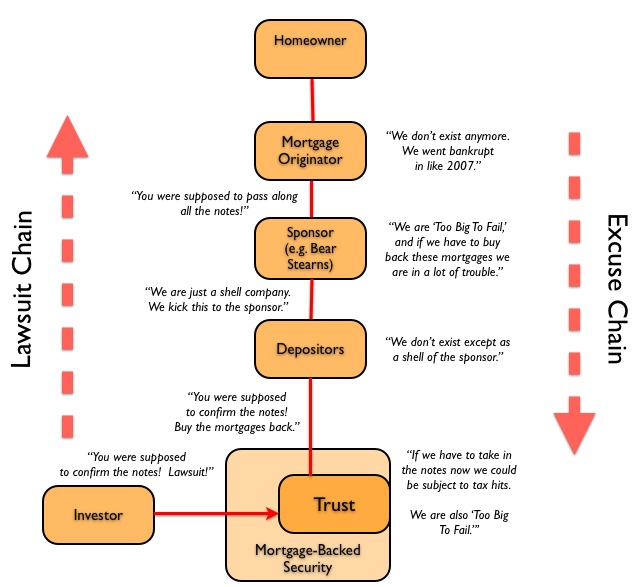 <=”” a=””>
 <=”” a=””>
 <=”” a=””>
 <=”” a=””>
 <=”” a=””>
 <=”” a=””>
 <=”” a=””>
 <=”” a=””>
 <=”” a=””>

 <=”” a=””>
 <=”” a=””>
 <=”” a=””>
 <=”” a=””>
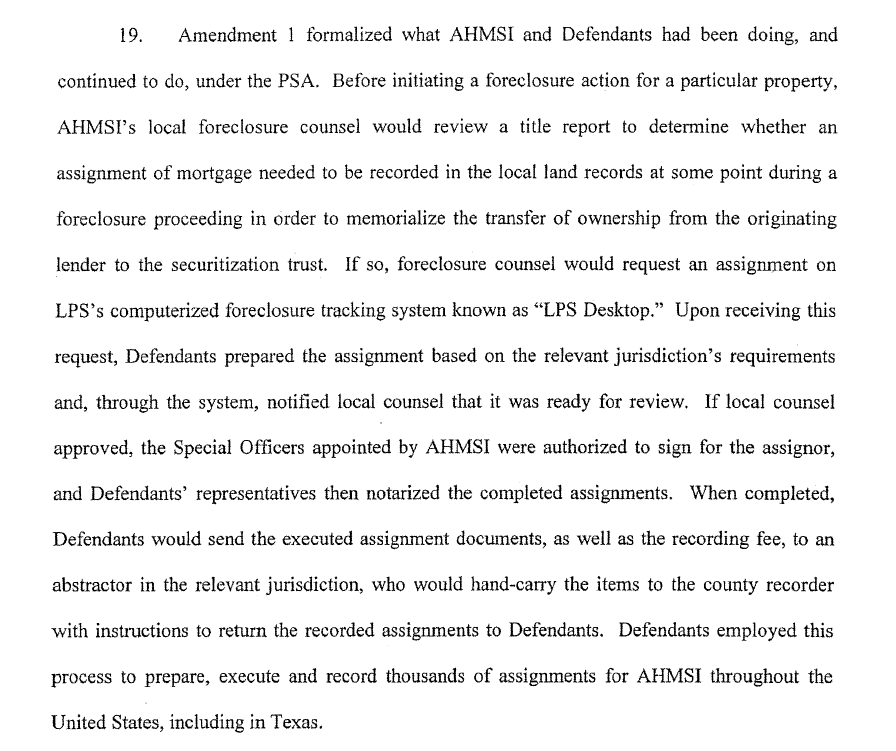 <=”” a=””>
 <=”” a=””>
 <=”” a=””>
 <=”” a=””>
 <=”” a=””>
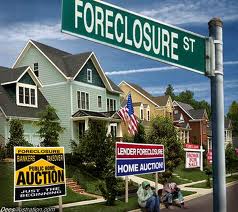 <=”” a=””>
 <=”” a=””>
 <=”” a=””>
 <=”” a=””>
 <=”” a=””>
 <=”” a=””>
 <=”” a=””>
 <=”” a=””>








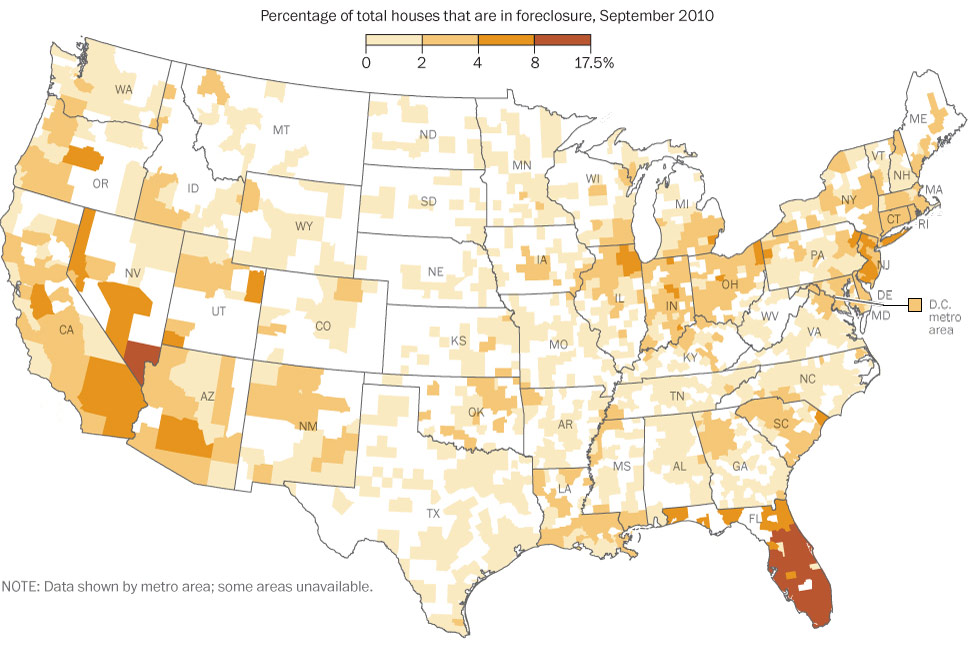

 Works Rights Compliance Alliance