WHAT WE STAND FOR Brutal Honesty Over Hype: Institutional Flow Analysis for Systematic Income Trading Every morning at 6:40 AM PST, we analyze real-time institutional flow through a systematic FinViz scan methodology. This isn't about guru alerts or inflated premium yields—this is about identifying when institutions are accumulating or distributing, and making disciplined trading decisions based on evidence, not hope. Real-Time Institutional Flow Signals for Protected Options Income – No YouTube Guru BS We call out the lies: No "50% monthly returns on premium." No "90% win rates." We calculate returns on TOTAL CAPITAL DEPLOYED, not misleading premium percentages. We trade the Protected Wheel strategy because capital preservation matters more than home runs. And most importantly, we tell you when NOT to trade—because sitting out is often the best trade. Tracking The Great Rotation of 2026: Morning Institutional Flow + Protected Wheel Strategy The market is shifting: Magnificent 7 tech dominance → Value/Small Caps/Industrials/Russell 2000 leadership. We're tracking this rotation in real-time through daily sector concentration analysis, Treasury yields, VIX patterns, and institutional 13F filings. Your morning scan will see the rotation before the pundits talk about it. 6:40 AM FinViz Scan Methodology: Catch Institutional Moves Before Market Open Our edge is simple: A systematic pre-market scan that identifies sector concentration and accumulation/distribution patterns. Four requirements for entry: (1) 40%+ sector concentration, (2) <20% RED distribution, (3) Clean momentum, (4) Low volatility. If these aren't met, NO TRADES. Discipline beats gambling every time
Author: timothymccandless
I have spent most of my professional life helping people who were being taken advantage of by systems they did not fully understand.
Archive for April, 2011
DEUTSCHE BANK, SECURITIZATION FRAUD AND FORECLOSURE FRAUD
Lynn E. Szymoniak, Esq., April 23, 2011
Download this Article as a PDF.
On April 13, 2011, the Permanent Subcommittee on Investigations of the U.S. Senate released a report titled “Wall Street and The Financial Crisis: Anatomy of a Financial Collapse.”
Section VI of the Report, pages 318 to 639, is titled “Investment Bank Abuses: Case Study of Goldman Sachs and Deutsche Bank.” Part B of this section, pages 330 to 375, focuses on Deutsche Bank and is titled “Running the CDO Machine: Case Study of Deutsche Bank.”
The Deutsche Bank case study section is divided into the following areas:
(1) Subcommittee Investigation and Findings of Fact
(2) Deutsche Bank Background
(3) Deutsche Bank’s $5 Billion Short
(a) Lippmann’s Negative View of Mortgage Related Assets
Florida’s struggling homeowners are one step closer to getting a share of the state’s foreclosure settlement – valued at $8.4 billion – after formal bank agreements were filed in federal court Monday.
The agreements with the nation’s five largest lenders are the culmination of a nationwide attorneys general investigation that began in the fall of 2010 with allegations that forged documents were used to repossess people’s homes.
Included in the settlement are JPMorgan Chase, Wells Fargo, Citigroup, Bank of America and Ally Financial.
The agreements, which outline strict new standards for handling mortgages, still need a judge’s approval. But Florida Attorney General Pam Bondi said the filing in the U.S. district court in Washington is a significant accomplishment.
The landmark agreement, considered the largest federal/state civil settlement ever obtained, was announced Feb. 14.
“Today’s filings pave the way for court orders that will provide substantial relief to Florida’s homeowners, hold banks accountable and reform the mortgage servicing industry,” Bondi said.
South Florida foreclosure defense attorneys were able to do only a cursory review of the hundreds of pages filed in court Monday, but at least two lawyers found positives for homeowners.
Royal Palm Beach foreclosure defense attorney Tom Ice, whose firm was instrumental in discovering the robo-signing issues that ultimately led to the nationwide investigation, said there are now higher standards for banks to complete a foreclosure.
“The requirements for providing documentation of loan ownership and good-faith verification to foreclose will undoubtedly make robo-signing more difficult,” Ice said. “And in some cases, where the necessary documents and information is missing, it may create an insurmountable problem for the bank to foreclose quickly, or foreclose at all.”
Though the details of the settlements were not available until Monday’s court filings, critics have derided the agreements for releasing banks from state-sought civil and administrative claims, including claims for damages, fines, remedies and sanctions in relation to foreclosure wrongdoing.
But several other claims are not exempt from prosecution, according to Monday’s agreements. Those include criminal complaints, as well as claims against securities and securitization; claims against the Mortgage Electronic Registration System, or MERS; and claims of county or city records clerks.
Individual homeowners are still clear to file lawsuits against their lenders and generally will not be asked to waive that right if they receive aid from the settlement.
“I was most concerned that there would be some sneak releases for things that we think the banks should be held liable for,” said Roy Oppenheim of Oppenheim Law in Weston. “But they are not being released from suits against MERS or securitization.”
Oppenheim also noted that foreclosure processing companies, such as the now closed DocX, were not given “get-out-of-jail passes.”
Nationally, the $25 billion deal with the banks could provide up to $40 billion in cash, refinances and principal write-downs to homeowners.
Florida negotiated a special guarantee with Wells Fargo, JPMorgan Chase and Bank of America ensuring at least $4 billion will be awarded in the form of principal reductions, loan modifications and refinances for underwater borrowers.
Florida’s haul includes a $334 million payment to the state, 10 percent of which is considered a penalty. The attorney general has discretion on how to use the remainder, but it generally must go to foreclosure-rescue programs or fraud investigations.
About $171 million will be cash payments to Florida borrowers who lost homes to foreclosure between 2008 and 2011 and were victims of servicer abuse. An additional $309 million will refinance underwater borrowers current on their loans.
Ice said he is concerned about the enforcement provisions in the settlements, which he described as an “agreement to agree.”
“We don’t want this to go the way of the Florida Supreme Court’s requirement that banks verify their pleadings,” Ice said. “All that accomplished was that the banks began robo-verifying the complaints.”
From: Charles Cox [mailto:charles@bayliving.com] Sent: Wednesday, March 14, 2012 4:36 PM To: Charles Cox Subject: Get ready to be sick – transcript showing the real stripes of a bankster’s judge – Overruling objections regardless…
A Most Disappointing Foreclosure Trial Transcript, With A Devastating Conclusion…..
The attached trial transcript reflects a devastating loss to me personally. It also reflects real areas of conflict within the existing body of appellate law. The next waves of this war are now starting to form across the horizon. We’ve largely moved past Motion to Dismiss and Summary Judgment issues. We’ve moved through discovery and other substantive law. Now the next phase is trials. We should all be prepared for trials in every single case. And then appeals when appropriate.
These are indeed unsettling times and quite frankly our trial courts have a nearly impossible burden placed upon them. It’s a burden placed upon them that every single taxpayer and homeowner must bear. All the while, the banks that caused all this chaos and conflict wallow in hundreds of billions of dollars in ill-gotten gains. One of the most important take aways I get from this transcript is the time and attention devoted by the court to this trial. I don’t like the outcome here, but I have profound respect for a court that holds a foreclosure trial to the same standard as all other important cases.
I tried desperately to articulate the real and substantive problems that course throughout our entire legal, financial and government system….any old plaintiff showing up in court can get a foreclosure judgment. …it’s truly a disturbing state of law….
From: Charles Cox [mailto:charles@bayliving.com] Sent: Thursday, March 15, 2012 7:52 AM To: Charles Cox Subject: Chase Forged My Note & Deed of Trust
Sent: Wednesday, March 14, 2012 7:42 PM To: Charles Cox Subject: Chase Forged My Note & Deed of Trust
Help spread the word. Chase is clearly Photoshopping the signatures on the notes and deeds/mortgages. You can discover this evidence with colored copies of these documents.
From: Charles Cox [mailto:charles@bayliving.com] Sent: Tuesday, March 13, 2012 8:15 AM To: Charles Cox Subject: Palm Beach Gardens homeowner gets $18 million in foreclosure settlement – persistence and skill pays off!
Palm Beach Gardens homeowner gets $18 million in foreclosure settlement
by Kim Miller
Lynn Szymoniak
Palm Beach Gardens homeowner and foreclosure fighter Lynn Szymoniak is slated to get $18 million from the nationwide settlement with the country’s five largest banks that was filed in federal court Monday.
Szymoniak, who was featured on the CBS news show 60 Minutes last year for the work she did uncovering the robo-signing scandal, said this morning that her gain from the settlement seems “surreal.”
“I always tend to discount everything until it’s signed,” she said. “I knew it was part of the settlement in February, but not how much.”
Szymoniak’s settlement is part of a larger $95 million agreement reached with the banks and Bill Nettles, the U.S. District Attorney of South Carolina. That agreement is written into the $25 billion nationwide settlement between 40 state attorneys general and Bank of America, JPMorgan Chase, Ally Financial, Wells Fargo and Citigroup.
South Carolina began investigating allegations in the spring of 2010 that banks were involved in a nationwide practice of failing to obtain required mortgage assignments. The lack of appropriate assignments resulted in servicing misconduct and using false assignments to submit federal housing administration mortgage insurance claims, according to a press release.
The False Claims Act allows the government to bring actions against groups that knowingly use false documents to obtain government money or to conceal an obligation to pay money.
The lawsuit was initially filed by Szymnoniak under a whistleblower provision in the False Claims Act.
Under the act, the whistleblower is entitled to a share of the government’s recovery.
“By this agreement we are making an important first step to hold mortgage servicers accountable for fraudulent and abusive practices, not only in South Carolina but nationwide,” said Nettles. “It also demonstrates the role that whistleblowers can play in working with the government to return dollars to the federal treasury and to expose wrongdoing.”
Mortgage Assignments As Evidence of Fraud (April, 2010), Fraud Digest.
An Officer of Too Many Banks (January, 2010), Fraud Digest.
Compare These Signatures (January, 2010), Fraud Digest.
Too Many Jobs (January, 2010), Fraud Digest.
Deutsche Bank National Trust Company and Foreclosure Document Mills (January, 2010), Fraud Digest.
From: Charles Cox [mailto:charles@bayliving.com] Sent: Thursday, March 15, 2012 8:47 AM To: Charles Cox Subject: Foreclosure Activity for Judicial vs. Non-Judicial States Flip-Flopped
Foreclosure Activity for Judicial vs. Non-Judicial States Flip-Flopped
By: Esther Cho 03/14/2012
Depending on whether the data was based on a judicial or non-judicial state, foreclosure activity told different stories in RealtyTrac’s Foreclosure Market Report released today for February 2012.
When clumping states together based on foreclosure processes, February foreclosure activity in the 26 judicial states increased 24 percent from February 2011 and 2 percent from the previous month of January. For the 24 non-judicial states, the numbers moved in near opposite directions, with foreclosure activity decreased to 23 percent from February 2011 and down 5 percent from January, according to a RealtyTrac release.
Overall, foreclosure filings — default notices, scheduled auctions, and bank repossessions — were reported on 206,900 properties in February, down 2 percent from the previous month and 8 percent a year ago from February 2012, which is the lowest decrease since October 2010, according to RealtyTrac.
“The foreclosure and mortgage settlement filed in court earlier this week will help pave the way to a properly functioning foreclosure process by providing a clear roadmap for necessary foreclosures,” said Brandon Moore, CEO of RealtyTrac. “That should result in more states posting annual increases in the coming months. Not surprisingly, many of the biggest annual increases in February were in states with the more bureaucratic judicial foreclosure process, which resulted in a larger backlog of foreclosures built up over the last 18 months in those states.”
For metro areas, 10 of the nation’s largest 20 reported year-over-year increases in foreclosure activity in February, with Florida cities Tampa (+64 percent) and Miami (+53 percent) posting the highest increases.
Most of the metro areas with decreases were in the West, led by Seattle (-59 percent) and Phoenix (-43 percent), which corresponds to a recent ForeclosureRadar report showing decreases in foreclosure filings in February for most West coast states.
The metro areas with the highest foreclosure rates were Riverside-San Bernardino in California (one in 166 housing units), Atlanta (one in 244), Phoenix (one in 259), Miami (one in 264) and Chicago (one in 302).
The metro areas with the highest number of foreclosure filings in February 2012 were Los Angeles (12,731), Chicago (12,587), Miami (9,333), Riverside-San Bernardino (9,057), and Atlanta (8,859).
While Nevada and California reached new lows in foreclosure activity and saw decreases in February, the two states still had the highest foreclosure rates despite signs of improvement. One in every 278 Nevada housing units had a foreclosure filing during the month, which is twice the national average, and one in every 283 housing units had a foreclosure filing in California.
With one in every 312 Arizona housing units with a foreclosure filing during the month, the state stood at number three.
Default notices were filed on 58,886 U.S. properties in February, up 1 percent from the previous month but still down 7 percent a year ago. Foreclosure auctions were scheduled on 84,180 homes down 2 percent from January and down 13 percent. REO properties totaled 63,834, a 4 percent decrease from January and down 1 percent from February 2011.
States with the greatest increase on a year-over-year basis for default notices were Hawaii (321 percent increase), Maryland (+157 percent), Connecticut (+64 percent), South Carolina (+58 percent), and Indiana (+37 percent).
Default notices were down on a year-over-year basis in several states including Nevada (-89 percent), Michigan (-72 percent), New York (-44 percent), Iowa (-28 percent), and Kentucky (-25 percent).
For Nevada, the major decrease in default notices has been credited to recent state legislation requiring lenders to file an extra affidavit before initiating the foreclosure process.
States with the greatest increase on a year-over-year basis for scheduled auctions were Kentucky (+190 percent), Illinois (+170 percent), Iowa (+98 percent), Pennsylvania (+95 percent), and Indiana (+92 percent).
REO activity increased at least 20 percent on a year-over-year basis in 17 states, including Massachusetts (+114 percent), North Carolina (+95 percent), Florida (+90 percent), South Carolina (+87 percent), and Georgia (+76 percent).
Gary Victor Dubin is a dynamite Honolulu foreclosure defense attorney with over 40 wins by the DUBIN LAW FIRM in Hawaii foreclosure courts for his clients just in the last year. This is a stunning success given the current judicial climate in Hawaii, not to mention the complexity of securitization, the hidden frauds…and of course, card games and golfing with banksters doesn’t help either.
Dubin’s essay “Securitized Distrust” is a culmination of insight with over 20+ years of first hand litigation and this leads right into our latest discovery of WaMu multiple trust loan assignments. Shuffling or fraud… or both?
It’s no wonder that the Wall Street MBS scheme collapsed. Last night, together with Lisa Epstein, we ran a random audit on WaMu Mortgage Pass-Through Certificates, Mortgage Loan Trusts. One loan was found in 6 different trusts, another loan was found in FIVE trusts’ original SEC loan level data, 39 were listed in 3 trusts, and 503 were listed in two separate trusts.
The winner so far is a NEW YORK condo, loan number WaMu loan # 714934858, appeared in 6 DIFFERENT trusts from May through November 2006…
Check your winning WaMu lottery loan numbers folks and find a good foreclosure defense attorney that understands securitization – you may have a free house… or a severely clouded title. And if you are an investor – you may have hit pay dirt.
(More WaMu at the bottom)
SECURITIZED DISTRUST
By Gary Victor Dubin
Securitized trusts — that is, the bundling and selling of shares therein to investors via a business merger between lenders and wall street (mortgage backed securities or MBS) — is relatively new, not even understood by many lawyers today and very few if fully any Hawaii judges, and certainly not by me until only a few years ago, and I am still learning day by day.
In recent years, my law firm has handled dozens of securitized trust foreclosure defense cases and one defense of an SEC civil prosecution against broker-sellers of such MBS shares. The fraud throughout the secondary mortgage market has been pervasive:
1. Promissory notes intended for securitized trusts based on my experience were either intentionally never deposited into the securitized trust in the first place on purpose with full knowledge by everyone involved or were deposited in the trusts only as copies.
2. Based on the testimony of whistleblowers and forthright bank executives, lenders intentionally destroyed most of their original notes and instead before doing so digitized them, supposedly for convenience — which of course destroyed their status as negotiable instruments, leaving only copies somewhere, and often not with the Trustee.
3. At first, it appeared that that was just sloppiness, but subsequently in our cases we have discovered that it appears to have been common practice intentionally not to deposit the notes (or the mortgages) in the securitized trusts, but to withhold them and unlawfully use them on the side as collateral to support loans or credit from Federal Home Loan Bank Boards, a practice that apparently mushroomed as lenders found themselves in financial trouble and in need of capital.
4. Documented evidence has recently just been brought to my attention that many notes and mortgages were even put simultaneously into two or three or perhaps even more separate securitized trusts, unknown of course to individual investors who thought that they had sole security for their investments, unknown to insurance companies like AIG that insured the MBS based on certified loan underwriting guidelines that they were unaware were being ignored and intentionally compromised by false appraisals and false loan applications.
5. All of this recently surfacing has of course started to generate a massive amount of litigation between lenders and investors and mortgagors and insurers and title companies, in which inevitably the question of fraudulent notes and fraudulent mortgages as well as fraudulent mortgage assignments has occasionally arisen. Just this week I had an incredible hearing before Judge Ayabe in one such case involving a claimed lost mortgage assignment and the submission in court of a false note to get around the absence of the mortgage assignment.
6. All of this of course is pregnant with fraud and criminality, particularly against MBS investors. Securitized trusts also have special IRS preferential status, called REMIC, able to pass through income to investors and avoid taxation so long as the deposit of the note and mortgage occur at the time of the formation of the securitized trust. Having violated REMIC requirements which could cost securitized trusts each millions, the securitized trusts have been a ticking IRS time bomb.
7. As a result, as all of this began to surface a year or so ago, as a corollary to the so-called “too big to fail” hobgoblin, the Obama Administration and regulatory agencies began to seek frankly to cover things up, recently convincing the AGs to settle with the big five banks which are either securitized trust loan servicers or Trustees themselves and to grant them immunity, especially I understand from IRS violations.
8. The effect on borrowers has been dramatic. As foreclosures increased, the securitized trusts have had a huge problem, how to foreclose in court (or nonjudicial proceedings) without the notes or even the mortgages — so they began to falsify promissory notes when needed (we have even found evidence that some lenders have been photo-shopping notes), to create phony allonges and phony bearer notes, and to submit in court no less fraudulently notarized and fraudulently signed mortgage assignments to the securitized trusts — a practice now having become famously known as “robo-signing.”
9. At first, the foreclosing mortgagees got away with it as judges and attorneys were virtually unanimously unaware of what was going on, until a few relentless attorneys and investigators on the Mainland exposed the fraud — one recently getting I understand $18,000,000 from the recent AG settlement for her False Claims Act whistle-blowing!
10. For some time my law firm has been arguing such issues in defense of borrowers — particularly as standing issues — but with little success, until recently, as more and more Hawaii judges are finally beginning to understand.
11. Very rarely in our cases is the issue one of lost notes or lost mortgages, but usually phony note endorsements or phony allonges or phony mortgage assignments — or all three.
12. Mortgages of course in Hawaii are all recorded at the State Bureau of Conveyances, but as a result mainly due to the use by securitized trusts of the private Mortgage Electronic Registration System (MERS), mortgage assignments have not been contemporaneously recorded — which has allowed the illicit trafficking in mortgage interests — which has generated still additional legal issues, such as whether the ownership of the promissory note can be separated from the ownership of the related mortgage, an issue now before several state high courts on the Mainland.
The above flood of new legal issues is just starting to hit Hawaii appellate courts, as my law firm has several related cases presently working their way through our appellate system, as the largest financial scandal in American history plays out.
Unlike the recent AG settlement, I prefer the approach that enforces traditional real property and UCC negotiable instruments laws, like the New York and New Jersey courts are now doing, and let the chips fall where they may — directly on top of the heads of those who violated the law — by refusing to reward fraud.
Gary Victor Dubin 3/14/12
Dubin Law Offices
Harbor Court, Suite 3100
55 Merchant Street
Honolulu, Hawaii 96813
gdubin
From: Charles Cox [mailto:charles@bayliving.com] Sent: Saturday, March 17, 2012 8:01 PM To: Charles Cox Subject: CA Superior Court: 90-Day Notice Required to Evict for Non-Payment of Rent After Foreclosure
Posted by April Charney:
The Court found that the bank must serve bona fide tenants a 90-day notice under the PTFA, even if the eviction is based on non-payment of rent (which required only a 3-day notice under state law). The ruling follows on the heels of a Massachusetts decision with similar reasoning, FNMA v. Vidal.
The order and the Daily Journal article on the decision are attached.
From: Charles Cox [mailto:charles@bayliving.com] Sent: Thursday, March 15, 2012 4:15 PM To: Charles Cox Subject: Max Gardner’s Newsletter – MERS in State and Federal Courts
MERS in State and Federal Courts
By Tiffany Sanders on March 15, 2012
In the last newsletter, we addressed general standing issues in bankruptcy and other federal courts. Here’s the next installment from the bibliography compiled for the Boot Camp by Robin Miller. One area in which standing issues regularly take center stage (or should) is in foreclosure actions involving MERS. Many state and federal courts have issued opinions regarding the rights and authority of MERS and the organization’s standing to bring foreclosure actions.
MERSCORP, Inc. v. Romaine, 8 N.Y.3d 90, 861 N.E.2d 81, 828 N.Y.S.2d 266 (N.Y. 2006): Precise question was whether Suffolk County Clerk must record mortgages and assignments of mortgages which name MERS. The final paragraphs of opinion note the confusion created for homeowners, potential that errors are hidden, even talks about the problem created by loss of revenue. Though creditors cite this case as some sort of approval of MERS, a footnote specifically says that the following questions are left for another day: the underlying validity of the MERS mortgage instrument, whether its failure to transfer beneficial interest renders it a nullity under real property law, whether it violates the prohibition against separating the note from the mortgage, and whether MERS has standing to foreclose.
Bank of New York v. Silverberg, 86 A.D.3d 274, 926 N.Y.S.2d 532 (2nd Dept. June 7, 2011): MERS’s authority as “nominee” was limited to only those powers that were specifically conferred to it and authorized by the lender; hence, although the consolidation agreement gave MERS the right to assign the mortgages themselves, it did not specifically give MERS the right to assign the underlying notes, and the assignment of the notes was thus beyond MERS’s authority as nominee or agent of the lender.
Deutsche Bank Nat. Trust Co. v. Pietranico, 33 Misc.3d 528, 928 N.Y.S.2d 818 (N.Y. Sup., July 27, 2011): MERS, as nominee, had authority to assign mortgage.
In re Agard, 444 B.R. 231 (Bankr. E.D.N.Y. 2011): A written assignment by MERS of the mortgage to U.S. Bank was not sufficient to establish an effective assignment of the note to U.S. Bank, as the language in the assignment was vague and insufficient to prove an intent to assign the note, and, in any event, MERS was not a party to the note, and the record was barren of any representation that MERS had any authority to take any action with respect to the note.
Bank of New York v. Alderazi, 31 Misc.3d 1209(A), 929 N.Y.S.2d 198 (N.Y. Sup., April 11, 2011) (unreported table opinion; text found at 2011 WL 1364466): While the mortgage granted some rights to MERS, it did not grant MERS the specific right to assign the mortgage.
In re Freeman, 446 B.R. 625 (Bankr. S.D.Ga., Feb. 10, 2010): MERS, which was the grantee, as nominee for the lender, under the security deed given by the debtor, had standing, as the security deed gave MERS the right to foreclose on the debtor’s property, that right was impaired by the automatic stay, and relief from the stay would redress that injury.
In re Fontes, Case No. 10-1345 (9th Cir. B.A.P., April 22, 2011): While MERS was named as the beneficiary of the deed of trust on the Chapter 13 debtors’ property, as the nominee of the lender, MERS did not have the authority to transfer the debtors’ promissory note, where there was no evidence that MERS had any interest in the note, and the deed of trust, although giving MERS the authority to assign the deed of trust, did not mention the note.
In re Martinez, 2011 WL 996705 (Bankr. D. Wyo., March 16, 2011): MERS, which assigned the mortgage from the original lender to Ocwen, had the authority to do so, as in the mortgage MERS is designated as the nominee of the lender with authority to “take any action required of Lender”.
In re Thomas, 2011 WL 576830 (Bankr. D.Mass., Feb. 9, 2011): The creditor could not rely on the recorded assignment of the debtor’s mortgage from MERS to the creditor as evidence that the note was transferred to the creditor; while the assignment purported to assign both the mortgage and the note, MERS, which is a registry system that tracks the beneficial ownership and servicing of mortgages, was never the holder of the note, and therefore lacked the right to assign it.
In re Koontz, 2010 WL 5625883 (Bankr. N.D.Ind., Sept. 30, 2010): The purported mortgage creditor failed to establish the chain of title for its proof of claim; while the debtors’ mortgage had been assigned to the creditor by MERS, as the nominee of the original lender, MERS admitted that the individual who executed the assignment on behalf of MERS was not a MERS employee.
In re Tucker, 441 B.R. 638 (Bankr. W.D. Mo., Sept. 20, 2010): The holder of the Chapter 7 debtors’ mortgage note was entitled to seek relief from stay, although the note holder was not also, on the petition date, the owner of the deed of trust on the debtors’ property, as (1) the note holder was a member of the MERS system, (2) MERS was the beneficiary under the deed of trust as nominee for the note holder, and (3) all parties to whom the note had been transferred in the chain from the original lender to the current note holder had been members of the MERS system.
In re Box, 2010 WL 2228289 (Bankr. W.D. Mo., June 3, 2010): A purported transfer of a note to a creditor by MERS was ineffective in the absence of evidence that MERS possessed the authority to transfer the note.
Mortgage Electronic Registration Systems, Inc. v. Medina, 2009 WL 4823387 (D. Nev., Dec. 4, 2009): MERS, which provided no evidence that it was the agent or nominee for the current owner of the beneficial interest in the note, did not establish that it was a real party in interest, as required under Bankruptcy Rule 7017.
In re Sheridan, 2009 WL 631355 (Bankr. D. Idaho, March 12, 2009): Mortgage Electronic Registration Systems, Inc., which filed a motion for relief from stay “as nominee HSBC Bank USA, National Association, as Indenture Trustee of the Fieldstone Mortgage Investment Trust Series 2006-3,” did not establish its standing to prosecute such a motion, even assuming that MERS as a “nominee” had sufficient rights and ability as an agent to advance its principal’s stay relief request.
Keep watching the newsletter for additional information and case citations relating to more specific aspects of standing in mortgage foreclosure cases.
Many Californians in default on their mortgage and facing foreclosure have filed quiet title and wrongful foreclosure actions. What is a quiet title action against a lender, and are plaintiffs successful in California?
BRIEF ANSWER:
A quiet title action in California to determine the owner of property does not generally allow a mortgage borrower in default on their payments to claim title to the land free of liens. However, the action when combined with a wrongful foreclosure claim is often successful in extending the amount of time a defaulted borrower can remain in the house. While in essence, this is simply prolonging the inevitable, it can give a borrower a temporary feeling of control over their own destiny.
Contrary to California’s ruling in Gomes, a MERS has come under fire in Utah. In Harvey v. Garbett Mortgage, Utah 3rd Dist. Case No. 100907587 (2010) (unpublished) (Herinafter Harvey), quiet title action resulted in a deed clear of any liens because the trustee, the legal title holder, did not have any idea who the beneficiary was, did not have physical possession of the mortgage note, and did not know whether a split of the note and trust deed occurred. The plaintiff quickly sold the property after the ruling, and thus has no interest in the land. The loan is now unsecured, and the plaintiff is still liable to the lender to pay the debt. An interesting procedural note about the Harvey case is that the plaintiff did not name MERS as a defendant in this case, even though MERS was the nominal…
From 2008 to the present (about 3-1/4 years), there have been about 10,000,000 foreclosures, many or most of which have been of questionable legality, judging from what has been appearing almost daily in the main media during the past 12-18 months (e.g., falsified foreclosure documents including affidavits, failure to follow state foreclosure laws (such as by failing to have completed assignments of interest), and lack of ownership and possession of the original “wet-ink” Note).
If you were the owner of one of the 10,000,000 properties foreclosed by the lender during this period, you probably have a meritorious claim for wrongful foreclosure and should seriously consider commencing a wrongful foreclosure action against the lender. The value of your claim could well exceed all of the other assets owned by you or your family.
A wrongful foreclosure action should not be expensive, and has the advantage that the bank cannot retaliate by foreclosing on your property. It has already done that, and probably wrongfully. There is also the possibility that, since about half of the foreclosed properties are still under control of the foreclosing bank, you could obtain recovery of your property as well as some damages.
An wrongful foreclosure action can be commenced in any State in the United States for an initial legal fee of about $5,000 to $6,000, plus court filing fees (about $300) and fees for service of process (about $200).
The damages for wrongful foreclosure, particuarly a wilful (or knowingly) wrongful foreclosure can be quite substantial, including the loss in value of your property when it was sold at a distressed price, the costs to you of having a poor credit rating because of the foreclosure, the costs of moving elsewhere, the costs and loss involved in changing schools and neighborhood, and various other costs, including consequential damages which the bank could have foreseen when it wrongfully foreclosed.
But the most important recovery could be punitive damages, which is now limited by the U.S. Supreme Court to nine times (“single digit”) the amount of the actual damages you prove at trial. Accordingly, if you can show $200,000 in actual damages, you would be entitled to a maximum amount of punitive damages equal to $1,800,000 (or 9 times $200,000).
The action would be triable to a jury, most of whom are quite familiar with your problem, and would probably be receptive to giving you a substantial recovery.
The expenditure of $5,500 to $6,500 to obtain the bank’s reaction to your complaint (which hopefully will be to try to settle the action, a response to be expected in proportion to the merits of your claim of wrongful foreclosure) is a small amount in comparison to the probable recovery, and seems to be a no brainer type of decision for most persons to make, who have suffered from wrongful foreclosure.
The key things to consider when evaluating whether you should do this are:
The competence of your counsel
The merits of your wrongful foreclosure claims against the bank
Whether you can afford to risk the cost needed to bring the wrongful foreclosure action against the lender
You should look at my 10-minute YouTube video # 42 (created 11/17/10) entitled Homeowners Can Sue Banks to Cancel Mortgage or for Wrongful or Fraudulent Foreclosure and Punitive Damages. The link is:
You should talk with an attorney experienced in defending foreclosures to have him/her explain to you, after hearing the facts from you, what claims you have against the lender, and the value of those claims. Also, you should discuss what happens if the bank refuses to settle or to enter into a reasonable settlement agreement with you after the suit has been commenced.
I know that lawsuits are something that most reasonable people would like to avoid, but in order for you to obtain any recovery for the wrongful taking of your property, you need to file a wrongful foreclosure action against the lender, and spell out the reasons why you are entitled to recovery, for both the judge as well as the lender to read. If your case is meritorious, you have good reason to believe that the bank will try to settle the case, to reduce its costs, liability and adverse publicity, and to settle for less than it might otherwise have to pay after a trial.
If you would like to discuss your own wrongful foreclosure situation with me – as a FREE consultation – please give me a call, to
This could be the way for you to recover the substantial loss you have probably incurred through the foreclosure, assuming it was wrongful. Please call me to help you determine whether the foreclosure was wrongful or not, and what you can do if the foreclosure was in fact wrongful (i.e., illegal).
Carl E. Person, attorney
P.S. I’m able to represent you in any State of the U.S. by use of “local counsel”. I should be able to locate affordable local counsel in any State, subject to your approval.
New York Statute of Limitations – 6 Years
An appropriate action for wrongful foreclosure will have more than one claim. For example, claims for breach of contract, fraud, mistake, negligence and unjust enrichment will probably be included, as well as other claims. Each of these claims has a statute of limitations, meaning that the claim cannot be brought after expiration of the statute of limitations for such claim. In New York, many of the claims seems to be governed by New York’s 6-year statute of limitations for various types of actions. Here is the statute, NY CPLR Section 213:
§ 213. Actions to be commenced within six years: where not otherwise provided for; on contract; on sealed instrument; on bond or note, and mortgage upon real property; by state based on misappropriation of public property; based on mistake; by corporation against director, officer or stockholder; based on fraud
The following actions must be commenced within six years:
1. an action for which no limitation is specifically prescribed by law;
2. an action upon a contractual obligation or liability, express or implied, except as provided in section two hundred thirteen-a of this article or article 2 of the uniform commercial code or article 36-B of the general business law;
3. an action upon a sealed instrument;
4. an action upon a bond or note, the payment of which is secured by a mortgage upon real property, or upon a bond or note and mortgage so secured, or upon a mortgage of real property, or any interest therein;
5. an action by the state based upon the spoliation or other misappropriation of public property; the time within which the action must be commenced shall be computed from discovery by the state of the facts relied upon;
6. an action based upon mistake;
7. an action by or on behalf of a corporation against a present or former director, officer or stockholder for an accounting, or to procure a judgment on the ground of fraud, or to enforce a liability, penalty or forfeiture, or to recover damages for waste or for an injury to property or for an accounting in conjunction therewith.
8. an action based upon fraud; the time within which the action must be commenced shall be the greater of six years from the date the cause of action accrued or two years from the time the plaintiff or the person under whom the plaintiff claims discovered the fraud, or could with reasonable diligence have discovered it.
There may be a period as short as one year as to some of the claims, such as in California. The first thing you should discuss with your attorney is the period of time in which your various claims must be brought in a lawsuit against the bank. The primary claim is for breach of contract, as your starting point.
In California, the tort of wrongful foreclosure requires: (1) a legally owed duty to the Plaintiff by the foreclosing party (2) a breach of that duty (3) a causal connection between the breach of that duty and the injury the Plaintiff sustained, and (4) damages. California courts have further clarified this cause of action by stating: “We are inclined however, to believe that with respect to real property the Murphy case was articulating a rule that has been applied in other jurisdictions. That rule is that a trustee or mortgagee may be liable to the trustor or mortgagor for damages sustained where there has been an illegal, fraudulent or willfully oppressive sale of property under a power of sale contained in a mortgage or deed of trust. Munger v. Moore, 11 Cal. App. 3d 1, 7, 89 Cal. Rptr. 323, 326 (Cal. Ct. App. 1970)
The court in Munger appears to be saying that if the foreclosure was illegal, fraudulent or willfully oppressive then that foreclosure was wrongful and the party foreclosed on may be entitled to damages. According to California statutory and case law several types of damages are available to victims of wrongful foreclosures.
First, damages are measured by the value of the property at the time of the sale in excess of the mortgage lien against the property (i.e the equity in the property). Second, damages are available in the amount that is sufficient to compensate for all detriment proximately caused by the wrongful conduct.California Civil Code Section 3333. Third, the borrower may be able to obtain damages for emotional distress in a wrongful foreclosure action and if the borrower can prove by clear and convincing evidence that the servicer/trustee was guilty of fraud, oppression or malicepunitive damages may be awarded. Where there is a wrongful foreclosure, the borrower may seek punitive damages. In Kachlon v. Markowitz (2008) 168 Cal.App.4th 316, 345 [85 Cal.Rptr.3d 532, 554] the Court in acknowledging the right to seek punitive damages said:
“The jury concluded that the nonjudicial foreclosures instituted by the Kachlons were wrongful, and that in pursuing the foreclosure proceedings Mordechai acted “intentionally, fraudulently and in conscious and callous disregard for the rights of the Markowitzes.” These findings are tantamount to the finding of malice….” (emphasis added).
As such, it is clear in California, if the borrower can prove by clear and convincing evidence that the servicer or trustee was guilty of fraud, oppression or malice in its wrongful conduct, punitive damages may be awarded.
From: Charles Cox [mailto:charles@bayliving.com] Sent: Thursday, March 01, 2012 1:30 PM To: Charles Cox Subject: Mortgage Settlement or Mortgage Shakedown?
WSJ article by David Skeel attached. Comments of note:
“The biggest loser is the rule of law.”
Government plaintiffs allege the “banks” “robo-signed” by executives who never checked document details; also “added unnecessary fees such as overpriced insurance.”
Realize, this is NOT related to litigation but rather amounts to LEGISLATION essentially ruling out the“chief objectives of the judicial process [which] are in fact finding and redress.”
As indicated in the article and I agree, the AGs have NOT done any meaningful investigations into these issues. Phil Ting in San Francisco; Jeff Thigpen in North Carolina and John O’Brien as “merely” registrars of deeds found out more on their own than 49 State Attorneys General did in 18 months of supposed investigation and still don’t seem to not know the difference between a servicer and real party in interest.
This whole settlement appears to be yet another entitlement and “stimulus” without having to go to Congress with little money going to homeowners and large sums potentially going to the States themselves. A question seldom asked…where is the money coming from?
I still contend it is a buy-your-way-out-of-jail-free card.
Charles
Charles Wayne Cox – Oregon State Director for the National Homeowners Cooperative
Email: mailto:Charles
Websites: http://www.NHCwest.com; www.BayLiving.com; and www.ForensicLoanAnalyst.com
1969 Camellia Ave.
Medford, OR 97504-5403
(541) 727-2240 direct
(541) 610-1931 eFax
From: Timothymccandless’s Weblog [mailto:donotreply@wordpress.com] Sent: Tuesday, March 13, 2012 7:18 PM To: tim@prodefenders.com Subject: [New post] We Now have PROOF that Mortgage Loans Were Pledged to Multiple Trusts
From: Charles Cox [mailto:charles Sent: Tuesday, March 13, 2012 10:38 AM To: Charles Cox Subject: We Now have PROOF that Mortgage Loans Were Pledged to Multiple Trusts
From 4closurefraud:
Exclusive Smoking Gun | The Sophisticated and The Scammed IV – It Appears We Now have PROOF that Mortgage Loans Were Pledged to Multiple Trusts
So last night we got word from Virginia Parsons, our friend over at www.deadlyclear.com. She discovered a WAMU loan in a WAMU trust that was ALSO in TWO other WAMU trusts.
Yes, this appears to be a TRIPLE PLEDGED loan.
Well, as we know from experience in the fraudclosure underworld, that if you find an anomaly it usually is not an anomaly.
So what did Lisa decide to do? Well, look for more silly.
Guess what…
Here is what she found after she dumped the tr…
From Lisa
I looked at the SEC filed loan level data for all three trusts and ran a comparison for all the loan numbers that were listed in the 2006 SEC files.
I found a total of 44 loans (including Ginny’s triple pledged loan) and here are the results.
Each of these loans is in two (one is in three) of the following trusts:
WAMU Mortgage Pass-Through Certificates, Series 2006-AR11
WAMU Mortgage Pass-Through Certificates, Series 2006-AR13
WAMU Mortgage Pass-Through Certificates, Series 2006-AR15
Loan Number
WaMu Mortgage Pass-Through Certificates, Series 2006-AR
3010064859
11
15
3010002701
11
15
714934858
11
13
15
3010073819
11
13
3010112153
11
13
3010166548
15
13
3010238461
11
13
3010272585
15
13
3010294712
15
13
3010466831
11
13
3010555286
15
13
3010566010
15
13
3010584575
15
13
3010589509
15
13
3010631244
11
13
3010943060
15
13
3010944548
15
13
3011042730
15
13
3062099423
15
13
3062174630
11
13
3062175199
11
13
3062215581
11
13
3062251925
11
13
3062342641
11
13
3062427889
11
13
3062431626
15
13
3062544402
11
13
3062638584
11
13
3062660091
11
13
3062663459
11
13
3062663459
15
13
3062717586
11
13
3062721349
15
13
3062758135
15
13
3062759299
15
13
3062810019
11
15
3062917996
11
13
3062954270
11
15
3063020881
11
13
3063123990
11
13
3063140127
15
13
3063180966
15
13
3063191302
15
13
3063197093
11
13
She ONLY compared these three trusts, for all we know these loans could be in other trusts also.
Is this the final smoking gun we need? How many loans were multiple pledged into numerous trusts?
Can they allow the foreclosure to continue on loans that have been sold multiple times?
From: Charles Cox [mailto:charles@bayliving.com] Sent: Thursday, March 01, 2012 10:29 AM To: Charles Cox Subject: David Ambrose on James v. Recontrust
Attached is the opinion which came down today of US District Court Judge Michael H. Simon. This is a significant opinion, and one which will likely have a substantial impact on not only pending nonjudicial foreclosures in Oregon, but those which have already occurred, involving MERS as the nominee for the lender on the trust deed. Of most import, the ruling holds:
1. Only the note holder may be a beneficiary under a trust deed under Oregon law;
2. Therefore, whether the parties have agreed to designate MERS as the beneficiary or not, is irrelevant, as Oregon law is controlling and paramount, and because MERS is not the note holder, MERS is not the beneficiary. While this opinion is of course specific to Oregon’s laws, it does persuasively dispel the argument that because the parties designated MERS as the beneficiary, that should be controlling (and as an aside, like any home owner signing a trust deed with MERS as the designated nominee had any idea what that really meant?);
3. In non-legalese, the law and custom argument made by MERS (who at MERS law firm actually dreamed up this language?) is simply bogus. The opinion includes a fascinating, and somewhat humorous, discussion of this provision in a MERS trust deed and the circularity of the MERS argument on this point.
4. Under Oregon law, when the ownership of the note is transferred, there is a corresponding transfer of the beneficiary’s interest under the trust deed, and under Oregon law, all such transfers must be recorded in order for the remedy of nonjudicial foreclosure to be available. Absent such recorded assignments, there can be a judicial foreclosure, but not a nonjudicial foreclosure. And once you get into court, all of a sudden the "who owns the note" argument is no longer an irrelevant inquiry (standing, real party in interest, etc.).
Why the potential impact on completed nonjudicial foreclosures? Because if the trustee had no authority to conduct the sale, the sale is arguably void (not just voidable) (and there are already Oregon Circuit Court cases holding to this effect), and taking a cue from rulings in Massachusetts, and other states, this means that a buyer at a foreclosure sale, or a later buyer of the property from the foreclosing lender who acquired title at the foreclosure sale, may be set aside, and the bona fide purchaser doctrine will be unavailable. I imagine our title insurers are going to be having heart palpitations about this one.
From: Charles Cox [mailto:charles@bayliving.com] Sent: Thursday, March 01, 2012 8:33 AM To: Charles Cox Subject: Federal Reserve Board released action plans for supervised correction of deficiencies in loan servicing and foreclosure.
The Federal Reserve Board on Monday released action plans for supervised financial institutions to correct deficiencies in residential mortgage loan servicing and foreclosure processing. It also released engagement letters between supervised financial institutions and independent consultants retained by the firms to review foreclosures that were in process in 2009 and 2010.
The action plans are required by formal enforcement actions issued by the Federal Reserve last year. The enforcement actions direct mortgage loan servicers regulated by the Federal Reserve to submit acceptable plans that describe, among other things, how the institutions will strengthen communications with borrowers by providing each borrower the name of a primary point of contact at the servicer; establish limits on foreclosures where loan modifications have been approved; establish robust, third-party vendor controls; and strengthen compliance programs.
The Federal Reserve enforcement actions also require the parent holding companies of mortgage servicers to submit acceptable plans that describe, among other things, how the companies will improve oversight of servicing and foreclosure processing conducted by bank and nonbank subsidiaries.
The enforcement actions further require the mortgage servicing subsidiaries to provide appropriate remediation to borrowers who suffered financial injury as a result of errors by the servicers. The engagement letters describe the procedures that will be followed by the independent consultants in reviewing servicers’ foreclosure files to determine whether borrowers suffered financial injury as a result of servicer error.
Release of the action plans and engagement letters follows reviews conducted from November 2010 to January 2011, in which examiners found unsafe and unsound processes and practices in residential mortgage loan servicing and foreclosure processing at a number of supervised institutions.
The Federal Reserve will closely follow the implementation of action plans to ensure that the financial institutions correct deficiencies and evaluate any harm that was done to homeowners in the foreclosure process in 2009 and 2010. The Federal Reserve anticipates that more engagement letters and action plans will be posted soon.
From: Charles Cox [mailto:charles@bayliving.com] Sent: Sunday, March 04, 2012 6:03 AM To: Charles Cox Subject: When Are Countrywide Notes Endorsed? A Filing in A Federal Case Shows the Problems With Negotiability.
When Are Countrywide Notes Endorsed? A Filing in A Federal Case Shows the Problems With Negotiability.
March 3rd, 2012 | Author: Matthew D. Weidner, Esq.
When exactly are promissory notes endorsed? When did the Plaintiff come to perfect his cause of action to foreclose? These were key questions in yesterday’s transcript of a court proceeding. When the judge referred to “673″, he was referring to the Uniform Commercial Code which is found in Chapter 673, Florida Statutes. He has picked up on that fact that “673″ and the rules of negotiability are critical components in this whole fraudclosure hurricane. Importantly, so has Florida’s Second District Court of Appeals…..it’s widely known that the Second is a very, very astute, academic and profoundly perceptive court. They’ve weighed in on a whole host of fraudclosure opinions and the opinions are tight and profound….
The sole basis upon which hundreds of millions of dollars in real wealth and millions of acres of property are being transferred from one party to another in this country are squiggly lines and stamps which purport to endorse the promissory notes an issue in millions of foreclosure cases pending all across this country.
In most cases, the notes were not intended by the loan servicers, depositors or mortgage backed security trustee to be transferred via endorsement alone. How do I know this? It says so right in the terms of the applicable Pooling and Servicing Agreement. The individual PSAs are the Constitution that governs the rights, responsibilities and relationships among the myriad parties in a typical mortgage loan. These documents were supposed to be followed by all the parties, but in the vast majority of cases they are just ignored by all parties and now by the courts. But they should not be ignored. The PSAs are the real source of guidance and direction in a world gone mad. The fact that we are all allowing them to be ignored with the constant mantra that, “you’re not a party to the agreement” and “the mortgage follows the note” is a failing on the part of the defense bar for not making it an issue in every case.
I recently stumbled upon a filing in a federal court case that’s pending in Southern Mississippi. I’ve got deep roots in Southern Mississippi, and frankly some great legal scholarship in consumer rights comes out of that area. I was following up on the bombshell federal litigation where Mississippi workers realized the money they had placed with big shot Yankee investors is um…well, a little squirrely, when I came across this fascinating case. But first, we would all do well to understand the Public Employee Retirement System of Mississippi lawsuit. It is alleged that Goldman Sachs misrepresented the quality of hundreds of millions of dollars in loans that were sold to these retirees. Goldman said they were solid gold, it turns out they were garbage. Mississippi said they were defrauded, Goldman says you shouldn’t expect our marketing, sales and investment material to be truthful, too bad your retirees lost their pension checks, screw you, we’re Goldman.
Now, what’s important to keep in mind is this is just one institutional investor who was smart enough to catch this. The allegations contained in this litigation could and should be being made in lawsuits all across this country….NEWSFLASH: ALL YOU RETIREES AND PEOPLE THAT THINK YOUR PUBLIC AND PRIVATE PENSIONS ARE SAFE…..REMEMBER THE OLD STORY, “THE EMPEROR HAS NO CLOTHES”
Anywhoo, back to the story the question about how billions of dollars in notes gets transferred should be on everyone’s mind. Our nation has been hijacked by the reckless and out of control banking system with their sloppiness, lies, smoke and mirrors and misrepresentations. And now they have thoroughly polluted our court systems. But some judges are fighting back. They are pulling back the curtain, not willing to be blown off or glossed over by slick lawyers who want to dust them off, distract them and suggest they should ignore fundamental legal principles.
The fate of this nation rests in the ability of good judges and a strong legal system to defend and protect this nation from the looming regime, the banking cabal, that has hijacked the whole of the United States government.
Read these deposition transcripts carefully, can you spot the critical legal issues that are spawned here? Can you figger out who the who in whoville is?
Consider the impact of this in all Countrywide cases…
From: Charles Cox [mailto:charles@bayliving.com] Sent: Monday, March 12, 2012 10:05 AM To: Charles Cox Subject: Lynn Szymoniak Securitization Teach-In/Introduction to Mortgage Securitization
From: Charles Cox [mailto:charles@bayliving.com] Sent: Monday, March 12, 2012 10:24 AM To: Charles Cox Subject: $25 Billion Mortgage Servicing Agreement Filed in Federal Court
Charles
Charles Wayne Cox – Oregon State Director for the National Homeowners Cooperative
Email: mailto:Charles
Websites: http://www.NHCwest.com; www.BayLiving.com; and www.ForensicLoanAnalyst.com
1969 Camellia Ave.
Medford, OR 97504-5403
(541) 727-2240 direct
(541) 610-1931 eFax
From: Charles Cox [mailto:charles@bayliving.com] Sent: Tuesday, March 13, 2012 7:15 AM To: Charles Cox Subject: The Legal Lie at the Heart of the $8.5 Billion Bank of America and Federal/State Mortgage Settlements
Monday, March 12, 2012 – Naked Capitalism Yves Smith
The Legal Lie at the Heart of the $8.5 Billion Bank of America and Federal/State Mortgage Settlements
Once in a while, you can discern a linchpin lie on which other important lies hinge. We can point to quite a few in America: the notion of a permanent war on terror, which somehow justifies vitiating not just the Constitution, but even the Magna Carta, or the idea of an imperial executive branch.
Now the apparently-to-be-filed-in-court-today Federal/state attorneys general mortgage settlement is less consequential than matters of life and limb. But it still show the lengths to which the officialdom is willing to go to vitiate the law in order to get its way.
HUD Secretary Donovan, the propagandist in chief for the Federal/state mortgage pact, has claimed he has investor approval to do the mortgage modifications that are a significant portion of the value of the settlement. We’ll eventually see what is actually in the settlement, but the early PR was that “no less than $10 billion” of the $25 billion headline total was to come from principal reductions. Modifications of mortgages not owned by banks, meaning in securitized trusts, are counted only 50% and before Donovan realized he was committing a faux pas, he said he expected 85% of the mods to be from securitizations, so that means $17 billion.
Bear in mind that investors, analysts, and commentators have objected to the very premise of this arrangement. A settlement involves a release of liability, and in anything other than the through-the-looking-glass world of rule by banks, the party that did the bad stuff is the one that pays for the settlement. This deal is like stealing your neighbor’s gold watch and using it to resolve charges of embezzlement.
But what about this investor approval that Donovan says he has? He has told both journalists and mortgage investors directly that the bulk of the mods will come from Countrywide deals and he has consent via the $8.5 billion Bank of America/Bank of New York settlement. Huh? First, it seems more that a bit cheeky to rely on a major piece of a program via a deal that has not yet gone through (the Bank of America settlement was removed to Federal court and has now been sent back to state court, and there will be discovery in the state court process, so approval is not imminent).
But second and more important, investors approved nothing. Bank of New York is trying to act well outside its authority as trustee for the 530 Countrywide trusts in the settlement. It’s tantamount to having a friend that you gave a medical power of attorney claim that it gave him the authority to sell your car and write checks on your account.
The terms of Countrywide PSAs vary, but all appear to restrict mods. The prohibitions varied by credit quality of the deal. Alt-A and early vintage (2004 and earlier) deals often barred mods completely; subprime and later vintage deals generally allowed for a higher limit on mods, with 5% the top amount across these deals. The idea was that some mods were expected in the dreckier mortgage pools. Nevertheless, all of them, as well as the few that had no caps, also required Bank of America to buy the modified loans back at par. That is something the battered Charlotte bank would be very keen to avoid doing.
Now remember, as we have discussed, that these Countrywide deals also typically elected New York law as governing law for the trust. New York trust law is both well settled and unforgiving. Trusts are permitted to act only as stipulated; any deviation is a “void act” and has no legal force. And a trustee can ONLY exercise the authority the trust has; as an agent, it cannot exceed the legal rights its principal has.
On top of that, Countrywide pooling and servicing agreements (the contracts that govern the securitizations, and in particular, set forth the duties of the servicer and the trustee), again like all PSAs, require an amendment to the PSA to change their terms. That in turn requires approval of the certificateholders, meaning the investors. Our Tom Adams has looked at a few Countrywide PSA, and what he has found so far is that it take the approval of either 51% or 2/3 of the certificateholders in each class, meaning in each tranche of the deal. To wit:
This Agreement may also be amended from time to time by the Depositor, each Seller, the Master Servicer and the Trustee with the consent of the Holders of a Majority in Interest of each Class of Certificates affected thereby for the purpose of adding any provisions to or changing in any manner or eliminating any of the provisions of this Agreement or of modifying in any manner the rights of the Holders of Certificates; provided,
however, that no such amendment shall (i) reduce in any manner the amount of, or delay the timing of, payments required to be distributed on any Certificate without the consent of the Holder of such Certificate, (ii) adversely affect in any material respect the interests of the Holders of any Class of Certificates in a manner other than as described in (i), without the consent of the Holders of Certificates of such Class evidencing, as to such Class,
Percentage Interests aggregating 66-2/3% or (iii) reduce the aforesaid percentages of Certificates the Holders of which are required to consent to any such amendment, without the consent of the Holders of all such Certificates then outstanding.
(e) Loss Mitigation Considerations. In considering modifications and/or other loss mitigation strategies, including, without limitation, short sales and deeds in lieu of foreclosure, the Master Servicer and all Subservicers shall consider the following factors: (a) the net present value of the Mortgage Loan at the time the modification and/or other loss mitigation strategy is considered and whether the contemplated modification and/or other loss mitigation strategy would have a positive effect on the net present value of the Mortgage Loan as compared to foreclosure; (b) where loan performance is the goal, whether the modification and/or other loss mitigation strategy is reasonably likely to return the Mortgage Loan to permanently performing status; (c) whether the borrower has the ability to pay, but has defaulted strategically or is otherwise acting strategically; (d) reasonably available avenues of recovery of the full principal balance of the Mortgage Loan other than foreclosure or liquidation of the loan; (e) the requirements of the applicable Governing Agreement; (f) such other factors as would be deemed prudent in its judgment; and (g) all requirements imposed by applicable Law. When the Master Servicer and/or Subservicer, in implementing a modification and/or other loss mitigation strategy (which may, pursuant to the Governing Agreements, include principal reductions), considers the factors set forth above, and/or acts in accordance with the policies or practices that the Master Servicer is then applying to its or any of its affiliates’ “held for investment” portfolios, the Master Servicer shall be deemed to be in compliance with its obligation to service the Mortgage Loans prudently in keeping with the relevant servicing provisions of the relevant Governing Agreement and the requirements of this Subparagraph 5(e), the modification and/or other loss mitigation strategy so implemented shall be deemed to be permissible under the terms of the applicable Governing Agreement, and the judgments in applying such factors to a particular loan shall not be subject to challenge under the applicable Governing Agreement, this Settlement Agreement, or otherwise.Notwithstanding anything else in this Subparagraph 5(e), no principal modification by the Master Servicer or any Subservicer shall reduce the principal amount due on any Mortgage Loan below the current market value of the property, as determined by a third-party broker price opinion, using a fair market value method, applying normal marketing time criteria and excluding REO or short sale comparative sales in the valuation calculation.
Now this might not strike you as amiss until you realize this deal is between the trustee, Bank of New York, and Bank of America. The investors are NOT party to it and their consent has not been obtained, either properly, via amendments to the PSA, or by any other means.
You might say, “Weren’t there 22 big investors who originally signed a letter that led to this deal?” Yes, and that happens to be irrelevant. Those 22 investors didn’t have even as much as 25% in most of the 530 trusts (the necessary percentage to take action against a trustee); there are many trusts in this settlement where these 22 investors have NO interest at all. So Bank of New York can’t pretend it has enough in the way of investors via the investor letter to give it the authority to ignore the PSA.
Keep this in mind: Bank of New York’s petition to the court to approve the deal in an Article 77 hearing makes NO mention of the fact that they will effectively be amending the PSA to permit modifications to stay in the trust and to exceed 5% of the pool balance.
Since the purpose of the hearing is to obtain a judicial determination whether Bank of New York acted properly in settling with Bank of America, one would assume the parties to the action are bound by the normal requirements of making accurate submissions to the court, just as they are at trial (Judge William Pauley, who approved the removal of the case to federal court, argued that this hearing fits “comfortably” within the definition of a trial). Thus BoNY should mention that the modification provision excerpted above requires an amendment which requires consent of 51% or more of the certificateholders in each class in each trust. Instead, they instead discuss the broad powers of the trustee! And yet they later argued the reverse to Judge Pauley. He noted in his ruling: “If, as BYNM [Bank of New York Mellon] argues, the only relevant legal standards for evaluating its conduct as trustee are found in the PSAs…” If they have only the authority given them by the PSA, they have no authority to authorized mods beyond those contemplated in the PSA for each deal.
And as we observed above even if BoNY could be argued to have additional authority under common law, that extra common law authority in New York is nada.
It is hard to conclude anything other than that Gibbs & Bruns, the firm representing Bank of New York, lied to the court about what the settlement constitutes and what the PSAs permit. The PSAs have very clear terms on modifications and changing them should require an amendment.
But lying to the court seems to be standard operating procedure for Kathy Patrick, the partner leading the settlement deal. Alison Frankel of Reuters described how Gibbs & Bruns lied about why they were leading this action:
The most dramatic moment at the Sept. 21 hearing on Bank of America’s proposed $8.5 billion settlement with Countrywide mortgage-backed securities investors came near the end, when Gibbs & Bruns partner Robert Madden stood up to address Manhattan federal judge William Pauley’s concerns about how the settlement came to be. Tall and clear-spoken, Madden captured the judge’s attention as he explained that his clients, a group of 22 large institutional investors, hadn’t entered a sweetheart deal with BofA, but had banded together to force the bank to pony up billions to investors for claims BofA thought it would never have to deal with.
“The problem was that these repurchase claims were lying fallow,” Madden said, according to the transcript of the hearing. “No one was doing anything. None of (the investors now objecting to the deal) were doing anything. And, I’m sorry to say, the trustee wasn’t doing anything. Limitations were running on those claims, and nothing was happening.”
Or was it?
I’ve learned that in the summer of 2010, as Gibbs & Bruns began to push Countrywide MBS trustee Bank of New York Mellon to act on its assertions that mortgages underlying the Countrywide securities were deficient, another group of Countrywide MBS investors was finalizing its own notice of default to serve on BNY Mellon.
You need to read the Alison Frankel article in full to have some appreciation as to what happened. The pre-existing, and likely larger group of investors (I am told it included Fannie, which is one of the biggest investors in MBS) had concluded an investigation and found breaches in every single Countrywide securitization (Bill Frey had developed proof of Countrywide modifying loans where Bank of America owned a second lien behind that first and had not wiped it out first, as would be required). But when Fannie confirmed the Frey information and said it was in, Blackrock suddenly withdrew and went with Patrick, as shortly did another existing Gibbs & Bruns client, Pimco.
Now why, might you ask, would investors drop out of a group that had hard evidence of breaches and could prove real economic harm, and switch to one that could only handwave? I’m no fan of rep and warranty cases, and even so, I’ve estimated this deal is a screaming bargain for those liabilities alone; the servicing breaches that the earlier (Grais & Ellis) group found would add to the total value of the deal, as does its waiver on chain of title claims. It’s not hard to guesstimate that this settlement is worth easily ten times the $8.5 billion Bank of America plans to pony up. And Mr. Market agrees. BofA’s stock was trading below $6 when both settlements were in doubt; it’s now up more than 33%, closing last Friday at $8.05.
So why would Pimco and Blackrock abandon a strategy that would seem likely to bear more fruit? Recall that Blackrock signed on to the Gibbs & Bruns negotiated settlement while it was still 49% owned by Merrill, um, Bank of America. So its motives seem straightforward, even if they also happen to be a breach of its fiduciary duty to its investors.
Pimco is awfully active in Washington; it is almost certainly one of the fund managers that the Fed chooses to talk to about its interest rate thinking, which effectively means Pimco has permitted inside information (one of my readers refused to invest in Pimco funds because the returns were sufficiently out of line with benchmarks that the funds either had to be taking on more risk than they pretended to or were reliant on privileged information). So Pimco has plenty of reason to curry favor rather than make life miserable for Bank of America, and by extension, the Administration, which has thrown its lot in fully with the big banks.
Now let’s go back to the Donovan lie, which depends on the Gibbs & Bruns lie not being challenged by the court, or the $8.5 billion settlement not coming unglued for some other reason. Donovan is relying on the authority supposedly conferred by the $8.5 billion settlement…which has not been approved by court, meaning it is not yet valid and may not come to fruition. Yet (per leaks) the banks are to get credit for mods starting March 31 even though the Federal/state AG deal won’t be approved by that date either. And remember also that four other large servicers are signing up to the Federal/state settlement. Even though the authorities anticipate that the other major servicers will enter into private settlements along the BofA/BoNY lines once it is approved, that is some ways away even if everything breaks in the banks’s favor.
Recall how sanctimonious Timothy Geithner has been about not breaking contracts, such as the AIG credit default swaps agreements and employment contracts with AIG staffers. Similarly, Obama pay czar Kenneth Feinberg excoriated bankers for the bonuses they took out of firms they blew up but refused to try to claw back pay, because it might lead to lawsuits. So? The Administration didn’t necessarily need to win that litigation to prevail. If it did discovery on what executives were paid, what they did, and how derelict they were in their duty, they could have created such a huge and cry so to keep bankers cowed for at least five years. And as we have pointed out repeatedly, Team Obama has also refused to use the best weapon in its arsenal: Sarbanes Oxley, which would allow it to file civil and from that if successful, criminal charges for false certifications about the adequacy of internal controls, in particular, risk controls.
Now the railroading of investors may not seem all that important to many of you. But you are in fact all exposed. The failure of Fannie to pursue valid claims, for instance, is a direct subsidy from taxpayers to Bank of America and other banks. And more important, if investors are for the most part, too afraid, too compromised, or too plain lazy to take action against banks, and will sit passively as their contracts are violated, what hope is there for ordinary, less well connected citizens?
This settlement farce reveals yet again that contracts in America have become decidedly one sided affairs: banks will take advantage of every trap and snare, and engage in further abuses if they can get away with them, but woe betide anyone on the other side. You have perilous little hope that you will get a fair hearing from regulators (witness the farce of the OCC foreclosure reviews) or courts, since banks both outgun and outlie most opponents.
The banks and the authorities seem remarkably unaware of what they are doing in undermining the rule of law, which is critical to resolving disputes peacefully in a complex and combative society. They are likely to find that undermining the protective role of the judiciary will leave them more exposed than they could possibly imagine.
From: Charles Cox [mailto:charles@bayliving.com] Sent: Tuesday, March 13, 2012 10:38 AM To: Charles Cox Subject: We Now have PROOF that Mortgage Loans Were Pledged to Multiple Trusts
From 4closurefraud:
Exclusive Smoking Gun | The Sophisticated and The Scammed IV – It Appears We Now have PROOF that Mortgage Loans Were Pledged to Multiple Trusts
So last night we got word from Virginia Parsons, our friend over at www.deadlyclear.com. She discovered a WAMU loan in a WAMU trust that was ALSO in TWO other WAMU trusts.
Yes, this appears to be a TRIPLE PLEDGED loan.
Well, as we know from experience in the fraudclosure underworld, that if you find an anomaly it usually is not an anomaly.
So what did Lisa decide to do? Well, look for more silly.
Guess what…
Here is what she found after she dumped the tr…
From Lisa
I looked at the SEC filed loan level data for all three trusts and ran a comparison for all the loan numbers that were listed in the 2006 SEC files.
I found a total of 44 loans (including Ginny’s triple pledged loan) and here are the results.
Each of these loans is in two (one is in three) of the following trusts:
WAMU Mortgage Pass-Through Certificates, Series 2006-AR11
WAMU Mortgage Pass-Through Certificates, Series 2006-AR13
WAMU Mortgage Pass-Through Certificates, Series 2006-AR15
Loan Number
WaMu Mortgage Pass-Through Certificates, Series 2006-AR
3010064859
11
15
3010002701
11
15
714934858
11
13
15
3010073819
11
13
3010112153
11
13
3010166548
15
13
3010238461
11
13
3010272585
15
13
3010294712
15
13
3010466831
11
13
3010555286
15
13
3010566010
15
13
3010584575
15
13
3010589509
15
13
3010631244
11
13
3010943060
15
13
3010944548
15
13
3011042730
15
13
3062099423
15
13
3062174630
11
13
3062175199
11
13
3062215581
11
13
3062251925
11
13
3062342641
11
13
3062427889
11
13
3062431626
15
13
3062544402
11
13
3062638584
11
13
3062660091
11
13
3062663459
11
13
3062663459
15
13
3062717586
11
13
3062721349
15
13
3062758135
15
13
3062759299
15
13
3062810019
11
15
3062917996
11
13
3062954270
11
15
3063020881
11
13
3063123990
11
13
3063140127
15
13
3063180966
15
13
3063191302
15
13
3063197093
11
13
She ONLY compared these three trusts, for all we know these loans could be in other trusts also.
Is this the final smoking gun we need? How many loans were multiple pledged into numerous trusts?
Can they allow the foreclosure to continue on loans that have been sold multiple times?
From: Charles Cox [mailto:charles@bayliving.com] Sent: Tuesday, March 13, 2012 8:26 AM To: Charles Cox Subject: Matt Weidner video on AG settlement
Matt Weidner video on AG settlement papers I sent out yesterday or so…
!
Charles
Charles Wayne Cox – Oregon State Director for the National Homeowners Cooperative
Email: mailto:Charles
Websites: http://www.NHCwest.com; www.BayLiving.com; and www.ForensicLoanAnalyst.com
1969 Camellia Ave.
Medford, OR 97504-5403
(541) 727-2240 direct
(541) 610-1931 eFax
From: Charles Cox [mailto:charles@bayliving.com] Sent: Wednesday, March 07, 2012 3:22 PM To: Charles Cox Subject: Phil Querin on the James Case in Oregon – two part commentary on the case included here…ruling attached. REQUIRED READING! Importance: High
By Phil Querin.
“In Roman mythology, the god Janus, for whom each year’s first month is named, was the deity of beginnings and endings. According to legend, the titan Saturn gave the two-faced god the power to see both the future and the past. Romans carved both of Janus’ two faces on gates and doorways to solemnize momentous transitions. Most notably, in the Roman Forum, the Senate erected the ritual gates called the Janus Geminus, which the Romans opened in times of conflict. At war’s outset, priests made sacrifices here to curry favor from the gods and forecast the prospects of success. No deity better symbolizes what financiers hoped to create when they founded the Mortgage Electronic Registration System (MERS). MERS sits as a dichotomous, enigmatic gatekeeper on the vestibule of our nation’s complex and turbulent mortgage finance industry. Financiers invoked MERS’s name at the beginning of millions of subprime and exotic mortgage loan transactions and again invoke its name as they attempt to terminate so many of these loans through foreclosure. Like Janus, MERS is two-faced: impenetrably claiming to both own mortgages and act as an agent for others who also claim ownership.” Professor Christopher Peterson, “Two Faces: Demystifying The Mortgage Electronic Registration System’s Land Title Theory”
In a stunning rejection of the earlier Beyer and James cases [severely criticized by yours truly here, here, here, here, here and [satirically] here – PCQ] holding that MERS and Big Banks may ignore the plain language of the mandatory recording law found at ORS 86.735(1), recently appointed U.S. Federal District Judge Michael H. Simon, issued a 41-page Opinion and Order (attached) that should be required reading for all lawyers and laypersons interested in the current MERS issues bouncing around in Oregon’s state and federal courts. Quoting Lake Oswego attorney Kelly Harpster’s statement to the Oregonian, Judge Simon’s ruling is “the most thorough and thoughtful analysis of the MERS issue that has yet been published ….”
The court’s written opinion, in clear, cogent and concise language, systematically dismantled the Big Banks’ arguments set out in the cookie cutter pro-MERS briefs that they uniformly file across the country whenever MERS is attacked as a sham. And MERS was not without its big guns in the recent James case. It was represented by the 900-lawyer Fullbright and Jawarski international law firm, in tandem with its local counsel, 200-lawyer Lane Powell, PC.
On the side of the angels was The Law Office of Terry Scannell, ably assisted by a host of unnamed, but heroic, consumer and foreclosure defense attorneys who freely donated their time, effort, support, and collective intelligence to this huge win. They know who they are. Congratulations all!
Procedural Background. If you’re reading this article, you are likely familiar with the ongoing debate as to whether ORS 86.735(1) requires that all assignments of a trust deed must be publically recorded in the county records before commencing a non-judicial foreclosure in Oregon. For a brief summary, go to this link.
On the other side of the scoreboard were the two, more recent, Federal Court decisions referenced above, Beyer and James, holding that the plain language of ORS 86.735(1) – which has remained substantially unchanged and unchallenged since its inception in 1959 – did not really mean what it said. ORS 86.735(1) provides:
“The trustee may foreclose a trust deed by advertisement and sale in the manner provided in ORS 86.740 to 86.755 if: (1) The trust deed, any assignments of the trust deed by the trustee or the beneficiary and any appointment of a successor trustee are recorded in the mortgage records in the counties in which the property described in the deed is situated***”
The Beyer opinion was written by Federal Judge Michael Mosman; the James decision was issued by a Federal Magistrate, Janice Stewart. This meant that if Mr. and Mrs. James timely objected to her ruling [known as “Findings and Recommendations” or “F&Rs” – PCQ], the assigned federal district court judge – in this case, Judge Simon – must review those F&Rs objected to, “de novo” – i.e. all over again. Judge Simon complied in spades, and revisited each major argument made by the MERS attorneys, and each major point made by Judge Mossman and Magistrate Stewart in their respective opinions.[1]
The Main Issue. Judge Simon succinctly identified it as follows:
“The primary question presented in this case is whether an entity such as MERS may be a ‘beneficiary’ under the OTDA [the Oregon Trust Deed Act – PCQ] if it is neither a lender nor a successor to a lender. If MERS can be a “beneficiary” under the OTDA in such circumstances, then any assignments of the trust deed that were not publicly recorded and made only among the members of MERS (and privately recorded only within the MERS internal database) would not preclude the availability of a non-judicial foreclosure. If, however, MERS is not a beneficiary under the OTDA, then the existence of any assignments by a trustee or beneficiary that were not publicly recorded in appropriate county files would preclude a non-judicial foreclosure.”
The reason that the definition of “beneficiary” is pivotal is because MERS has consistently argued that it has been contractually appointed as the “nominee” of the lender to act as the “beneficiary.” If true, then that designation would give MERS the ability to do things that the OTDA only permits beneficiaries to do; i.e. assign the trust deed and appoint a successor trustee. Furthermore, if permitted to act as the de jure beneficiary of record, then all of the de facto off-record assignments are irrelevant, and MERS’ “single assignment” to the foreclosing bank legally complies with ORS 86.735(1). But if MERS is wrong, it places into question the ability of any MERS member bank that has relied upon the off-record registration model, to legally conduct a non-judicial foreclosure.
From this starting point, Judge Simon methodically addressed each side’s arguments. However, in doing so, he has also written a very good primer on MERS, Oregon real estate finance law, and Oregon foreclosure law – both judicial and non-judicial. Since I could not presume to do a better job, let me just suggest to readers seeking a more complete understanding of the MERS landscape in Oregon, that they focus on pages 3 through 11 of Judge Simon’s well-written opinion, here.
There were several “take-aways” in Judge Simon’s written ruling. Discussed below are those findings I believe are particularly significant:
Finding: MERS is Not a Beneficiary Under Oregon’s Trust Deed Act. Following standard methodology in determining the Oregon Legislature’s intent, Judge Simon concluded that the definition of a “beneficiary” found in ORS 86.705(2)[2] can really only refer to the holder of the promissory note [sometimes referred in his opinion as the “noteholder” – PCQ] which the trust deed secures.[3] He based his conclusion upon a plain reading of several other provisions in the OTDA. Judge Simon went to great lengths examining these other statutes to support his reasoning that the noteholder could have been the only logical person or entity intended to be the “beneficiary.”
With regards to the earlier Beyer decision that concluded otherwise, Judge Simon simply said: “I respectfully decline to adopt the reasoning in Beyer.” Judge Mosman in the Beyer decision was so intent on concluding that MERS receive a “benefit” he gratuitously found that MERS had the right to receive borrowers’ payments under the promissory note – something that MERS itself denies. Judge Simon knew better, noting that such a result “invites a variety of incongruous applications….” [such as borrowers making their mortgage payments to MERS, etc. – PCQ][4]
Effect of Finding that MERS is not the Beneficiary. For the last few years now, MERS has argued that the Oregon Legislature’s definition of a trust deed beneficiary was never intended to require that the beneficiary and the note holder be one and the same. Judge Simon’s conclusion drives a stake through the heart of that argument. [I will put a different point on it – admittedly with less finesse than Judge Simon – MERS’ arguments that it may serve not only as the lender’s nominee, but also the lender, are not only specious, but they are an affront to anyone conversant with 5th grade-level English. [Imagine going to any standard dictionary and finding the definition of “beneficiary” to include persons having no right to receive a benefit – yet that is what MERS contends for in its legal arguments. Judge Simon rightly concluded that since MERS is – by its own admission – a mere “nominee” or “agent” of the lender – it is not “the lender.” Therefore, as a mere agent, MERS can receive no benefit under the trust deed. End of discussion….]
Not being a beneficiary means that MERS may not “act” like a beneficiary; ergo, it may not assign trust deeds and it may not appoint successor trustees to foreclose Oregon homeowners.
Finding: The Big Banks’ Single Assignment Theory is Rejected. Once MERS convinced Judge Mosman and Magistrate Stewart that it could legally act as a Beneficiary, it then argued that its member banks’ foreclosures were legally compliant with ORS 86.735(1) by the “single assignment” from MERS to the foreclosing lender.[5]
Obviously, Mr. and Mrs. James took the opposite position – i.e. that MERS was a sham designed to avoid the recording law, and that all of the successive assignments of the trust deed, from start to finish, had to be recorded before the foreclosing bank was compliant with ORS 86.735(1). Until that happened, the foreclosure was invalid.
Judge Simon sided with the James, holding that “…the noteholder, not MERS, is the beneficiary of the trust deed.” Moreover, he concluded that since the trust deed follows the note[6], “…the transfer of the note necessarily causes an assignment of the security instrument[i.e. the trust deed], even if the security instrument is not formally assigned.” [Underscore mine. – PCQ]
Judge Simon rejected Magistrate Stewart’s conclusion that these automatic assignments of the trust deed that occur by operation of law when the promissory note is transferred were “not the same act as an assignment of the trust deed by the trustee or the beneficiary contemplated by ORS 86.735(1).” Over nearly three pages of his opinion, Judge Simon meticulously dissected the case of Jackson v Mortgage Elec. Registration Sys., Inc., 770 N.W 248 (Minn. 2009), upon which Magistrate Stewart relied. In doing so, he concluded that the Jackson case was distinguishable from the Oregon law for one basic reason – Minnesota real estate law uses mortgages[7] while Oregon law uses trust deeds[8], to securitize the promissory note:
“Under the OTDA, therefore, the trustee holds legal title to the trust deed and the beneficiary holds equitable title to the trust deed. Because MERS is neither the trustee nor the beneficiary, it holds no title at all.”
****
“ORS §86.735(1), therefore, requires the recording of assignments of both legal and equitable title, which is different from the law in Minnesota according to Jackson. Further, because the noteholder, not MERS, is the beneficiary, ORS § 86.735(1) requires the recording of an assignment of the beneficial interest for each transfer of the note.”
Effect of Rejecting the Single Assignment Argument. Simply stated, Judge Simon concluded that from the lender who actually funds the loan, to the lender who conducts the foreclosure, every time the trust deed is transferred by operation of law [i.e. because of the transfer of the promissory note – PCQ], and every time the trust deed is transferred by a formal assignment document, ORS 86.735(1) requires that each event must be recorded.[9] How the banks intend to comply is impossible to fathom. I suspect some banks, fearful of further judicial backlash, will simply start conducting judicial foreclosures, since ORS 86.735(1) does not apply to that process.
Finding: The Big Banks and MERS May not “Contract Around” the OTDA. The lending industry has used a standard form trust deed that contains express [and very self-serving – PCQ] language to the effect that the borrower voluntarily agrees that MERS may serve in its capacity as the “beneficiary,” and this should be binding. Accordingly, MERS argued that regardless of the statutory definition of a “beneficiary” in ORS 86.705(2), the parties may “contract around” that law. Judge Simon found otherwise, saying that the OTDA serves a “broad and important public purpose” and therefore it was not something that can be waived. He also noted that the entire statutory scheme in ORS Chapter 90, the Oregon Residential Landlord Tenant Act (“ORLTA”), sets de minimus standards for landlord compliance, but makes them subject to the proviso: “unless the parties agree otherwise….” [10] No such latitude is found in the OTDA, and therefore, concluded Judge Simon, it is reasonable to believe that the OTDA was not intended to be a set of laws that could be contractually waived or avoided.
Effect of Finding that MERS may not “Contract Around” ORS 86.705(2). This further places into question the entire MERS business model. It’s one thing for Judge Simon to find that MERS does not fall within the legal definition of a “beneficiary” but his ruling that the lender and borrower cannot agree otherwise, seems to seal MERS’ fate; metaphorically, MERS is no longer invited to come in through the front door, and now it can’t sneak in through the back.
[Continued below….]
[1] Sidebar Comment: Nothing is more gratifying to an amateur blogger like myself, than to have an “I told you so!” moment. I had more than one such moments while reading Judge Simon’s opinion. At various places in the opinion Judge Simon effectively dispatched several MERS’ arguments made in the earlier Beyer and James cases – arguments that I found specious at the outset. The reason for my frustration was that the MERS lawyers were able to unabashedly rely upon pure sophistry, since they did not have to contend with real lawyers on the other side – both cases were brought by pro se’ plaintiffs. I view the recent James redux as a victory for Plain English and Basic Logic. – PCQ
[2] Note: Judge Simon referred to subsection (2) of the statute found in the 2011 Oregon laws. The link I have provided cites to the 2009 edition of the same law, and the relevant language is found at subsection (1). For some reason, the publishers of Oregon Revised Statutes are able to get the printed version out faster than the online version. So much for technology….
[3] Judge Simon noted that the term “beneficiary” does not expressly refer to the one holding the “note” in order to “encompass all possible security arrangements.” Lest anyone wonder what those “arrangements” might include, the answer is that the trust deed not only secures “payment” but also “performance.” For that reason, trust deeds are used to secure a personal guaranty of the promissory note that might be given by a third party to the bank. A guarantor whose obligation is secured by the trust deed is not a “noteholder.”
[4] As pointed out in my earlier post on the Beyer decision, here, this conclusion [that MERS has the right to receive borrowers’ payments – PCQ) is simply a finding that resulted because the judge was not familiar with MERS’ business model. Remember, the Beyers were pro se’ litigants – meaning that they had no attorney. You can be sure that the MERS attorneys had no desire to correct Judge Mosman’s erroneous conclusion. They were happy with the win, even though it was based upon a misunderstanding of what MERS purports to do.
[5] If the original loan did not name MERS as the Beneficiary, then presumably that assignment, i.e. the one to MERS in the first place, would also have to be recorded prior to commencement of the foreclosure as well. Thus there would have to be two assignments, one to MERS and the last from MERS – PCQ
[6] This well established Oregon law has been memorialized in a famous poem by an unknown author. It can be found here.
[7] A 2-party instrument, mortgagor (borrower) and mortgagee (lender). Upon default of the promissory note, the mortgagee-lender has the power of foreclose.
[8] A 3-party instrument, grantor (borrower), beneficiary (lender) and a trustee who retains the power to sell the property upon default of the note.
[9] Query: How does one “record” on the public record an event that only occurred by operation of law? Recording assumes that a tangible document has been prepared and signed by one or both parties before a notary public.
[10] While Judge Simon’s observation is a good one, the ORLTA is much more restrictive than this language suggests. That is, notwithstanding the clause, “unless the parties agree otherwise,” ORLTA contains some very stringent language at the commencement of Chapter 90, to wit: ORS 90.130 imposes an obligation of good faith as a “condition precedent to the exercise of a right or remedy under this chapter.” ORS 90.150 permits a court to unilaterally refuse to enforce any provision of the rental agreement that it concludes was “unconscionable when made.” The initial reason for the disparity in statutory protection between ORLTA and the OTDA may have been a fundamental one: Consumer advocates initially believed that tenants needed more protection from landlords than borrowers from banks. Today, I submit that is not the case. Most landlords understand, respect, and actually strive to follow the law. The same cannot be said of Big Banks.
From: Charles Cox [mailto:charles@bayliving.com] Sent: Thursday, March 08, 2012 11:50 AM To: Charles Cox Subject: bac v awl ex parte Read this one.
Countrywide v. America’s Wholesale Lender, Inc.
Infringement lawsuit. Note, Steve Vondran is representing AWL, Inc.
This could get “interesting”…
Charles
Charles Wayne Cox – Oregon State Director for the National Homeowners Cooperative
Email: mailto:Charles
Websites: http://www.NHCwest.com; www.BayLiving.com; and www.ForensicLoanAnalyst.com
1969 Camellia Ave.
Medford, OR 97504-5403
(541) 727-2240 direct
(541) 610-1931 eFax
From: Charles Cox [mailto:charles@bayliving.com] Sent: Thursday, March 08, 2012 11:50 AM To: Charles Cox Subject: Wells Fargo LOSES at Seventh Circuit Appellate …. Excoriating opinion regarding a HAMP Class Action. AND a Judicial Request for a Federal Amicus Curiae
<excerpts>
HAMILTON, Circuit Judge. We are asked in this appeal
to determine whether Lori Wigod has stated claims
under Illinois law against her home mortgage servicer
for refusing to modify her loan pursuant to the federal
Home Affordable Mortgage Program (HAMP).
—
She brought this putative class action alleging violations
of Illinois law under common-law contract and tort
theories and under the Illinois Consumer Fraud and
Deceptive Business Practices Act (ICFA). The district
court dismissed the complaint in its entirety under
Rule 12(b)(6) of the Federal Rules of Civil Procedure.
—
This appeal followed, and it presents two sets of issues.
The first set of issues concerns whether Wigod
has stated viable claims under Illinois common law and
the ICFA. We conclude that she has on four counts …
—
These allegations support garden-variety
claims for breach of contract or promissory estoppel.
She has also plausibly alleged that Wells Fargo com-
mitted fraud under Illinois common law and engaged in
unfair or deceptive business practices in violation of the
ICFA.
—
The second set of issues concerns whether these
state-law claims are preempted or otherwise barred by
federal law. We hold that they are not.
—
We accordingly reverse the judgment of
the district court on the contract, promissory estoppel,
fraudulent misrepresentation, and ICFA claims …
—
IV. Conclusion
The judgment of the district court is therefore
REVERSED as to Counts I, II, and VII, and the
fraudulent misrepresentation claim of Count V …
—
RIPPLE, Circuit Judge, concurring. I am very pleased
to join the excellent opinion of the court written by
Judge Hamilton. I write separately only to note that, in
my view, our task of adjudicating this matter would
have been assisted significantly if the United States had
entered this case as an amicus curiae.
—
In this case, this last consideration justifies the
decision to proceed without further delay. Prompt resolution
From: Charles Cox [mailto:charles@bayliving.com] Sent: Friday, March 09, 2012 6:30 AM To: Charles Cox Subject: REMIC tax concerns surrounding foreclosures
A Real Estate Mortgage Investment Conduit (REMIC) is an entity employed to securitize loans secured by real property and that has been granted tax-favored status. In the current economic environment, due to the fact that they hold primarily commercial or residential mortgages, REMICs are commonly faced with workouts of troubled loans. The tax rules1 that apply to REMICs place restrictions on the activities of a REMIC and the assets a REMIC can hold without risking its tax-favored status. These rules apply to performing and nonperforming loans alike, and therefore restrict when, how and what a REMIC can hold when it forecloses on a loan. The tax rules relating to foreclosure property held by a REMIC are intended to prevent a REMIC from engaging in activities that are the equivalent of operating a business.
What Property Can a REMIC Hold upon Foreclosure?
In order to maintain its preferred tax status, a trust formed as a REMIC is permitted to hold only “qualified mortgages” and “permitted investments.” The tax rules define the term “permitted investments” to include “foreclosure property” as that concept is set forth in the rules applicable to Real Estate Investment Trusts. Generally speaking, foreclosure property is any real property (including interests in real property), as well as personal property incident to such real property, that is acquired by the REMIC via a foreclosure as a result of a default on the loan that such property secured. The REMIC can acquire the property through foreclosure or a similar process, such as the acceptance of a deed in lieu of foreclosure. Foreclosure property would include real property and personal property incident to such real property, but would not include equity interests in an entity that owns such real or personal property. A REMIC cannot, therefore, foreclose on a pledge of equity in an entity.
If a REMIC holds more than a de minimis amount of nonpermitted assets (such as property that does not qualify as foreclosure property), its tax-favored status as a REMIC is terminated. If the REMIC holds only a de minimis amount of nonpermitted assets (less than 1 percent of the aggregate tax basis of all of the REMIC’s assets), the REMIC will not lose its status as a REMIC, but will still be subject to a 100 percent tax on any net income attributable to such nonpermitted assets. If, when the loan was transferred to the REMIC, the REMIC or its agents knew the loan was troubled and would likely result in a foreclosure, it cannot foreclose on the collateral and hold the property without paying the 100 percent tax.
How Long Can a REMIC Hold Foreclosure Property?
Importantly, foreclosure property can only be held by the REMIC until the end of the third taxable year following the taxable year in which the trust acquired the property, unless an extension is granted by the IRS. An extension will only be available if the REMIC can prove to the IRS that it is necessary for the orderly liquidation of the REMIC’s interest in the foreclosure property.
What Limitations Are Placed on a REMIC in Owning Foreclosure Property?
A REMIC will be subject to a 100 percent tax if it engages in certain prohibited activities with respect to foreclosure property. These prohibited activities include:
Leasing – the REMIC can’t enter into a lease under which it receives income other than “rents from real property” and other types of permitted income;
Construction – the REMIC can’t engage in construction on the foreclosure property other than completing a building or improvements that were begun pre-foreclosure and only so long as more than 10 percent of the construction was begun pre-foreclosure; and
Engaging in a Business – the REMIC can’t operate the property in a trade or business after an initial 90-day grace period other than through an independent contractor.
In order to avoid violating the prohibition against operating the property in a trade or business, the REMIC must employ the services of an independent contractor to manage the property after the initial 90-day grace period. Such manager must be truly independent and cannot exceed certain ownership levels in the REMIC.
If a REMIC engages in one of the prohibited activities with regard to the foreclosure property, it will be subject to a 100 percent tax on the income it receives from the foreclosure property, as well as any gain on the disposition of the property.
What Income from Foreclosure Property Is Taxable?
While the benefit of REMIC status is that it is not generally taxed on its income, there is an exception for “net income from foreclosure property.” To the extent a REMIC receives net income from foreclosure property, it will be taxed on such income at the highest corporate tax rates. Generally, the type of income on which a REMIC would be taxed is income from foreclosure property that does not qualify as “rents from real property.”
So long as income from foreclosure property qualifies as rents from real property, such income will not be taxed. Rental income does not qualify as rents from real property, and therefore will be subject to the tax on net income from foreclosure property, if (i) the amount of the rent is tied to the amount of income generated by such property, (ii) the rent is received from a party related to the REMIC, or (iii) the REMIC provides services to the lessee of the property that are not customary for the rental of real property. Services provided to tenants are considered customarily rendered in connection with the rental of real property based on comparisons to buildings of a similar class in the same geographic market. For example, providing utilities, general maintenance, parking facilities, swimming pool maintenance and security services will be considered customarily rendered if those services are provided to tenants of buildings of a similar class in the same geographic market. Further, such services must be provided by an independent contractor.
Assets such as shopping centers and office buildings typically generate income that qualifies as rents from real property because the services provided to tenants of such properties, such as utilities, general maintenance and janitorial services, are customarily provided in connection with the rental of real property. Such services, however, must be provided by an independent contractor.
Certain types of assets, such as a hotel or nursing home, typically produce income that is taxable. These types of assets commonly generate income that cannot be characterized as charges for services customarily rendered in connection with the rental of real property, such as a dry cleaning service offered by a hotel or a hair salon operated in a nursing home. Gross income from such assets is first reduced by any deductions or expenses directly connected to such gross income before the amount of tax is determined. The REMIC can, therefore, deduct from its gross taxable income items such as interest, depreciation and management fees associated with the property.
If an asset will generate taxable income, the REMIC may choose to enter into a master lease of the property. If a master lease structure is employed, the master tenant will operate the property and receive all income, and pay only a set amount of rent to the REMIC that is the landlord under the master lease, thereby preventing the REMIC from receiving any taxable income. In this situation, while the REMIC may escape the burden of paying tax on net income from foreclosure property, the master tenant will not likely be willing to pay as much rent as a tenant under a standard lease due to the increased responsibility and risk involved in operating the property itself.
Considerations for Servicers
The time periods in which property can be held, the type of collateral for a loan (real property vs. equity in an entity owning the real property) and the limited activities relating to the property in which the REMIC can engage while it holds the property are relevant factors to consider in its long-term approach to the workout of a troubled asset. A key decision for a servicer that has decided to foreclose is whether to operate the property through an independent contractor or to enter into a master lease of the property. If an independent contractor is engaged to operate the property and the property generates income other than rents from real property, such income will be taxable (less certain deductions as discussed above). While a master lease structure prevents the REMIC from receiving such taxable income, the REMIC will also receive less rent from a master tenant than it would a tenant under a standard lease.
From: Charles Cox [mailto:charles@bayliving.com] Sent: Friday, March 09, 2012 6:30 AM To: Charles Cox Subject: Nevada Supreme Court continues the trend of upholding the legitimacy of MERS
In two separate cases the Nevada Supreme Court has upheld the validity of a mortgage assignment from MERS and rejected borrowers arguments that use of MERS somehow invalidates a foreclosure. In both Davis v. US Bank, Nat. Ass’n, No. 56306, and Volkes v. BAC Home Loans Servicing, LP, No. 57304, the Court rejected the contention that a MERS-generated assignment is insufficient to establish the ownership of a loan. The appellants argued that the assignment was invalid solely because it was generated by MERS and that MERS is a sham or fraud entity. The Court specifically rejected this argument, citing numerous opinions from courts in Nevada and across that nation that have recognized MERS as having a legitimate business purpose.
From: Charles Cox [mailto:charles@bayliving.com] Sent: Friday, March 09, 2012 6:30 AM To: Charles Cox Subject: Circuit holds TILA bars rescission suits filed more than 3 years after consummation
Circuit holds TILA bars rescission suits filed more than 3 years after consummation
·
In McOmie-Gray v. Bank of America (9th Cir. Feb. 8, 2012), the Ninth Circuit Court of Appeals held that under the Truth in Lending Act (“TILA”), 15 U.S.C. Section 1601 et seq., “rescission suits must be brought within three years from consummation of the loan, regardless whether notice of rescission is delivered within that three-year period”. It ruled that the three year period for rescission in Section 1635(f) is an absolute limitation on rescission actions and that the one year period for bringing claims under Section 1640(e) applies only to damages actions and does not extend the time to file a claim for rescission even where the borrower has sent the Bank a written notice of rescission within three years of loan signing or “consummation”. It also held that an agreement to toll the time to file a rescission action is ineffective, because Section 1635(f) is a statute of repose.
In McOmie-Gray, the borrower obtained a loan in April 2006. She sent a notice of rescission to the bank in January 2008, well within the three-year period provided in § 1635(f), claiming that the copies of the statutory Notice of Right to Cancel which she had received did not identify the exact date that her right to cancel would expire. The Bank denied her request because it had a completed copy of a Notice of Right to Cancel in its files, but at some point in time agreed to toll her time to file a lawsuit. The borrower filed suit in August 2009, outside the three-year period provided by § 1635(f). The district court granted the Bank’s motion to dismiss on the grounds that every TILA rescission claim is subject to the three-year period in 15 U.S.C. Section 1635(f) and that the period constitutes a statute of repose which cannot be tolled. The borrower opposed the motion on the grounds that sending a notice of intent to rescind the loan within the three years following loan signing satisfied § 1635(f) and automatically effectuated rescission, that the Bank then had twenty days to accept and comply with the demand under § 1635(b), and that under § 1640(e) the borrower had one year thereafter to file an action for rescission.
Prior decisions in the Ninth Circuit had left open the question of whether a rescission claim was barred if the borrower had given notice of rescission, but not filed suit, within the three-year period.
The Ninth Circuit’s decision affirms the district court’s dismissal. It relies in part on the Supreme Court’s decision in Beach v. Ocwen Fed. Bank, 523 U.S. 410 (1998). Beach addressed whether mortgagors, who never sent a notice of rescission to the lender, could nonetheless raise the right of rescission as “an affirmative defense in a collection action brought more than three years after the consummation of the transaction.” Id. at 411-12. Beach held that TILA “permits no federal right to rescind, defensively or otherwise, after the 3-year period of §1635(f) has run”. Id at 419.
The Ninth Circuit’s decision may be persuasive precedent in other Federal Circuits because of its reliance on Beach. It is authored by Judge Rebecca R. Pallmeyer of the Northern District of Illinois, sitting by designation, who had previously issued two opinions suggesting that if the borrower had mailed a rescission notice within three years, a rescission suit filed after three years would be timely.
Wells Fargo Stagecoach (Photo credit: Noel C. Hankamer)
by Cora Currier ProPublica, Feb. 24, 2012, 4:39 p.m.
A class-action lawsuit in Florida that moved forward this week highlights a little-appreciated aspect of the housing market 2014 the cozy relationship between banks and insurance companies that often results in overpriced home insurance for already struggling borrowers.
As American Bankerreported, a federal judge in Miami on Tuesday opened the door to a class action against Wells Fargo. More than 20,000 Florida homeowners can now sue Wells Fargo and an insurance company, QBE, for allegedly overcharging for insurance. More than $50 million in insurance premiums are at issue, according to American Banker.
The suit itself, filed last year, is sealed, but the judge, Robert Scola, laid out the allegations against Wells Fargo. The judge didn’t rule on the case but allowed it to go forward as a class action. In his decision, the judge cited the plaintiffs’ claims that Wells Fargo and QBE “colluded in a scheme to artificially inflate the premiums charged to homeowners.”
The judge also said Wells Fargo has actually threatened to retaliate against homeowners who join the suit.
A spokesman for Wells Fargo said in an emailed statement that “the judge’s recent ruling only addresses the certification of the class in this case and not any of the underlying claims. We disagree with a number of the representations made by the plaintiffs’ attorneys.”
The bank also disputed the judge’s claim that it threatened retaliation for the suit, saying “we made our argument in a purely procedural context in connection with the class certification motion. Wells Fargo has no intention of taking the actions referenced with regard to our customers.”
QBE did not respond to our requests for comment.
The case sheds light on the world of force-placed insurance, an industry that has grown in the years since the housing crisis. Among all the suits and scandals related to the crisis, troubles with force-placed insurance have flown largely under the radar. Here’s some background on the lawsuit and why there might be more of suits to come.
What force-placed insurance is and why it’s controversial
Force-placed insurance is just what it sounds like 2014 insurance you are forced to buy.
This insurance is meant to protect mortgage lenders against damage to homes. If the homeowner doesn’t have insurance on a house, or has let it lapse, most mortgage contracts allow the lender to buy the insurance and pass on the cost to the borrower.
Some homeowners, though, have complained of sudden and excessive penalties, as well as policies that seem to be added unnecessarily 2014 and sometimes retroactively 2014 to their bills. What’s more, the cost of force-placed insurance can be 10 times that of a regular policy, adding to the homeowner’s burden and increasing the chance of default, which is bad for both homeowners and investors in the mortgage market.
Lenders, of course, need to make sure that the asset behind a loan is safe. Force-placed insurance is expensive, the industry argues, because it is high-risk 2014 if you’re the kind of homeowner who doesn’t have any insurance on your property, you’re probably also likelier to default. And because force-placed insurance often replaces lapsed insurance, insurers take on more risk because it has to happen quickly.
But as American Banker started reporting in 2010, problems can arise when banks also make big money off these insurance policies. Bank of America, until recently, owned the company that provided its force-placed insurance. Other banks, including Wells Fargo, contract with insurance companies and get a commission from the policies placed on homes underlying their mortgages.
In some cases, American Banker reported, an insurance company appears to be paying a bank to do nothing except pass along customers. The bank, in turn, has an incentive to force insurance onto its borrowers.
The charges against Wells Fargo
The suit alleges that Wells Fargo and insurer QBE inflated the costs of force-placed insurance policies and that QBE paid commissions to Wells Fargo 2014 commissions the plaintiffs say amounted to kickbacks.
In his approval of the class-action suit, the judge summarized the plaintiffs’ allegations:
American Banker reported that internal Wells Fargo email messages seem to show that some bank employees were uncomfortable with QBE’s high premiums. In court proceedings, Wells Fargo said the pricey policies were justified because of Florida’s vulnerability to hurricanes.
Wells Fargo also argued that borrowers could have avoided the need for force-placed insurance and thus shouldn’t be able to complain about the expensive premiums.
To that, U.S. District Court Judge Scola responded: “That’s like a defense for usury 2026 you are going to have a defense that they live a bad lifestyle which leads them to be more in a position to be taken advantage of …? That makes no sense.”
Wells Fargo and QBE didn’t want a class-action designation because they said individual borrowers’ claims would vary too much, an argument that didn’t win over the court.
The judge also wrote that Wells Fargo actually threatened to escalate foreclosure proceedings against homeowners who joined the class-action suit. The bank’s arguments against the class action, he said, “unabashedly set out its threats to retaliate against any homeowner seeking to avoid the alleged excessive and inflated force-placed insurance premiums through this litigation.”
The judge based his conclusion on certain types of borrowers that Wells wanted excluded from a class action, including those who were in default. Scola claimed that for people in default on their mortgages:
Wells Fargo, as we mentioned above, denies that it planned to take these actions.
Not the only ones
It’s not just Wells Fargo that could face litigation. The plaintiffs’ attorneys have said they plan to file similar suits beyond Florida. The New York State Department of Financial Services subpoenaed 31 banks in October, including Wells Fargo, to look into what a spokesman called the “sometimes problematic overlap between banking and insurance.”
There may be new regulations in the works clamping down on force-placed insurance, but so far nothing has been implemented.
In an op-ed published earlier this month, Richard Cordray, director of the new Consumer Financial Protection Bureau, promised “new consumer protections” that would require banks to allow borrowers to purchase their own insurance. This month’s big mortgage settlement, to which Wells Fargo is a party, also promises restrictions and regulations to reduce premiums and force banks to communicate more clearly with homeowners. But it is unclear exactly how the deal’s rules will be enforced or how they fit into the CFPB’s promised regulations. The CFPB did not immediately respond to our requests for comment.
From: Charles Cox [mailto:charles@bayliving.com] Sent: Thursday, March 01, 2012 1:30 PM To: Charles Cox Subject: Mortgage Settlement or Mortgage Shakedown?
WSJ article by David Skeel attached. Comments of note:
“The biggest loser is the rule of law.”
Government plaintiffs allege the “banks” “robo-signed” by executives who never checked document details; also “added unnecessary fees such as overpriced insurance.”
Realize, this is NOT related to litigation but rather amounts to LEGISLATION essentially ruling out the“chief objectives of the judicial process [which] are in fact finding and redress.”
As indicated in the article and I agree, the AGs have NOT done any meaningful investigations into these issues. Phil Ting in San Francisco; Jeff Thigpen in North Carolina and John O’Brien as “merely” registrars of deeds found out more on their own than 49 State Attorneys General did in 18 months of supposed investigation and still don’t seem to not know the difference between a servicer and real party in interest.
This whole settlement appears to be yet another entitlement and “stimulus” without having to go to Congress with little money going to homeowners and large sums potentially going to the States themselves. A question seldom asked…where is the money coming from?
I still contend it is a buy-your-way-out-of-jail-free card.
Charles
Charles Wayne Cox – Oregon State Director for the National Homeowners Cooperative
Email: mailto:Charles
Websites: http://www.NHCwest.com; www.BayLiving.com; and www.ForensicLoanAnalyst.com
1969 Camellia Ave.
Medford, OR 97504-5403
(541) 727-2240 direct
(541) 610-1931 eFax
From: Charles Cox [mailto:charles@bayliving.com] Sent: Friday, March 02, 2012 4:35 PM To: Charles Cox Subject: Bank of America is a "raging hurricane of theft and fraud" – And The Countrywide Double Stamp Shows the Problem with Robo Endorsements
Another in the continuing series on how a Thief Can Steal Your Home.
All across this country, the garbage Countrywide loans are being foreclosed on and Americans thrown into the street, many times based on nothing more than a simple endorsement. To be valid an endorsement must actually be authorized and valid. But far too often, the signatures and purported endorsements are not even challenged…
AND IMPORTANTLY, THE BANKS ARE ARGUING THAT THEY NO PARTY HAS A RIGHT TO CHALLENGE THE VALIDITY OF ENDORSEMENTS!
The argument presented by the banks is that the endorsements do not matter, and that no one can challenge these signatures. By extension, this argument suggests that not even judges could question signatures when presented with obvious forgeries.
The alleged endorsements were highlighted to me by my friend David at Case Clarity
Look closely, it looks like two endorsements, two signatures, correct? Well, no, they’re not actually signatures at all….the “signatures” are just ink stamps. But that’s not what’s most interesting.
At first blush it looks like two separate stamps, but when you compare this stamp to many of the other stamps, they “both” line up perfectly and exactly. Which suggests that the figure above is really made by one singular stamp made to look like two stamps. Now did Meder stamp this? Did Sjolander stamp this? And if neither stamped it, did either stamp it?
Oh, but right, we’re not even allowed to make such inquiry correct?
From: Charles Cox [mailto:charles@bayliving.com] Sent: Wednesday, February 29, 2012 2:43 PM To: Charles Cox Subject: FW: Attorney General Kamala D. Harris Joins Legislative Leaders to Unveil California Homeowner Bill of Rights
Isn’t there ANYONE that can educate these people before they draft this junk! They have no idea what a “CREDITOR” is and continue to cater to the whims of servicers! Speaking of “servicers”…a $25 fee to record a notice of default? Now THAT’S punitive!!!! [NOT!!!] AND since when was the statute of limitations for Fraud reduced from 4 to 1 years requiring an extension; let me see…new legislation giving 90 days’ notice before commencing eviction proceedings (whatever the hell that’s supposed to mean) when there’s already Federal legislation doing what they’re purporting to legislate; $10k CIVIL penalty for robosiging…I guess forgery and recording fraud (both felonies) aren’t worthy of prosecuting (and the fines involved) so they’ll make it a simple civil penalty now?…on and on…ignorance…massive, abject ignorance!!! Never ceases to amaze…
A recent study of San Francisco home foreclosures found widespread irregularities in almost all the home seizures scrutinized. The report, commissioned by San Francisco Assessor-Recorder Phil Ting, was prepared by Aequitas Compliance Solutions Inc. of Newport Beach.
Company partner Lou Pizante conducted the study. He explained its findings …
Us: What did your report show?
Lou: We reviewed about 16% of all foreclosure sales that occurred in San Francisco from 2009 through 2011. The audit shows that 99% of the sampled foreclosures contain at least one irregularity and 84% appear to contain one or more clear violations of law.
Us: What were the key problems identified in your report?
Lou: We looked at six general subject areas, including assignments (which relate to chain of title), notices of default and trustee sale and suspicious activity (like robo-signing). The report, which you can download from the Aequitas website, explains these things in laymen terms. Within each subject area, we looked at a variety of issues.
Two-thirds of the loans had four or more exceptions and more three-quarters of the loans had violations across three or more of the six subject areas. In other words, this was not a case of most of the loans having one irregularity. Most of the loans had many irregularities across different stages of the foreclosure process.
We also compared the MERS database to public records. MERS was created by the mortgage industry as, essentially, an alternative to the public land records system. It is an electronic registry for tracking ownership interests and servicing of mortgage loans. We found that in 58% of the cases the beneficial owner of loan as entered on the trustee’s deed upon sale conflicted with the owner of the loan according to the MERS database.
Us: Weren’t most of these homeowners likely to lose their homes to foreclosure anyway? Why does this matter?
From the San Francisco study/Click to enlarge
Lou: That’s a very good point. Many of these homeowners simply overextended themselves and the resulting foreclosure sales were inevitable. So, what’s there to really care about?
What’s at issue here is compliance with California’s laws relating to non-judicial foreclosure. These are statutory requirements that, in many respects, are rather technical. Why, then, should inadvertent violations provide windfall remedies to reckless borrowers?
First, its important to understand foreclosure in California. Lenders in California rely almost exclusively on the non-judicial foreclosure process, also called statutory foreclosure. This is an expedited process where homes are sold without court approval. Therefore, there is frequently little, if any oversight. Because of this, courts have generally required strict compliance with statutory requirements affording borrower’s due process.
Now, there is plenty of public evidence showing that not all distressed borrowers are reckless deadbeats. We know that some borrowers did not receive fair and accurate disclosures, as required by federal law, explaining the payment and other material terms of their mortgage. Furthermore, the report reveals that a lot of lender’s foreclosing on homeowners don’t appear to own the underlying loans. The fact that homeowners borrowed something, on some terms, from someone should not be enough to rob them of their due process right.
To say most of these borrowers are deadbeats and can be denied their due process rights seems pretty lousy to me. It’s like saying that there might be a falsely accused guy on death row, but—hey—he probably killed someone.
But look, the purpose of this report is not to indict the mortgage industry or bailout borrowers. What’s at stake here is more than merely fairness and homeowner’s due process. Foreclosures impact not only homeowners but also entire communities, housing markets and mortgage-backed securities holders like pension plans. The integrity of California’s record title system is also at stake because the validity of title for subsequent purchasers is dependent on those that precede it.
So addressing this problem is critical to the recovery of the housing market and national economy, and that’s something that everyone has an interest in no matter their political leanings.
Us: Are these problems confined to San Francisco, or do you think the same problems are occurred throughout California?
Lou: The study focused exclusively on San Francisco. However, we are now working with other counties in California requesting similar studies.
My understanding is that lender and servicers practices are essentially the same in San Francisco as elsewhere in the state. And, of course, the same laws apply. So, we’d except to see similar irregularities in other counties, including those hit harder by foreclosures.
Us: How widespread do you think the foreclosure irregularities are in Orange County?
Lou: I cannot speculate as to whether the problems are the same or different. The foreclosing parties are generally the same cast of players and the laws the same, so you’d expect a strong correlation.
Us: What led to such a high rate of irregularities and illegalities in foreclosures?
Lou: It goes back to the origination boom, which was fueled by low interest rates and lubricated by an insatiable securitization market. Lenders’ operational infrastructure couldn’t keep pace with record fundings, and so you had lots of missing and incomplete documentation.
These loans were sold and resold and ultimately packaged into securities. Along the way, the necessary paperwork documenting these loan sales fell through the cracks and, once the market turned, a lot of the sellers of these loans disappeared.
Servicing is a business of razor-thin margins, and these folks had a tough time dealing with record volumes of new and exotic products that didn’t play nice with their systems.
When the party got broken up, the servicers were left to clean up a big mess. Ultimately, all this stuff above made it infeasible to carry out large-scale foreclosures.
That’s why you hear all this stuff about forged or back-dated documents and robo-signing. There are gaps in title that need to be filled. This is also why this is such a big mess to fix. You might have bought a loan but you never got a receipt and now the seller is dead and buried. Its difficult to imagine how the industry can cost-effectively solve these problems ex post facto.
Us: What’s the key lesson? Are the foreclosure laws antiquated?
Lou: Yeah, that’s it. If there is one lesson to take away from this report it is that, with so many homes being foreclosed and with so little oversight, California’s foreclosure process appears utterly broken.
Remember, these laws are more than 100 years old. The non-judicial foreclosure process was created long before things such as the secondary market and mortgage brokers existed. Back then, you rode your horse to meet with the banker, who you knew on a first name basis… sort of like It’s a Wonderful Life.
Surely the mortgage industry has much work to do in order to correct the weaknesses and deficiencies in its foreclosure practices. But to prevent this from happening again, change needs to come from the legislature. The mortgage industry has since seen remarkable innovation over the past few decades. Considering the extent and consequence of the issues, perhaps it is time for the legislature to be similarly innovative.
Us: How do you think the laws should be changed to catch up with the complex world of mortgage securitization?
Lou: As is often the case, it’s much easier to identify the problem than the solution. I have a lot of thought on this but, quite frankly, they require much explaining and go into some pretty arcane and mundane stuff.
Basically, ensuring clear chains of title and the integrity of California’s record title system are essential to the recovery and stabilization of the state’s housing market. So we need laws and systems in place that achieve these objectives without increasing overall costs to mortgage lenders and society generally.
Smart people will disagree on the best approach. But we should all agree that the status quo is unacceptable.
in RE: Macklin: Deutsche Must Answer Wrongful Foreclosure and Quiet Title
By Daniel Edstrom
DTC Systems, Inc.
Excerpts on Wrongful Foreclosure (changed by the Judge Sargis to Breach of Contract)
… a record has been created that someone not of record title purported to take action on a Deed of Trust prior to compliance with Civil Code 2932.5.
The court will not sanction conduct by this Defendant which puts into question the validity of the nonjudicial foreclosure process and California real property records. Though this issue could have been simply addressed by the recording of a new notice of default months ago, the ninety days under the new notice of default allowed to run and this creditor be on the door step of conducting a nonjudicial foreclosure sale consistent with the California statutes, it has elected to continue with the existing notice of default, subsequent substitution of trustee, and sale.
The contract between the parties is the Note and Deed of Trust.
Excerpt on Quiet Title
Though not artfully done, Macklin sufficiently explains that he asserts superior title to the Property over the Trustee’s Deed through which DBNTC asserts its interest in the Property. Given that Macklin has asserted that DBNTC cannot show that it complied with the minimal requirements for properly conducting a nonjudicial foreclosure sale, the motion to dismiss the Tenth Cause of Action is denied.
From: Charles Cox [mailto:charles@bayliving.com] Sent: Saturday, February 18, 2012 6:55 AM To: Charles Cox Subject: The Banking Crisis Represents Systematic Destruction of "Our" Legal System
The Banking Crisis Represents The Destruction of “Our” Legal System
From New Deal 2.0, an essay by Bruce Johnson (see below):
Banks are demonstrating that if you have enough money and influence, you’re not expected to follow the same laws as everyone else.
For several years, I have been writing that extreme economic inequality is among the most destructive forces in a society. As inequality grows, it undermines the effective functioning of the economy, the basic tenets of capitalism, and the foundations of democracy.
Unfortunately, the housing crisis and now the housing settlement increasingly look like an example of how these mechanisms work.
One of the central characteristics of highly unequal societies is that two sets of laws develop: One set for the rich and powerful and one set for everyone else. The more unequal societies become, the more easily they accept the unacceptable, and with each unrebuked violation, the powerful actors at the top of the society gain an ever greater sense of entitlement and an ever greater sense that the laws that govern everyone else don’t apply to them. As a result, their behavior becomes increasingly egregious.
I would suggest that the robo-mortgage scandal is a strong indicator that this type of unequal justice is now becoming ever more commonplace in America. Past bank abuses are typically discussed without a sense of outrage. They have, in effect, become a recognized practice of deception with no consequences. Here are three prominent examples from the past few years:
First, the robo-mortgage scandal was discovered. As powerful members of society, the banks effectively decided what laws they wanted to follow and disregarded others. The banks claimed that their violations were technical and harmed no one. Nonetheless, the activities of the banks constituted massive fraud, perjury, and conspiracy. Bank officials have testified in court that they filed as many as 10,000 false affidavits a month. These are effectively undeniable admissions of law-breaking on a massive scale.
It’s a federal crime, punishable by up of five years of imprisonment, to knowingly file a false affidavit with the court. From the perspective of the law, you are guilty of the same perjury when you falsely testify in court or when you submit a false affidavit. In most states, filing false affidavits with the court similarly constitutes a felony offense of perjury.
An audit by San Francisco county officials of about 400 recent foreclosures there determined that almost all involved either legal violations or suspicious documentation, according to a report released Wednesday.
Annie Tritt for The New York Times
Phil Ting, the San Francisco assessor-recorder, found widespread violations or irregularities in files of properties subject to foreclosure sales.
Anecdotal evidence indicating foreclosure abuse has been plentiful since the mortgage boom turned to bust in 2008. But the detailed and comprehensive nature of the San Francisco findings suggest how pervasive foreclosure irregularities may be across the nation.
The improprieties range from the basic — a failure to warn borrowers that they were in default on their loans as required by law — to the arcane. For example, transfers of many loans in the foreclosure files were made by entities that had no right to assign them and institutions took back properties in auctions even though they had not proved ownership.
Commissioned by Phil Ting, the San Francisco assessor-recorder, the report examined files of properties subject to foreclosure sales in the county from January 2009 to November 2011. About 84 percent of the files contained what appear to be clear violations of law, it said, and fully two-thirds had at least four violations or irregularities.
Kathleen Engel, a professor at Suffolk University Law School in Boston said: “If there were any lingering doubts about whether the problems with loan documents in foreclosures were isolated, this study puts the question to rest.”
The report comes just days after the $26 billion settlement over foreclosure improprieties between five major banks and 49 state attorneys general, including California’s. Among other things, that settlement requires participating banks to reduce mortgage amounts outstanding on a wide array of loans and provide $1.5 billion in reparations for borrowers who were improperly removed from their homes.
But the precise terms of the states’ deal have not yet been disclosed. As the San Francisco analysis points out, “the settlement does not resolve most of the issues this report identifies nor immunizes lenders and servicers from a host of potential liabilities.” For example, it is a felony to knowingly file false documents with any public office in California.
In an interview late Tuesday, Mr. Ting said he would forward his findings and foreclosure files to the attorney general’s office and to local law enforcement officials. Kamala D. Harris, the California attorney general, announced a joint investigation into foreclosure abuses last December with the Nevada attorney general, Catherine Cortez Masto. The joint investigation spans both civil and criminal matters.
The depth of the problem raises questions about whether at least some foreclosures should be considered void, Mr. Ting said. “We’re not saying that every consumer should not have been foreclosed on or every lender is a bad actor, but there are significant and troubling issues,” he said.
California has been among the states hurt the most by the mortgage crisis. Because its laws, like those of 29 other states, do not require a judge to oversee foreclosures, the conduct of banks in the process is rarely scrutinized. Mr. Ting said his report was the first rigorous analysis of foreclosure improprieties in California and that it cast doubt on the validity of almost every foreclosure it examined.
“Clearly, we need to set up a process where lenders are following every part of the law,” Mr. Ting said in the interview. “It is very apparent that the system is broken from many different vantage points.”
The report, which was compiled by Aequitas Compliance Solutions, a mortgage regulatory compliance firm, did not identify specific banks involved in the irregularities. But among the legal violations uncovered in the analysis were cases where the loan servicer did not provide borrowers with a notice of default before beginning the eviction process; 8 percent of the audited foreclosures had that basic defect.
In a significant number of cases — 85 percent — documents recording the transfer of a defaulted property to a new trustee were not filed properly or on time, the report found. And in 45 percent of the foreclosures, properties were sold at auction to entities improperly claiming to be the beneficiary of the deeds of trust. In other words, the report said, “a ‘stranger’ to the deed of trust,” gained ownership of the property; as a result, the sale may be invalid, it said.
In 6 percent of cases, the same deed of trust to a property was assigned to two or more different entities, raising questions about which of them actually had the right to foreclose. Many of the foreclosures that were scrutinized showed gaps in the chain of title, the report said, indicating that written transfers from the original owner to the entity currently claiming to own the deed of trust have disappeared.
Banks involved in buying and selling foreclosed properties appear to be aware of potential problems if gaps in the chain of title cloud a subsequent buyer’s ownership of the home. Lou Pizante, a partner at Aequitas who worked on the audit, pointed to documents that banks now require buyers to sign holding the institution harmless if questions arise about the validity of the foreclosure sale.
The audit also raises serious questions about the accuracy of information recorded in the Mortgage Electronic Registry System, or MERS, which was set up in 1995 by Fannie Mae and Freddie Mac and major lenders. The report found that 58 percent of loans listed in the MERS database showed different owners than were reflected in other public documents like those filed with the county recorder’s office.
The report contradicted the contentions of many banks that foreclosure improprieties did little harm because the borrowers were behind on their mortgages and should have been evicted anyway. “We can deduce from the public evidence,” the report noted, “that there are indeed legitimate victims in the mortgage crisis. Whether these homeowners are systematically being deprived of legal safeguards and due process rights is an important question.”
A version of this article appeared in print on February 16, 2012, on page A1 of the New York edition with the headline: Audit Uncovers Extensive Flaws in Foreclosures.
From: Charles Cox [mailto:charles@bayliving.com] Sent: Thursday, February 16, 2012 5:59 AM To: Charles Cox Subject: Audit Uncovers Extensive Flaws in Foreclosures (copy attached)
An audit by San Francisco county officials of about 400 recent foreclosures there determined that almost all involved either legal violations or suspicious documentation, according to a report released Wednesday.
Phil Ting, the San Francisco assessor-recorder, found widespread violations or irregularities in files of properties subject to foreclosure sales.
Anecdotal evidence indicating foreclosure abuse has been plentiful since the mortgage boom turned to bust in 2008. But the detailed and comprehensive nature of the San Francisco findings suggest how pervasive foreclosure irregularities may be across the nation.
The improprieties range from the basic — a failure to warn borrowers that they were in default on their loans as required by law — to the arcane. For example, transfers of many loans in the foreclosure files were made by entities that had no right to assign them and institutions took back properties in auctions even though they had not proved ownership.
Commissioned by Phil Ting, the San Francisco assessor-recorder, the report examined files of properties subject to foreclosure sales in the county from January 2009 to November 2011. About 84 percent of the files contained what appear to be clear violations of law, it said, and fully two-thirds had at least four violations or irregularities.
Kathleen Engel, a professor at Suffolk University Law School in Boston said: “If there were any lingering doubts about whether the problems with loan documents in foreclosures were isolated, this study puts the question to rest.”
The report comes just days after the $26 billion settlement over foreclosure improprieties between five major banks and 49 state attorneys general, including California’s. Among other things, that settlement requires participating banks to reduce mortgage amounts outstanding on a wide array of loans and provide $1.5 billion in reparations for borrowers who were improperly removed from their homes.
But the precise terms of the states’ deal have not yet been disclosed. As the San Francisco analysis points out, “the settlement does not resolve most of the issues this report identifies nor immunizes lenders and servicers from a host of potential liabilities.” For example, it is a felony to knowingly file false documents with any public office in California.
In an interview late Tuesday, Mr. Ting said he would forward his findings and foreclosure files to the attorney general’s office and to local law enforcement officials. Kamala D. Harris, the California attorney general, announced a joint investigation into foreclosure abuses last December with the Nevada attorney general, Catherine Cortez Masto. The joint investigation spans both civil and criminal matters.
The depth of the problem raises questions about whether at least some foreclosures should be considered void, Mr. Ting said. “We’re not saying that every consumer should not have been foreclosed on or every lender is a bad actor, but there are significant and troubling issues,” he said.
California has been among the states hurt the most by the mortgage crisis. Because its laws, like those of 29 other states, do not require a judge to oversee foreclosures, the conduct of banks in the process is rarely scrutinized. Mr. Ting said his report was the first rigorous analysis of foreclosure improprieties in California and that it cast doubt on the validity of almost every foreclosure it examined.
“Clearly, we need to set up a process where lenders are following every part of the law,” Mr. Ting said in the interview. “It is very apparent that the system is broken from many different vantage points.”
The report, which was compiled by Aequitas Compliance Solutions, a mortgage regulatory compliance firm, did not identify specific banks involved in the irregularities. But among the legal violations uncovered in the analysis were cases where the loan servicer did not provide borrowers with a notice of default before beginning the eviction process; 8 percent of the audited foreclosures had that basic defect.
In a significant number of cases — 85 percent — documents recording the transfer of a defaulted property to a new trustee were not filed properly or on time, the report found. And in 45 percent of the foreclosures, properties were sold at auction to entities improperly claiming to be the beneficiary of the deeds of trust. In other words, the report said, “a ‘stranger’ to the deed of trust,” gained ownership of the property; as a result, the sale may be invalid, it said.
In 6 percent of cases, the same deed of trust to a property was assigned to two or more different entities, raising questions about which of them actually had the right to foreclose. Many of the foreclosures that were scrutinized showed gaps in the chain of title, the report said, indicating that written transfers from the original owner to the entity currently claiming to own the deed of trust have disappeared.
Banks involved in buying and selling foreclosed properties appear to be aware of potential problems if gaps in the chain of title cloud a subsequent buyer’s ownership of the home. Lou Pizante, a partner at Aequitas who worked on the audit, pointed to documents that banks now require buyers to sign holding the institution harmless if questions arise about the validity of the foreclosure sale.
The audit also raises serious questions about the accuracy of information recorded in the Mortgage Electronic Registry System, or MERS, which was set up in 1995 by Fannie Mae and Freddie Mac and major lenders. The report found that 58 percent of loans listed in the MERS database showed different owners than were reflected in other public documents like those filed with the county recorder’s office.
The report contradicted the contentions of many banks that foreclosure improprieties did little harm because the borrowers were behind on their mortgages and should have been evicted anyway. “We can deduce from the public evidence,” the report noted, “that there are indeed legitimate victims in the mortgage crisis. Whether these homeowners are systematically being deprived of legal safeguards and due process rights is an important question.”
From: Charles Cox [mailto:charles@bayliving.com] Sent: Thursday, February 16, 2012 5:59 AM To: Charles Cox Subject: Foreclosure Fraud by Robo-Signing Lawyers – Our Leaders Wish You’d Just Forget About It
Foreclosure Fraud by Robo-Signing Lawyers – Our Leaders Wish You’d Just Forget About It
What is robo-signing? After all, it doesn’t sound as bad as “fraud and corruption.”
Robo-signing and it’s sibling, “surrogate signing,” is the systematic, intentional misrepresentation or fabrication of evidence in every court of every county in every state of the United States. It is the filing of forged documents critical to a bank’s case in nearly every foreclosure in our country. It’s bad enough that the banks are perpetrating fraud, but what’s worse is that their lawyers are knowing accomplices to the fraud.
Lawyers are commonly referred to as “Officers of the Court.” That’s because lawyers take an oath upon admission to the profession to uphold the law and the integrity of the judicial process. We are the gatekeepers of justice. When we lie to judges, the integrity of our judicial system suffers irreparable harm.
Here is but one example of the criminal conduct that is being forgiven by the AG settlement:
In Florida, only the owner of the mortgage note and mortgage can file a foreclosure against a homeowner. Usually, the plaintiff in a foreclosure case is someone other than the originator of the loan because the original note holder usually sells the loan. The document evidencing that transfer of ownership is known as the Assignment of Mortgage, which is recorded in the official records of the county where the home is located. The Assignment of Mortgage is a critical piece of evidence in a foreclosure because it establishes the plaintiff’s “standing” to foreclose.
Example of a robo-signing lawyer
Here is a screenshot of four signatures of one “Assistant Secretary” of Mortgage Electronic Registration Systems as “nominee” for various mortgage originators. Clearly, all four signatures do not look alike, even though this is allegedly the signature of the same person. But this person isn’t just a person – she’s a lawyer. And she’s not just any lawyer. She’s the litigation managing attorney at The Law Offices of Marshall C. Watson, P.A., one of the largest foreclosure law firms in the State of Florida, and I spoke with her just two days ago!
The fraud being perpetrated goes like this: The plaintiff needs the Assignment of Mortgage from the originator of the loan to the plaintiff to create “standing.” So, the plaintiff’s own lawyer creates the assignment, allegedly transferring an interest in land, and signs it herself. The lawyer then actually records this fabricated document in the county official records and also files it in the actual foreclosure case.
As the litigation managing attorney for Marshall Watson, this lawyer appears regularly before judges throughout the state, and these judges rely upon her honesty in all her dealings with the court. When a lawyer lies in court, it is worse than when a non-lawyer lies because we are not just sworn to tell the truth but to uphold the integrity of the court.
Someone really should tell Florida Attorney General Pam Bondi about this lawyer. Oh wait. She already knows. Florida’s Attorney General has had an ongoing investigation of Marshall Watson for years. The investigation was started by Bondi’s predecessor, Bill McCollum, but the moment she took office, she was more focused on shutting down such investigations, starting with her firing of the bulldog attorneys assigned to foreclosure fraud. In Marshall Watson’s case, they settled for $2M, but nobody was prosecuted for any crimes.
Well, even if Attorney General Pam Bondi ignores fraud on the court, surely The Florida Bar is investigating this lawyer because The Florida Bar HAS TO take robo-signing by lawyers seriously. But the Florida Bar doesn’t investigate robo-signers. To the contrary, The Florida Bar HIRES THEM to oversee attorney ethics investigations (The Florida Bar has in the past and will probably again investigate ME for speaking the truth). I AM NOT MAKING THIS UP!
If you are a homeowner, who is on your side? The President of the United States? The United States Congress? Your Attorney General? Your State Legislator? Your local Bar?
It’s getting harder to tell, but the signs aren’t good.
From: Charles Cox [mailto:charles@bayliving.com] Sent: Monday, February 13, 2012 10:20 AM To: Charles Cox Subject: What Goes to the Banks Stays With the Banks
Even if the Payment was on the Debt owned by Another
There have been dozens of deals with law enforcement and regulatory agencies. There have been thousands of settlements with individual homeowners sealed under confidentiality. Why do they not work for everyone?
The answer is obvious — borrowers don’t count. And the reason they don’t count is the uninformed view that borrowers took the loans and should repay them — even if the loans are NOT in default, are paid off in full to creditors, and the claimants who keep getting money from all sides and from all directions without any demand for accounting.
It is the policy of this country that the full brunt of the cost of the mortgage crisis should be borne by borrowers. We are imposing an ideology over the facts, ignoring the absurdity of the consequences, and compounding both past evil and greasing the tracks for the banks to serve as the collection point for payments covering losses that never occurred (to the banks).
These payments include taxpayer direct bailouts (Bush’s TARP), indirect bailouts (Bush-Obama public-private Maiden Lane deals), direct private payments from servicers (while declaring non-payment from the borrower), direct private payments from insurers who were bailed out using taxpayer dollars, direct private payments from credit default swap counter parties who were funded by Taxpayer bailouts from the U.S. treasury and foreign treasuries, and indirect credits from other exotic credit enhancements.
THAT MAKES 6 distinct sources of payment received by the banks IN ADDITION TO THE DIRECT PAYMENTS FROM BORROWERS AND INDIRECT PAYMENTS FROM BORROWERS WHO GAVE UP TITLE AND POSSESSION TO HOMES ON WHICH THE CREDITOR WAS PAID IN FULL AND THERE WAS NO DEFAULT.
Even Borrowers can’t get their brains around the possibility that they accepted a loan that was paid off using their tax dollars and financial relationships enabled by the ignorance of both the creditor investor who actually loaned the money and the ignorance of the Buyer.
In all cases the investors are sitting with the alleged loss due to so-called defaulted mortgages. In no case have the banks loaned money in any securitized loan. In no case have the banks paid any money to buy the loans. In all cases the risk of loss was left with the creditor investor. In all cases, the Banks collected the payments, the bailouts, the insurance proceeds, the CDS proceeds etc. In no case have the banks even admitted the receipt of more than $17 trillion on defaults that at most were valued under $3 trillion. In no case have the banks been required to provide a full and fair accounting.
Instead, the banks and servicers have completely controlled the narrative portraying borrowers as deadbeats wanting to get out of a valid debt when what these brewers want is a modification based upon realistic numbers in a fair Market on a fair playing field — one which recognizes that the inflated appraisals of yesteryear were the responsibility of the banks that ordered those appraisals with express instructions as to what value must be attached to the property if the apprised ever wanted to work again as an appraiser.
What goes to the banks, stays with the banks.
There are rarely payments of more than a pittance paid to the creditors from their agent bankers.
The banks withhold money received because (a) they mean to keep it and (b) they mean to declare a non-existent default in order to create the appearance on an economic reality in which foreclosure is proper.
Add to that the "credit bid" the banks submit in lieu of cash payment at the bogus foreclosure sales, and you end up with the banks taking all of the money from investors and homeowners and all of the property from the homeowners whose debt has long since been paid.
This validation of economic crimes worthy of life sentences on Wall Street. Instead, we continue the attack on the middle class and poor thus defiling our own reputation and undermining the nation’s ability to recover from what could have been a temporary debasement of our currency and prospects.
It is axiomatically true that no nation has survived severe income inequality — because for wealth inequality to get that extreme the freedoms in the marketplace must be replaced by bullies. The nation of laws that keep a society intact is replaced by the law of men. Thus is born both the new Aristocracy and the new seeds of social revolution.
You wonder about the attitude in California in particular, with regard to the problems we’re facing…this should give you an idea.
To: Charles Cox Subject: Judicial council meeting.
>> Mr. Stewart: Thank you. Good morning, lady chairperson and California Judicial Council members. It’s an honor to address you. And I thank you for allowing me to speak. As you may know, in 2009, there were over 500,000 foreclosures in California. My talk coincides with a power point slide presentation that I submitted for this talk, that all of you I understand have a copy of.
It’s regarding Judicial Council Ud-100 form, intent versus use. And for all these talks, usually you give an outline of what you’re going to say, then you say it and then you give a conclusion and recap what you said. So, I would open with a joke but the one that I had is kind of corny, so I’ll proceed to the outline.
The — I’m going to contrast the unlimited jurisdiction complaint versus the unlawful detainer complaint, then go to the legislative report concerning the code passed by the legislature regarding unlawful detainer actions, the Judicial Council intent as inferred by the comments on the Jd-100 form. The current use by attorneys for banks of the Ud-100 form. And then overview how judges implement the U D complaint versus the intent of the complaint and the civil rights and due process issues for homeowners who are confronted with UD complaint.
First of all the ordinary unlawful or unlimited jurisdiction complaint is to be used only after administrative remedies have been exhausted. For a party whose rights have been violated. The unlimited jurisdiction complaints have three realms of discovery prior to trial setting another full round of discovery after trial setting, but before trial. The unlimited jurisdiction complaint allows for cross complaint that must be heard prior to the hearing of the complaint and cannot be dismissed unlike the complaint. pursuant to maxums of law. The unlawful detainer does not allow for cross complaint. It does not allow for full discovery, it operates under the presumption that the plaintiff, who is filing the unlawful detainer, has standing to file the unlawful detainer, does not allow a challenge to the ownership claim of the plaintiff or the standing of the plaintiff to file and make the claim for unlawful detainer.
The legislative report for the unlawful detainer legislation makes it clear that it is intended for non-payment of rent. That indicates that it’s to be applied to renters, not homeowners, who have been foreclosed upon. The Judicial Council on the UD-100 Judicial Council form states clearly on page 1, note, do not use this form for evictions after sale, and then it cites code of civil procedure section 1161-A.
Now the current use of the unlawful detainer complaint by the banks involves their deliberate misrepresentation of the owner who of this foreclosed upon as renters. And of course there is no opportunity in the unlawful detainer complaint to challenge this. 99% of foreclosures are currently done in California in fraud. So we’ve got a situation where you’ve got a fraudulent complaint filed, home owners are confronted with this on a fast track, and generally they are confused and baffled and when they ask to change the jurisdiction from the limbed jurisdiction unlawful detainer to an unlimited complaint with cross complaint as is provided generally by local rules, the judges generally refuse and further the judges do not do a SuA Sponte dismissal of the unlawful detainer for lack of standing –
>> Mr. Stewart you’re up to your five minutes.
>> I can conclude.
>> Within 30 seconds, please, sir.
>> Mr. Stewart: The banks have no standing to foreclose because all the notes for the mortgages are securitized, sealed in a 30 years real estate management conduit that the banks do not open because then they will have to pay the taxes and penalties on 3.6 billion dollars of Remic notes, not just the note they are trying to get. They never become an assign on the note, they never are recorded in the public record as an assign on the note, they’ve separated the note from the deed of trust, so they have violated UCC 3-305-B and made the note unenforceable but the standing is never allowed to be challenged and further more the trustee fraudulently certifies under penalty of perjury that civil code 2934 and all its requirements have been satisfied when in fact the California civil code 2932.5 has been violated because the banks never have the note.
>>Mr. Stewart, I’ll stop you here because I want you to know we have an idea of the substance of your complaint about the use of this form. And we appreciate you are bringing this to the attention of the judicial counsel. Thank you, Mr. Stewart.
From: Charles Cox [mailto:charles@bayliving.com] Sent: Friday, February 10, 2012 1:39 PM To: Charles Cox Subject: American Banker | Other sources who spoke with American Banker raised doubts that everything is yet in place. A person familiar with the mortgage servicing pact says that a settlement term sheet does not yet exist.
More than a day after the announcement of a mammoth national mortgage servicing settlement, the actual terms of the deal still aren’t public. The website created for the national settlement lists the document as "coming soon."
That’s because a fully authorized, legally binding deal has not been inked yet.
The implication of this is hard to say. Spokespersons for both the Iowa attorney general’s office and the Department of Justice both told American Banker that the actual settlement will not be made public until it is submitted to a court. A representative for the North Carolina attorney general downplayed the significance of the document’s non-final status, saying that the terms were already fixed.
"Once the documents are finalized, they’ll be posted to nationalmortgagesettlement.com," the representative said in an email to American Banker.
Other sources who spoke with American Banker raised doubts that everything is yet in place. A person familiar with the mortgage servicing pact says that a settlement term sheet does not yet exist. Instead, there are a series of nearly-complete documents that will be attached to a consent judgment eventually filed with the court. That truly final version will include things such as servicing standards, consumer relief options, legal releases, and enforcement terms. There will likely be separate state and a federal versions of the release.
Some who talked to American Banker said that the political pressure to announce the settlement drove the timing, in effect putting the press release cart in front of the settlement horse.
Whatever the reason for the document’s continued non-appearance, the lack of a public final settlement is already the cause for disgruntlement among those who closely follow the banking industry. Quite simply, the actual terms of a settlement matter.
"The devil’s in the details," says Ron Glancz, chairman of law firm Venable LLP’s Financial Services Group. "Until you see the document you’re never quite sure what your rights are."
"It’s frustrating," agrees Stern Agee analyst John Nadel. "But it’s not unlike anything else that’s been going on in financial reform generally, is it?"
Should the settlement still have loose strings, yesterday’s frenzy over the completion of the settlement may have been premature. The announced deal launched a countless press releases and wall to wall news coverage. But few news outlets asked for the document, and those that did (including American Banker) have been unsuccessful.
"It is hard for me to believe that they would have gone public in the way that they did if they didn’t have it all worked out. But it is unusual that we don’t have a copy of the settlement yet," says Diane Thompson, an attorney for the National Consumer Law Center.
American Banker asked The Department of Justice, the Department of Housing and Urban Development, and the offices of Attorneys General in Iowa, North Carolina and Colorado for a copy of the settlement last night. Only Iowa, North Carolina and the Department of Justice have responded, saying that the document would not be available until it is filed with the court on a yet-undetermined date.
And there is plenty more still to be worked out under all circumstances.
"Even once we get to the final terms, the servicers we’re told are going to be allowed to develop their own plans," says NCLC’s Thompson. "They’re going to have three months to develop those from when the settlement is approved by the court. We are a long way in lots of ways from being able to kick the tires."
Mrs Harris our Attorney General says we foreclosure victims will get real relief but if you divide 26 Billion into the 2 million victims that’s 13,000 how is that going to help anybody but the Banks. Short sale relief is no relief at all. California is an Anti- deficiency state. The victim only gets to move.
From: Charles Cox [mailto:charles@bayliving.com] Sent: Thursday, February 09, 2012 6:44 AM To: Charles Cox Subject: Attorney General Kamala D. Harris Secures $18 Billion California Commitment for Struggling Homeowners – Another sell out!
Sold out again!!! I knew it. She’s right in there with Governor Moonbeam and his $8.4 billion settlement with Countrywide that helped him get elected that no one collected on…disgusting but typical and not unexpected. She’s obviously been to the “talk out of both sides of your mouth” school of politics.
As readers may know by now, 49 of 50 states have agreed to join the so-called mortgage settlement, with Oklahoma the lone refusenik. Although the fine points are still being hammered out, various news outlets (New York Times, Financial Times, Wall Street Journal) have details, with Dave Dayen’s overview at Firedoglake the best thus far.
The Wall Street Journalis also reporting that the SEC is about to launch some securities litigation against major banks. Since the statue of limitations has already run out on securities filings more than five years old, this means they’ll clip the banks for some of the very last (and dreckiest) deals they shoved out the door before the subprime market gave up the ghost.
The various news services are touting this pact at the biggest multi-state settlement since the tobacco deal in 1998. While narrowly accurate, this deal is bush league by comparison even though the underlying abuses in both cases have had devastating consequences.
The tobacco agreement was pegged as being worth nearly $250 billion over the first 25 years. Adjust that for inflation, and the disparity is even bigger. That shows you the difference in outcomes between a case where the prosecutors have solid evidence backing their charges, versus one where everyone know a lot of bad stuff happened, but no one has come close to marshaling the evidence.
The mortgage settlement terms have not been released, but more of the details have been leaked:
1. The total for the top five servicers is now touted as $26 billion (annoyingly, the FT is calling it “nearly $40 billion”), but of that, roughly $17 billion is credits for principal modifications, which as we pointed out earlier, can and almost assuredly will come largely from mortgages owned by investors. $3 billion is for refis, and only $5 billion will be in the form of hard cash payments, including $1500 to $2000 per borrower foreclosed on between September 2008 and December 2011.
Banks will be required to modify second liens that sit behind firsts “at least” pari passu, which in practice will mean at most pari passu. So this guarantees banks will also focus on borrowers where they do not have second lien exposure, and this also makes the settlement less helpful to struggling homeowners, since borrowers with both second and first liens default at much higher rates than those without second mortgages. Per the Journal:
“It’s not new money. It’s all soft dollars to the banks,” said Paul Miller, a bank analyst at FBR Capital Markets.
The Times is also subdued:
Despite the billions earmarked in the accord, the aid will help a relatively small portion of the millions of borrowers who are delinquent and facing foreclosure. The success could depend in part on how effectively the program is carried out because earlier efforts by Washington aimed at troubled borrowers helped far fewer than had been expected.
2. Schneiderman’s MERS suit survives, and he can add more banks as defendants. It isn’t clear what became of the Biden and Coakley MERS suits, but Biden sounded pretty adamant in past media presentations on preserving that.
3. Nevada’s and Arizona’s suits against Countrywide for violating its past consent decree on mortgage servicing has, in a new Orwellianism, been “folded into” the settlement.
4. The five big players in the settlement have already set aside reserves sufficient for this deal.
Here are the top twelve reasons why this deal stinks:
1. We’ve now set a price for forgeries and fabricating documents. It’s $2000 per loan. This is a rounding error compared to the chain of title problem these systematic practices were designed to circumvent. The cost is also trivial in comparison to the average loan, which is roughly $180k, so the settlement represents about 1% of loan balances. It is less than the price of the title insurance that banks failed to get when they transferred the loans to the trust. It is a fraction of the cost of the legal expenses when foreclosures are challenged. It’s a great deal for the banks because no one is at any of the servicers going to jail for forgery and the banks have set the upper bound of the cost of riding roughshod over 300 years of real estate law.
2. That $26 billion is actually $5 billion of bank money and the rest is your money. The mortgage principal writedowns are guaranteed to come almost entirely from securitized loans, which means from investors, which in turn means taxpayers via Fannie and Freddie, pension funds, insurers, and 401 (k)s. Refis of performing loans also reduce income to those very same investors.
3. That $5 billion divided among the big banks wouldn’t even represent a significant quarterly hit. Freddie and Fannie putbacks to the major banks have been running at that level each quarter.
4. That $20 billion actually makes bank second liens sounder, so this deal is a stealth bailout that strengthens bank balance sheets at the expense of the broader public.
5. The enforcement is a joke. The first layer of supervision is the banks reporting on themselves. The framework is similar to that of the OCC consent decrees implemented last year, which Adam Levitin and yours truly, among others, decried as regulatory theater.
6. The past history of servicer consent decrees shows the servicers all fail to comply. Why? Servicer records and systems are terrible in the best of times, and their systems and fee structures aren’t set up to handle much in the way of delinquencies. As Tom Adams has pointed out in earlier posts, servicer behavior is predictable when their portfolios are hit with a high level of delinquencies and defaults: they cheat in all sorts of ways to reduce their losses.
7. The cave-in Nevada and Arizona on the Countrywide settlement suit is a special gift for Bank of America, who is by far the worst offender in the chain of title disaster (since, according to sworn testimony of its own employee in Kemp v. Countrywide, Countrywide failed to comply with trust delivery requirements). This move proves that failing to comply with a consent degree has no consequences but will merely be rolled into a new consent degree which will also fail to be enforced. These cases also alleged HAMP violations as consumer fraud violations and could have gotten costly and emboldened other states to file similar suits not just against Countrywide but other servicers, so it was useful to the other banks as well.
8. If the new Federal task force were intended to be serious, this deal would have not have been settled. You never settle before investigating. It’s a bad idea to settle obvious, widespread wrongdoing on the cheap. You use the stuff that is easy to prove to gather information and secure cooperation on the stuff that is harder to prove. In Missouri and Nevada, the robosigning investigation led to criminal charges against agents of the servicers. But even though these companies were acting at the express direction and approval of the services, no individuals or entities higher up the food chain will face any sort of meaningful charges.
9. There is plenty of evidence of widespread abuses that appear not to be on the attorney generals’ or media’s radar, such as servicer driven foreclosures and looting of investors’ funds via impermissible and inflated charges. While no serious probe was undertaken, even the limited or peripheral investigations show massive failures (60% of documents had errors in AGs/Fed’s pathetically small sample). Similarly, the US Trustee’s office found widespread evidence of significant servicer errors in bankruptcy-related filings, such as inflated and bogus fees, and even substantial, completely made up charges. Yet the services and banks will suffer no real consequences for these abuses.
10. A deal on robosiginging serves to cover up the much deeper chain of title problem. And don’t get too excited about the New York, Massachusetts, and Delaware MERS suits. They put pressure on banks to clean up this monstrous mess only if the AGs go through to trial and get tough penalties. The banks will want to settle their way out of that too. And even if these cases do go to trial and produce significant victories for the AGs, they still do not address the problem of failures to transfer notes correctly.
11. Don’t bet on a deus ex machina in terms of the new Federal foreclosure task force to improve this picture much. If you think Schneiderman, as a co-chairman who already has a full time day job in New York, is going to outfox a bunch of DC insiders who are part of the problem, I have a bridge I’d like to sell to you.
12. We’ll now have to listen to banks and their sycophant defenders declaring victory despite being wrong on the law and the facts. They will proceed to marginalize and write off criticisms of the servicing practices that hurt homeowners and investors and are devastating communities. But the problems will fester and the housing market will continue to suffer. Investors in mortgage-backed securities, who know that services have been screwing them for years, will be hung out to dry and will likely never return to a private MBS market, since the problems won’t ever be fixed. This settlement has not only revealed the residential mortgage market to be too big to fail, but puts it on long term, perhaps permanent, government life support.
As we’ve said before, this settlement is yet another raw demonstration of who wields power in America, and it isn’t you and me. It’s bad enough to see these negotiations come to their predictable, sorry outcome. It adds insult to injury to see some try to depict it as a win for long suffering, still abused homeowners.
From: Charles Cox [mailto:charles@bayliving.com] Sent: Thursday, February 09, 2012 6:48 AM To: Charles Cox Subject: The 50 State AG Sellout- The American People Sold Out To The Banks – I agree with Matt!
The 50 State AG Sellout- The American People Sold Out To The Banks
Is Canada accepting applications? How Bout Mexico? China? This place is toast. A white collar criminal corprotacracy that makes us all slaves to a corporate machine that will not be slowed down and certainly will not stop.
I find the news that attorneys general from 49 states will sign a settlement with the banks most offensive. I’m sorry, I thought this was a government Of The People. I thought we had a say in things….I’m certain I read that somewhere. But that’s an old dream. Today, the criminals negotiate directly with the prosecutors…such as they are and we just sit back and wait for their pronouncement, like some oracles on high.
It’s a sick and despicable state of affairs, our national descent into hell is only hastened. Not much you can do now…the fix is in. They all own us. There are no leaders, only minions of the evil machine….
Keep in mind, it’s not just everyday Americans that are hosed by this deal, it’s investors who are being hosed to pay for this garbage. It sets up a good old fashioned taking of private property….scary huh?
Well, hopefully the big, well-funded investors will stand up and fight this insanity…because the little guy has no seat at the table and won’t stand a chance of fighting back…..
From: Charles Cox [mailto:charles@bayliving.com] Sent: Thursday, February 09, 2012 9:11 AM To: Charles Cox Subject: Robo-Deal: The Price of Crime – Neil Garfield Weighs in…
Robo-Deal: The Price of Crime
Posted on February 9, 2012 by Neil Garfield
” The biggest mistake being made in the settlement is that investors are being insulted. They won’t return to the same marketplace and invest in similar offerings in the future. This puts a permanent damper on credit markets and liquidity. Investors have no reason to trust a society that ratifies criminal fraud. Investors have a high tolerance for risk, but zero tolerance for corruption. The net effect will be investments going anywhere but the credit markets based on Wall Street, which means that fund managers are going to perceive that their only safe move is to go to a more stable environment in which crime is punished and fraud isn’t tolerated.” — Neil F Garfield, livinglies.me
EDITOR’S COMMENT AND ANALYSIS: If you steal a little money you go to jail. If you steal a lot you get to keep it. That seems to be the net impact of the multi-state settlement. Yves Smith (see below) and Adam Levitin are among many who decry this settlement and I agree with their reasons, but I don’t agree that this is the end of this “theater.”
It is probable that world class criminals will escape prosecution and it is certainly a bad precedent to put a price — $2,000 — on committing forgery, where the loss is in the hundreds of thousands of dollars. The driving theme behind the settlement is to get this episode behind us and so, like the tobacco settlement, this new deal is intended to start us on the path of clearing out the foreclosure problem — but unlike the tobacco settlement in which people were successfully encouraged to stop smoking, this settlement is based solidly on continuing false and fraudulent foreclosures on debts that have been paid if you apply the third party payments.
Those foreclosures cannot continue without continuing the fraud. This isn’t a paperwork problem — it is an economic one in which the real parties in interest have been left out.
Yet the theater is far from over because the title issues and the individual causes of action — for those homeowners who want to pursue them — still exist, and criminal prosecutions — for those prosecutors who won’t be stopped will also continue. There is no avoiding the realization that the very banks who are parties to this settlement are not and never were parties to the loans. They never owned them and they never bought them.
Thus any document signed by these strangers to the transaction is no more than a wild deed that cannot support a chain of title. If this issue is not addressed head-on, who is going to buy anything or lend anything in a market where a growing number of supposedly ex-homeowners successfully overturn foreclosures and regain title and possession of their properties? It isn’t the number of people who succeed in this endeavor that matters — it is that the risk exists that it could happen on any property.
WHY ROBO? Take a step back and look at this picture. The Banks are settling claims for wrongful foreclosure but the wrongful foreclosure is being left intact. The obvious title problems are left intact like a disease on a rotting corpse. The question of why false declarations in false documents were used is being glossed over as though it doesn’t really matter why they did it. Isn’t anyone curious why banks would resort to widespread use of forged documents with false declarations contained in them?
This issue won’t go away. If there was a cover-up, what were they attempting to cover up? For me the answer is clear — (a) the loans contain numerous fatal defects that eviscerate the debt mortgage securing the debt and (b) that there was no right or reason to foreclose except that the banks and servicers saw an opportunity to make even more money by taking the homes after they had already taken the investors and the homeowners to the cleaners.
The bottom line is (a) that there were fatal defects in both the documentation for the origination of the loan and the documentation for the origination of the sale of mortgage bonds to investors. This was intentional, so that the banks could do exactly what they are now doing, pretending on a grand scale to be the creditors when in fact the real creditors are being left out in the cold. And (b) there remain fatal defects in both the so-called mortgages and the foreclosure process as it has progressed thus far. The only settlement that counts, therefore, is one that stops the false foreclosures by strangers to the deal on loans that are not in default and that are not secured by a perfected mortgage lien.
In the end run, how much more the banks will be required to fork over will depend upon you and others who read this blog. If you call it quits, then the most you will see if in fact anyone sees it, is $2,000 for losing a home you should not have lost and being tricked into a loan that should have been far different in both amount and terms. Those who have not yet been foreclosed are not directly affected by the settlement. So assuming that the banks and servicers persist in pursuing foreclosures in which they have no interest other than greed, nothing we have so far will change anything.
Those who press on will see a benefit from their efforts although I concede that the turmoil of litigation is daunting at the very least. The prospect of overturning foreclosures and evictions that were based upon false declarations in false documents by banks and servicers who had no privity with the homeowner remains a viable and even an enhanced option. How Judges will react to the news of indictment for criminal activity and settlement with law enforcement officials is anyone’s guess. The added factor that has not been addressed is that most of the foreclosed loans were not in actual default.
In the final analysis, the crisis in title chains is not being addressed at all and there is a lot of work to do to clear it up one way or another. But one thing is certain: continued false foreclosures is not the path of recovery.
From: Charles Cox [mailto:charles@bayliving.com] Sent: Thursday, February 09, 2012 2:09 PM To: Charles Cox Subject: Attacking Standing in Federal / Bankruptcy Court – Max Gardner Newsletter Posting
Attacking Standing in Federal / Bankruptcy Court
By Tiffany Sanders on February 9, 2012
It is apodictic there can be no cause of action to foreclose a mortgage unless we know where the paper is and that it actually represents something. There is much “sand in the gears” of our property transfer system in these times. However, we cannot bend the rules. A person seeking to enforce an instrument conveying an interest in real property must demonstrate he has directly or indirectly acquired ownership of the instrument. – Max Gardner
Robin Miller has compiled an extensive bibliography on standing issues for us, and we’ll be sharing the case citations she has aggregated in a series of articles over the next several newsletters. Today, we’ll start with the basics: standing in federal court generally and bankruptcy court specifically. Later in the series, we’ll look at state court standing decisions, cases relating to MERS, right to enforce the note and more.
Standing in Federal Court – the Basics
Standing is a threshold issue in every federal case and cannot be waived; if the litigant does not have standing, the court has no power to hear the case, even if no objection has been raised. Unfortunately, not all courts exercise that affirmative duty, so it’s up to us as attorneys for the debtor/defendant to ensure that claimants without standing don’t slip through. The cases below establish those basic principles.
Sprint Communications Co. v. APCC Services, Inc., 554 U.S. 269 (2008): Assignee to claim must hold legal title at the time that it is asserted in action.
Elk Grove Unified School District v. Newdow, 542 U.S. 1 (2004): Federal court can only exercise jurisdiction when litigant meets both constitutional and prudential standing requirements.
Warth v. Seldin, 422 U.S. 490 (1975): Standing is a threshold question in every federal case determining the power of the court to entertain the suit.
St. Paul Fire and Marine Insurance Co. v. PepsiCo, Inc., 884 F. 2d 688 (2nd Cir. 1989): Court has independent duty to examine standing.
Barhold v. Rodriguez, 863 F.2d 233 (2nd Cir. 1988): Parties cannot consent to waive standing.
Constitutional and Prudential Standing in Bankruptcy Courts
Numerous U.S. Bankruptcy Court rulings have reaffirmed the general rule that federal court jurisdiction requires that the litigant have both Constitutional and prudential standing. That requirement and what exactly is required to satisfy the standard is elaborated upon in:
In re Jackson, 451 B.R. 24 (Bankr. E.D. Cal., June 6, 2011): For a federal court to have jurisdiction, the proponent of a matter must have both constitutional standing, which requires an injury fairly traceable to the defendant’s allegedly unlawful conduct and likely to be redressed by the requested relief, and prudential standing.
In re Veal, 450 B.R. 897 (9th Cir. B.A.P., June 10, 2011): A federal court may exercise jurisdiction over a litigant only when that litigant meets constitutional and prudential standing requirements; constitutional standing requires an injury in fact, which is caused by or fairly traceable to some conduct or some statutory prohibition, and which the requested relief will likely redress; prudential standing embodies judicially self-imposed limits on the exercise of federal jurisdiction; here, Wells Fargo did not establish standing to seek relief from stay, as it did not show that it or its agent had actual possession of the note, so that it could not establish that it was a “person entitled to enforce” the note under UCC § 3-301.
In re Burnett, 450 B.R. 589 (Bankr. W.D. Va., April 28, 2011): In order to establish a colorable claim, a movant for relief from stay must satisfy the constitutional limitations on federal court jurisdiction and prudential limitations on its exercise.
In re Hill, 2009 WL 1956174 (Bankr. D.Ariz., July 6, 2009): In addition to the procedural “real party in interest” requirements of Rule 17, a litigant must also have standing to bring a motion; a litigant must have both constitutional standing and prudential standing for a federal court to have jurisdiction to hear the case.
Party in Interest Issues in Bankruptcy Courts
In re Wilhelm, 407 B.R. 392 (Bankr. D. Idaho, July 7, 2009): To obtain stay relief, a movant must have standing and be the real party in interest under Federal Rule of Civil Procedure 17.
Standing of a Servicer
In re Alcide, 450 B.R. 526 (Bankr. E.D. Pa., May 27, 2011): To establish its status as a party in interest entitled to seek relief from the automatic stay, a mortgage servicer must demonstrate that (1) the initiation of a stay relief motion is within the scope of authority delegated to the servicer by its principal and; and (2) the principal itself is a party in interest (i.e., the principal is a party with the right to enforce the mortgage).
In re Gulley, 436 B.R. 878 (Bankr. N.D.Tex., August 23, 2010): A mortgage loan servicer is considered a creditor with standing to file a proof of claim by virtue of its pecuniary interest in collecting payments under the terms of the note.
In re Jacobson, 402 B.R. 359 (Bankr. W.D. Wash., March 6, 2009): Even if a servicer or agent has authority to bring a motion for relief from stay on behalf of the holder, it is the holder, rather than the servicer, that must be the moving party, and so identified in the papers and in the electronic docketing done by the moving party’s counsel.
Possession of the Note
In re Escobar, 457 B.R. 229 (Bankr. E.D. N.Y., August 22, 2011): Where the stay relief movant claims rights as a secured creditor by virtue of an assignment of rights to a promissory note secured by a lien against real property, it must provide satisfactory proof of its status as the owner or holder of the note; here, the movants had met this burden of proof through their uncontroverted affidavit testimony that they were holders of the notes by virtue of possession of the original notes executed with endorsements in blank.
In re Veal, 450 B.R. 897 (9th Cir. B.A.P., June 10, 2011): (See Constitutional and Prudential Standing in Bankruptcy Courts)
In re Banks, 457 B.R. 9 (8th Cir. B.A.P., Oct. 11, 2011): The bankruptcy court erred in holding that a creditor possessed the right to enforce a note endorsed in blank where the creditor did not establish that it was in possession of the note.
Date of Possession
In re Ruest, Case No. 08-10512, Adv. Proc. No. 09-1035 (Bankr. D. Vt., August 23, 2011): Even though it was undisputed that loan servicer was in possession of the note and the note was endorsed in blank, the date that the bank came into possession of the note was a genuine issue of material fact sufficient to deny motion for summary judgment.
In re Parker, 445 B.R. 301 (Bankr. D.Vt., March 18, 2011): The creditor needed to show that it was the holder of the note on the date of the debtor’s bankruptcy petition, and, since the endorsement was not dated, the court would hold a hearing to receive evidence on the issue.
Freddie Mac, the taxpayer-owned mortgage giant, has placed multibillion-dollar bets that pay off if homeowners stay trapped in expensive mortgages with interest rates well above current rates.
Freddie began increasing these bets dramatically in late 2010, the same time that the company was making it harder for homeowners to get out of such high-interest mortgages.
No evidence has emerged that these decisions were coordinated. The company is a key gatekeeper for home loans but says its traders are “walled off” from the officials who have restricted homeowners from taking advantage of historically low interest rates by imposing higher fees and new rules.
Freddie’s charter calls for the company to make home loans more accessible. Its chief executive, Charles Haldeman Jr., recently told Congress that his company is “helping financially strapped families reduce their mortgage costs through refinancing their mortgages.”
But the trades, uncovered for the first time in an investigation by ProPublica and NPR, give Freddie a powerful incentive to do the opposite, highlighting a conflict of interest at the heart of the company. In addition to being an instrument of government policy dedicated to making home loans more accessible, Freddie also has giant investment portfolios and could lose substantial amounts of money if too many borrowers refinance.
“We were actually shocked they did this,” says Scott Simon, who as the head of the giant bond fund PIMCO’s mortgage-backed securities team is one of the world’s biggest mortgage bond traders. “It seemed so out of line with their mission.”
The trades “put them squarely against the homeowner,” he says.
Those homeowners have a lot at stake, too. Many of them could cut their interest payments by thousands of dollars a year.
Freddie Mac, along with its cousin Fannie Mae, was bailed out in 2008 and is now owned by taxpayers. The companies play a pivotal role in the mortgage business because they insure most home loans in the United States, making banks likelier to lend. The companies’ rules determine whether homeowners can get loans and on what terms.
The Federal Housing Finance Agency effectively serves as Freddie’s board of directors and is ultimately responsible for Freddie’s decisions. It is run by acting director Edward DeMarco, who cannot be fired by the president except in extraordinary circumstances.
Freddie and the FHFA repeatedly declined to comment on the specific transactions.
Freddie’s moves to limit refinancing affect not only individual homeowners but the entire economy. An expansive refinancing program could help millions of homeowners, some economists say. Such an effort would “help the economy and put tens of billions of dollars back in consumers’ pockets, the equivalent of a very long-term tax cut,” says real-estate economist Christopher Mayer of the Columbia Business School. “It also is likely to reduce foreclosures and benefit the U.S. government” because Freddie and Fannie, which guarantee most mortgages in the country, would have lower losses over the long run.
Freddie Mac’s trades, while perfectly legal, came during a period when the company was supposed to be reducing its investment portfolio, according to the terms of its government takeover agreement. But these trades escalate the risk of its portfolio, because the securities Freddie has purchased are volatile and hard to sell, mortgage securities experts say.
The financial crisis in 2008 was made worse when Wall Street traders made bets against their customers and the American public. Now, some see similar behavior, only this time by traders at a government-owned company who are using leverage, which increases the potential profits but also the risk of big losses, and other Wall Street stratagems. “More than three years into the government takeover, we have Freddie Mac pursuing highly levered, complicated transactions seemingly with the purpose of trading against homeowners,” says Mayer. “These are the kinds of things that got us into trouble in the first place.”
Freddie Mac is betting against, among others, Jay and Bonnie Silverstein. The Silversteins live in an unfinished development of cul-de-sacs and yellow stucco houses about 20 miles north of Philadelphia, in a house decorated with Bonnie’s orchids and their Rose Bowl parade pin collection. The developer went bankrupt, leaving orange plastic construction fencing around some empty lots. The community clubhouse isn’t complete.
“We’re in financial Jail”
The Silversteins have a 30-year fixed mortgage with an interest rate of 6.875 percent, much higher than the going rate of less than 4 percent. They have borrowed from family members and are living paycheck to paycheck. If they could refinance, they would save about $500 a month. He says the extra money would help them pay back some of their family members and visit their grandchildren more often.
But brokers have told the Silversteins that they cannot refinance, thanks to a Freddie Mac rule.
The Silversteins used to live in a larger house 15 minutes from their current place, in a more upscale development. They had always planned to downsize as they approached retirement. In 2005, they made the mistake of buying their new house before selling the larger one. As the housing market plummeted, they couldn’t sell their old house, so they carried two mortgages for 2½ years, wiping out their savings and 401(k). “It just drained us,” Jay Silverstein says.
Finally, they were advised to try a short sale, in which the house is sold for less than the value of the underlying mortgage. They stopped making payments on the big house for it to go through. The sale was finally completed in 2009.
Such debacles hurt a borrower’s credit rating. But Bonnie has a solid job at a doctor’s office, and Jay has a pension from working for more than two decades for Johnson & Johnson. They say they haven’t missed a payment on their current mortgage.
But the Silversteins haven’t been able to get their refi. Freddie Mac won’t insure a new loan for people who had a short sale in the last two to four years, depending on their financial condition. While the company’s previous rules prohibited some short sales, in October 2010 the company changed its criteria to include all short sales. It is unclear whether the Silverstein mortgage would have been barred from a short sale under the previous Freddie rules.
Short-term, Freddie’s trades benefit from the high-interest mortgage in which the Silversteins are trapped. But in the long run, Freddie could benefit if the Silversteins refinanced to a more affordable loan. Freddie guarantees the Silversteins’ mortgage, so if the couple defaults, Freddie — and the taxpayers who own the company — are on the hook. Getting the Silversteins into a more affordable mortgage would make a default less likely.
If millions of homeowners like the Silversteins default, the economy would be harmed. But if they switch to loans with lower interest rates, they would have more money to spend, which could boost the economy.
“We’re in financial jail,” says Jay, “and we’ve never been there before.”
How Freddie’s investments work
Here’s how Freddie Mac’s trades profit from the Silversteins staying in “financial jail.” The couple’s mortgage is sitting in a big pile of other mortgages, most of which are also guaranteed by Freddie and have high interest rates. Those mortgages underpin securities that get divided into two basic categories.
Anatomy of a Deal
How Freddie Mac structured a deal in which it profited if homeowners stayed trapped in high-interest mortgages.
One portion is backed mainly by principal, pays a low return, and was sold to investors who wanted a safe place to park their money. The other part, the inverse floater, is backed mainly by the interest payments on the mortgages, such as the high rate that the Silversteins pay. So this portion of the security can pay a much higher return, and this is what Freddie retained.
In 2010 and ’11, Freddie purchased $3.4 billion worth of inverse floater portions — their value based mostly on interest payments on $19.5 billion in mortgage-backed securities, according to prospectuses for the deals. They covered tens of thousands of homeowners. Most of the mortgages backing these transactions have high rates of about 6.5 percent to 7 percent, according to the deal documents.
Between late 2010 and early 2011, Freddie Mac’s purchases of inverse floater securities rose dramatically. Freddie purchased inverse floater portions of 29 deals in 2010 and 2011, with 26 bought between October 2010 and April 2011. That compares with seven for all of 2009 and five in 2008.
In these transactions, Freddie has sold off most of the principal, but it hasn’t reduced its risk.
First, if borrowers default, Freddie pays the entire value of the mortgages underpinning the securities, because it insures the loans.
It’s also a big problem if people like the Silversteins refinance their mortgages. That’s because a refi is a new loan; the borrower pays off the first loan early, stopping the interest payments. Since the security Freddie owns is backed mainly by those interest payments, Freddie loses.
And these inverse floaters burden Freddie with entirely new risks. With these deals, Freddie has taken mortgage-backed securities that are easy to sell and traded them for ones that are harder and possibly more expensive to offload, according to mortgage market experts.
The inverse floaters carry another risk. Freddie gets paid the difference between the high mortgages rates, such as the Silversteins are paying, and a key global interest rate that right now is very low. If that rate rises, Freddie’s profits will fall.
It is unclear what kinds of hedging, if any, Freddie has done to offset its risks.
At the end of 2011, Freddie’s portfolio of mortgages was just over $663 billion, down more than 6 percent from the previous year. But that $43 billion drop in the portfolio overstates the risk reduction, because the company retained risk through the inverse floaters. The company is well below the cap of $729 billion required by its government takeover agreement.
How Freddie tightened credit
Restricting credit for people who have done short sales isn’t the only way that Freddie Mac and Fannie Mae have tightened their lending criteria in the wake of the financial crisis, making it harder for borrowers to get housing loans.
Some tightening is justified because, in the years leading up to the financial crisis, Freddie and Fannie were too willing to insure mortgages taken out by people who couldn’t afford them.
In a statement, Freddie contends it is “actively supporting efforts for borrowers to realize the benefits of refinancing their mortgages to lower rates.”
The company said in a statement: “During the first three quarters of 2011, we refinanced more than $170 billion in mortgages, helping nearly 835,000 borrowers save an average of $2,500 in interest payments during the next year.” As part of that effort, the company is participating in an Obama administration plan, called the Home Affordable Refinance Program, or HARP. But critics say HARP could be reaching millions more people if Fannie and Freddie implemented the program more effectively.
Indeed, just as it was escalating its inverse floater deals, it was also introducing new fees on borrowers, including those wanting to refinance. During Thanksgiving week in 2010, Freddie quietly announced that it was raising charges, called post-settlement delivery fees.
In a recent white paper on remedies for the stalled housing market, the Federal Reserve criticized Fannie and Freddie for the fees they have charged for refinancing. Such fees are “another possible reason for low rates of refinancing” and are “difficult to justify,” the Fed wrote.
A former Freddie employee, who spoke on condition he not be named, was even blunter: “Generally, it makes no sense whatsoever” for Freddie “to restrict refinancing” from expensive loans to ones borrowers can more easily pay, since the company remains on the hook if homeowners default.
In November, the FHFA announced that Fannie and Freddie were eliminating or reducing some fees. The Fed, however, said that “more might be done.”
The regulator as owner
The trades raise questions about the FHFA’s oversight of Fannie and Freddie. But the FHFA is not just a regulator. With the two companies in government conservatorship, the FHFA now plays the role of their board of directors and shareholders, responsible for the companies’ major decisions.
Under acting director DeMarco, the FHFA has emphasized that its main goal is to limit taxpayer losses by managing the two companies’ giant investment portfolios to make profits. To cover their previous losses and ongoing operations, Fannie and Freddie already had received $169 billion from taxpayers through the third quarter of last year.
The FHFA has frustrated the administration because the agency has made preserving the value of the companies’ investment portfolios a priority over helping homeowners in expensive mortgages. In 2010, President Barack Obama nominated a permanent replacement for acting director DeMarco, but Republicans in Congress blocked him. Obama has not nominated anyone else to replace DeMarco.
Even though Freddie is a ward of the state, top executives are highly compensated. Peter Federico, who’s in charge of the company’s investment portfolio, made $2.5 million in 2010, and he had target compensation of $2.6 million for last year, when most of these leveraged investments were made.
One of Federico’s responsibilities — tied to his bonuses — is to “support and provide liquidity and stability in the mortgage market,” according to Freddie’s annual filing with the Securities and Exchange Commission. Mortgage experts contend that the inverse floater trades don’t further that goal.
ProPublica and NPR made numerous attempts to reach Federico. A woman who answered his home phone said he declined to comment.
The FHFA knew about the trades before ProPublica and NPR approached the regulatory agency about them, according to an FHFA official. The FHFA has the power to approve and disapprove trades, though it doesn’t involve itself in day-to-day decisions. The official declined to comment on whether the FHFA knew about them as Freddie was conducting them or whether the FHFA had explicitly approved them.
From: Charles Cox [mailto:charles@bayliving.com] Sent: Tuesday, February 07, 2012 8:56 AM To: Charles Cox Subject: Your AG Needs Your Opinion on the No-Investigation-Slap-on-the-Wrist “Settlement” – Posted by Beth Findsen
Your AG Needs Your Opinion on the No-Investigation-Slap-on-the-Wrist “Settlement”
February 6, 2012
So the persistent buzz is that the AGs are close to a deal, despite the resistance of various AGs of the braver ilk, California and Nevada come to mind. I vote that we all write to Arizona AG Tom Horne and urge him to show the courage of Nevada and hold out until investigations are complete (or even begun) and to insist that there be no waivers of criminal liability or other blatant pandering.
In the jumpy, suggestible universe of Gabe Sherman, Wall Street sleuth, things really are that simple: The beleaguered financial overclass creates value, in a rationally ordered system of maximally awarded talent. And the clueless public sector, intoxicated on post-meltdown regulatory prerogative, meddles with the primal forces of nature, skews executive compensation downward, panders to the blurry “populist” agenda of the Occupy Wall Street Crowd, generally foments market uncertainty and other forms of intolerable chaos so that presto, before you know it, we have “The End of Wall Street As They Knew It.”
In other words: To your crying towels, bankers! Correspondent Sherman is on the scene, and no howling distortion of recent financial history you care to offer is too outlandish for him to faithfully record! After duly huddling with a couple of dozen financial titans, our reporter has arrived at a chilling verdict: “what emerged is a picture of an industry afflicted by a crisis it would not be flip to call existential.”
Perhaps not—but what is exceedingly flip is brother Sherman’s account of the origins of the crisis.
Sure, there was that awkward business that sent the global finance sector to the brink of ruin, plus a devastating tsunami in Japan and whatnot—but the true culprit sending Wall Street titans back into their bedrooms to listen to Interpol on auto-repeat and cut themselves is of course the specter of government regulation. The Dodd-Frank financial reform act, a largely toothless measure lousy with loopholes and lobbying dosh, becomes in the alternate universe of Adam Moss’s New York magazine a rash bid to expropriate the expropriators. Even though the full provisions of the already anemic bill don’t go into effect until 2016, the very thought of a somewhat straitened financial playing field so terrifies Wall Street’s stout corridor of wealth creators that, well, they’re bidding farewell to the most valuable commodity of all—their big swinging dicks. “The government has strangled the financial system,” Dick Bove, an especially excitable and frequently mistaken bank analyst, tells Sherman. “We’ve basically castrated these companies. They can’t borrow as much as they used to borrow.”
You see, by force of the Volcker rule—a watered-down version of the central Glass-Steagall protections separating out commercial and investment banking that were disastrously repealed in 1999—Wall Street is re-thinking everything, from the scale of its year-end bonuses to its “core value to the economy.” And Bove, for one, preaches that all this doom-and-gloom thinking can’t help but be self-fulfilling: “These are sweeping secular changes taking place that won’t just impact the guys who won’t get their bonuses this year. We’ve made a decision as a nation to shrink the growth of the financial system under the theory that it won’t impact the growth of the nation’s economy.” Another unnamed informant tells Sherman that the financial industry is gearing up for a state of near permanent pay-austerity at the mere thought of the Volcker rule, which doesn’t kick in officially until July: “If you landed on Earth from Mars and looked at the banks, you’d see that these are institutions that need to build up capital and they’re becoming lower-margin businesses. So that means it will be hard, nearly impossible, to sustain their size and compensation structure.”
Never mind that this diagnosis is diametrically opposed to the Bove-ian school of market alarmism, which holds that banks are being starved of desperately needed leverage and credit; this unnamed fearmonger sees them in a frenzy to raise capital, and one thing the Volcker rule undeniably seeks to achieve is minimal capital requirements to prevent speculative lending from veering once more into toxic chaos.
No, for Sherman, all that’s needed to stoke the proper mood of Misean panic is to rouse the specter of frightened bankers, and a few quick-and-dirty quarterly profit reports.
From the moment Dodd-Frank passed, the banks’ financial results have tended to slide downward, in significant part because of measures taken in anticipation of its future effect. Since July 2010, Bank of America nosed down 42 percent, Morgan Stanley fell 25 percent, Goldman fell 21 percent, and Citigroup fell 16—in a period when the Dow rose 25 percent.
Other economic journalists might conclude that this downturn was a set of long-overdue market corrections, and given the broader turn around in the actual manufacturing economy, by no means an indication of worsening conditions—for investors and workers alike. Some radical others might even suggest that the shredded headcounts at the financial firms played a part in their own downturn in revenue. But while from his evidently privileged vantage in the driver’s seat of the Doc’s Time Machine, Sherman can divine all sorts of mischief arising from the yet-to-be-implemented provisions of Dodd-Frank, it does bear reminding that since 2010, BofA has been forced to eat a sizable portion of the toxic mortgage debt it acquired amid its spectacularly ill-advised purchase of Countrywide; Morgan has suffered tremendous losses in its Japanese operations and has, like most banks, been spooked by its exposure to the Euro-debt crisis (funnily enough, the firm’s US-based investment-banking operations—ie, the shop most directly affected by the dread Volcker rule, has booked profits amid all the tumult abroad); much the same general picture holds at Goldman, which as you may recall, has had more than its share of legal contretemps thrown into the bargain . As for Citigroup—the company whose very grotesque merged existence was the deregulatory excuse for repealing Glass Steagall—it’s been a basket case for so very long that a 16 percent loss in profits over the past two years seems cause for celebration, Volcker Rule or no Volcker Rule.










 WordPress.com






 Author: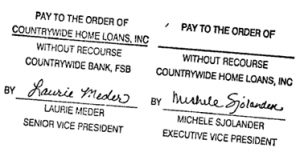







 The Hedge
