Foreclosures
Help With Foreclosure
If you have been given a notice of default and a foreclose sale is scheduled a bankruptcy stay will delay the foreclosure and a Chapter 13 plan will provide for a repayment plan to make up the back payments.
Works Rights Compliance Alliance
California Sets Precedent: No More Hiding Behind Bogus PEOs – Workers Rights Compliance, Precedent Set: Employers Can’t Outsource Accountability – Workers Rights Compliance, DLSE Draws the Line: Fraudulent PEO Coverage Doesn’t Cut It – Workers Rights Compliance, New Legal Benchmark: PEO Schemes Won’t Shield Employers – Workers Rights Compliance, Garcias Pallets Case Becomes First-Ever DLSE Precedent – Workers Rights Compliance, Historic First: California Labor Commissioner Issues Precedent Ruling on PEO Fraud – Workers Rights Compliance, DLSE Makes It Official—No Valid Workers’ Comp, No Excuses – Workers Rights Compliance, Real Coverage for Real Workers: Fraud Won’t Fly in California – Workers Rights Compliance, Workers Deserve Real Protection—Bogus Insurance Doesn’t Count – Workers Rights Compliance, Precedent Protects Workers from Fake Insurance Scams – Workers Rights Compliance, 50+ Workers, No Coverage—California Says Never Again – Workers Rights Compliance, Labor Law Victory: Worker Safety Over Corporate Shell Games – Workers Rights Compliance, $1.3M Lesson: Ignorance of the Law Is No Defense – Workers Rights Compliance, Certificates Can Lie—Employers Are Still on the Hook – Workers Rights Compliance, Fraudulent Coverage = Real Fines – Workers Rights Compliance, The Bill Comes Due: $1.3M in Fines for Workers' Comp Evasion – Workers Rights Compliance, Subcontracting Liability Doesn’t Mean Subcontracting Responsibility – Workers Rights Compliance, A Win for Honest PEOs, a Loss for Cheaters – Workers Rights Compliance, Leveling the Field: Fraudulent Operators Face Real Consequences – Workers Rights Compliance, PEO Accountability Is Here—Honest Brokers Applaud – Workers Rights Compliance, No More Free Ride for Fraudulent PEOs – Workers Rights Compliance, Justice for Legitimate Employers—Fraudsters Pay the Price – Workers Rights Compliance, From CompOne to CompassPilot—The Shell Game Ends Here – Workers Rights Compliance, How a Bogus Insurance Scheme Cost One Company $1.3 Million – Workers Rights Compliance, Unmasking the PEO Scam: California Cracks Down – Workers Rights Compliance, One Employer, Three PEOs, Zero Coverage—The Precedent Tells All – Workers Rights Compliance, DLSE Precedent Highlights Deep Industry Scams – Workers Rights Compliance, Fake Insurance Certificates Are Not a Defense—They’re a Liability – Workers Rights Compliance, Employers: Verify Your Workers’ Comp Coverage—Before the State Does – Workers Rights Compliance, Don’t Get Burned—Understand Joint Employer Liability Today – Workers Rights Compliance, Legit PEO? Or Just a New Name for the Same Old Scam? – Workers Rights Compliance, Your PEO’s Certificate Might Be Fake—Know the Signs – Workers Rights Compliance, Before You Contract Labor, Read This Precedent Decision – Workers Rights Compliance.

Help With Foreclosure
If you have been given a notice of default and a foreclose sale is scheduled a bankruptcy stay will delay the foreclosure and a Chapter 13 plan will provide for a repayment plan to make up the back payments.
Experienced Protection
We provide strong thorough protection. We give you solid solutions and fast answers. Our fiduciary responsibility is you. Your house. Your car. Your hard work. We legally guard your financial assets.
With a phone call, we can begin a process that within only a day or two can stop your creditors in their tracks and give you peace of mind. Contact us today in Southern California (909)890-9192 in Northern California(925)957-9797today to arrange a free office consultation. Here is the process in a nutshell.
What We Do:
We believe in accountability. Our philosophy is simple…vertical accountability to our Creator ensures horizontal accountability to our clients. Here are some of the credit question most commonly asked by our clients. What about :
Are you worried back taxes owed to the IRS? If you owe State, Federal, or local taxes and you are also behind in other payments to creditors, Federal Laws can give you assistance.
Filing Bankruptcy Can Stop Tax Garnishment
If you file for a Chapter 7 or Chapter 13 bankruptcy, all collection activities, including tax garnishments must cease. While you may still owe the tax, the automatic stay will put you in a better position to deal with repaying the tax, if it is not one that can be discharged completely. Certain taxes, specifically income taxes (depending on their age) may not have to be repaid should you declare bankruptcy. If you file for bankruptcy under Chapter 13, you may get up to 60 months to pay back taxes which are non-dischargeable under bankruptcy.
Understanding that each debtor’s circumstances are unique, results will vary depending on your individual situation. The McCandless Law Firmhas helped many individuals in similar situations out of the financial holes they have found themselves in. Contact us today to see how we can assist you in getting the fresh start you deserve.
Help With Judgments
If you have been sued by a creditor and have had a judgment issued, the creditor may file an Abstract of Judgment asserting a lien on all real property you own, not unlike another mortgage. As long as the judgment goes unpaid, it usually increases as the creditor has a right to interest on the unpaid balance.
Subject to certain exemptions, a judgment creditor can also try to collect on other things you may own, such as a car, household goods, money in the bank, tools, equipment, etc. The judgment against you will appear on your credit report which may result in a more difficult time obtaining credit and may also has some negative effects with respect to employment.
While dealing with the effects of a judgment can be devastating, contact one of our bankruptcy attorneys today to see if filing Chapter 7 or a Chapter 13 bankruptcy will eliminate the debts before they can become judgments. In some instances, your creditors can be completely eliminated, and in others, you may be able to negotiate a repayment plan up to five years in duration for what amounts to pennies on the dollar.
Understanding that each debtor’s circumstances are unique, results will vary depending on your individual situation. The McCandless Law Firm has helped many individuals in similar situations out of the financial holes they have found themselves in. Contact us today to see how we can assist you in getting the fresh start you deserve.
Help With Foreclosure
If you have been given a notice of default and a foreclose sale is scheduled a bankruptcy stay will delay the foreclosure and a Chapter 13 plan will provide for a repayment plan to make up the back payments.
Help With Repossessions
If you are aware that you are behind on car payments and a repo man is looming or have been threatened with a repossession a bankruptcy stay will delay the repossession and a Chapter 13 plan will provide for a repayment plan to make up the back payments and avoid the repossession altogether.
Bankruptcy attorneys frequently get asked whether student loans are dischargeable in bankruptcy. As the Bankruptcy Code is very broad in defining what constitute a student loan, not only are government backed student loans such as Stafford, Direct, or Perkins loans normally non-dischargeable, but the Bankruptcy Code goes further and excepts “any indebtedness incurred…solely to pay higher education expenses” from being discharged.
Notwithstanding the general prohibition against discharging student loans, only two instances exist in which a debtor can eliminate student loans in bankruptcy. The first situation is where it can be shown that requiring the debtor to repay his or her student loans would impose an undue hardship. To qualify for a hardship discharge, a debtor must prove that they will never be able to pay back their student loans, whether it is an inability to repay due permanent disability, or some other reason which would establish undue hardship. To be eligible to receive this type of discharge, usually the debtor must be found to be totally disabled and would be require to supply sufficient documentation that he or she is unable to work due to life threatening illness or injury. If, however, the debtor was afflicted with the illness or condition at the time he or she obtained the student loans, the hardship discharge would be inapplicable. The second instance is where a debtor lists his or her student loans in a Chapter 13 plan and the lender fails to object. This issue has been the subject of great controversy however, and the law in this regard may change in the near future as bankruptcy practitioners anxiously await the United States Supreme Court decision in United Student Aid Funds, Inc. v. Espinosa, argued in December 2009.
The offers free initial consultations to individuals and families who are struggling financially and seek relief afforded by the Bankruptcy Code. Whether you are contemplating filing for bankruptcy or have received a foreclosure notice and are having difficulty with creditors, Southern California (909)890-9192 in Northern California(925)957-9797 if you want to get past difficult times and get the fresh start you need.
Stop using your credit cards and don’t incur any additional credit.
Once you have made the decision to file bankruptcy, you should not use your credit cards nor incur any additional credits from that point forward. Any recent purchases or advances can be held as still due and owing after you file bankruptcy. The rational is that you never intended to pay those debts back and is similar to fraud. If you’re seeking a fresh start, do your best to insure that you will in fact receive that fresh start. The credit card issuers are very aware of attempts to run-up the charges on credit cards. This also applies to cash advances. If you take a cash advance too close to filing bankruptcy, you are likely to see an objection from the credit card issuer. The objection comes in the form of an adversarial complaint. If the creditor is successful in their objection, the amount of the recent advance(s) will be held due and owing after your bankruptcy case.
Take the required credit counseling briefing
Before a Chapter 7 bankruptcy case can be filed, a person must take a credit counseling briefing from an approved credit counseling agency. This credit counseling briefing can be done on the internet or by telephone. The entire briefing typically takes less than one hour and at the time of this writing, costs approximately $50.00. The credit counseling briefing requires the debtor to provide information as to their monthly income and expenses as well as a listing of their creditors. This briefing must be completed within 180 days prior to filing bankruptcy.
File your taxes
You must file your most recent year’s taxes to qualify for Chapter 7 bankruptcy relief. Although this seems like a simple requirement, you would be amazed at the number of individuals who have not filed their most recent taxes. A copy of the return will be forwarded to your assigned bankruptcy trustee after your case is filed. You must also provide your most recent tax return to any creditor who requests it.
Provide your most recent paychecks
You must provide the most recent 60 days worth of paycheck stubs at the time your case is filed. These will be forwarded to your assigned bankruptcy trustee or may be filed with the clerk of the bankruptcy court. This measure is in place to make sure that the amount listed on the petition for monthly income is in fact accurate. If a person receives income from a source other than employment, evidence of that income must be provided just as if a paycheck stub. Once you are aware that you are likely going to file bankruptcy, keep copies all of your paycheck stubs in an organized manner.
Get Your Paperwork in Order
Collect all statements from bill collectors. Go online and get complete addresses of creditors who may have stopped billing you. Check the balances at financial institutions where you bank. Look at your recent tax returns to provide your gross income over the past three years. Basically, get to know your assets and liabilities and have them written out and organized for your lawyer to prepare your case. Gather a listing of all of all of your debts.
The more complete you can be in providing a list of your creditors, the less problems or headaches you will have from creditors after your bankruptcy case is over. Once you know that you are going to file, start to save all correspondence that arrives from creditors, collection agencies or others who are trying to collect on a debt. The disclosure requirements have become more stringent so you want to make sure that your have forwarded all of your creditor information to your attorney. If you are unsure of exactly who you may owe, you may want to consider acquiring a copy of your most recent credit reports. Each year you may request a free copy of your credit reports from the three major credit bureaus reporting companies. Those are TransUnion, Equifax and Experian and they can be obtained by going to www.annualcreditreport.com. Even if you are unaware of the creditors listed on your reports, provide those to your attorney anyway. When you seek credit, after your filing, for a mortgage, auto loan, or personal loan, you want to be able to show that all of the items on your credit report were listed and discharged in your bankruptcy case. The rule to remember is to list everybody and their grandmother on your bankruptcy petition and schedules. This way you can be assured that you are not leaving anyone out of the bankruptcy.
Check and review your petition for accuracy
Your attorney will prepare your bankruptcy petition and schedules primarily based upon the information and disclosures that you have provided. The petition and schedules will then need to be reviewed and signed by you. Do not take this step lightly. You are verifying that the information is true and correct to the best of your knowledge and that all of your assets and liabilities are listed. This is the time to double check the itemized list of creditors shown on the petition and schedules with your known list of creditors. You also want to make sure that your home, vehicle or other assets are properly listed and exempted to the full extent of the chosen law. Remember, your petition and schedules are a legal document signed under oath. Take the time to insure that they are true and accurate.
Pay your attorney or make payment arrangements
Most attorneys will want to be paid in full before they file your case. If they don’t, there is a chance that their fees may be discharged in the bankruptcy. All attorneys’ fees come under the scrutiny of the United State’s Trustee’s office and the bankruptcy court judges. They will monitor whether the fees charged in a Chapter 7 bankruptcy case are excessive. They will also determine whether or not the attorney had collected fees from his client when the debt was discharged. A debtor should be aware that there might be additional fees charged for filing amendments to the petition and schedules and for missed court dates. It is a good idea to get the attorney fee issue out of the way as early as possible. It is often the main reason why in certain circumstances, a case never gets filed.
Chapter 7 is designed to erase consumer debts and bankruptcy statistics show is the quickest and most straightforward type of bankruptcy and works best for individuals with large credit card debts or medical bills. Gaining a better understanding of Chapter 7 bankruptcy will help you determine whether it is suitable for your circumstances.
Should You File For Chapter 7 Bankruptcy?
In determining whether to file for Chapter 7 an individual should evaluate their financial situation with an experienced bankruptcy lawyer. In assessing the viability of a Chapter 7 case, the amount of debt is not as important as the client’s inability to repay it. Whereas some debtors file for bankruptcy with a relatively small amount of debt, others wait until massive amounts of debt accumulate before filing. With the assistance of an experienced bankruptcy attorney, the client’s debt, income, expenses and assets will be examined to help determine whether Chapter 7 is advisable.
The Bankruptcy Code requires debtors to disclose all of their monthly income and expenses. In addition to wages earned, debtors must disclose all other sources of income and are subjected to a means test. If an individual passes the means test, they are presumed to qualify for Chapter 7. Debtors who do not qualify for Chapter 7 pursuant to the means test may still be able to file for a Chapter 13 bankruptcy.
How a Chapter 7 Bankruptcy Works
The bankruptcy process begins with a petition filed in bankruptcy court that triggers an automatic stay which prohibits further collection efforts of creditors. While the court appoints a trustee to liquidate assets to pay existing creditors, most assets are subject to existing liens or are be exempt from liquidation. Generally, things like household goods, clothing and personal items are fully exempt. Property which is particularly valuable, such as oil paintings, coin collections, or rare items may have higher value than what can be protected under the exemption rules. In those circumstances, the debtor could be required to turn over the property to the trustee or offer to buy the trustee out of his interest in the non-exempt property. Once the trustee collects any nonexempt assets and pays creditors from their proceeds, any remaining debt is discharged, subject to certain limitations such as secured debt, taxes, Student loans, alimony and fraudulent acts.
If the debtor is concerned about losing certain assets in a Chapter 7 bankruptcy, he or she may be able to reaffirm certain assets, which permits them to keep the property outside of the bankruptcy by entering into a reaffirmation agreement if the debtor has sufficient disposable income and is relatively current on payments and the creditor agrees to reaffirm.
While filing for bankruptcy is often a difficult decision to make, debtors overwhelmingly feel relieved after they have filed for bankruptcy. At the McCandless Law Firm, we are committed to providing personalized service and our team of professionals want to help you get a fresh start. Southern California (909)890-9192 in Northern California(925)957-9797 today in Southern California (909)890-9192 in Northern California(925)957-9797today to arrange a free office consultation.
A deed in lieu agreement is another option for individuals who do not have the financial means to continue making payments on their mortgage but seek to avoid foreclosure. A deed in lieu is an arrangement in which the deed to property is surrendered and any remaining balance on the mortgage is forgiven. This is a good option for some individuals who have substantial equity in their home, but who cannot find a buyer for a short sale.
With a deed in lieu, a timeline will be established regarding turning over the deed and vacating the property. The homeowner may also be expected to pay fees associated with transferring the property to the mortgage lender, and as with short sales, any forgiven principal balance may be subject to a forgiveness tax. This can create an additional tax burden for some individuals, therefore the decision to go through with a deed in lieu arrangement is one that must be carefully evaluated.
If you are considering a deed in lieu arrangement with your mortgage lender, talk to one of our bankruptcy attorneys today. The McCandless Law Firmoffers professional advice and a free, no-obligation case evaluation, so that you can complete information about your legal rights and any choices you may have when it comes to avoiding foreclosure. Contact us in Southern California (909)890-9192 in Northern California(925)957-9797 today to learn about bankruptcy law, deed in lieu arrangements, and your rights and obligations under the law.
Since the passage of new bankruptcy legislation in years past, the laws have become so complex that it is virtually impossible for lawyers who do not handle bankruptcy cases, much less a paralegal or document preparer, to be able to properly analyze a debtor’s situation, recognize the applicable exemptions and handle the debtor’s case from petition through discharge. In addition to completing the debtor’s petition, an experienced bankruptcy lawyer can advise which banks are quicker to freeze deposited funds when bankruptcy is filed or which lenders will immediately repossess your car despite timely payments by a debtor.
While an individual could save money by hiring a less qualified individual to assist with their bankruptcy case, the old adage of “you get what you pay for” is good advice. While it is possible to pay too much if a lawyer’s fees are exorbitant, you can also pay too little as the cheapest bankruptcy can often turn into the most expensive as mistakes in preparing the petition could be costly. While paralegals may charge low fees, he or she cannot give legal advice which could result in the loss of certain assets or a denial of discharge by the Court. By hiring an experienced lawyer you can get peace of mind knowing whether filing bankruptcy is really in your best interests and that foregoing some savings will save you money in the long run. If your eyesight was bad and you needed laser surgery (LASIX™) would you trust your vision to the cheapest doctor? Probably not. While past mistakes may have left you in the position where filing bankruptcy is necessary, do not make another mistake when it comes to your financial future and hire an experienced bankruptcy attorney.
The McCandless Law Firmoffers free initial consultations to individuals and families who are struggling financially and seek relief afforded by the Bankruptcy Code. Whether you are contemplating filing for bankruptcy or have received a foreclosure notice and are having difficulty with creditors, in Southern California (909)890-9192 in Northern California(925)957-9797 if you want to get past difficult times and get the fresh start you need.
One of the best things about getting a fresh start by declaring bankruptcy is that it allows you a chance to rebuild your credit score. The first step in re-building your credit is to eliminate debt. With less debt, meeting your remaining financial obligations should be easier, provided you manage your finances well. Second, you should make sure to remove any negative information that remains on your credit reports with the three major credit reporting agencies. After your bankruptcy is complete, any debt discharged therein should be listed on your credit report as included in the bankruptcy with a zero balance. If the information regarding these debts is not updated, the accounts could still appear to be active, which could limit your ability to get credit.
In order to check the accuracy of your credit reports, you should order a copy of them to make sure all your discharged debts are listed as being included in your bankruptcy case and now show only zero balances. You can contact the three major credit reporting agencies online at:
• Trans Union: http://www.transunion.com
• Equifax: http://www.equifax.com
• Experian: www.experian.com
Other valuable tips to help rebuild your credit after bankruptcy include:
1. Establish accounts that will report positive information on you. Get a single credit card with a small credit limit, use it sparingly and pay the entire balance each month.
2. Repay all bills in a timely manner. Most credit cards and utilities report late payments. After your bankruptcy, late payments will continue to paint you as a bad credit risk to creditors.
While many clients are excited to get a fresh financial start through bankruptcy, the McCandless Law Firm understands the apprehension and fear of losing one’s assets. Whether it is your home, vehicle or prized personal possessions, implementing a solution for your debts does not mean that you have to lose the things your family values most. Our team of professionals will provide you with the information necessary to protect your assets and advise which exemptions may be available.
Asset Protection
While bankruptcy laws are federal statutes, the court will look to state exemptions to determine which assets you can protect from creditors.
Once your bankruptcy has been discharged, debts listed in your petition will be discharged. While you will not have to repay these debts and creditors will not be able to contact you and demand payment, some creditors continue to pursue discharged debt. This is a violation of bankruptcy discharge laws, and you may be entitled to monetary damages. It is crucial that your bankruptcy petition was complete to make certain that all dischargeable debt was included in your filing.
If debts that have been properly discharged, demands for payment are rare but if this does happen to you, rest assured that our team of professionals will seek justice for you in court and recover any damages that you may be owed as a result of the creditor’s violations. Proper legal representation is essential in order for you to take advantage of the full protection that the law provides. If you have concerns about a bankruptcy discharge violation, contact us Southern California (909)890-9192 in Northern California(925)957-9797 as we can help answer your questions and give you the information you need to make an informed choice about your particular situation.
There are several common causes which lead to filing for bankruptcy. These included, but are not limited to the following:
1. Lawsuits/Garnishments
Nobody wants to be sued and brought to judgment. Nobody wants to have 10%-25% of their hard earned wages deducted from their pay. In many cases, the taking of 10%-25% of one’s wages leads to the inability of that person to pay his rent, utilities or auto payment. Just the thought of the employer potentially having to garnish wages leads many to panic. Debtors do not want their employers or co-workers knowing of their financial troubles.
2. Auto Repossessions
Imagine waking one morning, heading out the door to work, only to find that your car is not where you parked it. Sure you were a little late on the auto payment, but you thought the finance company would wait for you to get current on your own. Auto lenders will do whatever it takes to get you financed, regardless of whether you are actually capable of affording the car. They realize that if you can’t pay the installment, they can take back their vehicle and re-sell it before it fully depreciates. They do this through the use of auto auctions where the vehicle sells for substantially less than what is owed. This leads to a deficiency amount which the lender seeks to recover from the debtor, you. Talk about insult to injury, the debtor first loses possession of the vehicle and then gets sued for the outstanding deficiency balance. Who wants to pay for something that they no longer have?
3. Unpaid Medicals
With more and more Americans going without medical insurance (45.8 million, per the U.S. Census Bureau press release dated 8/30/05), they risk losing whatever they have earned throughout their lifetime should a major medical problem occur. Most claim that they can’t afford to carry medical insurance. In reality, they can’t afford not to. The rising cost of health care could significantly deplete one’s savings should a serious illness or injury occur. Even those with co-payment coverages are having a difficult time meeting their burden of the bill.
4. High Interest Loans
There have always been high interest personal loans from many sources. In recent times, the advent of the payday loan has surfaced. These loans have exorbitant interest, which is often carried over to extend the loan. People who cannot survive until their next payday are giving up a huge portion of their paycheck to get the money in advance. This dangerous cycle leads to further borrowing with less and less money actually going into the worker’s pocket.
6. Foreclosures
The pride and joy of being a homeowner can be easily tempered by the hard work and cost of maintaining the home. Calling the landlord to make repairs is not an option; you are your own landlord. When the water is not flowing to the main sewer, you have no option, but to make the repairs. Additionally, the mortgage needs to be timely paid no matter what your special circumstance may be. Real estate taxes and homeowner’s insurance are also required to be paid regularly or you face a foreclosure suit. Changes in employment, health, income and marital status can lead to one’s failure to make timely payments. Many take second mortgages or lines of credit which simply create an additional, financial burden on the homeowner. When faced with the reality that they cannot afford the home, debtors can vacate the home and extinguish any mortgage liability through bankruptcy.
7. Overzealous Lending
How many credit card applications have you received in the mail this year? If you are like many Americans, the applications continue to appear regularly. Have you received convenience checks or offers for additional lines of credit? If so, you may have taken advantage of the use of the credit without any feasible way of repaying the debt. Many people are receiving pre-approved credit applications when they are in fact, not credit worthy. The credit card lenders point fault at the debtors for accepting the credit without the means to repay it. It seems more logical to fault lenders who do not undertake to check the credit worthiness of particular debtors.
8. Consumer Overspending
Many people see what they want, acquire it, and decide later how they will pay for it. People want to possess the latest clothing, jewelry, electronics, etc. Most stores now offer the ability to take the product home through the use of store credit cards or outside financing. You may even get a modest percentage discount off the purchase price if you open or use the store charge card. Many people charge their groceries, restaurant and transportation expenses believing that if they just make the minimum payments everything will be alright.
Once you have decided to file for bankruptcy, you must be truthful about your financial situation in order to take advantage of bankruptcy protections. While this does not pose a problem for a majority of individuals, it is often unwise for a debtor undergoing a bankruptcy to seek to secrete or hide assets.
When you file bankruptcy, expect that the trustee will perform a thorough investigation of your assets and your financial transactions for a year or more prior to the bankruptcy. If the trustee determines that you have sold or given away valuable items before filing for bankruptcy protection, this can cause your case to be dismissed. If this happens, you will have to re-file and may not benefit from the protection afforded by the automatic stay which means that creditors will be free to pursue their collection attempts. Additionally, debtors who attempt to hide assets may be guilty of fraud, accordingly, it is important to disclose any and all financial activities in your initial petition.
Despite innocent intentions, certain actions may require that you to have to wait in order to file for bankruptcy in order to avoid dismissal. If you have recently sold or given away valuable property, you may have to wait for a year before you file, which is why it is important that you speak with a reputable bankruptcy attorney if you are considering filing for bankruptcy. The McCandless Law Firmoffers legal advice for anyone who may be considering filing for bankruptcy, contact us today to set up a free, no-obligation case evaluation.
While creditors must follow specific laws when it comes to collecting on debts, creditors often resort to unscrupulous collection practices which violate the Fair Debt Collection Act and risk being fined, or sued, depending upon the severity of the violation by attempting to take advantage of consumers who are ignorant when it comes to debt collection practices.
Fair Debt Collection Practices
Creditors must follow fair debt collection practices if attempting to collect on a debt. There are several laws in place governing creditor communication, including:
• Creditors cannot call and harass you throughout the day. One phone call per day is allowed, provided that they actually speak with you.
• Creditors cannot misrepresent themselves to be a lawyer, police or other governmental entity.
• Creditors cannot threaten, harass, or annoy you. They may not use profanity or threaten to sue you, garnish your wages or take other actions that they do not really plan to take.
• Creditors cannot call at inconvenient times, or contact you by telephone after you have requested that they stop calling.
Automatic Stay Violations
If you have filed for bankruptcy protection, creditors cannot attempt to collect on a debt for as long as the automatic stay is in place. Creditors that violate the automatic stay may be subject to legal action, and monetary damages. An automatic stay goes into place as soon as your paperwork is accepted by the bankruptcy court. If you are contacted by creditors after they have been informed of your bankruptcy, you may be able to pursue the creditors in court.
Bankruptcy Discharge Violations
If a debt is listed as discharged on your bankruptcy filing and a creditor still attempts to collect on the debt, you may be entitled to damages. Speak with a reputable San Bernardino County Bankruptcy Attorney and get the representation that you need in this case.
Even though creditors have a right to collect the debts they are owed, they have to collect them within the boundaries of the law. Fair debt collection practices were put into place to protect consumers like you, and you may have the right to seek damages if creditors employ abusive collection techniques. Contact us to speak to an experienced bankruptcy attorney if you have contacted in violation of the Fair Debt Collection Practices Act, and get the legal representation you need to recover damages and prevent further abuse.
As Southern Californians deal with the fallout from the mortgage crisis, many homeowners and families have found themselves saddled with debt they cannot afford. As a result of this unfortunate situation, individuals are increasingly turning to bankruptcy to get their financial lives back on track. A majority of individuals file a Chapter 7 bankruptcy to help wipe out most, if not all, of their unsecured debts, including credit card bills, medical bills and judgments. For those individuals who do not qualify for a Chapter 7 bankruptcy, a Chapter 13 bankruptcy is beneficial where the debtor has significant property and/or wants to eliminate a second mortgage on the residence.
At the McCandless Law Firm, we are committed to providing personalized service and our team of professionals will help you obtain a fresh start for you and your family. Contact us today to arrange a free office consultation. Documents to Collect Before filing, the following documents will be necessary to complete your bankruptcy petition:
1. Copy of each debtor’s social security card and bring original with you to your hearing
2. Copy of each debtor’s drivers’ license and bring original with you to the hearing
3. Documentation of any wage garnishments, wage assignments or other legal actions, including lawsuits
4. Copy of recent real estate appraisal, if any
5. Copy of most recent real estate tax bill
6. Pay stubs for each debtor for prior 6 months
7. Documentation of other income i.e. child support, social security, pension, disability, unemployment for prior 6 months
8. Copies of federal and state tax returns complete with all schedules including W-2’s for the prior 4 years
9. Copies of checking account, savings account, and money market account bank statements complete with copies of canceled checks for the prior 6 months (you will be asked to supplement this at a later date)
10. Copy of any life insurance policies except ones through employment including a statement regarding the current cash value
11. Copy of most recent brokerage account statement
12. Copy of most recent individual retirement account statement
13. Copy of most recent pension/retirement account statement
14. Copy of most recent 401K, 401B or 401E account statement
15. Copy of any contract for deed in which you are a buyer or seller
16. Copy of divorce decrees and/or domestic support obligation orders (child support or alimony)
National Association of Realtors to fight foreclosure
In September and October 2010, several lenders suspended foreclosures due to questions about whether the transactions were being processed consistent with applicable state law requirements.
NAR Says Families Will Suffer if Foreclosure Freeze Continues (Oct. 12)
NAR Letter Regarding Deficiencies in the Foreclosure Process by Some Mortgage Servicers (Oct. 12) (PDF: 138K)
Serious Questions Raised about the Validity of Foreclosures (Oct. 7)
Foreclosure Moratorium: Latest in the Debate (Oct. 11)
Resources For Realtors®
Field Guide to Foreclosures
Realtor® Magazine Ethics Column: When the Seller Is Bankrupt
Quiz: Test Your Foreclosure IQ
Video: Learn from a Foreclosure Specialist
NAR Research’s Trends in Foreclosures Webinar
Foreclosure Prevention and Response Tool Kit: For REALTORS®
Educational Opportunities
Realtor University: Short Sales and Foreclosures–What Real Estate Professionals Need to Know
Short Sales and Foreclosure Certification Program
Resources For Homeowners, Buyers and Sellers
HouseLogic.com: Foreclosure Counsellors: What They Can and Can’t Do
HouseLogic.com: Foreclosure Process: How State Laws Vary
6 Questions Foreclosure Buyers Should Ask
Homeowners: Concerned About Your Existing Mortgage?
Resources and Programs For Realtor® Associations
Foreclosure Prevention and Response Program
Foreclosure Prevention and Response: Best Practices
Foreclosure Prevention and Response Tool Kit: For Associations
Neighborhood Stabilization Project
“Just when you thought Wall Street couldn’t defraud the economy any further, it went ahead and did it. After pushing millions of borrowers into foreclosure with fraudulent loans, big banks are now being implicated in a massive new fraud scandal involving the foreclosure process itself. All over the country, banks and their lawyers are resorting to outright fraud in order to kick people out of their homes and slap them with huge, illegal fees. It may be the biggest scandal of the entire financial crisis, one that could result in epic losses for the nation’s largest banks.
We’ve been hearing for years about the horrific mortgages bankers pushed borrowers into, the outrageous scams they deployed in dumping these mortgages on investors, and the lies they told to their own shareholders about those mortgages in order to boost bonuses. Fraud was a major part of this machine at every stage of production, but the foreclosure fraud being uncovered by lawyers today appears to be the broadest scandal to emerge from the mortgage mess thus far.
Yves Smith has done an outstanding job covering this scandal, so be sure to check out her posts for all the details, but here’s the basic story: Banks intentionally skimped on their mortgage paperwork during the housing bubble—it cut their costs and made the sale of mortgage-backed securities more profitable. A basic, standardized part of the mortgage process at many banks included forging or destroying key documents, or never bothering to write them up in the first place. Those reckless procedures have been applied to millions of mortgages issued over the past decade, and allowed inflated bonus checks to be written for years. But things are about to get very ugly for the banks.
Mortgage documentation has been so shoddy that banks can’t actually prove that they own the mortgages they want to foreclose on. This isn’t a small scandal, it isn’t a minor clerical issue, and it isn’t a problem that banks deserve help from taxpayers to solve. Wall Street has simply not performed the basic tasks necessary to track ownership of its assets. Imagine a car manufacturer being unable to document the sale of automobiles. The basic business has broken.
If banks can’t prove that they have the right to foreclose, they’re not allowed to foreclose. The borrower gets to keep the house—even if he or she has stopped making payments on the mortgage. So banks—and the scummy law firms they hire—are resorting to all kinds of new tricks in order to foreclose (see Andy Kroll’s excellent article detailing the sharks who operate these law firms). They’re creating new documents, forging signatures and lying to judges. This is all fraud.
And this fraud doesn’t only help banks cut costs—it also enables lawyers to slap troubled borrowers with huge, illegal fees, squeezing them for money even after they’ve been tapped out on mortgage payments. If you can’t pay the foreclosure fees in court, debt collectors will chase you down and garnish your wages for years to come. These are massive fees—tens of thousands of dollars assessed on individual families for the luxury of being booted out of their home, all made possible by fraudulent documents, forged paperwork, and straightforward lies.
The ownership chain for mortgages is so complex—one bank issues a loan, which is sliced and diced into multiple mortgage-backed securities and sold to multiple investors—that the right to foreclose is not clear without precise and meticulous paperwork. If banks don’t keep these records, there is no way for them to prove the losses or profits they make from a given loan.
Banks can’t even keep track of what houses they actually have the right to foreclose on. In addition to slipping illegal fees into the mix, the financial establishment is slamming incorrect foreclosures through the legal pipeline. Banks are actually kicking people out of homes who have been paying their mortgages on time. In some cases, they’re even evicting borrowers who have already paid off their loan.
When banks can’t get the documents they want, they resort to still more drastic measures. Banks are violating the law by physically breaking into peoples’ homes, stealing their belongings and changing the locks. Add breaking and entering and larceny to the list of crimes committed by banks in the foreclosure process.
This scandal ought to put people behind bars. When somebody breaks into your home and steals your stuff, he goes to jail. But it also creates very serious problems for the entire financial system—if banks can’t prove they own mortgages, how can we trust their quarterly earnings statements? How can the bonuses based on those earnings be justified?
In other words, the inhumane and illegal way banks have treated their borrowers is only part of the fraud scandal Wall Street now faces. There is also the makings of a massive corporate accounting scandal—one that easily rivals Enron and WorldComm in its scope.
GMAC, Bank of America and JPMorgan Chase—three of the largest mortgage servicers in the nation—have already frozen foreclosures in 23 states. These are the states in which banks must obtain a court order to proceed with a foreclosure, but there is every reason to suspect that the same illegal practices are occurring in other states. Shoddy documentation has been a standardized element of the mortgage process for years—it has just been easier to prove this malfeasance in states that require courts to sign-off on foreclosures.
When housing prices are in decline, banks lose money on foreclosures. Today, the average loss on a foreclosed subprime or Alt-A mortgage is about 63 percent, according to data analyzed by Valparaiso University Law Professor Alan White. But if banks can’t actually take over the home, a foreclosure is far worse for the bank—it can’t cut its losses on an unpaid loan by seizing the house and selling it. If borrowers assert their rights, and courts uphold the law, some of the nation’s largest banks are about to take massive, unexpected losses.
That fact—combined with the prospect of shareholder lawsuits over improper accounting—should radically change the landscape for foreclosure relief and broader financial reform. Most banks cannot afford to go to zero on every mortgage they own from the housing bubble. If troubled borrowers stand up to their banks, the resulting losses could easily jeopardize the solvency of some major firms. This gives reformers and policymakers a critical tool to demand stronger medicine for Wall Street: Give us real reform, or we’ll let you go under.
Title and Escrow complaint to the California Department of Insurance. Lennar the lender, the builder, the title and escrow. the insurance and many more controlled the whole process.
They made many mistakes and covered themself. Reason they are primarily controlled by the lenders and banks that they are foreclosing for. They say we don’t have to comply with the law as long as we can get title insurance. Then the sign an indemnification agreement with the title company illegally foreclose and wait to see if the former owner will sue or just accept it and move out.
http://www.scribd.com/doc/38476963/North-American-Title-Complaint-to-California-Fraudulent-Documents
Guess who happened to call me to help him in a class action against the banksters–BRIANT HUMPHREY.
http://www.scribd.com/doc/38477748/Arthur-Silver-Berg-Brian-Humphrey-Archived-Messages-09-30-10
October 01, 2010, 3:47 PM EDT
By Joel Rosenblatt
(Updates with Brown’s statement in fourth paragraph.)
Oct. 1 (Bloomberg) — JPMorgan Chase & Co., the third- biggest U.S. mortgage servicer, must prove its home foreclosures are legal, and if it can’t, must stop the practice, California Attorney General Jerry Brown said.
JPMorgan is asking courts to delay judgments in pending foreclosure cases while the bank reviews and possibly resubmits statements. JPMorgan said this week it is re-examining foreclosure filings after learning employees may have signed affidavits without personally reviewing underlying records, relying instead on other personnel.
Brown made a similar demand on Sept. 24 of Ally Financial Inc.’s GMAC Mortgage unit, which is being investigated by attorneys general in Texas, Iowa and Illinois after the lender said it would halt some evictions following a discovery of faulty documentation.
“JP Morgan Chase, like GMAC’s Ally Financial, has admitted that its review of key foreclosure documents was a ruse,” Brown said today in an e-mailed statement.
JPMorgan can’t record defaults on mortgages made from Jan. 1, 2003, to Dec. 31, 2007, unless, with “limited exceptions,” the lender had tried to determine whether the borrower is eligible for a loan modification, according to Brown.
Thomas Kelly, a spokesman for New York-based JPMorgan, declined to comment.
Yesterday, Illinois Attorney General Lisa Madigan, questioning whether JPMorgan is violating state consumer protection laws, demanded a meeting with the lender to discuss its foreclosures. Earlier today, Connecticut Attorney General Richard Blumenthal asked the state Judicial Department to freeze home foreclosures for 60 days, citing reports on GMAC and JPMorgan.
–With assistance from Dakin Campbell in San Francisco, Rick Green in New York and Andrew M. Harris in Chicago. Editors: Michael Hytha, Charles Carter.
To contact the reporter on this story: Joel Rosenblatt in San Francisco at jrosenblatt@bloomberg.net.
By Numerian Posted by Michael Collins

It seems, therefore, that millions of foreclosures that have occurred in the past two years may be invalid. Investors who were part of the $8,000 tax credit program may not have valid mortgages and may not legally have the right to live in their home. Title insurance companies have stopped accepting mortgage titles from GMAC and other financial firms implicated in this situation. Numerian
What appeared at first to be an isolated problem with home mortgage foreclosures at GMAC has morphed into a serious conundrum for just about everyone involved in the residential home market: homeowners, banks, mortgage servicers, investors, and even the US government. The problem goes beyond finding which lender has legal title to a home, and therefore the right to foreclose on a defaulted mortgage. The problem has become how to prepare for a possible behavioral change among homeowners, if more than a small percentage of them decide to stop paying on their mortgage. (Image)
Strategic Defaults are Already On the Rise
What would motivate a homeowner to stop paying their mortgage principal and interest? So far, severe financial problems, combined with a drastic fall in house prices, have been the main causes of most mortgage defaults by homeowners. When the value of the house falls below the mortgage balance due, homeowners are even more liable to default on their loan, and the greater this difference (referred to as the homeowner being “underwater”), the more likely it is that a strategic default will take place. This is an industry term for defaults that occur even though the borrower has the financial means to continue paying down the mortgage.
Strategic defaults are a rational decision by the homeowner, who believes the value of the home is so far below the mortgage balance that it would take years for market values to catch up. Why pay off a loan on a depreciating asset, especially if the homeowner can rent the same size home for much less than their mortgage payment? Depending on the location, strategic defaults represent from 10% – 20% of all defaults. There is also more of a tendency for owners of expensive homes to strategically default than owners of average size homes, so strategic defaults are of serious concern to the banking industry.
The initial reaction of banks to the rising level of mortgage defaults was to foreclose and dispose of the property as soon as possible. When home values were in a free-fall up to the summer of 2009, the banking industry frenetically processed tens of thousands of foreclosures each month, evicting homeowners in every metropolitan area across the US. This process slowed down last year for two reasons. First, the federal government imposed a moratorium on foreclosures, and second, the banks were achieving less and less on foreclosed homes. In previous recessions, banks could recover around 40% of the value of the outstanding mortgage from a foreclosure and bank sale of the property. Today the recovery rate has fallen to an unprecedented low of 5% of the loan value, which is hardly worth the expense, time, and trouble of foreclosing on the property.
You would think, therefore, that banks would be eager to work out a deal with the homeowner, lowering their mortgage balance to some level that meets the financial capabilities of the borrower. This isn’t happening either. To do this, the bank would still have to declare a loss on its books, and even the biggest banks don’t have enough capital to do this on a wholesale scale. Another factor is that the banks may only own a small portion of the mortgage, the rest being sold off to investors in a mortgage-backed security deal. These investors would have to consent to taking a loss as well, and this is almost impossible to arrange.
Where is the Title to the Home?
Now comes a third problem. The GMAC revelations showed that this mortgage company has been foreclosing on thousands of properties each month, filing incomplete or possibly fraudulent documents with the court approving the foreclosures. The process of foreclosing on a home mortgage is complex and governed by both federal and state laws, but in any event the process requires that someone working for the foreclosing bank assert in writing that they are personally familiar with all the documents submitted, and that these documents are accurate. GMAC has not been meeting this standard. A middle level executive has been signing over 10,000 foreclosure documents for GMAC each month and could not possibly have “personal knowledge” of the details of each foreclosure.
It gets worse. GMAC has been asserting that it is in possession of the lien representing the mortgage, and much more importantly – it is also in possession of the title to the home. It is the title which is of far more importance here, because without clear title a bank has no foreclosure rights. GMAC has been going in front of courts all over the US claiming it holds title to the property in question, when in fact the person making this claim has no personal knowledge of the documents, and GMAC cannot in many cases produce the title.
Who has the title? GMAC may have lost it within its own files, or may have passed the title on to a mortgage servicer when the mortgage was sold off to investors. The mortgage servicer may have sold the title to another servicer, or to a clearing house that supposedly was protecting the legal rights of the lenders and investors in mortgage securities. As the mortgage market became frenzied at the height of the bubble, the financial industry became very sloppy about documentation and is now having serious trouble producing the necessary documents to proceed with a foreclosure.
Quite a few real estate lawyers believe that what GMAC did, whether through sloppiness or deliberately, constitutes a fraud upon the court, which is subject to criminal penalties. GMAC has halted all foreclosures until it straightens out the document mess, but there is increasing suspicion in the mortgage market that these problems are not going to be solved in just a month or two, if at all. JP Morgan Chase has admitted that it too has a middle level executive who was submitting personal attestations to the foreclosure courts, when she could not possibly have known the facts behind each mortgage. Chase is probably in very good company with Citigroup, Bank of America, and Wells Fargo, all of which are likely to have similar processing problems.
It seems, therefore, that millions of foreclosures that have occurred in the past two years may be invalid. Investors who were part of the $8,000 tax credit program may not have valid mortgages and may not legally have the right to live in their home. Title insurance companies have stopped accepting mortgage titles from GMAC and other financial firms implicated in this situation.
Foreclosure Market is Coming to a Halt
The foreclosure market in the US is slowly grinding to a halt, with all this uncertainty about past and future mortgage rights, and with banks now recovering only 5% of the mortgage value in a forced sale. Professionals in the market are now speculating that the federal government may be forced to outlaw all home foreclosures, since there is so much doubt on whether banks have any legal right to foreclose on residential property. If this were to happen, the market mechanism essential to clearing defaulted properties from the market would cease to exist. Lost too would be the process known as price discovery, wherein neighboring properties can be appraised, making it much harder for any homeowner wishing to sell to do so. Not only is the foreclosure market subject to a freeze, but the entire home resale market could be crippled as well.
In fact, there may be yet another incentive for homeowners to strategically default, if theoretically the defaulter could live in the home free of charge should the party holding the mortgage be unable to produce the title. Already there are thousands of homeowners in the US who are living “rent free”, so to speak, while they wait for the bank to foreclose or for the courts to honor a bank’s foreclosure claim. These people are socking away tens of thousands of dollars in savings, or spending it for that matter, while the disposition of their property is in limbo. Even when the bank is finally able to proceed with the foreclosure, they are not suing the homeowner for back principal and interest due, in part because the delay may have been caused by the bank itself, and in part because some states do not allow banks to go after other homeowner assets once a default occurs.
As the months go by, the difference between a homeowner living rent free in their home, and de facto owning the home free and clear through a form of squatters rights, is becoming very gray. This is not going to sit well with the people who continue to pay down their mortgage even if they are underwater, nor will it sit well with those who paid off their mortgage. Good financial stewardship, a virtue in the past, is looking more and more like foolhardiness. There is both a legal and social breakdown that is occurring here, upending over a century of contract law and prudent behavior that underlay the housing market.
If strategic defaults spread in part because of this new uncertainty over foreclosure and who has the title to the home, the banks and the mortgage backed securities market would be put in a dreadful position. The day in and day out cash flow expected from millions of mortgage principal and interest payments would be impacted far more than it is already, with the banks unable to access their collateral to stanch the bleeding. Insolvencies among the banks and the investors holding mortgage securities would certainly rise.
The Federal Government is Ultimately Going to Own this Problem
How bad this could get is anyone’s guess, but continued deterioration will inevitably drag in the US government, which owns both Fannie Mae and Freddie Mac, by far the biggest issuers and guarantors of mortgage backed securities. The federal government also has an ownership stake in Citigroup and is sitting on billions of dollars of mortgage securities bought from all the big banks and from failing institutions like Bear Stearns. If the largest US banks are pushed into technical insolvency because of this problem, the federal government would inevitably own them too.
What is currently a legal problem could turn into a behavioral problem affecting the entire mortgage market, which in turn creates a massive political problem for the federal government. It is the behavioral problem which has to be of most concern for the government, because if people who could pay their mortgage decide it is uneconomic or unfair for them to do so, the relationship between borrower and lender is broken. Currently it is slightly fractured, and the government as well as industry leaders will do everything possible to downplay this situation, characterizing it as a technical matter that will be easily and quickly cleared up.
So far, though, the courts aren’t buying the quick fixes being proposed by the industry. The foreclosure laws that have arisen over the past 100 years are designed to protect the homeowner from hasty and incomplete processes, and as well from fraudulent foreclosures. The courts are saying that the banking industry not only was hasty and reckless in its mortgage securitization process, but that homeowner rights are being trampled upon, and the courts themselves are being defrauded along with the homeowners. More and more judges across the country are coming to this conclusion, and if they believe the rule of law has been seriously undermined in the mortgage market, why should any homeowner feel a moral or legal compulsion to continue to pay down their mortgage?
Defective Procedure
The trustee’s failure to comply with the statutorily mandated procedures for a foreclosure sale is an important basis for attacking the foreclosure sale. The trustor bears the onus of establishing the impropriety of the sale, for a foreclosure is presumed to be conducted regularly and fairly in the absence of any contrary evidence Stevens v. Plumas Eureka Annex Min. Co. (1935) 2 Cal.2d 493, 497; 41 P.2d 927; Sain v. Silvestre (1978) 78 Cal.App.3d 461, 471 n. 10; 144 Cal.Rptr. 478; Hohn v. Riverside County Flood Control & Wat. Conserv. Dist. (1964) 228 Cal.App.2d 605, 612; 39 Cal.Rptr. 647; Brown v. Busch (1957) 152 Cal.App.2d 200, 204; 313 P.2d 19.] The presumption can be rebutted by contrary evidence [See, e.g., Wolfe v. Lipsv (1985) 163 Cal.App.3d 633,639; 209 Cal.Rptr. 801] and the courts will carefully scrutinize the proceedings to assure that the trustor’s rights were not violated. [See e.g., System Inv. Corp. v. Union Bank, supra, 21 Cal.App.3d 137, 153; Stirton v. Pastor (1960) 177 Cal.App.2d 232, 234; 2 Cal.Rptr. 135; Brown v. Busch, supra, 152 Cal.App.2d 200, 203-04; Pierson v. Fischer (1955) 131 Cal.App.2d 208, 214; 280 P.2d 491; Pv v. Pleitner, supra, 70 Cal.App.2d 576, 579.]
a. Defective Notice of Default
A foreclosure may not be predicated on a notice of default which fails to comply strictly with legal requirements: “. . . a trustee’s sale based on a statutorily deficient notice of default is invalid.” With the enactment of The California Foreclosure prevention act Civil coded 2924 and 2923.5 and 2923.6 the recent decision in Mabury the requirements are to be strictly complied with” Miller v. Cote (1982) 127 Cal.App.3d 888, 894; see System Inv. Corp. v. Union Bank, supra, 21 Cal.App.3d 137, 152-53; Lockwood v. Sheedy. supra, 157 Cal.App.2d 741, 742.] Defective service of the notice of default will also invalidate the sale procedure. [See discussion in Chapter II, supra, “Adequacy of Notice to Trustor.]
b. Defective Notice of Sale
Some cases hold that a sale held without proper notice of sale is void. [See Scott v. Security Title Ins. & Guar. Co. (1937) 9 Cal.2d 606, 613; 72 P.2d 143; United Bank & Trust Co. v. Brown (1928) 203 Cal. 359; 264 P. 482; Standlev v. Knapp (1931) 113 Cal.App. 91, 100-02; 298 P. 109; Seccombe v. Roe (1913) 22 Cal.App. 139, 142-43; 133 P. 507; see also discussion in Chapter II B 4 supra, “Giving the Notice of Sale”.] However, if a trustee’s deed has been issued that states a conclusive presumption that all notice requirements have been satisfied, the sale is voidable and may be vacated if the trustor proves that the conclusive presumption does not apply and that notice was defective. The conclusive presumption may not apply if there are equitable grounds for relief such as fraud or if the purchaser is not a bona fide purchaser for value. [See Little v. CFS Service Corp. (1987) 188 Cal.App.3d 1354, 1359; 233 Cal.Rptr. 923;
Moreover, a serious notice defect that was directly prejudicial to the rights of parties who justifiably relied on notice procedures may independently justify setting aside a sale, especially if the trustee’s deed has not been issued and the highest bidder’s consideration has been returned. [See Little v. CFS Service Corp., supra. 188 Cal.App.3d 1354, 1360-61.]
c. Improper Conduct of Sale
As discussed above, the trustee must strictly follow the statutes and the terms of the deed of trust in selling the property. [See discussion in Chapter II B, supra, “Nonjudicial Foreclosure”.] For example, the Court of Appeal has declared that:
The power of sale under a deed of trust will be strictly construed, and in its execution the trustee must act in good faith and strictly follow the requirements of the deed with respect to the manner of sale. The sale will be scrutinized by courts with great care and will not be sustained unless conducted with all fairness, regularity and scrupulous integrity …. Pierson v. Fischer, supra, 131 Cal.App.2d 208, 214.
Postponements
One of the major problems occurring at sales involves postponements: the trustee may fail to postpone a sale when the trustor needs a postponement or the trustee may unnecessarily postpone the sale and thereby discourage the participation of bidders. Current law expressly gives the trustee discretion to postpone the sale upon the written request of the trustor for the purpose of obtaining cash sufficient to satisfy the obligation or bid at the sale. [Civ. Code § 2924g(c) (1). ] There are no limitations on the number of times the trustee may postpone the sale to enable the trustor to obtain cash. The trustor is entitled to one such requested postponement, and any postponement for this reason cannot exceed one business day. (Id.) Failure to grant this postponement will invalidate the sale. [See discussion in Chapter II B 7, supra, “Conduct of the Foreclosure Sale”.] However, the trustee is under no general obligation to postpone the sale to enable the trustor to obtain funds, particularly when the trustor receives the notices of default and sale and has months to raise the money. [See Oiler v. Sonoma County Land Title Co. (1955) 137 Cal.App.2d 633, 634-35; 290 P.2d 880.] In addition, the trustee’s duty to exercise its discretion to favor the trustor is tempered by the trustee’s duty to the beneficiary; thus, for example, the trustee may be more obliged to postpone the sale at the trustor’s request if only the beneficiary appears at the sale
to bid than if other bidders appear who are qualified to bid enough to satisfy the unpaid debt.
The foreclosure sale may also have to be postponed if there is an agreement between the beneficiary and the trustor for a postponement. An agreement to postpone a trustee’s sale is deemed an alteration of the terms of the deed of trust and is enforceable only if it assumes the form of a written agreement or an executed oral agreement. [See Civ. Code § 1698; Karlsen v. American Sav. & Loan Assn. (1971) 15 Cal.App.3d 112, 121; 92 Cal.Rptr. 851; Stafford v. Clinard (1948) 87 Cal.App.2d 480, 481; 197 P.2d 84.] Thus, a gratuitous oral promise generally is insufficient to support an agreement to continue the sale; however, if the oral agreement is predicated on a promissory estoppel or if the trustor fully performs the trustor’s consideration for the oral agreement, the trustor may enforce the beneficiary’s oral promise to postpone. Raedeke v. Gilbraltar Sav. & Loan Assn. (1974) 10 Cal.3d 665; 111 Cal.Rptr. 693.] In Raedeke, the trustor could obtain a responsible purchaser for the property, and the beneficiary agreed. The trustor obtained the purchaser, but the beneficiary foreclosed. The Supreme Court held that the trustor fully performed its promise — to procure a buyer — which was good consideration for the agreement to postpone and that the beneficiary’s breach entitled the trustor to damages for the wrongful foreclosure.
Although the failure to postpone may be a problem, the trustee’s improper granting of postponements is generally a far greater problem. Notice of a postponement must be given “by public declaration” at the time and place “last appointed for sale,” and no other notice need be supplied. [Civ. Code § 2924g(d).] Therefore, any prospective bidder will have to attend each appointed time for sale to discover whether the sale will occur or be postponed. As a result, prospective bidders will be discouraged from participating in a sale involving numerous postponements, and there will be less chance that an active auction will occur which will generate surplus funds to which the trustor may be entitled. [Cf. Block v. Tobin (1975) 45 Cal.App.3d 214; 119 Cal.Rptr. 288.]
The abuse of the postponement procedure prompted the Legislature to curb the trustee’s ability to make discretionary postponements. The trustee may make only three postponements at its discretion or at the beneficiary’s direction without recommencing the entire notice procedure prescribed in Civ. Code § 2924f. [Civ. Code § 2924g(c)(1).] In addition, the trustee must publicly announce the reason for every postponement and must maintain records of each postponement and the reason for it. [Civ. Code § 2924g(d).]
A lawyer representing a client whose home has been sold at a foreclosure sale involving discretionary or beneficiary directed
postponements should, at the first opportunity for discovery, obtain production of the foreclosure file and any documents relating to it, and any documents relating to the postponement and reasons for it, including the statutorily mandated record concerning the postponement, as well as any notes, telephone messages, logs, or calendar entries relating to the postponement. In addition, the lawyer should quickly discover who attended the sale to determine whether the reason for the postponement was given “by public declaration” and, if so, whether the same reason is indicated for the postponement in the record maintained by the trustee.
The failure to postpone properly should invalidate the sale. Certainly, a sale held without any public announcement of the date, time, and place to which the sale has been postponed is invalid. [See Holland v. Pendelton Mortgage Co. (1943) 61 Cal.App.2d 570, 573-74; 143 P.2d 493.] The cases upholding sales made on postponed dates are based on the trustee’s compliance with the notice of postponement requirements prescribed by statute or contained in the trust deed. [See e.g., Cobb v. California Bank (1946) 6 Cal.2d 389, 390; 57 P.2d 924; Craig v. Buckley (1933) 218 Cal. 78, 80-81; 21 P.2d 430; Alameda County Home Inv. Co. v. Whitaker (1933) 217 Cal. 231, 234-35; 18 P.2d 662.] Since the trustee sale must be conducted in strict compliance with the notice requirements, a notice of postponement which does not contain a statement of the
reason for the postponement is defective. Any sale held pursuant to the defective notice may be held to be improper.
Moreover, the records relating to the postponement may reveal that the postponement was unnecessary or may lead to evidence establishing that the postponement was made in bad faith. As discussed above, fraud, unfairness, and irregularity in the conduct of the sale should render the sale invalid.
These pretender lenders are not banks and are thereby subject to usury law when you add all the undisclosed profits and appraisal fraud is easy to see that the interest exceeds 10% and this could be offset as against the loan.The trustor also may offset against the amount claimed by the beneficiary any amount due the trustor from the beneficiary. [See Hauger v. Gates (1954) 42 Cal.2d 752, 755; 249 P.2d 609; Richmond v. Lattin (1883) 64 Cal. 273; 30 P. 818; Goodwin v. Alston (1955) 130 Cal.App.2d 664, 669; 280 P.2d 34; Cohen v. Bonnell (1936) 14 Cal.App.2d 38; 57 P.2d 1326; Zarillo v. Le Mesnacer (1921) 51 Cal.App. 442; 1196 P.902 (damages for conversion offset against debt secured by chattel mortgage); Williams v. Pratt (1909) 10 Cal.App. 625, 632; 103 P. 151.] In Goodwin, supra, the mortgagor established that the mortgagee charged usurious interest, and the penalty of the trebled interest payments along with other amounts were setoff against the mortgage debt. As a result, the debt was effectively satisfied, the mortgage was thereby extinguished and no foreclosure was permitted, and the mortgagee was held liable to the mortgagor for damages. (See 130 Cal.App.2d at 668-69.)
The Supreme Court made clear in Hauaer, supra, that the trustor, in the context of the nonjudicial foreclosure of a deed of trust, could use the right of setoff. [See 42 Cal.2d at 755.] Normally, setoff is employed defensively through an affirmative defense or cross-complaint (or formerly counterclaim) in response to an action for money. The court in Hauaer, however, saw no distinction between the right of setoff held by a trustor defending a foreclosure action or by a trustor affirmatively attacking a nonjudicial foreclosure proceeding. (Id. at 755-56.) Accordingly, the Supreme Court held that the trustor, as plaintiff, could establish the impropriety of a foreclosure by showing that the trustor was not in default on his obligation since the obligation was offset by an obligation which the beneficiary owed to him. (Id. at 753, 755.) The court further held that the trustor did not have to bring an independent action to establish the setoff. (Id. at 755.) Moreover, the court declared that unliquidated as well as liquidated amounts could be setoff; thus, the court allowed the trustor to setoff an unliquidated claim for damages for breach of contract.
Hauaer and the other cases cited above are based on former Code of Civ. Proc. § 440 which has been superseded by Code of Civ. Proc. § 431.70. The rule of these cases should not be altered because the new section appears broader than the old. Furthermore, the Legislative Committee Comment to section 431.70 not only states that the new section continues the substantive effect of section 440 but also approvingly cites Hauaer.
The right of setoff has substantial significance in contesting the validity of any foreclosure since the trustor may establish that no default occurred or, indeed, no indebtedness exists because of an offsetting amount owed by the beneficiary to the trustor. As discussed above, this offset may be a liquidated or an unliquidated claim. In addition, the claim which the trustor may wish to offset may be barred by the statute of limitations at the time of the foreclosure, but as long as the trustor’s claim and the beneficiary’s claim coexisted at any time when neither claim was barred, the claims are deemed to have been offset. [See Code of Civ. Proc. § 431.70.] The theory is that the competing claims which coexisted when both were enforceable were offset to the extent they equaled each other without the need to bring an action on the claims. Therefore, since the offsetting claim is deemed satisfied to the extent it equaled the other claim, there was no
existing claim against which the statute of limitation operates. See Jones v. Mortimer (1946) 28 Cal.2d 627, 632-33; 170 P.2d 893; Singer Co. v. County of Kings (1975) 46 Cal.App.3d 852, 869; 121 Cal.Rptr. 398; see also Hauger v. Gates, supra, 42 Cal.2d 752, 755.]
The right of setoff not only gives the trustor the ability to setoff liquidated and unliquidated claims for money paid or for damages, but also permits setoffs for statutory penalties to which the trustor may be entitled because of the beneficiary’s violation of the law. In Goodwin v. Alston, supra, 130 Cal.App.2d 664 the debtor in a foreclosure action offset his obligation against the treble damages awarded to him for the creditor’s usury violations. Similarly, the penalty for violating the federal Truth in Lending Act — twice the amount of the finance charge but not less than $100 or more than $1,000 [15 U.S.C. § 1640(a)(2)(A)(i)] — may be offset against the obligation owed the creditor.-‘ [See 15 U.S.C. § 1640(h); Reliable Credit Service, Inc. v. Bernard (La.App. 1976) 339 So.2d 952, 954, cert, den. 341 So.2d 1129, cert, den. 342 So.2d 215; Martin v. Body (Tex.Civ.App. 1976) 533 S.W.2d 461, 467-68].
Although Truth in Lending penalties may be offset against the creditor’s claim, the debtor may not unilaterally deduct the penalty; rather, the offset must be raised in a judicial proceeding, and the offset’s validity must be adjudicated. [15 U.S.C. § 1640(h); see e.g., Pacific Concrete Fed. Credit Union v. Kauanoe (Haw. 1980) 614 P.2d 936, 942-43; Lincoln First Bank of Rochester v. Rupert (App.Div. 1977) 400 N.Y.S. 618, 621.]
Although no cases have authorized the trustor’s offset of punitive damages against the obligation owed, no reason appears to prevent the offset of punitive damages. Normally, if punitive damages were appropriate, sufficient fraud, oppression, or other misconduct would be established to vitiate the entire transaction. But even if the transaction were rescinded, the injured trustor likely would be required to return any consideration given by the offending beneficiary. The trustor almost always will have spent the money, usually to satisfy another creditor or to purchase goods or services which cannot be returned for near full value. A punitive damage offset may reduce or eliminate the trustor’s obligation to restore consideration paid in a fraudulent, oppressive, or similarly infirm transaction.
Trial Mods or forbearance agreements may be a waiver of Foreclosure
Waiver or Estoppel to Claim Payment or Default
May a client call me to say they where making there trial loan mod payments but the lender foreclosed anyway. The trustor may deny that any amount is owed at that particular time, or may deny that the prescribed amount demanded is owed, if the beneficiary has waived the time requirements contained in the obligation by accepting late payments or if the beneficiary has accepted payments smaller than that permitted in the contract.
A waiver is unlikely to be construed as permanent in the absence of a writing or new consideration. A permanent waiver is, in effect, a change in the agreement equivalent to a novation requiring new consideration. [E.g., Hunt v. Smyth, supra, 25 Cal.App.3d 807, 819; Bledsoe v. Pacific Ready Cut Homes, Inc. (1928) 92 Cal.App. 641, 644-45; 268 P. 697.] The beneficiary and trustor may modify their payment schedule in writing without new consideration. [See Civ. Code §§1698(a), 2924c (b)(1).] The beneficiary’s conduct, however, may constitute a temporary waiver.
The beneficiary cannot declare the trustor in default of the terms of the obligation where the beneficiary has temporarily waived such terms — until the beneficiary has given definite notice demanding payment in accord with the obligation and has provided the trustor a reasonable length of time to comply. In addition, the beneficiary must give the trustor definite notice that future payments must comply with the terms of the obligation. [E.g., Hunt v. Smyth. supra, 25 Cal.App.3d 807, 822-23; Lopez v. Bell (1962) 207 Cal.App.2d 394, 398-99; 24 Cal.Rptr. 626; Bledsoe v. Pacific Ready Cut Homes, Inc., supra, 92 Cal.App. 641, 645.] Even if the beneficiary’s conduct does not constitute a knowing relinquishment of rights, it may create an equitable estoppel. [See e.g., Altman v. McCollum (1951) 107 Cal.App.2d Supp. 847; 236 P.2d 914.]
ASSAILING THE FORECLOSURE
Introduction
Neither the beneficiary nor the trustee needs to invoke any judicial procedure or obtain any judicial process to cause the sale of property pursuant to a power of sale. The only court procedure needed to complete the full foreclosure process is an action for unlawful detainer, after the consummation of the sale, to oust the former owner from possession.
The onus of challenging the merit of the foreclosure and the fairness and regularity of the process is placed on the trustor or junior lienholder. Thus, judicial supervision, examination, and intervention would come almost exclusively through an action instituted by the trustor or, to a lesser extent, a junior encumbrancer. The notion is that the minimum period of three months coupled with the succeeding 20-day period is sufficient time for the trustor to take appropriate action to stop the foreclosure sale. [See generally Smith v. Allen (1968) 68 Cal.2d 93, 96; 65 Cal.Rptr. 153.] In Py v. Pleitner (1945) 70 Cal.App.2d 576, 582; 161 P.2d 393, for example, the court denied the trustor any relief but commented that “[w]e appreciate the unfortunate position in which appellant finds herself because she did not seek legal advice to protect her legal rights.”
The foreclosure proceeding can be attacked before and after the sale; however, as discussed below, the trustor may be unable to successfully assert claims, regarding the invalidity of the proceeding, against a bona fide purchaser for value and without notice. If an action is initiated prior to the sale, the basic remedy sought is an injunction to restrain the foreclosure sale in addition to other remedies such as quiet title or cancellation of the trust deed. If an action is initiated after the foreclosure sale, the trustor will seek various remedies and will attempt to vacate the sale and to enjoin the purchaser from attempting to oust the trustor from possession. After the sale, the battleground may be in unlawful detainer proceedings where raising defenses based on the obligation or the trust deed may not be allowed or, if allowed, would be perilous.
Grounds for Attacking the Foreclosure
One of the fundamental grounds for attacking a foreclosure is that the lien is invalid. The lien may be invalid and unenforceable because of defects related to its negotiation and execution. Moreover, since the lien is a mere incident to the obligation which it secures, the lien cannot be enforced if the obligation is invalid or if the obligation has not been breached. The lien also may not be enforced if the breach is less than the amount stated in the notice of default and the trustor cures the
default by paying the lesser amount.
In addition, the foreclosure can be stopped if the procedural requirements and safeguards established by statute are not followed. Thus, defects in the notice of default, notice of sale, the reinstatement procedure, or the proposed or actual conduct of the sale afford grounds for preventing or voiding the sale.
The Obligation is Unenforceable
Various common law theories (e.g., fraud in factum, fraud in inducement, duress, failure of consideration, unconscionability, forgery, etc.) may be raised to render the obligation unenforceable.
The Lien is Unenforceable
Common Law Theories
Various common law theories (e.g., fraud, mistake, no delivery, forgery, community property but both spouses did not encumber, etc.) may be raised to render the lien unenforceable. 105 Cal.App.3d 65, 75-80; 164 Cal.Rptr. 279; Thomas v. Wright (1971) 21 Cal.App.3d 921; 98 Cal.Rptr. 874; Brewer v. Home Owners Auto Finance Co. (1970) 10 Cal.App.3d 337; 89 Cal.Rptr. 231.]
One form of transaction involving seller participation in the financing is the seller assisted loan. In this type of loan, the seller assists the buyer in obtaining a loan for all or part of the purchase price of the vehicle from a third party lender. If the seller is significantly involved in the procurement of the loan, the Rees-Levering Act applies. [See Hernandez v. Atlantic Finance Co. of Los Angeles, supra, 105 Cal.App.3d 65, 70, 73-80.] Rees-Levering exempts loans made by supervised financial organizations, such as banks and consumer finance lenders, and security interests taken in connection with such loans from the Act’s coverage [Civ. Code § 2982.5(a)]; however, this exemption applies only to loans independently obtained by purchasers without seller assistance. [See Hernandez v. Atlantic Finance Co. of Los Angeles, supra, 105 Cal.App.3d 65, 70.] If Rees-Levering applies to a seller assisted loan, any trust deed or other real property lien securing the loan will be void. [See Civ. Code § 2984.2(c); Brewer v. Home Owners Auto Finance Co.. supra, 10 Cal.App.3d 337.]
After Hernandez was decided, the Legislature amended the Rees-Levering Act to include special provisions for seller assisted loans. [Civ. Code § 2982.5(d).] The seller may assist the buyer
in obtaining a loan for all or part of the purchase price; however, any real property lien securing the loan is void and unenforceable unless the loan is for $7,500 or more and is used for certain recreational vehicles. [Civ. Code § 2982.5(d)(1) and (2).] This section does not apply to seller assisted loans made by banks and savings and loan associations which continue to be governed by Hernandez principles.
Neither Hernandez nor Civil Code section 2982.5(d) defines seller assisted loan. In Hernandez, the seller completed the buyer’s credit application, repeatedly called the buyer to inform her that credit had been approved, picked her up and drove her to the seller’s place of business to sign documents, and drove her to the lender’s place of business to sign more documents. (105 Cal.App.3d at 73.) Hernandez, presents an extreme example of seller involvement in obtaining financing. A seller assisted loan may occur without the degree of seller involvement present in Hernandez. For example, a seller assisted loan embraces a loan in which the seller prepares or helps the buyer prepare a loan application and forwards it to the lender. [See Eldorado Bank v. Lytle (1983) 147 Cal.App.3d Supp. 17, 21; 195 Cal.Rptr. 499.] Although a precise definition of seller assisted loan does not appear in the cases or the statute, the term appears to be broad and at least includes loans arranged or facilitated by the direct involvement of the seller in preparing and/or submitting loan information to the creditor.
The Rees-Levering Act does not specifically address the situation of a seller assisted loan which is used partly for a vehicle purchase and partly for some other purpose such as a home improvement or bill consolidation. A creditor could argue that the lien covering the non-vehicle portion of the loan is not in violation of the statute and, therefore, is not void to the extent the lien secures repayment of the nonvehicle loan. However, the lien is taken as part of an entire loan transaction. The purpose of the transaction was to obtain a vehicle loan. Other portions of the loan may have been required by the creditor as a condition to giving the vehicle loan, such as a pay off of other creditors. The creditor may use the setting of the vehicle loan negotiation as a method of persuading buyers to obtain loans which they neither sought nor needed. Since the Legislature apparently did not want a buyer to enter the door of a vehicle dealer and come out with a trust deed on the buyer’s home, the broad language invalidating
real property security interests should extend to the entire vehicle inspired loan. [See Civ. Code §§ 2982.5(d)(1) and 2984.2(c).]
The creditor could argue that it may be entitled to an equitable lien for the non-vehicle portion of the loan. An equitable lien may be created when justice requires if a party intends to give a mortgage as security for a debt. [See generally Estate of Pitts (1933) 218 Cal. 184, 189; 22 P.2d 694; McColaan v. Bank of California Nat. Assn. (1929) 208 Cal. 329, 338; 281 P. 381; Lentz v. Lentz (1968) 267 Cal.App.2d 891, 894; 73 Cal.Rptr. 686; see also Forte v. Nolfi (1972) 25 Cal.App.3d 656, 692; 102 Cal.Rptr. 455 in which the court gave an unwitting assignee of a forged trust deed an equitable lien to the extent of the consideration received by the debtor who had originally intended to execute a trust deed.] However, the buyer cannot waive rights against the seller. [See Civ. Code 2983.7(c) and (e).] Thus, the buyer’s intent is essentially irrelevant since the buyer cannot waive the prohibition against trust deeds in transactions covered under Rees-Levering even if the buyer intends to do so. Moreover, the creditor’s right to an equitable lien, in any case, will depend on the circumstances of the case and whether justice would be served by the imposition of an equitable lien. If, for example, the creditor required an unsophisticated buyer to pay other obligations, particularly unsecured or low interest rate secured
obligations, as a condition to obtaining an automobile loan unlawfully secured by a trust deed, the creditor may have worsened the buyer’s financial condition. As a result, an equitable lien for the nonvehicle portion of the loan which the buyer did not seek or require would inequitably reward the creditor’s conduct; thus, the creditor should be left unsecured. Even if the creditor could receive an equitable lien for the non-vehicle portion of the loan, the creditor cannot nonjudically foreclose it. Since there is no power of sale, the equitable lien can be enforced only by judicial foreclosure. [See Code of Civ. Proc. § 726.]
An exception to the general rule that Rees-Levering prohibits real property liens may be found in Civil Code section 2982.5(b). That section permits the seller to assist the buyer in obtaining a loan “upon any security” for all or part of the down payment “or any other payment” on a conditional sale contract or purchase order. Rees-Levering does not prohibit a real property lien for such a loan. [See Civ. Code §§ 2982.5(b), 2984.2(b).]
The validity of a real property lien taken in connection with seller assisted financing may turn on whether the loan falls within Civil Code section 2982.5(b) or section 2982.5(d). These sections do not specify the size of the loans to which they respectively apply; therefore, there may be a dispute over whether a loan is for a downpayment or “any other payment” [Civ. Code § 2982.5(b)] or a
loan for “the full purchase price, or any part thereof.” [Civ. Code § 2982.5(d).] The legislative scheme apparently contemplates that the loans covered under Civil Code section 2982.5(b) are small in amount and are used for modest downpayments or pickup payments (the difference between the downpayment demanded by the seller and the amount given by the buyer toward the downpayment.) [ See Hernandez v. Atlantic Finance Co. of Los Angeles, supra, 105 Cal.App.3d 65, 76-77.] Lenders such as banks normally do not take real property liens for such relatively small amounts, and personal property brokers and consumer finance lenders which regularly make small loans for car purchases are precluded from taking any real property lien for loans under $5,000. [See Fin. Code §§ 22466 and 24466.] Thus, a specific prohibition on real property liens for small loans covered under Civil Code section 2982.5(b) was probably thought unnecessary. Since real property liens cannot be taken to secure loans for all or part of the purchase price or for financing under conditional sales contracts, it would be absurd to sanction a real property lien for a small loan. Given the protective purpose and policy of the Rees-Levering Act and its hostility to real property security, a seller assisted loan involving real property security should be deemed to be covered by Civ. Code §§ 2982.5(d) and 2984.2(a) and (c). Otherwise, Civ. Code § 2982.5(b) would become an exception which would destroy the rule.
Retail Installment Sales
The Unruh Act [Civ. Code § 1801 et seq.] governs the sale of goods and services for a deferred payment price, including finance charges, payable in installments. [See Civ. Code §§ 1802.3 -1802.6.] Any real property lien taken to secure payment on a contract for goods which are not to be attached to real property is void. [Civ. Code §§ 1804.3(b), 1804.4.) Thus, for example, liens securing contracts for carpeting installed by the tackless strip method are void because carpeting so installed is not attached to real property. [See People v. Custom Craft Carpets, Inc. (1984) 159 Cal.App.3d 676, 685; 206 Cal.Rptr. 12.]
In Custom Craft, the Court observed that whether goods are attached to real property is a question of fact. However, neither the Unruh Act nor Custom Craft equate an article’s being “attached to real property” with being a fixture. Therefore, the facts to be analyzed relate to the goods’ method and degree of attachment to the real property and not to the parties’ intent which is a fundamental element in establishing fixture status.
Other provisions of the Unruh Act affect the validity of a security interest in real property. For example, a retail installment contract for goods or services which contains a lien must contain a statutorily designated warning notice printed in a prescribed manner in the same language used in the contract; otherwise the lien is void and unenforceable. [Civ. Code § 1803.2(b)(3).] The Unruh Act also includes the following requirements:
1. A contract providing for a real property security interest must have the phrase “Security Agreement” printed in at least 12-point type at the top of the contract. [Civ. Code § 1803.2(b)(1)];
2. The entire agreement of the parties regarding cost and terms of payment including any promissory note or any other evidence of indebtedness must be contained in a single document. [Civ. Code § 1803.2(a); see Morgan v. Reasor Corp. (1968) 69 Cal.2d 881; 73 Cal.Rptr. 398];
3. The contract must contain all of the disclosures required by Regulation Z. [Civ. Code § 1803.3(b).] Regulation Z requires, in part, the disclosure of the existence of a security interest in property [12 C.F.R. § 226.18(m)] and the disclosure of the right of rescission. [12 C.F.R. § 226.23(b)];
4. The seller must not obtain the buyer’s signature on a contract containing blank spaces to be filled in
after it has been signed. [Civ. Code § 1803.4.]
Any prohibited contract provision is void. [Civ. Code § 1804.4.] Thus, for example, if the lien provision were blank when the customer signed the contract and were subsequently completed or if the lien were not part of a single document containing all of the costs or terms of payment, the lien provision should be declared void. Even if the lien were not declared void, the penalty against the seller for the violation of the Unruh Act is the loss of all finance charges, including those already collected [Civ. Code § 1812.7], which might sufficiently offset the amount in default to stop the foreclosure.
The Unruh Act applies to credit sales. The statutory scheme specifically deals with retail installment sales in which the seller extends credit by permitting the buyer to obtain the goods and services on a deferred payment basis. [See, e.g., Civ. Code §§ 1802.5, 1802.6.] The essence of the transaction is the sale, and the credit terms merely facilitate the sale. In practice, the seller frequently assigns the installment contract to a third party creditor such as a bank or finance company in the business of supplying consumer credit. Indeed, a seller under a retail installment contract often has no intention of extending credit to a buyer through the maturity date of the contract but nevertheless
enters into the contract with a view to assigning the contract soon after the sale to a creditor with which the seller had made previous arrangements for financing. See Morgan v. Reasor Corp., supra, 69 Cal.2d 881, 895.] Such prearranged assignment of the credit sale contract does not alter the characterization of the transaction as a credit sale. [See Boerner v. Colwell Co. (1978) 21 Cal.3d 37, 50; 145 Cal.Rptr. 380.]
The Unruh Act also applies to transactions, involving sales financed from the proceeds of seller assisted loans, that are credit sales in substance. [Civ. Code § 1801.6(a).] A seller assisted loan transaction has the same attributes as a credit sale. The buyer is willing to buy only on credit. The seller arranges for credit; however, instead of using a retail installment contract which is assigned to a third party creditor, the seller arranges for the creditor to loan the money directly to the buyer, and the seller receives the proceeds of the loan.
The conventional retail installment sale and the seller assisted loan transaction embody similar relationships and objectives. The buyer obtains goods on a deferred payment basis, but instead of making monthly payments to the creditor as the assignee of the installment contract, the buyer makes monthly payments to the creditor as the lender. The seller has arranged for credit for the buyer either through a direct loan by the
creditor or an “indirect loan” consisting of the creditor’s advancing money for the buyer’s purchase in exchange for receiving an assignment of the buyer’s installment obligation. The seller receives payment either in the form of the proceeds from the loan or the proceeds from the assignment. A transaction in the form of a sale financed by a seller assisted loan is strikingly similar to the transaction held to be a credit sale in Boerner v. Colwell Co., supra, 21 Cal.3d 37, 41-42, 50-51. The Legislature has declared that Boerner should be considered in determining whether a transaction is in substance a credit sale. [Civ. Code §1801.6(a).] Since a seller assisted loan transaction is in substance a credit sale, it should be governed by the Unruh Act restrictions regarding credit sales. [See 64 Ops.Cal.Atty.Gen. 722; see also Hernandez v. Atlantic Finance Co. of Los Angeles, supra, 105 Cal.App.3d 65 holding that seller assisted loans for automobile purchases were governed by the Rees-Levering Act.]
The Unruh Act also provides coverage for transactions which are loans both in substance and in form. This coverage applies when the lender and the seller share in the profits and losses of the sale and/or the loan or when the lender and the seller are related by common ownership and control and that relationship is a material factor in the loan transaction. [See Civ. Code § 1801.6(b).]
Creditors may attempt to shield seller assisted loan
transactions from the requirements of the Unruh Act by claiming that transactions in the form of loans are exempt from the Unruh Act unless the lender and seller share profits and losses or have common ownership and control as described in Civil Code section 1801.6(b). However, Civil Code section 1801.6(a) declares that the substance, not the form, of the transaction is paramount. The legislative intent expressed in Civil Code section 1801.6(a) dictates the construction of section 1801.6(b); thus, section 1801.6(b) cannot be read to exempt all transactions in the form of a loan regardless of the transactions true substance. Accordingly, section 1801.6(b) must be viewed as exempting certain actual loan transactions from the Unruh Act but not exempting credit sales cast in the form of loans.
3. Dispute as to What, if any. Amount Owed
a. Disputed Amount Owed
The notice of default should appropriately describe the nature of the breach. As the Court of Appeal observed, “The provisions of section 2924 of the Civil Code with reference to inclusion, in the notice of default, of a statement setting forth the nature of the breach ‘must be strictly followed.'” System Inv. Corp. v. Union Bank (1971) 21 Cal.App.3d 137, 152-53; 98 Cal.Rptr. 735.] A foreclosure sale should not be permitted if the amount of the
debt is disputed or uncertain. [See More v. Calkins (1892) 85 Cal. 177, 188; 24 P. 729; cf. Sweatt v. Foreclosure Co, (1985) 166 Cal.App.3d 273, 276; 212 Cal.Rptr. 350; but see Ravano v. Sayre (1933) 135 Cal.App. 60; 26 P.2d 515.] Accordingly, the sale may be enjoined until the court determines the correct amount owed. [See Producers Holding Co. v. Hills (1927) 201 Cal. 204, 209; 256 P. 207; More v. Calkins, supra, 85 Cal. 177, 188, 190; see also Hunt v. Smyth (1972) 25 Cal.App.3d 807, 837; 101 Cal.Rptr. 4; Lockwood v. Sheedy (1958) 157 Cal.App.2d 741, 742; 321 P.2d 862.] If some liability is admitted, then that amount may have to be tendered to do equity [see Meetz v. Mohr (1904) 141 Cal. 667, 673; 75 P. 298]; however, the court could enjoin the entire sale, under a defective notice of default which improperly states the nature of the default, notwithstanding the existence of a clear breach, and could permit the beneficiary to file a proper notice of default upon which the foreclosure may proceed. (See Lockwood v. Sheedy, supra, 157 Cal.App.2d 741, 742.) Of course, if there is no default (e.g. the full amount due has been tendered), a foreclosure is void. [See e.g., Lichty v. Whitney (1947) 80 Cal.App.2d 696, 702; 182 P.2d 582 (tender of amount due); Huene v. Cribb (1908) 9 Cal.App. 141, 144; 98 P. 78; see also Winnett v. Roberts (1979) 179 Cal.App.3d 909, 921-22, 225.]
b. Payment Excused
The trustor may also dispute whether any amount is owed if the beneficiary breaches its obligation to the trustor and the breach excuses the trustor’s performance. [See System Inv. Corp, v. Union Bank, supra, 21 Cal.App.3d 137, 154.]
c. Waiver or Estoppel to Claim Payment or Default
The trustor may deny that any amount is owed at that particular time, or may deny that the prescribed amount demanded is owed, if the beneficiary has waived the time requirements contained in the obligation by accepting late payments or if the beneficiary has accepted payments smaller than that permitted in the contract.
A waiver is unlikely to be construed as permanent in the absence of a writing or new consideration. A permanent waiver is, in effect, a change in the agreement equivalent to a novation requiring new consideration. [E.g., Hunt v. Smyth, supra, 25 Cal.App.3d 807, 819; Bledsoe v. Pacific Ready Cut Homes, Inc. (1928) 92 Cal.App. 641, 644-45; 268 P. 697.] The beneficiary and trustor may modify their payment schedule in writing without new consideration. [See Civ. Code §§1698(a), 2924c (b)(1).] The beneficiary’s conduct, however, may constitute a temporary waiver.
The beneficiary cannot declare the trustor in default of the terms of the obligation where the beneficiary has temporarily waived such terms — until the beneficiary has given definite notice demanding payment in accord with the obligation and has provided the trustor a reasonable length of time to comply. In addition, the beneficiary must give the trustor definite notice that future payments must comply with the terms of the obligation. [E.g., Hunt v. Smyth. supra, 25 Cal.App.3d 807, 822-23; Lopez v. Bell (1962) 207 Cal.App.2d 394, 398-99; 24 Cal.Rptr. 626; Bledsoe v. Pacific Ready Cut Homes, Inc., supra, 92 Cal.App. 641, 645.] Even if the beneficiary’s conduct does not constitute a knowing relinquishment of rights, it may create an equitable estoppel. [See e.g., Altman v. McCollum (1951) 107 Cal.App.2d Supp. 847; 236 P.2d 914.]
d. Offsetting Obligation
The trustor also may offset against the amount claimed by the beneficiary any amount due the trustor from the beneficiary. [See Hauger v. Gates (1954) 42 Cal.2d 752, 755; 249 P.2d 609; Richmond v. Lattin (1883) 64 Cal. 273; 30 P. 818; Goodwin v. Alston (1955) 130 Cal.App.2d 664, 669; 280 P.2d 34; Cohen v. Bonnell (1936) 14 Cal.App.2d 38; 57 P.2d 1326; Zarillo v. Le Mesnacer (1921) 51 Cal.App. 442; 1196 P.902 (damages for conversion offset against debt secured by chattel mortgage); Williams v. Pratt (1909) 10 Cal.App. 625, 632; 103 P. 151.] In Goodwin, supra, the mortgagor
established that the mortgagee charged usurious interest, and the penalty of the trebled interest payments along with other amounts were setoff against the mortgage debt. As a result, the debt was effectively satisfied, the mortgage was thereby extinguished and no foreclosure was permitted, and the mortgagee was held liable to the mortgagor for damages. (See 130 Cal.App.2d at 668-69.)
The Supreme Court made clear in Hauaer, supra, that the trustor, in the context of the nonjudicial foreclosure of a deed of trust, could use the right of setoff. [See 42 Cal.2d at 755.] Normally, setoff is employed defensively through an affirmative defense or cross-complaint (or formerly counterclaim) in response to an action for money. The court in Hauaer, however, saw no distinction between the right of setoff held by a trustor defending a foreclosure action or by a trustor affirmatively attacking a nonjudicial foreclosure proceeding. (Id. at 755-56.) Accordingly, the Supreme Court held that the trustor, as plaintiff, could establish the impropriety of a foreclosure by showing that the trustor was not in default on his obligation since the obligation was offset by an obligation which the beneficiary owed to him. (Id. at 753, 755.) The court further held that the trustor did not have to bring an independent action to establish the setoff. (Id. at 755.) Moreover, the court declared that unliquidated as well as liquidated amounts could be setoff; thus, the court allowed the trustor to setoff an unliquidated claim for damages for breach of
contract. (Id.)
Hauaer and the other cases cited above are based on former Code of Civ. Proc. § 440 which has been superseded by Code of Civ. Proc. § 431.70. The rule of these cases should not be altered because the new section appears broader than the old. Furthermore, the Legislative Committee Comment to section 431.70 not only states that the new section continues the substantive effect of section 440 but also approvingly cites Hauaer.
The right of setoff has substantial significance in contesting the validity of any foreclosure since the trustor may establish that no default occurred or, indeed, no indebtedness exists because of an offsetting amount owed by the beneficiary to the trustor. As discussed above, this offset may be a liquidated or an unliquidated claim. In addition, the claim which the trustor may wish to offset may be barred by the statute of limitations at the time of the foreclosure, but as long as the trustor’s claim and the beneficiary’s claim coexisted at any time when neither claim was barred, the claims are deemed to have been offset. [See Code of Civ. Proc. § 431.70.] The theory is that the competing claims which coexisted when both were enforceable were offset to the extent they equaled each other without the need to bring an action on the claims. Therefore, since the offsetting claim is deemed satisfied to the extent it equaled the other claim, there was no
existing claim against which the statute of limitation operates. See Jones v. Mortimer (1946) 28 Cal.2d 627, 632-33; 170 P.2d 893; Singer Co. v. County of Kings (1975) 46 Cal.App.3d 852, 869; 121 Cal.Rptr. 398; see also Hauger v. Gates, supra, 42 Cal.2d 752, 755.]
The right of setoff not only gives the trustor the ability to setoff liquidated and unliquidated claims for money paid or for damages, but also permits setoffs for statutory penalties to which the trustor may be entitled because of the beneficiary’s violation of the law. In Goodwin v. Alston, supra, 130 Cal.App.2d 664 the debtor in a foreclosure action offset his obligation against the treble damages awarded to him for the creditor’s usury violations. Similarly, the penalty for violating the federal Truth in Lending Act — twice the amount of the finance charge but not less than $100 or more than $1,000 [15 U.S.C. § 1640(a)(2)(A)(i)] — may be offset against the obligation owed the creditor.-‘ [See 15 U.S.C. § 1640(h); Reliable Credit Service, Inc. v. Bernard (La.App. 1976) 339 So.2d 952, 954, cert, den. 341 So.2d 1129, cert, den. 342 So.2d 215; Martin v. Body (Tex.Civ.App. 1976) 533 S.W.2d 461, 467-68].
Although Truth in Lending penalties may be offset against the creditor’s claim, the debtor may not unilaterally deduct the penalty; rather, the offset must be raised in a judicial proceeding, and the offset’s validity must be adjudicated. [15 U.S.C. § 1640(h); see e.g., Pacific Concrete Fed. Credit Union v. Kauanoe (Haw. 1980) 614 P.2d 936, 942-43; Lincoln First Bank of Rochester v. Rupert (App.Div. 1977) 400 N.Y.S. 618, 621.]
Although no cases have authorized the trustor’s offset of punitive damages against the obligation owed, no reason appears to prevent the offset of punitive damages. Normally, if punitive damages were appropriate, sufficient fraud, oppression, or other misconduct would be established to vitiate the entire transaction. But even if the transaction were rescinded, the injured trustor likely would be required to return any consideration given by the offending beneficiary. The trustor almost always will have spent the money, usually to satisfy another creditor or to purchase goods or services which cannot be returned for near full value. A punitive damage offset may reduce or eliminate the trustor’s obligation to restore consideration paid in a fraudulent, oppressive, or similarly infirm transaction.
4. De Minimis Breach
Foreclosure is a drastic remedy, and courts will not enforce a forfeiture if the default is de minimis in nature such as a minor delay in making an installment payment. [See Bavpoint Mortgage Corp. v. Crest Premium Real Estate etc. Trust (1988) 168 Cal.App.3d 818, 829-32; 214 Cal.Rptr. 531.]
5. Defective Procedure
The trustee’s failure to comply with the statutorily mandated
procedures for a foreclosure sale is an important basis for attacking the foreclosure sale. The trustor bears the onus of establishing the impropriety of the sale, for a foreclosure is presumed to be conducted regularly and fairly in the absence of any contrary evidence Stevens v. Plumas Eureka Annex Min. Co. (1935) 2 Cal.2d 493, 497; 41 P.2d 927; Sain v. Silvestre (1978) 78 Cal.App.3d 461, 471 n. 10; 144 Cal.Rptr. 478; Hohn v. Riverside County Flood Control & Wat. Conserv. Dist. (1964) 228 Cal.App.2d 605, 612; 39 Cal.Rptr. 647; Brown v. Busch (1957) 152 Cal.App.2d 200, 204; 313 P.2d 19.] The presumption can be rebutted by contrary evidence [See, e.g., Wolfe v. Lipsv (1985) 163 Cal.App.3d 633,639; 209 Cal.Rptr. 801] and the courts will carefully scrutinize the proceedings to assure that the trustor’s rights were not violated. [See e.g., System Inv. Corp. v. Union Bank, supra, 21 Cal.App.3d 137, 153; Stirton v. Pastor (1960) 177 Cal.App.2d 232, 234; 2 Cal.Rptr. 135; Brown v. Busch, supra, 152 Cal.App.2d 200, 203-04; Pierson v. Fischer (1955) 131 Cal.App.2d 208, 214; 280 P.2d 491; Pv v. Pleitner, supra, 70 Cal.App.2d 576, 579.]
a. Defective Notice of Default
A foreclosure may not be predicated on a notice of default which fails to comply strictly with legal requirements: “. . . a trustee’s sale based on a statutorily deficient notice of default is invalid.” Miller v. Cote (1982) 127 Cal.App.3d 888, 894; see
System Inv. Corp. v. Union Bank, supra, 21 Cal.App.3d 137, 152-53; Lockwood v. Sheedy. supra, 157 Cal.App.2d 741, 742.] Defective service of the notice of default will also invalidate the sale procedure. [See discussion in Chapter II, supra, “Adequacy of Notice to Trustor.]
b. Defective Notice of Sale
Some cases hold that a sale held without proper notice of sale is void. [See Scott v. Security Title Ins. & Guar. Co. (1937) 9 Cal.2d 606, 613; 72 P.2d 143; United Bank & Trust Co. v. Brown (1928) 203 Cal. 359; 264 P. 482; Standlev v. Knapp (1931) 113 Cal.App. 91, 100-02; 298 P. 109; Seccombe v. Roe (1913) 22 Cal.App. 139, 142-43; 133 P. 507; see also discussion in Chapter II B 4 supra, “Giving the Notice of Sale”.] However, if a trustee’s deed has been issued that states a conclusive presumption that all notice requirements have been satisfied, the sale is voidable and may be vacated if the trustor proves that the conclusive presumption does not apply and that notice was defective. The conclusive presumption may not apply if there are equitable grounds for relief such as fraud or if the purchaser is not a bona fide purchaser for value. [See Little v. CFS Service Corp. (1987) 188 Cal.App.3d 1354, 1359; 233 Cal.Rptr. 923;
Moreover, a serious notice defect that was directly prejudicial to the rights of parties who justifiably relied on notice procedures may independently justify setting aside a sale, especially if the trustee’s deed has not been issued and the highest bidder’s consideration has been returned. [See Little v. CFS Service Corp., supra. 188 Cal.App.3d 1354, 1360-61.]
c. Improper Conduct of Sale
As discussed above, the trustee must strictly follow the statutes and the terms of the deed of trust in selling the property. [See discussion in Chapter II B, supra, “Nonjudicial Foreclosure”.] For example, the Court of Appeal has declared that:
The power of sale under a deed of trust will be strictly construed, and in its execution the trustee must act in good faith and strictly follow the requirements of the deed with respect to the manner of sale. The sale will be scrutinized by courts with great care and will not be sustained unless conducted with all fairness, regularity and scrupulous integrity …. Pierson v. Fischer, supra, 131 Cal.App.2d 208, 214.
Postponements
One of the major problems occurring at sales involves postponements: the trustee may fail to postpone a sale when the trustor needs a postponement or the trustee may unnecessarily postpone the sale and thereby discourage the participation of bidders. Current law expressly gives the trustee discretion to postpone the sale upon the written request of the trustor for the purpose of obtaining cash sufficient to satisfy the obligation or bid at the sale. [Civ. Code § 2924g(c) (1). ] There are no limitations on the number of times the trustee may postpone the sale to enable the trustor to obtain cash. The trustor is entitled to one such requested postponement, and any postponement for this reason cannot exceed one business day. (Id.) Failure to grant this postponement will invalidate the sale. [See discussion in Chapter II B 7, supra, “Conduct of the Foreclosure Sale”.] However, the trustee is under no general obligation to postpone the sale to enable the trustor to obtain funds, particularly when the trustor receives the notices of default and sale and has months to raise the money. [See Oiler v. Sonoma County Land Title Co. (1955) 137 Cal.App.2d 633, 634-35; 290 P.2d 880.] In addition, the trustee’s duty to exercise its discretion to favor the trustor is tempered by the trustee’s duty to the beneficiary; thus, for example, the trustee may be more obliged to postpone the sale at the trustor’s request if only the beneficiary appears at the sale
to bid than if other bidders appear who are qualified to bid enough to satisfy the unpaid debt.
The foreclosure sale may also have to be postponed if there is an agreement between the beneficiary and the trustor for a postponement. An agreement to postpone a trustee’s sale is deemed an alteration of the terms of the deed of trust and is enforceable only if it assumes the form of a written agreement or an executed oral agreement. [See Civ. Code § 1698; Karlsen v. American Sav. & Loan Assn. (1971) 15 Cal.App.3d 112, 121; 92 Cal.Rptr. 851; Stafford v. Clinard (1948) 87 Cal.App.2d 480, 481; 197 P.2d 84.] Thus, a gratuitous oral promise generally is insufficient to support an agreement to continue the sale; however, if the oral agreement is predicated on a promissory estoppel or if the trustor fully performs the trustor’s consideration for the oral agreement, the trustor may enforce the beneficiary’s oral promise to postpone. Raedeke v. Gilbraltar Sav. & Loan Assn. (1974) 10 Cal.3d 665; 111 Cal.Rptr. 693.] In Raedeke, the trustor could obtain a responsible purchaser for the property, and the beneficiary agreed. The trustor obtained the purchaser, but the beneficiary foreclosed. The Supreme Court held that the trustor fully performed its promise — to procure a buyer — which was good consideration for the agreement to postpone and that the beneficiary’s breach entitled the trustor to damages for the wrongful foreclosure.
Although the failure to postpone may be a problem, the trustee’s improper granting of postponements is generally a far greater problem. Notice of a postponement must be given “by public declaration” at the time and place “last appointed for sale,” and no other notice need be supplied. [Civ. Code § 2924g(d).] Therefore, any prospective bidder will have to attend each appointed time for sale to discover whether the sale will occur or be postponed. As a result, prospective bidders will be discouraged from participating in a sale involving numerous postponements, and there will be less chance that an active auction will occur which will generate surplus funds to which the trustor may be entitled. [Cf. Block v. Tobin (1975) 45 Cal.App.3d 214; 119 Cal.Rptr. 288.]
The abuse of the postponement procedure prompted the Legislature to curb the trustee’s ability to make discretionary postponements. The trustee may make only three postponements at its discretion or at the beneficiary’s direction without recommencing the entire notice procedure prescribed in Civ. Code § 2924f. [Civ. Code § 2924g(c)(1).] In addition, the trustee must publicly announce the reason for every postponement and must maintain records of each postponement and the reason for it. [Civ. Code § 2924g(d).]
A lawyer representing a client whose home has been sold at a foreclosure sale involving discretionary or beneficiary directed
postponements should, at the first opportunity for discovery, obtain production of the foreclosure file and any documents relating to it, and any documents relating to the postponement and reasons for it, including the statutorily mandated record concerning the postponement, as well as any notes, telephone messages, logs, or calendar entries relating to the postponement. In addition, the lawyer should quickly discover who attended the sale to determine whether the reason for the postponement was given “by public declaration” and, if so, whether the same reason is indicated for the postponement in the record maintained by the trustee.
The failure to postpone properly should invalidate the sale. Certainly, a sale held without any public announcement of the date, time, and place to which the sale has been postponed is invalid. [See Holland v. Pendelton Mortgage Co. (1943) 61 Cal.App.2d 570, 573-74; 143 P.2d 493.] The cases upholding sales made on postponed dates are based on the trustee’s compliance with the notice of postponement requirements prescribed by statute or contained in the trust deed. [See e.g., Cobb v. California Bank (1946) 6 Cal.2d 389, 390; 57 P.2d 924; Craig v. Buckley (1933) 218 Cal. 78, 80-81; 21 P.2d 430; Alameda County Home Inv. Co. v. Whitaker (1933) 217 Cal. 231, 234-35; 18 P.2d 662.] Since the trustee sale must be conducted in strict compliance with the notice requirements, a notice of postponement which does not contain a statement of the
reason for the postponement is defective. Any sale held pursuant to the defective notice may be held to be improper.
Moreover, the records relating to the postponement may reveal that the postponement was unnecessary or may lead to evidence establishing that the postponement was made in bad faith. As discussed above, fraud, unfairness, and irregularity in the conduct of the sale should render the sale invalid.
e. Bidder Collusion
One of the more pernicious aspects of foreclosure sales — and one of the most difficult to prove — is the existence of agreements among bidders to suppress bidding. The arrangement may consist of one bidder paying the others not to bid. The bidders may also agree that one of the group will buy the property without competition and that then the group will hold a secret auction among themselves to determine who will be the ultimate purchaser. The difference between the purchase price at the public auction and the ultimate purchase price determined at the secret auction will be divided among the colluding parties; thus, junior lienholders and the trustor are deprived of surplus funds which would have resulted from open and competitive bidding.
Such bid rigging is clearly illegal. Offering or accepting
consideration not to bid, or fixing or restraining bidding at a foreclosure sale, is specifically declared unlawful and constitutes a crime. [Civ. Code § 2924h(f).] Agreements between bidders to fix or restrain bidding, to make sham bids, or to become a party to a fake sale have been routinely denounced as illegal, void, unenforceable and a fraud on the public. [See Russell v. Soldinaer (1976) 59 Cal.App.3d 633, 641-45; 131 Cal.Rptr. 145; Roberts v. Salot (1958) 166 Cal.App.2d 294, 298-99; 333 P.2d 232; see also Haley v. Bloomouist (1928) 204 Cal. 253, 256-67; 268 P. 365; Packard v. Bird (1870) 40 Cal. 378, 383; Jenkins v. Frink (1866) 30 Cal. 586, 591-92; 89 Am.Dec. 134.] The problem of determining market price by secret arrangement rather than by open bidding was most clearly addressed in Crawford v. Maddux (1893) 100 Cal. 222; 34 P. 651. In Crawford, a bidder at an execution sale was willing to purchase the property at several times the amount of the judgment. The bidder agreed with another that the other person should refrain from bidding, that the bidder would buy the property for the minimum amount, and that the bidder would pay the other person the difference between the purchase price and the maximum price the bidder would have been willing to pay if the sale were open and competitive. The Supreme Court had no difficulty in concluding that the arrangement “was against public policy, and wholly void.” (Id. at 225.)
The chilling of bidding at a trustee’s sale is a fraud on the
trustor, and the trustor may have the sale vacated. [Bank__of America Nat1!. Trust & Sav. Ass’n. v. Reidv (1940) 15 Cal.2d 243, 248; 101 P.2d 77; Roberts v. Salot, supra, 166 Cal.App.2d 294, 299; see Bertschman v. Covell (1928) 205 Cal. 707, 710; 272 P. 571 (dictum).] The fraudulent bidder not only will have to return the property but also will be liable for any encumbrances placed on the property. See Roberts v. Salot, supra, 166 Cal.App.3d 294, 301.] The trustor’s damage is not measured by the difference between the artificially low public sale price and the secret price paid by one of the bidders to his co-conspirators. The appropriate measure of damages should be the fair market value of the property at the time of the sale less the value of the liens against the property. [See Munaer v. Moore (1970) 11 Cal.App.3d 1, 11; 89 Cal.Rptr. 323.] The bidding restraint is illegal regardless of whether small or large amounts are involved; the bidders cannot determine the trustor’s damage by their own private manipulations. [See Crawford v. Maddux, supra, 100 Cal. 222, 225.]
The bidding conspiracy may also be actionable under the Cartwright Act which denounces combinations of two or more people to restrain trade or commerce. [See Bus. & Prof. Code §§ 16720(a), 16726.] Violations of the Cartwright Act contain substantial sanctions: “Any person who is injured in his business or property by reason of . . .” an unlawful restraint of trade may recover treble damages and reasonable attorney’s fees and costs. [Bus. &
Prof. Code § 16750(a).] The Cartwright Act is patterned after the Sherman Act, and federal cases interpreting federal law apply to the construction of state law. [E.g., Partee v. San Diego Chargers Football Co. (1983) 34 Cal.3d 378, 392; 466 U.S. 904, cert, den.; 194 Cal.Rptr. 367; Mailand v. Burckle (1978) 20 Cal.3d 367, 376; 143 Cal.Rptr. 1; Marin County Bd. of Realtors v. Palsson (1976) 16 Cal.3d 920, 925; 130 Cal.Rptr. 1.]
Proving a Cartwright violation may be a difficult task. The threshold question is whether there was an agreement to restrain bidding. The answer to this question, of course, is crucial not only to the antitrust claim but also to attacking the sale on common law grounds. In the absence of direct evidence, circumstantial evidence may point to a conspiracy. For example, A, B, and C are professional and experienced bidders at foreclosure sales. Each has had substantial dealings with the others. A, B, and C attend the foreclosure sale and each qualifies to bid more than $10,000 over the minimum opening bid placed by the beneficiary. A buys the property for $1 over the minimum bid. Eight days later, A deeds the property to B for $6,000 more than A’s purchase price. Similar transactions have occurred involving the three bidders, and each has become the ultimate purchaser at different times. Such pattern of conduct evinces a bidding agreement. In order to gather other evidence needed to establish an agreement, a lawyer representing a homeowner should obtain,
through discovery from the trustee, all records revealing who attended the sale, who qualified to bid and for how much, and to whom the trustee’s deed was issued.
If a conspiracy can be shown, the Cartwright plaintiff will have to address the legal issue of whether the bidding is trade or commerce. This should not be difficult. The Cartwright Act has been expansively interpreted: “. . .it forbids combinations of the kind described with respect to every type of business.” Soeeale v. Board of Fire Underwriters (1946) 29 Cal.2d 34, 43; 172 P.2d 867; see Marin County Bd. of Realtors, Inc. v. Palsson, supra, 16 Cal.3d 920, 925-28.] The Speeale court also recognized that the Cartwright Act reflects this state’s common law proscriptions against competitive restraints and price fixing. [See 29 Cal.2d at 44.] Virtually any business carried on for gain is embraced in the antitrust laws [see United States v. National Assn. of Real Estate Bds. (1950) 339 U.S. 485, 490-92; 70 S.Ct. 711], and the antitrust laws, in reaching all commerce, touch transactions which may be noncommercial in character and may involve illegal or sporadic activity. [See United States v. South-Eastern Underwriters Assn. (1944) 322 U.S. 533, 549-50; 64 S.Ct. 1162.]
Agreements restraining bidding are clearly the type of combinations prohibited under the antitrust laws. Price fixing agreements are per se unlawful under the Cartwright Act. [E.g.,
Mailand v. Burckle (1978) 20 Cal.3d 367, 376-77; 143 Cal.Rptr. 1; Kollincr v. Dow Jones & Co. (1982) 137 Cal.App.3d 709, 721; 189 Cal.Rptr. 797; Rosack v. Volvo of America Corp. (1982) 131 Cal.App.3d 741, 751; 182 Cal.Rptr. 800, cert, den. (1983) 460 U.S. 1012.] An agreement to submit collusive, rigged bids is likewise a per se violation. [See e.g., United States v. Brighton Bldq. & Maintenance Co. (7th Cir. 1979) 598 F.2d 1101, 1106, cert. den. 444 U.S. 840; United States v. Champion International Corp. (9th Cir. 1977) 557 F.2d 1270, cert, den. 434 U.S. 938; United States v. Flom (5th Cir. 1977) 558 F.2d 1179, 1183.]
After establishing bidder conspiracy and a violation of the Cartwright Act, the complainant property owner then will have to show injury emanating from the violation to establish entitlement to the treble damage and the attorney’s fee and cost remedies. [Bus. & Prof. Code § 16750(a); see A. B.C. Distrib.’ Co. v. Distillers Distrib. Corp. (1957) 154 Cal.App.2d 175, 191; 316 P.2d 71.] The property owner need not show a competitive injury, for the protections of the Cartwright Act extend to consumers and all others who are victimized by the violation of law. [See Saxer v. Philip Morris, Inc. (1975) 54 Cal.App.3d 7, 26; 126 Cal.Rptr. 327.] The nature and extent of the injury, however, may be difficult to prove because of the difficulty in determining the price at which the property would have sold in the absence of a conspiracy to fix the price.
For example, suppose property worth $100,000 is sold to satisfy the $19,990 unpaid balance of a note secured by a first trust deed. Only two bidders attend the sale, and they conspire. One of the bidders purchases the property for $20,000 and pays the other $10,000. Has the trustor been injured by $10,000, $80,000, or some other amount? Crawford v. Maddux, supra, 100 Cal. 222, 225; 34 P. 651 indicates that the consideration paid for the suppression of bidding is not the common law measure of damage for the illegal bidding restraint; however, that amount should logically be the minimum amount of the injury under the Cartwright Act. The purchaser would have paid at least that additional amount to acquire the property at the public sale in the absence of collusion since the purchaser in fact paid that amount as part of the collusive sale.
Normally, the damages in a price fixing case consist of the full amount of the overcharge — i.e., the difference between the artificially high price and the price that would have otherwise prevailed. [See e.g., National Constructors Assn. v. National Electrical Contractors (D. Md. 1980) 498 F.Supp. 510, 538, mod. on other grounds (4th Cir. 1982) 678 F.2d 492.] Similarly, if prices are set artificially low, the damages will be the difference between the artificially low price and the price which would have been charged to fully maximize profits. [See Knutson v. Daily Review, Inc. (9th Cir. 1976) 548 F.2d 795, 812, cert. den. (1977)
433 U.S. 910.] Although no cases are specifically on point, an argument should be made that the antitrust injury suffered by a property owner whose home was sold through collusive bidding should be the difference between the artificially low price and the reasonable or fair value of the property at foreclosure. This view is buttressed by the holding in Munaer v. Moore, supra, 11 Cal.App.3d 1, 11 that the trustee’s or beneficiary’s liability for an improper sale should be the fair market value of the property in excess of encumbrances.
However, it could be argued that even in the absence of collusive bidding, “. . . it is common knowledge that at forced sales such as a trustee’s sale the full potential value of the property being sold is rarely realized . . . .” strutt v. Ontario Sav. & Loan Assn. (1972) 28 Cal.App.3d 866, 876; 105 Cal.Rptr. 395.] Complete fair market value cannot be realistically expected in the context of a foreclosure sale. Consequently, it would be unlikely that the property’s full value would be realized at a foreclosure sale even without the bidding conspiracy. On the other hand, some courts consider foreclosure sales prices at less than 70 percent of fair market value to be unfair, at least for bankruptcy purposes. [See e.g., Durrett v. Washington Nat. Ins. Co. (5th Cir. 1980) 621 F.2d 201; the rejection of the Durrett fair value rationale in In re Madrid (Bank.App.Pan. 9th Cir. 1982) 21 B.R. 424, aff’d on other grounds (9th Cir. 1984) 725 F.2d 1197 was
predicated on a noncollusive, regularly conducted sale.] Accordingly, as an alternative to the fair market value measure of damage, the measure of damages could be deemed the difference between the collusive bid price and 70 percent of the fair market value of the property less encumbrances.
The collusive bidder should not be permitted to complain that a more precise measure of damage based on the ultimate sale price in an open and competitive public auction was not used, because the bidding conspiracy itself prevented a more precise evaluation of the measure of damages. As the United States Supreme Court observed,
Where the tort itself is of such a nature as to preclude the ascertainment of the amount of damages with certainty, it would be a perversion of fundamental principles of justice to deny all relief to the injured person, and thereby relieve the wrongdoer from making any amend for his acts. In such case, while the damages may not be determined by mere speculation or guess, it will be enough if the evidence shows the extent of the damages as a matter of just and reasonable inference, although the result be only approximate. The wrongdoer is not entitled to complain that they cannot be measured with the exactness and precision that would be possible if the
case, which he alone is responsible for making, were otherwise.
There is no sound reason in such a case, as there may be, to some extent, in actions upon contract, for throwing any part of the loss upon the injured party, which the jury believe from the evidence he has sustained; though the precise amount cannot be ascertained by a fixed rule, but must be matter of opinion and probable estimate. And the adoption of any arbitrary rule in such a case, which will relieve the wrong-doer from any part of the damages, and throw the loss upon the injured party, would be little less than legalized robbery.
Whatever of uncertainty there may be in this mode of estimating damages, is an uncertainty caused by the defendant’s own wrongful act; and justice and sound public policy alike require that he should bear the risk of the uncertainty thus produced. . . . [citation omitted]. Story Parchment Co. v. Patterson Paper Co. (1931) 282 U.S. 555, 563-65; 51 S.Ct. 248.
See Biaelow v. RKO Radio Pictures, Inc. (1946) 327 U.S. 251, 264-66; 66 S.Ct. 574.]
Trustee’s Unfair Conduct
As previously mentioned, the trustee must conduct the sale “fairly, openly, reasonably, and with due diligence and sound discretion to protect the rights of the mortgagor and others, using all reasonable efforts to secure the best possible or reasonable price.” Baron v. Colonial Mortgage Service Co. (1980) 111 Cal.App.3d 316, 323; 168 Cal.Rptr. 450.] The trustee’s obligations in conducting a sale and its duty to the trustor are discussed in detail in Chapter II B 7, supra, “Conduct of the Foreclosure Sale”.] Obviously, a sale tainted with the trustee’s fraud or improper conduct is subject to attack, and the trustee may be liable to the trustor as well as to innocent bidders. (See Block v. Tobin, supra, 45 Cal.App.3d 214.]
Inadequacy of Price
The cases are legion that inadequacy of price, even gross inadequacy of price, will not justify a repudiation of a trustee’s sale in the absence of fraud, unfairness, or irregularity of some type. [See e.g., Scott v. Security Title Inc. & Guar. Co., supra, 9 Cal.2d 606, 611; Prudential Ins. Co. of America v. Sly (1937) 7 Cal.2d 728, 731; 62 P.2d 740, cert. den. 301 U.S. 690; Encelbertson v. Loan & Building Assn. (1936) 6 Cal.2d 477, 479; 58 P.2d 647; Central Nat. Bank of Oakland v. Bell (1927) 5 Cal.2d 324, 328; 54
P.2d 1107; Stevens v. Plumas Eureka Annex Min. Co., supra. 2 Cal.2d 493, 496; 41 P.2d 927; Baldwin v. Brown (1924) 193 Cal. 345; 352-53; 224 P. 462; Sargent v. Shumaker. supra, 193 Cal. 122, 129; 223 P. 464; Winbialer v. Sherman (1917) 175 Cal. 270, 275; 165 P. 943; Crummer v. Whitehead (1964) 230 Cal.App.2d 264, 266; 40 Cal.Rptr. 826; Lancaster Security Inv. Corp. v. Kessler (1958) 159 Cal.App.2d 649, 655; 324 P.2d 634.]
The fraud, unfairness, or irregularity which must accompany inadequate price in order for the sale to be set aside, must be such “as accounts for and brings about the inadequacy of price.” Stevens v. Plumas Eureka Annex Min. Co., supra, 2 Cal.2d 493, 496.] Thus, the inadequacy of price must be caused by or related to the irregularity or to some misconduct by the trustee. [See e.g., Sargent v. Shumaker. supra, 193 Cal. 122, 131-33; Crofoot v. Tarman (1957) 147 Cal.App.2d 443, 446-47; 305 P.2d 56; Bank of America Nat’l. Trust & Sav. Ass’n. v. Century Land & Wat. Co. (1937) 19 Cal.App.2d 194, 196; 65 P.2d 109.] In Crofoot, for example, the trustee had done no wrong, and the court rejected the trustor’s argument that misinformation supplied by someone other than the trustee when coupled with inadequate price afforded grounds for relief.
The quantum of fraud, unfairness, or irregularity needed to avoid a foreclosure sale may be slight, especially if the
inadequacy of price is great. [See e.g., Sargent v. Shumaker, supra, 193 Cal. 122, 129; Winbialer v. Sherman, supra, 175 Cal. 270, 275; Bank of Seoul & Trust Co. v. Marcione (1988) 198 Cal.App.3d 113, 119; Whitman v. Transtate Title Co. (1988) 165 Cal.App.3d 312, 323.] Inadequacy of price is indicative of fraud and will support a trial court’s finding of fraud if one is made. [See Scott v. Security Title Inc. & Guar. Co., supra, 9 Cal.2d 606, 612.]
If the trustor’s property is sold for an inadequate price, the trustor’s loss for breaching the obligation and trust deed far exceeds the beneficiary’s damage from the breach. Indeed, the beneficiary reaps a windfall if the beneficiary purchases the property at the foreclosure sale for an inadequate price. Arguably, the clause in the trust deed which permits the sale at such a dramatically low price could be construed to be a provision authorizing an impermissible forfeiture or penalty or providing for what is in effect punitive damages for the breach. The Supreme Court has apparently rejected this viewpoint and has stated that the trustor has ample opportunity after the recordation of the notice of default to avoid the potentially harsh consequences of foreclosure. See Smith v. Allen, supra, 68 Cal.2d 93.] In Smith, the Supreme Court observed that if:
. the borrower has a substantial equity in the
property, the above mentioned statutory provisions (Civ. Code §§ 2924 et sea.) afford him an opportunity to refinance his monetary obligations or to sell his equity to a third party. (Id. at 96.)
The court concluded that the Legislature intended that a proper “foreclosure sale should constitute a final adjudication of the rights of the borrower and the lender.” (Id.)
The recent legislative denunciation of unconscionability may point to a different result in cases involving significantly inadequate prices. Indeed, the new statutes regarding unconscionability may lead California to recognize the well established equity rule that extreme inadequacy of price in itself justifies the overturning of a foreclosure sale. [See Washburn, “The Judicial and Legislative Response to Price Inadequacy in Mortgage Foreclosure Sales,” 53 So.Cal.L.Rev. 843, 862-69.] The new statutes and accompanying legislative findings may also undermine the rationale of cases like Smith holding that the nonjudicial foreclosure process does not produce forfeitures or other impermissible, inequitable results.
The insertion of an unconscionable provision into a contract is deemed unfair or deceptive. [Civ. Code § 1770(s).] If a court finds that a contract or any clause of the contract is
unconscionable, the court may refuse to enforce the contract or the unconscionable provision or may limit the unconscionable provision to avert any unconscionable result. [Civ. Code § 1670.5(a).] It is unlawful, and perhaps criminal, for any person to participate in a transaction involving a residence already in foreclosure whereby that person takes unconscionable advantage of the homeowner. [Civ. Code § 1695.13.] Any such transaction resulting in unconscionable advantage is subject to rescission. [Civ. Code § 1695.14.]
Moreover, the express policy of this state is “to preserve and guard the precious asset of home equity, and the social as well as economic value of homeownership.” [Civ. Code § 1695(b).] This state has adopted the national housing goal — “the provision of a decent and a suitable living environment for every American family. …” [Health & Safety Code § 50002.] The Legislature has recognized the “vital statewide importance” of housing, in part, “as an essential motivating force in helping people achieve self-fulfillment in a free and democratic society.” [Health & Safety Code § 50001(a).] Accordingly, “It is the policy of the State of California to preserve home ownership.” [Stats. 1979, c. 655, § 1(g), p. 2016.] The Legislature was mindful, however, that the foreclosure process does not provide complete protection to homeowners whose homes are in jeopardy:
Many homeowners in this state are unaware of the legal rights and options available to them once foreclosure proceedings have been initiated against their homes. The present foreclosure process fails to provide sufficient meaningful information to homeowners to enable them to avoid foreclosure or save the equity in their homes. (Stats. 1979, c. 655, § 1(c), p. 2016.)
In light of the legislative concern about continued home ownership, the preservation of home equity, and the operation of unconscionable contracts, the courts should not tolerate the use of the power of sale to deprive a homeowner of substantial equity. The loss of equity may not only be financially disastrous but may prevent the homeowner from acquiring another home immediately after the foreclosure or likely ever thereafter. Sales made at unconscionably low prices should be voided under the enhanced power of the court to avoid unconscionable results in the enforcement of contracts.
Traditionally, courts in the United States adopted Lord Eldon’s rule that “a sale will not be set aside for inadequacy of price, unless the inadequacy be so great as to shock the conscience, or unless there be additional circumstances against its unfairness . . . .* Graffam v. Burgess (1886) 117 U.S. 180, 191-92.] This rule was adopted in California with respect to execution
sales, and, in Odell v. Cox (1907) 151 Cal. 70, 74; 90 P. 194, the California Supreme Court recognized that:
. . . according to very respectable authority, inadequacy of price may be so gross as in itself to furnish satisfactory evidence of fraud or misconduct on the part of the officer or purchaser, and justify vacating the sale.
See Young v. Barker (1948) 83 Cal.App.2d 654, 659; 189 P.2d 521.]
The California cases dealing with inadequacy of price in trustee’s sales are based on execution sale cases such as Odell, supra♦ [See e.g., Winbialer v. Sherman, supra, 175 Cal. 270, 275.] California courts have not expressly adopted the first element of Lord Eldon’s rule—that inadequacy of price so great as to shock the conscience will invalidate a sale—in examining trustee’s sales; the courts have expressly accepted only the second element--that inadequate price, when coupled with unfairness which produces the inadequacy, will render a sale voidable. The cases have neither expressly rejected the first element of Lord Eldon’s rule nor explained the element’s omission from the general formulation of the rule on inadequacy of sale’s price. Federal common law, however, recognizes that a trustee’s sale may be invalidated if the sale price is so low that it shocks the conscience. [See United
States v. Wells (5th Cir. 1968) 403 F.2d 596, 598; United States v. MacKenzie (D. Nev. 1971) 322 F.Supp. 1058, 1059, aff’d. (9th Cir. 1973) 474 F.2d 1008.] Since California now statutorily acknowledges the equitable power of the court to safeguard parties from the oppression of unconscionable contractual terms, California courts should embrace the rule prohibiting sales based on shockingly insignificant sales prices.
Enjoining the Sale
1. Propriety of Injunctive Relief
An action to enjoin a foreclosure sale is a well recognized remedy to prevent an unwarranted foreclosure. [See 2 Ogden’s, Rev. Cal. Real Prop. Law 959.] An injunction may issue to prevent acts which: (a) cause great or irreparable injury; (b) violate the party’s rights and tend to render the judgment ineffectual; (c) create harm for which money damages are inadequate; (d) may lead to a multiplicity of actions; and (e) violate a trust. [Code of Civ. Proc. § 526; see Civ. Code §§ 3368, 3422.]
In determining whether to issue any preliminary injunction, the trial court must examine two interrelated factors:
The first is the likelihood that the plaintiff will
prevail on the merits at trial. The second is the interim harm that the plaintiff is likely to sustain if the injunction were denied as compared to the harm that the defendant is likely to suffer if the preliminary injunction were issued. IT Corp. v. County of Imperial (1983) 35 Cal.3d 63, 69-70; 196 Cal.Rptr. 715.
[See e.g., Robbins v. Superior Court (1985) 38 Cal.3d 199, 206; 211 Cal.Rptr. 398; Continental Baking Co. v. Katz (1968) 68 Cal.2d 512, 527-28; 67 Cal.Rptr. 761; Baypoint Mortgage Corp. v. Crest Premium Real Estate etc. Trust, supra, 168 Cal.App.3d 818, 824.] Whether or not the trustor is likely to prevail on the merits is obviously a question of fact in each case. If the trustor is not likely to prevail, the injunction may be denied notwithstanding any irreparable harm which may attend the foreclosure:
In a practical sense it is appropriate to deny an injunction where there is no showing of reasonable probability of success, even though the foreclosure will create irreparable harm, because there is no justification in delaying that harm where, although irreparable, it is also inevitable. Jessen v. Keystone Sav. & Loan Assn. (1983) 142 Cal.App.3d 454, 459; 191 Cal.Rptr. 104.
Foreclosure is a “drastic sanction.” Bavpoint Mortgage Corp.
v. Crest Premium Real Estate etc. Trust, supra, 168 Cal.App.3d 818, 837.] Irreparable injury will almost always be involved in a home foreclosure, especially if the grounds for invalidating the foreclosure rest on the voidability rather than the voidness of the transaction. Since a bona fide purchaser may buy the property at a foreclosure sale free of many, if not all, of a particular trustor’s defenses to the sale, the court’s failure to enjoin an improper foreclosure may doom the trustor to the loss of the property. “The Status of Bona Fide Purchaser or Encumbrancer”.] Furthermore, courts presume in a foreclosure context that the property is unique, that its loss is irreparable, and that money damages are inadequate unless the property is being openly marketed and has no special value to the owner other than its market price. [See Jessen v. Keystone Sav. & Loan Assn.. 142 Cal.App.3d 454, 457-58; 191 Cal.Rptr. 104; Stockton v. Newman (1957) 148 Cal.App.2d 558, 564; 307 P.2d 56.] In addition, the trustor will suffer irreparable injury because the trustor generally has no right of redemption after a foreclosure sale. [See discussion in Chapter II B 10a, supra, “Redemption”.]
A foreclosure will often render ineffectual any ultimate relief that may be awarded. If the trustor, for example, is entitled to damages but not rescission in a particular transaction, the trustor would be allowed to retain the property and would be compensated in damages. But, such a judgment would be rendered
ineffectual through the loss of the property at foreclosure. [See Stockton v. Newman, supra, 148 Cal.App.2d 558, 563-64.] Similarly, a foreclosure would render moot the trustor’s attempt to cancel a trust deed if the property were to be sold to a bona fide purchaser. Thus, an injunction is necessary to preserve the status quo. [See Weinqand v. Atlantic Sav. & Loan Assn. (1970) 1 Cal.3d 806, 819; 83 Cal.Rptr. 650.]
Courts have held that injunctions are appropriate to restrain foreclosure sales in various contexts. The following is an illustrative but not exclusive list: (a) no default [see Freeze v. Salot (1954) 122 Cal.App.2d 561, 564; 266 P.2d 140; cf. Salot v. Wershow (1958) 157 Cal.App.2d 352, 355; 320 P.2d 926]; (b) disputes about the amount owed [see e.g., Paramount Motors Corp. v. Title Guar. & Trust Co. (9th Cir. 1926) 15 F.2d 298, 299; More v. Calkins, supra, 85 Cal. 177, 188]; (c) disputes about the amount owed because of the trustor’s offsetting claims [see Hauger v. Gates (1954) 42 Cal.2d 752, 756]; (d) fraud [see e.g., Stockton v. Newman, supra, 148 Cal.App.2d 558, 563-64; Daniels v. Williams (1954) 125 Cal.App.2d 310, 312-13; 270 P.2d 556; see also U.S. Hertz, Inc. v. Niobrara Farms (1974) 41 Cal.App.3d 68, 79; 116 Cal.Rptr. 44]; (e) no consideration [see Ybarra v. Solarz (1942) 56 Cal.App.2d 342; 132 P.2d 880 (no consideration for novation creating balloon payment)]; (f) improper notice of default [see Lockwood v. Sheedv, supra, 157 Cal.App.2d 741, 742; see also Strike
v. Trans-West Discount Corp. (1979) 92 Cal.App.3d 735; 155 Cal.Rptr. 132 (court vacates notice of default and permits new notice, but disallows usurious interest), app. dis. 444 U.S. 948; System Inv. Corp. v. Union Bank, supra, 21 Cal.App.3d 137, 152-53; (g) trustee’s breach of duty in conducting the sale [see Baron v. Colonial Mortgage Service Co., supra, 111 Cal.App.3d 316, 324]; (h) trustor’s minor delays in making installment payments [see Bavpoint Mortgage Corp. v. Crest Premium Real Estate etc. Trust, supra, 168 Cal.App.3d 818, 827.]
Unless the obligation or trust deed is fundamentally infirm so that no foreclosure would be proper, most preliminary injunctive relief will only temporarily halt the foreclosure until corrective measures are taken. For example, if the amount is disputed, the foreclosure may be enjoined until the court determines the amount properly owed. [See Producers Holding Co. v. Hill, supra, 201 Cal. 204, 209; More v. Calkins, supra, 85 Cal. 177, 188.] If the notice of default is defective, the court may enjoin the sale on that particular notice of default without prejudice to the beneficiary’s recording a proper notice of default. [See Lockwood v. Sheedv, supra, 157 Cal.App.2d 741, 742.] Alternatively, the court could vacate a notice of default containing an improper demand (e.g., usurious interest) without issuing a preliminary injunction and permit the beneficiary to file a proper notice. [See Strike v. Trans-West Discount Corp., supra, 92 Cal.App.3d 735; 155 Cal.Rptr.
132.]
2. Scope of Injunctive Relief
The injunctive relief requested should be for an order restraining the trustee and the beneficiary. If only the trustee is enjoined, the beneficiary might be able to circumvent the order by substituting a new trustee. [See Civ. Code § 2934a.] A trustee can employ an agent or subagent to perform the trustee’s tasks under a trust deed. [See Civ. Code § 2924d(d); Orloff v. Pece (1933) 134 Cal.App. 434, 436; 25 P.2d 484.] Therefore, the injunction should cover all agents, subagents, employees, representatives and all other persons, corporations, or other entities which act by, on behalf of, or in concert with the trustee and beneficiary.
The injunction should apply not only to selling, attempting to sell, or causing the sale of the property, but also should enjoin any act authorized or permitted by Civil Code §§ 2924, 2924b, 2924f, 2924g, and 2934a in connection with or incident to the sale. Some of the acts authorized or permitted by these sections may not be construed to be covered by a general anti-sale injunction.
For example, in American Trust Co. v. De Albergria (1932) 123 Cal.App. 76, 78; 10 P.2d 1016, the trustee postponed a sale after
a temporary restraining order issued and held the sale on the postponed date after the order was dissolved. The court held that the order restraining the continuing of the sale did not preclude postponements. Frequently, if a temporary restraining order prevents a sale, the trustee will postpone the sale so that it will be held on the same day as and immediately after the hearing on the preliminary injunction. If the preliminary injunction is denied, the sale will take place post haste. If, however, the trustee is prevented from postponing the sale, a new notice of sale will have to be given, and the trustor will have the opportunity to use the new notice of sale period to raise money or consider other appropriate remedies, including bankruptcy. If the sale is postponed in violation of a restraining order, the sale will be voidable. See Powell v. Bank of Lemoore (1899) 125 Cal. 468, 472; 58 P. 83; Baalev v. Ward (1869) 37 Cal. 121 139; 10 P.2d 1016; American Trust Co. v. De Alberqria, supra, 123 Cal.App. 76, 78.]
The injunction should also restrain the beneficiary from transferring the note and trust deed without informing the transferee of the trustor’s claims and defenses. Otherwise, the transferee may be a holder in due course and take the obligation and security free of the trustor’s rights. [See e.g., Szczotka v. Idelson (1964) 228 Cal.App.2d 399; 39 Cal.Rptr. 466;
National Banks
The statute precluding preliminary injunctions against national banks [12 U.S.C. § 91] does not prevent a state court from issuing a preliminary injunction against a national bank to restrain a nonjudicial foreclosure pending the adjudication of the trustor’s rights. [See Third National Bank In Nashville v. Impac Ltd., Inc. (1977) 432 U.S. 312; 97 S.Ct. 2307.] Kemple v. Security-First Nat. Bank (1967) 249 Cal.App.2d 719; 57 Cal.Rptr. 838 and First Nat. Bank of Oakland v. Superior Court (1966) 240 Cal.App.2d 109; 49 Cal.Rptr. 358 are contra but no longer good authority.]
Tender
The general rule is that the trustor cannot obtain an injunction against a foreclosure without tendering the amount owed. see Sipe v. McKenna (1948) 88 Cal.App.2d 1001, 1006; 200 P.2d 61.] Similarly, the court may dissolve an injunction it issued if the trustor does not tender what is owed. [See Meetz v. Mohr, supra, 141 Cal. 667, 672-73.] If the injunction action is commenced during the reinstatement period, the tender would have to be the amount needed to cure the default. [See Civ. Code § 2924c; Bisno v. Sax (1959) 175 Cal.App.2d 714, 724; 346 P.2d 814.]
A tender is an offer of full performance. An offer of partial performance has no effect. [Civ. Code § 1486; see e.g., Gaffrev v. Downey Savings & Loan Assn. (1988) 200 Cal.App.3d 1154, 1165; 246 Cal.Rptr. 421.] The tender cannot be conditioned on any act of the beneficiary which the beneficiary is not required to perform. [Civ. Code § 1494; see e.g., Karlsen v. American Sav. & Loan Assn.. supra, 15 Cal.App.3d 112, 118.]
A tender is effective only if the trustor has the present ability to fulfill the tender. [See Civ. Code § 1495; see e.g., Napue v. Gor-Mev West, Inc. (1985) 175 Cal.App.3d 608, 621; Karlsen v. American Sav. & Loan Assn., supra, 15 Cal.App.3d 112, 118.] If the trustor’s continued ability to perform is at issue during or at the conclusion of an action, the court may consider the trustor’s ability at that time. [See Napue v. Gor-Mev West, Inc., supra, 175 Cal.App.3d 608, 621-22.] The trustor’s offer to sell the property to pay the debt is a sufficient tender of full payment if the property is worth considerably more than the debt. [See In re Worcester (9th Cir. 1987) 811 F.2d 1224, 1231.] On the other hand, the trustor’s mere hope that a lender would release property from the lien, that the property would be sold, and that any additional amount owed would be refinanced is an insufficient tender. [See Karlsen v. American Sav. & Loan Assn., supra, 15 Cal.App.3d 112, 118.)
A proper tender “stops the running of interest on the obligation, and has the same effect upon all its incidents as performance thereof.” [Civ. Code § 1504.] A valid tender of a payment, even if refused, precludes a foreclosure based on the failure to make that payment unless the entire balance of the obligation has been accelerated. [See Bisno v. Sax, supra, 175 Cal.App.2d 714, 724.]
If the entire amount of the obligation is tendered, the lien created by the deed of trust is discharged even if the tender is refused: the creditor maintains the right to collect the amount owed but loses its security interest. [See Civ. Code §§ 1504, 2905; Sondel v. Arnold (1934) 2 Cal.2d 87, 89; 39 P.2d 793; Lichtv v. Whitney, supra, 80 Cal.App.2d 696, 701-02; Wagner v. Shoemaker (1938) 29 Cal.App.2d 654, 657; 85 P.2d 229; Wiemever v. Southern T. & C. Bank (1930) 107 Cal.App. 165, 173-74; 290 P. 70.] As a result of the discharge of the trust deed, the trustee has no power to proceed with a foreclosure. [See Winnett v. Roberts, supra, 179 Cal.App.3d 909, 922; Biusno v. Sax, supra, 175 Cal.App.2d 714, 724; Kleckner v. Bank of America (1950) 97 Cal.App.2d 30, 33; 217 P.2d 28.] Accordingly, any foreclosure sale that has been conducted is void and conveys no title. r Lichtv v. Whitney, supra, 80 Cal.App.2d 696, 702.]
There are, however, several notable exceptions to the rule
requiring tender. Tender is not required if the trustor seeks to rescind the obligation and trust deed on the ground of fraud because payment would be an affirmance of the debt. [See Stockton v. Newman, supra, 148 Cal.App.2d 558, 564.] No tender is required when nothing is owed such as, for example, when the trustor’s obligation is offset by the beneficiary’s obligation to the trustor. [See Hauqer v. Gates, supra, 42 Cal.2d 752, 753; see also In re Worchester. supra, 811 F.2d 1224, 1230 n.6.] Moreover, tender is not required when the amount owed is in dispute and the foreclosure should be stayed to permit an accounting or adjudication of the amount of the debt. [See More v. Calkins, supra, 85 Cal. 177, 188-90; see also Stockton v. Newman, supra, 148 Cal.App.2d 558.] The Supreme Court has also recognized that a tender is not necessary when the trustor is willing to make a tender but is frustrated in doing so by the beneficiary’s bad faith conduct. [See McCue v. Bradbury (1906) 149 Cal. 108; 84 P. 993.]
5. Bank Deposit
A tender does not discharge the ultimate obligation to make the payment tendered. Tender is an offer of performance, not performance itself. [See e.g., Walker v. Houston (1932) 215 Cal.742, 745; 12 P. 2d 952.] However, a tender of full payment accompanied by a deposit of that amount in the name of the creditor with a bank or savings and loan association and notice to the creditor extinguishes the payment obligation. [Id* at 746; Civ. Code § 1500.] The deposit must be unconditional. [See e.g., Gaff rev v. Downey Sav. & Loan Assn., supra, 200 Cal.App.3d 1154, 1167.]
A bank deposit does not have to be made when tender is required to prevent a foreclosure or vacate a sale. For example, the tender of the amount owed to reinstate an obligation is sufficient to cure the default and reinstate the obligation; a bank deposit is not necessary, rMagnus v. Morrison (1949) 93 Cal.App.2d 1, 3; 208 P.2d 407.]
Bond or Undertaking
If an injunction is granted, the law requires that an undertaking be given. [Code of Civ. Proc. § 529(a)(c).] This statutory requirement does not specifically apply to temporary restraining orders. The Supreme Court advises that the “better practice” is for the trial court to require a bond for a temporary restraining order, but such an order is not void if a bond is not required. Biasca v. Superior Court (1924) 194 Cal. 366; 228 P. 861; see River Farms Co. v. Superior Court (1933) 131 Cal.App. 365,
370; 21 P.2d 643.] A bond, however, is required for a preliminary injunction. [Code of Civ. Proc. § 529; Neumann v. Moretti (1905) 146 Cal. 31, 32-33; 79 P. 512.]
Significantly, the court can waive the bond requirement for poor litigants. The party seeking a preliminary injunction without bond need not proceed in forma pauperis; however, the court will use in forma pauperis standards in determining whether to grant the injunction without bond. Conover v. Hall (1974) 11 Cal.3d 842, 850-52; 114 Cal.Rptr. 642.]
If a bond is required, the lawyer representing the homeowner should assure that the bond is not too large, especially because the homeowner likely will be unable to afford any bond, let alone a large one. The purpose of the bond is to protect the defendant against damages in the event the court determines that the injunction should not have been issued. [Code of Civ. Proc. § 529.] The deed of trust, however, covers the trustor’s continuing default and accruing unpaid interest. Therefore, the deed of trust should be ample security for the beneficiary if there is sufficient equity in the property to cover additional interest and other expenses emanating from the delay. As a result, any bond should be nominal unless the equity in the property is insufficient; in that event, the bond should only be large enough to cover anticipated damage not covered by the security. Moreover, a bond
which is significantly larger than necessary to protect against damages may improperly restrict the trustor’s access to the courts and thus may infringe on the trustor’s due process rights. [See Lindsev v. Normet (1972) 405 U.S. 56, 74-79; 92 S.Ct. 862.]
7. Appeals
An appeal is allowed from an order of the trial court granting or denying a temporary restraining order, preliminary injunction, or final injunction. [Code of Civ. Proc. §§ 904.1(a), 904.1(f); U.S. Hertz, Inc. v. Niobrara Farms, supra, 41 Cal.App.3d 68, 72.] The trial court may restrain the foreclosure pending appeal even though the court may have denied a final injunction. [See City of Pasadena v. Superior Court (1910) 157 Cal. 781, 787-88; 109 P. 620.] In City of Pasadena, the Supreme Court observed that:
Common fairness and a sense of justice readily suggests that while plaintiffs were in good faith prosecuting their appeals, they should be in some manner protected in having the subject-matter of the litigation preserved intact until the appellate court could settle the controversy . . . in order that, if it be ultimately decided that the judgment appealed from was erroneous, his property may be saved to him. (.Id. at 795-96.)
The appellate courts likewise can issue a stay order or writ of supersedeas which is injunctive in nature to preserve the status quo pending appeal. [Code of Civ. Proc. § 923; see generally, Agricultural Labor Relations Board v. Tex-Cal Land Management, Inc. (1987) 43 Cal.3d 696, 708; 238 Cal.Rptr. 780; People ex rel. San Francisco Bay Conserv. & Dev. Comm. v. Emeryville (1968) 69 Cal.2d 533; 72 Cal.Rptr. 790.]
8. Notice of Rescission and Lis Pendens
If the sale is not enjoined, the trustor is in serious jeopardy of losing the right to regain the property in the event it is sold to a bona fide purchaser or the purchaser uses the property for security for a loan from a bona fide encumbrancer. Although the bona fides doctrine will not vitiate those claims predicated on voidness which the trustor is not barred from asserting after a foreclosure sale, the doctrine will hamper, if not preclude, the ability of the trustor to vacate the sale based on claims that render the obligation, the trust deed, or the sale voidable., “The Status of Bona Fide Purchaser or Encumbrancer”. ] Therefore, a lawyer representing a homeowner in foreclosure should immediately take steps to avert the application of the bona fides doctrine by giving constructive notice of the homeowner’s claims.
Notice of Rescission
Every acknowledged conveyance of real property which is recorded with the County Recorder provides constructive notice to subsequent purchasers and encumbrancers. [Civ. Code § 1213.] A conveyance is defined to include any instrument which affects the title to real property [Civ. Code § 1215], and any instrument affecting title to real property may be recorded. [Gov. Code § 27280.] The effect of the recordation is to make every conveyance, except a lease not exceeding one year, void as to all subsequent purchasers and encumbrancers in good faith and for a valuable consideration who record their conveyance prior to the recordation of the earlier conveyance. [Civ. Code § 1214.]
In Dreifus v. Marx (1940) 40 Cal.App.2d 461, 466; 104 P.2d 1080, the Court of Appeal held that a recorded notice or rescission of a deed, which had been served on the defendants and which states grounds for rescission based on fraud, undue influence, and lack of consideration, affected title to real property and imparted constructive notice of the rightful owner’s claims and assertions of title. [See Civ. Code § 1215 defining conveyance to include a document affecting title.] As the court held,
Its effect was to declare to the world that the author of the notice had by delivery of a deed been defrauded by the
party upon whom the notice had been served, or had failed to receive consideration for the deed, which fact was notice of the invalidity of such prior deed. By the presence of said notice upon the official records of the county, appellant [a subsequent encumbrancer] had constructive notice of the contents of the instrument which was her initial step in her rescissory proceedings to nullify the alleged fraudulent transaction. (.Id. at 466.)
Since the notice of rescission becomes effective upon its service on the persons against whom rescission is sought, the notice must be served in addition to being recorded to impart constructive notice. [See Brown v. Johnson (1979) 98 Cal.App.3d 844, 850; 159 Cal.Rptr. 675.] Although not specifically required by the cases, the recordation of a declaration of service along with the notice of rescission appears to be advisable.
The recognition of a recorded and served notice of rescission as a document imparting constructive notice should not be interpreted to mean that any recorded document purporting to affect title will create constructive notice: “It is settled that an instrument which is recorded but which is not authorized to be recorded and given constructive notice effect by statute does not impart constructive notice to subsequent purchasers.” Brown v.
Johnson, supra, 98 Cal.App.3d 844, 849; see e.g., Owens v. Palos Verdes Monaco (1983) 142 Cal.App.3d 855, 868; 191 Cal.Rptr. 381 (partnership statement); Lawyers Title Co. v. Bradbury (1981) 127 Cal.App.3d 41, 45; 179 Cal.Rptr. 363 (court order for child and spousal support); Brown v. Johnson, supra, 98 Cal.App.3d 844; (notice of vendor’s lien); Stearns v. Title Ins. & Trust Co. (1971) 18 Cal.App.3d 162, 169; 95 Cal.Rptr. 682 (surveys); Black v. Solano Co. (1931) 114 Cal.App. 170, 173-74; 299 P. 843 (royalty agreement); Hale v. Penderarast (1919) 42 Cal.App. 104, 107-08; 183 P. 833 (notice of property repurchase agreement); Rowley v. Davis (1917) 34 Cal.App. 184, 190-91; 167 P. 162 (notice that absolute deed intended as mortgage).] Therefore, any document contesting the transaction should be recorded in the form of a notice of rescission.
b. Lis Pendens
As soon as a complaint is filed, a lis pendens should be recorded. The recordation of this lis pendens gives constructive notice to prospective purchasers and lenders of the claims asserted in the action. [Code of Civ. Proc. § 409(a); see e.g., Putnam Sand & Gravel Co., Inc. v. Albers (1971) 14 Cal.App.3d 722, 725; 92 Cal.Rptr. 636.] Therefore, even if the temporary restraining order or the preliminary injunction is denied, subsequent purchasers and encumbrancers will take their interest subject to the plaintiff’s
claims and will not have a bona fide status.
A lis pendens is simply a notice that there is pending litigation “concerning real property or affecting the title or the right of possession of real property.” [Code of Civ. Proc. § 409(a).] The notice must include the names of the parties, the object of the action, and a description of the property. (Id.) Prior to recording, the notice must be served by registered or certified mail, return receipt requested to all known addresses of the adverse parties and all owners of record as shown in the latest assessment information in the possession of the county assessor’s office. [Code of Civ. Proc. § 409(c).] A copy of the lis pendens must also be filed with the court in which the action is filed. fid.) A proof of service must be recorded with the lis pendens or, in lieu thereof, a declaration under penalty of perjury stating that the address of the adverse party is unknown. [Code of Civ. Proc. § 409(d).] If the service and proof of service requirements are not satisfied, the lis pendens is void. (Id.)
D. Attack on the Sale’s Validity
1. Vacating the Foreclosure Sale and Obtaining Damages
The traditional method of challenging a foreclosure sale is through a suit inequity, Anderson v. Heart Fed. Sav. & Loan Assn.
(1989) 1989 Cal.App. LEXIS 141.]
The trustor can seek to set aside any improper foreclosure sale:
It is the general rule that courts have power to vacate a foreclosure sale where there has been fraud in the procurement of the foreclosure decree or where the sale has been improperly, unfairly or unlawfully conducted, or is tainted by fraud, or where there has been such a mistake that to allow it to stand would be inequitable to purchaser and parties. Sham bidding and the restriction of competition are condemned, and inadequacy of price when coupled with other circumstances of fraud may also constitute ground for setting aside the sale. Bank of America v. Reidy, supra. 15 Cal.2d 243, 248.
[See e.g., Stirton v. Pastor, supra, 177 Cal.App.2d 232, 234; Brown v. Busch. supra, 152 Cal.App.2d 200, 203-04; Pv v. Pleitner, supra, 70 Cal.App.2d 576, 579.] In a more modern formulation of the rule, the Court of Appeal has stated that —
“The courts scrutinize a sale held under power in a trust deed carefully, and will not sustain it unless it is conducted with fairness, openness, scrupulous integrity, and the trustee exercises sound discretion to protect the rights of all
interested parties and obtain the best possible price.” Bank of Seoul & Trust Co. v. Marcione, supra, 198 Cal.App.3d 113, 119.
The plaintiff bears the burden of proof and, if the action is based on irregularities in the sale process, must show injury from the claimed irregularities. [See e.g., Stevens v. Plumas Eureka Annex Min. Co., supra. 2 Cal.2d 493, 497; Sargent v. Shumaker, supra, 193 Cal. 122; Anderson v. Heart Fed. Sav. & Loan Assn., supra, 1989 Cal.App. LEXIS 141.] The injured trustor does not have to attempt to enjoin the sale before bringing an action to vacate the sale. [See Hauaer v. Gates, supra, 42 Cal.2d 752, 756.] The trustor is not estopped from raising claims concerning the sale’s validity which could have been raised before the sale. (Id. ) However, the trustor’s action may be barred by laches. [See Smith v. Sheffev (1952) 113 Cal.App.2d 741, 744; 248 P.2d 959.]
The trustor may seek damages instead of, or as an alternative to, setting aside the sale. [See Munaer v. Moore, supra, 11 Cal.App.3d 1, 7; Standlev v. Knapp, supra, 113 Cal.App. 91, 100-02; see also Stockton v. Newman, supra, 148 Cal.App.2d 558, 563-64. ] The decision to seek damages and/or the rescission of the trustee’s sale may be influenced by whether a jury trial is desired. An action to vacate a trustee’s sale is equitable in nature and, hence, the trustor would not be entitled to a jury
trial. An action for damages, however, is an action at law in which the right to jury trial ordinarily exists. If the legal and equitable issues are joined, the trial court has the discretion to try the equitable issues first, and if the trial court’s determination of these issues is dispositive, nothing remains to be considered by the jury. [See Raedeke v. Gibraltar Sav. & Loan Assn. (1974) 10 Cal.3d 665, 671; 111 Cal.Rptr. 693.]
2. Grounds for Attacking the Sale
The grounds for attacking the sale are discussed above.
3. Tender
Since the action to set aside the sale is equitable in nature, the trustor seeking equity is compelled to do equity by tendering the amount of the obligation owed. [See e.g., Shimpones v. Sticknev (1934) 219 Cal. 637, 649; 28 P.2d 673; Napue v. Gor-Mev West, Inc. . supra, 175 Cal.App.3d 608, 621; Karlsen v. American Sav. & Loan Assn.. supra, 15 Cal.App.3d 112, 117; Crummer v. Whitehead, supra, 230 Cal.App.2d 264, 268; Foae v. Schmidt (1951) 101 Cal.App.2d 681, 683. Pv v. Pleitner, supra, 70 Cal.App.2d 576, 582.]
For a discussion of tender and the circumstances which excuse tender, A junior lienor seeking to set aside the sale of a senior lienor because of irregularities that impaired the junior lienor’s opportunity to reinstate or redeem must tender the full amount owing on the senior obligation. [See FPCI RE-HAB 01 v. E&G Investments, Ltd. (1989) 207 Cal.App.3d 1018, 1021-22; 255 Cal.Rptr. 157; Arnolds Management Corp. v. Eischen (1984) 158 Cal.App.3d 575; 205 Cal.Rptr. 15 (junior lienor had no notice of sale but its right of reinstatement had elapsed); but see United States Cold Storage v. Great Western Sav. & Loan Assn. (1985) 165 Cal.App.3d 1214, 1223-25; 212 Cal.Rptr. 232.] If the ground for vacating the sale does not involve an irregularity precluding the exercise of the right of reinstatement or redemption, tender is not necessary. [See FPCI RE-HAB 01 v. E&G Investments, Ltd., supra, 207 Cal.App.3d 1018, 1022.]
4. Conclusiveness of Deed Recitals
Trustee’s deeds routinely contain a series of recitals concerning the propriety of the foreclosure. The recitals usually cover every aspect of the foreclosure and purport to be conclusive evidence that the recited facts occurred. The authority of the trustee to make these recitals which ostensibly bind the trustor
is derived from the trust deed. [See Little v. CFS Service Corp., supra, 188 Cal.App.3d 1354, 1358.] The recitals include such facts as the following: a default occurred and still existed at the time of sale, a properly completed notice of default was properly mailed to all parties, not less than three months elapsed between the recordation of the notice of default and the posting and the first publication of the notice of sale, all posting and mailing requirements specified in the trust deed and by statute for the notice of sale were met, the beneficiary properly demanded that the trustee sell the property, and the trustee properly sold the property in full accordance with the terms of the trust deed and all laws. Obviously, this formidable array of recitals, if conclusively binding on the trustor, would be an insuperable obstacle to setting aside the sale. The courts and the Legislature have traditionally recognized the validity of some of these recitals, but the courts have fashioned important exceptions which must be considered by counsel representing a homeowner trying to vacate a trustee’s sale.
As a general proposition, California courts have historically sustained the validity of trustee’s deed recitals regarding the regularity of sale procedures, such as properly publishing and posting notices, as conclusive evidence of the facts recited. [See e.g., Pacific States Sav. & Loan Co. v. O’Neill, supra, 7 Cal.2d 596, 599; 61 P.2d 1160; Cobb v. California Bank, supra, 6 Cal.2d
389, 390; Central Nat. Bank v. Bell, supra, S Cal.2d 324, 327; Sorensen v. Hall (1934) 219 Cal. 680, 682; 28 P.2d 667; Simson v. Eckstein (1863) 22 Cal. 580, 592; 54 P.2d 1107.] The theory underlying this rule is that the trustee, as the trustor’s agent, has been empowered by the trustor in the terms of the deed of trust to bind the trustor in making conclusive admissions regarding the regularity of the sale process. [See Mersfelder v. Spring (1903) 139 Cal. 593, 595; 73 P. 452; Little v. CFS Service Corp., supra, 188 Cal.App.3d 1354, 1358; Pierson v. Fischer, supra, 131 Cal.App.2d 208, 216-17; 280 P.2d 491.] However, the trustee is not obliged to issue a trustee’s deed containing conclusive presumptions regarding the regularity of sales procedures if the procedures were defective. [See Little v. CFS Service Corp., supra, 188 Cal.App.3d 1354, 1360.]
The Legislature has provided that recitals dealing with compliance with all legal requirements for mailing copies of notices, publishing or personally delivering a copy of the notice of default and posting and publishing the notice of sale are prima facie evidence of compliance and conclusive evidence in favor of a bona fide purchaser. [Civ. Code § 2924; see Garfinkle v. Superior Court, supra, 21 Cal.3d 268, 279 n.16; (Supreme Court withholds opinion on validity and effect of Civ.Code §2924 presumptions); a discussion of what is a “bona fide purchaser” is contained in, “The Status of a Bona Fide Purchaser or Encumbrancer” . ] Thus, recitals regarding the mailing, posting, and publishing of notices are conclusive only as to a bona fide purchaser but are rebuttable as to everyone else. [See Napue v. Gor-Mev West. Inc., supra, 175 Cal.App.3d 608, 620-21; Wolfe v. Lipsev, supra, 163 Cal.App.3d 633, 639-40.] The obvious purpose of the presumption is to protect a bona fide purchaser at a trustee’s sale from certain claims of procedural defects. [See Napue v. Gor-Mev West, Inc.. supra, 175 Cal.App.3d 608, 615.]
The statute does not deal with the effect of purported conclusive recitals regarding matters other than the mailing, posting, and publishing of notices. [See Wolfe v. Lipsev, supra, 163 Cal.App.3d 633, 640 (application of presumptions in Civ.Code §2924 to notices of postponement is “questionable”). The courts, however, recognized that the recitals did not prevent an examination into any fraud or unfairness in the sale process about which the purchaser has notice. Thus, for example, the Supreme Court declared that conclusive recitals “would not, perhaps, preclude the inquiry in an equitable proceeding into the fairness of the sale, or with other matters which on equitable principles might entitle the party injured to relief . . . .” Mersfelder v. Spring, supra, 139 Cal. 593, 595; see e.g., Taliaferro v. Crola (1957) 152 Cal.App’.2d 448, 449-50; 313 P.2d 136; Karrell v. First Thrift of Los Angeles (1951) 104 Cal.App.2d 536, 539; 232 P.2d 1; Seccombe v. Roe (1913) 22 Cal.App. 139, 143; 133 P. 507.]
The courts have also declared that no recitals are conclusive between the beneficiary and the trustor. As the Court of Appeal held,
We are of the opinion that this stipulation as to conclusiveness, reading the whole deed and various requirements together, was only intended and only had the effect to protect an innocent purchaser or a third party to the transaction who acquired at such sale the legal title, but that as between the trustor and the beneficiary, when such beneficiary takes the legal title under a sale made in violation of terms of the trust, the trustor is not estopped to deny the regularity of the sale and to obtain equitable relief through a redemption thereof …. Seccombe v. Roe, supra, 22 Cal.App. 139, 143-44.
[See Beck v. Reinholtz (1956) 138 Cal.App.2d 719, 723; Security-First National Bank v. Crver (1940) 39 Cal.App.2d 757, 762; 104 P.2d 66; see also Tomczak v. Ortega, supra, 240 Cal.App.2d 902, 907; see generally 20th Century Plumbing Co. v. Sfreaola (1981) 126 Cal.App.3d 851, 854; 179 Cal.Rptr. 144 (judgment creditor buying at sale is not a bona fide purchaser).]
Moreover, the trustor may not waive any- rights under Civil Code §§ 2924, 2924b, and 2924c. [Civ. Code § 2953.] Therefore, any provision in the trust deed by which the trustor purportedly authorized the trustee to admit conclusively that the protections afforded by these sections have been extended, when they have not been extended, should be construed as an invalid waiver. [See Tomczak v. Ortega, supra, 240 Cal.App.2d 902, 907; but see Pierson v. Fischer, supra, 131 Cal.App.2d 208, 216-17, which is completely contrary to the public policy expressed in Civ. Code §§ 2924 and 2953; but see also Leonard v. Bank of America, supra, 16 Cal.App.2d 341, 345-46, the analysis of which should be superseded by Civ. Code § 2953 and Tomczak.)
The continued viability of these conclusive presumptions is open to challenge. The California Supreme Court declined to express any opinion on the validity and effect of the conclusive recital provisions of Civil Code § 2924. [See Garfinkle v. Superior Court, supra, 21 Cal.3d 268, 279 n. 16.]
The constitutionality of the conclusiveness of the recitals is also questionable. That issue has heretofore been avoided by California courts. [See Lancaster Security Inv. Corp. v. Kessler, supra, 159 Cal.App.2d 649, 655.] The effect of the conclusive presumption is dramatic: a trustor is irretrievably precluded by the trustee’s recitals from introducing evidence at trial that the
trustee illegally sold the trustor’s property. For example, in attempting to recover possession of the property through unlawful detainer proceedings after sale, a purchaser must prove that the property was “duly sold” and that the purchaser’s title has been “duly perfected.” [See Code of Civ. Proc. § 1161a; see discussion, “Attacking the Sale or Defending Possession in Unlawful Detainer Proceedings.”] Nevertheless, a bona fide purchaser can rely solely on the recitals to prove the case, and the trustor is barred from introducing contrary evidence to prevent being ousted from possession. [See e.g., Cruce v. Stein (1956) 146 Cal.App.2d 688, 693; 304 P.2d 118; Abrahamer v. Parks (1956) 141 Cal.App.2d 82, 84; 296 P.2d 343.]
Although a general discussion of the possible due process and equal protection infirmities to this statutory scheme is beyond the scope of this handbook, a lawyer representing a homeowner in foreclosure should consider several decisions of the United States Supreme Court which declared certain conclusive presumptions unconstitutional. rCleveland Bd. of Education v. LaFleur (1974) 414 U.S. 632; United States Dept. of Agriculture v. Murrv (1973) 413 U.S. 508; Vlandis v. Kline (1973) 412 U.S. 441; Stanley v. Illinois (1972) 405 U.S. 645. ] The gravamen of these cases is that due process forbids the use of irrebuttable presumptions to establish the truth of facts which are neither universally nor necessarily true when the state has reasonable alternative means
to determine the existence of the facts. [See e.g., landis v. Kline (1973) 412 U.S. 441, 452.] Although the Legislature is not prevented from establishing objective, rational criteria for determining the existence or nonexistence of facts, the Legislature cannot make the existence of a fact an issue and then make inadmissible patently relevant evidence tending to prove or disprove the fact. [See Weinberger v. Salfi (1975) 422 U.S. 749, 772.] Even as limited by Salfi, Vlandis and the other similar cases appear to prohibit the state’s predicating the validity of a foreclosure sale and unlawful detainer proceeding on the regularity of the foreclosure sale process and then prohibiting the introduction of admissible evidence to disprove the regularity of the process. [See generally, Western & A.R.R. v. Henderson (1929) 279 U.S. 639 (invalidating arbitrary rebuttable presumption).]
Whether or not the conclusiveness of the presumptions is constitutional, a lawyer representing a homeowner in foreclosure should attempt to prevent the operation of the conclusive presumptions by preventing the execution and delivery of the trustee’s deed. The bona fide purchaser obtains the benefit of the conclusive presumptions from the deed recitals; if the purchaser does not receive a deed, the purchaser will have no conclusive presumptions on which to rely. Little v. CFS Service Corp., supra, 188 Cal.App.3d 1354, 1360-61.] Therefore, if property has been sold through foreclosure but the trustee’s deed has not been
executed and delivered, the lawyer representing the trustor should attempt to enjoin the execution and delivery of the deed on the grounds of whatever irregularity may have existed in the sale and on the ground that the trustor will suffer irreparable injury as a result of the creation of the conclusive presumptions. (See generally, 3 Witkin, Summary of California Law, § 108, at 1577.)
E. Attacking the Sale or Defending Possession in Unlawful Detainer Proceedings
Generally, the purchaser at a trustee’s sale may institute an unlawful detainer action to obtain possession if the “property has been duly sold in accordance with Section 2924 of the Civil Code” and if “title under the sale has been duly perfected.” [Code of Civ. Proc. § 1161a(b) (3). ] A transferee of the purchaser also has standing to use the unlawful detainer process. [See Evans v. Superior Court (1977) 67 Cal.App.3d 162, 169-70; 136 Cal.Rptr. 596.] The action may be brought after the failure to vacate following the service of a three-day notice to quit. [Code of Civ. Proc. § 116la(b).] However, unlawful detainer proceedings may be used against a tenant or subtenant only after the service of notice to quit at least as long as the periodic tenancy but not exceeding 30 days. [Code Civ. Pro. § 1161a(c).] The remedy is cumulative to common law actions such as ejectment which may be brought to obtain possession. [See Duckett v. Adolph Wexler Bldg. & Fin.
Corp. (1935) 2 Cal.2d 263, 265-66; 40 P.2d 506; Mutual Bldo. & Loan Assn. v. Corum (1934) 3 Cal.App.2d 56, 58; 38 P.2d 793.] With very rare exceptions, the purchaser will invoke summary unlawful detainer proceedings rather than other proceedings to gain possession.
However, the purchaser is precluded from invoking unlawful detainer if a local ordinance, such as a rent control law, does not permit eviction after foreclosure. [See Gross v. Superior Court (1985) 171 Cal.App.3d 265; 217 Cal.Rptr. 284.] The purchaser may also be bound to rent ceilings. [See People v. Little (1983) 141 Cal.App.3d Supp. 14; 192 Cal.Rptr. 619.]
The courts have charted inconsistent paths in determining what defenses may be raised in unlawful detainer proceedings and to what extent the trustor may be able to attack the purchaser’s title. In the early cases, the courts concluded that the purchaser had the burden of proving that the purchaser acquired the property in the manner expressed in the unlawful detainer statute; i.e., the property was duly sold and the purchaser duly perfected title. No other questions of title could be litigated. [See e.g., Nineteenth Realty Co. v. Diacrs (1933) 134 Cal.App. 278, 288-89; 25 P.2d 522; Hewitt v. Justice’s Court (1933) 131 Cal.App. 439, 443; 21 P.2d 641.]
This rule was adopted by the Supreme Court in Cheney v. Trauzettel (1937) 9 Cal.2d 158; 69 P.2d 832. The Supreme Court held that:
… in the summary proceeding in unlawful detainer the right to possession alone was involved, and the broad question of title could not be raised and litigated by cross-complaint or affirmative defense. [Citations omitted.] It is true that where the purchaser at a trustee’s sale proceeds under section 1161a of the Code of Civil Procedure he must prove his acquisition of title by purchase at the sale; but it is only to this limited extent, as provided by statute, that the title may be litigated in such a proceeding. [Citations omitted.] . . . the plaintiff need only prove a sale in compliance with the statute and deed of trust, followed by purchase at such sale, and the defendant may raise objections only on that phase of the issue of title. Matters affecting the validity of the trust deed or primary obligation itself, or other basic defects in the plaintiff’s title, are neither properly raised in this summary proceeding for possession, nor are they concluded by the judgment. (Id. at 159-60.)
Accordingly, in numerous cases trustors have been forbidden from defending against the unlawful detainer on grounds other than
showing that the sale was not conducted pursuant to Civil Code § 2924. [See e.g., California Livestock Production Credit Assn. v. Sutfin, supra, 165 Cal.App.3d 136, 140 n.2; Evans v. Superior Court, supra, 67 Cal.App.3d 162, 170-71; MCA. Inc. v. Universal Diversified Enterprises Corp. (1972) 27 Cal.App.3d 170, 176-77; 103 Cal.Rptr. 522; Cruce v. Stein, supra, 146 Cal.App.2d 688, 692; Abrahamer v. Parks, supra, 141 Cal.App.2d 82, 84; Hiaoins v. Covne (1946) 75 Cal.App.2d 69, 72-73, 75; 170 P.2d 25; Delov v. Ono (1937) 22 Cal.App.2d 301, 303; 70 P.2d 960.]
Other courts, on the other hand, have considered defenses extrinsic to compliance with statutory foreclosure procedure in determining unlawful detainer matters. In Seidell v. Anglo-California Trust Co. (1942) 55 Cal.App.2d 913, 921; 132 P.2d 12, the Court of Appeal construed Cheney to prohibit only equitable but not legal defenses. Therefore, the Court thought that lack of consideration and other issues going to the validity of the note and the trust deed were proper defenses. (Id. at 922.) Other cases have permitted the unlawful detainer defenses whether or not the grounds were technically legal or equitable. [See e.g., Kartheiser v. Superior Court (1959) 174 Cal.App.2d 617, 621; 345 P.2d 135 (beneficiary’s waiver of default); Freeze v. Salot, supra, 122 Cal.App.2d 561; (no default); Kessler v. Bridge (1958) 161 Cal.App.2d Supp. 837; 327 P.2d 241 (rescission, lack of delivery); Altman v. McCollum. supra, 107 Cal.App.2d Supp. 847; (estoppel to
assert default).]
The issue of what defenses can or should be raised also significantly affects the application of the res judicata doctrine to any action by the trustor after the unlawful detainer to challenge the trustee’s sale. Cases, proceeding from Seidell, which hold that potential defenses are far ranging, have also held that issues which were, or might have been, determined in the unlawful detainer proceeding are barred by res judicata in subsequent proceedings. [See Freeze v. Salot. supra, 122 Cal.App.2d 561, 565-66; Bliss v. Security-First Nat. Bank (1947) 81 Cal.App.2d 50, 58; Seidell v. Analo-California Trust Co., supra, 55 Cal.App.2d 913.]
The Court of Appeal, however, ruled differently in Gonzales v. Gem Properties, Inc., supra, 37 Cal.App.3d 1029, 1036. The court recognized the extreme difficulty of conducting complicated defenses in the context of a summary proceeding; investigation and discovery procedures are limited, and the proceeding is too swift to afford sufficient time for preparation. Therefore, the court denied a res judicata effect to issues such as fraud.
The resolution of the problems raised by these cases appears in Vella v. Hudoins (1977) 20 Cal.3d 251; 142 Cal.Rptr. 414 and Asuncion v. Superior Court (1980) 108 Cal.App.3d 141; 166 Cal.Rptr.
306. In Vella, the Supreme Court held generally that only claims “bearing directly upon the right of immediate possession are permitted; consequently, a judgment in unlawful detainer usually has very limited res judicata effect and will not prevent one who is dispossessed from bringing a subsequent action to resolve questions of title [citations omitted], or to adjudicate other legal and equitable claims between the parties [citations omitted].” (20 Cal.3d at 255.) The purchaser, however, must show that the sale was regularly conducted and that the purchaser’s title was duly perfected. (Id.)
The court reaffirmed the holding in Cheney that claims dealing with the validity of the trust deed or the obligation or with other basic defects in the purchaser’s title should not be litigated in unlawful detainer proceedings, and that determination made regarding such claims should not be given res judicata effect. (Id. at 257.) Defenses which need not be raised may nonetheless be considered if there is no objection. [See Stephens, Partain & Cunningham v. Hollis, supra, 196 Cal.App.3d 948, 953.] Res judicata will apply only to defenses, including those ordinarily not cognizable but raised without objection, if there is a fair opportunity to litigate, vella v. Hudgins, supra, 20 Cal.3d 251, 256-57.] Since complex claims, such as for fraud, can very rarely be fairly litigated in summary unlawful detainer proceedings, the trustor is not required to raise those issues as a defense. Although not required and ordinarily not allowed to litigate critical issues involving the obligation, the trust deed, and title, the homeowner-trustor is practically impelled to litigate these issues or be dispossessed since an unlawful detainer hearing will certainly precede a trial on a quiet title action. [See Code of Civ. Proc. § 1179a; Kartheiser v. Superior Court, supra, 174 Cal.App.2d 617, 621-23.] The California Supreme Court, citing Justice Douglas, aptly observed:
. . . the home, even though it be in the slums, is where man’s roots are. To put him into the street . . . deprives the tenant of a fundamental right without any real opportunity to defend. Then he loses the essence of the controversy, being given only empty promises that somehow, somewhere, someone may allow him to litigate the basic question in the case. S. P. Growers Assn. v. Rodriguez (1976) 17 Cal.3d 719, 730; 131 Cal.Rptr. 761.
Accordingly, the Court of Appeal held in Asuncion, supra, that “homeowners cannot be evicted, consistent with due process guaranties, without being permitted to raise the affirmative defenses which if proved would maintain their possession and ownership.” (108 Cal.App.3d at 146.) Nonetheless, the Court was
mindful that an unlawful detainer action was “not a suitable vehicle to try complicated ownership issues. …” [Id. at 144; see Mehr v. Superior Court (1983) 139 Cal.App.3d 1044, 1049; 189 Cal.Rptr. 138; Gonzales v. Gem Properties, Inc., supra, 37 Cal.App.3d 1029, 1036.] The Court thus prescribed the following procedure when the trustor had on file a superior court action contesting title: (a) the municipal court should transfer the unlawful detainer proceeding to the superior court because that action ultimately involves the issue of title which is beyond the municipal court’s jurisdiction; and (b) the superior court should stay the eviction action, subject to a bond if appropriate, until trial of the action dealing with title, or (c) the superior court should consolidate the actions. (Id. at 146-47.)
If the challenge to title is based on fraud in the acquisition of title, improper sales methods, or other improprieties that directly impeach the unlawful detainer plaintiff’s title or the procedures followed in the foreclosure sale, Asuncion and Mehr dictate that the unlawful detainer should be stayed. On the other hand, if the challenge to title is based on a claim unrelated to the specific property in question, such as a fraud not directly related to the obtaining of title to the property that is the subject of the unlawful detainer, the rule in Asuncion does not apply. [See Old National Financial Services, Inc. v. Seibert (1987) 194 Cal.App.3d 460, 464-67.]
Asuncion should also be distinguished from Mobil Oil Corp. v. Superior Court (1978) 79 Cal.App.3d 486; 145 Cal.Rptr. 17, which is frequently cited in opposition to the procedure authorized in Asuncion♦ In Mobil, the court ruled that statutory procedure accorded unlawful detainer proceedings precluded staying the unlawful detainer action until the tenant gas station operator could try his action alleging unfair practices in the termination of his franchise. (Id. at 494.) The Asuncion court noted some procedural distinctions: the commercial lessee did not seek a preliminary injunction and obtained a stay on apparently inadequate factual grounds, while the Asuncions had not yet had the opportunity to present facts on which a preliminary injunction might issue. (See 108 Cal.App.3d at 146 n. 1.)
In addition, the differences between the interests presented in commercial and residential transactions suggest that different considerations may apply to each. The courts have recognized a distinction between commercial and residential cases and have been more willing to allow affirmative defenses in residential cases. [See S. P. Growers Assn., supra, 17 Cal.3d 719, 730; 131 Cal.Rptr. 761; Custom Parking, Inc. v. Superior Court (1982) 138 Cal.App.3d 90, 96-100; 187 Cal.Rptr. 674; Schulman v. Vera (1980) 108 Cal.App.3d 552, 560-63; 166 Cal.Rptr. 620; Asuncion v. Superior Court, supra, 108 Cal.App.3d 141, 145, 146 n. 1; Mobil Oil Corp.
v, Handlev (1976) 76 Cal.App.3d 956, 966;- 143 Cal.Rptr. 321; see generally, Union Oil Co. v. Chandler (1970) 4 Cal.App.3d 716, 725; 84 Cal.Rptr. 756.]
The commercial lessee may be able to establish its rights in an action apart from the unlawful detainer. The trustor, however, will lose possession of the trustor’s home. While the lessee’s loss is likely compensable in money, the loss of the home and the attendant adverse impact on the psychological well being of the residents and the family structure will not as easily be amenable to compensation. Moreover, the family cast out onto the streets may be unable to maintain an action which may come to trial years later. [See S. P. Growers Assn. v. Rodriguez, supra, 17 Cal.3d 719, 730.] In addition, the affirmative defenses alleged in the recent commercial lease cases have presented substantial and complex issues [see e.g., Mobil Oil Corp. v. Superior Court, supra, 79 Cal.App.3d 486, 495 (unfair business practice charge involving all Mobil service station operators); Onion Oil Co. v. Chandler, supra, 4 Cal.App.3d 716, 725-26 (antitrust violations)] and would likely consume more trial time than most trustee’ s sale cases.
Moreover, the court’s decision on whether to recognize various affirmative defenses in unlawful detainer proceedings results from a balancing of the public policies furthered by protecting the tenant or property owner from eviction against the state’s interest
in the expediency of a summary proceeding. [See e.g., Barela v. Superior Court (1981) 30 Cal.3d 244, 250; 178 Cal.Rptr. 618; S. P. Growers Assn. v. Rodriguez, supra, 17 Cal.3d 719, 729-30; Custom Parking, Inc. v. Superior Court, supra, 138 Cal.App.3d 90.] There is a strong public policy supporting homeownership and the conservation of neighborhoods from destabilizing influences. [See “Propriety of Injunctive Relief”.] These interests when coupled with the due process concerns mentioned in Asuncion militate for the hearing of affirmative defenses in accord with the procedure set forth in Asuncion.
As an alternative to an Asuncion motion prior to the hearing of the unlawful detainer action, the homeowner’s counsel could file a superior court action to challenge title and to restrain the purchasers from initiating or prosecuting an unlawful detainer. If the homeowner has lost the unlawful detainer, the injunction could be aimed at restraining the purchasers from enforcing the writ of possession or from taking possession of the premises.
Counsel should not direct the injunction against the municipal court or the sheriff or marshall since the superior court has no jurisdiction to enjoin a judicial proceeding or a public officer’s discharge of regular duties. [See e.g., Code of Civ. Proc. § 526.]
The courts have not ruled on whether traditional landlord-tenant defenses could ever be invoked in unlawful detainer
proceedings between the purchaser at the foreclosure sale and the person in possession. However, these defenses do not apply if the person in possession has no independent right to possession after the foreclosure. [See California Livestock Production Credit Assn. v. Sutfin. supra, 165 Cal.App.3d 136, 143.] In Sutfin, for example, the court held that a trustor could not invoke a retaliatory eviction defense because the trustor had no lease agreement giving the trustor a right to possession and the trustor’s only claim to possession derived from his title to the property which was lost at a valid foreclosure sale. (Id.)
F. The Status of Bona Fide Purchaser or Encumbrancer
The trustor may be unable to vacate a sale made to a bona fide purchaser for value without notice of the trustor’s claim. The general rules of bona fide purchase apply to trustee’s sales: a “good faith purchaser for value and without notice of the fraud or imposition is not chargeable with the fraud or imposition of his predecessor and takes title free of any equity of the person thus defrauded or imposed upon.” strutt v. Ontario Sav. & Loan Assn. (1970) 11 Cal.App.3d 547, 554; accord, Karrell v. First Thrift of Los Angeles, supra, 104 Cal.App.2d 536, 539; see Gonzales v. Gem Properties, Inc., supra, 37 Cal.App.3d 1029, 1037; 112 Cal.Rptr. 884.]
Notice
The trustor’s best chance for attacking someone’s alleged status as a bona fide purchaser or encumbrancer will be to show that the purchaser had knowledge of the trustor’s claims and equities. The notice can be actual or constructive. (See Civ. Code § 18.)
a. Actual Notice
The bona fide purchase doctrine does not benefit a subsequent purchaser or encumbrancer who takes with actual notice of a prior, though unrecorded, claim to property. [See e.g., Civ. Code §§ 1214, 1217; Slaker v. McCormick-Saeltzer Co. (1918) 179 Cal. 387, 388; 177 P. 155.] Actual notice may be acquired in many ways including the following: (a) seeing a document relating to someone’s claim [see e.g., Beverly Hills Nat. Bank & Trust Co. v. Seres (1946) 76 Cal.App.2d 255, 264; 172 P.2d 894 (letter)]; (b) being told of someone’s interest [see e.g., Laucrhton v. McDonald (1923) 61 Cal.App. 678, 683; 215 P. 707]; (c) listening to or participating in a conversation regarding someone’s claim [see e.g., Williams v. Miranda (1958) 159 Cal.App.2d 143, 153; 323 P.2d 794]; (d) actually viewing a public record [see e.g., Warden v. Wyandotte Sav. Bank (1941) 47 Cal.App.2d 352, 355; 117 P.2d 910]; (e) actually viewing a recorded document which is not entitled to recordation and which, therefore, would not impart constructive notice [see Parkside Realty Co. v. MacDonald (1913) 166 Cal. 426, 431; 137 P. 21]; (f) viewing a preliminary title report which refers to someone’s interest [see Sain v. Silvestre, supra, 78 Cal.App.3d 461, 469-70; Rice v. Capitol Trailer Sales of Redding (1966) 244 Cal.App.2d 690, 692-94; 53 Cal.Rptr. 384].
Constructive Notice
Subsequent purchasers or encumbrancers have constructive notice of the contents of all acknowledged and recorded conveyances from the time of their recordation. [See Civ. Code § 1213.] A conveyance that is not property indexed does not impart constructive notice [see Rice v. Taylor (1934) 220 Cal. 629, 633-34; 32 P.2d 381]; however, a properly indexed conveyance imparts constructive notice even if the document were recorded in an incorrect book of record. [Gov. Code § 27327.] Not every recorded document imparts constructive notice; if the document is not deemed a conveyance, as broadly defined [see Civ. Code § 1215], its recordation will not give constructive notice. [See discussion in If the document is properly recordable as an instrument which may affect title to real property, the recorded instrument not only gives constructive notice of its own contents but also of the contents of other documents to which the recorded instrument refers. [See Caito v.United California Bank, supra, 20 Cal.3d 694, 702; American Medical International, Inc. v. Feller (1976) 59 Cal.App.3d 1008, 1020; 131 Cal.Rptr. 270; see also Pacific Trust Co. TTEE v. Fidelity Fed. Sav. & Loan Assn., supra, 184 Cal.App.3d 817, 825.]
If the document is unacknowledged or defectively acknowledged, the document does not impart constructive notice until one year after its recordation. [See Civ. Code § 1207; see e.g., Frederick v. Louis (1935) 10 Cal.App.2d 649, 651; 52 P. 2d 533.] An acknowledgment cannot be properly taken unless the notary “personally knows, or has satisfactory evidence that the person making the acknowledgement is the individual who is described in and who executed the instrument.” (Civ. Code § 1185.) A broad standard has been adopted to satisfy this requirement. For example, the notary may rely on the statement of a “credible witness,” personally known to the notary, that the person making the acknowledgment is personally known to the witness [Civ. Code § 1185(c)(1)]; the notary may also rely on a driver’s license.
[Civ. Code § 1185(c)(2)(A).]
If a trust deed is forged, it is void even in the hands of a person who would otherwise be a bona fide purchaser. [See e.g., Trout v. Taylor, supra, 220 Cal. 652, 656; see discussion on forgery, Chapter V A 6, “Forgery and Fraud in The Factum”.] infra.1 Therefore, if a notary falsely certifies a forged trust deed, the notary will not be liable to the purported trustor for the amount of the trust deed since the purported trustor has no obligation to pay it. [See Preder v. Fidelity & Casualty Co. (1931) 116 Cal.App. 17; 2 P.2d 223.] However, the notary may be liable to the trustor for expenses involved in clearing title (see Preder, supra). The trustor whose genuine signature is obtained on a document through fraud may be able to recover for the fraud.
Constructive notice is also imputed from known circumstances. Civil Code § 19 provides that:
Every person who has actual notice of circumstances sufficient to put a prudent man upon inquiry as to a particular fact, has constructive notice of the fact itself in all cases in which, by prosecuting such inquiry, he might have learned such fact.
see Olson v. Comwell (1933) 134 Cal.App. 419, 428; 25 P.2d 879.] Thus, the Court of Appeal has held that:
one who purchases at a trustee’ s sale with knowledge, express or implied, that the trustor is contesting the right to sell, is presumed to know the course of the proceedings and state of record from which the title of his grantor proceeded, and he is presumed to know, too, that the right of the defendant is to take an appeal within the statutory period, and also the consequences of the successful prosecution of this right;
notary’s false certification if the trust deed is acquired by a bona fide purchaser. [See MacBride v. Schoen (1932) 121 Cal.App. 321; 8 P.2d 888.] Generally, a notary and the notary’s sureties on the notary bond are liable for all the damages sustained by any person injured by the notary’s official misconduct. (Gov. Code § 8214.) The notary’s official misconduct must be related to notary duties. [See e.g., Heidt v. Minor (1891) 89 Cal. 115, 118-19; 26 P. 627.] The misconduct must also be the proximate cause of the injury. (See MacBride v. Schoen, supra.)and he must be supposed to purchase with reference to these things. Bisno v. Sax, supra, 175 Cal.App.2d 714, 732; 346 P.2d 814.
Other circumstances will prompt inquiry. For example, if the purchase price of property is grossly disproportionate to its value, the low price is sufficient to put a prudent person on inquiry of a defect in title. [See e.g., Jordan v. Warnke (1962) 205 Cal.App.2d 621, 629; 23 Cal.Rptr. 300; Rabbit v. Atkinson (1944) 44 Cal.App.2d 752, 757; 113 P.2d 14.]
A corollary to this principle of inquiry notice is that “possession of real property is constructive notice to any intending purchaser or encumbrancer of the property of all of the rights and claims of the person in possession which would be disclosed by the inquiry.” Asisten v. Underwood (1960) 183 Cal.App.2d 304, 309; 7 Cal.Rptr. 84.] Although most of the cases involve purchases, the rule applies as well to encumbrances as indicated by the court in Asisten. [See J. R. Garrett Co. v. States (1935) 3 Cal.2d 379; 44 P.2d 538.]
The Supreme Court early noted that “[t]he simple, independent fact of possession is sufficient to raise a presumption of interest in the premises on behalf of the occupant.” Pell v. McElrov (1868) 36 Cal. 268, 273.] The possession, however, must be
sufficiently open, notorious, and visible to impart the fact of possession. [See e.g., Taber v. Beske (1920) 182 Cal. 214, 217; 187 P. 746; High Fidelity Enterprises. Inc. v. Hull (1962) 210 Cal.App.2d 279, 281; 26 Cal.Rptr. 654.] In addition, the possession must be inconsistent with record title. [See e.g., Evans v. Faught (1965) 231 Cal.App.2d 698, 705; 42 Cal.Rptr. 133.] Thus, for example, a subsequent purchaser from a purchaser at a foreclosure sale could not claim bona fide purchaser status against one in open and notorious possession of the premises. (See Evans v. Superior Court, supra, 67 Cal.App.3d 162, 169.] In addition, possession can be shown by the use of the property by tenants. [See e.g., Manig v. Bachman (1954) 127 Cal.App.2d 216, 221-22; 273 P.2d 596.] Although generally the burden of proof is placed on the person claiming to be a bona fide purchaser [see e.g., Beattie v. Crewdson (1899) 124 Cal. 577, 579; 57 P. 463; Hodges v. Lochhead (1963) 217 Cal.App.2d 199, 203-05; 31 Cal.Rptr. 879], the burden is switched to the party claiming that notice should be implied from possession. [See High Fidelity Enterprises, Inc. v. Hull, supra, 210 Cal.App.2d 279, 281.]
Even though notice may have to be taken, the purchaser is only subject to the facts which would have been uncovered by an inquiry. In Keim v. Roether (1939) 32 Cal.App.2d 70; 89 P.2d 187, the plaintiff was induced to deed property to another knowing that it was going to be used as security for loans to be invested in an
enterprise which the plaintiff did not know to be a sham. The property was subsequently encumbered. After discovering the fraud, plaintiff attempted to invalidate the encumbrance. Plaintiff contended that plaintiff’s possession of the property when the encumbrance was placed on the property by a different owner of record, gave the encumbrancer notice of the plaintiff’s rights. The court rejected plaintiff’s position since any inquiry made by the encumbrancer would not have revealed any fraud because the fraud was then unknown to the plaintiff.
Certain defects in a trust deed will render it void even in the hands of a bona fide purchaser. A forged trust deed is absolutely invalid. However, a bona fide purchaser may still prevail if the grantor or trustor ratified or is estopped to deny the signature. [See Trout v. Tavlor, supra, 220 Cal. 652, 656-57; Blaisdell v. Leach, supra, 101 Cal. 405, 409; Crittenden v. McCloud (1951) 106 Cal.App.2d 42, 50; 234 P.2d 642.] If a trust deed is not delivered, it is invalid. If a trust deed is altered before delivery, it is void; however, if it is altered after delivery, a bona fide purchaser takes the instrument according to its original tenor. (See 2 Miller & Starr, Current Law of California Real Estate 590-91.) If the trust deed was procured through fraud in the factum (as opposed to fraud in the inducement), the trust deed is void. (See discussion in section on fraud in the factum, Chapter V A 6, infra, “Forgery and Fraud in the Factum”.]
A lawyer representing a homeowner in foreclosure should assure that actual or constructive notice of the homeowner’s claims are given to all potential purchasers. If rescission is an appropriate remedy, a notice of rescission should be recorded and served as soon as possible. A lis pendens should also be prepared when the action is commenced. Any temporary restraining order or preliminary injunction enjoining the sale should be recorded. If there is insufficient time to prepare these documents prior to the sale, the lawyer should consider sending the client to the sale with others to inform potential bidders orally and in writing of the trustor’s claims.
|
|
|
| By: David Dayen Saturday September 25, 2010 7:37 am | |
When Ally Financial, formerly GMAC Mortgage, appeared to suspend foreclosure evictions in 23 states, they left out the ones where a judge is not required to sign off on foreclosures, including California, one of the four “sand states” with a massive amount of delinquencies and defaults. However, Attorney General Jerry Brown, who is running for Governor, has found a reason to demand a delay to any Ally/GMAC foreclosures:
California officials today demanded that Ally Financial Inc. stop foreclosing on homes in the state, citing reports indicating the big mortgage lender is violating the law.
The cease-and-desist letter, issued by Attorney General Jerry Brown, came as officials in several other states began investigating Ally’s operations […]
According to Brown, California law forbids a lender from issuing a notice of default – the first step toward foreclosure – unless it can show it has tried to contact the borrower. The law covers mortgages originated between 2003 and 2007.
If Jeffrey Stephan, the robo-signer who processed thousands of Ally/GMAC foreclosure affadavits with the courts, spent around a minute on each set of documentation, he cannot possibly say with any certainty that the lender contacted the borrowers. As Yves Smith says, Stephan could also have been engaged in a cover-up, knowingly signing off on documents where the lender never made the contact.
The New York Times has finally jumped in on this, assigning the article to David Streitfeld, who has revealed his bias against homeowners in previous stories. Streitfeld generally gets this one right, although you can see his slip showing at various points.
Florida lawyers representing borrowers in default said they would start filing motions as early as next week to have hundreds of foreclosure actions dismissed.
While GMAC is the first big lender to publicly acknowledge that its practices might have been improper, defense lawyers and consumer advocates have long argued that numerous lenders have used inaccurate or incomplete documents to remove delinquent owners from their houses.
The issue has broad consequences for the millions of buyers of foreclosed homes, some of whom might not have clear title to their bargain property. And it may offer unforeseen opportunities for those who were evicted.
“You know those billboards that lawyers put up seeking divorcing or bankrupt clients?” asked Greg Clark, a Florida real estate lawyer. “It’s only a matter of time until they start putting up signs that say, ‘You might be entitled to cash payment for wrongful foreclosure.’”
I hope he’s not intimating that the borrowers are taking advantage of the poor lenders and servicers, and using fly-by-night ambulance chasers to boot. GMAC/Ally, and many other lenders, broke the rules, lied to the judges, forged signatures, and took people’s homes under false pretenses. I know this isn’t normal practice in this country anymore, but they’re supposed to face the consequences.
Streitfeld also gets the Treasury Department on the record. The federal government is the majority owner in GMAC during the bank bailout.
“We have discussed the current situation with GMAC and expect them to take prompt action to correct any errors,” said Mark Paustenbach, a spokesman for the Treasury Department.
Sounds pretty hands-off to me. But they’re going to have to face up to this problem soon, because it’s about to spread nationwide.
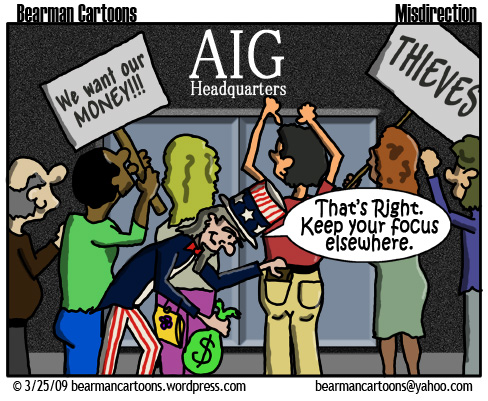
Pain on Main Street
As lawmakers continue paying out the 17 trillion it will ultimately cost taxpayers to bailout the banks and lenders on Wall Street, the foreclosure machine grinds on and the mortgage crisis at the heart of the problem continues to worsen.
Every day, people show up looking for help at the modest offices of United Communities Against Poverty, a housing counseling agency in Prince George’s County, Md., in suburban Washington. Homes are going into foreclosure at one of the fastest rates in the nation here, and to chief counselor Caprice Coppedge, it’s hardly surprising that the bailout bill doesn’t have much in it to help them.

“I’m not shocked,” she said. “Each one of these so-called rescues hasn’t done much to help homeowners. There has to be a little bit more of a solid plan. I don’t understand why they [Congress and the Treasury Dept.] are not getting a clear understanding of what’s going on on the ground level — with homeowners.”
When it comes to the bailout, homeowners understand one thing for sure: They aren’t too big to fail. A long-sought measure that might help some of them — changing federal law to allow bankruptcy judges to modify mortgages — faces tough odds, with the lending industry strongly opposed to it.
Even if gets approved, some borrowers can’t afford bankruptcy attorneys or don’t want to file. Still, housing groups estimate the change would keep some 600,000 families in their homes, which is why they have been pushing the idea.
To help even more, Senate Democrats want the government to modify as many of the loans it buys as possible. But just because the government owns all those bad mortgages doesn’t mean it can do a massive restructuring to make them more affordable.
In taking on toxic loans, the government faces a huge Humpty-Dumpty problem — mortgage-backed securities were sliced into pieces and sold that way to investors around the globe. Spending all that taxpayer money to buy those securities still won’t ensure the government can own or control them all, so it can’t redo loans on a large scale. Even $700 billion won’t be enough to put all the pieces back together again, said Adam Levitin, a Georgetown University law professor and expert on the credit industry.
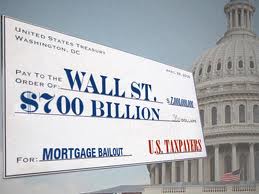
The small percentage of loan modifications that might get done will be “random and arbitrary,” and not based on the merit’s of a homeowner’s case, he said. Not to mention that second mortgage holders regularly refuse to do loan modifications, and many subprime homeowners took out two mortgages.
Given all this, the bailout ends up rewarding the most egregious of the subprime lenders — the ones who made the most abusive and predatory loans and who disproportionately targeted minority borrowers — since they’ll be the ones with the most toxic securities to buy. Banks that didn’t do as much subprime lending won’t need to sell off as many loans, and they won’t get as much government money, Levitin said.
And don’t count on banks being subject to tighter regulation in return for their bailout, he added. It’s possible that banks and lenders in a few years might use the same taxpayer dollars that rescued them to stave off regulatory reform of the financial markets, the ultimate irony of the bailout effort.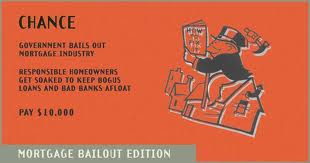
The banks seem to be escaping the consequences of their past lending behavior.
“It’s pretty insidious,” Levitin said. “We’re bailing out banks that got us into this mess because of years of abusive and predatory loans. And there’s no price to pay. I find that deeply troubling.”
No where is it more troubling than places like Prince George’s County, the nation’s wealthiest black suburb, which has been hard hit by subprime loans and foreclosures. Credit scores here rank at or above the national average, but the community has more than its share of subprime loans, with almost twice as many homeowners holding high-cost mortgages as the national average.
That pattern holds true elsewhere. In majority black and Latino communities nationwide, nearly half of all mortgages made in 2006 were subprime loans. All during the housing boom, racial differences became more pronounced as income increased — so middle-to-high income black and Latino borrowers were more likely than non-minority borrowers with modest incomes to have subprime mortgages.
Iris Pulliam, 51, a social worker in the District of Columbia public schools, refinanced her Prince George’s County home with a 9.5 percent Countywide loan three years ago. She tried to do some research before refinancing and refused the adjustable rate mortgage the lender first offered.
Looking back, Pulliam said she wasn’t aware she could have had a real estate attorney with her at the closing, and didn’t comprehend all the additional fees included in the loan before she signed. Still, she kept up the payments until her husband died almost two years ago, leaving her with just one income to pay the mortgage and take care of her 15-year-old son.
Pulliam began falling behind on her mortgage, and tried working out a loan modification with Countrywide. But the lender agreed only to a repayment plan that would increase her monthly payments.
She stood in a long line in the July heat to try to get a loan restructuring through the Neighborhood Assistance Corp. of America, a housing advocacy group. But Countrywide still hasn’t approved it. A Countrywide representative called her recently to discuss her case, but she called back again and again and couldn’t get through to anyone.
At this point, Pulliam has taken on a part-time job in addition to her full-time position and has dipped into most of her retirement savings to keep up with the mortgage. Her day starts at 5 a.m., and she gets home around 8 p.m. She’s thinking of trying to refinance again, if possible. One thing she’s well aware of: The bailout plan isn’t going to do a thing for her.
“It’s not taking the average homeowner into consideration, to me,” she said. “I feel that they’re putting all this money out for all these big money industries, investment companies and firms, and they should do something more for the average homeowner, to try to make sure we keep our homes.
“I think the scales are tipped toward the mortgager who has billions of dollars. For the little person, we might as well be off the scales.”
Modifying bankruptcy laws won’t help her, Pulliam said. She wouldn’t be able to afford a bankruptcy attorney. Congress could make a difference by forcing subprime lenders in future to be “upfront and above board,” she said. She’s not convinced that will happen.
To Coppedge, the housing counselor, part of the problem is that people need the sort of help neither Congress nor the Treasury Dept. is talking about. Coppedge, a former mortgage banker, is well aware that keeping credit flowing will help people in the long run to buy homes or take out loans — in that sense, she sees the need for a bailout.
But the people who come to her could use help too, like emergency assistance to cover even a month or two of mortgage payments to stay in their homes. For along with subprime loans, Coppedge noted, higher gas and food prices are cutting into the ability of the elderly and other homeowners on fixed incomes to pay their mortgages.
“I see a lot of clients who are not your typical five or six months behind on their mortgage,” Coppedge said. “I see some individuals, especially the elderly and the handicapped, who were preyed upon and asked to refinance their mortgages to make repairs or whatever the case may be. And these people just need one or two months of mortgage assistance to catch up, and catch their breath, and be able to get back on track.”
As part of the bailout, Democrats in the House and Senate want government agencies like the Federal Housing Admin. to expand their lending programs and help more homeowners, building on an effort included in the mortgage rescue bill. Under that program, the FHA will provide $300 billion in guarantees for lower-rate mortgages refinanced by lenders willing to accept a loss on the loans.
The program, which begins Oct. 1, is voluntary, and no one seems sure how well it will work. Coppedge noted that most of her clients either don’t have enough income or owe so much more on their mortgages than their homes are worth that they usually don’t qualify for FHA or other government programs.
On Capitol Hill, some lawmakers and economists are questioning whether the bailout plan will do enough to ease the credit crunch and to hold off a recession. But to groups like the Center for Responsible Lending, they are asking the wrong questions. Unless any bailout also deals with the problems of people facing foreclosures, it can’t fix the economy.
“The bailout will not solve our economic problems because it will do virtually nothing to stop the foreclosure epidemic,” the center said in a statement. “Continuing foreclosures will drag down the economy even further.”

John Taylor, president of the National Community Reinvestment Coalition, which represents housing advocacy groups, called it “unconscionable” for Congress to approve a plan that never addresses the underlying problem behind the crisis. His group met with Federal Reserve Chairman Ben Bernanke on Monday to complain that the government should first help homeowners facing foreclosure, before shoring up Wall Street.Its the classic case privatizing the profits of Bear Sterns and The Gang of Five and Socializing Losses.And you think it’s an accident, some “natural order of things? That’s what the super wealthy want us to think. And profit-driven establishment, celebrity media to plays along, because it’s a good deal for them. Ain’t it grand? I’m gonna be like that some day, so we better not tax them…. that would be spreading the wealth…. in the wrong direction.
Pulliam says the bailout for Wall Street mostly means that she’s on her own to save her home. Does anyone in power understand what she’s going through?
“The CEO of Countrywide wouldn’t know,” Pulliam said. “Or the vice president of Countrywide; or the Bank of America. They’re all out buying up other banks while the consumers have trouble keeping their houses.”
Pulliam grew up in a house with a white picket fence, and she wants that same sense of the benefits of homeownership for her son. She’s thinking about taking in a roommate to help pay the mortgage. Her sister is also facing foreclosure, and they’re considering sharing a household to solve both of their difficulties.
“I’ll do everything possible that’s legal and above board to keep my home,” Pulliam said. “That’s what I want for my son — a stable neighborhood environment.”
Like other troubled borrowers dealing with a crisis that seems far removed from the political posturing on Capitol Hill, Pulliam seems willing to pay whatever price it takes to keep it.
UPDATE: This is THE OUTLINE of a plan that is current in its evolution but by no means complete or the last word. It replaces the entry I made in February of this year. The assumption here is that even without taking mortgage foreclosure cases into consideration, the percentage of cases that actually go to trial is between 5%-15% depending upon how you categorize “cases.” On the other hand, if you are not prepared for trial and counting on settlement, your opposition will generally know it and have the upper hand in negotiating a settlement. They are going to play for keeps. You should too. Don’t assume that the note in front of you is the actual original. Close inspection often reveals it is a color copy.
And for heaven sake don’t stand there with your mouth hanging open when someone says you are looking for a free house. You are looking for justice. You had your purse snatched in this transaction, you know there is an obligation, but you also know that they didn’t perfect the security interest (not your fault) and they received multiple payments from multiple parties on these securitized loans. You want a FULL accounting of all such transactions to determine what balance is due after insurance payments, who is subrogated or substituted on claims, and an opportunity to negotiate a settlement or modification with someone who actually has advanced money on THIS transaction and can show it to be so.
WORD OF CAUTION: IF YOU ARE ALREADY IN PROCESS, YOU ARE REQUIRED TO ACT WITHIN THE TIMES SET FORTH BY STATE LAW, FEDERAL LAW, OR THE LAWS OF CIVIL PROCEDURE. FAILURE TO DO SO LEAVES YOU IN AN UPHILL BATTLE TO REVERSE ACTIONS ALREADY TAKEN. ON THE OTHER HAND ACTIONS ALREADY TAKEN “FIX” THE POSITION OF YOUR OPPOSITION, SINCE THEY CAN NO LONGER ASSERT CHANGES IN CREDITOR, LENDER OR TRUSTEE. THUS IT MIGHT BE EASIER, ACCORDING TO SOME SUCCESSFUL LITIGATORS OUT THERE, TO WAIT UNTIL THE SALE HAS OCCURRED AND THEN ATTACK IT AS A FRAUDULENT SALE, THAN TO TRY TO STOP IT WITH A TEMPORARY RESTRAINING ORDER ETC.
CONSIDER BANKRUPTCY, ESPECIALLY CHAPTER 13, WHERE THERE ARE MORE REMEDIES THAN YOU MIGHT THINK IF YOU FILL OUT YOUR SCHEDULES PROPERLY. WE ARE SEEING BETTER RESULTS IN SOME BANKRUPTCY COURTS THAN FEDERAL OR STATE CIVIL COURT PROCEEDINGS.
1. Get your act together, stop fighting amongst the members of your household and make a decision as to what you want to do — fight or flight?
2. GET SOME HELP NO MATTER WHAT YOU DECIDE. GET THE LOAN SPECIFIC TITLE SEARCH, GET A SECURITIZATION SEARCH, AND GET A LAWYER LICENSED IN THE COUNTY WHERE YOUR PROPERTY IS LOCATED AND MAKE SURE HE/SHE IS NOT STUCK ON THE PROPOSITION THAT YOU SHOULD LOSE.
3. If you choose flight, then by all means try the short-sale or jingle mail strategies that have been discussed on this blog. Do not try to make money on the short-sale, since nobody is going to give it to you. You can make a few dollars by riding out the time in foreclosure without making payments (and hopefully saving the money you would have paid) and by negotiating as high a price (a few thousand dollars) as you can in a deal known as “cash for keys.” Even for this, you should employ the services of a local licensed attorney — at least for consultation. There are several short-sale options that have evolved. Google Edge Simonson or Prime financial. I’ve been working on a short-sale-leaseback option that seems to be picking up steam.
4. STRATEGIC DEFAULTS RISING: More and more people of all walks of life including those that have some considerable wealth, are walking away from these properties that were the subject of transactions in which the presumed value of the property was preposterous. This is an option that scare the hair off the pretender lenders because it pouts the power in your hands. They in turn are trying to scare the public with threats of deficiency judgments etc and collections. It is doubtful that many or indeed any deficiency judgments would be awarded, even if they were allowed. But in many cases, particularly in non-judicial states, deficiency judgments are NOT allowed. A version of the strategic default that many people like is to stay as long as possible without paying and then walk. If you are smart about it, you raise your own capital by socking away the payments you would have made.
5. If the decision is fight — then the second decision to make is to answer the question “fight for what?” If you want to buy time, there are many strategies that can be employed, which basically are the same strategies as those used if you are fighting for real. And you might be surprised by the result. Some people get a year or two or even more without payments. You are going to take a FICO hit anyway so why not put some cash in your pocket while you hold back payments.
6. AVOID crazy deals where you give your property or share your property with a stranger. If you persist in engaging such people at least call references and make sure the references are real. Ask questions about their situation and how they feel it worked out to them. Get as much detail as possible.
7. AVOID mortgage modification firms. If you persist in engaging such people at least call references and make sure the references are real. Ask questions about their situation and how they feel it worked out to them. Get as much detail as possible. My opinion is that if they don’t pursue an aggressive litigation strategy the statistical probability of you accomplishing anything by going to them is near zero.
8. In all cases, if at all possible:
(a) Get all your information together along with a short executive summary of your “journal” (even if you create the journal now). That means all closing documents, any information you have on title, recording in the county recorder’s office, the names of all parties who were “at” closing (that means not just the actual people who were there, but he names of companies that were represented or mentioned at closing). Also, include in the file any notices of default(NOD) or notice of Trustee sale (NOTS) or summons from a court.
(b) Get a MORTGAGE ANALYSIS of the loan transaction itself. THIS INVOLVES THREE PARTS — (1) LOAN SPECIFIC TITLE SEARCH AND CHAIN OF TITLE, EXAMINATION OF THE DOCUMENTS, SIGNATURES, AND DATES OF DOCUMENTS PURPORTING TO BE REAL, (2) SECURITIZATION SEARCH THAT CHASES THE MONEY TRAIL AND WILL PROBABLY LEAD YOU TO SOME IMPORTANT ISSUES LIKE THE VERY EXISTENCE OF THE “TRUST” ASSERTING IT HAS THE RIGHT TO FORECLOSE AS WELL AS MONETARY ISSUES SUCH AS APPLICATION OR ALLOCATION OF PAYMENTS RECEIVED BY THE INVESTOR WHO ADVANCED THE FUNDS FOR THE LOAN AND (3) COMMENTARY AND ANALYSIS THAT IS USABLE BY AN ATTORNEY IN COURT SUCH THAT HE/SHE CAN ARGUE THAT THERE ARE QUESTIONS OF FACT ENTITLING YOU TO PURSUE DISCOVERY. IF YOU WIN THAT POINT YOU ARE ON YOUR WAY TO A SUCCESSFUL CONCLUSION. BUT NOBODY IS GOING TO MAKE IT EASY FOR YOU.
(c) Who is your creditor? The TILA Audit alone does nothing without taking further steps. The Trustee’s “Take-down” report should be demanded in non-judicial states and if the house is in foreclosure, your written objection should be sent to the Trustee.
(d) If someone tells you they are “pretty sure” or can “definitely” stop your foreclosure or promises a favorable outcome, and asks for money up front, then run like hell. This is a scam. IF THEY TELL YOU THEY WILL DO WHAT THEY CAN, AND THEY GIVE YOU SOME EXAMPLES OF WHAT THEY WILL BE DOING FOR YOU THEN LISTEN AND GET REFERENCES.
(e) Only a Court order stops foreclosure or a Trustee Sale. No letter of any form or substance will stop it unless the other side is intimidated into stopping the action, which sometimes happens when they know their paperwork is “out of order.”
(f) Get a Forensic Mortgage Analysis Report OR AN EXPERT DECLARATION that summarizes in a few pages the potential issues that you should be investigating AND WHICH LENDS SUPPORT TOY OUR DENIAL OF THE DEFAULT, DENIAL OF THE RIGHT OF THE OPPOSING PARTY TO CLAIM A DEFAULT, DENIAL OF THE RIGHT OF THE OPPOSING PARTY TO FORECLOSE.
(g) Get an Expert Declaration that uses the forensic report and the expert opinions of specific experts (like appraisers, title analysts) and which identifies the probable chain of securitization and the money trail. You’ll be surprised when you find out there were two yield spread premiums not disclosed to you and that they can total as much or more than the “loan” itself. GET EXPERT OPINION ON PROBABLE DAMAGES INCLUDING RETURN OF UNDISCLOSED FEES, INTEREST, ETC. (SEE LAWYER’S WORKBOOK FROM GARFIELD CONTINUUM).
(h) Send the Forensic Report and expert declaration to the known parties, with an instruction to forward it to all other parties known to them in the securitization chain. Include a Qualified Written Request(QWR) AND a Debt Validation Letter(DVL) (which is really a debt verification letter). Don’t be surprised if your pretender lenders will come back and tell you your QWR is defective or improper in some way, but that’s OK, you have followed statutory procedure and they didn’t. With the help of an attorney and with consultation with your experts decide on what resolution you will demand — damages, rescission, etc.
(i) Don’t believe a word about modification. Practically none of them go through. They are leading you into default so they can collect more service fees, and get money out of you that you think is stopping the foreclosure.
(j) Don’t believe a word that any pretender lender or representative says or represents, even if they are a lawyer, particularly verbal communications that they refuse to confirm in writing. Challenge everything.
(k) Don’t accept any document as authentic. Many documents are being fabricated or forged, including affidavits. This is why you need a lawyer and an expert and a Forensic mortgage analysis — to determine what documents and parties are suspect and what you should be asking for in discovery and in the QWR and DVL.
(l) YOUR FIRST STRATEGY IS TO RAISE NOT PROVE ISSUES OF FACT. BY PRODUCING A FORENSIC REPORT AND EXPERT DECLARATION, NEITHER YOU NOR YOUR LAWYER NEEDS TO ACQUIRE EXPERTISE IN SECURITIZED LOANS. YOU ONLY NEED TO RAISE THE ISSUE OF FACT BY SHOWING THE COURT THAT YOU HAVE EXPERTS WHO SAY THE PRETENDER LENDERS/TRUSTEES ETC. ARE NOT CREDITORS AND NOT AUTHORIZED AGENTS WORKING FOR THE CREDITORS. THEY SAY THEY ARE IN FACT THE CREDITORS OR HAVE SOME AUTHORITY GRANTED BY AN ALLEGED CREDITOR. IT IS NOT FOR THE COURT TO ACCEPT ONE VIEW OR THE OTHER, BUT RATHER TO ALLOW DISCOVERY AND AN EVIDENTIARY HEARING ON THE ISSUE OF STANDING (SEE MANY RECENT CASES REPORTED SINCE FEBRUARY ON THIS BLOG).
(m) Be very aggressive on discovery. They will argue that even if they are not the creditor and even if they refuse to disclose the identity of the creditor, they are still entitled to disclose because they are the holder of the note and/or mortgage. Your argument will probably be that they still have a duty to disclose the identity of the creditor and the source of the their authority to represent the creditor, along with proof that the creditor has received notice of these proceedings.
62 MILLION HOMES ARE LEGALLY FORECLOSURE -PROOF
Posted 7 hours ago by Neil Garfield on Livinglies’s Weblog
EDITOR’S NOTE: YES IT MEANS WHAT IT SAYS — WHICH IS WHAT I HAVE BEEN SAYING FOR THREE YEARS. BUT JUST BECAUSE SOME JUDGES REALIZE THAT THIS IS THE ONLY CORRECT LEGAL INTERPRETATION DOESN’T MEAN ALL OF THEM WILL ABIDE BY THAT. QUITE THE REVERSE. MOST JUDGES REFUSE TO ACCEPT AND CAN’T WRAP THEIR BRAINS AROUND THE FACT THAT THE FINANCIAL INDUSTRY THAT SET THE LEGAL STANDARDS FOR PERFECTING A SECURITY INTEREST IN RESIDENTIAL HOME MORTGAGES COULD HAVE SCREWED UP LIKE THIS.
THE ANSWER OF COURSE IS THAT THEY DIDN’T — WALL STREET DID IT. I KNOW FOR A FACT AND HAVE SEEN THE INTERNAL MEMORANDUM WRITTEN IN 2003-2006 THAT LAWYERS WHO WERE PREPARING THE SECURITIZATION DOCUMENTS KNEW AND INFORMED THEIR CLIENTS THAT THIS COULD NOT WORK.

THIS DOES NOT MEAN YOU GET A FREE HOUSE. BUT IT DOES MEAN THAT AT THE MOMENT ANY HOUSE IN WHICH MERS WAS INVOLVED DOES NOT HAVE A PERFECTED SECURITY INTEREST AS AN ENCUMBRANCE. AND THAT MEANS THAT ANY FORECLOSURE BASED UPON DOCUMENTS OR PRESUMPTIONS REGARDING MERS ARE VOID. AND THAT MEANS THAT IF YOU FALL INTO THIS CLASS OF PEOPLE — AND MOST PEOPLE DO — IT IS POSSIBLE AND EVEN PROBABLE THAT YOU COULD BE AWARDED QUIET TITLE ON A HOME THAT WAS FORECLOSED AND SOLD EVEN YEARS AGO.
BUT BEWARE: JUST BECAUSE THEY SCREWED UP THE PAPERWORK AND THEY DON’T HAVE THE REMEDY OF FORECLOSURE IMMEDIATELY AVAILABLE DOESN’T MEAN THAT NOBODY LENT YOU MONEY NOR DOES IT MEAN THAT YOU DON’T OWE ANY MONEY NOR DOES IT MEAN THAT THEY COULD NOT CREATE AN EQUITABLE LIEN ON YOUR PROPERTY THAT COULD AMOUNT TO A MORTGAGE THAT COULD BE FORECLOSED. BUT THAT IS STRICTLY A JUDICIAL PROCESS EVEN IN SO-CALLED NON-JUDICIAL STATES.
WE ARE NOW CLOSING IN ON THE REALITY. THE INEVITABLE OUTCOME IS PRINCIPAL REDUCTION WHETHER THE BANKS LIKE IT OR NOT. EVEN IF THEIR LIEN WAS PERFECTED AND ENFORCEABLE THEY STILL CANNOT GET ANY MORE MONEY THAN THE HOUSE IS WORTH. WITHOUT THE ENCUMBRANCE, THEY ARE FORCED TO NEGOTIATE A WHOLE NEW PATH WITH ONLY THE PARTIES THAT ARE NOW LEFT HOLDING THE BAG ON THE LOSS ASSOCIATED WITH THE ORIGINAL LOAN ON YOUR PROPERTY, AFTER ADJUSTMENTS FOR PAYMENTS RECEIVED BUT NOT RECORDED OR ALLOCATED.
IN ORDER TO HOLD THEIR FEET TO THE FIRE, YOU HAVE TO KNOW THE ORIGINAL SECURITIZATION SCHEME AND INSIST ON PROOF OF WHAT HAPPENED AFTER THE INITIAL SECURITIZATION PLAN WAS PUT IN PLACE. REMEMBER THAT THIS IS NOT A FIXED EVENT. THIS IS SINGLE TRANSACTION BETWEEN THE BORROWER AND AN ONGOING PROCESSION OF SUCCESSORS EACH OF WHOM HAS QUESTIONABLE RIGHTS TO THE NOTE, MORTGAGE OR EVEN THE OBLIGATION SINCE THEY WERE ONLY ASSIGNED A RECEIVABLE FROM A PARTY WHO WAS NEITHER THE BORROWER NOR THE ORIGINATING LENDER.
A Homeowners’ Rebellion: Could 62 Million Homes be Foreclosure-Proof?
*
The Alex Jones Channel Alex Jones Show podcast Prison Planet TV Infowars.com Twitter Alex Jones’ Facebook Infowars store
Ellen Brown
Web of Debt
August 20, 2010
Over 62 million mortgages are now held in the name of MERS, an electronic recording system devised by and for the convenience of the mortgage industry. A California bankruptcy court, following landmark cases in other jurisdictions, recently held that this electronic shortcut makes it impossible for banks to establish their ownership of property titles—and therefore to foreclose on mortgaged properties. The logical result could be 62 million homes that are foreclosure-proof.

Victims of predatory lending could end up owning their homes free and clear—while the financial industry could end up skewered on its own sword.
Mortgages bundled into securities were a favorite investment of speculators at the height of the financial bubble leading up to the crash of 2008. The securities changed hands frequently, and the companies profiting from mortgage payments were often not the same parties that negotiated the loans. At the heart of this disconnect was the Mortgage Electronic Registration System, or MERS, a company that serves as the mortgagee of record for lenders, allowing properties to change hands without the necessity of recording each transfer.
MERS was convenient for the mortgage industry, but courts are now questioning the impact of all of this financial juggling when it comes to mortgage ownership. To foreclose on real property, the plaintiff must be able to establish the chain of title entitling it to relief. But MERS has acknowledged, and recent cases have held, that MERS is a mere “nominee”—an entity appointed by the true owner simply for the purpose of holding property in order to facilitate transactions. Recent court opinions stress that this defect is not just a procedural but is a substantive failure, one that is fatal to the plaintiff’s legal ability to foreclose.
That means hordes of victims of predatory lending could end up owning their homes free and clear—while the financial industry could end up skewered on its own sword.
California Precedent
The latest of these court decisions came down in California on May 20, 2010, in a bankruptcy case called In re Walker, Case no. 10-21656-E–11. The court held that MERS could not foreclose because it was a mere nominee; and that as a result, plaintiff Citibank could not collect on its claim. The judge opined:
Since no evidence of MERS’ ownership of the underlying note has been offered, and other courts have concluded that MERS does not own the underlying notes, this court is convinced that MERS had no interest it could transfer to Citibank. Since MERS did not own the underlying note, it could not transfer the beneficial interest of the Deed of Trust to another. Any attempt to transfer the beneficial interest of a trust deed without ownership of the underlying note is void under California law.
In support, the judge cited In Re Vargas (California Bankruptcy Court); Landmark v. Kesler (Kansas Supreme Court); LaSalle Bank v. Lamy (a New York case); and In Re Foreclosure Cases (the “Boyko” decision from Ohio Federal Court). (For more on these earlier cases, see here, here and here.) The court concluded:
Since the claimant, Citibank, has not established that it is the owner of the promissory note secured by the trust deed, Citibank is unable to assert a claim for payment in this case.
The broad impact the case could have on California foreclosures is suggested by attorney Jeff Barnes, who writes:
This opinion . . . serves as a legal basis to challenge any foreclosure in California based on a MERS assignment; to seek to void any MERS assignment of the Deed of Trust or the note to a third party for purposes of foreclosure; and should be sufficient for a borrower to not only obtain a TRO [temporary restraining order] against a Trustee’s Sale, but also a Preliminary Injunction barring any sale pending any litigation filed by the borrower challenging a foreclosure based on a MERS assignment.
While not binding on courts in other jurisdictions, the ruling could serve as persuasive precedent there as well, because the court cited non-bankruptcy cases related to the lack of authority of MERS, and because the opinion is consistent with prior rulings in Idaho and Nevada Bankruptcy courts on the same issue.
What Could This Mean for Homeowners?
Earlier cases focused on the inability of MERS to produce a promissory note or assignment establishing that it was entitled to relief, but most courts have considered this a mere procedural defect and continue to look the other way on MERS’ technical lack of standing to sue. The more recent cases, however, are looking at something more serious. If MERS is not the title holder of properties held in its name, the chain of title has been broken, and no one may have standing to sue. In MERS v. Nebraska Department of Banking and Finance, MERS insisted that it had no actionable interest in title, and the court agreed.
An August 2010 article in Mother Jones titled “Fannie and Freddie’s Foreclosure Barons” exposes a widespread practice of “foreclosure mills” in backdating assignments after foreclosures have been filed. Not only is this perjury, a prosecutable offense, but if MERS was never the title holder, there is nothing to assign. The defaulting homeowners could wind up with free and clear title.
In Jacksonville, Florida, legal aid attorney April Charney has been using the missing-note argument ever since she first identified that weakness in the lenders’ case in 2004. Five years later, she says, some of the homeowners she’s helped are still in their homes. According to a Huffington Post article titled “‘Produce the Note’ Movement Helps Stall Foreclosures”:
Because of the missing ownership documentation, Charney is now starting to file quiet title actions, hoping to get her homeowner clients full title to their homes (a quiet title action ‘quiets’ all other claims). Charney says she’s helped thousands of homeowners delay or prevent foreclosure, and trained thousands of lawyers across the country on how to protect homeowners and battle in court.
Criminal Charges?

Other suits go beyond merely challenging title to alleging criminal activity. On July 26, 2010, a class action was filed in Florida seeking relief against MERS and an associated legal firm for racketeering and mail fraud. It alleges that the defendants used “the artifice of MERS to sabotage the judicial process to the detriment of borrowers;” that “to perpetuate the scheme, MERS was and is used in a way so that the average consumer, or even legal professional, can never determine who or what was or is ultimately receiving the benefits of any mortgage payments;” that the scheme depended on “the MERS artifice and the ability to generate any necessary ‘assignment’ which flowed from it;” and that “by engaging in a pattern of racketeering activity, specifically ‘mail or wire fraud,’ the Defendants . . . participated in a criminal enterprise affecting interstate commerce.”

Local governments deprived of filing fees may also be getting into the act, at least through representatives suing on their behalf. Qui tam actions allow for a private party or “whistle blower” to bring suit on behalf of the government for a past or present fraud on it. In State of California ex rel. Barrett R. Bates, filed May 10, 2010, the plaintiff qui tam sued on behalf of a long list of local governments in California against MERS and a number of lenders, including Bank of America, JPMorgan Chase and Wells Fargo, for “wrongfully bypass[ing] the counties’ recording requirements; divest[ing] the borrowers of the right to know who owned the promissory note . . .; and record[ing] false documents to initiate and pursue non-judicial foreclosures, and to otherwise decrease or avoid payment of fees to the Counties and the Cities where the real estate is located.” The complaint notes that “MERS claims to have ‘saved’ at least $2.4 billion dollars in recording costs,” meaning it has helped avoid billions of dollars in fees otherwise accruing to local governments. The plaintiff sues for treble damages for all recording fees not paid during the past ten years, and for civil penalties of between $5,000 and $10,000 for each unpaid or underpaid recording fee and each false document recorded during that period, potentially a hefty sum. Similar suits have been filed by the same plaintiff qui tam in Nevada and Tennessee.
By Their Own Sword: MERS’ Role in the Financial Crisis
MERS is, according to its website, “an innovative process that simplifies the way mortgage ownership and servicing rights are originated, sold and tracked. Created by the real estate finance industry, MERS eliminates the need to prepare and record assignments when trading residential and commercial mortgage loans.” Or as Karl Denninger puts it, “MERS’ own website claims that it exists for the purpose of circumventing assignments and documenting ownership!”
Fresh food that lasts from eFoods Direct (Ad)
MERS was developed in the early 1990s by a number of financial entities, including Bank of America, Countrywide, Fannie Mae, and Freddie Mac, allegedly to allow consumers to pay less for mortgage loans. That did not actually happen, but what MERS did allow was the securitization and shuffling around of mortgages behind a veil of anonymity. The result was not only to cheat local governments out of their recording fees but to defeat the purpose of the recording laws, which was to guarantee purchasers clean title. Worse, MERS facilitated an explosion of predatory lending in which lenders could not be held to account because they could not be identified, either by the preyed-upon borrowers or by the investors seduced into buying bundles of worthless mortgages. As alleged in a Nevada class action called Lopez vs. Executive Trustee Services, et al.:
Before MERS, it would not have been possible for mortgages with no market value . . . to be sold at a profit or collateralized and sold as mortgage-backed securities. Before MERS, it would not have been possible for the Defendant banks and AIG to conceal from government regulators the extent of risk of financial losses those entities faced from the predatory origination of residential loans and the fraudulent re-sale and securitization of those otherwise non-marketable loans. Before MERS, the actual beneficiary of every Deed of Trust on every parcel in the United States and the State of Nevada could be readily ascertained by merely reviewing the public records at the local recorder’s office where documents reflecting any ownership interest in real property are kept….
After MERS, . . . the servicing rights were transferred after the origination of the loan to an entity so large that communication with the servicer became difficult if not impossible …. The servicer was interested in only one thing – making a profit from the foreclosure of the borrower’s residence – so that the entire predatory cycle of fraudulent origination, resale, and securitization of yet another predatory loan could occur again. This is the legacy of MERS, and the entire scheme was predicated upon the fraudulent designation of MERS as the ‘beneficiary’ under millions of deeds of trust in Nevada and other states.
Axing the Bankers’ Money Tree
If courts overwhelmed with foreclosures decide to take up the cause, the result could be millions of struggling homeowners with the banks off their backs, and millions of homes no longer on the books of some too-big-to-fail banks. Without those assets, the banks could again be looking at bankruptcy. As was pointed out in a San Francisco Chronicle article by attorney Sean Olender following the October 2007 Boyko [pdf] decision:
The ticking time bomb in the U.S. banking system is not resetting subprime mortgage rates. The real problem is the contractual ability of investors in mortgage bonds to require banks to buy back the loans at face value if there was fraud in the origination process.

. . . The loans at issue dwarf the capital available at the largest U.S. banks combined, and investor lawsuits would raise stunning liability sufficient to cause even the largest U.S. banks to fail . . . .
Nationalization of these giant banks might be the next logical step—a step that some commentators said should have been taken in the first place. When the banking system of Sweden collapsed following a housing bubble in the 1990s, nationalization of the banks worked out very well for that country.
The Swedish banks were largely privatized again when they got back on their feet, but it might be a good idea to keep some banks as publicly-owned entities, on the model of the Commonwealth Bank of Australia. For most of the 20th century it served as a “people’s bank,” making low interest loans to consumers and businesses through branches all over the country.
With the strengthened position of Wall Street following the 2008 bailout and the tepid 2010 banking reform bill, the U.S. is far from nationalizing its mega-banks now. But a committed homeowner movement to tear off the predatory mask called MERS could yet turn the tide. While courts are not likely to let 62 million homeowners off scot free, the defect in title created by MERS could give them significant new leverage at the bargaining table.
NCLC
NATIONAL CONSUMER
LAW CENTER’
Advancing Fairness in the Marketplace for All
Why Join an E-Mail Group?
• They are free; all you need is an e-mail address
• Get instant answers to your questions from experts around the country
• Hear the latest developments, practice ideas, and litigation issues
• Obtain copies of pleadings and other useful documents
• Get into the nitty-gritty of the actual practice of consumer law
• Join a community of like-minded attorneys focused on the same subject area
NCLC and NACA sponsor a number of email groups for those representing consumer interests. These groups are not open to those who represent the industry that is the topic of the group or other adverse parties.
NATIONAL CONSUMER LAW CENTER E-MAIL GROUPS
1. Autofraud (Contact: Jon Sheldon) To join: owner-autofraud@lists.nclc.org
This is one of the oldest and most active consumer law e-mail groups with over 350 members, and much email traffic each day. The group focuses on many different issues related to motor vehicles, from financing to sales practices to lemons to repossessions. Like all NCLC e-mail groups, you can perform key-word searches in the archives for past e-mails.
2. Manufactured Homes (Contact: Odette Williamson)
To join: manufacturedhomes-request@lists.nclc.org and CC: owilliamson@nclc.org
If manufactured home cases ever come to your office, this is the e-mail group for you, covering issues of financing, defects, sales, and parks.
3. Student Loans (Contact: Deanne Loonin)
To join: studentloan-request@lists.nclc.org
(dloonin@nclc.org if experiencing technical problems)
This is NCLC’s first group, dating back over 10 years. The discussion covers student loan collections, offsets, vocational schools, and related topics.
4. FCRA – Fair Credit Reporting Act (Contact: Chi Chi Wu)
To join: cwu@nclc.org
A large group of experts exchanging ideas about credit reporting issues.
5. E-payments (Contact: Lauren Saunders) To join: http://lists.nclc.org/subscribe
This is the e-mail group for anyone concerned with the electronic payment of food stamps and other state benefits.
6. UtilityNetwork – Massachusetts (Contact: Charlie Harak)
To join: http://lists.nclc.org/subscribe
Covers issues of utility terminations, energy affordability, payment sources for utility bills, and low-income utility programs FOR MASSACHUSETTS ONLY.
7. EnergyNetwork – National (Contact: Charlie Harak, Olivia Wein, or John Howat)
To join: http://lists.nclc.org/subscribe
Covers issues of utility terminations, energy affordability, telephones, and low-income utility programs. Keep current on policy and programmatic issues.
8. Bankruptcy (Contact: John Rao) To join: http://lists.nclc.org/subscribe
This group is for legal services attorneys and pro bono coordinators and covers many issues relating to representation of low-income consumers in bankruptcy.
9. DC Updates (Contact: Lauren Saunders). To join: http://lists.nclc.org/subscribe
Provides updates on legislative and administrative developments in Washington, including agency comment opportunities and critical moments for legislative input. Open to NACA members and nonprofit consumer advocates (including non-attorneys).
10. California (Contact: Lauren Saunders). To join: http://lists.nclc.org/subscribe
Provides a forum for sharing of information on consumer law activities in California. Open to nonprofit attorneys and to NACA members willing to partner with or mentor nonprofit attorneys.
11. Carchange- Auto Ownership, Finance, and Policy (Contact John Van Alst)
To join: http://lists.nclc.org/subscribe
A new group for advocates seeking to improve the ability of low-income families to get, keep, and use a reliable, affordable car. Includes topics of car finance, sales, and ownership as well as anyone working on broader issues that affect access to transportation for low-income workers and their families (e.g., insurance, driver’s licenses, maintenance, etc.).
NATIONAL ASSOCIATION OF CONSUMER ADVOCATES E-MAIL GROUPS Tlie lists operated by NACA require NACA membership for admission to those lists.
12. Mortgage (Contact: Jeff Dillman) To apply for admission: jdillman@thehousingcenter.org
This NACA group has over 600 members and covers all aspects of protecting a homeowner against foreclosure, from predatory lending to servicer abuses.
13. Class Action (Contact: Steve Gardner) To apply for admission: sgardner@cspinetorg
The place to be if your office handles class actions, if you are interested in co-counseling with other NACA offices experienced in class cases, or if you just want to learn more about the class action remedy.
14. Stop Binding Mandatory Arbitration Campaign (Contact: Cora Ganzglass)
To join: cora@naca.net
This NACA list is to help build awareness and support for state and federal legislation that fights back against binding mandatory arbitration clauses.
15. Statewide Listserves (Contact: Chris Wojcik) To join: chris@naca.net
NACA Statewide listserves exist for NACA members in Alabama, Arkansas, Arizona, DC, Florida, Iowa, Idaho, Indiana, Kentucky, Louisiana, Massachusetts, Maryland, Michigan, Montana, North Carolina, New York, New Jersey, Nevada, Ohio, Oregon, Pennsylvania, South Carolina, Virginia, Washington state, and Wisconsin. The listserves provide support, share documents and information, call attention to recent developments, and facilitate group action to protect and promote consumer rights.
16. Military Statewide Listserves (Contact: Chris Wojcik) To join: chris@naca.net A special Military NACA list for military attorneys in any state.
17. Doing Well by Doing Good list (Contact: Chris Wojcik) To join: chris@naca.net A listserve open to all NACA members.
http://www.youtube.com/watch?v=YRGr9sGlIpg&feature=player_embedded
Southern California (909)890-9192 in Northern California(925)957-9797
Posted on August 3, 2010 by Foreclosureblues
GM, GMAC & the US Government… Have You No Shame?
Today, August 03, 2010, 2 hours ago | MandelmanGo to full article
Southern California (909)890-9192 in Northern California(925)957-9797
In 1984, General Motors and Toyota entered into a joint venture, and they called it the NUMMI plant in Freemont California. Up until May of 2010, NUMMI built an average of 6000 vehicles each week, or nearly eight million cars and trucks. GM saw the joint venture as an opportunity to learn about manufacturing from the Japanese company.
Then the financial meltdown of Wall Street came. Bankers constructed bonds that were designed to default, took advantage of holes in the ratings agencies systems, sold them around the world, leveraged themselves 30:1 and more, and profited immensely by betting against them with credit default swaps. It wasn’t the fault of the employees at GM’s NUMMI plant, they had nothing to do with it, but they were about to pay a steeper price than the Wall Street bankers would pay.
GM pulled out of the venture in June 2009, and several months later Toyota announced plans to pull out by March 2010. Roughly 5,000 people, many of whom had worked at the plant for twenty years would lose their jobs, their retirement plans… everything.
At 9:40am on April 1, 2010, the plant produced its last car, a red Toyota Corolla S. Production of Corollas in North America was moved to Canada. It was over.
The faces of the NUMMI plant.
Of course, it wasn’t the first time a GM plant had closed leaving thousands of workers without jobs, far from it. But this time it was different.
The NUMMI plant is in the Central Valley of California, the part of the state with the lowest literacy rates, and a favorite of home builders and Wall Street’s bankers. Billions of dollars were poured into the Central Valley and tens of thousands of homes were built and sold there during the real estate bubble. It would become Ground Zero of the foreclosure crisis.
The workers at the NUMMI plant were quite familiar with GMAC, because the mortgage lender was the only mortgage lender given access to the plant employees to sell them on refinancing their homes. “Put your cars, your credit cards… everything into a GMAC mortgage,” they were told at the numerous seminars held at the plant, “that way you won’t be in debt.”
GMAC actually had a booth inside the NUMMI plant… you could stop by for brochures 24/7 and 365 days a year. GMAC’s salespeople were on site at least two to three times a month to sell mortgages to plant workers. “GM employees pay no fees and no points with GMAC loans,” the workers were sold… I mean told. Everyone took out GMAC loans, it was like GMAC’s own personal gold mine.
Joe Phillippi, principal of AutoTrends, a consulting firm in Short Hills, N.J. said: “The thing that brought down GMAC was its sub-prime mortgage business.” GMAC lost $16.5 billion in its mortgage business from 2007 to 2009.
According to Bloomberg… GMAC Chief Executive Officer (for a month and a half of last year), and former Citibank executive, Michael Carpenter, was paid $1.2 million plus restricted stock options. He replaced former CEO Alvaro de Molina in mid-November of 2009, who received a $3.7 million salary.
But that’s not all… not even close. GMAC paid Chief Risk Officer Sam Ramsey $7.7 million, $5.7 million to Tom Marano, CEO of mortgage unit Residential Capital LLC. $4.9 million to finance chief Robert Hull, and Chief Marketing Officer Sanjay Gupta received about $4 million.
GMAC lost money in nine of the past 10 quarters. The company hasn’t reported earning a profit since the final quarter of 2008. The company posted a record $3.9 billion loss in the fourth quarter of 2009, and lost $10.3 billion for the year.
The Congressional Oversight Panel, in March of 2010 said that despite three separate bailouts of GMAC totaling $17.3 billion, GMAC Financial Services “continues to struggle with its troubled mortgage liabilities.”
The U.S. government now owns 56.3 percent of GMAC, which serves as the primary source of dealer and car buyer financing for GM and Chrysler. The Obama administration currently estimates that taxpayer losses on the GMAC bailout may be at least $6.3 billion.
The Congressional Oversight Panel said that bankruptcy, and merging GMAC back into GM, could have put GMAC on a sounder footing. Instead, the panel said, Treasury treated GMAC more like large banks such as Citigroup and Bank of America.
I just spent hours getting to know a couple that worked at the NUMMI plant for roughly twenty years. I don’t want to release their real name, so maybe we should just call them “THE DIRT FAMILY,” because that’s exactly how they’ve been treated by GMAC as they tried to apply for a loan modification.
They began their application for a loan modification in July 2009, they were current and had excellent credit… something in the FICO 750 range.
So, first they were told they had to be delinquent. Then, when they went delinquent, they were declined because the husband was told that he made enough to make the mortgage payment. They applied again… and were declined because he was told that he didn’t make enough to qualify for the loan modification.
Are we having fun yet?
They turned to Bruce Marks’ traveling tent show of an non-profit organization, NACA, for help. NACA said they’d put them at the front of the line, but months went by and nothing from NACA. A sale date was set and NACA told the DIRTS they would have to file bankruptcy to stop the sale, so they did, but within days GMAC filed for the removal of the stay, although no new sale date was scheduled.
NACA wanted to wait until MR. DIRT actually lost his job, saying that this would make obtaining the modification easier. GMAC sent a letter to the DIRT’S bankruptcy attorney saying that they couldn’t negotiate unless the lawyer signed a letter saying it was okay to speak directly with the DIRTS. Apparently GMAC was aware of California Civil Code 2923.5, which says the bank must engage in meaningful discussions with a homeowner about alternatives to foreclosure before they foreclose.
The bankruptcy lawyer signed the letter. GAMC never contacted the DIRTS to talk about anything. GMAC won’t tell them if there’s another sale date set. GAMC says they never got anything from NACA.
Next thing they hear is that they’re house is being auctioned in a matter of days. They hire a law firm to try to stop the sale. The DIRTS and their new law firm ask GMAC who is the owner of their loan. GMAC says its GMAC. As it turns out it’s Fannie Mae.
GMAC won’t postpone the sale. Why? Not enough time. GMAC says the DIRT’S waited until the last minute… they procrastinated… they’re procrastinators, shame on them.
He worked 21 years at the NUMMI plant. Four more years and he would have earned his retirement pension. She worked at the plant until she was injured on the job… GM’s work comp doctor said the pain was all in her head… until she needed multiple back and shoulder surgeries… didn’t sue GM because he was going to make supervisor. They raised three children. Next year will be twenty years of a loving marriage. Hard work, but his life was in that plant… until it wasn’t.
And GMAC sold their home. They couldn’t wait. Apparently the Central Valley needs another empty foreclosed home. Here’s the letter they found on their door the next day. It was from Steve Ewing of Keller Williams Realty in the Central Valley of California:
Steve Ewing
Keller Williams Realty
2291 West March Lane, Suite D-210
Stockton, CA 95207
THE NINES TEAM AT KELLER WILLIAMS, CENTRAL VALLEY
We all need a little help in difficult times…
We have been hired by the new owners of this property to bring it to market as quickly as possible. This bank owned property must be sold VACANT.
It is possible that we may be able to provide some financial help for your immediate move.
TIME IS NOT ON YOUR SIDE, PLEASE DON’T MISS THIS OPPORTUNITY!!
PLEASE CONTACT STEVE EWING
PHONE: 209-625-8231 begin_of_the_skype_highlighting 209-625-8231 end_of_the_skype_highlighting
FAX: 866-790-8285
EMAIL: STEVE@THENINESTEAM.NET
ALL OF OUR CONVERSATIONS ARE CONFIDENTIAL
Are they, Steve? You scavenger piece of crap. Are all of your conversations confidential? Just between us girls, is that what you were thinking would be the case? Well, surprise, Steve-O, because I hate secrets. And it’s no secret that you are an inconceivably inconsiderate and insensitive jackass who doesn’t deserve to stand within a hundred yards of anyone in this family.
Do you even know what a real day’s work is Steverino? Because the father in this family definitely does, while you… you puny pompous paper pusher in search of his next commission… obviously doesn’t. How dare you leave a letter like that on their door, and then weasel away in your Mercedes, or whatever kind of import car I’m betting you scamper around in. Did you even know there was a GM plant near by? Did you ever stop to care about the people that worked hard there… that gave their lives there?
No, Mr. Earwhig, I’m telling you that you didn’t care then, and you care even less now. These are people in your community that need your help… your empathy… your understanding… not your asinine “time is not on your side” threatening notes.
So, I have a suggestion for you and Keller Williams… leave this family alone. Don’t go knocking on their door… in fact, don’t bother them at all. They’ve already been inconceivably and undeservedly been treated like DIRT by GM, GMAC and my federal government, they certainly don’t need to concern themselves with the likes of you.
Besides, they’re filing a lawsuit asap, so don’t plan on selling that house anytime soon anyway.
And GMAC… I have only just begun to uncover what unethical, incompetent, money-grubbing, greedy predatory pigs you guys are. You haven’t heard anywhere near the last of me… no you haven’t… I’m just warming up, as far as you’re concerned.
Now you want to be known as “Ally Bank?” Because you actually think that’s how we’re going to think of you? Like our “ally”? Well, bang up job so far, you ally you. With allies like you, who needs the axis?
Now… GMAC, GM, and the Obama Administration… you have a responsibility to these people whose lives you’ve so carelessly thrown by the wayside. These are people that built 8 million cars and trucks in and for this country, so the way I see it, they are responsible for creating a whole lot more jobs in this country than this or any administration has, I’ll say that for sure. So, Mr. President, its time to do the right thing.
GMAC has to act human here. Taxpayers bailed them out to the tune of $17.3 billion. And for what? Was GMAC was too PIG to fail?
LIKE A ROCK, RIGHT?
Well, you’re going to just LOVE this!
Here’s GMAC Corp. contact information, which is found on their Website here:
https://www.gmacmortgage.com/About_Us/Company_Info/OperatingCenters.html
It shows the following under “About Us” and Company Info:
GMAC Mortgage Corporate Headquarters
1100 Virginia Drive
Fort Washington, PA 19034
(215) 734-8899
SEE WHAT HAPPENS WHEN YOU CALL THE NUMBER… COME ON… IT’S REALLY WORTH IT, I SWEAR IT IS. GRAB YOUR CELL RIGHT NOW AND CALL THE CORPORATE NUMBER FOR GMAC AFTER WE TAXPAYERS PUT $17.3 BILLION INTO IT. IT ONLY TAKES A MINUTE…
LIKE A ROCK! SING IT WITH ME… LIKE A ROCK!
Now, here’s a song performed by one of the unemployed workers from NUMMI:
Mandelman OUT!
Southern California (909)890-9192 in Northern California(925)957-9797
The issue before the court boils down to whether MERS qualifies for certain exemptions from corporate tax registration required under section 23305 of the California Revenue and Tax Code. If it does not qualify for exemption, then MERS’ contracts are voidable under White Dragon Productions, Inc. vs. Performance Guarantees, Inc. (1987)
196 Cal.App.3d 163, and MERS may not appear to defend itself in this matter. (While Defendant presents a contrary 9th circuit decision on the issue of voidability of contract, the doctrine of stare decisis prevents the court from choosing to elect to follow that advisory opinion over California’s own precedent. Auto Equity Sales, Inc. v. Superior Court, 57 Cal. 2d 450 (1962). In Auto Equity Sales, the Court explained:
Under the doctrine of stare decisis, all tribunals exercising inferior jurisdiction are required to follow decisions of courts exercising superior jurisdiction. Otherwise, the doctrine of stare decisis makes no sense. The decisions of this court are binding upon and must be followed by all the state courts of California. Decisions of every division of the District Courts of Appeal are binding upon all the justice and municipal courts and upon all the superior courts of this state, and this is so whether or not the superior court is acting as a trial or appellate court. Courts exercising inferior jurisdiction must accept the law declared by courts of superior jurisdiction. It is not their function to attempt to overrule decisions of a higher court.” Therefore, White Dragon controls.)
With regard to the matter instantly before the court, MERS’ claimed exemptions are laid out at Corporations Code sections 191(c)(7) and 191(d)(3). Each of these statutory provisions provides narrow grounds for a foreign corporation to gain exemption from registration with our Secretary of State and payment of taxes so long as that corporation meets certain requirements and only conducts certain limited activities.
To rule on the question of MERS’ exemption under Corp. Code section 191(c)(7), the court must make three determinations: first, the court must make a legal determination as to the meaning of the language “creating evidences” in the statute; second and third, the court must make factual determinations to what activities MERS has been alleged in the FAC to have been conducting, and whether those activities are “creating evidences” and thereby exempted.
To answer the question of MERS’ exemption under Corp. Code section 191(d)(3), the court need make only two factual determinations, which are: is MERS a foreign lending institution, and if so, does it own the instant note, or any note in any of the thousands of MERS foreclosures in this state?
Finally, the court must decide whether, under either section, the operation of a database, selling memberships, and providing access to a database constitute exempted activities, and whether the acting as an agent of an exempt institution extends the exemption to MERS?
II. ARGUMENT
A. MERS DOES NOT QUALIFY FOR EXEMPTION UNDER CORPORATIONS
CODE SECTION 191(c)(7) BECAUSE 1) THE RULES OF STATUTORY
INTERPRETATION FORBID RENDERING SUBSECTION (d)(3) TO BE DEAD
LETTER; 2) ALL OF MERS’ ACTIVITIES GO BEYOND THE PLAIN MEANING
OF THE TERM, AND 3) NONE OF MERS’ ACTIVITIES COMPRISE THE PLAIN
MEANING OF THE TERM.
1. A Finding That MERS’ Foreclosure Activities Constitute Merely “Creating Evidences” Of Mortgages Would Render Subsection (d)(3) Dead Letter.
California Corporations Code section 191 (c)(7) provides an exemption to tax registration for foreign corporations engaged in “[c]reating evidences of debt or mortgages, liens or security interests on real or personal property.” Id. The statute does not expressly define “creating evidences,” and so the court is called upon to apply the rules of statutory construction to interpret the code prior to applying it. This is a matter of first impression, as there is no California precedent on this issue. (However, both parties have submitted federal court opinions on both sides of the issue).
California courts do not favor constructions of statutes that render them advisory only, or a dead letter. Petropoulos v. Department of Real Estate (2006) 142 Cal.App.4th 554, 567; People v. Stringham (1988) 206 Cal.App.3d 184, 197. Because Corp Code section 191(d)(7) expressly reserves the activities of assigning mortgages, conducting foreclosures, and substituting trustees for foreign lending institutions, these activities must, by definition, go beyond what is intended by “creating evidences” of transactions, or else, the gateway consideration of being a foreign lending institution required at section 191(d) would be dead letter, because such activities would already apply to ALL foreign corporations, who are exempted at (c)(7) for “creating evidences.” If the legislature included these foreclosurerelated activities in a new subsection expressly reserved for a certain type of foreign entity, then it clearly did not intend for them to be included by the term “creating evidences” which is provided to all foreign corporations.
2. All of MERS’ Activities Go Beyond The Plain Meaning Of The Term “Creating Evidences.”
Because there is no express definition of “creating evidences” provided in the Corporations Code, this phrase should be given its common meaning. “Creation” is defined by Mirriam Webster’s Dictionary as “the act of making, inventing or producing.”
“Evidence” is defined by the California Code of Evidence as “testimony, writings, material objects, or other things presented to the senses that are offered to prove the existence or nonexistence of a fact.” Evidence Code 140.
The evidences referred to in Corp. Code section 191(c)(7) are “of debt or mortgages, liens or security interest on real or personal property.”
Hence, when the words are taken together, the statute exempts: “making, inventing, or producing testimony, writings, material objects, or other things presented to the senses that are offered to prove the existence or nonexistence of debt or mortgages, liens or security interest on real or personal property.”
MERS’s California activities go far beyond these activities. In contrast to MERS, a foreign corporation who might qualify for exemption for “making, inventing, or producing testimony, writings, material objects, or other things presented to the senses that are offered to prove the existence or nonexistence of debt, mortgages, liens or security interest on real or personal property” is Socrates Legal Media, LLC, 227 West Monroe Suite 500 Chicago, IL 60606.
The business of Socrates Legal Media includes selling pre-packaged contract forms at Office Depot for people who conduct routine real estate transactions, such as taking liens on real property to secure debts. If a dispute arose between two parties to such an agreement within our state, and Socrates was brought in by the Plaintiff and alleged as being an unregistered foreign corporation who does not to have capacity to defend, Socrates could point out that it merely CREATES EVIDENCES of transactions, and seek exemption from the registration requirement to defend itself in the case. MERS, on the other hand, does not merely provide forms for agreements, or “create evidences” of them; MERS participates in California transactions.
Therefore, MERS’ activities go beyond what “creating evidences” could possibly mean. However, the trouble with MERS’s argument does not end with that.
3. None of MERS’ Activities Meet The Definition of “Creating Evidences.”
The real trouble with MERS’ argument is that it clearly did not even create these evidences to begin with, nor does it claim to. To wit, the evidences of debt, liens on property, or mortgages at issue in this case – the Note and the Deed of Trust – are “made, invented, and produced” respectively by the Lender and by federal government bodies known as “Fannie Mae” (short for the Federal National Mortgage Agency) and “Freddie Mac” (short for the Federal Home Loan Mortgage Corporation).
The court may take judicial notice of the fact that these uniform instruments, used more commonly than any other to evidence the fact of a real estate mortgage transaction in our state, may be downloaded at http://www.freddiemac.com/uniform/. The mortgages at issue in this and every other MERS related case are not MERS’ forms. MERS did not “create” these “evidences.”
Rather, MERS’ involvement in the transaction was wholly participatory. MERS was named beneficiary on the deeds of trust. MERS participated in the foreclosure activities, though it was never entitled to collect a single penny under the notes. Characteristically, MERS only participated in the transaction for the sole purpose of avoiding paying California taxes. See: MERS’ admission in MERS v. Nebraska, that its purpose for being a phantom beneficiary on these deeds of trust is to avoid state real property transfer taxes at Plaintiff’s RJN in Support of Supplemental Briefing Exh. A (For the Nebraska Supreme Court’s finding that ” Mortgage lenders hire MERS to act as their nominee for mortgages, which allows the lenders to trade the mortgage note and servicing rights on the market without recording subsequent trades with the various register of deeds throughout Nebraska.”). See also: the admission of Bill Hultman at Plaintiffs RJN in Support of Supplemental Briefing Exh. B at Paragraph 8 (for MERS’ admission that “MERS is not a party to or obligee under the terms of the Promissory Note, and MERS does not appear on the Promissory Note.”).
Nor was the execution of the documents at closing MERS’ doing; that was conducted at a title company or by mobile notary. MERS does not claim that any person from MERS was present at a single mortgage closing in this state. Nor does MERS claim that any agent or representative of MERS even so much as signed the Fannie/Freddie uniform instruments.
The record in this case clearly establishes that only the Plaintiffs signed the Deed of Trust. Therefore, MERS’ activities do not render it exempt from tax registration under Corp Code 191(c)(7) because its activities go beyond “creating evidences” and do not include “creating evidences” in the first instance.
B. MERS DOES NOT QUALIFY UNDER SECTION 191(d)(3) BECAUSE IT IS NOT
A FOREIGN LENDING INSTITUTION AND BECAUSE IT DOES NOT OWN THE
NOTE.
1. As a Gateway Consideration, The Court Must Find That MERS Is A Foreign Lending Institution (Or Wholly Owned By One) to Qualify for ANY of the Exemptions at Corp. Code Section 191(d).
Under Corporations Code Section 191(d)(3), MERS must both 1) be the right type of entity (the gateway consideration to the exemptions), and 2) own the note to qualify for exemption.
Corporations Code Section 191(d) provides exemption solely for any:
“…foreign lending institution, including, but not limited to: any foreign banking corporation, any foreign corporation all of the capital stock of which is owned by one or more foreign banking corporations, any foreign savings and loan association, any foreign insurance company or any foreign corporation or association authorized by its charter to invest in loans secured by real and personal property, whether organized under the laws of the United States or of any other state, district or territory of the United States, shall not be considered to be doing, transacting or engaging in business in this state solely by reason of engaging in any or all of the following activities either on its own behalf or as a trustee of a pension plan, employee profit sharing or retirement plan, testamentary or inter vivos trust, or in any other fiduciary capacity…”
Firstly, MERS does not argue that it is a foreign lending institution in this case. In its Demurrer, Reply, oral argument, or anywhere on this record, there is NO factual averment that MERS is a foreign lending institution or wholly owned by one, or is an investor in mortgage notes.
Secondly, MERS has not submitted any evidence which would support such a finding.
Thirdly, in MERS v. Nebraska, MERS judicially admitted to the Supreme Court of Nebraska that it has never lent a dollar in any state, and is also not the holder of the note on any of its Deeds of Trust. Plaintiff’s Supplemental RJN Exh. A. In that case, MERS appealed a finding of the trial court that MERS was a foreign banking institution and therefore had to register as one in Nebraska. While the legal issue in the instant case is distinguishable, the factual problem before the court is identical to that case: is MERS a bank?.
Whereas there, MERS did everything it could to prove it was NOT a foreign lending institution, here MERS attempts the opposite. Where in Nebraska, MERS sought to avoid registration as a financial institution by swearing to God that it does not ever own the note, here MERS seeks to avail itself of an exemption reserved for foreign lending institutions, asserting the bald-faced conclusion that it should not have to register as a foreign corporation and pay California state taxes under a statute which clearly requires both status as a financial institution, AND ownership of the note, which it also disclaims.
B. MERS DOES NOT OWN THE NOTES AS REQUIRED BY 191(d)(3).
At Corporations Code Section 191(d)(3) the legislature expressly states MERS’claimed exemption:
“The ownership of any loans and the enforcement of any loans by trustee’s sale, judicial process or deed in lieu of foreclosure or otherwise.” Id. [Emphasis Added].
Corp. Code section 191(d)(3) is written in the conjunctive: “own and enforce.” MERS’ averments to its ability to participate in trustee sales without registration by way of this statute is therefore patently unfounded.
There is no averment in this case that MERS owns the note. In fact, by judicial admission, there is the opposite: MERS submits in its own joint Request for Judicial Notice in Support of Demurrer, an Assignment of the Deed of Trust to Wells Fargo. Consistent with MERS’ practice of hiding the true noteholder from the borrower to facilitate foreclosure fraud, the transfer to Wells Fargo suggests that it was Wells Fargo who had been the holder of the note entitled to enforce the Deed of Trust all along, never MERS.
C. MERS ACTIVITIES GO BEYOND THE SCOPE OF BOTH STATUTES; EVEN
IF MERS WERE EXEMPT UNDER EITHER STATUTE, ITS ACTIVITIES
INCLUDING OPERATING A MEMBERSHIP DATABASE GO BEYOND THE
SCOPE OF ANY OF THE ACTIVITIES INCLUDED IN EITHER EXEMPTION.
1. MERS’ Foreclosure Agent Activities Are Not Exempt Under Either Statute at Issue.
In reality, MERS operates as more of an agent than as a beneficiary on any given Deed of Trust (using the dubious title “nominee”). In support, MERS claims that Civil Code section 2924 allows “agents” to begin the non-judicial foreclosure process in California, and therefore, its agency activities should enjoy exemption from taxation. This is a non-sequitur.
The statutory exemption provided at Corp. Code section 191(d)(3) does not extend to companies in the business of “acting as foreclosure agents,” nor is any such interpretation of the statute even possible. While the Civil Code does allow agents to perform certain foreclosure functions, such allowance has no impact on the operation of the Tax Code.
MERS’ exemption argument leaps from one unfounded conclusion to the next. Nowhere in either statute does it aver that agents of the true noteholders are subject to the same exemptions simply by reason of agents being allowed to act on behalf of the noteholder.
Finally, and perhaps most telling, if you “follow the money” the distinction is clear: MERS profits by posing as the beneficiary to the deed of trust and generating foreclosure paperwork; a foreign lending institution profits by lending, and, when that doesn’t work out, by selling its security to collect on an unpaid debt. The business activities, or “profit generating activities”, of MERS are quite distinct from those of its principals, and there is no indication in any of the statutes that the legislature intended for the two to be interchangeable.
2. MERS’ Database Maintenance and Subscription Activities Are Not Exempt.
In their FAC, the Plaintiffs allege a set of activities which is neither included nor discussed above or by MERS at all in any of its arguments in favor of exemption: MERS operates a subscription-based information database for profit within the state of California.
MERS sells memberships to the database, provides access to records, and charges its customers accordingly. Similar to Westlaw, LexisNexis, or any other database provider, this activity is no more “creation of” the information contained therein, than is Westlaw the Creator of judicial opinion in any jurisdiction in this state or country.
Thus, regardless of the applicability to either claimed exemption to MERS’ other activities, MERS’ subscription-based activities exceed what the legislature intended a foreign corporation to do in this state without paying taxes to support the courts, schools, infrastructure, and other benefits of which it avails itself.
Therefore, MERS does not qualify for exemption from Revenue and Tax Code 23305 by way of either Corporations Code section 191(c)(7) or section 191(d)(3).
D. PUBLIC POLICY WEIGHS IN FAVOR OF MAKING MERS PAY ITS TAXES.
There is an argument that because MERS has embroiled itself in so many California mortgages, that it would be detrimental to industry to enforce our laws against it. However, because of the fact that the potential detriment to MERS pales in comparison to the impact MERS has had on this state, and will continue to have if allowed to be above our law, it would not be sound judicial policy to disregard the laws of California solely because of the sheer volume in which the defendant has violated them. It should be the opposite.
To enforce compliance with California’s tax code against MERS would not be any detriment to the mortgage industry, because the mortgage industry has already profited far beyond what was legal or fair in the first place due to these unlawful activities, as has MERS. To now disregard that those monies were ill-gotten based on the idea that it was just so much money that we’ll hurt the industry, truly, is to incentivize wholesale violation of California laws, as long as the issue stays under the radar long enough for the wrongful
conduct to become “too big to punish.”
Indeed, the mortgage industry has already received $700 billion in TARP funds, which came from taxpayer dollars, MERS itself as saved hundreds of millions of tax dollars by refusing to register in this state, and MERS’ customers have saved hundreds of millions by abusing the recording system and the unsupervised nonjudicial foreclosure statute.
It should be noted that secondary market mortgage holders have a remedy to all this: judicial foreclosure. The California codes are not set up without some recourse for those who are RIGHTFULLY owed a debt and RIGHTFULLY entitled to collect on it. Indeed, judicial foreclosure is the due process right of every California citizen whose mortgagee is not entitled to foreclose under Civil Code section 2924. (While Civil Code 2924 was not found to be a violation of due process by the California Supreme Court, a judicial seal of approval on abuse of that statute by those without any right title or interest most certainly is.)
On the flip side of this coin is the already felt crushing impact of these activities on the state of California. The courts are closed the third Wednesday of every month, and clerk staff has been cut to the bones. Public schools and universities are cutting both staff and course options as well as increasing tuition. The roads and bridges are in disrepair. Record foreclosures have caused record joblessness and record inflation. And meanwhile, MERS’ participation in the subprime securitized mortgage scheme was essential to the volume of bad loans being made, to the alacrity with which Wall Street was jamming these pools down our throats, and to the vigor with which mortgage brokers working for yield spread premiums were cold calling and loan flipping.
Clearly MERS was and is conducting business in this state, without paying a dollar on its own tax-free profits, and while aiding its customers in the avoidance of essential property transfer taxes. Its activities not only cost the state in the sheer loss of income, but also in the expense that will go into correcting thousands of real property records which have been deranged by MERS’ wholesale disregard for California law.
Posted on July 25, 2010 by Neil Garfield
It’s no secret that I admire Gretchen Morgenson of the New York Times. Her articles have penetrated deeper and deeper into the realities and logistics of the Great Financial Meltdown. But she continues to drag myth alongside of reality. True, it is difficult to get your mind around the idea that Wall Street managers WANTED bad mortgages, but that simple piece of truth is unavoidable. In the article below she draws ever nearer to this truth, saying that the real question is “what did they know and when did they know it?”
She even spots the extremely important fact that the worse the loan the more money was made by Wall Street. My objection is why not ask the next obvious question, to wit: “If Wall Street’s profits went up as the quality of mortgages went down, isn’t the obvious incentive to create increasingly bad paper?” And in what world has Wall Street ever done anything to diminish profits on moral grounds?
But her spotting is defective. She sees a 5 point spread (Yield Spread Premium) between what was paid for the loans and the price charged to investors. She correctly points out that the most Wall Street usually gets on trades like this is around 2 points. But think about it. Could such a small spread actually account for the ensuing mayhem that resulted?
What she fails to point out is the actual logistics. Investors, and for that matter, even the rating agencies, were never given the actual loans to look at and kick the tires. They were given descriptions of the loans which were incorporated into a narrative that portrayed the loans in a much better light than anything a loan underwriter would agree with. The final description of the loans was so loaded with misrepresentations that even a small amount of due diligence would have revealed major discrepancies that would have stopped this money machine from operating, for good.
Gretchen’s error is reflected in most articles by journalists and government officials. They all miss a major part of the transaction. Do the math. How could a five point spread account for the actual 8-10 point spread that was used to massage the description of the pool? There is a whole other SIV transaction that everyone is ignoring. The size of it will astonish you.
If for the purpose of one extreme example we isolate a single loan transaction, you can see how it works.
John Smith, an unemployed, homeless migrant worker with a gross income of $500 per month is pulled off the street by a “loan adviser.” The salesman gets John to sign a bunch of papers and tells him to go move into a $500,000 house. The interest rate on the loan is 18%, which is $90,000 per year. John doesn’t have to pay anything for the first 3 months and then only $100 per month for the first year, when he must pay a higher amount, still not as much as the monthly interest of $7,500 per month, let alone amortization, taxes, and insurance.
Now go to the investor who has been promised, for this example 9% annual return. The investor gives the investment banker $1,000,000 dollars believing that the investment banker is taking a 2% fee ($20,000). In other words, the investor is expecting $980,000 of his money to be invested. But that is NOT what happened — not ever, in ANY example. The investor, expecting a 9% annual return on his $1 million is therefore expecting $90,000 per year in income.
So in our over-simplified example the investment banker goes to the mortgage aggregator, and says give me the crappiest mortgage you have that says the interest is $90,000 per year. The aggregator (Countrywide, for example) sells the John Smith Mortgage to a structured investment vehicle off-shore for $500,000. The SIV sells the John Smith Mortgage to another entity (Seller) created by the investment bank for $980,000. The Seller sells the John Smith Mortgage to an “investment pool” for $1 million.
Watch Carefully! What just happened is that the John Smith mortgage was created that would never be paid. The interest rate on that mortgage was 18% and the principal was $500,000. So the annual interest to be paid by borrower was $90,000. The investor gave $1 million to the investment banker and thus “bought” the $90,000 in “income” from John Smith.
The surface transaction that Gretchen and others are looking at is that last transaction where the investment banker appears to pick up a few points as a fee. The underlying transaction, the substance of the real deal, is that the investment banker took $1 million from the investor and funded a $500,000 mortgage, thus creating a yield spread premium total of $500,000. In other words, the investment banker, in our oversimplified example, made a profit EQUAL TO THE MORTGAGE PRINCIPAL.
Not all the borrowers were John Smith. They ranged from him to people with the ability to pay anything. But the Mary Jones Mortgage where she had a credit score of 815 and assets of over $10 million was a key ingredient to this fraud. May Jones Mortgage was put in the top level of the “pool.” She was the gold plating covering dog poop underneath.
The identity of Mary Jones and her credit score HAD to be there, HAD to be used without her permission in order to sell the John Smith Mortgage. I think that is called identity theft. I think it was interstate commerce and I think it was a pattern of conduct. I think that is racketeering, breach of the the Truth in Lending Act and Securities Fraud, based upon appraisal (ratings) fraud at both ends (borrower and investor) of the transaction.
And let’s not forget that all these sales and transfers were undocumented. The only thing that moved was the money. And of course there are all those third party insurance and bailout payments that were never credited to the investor or the borrower. The investment banker kept those too.
——————————————————————————————–
July 24, 2010
Seeing vs. Doing
By GRETCHEN MORGENSON
“WHAT did they know, and when did they know it?” Those are questions investigators invariably ask when trying to determine who’s responsible for an offense or a misdeed.
But for the Wall Street banks whose financing of the subprime mortgage machine placed them at the center of the credit crisis, it’s becoming clear that a third, equally important question must be asked: “What did they do once they knew what they knew?”
As investigators delve deeper into the mortgage mess, they are finding in too many cases that Wall Street firms did nothing when they learned about problem loans or improprieties in lending. Rather than stopping practices of profligate originators like New Century, Fremont and Ameriquest, Wall Street financiers, which held the purse strings for these companies, apparently decided to simply look the other way.
Recent cases have provided glimpses of this conduct. Last week, the Financial Industry Regulatory Authority accused Deutsche Bank Securities, a unit of the huge German bank, of misleading investors about how many delinquent loans went into six mortgage securities worth $2.2 billion that the firm underwrote. Deutsche Bank underreported the delinquency rates among loans when it created the securities in 2006, Finra contends, and then sold them to investors.
Deutsche Bank also understated historical delinquency rates in 16 subprime securities it packaged in 2007, Finra said. Even after it discovered the errors, the authority added, Deutsche Bank continued to report the misstated figures on its Web site, where investors checked the performance of past mortgage pools.
Deutsche Bank settled without admitting or denying the allegations; it paid $7.5 million. The firm said Friday that it had cooperated and was pleased to have the matter behind it.
James S. Shorris, acting chief of enforcement at Finra, said that this was just the first of such cases and that he oversees a team of more than a dozen people investigating firms involved in mortgage securities.
While the Finra case showed Deutsche Bank failing to report problem loans in its securities, investigators in other matters are learning that some firms used information about lending misconduct to increase their profits from the securitization game — without telling investors, of course.
Here is what investigators have learned, according to two people briefed on the inquiries who spoke anonymously because they were not authorized to discuss them publicly. The large banks that provided money to mortgage originators during the mania hired outside analytics firms to conduct due diligence on the loans that Wall Street bought, bundled into securities and sold to investors.
These analysts looked for loans that failed to meet underwriting standards. Among the flagged loans were those in which appraisals seemed fishy or the mortgages went to borrowers with credit scores far below acceptable levels. Loans on vacation properties erroneously identified as primary residences were also highlighted.
The analysts would take their findings back to the Wall Street firms packaging the securities; the reports were not made available to investors.
In 2006-07, amid the mortgage craze, more loans didn’t meet the criteria. But instead of requiring lenders to replace these funky mortgages with proper loans, Wall Street firms kept funneling the junk into securities and selling them to investors, investigators have found.
Cases brought against Wall Street firms by Martha Coakley, attorney general of Massachusetts, have brought some of these practices to light. “Our focus has been on the borrower,” she said in an interview last week, “but as we’ve peeled back the onion we’ve gotten the picture of the role Wall Street played through the financing of these loans.”
But some on Wall Street went further than simply peddling loans they knew were bad, according to the people briefed on some investigators’ findings. They say the firms used these so-called scratch-and-dent loans to increase their profits in the securitization process.
When due-diligence reports turned up large numbers of defective loans — known as exceptions — the banks used this information to negotiate a lower price on the mortgages they bought from the original lenders.
So, instead of paying 99 cents on the dollar for the problem loans, the firm would force the lender to accept 97 cents or perhaps less. But the firm would still sell the mortgage pool to investors at 102 cents or higher, as was typical on high-quality loan pools.
Wall Street enjoyed the profits these practices generated. And because lenders were financed by the Wall Street firms bundling the mortgages into securities, they were hesitant to reject too many dubious loans because doing so would slow the securitization machine.
FOR their part, Wall Street loan packagers were loath to imperil their relationship with lenders like New Century; as long as Wall Street’s lucrative mortgage factories were humming, it needed loans to stoke them. Forcing New Century to eat its bad loans might prompt it to take its business elsewhere.
The bottom line: the more problematic the loans, the better the bargaining power and the higher the profits for Wall Street.
To be sure, the securities’ offering statements noted, in legalese, that the deals might contain “underwriting exceptions” and those exceptions could be “material.” But as investigators get closer to understanding how Wall Street used these exceptions to jack up its earnings, that disclosure defense may ring hollow.
Filed under:
The Parties and Their Roles
The first issue in reviewing a structured residential mortgage transaction is to differentiate between a private-label deal and an “Agency” (or “GSE”) deal. An Agency (or GSE) deal is one involving Fannie Mae, Freddie Mac, or Ginnie Mae, the three Government Sponsored Enterprises (also known as the GSEs). This paper will review the parties, documents, and laws involved in a typical private-label securitization. We also address frequently-occurring practical considerations for counsel dealing with securitized mortgage loans that are applicable across-the-board to mortgages into both private-label and Agency securitizations.
The parties, in the order of their appearance are:
Originator. The “originator” is the lender that provided the funds to the borrower at the loan closing or close of escrow. Usually the originator is the lender named as “Lender” in the mortgage Note. Many originators securitize loans; many do not. The decision not to securitize loans may be due to lack of access to Wall Street capital markets, or this may simply reflect a business decision not to run the risks associated with future performance that necessarily go with sponsoring a securitization, or the originator obtains better return through another loan disposition strategy such as whole loan sales for cash.
Warehouse Lender. The Originator probably borrowed the funds on a line of credit from a short-term revolving warehouse credit facility (commonly referred to as a “warehouse lender”); nevertheless the money used to close the loan were technically and legally the Originator’s funds. Warehouse lenders are either “wet” funders or “dry” funders. A wet funder will advance the funds to close the loan upon the receipt of an electronic request from the originator. A dry funder, on the other hand, will not advance funds until it actually receives the original loan documents duly executed by the borrower.
Responsible Party. Sometimes you may see another intermediate entity called a “Responsible Party,” often a sister company to the lender. Loans appear to be transferred to this entity, typically named XXX Asset Corporation.
Sponsor. The Sponsor is the lender that securitizes the pool of mortgage loans. This means that it was the final aggregator of the loan pool and then sold the loans directly to the Depositor, which it turn sold them to the securitization Trust. In order to obtain the desired ratings from the ratings agencies such as Moody’s, Fitch and S&P, the Sponsor normally is required to retain some exposure to the future value and performance of the loans in the form of purchase of the most deeply subordinated classes of the securities issued by the Trust, i.e. the classes last in line for distributions and first in line to absorb losses (commonly referred to as the “first loss pieces” of the deal).
Depositor. The Depositor exists for the sole purpose of enabling the transaction to have the key elements that make it a securitization in the first place: a “true sale” of the mortgage loans to a “bankruptcy-remote” and “FDIC-remote” purchaser. The Depositor purchases the loans from the Sponsor, sells the loans to the Trustee of the securitization Trust, and uses the proceeds received from the Trust to pay the Sponsor for the Depositor’s own purchase of the loans. It all happens simultaneously, or as nearly so as theoretically possible. The length of time that the Depositor owns the loans has been described as “one nanosecond.”
The Depositor has no other functions, so it needs no more than a handful of employees and officers. Nevertheless, it is essential for the “true sale” and “bankruptcy-remote”/“FDIC-remote” analysis that the Depositor maintains its own corporate existence separate from the Sponsor and the Trust and observes the formalities of this corporate separateness at all times. The “Elephant in the Room” in all structured financial transactions is the mandatory requirement to create at least two “true sales” of the notes and mortgages between the Originator and the Trustee for the Trust so as to make the assets of the Trust both “bankruptcy” and “FDIC” remote from the originator. And, these “true sales” will be documented by representations and attestations signed by the parties; by attorney opinion letters; by asset purchase and sale agreements; by proof of adequate and reasonably equivalent consideration for each purchase; by “true sale” reports from the three major “ratings agencies” (Standard & Poors, Moody’s, and Fitch) and by transfer and delivery receipts for mortgage notes endorsed in blank.
Trustee. The Trustee is the owner of the loans on behalf of the certificate holders at the end of the securitization transaction. Like any trust, the Trustee’s powers, rights, and duties are defined by the terms of the transactional documents that create the trust, and are subject to the terms of the trust laws of some particular state, as specified by the “Governing Law” provisions of the transaction document that created the trust. The vast majority of the residential mortgage backed securitized trusts are subject to the applicable trust laws of Delaware or New York. The “Pooling and Servicing Agreement” (or, in “Owner Trust” transactions as described below, the “Trust Indenture”) is the legal document that creates these common law trusts and the rights and legal authority granted to the Trustee is no greater than the rights and duties specified in this Agreement. The Trustee is paid based on the terms of each structure. For example, the Trustee may be paid out of interest collections at a specified rate based on the outstanding balance of mortgage loans in the securitized pool; the Master Servicer may pay the Trustee out of funds designated for the Master Servicer; the Trustee may receive some on the interest earned on collections invested each month before the investor remittance date; or the Securities Administrator may pay the Trustee out of their fee with no charges assessed against the Trust earnings. Fee amounts ranger for as low as .0025% to as high as .009%.
Indenture Trustee and Owner Trustee. Most private-label securitizations are structured to meet the Internal Revenue Code requirements for tax treatment as a “Real Estate Mortgage Investment Conduit (“REMIC”). However some securitizations (both private-label and GSE) have a different, non-REMIC structure usually called an “Owner Trust.” In an Owner Trust structure the Trustee roles are divided between an Owner Trustee and an Indenture Trustee. As the names suggest, the Owner Trustee owns the loans; the Indenture Trustee has the responsibility of making sure that all of the funds received by the Trust are properly disbursed to the investors (bond holders) and all other parties who have a financial interest in the securitized structure. These are usually Delaware statutory trusts, in which case the Owner Trustee must be domiciled in Delaware.
Primary Servicer. The Primary Servicer services the loans on behalf of the Trust. Its rights and obligations are defined by a loan servicing contract, usually located in the Pooling and Servicing Agreement in a private-label (non-GSE) deal. The trust may have more than one servicer servicing portions of the total pool, or there may be “Secondary Servicers,” “Default Servicers,” and/or “Sub-Servicers” that service loans in particular categories (e.g., loans in default). Any or all of the Primary, Secondary, or Sub-Servicers may be a division or affiliate of the Sponsor; however under the servicing contract the Servicer is solely responsible to the Trust and the Master Servicer (see next paragraph). The Servicers are the legal entities that do all the day-to-day “heavy lifting” for the Trustee such as sending monthly bills to borrowers, collecting payments, keeping records of payments, liquidating assets for the Trustee, and remitting net payments to the Trustee.
The Servicers are normally paid based on the type of loans in the Trust. For example, a typical annual servicing fee structure may be: .25% annually for a prime mortgage; .375% for an Alt-A or Option ARM; and .5% for a subprime loan. In this example, a subprime loan with an average balance over a given year of $120,000 would generate a servicing fee of $600.00 for that year. The Servicers are normally permitted to retain all “ancillary fees” such as late charges, check by phone fees, and the interest earned from investing all funds on hand in overnight US Treasury certificates (sometimes called “interest earned on the float”).
Master Servicer. The Master Servicer is the Trustee’s representative for assuring that the Servicer(s) abide by the terms of the servicing contracts. For trusts with more than one servicer, the Master Servicer has an important administrative role in consolidating the monthly reports and remittances of funds from the individual servicers into a single data package for the Trustee. If a Servicer fails to perform or goes out of business or suffers a major downgrade in its servicer rating, then the Master Servicer must step in, find a replacement and assure that no interruption of essential servicing functions occurs. Like all servicers, the Master Servicer may be a division or affiliate of the Sponsor but is solely responsible to the Trustee. The Master Servicer receives a fee, small compared to the Primary Servicer’s fee, based on the average balance of all loans in the Trust.
Custodian. The Master Document Custodian takes and maintains physical possession of the original hard-copy Mortgage Notes, Mortgages, Deeds of Trust and certain other “key loan documents” that the parties deem essential for the enforcement of the mortgage loan in the event of default.
• This is done for safekeeping and also to accomplish the transfer and due negotiation of possession of the Notes that is essential under the Uniform Commercial Code for a valid transfer to the Trustee to occur.
• Like the Master Servicer, the Master Document Custodian is responsible by contract solely to the Trustee (e.g., the Master Document Custodial Agreement). However unlike the Master Servicer, the Master Document Custodian is an institution wholly independent from the Servicer and the Sponsor.
• There are exceptions to this rule in the world of Fannie Mae/Freddie Mac (“GSE”) securitizations. The GSE’s may allow selected large originators with great secure storage capabilities (in other words, large banks) to act as their own Master Document Custodians. But even in those cases, contracts make clear that the GSE Trustee, not the originator, is the owner of the Note and the mortgage loan.
• The Master Document Custodian must review all original documents submitted into its custody for strict compliance with the specifications set forth in the Custodial Agreement, and deliver exception reports to the Trustee and/or Master Servicer as to any required documents that are missing or fail to comply with those specifications.
• In so doing the Custodian must in effect confirm that for each loan in the Trust there is a “complete and unbroken chain of transfers and assignments of the Notes and Mortgages.”
• This does not necessarily require the Custodian to find assignments or endorsements naming the Depositor or the Trustee. The wording in the Master Document Custodial Agreement must be read closely. Defined terms such as “Last Endorsee” may technically allow the Custodian to approve files in which the last endorsement is from the Sponsor in blank, and no assignment to either the Depositor or the Trustee has been recorded in the local land records.
• In many private-label securitizations a single institution fulfills all of the functions related to document custody for the entire pool of loans. In these cases, the institution might be referred to simply as the “Custodian” and the governing document as the “Custodial Agreement.”
Typical transaction steps and documents (in private-label, non-GSE securitizations)
1. The Originator sells loans (one-by-one or in bundles) to the Securitizer (a/k/a the Sponsor) pursuant to a Mortgage Loan Purchase and Sale Agreement (MLPSA) or similarly-named document. The purpose of the MLPSA is to sell all right, title, claims, legal, equitable and any and all other interest in the loans to the Securitizer-Sponsor. For Notes endorsed in “blank” which are bearer instruments under the UCC, the MLPSA normally requires acceptance and delivery receipts for all such Notes in order to fully document the “true sale.” Frequently a form is prescribed for the acceptance and delivery receipt and attached as an exhibit to the MLPSA.
The MLPSA will contain representations, attestations and warranties as to the enforceability and marketability of each loan, and specify the purchaser’s remedies for a breach of any “rep” or “warrant.” The primary remedy is the purchaser’s right to require the seller to repurchase any loan materially and adversely affected by a breach. Among the defects and events covered by “reps” and “warrants” are “Early Payment Defaults,” commonly referred to as “EPD’s.” An EDP occurs if a loan becomes seriously (usually, 60 or more days) delinquent within a specified period of time after it has been sold to the Trust. The EDP covenants are always limited in time and normally only cover EDPs that occur within 12 to 18 months of the original sale. If an EDP occurs, then the Trust can force the originator to repurchase the EPD note and replace it with a note of similar static qualities (amount, term, type, etc.)
2. The Securitizer-Sponsor sells the loans to the Depositor. This takes place in another MLPSA very similar to the first one and the same documents are created and exchange with the same or similar terms. These are typically included as exhibits to the PSA.
3. Depositor, Trustee, Master Servicer and Servicer enter into a Pooling and Servicing Agreement (“PSA”) in which:
— the Depositor sells all right, title, legal, equitable and any other interest in the mortgage loans to the Trustee, with requirements for acceptance and delivery receipts, often including the prescribed form as an exhibit, in similar fashion to the MLPSA’s;
— the PSA creates the trust, appoints the Trustee, and defines the classes of securities (often called “Certificates”) that the trust will issue to investors and establishes the order of priority between classes of Certificates as to distributions of cash collected and losses realized with respect to the underlying loans (the highest rated Certificates are paid first and the lowest rated Certificates suffer the first losses-thus the basis for the term “structured finance”); and
— the Servicer, Master Servicer and Trustee establish the Servicer’s rights and duties, including limits and extent of a Servicer’s right to deal with default, foreclosure, and Note modifications. Some PSA’s include detailed loss mitigation or modification rules, and others limit any substantive modifications (such as changing the interest rate, reducing the principal debt, waiving default debt, extending the repayment term, etc.)
4. All parties including the Custodian enter into the Custodial Agreement in which:
• the Depositor agrees to cause the Notes and other specified key loan documents (usually including an unrecorded, recordable Assignment “in blank”)(NB that several recent courts have raised serious legal questions about the assignment of a real estate instrument in blank under such theories as the statute of frauds and whether or not an assignment in blank is in fact a “recordable” legal real estate document) to be delivered to the Custodian (with the Securitizer to do the actual physical shipment);
• the Custodian agrees to inspect the Notes and other documents and to certify in designated written documents to the Trustee that the documents meet the required specifications and are in the Custodian’s possession; and
• establishes a (supposedly exclusive) procedure and specified forms whereby the Servicer can obtain possession of any Note, Mortgage, Deed of Trust or other custodial document for foreclosure or payoff purposes.
Finding Documents on the S.E.C.’s website (the EDGAR filing system):
• If you know the name of the Depositor and the name of the Trust (e.g. “Time Bomb Mortgage Trust 2006-2”) that contains the loan in question, then the PSA and Custodial Agreement probably can be found on the SEC’s website (www.sec.gov):
• On the SEC home page look for a link to “Search for Company Filings” and then choose to search by “Company Name,” using the name of the Depositor. (Alternatively, click on the “Contains” button on the search page and then search by the series, i.e. 2006-2 in the above example.)
• Hopefully, this will enable you to find the Trust in question. If so, the PSA and the Custodial Agreement should be available as attachments to one or more of the earliest-filed forms (normally the 8-K) shown on the list of available documents. Sometimes the PSA is listed as a named document but other times you just look for the largest document in terms of megabytes filed with the 8-K form.
• The available documents also should include the Prospectus and/or Prospectus Supplement (Form 424B5) and the Free Writing Prospectus (“FWP”). The latter documents (at least the sections written in English, as opposed to the many tables of financial data) can be very helpful in providing a concise and straightforward description of the parties, documents, and transaction steps and detailed transactional graphs and charts in the particular deal. And because these are SEC documents, the information serves as highly credible evidence on these points, and the Court can take judicial notice of any document filed with the SEC.
• For securitizations created after January 1, 2006, SEC “Regulation AB” requires the parties to file a considerable amount of detailed information about the individual loans included in the Trust. This information may be filed as an Exhibit to the PSA or to a Form 8-K. This loan-level data typically includes loan numbers, interest rates, principal amount of loan, origination date and (sometimes) property addresses and thus can be very useful in proving that a particular loan is in a particular Trust.
Dealing with Notes and Assignments:
There are two basic documents involved in a residential mortgage loan: the promissory note and the mortgage (or deed of trust). For brevity’s sake these are referred to simply as the Note and the Mortgage.
A Note is: a contract to repay borrowed money. It is a negotiable instrument governed by Article 3 of the Uniform Commercial Code (UCC). The Note, by itself, is an unsecured debt. Notes are personal property. Notes are negotiated by endorsement or by transfer and delivery as provided for by the UCC. Notes are separate legal documents from the real estate instruments that secure the loans evidenced by the Notes by liens on real property.
A Mortgage is: a lien on, and an interest in, real estate. It is a security agreement. It creates a lien on the real estate as collateral for a debt, but it does not create the debt itself. The rights created by a Mortgage are classified as real property and these instruments are governed by local real estate law in each jurisdiction. The UCC has nothing to do with the creation, drafting, recording or assignment of these real estate instruments.
A Note can only be transferred by: an “Endorsement” if the Note is payable to a particular party; or by transfer of possession of the Note, if the Note is endorsed “in blank.” Endorsements must be written or stamped on the face of the Note or on a piece of paper physically attached to the Note (the Allonge). See UCC §3-210 through §3-205. The UCC does not recognize an Assignment as a valid means of transferring a Note such that the transferee becomes a “holder”, which is what the owners of securitized mortgage notes universally claim to be.
In most states, an Allonge cannot be used to endorse a note if there is sufficient room at the “foot of the note” for such endorsements. The “foot of the note” refers to the space immediately below the signatures of the borrowers. Also, if an Allonge is properly used, then it must describe the terms of the note and most importantly must be “permanently affixed” to the Note. Most jurisdictions hold that “staples” and “tape” do not constitute a “permanent” attachment. And, the Master Document Custodial Agreement may specify when an Allonge can be used and how it must be attached to the original Note.
Mortgage rights can only be transferred by: an Assignment recorded in the local land records. Mortgage rights are “estates in land” and therefore governed by the state’s real property laws. These vary from state to state but in general Mortgage rights can only be transferred by a recorded instrument (the Assignment) in order to be effective against third parties without notice.
In discussions of exactly what documents are required to transfer a “mortgage loan” confusion often arises between Notes versus Mortgages and the respective documents necessary to accomplish transfers of each. The issue often arises from the standpoint of proof: Has Party A proven that a transfer has occurred to it from Party B? Does Party A need to have an Assignment? The answer often depends on exactly what Party A is trying to prove.
Scenario 1: Party A is trying to prove that the Trustee “owns the loan.” Here the likely questions are, did the transaction steps actually occur as required by the PSA and as represented in the Prospectus Supplement, and are the Trustee’s ownership rights subject to challenge in a bankruptcy case?
The answers lie in the UCC and in documents such as:
• the MLPSA’s;
• conveyancing rules of the PSA (normally Section 2.01);
• transfer and delivery receipts (look for these to be described in the “Conditions to Closing” or similarly named section of MLPSA’s and the PSA);
• funds transfer records (canceled checks, wire transfers, etc);
• compliance and exception reports provided by the Custodian pursuant to the Master Document Custodial Agreement; and
• the “true sale” legal opinions.
Some of these documents may or may not be available on the SEC’s EDGAR system; some may be obtainable only through discovery in litigation. The primary inquiry is whether or not the documents, money and records that were required to have been produced and change hands actually do so as required, and at the times required, by the terms of the transaction documents.
Another question sometimes asked when examining the “validity” of a securitization (or in other words, the rights of a securitization Trustee versus a bankruptcy trustee) is, must the Note be endorsed to the Trustee at the time of the securitization? Here are some points to consider:
• Frequently the only endorsement on the Note is from the Securitizer-Sponsor “in blank” and the only Assignment that exists, pre-foreclosure, is from the Securitizer-Sponsor “in blank” (in other words, the name of the transferee is not inserted in the instrument and this space is blank).
• The concept widely accepted in the securitization world (the issuers and ratings agencies, and the law firms advising them) is that this form of documentation was sufficient for a valid and unbroken chain of transfers of the Notes and assignments of the Mortgages as long as everything was done consistently with the terms of the securitization documents. This article is not intended to validate or defend either this concept or this practice, nor is it intended to represent in any way that the terms of the securitization documents were actually followed to the letter in every real-world case. In fact, and unfortunately for the certificate holders and the securitized mortgage markets, there are many instances in many reported cases where these mandatory rules of the securitization documents have not been followed but in fact, completely ignored.
• Often shortly before foreclosure (or in some cases afterwards) a mortgage assignment is produced from the Originator to the Trustee years after the Trust has closed out for the receipt of all mortgage loans. Such assignments are inconsistent with the mandatory conveyancing rules of the Trust Documents and are also inconsistent with the special tax rules that apply to these special trust structures. Most state law requires the chain of title not to include any mortgage assignments in blank, but assignments from A to B to C to D. Under most state statutes, an assignment in blank would be deemed an “incomplete real estate instrument.” Even more frequent than A to D assignments are MERS to D assignments, which suffer from the same transfer problems noted herein plus what is commonly referred to as the “MERS problem.”
Scenario 2: Party B seeks to prove standing to foreclose or to appear in court with the rights of a secured creditor under the Bankruptcy Code. OK, granted the UCC (§3-301) does provide that a negotiable instrument can be enforced either by “(i) the holder of the instrument, or (ii) a non-holder in possession of the instrument who has the rights of a holder.”
• Servicers and foreclosure counsel have been known to contend that this is the end of the story and that the servicer can therefore do anything that the holder of the Note could do, anywhere, anytime.
• The Fannie Mae and Freddie Mac Guides contain many sections that appear to lend superficial support to this contention and frequently will be cited by Servicers and foreclosure counsel as though the Guides have the force of law, which of course they do not.
• There are many serious problems with this legal position, as recognized by an increasing number of reported court decisions.
Authors’ General Conclusions and Observations:
• Servicers and foreclosure firms are either wrong, or at least not being cautious, if they attempt to foreclose, or appear in court, without having a valid pre-complaint or pre-motion Assignment of the Mortgage. Yet at the same time, Servicers and note holders place themselves at risk of preference and avoidable transfer issues in bankruptcy cases if, for example, endorsements and Assignments that they rely upon to support claims to secured status occur or are recorded after or soon before bankruptcy filing.
• In addition any Servicer, Lender, or Securitization Trustee is either wrong, or at least not being cautious, if it ever: (1) claims in any communications to a consumer or to the Court in a judicial proceeding that it is the Note holder unless they are, at the relevant point in time, actually the holder and owner of the Note as determined under UCC law; or (2) undertakes to enforce rights under a Mortgage without having and recording a valid Assignment.
• The UCC deals only with enforcing the Note. Enforcing the Mortgage on the other hand is governed by the state’s real property and foreclosure laws, which generally contain crucial provisions regarding actions required to be taken by the “note holder” or “beneficiary.” State law may or may not authorize particular actions to be taken by servicers or agents of the holder of the Note.
• For the Servicer to have “the rights of the holder” under the UCC it must be acting in accordance with its contract. For example, if the Servicer claims to have possession of the Note, did it follow the procedures contained in the “Release of Documents” section of the Custodial Agreement in obtaining possession? Does the Servicer really have “constitutional” standing under either Federal or State law to enforce the Note even if it is a “holder” if it does not have any “pecuniary” or economic interest in the Note? In short, the concept of constitutional standing involves some injury in fact and it is hard to see how a mere “place-holder” or “Nominee” could ever over-come such a hurdle unless it actually owned the Note or some real interest in the same.
• The Servicer should have the burden of explaining the legal reasons supporting its standing and authority to act. Sometimes Servicers have difficulty maintaining a consistent story in this regard. Is the Servicer claiming to be the actual holder, or the holder and the owner, or merely an authorized agent of the true holder? If it is claiming some agency, what proof does it have to support such a claim? What proof is required? Sometimes this is just academic legal hair-splitting but many times it involves serious issues of fact. For example, what if the attorney for the Servicer asserts to the court that his or her client actually owns the Note, but the Fannie Mae website reports that Fannie is the owner? What if the MERS website reports that the Plaintiff is just the “Servicer?” What if the pre-complaint correspondence to the borrower names some entirely different party as the holder and indicated that the current plaintiff is only the Servicer?
• Finally, the Servicer always has an obligation to be factually accurate in borrower communications and legal proceedings, and to supervise employees and vendors and attorneys to assure that Note endorsements, Assignments of Mortgage, and affidavits are executed by persons with valid corporate authority, and not falsified nor offered for any improper purpose.
The focus of the default servicing industry must move from “how fast we can get things done” to “how honestly and accurately can we be in presenting the proper documentation to the courts and to the borrowers”. Judicial proceedings are not like NASCAR races where the fastest lawyer always wins. Judicial proceedings are all about finding the truth no matter how long it takes and regardless of the time and difficulties involved.
California Court Rules: MERS Can’t Foreclose, Citibank Can’t Collect
“Any attempt to transfer the beneficial interest of a trust deed without ownership of the underlying note is VOID under California Law.”
If you read that sentence and thought… “MERS,” then you’re already in the club. If you’ve never heard of MERS, and have no idea what is meant by being “in the club,” don’t worry, this is a club that just about every homeowner is invited to join. In fact, you may already be a member and not even know it.
MERS is the acronym used to describe Mortgage Electronic Registration Systems, Inc. Best I can tell, our friends in the mortgage banking industry created MERS to make it easier for banks and servicers to sell and transfer our mortgages at the speed of light during the real estate bubble. According to the company’s Website:
MERS was created by the mortgage banking industry to streamline the mortgage process by using electronic commerce to eliminate paper. Our mission is to register every mortgage loan in the United States on the MERS®System.
MERS acts as nominee in the county land records for the lender and servicer. Any loan registered on the MERS®System is inoculated against future assignments because MERS remains the nominal mortgagee no matter how many times servicing is traded.
I have to tell you… I hate these guys already. Their attitude alone bothers me. I looked at pictures of their three top executives on their Website and thought to myself… “No way I’d be friends with these guys.” Probably not very fair of me, but as far as I’m concerned, when it comes to anything that talks like that and was created by the mortgage banking industry… “fair,” is where you go on Sunday to have popcorn and cotton candy. Just so we’re clear.
MERS, which is a company that I hear doesn’t even have employees, has been about as controversial as you get ever since houses started dropping like flies into foreclosure back in 2007-08. God forbid you find yourself losing your home to foreclosure, you’ll very likely find a representative from MERS looking smug and acting like the owner of your mortgage. But, MERS is not the owner of your mortgage, of course, and now a bankruptcy court judge in the Eastern District of California has officially said that he agrees.
MERS is a relatively new development in the mortgage world, and as the foreclosure crisis began the courts pretty much let them do whatever they wanted to do, as the party in interest in a foreclosure action.
But, that was before the foreclosures became a full fledged tsunami, and homeowners watched the bankers first get bailed out, and then pay out billions in bonuses before treating every single American homeowner/taxpayer who applied for a loan modification like insignificant garbage.
In response, homeowners, having been trained for over 200 years in the fine art of pushing back when shoved, went to their lawyers, and those lawyers started asking questions, as they are prone to do. Many started with questions like: “Who the heck is this MERS guy and why does he think he has any right to be foreclosing on my client’s home?”
For almost two full years, it seemed to me that judges, who frankly weren’t used to foreclosures being challenged, basically yawned and gave the house back to the bank. Then, starting about a year ago, give or take, things started to change. Judges started to listen to the points being raised as related to MERS showing up as the party in interest ready to foreclose, and the more the judges learned, the more they saw problems with what MERS was doing. As time went on the tide seemed to shift a bit and several decisions weren’t falling as MERS would have liked for one reason or another.
According to the company’s Website, MERS “is a proper party that can lawfully foreclose as the mortgagee and note-holder of a mortgage loan.” Here’s what it says on the MERS Website:
FORECLOSURES
(“MERS”) is In mortgage foreclosure cases, the plaintiff has standing as the holder of the note and the mortgage. When MERS forecloses, MERS is the mortgagee and it is the holder of the note because a MERS officer will be in possession of the original note endorsed in blank, which makes MERS a holder of the bearer paper.
But, in this latest decision, the bankruptcy judge in California didn’t agree, writing in his opinion:
“Since no evidence of MERS’ ownership of the underlying note has been offered, and other courts have concluded that MERS does not own the underlying notes, this court is convinced that MERS had no interest it could transfer to Citibank. Since MERS did not own the underlying note, it could not transfer the beneficial interest of the Deed of Trust to another. Any attempt to transfer the beneficial interest of a trust deed without ownership of the underlying note is void under California law.”
Did you get that? Since MERS didn’t own the underlying note, it couldn’t transfer the beneficial interest of the Deed of Trust to Citibank.
According to several attorneys, this opinion should serve as legal basis to challenge a foreclosure in California that has been based on a MERS assignment. It could also be used when seeking to void any MERS assignment of the Deed of Trust, or the note, to a third party for purposes of foreclosure; and should be sufficient for a borrower to obtain a TRO against a Trustee’s Sale, and a Preliminary Injunction preventing any sale, pending litigation filed by the borrower that challenges a foreclosure based on a MERS assignment.
In this decision the court found that MERS was acting “only as a nominee,” under the Deed of Trust, and that there was no evidence of the note being transferred. The judge’s opinion in this case also said that “several courts have acknowledged that MERS is not the owner of the underlying note and therefore could not transfer the note, the beneficial interest in the deed of trust, or foreclose on the property secured by the deed”, citing cases of: In Re Vargas, California Bankruptcy Court; Landmark v. Kesler, Kansas decision as to lack of authority of MERS; LaSalle Bank v. Lamy, a New York case; and In Re Foreclosure Cases, the “Boyko” decision from Ohio Federal Court.
And the court concluded by stating:
“Since the claimant, Citibank, has not established that it is the owner of the promissory note secured by the trust deed, Citibank is unable to assert a claim for payment in this case.”
Oh my… well, that really is something. MERS can’t foreclose and Citibank can’t collect? I believe you would have to say that MERS and Citibank were already in a hard place when the judge inserted a rock. MERS can’t foreclose and Citi can’t collect… I am absolutely loving this, I have to say, but I suppose giddy would be an inappropriate response, so I’ll just say, “how interesting”.
This decision means that if a foreclosing party in California, that is not the original lender, claims that payment is due under the note, and that they have the right to foreclose on the basis of a MERS assignment, they’re wrong… based on this opinion. The bottom line is that MERS has no authority to transfer the note because it never owned it, and that’s a view that even seems to be supported by MERS’ own contract, which says that “MERS agrees not to assert any rights to mortgage loans or properties mortgaged thereby”.
What this may mean to California’s homeowners in bankruptcy court…
· It should serve as a legal basis to challenge any foreclosure in California based on a MERS assignment.
· It should serve as the legal basis for voiding a MERS assignment of the Deed of Trust, or the note, to a third party for purposes of foreclosure.
· It should be an adequate basis for obtaining a TRO against a Trustee’s Sale
· It should be the basis for a Preliminary Injunction barring any sale pending litigation filed by the borrower that challenges a foreclosure based on a MERS assignment.
In addition, some lawyers believe that this ruling is relevant to borrowers across the country as well, because the court cited non-bankruptcy cases related to the lack of authority of MERS, and because this opinion is consistent with prior rulings in Idaho and Nevada Bankruptcy courts on the same issue.
I don’t know about you, but I feel like watching a marching band. 76 trombones, baby, 76 trombones.
“Any attempt to transfer the beneficial interest of a trust deed without ownership of the underlying note is VOID under California Law.”
The Proof of Claim at issue, listed as claim number 5 on the court’s official
claims registry, asserts a $1,320,650.52 secured claim. The Debtor objects to
the Claim on the basis that the claimant, Citibank, N.A., did not provided any
evidence that Citibank has the authority to bring the claim, as required by
Federal Rule of Bankruptcy Procedure 3001(c), rendering the claim facially
defective.
The court’s review of the claim shows that the Deed of Trust purports to have
been assigned to Citibank, N.A. by Mortgage Electronic Registration Systems,
Inc. as nominee for Bayrock Mortgage Corporation on March 5, 2010. (Proof of
Claim No. 5 p.36-37, Mar. 19, 2010.) Debtor contends that this does not
establish that Citibank is the owner of the underling promissory note since the
assignor, Mortgage Electronic Registration Systems, Inc. (“MERS”), had no
interest in the note to transfer. Debtors loan was originated by Bayrock
Mortgage Corporation and no evidence of the current owner of the promissory
note is attached to the proof of claim. It is well established law in the
Ninth Circuit that the assignment of a trust deed does not assign the
underlying promissory note and right to be paid, and that the security interest
is incident of the debt. 4 WITKIN SUMMARY OF CALIFORNIA LAW, SECURED TRANSACTIONS IN REAL
PROPERTY §105 (10th ed).
MERS AND CITIBANK ARE NOT THE REAL PARTIES IN INTEREST
Under California law, to perfect the transfer of mortgage paper as collateral
the owner should physically deliver the note to the transferee. Bear v. Golden
Plan of California, Inc., 829 F.2d 705, 709 (9th Cir. 1986). Without physical
transfer, the sale of the note could be invalid as a fraudulent conveyance,
Cal. Civ. Code §3440, or as unperfected, Cal. Com. Code §§9313-9314. See ROGER
BERNHARDT, CALIFORNIA MORTGAGES AND DEEDS OF TRUSTS, AND FORECLOSURE LITIGATION §1.26 (4th
ed. 2009). The note here specifically identified the party to whom it was
payable, Bayrock Mortgage Corporation, and the note therefore cannot be
transferred unless the note is endorsed. See Cal. Com. Code §§3109, 3201, 3203,
3204. The attachments to the claim do not establish that Bayrock Mortgage
Corporation endorsed and sold the note to any other party.
TRANSFER OF AN INTEREST IN THE DEED OF TRUST ALONE IS VOID
MERS acted only as a “nominee” for Bayrock Mortgage under the Deed of Trust.
Since no evidence has been offered that the promissory note has been
transferred, MERS could only transfer what ever interest it had in the Deed of
Trust. However, the promissory note and the Deed of Trust are inseparable.
“The note and the mortgage are inseparable; the former as essential, the later
as an incident. An assignment of the note carries the mortgage with it, while
an assignment of the latter alone is a nullity.” Carpenter v. Longan, 83 U.S.
271, 274 (1872); accord Henley v. Hotaling, 41 Cal. 22, 28 (1871); Seidell v.
Tuxedo Land Co., 216 Cal. 165, 170 (1932); Cal. Civ. Code §2936. Therefore,
if on party receives the note an another receives the deed of trust, the holder
of the note prevails regardless of the order in which the interests were
transferred. Adler v. Sargent, 109 Cal. 42, 49-50 (1895).
Further, several courts have acknowledged that MERS is not the owner of the
underlying note and therefore could not transfer the note, the beneficial
interest in the deed of trust, or foreclose upon the property secured by the
deed. See In re Foreclosure Cases, 521 F. Supp. 2d 650, 653 (S.D. Oh. 2007);
In re Vargas, 396 B.R. 511, 520 (Bankr. C.D. Cal. 2008); Landmark Nat’l Bank
v. Kesler, 216 P.3d 158 (Kan. 2009); LaSalle Bank v. Lamy, 824 N.Y.S.2d 769
(N.Y. Sup. Ct. 2006). Since no evidence of MERS’ ownership of the underlying
note has been offered, and other courts have concluded that MERS does not own
the underlying notes, this court is convinced that MERS had no interest it
could transfer to Citibank.
Since MERS did not own the underling note, it could not transfer the beneficial
interest of the Deed of Trust to another. Any attempt to transfer the
beneficial interest of a trust deed with out ownership of the underlying note
is void under California law. Therefore Citibank has not established that it
is entitled to assert a claim in this case.
MULTIPLE CLAIMS TO THE BENEFICIAL INTEREST IN THE DEED OF TRUST AND OWNERSHIP
OF PROMISSORY NOTE SECURED THEREBY
Debtor also points out that four separate entities have claimed beneficial
ownership of the deed of trust. (Obj. to Claim 3-5, Apr. 6, 2010.) The true
owner of the underling promissory note needs to step forward to settle the
cloud that has been created surrounding the relevant parties rights and
interests under the trust deed.
DECISION
11 U.S.C. §502(a) provides that a claim supported by a Proof of Claim is
allowed unless a party in interest objects. Once an objection has been filed,
the court may determine the amount of the claim after a noticed hearing. 11
U.S.C. §502(b). Since the claimant, Citibank, has not established that it is
the owner of the promissory note secured by the trust deed, Citibank is unable
to assert a claim for payment in this case. The objection is sustained and
Claim Number 5 on the court’s official register is disallowed in its entirety,
with leave for the owner of the promissory note to file a claim in this case
by June 18, 2010.
The court disallowing the proof of claim does not alter or modify the trust
deed or the fact that someone has an interest in the property which can be
subject thereto. The order disallowing the proof of claim shall expressly so
provide.
The court shall issue a minute order consistent with this ruling.
briefsamended ud answer
Cabesas-Notice and demrrure to complaint
Cabesas-Notice and Demurrer to cmplaint
CAPARAS, Herm UD Plaintiff’s MSC Brief
defendant michelle cabesas special interrogaroties to plaintiff fannie mae national association
Exerpts+from+1161a+UD+appellate+brief
notice of demurrer to complaint
Notice of Motion to Consolidate
our points and authorities re mot to consol
plaintiff’s responses to request for admission- genuineness documents
CAPARAS, Herm UD Plaintiff’s MSC Brief
EXHIBITS COMPILATION
declaration of timothy mccandless in opp to mtn for summ judg
SEPARATE STATEMENT OF DISPUTED FACTS
EVIDENTIARY OBJECTION TO DECLARATION OF MAC JOHNSON
June 7, 2010 by TheWryEye
Filed under New World order
Leave a comment
0diggsdigg
Posted by Foreclosure Fraud on June 6, 2010
(St. George, UT) June 5, 2010 – A court order issued by Fifth District Court Judge James L. Shumate May 22, 2010 in St. George, Utah has stopped all foreclosure proceedings in the State of Utah by Bank of America Corporation, ; Recontrust Company, N.A; Home Loans Servicing, LP; Bank of America, FSB; http://www.envisionlawfirm.com. The Court Order if allowed to become permanent will force Bank of America and other mortgage companies with home loans in Utah to adhere to the Utah laws requiring lenders to register in the state and have offices where home owners can negotiate face-to-face with their lenders as the state lawmakers intended (Utah Code ‘ 57-1-21(1)(a)(i).). Telephone calls by KCSG News for comment to the law office of Bank of America counsel Sean D. Muntz and attorney Amir Shlesinger of Reed Smith, LLP, Los Angeles, CA and Richard Ensor, Esq. of Vantus Law Group, Salt Lake City, UT were not returned.
The lawsuit filed by John Christian Barlow, a former Weber State University student who graduated from Loyola University of Chicago and receive his law degree from one of the most distinguished private a law colleges in the nation, Willamette University founded in 1883 at Salem, Oregon has drawn the ire of the high brow B of A attorney and those on the case in the law firm of Reed Smith, LLP, the 15th largest law firm in the world.
Barlow said Bank of America claims because it’s a national chartered institution, state laws are trumped, or not applicable to the bank. That was before the case was brought before Judge Shumate who read the petition, supporting case history and the state statute asking for an injunctive relief hearing filed by Barlow. The Judge felt so strong about the case before him, he issued the preliminary injunction order without a hearing halting the foreclosure process. The attorney’s for Bank of America promptly filed to move the case to federal court to avoid having to deal with the Judge who is not unaccustomed to high profile cases and has a history of watching out for the “little people” and citizen’s rights.
The legal gamesmanship has begun with the case moved to federal court and Barlow’s motion filed to remand the case to Fifth District Court. Barlow said is only seems fair the Bank be required to play by the rules that every mortgage lender in Utah is required to adhere; Barlow said, “can you imagine the audacity of the Bank of America and other big mortgage lenders that took billions in bailout funds to help resolve the mortgage mess and the financial institutions now are profiting by kicking people out of them homes without due process under the law of the State of Utah.
Barlow said he believes his client’s rights to remedies were taken away from her by faceless lenders who continue to overwhelm home owners and the judicial system with motions and petitions as remedies instead of actually making a good-faith effort in face-to-face negotiations to help homeowners. “The law is clear in Utah,” said Barlow, “and Judge Shumate saw it clearly too. Mortgage lender are required by law to be registered and have offices in the State of Utah to do business, that is unless you’re the Bank of America or one of their subsidiary company’s who are above the law in Utah.”
Barlow said the Bank of America attorneys are working overtime filing motions to overwhelm him and the court. “They simply have no answer for violating the state statutes and they don’t want to incur the wrath of Judge Shumate because of the serious ramifications his finding could have on lenders in Utah and across the nation where Bank of America and other financial institutions, under the guise of a mortgage lender have trampled the rights of citizens,” he said.
“Bank of America took over the bankrupt Countrywide Home Loan portfolio June 3, 2009 in a stock deal that has over 1100 home owners in foreclosure in Utah this month alone, and the numbers keep growing,” Barlow said.
The second part of the motion, Barlow filed, claims that neither the lender, nor MERS*, nor Bank of America, nor any other Defendant, has any remaining interest in the mortgage Promissory Note. The note has been bundled with other notes and sold as mortgage-backed securities or otherwise assigned and split from the Trust Deed. When the note is split from the trust deed, “the note becomes, as a practical matter, unsecured.” Restatement (Third) of Property (Mortgages) § 5.4 cmt. a (1997). A person or entity only holding the trust deed suffers no default because only the Note holder is entitled to payment. Basically, “[t]he security is worthless in the hands of anyone except a person who has the right to enforce the obligation; it cannot be foreclosed or otherwise enforced.” Real Estate Finance Law (Fourth) § 5.27 (2002).
*MERS is a process that is designed to simplifies the way mortgage ownership and servicing rights are originated, sold and tracked. Created by the real estate finance industry, MERS eliminates the need to prepare and record assignments when trading residential and commercial mortgage loans. http://www.mersinc.org
By: Cynthia Kouril Wednesday September 30, 2009 5:00 pm
Mortgage – Rev Dan Catt
The Kansas Court of Appeals has issued a decision that is both stunning in its own right, but also demonstrates the trend in courts all over this nation which spells HUGE changes in the real estate and mortgage landscape. Realtors and banksters take note:
In a long and thoughtful decision in the case of Landmark Nat’l Bank v. Kessler the Kansas Court of Appeals has held that MERS (Mortgage Electronic Registration Systems, Inc.) does not have standing to bring foreclosure actions on behalf of the owners of mortgage notes archived in its system.
Some background:
In the good old days, the legislatures of the various states set up a system for recording mortgages, usually in the County Clerk’s Office. Anyone wishing to know what obligations were imposed upon the real estate, like for instance a title search company, could go to the County Clerk’s Office and look up the block and lot number of the property and know who owned what, who owed what and to whom and whether there were any liens or mortgages on the property and who had what priority.
If you took out a mortgage from bank A, and A later resold your mortgage to refinance company B, well B would go to the County Clerk’s Office and record the transfer of the mortgage. Are you following me so far? B would also receive the original signature copy-the one where you wrote your name in blue ink-of the mortgage paperwork. In order to foreclose, the mortgagee/creditor is supposed to present the original documents in court as one way of proving that it is the true party to whom the debt is own and for whom the mortgage trust (the interest in the real estate) exists.
There are filing fees and costs to have a person go down to the County Clerk’s Office to record the mortgage transfer.
Some “genius” got the bright idea of forming a private entity to circumvent the government filing system; and “poof” MERS was born.
Banks pay a fee to “join” MERS. They then send all their mortgage records or at least their mortgage record information (MERS is very secretive about just how they do what they do) to MERS. MERS is supposed to keep track of the information about each mortgage. Then the mortgage gets split. The Promissory Note, that is the right to receive payments from the borrower, gets either sold or farmed out to a servicer who is paid “fees” to collect the payments and do other administrative tasks like manage any payments for taxes and the like out of escrow funds.
The mortgage deed or mortgage trust, that is the legal interest in the real estate that would normally give a lender the right to foreclose in the event of non-payment-may be sold to someone else. The payments themselves are “securitized” that is bundled with other mortgages and sold as Credit Backed Securities, which we now know as Wall Street Toxic Assets.
Up until recently when a homeowner fell behind in the mortgage payments and the it came time to foreclose, the servicer – who owned no interest whatsoever in the real estate – would appear as plaintiff and the lawyer would fill out an affidavit saying that the actual, blue ink signature, original copy of the mortgage documents were lost, or destroyed, but that the court should waive that requirement because MERS can appear on behalf of the owner of the right to foreclose and certify that the owner is somewhere in the MERS system. The transfers are not recorded in the County Clerk’s Office and all you will see is the transfer to MERS, if that, but not any subsequent transfers within MERS.
In the beginning, homeowners did not realize and often stipulated to waive presentation of the original documents. STUPID, STUPID, STUPID. Then a few wised up and found that their cases got postponed indefinitely. Not a “win” but at least they still had a roof over their heads for the time being.
Then banks got the bright idea of saying that MERS was the agent for the true owner. The Kansas decision says that won’t fly either.
BUT, now for the good part:
The court opined that
Indeed, an assignment of a mortgage without the debt transfers nothing. 55 Am. Jur. 2d, Mortgages § 1002. Thus, the mortgagee, who must have an interest in the debt, is the lender in a typical home mortgage.
Understand the possible implications of this. If other states take the same approach as Kansas, that means the splitting of the debt from the mortgage note effectively cancels the “mortgage interest” that is the power over the real property and converts the debt to a simple unsecured personal debt just on a promissory note. Which means they couldn’t take your house in foreclosure, though they can sue you personally on the debt, just like any other unsecured creditor can. I am assuming, without going to deep into it today, that as a personal debt, it may be dischargeable in bankruptcy. But we will have to wait for a few test cases to prove this.
What this also means is, that in the meantime, if you are trying to buy a house, you have to find out if your seller has a mortgage that may have been repackaged and lodged in MERS because you will have no way of knowing – since your title company cannot tell who actually might own the mortgage interest in your real estate if all the County Clerk’s records say is “MERS”.
This makes for a scary time for title insurers, I’m guessing.
There will be more on this case, I’m sure, it will just take some time to suss out all the ramifications.
Update: The NYTimes take on it.
2. MERS’s Authority to Operate in California
The FAC fleetingly alleges that “MERS [is] not registered to do
business in California.” FAC ¶ 9. While MERS’s registration
status receives no other mention in the complaint, plaintiff’s
opposition memorandum purports to support several of plaintiff’s
claims with this allegation, and defendant’s reply discusses it
on the merits. The court therefore discusses this issue here.
The California Corporations Code requires entities that
“transact[] intrastate business” in California to acquire a
“certificate of qualification” from the California Secretary of
State. Cal. Corp. Code § 2105(a). MERS argues that its activities
fall within exceptions to the statutory definition of transacting
intrastate business, such that these requirement does not apply.
See Cal. Corp. Code § 191. It is not clear to the court that
MERS’s activity is exempt.
Page 23
MERS primarily relies on Cal. Corp. Code § 191(d)(3). Cal.
Corp. Code § 191(d) enumerates various actions that do not
trigger the registration requirement when performed by “any
foreign lending institution.” Because neither the FAC nor the
exhibits indicate that MERS is such an institution, MERS cannot
protect itself under this exemption at this stage. The statute
defines “foreign lending institution” as “including, but not
limited to: [i] any foreign banking corporation, [ii] any foreign
corporation all of the capital stock of which is owned by one or
more foreign banking corporations, [iii] any foreign savings and
loan association, [iv] any foreign insurance company or [v] any
foreign corporation or association authorized by its charter to
invest in loans secured by real and personal property[.]” Cal.
Corp. Code § 191(d). Neither any published California decision
nor any federal decision has interpreted these terms. Because
plaintiff alleges that MERS does not itself invest in loans or
lend money, it appears that [i], [iii], and [v] do not apply.
MERS does not claim to be an insurance company under [ii].
Finally, it is certainly plausible that not all of MERS’s owners
are foreign corporations. At this stage of litigation, the court
cannot conclude that MERS falls within any of the five enumerated
examples of “foreign lending institutions,” and the court
declines to address sua sponte whether MERS otherwise satisfies
subsection (d).
Corp. Code § 191(d). Neither any published California decision
nor any federal decision has interpreted these terms. Because
plaintiff alleges that MERS does not itself invest in loans or
lend money, it appears that [i], [iii], and [v] do not apply.
MERS does not claim to be an insurance company under [ii].
Finally, it is certainly plausible that not all of MERS’s owners
are foreign corporations. At this stage of litigation, the court
cannot conclude that MERS falls within any of the five enumerated
examples of “foreign lending institutions,” and the court
declines to address sua sponte whether MERS otherwise satisfies
subsection (d).
Defendants also invoke a second exemption, Cal. Corp. Code
§ 191(c)(7). While section 191(c) is not restricted to “lending
institutions,” MERS’s acts do not fall into the categories
Page 24
enumerated under the section, including subsection (c)(7).
Plaintiff alleges that MERS directed the trustee to initiate
nonjudicial
foreclosure on the property. Section 191(c)(7)
provides that “[c]reating evidences of debt or mortgages, liens
or security interests on real or personal property” is not
intrastate business activity. Although this language is
unexplained, directing the trustee to initiate foreclosure
proceedings appears to be more than merely creating evidence of a
mortgage. This is supported by the fact that a separate statutory
section, § 191(d)(3) (which MERS cannot invoke at this time, see
supra), exempts “the enforcement of any loans by trustee’s sale,
judicial process or deed in lieu of foreclosure or otherwise.”
Interpreting section (c)(7) to include these activities would
render (d)(3) surplusage, and such interpretations of California
statutes are disfavored under California law. People v. Arias,
45 Cal. 4th 169, 180 (2008), Hughes v. Bd. of Architectural
Examiners, 17 Cal. 4th 763, 775 (1998). Accordingly,
section 191(c)(7) does not exempt MERS’s activity.[fn12]
For these reasons, plaintiff’s argument that MERS has acted
Page 25
in violation of Cal. Corp. Code § 2105(a) is plausible, and
cannot be rejected at this stage in the litigation.
3. Whether MERS Has Acted UltraVires
Plaintiff separately argues that MERS has acted in violation of
its own “terms and conditions.” These “terms” allegedly provide
that
MERS shall serve as mortgagee of record with respect to
all such mortgage loans solely as a nominee, in an
administrative capacity, for the beneficial owner or
owners thereof from time to time. MERS shall have no
rights whatsoever to any payments made on account of
such mortgage loans, to any servicing rights related to
such mortgage loans, or to any mortgaged properties
securing such mortgage loans. MERS agrees not to assert
any rights (other than rights specified in the
Governing Documents) with respect to such mortgage
loans or mortgaged properties. References herein to
“mortgage(s)” and “mortgagee of record” shall include
deed(s) of trust and beneficiary under a deed of trust
and any other form of security instrument under
applicable state law.”
FAC ¶ 10. The FAC does not specify the source of these “terms and
conditions.” Plaintiff’s opposition memorandum states that they
are taken from MERS’s corporate charter, implying that an action
in violation thereof would be ultra vires. Opp’n at 4. Plaintiff
then alleges that these terms do not permit MERS to “act as a
nominee or beneficiary of any of the Defendants.” FAC ¶ 32.
However, the terms explicitly permit MERS to act as nominee.
Plaintiff has not alleged a violation of these terms.
4. Defendants’ Authority to Foreclose
Another theme underlying many of plaintiff’s claims is that
defendants have attempted to foreclose or are foreclosing on the
Page 26
property without satisfying the requirements for doing so.
Plaintiff argues that foreclosure is barred because no defendant
is a person entitled to enforce the deed of trust under the
California Commercial Code and because defendants failed to issue
a renewed notice of default after the initial trustee’s sale was
4. Defendants’ Authority to Foreclose
Another theme underlying many of plaintiff’s claims is that
defendants have attempted to foreclose or are foreclosing on the
Page 26
property without satisfying the requirements for doing so.
Plaintiff argues that foreclosure is barred because no defendant
is a person entitled to enforce the deed of trust under the
California Commercial Code and because defendants failed to issue
a renewed notice of default after the initial trustee’s sale was
rescinded.
Foreclosures

“Foreclosure” A home owners nightmare currently sweeping the US and beyond as result of, principally, the “Sub-Prime Mortgage” market collapse. A market designed by skilled “Gamblers” who, unlike their lesser counter parts playing a straight “Game of Chance” in the Nevada casinos – Set out to established a game, to be backed by vast sums of international money, and, where the principal players could only win irrespective of any monies lost by their organizations at the end of the day.
Recent news articles report that “The FBI’s investigation of sub-prime lending practices could take a long time, officials say” – The SEC has opened about three dozen civil investigations into the sub-prime market collapse” A FBI spokesman has indicated they now have “34 mortgage fraud task forces and working groups that included other federal agencies and state and local law enforcement officials” and that “We consider it a significant and growing crime problem”
So What! at the end of the day, apart from a few “Fall Guys” to feed the media and public needs, the real parties responsible, financially able to buy the best in legal representation, will remain free to sit back to enjoy their gains. Or, perhaps not so this time.
As the full realizations of the effects of the massive negative financial impact on the US economy sweeps the population and its ongoing effects world wide most will appreciate that we are entering into very new era with new economic giants entering the world arena. Some of these financial giants have already provided “bail Out” monies to US financial institutions and no doubt will provide more throughout the coming years(s).
They are not doing it for love. Self interest and investment? yes. As new masters with major interests they may not be conducive to a future repeat performance of such financial set back and are expecting some sign of serious action by the US. One must wonder at how might the Peoples Republic of China or some of the Arab states deal with persons who were responsible for wrecking their economy. It was not to far past in history when the description for such action was called “Treason”
Many, Mr & Mrs decent Americans may lose not only their homes but also possibly their saving and investments to institutions who were once pillars of good ethics, responsibility and ethical standing.
While untold number will effectively be “losers” to this fiasco there will, by the law of nature, also be some “Winners” As in the great depression of 1929 there were those who emerged with greater strength and wealth and, so to will it be again.
As a homeowner begins research into the lending and foreclosure crisis, there will be many unfamiliar terms, names and companies that come to their attention. Chief among these will be MERS.
MERS is the acronym for Mortgage Electronic Registration Systems. It is a national electronic registration and tracking system that tracks the beneficial ownership interests and servicing rights in mortgage loans. The MERS website says:
“MERS is an innovative process that simplifies the way mortgage ownership and servicing rights are originated, sold and tracked. Created by the real estate finance industry, MERS eliminates the need to prepare and record assignments when trading residential and commercial mortgage loans. “
In simple language, MERS is an on-line computer software program for tracking ownership.
MERS was conceived in the early 1990’s by numerous lenders and other entities. Chief among the entities were Bank of America, , Fannie Mae, Freddie Mac, and a host of other such entities. The stated purpose was that the creation of MERS would lead to “consumers paying less” for mortgage loans. Obviously, that did not happen.
This article will attempt to explain MERS in very general detail. It will cover a few issues related to MERS and foreclosure, in order to introduce the reader to the issue of MERS. It is not meant to be a complete discussion of MERS, nor of the legal complexities regarding the arguments for and against MERS. For a more in depth reading of MERS and findings coming out of courts, it is recommended that the reader look at Hawkins, Case No. BK-S-07-13593-LBR (Bankr. Nev. 3/31/2009) (Bankr. Nev., 2009) . It gives a good reading of the issues related to MERS, at least for that particular case. Though in Nevada, it is relevant for California.
(Please note. I am not an attorney and am not giving legal advice. I am just reporting arguments being made against MERS, and also certain case law and applicable statutes in California.
The MERS Process
Traditionally, when a loan was executed, the beneficiary of the loan on the Deed of Trust was the lender. Once the loan was funded, the Deed of Trust and the Note would be recorded with the local County Recorder’s office. The recording of the Deed and the Note created a Public Record of the transaction. All future Assignments of the Note and Deed of Trust were expected to be recorded as ownership changes occurred. The recording of the Assignments created a “Perfected Chain of Title” of ownership of the Note and the Deed of Trust. This allowed interested or affected parties to be able to view the lien holders and if necessary, be able to contact the parties. The recording of the document also set the “priority” of the lien. The priority of the lien would be dependent upon the date that the recording took place. For example, a lien recorded on Jan 1, 2007 for $20,000 would be the first mortgage, and a lien recorded on Jan 2, 2007, for $1,500,000 would be a second mortgage, even though it was a higher amount.
Recordings of the document also determined who had the “beneficial interest” in the Note. An interested party simple looked at the Assignments, and knew who held the Note and who was the legal party of beneficial interest.
(For traditional lending prior to Securitization, the original Deed recording was usually the only recorded document in the Chain of Title. That is because banks kept the loans, and did not sell the loan, hence, only the original recording being present in the banks name.
The advent of Securitization, especially through “Private Investors” and not Fannie Mae or Freddie Mac, involved an entirely new process in mortgage lending. With Securitization, the Notes and Deeds were sold once, twice, three times or more. Using the traditional model would involve recording new Assignments of the Deed and Note as each transfer of the Note or Deed of Trust occurred. Obviously, this required time and money for each recording.
(The selling or transferring of the Note is not to be confused with the selling of Servicing Rights, which is simply the right to collect payments on the Note, and keep a small portion of the payment for Servicing Fees. Usually, when a homeowner states that their loan was sold, they are referring to Servicing Rights.)
The creation of MERS changed the process. Instead of the lender being the Beneficiary on the Deed of Trust, MERS was now named as either the “Beneficiary” or the “Nominee for the Beneficiary” on the Deed of Trust. This meant that MERS was simply acting as an Agent for the true beneficiary. The concept was that with MERS assuming this role, there would be no need for Assignments of the Deed of Trust, since MERS would be given the “power of sale” through the Deed of Trust.
Black’s Law Dictionary defines a nominee as “[a] person designated to act in place of another, usually in a very limited way” and as “[a] party who holds bare legal title for the benefit of others or who receives and distributes funds for the benefit of others.” Black’s Law Dictionary 1076 (8th ed. 2004). This definition suggests that a nominee possesses few or no legally enforceable rights beyond those of a principal whom the nominee serves……..The legal status of a nominee, then, depends on the context of the relationship of the nominee to its principal. Various courts have interpreted the relationship of MERS and the lender as an agency relationship.
The naming of MERS as the Beneficiary meant that certain other procedures had to change. This was a result of the Note actually being made out to the lender, and not to MERS. Before explaining this change, it would be wise to explain the Securitization process.
Securitizing a Loan
Securitizing a loan is the process of selling a loan to Wall Street and private investors. It is a method with many issues to be considered, especially tax issues, which is beyond the purview of this article. The methodology of securitizing a loan generally followed these steps:
· A Wall Street firm would approach other entities about issuing a “Series of Bonds” for sell to investors and would come to an agreement. In other words, the Wall Street firm “pre-sold” the bonds.
· The Wall Street firm would approach a lender and usually offer them a Warehouse Line of Credit. The Warehouse Credit Line would be used to fund the loans. The Warehouse Line would be covered by restrictions resulting from the initial Pooling & Servicing Agreement Guidelines and the Mortgage Loan Purchase Agreement. These documents outlined the procedures for creation of the loans and the administering of the loans prior to, and after, the sale of the loans to Wall Street.
· The Lender, with the guidelines, essentially went out and found “buyers” for the loans, people who fit the general characteristics of the Purchase Agreement,. (Guidelines were very general and most people could qualify.” The Lender would execute the loan and fund it, collecting payments until there were enough loans funded to sell to the Wall Street firm who could then issue the bonds.
· Once the necessary loans were funded, the lender would then sell the loans to the “Sponsor”, usually either a subsidiary of the Wall Street firm, of a specially created Corporation of the lender. At this point, the loans are separated into “tranches” of loans, where they will be eventually turned into bonds.
Next, the loans were “sold” to the “Depositor”. This was a “Special Purpose Vehicle” designed with one purpose in mind. That was to create a “bankruptcy remote vehicle” where the lender or other entities are protected from what might happen to the loans, and/or the loans are “protected” from the lender. The “Depositor” would have once again been created by the Wall Street firm or the Lender.
Then, the “Depositor” places the loans into the Issuing Entity, which is another created entity solely used for the purpose of selling the bonds.
Finally, the bonds would be sold, with a Trustee appointed to ensure that the bondholders received their monthly payments.
As can be seen, each Securitized Loan has had the ownership of the Note transferred two to three times at a minimum, but, no Assignments of Beneficiary are executed under most circumstances. If such an Assignment occurs, it will usually occur after a Notice of Default was filed.
(Note: This is a VERY simplified version of the process, but it gives the general idea. Depending upon the lender, it could change to some degree, especially if Fannie Mae bought the loans. The purpose of such a convoluted process was so that the entities selling the bonds could become a “bankruptcy remote” vehicle, protecting lenders and Wall Street from harm, and also creating a “Tax Favorable” investment entity known as an REIMC. An explanation of this process would be cumbersome at this time.)
New Procedures
As mentioned previously, Securitization and MERS required many changes in established practices. These practices were not and have not been codified, so they are major points of contention today. I will only cover a few important issues which are now being fought out in the courts.
One of the first issues to be addressed was how MERS might foreclose on a property. This was “solved” through an “unusual” practice.
· MERS has only 44 employees. They are all “overhead”, administrative or legal personnel. How could they handle the load of foreclosures, Assignments, etc to be expected of a company with their duties and obligations?
When a lender, title company, foreclosure company or other firm signed up to become a member of MERS, one or more of their people were designated as “Corporate Officers” of MERS and given the title of either Assistant Secretary or Vice President. These personnel were not employed by MERS, nor received income from MERS. They were named “Certify Officers” solely for the purpose of signing foreclosure and other legal documents in the name of MERS. (Apparently, there are some agreements which “authorize” these people to act in an Agency manner for MERS.)
This “solved” the issue of not having enough personnel to conduct necessary actions. It would be the Servicers, Trustees and Title Companies conducting the day-to-day operations needed for MERS to function.
As well, it was thought that this would provide MERS and their “Corporate Officers” with the “legal standing” to foreclose.
However, this brought up another issue that now needed addressing:
* When a Note is transferred, it must be endorsed and signed, in the manner of a person signing his paycheck over to another party. Customary procedure was to endorse it as “Pay to the Order of” and the name of the party taking the Note and then signed by the endorsing party. With a new party holding the Note, there would now need to be an Assignment of the Deed. This could not work if MERS was to be the foreclosing party.
Once a name is placed into the endorsement of the Note, then that person has the beneficial interest in the Note. Any attempt by MERS to foreclose in the MERS name would result in a challenge to the foreclosure since the Note was owned by “ABC” and MERS was the “Beneficiary”. MERS would not have the legal standing to foreclose, since only the “person of interest” would have such authority. So, it was decided that the Note would be endorsed “in blank”, which effectively made the Note a “Bearer Bond”, and anyone holding the Note would have the “legal standing” to enforce the Note under Uniform Commercial Code. This would also suggest to the lenders that Assignments would not be necessary.
MERS has recognized the Note Endorsement problem and on their website, stated that they could be the foreclosing party only if the Note was endorsed in blank. If it was endorsed to another party, then that party would be the foreclosing party.
As a result, most Notes are endorsed in blank, which purportedly allows MERS to be the foreclosing party. However, CA Civil Code 2932.5 has a completely different say in the matter. It requires that the Assignment of the Deed to the Beneficial Interest Holder of the Note.
CA Civil Code 2932.5 – Assignment
Where a power to sell real property is given to a mortgagee, or other encumbrancer, in an instrument intended to secure the payment of money, the power is part of the security and vests in any person who by assignment becomes entitled to payment of the money secured by the instrument. The power of sale may be exercised by the assignee if the assignment is duly acknowledged and recorded.
As is readily apparent, the above statute would suggest that Assignment of the Deed to the Note Holder is a requirement for enforcing foreclosure.
The question now becomes as to whether a Note Endorsed in Blank and transferred to different entities as indicated previously does allow for foreclosure. If MERS is the foreclosing authority but has no entitlement to payment of the money, how could they foreclose? This is especially important if the true beneficiary is not known. Why do I raise the question of who the true beneficiary is? Again, from the MERS website……..
* “On MERS loans, MERS will show as the beneficiary of record. Foreclosures should be commenced in the name of MERS. To effectuate this process, MERS has allowed each servicer to choose a select number of its own employees to act as officers for MERS. Through this process, appropriate documents may be executed at the servicer’s site on behalf of MERS by the same servicing employee that signs foreclosure documents for non-MERS loans.
Until the time of sale, the foreclosure is handled in same manner as non-MERS foreclosures. At the time of sale, if the property reverts, the Trustee’s Deed Upon Sale will follow a different procedure. Since MERS acts as nominee for the true beneficiary, it is important that the Trustee’s Deed Upon Sale be made in the name of the true beneficiary and not MERS. Your title company or MERS officer can easily determine the true beneficiary. Title companies have indicated that they will insure subsequent title when these procedures are followed.”
There, you have it. Direct from the MERS website. They admit that they name people to sign documents in the name of MERS. Often, these are Title Company employees or others that have no knowledge of the actual loan and whether it is in default or not.
Even worse, MERS admits that they are not the true beneficiary of the loan. In fact, it is likely that MERS has no knowledge of the true beneficiary of the loan for whom they are representing in an “Agency” relationship. They admit to this when they say “Your title company or MERS officer can easily determine the true beneficiary.
To further reinforce that MERS is not the true beneficiary of the loan, one need only look at the following Nevada Bankruptcy case, Hawkins, Case No. BK-S-07-13593-LBR (Bankr.Nev. 3/31/2009) (Bankr.Nev., 2009) – ”A “beneficiary” is defined as “one designated to benefit from an appointment, disposition, or assignment . . . or to receive something as a result of a legal arrangement or instrument.” BLACK’S LAW DICTIONARY 165 (8th ed. 2004). But it is obvious from the MERS’ “Terms and Conditions” that MERS is not a beneficiary as it has no rights whatsoever to any payments, to any servicing rights, or to any of the properties secured by the loans. To reverse an old adage, if it doesn’t walk like a duck, talk like a duck, and quack like a duck, then it’s not a duck.”
If one accepts the above ruling, which MERS does not agree with, MERS would not have the ability to foreclose on a property for lack of being a true Beneficiary. This leads us back to the MERS as “Nominee for the Beneficiary” and foreclosing as Agent for the Beneficiary. There may be pitfalls with this argument.
When the initial Deed of Trust is made out in the name of MERS as Nominee for the Beneficiary and the Note is made to ABC Lender, there should be no issues with MERS acting as an Agent for ABC Lender. Hawkins even recognizes this as fact.
The issue does arise when the Note transfers possession. Though the Deed of Trust states “beneficiary and/or successors”, the question can arise as to who the successor is, and whether Agency is any longer in effect. MERS makes the argument that the successor Beneficiary is a MERS member and therefore Agency is still effective. But does this argument hold up under scrutiny?
The original Note Holder, AB Lender, no longer holds the note, nor is entitled to payment.
Furthermore, the Note is endorsed in blank, and no Assignment of the Deed has been made to any other entity, so who is the true beneficiary and Note Holder?
It is now the contention of many that the Agency/Nominee relationship has been completely terminated between MERS and the original lender, so MERS has no authority to foreclose, or even to Assign the Deed.
In Vargas, 396 B.R. 511, 517 (Bankr. C.D. Cal. 2008) (”[I]f FHM has transferred the note, MERS is no longer an authorized agent of the holder unless it has a separate agency contract with the new undisclosed principal. MERS presents no evidence as to who owns the note, or of any authorization to act on behalf of the present owner.”);
Saxon Mortgage Services, Inc. v. Hillery, 2008 WL 5170180 (N.D. Cal. 2008) (unpublished opinion) (”[F]or there to be a valid assignment, there must be more than just assignment of the deed alone; the note must also be assigned. . . . MERS purportedly assigned both the deed of trust and the promissory note. . . . However, there is no evidence of record that establishes that MERS either held the promissory note or was given the authority . . . to assign the note.”).
Separation of the Note and the Deed
In the case of MERS, the Note and the Deed of Trust are held by separate entities. This can pose a unique problem dependent upon the court. There are many court rulings based upon the following:
“The Deed of Trust is a mere incident of the debt it secures and an assignment of the debt carries with it the security instrument. Therefore, a Deed Of Trust is inseparable from the debt and always abides with the debt. It has no market or ascertainable value apart from the obligation it secures.
A Deed of Trust has no assignable quality independent of the debt, it may not be assigned or transferred apart from the debt, and an attempt to assign the Deed Of Trust without a transfer of the debt is without effect. “
This very “simple” statement poses major issues. To easily understand, if the Deed of Trust and the Note are not together with the same entity, then there can be no enforcement of the Note. The Deed of Trust enforces the Note. It provides the capability for the lender to foreclose on a property. If the Deed is separate from the Note, then enforcement, i.e. foreclosure cannot occur.
MERS, actually the servicer, will Assign the Deed to the Note Holder, almost always after the Notice of Default has been filed. This will be an attempt to reunite the Deed and Note. But, as noted previously, MERS would likely no longer have the ability to Assign the Deed, since the Agency/Nominee status has been terminated. This could pose major issues, especially if the original lender is no longer in business.
When viewing a MERS loan, the examiner or attorney must pay careful attention to the following issues.
* The recorded history of the Deed to determine not just the current Deed Holder, but also who the Note Holder is. Are they one and the same, or are they separated, leading to an inability to foreclose unless reunited.
* When the Notice of Default was filed, were the Note and Deed separated, which would suggest that the Notice of Default was potentially unlawful.
* Did MERS have the authority to Foreclose, or even to make Assignments? There are a number of court cases suggesting otherwise.
* Who is signing for MERS? Is it a person with the Title Company, Trustee, or Servicer?
* Does the signer have legitimate authority to sign? Is the person holding factual knowledge of the homeowner being in default?
The entire subject of MERS is fraught with controversy and questions. Certainly, at the very least, MERS actions pose legal issues that are still being addressed each and every day. As to where these actions will ultimate lead, it is anybody’s guess. With some courts, the court sides with the lender, and others side with the homeowner. However, there does appear to be a trend developing that suggests, at least in Bankruptcy Courts, MERS is losing support.
Update:
I would like to point out that there is significant case law developing in other states regarding MERS. However, these are actions in other jurisdictions that do not necessarily apply in California. As a matter of fact, these arguments are generally not being accepted by most judges.
Currently, the state of California litigation is confused to say the least. Most judges are accepting the the California Foreclosure Statutes, Civil Code 2924, is all encompassing with regards to foreclosures. But 2924 only covers the procedural process. It does not take into account other relevant statutes related to Assignments of Beneficiary and Substitution of Trustee. Until such concerns are addressed and there is effective case law to cite, there will continue to be issues.
MERS
Basic Corporate Information
• MERS is incorporated within the State of Delaware.
• MERS was first incorporated in Delaware in 1999.
• The total number of shares of common stock authorized by MERS’ articles of incorporation is 1,000.
• The total number of shares of MERS common stock actually issued is 1,000.
• MERS is a wholly owned subsidiary of MERSCorp, Inc.
• MERS’ principal place of business at 1595 Spring Hill Road, Suite 310, Vienna, Virginia 22182
• MERS’ national data center is located in Plano, Texas.
• MERS’ serves as a “nominee” of mortgages and deeds of trust recorded in all fifty states.
• Over 50 million loans have been registered on the MERS system.
• MERS’ federal tax identification number is “541927784”.
The Nature of MERS’ Business
• MERS does not take applications for, underwrite or negotiate mortgage loans.
• MERS does not make or originate mortgage loans to consumers.
• MERS does not extend any credit to consumers.
• MERS has no role in the origination or original funding of the mortgages or deeds of trust for which it serves as “nominee”.
• MERS does not service mortgage loans.
• MERS does not sell mortgage loans.
• MERS is not an investor who acquires mortgage loans on the secondary market.
• MERS does not ever receive or process mortgage applications.
• MERS simply holds mortgage liens in a nominee capacity and through its electronic registry, tracks changes in the ownership of mortgage loans and servicing rights related thereto.
• MERS© System is not a vehicle for creating or transferring beneficial interests in mortgage loans.
• MERS is not named as a beneficiary of the alleged promissory note.
Ownership of Promissory Notes or Mortgage Indebtedness
• MERS is never the owner of the promissory note for which it seeks foreclosure.
• MERS has no legal or beneficial interest in the promissory note underlying the security instrument for which it serves as “nominee”.
• MERS has no legal or beneficial interest in the loan instrument underlying the security instrument for which it serves as “nominee”
• MERS has no legal or beneficial interest in the mortgage indebtedness underlying the security instrument for which it serves as “nominee”.
• MERS has no interest at all in the promissory note evidencing the mortgage indebtedness.
• MERS is not a party to the alleged mortgage indebtedness underlying the security instrument for which it serves as “nominee”.
• MERS has no financial or other interest in whether or not a mortgage loan is repaid.
• MERS is not the owner of the promissory note secured by the mortgage and has no rights to the payments made by the debtor on such promissory note.
• MERS does not make or acquire promissory notes or debt instruments of any nature and therefore cannot be said to be acquiring mortgage loans.
• MERS has no interest in the notes secured by mortgages or the mortgage servicing rights related thereto.
• MERS does not acquire any interest (legal or beneficial) in the loan instrument (i.e., the promissory note or other debt instrument).
• MERS has no rights whatsoever to any payments made on account of such mortgage loans, to any servicing rights related to such mortgage loans, or to any mortgaged properties securing such mortgage loans.
• The note owner appoints MERS to be its agent to only hold the mortgage lien interest, not to hold any interest in the note.
• MERS does not hold any interest (legal or beneficial) in the promissory notes that are secured by such mortgages or in any servicing rights associated with the mortgage loan.
• The debtor on the note owes no obligation to MERS and does not pay MERS on the note.
MERS’ Accounting of Mortgage Indebtedness / MERS Not At Risk
• MERS is not entitled to receive any of the payments associated with the alleged mortgage indebtedness.
• MERS is not entitled to receive any of the interest revenue associated with mortgage indebtedness for which it serves as “nominee”.
• Interest revenue related to the mortgage indebtedness for which MERS serves as “nominee” is never reflected within MERS’ bookkeeping or accounting records nor does such interest influence MERS’ earnings.
• Mortgage indebtedness for which MERS serves as the serves as “nominee” is not reflected as an asset on MERS’ financial statements.
• Failure to collect the outstanding balance of a mortgage loan will not result in an accounting loss by MERS.
• When a foreclosure is completed, MERS never actually retains or enjoys the use of any of the proceeds from a sale of the foreclosed property, but rather would remit such proceeds to the true party at interest.
• MERS is not actually at risk as to the payment or nonpayment of the mortgages or deeds of trust for which it serves as “nominee”.
• MERS has no pecuniary interest in the promissory notes or the mortgage indebtedness for which it serves as “nominee”.
• MERS is not personally aggrieved by any alleged default of a promissory note for which it serves as “nominee”.
• There exists no real controversy between MERS and any mortgagor alleged to be in default.
• MERS has never suffered any injury by arising out of any alleged default of a promissory note for which it serves as “nominee”.
MERS’ Interest in the Mortgage Security Instrument
• MERS holds the mortgage lien as nominee for the owner of the promissory note.
• MERS, in a nominee capacity for lenders, merely acquires legal title to the security instrument (i.e., the deed of trust or mortgage that secures the loan).
• MERS simply holds legal title to mortgages and deeds of trust as a nominee for the owner of the promissory note.
• MERS immobilizes the mortgage lien while transfers of the promissory notes and servicing rights continue to occur.
• The investor continues to own and hold the promissory note, but under the MERS® System, the servicing entity only holds contractual servicing rights and MERS holds legal title to the mortgage as nominee for the benefit of the investor (or owner and holder of the note) and not for itself.
• In effect, the mortgage lien becomes immobilized by MERS continuing to hold the mortgage lien when the note is sold from one investor to another via an endorsement and delivery of the note or the transfer of servicing rights from one MERS member to another MERS member via a purchase and sale agreement which is a non-recordable contract right.
• Legal title to the mortgage or deed of trust remains in MERS after such transfers and is tracked by MERS in its electronic registry.
Beneficial Interest in the Mortgage Indebtedness
• MERS holds legal title to the mortgage for the benefit of the owner of the note.
• The beneficial interest in the mortgage (or person or entity whose interest is secured by the mortgage) runs to the owner and holder of the promissory note and/or servicing rights thereunder.
• MERS has no interest at all in the promissory note evidencing the mortgage loan.
• MERS does not acquire an interest in promissory notes or debt instruments of any nature.
• The beneficial interest in the mortgage (or the person or entity whose interest is secured by the mortgage) runs to the owner and holder of the promissory note (NOT MERS).
MERS As Holder
• MERS is never the holder of a promissory note in the ordinary course of business.
• MERS is not a custodian of promissory notes underlying the security instrument for which it serves as “nominee”.
• MERS does not even maintain copies of promissory notes underlying the security instrument for which it serves as “nominee”.
• Sometimes when an investor or servicer desires to foreclose, the servicer obtains the promissory note from the custodian holding the note on behalf of the mortgage investor and places that note in the hands of a servicer employee who has been appointed as an officer (vice president and assistant secretary) of MERS by corporate resolution.
• When a promissory note is placed in the hands of a servicer employee who is also an MERS officer, MERS asserts that this transfer of custody into the hands of this nominal officer (without any transfer of ownership or beneficial interest) renders MERS the holder.
• No consideration or compensation is exchanged between the owner of the promissory note and MERS in consideration of this transfer in custody.
• Even when the promissory note is physically placed in the hands of the servicer’s employee who is a nominal MERS officer, MERS has no actual authority to control the foreclosure or the legal actions undertaken in its name.
• MERS will never willingly reveal the identity of the owner of the promissory note unless ordered to do so by the court.
• MERS will never willingly reveal the identity of the prior holders of the promissory note unless ordered to do so by the court.
• Since the transfer in custody of the promissory note is not for consideration, this transfer of custody is not reflected in any contemporaneous accounting records.
• MERS is never a holder in due course when the transfer of custody occurs after default.
• MERS is never the holder when the promissory note is shown to be lost or stolen.
MERS’ Role in Mortgage Servicing
• MERS does not service mortgage loans.
• MERS is not the owner of the servicing rights relating to the mortgage loan and MERS does not service loans.
• MERS does not collect mortgage payments.
• MERS does not hold escrows for taxes and insurance.
• MERS does not provide any servicing functions on mortgage loans, whatsoever.
• Those rights are typically held by the servicer of the loan, who may or may not also be the holder of the note.
MERS’ Rights To Control the Foreclosure
• MERS must all times comply with the instructions of the holder of the mortgage loan promissory notes.
• MERS only acts when directed to by its members and for the sole benefit of the owners and holders of the promissory notes secured by the mortgage instruments naming MERS as nominee owner.
• MERS’ members employ and pay the attorneys bringing foreclosure actions in MERS’ name.
MERS’ Access To or Control Over Records or Documents
• MERS has never maintained archival copies of any mortgage application for which it serves as “nominee”.
• In its regular course of business, MERS as a corporation does not maintain physical possession or custody of promissory notes, deeds of trust or other mortgage security instruments on behalf of its principals.
• MERS as a corporation has no archive or repository of the promissory notes secured by deeds of trust or other mortgage security instruments for which it serves as nominee.
• MERS as a corporation is not a custodian of the promissory notes secured by deeds of trust or other mortgage security instruments for which it serves as nominee.
• MERS as a corporation has no archive or repository of the deeds of trust or other mortgage security instruments for which it serves as nominee.
• In its regular course of business, MERS as a corporation does not routinely receive or archive copies of the promissory notes secured by the mortgage security instruments for which it serves as nominee.
• In its regular course of business, MERS as a corporation does not routinely receive or archive copies of the mortgage security instruments for which it serves as nominee.
• Copies of the instruments attached to MERS’ petitions or complaints so not come from MERS’ corporate files or archives.
• In its regular course of business, MERS as a corporation does not input the promissory note or mortgage security instrument ownership registration data for new mortgages for which it serves as nominee, but rather the registration information for such mortgages are entered by the “member” mortgage lenders, investors and/or servicers originating, purchasing, and/or selling such mortgages or mortgage servicing rights.
• MERS does not maintain a central corporate archive of demands, notices, claims, appointments, releases, assignments, or other files, documents and/or communications relating to collections efforts undertaken by MERS officers appointed by corporate resolution and acting under its authority.
Management and Supervision
• In preparing affidavits and certifications, officers of MERS, including Vice Presidents and Assistant Secretaries, making representations under MERS’ authority and on MERS’ behalf, are not primarily relying upon books of account, documents, records or files within MERS’ corporate supervision, custody or control.
• Officers of MERS preparing affidavits and certifications, including Vice Presidents and Assistant Secretaries, and otherwise making representations under MERS’ authority and on MERS’ behalf, do not routinely furnish copies of these affidavits or certifications to MERS for corporate retention or archival.
• Officers of MERS preparing affidavits and certifications, including Vice Presidents and Assistant Secretaries, and otherwise making representations under MERS’ authority and on MERS’ behalf are not working under the supervision or direction of senior MERS officers or employees, but rather are supervised by personnel employed by mortgage investors or mortgage servicers.
This should be a pretty good start for those of you faced with a foreclosure in which MERS is falsely asserting that it is the owner of the promissory note. Whether MERS is or was ever the holder is a FACT QUESTION which can be determined only by ascertain the chain of custody of the promissory note. When the promissory note is lost, missing or stolen, MERS is NOT the holder.
This case wrestles with all issues of MERS and standing read it it is insightful its long but focused upon the MERS and lost note argument. And by the way in this case they did find the note.
nycasewin
645068 – US BANK VS. MARTIN, A – Plaintiff’s Motion for Summary Judgment – DENIED. The Plaintiff as moving party has established a prima facie showing that it is entitled to judgment for possession against Defendant as a matter of law. However, Defendant’s objections Nos. 1, 3-6, 8, 9, and 11 to the Johnson Declaration are overruled; and objections Nos. 2, 7 and 10 are sustained, based on a lack personal knowledge and/or hearsay, regarding the alleged transfer of the beneficial interest to Plaintiff and as to the reasonable rental value.
Further, the Court finds the Defendant has met his burden of establishing triable issues of fact to rebut the presumption of validity of the sale and the issue of whether Plaintiff had the right to proceed with foreclosure. Namely the evidence of a gap in title and security interest from Downey Savings & Loan through the FDIC to Plaintiff during the time of the foreclosure proceeding, as well as missing evidence to show whether the Trustee, DSL Service Company, was authorized to act as Plaintiff’s agent in continuing to pursue the sale once Downey Savings & Loan had lost its security interest. (See Plaintiff’s undisputed fact # 7 and Defendant’s objection thereto; and Declaration of Defense counsel, McCandless, paragraphs 2, 8, 9, 10, 12 and 13). As such, triable issues of material fact remain and the motion for summary judgment is denied.
This document is meant to take the reader down a road they have
likely never traveled. This is a layman’s explanation of what has
been happening in this country that most have no idea or inkling
of. It is intended to give the reader an overview of a systemic
Fraud in this country that has reached epic proportions and
provoke action to eradicate this scourge that has descended upon
the people of America. This is intended as an overview of the process. Is
is one thing to have a grasp on what actually happened in our capitalistic
society it is quit another to convince a judge on these facts. The Judge
has his or her hands tied by the very system that allowed the
fraud in the first place.
Depending on what your situation is, you
may react with disbelief, fear, anger or outright disgust at what you
are about to learn. The following information is supported with
facts, exhibits, law and is not mere opinion.
Let’s start our journey of discovery with the purchase of a home
and subsequent steps in the financial process through the life of
the “mortgage loan”. It all starts at the “closing” where we gather
with other people that are “involved” in the process to sign the
documents to purchase our new home. Do we really know what
goes on at the closing? Are we ever told who all the participants
are in that entire process? Are we truly given “full disclosure” of all
the various aspects of that entire transaction regarding what, for
most people, is the single largest purchase they will make in their
entire life?
Let’s start with the very first part of the transaction. We have a
virtual stack of papers placed in front of us and we are instructed
where we are supposed to start signing or initialing on those
“closing documents”. There seems to be so many different
documents with enough legal language that we could read for
hours just to get through them the first time, much less begin to
fully understand them. Are we given a copy of all these documents
at least 7 days prior to the closing so we can read and study these
documents so we fully understand what it is that we are signing
and agreeing to? That has never happened for the average
consumer and purchaser of a property in the last 30 years or more
if it ever has at all. WHY? We have a stack of documents placed
before us at the “closing” that we haven’t ever seen before and are
instructed where to sign or initial to complete the transaction and
“get our new home”. We depend on the real estate agent, in most
cases, to bring the parties together at the closing after we have
supplied enough financial data and other requested information so
that the “lender” can determine whether we can qualify for our
“loan”. Obviously we have the “three day right of rescission” but do
we really stop to read all the documents after we have just
purchased our home and want to move in? Is the thought that
there might be something wrong with what we have just signed a
primary thought in our mind at that time? Did we trust the people
involved in the transaction? Are we naturally focusing on getting
moved into our new home and getting settled with our family?
Who are the players involved in the transaction from the
perspective of the consumer purchasing a property and signing a
“Mortgage Note” and “Deed” or similar “Security Instrument” at the
closing? There is, of course, the seller, the real estate agent(s), title
insurance company, property appraiser who is supposed to
properly determine the value of the property, and the most
obvious one being who we believe to be “the lender” in the
transaction. We are led, by all involved, to believe that we are, in
fact, borrowing money from the “lender” which is then paid to the
current owner of the property as compensation for them
relinquishing any “claim of ownership” to the property and
transferring that “claim of ownership” to us as the purchaser. It all
seems so simple and clear on its face and then the transaction is
completed. After the “closing” everyone is all smiles and you
believe you have a new home and have to repay the “lender”, over a
period of years, the money which you believe you have “borrowed”.
IS THERE SOMETHING WE DON’T KNOW?
Everything appears to be relatively simple and straightforward
but is that really the case? Could it be that there are other players
involved in this whole transaction that we know nothing about that
have a very substantial financial interest in what has just
occurred? Could it be that those players that we are totally
unaware of have somehow used us without our knowledge or
consent to secure a spectacular financial gain for themselves with
absolutely no investment or risk to themselves whatsoever? Could
it be that there is a hidden aspect of this whole transaction that is
“standard operating procedure” in an industry where this hidden
“aspect of a transaction” occurs every single banking day across
this country and beyond? Could it be that this hidden “aspect of a
transaction” is a deliberate process to unjustly enrich certain
individuals and entities at the expense of the public as a whole?
Could it be that there was not full disclosure of the “true nature” of
the transaction as it actually occurred which is required for a
contract to be valid and enforceable?
THE DOCUMENTS INVOLVED
The two most important and valuable documents that are signed
at a closing are the “Note” and the “Deed” in various forms. When
looking at the definition of a “Mortgage Note” it is obvious that it is
a “Security Instrument”. It is a promise to pay made by the maker
of that “Note”. When looking at a copy of a “Deed of Trust” such as
the attached Exhibit “A”, which is a template of a Tennessee “Deed
of Trust” form that is directly from the freddiemac.com website, it
is very obvious that this document is also a “Security Instrument”.
This is a template that is used for MOST government purchased
loans. You will note that the words “Security Instrument” are
mentioned no less than 90 times in that document. Is there ANY
doubt it is a “Security”? When at the closing, the “borrower” is led
to believe that the “Mortgage Note” that he signs is a document that
binds him to make repayment of “money” that the “lender” is
loaning him to purchase the property he is acquiring. Is there
disclosure to the “borrower” to the effect that the “lender” is not
really loaning any of their money to the “borrower” and therefore
is taking no risk whatsoever in the transaction? Is it disclosed to
the “borrower” that according to FEDERAL LAW, banks are not
allowed to loan credit and are also not allowed to loan their own or
their depositor’s money? If that is the case, then how could this
transaction possibly take place? Where does the money come
from? Is there really any money to be loaned? The answer to this
last question is a resounding NO! Most people are not aware that
there has been no lawful money since the bankruptcy of the United
States in 1933.
Since House Joint Resolution 192 (HJR 192) (Public law 7310)
was passed in 1933 we have only had debt, because all property
and gold was seized by the government as collateral in the
bankruptcy of the United States. Most people today would think
they have money in their hand when they pull something out of
their pocket and look at the paper that is circulated by the banks
that they have been told is “money”. In reality they are looking at a
“Federal Reserve Note” which is stated right on the face of the piece
of paper we have come to know as “money”. It is NOT really
“money”, it is debt, a promise to pay made by the United States! If
you take a “Federal Reserve Note” showing a value of ten dollars
and buy something, you are then making a purchase with a “Note”
(a promise to pay). There is absolutely no gold or silver backing
the Federal Reserve Notes that we refer to as “money” today.
When you sit down at the closing table to complete the
transaction to purchase your home aren’t you tendering a “Note”
with your signature which would be considered money? That is
exactly what you are doing. A “Note” is money in our monetary
system today! You can deposit the “Federal Reserve Note” (a
promise to pay) with a denomination of $10 at the bank and they
will credit your account in that same amount. Why is it that when
you tender your “Note” at the closing that they don’t tell you that
your home is paid for right on the spot? The fact is that it IS PAID
FOR ON THE SPOT. Your signature on a “Note” makes that “Note”
money in the amount that is stated on the “Note”! Was this
disclosed to you at the “closing” in either verbal or written form?
Could this be the place where the other players come into the
transaction at or near the time of closing? What happens to the
“Note” (promise to pay) that you sign at the closing table? Do they
put it in their vault for safe keeping as evidence of a debt that you
owe them as you are led to believe? Do they return that note to you
if you pay off your mortgage in 5, 10 or 20 years? Do they disclose
to you that they do anything other than put it away for safe keeping
once it is in their possession?
WHAT ACTUALLY HAPPENS TO THE “NOTE”?
Unknown to almost everyone, there is something VERY different
that happens with your “Mortgage Note” immediately after closing.
Your “Mortgage Note” is endorsed and deposited in the bank as a
check and becomes “MONEY”! See attached (Exhibit “B” para 13)
The document that you just gave the bank with your signature on
it, that you believe is a promise to pay them for money loaned to
you, has just been converted to money in THEIR ACCOUNT. You
just gave the “lender” the exact dollar value of what they said they
just loaned you! Who is the REAL creditor in this “Closing
Transaction”? Who really loaned who anything of value or any
money? You actually just paid for your own home with your
promissory “Mortgage Note” that you gave the bank and the bank
gave you what in return? NOTHING!!! For any contract to be valid
there must be consideration given by both parties. But don’t they
tell you that you must now pay back the “Loan” that they have
made to you?
How can it be that you could just write a “Note” and pay for your
home? This leads us back to the bankruptcy of the United States in
1933. When FDR and Congress took all the property and gold from
the people in 1933 they had to give something in return for that
confiscation of property. See attached (Exhibit “B” para 6) What
the people got in return was the promise that all of their needs
would be met by the government because the assets and the labor
of the people were collateral for the debt of the United States in the
bankruptcy. All of their debts would be “discharged”. This was
done without the consent of the people of America and was an act
of Treason by President Franklin Delano Roosevelt. The problem
comes in where they never told us how we could accomplish that
discharge and have what we were entitled to after the bankruptcy.
Why has this never been taught in the schools in this country?
Could it be that it would expose the biggest fraud in the history of
this entire country and in the world? If the public is purposely not
educated about certain things then certain individuals and entities
can take full financial advantage of virtually the entire population.
Isn’t this “selective education” more like “indoctrination”? Could
this be what has happened? In Fina Supply, Inc. v. Abilene Nat.
Bank, 726 S.W.2d 537, 1987 it says “Party having superior
knowledge who takes advantage of another’s ignorance of the law
to deceive him by studied concealment or misrepresentation can
be held responsible for that conduct.” Does this mean that if there
are people with superior knowledge as a party in this “Loan
Transaction” that take advantage of the “ignorance of the law”,
(through indoctrination) of the public to unjustly enrich
themselves, that they can be held responsible? Can they be held
responsible in only a civil manner or is there a more serious
accountability that falls into the category of criminal conduct?
It is well established law that Fraud vitiates (makes void) any
contract that arises from it. Does this mean that this intentional
“lack of disclosure” of the true nature of the contract we have
entered into is Fraud and would make the mortgage contract void
on its face? Could it be that the Fraud could actually be “studied
concealment or misrepresentation” that makes those involved in
the act responsible and accountable? What happens to the “Note”
once it is deposited in the bank and is converted to “money”? Are
there different kinds of money? There is money of exchange and
money of account. They are two very different things. See attached
(Exhibit “B” para 11), Affidavit of Expert Witness Walker Todd.
Walker Todd explains in his expert witness affidavit that the banks
actually do convert signatures into money. The definition of
“money” according to the Uniform Commercial Code: “Money” means a
medium of exchange authorized or adopted by a domestic or foreign
government and includes a monetary unit of account established by an
intergovernmental organization or by agreement between two or more nations. Money can actually be in different forms other than what we are
accustomed to thinking. When you sign your name on a
promissory note it becomes money whether you are talking a
mortgage note or a credit card application! Did the bankers ever
“disclose” this to us? Were we ever taught anything about this in
the school system in this country? Could it be that this whole idea
of being able to convert our signature to money is a “studied
concealment” or “misrepresentation” where those involved
become responsible if we are harmed by their actions? What
happens if you have signed a “Mortgage Note” and already paid for
your home and they come at a later date and foreclose and take it
from you? Would you consider yourself to be harmed in any way?
We will bring this up again very shortly but we need to look at the
other document that is signed at the “closing” that is of great
significance.
THE DEED OF TRUST
Why do we need a Deed of Trust? What exactly IS a Deed of
Trust or other similar “Security Instrument”? It spells out all the
details of the contract that you are signing at the “closing”,
including such things as insurance requirements, preservation and
maintenance and all of the financial details of how, when, where
and why you are going to make payments to the “lender” for years
and years. Wait a minute!!!!! Make payments to the “lender”????
Why do you have to make payments to the “lender”??? Didn’t we
just establish the fact that your house was paid for by YOU, with
your “Mortgage Note” that is converted to money by THE BANK
DEPOSITING IT? Is there something wrong with this picture? We
have just paid for our “home” but now we are told we have to sign a
Deed of Trust or similar “Security Instrument” that binds us to pay
the “lender” back? Pay the “lender” back for what? Did they loan
us any money? Remember the part about banks not being able to
loan “their or their depositors money” under FEDERAL LAW? What
about: “In the federal courts, it is well established that a national bank
has no power to lend its credit to another by becoming surety, indorser,
or guarantor for him.” Farmers and Miners Bank v. Bluefield Nat ‘l
Bank, 11 F 2d 83, 271 U.S. 669; “A national bank has no power to lend
its credit to any person or corporation.” Bowen v. Needles Nat. Bank, 94
F 925, 36 CCA 553, certiorari denied in 20 S.Ct 1024, 176 US 682, 44
LED 637?
What is happening here with this “Deed of Trust” or similar
“Security Instrument” that says we have to pay all this money back
and if we don’t, they can foreclose and take our home? Why do we
have to have this kind of agreement when we have already paid for
our home through our “Mortgage Note” which was converted to
money BY THE BANK? Could this possibly be another example of
“studied concealment or misrepresentation” where those involved
could be held accountable for their conduct? What happens to this
Deed of Trust or similar “Security Instrument” after we sign it?
Where does it go? Does it go into the vault for safekeeping like we
might think? See attached Exhibit “C” for substantially more
information.
WHO ARE THE OTHER PLAYERS?
We have already found out that the “Note” doesn’t go into the vault
for safe keeping but instead is deposited into an account at the
bank and becomes money. Where does the Note go then? This is
where things get VERY interesting because your “Mortgage Note” is
then used to access your Treasury Account (that you know nothing
about) and get credit in the amount of your “Mortgage Note” from
your “Prepaid Treasury Account”. If they process the “Note” and
get paid for it then they have received the funds from YOUR
account at Treasury to pay for YOUR home correct? They then turn
around and bundle the “Note” and sell it to investors on Wall Street
and get paid again! Now let’s see what happens to the “Deed of
Trust” or similar “Security Instrument” after you have signed it.
You may be quite surprised to know that not only does it not go
into “safekeeping” it is immediately SOLD as an INVESTMENT
SECURITY to one of any number of investors tied to Wall Street.
There is a ready, and waiting, market for all of the “mortgage
paper” that is produced by the banks. What happens is the “Deed
of Trust” or other similar “Security Instrument” is bundled and
SOLD to a buyer and the BANK GETS PAID FOR THE VALUE OF THE
MORTGAGE AGAIN!! Haven’t the bankers just transferred any risk
on that mortgage to someone else and they have their money?
That is a pretty slick way of doing things! They ALWAYS get their
money right away and everyone else connected to the transaction
has the liabilities! Is there something wrong with THIS picture?
How can it possibly be that the bank has now been paid three times
in the amount of your “purported” mortgage? How is it that you
still have to pay years and years on this “purported” loan? Was any
of this disclosed to you before you signed the “Deed of Trust” or
other similar “Security Instrument”? Would you have signed ANY
of those documents including the “Mortgage Note” if you knew that
this is what was actually happening? Do you think there were any
“copies” of the “Mortgage Note” and “Deed of Trust” or other
similar “Security Instrument” made during this process? Are those
“copies” just for the records to be put in a file somewhere or is
there another purpose for them?
CAN REPRODUCING A NOTE OR DEED OF TRUST BE
ILLEGAL?
We have already established that the “Mortgage Note” and the
“Deed of Trust” or other similar “Security Instrument” are
“Securities” by definition under the law. Securities are regulated
by the Securities and Exchange Commission which is an agency of
the Federal Government. There are very strict regulations about
what can and cannot be done with “Securities”. There are very
strict regulations that apply to the reproduction or “copying” of
“Securities”:
The Counterfeit Detection Act of 1992, Public Law 102-550, in Section 411 of Title 31 of the Code of Federal Regulations, permits color illustr
ations of U.S. currency provided: . The illustration is of a size less than three-fourths or more than one and one-ch part of the item illustrated
half, in linear dimension, of ea
. The illustration is one-sided All negatives, plates, positives, digitized storage medium, graphic files, magnetic medium, optical storage devices, and any other thing used in the making of the illustration that contain an image of the illustration or any part thereof are destroyed and/or deleted or erased after their final use
Other
Obligations and Securities
. Photographic or other likenesses of other United States obligations and securities and foreign currencies are permissible for any non-fraudulent purpose, provided the items are reproduced in black and white and are less
than three-quarters or greater than one-and-one-half times the size, in linear dimension, of any part of the original item being reproduced. Negatives and plates used in making the likenesses must be destroyed after their use for the purpose for which they were made.
Title 18 USC § 472 Uttering counterfeit obligations or securities
Whoever, with intent to defraud, passes, utters, publishes, or sells, or attempts to pass, utter, publish, or sell, or with like intent brings into the United States or keeps in possession or conceals any falsely made, forged, counterfeited, or altered obligation or other security of the United States, shall be fined under this title or imprisoned not more than 20 years, or both.
Title 18 USC § 473 Dealing in counterfeit obligations or securities Whoever buys, sells, exchanges, transfers, receives, or delivers any false, forged, counterfeited, or altered obligation or other security of the United States, with the intent that the same be passed, published, or used as true and genuine, shall be fined under this title or imprisoned not more than 20 years, or both.
Title 18 USC § 474 Plates, stones, or analog, digital, or electronic
images for counterfeiting obligations or securities Whoever, with intent to defraud, makes, executes, acquires, scans, captures, records, receives, transmits, reproduces, sells, or has in such person’s control, custody, or ossession, an analog, digital, or electronic image of any obligation or other security f the United States is guilty of a class B felony.
p
o
Are these regulations always adhered to by the “lender” when
they have possession of these “original” SECURITIES and make
reproductions of them before they are “sold to investors? How
much has been in the media in the past 2 years about people
demanding to see the “wet ink signature Note” when there is a
foreclosure action initiated against them? You hear it all the time.
Why is that such a big issue? Shouldn’t the “lender” be able to just
bring the “Note” and the “Deed of Trust” or similar “Security
Instrument” to the Court and show that they have the original
documents and are the “holder in due course” and therefore have a
legal right to foreclose? To foreclose they must have BOTH the
“Mortgage Note” and “Deed of Trust” or other similar “Security
Instrument” ORIGINAL DOCUMENTS in their possession at the time
the foreclosure action is initiated. Furthermore, IS there a real
honest to goodness obligation to be collected on?
Why is it that there is such a problem with “lost Mortgage Notes”
as is claimed by numerous lenders that are trying to foreclose
today? How could it be that there could be so many “lost”
documents all of a sudden? Could it be that the documents weren’t
really lost at all, but were actually turned into a source of revenue
that was never disclosed as being a part of the transaction? To
believe that so many “original” documents could be legitimately
“lost” in such a short period of time stretches the credibility of such
claims beyond belief. Could this be the reason that MERS (Mortage
Electronic Registration Systems) was formed in the 1990’s as a way
to supposedly “transfer ownership of a mortgage” without having
to have the “original documents” that would be required to be
presented to the various county recorders? Could it be they KNEW
THEY WOULDN’T HAVE THE ORIGINAL DOCUMENTS FOR
RECORDING and had to devise a system to get around that
requirement? When the foreclosure action is filed in the court the
attorney for the purported “party of interest”, usually the “lender”
who is foreclosing, files a “COPY” of the “Deed of Trust” or similar
“Investment Security” with the Complaint to begin foreclosure
proceedings. Is that “COPY” of the “Security Instrument” within the
“regulations” of Federal Law under 18 U.S.C. § 474? Is it usually the
same size or very nearly the same size as the original document?
Yes it is and without question it is a COUNTERFEIT SECURITY! Who
was it that produced that COUNTERFEIT SECURITY? Who was
involved in taking that COUNTERFEIT SECURITY to the Court to file
the foreclosure action? Who is it that is now legally in possession
of that COUNTERFEIT SECURITY? Has everyone from the original
“lender” down to the Clerk of the Court where the foreclosure is
now being litigated been in possession or is currently in possession
of that COUNTERFEIT SECURITY? What about the Trustees who are
involved in the process of selling foreclosed properties in nonjudicial
states? What about the fact that there is no judicial
proceeding in those states where the documentation purported to
be legal and proper to bring a foreclosure action can be verified
without expensive litigation by the alleged “borrower”? All the
trustee has to do is send a letter to the alleged “borrower” stating
they are in default and can sell their property at public auction. It
is just ASSUMED that they have the “ORIGINAL” documents in their
possession as required by law. In reality, in almost every situation,
they do NOT!!! They are using a COUNTERFEIT SECURITY as the
basis to foreclose on a property that was paid for by the person
who signed the “Mortgage Note” at the closing table that was
converted to money by the bank. When it is demanded they
produce the actual “original signed documents” they almost always
refuse to do so and ask the Court to “take their word for it” that
they have
. They have,
instead, submitted a COUNTERFEIT SECURITY to the Court as their
“proof of claim” to attempt to unjustly enrich themselves through a
blatantly fraudulent foreclosure action. One often cited example of
this was the decision handed down by U. S. Federal District Court
Judge Christopher A. Boyko of Ohio, who on October 31, 2007
dismissed 14 foreclosure actions at one time with scathing
footnote comments about the actions of the Plaintiffs and their
attorneys. See (Exhibit “E”). Not long after that came the dismissal
of 26 foreclosure cases in Ohio by U.S. District Court Judge Thomas
M. Rose who referenced the Boyko ruling in his decision. See
(Exhibit “F”). How many other judges have not been so brave as to
stand on the principles of law as Judges Boyko and Rose did, but
need to start doing so TODAY?
BOTH of the original documents which are absolutely
required to be in their possession to begin foreclosure actions.
Almost every time the people that are being foreclosed on are able
to convince the Court (in judicial foreclosures) to demand that
those “original documents” be produced in Court by the Plaintiff,
the foreclosure action stops and it is obvious why that happens!
THEY DON’T HAVE THE “ORIGINAL” DOCUMENTS
Has any of this foreclosure activity crossed state lines in
communications or other activities? Have there been at least two
predicate acts of Fraud by the parties involved? Have the people
involved used any type of electronic communication in this Fraud
such as telephone, faxing or email? It is obvious that those
questions have to be answered with a resounding YES! If that is the
case, then the Fraud that has been discussed here falls under the
RICO statutes of Federal Law. Didn’t they eventually take down the
mob for Racketeering under RICO statutes years ago? Is it time to
take down the “NEW MOB” with RICO once again?
HOW RAMPANT IS THIS FRAUD?
How could this kind of situation ever occur in this country?
Could it be that this whole entire process could be “studied
concealment or misrepresentation” where the parties involved are
responsible under the law for their conduct? Could it be that it is
no “accident” that so many “wet ink signature” Notes cannot be
produced to back up the foreclosure actions that are devastating
this country? Could it be that the overwhelming use of
COUNTERFEIT SECURITIES, as purported evidence of a debt in
foreclosure cases, is BY DESIGN and “studied concealment or
misrepresentation” so as to strip the people of this country of their
property and assets? Could it be that a VERY substantial number of
Banks, Mortgage Companies, Law Firms and Attorneys are guilty of
outright massive Fraud, not only against the people of this country,
but of massive Fraud on the Court as well because of this
COUNTERFEITING? How could one possibly come to any other
conclusion after learning the facts and understanding the law?
How many other people are implicated in this MASSIVE FRAUD
such as Trustees and Sheriffs that have sold literally millions of
homes after foreclosure proceedings based on these COUNTERFEIT
SECURITIES submitted as evidence of a purported obligation? How
many judges know about this Fraud happening right in their own
courtrooms and never did anything? How many of them have
actually been PAID for making judgments on foreclosures?
Wouldn’t that be a felony or at the very least, misprision of felony,
to know what is going on and not act to stop it or make it known to
authorities in a position to investigate and stop it?
How is it that so many banks could recover financially, so
rapidly, from the financial debacle of 200809,
with foreclosures
still running at record levels, and yet pay back taxpayer money that
was showered on them and do it so quickly? Could it be that when
they take back a property in foreclosure where they never risked
any money and actually were unjustly enriched in the previous
transaction, that it is easy to make huge sums by reselling that
property and then beginning the whole “Unconscionable” process
all over again with a new “borrower”? How is it that just three
years ago a loan was available to virtually almost anyone who
could “fog a mirror” with no documentation of income or ability to
repay a loan? Common sense makes you ask how “lenders” could
possibly take those kinds of risks. Could it be that the ability to
“repay a loan” was not an issue at all for the lenders because they
were going to get their profits immediately and risk absolutely
nothing at all? Could it be that, if anything, they stood to make
even more money if a person defaulted on the “alleged loan” in a
short period of time? They could literally obtain the property for
nothing other than some legal fees and court filing costs through
foreclosure. They could then resell the property and reap
additional unjust profits once again! One does not need to have
been a finance major in college to figure out what has been
happening once you are enlightened to the FACTS.
WHAT ACTIONS HAVE PEOPLE TAKEN TO AVOID LOSING
THEIR HOMES IN FORECLOSURE?
There have been a number of different actions taken by people
to keep from losing their homes in foreclosure. The first and most
widely used tactic is to demand that the party bringing the
foreclosure action does, in fact, have the standing to bring the
action. The most important issue of standing is whether that party
has actual possession of the “original wet ink signature”
documents from the closing showing they are the “holder in due
course”. As previously mentioned, in almost ALL cases the Plaintiff
bringing the action refuses to make these documents available for
inspection by the Defendant in the foreclosure action so they can,
in fact, determine the authenticity of those documents that are
claimed to be “original” and purportedly giving the legal right to
foreclose. The fact that the Courts allow this to happen repeatedly
without demanding the Plaintiff bring the ”wet ink signature
documents” into the court for inspection by the Defendant, begs
the question of whether some of the judiciary are involved in this
Fraud. Where is due process under the law for the Defendant when
the Plaintiff is NOT REQUIRED by the Court to meet that burden of
proof of standing, when demanded, to bring their action of
foreclosure?
One other option that has been used more and more frequently
in recent months to deal with foreclosure actions is the issuing of a
“Bonded Promissory Note” or “Bill of Exchange” as payment to the
alleged “lender” as satisfaction of any amounts allegedly owed by
the Defendant. As was earlier described, a “Note” is money and as
the banks demonstrated after the closing, it can be deposited in the
bank and converted to money. SOME of the “Bonded Promissory
Notes” and “Bills of Exchange” are, in fact, negotiated and credit is
given to the accounts specified and all turns out well. See (Exhibit
“B” para 12) The problem that has occurred is that MANY of the
“lenders” say that the “Bonded Promissory Notes” and “Bills of
Exchange” are bogus documents and are worthless and fraudulent
and they refuse to give credit for the amount of the “Note” they
receive as payment of an alleged debt even though they are given
specific instructions on how to negotiate the “Note”. Isn’t it
interesting that THEY can take a “Note” that THEY print and put
before you to sign at the closing table and deposit it in the bank
and it is converted to money immediately, but the “Note” that YOU
issue is worthless and fraudulent? The only difference is WHO
PRINTS THE NOTE!!!! They are both signed by the same
“borrower” and it is that person’s credit that backs that “Note”.
The “lenders” don’t want the people to know they can use your
“Prepaid Treasury Account”, just as the banks do without your
knowledge and consent. See (Exhibit “D”) for more information on
“Bills of Exchange”. The fact that SOME of the “Bonded Promissory
Notes” are negotiated and accounts are settled, proves beyond a
shadow of a doubt that they are legal SECURITIES just like the one
that the bank got from the “borrower” at the closing. Why then
aren’t ALL of the “Notes” processed and credit given to the accounts
and the foreclosure dismissed? Because by doing so you would be
lowering the National Debt and the bankers would make less
money!!!!
One very interesting thing that happens with these “Bonded
Promissory Notes” or “Bills of Exchange” that are submitted as
payment, is that they are VERY RARELY RETURNED TO THE ISSUER
yet credit is not given to the intended account. They are not
returned, and the issuer is told they are “bogus, fraudulent and
worthless” but they are NOT RETURNED! Why would someone
keep something that is allegedly “bogus, fraudulent and
worthless”? Could it be that they are NOT REALLY “BOGUS,
FRAUDULENT AND WORTHLESS” and the “lender” has, in fact,
actually negotiated them for YET EVEN MORE UNJUST
ENRICHMENT? That is exactly what happens in many instances.
There could be no other explanation for the failure to return the
allegedly “worthless” documents WHICH ARE ACTUALLY
SECURITIES!!! Does the fact that they keep the “Note” that was
submitted and refuse to credit the account that it was written to
satisfy, rise to the level of THEFT OF SECURITIES? This is just one
more example of the Fraud that is so obvious. This is but one more
example of the ruthless nature of those who would defraud the
people of this country.
CONCLUSIONS
One of the incredible aspects of this whole debacle is the fact
that the very people who are participants in this Fraud are victims
as well. How many bank employees, judges, court clerks, lawyers,
process servers, Sheriffs and others have mortgages? How many of
the people who work in law offices, Courthouses, Sheriffs
Departments and other entities that are directly involved in this
Fraud have been fraudulently foreclosed on themselves? How
many people in our military, law enforcement, firefighting and
medical fields have lost their homes to this Fraud? How many of
your friends or neighbors have lost their homes to these
fraudulent foreclosures? Everyone who has a mortgage is a VICTIM
of this fraud but some of the most honest, trusting, hardest
working and most dedicated people in this country have been the
biggest victims. Who are those who have been the major
beneficiaries of this massive Fraud? Those with the “superior
knowledge” that enables them to take advantage of another’s
ignorance of the law to deceive them by “studied concealment or
misrepresentation”. This group of beneficiaries includes many on
Wall Street, large investors, and most notoriously, the bankers at
the top and the lawyers who work so hard to enhance their profits
and protect the Fraud by them from being exposed. The time has
now come to make those having superior knowledge who HAVE
taken advantage of another’s ignorance of the law to deceive them
by studied concealment or misrepresentation to be held
responsible for that conduct. This isn’t just an idea. It is THE LAW
and it is time to enforce it starting with the criminal aspect of the
fraud! Under the doctrine of “Respondeat Superior” the people at
the top of these organizations are responsible for the actions of
those in their employ. That is where the investigations and arrests
need to start.
What is it going to take to put a stop to the destruction of this
country and the lives of the people who live here? It is going to
take an uprising of the people of this country, as a whole, to finally
say that they have had enough. The information presented here is
but one part of the beginning of that uprising and the beginning of
the end of the Fraud upon the people of America. It is obvious, as
has been pointed out here, with supporting evidence, that Fraud is
rampant. You now know the story and can no longer say you are
totally uninformed about this subject. This is only an outline of
what needs to, and will, become common knowledge to the people
and law enforcement agencies in this country. If you are in law
enforcement it is YOUR DUTY to take what you have been given
here and move forward with your own intense investigation and
root out the Fraud and stop the theft of people’s homes. Your
failure to do so would make you an accessory to the fraud through
your inaction now that you have been noticed of what is occurring.
If you are an attorney and receive this information it would do
you well to take it to heart, and understand there is no place for
your participation in this Fraud and if you participate you will
likely become liable for substantial damages, if not more severe
consequences such as prison. If you are in the judiciary you would
do well to start following the letter of the law if you haven’t been,
and start making ALL of those in your Court do likewise, lest you
find yourself looking for employment as so many others are, if you
are not incarcerated as a result of your participation in the fraud.
If you are part of the law enforcement community that enforces
legal matters regarding foreclosure you would do well to make
sure that ALL things have been done legally and properly rather
than just taking the position “I am just doing my job” and turn a
blind eye to what you now know. If you are a banker, you must
know that you are now going to start being held accountable for
the destruction you have wreaked on this country. You have every
right to be, and should be, afraid…….very afraid. If you are one of
the ruthless foreclosure lawyers that has prayed on the numerous
people who have lost their homes, you need to be afraid also. Very
VERY afraid. When people learn the truth about what you have
done to them you can expect to see retaliation for what you have
done. People are going to want to see those who defrauded them
brought to justice. These are not threats by any stretch of the
imagination. These are very simple observations and the study of
human behavior shows us that when people find out they have
been defrauded in such a grand manner as this, they tend to
become rather angry and search for those who perpetrated the
fraud upon them. The foreclosure lawyers and the bankers will be
standing clearly in their sights.
The question of WHERE DOES THE FRAUD BEGIN has been
answered. It began right at the closing table and was perpetuated
all the way to the loss of property through foreclosure or the
incredible payment of 20 or 30 years of payments and interest by
the alleged “borrower” to those who would conspire to commit
Fraud, collusion and counterfeiting and practice “studied
concealment or misrepresentation” for their own unjust
enrichment.
The simplest of analogies: What would happen if you were to
make a copy of a $100 Federal Reserve Note and go to Walmart and
attempt to use it to fraudulently acquire items that you wanted?
You more than likely would be arrested and charged with
counterfeiting under Title 18 USC § 474 and go to prison. What is
the difference, other than the magnitude of the fraud, between that
scenario and someone who makes a copy of a mortgage security,
and using it through foreclosure, attempts to fraudulently acquire
a property? Shouldn’t they be treated exactly the same under the
law? The answer is obvious and now it is starting to happen.
Title 18 USC § 474
Whoever, with intent to defraud, makes, executes,
acquires, scans, captures, records, receives, transmits,
reproduces, sells, or has in such person’s control, custody,
or possession, an analog, digital, or electronic image of any
obligation or other security of the United States is guilty of
a class B felony.
“Fraud vitiates the most solemn Contracts, documents and
even judgments” [U.S. vs. Throckmorton, 98 US 61, at pg.
65].
“It is not necessary for rescission of a contract that the
party making the misrepresentation should have known
that it was false, but recovery is allowed even though
misrepresentation is innocently made, because it would be
unjust to allow one who made false representations, even
innocently, to retain the fruits of a bargain induced by
such representations.” [Whipp v. Iverson, 43 Wis 2d 166].
“Any false representation of material facts made with
knowledge of falsity and with intent that it shall be acted
on by another in entering into contract, and which is so
acted upon, constitutes ‘fraud,’ and entitles party deceived
to avoid contract or recover damages.” Barnsdall Refining
Corn. v. Birnam Wood Oil Co. 92 F 26 817.
Exhibit B Walker Todd_Note Expert Witness
Exhibit D Mem of Law Bills of Exch
American Banker | Wednesday, June 16, 2010
By Kate Berry
Correction: An earlier version of this story misidentified the court
where Judge J. Michael Traynor presides. It is a Florida state court,
not a federal one. An editing error was to blame.
The backlash is intensifying against banks and mortgage servicers that
try to foreclose on homes without all their ducks in a row.
Because the notes were often sold and resold during the boom years, many
financial companies lost track of the documents. Now, legal officials
are accusing companies of forging the documents needed to reclaim the
properties.
On Monday, the Florida Attorney General’s Office said it was
investigating the use of “bogus assignment” documents by Lender
Processing Services Inc. and its former parent, Fidelity National
Financial Inc. And last week a state judge in Florida ordered a hearing
to determine whether M&T Bank Corp. should be charged with fraud after
it changed the assignment of a mortgage note for one borrower three
separate times.
“Mortgage assignments are being created out of whole cloth just for the
purposes of showing a transfer from one entity to another,” said James
Kowalski Jr., an attorney in Jacksonville, Fla., who represents the
borrower in the M&T case.
“Banks got away from very basic banking rules because they securitized
millions of loans and moved them so quickly,” Kowalski said.
In many cases, Kowalski said, it has become impossible to establish when
a mortgage was sold, and to whom, so the servicers are trying to
recreate the paperwork, right down to the stamps that financial
companies use to verify when a note has changed hands.
Some mortgage processors are “simply ordering stamps from stamp makers,”
he said, and are “using those as proof of mortgage assignments after the
fact.”
Such alleged practices are now generating ire from the bench.
In the foreclosure case filed by M&T in February 2009, the bank
initially claimed it lost the underlying mortgage note, and then later
claimed the mortgage was owned by First National Bank of Nevada, which
the Federal Deposit Insurance Corp. shut down in 2008, before the
foreclosure had been started.
M&T then claimed Wells Fargo & Co. owned the note, “contradicting all of
its previous claims,” according to Circuit Court Judge J. Michael
Traynor, who ordered the evidentiary hearing last week into whether M&T
perpetrated a fraud on the court.
“The court has been misled by the plaintiff from the beginning,” Judge
Traynor said in his order, which also dismissed M&T’s foreclosure action
with prejudice.
The Marshall Watson law firm in Fort Lauderdale, Fla., which represents
M&T in the case, declined to comment and the bank said it could not
comment.
In a notice on its website, the Florida attorney general said it is
examining whether Docx, an Alpharetta, Ga., unit of Lender Processing
Services, forged documents so foreclosures could be processed more
quickly.
“These documents are used in court cases as ‘real’ documents of
assignment and presented to the court as so, when it actually appears
that they are fabricated in order to meet the demands of the institution
that does not, in fact, have the necessary documentation to foreclose
according to law,” the notice said.
Docx is the largest lien release processor in the United States working
on behalf of banks and mortgage lenders.
Peter T. Sadowski, an executive vice president and general counsel at
Fidelity National in Fort Lauderdale, said that more than a year ago his
company began requiring that its clients provide all paperwork before
the company would process title claims.
Michelle Kersch, a spokeswoman for Lender Processing Services, said the
reference on the Florida attorney general’s website to “bogus
assignments” referred to documents in which Docx used phrases like
“bogus assignee” as placeholders when attorneys did not provide specific
pieces of information.
“Unfortunately, on occasion, incomplete documents were inadvertently
recorded before the missing information was obtained,” Kersch said. “LPS
regrets these errors and the use of this particular placeholder
phrasing.”
The company, which was spun off from Fidelity National two years ago, is
cooperating with the attorney general and conducting its own internal
investigation.
Lender Processing Services disclosed in its annual report in February
that federal prosecutors were reviewing the business processes of Docx.
The company said it was cooperating with that investigation.
“This is systemic,” said April Charney, a senior staff attorney at
Jacksonville Area Legal Aid and a member of the Florida Supreme Court’s
foreclosure task force.
“Banks can’t show ownership for many of these securitized loans,”
Charney continued. “I call them empty-sack trusts, because in the rush
to securitize, the originating lender failed to check the paper trial
and now they can’t collect.”
In Florida, Georgia, Maryland and other states where the foreclosure
process must be handled through the courts, hundreds of borrowers have
challenged lenders’ rights to take their homes. Some judges have
invalidated mortgages, giving properties back to borrowers while lenders
appeal.
In February, the Florida state Supreme Court set a new standard
stipulating that before foreclosing, a lender had to verify it had all
the proper documents. Lenders that cannot produce such papers can be
fined for perjury, the court said.
Kowalski said the bigger problem is that mortgage servicers are working
“in a vacuum,” handing out foreclosure assignments to third-party firms
such as LPS and Fidelity.
“There’s no meeting to get everybody together and make sure they have
their ducks in a row to comply with these very basic rules that banks
set up many years ago,” Kowalski said. “The disconnect occurs not just
between units within the banks, but among the servicers, their bank
clients and the lawyers.”
He said the banking industry is “being misserved,” because mortgage
servicers and the lawyers they hire to represent them in foreclosure
proceedings are not prepared.
“We’re tarring banks that might obviously do a decent job, and the banks
are complicit because they hired the servicers,” Kowalski said.
It will be interesting to see how the damages in tort cases develop with the holding in the Mabry case.The case holds that tender is not necessary. Most likely contract damages would be waived because the value of the property lost most likely is less than the loan. Soooo…. whats left tort damage. In tort what is the value of a case where the lender refuses to, and factually fails, to comply with 2923.5 and in good faith negotiate with a homeowner. Bad Faith ??? punitive ??? Class action tort ??? intentional infliction of emotional distress??? what’s more stressful than being evicted ??? I have one client who had to undress in front of a Marshall so she could be put out of her home !!!
Munger v. Moore (1970) 11 Cal.App.3d 1 , 89 Cal.Rptr. 323
[Civ. No. 25853. Court of Appeals of California, First Appellate District, Division One. September 3, 1970.]
MAYNARD MUNGER, JR., Plaintiff and Respondent, v. ROBERT MOORE, Defendant and Appellant
(Opinion by Molinari, P. J., with Sims and Elkington, JJ., concurring.) [11 Cal.App.3d 2]
COUNSEL
Bruce Oneto for Defendant and Appellant.
Field, DeGoff & Rieman and Sidney F. DeGoff for Plaintiff and Respondent. [11 Cal.App.3d 5]
OPINION
MOLINARI, P. J.
Defendant appeals from a judgment in the sum of $30,000 plus accrued interest entered in favor of plaintiff after a trial by the court upon a supplemental complaint for tortious damages for wrongfully effecting a trustee’s sale of a parcel of real property. fn. 1
The facts, essentially undisputed, are as follows: In 1959 defendant was the owner of a parcel of unimproved real property situated in Santa Clara County. Defendant exchanged such property with Mr. and Mrs. Atwill for a parcel in Los Angeles. The Atwills then sold the Santa Clara property to Geld, Inc. Geld gave the Atwills and defendant notes and executed a deed of trust as security. Defendant’s note was for $13,393.41, while the Atwills’ was for $36,606.59. Thus, the total encumbrance against the property was $50,000. Valley Title Company (hereinafter “Valley”), a codefendant below, was named trustee.
Geld, Inc. then granted the subject property to one Reichert. Reichert, who intended to build an apartment complex on the parcel, executed a second deed of trust in favor of Home Foundation Savings and Loan (hereafter “Home”) as security for a $283,000 building loan from the latter. Shortly thereafter, the Atwills and defendant agreed with Home to subordinate their deed of trust to that of Home. Accordingly, the Atwill-defendant deed of trust, although first in time, became second in priority.
Plaintiff then entered the picture by lending Reichert some $15,000 for construction of the apartment building. This loan was represented by a promissory note in the face value of $18,000 and was secured by a third deed of trust on the subject parcel. Shortly thereafter, plaintiff advanced an additional sum of $10,000 to Reichert to be used to defray costs in the construction of said apartment building. In exchange for this loan plaintiff received a grant deed to the property from Reichert, but gave Reichert an option to repurchase the property for the sum of $25,000.
Subsequently, the payments on the Atwill-defendant note became in default. Accordingly, defendant caused to be published a notice of default and intent to sell. Apprised of such default notice, plaintiff duly and timely tendered to Valley the sum of $4,000 representing the sum needed [11 Cal.App.3d 6] to cure the default. Contrary to its advice to defendant and based upon his insistence, Valley refused plaintiff’s tender. Defendant advised Valley that the note to Home, fn. 2 which was secured by the first deed of trust, was also in default and therefore plaintiff’s tender was an insufficient cure of the default. Accordingly, the trustee’s sale was had on May 22, 1963, and defendant, along with the Atwills, purchased the property at such sale for $57,920.94. Defendant held the property for several years and in 1965 “exchanged” the property for a price of $475,000.
On appeal defendant makes two contentions: (1) That the trial court used the wrong standard for measuring damages; and (2) that in any event there was no evidentiary support for the court’s finding as to damages. We observe here that no contention is made that damages may not be assessed where a trustee illegally, fraudulently or oppressively sells property under a power of sale contained in a deed of trust. We note that in California the traditional method by which such a sale is attacked is by a suit in equity to set aside the sale. (See Taliaferro v. Crola, 152 Cal.App.2d 448, 449-450 [313 P.2d 136]; Crummer v. Whitehead, 230 Cal.App.2d 264, 266, 268 [40 Cal.Rptr. 826]; Central Nat. Bank v. Bell, 5 Cal.2d 324, 328 [54 P.2d 1107].)
The only California case which has come to our attention involving an analogous situation is Murphy v. Wilson, 153 Cal.App.2d 132 [314 P.2d 507]. In that case the plaintiff and the defendant entered into an agreement whereby the defendant loaned $50,000 to the plaintiff who, pursuant to the agreement, placed a bill of sale to and chattel mortgage on certain personalty and a deed to his home in escrow and agreed that if he did not pay the sum of $75,000 to the defendant before a certain date the conveyances would go to the defendant. The defendant subsequently took possession of the property and sold it. The plaintiff then brought a declaratory relief action to have the conveyances adjudged to be mortgages. The trial court found that the agreement was in fact a mortgage loan and that since the defendant had not foreclosed the chattel mortgage and had sold the home outright he was liable to the plaintiff for damages. (At p. 134.) The reviewing court, although it disagreed with the computation of the damages, upheld the trial court’s determination that the plaintiff was entitled to damages. The appellate court held that the defendant had converted the property to his own use and that he was required to pay to the plaintiff the fair market value of the property converted as of the date he took it into his possession together with interest on the value of the property converted. (At pp. 135-136.) [11 Cal.App.3d 7]
In analyzing the holding in Murphy we observe that it makes no distinction between the real and personal property and holds that both had been converted. We note here that it is generally acknowledged that conversion is a tort that may be committed only with relation to personal property and not real property. (See Graner v. Hogsett, 84 Cal.App.2d 657, 662 [191 P.2d 497]; Reynolds v. Lerman, 138 Cal.App.2d 586, 591 [292 P.2d 559]; Vuich v. Smith, 140 Cal.App. 453, 455 [35 P.2d 365]; 48 Cal.Jur.2d, Trover and Conversion, § 8; but see Katz v. Enos, 68 Cal.App.2d 266, 269 [156 P.2d 461] where an action was brought for what was there stated as an action “to recover damages for the alleged wrongful conversion by her of 42 acres of land” and damages were assessed.) fn. 3
Since conversion is a tort which applies to personal property, we disagree with the Murphy case to the extent that it purports to indicate that there may be a conversion of real property. fn. 4 We are inclined, however, to believe that with respect to real property the Murphy case was articulating a rule that has been applied in other jurisdictions. [1] That rule is that a trustee or mortgagee may be liable to the trustor or mortgagor for damages sustained where there has been an illegal, fraudulent or wilfully oppressive sale of property under a power of sale contained in a mortgage or deed of trust. (See Davenport v. Vaughn, 193 N.C. 646 [137 S.E. 714, 716]; Sandler v. Green, 287 Mass. 404 [192 N.E. 39, 40]; Edwards v. Smith (Mo.) 322 S.W.2d 770, 776; Dugan v. Manchester Federal Sav. & Loan Assn., 92 N.H. 44 [23 A.2d 873, 876]; Harper v. Interstate Brewery Co., 168 Ore. 26 [120 P.2d 757, 764]; Black v. Burd (Tex. Civ. App.) 255 S.W.2d 553, 556; Holman v. Ryon (D.C. App.) 56 F.2d 307, 310-311; Royall v. Yudelevit, 268 F.2d 577, 580 [106 App. D.C. 1].) fn. 5 This rule of liability is also applicable in California, we believe, upon the basic principle of tort liability declared in the Civil Code that every person is bound by law not to injure the person or property of another or infringe on any of his rights. (Civ. Code, § 1708; see Dillon v. Legg, 68 Cal.2d 728 [69 Cal.Rptr. 72, 441 P.2d 912, 29 A.L.R.3d 1316].)
Accordingly, since the subject tort liability inures to the benefit of a [11 Cal.App.3d 8] mortgagor or trustor, it also inures to the benefit of the successor in interest to the trust property. [2] Pursuant to Civil Code section 2924c, such successor has the statutory right to cure a default of the obligation secured by a deed of trust or mortgage within the time therein prescribed. Plaintiff, therefore, as Reichert’s successor in interest in the trust property was entitled to tender the amount due to cure any default in the obligation to defendant and to institute the instant action for damages for the illegal sale which resulted from the failure to accept the timely tender.
Before proceeding to discuss the proper measure of damages we observe that in the instant case plaintiff has brought the instant action against both the trustee and the beneficiary of the deed of trust. [3] Since the trustee acts as an agent for the beneficiary, there can be no question that liability for damages may be imposed against the beneficiary where, as here, the trustee in exercising the power of sale is acting as the agent of the beneficiary. (See Davenport v. Vaughn, supra, 137 S.E. 714, 716; Edwards v. Smith, supra, 322 S.W.2d 770, 777.) In the instant case the trial court made unchallenged findings that the trustee Valley was acting as the agent for and pursuant to the instructions and directions of defendant and the Atwills, the beneficiaries of the subject deed of trust.
Adverting to the measure of damages we observe that defendant asserts that the proper measure in the instant case is that which applies to damages occasioned by the wrongful loss of security. fn. 6 In this context defendant argues that plaintiff has only suffered a loss of security for the promissory notes executed and delivered by Reichert to plaintiff. In essence defendant is contending that the deed absolute in form from Reichert to Plaintiff was in fact a mortgage because it was intended as security for a debt. (See Civ. Code, § 2924.) In considering this contention we note initially that the trial court found that plaintiff purchased the subject property from Reichert and that such purchase was evidenced by a grant deed given for a valuable consideration.
The record is silent as to whether the issue was tendered below that defendant had no standing to make the claim that the subject deed was in fact a mortgage. [4] As we apprehend the rule declaring that a deed absolute may be shown to have been intended as a mortgage, it applies only to the parties to the transaction and those claiming under them. (See Jackson v. Lodge, 36 Cal. 28, 40 [overruled on another ground by Hughes v. Davis, 40 Cal. 117]; Ahern v. McCarthy, 107 Cal. 382, 383-384 [11 Cal.App.3d 9] [40 P. 482]; Taylor v. McClain, 60 Cal. 651, 652; Bell v. Pleasant, 145 Cal. 410, 417-418 [78 P. 957]; 33 Cal.Jur.2d, Mortgages and Trust Deeds, §§ 54, 56 and 57.) Accordingly, Reichert and those claiming under him were entitled to assert that the deed was in fact a mortgage and that plaintiff acquired merely a lien. They could not, however, make this assertion against an innocent purchaser or encumbrancer from plaintiff since such purchaser or encumbrancer was entitled, on the theory of estoppel, to claim that he was the real owner of the property. (See Civ. Code, § 2925; Carpenter v. Lewis, 119 Cal. 18, 21 [50 P. 925]; Bell v. Pleasant, supra; Jackson v. Lodge, supra.) [5] Here defendant was not claiming under any of the parties to the subject transaction, but he was a stranger to it. Moreover, since defendant’s encumbrance was prior in time and superior to Reichert’s interest, defendant’s interest was unaffected by the transaction between Reichert and plaintiff.
Assuming arguendo that defendant has standing to challenge the nature of the deed from Reichert to plaintiff, our inquiry would be directed, in view of the court’s finding, to whether the subject instrument was in fact a deed and to whether this finding is supported by substantial evidence. We shall proceed to do so mindful that in making this determination our power begins and ends in ascertaining whether there is any substantial evidence, contradicted or uncontradicted, which will support the finding. (Green Trees Enterprises, Inc. v. Palm Springs Alpine Estates, Inc., 66 Cal.2d 782, 784 [59 Cal.Rptr. 141, 427 P.2d 805]; Brewer v. Simpson, 53 Cal.2d 567, 583 [2 Cal.Rptr. 609, 349 P.2d 289].)
[6] We first observe that Civil Code section 1105 provides that “A fee simple title is presumed to be intended to pass by a grant of real property, unless it appears from the grant that a lesser estate was intended.” This statute establishes a rebutable presumption. (Evid. Code, § 602.) Such presumption is one affecting the burden of proof since it is a presumption which, in addition to the policy of facilitating the trial of actions, is established to implement the public policy favoring the stability of titles to property. (See Evid. Code, § 604, and Law Revision Com. comment thereto.) [7] Accordingly, the effect of this presumption was to impose upon defendant the burden of proving the nonexistence of the presumed fact, i.e., that the grant deed conveyed a fee simple title to plaintiff. (See Evid. Code, § 606.) fn. 7 This burden required that defendant [11 Cal.App.3d 10] produce clear and convincing proof. (Beeler v. American Trust Co., 24 Cal.2d 1, 7 [147 P.2d 583]; Spataro v. Domenico, 96 Cal.App.2d 411, 413 [216 P.2d 32]; Cavanaugh v. High, 182 Cal.App.2d 714, 718 [6 Cal.Rptr. 525]; Borton v. Joslin, supra, 88 Cal.App. 515, 520 [263 P. 1033]; see Legislative Committee comment to Evid. Code, § 606.) [8] The question whether the evidence offered to change the ostensible character of the instrument carries that much weight is for the trial judge and not the court of review. (Beeler v. American Trust Co., supra; Cavanaugh v. High, supra; Spataro v. Domenico, supra.) “On appeal the question is governed by the substantial evidence rule like any other issue of fact.” (Cavanaugh v. High, supra, at p. 718; Beeler v. American Trust Co., supra; Borton v. Joslin, supra.)
[9] In the present case there is conflicting evidence on the cardinal issue of the intent of the parties in deeding the property. Although there was testimony that plaintiff took the grant deed as better security for his loan, plaintiff testified that when he made the second loan to Reichert, plaintiff, at Reichert’s instructions, paid the proceeds of the loan directly to the contractor who was constructing the apartment building; that Reichert gave plaintiff a grant deed which he recorded; and that Reichert’s indebtedness to plaintiff was cancelled. Under familiar appellate principles we must, where there is conflicting evidence, accept as established that evidence which is favorable to plaintiff. That evidence is sufficient to sustain the trial court’s finding upon the conclusion that defendant has failed to overcome by clear and convincing evidence the presumption which arises from the face of the deed. We note here that an important consideration is whether plaintiff’s notes evidencing the indebtedness from Reichert survived the conveyance. (See Borton v. Joslin, supra, 88 Cal. App. 515, 518; Cavanaugh v. High, supra, 182 Cal.App.2d 714, 718; Spataro v. Domenico, supra, 96 Cal.App.2d 411, 416.) Here, there was evidence adduced by plaintiff’s testimony that there was no survival of the indebtedness upon the execution and delivery of the grant deed. This circumstance is strongly indicative of a grant rather than a mortgage. (Beeler v. American Trust Co., supra, 24 Cal.2d 1, 17-18; Cavanaugh v. High, supra, 182 Cal.App.2d 714, 718; Workmon Constr. Co. v. Weirick, supra, 223 Cal.App.2d 487, 492.)
Having determined that plaintiff was not a security holder but the owner of the subject property, we proceed to inquire as to the proper standard for measuring plaintiff’s loss. In making this inquiry we first note that the trial court found that defendant, in instructing Valley to foreclose upon the subject real property, did so intentionally, wrongfully and pursuant to an intentional design with regard to plaintiff and that because of such conduct plaintiff lost all of his right, title and interest in [11 Cal.App.3d 11] said property, damaging plaintiff in the sum of $30,000. The trial court also found that the fair market value of the subject property on the date of the foreclosure was $30,000 more than the composite liens and encumbrances against it on that date.
Civil Code section 3333 provides that the measure of damages for a wrong other than breach of contract will be an amount sufficient to compensate the plaintiff for all detriment, foreseeable or otherwise, proximately occasioned by the defendant’s wrong. [10] In applying this measure it must be noted that the primary object of an award of damages in a civil action, and the fundamental theory or principle on which it is based is just compensation or indemnity for the loss or injury sustained by the plaintiff and no more. (Estate of De Laveaga, 50 Cal.2d 480, 488 [326 P.2d 129].) Accordingly, where a mortgagee or trustee makes an unauthorized sale under a power of sale he and his principal are liable to the mortgagor for the value of the property at the time of the sale in excess of the mortgages and liens against said property. fn. 8 (Murphy v. Wilson, supra, 153 Cal.App.2d 132, 135-136; Edwards v. Smith, supra, 322 S.W.2d 770, 777; Silver v. First Nat. Bank, 108 N.H. 390 [236 A.2d 493, 495]; Black v. Burd, supra, 255 S.W.2d 553, 556-557.) In Murphy this rule was applied when the court awarded the plaintiff his equity in the home sold by the defendant.
[11] We turn now to the question whether there was substantial evidence to support the trial court’s finding of damages. Defendant points out that the composite of the two prior encumbrances amounted to $411,562.74, that is, $352,562.74 plus $9,000 interest on the Home obligation and $50,000 on the defendant-Atwill obligation. This computation is conceded to be correct. It is defendant’s contention, therefore, that such aggregate sum exceeds the sum of $408,000 which plaintiff’s expert appraiser testified was the fair market value of the property. Accordingly, he argues that since this valuation was the highest appraisal and the fair market value of the property was less than the sum of encumbrances, there was no evidence to support the trial court’s finding that the fair market value at the time of the sale exceeded by $30,000 the sum of the outstanding encumbrances. This contention is without merit since it assumes that the trial court was bound to accept the valuation placed upon the property by plaintiff’s appraiser. We observe that although there was testimony by defendant’s [11 Cal.App.3d 12] appraiser that on the date of the foreclosure sale the fair market value of the property was $360,000 and that defendant himself testified that on said date said value was $400,000, there was also evidence from which the trial court could infer that on the subject date the fair market value of the property was approximately $450,000.
When defendant testified that the fair market value was $400,000 on the date of the foreclosure, he was cross-examined as to whether this was not in fact his valuation on the date of the recordation of the notice of completion of the apartment building, since in his deposition defendant had so testified. Defendant responded that the value on the date the notice of completion was recorded was approximately $350,000 and explained that in his deposition he understood the reference to the notice of completion to mean the completion of the building so that it was ready for occupancy. The trial court was not required to accept this explanation but was justified in believing that from the time the notice of completion was recorded and the foreclosure sale the value of the building had enhanced approximately $50,000. Moreover, the trial court was justified in believing, in the light of defendant’s experience, fn. 9 that when he testified that the value of the property was $400,000 at the time the notice of completion was filed he understood the meaning of “notice of completion.” Under the state of the record the trial court would have been justified in concluding that plaintiff’s equity was the difference between $450,000 and $411,562.74 or $38,437.26, and a finding to that effect would have been supportable. The trial court, however, found this equity to be the sum of $30,000 apparently on the basis that defendant’s valuations were approximations. fn. 10 Under the circumstances defendant cannot complain.
The judgment is affirmed.
Sims, J., and Elkington, J., concurred.
FN 1. Defendant also appealed from that portion of the judgment in the sum of $4,500 entered in favor of defendant and cross-complainant Valley Title Company, a corporation. We have been advised that the matter has been settled with respect to Valley and that it is no longer a party to the proceedings. Defendant has not argued or presented any points with respect to any issues having to do with Valley. Accordingly, under the circumstances, although no formal dismissal as to Valley has been filed, we deem the appeal as to Valley abandoned. (See White v. Shultis, 177 Cal.App.2d 641, 648 [2 Cal.Rptr. 414].)
FN 2. Home, in the meantime, had made an additional advance under the terms of the first deed of trust in the sum of $69,562.74, making the total sum loaned by Home $352,562.74.
FN 3. Katz does not discuss whether the tort of conversion may be committed with relation to real property but apparently assumed that it was the subject of conversion since the issue was not tendered.
FN 4. No petition for a hearing in the Supreme Court was made in the Murphy case.
FN 5. We note that in 59 C.J.S., Mortgages, section 603, subdivision a, footnote 91 (1970 Cum. Annual Pocket Part) the Murphy case is cited as authority for this principle which is there stated thusly: “Where a sale by a mortgagee or by a trustee in a deed of trust is illegal, fraudulent, or willfully oppressive, the mortgagor may maintain an action for damages against the mortgagee or trustee, …” (At p. 1068.)
FN 6. We observe in passing that as defendant properly asserts, the proper standard for wrongful deprivation of security is the fair market value at the time of sale less outstanding encumbrances and/or taxes due at such time, not in any event to exceed the amount due plaintiff on his loans. (See Howe v. City Title Ins. Co., 255 Cal.App.2d 85, 87 [63 Cal.Rptr. 119]; Stephans v. Herman, 225 Cal.App.2d 671, 673-674 [37 Cal.Rptr. 746].)
FN 7. A deed absolute on its face may be shown to be a mortgage by parol evidence of such contradictory intent. (Workmon Constr. Co. v. Weirick, 223 Cal.App.2d 487, 490 [36 Cal.Rptr. 17]; Greene v. Colburn, 160 Cal.App.2d 355, 358 [325 P.2d 148]; Borton v. Joslin, 88 Cal.App. 515, 520 [263 P. 1033]; see Civ. Code, §§ 1105, 2925.)
FN 8. We observe here that this is the same measure of damages for loss of security urged by defendant, except that in such case the damages may not exceed the amount due on the note for which the real property was security. (Stephans v. Herman, supra, 225 Cal.App.2d 671, 673-674; Howe v. City Title Ins. Co., supra, 255 Cal.App.2d 85, 87.) It would appear that even under this theory plaintiff could recover damages up to $28,000, the amount of plaintiff’s notes, if that sum exceeded the fair market value of the real property security, less prior liens and taxes.
FN 9. The record discloses that defendant had a law school degree.
FN 10. In testifying to the $400,000 and $350,000 valuations, defendant stated “These are both rough guesses.” Although defendant used the term “guesses” it is obvious from his testimony generally that he equated the term “guess” to an opinion.
Posted 3 days ago by Neil Garfield on Livinglies’s Weblog
The bottom line is that none of these signors of affidavits have ANY personal knowledge regarding any document, event, or transaction relating to any of the loans they are “processing.” It’s all a lie.
In a 35 hour workweek, 18,000 affidavits per month computes as 74.23 affidavits per JPM signor per hour and 1.23 per minute. Try that. See if you can review a file, verify the accounting, execute the affidavit and get it notarized in one minute. It isn’t possible. It can only be done with a system that incorporates automation, fabrication and forgery.
Editor’s Note: Besides the entertaining writing, there is a message here. And then a hidden message. The deponent is quoted as saying she has personal knowledge of what her fellow workers have as personal knowledge. That means the witness is NOT competent in ANY court of law to give testimony that is allowed to be received as evidence. Here is the kicker: None of these loans were originated by JPM. Most of them were the subject of complex transactions. The bottom line is that none of these signors of affidavits have ANY personal knowledge regarding any document, event, or transaction relating to any of the loans they are “processing.” It’s all a lie.
In these transactions, even though the investors were the owners of the loan, the servicing and other rights were rights were transferred acquired from WAMU et al and then redistributed to still other entities. This was an exercise in obfuscation. By doing this, JPM was able to control the distribution of profits from third party payments on loan pools like insurance contracts, credit defaults swaps and other credit enhancements.
Having that control enabled JPM to avoid allocating such payments to the investors who put up the bad money and thus keep the good money for itself. You see, the Countrywide settlement with the FTC focuses on the pennies while billions of dollars are flying over head.
The simple refusal to allocate third party payments achieves the following:
* Denial of any hope of repayment to the investors
* Denial of any proper accounting for all receipts and disbursements that are allocable to each loan account
* 97% success rate in sustaining Claims of default that are fatally defective being both wrong and undocumented.
* 97% success rate on Claims for balances that don’t exist
* 97% success rate in getting a home in which JPM has no investment
(THE DEPONENT’S NAME IS COTRELL NOT CANTREL)
JPM: Cantrel deposiition reveals 18,000 affidavits signed per month
HEY, CHASE! YEAH, YOU… JPMORGAN CHASE! One of Your Customers Asked Me to Give You a Message…
Hi JPMorgan Chase People!
Thanks for taking a moment to read this… I promise to be brief, which is so unlike me… ask anyone.
My friend, Max Gardner, the famous bankruptcy attorney from North Carolina, sent me the excerpt from the deposition of one Beth Ann Cottrell, shown below. Don’t you just love the way he keeps up on stuff… always thinking of people like me who live to expose people like you? Apparently, she’s your team’s Operations Manager at Chase Home Finance, and she’s, obviously, quite a gal.
Just to make it interesting… and fun… I’m going to do my best to really paint a picture of the situation, so the reader can feel like he or she is there… in the picture at the time of the actual deposition of Ms. Cottrell… like it’s a John Grisham novel…
FADE IN:
SFX: Sound of creaking door opening, not to slowly… There’s a ceiling fan turning slowly…
It’s Monday morning, May 17th in this year of our Lord, two thousand and ten, and as we enter the courtroom, the plaintiff’s attorney, representing a Florida homeowner, is asking Beth Ann a few questions… We’re in the Circuit Court of the Fifteenth Judicial Circuit, Palm Beach County, Florida.
Deposition of Beth Ann Cottrell – Operations Manager of Chase Home Finance LLC
Q. So if you did not review any books or records or electronic records before signing this affidavit of payments default, how is it that you had personal knowledge of all of the matters stated in this sworn document?
A. Well, it is pretty simple, I have personal knowledge that my staff has personal knowledge of what is in the affidavit on personal knowledge. That is how our process works.
Q. So, when signing an affidavit, you stated you have personal knowledge of the matters contained therein of Chase’s business records yet you never looked at the data bases or anything else that would contain those records; is that correct?
A. That is correct. I rely on my staff to do that part.
Q. And can you tell me in a given week how many of these affidavits you might sing?
A. Amongst all the management on my team we sign about 18,000 a month.
Q. And how many folks are on what you call the management?
A. Let’s see, eight.
And… SCENE.
Isn’t that just irresistibly cute? The way she sees absolutely nothing wrong with the way she’s answering the questions? It’s really quite marvelous. Truth be told, although I hadn’t realized it prior to reading Beth Ann’s deposition transcript, I had never actually seen obtuse before.
In fact, if Beth’s response that follows with in a movie… well, this is the kind of stuff that wins Oscars for screenwriting. I may never forget it. She actually said:
“Well, it is pretty simple, I have personal knowledge that my staff has personal knowledge of what is in the affidavit on personal knowledge. That is how our process works.”
No you didn’t.
Isn’t she just fabulous? Does she live in a situation comedy on ABC or something?
ANYWAY… BACK TO WHY I ASKED YOU JPMORGAN CHASE PEOPLE OVER…
Well, I know a homeowner who lives in Scottsdale, Arizona… lovely couple… wouldn’t want to embarrass them by using their real names, so I’ll just refer to them as the Campbell’s.
So, just the other evening Mr. Campbell calls me to say hello, and to tell me that he and his wife decided to strategically default on their mortgage. Have you heard about this… this strategic default thing that’s become so hip this past year?
It’s when a homeowner who could probably pay the mortgage payment, decides that watching any further incompetence on the part of the government and the banks, along with more home equity, is just more than he or she can bear. They called you guys at Chase about a hundred times to talk to you about modifying their loan, but you know how you guys are, so nothing went anywhere.
Then one day someone sent Mr. Campbell a link to an article on my blog, and I happened to be going on about the topic of strategic default. So… funny story… they had been thinking about strategically defaulting anyway and wouldn’t you know it… after reading my column, they decided to go ahead and commence defaulting strategically.
So, after about 30 years as a homeowner, and making plenty of money to handle the mortgage payment, he and his wife stop making their mortgage payment… they toast the decision with champagne.
You see, they owe $865,000 on their home, which was just appraised at $310,000, and interestingly enough, also from reading my column, they came to understand the fact that they hadn’t done anything to cause this situation, nothing at all. It was the banks that caused this mess, and now they were expecting homeowners like he and his wife, to pick up the tab. So, they finally said… no, no thank you.
Luckily, she’s not on the loan, so she already went out and bought their new place, right across the street from the old one, as it turns out, and they figure they’ve got at least a year to move, since they plan to do everything possible to delay you guys from foreclosing. They’re my heroes…
Okay, so here’s the message I promised I’d pass on to as many JPMorgan Chase people as possible… so, Mr. Campbell calls me one evening, and tells me he’s sorry to bother… knows I’m busy… I tell him it’s no problem and ask how he’s been holding up…
He says just fine, and he sounds truly happy… strategic defaulters are always happy, in fact they’re the only happy people that ever call me… everyone else is about to pop cyanide pills, or pop a cap in Jamie Dimon’s ass… one or the other… okay, sorry… I’m getting to my message…
He tells me, “Martin, we just wanted to tell you that we stopped making our payments, and couldn’t be happier. Like a giant burden has been lifted.”
I said, “Glad to hear it, you sound great!”
And he said, “I just wanted to call you because Chase called me this evening, and I wanted to know if you could pass a message along to them on your blog.”
I said, “Sure thing, what would you like me to tell them?”
He said, “Well, like I was saying, we stopped making our payments as of April…”
“Right…” I said.
“So, Chase called me this evening after dinner.”
“Yes…” I replied.
He went on… “The woman said: Mr. Campbell, we haven’t received your last payment. So, I said… OH YES YOU HAVE!”
Hey, JPMorgan Chase People… LMAO. Keep up the great work over there.
i
TABLE OF CONTENTS
TABLE OF AUTHORITIES …………………………………………………………………………. i
INTERESTS OF AMICI CURIAE…………………………………………………………………..1
PRELIMINARY STATEMENT …………………………………………………………………….2
ARGUMENT……………………………………………………………………………………………….4
I. The MERS System Was Designed Without Regard to Consumers’ Rights4
II. MERS’ Claims That the MERS System Is Beneficial to
Consumers Are Unsupported. …………………………………………………………….6
III. Homeowners Have a Right to Know Who Owns Their Loans………………..8
IV. The MERS System Causes Significant Confusion Among Borrowers,
and Has a Particularly Detrimental Impact on the Elderly and
Other Vulnerable Borrowers Frequently Victimized by
Predatory Lenders. ………………………………………………………………………… 14
V. The Public Has a Significant and Enduring Interest in Preserving and
Protecting the Free Public Databases Created by the Land and Court
Records of This Nation. …………………………………………………………………. 18
A. Public land and court data records facilitate research investigating
the root causes of a variety of mortgage and other land related
problems………………………………………………………………………………….. 18
B. The public databases have played an important role in facilitating
understanding and government response to the recent “foreclosure
boom.”…………………………………………………………………………………….. 23
C. Through its penetration of the public databases MERS has caused
a dramatic deterioration in the quality and quantity of publicly
available information. ……………………………………………………………….. 28
D. The MERS Shield Creates an Irretrievable Void in the Property
Records that Harms Many Constituencies……………………………………. 32
ii
E. Restoration and enhancement of the public database is critical to enable
government to function effectively……………………………………………… 33
F. More, not less public data is needed to enable a carefully targeted and
rapid governmental response to problems in the housing market. …… 35
VI. MERS’ Subversion of the Public Policy Behind Public Recordings Costs
County and City Clerks Over a Billion Dollars. ………………………………… 38
VII. MERS Lacks Standing to Bring Foreclosure Actions in Its Name……….. 39
CONCLUSION…………………………………………………………………………………………. 46
i
TABLE OF AUTHORITIES
Cases
Altegra Credit Co. v. Tin Chu et al.,
No. 04326-2004 (Kings County Supreme Ct. March 25, 2004) ………………. 24, 36
Associates Home Equity v. Troup,
343 N.J. Super. 254 (App. Div. 2001)……………………………………………………….. 21
Countrywide Home Loans v. Hannaford,
2004 WL 1836744 (Ohio Ct. App. Aug. 18, 2004). ……………………………………. 17
Deutsche Bank National Trust Company as Trustee v. Primrose,
No. 05-25796 (N.Y. Sup. Ct., Suffolk Cty., July 13, 2006);…………………………. 46
Everhome Mortgage Company v. Hendriks,
No. 05-024042 (N.Y. Sup. Ct., Suffolk Cty., June 27, 2006);………………………. 46
Freedom Mortg. Corp. v. Burnham Mortg., Inc.,
2006 WL 695467 (N.D. Ill., Mar. 13, 2006) ………………………………………………. 17
In re BNT Terminals, Inc.,
125 B.R. 963, 970 (Bankr. N.D. Ill. 1990)…………………………………………………. 45
Kluge v. Fugazy,
145 A.D.2d 537, 536 N.Y.S.2d 92 (2d Dept. 1988)…………………………………….. 44
LaSalle Bank v. Holguin, No. 06-9286, slip opinion (N.Y. Sup. Ct. Suffolk Cty.,
Aug. 9, 2006);…………………………………………………………………………………… 43, 45
LaSalle Bank v. Lamy,
2006 N.Y. Misc. Lexis 2127 (NY. Sup. Ct., Suffolk Cty., Aug. 17, 2006)……. 46
MERS v. Bomba,
No. 1645/03 (N.Y. Sup. Ct., Kings County). ……………………………………………… 48
MERS v. DeMarco,
No. 05-1372, slip op. (N.Y. Sup. Ct., Suffolk Cty., April 11, 2005) ……………… 46
MERS v. Griffin,
No.16-2004-CA-002155, slip op. (Fla. Cir. Ct. May 27, 2004)…………………….. 49
MERS v. Ramdoolar,
No. 05-019863 (N.Y. Sup. Ct., Suffolk Cty., Mar. 7, 2006);………………………… 46
MERS v. Shuster,
No. 05-26354/06 (N.Y. Sup. Ct., Suffolk Cty., July 13, 2006)………………… 44, 46
MERS v. Trapani,
No. 04-19057, slip op. at 1 (N.Y. Sup. Ct., Suffolk Cty., Mar. 7, 2005):……….. 48
MERS v. Wells,
No. 06-5242, slip op. at 2 (N.Y. Sup. Ct., Suffolk Cty., Sept. 25, 2006)………… 45
MERS v.Delzatto,
No. 05-020490 (N.Y. Sup. Ct., Suffolk Cty., Dec. 9, 2005)…………………………. 46
ii
MERS, Inc. v. Parker,
No. 017622/2004, slip op. at 2 (N.Y. Sup. Ct., Suffolk Cty. Oct. 19, 2004) …… 46
MERS, Inc. v. Schoenster,
No. 16969-2004, (N.Y. Sup. Ct., Suffolk Cty., Sept. 15, 2004); …………………… 47
MERS. v. Burek,
798 N.Y.S.2d 346 (N.Y. Sup. Ct. 2004)…………………………………………………….. 44
MERS. v. Burek,
798 N.Y.S.2d 346, 347 (N.Y. Sup. Ct., Richmond Cty. 2004)……………………… 46
Merscorp, Inc. v. Romaine,
No. 9688/01, slip op. (N.Y. Sup. Ct., Suffolk Co. May 12, 2004)…………………….8
Miguel v. Country Funding Corp.,
309 F.3d 1161 (9th Cir. 2002). …………………………………………………………………. 16
Mortg. Elec. Registration Sys. v. Estrella,
390 F.3d 522 (7th Cir. 2004) ……………………………………………………………………. 16
Mortg. Elec. Registration Sys. v. Neb. Dep’t of Banking & Fin.,
704 N.W.2d 784 (Neb. 2005) ……………………………………………………………… 16, 17
Mortg. Elec. Registration Sys., Inc. v. Griffin,
No.16-2004-CA-002155, slip op. (Fla. Cir. Ct. May 27, 2004)…………………….. 47
Mortg. Elec. Registration Sys., Inc. v. Azize,
No. 05-001295-CI-11 (Fla. Cir. Ct. Pinellas Cty. Apr. 18, 2005)………………….. 47
Mortgage Electronic Registration Systems, Inc. v. Rees,
2003 Conn. Super. LEXIS 2437 (Conn. Superior Ct. September 4, 2003). ……. 44
People v. Albertina,
09141-2005 (Kings County Supreme Ct. Sept. 28, 2006) ………………………. 24, 36
People v. Constant,
No. 01843A-2006 (Suffolk Supreme Ct. Oct. 12, 2006)( ……………………….. 24, 36
People v. Larman,
No. 06253-2005 (Kings County Supreme Ct. Sept. 20, 2006) ………………… 24, 36
People v. Sandella,
No. 02899-2006 (Kings County Supreme. Ct. Sept. 27, 2006) ……………….. 24, 36
Roberts v. WMC Mortg. Corp.,
173 Fed. Appx. 575 (9th Cir. 2006). …………………………………………………………. 16
Taylor, Bean & Whitaker, Mortg. Corp. v. Brown,
583 S.E.2d 844 (Ga. 2003) ………………………………………………………………………. 47
Statutes
Home Mortgage Disclosure Act, 12 USC § 2801 et. seq ………………………………… 28
N.Y. Banking Law § 6-1…………………………………………………………………………….. 31
N.Y. General Business Law § 349……………………………………………………………….. 18
iii
N.Y. Gen. Bus. Law § 771-a……………………………………………………………………….. 31
N.Y. Real Prop. Acts. Law § 1302 ………………………………………………………………. 31
Truth-in-Lending Act, 15 U.S.C. § 1601 et seq………………………………………… 15, 16
Truth in Lending Act, Regulation Z § 226.23 ……………………………………………….. 15
U.C.C. §§ 9-203(g), 9-308(e); …………………………………………………………………….. 44
Regulations
69 Fed. Reg. 16,769 (Mar. 31, 2004),…………………………………………………………… 16
Secondary Sources
40 Millionth Loan Registered on MERS (Inside MERS, May/ June 2006),
available at http://www. mersinc.com/newsroom/currentnews.aspx …………….. 42
Alan M. White and Cathy Lesser Mansfield,
Literacy and Contract, 13 STAN. L & POL’Y REV 233 …………………………………. 19
Andrew Harris,
Suffolk Judge Denies Requests by Mortgage Electronic Registration Systems,
N.Y. LAW J. (Aug. 31, 2004) ……………………………………………………………………. 47
Bunce, Harold, Gruenstein, Debbie et al.,
Subprime Lending: The Smoking Gun of Predatory Lending? (HUD 2001),
http://www.huduser.org/Publications/pdf/brd/12Bunce.pdf ………………. 24, 27, 32
D. Rose, Chicago Foreclosure Update 2005, http://www.nticus.
org/currentevents/press/pdf/chicagoforeclosure_update.pdf…………………….. 25
D. Rose, Chicago Foreclosure Update 2006 (July), http://www.nticus.
org/documents/ChicagoForeclosureUpdate2006.pdf ………………………………. 25
Daniel Immergluck & Geoff Smith,
The External Costs of Foreclosure: The Impact of Single-Family Mortgage
Foreclosures on Property Values,
17 Housing Pol’y Debate, Issue 1 (2006)……………………………………………… 28, 39
David Rice, Predatory Lending Bill Caught in Debate, Winston-Salem Journal,
April 27, 1999………………………………………………………………………………………… 30
Debbie Gruenstein & Christopher Herbert,
Analyzing Trends in Subprime Originations and Foreclosures: A Case Study of
the Boston Metro Area, 1995-1999 (2000), http://www.abtassociates.com
/reports/20006470781991.pdf ………………………………………………………………….. 27
Duda & Apgar, Mortgage Foreclosures in Atlanta: Patterns and Policy Issues,
2000-2005 (2005) …………………………………………………………………… 30, 35, 38, 39
Federal Financial Institutions Examination Council,
A Guide to HMDA: Getting it Right! (Dec. 2003). ……………………………………… 41
iv
Jill D. Rein,
Significant Changes to Commencing Foreclosure Actions in the Name of MERS,
available at http://www.usfn.org/AM/Template.cfm?Section=
Article_Library&template=/CM/HTMLDisplay.cfm&ContentID=3899……….. 49
Kathe Newman & Elvin K. Wyly,
Geographies of Mortgage Market Segmentation: The Case of Essex County,
New Jersey, 19 Housing Stud. 53, 54 (Jan. 2004) ………………………………………. 38
Kathleen C. Engel, Do Cities Have Standing? Redressing the Externalities of
Predatory Lending, 38 Conn. L. Rev. 355 (2006). ……………………………………… 25
Kimberly Burnett, Bulbul Kaul, & Chris Herbert,
Analysis of Property Turnover Patterns in Atlanta, Baltimore, Cleveland and
Philadelphia (2004), http://
http://www.abtassociates.com/reports/analysis_property_turnover_patterns.pdf 27, 31
Kimberly Burnett, Chris Herbert et al.,
Subprime Originations and Foreclosures in New York State: A Case Study of
Nassau, Suffolk, and Westchester Counties (2002)……………………… 21, 24, 30, 31
Les Christie, “Foreclosures Spiked in August,” (Sept. 13, 2006), available at:
http://money.cnn.com/2006/09/13/real_estate/foreclosures_spiking/index.htm?po
stversion=2006091305 ……………………………………………………………………………. 39
Lindley Higgins, Effective Community-Based Strategies for Preventing
Foreclosures,1993-2004 (2005) ………………………………………………………….. 26, 27
Lorain County Reinvestment Fund,
The Expanding Role of Subprime Lending in Ohio’s Burgeoning Foreclosure
Problem: A Three County Study of a Statewide Problem, (2002),
http://cohhio.org/projects/ocrp/SubprimeLendingReport.pdf……………………….. 23
Lynne Dearborn, Mortgage Foreclosures and Predatory Lending in St. Clair
County, Illinois 1996-2000 (2003) ……………………………………………………………. 23
Margot Saunders and Alys Cohen,
Federal Regulation of Consumer Credit: The Cause or the Cure for Predatory
Lending? (Joint Center for Housing Studies 2004)……………………………………… 28
Neal Walters & Sharon Hermanson,
Subprime Mortgage Lending and Older Borrowers (AARP Public Policy
Institute), Data Digest Number 74 (2001)………………………………………………….. 28
Neighborhood Housing Services (NHS) of Chicago,
Preserving Homeownership: Community-Development Implications of the New
Mortgage Market (2004) …………………………………………………………………………. 26
Paul Bellamy, The Expanding Role of Subprime Lending in Ohio’s Burgeoning
Foreclosure Problem: A Three County Study of a Statewide Problem, 1994-2001
(2002)……………………………………………………………………………………………………. 29
v
Phyllis K. Slesinger and Daniel McLaughlin,
Mortgage Electronic Registration System, 31 IDAHO L. REV. 805, 811, 814-15
(1995)……………………………………………………………………………………………………….9
Ramon Garcia, Residential Foreclosures in the City of Buffalo,
1990-2000 (2003) ……………………………………………………………………………… 24, 27
Richard Lord, AMERICAN NIGHTMARE: PREDATORY LENDING AND THE
FORECLOSURE OF THE AMERICAN DREAM 157 (Common Courage Press 2005). 22
Richard Stock, Center for Business and Economic Research,
Predation in the Sub-Prime Lending Market: Montgomery County Vol. I., 1994-
2001 (2001), http://www.mvfairhousing.com/cber/pdf/
Executive%20summary.PDF………………………………………………………………. 26, 29
Robert Avery, Kenneth Brevoort, Glenn Canner,
Higher-Priced Home Lending and the 2005 HMDA Data (Sept. 8, 2006) …….. 28
Steve C. Bourassa, Predatory Lending In Jefferson County: A Report to the
Louisville Urban League (Urban Studies Institute, University of Louisville)
(December 2003) ……………………………………………………………………………………. 35
T. Nagazumi & D. Rose,
Preying on Neighborhoods: Subprime mortgage lending and Chicagoland
foreclosures, 1993-1998 (Sept. 21, 1999 …………………………………… 25, 26, 31, 34
The Reinvestment Fund, Mortgage Foreclosure Filings in Delaware (2006) …… 23
The Reinvestment Fund, A Study of Mortgage Foreclosures in Monroe County and
The Commonwealth’s Response (2004) …………………………………………………….. 23
The Reinvestment Fund, Mortgage Foreclosure Filings in Pennsylvania (2005). 23
William C. Apgar & Mark Duda, Collateral Damage: The Municipal Impact of
Today’s Mortgage Foreclosure Boom 1996-2000 (May 11, 2005),
http://www.nw.org/Network/neighborworksprogs/
foreclosuresolutions/documents/Apgar-DudaStudyFinal.pdf…………………. passim
William Apgar, The Municipal Cost of Foreclosures: A Chicago Case Study
(Feb. 27, 2005) http://www.hpfonline.org/PDF/Apgar-
Duda_Study_Full_Version.pdf………………………………………………………. 25, 26, 38
Zach Schiller, Foreclosure Growth in Ohio (2006) ………………………………………… 23
Zach Schiller and Jeremy Iskin, Foreclosure Growth in Ohio: A Brief Update
(2005), http://www.policymattersohio.org/pdf/
Foreclosure_Growth_Ohio_2005.pdf………………………………………………………… 23
Zach Schiller, Whitney Meredith, & Pam Rosado, Home Insecurity 2004:
Foreclosure Growth in Ohio, available at
http://www.policymattersohio.org/pdf/Home_Insecurity_2004.pdf………………. 23
Treatises
Restatement (3d), Property (Mortgages) § 5.4(a) (1997) ………………………………… 44
vi
Other Authorities
American Community Survey, U.S. Census Bureau (2005). …………………………… 21
Black’s Law Dictionary 727 (6th ed. abr.) ……………………………………………………. 17
Consumer Protection: Federal and State Agencies in Combating Predatory
Lending, United States General Accounting Office, Report to the Chairman and
Ranking Minority Member, Special Committee on Aging, U.S. Senate (January
2004), pp. 99-102……………………………………………………………………………………. 20
Curbing Predatory Home Mortgage Lending, U.S. Dept. of Housing and Urban
Development and U.S. Dept. of the Treasury, 47 (2000), available at
http://www.huduser.org/publications/hsgfin/curbing.html ………………… 19, 32, 41
Housing Characteristics: 2000 (US Census Bureau 10/01)……………………………… 19
Informal Op. New York State Att’y Gen 2001-2 (April 5, 2001);………………… 8, 13
Inside B&C Lending at 2 (February 3, 2006)………………………………………………… 13
Pennsylvania Department of Banking, Losing the American Dream: A Report on
Residential Mortgage Foreclosures and Abusive Lending Practices in
Pennsylvania (2005). ………………………………………………………………………………. 23
Press Release, Office of Attorney General, N.J. Div. of Criminal Justice Targets
financial crime (Nov. 14, 2004),
http://nj.gov/lps/newsreleases04/pr20041117b.html……………………………………. 25
Press Release, Sen. Mikulski Formed Task Force and Secured Federal Assistance
to Address Flipping Problem (Oct. 9, 2003) ………………………………………………. 25
U.S. Census 2000………………………………………………………………………………………. 21
1
INTERESTS OF AMICI CURIAE
Amici are non-profit legal services and public interest organizations who
have special expertise in defending foreclosures and in documenting how the
mortgage market works. Amici South Brooklyn Legal Services, Jacksonville Area
Legal Aid, Inc., Empire Justice Center, Legal Services for the Elderly, Queens
Legal Aid, Legal Aid Bureau of Buffalo, Legal Services of New York City–Staten
Island, Fair Housing Justice Center of HELP USA, and AARP’s Foundation
Litigation and Legal Counsel for the Elderly provide free legal representation to
low-income individuals and families who are victims of abusive mortgage lending
and servicing practices, and who are at risk of foreclosure. Amici Center for
Responsible Lending, National Consumer Law Center, National Association of
Consumer Advocates, and Neighborhood Economic Development Advocacy
Project are non-profit research and policy organizations dedicated to exposing and
eliminating abusive practices in the mortgage market. AARP advocates on behalf
of consumers in the mortgage marketplace and through its Public Policy Institute
conducts research on a wide variety of issues affecting older persons, including
subprime mortgage lending and mortgage broker practices.
Collectively, amici represent or counsel thousands of low to moderate
income homeowners each year. Amici prevent foreclosures through defense of
foreclosure actions in court; negotiating with foreclosing lenders to address
2
servicing abuses that inflate mortgage balances and to modify mortgages to give
homeowners a fresh start; filing administrative claims with city, state, and federal
agencies; conducting community outreach and education to address predatory
lending and abusive servicing; and working on various policy issues to protect
consumers and prevent abusive mortgage lending and servicing practices.
The Mortgage Electronic Registration Systems, Inc. (“MERS”) has a
substantial and detrimental impact on amici as it curtails their ability to conduct
research and advocacy and impairs the rights of their homeowner clients. In
particular, MERS’ failure to conform to New York law significantly undermines
the public interest in preserving the free public database created by land and court
records and imposes substantial harms on amici’s homeowner clients. Therefore
amici urge this court to reverse the decision below and to find in favor of
Respondents-Appellants.
PRELIMINARY STATEMENT
Through their extensive experience representing individual homeowners and
closely studying both the national and local mortgage markets, amici have learned
first-hand the detrimental effect of MERS’ electronic registration system on
homeowners, and its destructive impact on the public land records that serve the
public interest in a variety of critical ways. Although this case turns on a question
of New York law, amici and the homeowners they represent nationwide have
3
experienced the same obstacles, confusion, and frustration that are created by the
MERS system in New York State.
The MERS system harms homeowners and undermines the public interest
by concealing information that is essential both to the maintenance of accurate
public land and court records, and to individual homeowners, particularly those
who seek redress for predatory mortgages or face foreclosure. Three issues
highlight the importance of these concerns to homeowners and to the public
interest. First, because MERS obfuscates the true owner of the note, MERS
creates significant and detrimental confusion among borrowers and homeowners,
their advocates, and the courts. Second, MERS frustrates established public
policy, which dictates that title information must be publicly available, thus
causing harm to state and local governments, advocacy groups, and academic
researchers who routinely rely on public database information to inform legislative
decision-making, to support law enforcement, and to advance policy solutions to a
wide variety of housing and mortgage issues. Third, MERS’ routine practice of
improperly commencing foreclosure actions solely in its name, even though it is
not the true owner of the note, flaunts courts rules and raises significant standing
concerns. Accordingly, amici urge this Court to reverse the decision of the court
below and find in favor of Respondents-Appellants Edward P. Romaine and the
County of Suffolk, and against Petitioners-Respondents MERS.
4
ARGUMENT
I. The MERS System Was Designed Without Regard to Consumers’
Rights
MERS is the brainchild of the mortgage industry, designed to facilitate the
transfer of mortgages on the secondary mortgage market and save lenders the cost
of filing assignments. See, e.g., Br. for Petitioners-Respondents MERS
(hereinafter “MERS Br.”) at 6-7 (listing the founding members of MERS as, inter
alia, Mortgage Bankers Association of America, the Federal National Mortgage
Association…and others within the real estate finance industry); Record on Appeal
(hereinafter “R.__”) at 604-6. (MERS is in an “administrative capacity to serve the
sole purpose of appearing in the county land records”). MERS is not a mortgage
lender; nor does it ever own or have any beneficial interest in the note or mortgage.
See, e.g., Merscorp, Inc. v. Romaine, No. 9688/01, slip op. at 2 n.3 (N.Y. Sup. Ct.,
Suffolk Co. May 12, 2004); Informal Op. New York State Att’y Gen 2001-2 (April
5, 2001), 2001 N.Y. AG LEXIS 2; R. at 727-28. Nevertheless, MERS substitutes
its name on the public records for the name of the actual owners of mortgage loans.
In so doing, MERS is rapidly undermining the accuracy of the public land and
court records databases, establishing in their place a proprietary national electronic
registry system that “tracks” beneficial ownership and servicing rights and whose
information is inaccessible to the public. Yet the design of MERS’ registration
system and foreclosure procedures considered neither the public’s interest, nor the
5
rights and interests of consumers. See, e.g., Phyllis K. Slesinger and Daniel
McLaughlin, Mortgage Electronic Registration System, 31 IDAHO L. REV. 805,
811, 814-15 (1995) (MERS initially sought input from industry representatives; no
input sought from consumers).
Not surprisingly, MERS operates in derogation of the rights and interests of
consumers and the public interest. MERS claims that the MERS system is
beneficial to consumers because the “cost savings are substantial,” the flow of
funds are sped up, and the consumer can determine which company services her
mortgage by calling a toll-free number. MERS Br. at 9-11, 37-38. However, these
arguments are unsupported and disregard the significant obstacles and confusion
that MERS creates. As described below, the detrimental effects of MERS—the
hiding of the true note and mortgage holder and the insulation of the holder from
potential liability in situations involving predatory loans— substantially outweigh
any purported benefit to consumers of the MERS system. Indeed, MERS is
fundamentally unfair to homeowners who are trapped in the system because it
transmutes public mortgage loan ownership information, required to be recorded in
the public databases, into secret and proprietary information, inaccessible to both
the borrower and the public.
6
II. MERS’ Claims That the MERS System Is Beneficial to Consumers Are
Unsupported.
MERS has not ushered in a beneficent new regime in the mortgage lending
industry, nor does it impart cost savings or greater access to information to
homeowners. See MERS Br. at 11, 37, 39. In fact, the opposite is true. The only
beneficiaries of the MERS system are MERS and its member lenders and servicers.
The losers are millions of homeowners who are unwittingly drawn into MERS’
virtual black hole of information, and the public at large. Far from filling an
information void, the MERS system creates an information drain, removing the
true note holder’s identity from the public records and substituting MERS in its
stead. Significantly, while systematically eliminating any public record of
mortgage loan ownership and assignments, MERS has not even bothered to
maintain a private database of intermediate assignments—tracking only the
identity of the loan servicer. R. at 635-637. As a result, the judges and court staff
who are forced to deal with the confusion spawned by the increasing number of
land records and foreclosures filed in the name of MERS can also be counted
among the casualties of the MERS system.
Any cost savings resulting from the MERS system benefit its member
lenders, who are freed from the costs of filing mortgage assignments, not
homeowners or the public. These cost savings are touted as MERS’ core purpose:
“This [MERS process] eliminates the need to record an assignment to your
7
MERS® Ready buyer, saving on average $22 per loan.” (“What is MERS?”
promotional materials) and “Save at least $22 on each loan by eliminating
assignments.” (MERS benefit materials). See also
http://www.mersinc.com/why_mers (last visited September 20, 2006).
Moreover, MERS’ assertion that homeowners are the beneficiaries of the
MERS system simply cannot be reconciled with the practices espoused by MERS
or those of its members. MERS Br. at 11, 38. While MERS claims that its
member lenders pass on savings to their borrowers, MERS Br. at 11, there is no
indication this is actually happening; nor is it any part of the MERS sales pitch to
lenders. To the contrary, thanks to MERS, an additional fee frequently appears on
the HUD-1 Settlement Statement: a MERS fee of $3.95. See R. at 48. MERS
encourages its members to charge this additional fee:
Q. Can I pass the MERS registration fee on to the borrower?
A. YES. On conventional loans you may be able to pass this fee
on to the borrower, but you should check with your legal
advisors to ensure that you are in compliance with federal and
state laws. On government loans, please check with your local
field office for availability and approval.
(MERS promotional FAQ).
There is no record evidence that any costs savings are passed on to
borrowers. The opposite is true. The $3.95 MERS assignment fee is built into the
standard fees charged by lenders at closing and variously denominated as
8
“origination fee,” “underwriting fee,” “processing fee,” “administration fee,”
“funding fee,” etc. on the HUD-1 settlement sheet. Under the MERS system, it is
MERS and its members who are gaining financially, clerk’s offices which are
deprived of valuable operating funds, and consumers who are losing ground.
MERS erroneously touts its system as providing greater access to
information through the availability of a toll-free number to identify the
homeowner’s loan servicer. See R. at 48; MERS Br. at 37, 39. MERS’ repeated
emphasis, MERS Br. at 9-10, 39, on this issue is a red herring. The identity of the
servicer is well known to the homeowner, who receives the servicer’s monthly bills
and makes mortgage payments to the servicer. In fact, the identity of the servicer
is perhaps the only information homeowners know about their loan once MERS is
involved. MERS does not offer homeowners a toll-free number to learn who
actually owns their note and mortgage; indeed MERS does not track that
information itself. Yet this is the key piece of information that homeowners no
longer possess and are unable to access because MERS has eliminated it from the
public records.
III. Homeowners Have a Right to Know Who Owns Their Loans.
MERS’ existence is justified by a slender reed of an opinion letter of its
counsel, a letter which cavalierly asserts that “there is no reason why, under a
mortgage, the entity holding or owning the note may not keep the fact of its
9
ownership confidential. . . The public has no significant interest in learning the true
identity of the holder of the note.” R. at 731. This self-serving opinion is utterly
incorrect, and dangerously ignores consumer rights and the strong public interest in
maintaining an accurate and complete public recordation system.
The 2001 Opinion of the Attorney General of the State of New York is a
clear refutation of MERS’ foundational principle that MERS’ elimination of public
records does not violate public policy:
Designating MERS as the mortgagee in the mortgagor-mortgagee
indices would not satisfy the intent of Real Property Law’s recording
provisions to inform the public about the existence of encumbrances,
and to establish a public record containing identifying information as
to those encumbrances. If MERS ever went out of business, for
example, it would be virtually impossible for someone relying on the
public record to ascertain the identity of the actual mortgagee if only
MERS had been designated as the mortgagee of record.
2001 N.Y. Op. Attorney General 1010; 2001 N.Y. AG LEXIS 2.
Moreover, the importance of maintaining public records that accurately
identify the mortgage holder has assumed greater importance in recent years, as
mortgages are increasingly transferred into the secondary market and are only
rarely retained by the originating mortgage lender. A booming secondary
mortgage market has emerged with the issuance of mortgage-backed securities
which are sold to Wall Street firms in pools and securitized. These securitized
mortgages have skyrocketed from $11 billion in 1994 to more than $500 billion in
2005. Inside B&C Lending at 2 (February 3, 2006).
10
What this securitization boom means for consumers is that the entity that
owns the note and mortgage is likely to change several times over the life of the
loan. Before MERS, the easiest way to determine the current owner was to check
the public records for the last assignment of the mortgage.1 In the MERS system,
however, assignments are never filed except when the mortgage is initially
assigned to MERS or assigned to a non-MERS member mortgagee. As a result,
when MERS is the nominee for a mortgage, the homeowner cannot determine who
owns her note by checking the public records, nor can she obtain this information
from MERS. The MERS system thus actively subverts the public policy of
maintaining a transparent, public title history of real property.
It is essential for consumers to be able to identify the owner of their loan,
since the owner alone retains the power to make certain decisions about the loan,
particularly when borrowers fall behind. Knowing the identity of the servicer is
rarely sufficient for consumers who are having problems with their loans, as
servicers often lack the necessary authority to enter into loan modifications with
borrowers or restructure overdue payments. Borrowers may also benefit from
direct contact with owners when servicers’ interests in collecting late fees and
collection fees run counter to borrowers’ interests in bringing their loans current.
1 The recording of an assignment is beneficial to the borrower, and the public, by openly stating
the current owner of the mortgage.
11
Thus, the homeowner’s ability to locate the owner of the note and mortgage is
important both to informal resolution of payment delinquencies and when more
serious problems arise.
The homeowner’s inability to determine quickly who owns the note and
mortgage also prevents the exercise of important rights under federal and state law
and makes it difficult to adequately defend foreclosure proceedings. Federal law
creates a right of rescission whenever a homeowner refinances a home, or
otherwise enters into a nonpurchase money mortgage. If the lender fails to comply
fully with the dictates of the Truth-in-Lending Act, 15 U.S.C. § 1601 et seq., the
borrower is entitled to exercise the right of rescission for an extended three year
period. 15 U.S.C. § 1635(f). When exercised, this right is extremely powerful: it
cancels the lender’s security interest or mortgage, credits all payments entirely to
principal, relieves the homeowner of the obligation to repay any closing costs or
fees financed, and provides the possibility of recovering statutory and
compensatory damages. 12 C.F.R. § 226.23. Of critical importance in the context
of this proceeding, the right to rescind may be asserted against assignees of the
obligation, i.e. the note holder itself; in fact, rescission is one of the few tools
available to homeowners to stop a foreclosure. 15 U.S.C. § 1641(c).
Unlike note holders, servicers are not liable for rescission, 15 U.S.C.
§1641(f)(1), and some courts have refused to honor a homeowner’s rescission even
12
where the servicer’s identity is the only information available to the homeowner.
See Miguel v. Country Funding Corp., 309 F.3d 1161 (9th Cir. 2002). While the
Federal Reserve Board subsequently amended its Official Staff Commentary to
clarify that service upon an agent of the holder, as defined by state law, is
sufficient, where the creditor does not designate a person to receive the notice of
rescission, 69 Fed. Reg. 16,769 (Mar. 31, 2004), many ambiguities remain and
courts have continued to question the adequacy of notice unless given to the holder
of the loan. See, e.g., Roberts v. WMC Mortg. Corp., 173 Fed. Appx. 575 (9th Cir.
2006). Prudent practice makes it essential for a rescinding homeowner to identify
and notify the holder.
Identifying the holder of the note is dependent upon accurate land records, as
servicers incur no liability for withholding this information. While the Truth-in-
Lending Act requires servicers to tell borrowers, upon request, who the holder is,
15 U.S.C. §1641(f)(2), there is no requirement that the response be timely and
there is no remedy for its violation. The experience of amici is that servicers rarely,
if ever, provide this information.
Service upon MERS is likewise ineffective, as MERS is neither the holder
nor the servicer. See Mortg. Elec. Registration Sys. v. Estrella, 390 F.3d 522 (7th
Cir. 2004) (MERS is a nominee on the mortgage only); Mortg. Elec. Registration
Sys. v. Neb. Dep’t of Banking & Fin., 704 N.W.2d 784 (Neb. 2005) (MERS argues
13
that it is only nominee of mortgages). As “nominee,” MERS is not an agent of the
holder for purposes of receipt of rescission notices. Cf., e.g., Black’s Law
Dictionary 727 (6th ed. abr.) (defining nominee as “one designated to act for
another as his representative in a rather limited sense”); Mortg. Elec. Registration
Sys. v. Neb. Dep’t of Banking & Fin., 704 N.W.2d 784 (Neb. 2005) (MERS argues
that it is only nominee of mortgages and is contractually prohibited from
exercising any rights to the mortgages). Moreover, the history of litigation
involving MERS confirms that it would be foolish to rely on notice to MERS as
notice to the holder of the mortgage. See, e.g., Freedom Mortg. Corp. v. Burnham
Mortg., Inc., 2006 WL 695467 (N.D. Ill., Mar. 13, 2006) (lender arguing that it is
not bound by foreclosure bids of MERS as its nominee); Countrywide Home Loans
v. Hannaford, 2004 WL 1836744 (Ohio Ct. App. Aug. 18, 2004).
This leaves a homeowner in a trick box. In order to exercise an important
right, the homeowner must provide notice to the holder of the note or its agent.
MERS does not serve as the holder, nor does it serve as the holder’s agent for this
purpose; it does not believe it is required to comply with the Truth-in-Lending Act
at all, according to a memo prepared by MERS’ counsel (R. at 745-6); and it
refuses or is incapable of providing the homeowner with the name or address of the
holder of the note. Surely this is not an unexpected consequence of the MERS
system. As architect of a system that, by design, withholds information from
14
homeowners that is key to their exercising a critical federal right, MERS has and
continues to infringe on homeowners’ rights of rescission.
MERS’ obfuscation of the true holder of the note further infringes on
homeowners’ rights to rescind abusive, high-cost home loans pursuant to New
York State’s Banking Law 6-l, which was enacted in October 2002 to counter
predatory lending abuses in the mortgage market. Many other state and common
law rights of borrowers are also imperiled by the MERS system. In foreclosure
proceedings, assignee note holders often claim that they are a holder in due course
when a consumer raises certain defenses such as common law fraud or deceptive
acts and practices (codified in New York State as General Business Law § 349).
Before MERS, consumers could easily access the complete chain of title through
the public records by identifying each assignment of the loan. Under the MERS
system, all of this information is lost to the homeowner, putting homeowners at a
significant and unwarranted disadvantage in defending foreclosures.
IV. The MERS System Causes Significant Confusion Among Borrowers,
and Has a Particularly Detrimental Impact on the Elderly and Other
Vulnerable Borrowers Frequently Victimized by Predatory Lenders.
In the last decade scholars and government regulatory agencies examining
mortgage lending practices, including predatory lending, have spotlighted the
importance of creating transparency in the mortgage marketplace through
improved disclosures to borrowers and enhanced consumer literacy. See Curbing
15
Predatory Home Mortgage Lending, U.S. Dept. of Housing and Urban
Development and U.S. Dept. of the Treasury, 47 (2000), available at
http://www.huduser.org/publications/hsgfin/curbing.html (“HUD-Treasury
Report”). The MERS system flies in the face of this goal—obfuscating the
mortgage process and violating consumers’ right to know. The confusion
engendered by MERS has a particularly detrimental impact on the most vulnerable
homeowners.
According to the 2000 Census, 12.9 percent of New York State’s population
is comprised of people who are 65 years and older. Of these elderly state residents,
over 66% are homeowners, while 42.8% of seniors residing in New York City own
their homes.2 These numbers suggest that a large number of the consumers
affected by the MERS system are older New Yorkers.
Declining vision, hearing, mobility and cognitive skills make it more
difficult for older borrowers to extract the critical information they need from
federally mandated disclosure documents. See Alan M. White and Cathy Lesser
Mansfield, Literacy and Contract, 13 STAN. L & POL’Y REV 233. Like many
consumers, older adults often can not understand mortgage documents, as they are
written in extremely complex and technical language. MERS amplifies this
2 See Housing Characteristics: 2000 (US Census Bureau 10/01).
16
problem by intentionally layering new legal terms, and inserting a new and foreign
legal entity, into already complicated consumer contracts and transactions.
As a result, many of amici’s clients are unaware of MERS’ involvement and
are thoroughly confused when MERS begins to act on behalf of their servicer or
mortgagee. The confusion and obstacles that are created by this MERS system are
significant, particularly for homeowners whose predatory loans put them at an
increased risk of default and foreclosure. For example, one of SBLS’ elderly
clients, in default on her mortgage, was receiving a tremendous number of
solicitations from “foreclosure rescue” companies and mortgage brokers and
lenders which promised to save her from foreclosure. When she received the
foreclosure summons and complaint naming MERS as the plaintiff, she
disregarded it because she thought that MERS was simply another company trying
to scare her. As a result of her confusion over MERS, the client nearly lost her
home.
Government agencies and consumer organizations consistently report that
older citizens are disproportionately victimized by predatory mortgage brokers and
lenders. See Consumer Protection: Federal and State Agencies in Combating
Predatory Lending, United States General Accounting Office, Report to the
Chairman and Ranking Minority Member, Special Committee on Aging, U.S.
Senate (January 2004), pp. 99-102. Older homeowners are more likely to have
17
substantial equity in their homes, making them attractive targets. Their fixed
incomes (over 20% of elderly city residents live below the poverty level) and agerelated
mental and physical impairments, affecting nearly half of city residents,
make them more vulnerable to mortgage abuse. 3 In addition, many older New
Yorkers living in inner-city homes lack access to traditional lending institutions,
placing them at greater risk of becoming victims of high cost, predatory, subprime
lenders. See Associates Home Equity v. Troup, 343 N.J. Super. 254 (App. Div.
2001).4
Subprime lending has proven to offer opportunities for unscrupulous – or
predatory-lenders to take advantage of borrowers by charging excessive
interest rates and fees and using mortgage proceeds to pay inflated costs for
home repairs or insurance products. The most common victims of these
predatory lending practices have been found to include the elderly,
minorities, and low income households.
Kimberly Burnett, Chris Herbert, et al., Subprime Originations and Foreclosures
in New York State: A Case Study of Nassau, Suffolk, and Westchester Counties
(2002) at ii.
By creating an additional, confusing overlay to the predatory loan
transaction, MERS’ involvement serves to compound the very significant problems
3 See U.S. Census 2000; see also American Community Survey, U.S. Census Bureau (2005).
4 After finding that the lender had targeted a 74 year old African American home owner in
Newark, the Court in Troup held that the lender “participated in the targeting of inner-city
borrowers who lack access to traditional lending institutions, charged them a discriminatory
interest rate, and imposed unreasonable terms.” Associates Home Equity, 343 N.J. Super.254
(App. Div. 2001).
18
that already exist for homeowners with predatory loans. MERS shields these
unscrupulous lenders, hiding the identities of assignees and muddying records
which are vital to victims seeking immediate redress.
V. The Public Has a Significant and Enduring Interest in Preserving and
Protecting the Free Public Databases Created by the Land and Court
Records of This Nation.
MERS . . . represents the future of foreclosure: a brave new world of
anonymity and unaccountability . . . The ostensible purpose is to save
companies the county filing fees they often must pay when they buy
mortgages or transfer servicing. An added benefit: if a foreclosure
filing becomes necessary that filing, too, can be in MERS’ name.
That makes it harder for journalists, community groups and
researchers to determine whose mortgages are actually ending in
foreclosure. If MERS has its way, it will become increasingly
difficult to tell whose mortgages are failing.
Richard Lord, AMERICAN NIGHTMARE: PREDATORY LENDING AND THE
FORECLOSURE OF THE AMERICAN DREAM 157 (Common Courage Press 2005).
A. Public land and court data records facilitate research
investigating the root causes of a variety of mortgage and other
land related problems.
The public land and court records have served as a vitally important, free
and accessible source of data that have been relied upon by broad constituencies,
including government, academics, non-profit advocacy organizations, businesses
and private individuals throughout the past century. These records have assisted
the legislative branches of government in formulating policy and providing a
legislative response to crises, including redressing abusive mortgage lending
19
practices. 5 See Zach Schiller, Foreclosure Growth in Ohio (2006), available at
available at: http://www.policymattersohio.org/pdf/foreclosure_growth_
ohio_2006 (supporting recently enacted Amended Substitute Senate Bill No. 185,
126th Cong., which expanded the Ohio Consumer Sales Practices Act to cover
mortgage lending; 6 TRF, Mortgage Foreclosure Filings in Pennsylvania (2005),
available at http://www.trfund.com/resource/downloads/policypubs/Mortgage-
Foreclosure-Filings.pdf (Study resulting from Pennsylvania state legislative
request to gather information and analyze foreclosures); 7 Burnett et.al, Subprime
5 The studies listed represent only a small sampling of the numerous studies and reports reliant
on public land and court records data that have influenced legislative decision-making. See e.g.,
The Reinvestment Fund (“TRF”), Mortgage Foreclosure Filings in Delaware (2006),
http://www.trfund.com/resource/downloads/policypubs/Delaware_Foreclosure.pdf (Study
commissioned by the Office of the State Bank Commissioner to analyze foreclosure activity in
Delaware); TRF, A Study of Mortgage Foreclosures in Monroe County and The
Commonwealth’s Response (2004), http://www.banking.state.pa.us/banking/cwp/
view.asp?a=1354&q=547305 (Study commissioned by the Pennsylvania Department of Banking
and the Housing Finance Agency to investigate foreclosure trends in Monroe County); Lynne
Dearborn, Mortgage Foreclosures and Predatory Lending in St. Clair County, Illinois 1996-
2000 (2003) (U.S. Department of Housing and Urban Development (“HUD”) funded study of
loan terms and foreclosure trends commissioned by St. Clair County); Lorain County
Reinvestment Fund, The Expanding Role of Subprime Lending in Ohio’s Burgeoning
Foreclosure Problem: A Three County Study of a Statewide Problem, (2002), http://cohhio.org/
projects/ocrp/SubprimeLendingReport.pdf (Study of foreclosure trends in three Ohio counties).
6 See also Zach Schiller and Jeremy Iskin, Foreclosure Growth in Ohio: A Brief Update (2005),
http://www.policymattersohio.org/pdf/Foreclosure_Growth_Ohio_2005.pdf; Zach Schiller,
Whitney Meredith, & Pam Rosado, Home Insecurity 2004: Foreclosure Growth in Ohio,
available at http://www.policymattersohio.org/pdf/Home_Insecurity_2004.pdf.
7See also Pennsylvania Department of Banking, Losing the American Dream: A Report on
Residential Mortgage Foreclosures and Abusive Lending Practices in Pennsylvania (2005),
available at http://www.banking.state.pa.us/banking/lib/banking/about_dob/special%20
initiatives/mortgage%20forecloser/statewide%20foreclosure%20report.pdf. This report was
presented to the Pennsylvania House of Representatives by the Secretary of the Pennsylvania
20
Originations and Foreclosures in New York State (Study supported passage of
New York predatory lending law, N.Y. Banking Law § 6-1).8
The land and court records data have been utilized by the executive branches
of government to inform their regulatory activities related to land ownership, see
e.g. Ramon Garcia, Residential Foreclosures in the City of Buffalo, 1990-2000
(2003)9 (New York Federal Reserve Bank investigation),10 and are a source of
information for law enforcement agencies seeking to prosecute offenders for
mortgage fraud, property flipping and other criminal mortgage-related offenses.11
See e.g. People v. Larman, No. 06253-2005 (Kings County Supreme Ct. Sept. 20,
2006) (Indictment for fraudulent mortgage transactions); People v. Sandella, No.
02899-2006 (Kings County Supreme. Ct. Sept. 27, 2006) (indictments for multi-
Department of Banking and includes information from several sources, including TRF, Mortgage
Foreclosures in Pennsylvania.
8 Executive Summary available at: http://www.abtassociates.com/reports/ESSuburban_
NY_Foreclosures_study_final.pdf (Public records and HMDA data demonstrated that
subprime foreclosures impacted both urban and suburban communities)
9 This report is available at: http://www.newyorkfed.org/aboutthefed/
buffalo/foreclosure_study.pdf (10 year study of foreclosure trends in Buffalo)
10 The following are a small sampling of executive branch studies relying on data in the public
domain. See e.g., Bunce, Harold, Gruenstein, Debbie et al., Subprime Lending: The Smoking Gun
of Predatory Lending? (HUD 2001), http://www.huduser.org/Publications/ pdf/brd/12Bunce.pdf;
Dearborn, Mortgage Foreclosures in St. Clair.
11 For a sampling of New York criminal indictments relying on land records data, see People v.
Albertina, 09141-2005 (Kings County Supreme Ct. Sept. 28, 2006) (Attorney General indictment
for a multi-million dollar scheme to sell houses with fake deeds); People v. Constant, No.
01843A-2006 (Suffolk Supreme Ct. Oct. 12, 2006)(Suffolk County grand jury indictment of six
for roles in real estate scam); Altegra Credit Co. v. Tin Chu, et al., No. 04326-2004 (Kings
County Supreme Ct. March 25, 2004)
21
million dollar residential property flipping scheme).12 These data also inform local
governments about the cost and impact of abusive lending practices on both their
constituents and the public purse. See T. Nagazumi & D. Rose, Preying on
Neighborhoods: Subprime mortgage lending and Chicagoland foreclosures, 1993-
1998 (Sept. 21, 1999) 13 (NTIC study investigated the effects of subprime mortgage
lending on foreclosures in Chicago); Kathleen C. Engel, Do Cities Have Standing?
Redressing the Externalities of Predatory Lending, 38 Conn. L. Rev. 355 (2006).
12 Criminal property flipping is rampant throughout the country. For a sampling of this problem
see e.g. Press Release, Office of Attorney General, N.J. Div. of Criminal Justice Targets
financial crime (Nov. 14, 2004), http://nj.gov/lps/newsreleases04/pr20041117b.html (Indictment
of North Jersey businessman for mortgage fraud scheme that netted more than $677,000 in
fraudulent loans); Lessons learned from the laboratory (Community Law Center (CLC) 2002)(A
report by the CLC – Baltimore City flipping and Predatory Lending Task Force (47 individuals
were indicted, pled guilty, or were convicted in federal court for property flipping and mortgage
fraud)), http://www.communitylaw.org/Executive%20 Summary.htm; see also Press Release,
Sen. Mikulski Formed Task Force and Secured Federal Assistance to Address Flipping Problem
(Oct. 9, 2003), http://mikulski.senate.gov/record.cfm?id=213248 (70 people convicted of
property flipping in Baltimore); Press Release, FBI, U.S. Attorney’s Office, Ohio, (May 9,
2006); Press Release, U.S. Attorney’s Office, S.D. Mississippi (Feb.16, 2006); Press Release,
Office of the Attorney General, Florida (June 25, 2004)
13 This report is available at: http://www.ntic-us.org/preying/preying.pdf ; For a sampling of
other relevant studies, see D. Rose, Chicago Foreclosure Update 2006 (July), http:// http://www.nticus.
org/documents/ChicagoForeclosureUpdate2006.pdf (NTIC study analyzes foreclosure trends
in Chicago); D. Rose, Chicago Foreclosure Update 2005, http://www.nticus.
org/currentevents/press/pdf/chicagoforeclosure_update.pdf; William C. Apgar & Mark Duda.
Collateral Damage: The Municipal Impact of Today’s Mortgage Foreclosure Boom 1996-2000
(May 11, 2005), http://
http://www.nw.org/Network/neighborworksprogs/foreclosuresolutions/documents/Apgar-
DudaStudyFinal.pdf (Documents the financial costs of foreclosure to municipalities); Apgar, The
Municipal Cost of Foreclosures: A Chicago Case Study (Feb. 27, 2005), http://
http://www.hpfonline.org/PDF/Apgar-Duda_Study_Full_Version.pdf (Also documents indirect costs
that result from the domino effect that foreclosures have on communities).
22
Non-profit groups and academics rely upon data in the public domain to
illustrate trends, spotlight the impact of various mortgage practices on minority and
low income communities and uncover abusive practices that injure their
constituencies. They use this information to advocate for policy initiatives that
benefit the public interest. See e.g. Nagazumi, Chicago Update 2006; Apgar and
Duda, Collateral Damage; Apgar, Municipal Cost of Foreclosures; Lindley
Higgins, Effective Community-Based Strategies for Preventing Foreclosures,1993-
2004 (2005), 14 (A 2005 analysis of the factors that led to foreclosure generated
proposals for foreclosure prevention programs)15; Neighborhood Housing Services
(NHS) of Chicago, Preserving Homeownership: Community-Development
Implications of the New Mortgage Market (2004) (Study of foreclosures from
1998-2003 proposes foreclosure prevention initiatives for community based
organizations working cooperatively with private industry and federal, state, and
local governments).16
14 This report is available at: http://www.nw.org/network/pubs/studies/documents
/foreclosureReport092905.pdf.
15 See also Nagazumi, Preying on Neighborhoods; Richard Stock, Center for Business and
Economic Research (CBER), Predation in the Sub-Prime Lending Market: Montgomery County
Vol. I., 1994-2001 (2001), http://www.mvfairhousing.com/cber/pdf/Executive%20summary.PDF
(Study examines predatory lending in Montgomery County, Ohio).
16 This report is available at: http://www.nw.org/network/pubs/studies/documents/
preservingHomeownershipRpt2004_000.pdf. See also Nagazumi, Preying on Neighborhoods at
36-37 (urging legislature to pass Illinois legislation to end predatory subprime lending and to
disclose predatory pricing and practices to Illinois regulators and the public); Higgins,
Community-Based Strategies at i. (Objective is to increase capacity of local community based
23
Businesses utilize the public land and court records data as the providers of
research services that convert public information into customized databases. See
e.g. NYForeclosures.com; Atlanta Foreclosure Report;17 Boston Foreclosure
Report and Foreclosure Report of Chicago 18). These data collection businesses
serve a wide variety of business customers, including mortgage brokers seeking
leads, bankruptcy attorneys, and real estate agents, as well as government and nonprofit
research entities. See id.19
B. The public databases have played an important role in facilitating
understanding and government response to the recent
“foreclosure boom.”
Land and court records data have become a particularly important public
resource over the past decade, as the nation has experienced what some have
characterized as a “foreclosure boom.” See generally Apgar and Duda, Collateral
organizations to revitalize communities); Apgar & Duda, Collateral Damage at 16 (Report
identifies foreclosure avoidance strategies for municipalities).
17 See http://www.equitydepot.net.
18 See http://www.chicagoforeclosurereport.com.
19 Non-profit and government researchers that have relied on these data collection businesses to
do the primary research legwork that provides them with land and court records data to support
their analyses include, the Federal Reserve Bank of New York’s Buffalo Branch, see Ramon
Garcia, Residential Foreclosures in the City of Buffalo, 1990-2000 (2003); see Bunce, Subprime
Lending; Kimberly Burnett, Bulbul Kaul, & Chris Herbert, Analysis of Property Turnover
Patterns in Atlanta, Baltimore, Cleveland and Philadelphia (2004),
http://www.abtassociates.com/reports/analysis_property_turnover_patterns.pdf; Debbie
Gruenstein & Christopher Herbert, Analyzing Trends in Subprime Originations and
Foreclosures: A Case Study of the Boston Metro Area, 1995-1999 (2000),
http://www.abtassociates.com/reports/20006470781991.pdf; Nagazumi, Preying on
Neighborhoods; Rose, Chicago Foreclosure Update 2006.
24
Damage; see also Daniel Immergluck & Geoff Smith, The External Costs of
Foreclosure: The Impact of Single-Family Mortgage Foreclosures on Property
Values, 17 Housing Pol’y Debate, Issue 1 (2006).20 As subprime mortgage lending
escalated from $35 billion in 1994 to $140 billion in 200021 to more than $600
billion in 2005, foreclosure rates jumped by an alarming 335.6%. See Robert
Avery, Kenneth Brevoort, Glenn Canner, Higher-Priced Home Lending and the
2005 HMDA Data at A125 (Sept. 8, 2006).22 These skyrocketing subprime
foreclosures disproportionately impacted low-income and minority communities.
Id. at 63.
Struggling to understand the origins of this foreclosure crisis, government
and researchers have turned to the public data. See supra Schiller; TRF, Delaware;
TRF, Pennsylvania; Dearborn, Mortgage Foreclosures in St. Clair; Paul Bellamy,
The Expanding Role of Subprime Lending in Ohio’s Burgeoning Foreclosure
20 This report is available at: http://www.fanniemaefoundation.org/programs/hpd/pdf/
hpd_1701_immergluck.pdf#search=%22%22Immergluck%22%20and%20%22Geoff%22%22
21 See Neal Walters & Sharon Hermanson, Subprime Mortgage Lending and Older Borrowers
(AARP Public Policy Institute), Data Digest Number 74 (2001). Data Digest available at:
Click to access dd74_finance.pdf
22 This report is available at:
http://www.federalreserve.gov/pubs/bulletin/2006/hmda/bull06hmda.pdf; “HMDA” refers to the
Home Mortgage Disclosure Act, 12 USC § 2801 et. seq.; see also Margot Saunders and Alys
Cohen, Federal Regulation of Consumer Credit: The Cause or the Cure for Predatory Lending?
at 11 (Joint Center for Housing Studies 2004),
Click to access babc_04-21.pdf
25
Problem: A Three County Study of a Statewide Problem, 1994-2001 (2002).23 This
effort to learn the root causes of the “foreclosure boom,” to understand whether
particular regions or demographic groups are most affected by rising foreclosures,
to evaluate the impact of these foreclosures on the surrounding community, and to
address and seek to remedy any abuses that enabled this crisis to develop, has
spawned a virtual explosion of research studies. See e.g. TRF, Delaware; Rose,
Chicago (2006); Engel, Do Cities Have Standing?; Rose, Chicago Foreclosure
Update 2006; Rose, Chicago Foreclosure Update 2005 (Updating foreclosure
activity in Chicago); Apgar & Duda, Collateral Damage; Apgar, Municipal Cost of
Foreclosures; TRF, Pennsylvania; TRF, Monroe County; Nagazumi, Preying on
Neighborhoods; NHS of Chicago, Preserving Homeownership; Dearborn,
Mortgage Foreclosures in St. Clair; Paul Bellamy, The Expanding Role; Burnett,
Subprime Originations; Garcia, Buffalo supra note 10; Bunce, Subprime Lending;
Nagazumi, Preying on Neighborhoods.
Standing alone, land and court records data serve as a valuable resource to
confirm the existence of the foreclosure boom, identify any key participants in the
foreclosure process, and identify those geographic areas hardest hit. See supra,
Dearborn, Mortgage Foreclosures in St. Clair; Stock, Predation at 8; Apgar,
23 This report is available at: http://www.cohhio.org/projects/ocrp/ SubprimeLendingReport.pdf
26
Chicago at 5.24 In fact, research derived from courthouse and public land records
motivated the North Carolina legislature to become one of the first states to crack
down on predatory mortgage lending. See Habitat for Humanity Refinances,
Coalition for Responsible Lending (updated July 25, 2000) (This ground breaking
study examined refinances of affordable Habitat for Humanity mortgages into
unaffordable predatory loans); David Rice, Predatory Lending Bill Caught in
Debate, Winston-Salem Journal, April 27, 1999.
Land and court records data are even more valuable and informative when
analyzed in conjunction with several other “puzzle pieces” of publicly available
data. See e.g. Duda & Apgar, Mortgage Foreclosures in Atlanta: Patterns and
Policy Issues, 2000-2005 (2005)25; see Apgar, Collateral Damage; Rose, Chicago
Foreclosure Update 2006; Burnett, Subprime Originations. When combined with
other sources of data, such as census tract and HMDA data, land and court records
data enable researchers to layer information to develop a comprehensive picture
that identifies the leading foreclosure filers, the geographic location and racial
composition of foreclosure hotspots and the loan characteristics associated with
concentrated and quick foreclosures. See e.g. Duda, Atlanta at 15; see also
24Similarly, Mountain State Justice, a West Virginia legal services organization that represents
victims of predatory lending, has conducted an annual review of foreclosure filings in the state
since July 2001. See Report of West Virginia Foreclosures, available from Mount State Justice.
25This report is available at: http://www.nw.org/network/neighborworksprogs/
foreclosuresolutions/documents/foreclosure1205.pdf
27
Burnett, Atlanta, Baltimore, Cleveland and Philadelphia at iii; Nagazumi, Preying
on Neighborhoods at 9; Stock, Predation at 1.
In the past, the availability of detailed public information has enabled
researchers to pinpoint some of the root causes of increased foreclosures and, for
example, informed the New York State legislature in crafting a legislative response
to abusive practices associated with high cost loans. There, a New York study
which combined public records data with HMDA data to identify subprime lenders
and the distribution of subprime foreclosures demonstrated that subprime
foreclosures were prevalent in suburban as well as urban areas.26 See Burnett,
Subprime Originations. Comprehensive research similarly enabled the State of
Illinois and the City of Chicago to redress abusive lending practices and thereby
put the brakes on the foreclosure boom in Chicago. See e.g. Nagazumi, Preying on
Neighborhoods (study demonstrated that subprime foreclosures were both an urban
and suburban problem; that most non-performing loans were subprime, and
identified the top foreclosers of high interest loans); see also, subsequently enacted
Illinois predatory lending law, 815 ILCS § 137. Data from land and court records
26 The New York predatory lending law enacted April 1, 2003 can be found at N.Y.
Banking Law § 6-1, N.Y. Gen. Bus. Law § 771-a, and N.Y. Real Prop. Acts. Law § 1302.
28
has played an important role in analyzing other trends in the mortgage market,
such as identifying unfair or discriminatory lending patterns and practices.27
Unfortunately, in recent years MERS’ increasing emergence as a
placeholder for the true note and mortgage holders in land and court records
databases has corrupted these sources of data and undermined their utility as a
research source.
C. Through its penetration of the public databases MERS has caused
a dramatic deterioration in the quality and quantity of publicly
available information.
In New York city alone, MERS has rapidly replaced true owners in the city
maintained public database—ACRIS—increasing its filings from a nominal fewer
than 100 in 2000, to approximately 90,000 in 2005 and an expected 120,000 filings
in 2006.28 Since the MERS label on the public records shields the identity of the
27 Bunce, Subprime Lending; In 2001, a joint HUD and U.S. Dept. of the Treasury report found
that “[i]n predominantly black neighborhoods, subprime lending accounted for 51 percent of
refinance loans in 1998 – compared with only 9 percent in predominantly white neighborhoods.”
Curbing Predatory Home Mortgage Lending, U.S. Dept. of Housing and Urban Development
and U.S. Dept. of the Treasury, 47 (2000),
http://www.huduser.org/publications/hsgfin/curbing.html.
28 AARP accessed the New York City Department of Finance’s Automated City Register
Information System (ACRIS) website on September 12, 2006 to research the number of MERS,
MERS as nominee and Mortgage Electronic Registration System filings in all boroughs for each
of two months—March and August during the years 2000 through 2006. The results of this
search are included below.
March 2000 7; August 2000 8; March 2001 610; August 2001 126;
March 2002 414; August 2002 663; March 2003 1,277; August 2003 2,785;
March 2004 4,384; August 2004 4,697; March 2005 7,064; August 2005 8,009;
March 2006 10,619; August 2006 10,411.
29
actual participants in the mortgage and foreclosure processes—the true noteholders
and mortgagees, the MERS filings have created a significant hole in this
important public database.
The void in the mortgage database will directly and measurably harm the
constituents of community groups, such as the University Neighborhood Housing
Program (UNHP), who will no longer reap benefits achieved through negotiations
with the largest foreclosing entities in the Bronx, entities which have been
identified through UNHP’s tracking of information about Bronx residential
lending.29 These benefits have included negotiated loss mitigation procedures and
the creation of an Asset Control Area program to renovate and sell 300 FHA
insured foreclosed homes to qualified first time moderate-income homebuyers.
Moreover, MERS’ anticipated penetration of the Bronx multi-family market will
likely cripple UNHP’s Building Indicator Project (BIP), whose database has
enabled the identification and repair of distressed rental housing. The BIP’s
database of more than 7,000 Bronx multifamily apartment buildings, including
ownership, building size, housing code violation, city lien, and critically, mortgage
Estimated annual filings for 2000 and 2006 were based on the two months of filings for those
years.
29 UNHP’s research shows MERS was plaintiff in 305 (11%) of the 2,770 auctions scheduled in
the Bronx over the past 4 ½ years. If the use of MERS continues to grow, it will become
increasingly difficult for groups like UNHP to track who is foreclosing in their neighborhoods
and to undertake remediation efforts with the foreclosers that they have successfully engaged in
the past.
30
holder data, has enabled UNHP to engage lenders who, in turn, have pressured
building owners to make numerous repairs to Bronx rental housing stock.30
New York is not alone in facing the deterioration of its public mortgage
databases. MERS’ penetration of the City of Chicago’s database starkly presents
this problem. In 1999, NTIC undertook its comprehensive study of subprime
lending in the Chicago area over a five year period from 1993-1998. At that time,
no lender or mortgagee’s identity was hidden by the MERS label. See Nagazumi,
Preying on Neighborhoods at 25. (Figure 10 displays the top 34 lenders
responsible for high interest rate foreclosures in 1998). By 2005 MERS itself was
identified as the largest foreclosing entity in Chicagoland, with 1,100 foreclosure
filings. Hidden from public view were the identities of the actual foreclosing
lenders and possibly the perpetrators of the most egregious lending practices. See
Rose, Chicago Update 2006 at 11 (Table 8 shows the most active foreclosing
institutions in 2005). As in Chicago, MERS topped the list of the largest
foreclosure filers during the period 2000-2005 in Atlanta, named as the foreclosing
agent on 41,467 or 16.1 percent of all filings, and was the largest filer in
30 Similarly, St. Ambrose Housing Aid Center, a housing advocacy group in Baltimore,
Maryland representing homeowners victimized by predatory mortgage lending regularly
searched the land records to identify homeowner victims of suspect lenders and to identify any
assignees. St. Ambrose is no longer able to identify many of these assignees and can no longer
assess their complicity in promoting the origination of abusive mortgages.
31
foreclosure tracts with very high foreclosure rates. Duda, Atlanta at 15 -17 &
Figure 3-1.31
The erroneous identification of MERS as lender of record in Jefferson
County and throughout the state during 2000 to 2002 tainted research into
foreclosure trends in Kentucky. See Steve C. Bourassa, Predatory Lending In
Jefferson County: A Report to the Louisville Urban League, 2 (Urban Studies
Institute, University of Louisville) (December 2003).32 As one of the largest
foreclosers of predatory loans, MERS’ presence on the public record masked the
identity of its constituent lenders, the true mortgagees, and obscured the true make
up of the loan portfolio foreclosed upon.
The MERS filing spreads a cloak of invisibility over any member
mortgage/note-holder that purchases a loan following origination. The lender
whose loose underwriting guidelines or careless oversight facilitated the
origination and sale of foreclosure-prone loans is carefully hidden from public
view by the MERS system. See e.g. Duda, Atlanta at 19. In shielding the identity
of these mortgage transaction participants, the MERS label hobbles researchers,
who, because of missing data, are less able to ascertain whether escalating
31Over the past year, from July 1, 2005-June 30, 2006, MERS, has also become one of the four
top foreclosers in West Virginia. See Report of West Virginia Foreclosures, available from
Mountain State Justice.
32 This report is available at: http://www.lul.org/Predatory%20Lending%20Report.pdf
32
foreclosures are caused by a small number of rogue players—who may be dealt
with through enforcement actions—or are part of a systemic problem that requires
a targeted legislative response. Whether this cloaking of its members’ transactions
resulted from a conscious plan or was simply a felicitous byproduct of MERS’
money saving scheme, the result is the same—a dangerous and destructive attack
on the public databases.
D. The MERS Shield Creates an Irretrievable Void in the Property
Records that Harms Many Constituencies.
The void in the property records harms a broad array of entities and, unless
this process is reversed, these data will be irretrievably lost to the public. Law
enforcement agencies may be stymied in their efforts to investigate and prosecute
criminal mortgage fraud and property flipping if deprived of important data
sources on which they have relied in the past. See, e.g., People v. Albertina;
People v. Larman; People v. Sandella; People v. Constant; Altegra Credit Co. v.
Tin Chu, supra. State legislatures will face obstacles to understanding the root
causes of mortgage-related problems and will be unable to identify offending
entities if they can no longer rely on public databases that have served to inform
them about past foreclosure crises in their jurisdictions. Similarly, local
governments which have turned to the land and court records data to understand
the origins of escalating foreclosures in their communities will no longer have the
necessary data upon which to base their analyses. Instead, those lenders and
33
investors who are the primary offenders will be able to hide behind the cloak of
invisibility provided by MERS.
E. Restoration and enhancement of the public database is critical to
enable government to function effectively.
It is essential that the land and court records of this nation remain public and
contain the information required by law—namely, the true identity of the
participants in the mortgage transaction. Governments and researchers must
continue to have the ability to evaluate the full range of public data, including the
land and court records, in investigating the root causes of foreclosures and other
problems and trends in the housing markets. Without this data they will be unable
to discover whether specific entities are primarily responsible for increased
foreclosures, or whether there is an industry-wide problem. They will be unable to
assess which secondary market lenders facilitate abusive lending, or which
servicers are quick to foreclose.
State and local government have a particular interest in preserving the
integrity of the public data sources in the land and court records, as these records
have been a key component of research analyzing the costs imposed by
foreclosures on municipalities and neighboring homeowners and businesses.
Concentrations of foreclosures impose a particularly high societal cost on
surrounding neighborhoods (through reduced property values) and on government
for neighborhood services (for increased policing, social services, fire and trash)
34
and reductions in the tax base. One recent study estimated that foreclosures in high
foreclosure areas imposed costs up to $34,000 on the city and up to $220,000 on
neighboring homeowners. See Apgar, Municipal Cost of Foreclosures; Apgar,
Collateral Damage; Duda, Atlanta at 15 33 These studies have also revealed the
devastating impact of predatory lending on long overdue gains in inner city
minority homeownership, as foreclosures have decimated equity and destroyed
neighborhood vitality virtually overnight. See Kathe Newman & Elvin K. Wyly,
Geographies of Mortgage Market Segmentation: The Case of Essex County, New
Jersey, 19 Housing Stud. 53, 54 (Jan. 2004); Housing Council (2003), Residential
Foreclosures in Rochester, New York 10 (foreclosures erode sales prices of nearby
homes). Government has a right to seek to minimize these societal costs and to
transfer those costs to the mortgage participants responsible for the transactions.
However, since foreclosure avoidance strategies, targeted legislation and
regulation depend on the availability of data to inform decision-making, where
MERS has caused a critical source of heretofore public data to disappear, states,
cities and advocates no longer have sufficient information to respond in a carefully
33 See also Immergluck, External Costs of Foreclosure; Daniel Immergluck & Geoff Smith,
There Goes the Neighborhood: The Effect of Single-Family Mortgage and Foreclosures on
Property Values at 9. (2005). This report is available at:
http://www.woodstockinst.org/publications/task,doc_download/gid,52/Itemid,%2041/
(Homes in low and moderate income neighborhoods in Chicago experience between 1.44 and 1.8
percent decline in value for every home foreclosed within one-eighth of a mile).
35
targeted and not overly inclusive way. See Duda, Atlanta at viii. Thus, “in Fulton
County [GA] and other places with foreclosure problems, the fact that entities
without the legal ability to make servicing decisions [MERS] are registered with
the county has been identified as a major obstacle to municipal foreclosureavoidance
efforts. . . .” Duda, Atlanta at 15. Similarly, the University
Neighborhood Housing Program in the Bronx and many other community groups
are losing an important tool that has enabled them to improve the communities of
their constituents.
F. More, not less public data is needed to enable a carefully targeted
and rapid governmental response to problems in the housing
market.
Foreclosure remains34 a key problem in today’s housing markets.
Particularly in low-income neighborhoods, foreclosures can lead to vacant or
abandoned properties that, in turn, contribute to physical disorder in a community.
See Immergluck, External Costs of Foreclosure, supra. This disorder can create a
haven for criminal activity, discourage the formation of social capital, and lead to
disinvestment in communities.
34 Foreclosure rates continue their meteoric rise, presenting significant problems and hardships
for affected homeowners, their surrounding communities and local governments. In August
2006, 115,292 properties throughout the nation entered foreclosure, a 24 percent increase over
the foreclosure level in July and 53 percent increase over foreclosures in 2005. See Les Christie,
“Foreclosures Spiked in August,” (Sept. 13, 2006), available at:
http://money.cnn.com/2006/09/13/real_estate/foreclosures_spiking/index.htm?postversion=2006
091305.
36
The costs flowing from problems in the housing market impact not only
lenders and borrowers directly involved in the sale or purchase of homes. The
costs can have a significant effect on entire communities. See id. For instance,
concentrated foreclosures can affect the property values of homes in the same or
adjoining neighborhoods. If policymakers are to truly understand the context in
which foreclosures take place and subsequently create legislation to obviate the
problems created by foreclosures (and thereby alleviate related social and
economic difficulties faced by individuals and communities), more data is
necessary and its accessibility to the public is imperative.
Researchers agree and have suggested that the solution to understanding
complex mortgage related problems is to require more not less information and to
further impose more not fewer costs on mortgage participants. See NHS of
Chicago, Preserving Homeownership, supra. Contrary to the attack on the public
databases and public revenues undertaken by MERS, the authors recommend
creating loan performance and foreclosure databases that contain sufficient
information to enable the tracking and assessment of key causes of delinquency
and default.35 These databases would be used to shape more effective legislation,
mitigate public costs and abusive practices and target foreclosure hotspots “without
35 Apgar and Duda recommend tracking all loans, all parties to the loans, loan terms, and would
at a minimum require the disclosure of the note holder and servicer whenever foreclosure is
threatened.
37
stemming the flow of credit to low-income, low-wealth and credit-impaired
borrowers. Id. at 84.
States such as Illinois have already demonstrated a strong interest in
gathering more information about high cost mortgage loans. Illinois’s newly
created data collection program requires all licensed mortgage brokers and loan
originators to enter detailed information into a database for residential mortgage
loans in designated areas in Chicago. See Public Act 094-0280 (HB 4050). This
database project is designed to address predatory practices and high foreclosure
rates. The federal government has also moved to increase data collection for high
cost loans.36
Another key recommendation that has emerged from municipal studies is to
increase public awareness of the significant foreclosure costs imposed on
communities by mortgage participants and reallocate those costs that are
“rightfully the responsibility of borrowers, lenders and others that are direct parties
to the mortgage transaction” to the transactions that created them through increased
filing fees and creation of an industry fund. Duda, Atlanta at 26-27; see also
36 Reacting to a 2001 joint HUD-U.S. Department of the Treasury report that found a
disproportionately high level of high cost, subprime refinance lending in predominantly black
neighborhoods, as compared to predominantly white neighborhoods, the Federal Reserve Board
ramped up its HMDA data reporting requirements in 2004. See HUD-Treasury Report 2000,
supra. Lenders who make high cost, subprime loans must now provide pricing information for
these loans. See Federal Financial Institutions Examination Council, A Guide to HMDA: Getting
it Right! (Dec. 2003).
38
Apgar, Municipal Cost of Foreclosures at 35. Such fees would reduce the
municipal expenditures and loss of neighboring equity that currently function as
effective subsidies to the most abusive transactions.
Land and court records serve as vitally important research tools for
government, community organizations and academic researchers. A private entity,
such as MERS, must not be allowed to deplete the public databases of land and
court records or to undermine the public’s significant and enduring interest in
preserving the integrity of these public databases of land and court records.
VI. MERS’ Subversion of the Public Policy Behind Public Recordings Costs
County and City Clerks Over a Billion Dollars.
MERS’ erosion of the public databases has, as its designers intended, created
a drain on the public treasuries. This transfer of significant revenues from county
and city clerks throughout the country to MERS and its members, is an
unwarranted interference with the clerks’ public recordation function.
In April 2006, MERS announced that 40 million mortgages were registered
with MERS. 40 Millionth Loan Registered on MERS (Inside MERS, May/ June
2006), available at http://www. mersinc.com/newsroom/currentnews.aspx. MERS
admits that a loan is transferred many times during its life. MERS Br. at 51. With
an average recordation cost of $22 for each mortgage assignment, multiplied by 40
million loans and then multiplied again to account for the many transfers that occur
during the life of a loan, the appropriation of public funds effected by the MERS
39
system is staggering. See http://www.mersinc.com/why_mers/index.aspx (last
visited October 4, 2006). Based on a conservative estimate that each of the 40
million loans on the MERS system is assigned three times each during the life of
the loan, the cost to county and city clerks nationwide from the inception of the
MERS system through April 2006, has been an astounding $2.64 billion. This
figure is continuing to grow as new mortgages are registered daily on the MERS
system.
Through its charge of $3.95 per loan, MERS has instead diverted gross
revenues of $158 million to itself. The MERS artifice has enabled the redirection
of far greater revenues away from the public treasuries and back to lenders through
improper avoidance of recordation costs. In so doing, MERS has subverted the
important public function of the county clerks and interfered with the rightful
collection of funds owing to the public treasuries.
VII. MERS Lacks Standing to Bring Foreclosure Actions in Its Name.
MERS’ standing to commence a foreclosure action in New York is a matter
of great dispute, and has led to much confusion in the courts. As a general matter,
standing to foreclose in New York requires ownership of the note. See, e.g.,
LaSalle Bank National Ass’n. v. Holguin, No. 06-9286, slip opinion at 1 (N.Y. Sup.
Ct. Suffolk Cty., Aug. 9, 2006); Kluge v. Fugazy, 145 A.D.2d 537, 536 N.Y.S.2d
40
92 (2d Dept. 1988). Neither MERS’ status as nominee for the beneficial owner nor
its status as mortgagee is sufficient to create standing.
As noted in a Connecticut case denying MERS summary judgment due to a
dispute as to ownership of the note, MERS, as nominee, generally has rather
limited rights and standing:
A nominee is one designated to act for another as his/her
representative in a rather limited sense…in its commonly accepted
meaning, the word ‘nominee’ connotes the delegation of authority to
the nominee in a representative capacity only, and does not connote
the transfer or assignment to the nominee of any property in or
ownership of the rights of the person nominating him/her.
Mortgage Electronic Registration Systems, Inc. v. Rees, 2003 Conn. Super. LEXIS
2437 (Conn. Superior Ct. September 4, 2003). See also MERS v. Shuster, No. 05-
26354/06 (N.Y. Sup. Ct., Suffolk Cty., July 13, 2006) (denying MERS’s motion
for default since MERS is merely nominee); MERS. v. Burek, 798 N.Y.S.2d 346
(N.Y. Sup. Ct. 2004) (distinguishing Fairbanks Capital Corp. v. Nagel, 289
A.D.2d 99, 735 N.Y.S.2d 13 (1st Dep’t 2001), since Fairbanks was a servicer and
identified itself as such).
The splitting of the ownership of the note and the mortgage is even more
problematic. Under well-established principles, the mortgage follows the note. See
U.C.C. §§ 9-203(g), 9-308(e); Restatement (3d), Property (Mortgages) § 5.4(a)
(1997). As an Illinois court noted, “It is axiomatic that any attempt to assign the
41
mortgage without transfer of the debt will not pass the mortgagee’s interest to the
assignee.” In re BNT Terminals, Inc., 125 B.R. 963, 970 (Bankr. N.D. Ill. 1990).
MERS has no status as mortgagee if the note is in fact owned and held by another
entity, as is always the case with MERS. Thus, MERS’ status as mere nominee is
insufficient to give it standing to foreclose, or take any legal action against a
borrower whatsoever. The recording of MERS as mortgagee when it does not and
cannot own the note is inherently confusing and misleading.
There have now been a large number of recent New York decisions denying
foreclosures brought by MERS, on the basis that MERS does not own the note and
mortgage, and therefore does not have either standing to sue or the right to assign
ownership of the note and mortgage to a foreclosing plaintiff. See, e.g., MERS v.
Wells, No. 06-5242, slip op. at 2 (N.Y. Sup. Ct., Suffolk Cty., Sept. 25, 2006) (“It
is axiomatic that the Court, for the security of ensuring a proper chain of title, must
be able to ascertain from the papers before it that the Plaintiff has the clear
authority to foreclose on property and bind all other entities by its actions”);
LaSalle Bank Natl Assn. v. Holguin, supra., slip op. at 2 (“Since MERS was
without ownership of the note and mortgage at the time of its assignment thereof to
the plaintiff, the assignment did not pass ownership of the note and mortgage to the
plaintiff”, and the plaintiff thus failed to establish ownership of the note and
mortgage); LaSalle Bank v. Lamy, 2006 N.Y. Misc. Lexis 2127 (NY. Sup. Ct.,
42
Suffolk Cty., Aug. 17, 2006) (the “assignment of the mortgage to the plaintiff,
upon which the plaintiff originally predicated its claims of ownership to the subject
mortgage, was made by an entity (MERS) which had no ownership interest in
either the note or the mortgage at the time the purported assignment thereof was
made”); MERS. v. Burek, 798 N.Y.S.2d 346, 347 (N.Y. Sup. Ct., Richmond Cty.
2004) (denying summary judgment to MERS since MERS “is merely the selfdescribed
agent of a principal”); MERS v. Shuster, No. 05-26354/06 (N.Y. Sup.
Ct., Suffolk Cty., July 13, 2006) (denying MERS’s motion for default since MERS
owns neither the note or mortgage); MERS v. DeMarco, No. 05-1372, slip op. at 1-
2 (N.Y. Sup. Ct., Suffolk Cty., April 11, 2005) (ex-parte motion for default denied
because: a) the plaintiff was not named as the lender in either the note or
mortgage, and b) there was no proof that the plaintiff was the owner of the note
and mortgage at the time the action was commenced by reason of assignment or
otherwise”); Deutsche Bank National Trust Company as Trustee v. Primrose, No.
05-25796 (N.Y. Sup. Ct., Suffolk Cty., July 13, 2006); Everhome Mortgage
Company v. Hendriks, No. 05-024042 (N.Y. Sup. Ct., Suffolk Cty., June 27, 2006);
MERS v. Ramdoolar, No. 05-019863 (N.Y. Sup. Ct., Suffolk Cty., Mar. 7, 2006);
MERS v.Delzatto, No. 05-020490 (N.Y. Sup. Ct., Suffolk Cty., Dec. 9, 2005);
MERS, Inc. v. Parker, No. 017622/2004, slip op. at 2 (N.Y. Sup. Ct., Suffolk Cty.
Oct. 19, 2004) (denying MERS’ motion for default judgment since MERS does not
43
own the note); MERS, Inc. v. Schoenster, No. 16969-2004, (N.Y. Sup. Ct., Suffolk
Cty., Sept. 15, 2004); see also Andrew Harris, Suffolk Judge Denies Requests by
Mortgage Electronic Registration Systems, N.Y. LAW J. (Aug. 31, 2004)
(discussing four foreclosure cases in Suffolk County that were dismissed in one
day because the judge held that MERS cannot foreclose because it is not the owner
of the note or mortgage).
Other state courts have also questioned MERS’ standing to proceed with
foreclosures. For example, in Florida, there have been a string of decisions
dismissing foreclosures brought by MERS based on its lack of standing. See, e.g.,
Mortg. Elec. Registration Sys., Inc. v. Azize, No. 05-001295-CI-11 (Fla. Cir. Ct.
Pinellas Cty. Apr. 18, 2005) (dismissing 28 individual foreclosures brought by
MERS on the basis of MERS’ lack of ownership of the notes), appeal docketed,
No. 2D05-4544 (Fla. Dist. Ct. App. 2d Dist. 2005); Mortg. Elec. Registration Sys.,
Inc. v. Griffin, No.16-2004-CA-002155, slip op. at 1 (Fla. Cir. Ct. May 27, 2004)
(dismissing foreclosure initiated by MERS based on lack of standing); see also
MERS v. Rees, supra. (denying summary judgment to MERS because a genuine
issue of fact existed regarding the current ownership of the note; a discrepancy
existed between the affidavit submitted by MERS claiming that it owned the note
and the information on the note); Taylor, Bean & Whitaker, Mortg. Corp. v.
Brown, 583 S.E.2d 844 (Ga. 2003) (reserving for the trial court a determination of
44
whether “MERS as nominee for the original lender and its successors, has the
power to foreclose . . .”).
Amici have represented homeowners in many cases in which MERS has
commenced a foreclosure in its name claiming to own the note and mortgage yet
has never been able to adduce any proof of its ownership of either. For example,
in Kings County Supreme Court, MERS sued Jean Roger M. Bomba and Martin C.
Bomba in a foreclosure action. MERS v. Bomba, No. 1645/03 (N.Y. Sup. Ct.,
Kings County). The Bomba complaint is riddled with mistruths and obfuscations,
including: (1) the true note holder is never mentioned; (2) MERS alleges that its
address is 400 Countrywide Way, Simi Valley, CA 93065 (which is actually
Countrywide Home Loans’ address, not MERS’ address); and (3) MERS alleges
on information and belief that it is the “sole, true and lawful owner of said
bond/note and mortgage.” Id. Amicus SBLS is representing Martin C. Bomba, and
has raised defenses, including the lack of MERS’ standing to bring the foreclosure,
but the merits have not yet been reached in the case. The confusion that MERS
engenders in the courts is typified by the judge’s order denying MERS’ unopposed
motion for an order appointing a referee in MERS v. Trapani, No. 04-19057, slip
op. at 1 (N.Y. Sup. Ct., Suffolk Cty., Mar. 7, 2005):
The submissions reflect that neither the nominal plaintiff, Mortgage
Electronic Recording Systems, Inc. (“MERS”), nor Countrywide
Home Loans, Inc. (“Countrywide”), for which MERS purports to be
the “nominee”, is the record owner of the mortgage sought to be
45
foreclosed herein. The note and mortgage that are the subject of this
foreclosure action identify the lender as Alliance Mortgage Banking
Corp. MERS is identified in the mortgage instrument only as ‘a
separate corporation that is acting solely as a nominee for Lender and
Lender’s successors and assigns.’ There is no allegation or proof in
the submissions as to any assignment of the note and mortgage to
Countrywide, to MERS, or to any other entity, and plaintiff’s counsel
has asserted no authority, statutory or otherwise, for the bare assertion
that ‘[w]here ‘MERS’ is the mortgagee of record there is no need to
prepare an assignment.’
MERS has, in revisions to its Rule 8 governing how foreclosures are
brought, attempted to address the standing problem.37 Now foreclosures can no
longer be brought in MERS’ name in Florida. They may be brought in MERS’
name elsewhere only if the note is endorsed in blank, held by the servicer, and
MERS cannot be pled as the note holder. MERS thus admits that it does not own
the note, and never owns the note. MERS also admits that it is not the entity
initiating or controlling the foreclosure. However, MERS still continues to endorse
hiding the true owner from the borrower: MERS does not require the note holder
to be identified; and MERS permits the owner of the note to designate anyone,
other than MERS, to foreclose, so long as the mortgage, but not the note, is
assigned to the third party.
In its brief, MERS attempts to characterize the various cases denying
standing to MERS to foreclose as cases that are decided based on defective
37 See Jill D. Rein, Significant Changes to Commencing Foreclosure Actions in the Name of
MERS, available at http://www.usfn.org/AM/Template.cfm?Section=Article_Library&
template=/CM/HTMLDisplay.cfm&ContentID=3899.
46
pleading rather than on fundamental standing problems. MERS Br. at 57-66.
However, the pleading defects and the standing problems are one and the same.
MERS creates categories not recognized by the law, and intentionally and
systematically conceals from borrowers, attorneys, and judges the true owner of
the note. It is this concealment that consistently causes both the pleading defects
and the standing problems. MERS continues to flaunt rules of civil procedure for
private gain, causing massive confusion among borrowers, counsel, and the courts.
CONCLUSION
Without any legal authority, MERS is eroding the public databases of this
nation and unjustly withholding critically important information from
homeowners. MERS is designed as a profit-engine for the mortgage industry,
without regard to its infringement of essential public and individual rights.
Because MERS has no beneficial interest in mortgages and should not be permitted
to forcibly effect its intentionally obfuscating recordations, this Court should find
in favor of Respondents-Appellants, Edward P. Romaine and the County of
Suffolk and against Petitioners-Appellants-Respondents, MERS.
Dated: October 6, 2006
Brooklyn, NY
47
Respectfully Submitted,
___________________________
Meghan Faux, Esq.
Josh Zinner, Esq.
Foreclosure Prevention Project
SOUTH BROOKLYN LEGAL SERVICES
105 Court Street
Brooklyn, NY 11201
(718) 237-5500
Attorneys for Amicus Curiae
Nina F. Simon, Esq.*
AARP FOUNDATION LITIGATION
601 E Street, NW
Washington, DC 20049
(202) 434-2059
For Amicus Curiae AARP
Seth Rosebrock, Esq.*
CENTER FOR RESPONSIBLE LENDING
910 17th Street, N.W., Suite 500
Washington, D.C. 20006
202-349-1850
James B. Fishman, Esq., Of Counsel
NATIONAL CONSUMER LAW CENTER
77 Summer Street, 10th Floor
Boston, MA 02110-1006
(617) 542-8010
(Fishman & Neil, LLP
305 Broadway Suite 900
New York, NY 10007)
Brian L. Bromberg, Esq., Of Counsel
NATIONAL ASSOCIATION OF CONSUMER ADVOCATES
1730 Rhode Island Ave., NW, #805
Washington, D.C. 20038
(202) 452-1989
(Bromberg Law Office, P.C.
48
40 Exchange Place, Suite 2010
New York, NY 10005)
April Carrie Charney, Esq.*
JACKSONVILLE AREA LEGAL AID, INC.
126 West Adams Street
Jacksonville, FL 32202
(904) 356-8371
Ruhi Maker, Esq.
EMPIRE JUSTICE CENTER
One West Main Street, 2nd Floor
Rochester, NY 14614
(585) 295-5808
Donna Dougherty, Esq.
Dianne Woodburn, Esq.
LEGAL SERVICES FOR THE ELDERLY IN QUEENS
97-77 Queens Blvd. Suite 600
Rego Park, New York 11374
Ph 718-286-1500, ext 1515
Diane Houk, Esq.
Pamela Sah, Esq.
FAIR HOUSING JUSTICE CENTER
HELP USA
5 Hanover Square, 17th Floor
New York, NY 10004
(212) 400-7000
Sarah Ludwig, Esq.
NEIGHBORHOOD ECONOMIC DEVELOPMENT
ADVOCACY PROJECT
73 Spring Street, Suite 50
New York, NY 10012
212-680-5100, ext. 207
Oda Friedheim, Esq.
THE LEGAL AID SOCIETY
120-46 Queens Boulevard
49
Kew Gardens, New York 11415
Tel 718 286 2450
Margaret Becker, Esq.
Foreclosure Prevention Project
LEGAL SERVICES FOR NEW YORK CITY – STATEN ISLAND
36 Richmond Terrace
Staten Island, NY 10301
(718) 233-6480
Treneeka Cusack, Esq.
LEGAL AID BUREAU OF BUFFALO
237 Main Street, Suite 1602
Buffalo, New York 14203
(716) 853-9555, ext 522
* Pro Hac Vice
50
CERTIFICATE OF COMPLIANCE
I hereby certify that the above brief was prepared on a computer using
Microsoft Word, and using Point 14 Times New Roman typeface, in double space.
The total word count, exclusive of the cover, table of contents, table of citations,
proof of service, and certificate of compliance, is 9,451.
__________________________
Meghan Faux
CERTIFIED FOR PUBLICATION
IN THE COURT OF APPEAL OF THE STATE OF CALIFORNIA
FOURTH APPELLATE DISTRICT
DIVISION THREE
TERRY MABRY et al.,
Petitioners,
v.
THE SUPERIOR COURT OF ORANGE COUNTY,
Respondent;
AURORA LOAN SERVICES, et al.,
Real Parties in Interest.
G042911
(Super. Ct. No. 30-2009-003090696)
O P I N I O N
Original proceedings; petition for a writ of mandate to challenge an order of the Superior Court of Orange County, David C. Velazquez, Judge. Writ granted in part and denied in part.
Law Offices of Moses S. Hall and Moses S. Hall for Petitioners.
No appearance for Respondent.
Akerman Senterfitt, Justin D. Balser and Donald M. Scotten for Real Party in Interest Aurora Loan Services.
McCarthy & Holthus, Matthew Podmenik, Charles E. Bell and Melissa Robbins Contts for Real Party in Interest Quality Loan Service Corporation.
Bryan Cave, Douglas E. Winter, Christopher L. Dueringer, Sean D. Muntz and Kamae C. Shaw for Amici Curiae Bank of America and BAC Home Loans Servicing on behalf of Real Parties in Interest.
Wright, Finlay & Zak, Thomas Robert Finlay and Jennifer A. Johnson for Amici Curiae United Trustee’s Association and California Mortgage Association.
Leland Chan for Amicus Curiae California Bankers Association.
I. SUMMARY
Civil Code section 2923.5 requires, before a notice of default may be filed, that a lender contact the borrower in person or by phone to “assess” the borrower’s financial situation and “explore” options to prevent foreclosure. Here is the exact, operative language from the statute: “(2) A mortgagee, beneficiary, or authorized agent shall contact the borrower in person or by telephone in order to assess the borrower’s financial situation and explore options for the borrower to avoid foreclosure.” There is nothing in section 2923.5 that requires the lender to rewrite or modify the loan.
In this writ proceeding, we answer these questions about section 2923.5, also known as the Perata Mortgage Relief Act :
(A) May section 2923.5 be enforced by a private right of action? Yes. Otherwise the statute would be a dead letter.
(B) Must a borrower tender the full amount of the mortgage indebtedness due as a prerequisite to bringing an action under section 2923.5? No. To hold otherwise would defeat the purpose of the statute.
(C) Is section 2923.5 preempted by federal law? No — but, we must emphasize, it is not preempted because the remedy for noncompliance is a simple postponement of the foreclosure sale, nothing more.
(D) What is the extent of a private right of action under section 2923.5? To repeat: The right of action is limited to obtaining a postponement of an impending foreclosure to permit the lender to comply with section 2923.5.
(E) Must the declaration required of the lender by section 2923.5, subdivision (b) be under penalty of perjury? No. Such a requirement is not only not in the statute, but would be at odds with the way the statute is written.
(F) Does a declaration in a notice of default that tracks the language of section 2923.5, subdivision (b) comply with the statute, even though such language does not on its face delineate precisely which one of the three categories set forth in the declaration applies to the particular case at hand? Yes. There is no indication that the Legislature wanted to saddle lenders with the need to “custom draft” the statement required by the statute in notices of default.
(G) If a lender did not comply with section 2923.5 and a foreclosure sale has already been held, does that noncompliance affect the title to the foreclosed property obtained by the families or investors who may have bought the property at the foreclosure sale? No. The Legislature did nothing to affect the rule regarding foreclosure sales as final.
(H) In the present case, did the lender comply with section 2923.5? We cannot say on this record, and therefore must return the case to the trial court to determine which of the two sides is telling the truth. According to the lender, the borrowers themselves initiated a telephone conversation in which foreclosure-avoidance options were discussed, and there were many, many phone calls to the borrowers to attempt to discuss foreclosure-avoidance options. According to the borrowers, no one ever contacted them about nonforeclosure options. The trial judge, however, never reached this conflict in the facts, because he ruled strictly on legal grounds: namely (1) that section 2923.5 does not provide for a private right of action and (2) section 2923.5 is preempted by federal law. As indicated, we have concluded otherwise as to those two issues.
(I) Can section 2923.5 be enforced in a class action in this case? Not under these facts. The operation of section 2923.5 is highly fact-specific, and the details as to what might, or might not, constitute compliance can readily vary from lender to lender and borrower to borrower.
II. BACKGROUND
In December 2006, Terry and Michael Mabry refinanced the loan on their home in Corona from Paul Financial, borrowing about $700,000. In April 2008, Paul Financial assigned to Aurora Loan Services the right to service the loan. In this opinion, we will treat Aurora as synonymous with the lender and use the terms interchangeably.
According to the lender, in mid-July 2008 — before the Mabrys missed their August 2008 loan payment — the couple called Aurora on the telephone to discuss the loan with an Aurora employee. The discussion included mention of a number of options to avoid foreclosure, including loan modification, short sale, deed-in-lieu of foreclosure, and even a special forbearance. The Aurora employee sent a letter following up on the conversation. The letter explained the various options to avoid foreclosure, and asked the Mabrys to forward current financial information to Aurora so it could consider the Mabrys for these options.
According to the lender, the Mabrys missed their September 2008 payment as well, and mid-month Aurora sent them another letter describing ways to avoid foreclosure. Aurora employees called the Mabrys “many times” to discuss the situation. The Mabrys never picked up.
It is undisputed that later in September, the Mabrys filed Chapter 11 bankruptcy and Aurora did not contact the Mabrys while the bankruptcy was pending. (See 11 U.S.C. § 362 [automatic stay].) The Mabrys had their Chapter 11 case dismissed, however, in late March 2009.
According to the lender, Aurora once again began trying to call the Mabrys, calling them “numerous times,” including “three times on different days.” Meanwhile, in mid-April the Mabrys sent an authorization to discuss the loan with their lawyers.
According to the lender, finally, in June, the Mabrys sent two faxes to Aurora, the aggregate effect of which was to propose a short sale to the Mabrys’ attorney, Moses S. Hall, for $350,000. If accepted, the short sale would have meant a loss of over $400,000 on the loan. Aurora rejected that offer, and an attorney in Hall’s law office proposed a sale price of $425,000, which would have meant a loss to the lender of about $340,000.
It is undisputed that on June 18, 2009, Aurora recorded a notice of default. The notice of default used this (obviously form) language: “The Beneficiary or its designated agent declares that it has contacted the borrower, tried with due diligence to contact the borrower as required by California Civil Code section 2923.5, or the borrower has surrendered the property to the beneficiary or authorized agent, or is otherwise exempt from the requirements of section 2923.5.” Aurora sent six copies of the recorded notice of default to the Mabrys’ home by certified mail, and the certifications showed they were delivered.
It is also undisputed that on October 7, the Mabrys filed a complaint in Orange County Superior Court based on Aurora’s alleged failure to comply with section 2923.5.
According to the borrowers, no one had ever contacted them about their foreclosure options. Michael Mabry stated the following in his declaration: “We have never been contacted by Aurora nor [sic] any of its agents in person, by telephone or by first class mail to explore options for us to avoid foreclosure as required in CC § 2923.5.”
The complaint sought a temporary restraining order to prevent the foreclosure sale then scheduled just a week away, on October 14, 2009. Based on the allegation of no contact, the trial court issued a temporary restraining order, and scheduled a hearing for October 20.
But exactly one week before the October 20 hearing, the Mabrys filed an amended complaint, this one specifically adding class action allegations and seeking injunctive relief for an entire class. This new filing came with another request for a temporary restraining order, which was also granted, with a hearing on that temporary restraining order scheduled for October 27 (albeit the order was directed at Aurora only).
The first restraining order was vacated on October 20, the second on October 27. The trial judge did not, however, resolve the conflict in the facts presented by the pleadings. Rather he concluded: (1) the action is preempted by federal law; (2) there is no private right of action under section 2923.5 — the statute can only be enforced by members of pooling and servicing agreements; and (3) the Mabrys were required to at least tender all arrearages to enjoin any foreclosure proceedings.
The Mabrys filed a motion for reconsideration and a third request for a restraining order based on supposedly new law. The new law was a now review-granted Court of Appeal opinion which, let us merely note here, appears to have been quite off-point in regards to any issue which the trial judge had just decided. So it is not surprising that the requested restraining order was denied. The foreclosure sale was now scheduled for November 30, 2009. Six days before that, though, the Mabrys filed this writ proceeding, and two days later this court stayed all proceedings. We invited amicus curiae to give their views on the issues raised by the petition, and subsequently scheduled an order to show cause to consider those issues.
III. DISCUSSION
A. Private Right of Action? Yes
1. Preliminary Considerations
A private right of action may inhere within a statute, otherwise silent on the point, when such a private right of action is necessary to achieve the statute’s policy objectives. (E.g., Cannon v. University of Chicago (1979) 441 U.S. 677, 683 [implying private right of action into Title IX of the Civil Rights Act because such a right was necessary to achieve the statute’s policy objectives]; Basic Inc. v. Levinson (1988) 485 U.S. 224, 230-231 [implying private right of action to enforce securities statute].)
That is, the absence of an express private right of action is not necessarily preclusive of such a right. There are times when a private right of action may be implied by a statute. (E.g., Siegel v. American Savings & Loan Assn. (1989) 210 Cal.App.3d 953, 966 [“Before we reach the issue of exhaustion of administrative remedies, we must determine, therefore, whether plaintiffs have an implied private right of action under HOLA.”].)
California courts have, of recent date, looked to Moradi-Shalal v. Fireman’s Fund Ins. Companies (1988) 46 Cal.3d 287 (Moradi-Shalal) for guidance as to whether there is an implied private right of action in a given statute. In Moradi-Shalal, for example, the presence of a comprehensive administrative means of enforcement of a statute was one of the reasons the court determined that there was no private right of action to enforce a statute (Ins. Code, § 790.03, subd. (h)) regulating general insurance industry practices. (See Moradi-Shalal, supra, 46 Cal.3d at p. 300.)
There is also a pre-Moradi Shalal approach, embodied in Middlesex Ins. Co. v. Mann (1981) 124 Cal.App.3d 558, 570 (Middlesex). (The Middlesex opinion itself copied the idea from the Restatement Second of Torts, section 874A.) The approach looks to whether a private remedy is “appropriate” to further the “purpose of the legislation” and is “needed to assure the effectiveness of the provision.” (Middlesex, supra, 124 Cal.App.3d at p. 570.)
Obviously, where the two approaches conflict, the one used by our high court in Moradi-Shalal trumps the Middlesex approach. But we may note at this point that as regards section 2923.5, there is no alternative administrative mechanism to enforce the statute. By contrast, in Moradi-Shalal, there was an existing administrative mechanism at hand (by way of the Insurance Commissioner) available to enforce section 790.03, subdivision (h) of the Insurance Code.
There are other corollary principles as well.
First, California courts, quite naturally, do not favor constructions of statutes that render them advisory only, or a dead letter. (E.g., Petropoulos v. Department of Real Estate (2006) 142 Cal.App.4th 554, 567; People v. Stringham (1988) 206 Cal.App.3d 184, 197.) Our colleagues in Division One of this District nicely summarized this point in Goehring v. Chapman University (2004) 121 Cal.App.4th 353, 375: “The question of whether a regulatory statute creates a private right of action depends on legislative intent . . . . In determining legislative intent, ‘[w]e first examine the words themselves because the statutory language is generally the most reliable indicator of legislative intent . . . . The words of the statute should be given their ordinary and usual meaning and should be construed in their statutory context. . . . These canons generally preclude judicial construction that renders part of the statute “meaningless or inoperative.”’” (Italics added.)
Second, statutes on the same subject matter or of the same subject should be construed together so that all the parts of the statutory scheme are given effect. (Lexin v. Superior Court (2010) 47 Cal.4th 1050, 1090-1091.) This canon is particularly important in the case before us, where there is an enforcement mechanism available at hand to enforce section 2923.5, in the form, as we explain below, of section 2924g. Ironically though, the enforcement mechanism at hand, in direct contrast to the one in Moradi-Shalal, is one that strongly implies individual enforcement of the statute.
Third, historical context can also shed light on whether the Legislature intended a private right of action in a statute. As noted by one federal district court that has found a private right of action in section 2923.5, the fact that a statute was enacted as an emergency statute is an important factor in determining legislative intent. (See Ortiz v. Accredited Home Lenders, Inc. (S.D. 2009) 639 F.Supp.2d 1159, 1166 [agreeing with argument that “the California legislature would not have enacted this ‘urgency’ legislation, intended to curb high foreclosure rates in the state, without any accompanying enforcement mechanism”]; cf. County of San Diego v. State of California (2008) 164 Cal.App.4th 580, 609 [admitting that private right of action might exist, even if the Legislature did not imply one, if “‘compelling reasons of public policy’” required “judicial recognition of such a right”].) Section 2923.5 was enacted in 2008 as a manifestation of a felt need for urgent action in the midst of a cascading torrent of foreclosures.
Finally, of course, there is recourse to legislative history. Alas, in this case, there is silence on the matter as regards the existence of a private right of action in the final draft of the statute, and we have been cited to nothing in the history that suggests a clear legislative intent one way or the other. (See generally J.A. Jones Construction Co. v. Superior Court (1994) 27 Cal.App.4th 1568, 1575 (J.A. Jones) [emphasizing importance of clear intent appearing in legislative history].) To be sure, as we were reminded at oral argument, an early version of section 2923.5 had an express provision for a private right of action and that provision did not make its way into the final version of the statute. And we recognize that this factor suggests the Legislature may not have wanted to have section 2923.5 enforced privately.
On the other hand, the bottom line was an outcome of silence, not a clear statement that there should be no individual enforcement. And silence, as this court pointed out in J.A. Jones, has its own implications. There, we cited Professor Eskridge’s work on statutory interpretation (see Eskridge, The New Textualism (1990) 37 U.C.L.A. L.Rev. 621, 670-671 (hereinafter “Eskridge on Textualism”)) to recognize that ambiguity in a statute may itself be the result of both sides in the legislative process agreeing to let the courts decide a point: “[I]f there is ambiguity it is because the legislature either could not agree on clearer language or because it made the deliberate choice to be ambiguous — in effect, the only ‘intent’ is to pass the matter on to the courts.” (J.A. Jones, supra, 27 Cal. App.4th at p. 1577.) As Professor Eskridge put it elsewhere in his article: “The vast majority of the Court’s difficult statutory interpretation cases involve statutes whose ambiguity is either the result of deliberate legislative choice to leave conflictual decisions to agencies or the courts.” (Eskridge on Textualism, supra, 37 UCLA L.Rev. at p. 677.)
We have a concrete example in the case at hand. Amicus curiae, the California Bankers Association, asserts that if section 2923.5 had included an express right to a private right of action, the association would have vociferously opposed the legislation. Let us accept that as true. But let us also accept as a reasonable premise that the sponsors of the bill (2008, Senate Bill No. 1137) would have vociferously opposed the legislation if it had an express prohibition on individual enforcement. The point is, the bankers did not insist on language expressly or even impliedly precluding a private right of action, or, if they did, they didn’t get it. The silence is consonant with the idea that section 2923.5 was the result of a legislative compromise, with each side content to let the courts struggle with the issue.
With these observations, we now turn to the language, structure and function of the statute at issue.
2. Operation of Section 2923.5
Section 2923.5 is one of a series of detailed statutes that govern mortgages that span sections 2920 to 2967. Within that series is yet another long series of statutes governing rules involving foreclosure. This second series goes from section 2924, and then follows with sections 2924a through 2924l. (There is no section 2924m . . . yet.)
Section 2923.5 concerns the crucial first step in the foreclosure process: The recording of a notice of default as required by section 2924. (Just plain section 2924 — this one has no lower case letter behind it.)
The key text of section 2923.5 — “key” because of the substantive obligation it imposes on lenders — basically says that a lender cannot file a notice of default until the lender has contacted the borrower “in person or by telephone.” Thus an initial form letter won’t do. To quote the text directly, lenders must contact the borrower by phone or in person to “assess the borrower’s financial situation and explore options for the borrower to avoid foreclosure.” The statute, of course, has alternative provisions in cases where the lender tries to contact a borrower, and the borrower simply won’t pick up the phone, the phone has been disconnected, the borrower hides or otherwise evades contact.
The contrast between section 2923.5 and one of its sister-statutes, section 2923.6, is also significant. By its terms, section 2923.5 operates substantively on lenders. They must do things in order to comply with the law. In Hohfeldian language, it both creates rights and corresponding obligations.
But consider section 2923.6, which does not operate substantively. Section 2923.6 merely expresses the hope that lenders will offer loan modifications on certain terms. By contrast, section 2923.5 requires a specified course of action. (There is a reason for the difference, as we show in part III.C., dealing with federal preemption. In a word, to have required loan modifications would have run afoul of federal law.)
As noted above, other steps in the foreclosure process are set forth in sections 2924a through 2924l. The topic of the postponement of foreclosure sales is addressed in section 2924g.
Subdivision (c)(1)(A) of section 2924g sets forth the grounds for postponements of foreclosure sales. One of those grounds is the open-ended possibility that any court of competent jurisdiction may issue an order postponing the sale. Section 2923.5 and section 2924g, subdivision (c)(1)(A), when read together, establish a natural, logical whole, and one wholly consonant with the Legislature’s intent in enacting 2923.5 to have individual borrowers and lenders “assess” and “explore” alternatives to foreclosure: If section 2923.5 is not complied with, then there is no valid notice of default, and without a valid notice of default, a foreclosure sale cannot proceed. The available, existing remedy is found in the ability of a court in section 2924g, subdivision (c)(1)(A), to postpone the sale until there has been compliance with section 2923.5. Reading section 2923.5 together with section 2924g, subdivision (c)(1)(A) gives section 2923.5 real effect. The alternative would mean that the Legislature conferred a right on individual borrowers in section 2923.5 without any means of enforcing that right.
By the same token, compliance with section 2923.5 is necessarily an individualized process. After all, the details of a borrower’s financial situation and the options open to a particular borrower to avoid foreclosure are going to vary, sometimes widely, from borrower to borrower. Section 2923.5 is not a statute, like subdivision (h) of section 790.03 of the Insurance Code construed in Moradi-Shalal, which contemplates a frequent or general business practice, and thus its very text is necessarily directed at those who regulate the insurance industry. (Insurance Code section 790.03, subdivision (h) begins with the words, “Knowingly committing or performing with such frequency as to indicate a general business practice any of the following unfair claims settlement practices: . . . .”; see generally Moradi-Shalal, supra, 46 Cal.3d 287.)
Rather, in order to have its obvious goal of forcing parties to communicate (the statutory words are “assess” and “explore”) about a borrower’s situation and the options to avoid foreclosure, section 2923.5 necessarily confers an individual right. The alternative proffered by the trial court — enforcement by the servicer of pooling agreements — involves the facially unworkable problem of fitting individual situations into collective pools.
The suggestion of one amicus that the Legislature intended enforcement of section 2923.5 to reside within the Attorney General’s office is one of which we express no opinion. Our decision today should thus not be read as precluding such enforcement by the Attorney General’s office. But we do note that the same individual-collective problem would dog Attorney General enforcement of the statute. To be sure (which is why the possibility should be left open), there might, ala Insurance Code section 790.03, subdivision (h), be lenders who systematically ignore section 2923.5, and their “general business practice” would be susceptible to some sort of collective enforcement. Even so, the Attorney General’s office can hardly be expected to take up the cause of every individual borrower whose diverse circumstances show noncompliance with section 2923.5.
3. Application
We now put the preceding ideas and factors together.
While the dropping of an express provision for private enforcement in the legislative process leading to section 2923.5 does indeed give us pause, it is outweighed by two major opposing factors. First, the very structure of section 2923.5 is inherently individual. That fact strongly suggests a legislative intention to allow individual enforcement of the statute. The statute would become a meaningless dead letter if no individual enforcement were allowed: It would mean that the Legislature created an inherently individual right and decided there was no remedy at all.
Second, when section 2923.5 was enacted as an urgency measure, there already was an existing enforcement mechanism at hand — section 2924g. There was no need to write a provision into section 2923.5 allowing a borrower to obtain a postponement of a foreclosure sale, since such a remedy was already present in section 2924g. Reading the two statutes together as allowing a remedy of postponement of foreclosure produces a logical and natural whole.
B. Tender Full Amount of Indebtedness? No
The right conferred by section 2923.5 is a right to be contacted to “assess” and “explore” alternatives to foreclosure prior to a notice of default. It is enforced by the postponement of a foreclosure sale. Therefore it would defeat the purpose of the statute to require the borrower to tender the full amount of the indebtedness prior to any enforcement of the right to — and that’s the point — the right to be contacted prior to the notice of default. Case law requiring payment or tender of the full amount of payment before any foreclosure sale can be postponed (e.g., Arnolds Management Corp. v. Eischen (1984) 158 Cal.App.3d 575, 578 [“It is settled that an action to set aside a trustee’s sale for irregularities in sale notice or procedure should be accompanied by an offer to pay the full amount of the debt for which the property was security.”]) arises out of a paradigm where, by definition, there is no way that a foreclosure sale can be avoided absent payment of all the indebtedness. Any irregularities in the sale would necessarily be harmless to the borrower if there was no full tender. (See 4 Miller & Starr, Cal. Real Estate (2d ed. 1989) § 9:154, pp. 507-508.) By contrast, the whole point of section 2923.5 is to create a new, even if limited right, to be contacted about the possibility of alternatives to full payment of arrearages. It would be contradictory to thwart the very operation of the statute if enforcement were predicated on full tender. It is well settled that statutes can modify common law rules. (E.g., Evangelatos v. Superior Court
44 Cal.3d 1188, 1192 [noting that Civil Code sections 1431 to 1431.5 had modified traditional common law doctrine of joint and several liability].)
C. Preempted by Federal Law? No — As Long
As Relief Under Section 2923.5 is Limited to Just Postponement
1. Historical Context
A remarkable aspect of section 2923.5 is that it appears to have been carefully drafted to avoid bumping into federal law, precisely because it is limited to affording borrowers only more time when lenders do not comply with the statute. To explain that, though, we need to make a digression into state debtors’ relief acts as they have manifested themselves in four previous periods of economic distress.
The first period of economic distress was the depression of the mid-1780’s that played a large part in engendering the United States Constitution in the first place. As Chief Justice Charles Evans Hughes would later note for a majority of the United States Supreme Court, there was “widespread distress following the revolutionary period and the plight of debtors, had called forth in the States an ignoble array of legislative schemes for the defeat of creditors and the invasion of contractual obligations.” (Home Building and Loan Ass’n. v. Blaisdell (1934) 290 U.S. 398, 427 (Blaisdell).) Consequently, the federal Constitution of 1789 contains the contracts clause, which forbids states from impairing contracts. (See Siegel, Understanding the Nineteenth Century Contract Clause: The Role of the Property-Privilege Distinction and ‘Takings’ Clause Jurisprudence (1986) 60 So.Cal. L.Rev. 1, 21, fn. 86 [“Although debtor relief legislation was frequently enacted in the Confederation era, it was intensely opposed. It was among the chief motivations for the convening of the Philadelphia convention, and the Constitution drafted there was designed to eliminate such legislation through a variety of means.”].)
The second period of distress arose out of the panic of 1837, which prompted, in 1841, the Illinois state legislature to enact legislation severely restricting foreclosures. The legislation (1) gave debtors 12 months after any foreclosure sale to redeem the property; and (2) prevented any foreclosure sale in the first place unless the sale fetched at least two-thirds of the appraised value of the property. (See Bronson v. Kinzie (1843) 42 U.S. 311 (Bronson); Blaisdell, supra, 290 U.S. at p. 431.) In an opinion, the main theme of which is the interrelationship between contract rights and legal remedies to enforce those rights (see generally Bronson, supra, 42 U.S. at pp. 315-321), the Bronson court reasoned that the Illinois legislation had effectively destroyed the contract rights of the lender as regards a mortgage made in 1838. (See id. at p. 317 [“the obligation of the contract, and the rights of a party under it, may, in effect, be destroyed by denying a remedy altogether”].)
The third period of distress was, of course, the Great Depression of the 1930’s. In 1933, the Minnesota Legislature enacted a mortgage moratorium law that extended the period of redemption under Minnesota law until 1935. (See Blaisdell, supra, 290 U.S. at pp. 415-416.) But — and the high court majority found this significant — the law required debtors, in applying for an extension of the redemption period — to pay the reasonable value of the income of the property, or reasonable rental value if it didn’t produce income. (Id. at. pp. 416-417.) The legislation was famously upheld in Blaisdell. In distinguishing Bronson, the Blaisdell majority made the point that the statute did not substantively impair the debt the way the legislation in Bronson had: “The statute,” said the court, “does not impair the integrity of the mortgage indebtedness.” (Id. at p. 425.) The court went on to emphasize the need to pay the fair rental value of the property, which, it noted, was “the equivalent of possession during the extended period.”
Finally, the fourth period was within the living memory of many readers, namely, the extraordinary inflation and high interest rates of the late 1970’s. That period engendered Fidelity Federal Savings & Loan Association v. de la Cuesta (1982) 458 U.S. 141 (de la Cuesta). Many mortgages had (still have) what is known as a “due-on-sale” clause. As it played out in the 1970’s, the clause effectively required any buyer of a new home to obtain a new loan, but at the then-very high market interest rates. To circumvent the need for a new high rate mortgage, creative wrap-around financing was invented where a buyer would assume the obligation of the old mortgage, but that required the due-on-sale clause not be enforced.
An earlier decision of the California Supreme Court, Wellenkamp v. Bank of America (1978) 21 Cal.3d 943, had encouraged this sort of creative financing by holding that due-on-sale clauses violated California state law as an unreasonable restraint on alienation. Despite that precedent, the trial judge in the de la Cuesta case (Edward J. Wallin, who would later join this court) held that regulations issued by the Federal Home Loan Bank Board, by the authority of the Home Owners’ Loan Act of 1933 preempted state law that invalidated due-on-sale clause. A California appellate court in the Fourth District (in an opinion by Justice Marcus Kaufman, who would later join the California Supreme Court) reversed the trial court. The United States Supreme Court, however, agreed with Judge Wallin’s determination, and reversed the appellate judgment and squarely held the state law to be preempted.
The de la Cuesta court observed that the bank board’s regulations were plain — “even” the California appellate court had been required to recognize that. (de la Cuesta, supra, 458 U.S. at p. 154). On top of the express preemption, Congress had expressed no intent to limit the bank board’s authority to “regulate the lending practices of federal savings and loans.” (Id. at p. 161.) Further, going into the history of the Home Owners’ Loan Act, the de la Cuesta court pointed out that “mortgage lending practices” are a “critical” aspect of a savings and loan’s “‘operation,’” and the Home Loan Bank Board had issued the due-on-sale regulations in order to protect the economic solvency of such lenders. (See id. at pp. 167-168.) In what is perhaps the most significant part of the rationale for our purposes, the bank board had concluded that “the due-on-sale clause is ‘an important part of the mortgage contract,’” consequently its elimination would have an adverse effect on the “financial stability” of federally chartered lenders. (Id. at p. 168.) For example, invalidation of the due-on-sale clause would make it hard for savings and loans “to sell their loans in the secondary markets.” (Ibid.)
With this history behind us, we now turn to the actual regulations at issue in the case before us.
2. The HOLA Regulations
Under the Home Owner’s Loan Act of 1933 (12 U.S.C. § 1461 et seq.) the federal Office of Thrift Supervision has issued section 560.2 of title 12 of the Code of Federal Regulations, a regulation that itself delineates what is a matter for federal regulation, and what is a matter for state law. Interestingly enough, section 560.2 is written in the form of examples, using the “ejusdem generis” approach of requiring a court to figure out what is, and what is not, in the same general class or category as the items given in the example.
On the preempted side, section 560.2 includes:
— “terms of credit, including amortization of loans and the deferral and capitalization of interest and adjustments to the interest rate” (§ 560.2(b)(4));
— “balance, payments due, or term to maturity of the loan” (§ 560.2(b)(4)); and, most importantly for this case,
— the “processing, origination, servicing, sale or purchase of, or investment or participation in, mortgages.” (§ 560.2(b)(10), italics added.)
On the other side, left for the state courts, is “Real property law.” (12 C.F.R. § 560.2(c)(2).)
We agree with the Mabrys that the process of foreclosure has traditionally been a matter of state real property law, a point both noted by the United States Supreme Court in BFP v. Resolution Trust Corp. (1994) 511 U.S. 531, 541-542, and academic commentators (e.g., Alexander, Federal Intervention in Real Estate Finance: Preemption and Federal Common Law (1993) 71 N.C. L. Rev. 293, 293 [“Historically, real property law has been the exclusive domain of the states.”]), including at least one law professor who laments that diverse state foreclosure laws tend to hinder efforts to achieve banking stability at the national level. (See Nelson, Confronting the Mortgage Meltdown: A Brief for the Federalization of State Mortgage Foreclosure Law (2010) 37 Pepperdine L.Rev. 583, 588-590 [noting that mortgage foreclosure law varies from state to state, and advocating federalization of mortgage foreclosure law].) By contrast, we have not been cited to anything in the federal regulations that govern such things as initiation of foreclosure, notice of foreclosure sales, allowable times until foreclosure, or redemption periods. (Though there are commentators, like Professor Nelson, who argue there should be.)
Given the traditional state control over mortgage foreclosure laws, it is logical to conclude that if the Office of Thrift Supervision wanted to include foreclosure as within the preempted category of loan servicing, it would have been explicit. Nothing prevented the office from simply adding the words “foreclosure of” to section 560.2(b)(10).
D. The Extent of Section 2923.5?
More Time and Only More Time
State law should be construed, whenever possible, to be in harmony with federal law, so as to avoid having the state law invalidated by federal preemption. (See Greater Westchester Homeowners Assn. v. City of Los Angeles (1979) 26 Cal.3d 86, 93; California Arco Distributors, Inc. v. Atlantic Richfield Co. (1984) 158 Cal.App.3d 349, 359.)
We emphasize that we are able to come to our conclusion that section 2923.5 is not preempted by federal banking regulations because it is, or can be construed to be, very narrow. As mentioned above, there is no right, for example, under the statute, to a loan modification.
A few more comments on the scope of the statute:
First, to the degree that the words “assess” and “explore” can be narrowly or expansively construed, they must be narrowly construed in order to avoid crossing the line from state foreclosure law into federally preempted loan servicing. Hence, any “assessment” must necessarily be simple — something on the order of, “why can’t you make your payments?” The statute cannot require the lender to consider a whole new loan application or take detailed loan application information over the phone. (Or, as is unlikely, in person.)
Second, the same goes for any “exploration” of options to avoid foreclosure. Exploration must necessarily be limited to merely telling the borrower the traditional ways that foreclosure can be avoided (e.g., deeds “in lieu,” workouts, or short sales), as distinct from requiring the lender to engage in a process that would be functionally indistinguishable from taking a loan application in the first place. In this regard, we note that section 2923.5 directs lenders to refer the borrower to “the toll-free telephone number made available by the United States Department of Housing and Urban Development (HUD) to find a HUD-certified housing counseling agency.” The obvious implication of the statute’s referral clause is that the lender itself does not have any duty to become a loan counselor itself.
Finally, to the degree that the “assessment” or “exploration” requirements impose, in practice, burdens on federal savings banks that might arguably push the statute out of the permissible category of state foreclosure law and into the federally preempted category of loan servicing or loan making, evidence of such a burden is necessary before the argument can be persuasive. For the time being, and certainly on this record, we cannot say that section 2923.5, narrowly construed, strays over the line.
Given such a narrow construction, section 2923.5 does not, as the law in Blaisdell did not, affect the “integrity” of the basic debt. (Cf. Lopez v. World Savings & Loan Assn. (2003) 105 Cal.App.4th 729 [section 560.2 preempted state law that capped payoff demand statement fees].)
E. The Wording of the Declaration:
Okay If Not Under Penalty of Perjury
In addition to the substantive act of contacting the borrower, section 2923.5 requires a statement in the notice of default. The statement is found in subdivision (b), which we quote here: “(b) A notice of default filed pursuant to Section 2924 shall include a declaration that the mortgagee, beneficiary, or authorized agent has contacted the borrower, has tried with due diligence to contact the borrower as required by this section, or that no contact was required pursuant to subdivision (h).” (Italics added.)
The idea that this “declaration” must be made under oath must be rejected. First, ordinary English usage of the word “declaration” imports no requirement that it be under oath. In the Oxford English Dictionary, for example, numerous definitions of the word are found, none of which of require a statement under oath or penalty of perjury. In fact, the second legal definition given actually juxtaposes the idea of a declaration against the idea of a statement under oath: “A simple affirmation to be taken, in certain cases, instead of an oath or solemn affirmation.” (4 Oxford English Dict. (2d. ed. 1991) at p. 336.)
Second, even the venerable Black’s Law Dictionary doesn’t define “declaration” to necessarily be under oath. Its very first definition of the word is: “A formal statement, proclamation or announcement, esp. one embodied in an instrument.” (Black’s Law Dict. (9th ed. 2009) at p. 467.)
Third, if the Legislature wanted to say that the statement required in section 2923.5 must be under penalty of perjury, it knew how to do so. The words “penalty of perjury” are used in other laws governing mortgages. (E.g., § 2941.7, subdivision (b) [“The declaration provided for in this section shall be signed by the mortgagor or trustor under penalty of perjury.”].)
And, finally — back to our point about the inherent individual operation of the statute — the very structure of subdivision (b) belies any insertion of a penalty of perjury requirement. The way section 2923.5 is set up, too many people are necessarily involved in the process for any one person to likely be in the position where he or she could swear that all three requirements of the declaration required by subdivision (b) were met. We note, for example, that subdivision (a)(2) requires any one of three entities (a “mortgagee, beneficiary, or authorized agent”) to contact the borrower, and such entities may employ different people for that purpose. And the option under the statute of no contact being required (per subdivision (h) ) further involves individuals who would, in any commercial operation, probably be different from the people employed to do the contacting. For example, the person who would know that the borrower had surrendered the keys would in all likelihood be a different person than the legal officer who would know that the borrower had filed for bankruptcy.
The argument for requiring the declaration to be under penalty of perjury relies on section 2015.5 of the Code of Civil Procedure, but that reliance is misplaced. We quote all of section 2015.5 in the margin. Essentially the statute says if a statement in writing is required to be supported by sworn oath, making the statement under penalty of perjury will be sufficient. The key language is: “Whenever, under any law of this state . . . made pursuant to the law of this state, any matter is required . . . to be . . . evidenced . . . by the sworn . . . declaration . . . in writing of the person making the same . . . such matter may with like force and effect be . . . evidenced . . . by the unsworn . . . declaration . . . in writing of such person which recites that it is . . . declared by him or her to be true under penalty of perjury . . . .” (Italics added.) The section sheds no light on whether the declaration required in section 2923.5, subdivision (b) must be under penalty of perjury.
F. The Wording of the Declaration:
Okay If It Tracks the Statute
In light of what we have just said about the multiplicity of persons who would necessarily have to sign off on the precise category in subdivision (b) of the statute that would apply in order to proceed with foreclosure (contact by phone, contact in person, unsuccessful attempts at contact by phone or in person, bankruptcy, borrower hiring a foreclosure consultant, surrender of keys), and the possibility that such persons might be employees of not less than three entities (mortgagee, beneficiary, or authorized agent), there is no way we can divine an intention on the part of the Legislature that each notice of foreclosure be custom drafted.
To which we add this important point: By construing the notice requirement of section 2923.5, subdivision (b), to require only that the notice track the language of the statute itself, we avoid the problem of the imposition of costs beyond the minimum costs now required by our reading of the statute.
G. Noncompliance Before Foreclosure
Sale Affect Title After Foreclosure Sale? No
A primary reason for California’s comprehensive regulation of foreclosure in the Civil Code is to ensure stability of title after a trustee’s sale. (Melendrez v. D & I Investment, Inc. (2005) 127 Cal.App.4th 1238, 1249-1250 [“comprehensive statutory scheme” governing foreclosure has three purposes, one of which is “to ensure that a properly conducted sale is final between the parties and conclusive as to a bona fide purchaser” (internal quotations omitted)].)
There is nothing in section 2923.5 that even hints that noncompliance with the statute would cause any cloud on title after an otherwise properly conducted foreclosure sale. We would merely note that under the plain language of section 2923.5, read in conjunction with section 2924g, the only remedy provided is a postponement of the sale before it happens.
H. Lender Compliance in This Case?
Somebody is Not Telling the Truth
and It’s the Trial Court’s Job to
Determine Who It Is
We have already recounted the conflict in the evidence before the trial court regarding whether there was compliance with section 2923.5. Rarely, in fact, are stories so diametrically opposite: According to the Mabrys, there was no contact at all. According to Aurora, not only were there numerous contacts, but the Mabrys even initiated a proposal by which their attorney would buy the property.
Somebody’s not telling the truth, but appellate courts do not resolve conflicts in evidence. Trial courts do. (Butt v. State of California (1992) 4 Cal.4th 668, 697, fn. 23 [“Moreover, Diaz and Bezemek concede the proffered evidence is disputed; appellate courts will not resolve such factual conflicts.”].) This case will obviously have to be remanded for an evidentiary hearing.
I. Is This Case Suitable for
Class Action Treatment? No
As we have seen, section 2923.5 contemplates highly-individuated facts. One borrower might not pick up the telephone, one lender might only call at the same time each day in violation of the statute, one lender might (incorrectly) try to get away with a form letter, one borrower might, like the old Twilight Zone “pitchman” episode, try to keep the caller on the line but change the subject and talk about anything but alternatives to foreclosure, one borrower might, as Aurora asserts here, try to have his or her attorney do a deal that avoids foreclosure, etcetera.
In short, how in the world would a court certify a class? Consider that in this case, there is even a dispute over the basic facts as to whether the lender attempted to comply at all. We do not have, under these facts at least, a question of a clean, systematic policy on the part of a lender that might be amenable to a class action (or perhaps enforcement by the Attorney General). This case is not one, to be blunt, where the lender admits that it simply ignored the statute and proceeded on the theory that federal law had preempted it. We express no opinion as to any scenario where a lender simply ignored the statute wholesale — that sort of scenario is why we do not preclude, a priori, class actions and have not expressed an opinion as to whether the Attorney General or a private party in such a situation might indeed seek to enforce section 2923.5 in a class action.
Consequently, while we must grant the writ petition so as to allow the Mabrys a hearing on the factual merits of compliance, we deny it insofar as it seeks reinstatement of any claims qua class action. By the same token, in light of the limited right to time conferred under section 2923.5, we also deny the writ petition insofar as it seeks reinstatement of any claim for money damages.
IV. CONCLUSION
Let a writ issue instructing the trial court to decide whether or not Aurora complied with section 2923.5. To the degree that the trial court’s order precludes the assertion of any class action claims, we deny the writ. If the trial court finds that Aurora has complied with section 2923.5, foreclosure may proceed. If not, it shall be postponed until Aurora files a new notice of default in the wake of substantive compliance with section 2923.5.
Given that this writ petition is granted in part and denied in part, each side will bear its own costs in this proceeding.
SILLS, P. J.
WE CONCUR:
ARONSON, J.
IKOLA, J.
Posted 6 days ago by Neil Garfield on Livinglies’s Weblog
NON-JUDICIAL STATES: THE DIFFERENCE BETWEEN FORECLOSURE AND SALE:
FORECLOSURE is a judicial process herein the “lender” files a lawsuit seeking to (a) enforce the note and get a judgment in the amount owed to them (b) asking the court to order the sale of the property to satisfy the Judgment. If the sale price is lower than the Judgment, then they will ask for a deficiency Judgment and the Judge will enter that Judgment. If the proceeds of sale is over the amount of the judgment, the borrower is entitled to the overage. Of course they usually tack on a number of fees and costs that may or may not be allowable. It is very rare that there is an overage. THE POINT IS that when they sue to foreclose they must make allegations which state a cause of action for enforcement of the note and for an order setting a date for sale. Those allegations include a description of the transaction with copies attached, and a claim of non-payment, together with allegations that the payments are owed to the Plaintiff BECAUSE they would suffer financial damage as a result of the non-payment. IN THE PROOF of the case the Plaintiff would be required to prove each and EVERY element of their claim which means proof that each allegation they made and each exhibit they rely upon is proven with live witnesses who are competent — i.e., they take an oath, they have PERSONAL KNOWLEDGE (not what someone else told them),personal recall and the ability to communicate what they know. This applies to documents they wish to use as well. That is called authentication and foundation.
SALE: Means what it says. In non-judicial sale they just want to sell your property without showing any court that they can credibly make the necessary allegations for a judicial foreclosure and without showing the court proof of the allegations they would be required to make if they filed a judicial foreclosure. In a non-judicial state what they want is to SELL and what they don’t want is to foreclose. Keep in mind that every state that allows non-judicial sale treats the sale as private and NOT a judicial event by definition. In Arizona and many other states there is no election for non-judicial sale of commercial property because of the usual complexity of commercial transactions. THE POINT is that a securitized loan presents as much or more complexity than commercial real property loan transactions. Thus your argument might be that the non-judicial sale is NOT an available election for a securitized loan.
When you bring a lawsuit challenging the non-judicial sale, it would probably be a good idea to allege that the other party has ELECTED NON-JUDICIAL sale when the required elements of such an election do not exist. Your prima facie case is simply to establish that the borrower objects the sale, denies that they pretender lender has any right to sell the property, denies the default and that the securitization documents show a complexity far beyond the complexity of even highly complex commercial real estate transactions which the legislature has mandated be resolved ONLY by judicial foreclosure.
THEREFORE in my opinion I think in your argument you do NOT want to concede that they wish to foreclose. What they want to do is execute on the power of sale in the deed of trust WITHOUT going through the judicial foreclosure process as provided in State statutes. You must understand and argue that the opposition is seeking to go around normal legal process which requires a foreclosure lawsuit.
THAT would require them to make allegations about the obligation, note and mortgage that they cannot make (we are the lender, the defendant owes us money, we are the holder of the note, the note is payable to us, he hasn’t paid, the unpaid balance of the note is xxx etc.) and they would have to prove those allegations before you had to say anything. In addition they would be subject to discovery in which you could test their assertions before an evidentiary hearing. That is how lawsuits work.
The power of sale given to the trustee is a hail Mary pass over the requirements of due process. But it allows for you to object. The question which nobody has asked and nobody has answered, is on the burden of proof, once you object to the sale, why shouldn’t the would-be forecloser be required to plead and prove its case? If the court takes the position that in non-judicial states the private power of sale is to be treated as a judicial event, then that is a denial of due process required by Federal and state constitutions. The only reason it is allowed, is because it is private and “non-judicial.” The quirk comes in because in practice the homeowner must file suit. Usually the party filing suit must allege facts and prove a prima facie case before the burden shifts to the other side. So the Judge is looking at you to do that when you file to prevent the sale.
Legally, though, your case should be limited to proving that they are trying to sell your property, that you object, that you deny what would be the allegations in a judicial foreclosure and that you have meritorious defenses. That SHOULD trigger the requirement of re-orienting the parties and making the would-be forecloser file a complaint (lawsuit) for foreclosure. Then the burden of proof would be properly aligned with the party seeking affirmative relief (i.e., the party who wants to enforce the deed of trust (mortgage), note and obligation) required to file the complaint with all the necessary elements of an action for foreclosure and attach the necessary exhibits. They don’t want to do that because they don’t have the exhibits and the note is not payable to them and they cannot actually prove standing (which is a jurisdictional question). The problem is that a statute passed for judicial economy is now being used to force the burden of proof onto the borrower in the foreclosure of their own home. This is not being addressed yet but it will be addressed soon.
Posted 14 hours ago by Neil Garfield on Livinglies’s Weblog
29248253-Mers-May-Not-Foreclosure-for-Fannie-Mae
Editor’s Note: Their intention was to get MERS and servicers out of the foreclosure business. They now say that prior to foreclosure MERS must assign to the real party in interest.
Here’s their problem: As numerous Judges have pointed out, MERS specifically disclaims any interest in the obligation, note or mortgage. Even the language of the mortgage or Deed of Trust says MERS is mentioned in name only and that the Lender is somebody else.
These Judges who have considered the issue have come up with one conclusion, an assignment from a party with no right, title or interest has nothing to assign. The assignment may look good on its face but there still is the problem that nothing was assigned.
Here’s the other problem. If MERS was there in name only to permit transfers and other transactions off-record (contrary to state law) and if the original party named as “Lender” is no longer around, then what you have is a gap in the chain of custody and chain of title with respect to the creditor’s side of the loan. It is all off record which means, ipso facto that it is a question of fact as to whose loan it is. That means, ipso facto, that the presence of MERS makes it a judicial question which means that the non-judicial election is not available. They can’t do it.
So when you put this all together, you end up with the following inescapable conclusions:
* The naming of MERS as mortgagee in a mortgage deed or as beneficiary in a deed of trust is a nullity.
* MERS has no right, title or interest in any loan and even if it did, it disclaims any such interest on its own website.
* The lender might be the REAL beneficiary, but that is a question of fact so the non-judicial foreclosure option is not available.
* If the lender was not the creditor, it isn’t the lender because it had no right title or interest either, legally or equitably.
* Without a creditor named in the security instrument intended to secure the obligation, the security was never perfected.
* Without a creditor named in the security instrument intended to secure the obligation, the obligation is unsecured as to legal title.
* Since the only real creditor is the one who advanced the funds (the investor(s)), they can enforce the obligation by proxy or directly. Whether the note is actually evidence of the obligation and to what extent the terms of the note are enforceable is a question for the court to determine.
* The creditor only has a claim if they would suffer loss as a result of the indirect transaction with the borrower. If they or their agents have received payments from any source, those payments must be allocated to the loan account. The extent and measure of said allocation is a question of fact to be determined by the Court.
* Once established, the allocation will most likely be applied in the manner set forth in the note, to wit: (a) against payments due (b) against fees and (c) against principal, in that order.
* Once applied against payments, due the default vanishes unless the allocation is less than the amount due in payments.
* Once established, the allocation results in a fatal defect in the notice of default, the statements sent to the borrower, and the representations made in court. Thus at the very least they must vacate all foreclosure proceedings and start over again.
* If the allocation is less than the amount of payments due, then the investor(s) collectively have a claim for acceleration and to enforce the note — but they have no claim on the mortgage deed or deed of trust. By intentionally NOT naming parties who were known at the time of the transaction the security was split from the obligation. The obligation became unsecured.
* The investors MIGHT have a claim for equitable lien based upon the circumstances that BOTH the borrower and the investor were the victims of fraud.
Posted 1 min ago by Foreclosure Fraud on Foreclosure Fraud – Fighting Foreclosure Fraud by Sharing the Knowledge
Random Repost. Blast from the Past. Going to start off each day with a random repost from the archives…
The Giant Pool of Money
“The problem was that even though housing prices were going through the roof, people weren’t making any more money. From 2000 to 2007, the median household income stayed flat. And so the more prices rose, the more tenuous the whole thing became. No matter how lax lending standards got, no matter how many exotic mortgage products were created to shoehorn people into homes they couldn’t possibly afford, no matter what the mortgage machine tried, the people just couldn’t swing it.
By late 2006, the average home cost nearly four times what the average family made. Historically it was between two and three times. And mortgage lenders noticed something that they’d almost never seen before. People would close on a house, sign all the mortgage papers, and then default on their very first payment. No loss of a job, no medical emergency, they were underwater before they even started. And although no one could really hear it, that was probably the moment when one of the biggest speculative bubbles in American history popped.
Strangely, the first people in the mortgage-backed security chain who noticed, were the ones near the top. The people on Wall Street, like Mike Francis. He can remember almost to the day”:
“It would be somewhere around Halloween of 2006. We started seeing our securities that were 6, 7, 8 months old start to perform poorly. We started to dig into the details. Wow, property values stopped increasing. Something is turning around bad here. What do we do?”
CA Civil Code 2932.5 – Assignment”Where a power to sell real property is
given to a mortgagee, or other encumbrancer, in an instrument intended
to secure the payment of money, the power is part of the security and
vests in any person who by assignment becomes entitled to payment of the
money secured by the instrument. The power of sale may be exercised by
the assignee if the assignment is duly acknowledged and recorded.”
Landmark vs Kesler – While this is a matter of first impression in
Kansas, other jurisdictions have issued opinions on similar and related
issues, and, while we do not consider those opinions binding in the
current litigation, we find them to be useful guideposts in our analysis
of the issues before us.”
“Black’s Law Dictionary defines a nominee as “[a] person designated to
act in place of another, usu. in a very limited way” and as “[a] party
who holds bare legal title for the benefit of others or who receives and
distributes funds for the benefit of others.” Black’s Law Dictionary
1076 (8th ed. 2004). This definition suggests that a nominee possesses
few or no legally enforceable rights beyond those of a principal whom
the nominee serves……..The legal status of a nominee, then, depends
on the context of the relationship of the nominee to its principal.
Various courts have interpreted the relationship of MERS and the lender
as an agency relationship.”
“LaSalle Bank Nat. Ass’n v. Lamy, 2006 WL 2251721, at *2 (N.Y. Sup.
2006) (unpublished opinion) (“A nominee of the owner of a note and
mortgage may not effectively assign the note and mortgage to another for
want of an ownership interest in said note and mortgage by the
nominee.”)”
The law generally understands that a mortgagee is not distinct from a
lender: a mortgagee is “[o]ne to whom property is mortgaged: the
mortgage creditor, or lender.” Black’s Law Dictionary 1034 (8th ed.
2004). By statute, assignment of the mortgage carries with it the
assignment of the debt. K.S.A. 58-2323. Although MERS asserts that,
under some situations, the mortgage document purports to give it the
same rights as the lender, the document consistently refers only to
rights of the lender, including rights to receive notice of litigation,
to collect payments, and to enforce the debt obligation. The document
consistently limits MERS to acting “solely” as the nominee of the
lender.
Indeed, in the event that a mortgage loan somehow separates interests of
the note and the deed of trust, with the deed of trust lying with some
independent entity, the mortgage may become unenforceable.
“The practical effect of splitting the deed of trust from the promissory
note is to make it impossible for the holder of the note to foreclose,
unless the holder of the deed of trust is the agent of the holder of the
note. [Citation omitted.] Without the agency relationship, the person
holding only the note lacks the power to foreclose in the event of
default. The person holding only the deed of trust will never experience
default because only the holder of the note is entitled to payment of
the underlying obligation. [Citation omitted.] The mortgage loan becomes
ineffectual when the note holder did not also hold the deed of trust.”
Bellistri v. Ocwen Loan Servicing, LLC, 284 S.W.3d 619, 623 (Mo. App.
2009).
“MERS never held the promissory note,thus its assignment of the deed of
trust to Ocwen separate from the note had no force.” 284 S.W.3d at 624;
see also In re Wilhelm, 407 B.R. 392 (Bankr. D. Idaho 2009) (standard
mortgage note language does not expressly or implicitly authorize MERS
to transfer the note); In re Vargas, 396 B.R. 511, 517 (Bankr. C.D. Cal.
2008) (“[I]f FHM has transferred the note, MERS is no longer an
authorized agent of the holder unless it has a separate agency contract
with the new undisclosed principal. MERS presents no evidence as to who
owns the note, or of any authorization to act on behalf of the present
owner.”); Saxon Mortgage Services, Inc. v. Hillery, 2008 WL 5170180
(N.D. Cal. 2008) (unpublished opinion) (“[F]or there to be a valid
assignment, there must be more than just assignment of the deed alone;
the note must also be assigned. . . . MERS purportedly assigned both the
deed of trust and the promissory note. . . . However, there is no
evidence of record that establishes that MERS either held the promissory
note or was given the authority . . . to assign the note.”).
What stake in the outcome of an independent action for foreclosure could
MERS have? It did not lend the money to Kesler or to anyone else
involved in this case. Neither Kesler nor anyone else involved in the
case was required by statute or contract to pay money to MERS on the
mortgage. See Sheridan, ___ B.R. at ___ (“MERS is not an economic
‘beneficiary’ under the Deed of Trust. It is owed and will collect no
money from Debtors under the Note, nor will it realize the value of the
Property through foreclosure of the Deed of Trust in the event the Note
is not paid.”). If MERS is only the mortgagee, without ownership of the
mortgage instrument, it does not have an enforceable right. See Vargas,
396 B.R. 517 (“[w]hile the note is ‘essential,’ the mortgage is only ‘an
incident’ to the note” [quoting Carpenter v. Longan, 16 Wall. 271, 83
U.S. 271, 275, 21 L. Ed 313 (1872)]).
* MERS had no Beneficial Interest in the Note,
* MERS and the limited agency authority it has under the dot does
not continue with the assignment of the mortgage or dot absent a
ratification or a separate agency agreement between mers and the
assignee.
* The Note and the Deed of Trust were separated at or shortly
after origination upon endorsement and negotiation of the note rendering
the dot a nullity
* MERS never has any power or legal authority to transfer the note
to any entity;
* mers never has a beneficial interest in the note and pays
nothing of value for the note.
Bankr. Code 547 provides, among other things, that an unsecured
creditor who had won a race to an interest in the debtor’s property
using the state remedies system within 90 days of the filing of the
bankruptcy petition may have to forfeit its winnings (without
compensation for any expenses it may have incurred in winning the race)
for the benefit of all unsecured creditors. The section therefore
prevents certain creditors from being preferred over others (hence,
section 547 of the Bankruptcy Code is titled “Preferences).” An
additional effect of the section (and one of its stated purposes) may be
to discourage some unsecured creditors from aggressively pursuing the
debtor under the state remedies system, thus affording the debtor more
breathing space outside bankruptcy, for fear that money spent using the
state remedies system will be wasted if the debtor files a bankruptcy
petition.
. Bankr. Code 547(c) provides several important exceptions to the
preference avoidance power.
Bankr. Code 547 permits avoidance of liens obtained within the 90 day
(or one year) period: the creation of a lien on property of the debtor,
whether voluntary, such as through a consensual lien, or involuntary,
such as through a judicial lien, would, absent avoidance, have the same
preferential impact as a transfer of money from a debtor to a creditor
in payment of a debt. If the security interest was created in the
creditor within the 90 day window, and if other requirements of section
547(b) are satisfied, the security interest can be avoided and the real
property sold by the trustee free of the security interest (subject to
homestead exemption). All unsecured creditors of the debtor, including
the creditor whose lien has been avoided, will share, pro rata, in the
distribution of assets of the debtor, including the proceeds of the sale
of the real estate
See this motion for discovery it shows all the sources of recovery for the lenders it also shows the trustees take the money and don’t even allocate to the investors but keep it
remic-brief-with-exhibits-and-bkr-decision-champerty-distribution-report-appraisal-reduction-event
There is a great case re MERS’ authority to operate in CA since it is NOT registered to do business. The case is Champlaie. It
states that MERS is not a foreign lending institution, nor is it creating evidences.
The case is also interesting since it discusses why those who foreclose do not have to be in possession of the promissory note.Here are three paragraphs below from the court, although they are taken from different pages.
It is not helpful for us but the court does question why those who foreclose do not have to be in possession of the note.
“Several courts have held that this language demonstrates that possession of the note is not required, apparently concluding that the statute authorizes initiation of foreclosure by parties who would not be expected to possess the
note. See, e.g., Spencer v. DHI Mortg. Co., No. 09-0925, 2009 U.S. Dist. LEXIS 55191, *23-*24, 2009 WL 1930161 (E.D. Cal. June 30, 2009) (O’Neill, J.).
However, the precise reasoning of these cases is unclear.FN14”
“To say that a trustee’s duties are strictly limited does not appear to this court to preclude possession of the note as a prerequisite to foreclosure. On the other hand, perhaps it is not unreasonable to suggest that such a prerequisite imposes a nonstatutory duty.”
“At some point, however, the opinion of a large number of decisions, while not in a sense binding, are by virtue of the sheer number, determinative. I cannot conclude that the result reached by the district courts is unreasonable or does not accord with the law. I further note that this conclusion is not obviously at odds with the policies underlying the California statutes. The apparent purpose
of requiring possession of a negotiable instrument is to avoid fraud. In the context of non-judicial foreclosures, however, the danger of fraud is minimized by the requirement that the deed of trust be recorded, as must be any assignment or substitution of the parties thereto. While it may be that requiring production of the note would have done something to limit the mischief that led to the economic pain the nation has suffered, the great weight of authority has reasonably concluded that California law does not impose this requirement.”
| UNITED STATES DISTRICT COURT SOUTHERN DISTRICT OF CALIFORNIA | |
| Docket Number available at www.versuslaw.com | |
| Citation Number available at www.versuslaw.com | |
| July 13, 2009
ERNESTO ORTIZ; ARACELI ORTIZ, PLAINTIFFS, The opinion of the court was delivered by: Hon. Jeffrey T. Miller United States District Judge ORDER GRANTING MOTION TO DISMISS Doc. No. 7 On February 6, 2009, Plaintiffs Ernesto and Araceli Ortiz (“Plaintiffs”) filed a complaint in the Superior Court of the State of California, County of San Diego, raising claims arising out of a mortgage loan transaction. (Doc. No. 1, Exh. 1.) On March 9, 2009, Defendants Chase Home Finance, LLC (“Chase”) and U.S. Bank National Association (“U.S. Bank”) removed the action to federal court on the basis of federal question jurisdiction, 28 U.S.C. § 1331. (Doc. No. 1.) Plaintiffs filed a First Amended Complaint on April 21, 2009, naming only U.S. Bank as a defendant and dropping Chase, Accredited Home Lenders, Inc., and Lince Home Loans from the pleadings. (Doc. No. 4, “FAC.”) Pending before the court is a motion by Chase and U.S Bank to dismiss the FAC for failure to state a claim pursuant to Federal Rule of Civil Procedure (“Rule”) 12(b)(6). (Doc. No. 7, “Mot.”) Because Chase is no longer a party in this matter, the court construes the motion as having been brought only by U.S. Bank. Plaintiffs oppose the motion. (Doc. No. 12, “Opp’n.”) U.S. Bank submitted a responsive reply. (Doc. No. 14, “Reply.”) Pursuant to Civ.L.R. 7.1(d), the matter was taken under submission by the court on June 22, 2009. (Doc. No. 12.) For the reasons set forth below, the court GRANTS the motion to dismiss. I. BACKGROUND Plaintiffs purchased their home at 4442 Via La Jolla, Oceanside, California (the “Property”) in January 2006. (FAC ¶ 3; Doc. No. 7-2, Exh. 1 (“DOT”) at 1.) The loan was secured by a Deed of Trust on the Property, which was recorded around January 10, 2006. (DOT at 1.) Plaintiffs obtained the loan through a broker “who received kickbacks from the originating lender.” (FAC ¶ 4.) U.S. Bank avers that it is the assignee of the original creditor, Accredited Home Lenders, Inc. (FAC ¶ 5; Mot. at 2, 4.) Chase is the loan servicer. (Mot. at 4.) A Notice of Default was recorded on the Property on June 30, 2008, showing the loan in arrears by $14,293,08. (Doc. No. 7-2, Exh. 2.) On October 3, 2008, a Notice of Trustee’s Sale was recorded on the Property. (Doc. No. 7-2, Exh. 4.) From the parties’ submissions, it appears no foreclosure sale has yet taken place. Plaintiffs assert causes of action under Truth in Lending Act, 15 U.S.C. § 1601 et seq. (“TILA”), the Perata Mortgage Relief Act, Cal. Civil Code § 2923.5, the Foreign Language Contract Act, Cal. Civ. Code § 1632, the California Unfair Business Practices Act, Cal. Bus. Prof. Code § 17200 et seq., and to quiet title in the Property. Plaintiffs seek rescission, restitution, statutory and actual damages, injunctive relief, attorneys’ fees and costs, and judgments to void the security interest in the Property and to quiet title. II. DISCUSSION A. Legal Standards A motion to dismiss under Rule 12(b)(6) challenges the legal sufficiency of the pleadings. De La Cruz v. Tormey, 582 F.2d 45, 48 (9th Cir. 1978). In evaluating the motion, the court must construe the pleadings in the light most favorable to the plaintiff, accepting as true all material allegations in the complaint and any reasonable inferences drawn therefrom. See, e.g., Broam v. Bogan, 320 F.3d 1023, 1028 (9th Cir. 2003). While Rule 12(b)(6) dismissal is proper only in “extraordinary” cases, the complaint’s “factual allegations must be enough to raise a right to relief above the speculative level….” U.S. v. Redwood City, 640 F.2d 963, 966 (9th Cir. 1981); Bell Atlantic Corp. v. Twombly, 550 US 544, 555 (2007). The court should grant 12(b)(6) relief only if the complaint lacks either a “cognizable legal theory” or facts sufficient to support a cognizable legal theory. Balistreri v. Pacifica Police Dep’t, 901 F.2d 696, 699 (9th Cir. 1990). In testing the complaint’s legal adequacy, the court may consider material properly submitted as part of the complaint or subject to judicial notice. Swartz v. KPMG LLP, 476 F.3d 756, 763 (9th Cir. 2007). Furthermore, under the “incorporation by reference” doctrine, the court may consider documents “whose contents are alleged in a complaint and whose authenticity no party questions, but which are not physically attached to the [plaintiff’s] pleading.” Janas v. McCracken (In re Silicon Graphics Inc. Sec. Litig.), 183 F.3d 970, 986 (9th Cir. 1999) (internal quotation marks omitted). A court may consider matters of public record on a motion to dismiss, and doing so “does not convert a Rule 12(b)(6) motion to one for summary judgment.” Mack v. South Bay Beer Distributors, 798 F.2d 1279, 1282 (9th Cir. 1986), abrogated on other grounds by Astoria Fed. Sav. and Loan Ass’n v. Solimino, 501 U.S. 104, 111 (1991). To this end, the court may consider the Deed of Trust, Notice of Default, Substitution of Trustee, and Notice of Trustee’s Sale, as sought by U.S. Bank in their Request for Judicial Notice. (Doc. No. 7-2, Exhs. 1-4.) B. Analysis A. Truth in Lending Act Plaintiffs allege U.S. Bank failed to properly disclose material loan terms, including applicable finance charges, interest rate, and total payments as required by 15 U.S.C. § 1632. (FAC ¶¶ 7, 14.) In particular, Plaintiffs offer that the loan documents contained an “inaccurate calculation of the amount financed,” “misleading disclosures regarding the…variable rate nature of the loan” and “the application of a prepayment penalty,” and also failed “to disclose the index rate from which the payment was calculated and selection of historical index values.” (FAC ¶ 13.) In addition, Plaintiffs contend these violations are “obvious on the face of the loans [sic] documents.” (FAC ¶ 13.) Plaintiffs argue that since “Defendant has initiated foreclosure proceedings in an attempt to collect the debt,” they may seek remedies for the TILA violations through “recoupment or setoff.” (FAC ¶ 14.) Notably, Plaintiffs’ FAC does not specify whether they are requesting damages, rescission, or both under TILA, although their general request for statutory damages does cite TILA’s § 1640(a). (FAC at 7.) U.S. Bank first asks the court to dismiss Plaintiffs’ TILA claim by arguing it is “so summarily pled that it does not ‘raise a right to relief above the speculative level …'” (Mot. at 3.) The court disagrees. Plaintiffs have set out several ways in which the disclosure documents were deficient. In addition, by stating the violations were apparent on the face of the loan documents, they have alleged assignee liability for U.S. Bank. See 15 U.S.C. § 1641(a)(assignee liability lies “only if the violation…is apparent on the face of the disclosure statement….”). The court concludes Plaintiffs have adequately pled the substance of their TILA claim. However, as U.S. Bank argues, Plaintiffs’ TILA claim is procedurally barred. To the extent Plaintiffs recite a claim for rescission, such is precluded by the applicable three-year statute of limitations. 15 U.S.C. § 1635(f) (“Any claim for rescission must be brought within three years of consummation of the transaction or upon the sale of the property, whichever occurs first…”). According to the loan documents, the loan closed in December 2005 or January 2006. (DOT at 1.) The instant suit was not filed until February 6, 2009, outside the allowable three-year period. (Doc. No. 1, Exh. 1.) In addition, “residential mortgage transactions” are excluded from the right of rescission. 15 U.S.C. § 1635(e). A “residential mortgage transaction” is defined by 15 U.S.C. § 1602(w) to include “a mortgage, deed of trust, … or equivalent consensual security interest…created…against the consumer’s dwelling to finance the acquisition…of such dwelling.” Thus, Plaintiffs fail to state a claim for rescission under TILA. As for Plaintiffs’ request for damages, they acknowledge such claims are normally subject to a one-year statute of limitations, typically running from the date of loan execution. See 15 U.S.C. §1640(e) (any claim under this provision must be made “within one year from the date of the occurrence of the violation.”). However, as mentioned above, Plaintiffs attempt to circumvent the limitations period by characterizing their claim as one for “recoupment or setoff.” Plaintiffs rely on 15 U.S.C. § 1640(e), which provides: This subsection does not bar a person from asserting a violation of this subchapter in an action to collect the debt which was brought more than one year from the date of the occurrence of the violation as a matter of defense by recoupment or set-off in such action, except as otherwise provided by State law. Generally, “a defendant’s right to plead ‘recoupment,’ a ‘defense arising out of some feature of the transaction upon which the plaintiff’s action is grounded,’ … survives the expiration” of the limitations period. Beach v. Ocwen Fed. Bank, 523 U.S. 410, 415 (1998) (quoting Rothensies v. Elec. Storage Battery Co., 329 U.S. 296, 299 (1946) (internal citation omitted)). Plaintiffs also correctly observe the Supreme Court has confirmed recoupment claims survive TILA’s statute of limitations. Id. at 418. To avoid dismissal at this stage, Plaintiffs must show that “(1) the TILA violation and the debt are products of the same transaction, (2) the debtor asserts the claim as a defense, and (3) the main action is timely.” Moor v. Travelers Ins. Co., 784 F.2d 632, 634 (5th Cir. 1986) (citing In re Smith, 737 F.2d 1549, 1553 (11th Cir. 1984)) (emphasis added). U.S. Bank suggests Plaintiffs’ TILA claim is not sufficiently related to the underlying mortgage debt so as to qualify as a recoupment. (Mot. at 6-7.) The court disagrees with this argument, and other courts have reached the same conclusion. See Moor, 784 F.2d at 634 (plaintiff’s use of recoupment claims under TILA failed on the second and third prongs only); Williams v. Countrywide Home Loans, Inc., 504 F.Supp.2d 176, 188 (S.D. Tex. 2007) (where plaintiff “received a loan secured by a deed of trust on his property and later defaulted on the mortgage payments to the lender,” he “satisfie[d] the first element of the In re Smith test….”). Plaintiffs’ default and U.S. Bank’s attempts to foreclose on the Property representing the security interest for the underlying loan each flow from the same contractual transaction. The authority relied on by U.S. Bank, Aetna Fin. Co. v. Pasquali, 128 Ariz. 471 (Ariz. App. 1981), is unpersuasive. Not only does Aetna Finance recognize the split among courts on this issue, the decision is not binding on this court, and was reached before the Supreme Court’s ruling in Beach, supra. Aetna Fin., 128 Ariz. at 473, Nevertheless, the deficiencies in Plaintiffs’ claim become apparent upon examination under the second and third prongs of the In re Smith test. Section 1640(e) of TILA makes recoupment available only as a “defense” in an “action to collect a debt.” Plaintiffs essentially argue that U.S. Bank’s initiation of non-judicial foreclosure proceedings paves the path for their recoupment claim. (FAC ¶ 14; Opp’n at 3.) Plaintiffs cite to In re Botelho, 195 B.R. 558, 563 (Bkrtcy. D. Mass. 1996), suggesting the court there allowed TILA recoupment claims to counter a non-judicial foreclosure. In Botelho, lender Citicorp apparently initiated non-judicial foreclosure proceedings, Id. at 561 fn. 1, and thereafter entered the plaintiff’s Chapter 13 proceedings by filing a Proof of Claim. Id. at 561. The plaintiff then filed an adversary complaint before the same bankruptcy court in which she advanced her TILA-recoupment theory. Id. at 561-62. The Botelho court evaluated the validity of the recoupment claim, taking both of Citicorp’s actions into account — the foreclosure as well as the filing of a proof of claim. Id. at 563. The court did not determine whether the non-judicial foreclosure, on its own, would have allowed the plaintiff to satisfy the three prongs of the In re Smith test. On the other hand, the court finds U.S. Bank’s argument on this point persuasive: non-judicial foreclosures are not “actions” as contemplated by TILA. First, § 1640(e) itself defines an “action” as a court proceeding. 15 U.S.C. § 1640(e) (“Any action…may be brought in any United States district court, or in any other court of competent jurisdiction…”). Turning to California law, Cal. Code Civ. Proc. § 726 indicates an “action for the recovery of any debt or the enforcement of any right secured by mortgage upon real property” results in a judgment from the court directing the sale of the property and distributing the resulting funds. Further, Code § 22 defines an “action” as “an ordinary proceeding in a court of justice by which one party prosecutes another for the declaration, enforcement, or protection of a right, the redress or prevention of a wrong, or the punishment of a public offense.” Neither of these state law provisions addresses the extra-judicial exercise of a right of sale under a deed of trust, which is governed by Cal. Civ. Code § 2924, et seq. Unlike the situation in Botelho, U.S. Bank has done nothing to bring a review its efforts to foreclose before this court. As Plaintiffs concede, “U.S. Bank has not filed a civil lawsuit and nothing has been placed before the court” which would require the court to “examine the nature and extent of the lender’s claims….” (Opp’n at 4.) “When the debtor hales [sic] the creditor into court…, the claim by the debtor is affirmative rather than defensive.” Moor, 784 F.2d at 634; see also, Amaro v. Option One Mortgage Corp., 2009 WL 103302, at *3 (C.D. Cal., Jan. 14, 2009) (rejecting plaintiff’s argument that recoupment is a defense to a non-judicial foreclosure and holding “Plaintiff’s affirmative use of the claim is improper and exceeds the scope of the TILA exception….”). The court recognizes that U.S. Bank’s choice of remedy under California law effectively denies Plaintiffs the opportunity to assert a recoupment defense. This result does not run afoul of TILA. As other courts have noted, TILA contemplates such restrictions by allowing recoupment only to the extent allowed under state law. 15 U.S.C. § 1640(e); Joseph v. Newport Shores Mortgage, Inc., 2006 WL 418293, at *2 fn. 1 (N.D. Ga., Feb. 21, 2006). The court concludes TILA’s one-year statute of limitations under § 1635(f) bars Plaintiffs’ TILA claim. In sum, U.S. Bank’s motion to dismiss the TILA claim is granted, and Plaintiffs’ TILA claims are dismissed with prejudice. B. Perata Mortgage Relief Act, Cal. Civ. Code § 2923.5 Plaintiffs’ second cause of action arises under the Perata Mortgage Relief Act, Cal. Civ. Code § 2923.5. Plaintiffs argue U.S. Bank is liable for monetary damages under this provision because it “failed and refused to explore” “alternatives to the drastic remedy of foreclosure, such as loan modifications” before initiating foreclosure proceedings. (FAC ¶¶ 17-18.) Furthermore, Plaintiffs allege U.S. Bank violated Cal. Civ. Code § 2923.5(c) by failing to include with the notice of sale a declaration that it contacted the borrower to explore such options. (Opp’n at 6.) Section 2923.5(a)(2) requires a “mortgagee, beneficiary or authorized agent” to “contact the borrower in person or by telephone in order to assess the borrower’s financial situation and explore options for the borrower to avoid foreclosure.” For a lender which had recorded a notice of default prior to the effective date of the statute, as is the case here, § 2923.5(c) imposes a duty to attempt to negotiate with a borrower before recording a notice of sale. These provisions cover loans initiated between January 1, 2003 and December 31, 2007. Cal. Civ. Code § 2923.5(h)(3)(i). U.S. Bank’s primary argument is that Plaintiffs’ claim should be dismissed because neither § 2923.5 nor its legislative history clearly indicate an intent to create a private right of action. (Mot. at 8.) Plaintiffs counter that such a conclusion is unsupported by the legislative history; the California legislature would not have enacted this “urgency” legislation, intended to curb high foreclosure rates in the state, without any accompanying enforcement mechanism. (Opp’n at 5.) The court agrees with Plaintiffs. While the Ninth Circuit has yet to address this issue, the court found no decision from this circuit where a § 2923.5 claim had been dismissed on the basis advanced by U.S. Bank. See, e.g. Gentsch v. Ownit Mortgage Solutions Inc., 2009 WL 1390843, at *6 (E.D. Cal., May 14, 2009)(addressing merits of claim); Lee v. First Franklin Fin. Corp., 2009 WL 1371740, at *1 (E.D. Cal., May 15, 2009) (addressing evidentiary support for claim). On the other hand, the statute does not require a lender to actually modify a defaulting borrower’s loan but rather requires only contacts or attempted contacts in a good faith effort to prevent foreclosure. Cal. Civ. Code § 2923.5(a)(2). Plaintiffs allege only that U.S. Bank “failed and refused to explore such alternatives” but do not allege whether they were contacted or not. (FAC ¶ 18.) Plaintiffs’ use of the phrase “refused to explore,” combined with the “Declaration of Compliance” accompanying the Notice of Trustee’s Sale, imply Plaintiffs were contacted as required by the statute. (Doc. No. 7-2, Exh. 4 at 3.) Because Plaintiffs have failed to state a claim under Cal. Civ. Code § 2923.5, U.S. Bank’s motion to dismiss is granted. Plaintiffs’ claim is dismissed without prejudice. C. Foreign Language Contract Act, Cal. Civ. Code § 1632 et seq. Plaintiffs assert “the contract and loan obligation was [sic] negotiated in Spanish,” and thus, they were entitled, under Cal. Civ. Code § 1632, to receive loan documents in Spanish rather than in English. (FAC ¶ 21-24.) Cal. Civ. Code § 1632 provides, in relevant part: Any person engaged in a trade or business who negotiates primarily in Spanish, Chines, Tagalog, Vietnamese, or Korean, orally or in writing, in the course of entering into any of the following, shall deliver to the other party to the contract or agreement and prior to the execution thereof, a translation of the contract or agreement in the language in which the contract or agreement was negotiated, which includes a translation of every term and condition in that contract or agreement. Cal. Civ. Code § 1632(b). U.S. Bank argues this claim must be dismissed because Cal. Civ. Code § 1632(b)(2) specifically excludes loans secured by real property. (Mot. at 8.) Plaintiffs allege their loan falls within the exception outlined in § 1632(b)(4), which effectively recaptures any “loan or extension of credit for use primarily for personal, family or household purposes where the loan or extension of credit is subject to the provision of Article 7 (commencing with Section 10240) of Chapter 3 of Part I of Division 4 of the Business and Professions Code ….” (FAC ¶ 21; Opp’n at 7.) The Article 7 loans referenced here are those secured by real property which were negotiated by a real estate broker.*fn1 See Cal. Bus. & Prof. Code § 10240. For the purposes of § 1632(b)(4), a “real estate broker” is one who “solicits borrowers, or causes borrowers to be solicited, through express or implied representations that the broker will act as an agent in arranging a loan, but in fact makes the loan to the borrower from funds belonging to the broker.” Cal. Bus. & Prof. Code § 10240(b). To take advantage of this exception with respect to U.S. Bank, Plaintiffs must allege U.S. Bank either acted as the real estate broker or had a principal-agent relationship with the broker who negotiated their loan. See Alvara v. Aurora Loan Serv., Inc., 2009 WL 1689640, at *3 (N.D. Cal. Jun. 16, 2009), and references cited therein (noting “several courts have rejected the proposition that defendants are immune from this statute simply because they are not themselves brokers, so long as the defendant has an agency relationship with a broker or was acting as a broker.”). Although Plaintiffs mention in passing a “broker” was involved in the transaction (FAC ¶ 4), they fail to allege U.S. Bank acted in either capacity described above. Nevertheless, Plaintiffs argue they are not limited to remedies against the original broker, but may seek rescission of the contract through the assignee of the loan. Cal. Civ. Code § 1632(k). Section 1632(k) allows for rescission for violations of the statute and also provides, “When the contract for a consumer credit sale or consumer lease which has been sold and assigned to a financial institution is rescinded pursuant to this subdivision, the consumer shall make restitution to and have restitution made by the person with whom he or she made the contract, and shall give notice of rescission to the assignee.” Cal. Civ. Code § 1632(k) (emphasis added). There are two problems with Plaintiffs’ theory. First, it is not clear to this court that Plaintiffs’ loan qualifies as a “consumer credit sale or consumer lease.” Second, the court interprets this provision not as a mechanism to impose liability for a violation of § 1632 on U.S. Bank as an assignee, but simply as a mechanism to provide notice to that assignee after recovering restitution from the broker. The mechanics of contract rescission are governed by Cal. Civ. Code § 1691, which requires a plaintiff to give notice of rescission to the other party and to return, or offer to return, all proceeds he received from the transaction. Plaintiffs’ complaint does satisfy these two requirements. Cal. Civ. Code § 1691 (“When notice of rescission has not otherwise been given or an offer to restore the benefits received under the contract has not otherwise been made, the service of a pleading…that seeks relief based on rescission shall be deemed to be such notice or offer or both.”). However, the court notes that if Plaintiffs were successful in their bid to rescind the contract, they would have to return the proceeds of the loan which they used to purchase their Property. For these reasons discussed above, Plaintiffs have failed to state a claim under Cal. Civ. Code § 1632. U.S. Bank’s motion to dismiss is granted and Plaintiffs’ claim for violation of Cal. Civ. Code § 1632 is dismissed without prejudice. D. Unfair Business Practices, Cal. Bus. & Prof. Code § 17200 California’s unfair competition statute “prohibits any unfair competition, which means ‘any unlawful, unfair or fraudulent business act or practice.'” In re Pomona Valley Med. Group, 476 F.3d 665, 674 (9th Cir. 2007) (citing Cal. Bus. & Prof. Code § 17200, et seq.). “This tripartite test is disjunctive and the plaintiff need only allege one of the three theories to properly plead a claim under § 17200.” Med. Instrument Dev. Labs. v. Alcon Labs., 2005 WL 1926673, at *5 (N.D. Cal. Aug. 10, 2005). “Virtually any law–state, federal or local–can serve as a predicate for a § 17200 claim.” State Farm Fire & Casualty Co. v. Superior Court, 45 Cal.App.4th 1093, 1102-3 (1996). Plaintiffs assert their § 17200 “claim is entirely predicated upon their previous causes of action” under TILA and Cal. Civ. Code §§ 2923.5 and § 1632. (FAC ¶¶ 25-29; Opp’n at 9.) U.S. Bank first contend Plaintiffs lack standing to pursue a § 17200 claim because they “do not allege what money or property they allegedly lost as a result of any purported violation.” (Mot. at 9.) The court finds Plaintiffs have satisfied the pleading standards on this issue by alleging they “relied, to their detriment,” on incomplete and inaccurate disclosures which led them to pay higher interest rates than they would have otherwise. (FAC ¶ 9.) Such “losses” have been found sufficient to confer standing. See Aron v. U-Haul Co. of California, 143 Cal.App.4th 796, 802-3 (2006). U.S. Bank next offers that Plaintiffs’ mere recitation of the statutory bases for this cause of action, without specific allegations of fact, fails to state a claim. (Mot. at 10.) Plaintiffs point out all the factual allegations in their complaint are incorporated by reference into their § 17200 claim. (FAC ¶ 25; Opp’n at 9.) The court agrees there was no need for Plaintiffs to copy all the preceding paragraphs into this section when their claim expressly incorporates the allegations presented elsewhere in the complaint. Any argument by U.S. Bank that the pleadings failed to put them on notice of the premise behind Plaintiffs’ § 17200 claim would be somewhat disingenuous. Nevertheless, all three of Plaintiffs’ predicate statutory claims have been dismissed for failure to state a claim. Without any surviving basis for the § 17200 claim, it too must be dismissed. U.S. Bank’s motion is therefore granted and Plaintiffs’ § 17200 claim is dismissed without prejudice. E. Quiet Title In their final cause of action, Plaintiffs seek to quiet title in the Property. (FAC ¶¶ 30-36.) In order to adequately allege a cause of action to quiet title, a plaintiff’s pleadings must include a description of “[t]he title of the plaintiff as to which a determination…is sought and the basis of the title…” and “[t]he adverse claims to the title of the plaintiff against which a determination is sought.” Cal. Code Civ. Proc. § 761.020. A plaintiff is required to name the “specific adverse claims” that form the basis of the property dispute. See Cal. Code Civ. Proc. § 761.020, cmt. at ¶ 3. Here, Plaintiffs allege the “Defendant claims an adverse interest in the Property owned by Plaintiffs,” but do not specify what that interest might be. (Mot. at 6-7.) Plaintiffs are still the owners of the Property. The recorded foreclosure Notices do not affect Plaintiffs’ title, ownership, or possession in the Property. U.S. Bank’s motion to dismiss is therefore granted, and Plaintiffs’ cause of action to quiet title is dismissed without prejudice. III. CONCLUSION For the reasons set forth above, U.S. Bank’s motion to dismiss (Doc. No. 7) is GRANTED. Accordingly, Plaintiffs’ claim under TILA is DISMISSED with prejudice and Plaintiffs’ claims under Cal. Civ. Code § 2923.5, Cal. Civ. Code § 1632, and Cal. Bus. & Prof. Code § 17200, and their claim to quiet title are DISMISSED without prejudice. The court grants Plaintiffs 30 days’ leave from the date of entry of this order to file a Second Amended Complaint which cures all the deficiencies noted above. Plaintiffs’ Second Amended Complaint must be complete in itself without reference to the superseded pleading. Civil Local Rule 15.1. IT IS SO ORDERED. Opinion Footnotes *fn1 Although U.S. Bank correctly notes the authorities cited by Plaintiffs are all unreported cases, the court agrees with the conclusions set forth in those cases. See Munoz v. International Home Capital Corp., 2004 WL 3086907, at *9 (N.D. Cal. 2004); Ruiz v. Decision One Mortgage Co., LLC, 2006 WL 2067072, at *5 (N.D. Cal. 2006). |
B. Perata Mortgage Relief Act, Cal. Civ. Code § 2923.5
Plaintiffs’ second cause of action arises under the Perata Mortgage Relief Act, Cal. Civ. Code § 2923.5. Plaintiffs argue U.S. Bank is liable for monetary damages under this provision because it “failed and refused to explore” “alternatives to the drastic remedy of foreclosure, such as loan modifications” before initiating foreclosure proceedings. (FAC PP 17-18.) Furthermore, Plaintiffs allege U.S. Bank violated Cal. Civ. Code § 2923.5(c) by failing to include with the notice of sale a declaration that it contacted the borrower to explore such options. (Opp’n at 6.)
Section 2923.5(a)(2) requires a “mortgagee, beneficiary or authorized agent” to “contact the borrower in person or by telephone in order to assess the borrower’s [*1166] financial situation and explore options for the borrower to avoid foreclosure.” For a lender which had recorded a notice of default prior to the effective date of the statute, as is the case here, § 2923.5(c) imposes a duty to attempt to negotiate with a borrower before recording a notice of sale. These provisions cover loans initiated between January 1, 2003 and December 31, 2007. Cal. Civ. Code § 2923.5(h)(3), (i).
U.S. Bank’s primary argument is that Plaintiffs’ claim should be dismissed because neither § 2923.5 nor its legislative history clearly indicate an intent to create a private right of action. (Mot. at 8.) Plaintiffs counter that such a conclusion is unsupported by the legislative history; the California legislature would not have enacted this “urgency” legislation, intended to curb high foreclosure rates in the state, without any accompanying enforcement mechanism. (Opp’n at 5.) The court agrees with Plaintiffs. While the Ninth Circuit has yet to address this issue, the court found no decision from this circuit [**15] where a § 2923.5 claim had been dismissed on the basis advanced by U.S. Bank. See, e.g. Gentsch v. Ownit Mortgage Solutions Inc., 2009 U.S. Dist. LEXIS 45163, 2009 WL 1390843, at *6 (E.D. Cal., May 14, 2009)(addressing merits of claim); Lee v. First Franklin Fin. Corp., 2009 U.S. Dist. LEXIS 44461, 2009 WL 1371740, at *1 (E.D. Cal., May 15, 2009) (addressing evidentiary support for claim).
On the other hand, the statute does not require a lender to actually modify a defaulting borrower’s loan but rather requires only contacts or attempted contacts in a good faith effort to prevent foreclosure. Cal. Civ. Code § 2923.5(a)(2). Plaintiffs allege only that U.S. Bank “failed and refused to explore such alternatives” but do not allege whether they were contacted or not. (FAC P 18.) Plaintiffs’ use of the phrase “refused to explore,” combined with the “Declaration of Compliance” accompanying the Notice of Trustee’s Sale, imply Plaintiffs were contacted as required by the statute. (Doc. No. 7-2, Exh. 4 at 3.) Because Plaintiffs have failed to state a claim under Cal. Civ. Code § 2923.5, U.S. Bank’s motion to dismiss is granted. Plaintiffs’ claim is dismissed without prejudice.
by Chip Parker, Jacksonville Bankruptcy Attorney on October 25, 2009 · Posted in Chapter 11 Bankruptcy
In my 17 years of practicing bankruptcy law, I have never been as excited by anything as the development of the individual Chapter 11 case.
Traditionally, Chapter 13 has been used for personal reorganizations while Chapter 11 has been reserved for more complex corporate reorganizations.� However, a small handful of sophisticated bankruptcy lawyers, like Brett Mearkle of Jacksonville, Florida and BLN contributors Brett Weiss and Kurt O�Keefe, are taking advantage of the debtor-friendly rules of Chapter 11, to provide more meaningful debt restructuring for individual consumers.
Before 2005, individual Chapter 11 cases were virtually non-existent. However, the Bankruptcy Abuse Prevention and Consumer Protection Act of 2005, which has generally been horrible for individual debtors, changed a critical rule in Chapter 11 that has made it the choice for bankruptcy lawyers seeking the best restructuring options for many middle-class Americans.� That rule, known as the Absolute Priority Rule, no longer applies to individuals filing under Chapter 11.� The result is that, unlike corporate debtors, an individual (or married couple) filing under Chapter 11 does not have to repay 100% of his unsecured debts.� Rather, the individual need only pay his �disposable income� over a 5 year period, just like in Chapter 13 cases.
The challenge for bankruptcy lawyers is streamlining the Chapter 11 case for consumers to bring the overall cost of filing down.� Currently, my firm has managed to bring down the cost of a typical Chapter 11, but even so, the individual Chapter 11 case costs $10,000 to $30,000, depending on the facts.� However, in as many as half of all consumer reorganizations, these increased fees and costs are far outweighed by the savings and convenience of Chapter 11.
These savings, like �cram down� of automobiles and elimination of the trustee�s administrative fee, will be discussed in more detail in my upcoming articles.
The change to the Absolute Priority Rule has gone widely unnoticed by consumer bankruptcy lawyers, largely because so few understand Chapter 11.� However, we are starting to realize the power of Chapter 11 for consumers, and a concerted effort is being made by many to understand this complicated area of bankruptcy law.� I’ll be in Tucson next week, attending a three day seminar conducted by The National Association of Consumer Bankruptcy Attorneys to learn how to identify which consumers will benefit from Chapter 11 and how to file these types of bankruptcies.� Of course a three-day seminar is really the beginning of an education in Chapter 11, and I predict there will be more advanced seminars to follow.
Be on the lookout for more articles and videos by me and other BLNers on the advantages and nuances of the individual Chapter 11.
1. No governmental relief is in sight for homeowners except in isolated instances of community action together with publicity from the media.
2. State and federal governments continue to sink deeper into debt, cutting social and necessary services while avoiding the elephant in the living room: the trillions of dollars owed and collectible in taxes, recording fees, filing fees, late fees, penalties, financial damages, punitive damages and interest due from the intermediary players on Wall Street who created trading “instruments” based upon conveyance of interests in real property located within state borders. The death grip of the lobby for the financial service industry is likely to continue thus making it impossible to resolve the housing crisis, the state budget crisis or the federal budget deficit.
3. Using taxpayer funds borrowed from foreign governments or created through quantitative easing, trillions of dollars have been paid, or provided in “credit lines” to intermediaries on the false premise that they own or control the mortgage backed securities that have defaulted. Foreclosures continue to hit new highs. Total money injected into the system exceeds 8 trillion dollars. Record profits announced by the financial services industry in which power is now more concentrated than before, making them the strongest influence in Federal and State capitals around the world.
4. Toxic Titles reveal unmarketable properties in and out of foreclosures with no relief in sight because nearly everyone is ignoring this basic problem that is a deal-breaker on every transfer of an interest in real property.
5. Evictions continue to hit new highs as Judges continue to be bombarded with ill-conceived motions that do not address the jurisdiction or authority of the court. The illegal evictions are based upon fraudulent conveyances procured through abuse of the foreclosure process and direct misrepresentations and fraud upon the court and recording system in each county as to the documents fabricated for purposes of foreclosure — creating the illusion of a proper paper trail.
6. 1.7 million new foreclosed properties are due to hit the market according to published statistics. Livinglies estimate the number to be at least 4 million.
7. Downward pressure on both price and marketability continues with no end in sight.
8. Unemployment continues to rise, albeit far more slowly than at the beginning of 2009. Unemployment, underemployment, employment drop-outs, absence of entry-level jobs, low statistics on new business starts, and former members of workforce (particularly men) are harbingers for continued decline in median income combined with higher expenses for key components, particularly health care. The ability to pay anything other than rent is continuing its decline.
9. Concurrent with the increase in foreclosures and the decrease in housing prices, official figures put the number of homes underwater at 25%. Livinglies estimates that when you look at three components not included in official statistics, the figure rises to more than 45%. The components are selling discounts, selling expenses, and continued delusional asking prices that will soon crash when sellers realize that past high prices were an illusion, not a market fluctuation.
10. The number of people walking from their homes is increasing daily, including people who are not behind in their mortgages. This is increasing the inventory of homes that are not officially included in the pipeline because they are not sufficiently advanced in the delinquency or foreclosure process. This is a hidden second wave of pressure on housing prices and marketability.
11. With the entire economy on government life-support that is not completely effective in preventing rises in homelessness and people requiring public assistance, the likelihood of severe social unrest and political upheaval increases month by month. Increasing risks of unrest prompted at least one Wall Street Bank to order enough firearms and ammunition to start an armory.
12. Modification of mortgages has been largely a sham.
13. Short-sales have been largely a sham.
14. Quiet titles in favor of homeowners are increasing at a slow pace as the sophistication of defenses improves on the side of financial services companies seeking free homes through foreclosures.
15. Legislative Intervention has been ineffective and indeed, misleading
16. Executive intervention has been virtually non-existent. The people who perpetrated this fraud not only have evaded prosecution, they maintain close relationships with the Obama administration.
17. Judicial intervention has been spotty and could be much better once people accept the complexity of securitization and the simplicity of STRATEGIES THAT WORK.
18. Legal profession , slow to start went from zero to 15 mph during 2009. Let’s hope they get to 60 mph during 2010.
19. Accounting profession, which has thus far stayed out of the process is expected to jump in on several fronts, including closer scrutiny of the published financial statements of public companies and financial institutions and the cottage industry of examining loan documents for compliance issues and violations of Federal and State lending laws.
20. Prospects for actual economic recovery affecting the average citizen are dim. While there has been considerable improvement from the point of risk we had reached at the end of 2008, the new President and Congress have yet to address essential reforms on joblessness, regulation of financial services (including insurance businesses permitted to write commitments without sufficient assets in reserve to assure the payment of the risk. The economic indicators have been undermined by the intentional fraud perpetrated upon the world economic and financial system. Thus the official figures are further than ever from revealing the truth about about our current status. Without key acceptance of these anomalies it is inconceivable that the economy will, in reality, improve during 2010.
21. Real inflation affecting everyday Americans has already started to rise as credit markets become increasingly remote from the prospective borrowers. Hyperinflation remains a risk although most of us were off on the timing because we underestimated the tenacious grip the dollar had on world commerce. While this assisted us in moving toward a softer landing, the probability that the dollar will continue to fall is still very high, thus making certain non-dollar denominated commodities more valuable. This phenomenon could affect housing prices in an upward direction if the trend continues. However the higher dollar prices will be offset by the fact that the cheaper dollars are required in greater quantities to buy anything. Thus the home prices might rise from $125,000 to $150,000 but the price of a loaf of bread will also be higher by 20%.
22. GDP has been skewed away from including econometrics for actual work performed in the home unless money changes hands. Societal values have thus depreciated the value of child-rearing and stable homes. The results have been catastrophic in education, crime, technological innovation and policy making. While GDP figures are officially announced as moving higher, the country continues to move further into a depression. No actual increase in GDP has occurred for many years, unless the declining areas of the society are excluded from what is counted.
23. The stock market is vastly overvalued again based upon vaporous forward earnings estimates and completely arbitrary price earnings ratios used by analysts. The vapor created by a 1000% increase in money supply caused by deregulation of the private financial institutions together with the illusion of profits created by these institutions trading between themselves has resulted in an increase from 16% to 45% of GDP activity. This figure is impossible to be real. As long as it is accepted as real or even possible, public figures, appointed and elected will base policy decisions on the desires of what is currently seen as the main driver of the U.S. economy. The balance of wealth will continue to move toward the levels of revolutionary France or the American colonies.
24. Perceptible increases in savings and consumer resistance to retail impulse buying bodes well for the long-term prospects of the country. As the savings class becomes more savvy and more wealthy, they will, like their counterparts in the upper echelons of government commence exercising their power in the marketplace and in the voting booth.
A wrongful foreclosure action typically occurs when the lender starts a non judicial foreclosure action when it simply has no legal cause. This is even more evident now since California passed the Foreclosure prevention act of 2008 SB 1194 codified in Civil code 2923.5 and 2923.6. In 2009 it is this attorneys opinion that 90% of all foreclosures are wrongful in that the lender does not comply (just look at the declaration page on the notice of default). The lenders most notably Indymac, Countrywide, and Wells Fargo have taken a calculated risk. To comply would cost hundreds of millions in staff, paperwork, and workouts that they don’t deem to be in their best interest. The workout is not in there best interest because our tax dollars are guaranteeing the Banks that are To Big to Fail’s debt. If they don’t foreclose and if they work it out the loss is on them. There is no incentive to modify loan for the benefit of the consumer.
Sooooo they proceed to foreclosure without the mandated contacts with the borrower. Oh and yes contact is made by a computer or some outsourcing contact agent based in India. But compliance with 2923.5 is not done. The Borrower is never told that he or she have the right to a meeting within 14 days of the contact. They do not get offers to avoid foreclosure there are typically two offers short sale or a probationary mod that will be declined upon the 90th day.
Wrongful foreclosure actions are also brought when the service providers accept partial payments after initiation of the wrongful foreclosure process, and then continue on with the foreclosure process. These predatory lending strategies, as well as other forms of misleading homeowners, are illegal.
The borrower is the one that files a wrongful disclosure action with the court against the service provider, the holder of the note and if it is a non-judicial foreclosure, against the trustee complaining that there was an illegal, fraudulent or willfully oppressive sale of property under a power of sale contained in a mortgage or deed or court judicial proceeding. The borrower can also allege emotional distress and ask for punitive damages in a wrongful foreclosure action.
Causes of Action
Wrongful foreclosure actions may allege that the amount stated in the notice of default as due and owing is incorrect because of the following reasons:
* Incorrect interest rate adjustment
* Incorrect tax impound accounts
* Misapplied payments
* Forbearance agreement which was not adhered to by the servicer
* Unnecessary forced place insurance,
* Improper accounting for a confirmed chapter 11 or chapter 13 bankruptcy plan.
* Breach of contract
* Intentional infliction of emotional distress
* Negligent infliction of emotional distress
* Unfair Business Practices
* Quiet title
* Wrongful foreclosure
* Tortuous violation of 2924 2923.5 and 2923.5 and 2932.5
Injunction
Any time prior to the foreclosure sale, a borrower can apply for an injunction with the intent of stopping the foreclosure sale until issues in the lawsuit are resolved. The wrongful foreclosure lawsuit can take anywhere from ten to twenty-four months. Generally, an injunction will only be issued by the court if the court determines that: (1) the borrower is entitled to the injunction; and (2) that if the injunction is not granted, the borrower will be subject to irreparable harm.
Damages Available to Borrower
Damages available to a borrower in a wrongful foreclosure action include: compensation for the detriment caused, which are measured by the value of the property, emotional distress and punitive damages if there is evidence that the servicer or trustee committed fraud, oppression or malice in its wrongful conduct. If the borrower’s allegations are true and correct and the borrower wins the lawsuit, the servicer will have to undue or cancel the foreclosure sale, and pay the borrower’s legal bills.
Why Do Wrongful Foreclosures Occur?
Wrongful foreclosure cases occur usually because of a miscommunication between the lender and the borrower. Most borrower don’t know who the real lender is. Servicing has changed on average three times. And with the advent of MERS Mortgage Electronic Registration Systems the “investor lender” hundreds of times since the origination. And now they then have to contact the borrower. The don’t even know who the lender truly is. The laws that are now in place never contemplated the virtualization of the lending market. The present laws are inadequate to the challenge.
This is even more evident now since California passed the Foreclosure prevention act of 2008 SB 1194 codified in Civil code 2923.5 and 2923.6. In 2009 it is this attorneys opinion that 90% of all foreclosures are wrongful in that the lender does not comply (just look at the declaration page on the notice of default). The lenders most notably Indymac, Countrywide, and Wells Fargo have taken a calculated risk. To comply would cost hundreds of millions in staff, paperwork, and workouts that they don’t deem to be in their best interest. The workout is not in there best interest because our tax dollars are guaranteeing the Banks that are To Big to Fail’s debt. If they don’t foreclose and if they work it out the loss is on them. There is no incentive to modify loan for the benefit of the consumer.This could be as a result of an incorrectly applied payment, an error in interest charges and completely inaccurate information communicated between the lender and borrower. Some borrowers make the situation worse by ignoring their monthly statements and not promptly responding in writing to the lender’s communications. Many borrowers just assume that the lender will correct any inaccuracies or errors. Any one of these actions can quickly turn into a foreclosure action. Once an action is instituted, then the borrower will have to prove that it is wrongful or unwarranted. This is done by the borrower filing a wrongful foreclosure action. Costs are expensive and the action can take time to litigate.
Impact
The wrongful foreclosure will appear on the borrower’s credit report as a foreclosure, thereby ruining the borrower’s credit rating. Inaccurate delinquencies may also accompany the foreclosure on the credit report. After the foreclosure is found to be wrongful, the borrower must then petition to get the delinquencies and foreclosure off the credit report. This can take a long time and is emotionally distressing.
Wrongful foreclosure may also lead to the borrower losing their home and other assets if the borrower does not act quickly. This can have a devastating affect on a family that has been displaced out of their home. However, once the borrower’s wrongful foreclosure action is successful in court, the borrower may be entitled to compensation for their attorney fees, court costs, pain, suffering and emotional distress caused by the action.
Posted on July 30, 2009 by livinglies
Another example of why a TILA audit is grossly inadequate. A forensic audit is required covering all bases. Although dated, this article picks up on a continuing theme that demonstrates the title defect, the questionable conduct of pretender lenders and the defects in the foreclosure process when you let companies with big brand names bluff the system. The MERS GAP arises whether MERS is actually the nominee on the deed of trust (or mortgage deed) or not. It is an announcement that there will be off record transactions between parties who have no interest in the loan but who will assert such an interest once they have successfullly fabricated documents, had someone without authority sign them, on behalf of an entity with no real beneficial interest or other economic interest in the loan, and then frequently notarized by someone in another state. we have even seen documents notarized in blank and forged signatures of borrowers on loan closing papers.
NYTimes.com
Lender Tells Judge It ‘Recreated’ Letters
Tuesday January 8, 2008 11:38 pm ET
By GRETCHEN MORGENSON
The Countrywide Financial Corporation fabricated documents related to the bankruptcy case of a Pennsylvania homeowner, court records show, raising new questions about the business practices of the giant mortgage lender at the center of the subprime mess.The documents — three letters from Countrywide addressed to the homeowner — claimed that the borrower owed the company $4,700 because of discrepancies in escrow deductions. Countrywide’s local counsel described the letters to the court as “recreated,” raising concern from the federal bankruptcy judge overseeing the case, Thomas P. Agresti.
“These letters are a smoking gun that something is not right in Denmark,” Judge Agresti said in a Dec. 20 hearing in Pittsburgh.
The emergence of the fabricated documents comes as Countrywide confronts a rising tide of complaints from borrowers who claim that the company pushed them into risky loans. The matter in Pittsburgh is one of 300 bankruptcy cases in which Countrywide’s practices have come under scrutiny in western Pennsylvania.
Judge Agresti said that discovery should proceed so that those involved in the case, including the Chapter 13 trustee for the western district of Pennsylvania and the United States trustee, could determine how Countrywide’s systems might generate such documents.
A spokesman for the lender, Rick Simon, said: “It is not Countrywide’s policy to create or ‘fabricate’ any documents as evidence that they were sent if they had not been. We believe it will be shown in further discovery that the Countrywide bankruptcy technician who generated the documents at issue did so as an efficient way to convey the dates the escrow analyses were done and the calculations of the payments as a result of the analyses.”
The documents were generated in a case involving Sharon Diane Hill, a homeowner in Monroeville, Pa. Ms. Hill filed for Chapter 13 bankruptcy protection in March 2001 to try to save her home from foreclosure.
After meeting her mortgage obligations under the 60-month bankruptcy plan, Ms. Hill’s case was discharged and officially closed on March 9, 2007. Countrywide, the servicer on her loan, did not object to the discharge; court records from that date show she was current on her mortgage.
But one month later, Ms. Hill received a notice of intention to foreclose from Countrywide, stating that she was in default and owed the company $4,166.
Court records show that the amount claimed by Countrywide was from the period during which Ms. Hill was making regular payments under the auspices of the bankruptcy court. They included “monthly charges” totaling $3,840 from November 2006 to April 2007, late charges of $128 and other charges of almost $200.
A lawyer representing Ms. Hill in her bankruptcy case, Kenneth Steidl, of Steidl and Steinberg in Pittsburgh, wrote Countrywide a few weeks later stating that Ms. Hill had been deemed current on her mortgage during the period in question. But in May, Countrywide sent Ms. Hill another notice stating that her loan was delinquent and demanding that she pay $4,715.58. Neither Mr. Steidl nor Julia Steidl, who has also represented Ms. Hill, returned phone calls seeking comment.
Justifying Ms. Hill’s arrears, Countrywide sent her lawyer copies of three letters on company letterhead addressed to the homeowner, as well as to Mr. Steidl and Ronda J. Winnecour, the Chapter 13 trustee for the western district of Pennsylvania.
The Countrywide letters were dated September 2003, October 2004 and March 2007 and showed changes in escrow requirements on Ms. Hill’s loan. “This letter is to advise you that the escrow requirement has changed per the escrow analysis completed today,” each letter began.
But Mr. Steidl told the court he had never received the letters. Furthermore, he noticed that his address on the first Countrywide letter was not the location of his office at the time, but an address he moved to later. Neither did the Chapter 13 trustee’s office have any record of receiving the letters, court records show.
When Mr. Steidl discussed this with Leslie E. Puida, Countrywide’s outside counsel on the case, he said Ms. Puida told him that the letters had been “recreated” by Countrywide to reflect the escrow discrepancies, the court transcript shows. During these discussions, Ms. Puida reduced the amount that Countrywide claimed Ms. Hill owed to $1,500 from $4,700.
Under questioning by the judge, Ms. Puida said that “a processor” at Countrywide had generated the letters to show how the escrow discrepancies arose. “They were not offered to prove that they had been sent,” Ms. Puida said. But she also said, under questioning from the court, that the letters did not carry a disclaimer indicating that they were not actual correspondence or that they had never been sent.
A Countrywide spokesman said that in bankruptcy cases, Countrywide’s automated systems are sometimes overridden, with technicians making manual adjustments “to comply with bankruptcy laws and the requirements in the jurisdiction in which a bankruptcy is pending.” Asked by Judge Agresti why Countrywide would go to the trouble of “creating a letter that was never sent,” Ms. Puida, its lawyer, said she did not know.
“I just, I can’t get over what I’m being told here about these recreations,” Judge Agresti said, “and what the purpose is or was and what was intended by them.”
Ms. Hill’s matter is one of 300 bankruptcy cases involving Countrywide that have come under scrutiny by Ms. Winnecour, the Chapter 13 trustee in Pittsburgh. On Oct. 9, she asked the court to sanction Countrywide, contending that the company had lost or destroyed more than $500,000 in checks paid by homeowners in bankruptcy from December 2005 to April 2007.
Ms. Winnecour said in court filings that she was concerned that even as Countrywide had misplaced or destroyed the checks, it levied charges on the borrowers, including late fees and legal costs. A spokesman in her office said she would not comment on the Hill case.
O. Max Gardner III, a lawyer in North Carolina who represents troubled borrowers, says that he routinely sees lenders pursue borrowers for additional money after their bankruptcies have been discharged and the courts have determined that the default has been cured and borrowers are current. Regarding the Hill matter, Mr. Gardner said: “The real problem in my mind when reading the transcript is that Countrywide’s lawyer could not explain how this happened.”
Filed under: CDO, CORRUPTION, Eviction, GTC | Honor, Investor, Mortgage, bubble, currency, foreclosure, securities fraud | Tagged: borrower, countrywide, disclosure, foreclosure defense, foreclosure offense, fraud, rescission, RESPA, TILA audit, trustee
« Lucrative Fees May Deter Efforts to Alter Loans
My last article laid out the framework for the bankruptcy real estate cocktail. This article will attempt to predict how that cocktail will be served and its ramifications. Remember, this recipe for disaster requires two things: a “Non-Perfected” Mortgage and a Bankruptcy.
So far, about 70 to 80% of the mortgages I see in local Bankruptcy cases here in the Southern District of California Bankruptcy Court appear to be non-perfected. Despite my continued requests to the mortgage companies to produce either proof they possess the underlying note or proof of a recorded assignment, I have received neither. Instead I get the run around, “Yes we have the original note. Really, can I see? Actually no, I thought we had the original, but we have a copy…………Yes we have the assignment. Really, can I see? Sure, here you go. But that was not recorded. Oh…….” Its the same song and dance. So what becomes of this?
Chapter 7: The trustee will most likely put on his “544 hat” and now “strip the lien off the house.”
When he does this, he creates an unencumbered piece of real estate in most cases, with the exception of a small amount of past taxes and HOA fees remaining as liens on the property. The property is then sold and net profits held in trust. A notice is then sent to the creditors of the bankruptcy to submit a claim if they want to get paid.
The claims are then reviewed, and paid pro-rata or objected to with the Bankruptcy Court issuing the final ruling. The Claims process is a complex area too lengthy to discuss for this Blog, but suffice to say, many claims will be objected to as well, since most credit card debt and collection agents have similar problems in proving they too own their debts. Moreover, you might ask what happens to the mortgage lien which has now become a large unsecured debt? It might be paid, provided they can prove they own the note. However, it also may not. There is a Bankruptcy Code section, 11 USC 502(d) which states that a creditor may not be able to share in the distribution if they did not give up there lien when requested by the trustee under 544. So, it could be that any remaining monies may even go back to the debtor if the new unsecured mortgage claim is disallowed! But this remains a grey area, and time will tell.
But what if the debtor wants to keep the house? No problem. Time to make a deal with the trustee. Suppose that the House was bought for $650,000 in 2006 with 100% financing and now is worth $500,000. The debtor is negative $150,000 in equity. Upside Down! Now lets say a bankruptcy is filed. The Mortgage Note was not perfected so Bankruptcy Trustee avoids the lien. Now he has this $500,000 piece of real estate that he wants to sell, but the debtor wants to keep it. So the debtor makes an offer of $430,000 to keep the house and the Trustee agrees. Trustee agrees since he would only net $430,000 anyways after costs of sale, attorney fees, marketing, etc. Debtor gets the $430,000 from a new loan he might qualify for, have cosigned, or have a family member engage their credit. Trustee then takes the $430,000 and distributes to creditors, which include the debtor’
s non-dischargeable taxes, non-dischargeable child support obligations, and non-dischargeable student loans.
Wow! Lets get this straight: Mortgage reduced from $650,000 to $430,000, and over $100,000 in non-dischargeable bankruptcy debt consisting of student loans, taxes, and support obligations also paid, and all other debt wiped out? Sounds like the lemon just turned into lemonade! Also, time to also read the blog on why the credit score is much better after bankruptcy than before now.
Chapter 13: In Chapter 13, the Trustee does not liquidate assets. Instead, he administers a three to five year plan by distributing the monthly payments from the debtor to the creditors, and the avoidance powers of the Chapter 7 Trustee are given to the Debtor(at least here in the Ninth Circuit….western states in the US). This includes the power to remove unperfected liens such as unperfected mortgages.
So now the debtor can remove the mortgage just like a Chapter 7 Trustee.
But that might be a problem. The Chapter 13 Trustee may object now to the bankruptcy since the debtor has too many assets. Well, as discussed above, time to get another smaller mortgage, pay that money into the Chapter 13 plan, and again pay off the non-dischargeable debt. Even better, if not all the creditors filed claims, the money then reverts to the debtor!
In the alternative, the simple threat of litigating the issues to remove the mortgage sure makes for a great negotiating tool to deal with the lender and rewrite the mortgage…..knocking off possibly hundreds of thousands of dollars and also lowering the interest rate substantially.
Involuntary Bankruptcies? Is there such a thing? Unfortunately, YES. And this could be very problematic. If several creditors are owed substantial sums of money, say a SBA Loan, large Medical Bill, or even large credit cards, they could petition the court for an involuntary bankruptcy. The debtor has no control to stop it. Next thing the debtor knows, he is in a bankruptcy and all the property is being liquidated, less the property allowed by exemption law. Then steps up the Chapter 7 Trustee and discovers that the Mortgage is not perfected. Well, there goes the house now! Or does it?
Once again, a smart debtor would argue to the trustee that he will get a loan to pay the trustee as discussed above. Problem solved, and what appears to be disaster at first, may be a blessing in disguise. The debtor keeps his home with a much smaller mortgage and removes non-dischargeable debts. He is better off now than before, even though he did not want this!
So the Recipe for Disaster appears to only affect the Mortgage Companies. They are the losing parties here, and rightly so for getting sloppy…..attempting to save $14 per loan times thousands of loans. Why didn’t they compute losing hundreds of thousands of dollars per loan times thousands of loans? Couldn’
t they connect the dots? No…..like I said, lots of smart Real Estate Attorneys and lots of smart Bankruptcy Attorneys, but not too many Bankruptcy Real Estate Attorneys and none of them worked for the Mortgage industry.
But everyone else now seems to win. The debtor reduces his mortgage, gets a better interest rate, and eliminates the rest of his debts. The trustee makes a healthy profit on distributing such a large dividend to creditors. And the creditors who obey the law now share in a large dividend.
Of course, all the forgoing is Brand New. It has not been done yet in any cases I am aware of. But since talking with other Bankruptcy Attorneys across the Nation for the past couple weeks, its starting to catch on. I’
m told a few trustees back east have started this procedure now. And just today, I get an announcement from our local Chapter 7 Trustee that he is making new requirements concerning producing documents in all cases before him so that he can start avoiding these liens. Coincidentally, this also comes after three of our Local Bankruptcy Judges started denying relief to Mortgage Creditors when coming before the Bankruptcy Court during the past week! Its brand new…but catching on like wildfire.
Housing Bubble? Mortgage Bubble? Well now it’
s a Housing Mortgage Bubble disaster about to happen in Bankruptcy Court. Congress was not able to reform the predatory lending abuses. The Lenders certainly do not seem interested in workout programs. I guess its time for a Bankruptcy Cocktail!
Written by Attorney Michael G. Doan
 Tweet
Tweet

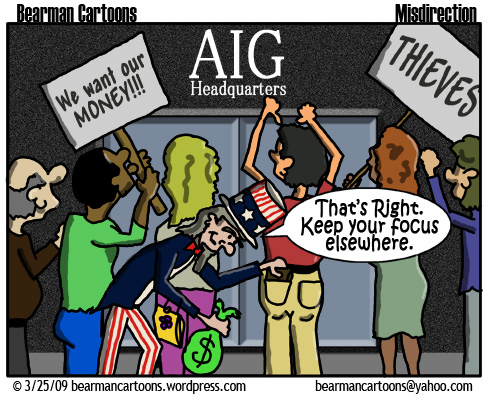
 Works Rights Compliance Alliance