
In General; Words and Phrases Term “duly” implies that all of those elements necessary to valid sale exist. Kessler v. Bridge (1958, Cal App Dep’t Super Ct) 161 Cal App 2d Supp 837, 327 P2d 241, 1958 Cal App LEXIS 1814. Title that is “duly perfected” includes good record title, but is not limited to good record title. Kessler v. Bridge (1958, Cal App Dep’t Super Ct) 161 Cal App 2d Supp 837, 327 P2d 241, 1958 Cal App LEXIS 1814.
Title is “duly perfected” when all steps have been taken to make it perfect, that is, to convey to purchaser that which he has purchased, valid and good beyond all reasonable doubt. Kessler v. Bridge (1958, Cal App Dep’t Super Ct) 161 Cal App 2d Supp 837, 327 P2d 241, 1958 Cal App LEXIS 1814. The purpose of CCP 1161a, providing for the removal of a person holding over after a notice to quit, is to make clear that on acquiring ownership of real property through foreclosure can evict by a summary procedure. The policy behind the statute is to provide a summary method of ouster where an occupant holds over possession after sale of the property. Gross v. Superior Court (1985, Cal App 1st Dist) 171 Cal App 3d265, 217 Cal Rptr 284, 1985 Cal App LEXIS 2408.
Category: I Have a Plan
Legal solutions are different for everybody, but the legal options to protect oneself are not. This category is to evaluate options available and a plan of action for each of these
So here they are – the Top 10 Deposition Questions :
- “Have you ever been arrested?” (And the follow-up: “Have you ever been convicted?”) Opposing counsel may go ballistic on this one, but it is a proper question. Remember, felony convictions and any convictions for fraud, dishonesty or moral turpitude are generally admissible for impeachment.
- “Have you ever been deposed before?” I ask this at the beginning of the deposition, as part of the standard admonition, when it sounds like an innocent inquiry related to the ground rules for the depo. But if the answer is ”yes,” I always follow up later with questions about the prior deposition(s). I also ask the related questions, “Have you ever testified in court?” and “Have you ever been a plaintiff or a defendant in another lawsuit?” Prior testimony and lawsuits can be a treasure trove of accusations and impeachment.
- “Have you ever seen the [plaintiff/defendant/employee] before the events related to this lawsuit?” This question may uncover connections between a supposedly independent witness and the other side.
- “Did you meet with the other side’s counsel before this deposition?” Pin down the number of meetings, where they occurred and how long they lasted. This information can help dismantle the claim of independence.
- “Have you signed any written statements/made any recorded statements/spoken to any reporters about the events related to this lawsuit?” To this list, you might add: “Have you posted any statements about these events on any internet site?” Of course, you will have conducted a search engine and, perhaps, database query on the witness as part of your preparation for the deposition, so you’ll know if he or she is lying.
- “Did you read any witness statements or depositions, listen to any recorded statements, look at any diagrams or photographs, or did somebody else read you any statements before the deposition?” Okay, this is more than one question, but I had to combined them here to meet the 10-question quota imposed by the title of this article.
- “Tell me everything you did to get ready for this deposition.” The answer can lead you to what the witness or opponent perceives as his or her weak spots, including areas of which you were unaware. After all, it is only natural to prepare for the hardest questions or topics. Remember to find out the specific documents reviewed, places visited and persons met with by the witness.
- “Was anyone else present when you met with your lawyer?” If a third-party was present during the meeting, the witness may have waived the attorney-client privilege.
- “How did you find your attorney [doctor/chiropractor/therapist/expert]?” This can lead to interesting prior legal issues, lawsuits or self-interest/improper involvement on the part of opposing counsel.
- “Do you have your driver’s license with you?” If so, ask to see it. Take down the personal information and, if appropriate, read it into the record.
Non Refundable Earnest money Deposit ??? not
In many real estate transactions, the seller requires the buyer to pay earnest money in the form of a nonrefundable deposit. Indeed, this procedure is often the best way for a buyer to communicate to the seller that he or she really means business. Although such deposits have been commonplace for many years, a recent court of appeal ruling holds that in certain circumstances a nonrefundable deposit is an invalid form of liquidated damages. For that reason, the court allowed the buyer to reclaim the deposit despite clear contractual language that deemed it “nonrefundable” (Kuish v. Smith, 181 Cal. App. 4th 1419 (2010)). When proceeding to escrow, real estate lawyers and their clients must be prepared to face this new reality. Retention of Buyer’s Deposit
In Kuish the court held that the seller’s retention of the buyer’s deposit in a rising real estate market constituted an invalid forfeiture. In the case, the buyer entered into a contract in early 2006 to purchase a Laguna Beach residence for $14 million, but later unilaterally cancelled escrow. The sellers quickly bettered their lot and sold the property to another party for a tidy $15 million. But they refused to return the initial prospective buyer’s $620,000 deposit, relying on clear language in the purchase agreement that designated the deposit as nonrefundable. The Kuish court rejected that label by relying on the California Supreme Court’s decision in Freedman v. The Rector (37 Cal. 2d 16 (1951)), which held that any contractual provision in which money or property is forfeited without regard to actual damages suffered constitutes an unenforceable penalty. The state Supreme Court explained that if the seller is allowed to retain the amount of a down payment in excess of expenses associated with a contract breach, the seller will be unduly enriched and the buyer “will suffer a penalty in excess of any damages he causes.” (Freedman, 37 Cal. 2d at 1920.) In so ruling, the court relied in part on Civil Code section 3294, which governs the imposition of punitive damages. According to the express mandate of that section, punitive damages may not be recovered in a case “arising from contract.” Thus, although the seller of real estate may clearly recover actual damages for breach of contract (see Cal. Civ. Code § 3307), the seller cannot recover punitive damages for such claims. Accordingly, the state Supreme Court found that if the seller could retain a real estate deposit without proving actual damages, the retention of that money would constitute a “penalty” against the breaching buyer in violation of section 3294 (37 Cal. 2d at 2122). The Kuish court also noted that retention of a deposit under these circumstances would violate the rules governing liquidated damages (see Cal. Civ. Code §§ 1670-1671). Because the seller in the Kuish case actually received a $1 million profit as a result of the buyer’s breach, the court found that there were no damages and, for that reason, forfeiture of the deposit was inappropriate. However, the court observed that the buyer’s “deposit would have been nonrefundable in a falling market to the extent defendants were able to show damages.” (Kuish, 181 Cal. App. 3d at 1429.) Real Property Damages
Civil Code section 3307 controls the recovery of general damages in a failed real estate transaction. Absent a contractual damages provision that provides otherwise, the statute allows a seller to recover the benefit of the bargain: the excess, if any, of the amount that would have been due the seller under the contract over the value of the property to the seller, as well as consequential damages and interest. Sellers are thus entitled to general damages to the extent that they can establish that the contract price exceeds the value of the property, determined as of the date of the buyer’s breach. (See Askari v. R&R Land Co., 179 Cal. App. 3d 1101, 1106 (1986).) General damages are intended to place the seller in the position he or she would have enjoyed had the buyer not breached the purchase agreement. Accordingly, such damages cannot exceed what the injured party would have received had the contract been fully performed (Cal. Civ. Code § 3358; see also, Lewis Jorge Const. Mgmt., Inc. v. Pomona Unified School Dist., 34 Cal. 4th 960, 967-968 (2004)). Thus, in a booming real estate market the seller may not sustain any “benefit of the bargain” damages (Kuish, 181 Cal. App. 4th at 1426, quoting 1 Cal. Real Property Remedies and Damages (CEB 2d ed., 2009) § 4.75, p. 354). Indeed, the seller may be better off by virtue of the breach because the property can be sold for a higher price. Under section 3307 a seller may also be able to recover consequential damages-those suffered by a seller as a “natural consequence” of a buyer’s breach. Such damages must be reasonable, foreseeable, and necessary to make the seller whole (Royer v. Carter, 37 Cal. 2d 544, 550 (1951)). The law requires that conditions giving rise to consequential damages must have actually been communicated to the breaching party, or otherwise be of such nature that the breaching party should have been aware of them. (See Lewis Jorge Constr. Mgmt. Inc., 34 Cal. 4th at 968-970.) Such damages include costs and expenses incurred in the aborted sale of the property, loss of income suffered as a result of the seller’s reliance on closing the purchase agreement, and payment of additional operating expenses. (See Greenwald & Asimow, Cal Practice Guide: Real Property (TRG, 2009) at ¶¶ 11:120128.) It is important to note that even in cases where general damages are not available-because of an appreciating market, for instance-the seller may still be entitled to consequential damages. However, because the theory of consequential damages is to make the seller whole, any appreciation in value after the buyer’s breach may offset the seller’s recovery to avoid unjust enrichment (Askari, 179 Cal. App. 3d at 1101). Interest is another component of the seller’s recovery. In most real estate transactions, general damages typically are not “certain, or capable of being made certain by calculation” as of the date of the breach, so interest cannot be calculated from that date. (See Cal. Civ. Code § 3287(a).) Nonetheless, the court may award an injured seller prejudgment interest on general damages beginning on the date the complaint is filed (Rifkin v. Achermann, 43 Cal. App. 4th 391, 396-397 (1996)). Still, recovering general damages, consequential damages, and interest may be difficult. The seller must prove not only the buyer’s breach but also that the seller sustained actual and consequential damages as a result of the breach. There are, however, other ways for sellers to protect themselves in the event of a breach by a buyer without having to prove damages. Two of these alternatives-liquidated damages and options to purchase-are discussed below. Liquidated Damages
Liquidated damages clauses are commonly used in commercial purchase agreements as well as in the standard residential purchase agreement drafted by the California Association of Realtors. The objective of a liquidated damages clause is to have the parties stipulate to an estimate of damages prior to any dispute so that both will know the extent of liability in the event of a breach (El Centro Mall, LLC v. Payless Shoesource, Inc., 174 Cal. App. 4th 58, 63 (2009)). For sellers, a liquidated damages clause spares them the arduous task of having to prove actual damages. Instead of being required to introduce evidence of appraisals and other elements of damage at trial, the seller need only establish that the buyer breached the agreement. Additionally, liquidated damages are “certain,” thereby entitling sellers to interest from the date of the breach, not just from the date of the filing of the complaint, as in the case of a general damages claim. Indeed, the court has no discretion and must award prejudgment interest upon request, from the first day there exists both a breach and a liquidated claim. (See Cal. Civ. Code § 3287(a); North Oakland Medical Clinic v. Rogers, 65 Cal. App. 4th 824, 828 (1998).) Moreover, in an appreciating market, the seller can sell the property to another buyer at a higher price and still recover liquidated damages from the defaulting buyer. (In the Kuish case cited above, there was no liquidated damages clause and, accordingly, no right to such damages in a rising market.) The seller’s downside is minimal, but it includes the possibility that in a depreciating market actual damages may exceed the amount stipulated as liquidated damages. Although a liquidated damages clause may not be in the buyer’s best interest, the reality is that many sellers insist on one as part of the deal. Such provisions do serve to fix the amount of a buyer’s exposure in the event of a breach (thus at least the buyer knows the consequences of a breach in advance), but the stipulated amount is generally considerable, and sellers are usually able to prove their case with relative ease. If the parties have agreed to a liquidated damages provision, it must be able to withstand attack. In general, liquidated damages clauses are valid unless an opposing party demonstrates that the fixed dollar amount was “unreasonable under the circumstances existing at the time the contract was made.” (Cal. Civ. Code § 1671(b).) In determining reasonableness, courts primarily focus on whether the amount of money in question was within the reasonable range of harm anticipated at the time the parties entered into their agreement (Allen v. Smith, 94 Cal. App. 4th 1270, 1278 (2002)). Courts may also consider any of the following factors as well: the amount of liquidated damages compared to the total purchase price; the parties’ relative bargaining power; the parties’ sophistication, and whether they were represented by counsel; how long the seller committed to taking the property off the market; the parties’ anticipation that proof of actual damages would be costly or inconvenient; the difficulty of proving causation or foreseeability; and whether the liquidated damages clause is included in a form contract and thus not the product of negotiation. (See Greenwald & Asimow at ¶ 4:316.) For residential purchase agreements, Civil Code section 1675(e) provides that the “reasonableness” of the liquidated damages provisions shall be determined by taking into account both the circumstances existing at the time the contract was made, as well as the price and other terms and circumstances of any subsequent sale within six months of the buyer’s default. Generally, when the liquidated damages provision does not exceed 3 percent of the purchase price, the provision is presumed reasonable and valid (Cal. Civ. Code § 1675(c)). Validity and enforceability of a liquidated damages provision also depends on compliance with certain technical requirements. First, the clause must be separately signed or initialed by both the buyer and the seller. Second, if it is included in a printed contract, it must be set out in either minimum 10-point bold type or minimum 8-point bold contrasting red type (Cal. Civ. Code § 1677(a) & (b)). These requirements are intended to “make it [more] likely that the parties appreciate the consequences” of such a provision (see Allen, 94 Cal. App. 4th at 1282-1283), and they apply regardless of the nature of the real property involved in the transaction. Options to Purchase
An option to purchase is a unilateral contract in which the prospective buyer (the optionee) pays a specified sum to the property owner in return for an exclusive right to purchase the property within a specified time frame. If the optionee elects to purchase the property, the agreement effectively converts into a binding purchase and sale contract (Wachovia Bank v. Lifetime Indus., Inc., 145 Cal. App. 4th 1039, 1049-1050 (2006)). Conversely, if the optionee does not elect to purchase the property within the term of the option, the consideration paid by the optionee is forfeited to the seller. Accordingly, commentators have noted that “options to purchase are virtually identical to a binding purchase and sale agreement with a liquidated damages” provision. (See Greenwald & Asimow at ¶ 8:3.) However, important differences exist between the two, and buyers and sellers should be aware of them. For instance, to recover under a liquidated damages provision, the seller must prove that the buyer breached the agreement. In contrast, under an option agreement, the seller has already received consideration and doesn’t have to prove anything. Moreover, there are restrictions on the validity of, and maximum amount stated in, a liquidated damages provision, whereas the consideration paid for an option agreement is entirely negotiable. Additionally, liquidated damages are usually recovered from an escrow account, requiring legal action if the breach is contested; conversely, under an option agreement, the seller has already received the consideration and therefore no legal action is required. However, a seller should take note that using an option agreement instead of a liquidated damages provision will entail at least one considerable disadvantage. Option agreements often are recorded and thus cloud title, whereas a purchase agreement containing a liquidated damages clause generally is not. (See Greenwald & Asimow at ¶¶ 8:156161.) Remember the Context
Although there are many ways parties to a real estate transaction can fix damages in the event of a breach, never lose sight of the context in which the dispute arises. In a rising market, actual damages generally are insufficient and, according to Kuish v. Smith, parties cannot simply rely on a “nonrefundable” deposit as a source of recovery. However, even when real estate prices are skyrocketing, the parties can still rely on a properly structured liquidated damages clause or an option to purchase contract. Both are effective alternatives. – See more at: http://www.callawyer.com/Clstory.cfm?eid=911394#sthash.BjG8zoX2.dpuf
In Kuish the court held that the seller’s retention of the buyer’s deposit in a rising real estate market constituted an invalid forfeiture. In the case, the buyer entered into a contract in early 2006 to purchase a Laguna Beach residence for $14 million, but later unilaterally cancelled escrow. The sellers quickly bettered their lot and sold the property to another party for a tidy $15 million. But they refused to return the initial prospective buyer’s $620,000 deposit, relying on clear language in the purchase agreement that designated the deposit as nonrefundable. The Kuish court rejected that label by relying on the California Supreme Court’s decision in Freedman v. The Rector (37 Cal. 2d 16 (1951)), which held that any contractual provision in which money or property is forfeited without regard to actual damages suffered constitutes an unenforceable penalty. The state Supreme Court explained that if the seller is allowed to retain the amount of a down payment in excess of expenses associated with a contract breach, the seller will be unduly enriched and the buyer “will suffer a penalty in excess of any damages he causes.” (Freedman, 37 Cal. 2d at 1920.) In so ruling, the court relied in part on Civil Code section 3294, which governs the imposition of punitive damages. According to the express mandate of that section, punitive damages may not be recovered in a case “arising from contract.” Thus, although the seller of real estate may clearly recover actual damages for breach of contract (see Cal. Civ. Code § 3307), the seller cannot recover punitive damages for such claims. Accordingly, the state Supreme Court found that if the seller could retain a real estate deposit without proving actual damages, the retention of that money would constitute a “penalty” against the breaching buyer in violation of section 3294 (37 Cal. 2d at 2122). The Kuish court also noted that retention of a deposit under these circumstances would violate the rules governing liquidated damages (see Cal. Civ. Code §§ 1670-1671). Because the seller in the Kuish case actually received a $1 million profit as a result of the buyer’s breach, the court found that there were no damages and, for that reason, forfeiture of the deposit was inappropriate. However, the court observed that the buyer’s “deposit would have been nonrefundable in a falling market to the extent defendants were able to show damages.” (Kuish, 181 Cal. App. 3d at 1429.) Real Property Damages
Civil Code section 3307 controls the recovery of general damages in a failed real estate transaction. Absent a contractual damages provision that provides otherwise, the statute allows a seller to recover the benefit of the bargain: the excess, if any, of the amount that would have been due the seller under the contract over the value of the property to the seller, as well as consequential damages and interest. Sellers are thus entitled to general damages to the extent that they can establish that the contract price exceeds the value of the property, determined as of the date of the buyer’s breach. (See Askari v. R&R Land Co., 179 Cal. App. 3d 1101, 1106 (1986).) General damages are intended to place the seller in the position he or she would have enjoyed had the buyer not breached the purchase agreement. Accordingly, such damages cannot exceed what the injured party would have received had the contract been fully performed (Cal. Civ. Code § 3358; see also, Lewis Jorge Const. Mgmt., Inc. v. Pomona Unified School Dist., 34 Cal. 4th 960, 967-968 (2004)). Thus, in a booming real estate market the seller may not sustain any “benefit of the bargain” damages (Kuish, 181 Cal. App. 4th at 1426, quoting 1 Cal. Real Property Remedies and Damages (CEB 2d ed., 2009) § 4.75, p. 354). Indeed, the seller may be better off by virtue of the breach because the property can be sold for a higher price. Under section 3307 a seller may also be able to recover consequential damages-those suffered by a seller as a “natural consequence” of a buyer’s breach. Such damages must be reasonable, foreseeable, and necessary to make the seller whole (Royer v. Carter, 37 Cal. 2d 544, 550 (1951)). The law requires that conditions giving rise to consequential damages must have actually been communicated to the breaching party, or otherwise be of such nature that the breaching party should have been aware of them. (See Lewis Jorge Constr. Mgmt. Inc., 34 Cal. 4th at 968-970.) Such damages include costs and expenses incurred in the aborted sale of the property, loss of income suffered as a result of the seller’s reliance on closing the purchase agreement, and payment of additional operating expenses. (See Greenwald & Asimow, Cal Practice Guide: Real Property (TRG, 2009) at ¶¶ 11:120128.) It is important to note that even in cases where general damages are not available-because of an appreciating market, for instance-the seller may still be entitled to consequential damages. However, because the theory of consequential damages is to make the seller whole, any appreciation in value after the buyer’s breach may offset the seller’s recovery to avoid unjust enrichment (Askari, 179 Cal. App. 3d at 1101). Interest is another component of the seller’s recovery. In most real estate transactions, general damages typically are not “certain, or capable of being made certain by calculation” as of the date of the breach, so interest cannot be calculated from that date. (See Cal. Civ. Code § 3287(a).) Nonetheless, the court may award an injured seller prejudgment interest on general damages beginning on the date the complaint is filed (Rifkin v. Achermann, 43 Cal. App. 4th 391, 396-397 (1996)). Still, recovering general damages, consequential damages, and interest may be difficult. The seller must prove not only the buyer’s breach but also that the seller sustained actual and consequential damages as a result of the breach. There are, however, other ways for sellers to protect themselves in the event of a breach by a buyer without having to prove damages. Two of these alternatives-liquidated damages and options to purchase-are discussed below. Liquidated Damages
Liquidated damages clauses are commonly used in commercial purchase agreements as well as in the standard residential purchase agreement drafted by the California Association of Realtors. The objective of a liquidated damages clause is to have the parties stipulate to an estimate of damages prior to any dispute so that both will know the extent of liability in the event of a breach (El Centro Mall, LLC v. Payless Shoesource, Inc., 174 Cal. App. 4th 58, 63 (2009)). For sellers, a liquidated damages clause spares them the arduous task of having to prove actual damages. Instead of being required to introduce evidence of appraisals and other elements of damage at trial, the seller need only establish that the buyer breached the agreement. Additionally, liquidated damages are “certain,” thereby entitling sellers to interest from the date of the breach, not just from the date of the filing of the complaint, as in the case of a general damages claim. Indeed, the court has no discretion and must award prejudgment interest upon request, from the first day there exists both a breach and a liquidated claim. (See Cal. Civ. Code § 3287(a); North Oakland Medical Clinic v. Rogers, 65 Cal. App. 4th 824, 828 (1998).) Moreover, in an appreciating market, the seller can sell the property to another buyer at a higher price and still recover liquidated damages from the defaulting buyer. (In the Kuish case cited above, there was no liquidated damages clause and, accordingly, no right to such damages in a rising market.) The seller’s downside is minimal, but it includes the possibility that in a depreciating market actual damages may exceed the amount stipulated as liquidated damages. Although a liquidated damages clause may not be in the buyer’s best interest, the reality is that many sellers insist on one as part of the deal. Such provisions do serve to fix the amount of a buyer’s exposure in the event of a breach (thus at least the buyer knows the consequences of a breach in advance), but the stipulated amount is generally considerable, and sellers are usually able to prove their case with relative ease. If the parties have agreed to a liquidated damages provision, it must be able to withstand attack. In general, liquidated damages clauses are valid unless an opposing party demonstrates that the fixed dollar amount was “unreasonable under the circumstances existing at the time the contract was made.” (Cal. Civ. Code § 1671(b).) In determining reasonableness, courts primarily focus on whether the amount of money in question was within the reasonable range of harm anticipated at the time the parties entered into their agreement (Allen v. Smith, 94 Cal. App. 4th 1270, 1278 (2002)). Courts may also consider any of the following factors as well: the amount of liquidated damages compared to the total purchase price; the parties’ relative bargaining power; the parties’ sophistication, and whether they were represented by counsel; how long the seller committed to taking the property off the market; the parties’ anticipation that proof of actual damages would be costly or inconvenient; the difficulty of proving causation or foreseeability; and whether the liquidated damages clause is included in a form contract and thus not the product of negotiation. (See Greenwald & Asimow at ¶ 4:316.) For residential purchase agreements, Civil Code section 1675(e) provides that the “reasonableness” of the liquidated damages provisions shall be determined by taking into account both the circumstances existing at the time the contract was made, as well as the price and other terms and circumstances of any subsequent sale within six months of the buyer’s default. Generally, when the liquidated damages provision does not exceed 3 percent of the purchase price, the provision is presumed reasonable and valid (Cal. Civ. Code § 1675(c)). Validity and enforceability of a liquidated damages provision also depends on compliance with certain technical requirements. First, the clause must be separately signed or initialed by both the buyer and the seller. Second, if it is included in a printed contract, it must be set out in either minimum 10-point bold type or minimum 8-point bold contrasting red type (Cal. Civ. Code § 1677(a) & (b)). These requirements are intended to “make it [more] likely that the parties appreciate the consequences” of such a provision (see Allen, 94 Cal. App. 4th at 1282-1283), and they apply regardless of the nature of the real property involved in the transaction. Options to Purchase
An option to purchase is a unilateral contract in which the prospective buyer (the optionee) pays a specified sum to the property owner in return for an exclusive right to purchase the property within a specified time frame. If the optionee elects to purchase the property, the agreement effectively converts into a binding purchase and sale contract (Wachovia Bank v. Lifetime Indus., Inc., 145 Cal. App. 4th 1039, 1049-1050 (2006)). Conversely, if the optionee does not elect to purchase the property within the term of the option, the consideration paid by the optionee is forfeited to the seller. Accordingly, commentators have noted that “options to purchase are virtually identical to a binding purchase and sale agreement with a liquidated damages” provision. (See Greenwald & Asimow at ¶ 8:3.) However, important differences exist between the two, and buyers and sellers should be aware of them. For instance, to recover under a liquidated damages provision, the seller must prove that the buyer breached the agreement. In contrast, under an option agreement, the seller has already received consideration and doesn’t have to prove anything. Moreover, there are restrictions on the validity of, and maximum amount stated in, a liquidated damages provision, whereas the consideration paid for an option agreement is entirely negotiable. Additionally, liquidated damages are usually recovered from an escrow account, requiring legal action if the breach is contested; conversely, under an option agreement, the seller has already received the consideration and therefore no legal action is required. However, a seller should take note that using an option agreement instead of a liquidated damages provision will entail at least one considerable disadvantage. Option agreements often are recorded and thus cloud title, whereas a purchase agreement containing a liquidated damages clause generally is not. (See Greenwald & Asimow at ¶¶ 8:156161.) Remember the Context
Although there are many ways parties to a real estate transaction can fix damages in the event of a breach, never lose sight of the context in which the dispute arises. In a rising market, actual damages generally are insufficient and, according to Kuish v. Smith, parties cannot simply rely on a “nonrefundable” deposit as a source of recovery. However, even when real estate prices are skyrocketing, the parties can still rely on a properly structured liquidated damages clause or an option to purchase contract. Both are effective alternatives. – See more at: http://www.callawyer.com/Clstory.cfm?eid=911394#sthash.BjG8zoX2.dpuf
Gretchen Morgenson Weighs in On Wall Street Corruption: “Two Judges Who get It About Banks”
RESCISSION HEATS UP AS BORROWERS HEAD BACK TO COURT TO USE SUPREME COURT REVERSAL
Yvanova, Keshtgar, and Glaski. 64-1 does the minority have the suport of the Supreme Court ???
*** THE EDITOR’S TAKE: This opinion was initially unpublished, but the court of appeal apparently had second
thoughts and later certified it for publication. I too had initial doubts about a comment or its public significance, but I
also have since come around to thinking that it is worth paying attention to—for three reasons.
1. It cites almost everything. In many respects, Mendoza looks like just another, almost humdrum decision rejecting
a homeowner’s post foreclosure attack on the trustee sale that was conducted after she stopped paying her
mortgage and rejecting her contention that the foreclosure was bad because her loan had been improperly
securitized—a claim frequently made by the foreclosure defense bar and almost as frequently vetoed by the
judiciary. But on that point, the opinion is worth saving because of its citation laden summary of the many decisions that have pronounced a foreclosure sale not wrongful simply because the underlying loan might not have been properly securitized.
Glitches in the trustee sale process (e.g., relating to substitution of trustee, notice of default, notice of sale, and conduct of the sale) can matter and, when they occur, may give a borrower—even one in default—a plausible defense or basis for vacating the sale. On the other hand, glitches in a loan’s earlier securitization (e.g., regarding compliance with applicable pooling and servicing agreements, or federal REMIC rules, or the state’s trust laws) are
not likely to eliminate her obligation to pay her mortgage, notwithstanding the possibility that someone other than her
foreclosing lender or servicer might be better entitled to collect that debt.
This opinion’s defense of a lender against this sort of “securitization attack” can save similarly situated ones a good deal of library time by serving as their research engine—and at the same time provide borrowers with a ready list of
the hurdles they will have to overcome to even get close to a jury. On the other hand, I expect that both crowds
have those lists already (including similar preGlaski rulings, such as in Wise v WFB (CD Cal 2012) 850 F Supp 2d
1047, and last minute refusing to take a stand holdings, as in Kan v Guild Mortgage Co., ordered published on October 15 of this year and reported in this issue on p 147).
2. Foreclosure audits. Many of the securitization attacks have suffered from being overspeculative, unpersuasively
arguing that perhaps something had been done wrong when the individual loan was being transferred into the pool,
but not demonstrating that it had actually occurred. Mendoza’s attack, however, did attempt to overcome that
difficulty. She argued that “unlike Gomes, whose allegations were based on sheer speculation, she has identified the
true beneficiary and has provided the factual basis lacking in Gomes—an audit report.”
These “foreclosure audits” or “forensic loan audits” have become increasingly popular for borrowers in default looking
for better weapons to stop or undo foreclosures that threaten to wipe them out. The complicated federal and state
securitization rules, and the thousands of pages in the transactional documents designed to bring their securitized
pools into compliance with those rules, include enough fussy and complicated requirements and deadlines as to
make them often easier to be missed than to be met. Especially during the boom years, when the activity was so
frantic, undoubtedly many loans—perhaps entire pools—were not in perfect compliance with all those mandates.
But although speculating that perhaps a loan’s securitization was wrongly done might not suffice as a defense, a
borrower who could actually show that her particular loan was truly mishandled may have a stronger case. A loan
that had not been deposited into the trust pool within the window of time set by its PSA has arguably never gotten
into the hands of the pool trustee if applicable state trust law says so; thus, it may be held by someone else, which
could mean that the wrong party might be trying to enforce it—if all of that could actually be proven.
Those hopes and prospects have brought foreclosure auditors into the picture, with their promises of documenting
for borrowers just how their loans were—in the auditor’s opinion—defectively securitized (as well as also, according
to them, probably defectively made). These audits might constitute a useful service, if they were well done, but the
data seems to indicate that this is not quite the case. The Federal Trade Commission has said “there is no evidence
that forensic loan audits will help you get a loan modification or any other foreclosure relief, even if they’re conducted
by a licensed, legitimate and trained auditor, mortgage professional or lawyer.” (FTC, Consumer Information,Forensic Loan Audits.) Too many foreclosure audits are just phony rescue scams. (The latest one I read about cost the borrowers $3600 and got their attorney in trouble. Matter of Smithwick, State Bar Court Case No. 11O11334,Review Department, May 16, 2014, available at http://www.statebarcourt.ca.gov/Portals/2/documents/opinions/Smithwick.pdf.)
Audit reports often sound as speculative as information and belief pleadings on this issue sound. A truly thorough audit of a loan’s securitization would review all of the requirements in the prospectuses, the loan purchase agreements, and the pooling and servicing agreements (and in all of the amendments, supplements, and schedules to those documents). It would then compare those requirements with the terms of the borrower’s note (and its endorsements and allonges and delivery mechanisms), and the terms of her deed of trust (and its assignments andrecordations), to see whether all requirements and deadlines in those documents were met. We’ll never know what the audit in Mendoza actually reviewed or concluded because it was not included in the appellate record. But since Mendoza claimed that she had “identified the true beneficiary” of her loan, I suspect that her auditor had concluded that her loan had not been properly transferred into the trust and was therefore still held by the original beneficiary and trustee, which made them, according to the auditor, the only ones entitled to enforce it.
Counsel for a borrower contemplating paying for such an audit should admonish her client that for even a competent
one to do any good, the audit will have to be admitted into evidence and its authoring auditor permitted to testify on it
—which will entail his being deposed and then subject to crossexamination by the offended lender regarding the basis for his adverse conclusions. Even if all of those obstacles can be overcome, the judge could decide that the audit report is immaterial because it does not impact the borrower’s obligation to pay her loan notwithstanding those defects. That is the issue that may well be decided next.
3. Yvanova, Keshtgar, and Glaski. The Mendoza court is not the first one to grapple with this issue, nor the first to
rule that a bad securitization does not entitle a borrower to stop paying her mortgage or challenge her foreclosure
sale. In fact, its lengthy review of federal and state opinions shows that only one state appellate court—the Fifth
District, in Glaski v Bank of America (2013) 218 CA4th 1079—had publicly declared its belief that a borrower can get
much profit from a bad securitization, while every other court after Glaski appears to have rejected that conclusion.
(Westlaw told me that it knew of 64 opinions declining to follow that decision.)
But 64–1 may not count for much if the minority has the support of the California Supreme Court. Right now, our
high court has that issue squarely before it. Earlier this year, the Second District in Yvanova v New Century
Mortgage Corp. (2014) 226 CA4th 495, like the Third District in Mendoza and earlier in Keshtgar v US Bank (2014)
226 CA4th 1201, rejected the Glaski position. The Reporter reported on those earlier decisions, but all that was
before our supreme court granted review in Yvanova (on Aug. 27, 2014, S218973) and Keshtgar (on Oct. 1, 2014,
S220012). Keshtgar involves a pre foreclosure challenge and Yvanova a post foreclosure one, but both hold that improper securitization does not make a foreclosure wrongful. Whether or not Mendoza also goes up, the high courtcan give us a much more definitive understanding of where California stands on this contentious issue. 64–1 sounds compelling, and a better tally might include nonCaliforniaforums, although some notable tribunals have surprised lenders by demanding they adhere to the rules requiring the proper transfer of notes, even when others would argue that it does not matter. See, e.g., Ibanez v US Bank Nat’l Ass’n (2012) 856 F Supp 2d 273 (Massachusetts).
If the California Supreme Court sides with the “majority” view and rejects bad securitization as a defense, then
defaulting borrowers will have to find defects outside that process if they hope to stop or avoid their foreclosures.
Improper securitization may be relevant to other parties in the secondary market, and the lending industry may have
a lot of cleaning up to do for, e.g., pool investors, but not for prepool borrowers who received their loan funds before
any securitization of their documents even started.
On the other hand, if the court endorses the Glaski position (which its proponents predict may happen because of the court’s earlier refusal to review Glaski itself or to depublish it) and holds that securitization mistakes may invalidate foreclosures, there is going to be a lot of followup litigation. Do all securitization mistakes have the same effect, or do some hurt borrowers more than others? Must an individual borrower show how she was actually hurt or prejudiced by what went on? Does the blunder justify her in demanding more proof of entitlement to collect from her adversary? Even if no one else is also demanding payment? Or does the mistake—as some claim—completely excuse her from having to pay anybody or having her property remain encumbered by the original mortgage? A proGlaski result will keep us all quite busy for a long time.—Roger Bernhardt
Court Turns Jaundiced Eye on Wells Fargo Robo-Mischief
Posted by NCBRC – January 31, 2015
Wells Fargo lacked standing to assert a claim pursuant to a Note secured by a Deed of Trust, where a forged indorsement in blank did not give it “holder” status under applicable Texas law. In re Franklin, No. 10‐20010 (Bankr. S.D. N.Y. Jan. 29, 2015).
As evidence in support of its first proof of claim Wells Fargo submitted: 1) the Note, dated October 30, 2000, payable to Mortgage Factory Inc. with a specific indorsement by Mortgage Factory to ABN Amro Mortgage Group, Inc. (“ABN Amro”); 2) a Deed of Trust securing the Note; 3) an Assignment of Lien, pursuant to which Mortgage Factory assigned its rights to ABN Amro; 4) an Assignment of Deed of Trust by ABN Amro assigning “all beneficial interest in” the Deed of Trust, together with the Note, to Mortgage Electronic Registration System (“MERS”) as nominee for Washington Mutual Bank, FA; 5) various loan modification forms involving Freddie Mac and Wells Fargo; and 6) an Assignment of Mortgage from MERS to Wells Fargo (including neither rights under the Deed of Trust, nor the Note). The assignment was dated July 12, 2010—three days before the date of the first claim—and was executed on behalf of MERS “as nominee for Washington Mutual Bank, FA” by John Kennerty, Assistant Secretary, presumably of MERS.
Upon challenge by the debtor Wells Fargo filed an amended claim which was identical to the first except that the copy of the Note attached to the second claim offered a deus ex machina in the form of a blank indorsement, signed by Margaret A. Bezy, Vice President, for ABN Amro.
The debtor challenged the second claim for: 1) lack of standing because Wells Fargo did not own the loan yet filed the claim on its own behalf, not as agent or servicer for Freddie Mac, 2) the blank indorsement was forged. (The debtor’s motion for summary judgment on the first objection was denied because Texas follows the common law rule that “the mortgage follows the note,” and the note is enforceable by the Holder.)
At the close of discovery, the court held an evidentiary hearing in which it considered the debtor’s testimony, testimony of a witness offered by Wells Fargo and the transcript of John Kennerty’s deposition. The court found that Wells Fargo was not a “holder” and, therefore, lacked standing to enforce the Note.
Where the Note was indisputably in Wells Fargo’s possession, the question was whether the blank ABN Amro indorsement by Margaret A. Bezy made Wells Fargo a “holder” with the right of enforcement. Under Texas law, an indorsement is presumed to be valid but that presumption may be overcome by “the introduction of sufficient evidence so that a reasonable trier of fact in the context of the dispute could find in the defendant’s favor.”
Walking through the evidence, the court turned to the deposition testimony of Mr. Kennerty finding that: 1) when Mr. Kennerty signed the Assignment of Mortgage from MERS to Wells Fargo, he was an employee of both MERS and Wells Fargo; 2) he signed the document three days prior to the date Wells Fargo submitted the first claim; 3) during the period that he executed the assignment he typically signed between 50 and 150 default documents per day without any real understanding of the legal significance of what he was doing. The court found that the evidence surrounding Mr. Kennerty’s execution of the assignment, while not directly related to the indorsement in blank upon which Wells Fargo ultimately relied, was suggestive of Wells Fargo’s willingness to forge documents for the purpose of deception.
There was more. Mr. Kennerty further testified as to practices within Wells Fargo when proper paperwork and assignments were not available. From this testimony the court concluded: “It constitutes substantial evidence that Wells Fargo’s administrative group responsible for the documentary aspects of enforcing defaulted loan documents created new mortgage assignments and forged indorsements when it was determined by outside counsel that they were required to enforce loans.”
Based on these findings, the burden of proof that the blank indorsement was not forged shifted to Wells Fargo. Wells Fargo offered the testimony of Mr. Campbell who had no personal knowledge of the documents in question but offered testimony to qualify them as authentic and to explain that the blank indorsement appeared in Wells Fargo’s electronic file prior to its filing the second claim. Mr. Campbell had no understanding of the technology used to maintain Wells Fargo’s records, how the records were entered or stored, or whether they could be changed once entered. He exhibited no understanding of the difference between indorsing assignments from Wells Fargo and indorsing them to Wells Fargo. Noting that the “business records exception” to the hearsay rule is liberally construed, however, the court found that Mr. Campbell’s testimony was enough to satisfy the requirement that the document in question “was kept in the course of a regularly conducted business activity and that the making of such record was the regular practice of that activity.”
Nonetheless, Mr. Campbell’s testimony did not dispel the conclusion that the Note was originally transferred to Wells Fargo with only the specific indorsement to ABN Amro and no blank indorsement. The court reasoned: “why would only an outdated and unenforceable version of the Note have been logged in by Wells Fargo when it took over the file in February 2007 if the only enforceable version of the Note had in fact existed at that time (and should have existed since 2002)? The far more likely inference, instead, is that when the loan was transferred to Wells Fargo, the Note with the blank ABN Amro indorsement did not exist.” The next question, that Wells Fargo could not explain to the satisfaction of the court, was how the blank indorsement entered the picture 22 months later. The court noted that even Washington Mutual Bank, FA, one of the links in the transfer chain, could not have had the right of enforcement without the blank indorsement. Yet it did not appear until long after the Note was in Wells Fargo’s possession. The court surmised that the course of the debtor’s repayment (and lack thereof) on the loan and attempted modifications, did not trigger the need for the indorsement in blank until the time that indorsement suddenly appeared. There was no evidence that the indorsement in blank was generated anywhere but within the walls of Wells Fargo to give it entitlement to enforce the Note.
The debtor’s objection to the claim was sustained.
Yvanova answer brief to the California Supreme Court Filed 1-28-2015
Will I Lose My Security Clearance if I File Bankruptcy? by Brett Weiss, Esq.

I practice in the Washington, DC area. Lots of my clients work for federal agencies and contractors who require security clearances as a condition of their employment. The first question they ask when them come to see me is whether a bankruptcy filing will cause them problems with their security clearance. The short answer I give: No, it will not.
This causes surprise, in large measure because of the urban legends about bankruptcy that just aren’t true. But why won’t bankruptcy have a negative impact on a security clearance? The reason is simply because bankruptcy makes you less of a security risk.
What makes someone a security risk? According to the Department of Defense, “The purpose of a security clearance is to determine whether a person is able and willing to safeguard classified national security information, based on his or her loyalty, character, trustworthiness, and reliability.” “All available, reliable information about the person, past and present, favorable and unfavorable, is considered in reaching a clearance determination. When an individual’s life history shows evidence of unreliability or untrustworthiness, questions arise whether the individual can be relied on and trusted to exercise the responsibility necessary for working in a secure environment where protection of classified information is paramount.”
Under this standard, it is not the bankruptcy itself that potentially could cause a problem, but the reasons the person files for bankruptcy. For example, if you run a Ponzi scheme, or if you defraud people, or if you committed criminal acts, and file bankruptcy as a result, this could be a problem. But if your or a family member’s illness caused financial problems, or if you were out of work or had your wages cut, or if you got divorced (events that cover almost 90% of all consumer bankruptcies), these don’t impact your reliability or trustworthiness and a bankruptcy that results won’t impact your clearance.
I have represented people who work at DOD, DIA, CIA, NSA and the White House, as well as every branch of the military. I have represented people with every possible security clearance, from Confidential to Top Secret (and the other clearances that have only letters and numbers describing them). NOT ONE has told me that a bankruptcy filing had any impact whatsoever on their security clearance, their job, or their advancement. I have even had clients tell me that their security officer told them that they needed to file for bankruptcy or they would lose (or not get) their clearance! The only requirement is that you tell your security officer before you file so that they know you are not trying to hide anything. They already know that you’re in financial difficulty–bankruptcy shows that you’re addressing the problem and fixing it.
And this makes sense. Bankruptcy allows you to deal with your debt. It allows you to eliminate it, restructure it, and pay it. It enhances your reliability and trustworthiness, and makes you less of a risk that someone will offer to take care of your financial problems in exchange for your password.
So if you are worried that you’ll lose your security clearance if you file bankruptcy, don’t. It will actually help.
REQUESTS FOR ADMISSIONS IN CALIFORNIA
NEW FORM FOR REQUESTS FOR ADMISSIONS IN CALIFORNIA
Posted on August 15, 2012 by Neil Garfield
In responding to an attorney request, I thought the end product, while not perfect, was worthy of sharing with our readers, especially the lawyers and paralegals. Hat tip to Dan Hanecek who wrote most of it.
In compliance with Code of Civil Procedure Section 2033.220, each response to the requests for admission shall:
(a) Admit so much of the matter involved in the requests as is true;
(b) Deny so much of the matter involved in the requests as is untrue; and
(c) Specify so much of the matter involved in the request as to the truth of which the responding party lacks sufficient information and knowledge.
PLEASE TAKE NOTICE that if the RESPONDING PARTY fails to serve a timely response to these REQUESTS FOR ADMISSIONS, the RESPONDING PARTY thereby waives any objections to these requests, including objections based on privilege or on the protection of work product pursuant to Civ. Code Proc. §2018.
PLEASE TAKE FURTHER NOTICE that in the event the RESPONDING PARTY fails to serve a timely response to these REQUESTS FOR ADMISSIONS, this PROPOUNDING PARTY reserves the right to move the Court for an order deeming all facts set forth herein admitted.
PLEASE TAKE FURTHER NOTICE that if the RESPONDING PARTY fails to admit the truth of any matter when requested to do so under this section, and if the PROPOUNDING PARTY thereafter proves the truth of that matter, the PROPOUNDING PARTY may move the court for an order requiring the RESPONDING PARTY to pay the reasonable expenses incurred in making that proof, including reasonable attorneys fees.
If any of these requests for admissions cannot be fully answered, please answer to the extent possible, specifying the reasons for your inability to answer the remainder, and set forth any information, knowledge or belief you have concerning the unanswered portions.
INSTRUCTIONS & DEFINITIONS
A. A CREDITOR MEANS A PARTY WHO IS QUALIFIED UNDER CALIFORNIA LAW TO SUBMIT A CREDIT BID AT A FORECLOSURE AUCTION.
B. Please furnish all information in your possession and control. If you cannot answer the requests in full after exercising due diligence to secure the information to do so, state the answer to the extent possible specifying your inability to answer the remainder, and state whatever information or knowledge you have concerning the unanswered portion.
C. Each request and interrogatory is considered continuing, and if you obtain information which renders its answers or any of them incomplete or inaccurate, you are obligated to serve amended answers on the undersigned.
D. Insofar as may be applicable, and except as otherwise indicated, the term “DOCUMENT” or “DOCUMENTS” shall refer to any and all writings and recorded materials, of any kind whatsoever, that is or has been in your possession, control or custody or of which you have knowledge, whether originals or copies including, but not limited to contracts, documents, notes, rough drafts, inter-office memoranda, memoranda for the files, letters, research materials, correspondence, logs, diaries, forms, bank statements, tax returns, card files, books of account, journals, ledgers, invoices, blueprints, diagrams, drawings, computer print-outs, discs or tapes, reports, surveys, statistical computations, studies, pictures, maps, graphs, charts, minutes, manuals, pamphlets, or books of any nature or kind whatsoever, and all other materials handwritten, printed, typed mimeographed, photocopied or otherwise reproduced; and slides or motion pictures, television tapes; all tape recordings (whether for computer, audio or visual replay) or other written, printed or recorded matter or tangible things on which words, phrases, symbols or information are affixed.
E. A request to “IDENTIFY” a document is a request to state (insofar as may be applicable):
1. The date of such document.
2. The type of document or written communication it is.
3. The names and present addresses of the person or persons who prepared such document and of the signers, senders and addresses of each document.
4. The name of any principal whom or which the signers, senders and preparers of
documents were thereby representing.
5. The present location of such document.
6. The name and present address of the person now having custody of the document.
7. Whether you possess or control the original or a copy of thereof and if so, the location and name of the custodian of such original or copy.
8. A brief description of the contents of such document.
F. A request to “DESCRIBE” any oral statement or communication is a request to state:
1. The name and present address of each individual making such statement or communication.
2. The name of any principal or employer whom or which such individual was thereby representing and the position in which such individual was then employed or engaged by such principal or employee.
3. The name and present address of the individual or individuals to whom the oral statement or communication was made, and the name of any principal or employer whom such person or persons were representing at the time of and in connection with such oral statement or communication, as well as the employment position in which they were then employed or engaged.
4. The names and present addresses of any other individuals present when such oral statement or communication was made or who heard or acknowledged hearing the same.
5. The place where such oral statement or communication was made.
6. A brief description of the contents of such oral statement or communication.
G. A request to “CITE” portions or provisions of any document is a request to state, insofar as applicable with reference to such portion or provision, the title, date, division, page, sheet, charge order number, and such other information as may be necessary to accurately locate the portion or provision referenced.
H. The term “PERSON” shall include a natural person, partnership, corporation, association, or other group however organized.
I. Whenever a request is made to “IDENTIFY” a natural person, it shall mean to supply all of the following information:
1. His/her full name.
2. His/her employer and position at the time.
3. The name of any person or entity (natural or artificial) whom she/he is claimed to have represented in connection with the matter to which the interrogatory or request relates.
4. His/her last known address, telephone number, and employer.
5. His/her present employer.
J. A request to “EXPLAIN FULLY” any answer, denial or claim is a request (insofar as may be applicable) to:
1. State fully and specifically each fact and/or contention in support of your answer, denial or claim; and
2. For each such fact or contention, to identify each person who has knowledge relative to that fact or contention, each document that tends to support that fact or contention; and each document that tends to dispute that fact or contention.
K. Unless otherwise specified, the terms “SUBJECT LOAN,” “SUBJECT LOAN TRANSACTION,” or “SUBJECT TRANSACTION” means the transaction(s) described in the complaint(s), including any prior or ongoing contract or communication relating to the transaction and/or account, up to and including the date of your answers to these interrogatories.
L. Throughout this request, “YOU” or “YOUR” refers to the answering party or parties, and their owners, officers, agents, representatives, independent contractors, employees, attorneys, and/or anyone acting on their behalf.
If any paragraph of this request is believed to be ambiguous or unduly burdensome, please contact the undersigned and an effort will be made to remedy the problem.
REQUESTS FOR ADMISSIONS
1. ADMIT THAT YOU ARE NOT A CREDITOR.
2. ADMIT THAT THE LOAN ORIGINATOR NEVER HAD THE SUBJECT LOAN ON ITS BOOKS AND RECORDS AS A LOAN RECEIVABLE.
3. ADMIT THAT THE LOAN ORIGINATOR WAS PAID BY THIRD PARTIES, NOT DISCLOSED TO THE BORROWER.
4. ADMIT THAT THE LOAN ORIGINATOR WAS NOT THE SOURCE OF FUNDS FOR ANY FINANCIAL TRANSACTION WITH THE BORROWER.
5. ADMIT THAT NO ASSIGNMENT OF THE ALLEGED LOAN WAS EVER SUPPORTED BY CONSIDERATION OR VALUE.
6. ADMIT THAT NO ACCOUNTING OR REPORT HAS EVER BEEN ISSUED (AND DELIVERED TO BORROWER) BY THE SOURCE OF FUNDS FOR THE ORIGINATION OF ANY ALLEGED LOAN TRANSACTION WITH THE BORROWER.
7. ADMIT THAT THE MASTER SERVICER NEVER ISSUED (AND DELIVERED TO BORROWER) AN ACCOUNTING OR REPORT FOR THE ORIGINATION OR TRANSFER OF THE SUBJECT “LOAN.”
8. ADMIT THAT THE CREDITOR WHO WOULD QUALIFY UNDER CALIFORNIA STATUTES TO SUBMIT A CREDIT BID AT AUCTION WAS RECEIVING PAYMENTS FROM THIRD PARTIES IN RELATION TO THE SUBJECT “LOAN.”
9. ADMIT THAT THE MASTER SERVICER OR OTHER AGENTS OF THE CREDITOR AS DEFINED IN THE PRECEDING PARAGRAPH RECEIVED PAYMENTS FROM THIRD PARTIES IN RELATION TO THE ALLEGED POOL IN WHICH THE SUBJECT “LOAN” IS CLAIMED TO BE INCLUDED AS AN ASSET.
10. ADMIT THAT NO THIRD PARTY PAYMENTS HAVE BEEN REFLECTED IN THE DEMANDS UPON BORROWER.
11. ADMIT THAT NO ACCOUNTING DEBITS OR CREDITS HAVE BEEN REPORTED TO THE BORROWER OR SUBSERVICER AS TO RECEIPTS AND DISBURSEMENTS RELATING TO THE SUBJECT LOAN, DIRECTLY OR INDIRECTLY?
12. ADMIT THAT THE “BORROWER’S” ACCOUNT WAS NOT REDUCED BY THIRD PARTY PAYMENTS.
13. Admit that the note and deed of trust at issue in this litigation were never assigned to DEUTSCHE BANK NATIONAL TRUST COMPANY AS TRUSTEE OF THE INDYMAC INDX MORTGAGE LOAN TRUST 2006-AR14 (hereinafter “AR-14 Trust”).
14. Admit that, as the alleged servicer, OneWest Bank, F.S.B. is required to make advance payments of principal and/or interest under Section 3.06 of the Pooling & Servicing Agreement of the AR-14 Trust.
15. Admit that, as the alleged SUBservicer, OneWest, Bank, F.S.B. is required under Section 3.07 of the Pooling & Servicing Agreement of the AR-14 Trust to have individualized loan by loan accounting of the Notes and Deeds of Trust/Mortgages allegedly in the AR-14 Trust.
16. Admit that the arrears amount listed in the Notice of Default on August 10, 2011, #20111074447, recorded in the Los Angeles County Recorder’s Office was from the alleged SUBservicer’s (OneWest Bank, F.S.B.) account and not the account of the alleged creditor.
17. Admit that the AR-14 Trust never sent a written Declaration and Demand for Sale to MTDS, Inc. a California Corporation dba Meridian Trust Deed Service for the Notice of Default dated August 10, 2011, #20111074447, recorded in the Los Angeles County Recorder’s Office.
18. Admit that the amount listed in the Notice of Default on August 10, 2011, #20111074447, recorded in the Los Angeles County Recorder’s Office, did not match the amount that was reported to investors of the AR-14 Trust as required under Regulation AB Item 1122(4)(v).
19. Admit that the alleged loan obligation under the Note and Deed of Trust at issue in this litigation is not in default.
20. Admit that no due diligence was conducted by YOU as to whether the note and deed of trust at issue in this litigation was ever properly assigned to YOU pursuant to the requirements of the Pooling & Servicing Agreement and 424B Prospectus.
21. Admit that there was never any memorialized monetary transaction between YOU and Plaintiffs.
22. Admit that MTDS, Inc. dba Meridian Trust Deed Services was never substituted as Trustee.
23. Admit that representations were made to the Superior Court County of Los Angeles that the AR-14 Trust was the beneficiary and proper foreclosing party.
24. Admit that third parties have made contributions to Plaintiffs’ account by way of, but not limited to, advances, credit default swaps, insurance or government funds.
25. Admit that these contributions were never credited to Plaintiffs’ account.
26. Admit that mortgage payments received by Plaintiffs were never properly credited to their account.
27. Admit that YOU never had the necessary documents to show ownership and status of YOUR account as the alleged creditor.
Forclosure Defense Request for Admissions Checklist
This is from a Judicial Foreclosure state for California Just Reverse the role between Plaintiff and defendant ie. In California the Defendant is the Bank. One Advantage we have in California is that a Plaintiff can begin discovery 10 days after service of the Summons. Sooooo.. Serve the complaint on the bank. Ten days later Request for admissions with Form Interrogatories be sure and check 17.1 and your off to the races….
Foreclosure Defense
REQUESTS FOR ADMISSION CHECKLIST
STANDING 2
ASSIGNMENTS 3
ENDORSEMENTS 3
WITNESSES 3
LOAN SERVICING 3
SERVICING REQUIREMENTS-HAMP 3
STABILIZATION ACT OF 2008. 3
SERVICING REQUIREMENTS-HUD 3
LOAN ORIGINATION 3
FEES/CHARGES 3
PAYMENT HISTORY 3
LOST NOTE 3
TRUTH IN LENDING [TILA] 3
SECURITIZED TRUSTS 3
MERS 3
CERTIFICATE OF AUTHORITY (F.S. 607.1502) 3
GENERAL/MISC. 3
SERVICE OF PROCESS 3
NEGOTIABLE INSTRUMENT 3
FEDERAL/FLORIDA DEBT COLLECTION PRACTICES ACT 3
MORTGAGE REVENUE BOND PROGRAM 3
REQUEST FOR ADMISSIONS CHECKLIST
STANDING
1. Admit that [Plaintiff] Mortgage Corporation has no standing to initiate foreclosure proceedings against [Defendant].
2. Admit that the mortgage note, if attached to Plaintiff’s Complaint, is an exact and authentic copy of the original.
3. Admit that the Plaintiff is not the lender named in the original mortgage note which is the subject of this case.
4. Admit that the original lender has not transferred possession of the original mortgage note or any rights thereunder to Plaintiff.
5. Admit that Plaintiff is not in possession of the original mortgage note.
6. Admit that Plaintiff is not the holder of the original mortgage note.
7. Admit that Plaintiff is not the owner of the original mortgage note.
8. Admit that Plaintiff did not have actual physical possession of the original mortgage note prior to filing the foreclosure Complaint in this case.
9. Admit that [Plaintiff] did not retain or authorize [Plaintiff’s attorney] to commence the above entitled action against [Defendant] or any other defendant relating to the Subject Property.
10. Admit that the alleged copy of the promissory note submitted as plaintiff’s “Exhibit A” attached to the named plaintiff’s complaint is not a true and correct copy of any promissory note which [plaintiff bank] lost or destroyed.
11. Admit that the alleged copy of the promissory note submitted as plaintiff’s “Exhibit A” attached to the named plaintiff’s complaint includes no allonge showing any assignment to named plaintiff [plaintiff].
12. Admit that no paper showing any assignment of the promissory note in this instant case to named plaintiff [ ] ever existed.
13. Admit that [plaintiff bank] has not contracted with [plaintiff’s lawyer’s name, address] in these proceedings.
14. Admit that your company’s disclosed claimed holder in due course of the monetary instrument, deed of trust, and/or asset is holding such note in compliance with State and Federal law and is actually entitled to the benefits of payments;
ASSIGNMENTS
1. Admit that [Lender/Mortgagee] has assigned the Promissory Note and Mortgage to a third party.
2. Admit that [Signer] did not have authority to convey by assignment, the subject mortgage from [Lender/Morgagee] to [Plaintiff] on [Date] in [city/state].
3. Admit or deny that [signer] did not have a valid Power of Attorney from [lender] authorizing him/her to convey the subject mortgage by assignment to [Plaintiff].
4. Admit or deny that [signer] is not an officer or employee of [lender/mortgagee] corporation.
5. Admit or deny that the Assignment purporting to convey the subject mortgage and promissory note in the instant action was signed and executed after the filing of the complaint and commencement of this action.
ENDORSEMENTS
1. If the original mortgage note in this case included an allonge, then the said allonge was not permanently affixed to the said note.
2. An allonge cannot be permanently affixed to a mortgage note by way of a paper clip, staple or scotch tape.
3. An allonge was affixed to the original mortgage note in this case because there was insufficient room at the bottom or foot of the original mortgage note for any endorsements.
4. Admit that [Signer] did not have the authority to endorse the promissory note that is the subject of this action from [Lender] to Plaintiff.
WITNESSES
1. Admit that [Affiant] is not the authorized person to swear the Affidavit of Merit.
2. Admit that [Affiant] does not have first hand knowledge of the alleged facts reported in his/her affidavit.
LOAN SERVICING
1. Admit that each servicer and/or sub-servicer of this mortgage has not serviced this mortgage in accordance with statute, laws and the terms of mortgage, monetary instrument/deed of trust, including but not limited to all accounting or bookkeeping entries commencing with the original loan solicitation through and including any parties, instruments, assignments, letters of transmittal, certificates of asset backed securities and any subsequent transfer thereof;
2. Admit that each servicer and/or sub-servicer of this mortgage has not serviced this mortgage in compliance with local, state and federal statutes, laws and regulations commencing with the original loan solicitation through and including any parties, instruments, assignments, letters of transmittal, certificates of asset backed securities and any subsequent transfer thereof;
3. Admit that this mortgage account has not been credited, debited, adjusted, amortized and charged correctly and disclosed fully commencing with the original loan solicitation through and including any parties, instruments, assignments, letters of transmittal, certificates of asset backed securities and any subsequent transfer thereof.
4. Admit that interest and principal have not been properly calculated and applied to this loan.
5. Admit that any principal balance has not been properly calculated, amortized and accounted for.
6. Admit that all good faith and reasonable disclosures of transfers, sales, Power of Attorney, monetary instrument ownership, entitlements, full disclosure of actual funding source, terms, costs, commissions, rebates, kickbacks and fees were not and still are not properly disclosed to our client(s), including but not limited to the period commencing with the original loan solicitation through and including any parties, instruments, assignments, letters of transmittal, certificates of asset backed securities and any subsequent transfer thereof.
SERVICING REQUIREMENTS-HAMP
1. Admit that [Plaintiff Bank/Servicer] is the parent corporation of [Plaintiff]
2. Admit that [Plaintiff] took [xx] Billion in TARP money in November 2008.
3. Admit that as a recipient of TARP funds, [Plaintiff] is obligated and contractually committed to comply with the Home Affordable Modification Program guidelines.
4. Admit that [Plaintiff Bank] signed a COMMITMENT TO PURCHASE FINANCIAL INSTRUMENT and SERVICER PARTICIPATION AGREEMENT for the HOME AFFORDABLE MODIFICATION PROGRAM under the EMERGENCY ECONOMIC STABILIZATION ACT OF 2008.
5.. Admit that [Plaintiff] has not provided the defendant in this action the required servicing under the Home Affordable Modification Program Guidelines.
SERVICING REQUIREMENTS-HUD
1. Admit that Plaintiff failed to have a face to face meeting with Defendant before three full monthly installments were unpaid as required by 24 C.F.R. 203.604.
2. Admit that Plaintiff U.S. Bank, N.A. did not comply with the HUD loan servicing and loss mitigation regulations pursuant to 24. C.F.R. 203 subpart C.
3. Admit that special loan servicing requirements promulgated by the Secretary of HUD and codified in the Code of Federal Regulations are incorporated into the terms of the mortgage and note at issue in the instant case.
4. Admit that failure to comply with the HUD loan servicing regulations constitutes a breach of the mortgage contract.
LOAN ORIGINATION
1. Admit that this mortgage loan was not originated in lawful compliance with all federal and state laws, regulations including, but not limited to Title 62 of the Revised Statutes, RESPA, TILA, Fair Debt Collection Practices Act, HOEPA and other laws;
2. Admit that the origination and/or any sale or transfer of this account or monetary instrument, was not conducted in accordance with proper laws and was a lawful sale with complete disclosure to all parties with an interest;
FEES/CHARGES
1. Admit that charges, fees or expenses, not obligated by the Defendant in any agreement, have been charged, assessed or collected from this account or any other related account arising out of the subject loan transaction.
PAYMENT HISTORY
1. Admit that [plaintiff] is not in possession of the account and general ledger statement, authenticated by a competent fact witness, proving a deficiency owed by [defendant].
2. Admit that absent possession of the account and general ledger statement, authenticated by a competent fact witness, proving a deficiency owed by [defendant], [plaintiff] cannot prove a deficiency owed by [defendant].
LOST NOTE
1. Admit that the original mortgage note has not been lost or destroyed.
2. Admit that the original lender has not filed an affidavit attesting to the loss of the original mortgage note or its destruction.
3. Admit that Plaintiff does not have a signed Power of Attorney authorizing it to file any type of affidavit attesting to the loss of the original mortgage note or its destruction.
4. Admit that Plaintiff never had possession of the original mortgage note before it was allegedly lost.
5. Admit that Plaintiff has no actual knowledge as to who lost the original mortgage note.
6. Admit that some party other than the Plaintiff lost the mortgage note in this case.
TRUTH IN LENDING [TILA]
1. Admit or deny that proper statutory disclosures regarding the mortgage, its interest and other related charges and mode of payment has been made to [Defendant].
2. Admit that no Truth In Lending Act disclosures were provided to [Defendant] prior to his/her signing the loan documents.
3. Admit that Plaintiff’s assignor did not provide [Defendant] with any Truth In Lending disclosures three days prior to the time when he/she signed the loan documents.
SECURITIZED TRUSTS
1. Admit that the original mortgage note in this case is part of a securitized trust composed of more than one mortgage loan.
2. Admit that the securitized trust was created by a Pooling and Servicing Agreement.
3. Admit that the Pooling and Servicing Agreement includes mandatory rules as to the time for the transfer of all original mortgage notes and security instruments (mortgages and deeds of trust) to the Trust.
4. Admit that the original mortgage note was not transferred and delivered to the Custodian for the Trust.
5. Admit that the original mortgage note was not received by the Custodian for the Trust prior to the final date for the delivery of the same as set forth in the Conveyance rules of the Pooling and Servicing Agreement.
6. Admit that the Custodian filed a written report with the Trustee for the securitized trust in which it attested to the actual possession and custody of the original mortgage note in this case.
7. Admit that the named Depositor for the securitized trust in this case did not transfer the original mortgage note to the Custodian for the trust.
8. Admit that the Sponsor for the securitized trust in this case did not actually transfer the original mortgage note to the Depositor for the trust.
9. Admit that the Originator for the mortgage loan in this case did not transfer the original mortgage note to the Sponsor for the securitized trust.
10. Admit that the Trustee for the securitized trust in this case is not the lawful owner and possessor of the original mortgage note.
11. Admit that no party, other than the Trustee for the securitized trust in this case, has any legal claims or rights in the original mortgage note.
12. Admit that any and all documents that purport to transfer the original mortgage note from the Originator to Plaintiff would not be consistent with the mandatory conveyance rules in the Pooling and Servicing Agreement for the trust that actually owns the original mortgage note.
13. Admit that the securitized trust that owns the original mortgage note in this case issued bonds or certificates to various parties who thereby acquired an ownership interest in the corpus of the trust.
14. Admit that the corpus of the trust consisted and does consist of original mortgage notes such as the note in this case.
15. Admit that the bonds issued by the trust were rated by a bond rating agency such as Fitch, Moody’s or Standard & Poor’s.
16. Admit that the investment-grade bonds issued by the trust could not have been sold without such ratings by a bond rating agency.
17. Admit that in rating the bonds, the bond rating agency represented and confirmed to the potential bond buyers that the Custodian actually had physical possession of all original mortgage notes to be delivered to the trust, including the note in this case.
18. Admit that in rating the bonds, the bond rating agency represented and confirmed to the potential bond buyers that all of the original mortgage notes had been properly transferred and delivered to the Custodian in an unbroken chain of transfers and deliveries from the originator to the intermediate parties and from such parties to the said Custodian for the trust.
19. Admit that the Master Document Custodian for the securitized trust in this case verified in writing to the Trustee for the trust that it had confirmed an unbroken chain of transfers and deliveries of the original mortgage note from the Originator to the Sponsor, from the Sponsor to the Depositor, from the Depositor to the Trustee for the trust, and from the Trustee to the Master Document Custodian for the trust.
20. Admit that in rating the bonds, Fitch, Moody’s or Standard & Poor’s represented and confirmed to the potential bond buyers that all of the original mortgage notes had been properly transferred and delivered to the Master Document Custodian in an unbroken chain of transfers and deliveries from the originator to the intermediate parties and from such parties to the said Master Document Custodian for the trust.
21. Admit that in rating the bonds, Fitch, Moody’s or Standard & Poor’s represented and confirmed to the potential investment-grade bond buyers that all of the original mortgage notes had been transferred to the trust in true sales from each party in the chain of transfers and deliveries.
22. Admit that the Prospectus for the trust in this case represents that the trust is the lawful owner and possessor of all original mortgage notes included in the trust, including the original mortgage loan in this case.
23. Admit that the Prospectus for the trust in this case represents that the mortgage loans are owned by the trust and are bankruptcy remote from any claims against the originators of the said loans.
24. Admit that the Prospectus for the trust in this case represents that each transfer and delivery of the original mortgage notes from the originator to the sponsor, from the sponsor to the depositor and from the depositor to the Master Document Custodian for the trust was a true and arms-length sale.
25. Admit that the Prospectus for the trust in this case represents that the trust is the lawful owner and possessor of all original mortgage notes included in the trust, including the original mortgage loan in this case.
26. Admit that plaintiff trustee does not possess a delivery and an acceptance receipt for each sale in the chain of assignments and transfers described in the PSA from the originator of the loan to the trust.
27. Admit that plaintiff trustee does not possess any document from the master document custodian for the trust confirming that all of the required transfers of defendants’ mortgage and note occurred.
28. Admit that plaintiff trustee does not possess any document from the master document custodian for the trust confirming that there is an “Unbroken chain” of transfers from the originator to the sponsor, from the sponsor to the depositor, and from the depositor to the trust.
MERS
1. Admit that MERS has never claimed any beneficial rights or any form of ownership rights in the original mortgage note.
2. Admit that MERS is not the holder of the original mortgage note in this case.
3. Admit that any rights MERS may have had in the original mortgage note were transferred to the Master Document Custodian for the securitized trust when the trust was formed or shortly thereafter.
4. Admit that MERS has no business records as to the receipt of any payments on the original mortgage note.
5. Admit that MERS has no business records as to the application of payments on the original mortgage note.
6. Admit that MERS has on employees who have never serviced the original mortgage loan in this case.
7. Admit that as between MERS and the Trustee for the securitized trust, the Trustee has all rights of ownership and possession with respect to the original mortgage note.
8. Admit that Mortgage Electronic Registration Systems Inc. (”MERS”) did not retain or authorize [Attorney for Plaintiff] to commence the above entitled action against [Defendant] or any other defendant relating to the Subject Property.
9. Admit that MERS did not provide any information to [Attorney for Plaintiff] used in drafting the allegations of the Complaint which [Attorney for Plaintiff] served and filed.
10. Admit that MERS did not have any direct or indirect involvement in controlling any other aspect of the above entitled action against [Defendant].
11. Admit that MERS has no direct knowledge that [Attorney for Plaintiff] commenced the above entitled action against [Defendant] under the name of MERS.
12. Admit that MERS has never verbally communicated with [Attorney for Plaintiff] with regard to the above entitled action during any stage of the action.
13. Admit that MERS has never communicated with [Attorney for Plaintiff] in writing at any stage of the above entitled action that [Attorney for Plaintiff] has commenced against [Defendant] by simply naming MERS as the Plaintiff.
14. Admit that MERS could not have authorized [Attorney for Plaintiff] to commence the above entitled action against [Defendant] or any other defendant relating to the Subject Property, because MERS has no pecuniary interest in the subject property and therefore has no standing and/or authority to sue [Defendant(s)].
15. Admit that MERS has no legal or beneficial interest in the promissory note underlying the security instrument for which it serves as “nominee”.
16. Admit that MERS has no legal or beneficial interest in the loan instrument underlying the security instrument for which it serves as “nominee”.
17. Admit that MERS has no legal or beneficial interest in the mortgage indebtedness underlying the security instrument for which it serves as “nominee”.
18. Admit that MERS has no interest at all in the promissory note evidencing the mortgage indebtedness.
19. Admit that MERS is not a party to the alleged mortgage indebtedness underlying the security instrument for which it serves as “nominee”.
20. Admit that MERS has no financial or other interest in whether or not a mortgage loan is repaid.
21. Admit that MERS is not the owner of the promissory note secured by the mortgage and has no rights to the payments made by the debtor on such promissory note.
22. Admit that MERS does not make or acquire promissory notes or debt instruments of any nature and therefore cannot be said to be acquiring mortgage loans.
23. Admit that MERS has no interest in the notes secured by mortgages or the mortgage servicing rights related thereto.
24. Admit that MERS does not acquire any interest (legal or beneficial) in the loan instrument (i.e., the promissory note or other debt instrument).
25. Admit that MERS has no rights whatsoever to any payments made on account of such mortgage loans, to any servicing rights related to such mortgage loans, or to any mortgaged properties securing such mortgage loans.
26. Admit that mortgage indebtedness for which MERS serves as the “nominee” is not reflected as an asset on MERS’ financial statements.
27. Admit that failure to collect the outstanding balance of a mortgage loan will not result in an accounting loss by MERS.
28. Admit that when a foreclosure is completed, MERS never actually retains or enjoys the use of any of the proceeds from a sale of the foreclosed property, but rather would remit such proceeds to the true party at interest.
29. Admit that MERS is not actually at risk as to the payment or nonpayment of the mortgages or deeds of trust for which it serves as “nominee”.
30. Admit that MERS has no pecuniary interest in the promissory notes or the mortgage indebtedness for which it serves as “nominee”.
31. Admit that MERS is not personally aggrieved by any alleged default of a promissory note for which it serves as “nominee”.
32. Admit that there exists no real controversy between MERS and any mortgagor alleged to be in default including [Defendant].
33. Admit that MERS is never the holder of a promissory note in the ordinary course of business.
34. Admit that MERS is not a custodian of promissory notes underlying the security instrument for which it serves as “nominee”.
35. Admit that MERS does not even maintain copies of promissory notes underlying the security instrument for which it serves as “nominee”.
36. Admit that MERS did not retain Cheatham or obligate itself in any way to pay any legal fees to Cheatham with regard to Cheatham commencing the above entitled action.
CERTIFICATE OF AUTHORITY (F.S. 607.1502)
1. Admit that [plaintiff bank] is not domestic to the state of Florida
2. Admit that [plaintiff bank] has not registered as a business entity with Florida’s Secretary of State or his agent.
3. Admit that [plaintiff bank] is not chartered as a bank in Florida.
4. Admit that [Plantiff corporation] does not have a valid Certificate of Authority to conduct business in the State of Florida.
GENERAL/MISC.
1. Admit that it is the practice of [plaintiff bank] to charge-off and sell notes in arrears after collecting insurance on the outstanding amount of indebedness.
2. Admit that after [plaintiff bank] charges off and sells evidence of indebtedness, the commercial paper illustrating the duty between the mortgagor and mortgagee or assignee becomes legally uncollectible.
SERVICE OF PROCESS
1. Admit or deny that Summons has been served properly on [Defendant] in this case.
NEGOTIABLE INSTRUMENT
1. Admit or deny that the promissory note at issue in this action is not a negotiable instrument under Florida Statute 673.1041 because it is governed by and subject to the HUD default loan servicing and loss mitigation regulations, 24. C.F.R. 203 subpart C.
FEDERAL/FLORIDA DEBT COLLECTION PRACTICES ACT
MORTGAGE REVENUE BOND PROGRAM
1. Admit or deny that the subject mortgage loan was pooled into Mortgage Backed Securities (MBS) which have been sold to investors.
GLASKI, AND JUDGES
CALI ATTORNEY SPEAKS ON CURRENT STATE OF FORECLOSURE DEFENSE,

Recently I had a discussion with a California attorney named David who defends homeowners against foreclosures. David also allowed that he had once worked for a law firm that defended banks, so the combination of those two sides of David’s experience were of course completely tantalizing to me. He agreed to be interviewed and I sent him some questions via email. What follows are David’s unedited answers to my 6 questions, along with an introduction by David himself.
Make sure you check out the whole thing, as David comments on Glaski and the granting of certiorari by the California Supreme Court to the Yvanova case (which held essentially the opposite of Glaski), as well as efforts to convert California from a non-judicial foreclosure state to a judicial one.
PREFACE: I have to preface my answers here by pointing out that I am a practicing lawyer here in California. As such, that is going to color my beliefs and my answers to these questions. I actively represent homeowners in foreclosure matters in California courts. If one wants to know what a lawyer thinks of this subject, my answers will be useful. If one believes that all lawyers are evil then what I say will not be of interest. I am just going to go ahead and answer things from my perspective and if one has or is contemplating legal action over a bad foreclosure, hopefully I will provide some useful information.
LRM: You remarked that you were used to case law that says “the banks win.” Can you elaborate on that?
SAM: Regarding case law that says “banks win” in California – In California there seems to be much case law that has developed over a long time, which effectively rules out many of the legal issues which can be successful in other states.
“Show me the note” defenses, for example don’t work in California.
Securitization arguments, with the narrow exception of the Glaski decision, which is currently being reviewed by the California Supreme Court, don’t work. There is even case law that an oral agreement or promise to delay a foreclosure sale is not enforceable by the homeowner, due to the fact that it is not in writing and should be considered an “oral modification to a written contract.” There is law that says once a Trustee’s Deed Upon Sale (the document that is created when title transfers at the foreclosure sale auction) is recorded, there is a legal presumption that the sale was conducted fairly. There is case law that says a homeowner doesn’t have “standing” to object to defects in the securitization process. It all adds up.
The net effect is that it limits the ways in which one can challenge a foreclosure. Even so, the only real chance one has of saving the home (as opposed to merely suing for damages post-foreclosure) is to get to court somehow before the foreclosure sale takes place, because once that TDUS is issued, it is all downhill for the banks. After that point, one can sue for money damages, but to get the house back you would usually need to prove fraud, which is proven to a higher burden of proof.
This is all in addition to the fact that non-judicial foreclosures are used 90-plus percent of the time here (as opposed to judicial foreclosures, which are in essence a lawsuit to obtain foreclosure and are the sole remedy foreclosing in some states), and when paired with a subsequent UD decision, it sometimes seems there is no due process to the homeowner. I could go on and on.
As lawyers practicing in this area in California, we’re often regaled by examples of how lawyers from other states “do it”, sometimes even by those lawyers. Anyone who has practiced can tell you however, that in California we have some of the most aggressive litigators there are. It is just that we are faced with a set of laws here which make it a very different playing field from, say, Florida. That being said, if you have a good case, pursue it timely, and hire a good attorney, there are still things that can be done to help you.
LRM: Do other attorneys (no names necessary, of course) that you have talked to feel that way?
SAM: The quick answer is yes. Well, good ones do. The quick buck artists, and those who are just too uninformed to know better don’t.
There are a lot of people who are well-meaning, but are inadequately informed.
But lawyers who are involved and knowledgeable about litigating these cases are aware of the challenges that we face here in California.
LRM: You mentioned you had done work defending loan servicers–how did you get into and then out of that?
SAM: Since law school I have always been very adept at contractual law issues, earning top scores in several contractual-related courses. In part that was due to the fact that I studied economics as an undergrad and necessarily had some knowledge of banking and financial systems. Contractual law is something that I always have always found very second-nature.
Due to the glut of lawyers, most of the jobs that were available were for tort lawyers, and for the first few years of my experience I worked at some of the well-established local insurance defense firms. I worked for a very well-regarded local trial lawyer for several years, where I got invaluable experience. So, I received great training as a litigator, learned a lot about courtroom strategy, but I wanted to try something new. In the late 90s I was offered a job in the litigation department of a local firm that defended banks in wrongful foreclosure actions. It turned out that foreclosures were at a 22-year low at that point, but this firm had received a few wrongful foreclosure cases. I and other lawyers there worked hard and resolved those cases, some with trial and others without, and the work dried up.
I stayed there long enough to learn mortgage and foreclosure law well. I then put that to use years later in handling mortgage cases, including wrongful foreclosure cases for homeowners, and suits against loan modification law firms. (One of the things I do for my clients is I try to get their funds back from any loan modification or forensic audit or other foreclosure prevention scams).
The law remained largely unchanged for the next few years, until the National Mortgage Settlement and the Homeowners Bill of Rights legislation. When the HBOR was passed, a friend of mine extended me an offer to work on a contract basis full time for a local firm that represented servicers. My workload wasn’t what it could be so I took the assignment. That particular firm was counting on the HBOR having the result of turning California into a de facto “judicial foreclosure state” where non-judicial foreclosures were an option but where banks and lenders preferred to use the judicial foreclosure remedy. That business model didn’t take off and in retrospect seems rather foolish – banks and servicers love non-judicial foreclosures, they are cheaper, quicker, and the lack of due process to the homeowner means that there is a greater chance of succeeding. So, that is how I got out of working on the banking end.
But the good thing is that I got a very close inside view of what the banking industry, and the foreclosure law firm industry, thinks about the HBOR and its various issues. Many of the issues with the HBOR and the National Mortgage Settlement will take years to develop, as caselaw develops slowly (take Glaski for instance).
Since then, I have further engaged on the consumer side and have continued to get training and attend classes, participate in lawyers’ list serves, and to network with other attorneys to remain knowledgeable about the cutting edge of wrongful foreclosure litigation in California.
LRM: Did you learn anything useful regarding foreclosure defense while behind enemy lines (i.e., defending servicers)?
SAM: Yes, very much so. There is no substitute for being employed at a firm that does one thing all day long, learning from others who have done the same. And I have to say that many of the issues I see foreclosure lawyers pursuing or inquiring about are complete non-starters here in California. My training allows me to be more selective and more accurate in my case evaluation. I know what works, what causes one to lose credibility with the Court, and how to deal with banking lawyers.
Many of the banking lawyers are fundamentally decent people, and if one starts accusing them of being in collusion with the banks and servicers to “steal the house,” suing the lawyers, etc. – which all might make for great grandstanding to non-lawyers – but without proof to support those claims it never goes anywhere (without proof) and it guts any respect the court or opposing counsel has for the case or the attorney. While most people tend to think of lawyers as powerful, equating an associate at a law firm who represents banks to a high level “bankster” would be like accusing the teller at your local branch of getting rich on the TARP bailouts. During the time, both times actually, that I worked on the “other side” of things, I was never asked to do anything unethical.
One thing I did learn from working on that side is that the quality of work by the plaintiff bar is usually substandard. For example, we would often see pleadings submitted by attorneys that contained very little in the way of supporting factual allegations. And we would frequently see Complaints which attempted to plead theories of liability that are not valid under California law. And I am talking about work coming from lawyers, not the work of pro per litigants and legal aid services (which usually have some of the same problems, in addition to the absence of an attorney). Quite often the Complaints and legal work would seem as if there were no underlying legal issue of merit, because if there had been, it certainly wasn’t being advanced in the papers that were filed. So, after awhile, one begins to get the feel for what one has to do to build credibility to the case.
I also learned that there are so many meritless (or at least poorly litigated) foreclosure cases, that if you can be the one who makes your case stand out and appear to have some merit, you can get a favorable resolution working with bank lawyers. Often the goal of wrongful foreclosure litigation is to encourage the bank to either stop a foreclosure proceeding, or to enter into a monetary settlement with the Plaintiff. Sometimes the bank will offer new loan terms, and forego the foreclosure, as a part of a settlement. One must litigate in a manner that builds credibility if this is to happen.
If one appears to be merely engaging in delay tactics, or pursuing litigation to see if the bare fact of a lawsuit – any lawsuit – is going to cause a bank to change its approach, in my experience the days of success for those strategies are few. Unfortunately, the majority of the cases I saw when I was on the “other side” were of that nature. And often, the eventual result of such approaches is that the client is left in a financially worse position – after paying attorneys fees, court costs, and any additional fees to the other side – from pursuing questionable cases.
So, what I try to do is to handle a case in such a way that the banks and the courts and the decision makers will take it seriously. And that includes having a professional relationship with, and respect for the other counsel.
I feel like what I‘ve learned has value, and is a fairly rare commodity in the plaintiff’s bar. I’m not going to risk my credibility in the legal field by engaging in a liar’s contest with the lawyers and non-lawyers who are not as qualified.
Of course, I’ve learned things on the plaintiff’s side as well. I’ve learned how emotional people get over losing a home, and how attached they are to their houses. I am humbled to have as a friend a former client who told me that his mortgage case, which involved a wrongful foreclosure, was the most difficult thing he’s ever gone through in his life. I enjoy the camaraderie that one gets from dealing with a “real” person (as opposed to someone working in the loss mitigation department of a corporation) and especially like achieving good results for real people.
LRM: Do you think judges are naive about the foreclosure fraud or do you think they’re somehow in on it, even if being “in on it” means not “opening the floodgates”? What I’m really trying to get at is, why are judges letting this go on?
SAM: In answering this question, I have to go back to my preface that not all foreclosures are considered bad or wrong or fraudulent. I would like to change the lack of due process one gets in California with the non-judicial foreclosure followed by quickie UD system, but that is a legislative issue more than anything else. And I am working on proposals to change the legislation in California that relates to foreclosures, including one which proposes to make California a judicial foreclosure state.
First it is important to consider what the role of the judge is. At the Court level where facts are tried – the judge in trial court (which is either Superior Court in California State Courts, or District Court in Federal Courts) is required to follow the law as it exists at the time he or she makes the ruling. That means that the judge has to follow the precedent and statutes that are already there.
If one is bringing a case, knowing that it is contrary to existing law, just know that the trial court judge is not going to change existing law. One would have to be prepared to appeal the case to generate an appellate court opinion, which if published, would be citable case law precedent to do that. And sometimes, one would even need to plan to seek writ to the California Supreme Court to change a law, or to change it statewide.
The question asks about whether judges are naïve about fraud or in on it. In my experience, judges generally are not naïve. But you have to be able to prove the fraud, and especially with fraud, that becomes very case specific.
Sometimes, what certain litigants believe is a bad judge is really a judge who is restrained from considering certain issues because of the state of the law. In those instances, hopefully the homeowner’s attorney has prepared his or her client for the possibility that the judge may not see the great relevance of, for example, the fact that a certain loan servicer was known to employ robosigners. That won’t be because the judge is in on it, it might be because the legal theory that those facts relate to is just a non-starter in California (see above for answer to number 1).
That being said, any system is going to be imperfect and any system with people in it is going to be corruptible. I find that it is not productive for me, or my clients, to go into court believing the system is so corrupt that all the judges have been bought off, and that the only reason I would ever lose a motion is due to corruption. Such things can become self-fulfilling prophecies and most of the time I have a good idea of whether a strategy is going to work or not.
The lawyers I know who feel, or who say they feel, that the corruption is pervasive seem to play off of those beliefs in order to deflect their clients ire at losing. The lawyers I know who think that way also tend to lose a lot. Again, self-fulfilling prophecies. One has to ask, if the system is so pervasively corrupt, then why would anyone bother with an attorney who believes that?
Over any given year of practice, there will be a few times where a judge has made a ruling that is so contrary to the law or facts, or where the judge has seemingly bent over so far to try to help the other side, that I get suspicious. But it’s rarely provable. Ultimately, if you suspect something fishy is going on you have to weigh your options and decide the best approach for your case.
It’s far more likely that a judge (and there is one I am thinking about in particular right now) is frustrated with the glut of foreclosure cases, and due to his past as a member of a certain political group, or involvement with a certain real estate company, might be very one-sided about how he or she approaches foreclosure cases. One simply has to try to avoid such judges (with CCP 170.6 challenges among other things). If the bad judge or judges can’t be avoided, then you have to play the hand you are dealt, which may mean settling as opposed to going to trial.
If one does get a judge that is corrupt or unprofessional, I am a big supporter of one’s right to challenge questionable behavior by a judge, especially if that takes the form of unfair or unbalanced treatment from the bench. There are procedures for reporting a judge to the Judicial Council or to the Presiding Judge. In my career, I’ve reported one judge and have left it up to my clients whether to report judges in some other instances.
But I think the issue underlying the question, is one of why are the laws what they are? That comes from decades if not centuries of lawmaking and legislating in California which favors banking interests. Until the recent foreclosure crisis this was not something the average person cared about. Before that, everyone assumed that only bad people suffer foreclosures, and there was little political capital to make any changes. I think the political capital is there, and the case volume is there as well, to see the problems with the current system. The legislature is there and can be lobbied for these changes, and that is something I am a big believer in. I participated in a recent law day where a consumer lawyer’s group I belong to met with legislators and their aids about certain legal changes they were advocating for. I have started a legal foundation, which will be working towards this issue in the next year.
LRM: As I mentioned to you, some judges refused to follow Glaski back in 2013. But now that the CA Supreme Court has refused to have it de-published, do you think Glaski will help make any difference for the better for homeowners?
SAM: Since you’ve provided me these questions to answer, Yvanova was accepted for Certiorari by the California Supreme Court. I imagine that one of the reasons that this happened is that there is currently a split of authority in California with Glaski (and cases following it) and Yvanova (which rejects Glaski) being the law, depending upon one’s jurisdiction. From a due process perspective, I’d like to see it Glaski upheld.
Some who favor Glaski, myself included, feel that the case law that is critical of Glaski is inadequately reasoned. Sometimes the cases critical of the Glaski decision are conclusory in their analysis, merely stating that they find it “unpersuasive.” We can expect that the California Supreme Court will expound on it quite a bit more, but that decision is a few months in the future at least.
Ocwen Wall of Shame
20141021 NY-Lawsky to Ocwen – Letter regarding backdating
20141023 Ocwen Backdating draws Attention of Attys Gen Bloomberg

20141218 Ocwen stalls Short Sales-Bloomberg
20141222 Bill Erbey Loses $300M in Hours, No longer Billionaire – Forbes
20141222 Executive is Sacked for His Company’s Misdeeds – New Republi

Foreclosure News in Review
California Appellate Court is Fed Up with Bank of America: Homeowner’s Claim Upheld Even Though Not in Proper Form
Foreclosure News Roundup
Motion to Compel Discovery: General Template I am Using
What happened to those “lost notes?”
California Appellate Court is Fed Up with Bank of America: Homeowner’s Claim Upheld Even Though Not in Proper Form
The Devil is in the Details — The Mortgage Cannot Be Enforced, Even If the Note Can Be Enforced
Discovery in the Federal System
6.2 Discovery
Updated 2013 by Gregory Bass
Discovery is the process of uncovering relevant facts through identifying witnesses, documents, and other items that can lead to establishing those facts as admissible evidence. Pre-litigation investigation is covered in Chapter 4.1 of this MANUAL. This chapter discusses the formal tools of civil discovery, the methods for protecting against unwarranted discovery and motions to compel permitted discovery.
6.2.A. The Scope of Allowable Discovery
The Federal Rules of Civil Procedure specify the general parameters of allowable discovery in a lawsuit. Rule 26(b)(1) specifies the following, “unless otherwise limited by court order”:
. . . Parties may obtain discovery regarding any non-privileged matter that is relevant to any party’s claim or defense, including the existence, description, nature, custody, condition, and location of any documents or other tangible things and the identity and location of persons who know of any discoverable matter. For good cause, the court may order discovery of any matter relevant to the subject matter involved in the action. Relevant information need not be admissible at the trial if the discovery appears reasonably calculated to lead to the discovery of admissible evidence. All discovery is subject to the limitations imposed by Rule 26(b)(2)(C)./1/
As a threshold matter, the Rule establishes a broad scope of allowable discovery. The U.S. Supreme Court discussed the oft-quoted rationale for this standard in an early case:
We agree, of course, that the deposition-discovery rules are to be accorded a broad and liberal treatment. No longer can the time-honored cry of ‘fishing expedition’ serve to preclude a party from inquiring into the facts underlying his opponent’s case. Mutual knowledge of all the relevant facts gathered by both parties is essential to proper litigation. To that end, either party may compel the other to disgorge whatever facts he has in his possession. The deposition-discovery procedure simply advances the stage at which the disclosure can be compelled from the time of trial to the period preceding it, thus reducing the possibility of surprise./2/
The Court has reiterated this broad standard, stating that it “has more than once declared that the deposition-discovery rules are to be accorded a broad and liberal treatment to effect their purpose of adequately informing the litigants in civil trials.”/3/ At the same time, the Court has also directed that the requirement of relevance of material sought in discovery should be “firmly applied.”/4/
Rule 26(b)(1) reflects these competing considerations. It addresses them in three basic ways. First, unless limited by court order, parties are entitled to discover “any nonprivileged matter that is relevant to any party’s claim or defense.” The practical scope of discovery is broad, as it includes “the existence, description, nature, custody, condition, and location of any documents or other tangible things and the identity and location of persons who know of any discoverable matter.” Second, upon a showing of “good cause,” parties may seek the intervention of the court to attempt to broaden the scope of discovery beyond matters relevant to claims or defenses, to “any matter relevant to the subject matter involved in the action.” Third, whether pertinent to claims or defenses or to the subject matter of the case, “relevant information” is not circumscribed by evidence that will be admissible at trial, as long as “the discovery appears reasonably calculated to lead to the discovery of admissible evidence.”/5/
The initial standard of presumptively allowable discovery relevant to claims and defenses and the need for parties to seek court intervention, upon a showing of good cause, to expand this scope to matters relevant to the subject matter of the action reflects a compromise between the competing claims of discovery being either overbroad or necessary to develop the case./6/ There is no precise dividing line between discovery that is relevant to either claims or defenses, or to the subject matter of the action. The good cause assessment is “meant to be flexible,” and will depend on the circumstances of the pending action./7/ For example, information about “other incidents of the same type,” although “not directly pertinent to the incident in suit,” could still be considered relevant to the claims or defenses raised in the action. Similarly, information potentially usable to impeach a witness, “although not otherwise relevant to the claims or defenses, might be properly discoverable.”/8/ The difference between the two standards, “while meaningful, is not dramatic, and broad discovery remains the norm.”/9/ The “relevance” standard itself remains broad./10/
Rule 26(b)(1) effectively establishes a bi-level framework for discovery:
[The Rule has] . . . implemented a two–tiered discovery process; the first tier being attorney–managed discovery of information relevant to any claim or defense of a party, and the second being court–managed discovery that can include information relevant to the subject matter of the action. Accordingly, when a party objects that discovery goes beyond that relevant to the claims or defenses, “the court would become involved to determine whether the discovery is relevant to the claims or defenses and, if not, whether good cause exists for authorizing it so long as it is relevant to the subject matter of the action.” The good–cause standard is intended to be flexible. When the district court does intervene in discovery, it has discretion in determining what the scope of discovery should be./11/
Thus, the initial scope of discovery is determined by the parties, as they frame their claims for relief or defenses. However, the Rule also “signals to the court that it has the authority to confine discovery to the claims and defenses asserted in the pleadings, and signals to the parties that they have no entitlement to discovery to develop new claims or defenses that are not already identified in the pleadings.”/12/
The district court in Thompson v. Department of Housing and Urban Development expressed a utilitarian approach that emphasizes the parties’ cooperation in mutually framing, if possible, the scope of discovery:
Lest litigants and the court become consumed with the philosophical exercise of debating the difference between discovery relevant to the “claims and defenses” as opposed to the “subject matter” of the pending action—the juridical equivalent to debating the number of angels that can dance on the head of a pin—the practical solution to implementing the new rule changes may be to focus more on whether the requested discovery makes sense in light of the Rule 26(b)(2) factors, than to attempt to divine some bright line difference between the old and new rule. Under this approach, when confronted with a difficult scope of discovery dispute, the parties themselves should confer, and discuss the Rule 26(b)(2) factors, in an effort to reach an acceptable compromise, or narrow the scope of their disagreement./13/
The Rule 26(b)(2) factors referenced by the Thompson court further provide for direct court involvement in potentially limiting the scope of discovery. The Rule specifies three considerations which, if present, require the court to limit the scope of otherwise permissible discovery. Rule 26(b)(2)(C) states:
On motion or on its own, the court must limit the frequency or extent of discovery otherwise allowed by these rules or by local rule if it determines that:
(i) the discovery sought is unreasonably cumulative or duplicative, or can be obtained from some other source that is more convenient, less burdensome, or less expensive;
(ii) the party seeking discovery has had ample opportunity to obtain the information by discovery in the action; or
(iii) the burden or expense of the proposed discovery outweighs its likely benefit, considering the needs of the case, the amount in controversy, the parties’ resources, the importance of the issues at stake in the action, and the importance of the discovery in resolving the issues./14/
Rule 26(b)(2)(C) grants courts the discretion to weigh the burden or expense of proposed discovery against an assessment of its likely benefit, considering the needs of the case and the importance of the discovery in resolving the issues. The Rule “places an obligation on the trial court to limit the frequency or extent of discovery otherwise permitted by Rule 26(b)(1) based on a balancing analysis” that is “written in mandatory terms.” /15/ Courts have “considerable authority to limit a party’s pursuit of otherwise discoverable information where the burden of a discovery request is likely to outweigh the benefits.”/16/ This coincides with the general direction of Rule 26 that “vests the trial judge with broad discretion to tailor discovery narrowly and to dictate the sequence of discovery.”/17/
The purpose of the Rule is to “promote judicial limitation of the amount of discovery on a case–by–case basis to avoid abuse or overuse of discovery through the concept of proportionality.”/18/ This doesn’t necessarily mandate that the parties or the court must undertake a detailed assessment of the merits and their relationship to the discovery needs of the action. “In general, it seems that the proportionality provisions should not be treated as separate and discrete grounds to limit discovery so much as indicia of proper use of discovery mechanisms; they do not call for counsel to undertake complex analysis.”/19/ Nor is it a “warrant to implement personal views about the importance of issues raised.”/20/
Nevertheless, advocates should anticipate arguments citing the factors of Rule 24(b)(2)(C), as reasons for limiting or denying discovery requests outright. Be prepared to demonstrate that your discovery request is a timely, reasonably tailored, and legitimate inquiry into matters which critically relate to the issues raised by the action.
6.2.B. Mandatory Initial Disclosures
In most cases, Rule 26(a)(1)(A) requires each party at the outset of litigation to automatically make significant, self-executing “initial disclosures” in writing, without waiting for formal discovery requests from the opposing party. Parties must identify individuals likely to have discoverable information and documents (including electronically stored information, discussed more fully below) “that the disclosing party may use to support its claims or defenses.” If applicable, the disclosure must also include a computation of damages and information regarding insurance agreements./21/ The names of disclosed individuals must include the subjects of the information they possess. The documents themselves, or their description and location, must be provided, as long as the disclosing party has them in its possession, custody, or control. “Use” of documents or information possessed by individuals is broadly construed to include use in discovery, to support a motion, or at trial, but it excludes information used solely for impeachment./22/
This mandatory disclosure requirement does not apply in three situations:
- if the parties stipulate not to make such disclosures;
- if otherwise directed by court order; and
- in certain categories of proceedings, the most significant of which, for purposes of legal services litigation, is “an action for review on an administrative record.”/23/
A “major purpose” of the initial disclosure requirements is to “accelerate the exchange of basic information about the case” which is “needed in most cases to prepare for trial or make an informed decision about settlement.”/24/ Since plaintiff’s counsel has made a pre-filing investigation of the case, ordinarily little additional searching will be required to comply with the Rule 26(a)(1) mandatory initial disclosure requirements . The burden of initial disclosure will often rest in large part on defense counsel, who must relatively quickly perform an investigation of the claims in the complaint and potential defenses . The information found would serve as the basis of initial disclosures, as parties must make their disclosures based on “the information then reasonably available to it.”/25/ Failure to fully perform an investigation does not provide an excuse for failing to make any initial disclosures. Neither does the failure of the opposing party to make its own adequate disclosures./26/
Failure to make these disclosures will result in exclusion of the material that should have been disclosed at a hearing or trial, or on a motion, unless the failure was substantially justified or harmless./27/ Rule 37(c)(1) also states The rule also states that “in addition to or instead of this sanction,” the court may order payment of reasonable expenses, including attorney’s fees caused by the failure, and may impose other appropriate sanctions, including any of the orders listed in Rule 37(b)(2)(A)(i)–(v)./28/ Therefore, “[c]ounsel who make the mistake of treating Rule 26(a)(1) disclosures as a technical formality, rather than as an efficient start to relevant discovery, do their clients no service and necessarily risk the imposition of sanctions.”/29/ Courts have used variations of five factors to determine whether evidence should be excluded for failure to timely disclose it earlier: “(1) the surprise to the party against whom the evidence would be offered; (2) the ability of that party to cure the surprise; (3) the extent to which allowing the evidence would disrupt the trial; (4) the importance of the evidence; and (5) the nondisclosing party’s explanation for its failure to disclose the evidence.”/30/
Noting the lack of many rulings on the form or degree of specificity needed to comply with the initial disclosure requirements of Rule 26(a)(1), the Seventh Circuit in Robinson v. Champaign Unit 4 School Dist., stated that “the advisory committee notes . . . emphasize that the ‘disclosure requirements should, in short, be applied with common sense’ to help focus the attention on the ‘discovery that is needed, and facilitate preparation for trial or settlement’; the new rule is not intended, however, to encourage litigants to ‘indulge in gamesmanship with respect to the disclosure obligations.’” /31/
The initial disclosures must be signed and served “at or within 14 days after the Rule 26(f) conference unless a different time is set by stipulation or court order,” or unless a party otherwise objects to making the disclosures./32/ The Rule 26(f) conference, discussed below, must be held at least 21 days before a court scheduling conference is held or a scheduling order is due. Additional disclosures later in the case are mandated by Rule 26(a)(2) (expert testimony) and 26(a)(3) (pretrial disclosures). These disclosures are usually governed by an order of the trial court.
A party has a general duty to supplement or correct initial disclosures “if the party learns that in some material respect the disclosure or response is incomplete or incorrect, and if the additional or corrective information has not otherwise been made known to the other parties during the discovery process or in writing.”/33/ The supplemental disclosures must be made in a “timely manner” or as ordered by the court./34/
Advocates will need to carefully assess their options when receiving inadequate initial disclosures from the opposing party. Depending upon the nature and critical need at the outset of litigation for these disclosures, the expense, delay and effort necessary for a challenge to their sufficiency will need to be weighed against seeking the information through other discovery devices./35/
6.2.C. Written Discovery
Although discovery methods “may be used in any sequence” unless modified by court order,/36/interrogatories, as well as requests for production, are often used as initial tools to begin the discovery process.
6.2.C.1. Interrogatories
Interrogatories can be directed only to other parties, who then have thirty days to respond./37/ Interrogatories propounded on one party must be served on each party, unless the court orders otherwise./38/ Filing discovery requests and responses with the court is prohibited, except in connection with pretrial motions or at trial or the court orders filing./39/ Examples are attachments to motions to compel, for protective orders, or for summary judgment.
Interrogatories are generally useful for two purposes. First, they can be used to seek foundational, factual information to establish a basis for subsequent discovery by a request for production or by deposition. Thus, interrogatories typically seek the addresses and names of persons having knowledge of relevant matters, the identity of people having certain authority or occupying certain offices, the existence, location, accuracy and authenticity of documents and reports, statistical data or summaries, and other objective facts underlying the claims or defenses of the action.
Second, contention interrogatories can be used to ask parties to state their contentions and their factual bases for them. Properly phrased, contention interrogatories may be a very useful tool to probe the theories of the opponent’s case or defense. Such interrogatories may not inquire into a party’s view on the pure question of law, but may ask for a party’s opinion regarding a fact or how the law applies to a particular fact./40/ A court may permit a party to answer contention interrogatories later in the litigation, or when discovery is complete./41/
Rule 33(a) limits the number of interrogatories that may be served upon any other party to 25 , “including all discrete subparts,”/42/ but parties may stipulate to extending the allowable number, or the court may alter this limitation consistent with Rule 26(b)(2)(C)./43/ Advocates should plan the sequencing and use of interrogatories with care; do not waste the limited opportunity to use interrogatories on questions of marginal value. Effective interrogatories are short, to the point, and unambiguous. Interrogatories should be preceded by clear instructions and precise definitions of potentially ambiguous words./44/ They should be drafted to anticipate and avoid useless responses and valid objections. If possible, they should require the opposing party to give some relevant elaboration to the answers. Good interrogatories commit the opposing party to clear answers or information. Remember that, although interrogatories are directed to a party, an attorney prepares the answers. Broad, unstructured interrogatories give opposing counsel an opportunity to provide answers framed in the best possible light for their clients. Before serving your interrogatories, test them by trying to frame an objection to each one and by trying to compose an answer that would be responsive but useless.
All written discovery requests, disclosures, responses, and objections must be accompanied by the signature of an attorney of record or a pro se party./45/ Signing incorporates a certification, based on “the best of the person’s knowledge, information, and belief formed after a reasonable inquiry.”/46/ A discovery disclosure includes the certification that it is “complete and correct as of the time it is made.” Discovery requests, responses and objections must be consistent with the Federal Rules of Civil Procedure, warranted by existing law or a nonfrivolous argument to change the law, must not be interposed for improper purposes such as harassment or delay, and must not be unreasonable, unduly burdensome, or expensive./47/ The court is directed to impose sanctions if a discovery certification violates the Rule without substantial justification./48/
Unless altered by stipulation or court order, a responding party must serve its answers and any objections to interrogatories within 30 days after having been served./49/ Rule 33(b)(3) directs that each interrogatory, to the extent not objected to, must be answered separately and fully in writing under oath./50/ Interrogatory answers must be signed by the person making them – ordinarily, the party to whom they are directed – and objections must be signed by the attorney./51/ Under Rule 33(b)(1)(B), corporate entities and governmental agencies may answer by any officer or agent, “who must furnish the information available to the party.”/52/
A failure to sign is not just “harmless error.” The mandatory signature requirement is significant, because an interrogatory answer can constitute admissible evidence, in the form of an admission of a party opponent./53/ In reality, although it’s generally “improper for the party’s attorney to answer” interrogatories, “undoubtedly the common practice is for the attorney to prepare the answers and have the party swear to them.”/54/
Evasive or incomplete disclosures and responses to interrogatories, as well as to requests for production, discussed below, “are treated as failures to disclose or respond.” Neither “should not be read or interpreted in an artificially restrictive or hypertechnical manner to avoid disclosure of information fairly covered by the discovery request, and to do so is subject to appropriate sanctions….”/55/ A party answering an interrogatory may declare, under oath, that it lacks knowledge about what is being asked./56/ A party is generally charged with knowledge of what its agents know, what is in records available to it, or even information others have given to it that it intends to rely on in the action. An interrogatory answer “is sufficient if the answer as a whole discloses a conscientious endeavor to understand the question and to answer it fully . . . A party cannot limit its interrogatory answers to matters within its own knowledge and ignore information immediately available to it or under its control.”/57/
Generally, “interrogatories spawn a greater percentage of objections and motions than any other discovery device.”/58/ Rule 33 addresses this in two ways. First, each interrogatory must be answered “separately and fully in writing under oath” to the extent it is not objected to. Objecting to part of one interrogatory is not a valid reason to defer answering the rest./59/ Second, grounds for objecting to an interrogatory “must be stated with specificity. Any ground not stated in a timely objection is waived” unless excused by the court for good cause./60/ Courts have enforced the burden of parties to demonstrate specific grounds for interrogatory objections./61/
A common objection to interrogatories is that answering them would allegedly be unduly burdensome. The objecting party must do more than merely assert burden; it must specify the nature of that burden./62/ An interrogatory response that requires research by the responding party is objectionable only if “the research required is unduly burdensome and oppressive.”/63/ The district court also has broad discretion to determine, under the proportionality rule governing the scope of discovery discussed above, whether the search for responsive information would be unduly burdensome./64/ Courts have generally denied objections to interrogatories based on the information being equally available to both parties, such as matters of public record./65/ Rule 33(d) allows a responding party the option to provide business records, including electronically stored information, as an answer to an interrogatory under specified circumstances. This option is available if “examining, auditing, compiling, abstracting, or summarizing” the business records will yield a proper response, and the burden of deriving or ascertaining the answer from these records is substantially the same for both parties. The responding party is then allowed to answer by specifyingthe responsive records in sufficient detail to allow them to be located and identified as readily as the responding party could and giving the party serving the interrogatory a reasonable opportunity to examine, audit, or inspect the documents, including making copies, compilations, abstracts, or summaries./66/ The purpose of this provision is in part to provide a remedy for interrogatories “which require a party to engage in burdensome or expensive research into his own business records in order to give an answer.”/67/
As with Rule 26(a)(1) initial disclosures, parties and their attorneys have a duty to timely supplement or correct answers to interrogatories if they learn “that in some material respect the disclosure or response is incomplete or incorrect, and if the additional or corrective information has not otherwise been made known to the other parties during the discovery process or in writing.”/68/
6.2.C.2. Requests for Production of Documents
Federal Rule of Civil Procedure 34(a) permits a request from an opposing party to “produce and permit the requesting party or its representative to inspect, copy, test, or sample” documents, including electronically stored information, as well as “tangible things” that are in the responding party’s “possession, custody or control.” Generally, the responding party may either produce requested documents or permit them to be inspected and copied. Like interrogatories, Rule 34 requests for production can be directed only to parties./69/ Rule 34 governs such requests whether filed separately or in conjunction with a deposition./70/ Unlike interrogatories and depositions, the federal rules do not impose any numerical limits on the number of requests for production. Advocates should consult their court’s local rules for any potential limitations . Generally, requests for production cannot be propounded until the Rule 26(f) conference is held, unless authorized by stipulation or court order./71/ Rule 34 defines “documents” expansively, to include “writings, drawings, graphs, charts, photographs, sound recordings, images, and other data or data compilations.”/72/ It also expressly includes electronically stored information, which is discussed below. The responding party must produce material within its possession, custody or control, which includes records in their actual possession, custody, or control, or in the possession of others from whom the party has a legal right to demand their return./73/ The concept of “control” is not tied to legal ownership or actual physical possession. “‘[D]ocuments are considered to be under a party’s ‘control’ when that party has the right, authority or ability to obtain those documents upon demand.’”/74/ The “agency” aspect to Rule 34 can require a party to produce a document turned over to counsel./75/ The party seeking production of documents bears the burden of establishing the opposing party’s control over those documents./76/
Rule 34(b)(1)(A) requires that requested documents be described by “item or category of items” with “reasonable particularity.” This will often be a matter of practical degree, since the requesting party may not know enough about the types of documents the opposing party has, to allow much precision in designation or description. Whenever possible, advocates should avoid simply making generic requests, for example, of “all relevant documents” or documents that “reflect noncompliance with” a particular statute or regulation . These types of blanket requests may easily fail to put the responding party on notice of what is requested so that they are able to identify responsive documents./77/ They may also lend themselves to unhelpful responses, since the opposing party will likely have an entirely different interpretation of documents that are generically “relevant” or reflective of “noncompliance.” Make requests as reasonably specific as you can, and include requests describing documents by category or conduct. Ask for production of original documents together with copies that contain any notes or changes, as well as all subsequent versions of the documents that are not identical to the initial one.
Rule 34(b)(2) requires the opposing party to object, with reasons, or file a written response within 30 days of service that states “that inspection and related activities will be permitted as requested.”/78/ Counsel often fail to file the required written response to each request, assuming instead that actual production of the documents is all that is required. Insist on a written response describing what is or is not being produced. This should help guard against the later appearance of a document not previously produced. If your request is carefully drafted , you may be able to exclude from evidence subsequently-produced “surprise” documents clearly encompassed within its terms. The response may also indicate that requested documents do not exist—a fact that may be significant in establishing an element of a legal claim such as discriminatory intent or a pattern and practice of statutory noncompliance ./79/ Follow up these responses with requests for admission to confirm the nonexistence of the documents.
The response to a request for production may be an objection or a motion for a protective order./80/ As with objections to interrogatories under Rule 33, objections to Rule 34 requests for production “must be stated with particularity in a timely answer, and . . . a failure to do so may constitute a waiver of grounds not properly raised, including privilege or work product immunity, unless the court excuses this failure for good cause shown.”/81/ It is within a court’s discretion to determine that an untimely objection, or failure to state a reason for an objection, constitutes a waiver. Untimely objections based on vagueness or undue burden are likely to lead to a finding of waiver./82/
Objections must include supportive reasons. If the responding party objects to part of a request, it “must specify the part and permit inspection of the rest.”/83/ Conclusory objections of vagueness or undue burden “are, standing alone, meaningless and fail to comply with . . . Rule 34‘ s requirement that objections contain a statement of reasons. A party objecting on these grounds must explain the specific and particular way in which a request is vague, overly broad, or unduly burdensome. In addition, claims of undue burden should be supported by a statement (generally an affidavit) with specific information demonstrating how the request is overly burdensome.”/84/ The Ninth Circuit has held that a boilerplate privilege objection is insufficient and identified many factors for lower courts to consider when deciding if the responding party’s failure to produce a privilege log within thirty days constitutes a waiver of the privileges asserted./85/ In addition, as discussed above, if the objection asserts that the requests are burdensome or unduly burdensome, the court is likely to balance the need for the information by the party seeking discovery with the harm to the party opposing it./86/
Rule 34 does not expressly obligate the responding party to provide copies at its own expense. If the expense of copying documents is at issue, you may offer to do the copying. If the expense is related to reviewing the respondent’s files, you may offer to undertake the review.
Parties may respond to a request for production by producing a “document dump” – a large volume of irrelevant, unreviewed, unsorted materials and documents. This violates Rule 34(b), which requires the producing party to either “organize and label” documents to correspond with the categories in the request, or to otherwise produce them as they are “kept in the usual course of business,” unless otherwise stipulated to or ordered by the court./87/ A motion to compel production regarding a response that clearly violates the obligation to particularize a responsive documents can lead to court intervention to allow relief. A court should order the respondent to particularize the response and may ultimately impose sanctions on a party who fails to do so./88/ Motions to compel are discussed below.
A primary goal of production requests is to generate admissible evidence, potentially at summary judgment and at trial. Although parties often stipulate to the authenticity of documents that they produce, this may sometimes be in doubt. In such a case, the requesting party may later submit requests for admission to establish authenticity, or may seek to authenticate the documents at a deposition. Both discovery methods are discussed below.
As with initial disclosures and interrogatories, parties and their counsel have a duty to supplement or correct responses to requests for documents “if the party learns that in some material respect the disclosure or response is incomplete or incorrect, and if the additional or corrective information has not otherwise been made known to the other parties during the discovery process or in writing.”/89/
6.2.C.3. Requests for Admission
Requests for admission issued pursuant to Federal Rule of Civil Procedure 36 are a useful but often underutilized tool. They are written requests for the admission of “the truth of any matters within the scope of Rule 26(b)(1)” for purposes of the pending action only./90/ These matters include: “facts, the application of law to fact, or opinions about either . . . and the genuineness of any described documents.” As with interrogatories and requests for production, they may only be directed to parties./91/ Unlike interrogatories, the number of requests for admission is not limited by the federal rules but may be limited by court order or by local court rule./92/
Rather than being discovery devices designed to uncover facts, requests for admission are instead a means to define and limit the matters in controversy between the parties./93/ Requests for admission are intended to relieve the parties of the time and cost of proving facts that will not be disputed at trial./94/ Carefully drafted requests for admission are precise and phrased to allow them to be admitted or denied./95/ They may cover facts or mixed questions of fact and law, but not pure questions of law./96/ Authority is split as to whether requests for admission seeking interpretations of documents are improper./97/
Although documents produced in response to a request for production can sometimes be authenticated through use of the party’s written reply, a better practice may be for the discovering party to request that authenticity be admitted./98/ This request must attach a copy of the document, unless it is otherwise furnished or made available to the opposing party./99/ A request for admission may quote a document and asks the responding party to admit that the document contains the material quoted. In that case, the request should be admitted if the quotation is accurate and denied if it is not. Similarly, if the request for admission paraphrases a document, the request should be admitted if the paraphrase is accurate and denied if it is inaccurate. It is insufficient to simply object that the document “speaks for itself.”/100/
Rule 36(b) states: “A matter admitted under this rule is conclusively established unless the court, on motion, permits the admission to be withdrawn or amended.”/101/ This “constitutes a binding judicial admission that . . . [a] court must deem conclusively established.”/102/ A request for admission is deemed admitted, if it is not answered or objected to, in a signed writing served within thirty days after service of the request./103/ Once a fact is admitted, it is comparable to an admission in a pleading or a stipulation drafted by counsel for use at trial. It cannot be rebutted by contrary testimony./104/
A court may permit a party to withdraw or amend an admission “if it would promote the presentation of the merits of the action and if the court is not persuaded that it would prejudice the requesting party in maintaining or defending the action on the merits.”/105/ Trial courts have discretion to grant relief to a party from its admission, but have been admonished to exercise that discretion cautiously. Rule 36(b) is permissive, not mandatory. The first half of the test is satisfied if upholding the deemed admission would practically eliminate the need for a presentation on the merits. The second half of the test focuses on prejudice the nonmoving party would suffer in increased difficulty of proving its case at trial, such as the unavailability of key witnesses and an emergency need to obtain evidence./106/ In allowing the “potential safe harbor” of withdrawal or amendment, the court must specifically consider the goals of “truth-seeking in litigation and efficiency in dispensing justice” inherent in the Rule./107/
Rule 36(a)(4) further provides that “an answering party may assert lack of knowledge or information as a reason for failing to admit or deny only if the party states that it has made reasonable inquiry and that the information it knows or can readily obtain is insufficient to enable it to admit or deny.”/108/ While a denial must “fairly respond to the substance” of the requested admission, the responding party is also allowed in “good faith” to “qualify” an answer, or to qualify or deny part of the matter and specify which of the remainder is admitted./109/ Stating its grounds – which cannot solely include that “the request presents a genuine issue for trial” – the responding party may also object to the requested admission./110/
The propounding party may move to compel if unsatisfied with the sufficiency of the answers or objections given. If the court determines that a response is noncompliant with the Rule, it can either order that the matter is admitted, or compel an amended answer./111/ Subject to specified conditions, a requesting party that later has to prove the truth of a matter or the genuineness of a document previously addressed under Rule 36 may seek reasonable costs, including attorney’s fees, if the responding party failed to make the appropriate admissions./112/
6.2.C.4. Depositions
Federal Rule of Civil Procedure 30 permits a party to take an oral deposition under oath of any person, including individuals who are not parties. A deposition is, in essence, a conversation between an attorney and a witness that probes his or her knowledge, perceptions, understandings and opinions about the case under oath. A deposition may have two functions: to discover facts and opinion and to preserve testimony for trial. The latter is known as a de bene esse deposition and is governed by Federal Rule of Civil Procedure Rule 32. Generally, depositions may not be taken until the parties have had their Rule 26(f) conference./113/
Absent stipulation of the parties, Rule 30(a)(2)(A)(i) limits parties to ten depositions without having to obtain leave of court,/114/ and the number of depositions may potentially be limited further, consistent with the principles of Rule 26(b)(2) governing the scope of discovery, discussed above./115/ When organizations are deposed pursuant to Rule 30(b)(6), discussed below, each person designated as a witness of the entity should be subject to a separate presumptive seven-hour time limit on his deposition,/116/ and multiple Rule 30(b)(6) depositions of the same entity should be regarded as only one deposition against the presumptive limit of ten./117/
The Rule limits each deposition to one day of seven hours of actual deposition time (excluding breaks), unless the parties otherwise agree or the court allows additional time. This durational limitation is presumptive. It does not require continuous questioning for seven hours: “This limitation contemplates that there will be reasonable breaks during the day for lunch and other reasons, and that the only time to be counted is the time occupied by the actual deposition.”/118/ It is expected that parties and deponents will generally be able to make reasonable accommodations to avoid the need for court intervention. This may include arrangements that alter the single-day proviso, if the parties are agreeable./119/
If court intervention is sought, a court “must allow additional time” for the deposition, consistent with Rule 26(b)(2), discussed above, “if needed to fairly examine the deponent or if the deponent, another person, or any other circumstance impedes or delays the examination.”/120/ A party requesting that the court extend the seven-hour limit must generally show good cause, which may include, for example: (1) the need for an interpreter; (2) the need to examine the witness about events occurring over a long period of time; (3) the need to question the witness about numerous or lengthy documents; (4) the examination reveals that documents have been requested, but not produced; (5) the need for the deponent’s own attorney to ask questions, and (6) the need to fully explore the theories upon which an expert witness relies./121/
As a result, advocates are advised to engage in some planning in advance of a potentially lengthy deposition. Advocates should consider discussing the possible need for longer depositions of some witnesses during the Rule 26(f) conference. The parties could potentially agree that certain specified depositions warrant more time, with the remainder subject to the one–day, seven-hour limitation. Advocates are further advised to facilitate time-efficient depositions by sending documents to the witness’s attorney to review in advance . If the witness fails to adequately prepare by reviewing and becoming familiar with the documents, there may be grounds for asking for an extension of the time limit or sanctions, or both. Similarly, advocates should ask the deponent to produce subpoenaed documents in advance of the deposition; this should allow preparation of appropriate questions and may alleviate the need to exceed the time limit./122/
Depositions can be enormously helpful to learn facts and opinions, memorialize witness perceptions and opinions through testimony taken under oath, and develop evidence needed for summary judgment and trial. However, legal aid attorneys recognize that they are expensive and the importance of depositions should be prioritized to comport with budgetary limitations. Unlike other discovery tools, depositions may be taken of any witness, and, unlike answers to interrogatories and requests for production, responses in depositions come directly from witnesses or parties, without screening or filtering by opposing counsel./123/ Because a deposition may be accompanied by a subpoena duces tecum, it also serves as a method of document discovery from nonparty witnesses./124/
6.2.C.4.a. Taking Depositions
6.2.C.4.a.1. Procedure
Depositions of parties are arranged using a notice of deposition that is served on all parties. The notice is relatively straightforward. It must designate the time and place for the deposition, and the name and address of the person to be examined, if known. If not known, it must provide a general description sufficient to identify him or the particular class or group to which the witness belongs./125/ To avoid scheduling conflicts, consult opposing counsel in advance to determine an agreeable time. The deponent’s attendance may be compelled by subpoena./126/ Although the Rule does not specify, a subpoena is not required if the person to be examined is a party; service of the notice on opposing counsel is sufficient./127/ If the party is a corporation or governmental entity and you are unsure whom to depose, you can, as described further below, instruct the party to designate witnesses with knowledge of the areas into which you propose to inquire./128/
Depositions must be conducted before an officer authorized to administer oaths./129/ The notice must state the method of recording the deposition, with costs to be borne by the party taking the deposition./130/ No court order is required to record a deposition by audio or audio-visual recording unless the local rules require traditional stenographic recording./131/ When stenographic transcription of the deposition is not required, these alternative methods may offer cost advantages. Depositions by telephone should be considered when long distances are involved, but an obvious drawback is the inability to observe the deponent in person. A video-conferenced deposition may be especially useful if a visual demonstration is needed and may be used in jury trials if the witness is not available./132/ The parties may stipulate, or the court may order, that depositions be taken by telephone or “other remote means,” such as video-conferencing, Skype, or similar methods./133/ Because the rule states that the deposition occurs where the deponent, not the attorney, is located, the reporter must be located with the deponent./134/ Parties must give “reasonable written notice” of a deposition./135/ Courts have not routinely addressed the amount of advance notice that might be before a deposition is taken, since much depends on the circumstances of the case. Rulings have ranged from two days being determined unreasonable, to six or eight days being approved./136/ The court has the power to issue a protective order, discussed below, specifying the time or place on which discovery can be had./137/ Advocates should, whenever possible and consistent with any limitations contained in local rules, try to schedule depositions at mutually accommodating times with opposing counsel./138/
Depositions ordinarily take place in the office of the deposing party’s attorney. The deposition of a corporation by its agents and officers, however, is usually taken at its principal place of business, subject to considerations of expense./139/ Taking a deposition at the opponent’s office is sometimes useful if the witness refers to documents that are located on-site and may be made available following a break in the deposition.
A deponent can be compelled to bring documents and other materials to the deposition. If the deponent is a nonparty, the documents designated for production are set out in a subpoena duces tecum and additionally listed in the deposition notice or an attachment./140/ If the deponent is a party, the notice of deposition “may be accompanied by a request under Rule 34 to produce documents and tangible things at the deposition.”/141/ Advocates should be mindful of the 30-day response time for document production under Rule 34, which may impose a delay in the case of compelling party deponents to bring documents with them to the deposition./142/
Sequestration of other witnesses or potential deponents during a deposition is not routine./143/ A court may issue an order “designating the persons who may be present while . . . discovery is conducted.”/144/
At the beginning of the deposition, the deposing attorney should ask the witness whether they reviewed documents in preparation for the deposition and, if so, ask that the witness identify those documents. Determine whether all of the documents have been produced. If some have not, request production of the documents./145/
6.2.C.4.a.2. Practice and Strategy
In preparing for a deposition, begin by defining your objectives. Is your primary goal: (1) to determine what the witness knows; (2) to establish a basis for impeaching the witness at trial; (3) to learn the details of the adversary’s case in order to prepare better to rebut it’ (4) to commit the witness to testimony favorable to your position for a record for summary judgment? Whatever your goal, you should prepare for the deposition by outlining a series of questions or areas of inquiry, checking off each question or area as you cover it. Do not, however, fall into the trap of asking only questions developed in advance; you must listen carefully during the deposition to the deponent’s answers. Inevitably the answers you get will suggest questions that you did not think of before the deposition. Be prepared to depart from your outline when necessary, so you can thoroughly explore lines of questioning suggested by the deponent’s answers.
Depositions often open with two sets of preliminary rituals. The first generally concerns stipulations, some of which may vary with local practice. If the opposing party is requesting the “usual stipulations,” be sure to ask, at the outset, precisely what is encompassed by them. Some attorneys propose stipulations that are already mandated by the Federal Rules of Civil Procedure unless otherwise stated. For example, irregularities in the notice and defects in the qualification of the officer before whom the deposition is taken are generally waived, unless objection is made prior to the deposition./146/ Proposed stipulations may also waive the witness’s right to review and sign the deposition transcript or recording. Federal Rule of Civil Procedure 30(e) requires that the deponent be allowed 30 days to review the transcript or recording, if requested by a party or by the deponent before completion of the deposition. The deponent is further allowed to sign a statement listing “changes in form or substance” in the transcript or recording, along with the reasons for making them./147/ Do not permit your own witness to waive review and signature because doing so may prevent him from amending, correcting, or revising by affidavit his testimony before trial./148/ At the same time, be sure to monitor attempts by an opposing party’s witness to use an “errata sheet” to make substantive changes in deposition testimony beyond simply typographic or transcription errors./149/
The second preliminary but very important ritual is for the deposing attorney to state certain ground rules to the witness. You should introduce yourself and indicate the party whom you represent. After the reporter swears the witness, explain to the witness on the record that the testimony is under oath and must be both accurate and complete. Instruct the witness that if the witness does not understand a question, the witness should say so in response, and you will rephrase the question. Similarly the witness should be advised to explain or clarify any answer that the witness feels needs explanation or clarification. This not only helps prevent embellishment of testimony at trial but also may give you leads for additional inquiry. Explain to the witness that an answer must be given by spoken words and not simply by a gesture, nod, or “mmhmm.” Ask whether there is any reason why the deponent cannot testify fully and accurately, including whether the witness has recently taken any medications or is experiencing an illness./150/
Experience teaches that, if possible, depositions are best conducted in an accommodating, collegial manner. The best deposition is one in which the witness cooperates. A hostile, abrasive, or overbearing manner discourages cooperation. A confused, interrupted, belligerently conducted deposition often does not generate a useful transcript. Moreover, it solidifies hostilities and may impede settlement. As the deposition unfolds, and as you assess the nature of the information you obtain, you may decide to sharpen your questioning strategy from open-ended information gathering questions to more closed questions designed to challenge the witness.
Do not settle for evasive or ambiguous answers from deponents. Ask follow-up questions and insist on responsive answers. Remember that a reporter cannot transcribe accurately when several people speak simultaneously. Do not allow opposing attorneys to answer questions by using “speaking” objections, discussed below, which allow them to effectively testify or target a preferred response for the deponent. To assure the production of a useful transcript that captures relevant and valuable information, be cautious about agreeing to opposing counsel’s attempts to use the informal setting of the deposition to “go off the record.”
The first objective in most depositions is to discover what the witness knows. To further that objective, begin the deposition much like an interview, by having the witness identify herself, her position, background, and and by detailing what she did or experienced relevant to the case. Inquire of the witness’s knowledge about other witnesses, the parties generally, and potential sources of evidence. After allowing the witness to give narrative answers to questions framed to elicit elaboration, you should go back through the testimony, pinning down dates, locations, persons present, documentation, and other ways of fixing the testimony and using it as a source for further investigation or discovery. Only then should you seek, if at all, to confront the witness with adverse examination, particularly that which develops motive or exposes hostility. Along the way, acquaint the witness with matters developed previously through discovery or produced by the witness in response to a subpoena duces tecum. Ask the witness to identify the matters, agree with and substantiate them, or indicate her inability to do so and explain why.
Mark in advance with an exhibit number all documents you intend to use during a deposition. You will be identifying these documents for use at the deposition. They are not being offered as evidence for purposes of dispositive motions or for trial. Have at least three sets of marked documents—one for the witness, which the reporter should retain, one for opposing counsel, and one for yourself. To ensure that the transcript is clear, always refer to documents by their exhibit number. If you intend to question a witness about a document, determine whether your local practice requires such documents to be provided to counsel for the witness in advance. Practice varies by jurisdiction.
Objections to the deponent’s competence, or to the relevance or materiality of testimony can, but need not be made during a deposition. They are waived only if the ground for the objection could have been corrected before or during the deposition./151/ An objection to an “error or irregularity” during a deposition is waived if not timely made during the deposition, and it “relates to the manner of taking the deposition, the form of a question or answer, the oath or affirmation, a party’s conduct, or other matters that might have been corrected at that time.” Examples potentially include objections that the question: (1) is ambiguous, vague, or unintelligible; (2) is compound; (3) calls for speculation; or (4) assumes facts not in evidence./152/ “Since substantial objections” based on competence, relevance and materiality “are not waived by failure to make them, the examination should not be unduly lengthened or obstructed by interposing objections of this type.”/153/ Objections should ordinarily be limited to those subject to being waived, if not made at the time of the deposition./154/ Once an objection to the form of the question is made, the examining attorney can ask an amended question in an attempt to overcome the objection, or let the original question stand. If the examining attorney lets the question stand, the deponent must answer, although this may involve a risk that the question and answer is stricken at trial, if the objection is ultimately sustained by the court./155/ Advocates must weigh these factors at the time of the deposition questioning.
Because many objections are not waived and are preserved for trial, the deposing attorney should seek during the deposition to respond, if possible, to the objection by curing any defect, such as a defect regarding the form of the question. An objection that is not cured may preclude the use of the answer at trial. There are behavior norms which attorneys should observe during depositions: “[i]n general, counsel should not engage in any conduct during a deposition that would not be allowed in the presence of a judicial officer.”/156/ Rule 30(c)(2) states that an objection at the deposition “must be noted on the record, but the examination still proceeds; the testimony is taken subject to any objection.”/157/ The Rule further instructs that objections “must be stated concisely in a nonargumentative and nonsuggestive manner.”/158/ Some attorneys engage in a common obstructionist technique that goes beyond merely stating the basis for an objection, to make “speaking” objections in a manner that offers the witness hints or outright instructions as to how to respond. “Depositions frequently have been unduly prolonged, if not unfairly frustrated, by lengthy objections and colloquy, often suggesting how the deponent should respond.”/159/ This tactic is not permissible./160/
Advocates should resist another frequently encountered tactic used by defending counsel to request frequent breaks between questions and answers, in order to confer with the witness. Some courts have strictly held that “conferences between witness and lawyer are prohibited both during the deposition and during recesses” unless “the purpose of the conference is to decide whether to assert a privilege.”/161/ Other courts have rejected a bright line rule barring all witness-lawyer conferences during the deposition, instead holding that defense counsel may privately confer with the deponent during a recess that counsel did not request, as long as a question is not pending, and at any time for the purpose of determining whether a privilege should be asserted./162/ Advocates should object to efforts of defending counsel to interrupt ongoing questioning by attempting to recess the deposition to impermissibly coach and rehabilitate the witness. While some courts may not recognize a categorical prohibition against all attorney-witness communications during the deposition, “a deponent and the deponent’s attorney have no absolute right to confer during a deposition in a civil proceeding, except for the purpose of determining whether a privilege shall be asserted.”/163/ A deponent who does not appear to understand a question, or who may need some terms further defined or some documents further explained, should be directed to ask the deposing lawyer to clarify or further explain the question. “After all, the lawyer who asked the question is in a better position to explain the question than is the witness’s own lawyer.”/164/ If the defending attorney persists in recessing the deposition and conferring with the deponent, consider a line of questioning, upon resumption of the deposition, about the communications that ensued between her and counsel during the deposition break./165/
Opposing counsel may attempt to curtail questioning altogether, by instructing a deponent not to answer. This is permissible only when necessary to preserve a privilege, to enforce a court-ordered limitation, or to present a motion to terminate or limit the deposition on grounds that it is being allegedly conducted in bad faith, or in a manner unreasonably annoying, embarrassing, or oppressing the deponent or party, or otherwise pursuant to the factors of Rule 26(c), discussed above./166/ “It is inappropriate to instruct a witness not to answer a question on the basis of relevance.”/167/ It is also impermissible to instruct a witness not to answer and simply allege, as grounds, that the question was posed in bad faith or for purposes of harassment or annoyance. Instead, the attorney issuing the instruction bears the burden of promptly moving for a protective order./168/
If faced with opposing counsel’s instruction to the deponent not to answer, whether or not on the grounds of alleged privilege, ask a series of questions designed to elicit the factual basis for the objection and request that the opposing attorney state the basis on the objection on the record. That explanation may be unpersuasive and subject to reversal by the court, or offer insight on how to obtain the information sought without objection. If the asserted grounds are improper, remind counsel of the requirements of the Rule.
While it is not improper to raise reasonable, non-waivable objections, counsel are prohibited from engaging in “Rambo” obstructionist tactics designed to block efforts of the questioning attorney from obtaining any meaningful testimony from the witness./169/ “Because depositions take place in law offices rather than courtrooms, adherence to professional standards is vital, for the judge has no direct means of control.”/170/ Rule 30(d)(2) allows the court to impose a sanction, including reasonable attorney’s fees and expenses, “on a person who impedes, delays, or frustrates the fair examination of the deponent.”/171/ Cases of particularly egregious attorney misconduct can lead to significant sanctions. For example, the court in Horton v. Maersk Line, Ltd, addressed counsel’s “manipulatively abusive, caustically unprofessional conduct” at a deposition, which “unquestionably frustrated the fair examination of [the deponent] . . . with a barrage of arrogant, irrelevant, accusatory questions and caustic comments that no witness, let alone a young man with no legal training, should have to endure. He constantly threatened [the deponent] . . . with a criminal prosecution (one reminder that the laws of perjury apply is quite enough) and peppered him with off-point questions….”/172/ As a result, in addition to prohibiting the use of the prior deposition for any purpose in the case, the court ordered the following restrictions on the attorney, upon re-deposition:
- No threats or attempt to intimidate [the deponent] . . . in any manner, including but not limited to, threatening him with prosecution for perjury.
- No question shall contain an opinion or narrative about what is fair to [the plaintiff], . . . much less what a wonderful person (family man, etc.) he is.
- (The deponent] . . . shall otherwise be shown respect. Questioning shall be free of insults and comments about his educational background, his employment, his parents, or any other aspect of his life.
- This second . . . deposition shall be at the expense of all attending parties, but it shall also be videotaped, and that extra (videotaping) expense shall be absorbed by [the attorney] . . . personally, not his client./173/
Advocates may choose to either continue the deposition in the face of improper conduct by opposing counsel, making a record for a potential motion to compel, as discussed below, or, alternatively, adjourn the deposition immediately to pursue this remedy./174/ The federal judge or magistrate judge assigned to the case (or in the district in which the deposition is held) may make herself available to resolve these types of disputes, sometimes by telephone. In some jurisdictions, however, interrupting a deposition to move to compel may delay the deposition for weeks or months as you await a ruling on your motion to compel. If possible, learn the local practice from other counsel or the judge’s clerk before deciding whether to interrupt a deposition./175/
6.2.C.4.b. Defending Depositions and Preparing Witnesses
Four key steps in preparing your witness to be deposed are: (1) review your entire file, including pleadings and prior deposition transcripts, to anticipate questions that the witness will be asked; (2) meet with the witness to review the deposition process, including the preliminaries and breaks, and the facts and documents about which you expect her to be asked, including the most difficult issues that are likely to be covered; (3) iconduct a mock cross-examination of the witness. Try to keep this practice session as formal as possible, with a person acting as a court reporter. Consider videotaping the session; (4) Advise the witness how to dress for and conduct herself during the deposition. A sample set of instructions is set forth in the footnote./176/
When defending a deposition, counsel will have to determine whether and when to make an objection. As discussed above, certain objections may be waived if not made, and thus should be made if appropriate./177/ Problems with the form of the question, such as their being compound or misleading, can be corrected immediately, and may well be waived if not objected to on the record./178/ Non-waivable objections, such as those based on relevance and hearsay, are noted for the record and the witness will answer notwithstanding the objection. The strategic use of legitimate objections may be highly useful . An objection may signal to the witness to be cautious before responding to the question, or may give her an opportunity to think through her answer more carefully before giving it. On the other hand, advocates can also signal a weakness in their case by pointedly objecting to a line of questioning. Instructing a witness not to answer a question should rarely be necessary, except when the inquiry intrudes into privileged areas, to enforce a limitation imposed by the court, or to present a motion under Rule 30(d)(3), as discussed above./179/
In defending a deposition of your client or of a friendly witness, you must also decide whether to ask questions at the conclusion of direct examination. Although many lawyers, reasoning that explanations or rehabilitation may be offered at trial, forgo “redirect” of their witnesses, do not automatically decline this opportunity. Whenever the examination of your witness produces damaging testimony that can be promptly explained, you may want to obtain the explanation in redirect. A later explanation is not precluded, but it is more easily dismissed as the work of the lawyer than one elicited during the deposition on the very same day as the apparently damaging statement. Waiting until trial to rehabilitate your witness is particularly hazardous for three reasons. First, an explanation offered at trial, after your witness has been impeached or even in anticipation of impeachment, may look contrived. Second, before trial, the deposition of your witness may become part of an adverse motion for summary judgment. Should that happen, your witness will have no other opportunity to testify, although an explanatory affidavit may be permissible, at least if the witness noted a correction on his deposition errata sheet. Third, adverse deposition testimony alters the settlement dynamic, which can be rebalanced if the witness is successfully rehabilitated.
The witness may create an errata sheet to potentially amend deposition testimony, when the transcript is submitted to herm for review, but, under Rule 30(e), submission to the witness occurs only if the deponent or a party affirmatively requests it before completion of the deposition and such request must be noted in the officer’s certificate./180/ It is best not to waive signing and review of the transcript by your client. Rule 30(e) permits the deponent to make “changes in form or substance” in his transcribed testimony,/181/ although courts have interpreted the Rule differently./182/ To be effective, however, the changes must be supported by reasons and must be made within thirty days of submission of the transcript to the deponent./183/ The changes are appended to the deposition, although the court may order, as a safeguard in a case where substantive changes are made, that the original deposition answers must remain part of the record, potentially to be read at trial./184/ Advocates should weigh whether substantive changes will ultimately be less convincing to the trier of fact than the original deposition testimony.
6.2.C.4.c. Depositions of Organizations
Federal Rule of Civil Procedure 30(b)(6) provides a mechanism for deposing knowledgeable individuals who are authorized to speak on behalf of organizations or government entities./185/ A Rule 30(b)(6) deposition differs in significant respects from a regular deposition. It allows you to name as the deponent, in a deposition notice or subpoena, “a public or private corporation, a partnership, an association, a governmental agency, or other entity.” The deposition notice must “describe with reasonable particularity” the topics of examination./186/ This triggers the obligation of the named organization to “designate one or more officers, directors, or managing agents, or designate other persons who consent to testify on its behalf” to appear at the deposition on behalf of the organization. This designation may, but is not required to, set forth the matters on which the designee will testify. The person designated by the entity “must testify about information known or reasonably available to the organization.”/187/
One purpose of the Rule is to prevent having to take serial depositions of organizational witnesses who profess to lack knowledge of relevant facts. It is designed to curtail the practice of an organization exploiting its size and complexity by “bandying” the deposing counsel about from one witness to another, “each disclaim[ing] knowledge of facts that are clearly known to persons in the organization and thereby to it.”/188/
Admissions of these individuals are regarded as admissions of the entity on whose behalf they are testifying./189/ “Rule 30(b)(6) allows an organization to designate an individual to testify on its behalf. The testimony provided by a corporate representative at a 30(b)(6) deposition binds the corporation.”/190/ This confers a duty upon the corporation to adequately prepare the deponent, which includes a good faith effort to designate knowledgeable persons for the Rule 30(b)(6) deposition. If the designated persons do not possess personal knowledge of the matters specified in the deposition notice or subpoena, the corporation is obligated to prepare the designees to allow them to give knowledgeable and binding answers for the entity./191/ If the designated witness does not have knowledge regarding one or more of the topics identified for deposition, the entity must select additional witnesses who do have this information./192/
Courts have taken somewhat different approaches when a line of questioning goes beyond that designated in the deposition notice. The trend favors the view that, once an organization designates a witness on its behalf, the scope of the inquiry is governed by the general scope of discovery, and is not limited to the specific areas identified in the notice of deposition./193/ In such cases, courts may deem the answers offered in response to questions outside the scope of the notice not to be binding on the entity, but merely the views of the deponent personally./194/
It’s important to emphasize that the burden to prepare Rule 30(b)(6) deponents confers a heightened responsibility on organizations. “‘[I]f a party designates someone to testify on that party’s behalf on the issue of evidence possessed by the party to support its claims or defenses, and the witness either disclaims any knowledge of such evidence or provides a limited amount of testimony on the subject, the organization may not use any evidence beyond that at trial,'” unless the information is provided through other discovery responses./195/ The organization responding to a Rule 30(b)(6) deposition notice “must prepare deponents by having them review prior fact witness deposition testimony as well as documents and deposition exhibits.”/196/ Even if the documents are voluminous and the review of those documents would be burdensome, the deponents are still required to review them in order to prepare themselves to be deposed./197/ Adequate preparation of the designated deponent also may entail consultation with other employees possessing personal knowledge of the deposition topic./198/ Such preparation is necessary because the individuals so deposed are required to testify not only as to their own knowledge, but also as to the knowledge of the business or government entity./199/
Thus, Rule 30(b)(6) provides deposing counsel with considerable advantages:
[T]he burdens faced by the responding party are considerably more challenging than with an ordinary deposition. It must choose the person to testify. There is no obligation to select a person with personal knowledge of the events in question, but there is an obligation to proffer a person who can answer regarding information known or reasonably available to the organization. Thus, unlike all other depositions, there is an implicit obligation to prepare the witness. As specified in the rule, this preparation is not limited to matters of which the witness has personal knowledge, but extends to all information reasonably available to the responding organization . . . Rule 30(b)(6), in short, provides the organization’s adversary with a very effective device for procuring information and also can impose considerable burdens on the opposing party./200/
Advocates should pay careful attention to the drafting of the Rule 30(b)(6) deposition notice. Anticipate and try to avoid unnecessary disputes at the deposition over the requirement that the “matters for examination” have been described in the notice “with reasonable particularity.”/201/ Prior to the deposition, be prepared to meet with opposing counsel, to attempt to refine the deposition topics. At the deposition, note on the record when specific Rule 30(b)(6) topics are being inquired into. This clarifies that answers are being sought that will bind the organization. Be prepared to counter opposing counsel’s attempts to “clarify,” through objections or instructions not to answer, that the deponent’s testimony is being offered only or personal knowledge, not in a manner that will bind the organization. If you encounter a significantly unprepared deponent, consider pursing a motion to compel, coupled with sanctions.
6.2.D. Discovery From Non-Parties
Federal Rule of Civil Procedure 45 governs discovery from non-parties. Parties may issue subpoenas, commonly known as subpoenas duces tecum, to third parties for production of documents or electronically stored information, or for inspection of premises. The requesting party need not depose the third party, or its document custodian who furnishes documents or electronically stored information./202/ A deposition may be unnecessary if the third party is prepared to stipulate to the authenticity of the documents provided and the thoroughness of the search performed to generate them. If the requesting party wishes to depose the third party, the request for documents, electronically stored information or tangible things should be included in the subpoena for attendance at the deposition. You should request that the documents be provided in advance of the deposition so that you have sufficient opportunity to review them prior to the deposition.
The clerk of court must issue a signed subpoena to a party who requests it. An attorney may also issue and sign a subpoena as a officer of the court, and a court seal is not required./203/ If the subpoena seeks the production of documents or electronically stored information, it must describe what is sought with a degree of specificity required to avoid an overbreadth or burdensomeness objection./204/ The subpoena may request material in the recipient’s “possession, custody, or control,” which includes information which the recipient has the legal right to demand from others./205/ The subpoena is issued from the court for the district in which the deposition or production is to take place./206/ So long as the production is to take place in the district in which the issuing court is located, the recipient is obligated to produce material even if it resides outside the district from which the subpoena was issued and served./207/ Thus, for example, a subpoena issued by the federal court in the District of Columbia commanding a Maryland firm’s production of documents in Maryland is invalid./208/
Subpoenas are served by non-party adults, but are served by the U.S. Marshal’s Service in cases brought in forma pauperis./209/ Most courts have held that subpoenas must be served on the recipient personally, although others have held that the term “delivering” in the Rule permits alternative forms of service, such as Federal Express so long as the method selected ensures receipt./210/ If the subpoena commands the production of documents, electronically stored information or tangible things or the inspection of premises, notice on all parties must be provided before the subpoena is issued./211/ Failure to provide such notice is sanctionable. Although the Rule does not similarly require advance notice for third-party depositions, it is often good practice to notify the opposing parties to ensure that the date selected for the deposition is convenient.
When commanding the attendance of a third-party witness, the subpoena must include a check to cover witness fees and travel costs./212/ You must pay these expenses even when the plaintiff is proceeding in forma pauperis./213/ Service of the subpoena must be made: (1) within the district of the issuing court; (2) outside that district, but within 100 miles of the location of the deposition or inspection; (3) within the state of the issuing court, if permitted by state law; or (4) where the court authorizes on motion for good cause, if permitted by federal statute./214/ The process server should file a proof of service./215/
Rule 45 directs the party or attorney issuing a subpoena to “take reasonable steps to avoid imposing undue burden or expense on a person subject to the subpoena.”/216/ The question of undue burden usually raises the issue of the reasonableness of the subpoena request. For example, “it might be unduly burdensome to compel an adversary to attend trial as a witness if the adversary is known to have no personal knowledge of the matters in dispute, especially so if the adversary would be required to incur substantial travel burdens.”/217/ Some courts have held that the scope of material obtainable by subpoena is as broad as permitted under Rule 26./218/ Other courts may balance various factors, including (1) the relevance to the litigation of the information requested; (2) the need of the requesting party for the documents sought; (3) the breadth of the document request and the time period covered; and (4) the particularity with which the party describes the requested documents./219/
A third party subpoenaed to produce documents or tangible things may object to the subpoena by filing written objections./220/ Those objections must be filed within fourteen days or prior to the date specified for compliance, whichever is earlier./221/ If the requesting party disagrees with the objection, the issue is typically resolved upon a motion to compel enforcement of the subpoena. The Rule sets forth the means by which the third party is to comply with a subpoena for documents or electronically stored information./222/
A nonparty witness subpoenaed for deposition or trial may object by filing a motion for protective order or a motion to quash or modify the subpoena./223/ Rule 45 requires that a motion to quash must be “timely.”/224/ Courts have generally defined as prior to the date of the deposition or trial./225/ Rule 45 contains both mandatory and permissive factors to guide the court. A court “must” quash or modify a subpoena that: (1) fails to allow a reasonable time for compliance; (2) requires a nonparty to travel more than 100 miles, except for traveling to trial, without substantial expense, from any place within the state; (3) requires disclosure of privileged material; or (4) subjects the person to undue burden./226/ “To protect a person subject to or affected by a subpoena,” a court “may” quash or modify the subpoena, if it requires: (1) disclosing a trade secret, or other confidential information; (2) disclosing an unretained expert’s opinion, under specified circumstances, or (3) a nonparty to incur substantial expense to travel more than 100 miles to attend trial./227/
The party issuing the subpoena may wish to file a cross-motion for enforcement. In response, the court may consider and impose conditions or modifications on the subpoena. The court may order appearance or production, if the serving party shows a “substantial need for the testimony or material that cannot be otherwise met without undue hardship” and assurances are provided that the subpoenaed person will be “reasonably compensated.”/228/
6.2.E. Electronic Discovery
It has become commonplace to say that we live in a digital age. Various assessments have highlighted the increasing proliferation of data being produced in electronic, as opposed to paper form. A frequently cited 2003 University of California Berkeley study estimated that five exabytes of information were created in 2002. According to the study, “the nineteen million books and other print collections in the Library of Congress would contain about 10 terabytes of information; five exabytes of information is equivalent in size to the information contained in half a million new libraries the size of the Library of Congress print collections.”/229/ According to this decade-old study, 92% of the five exabytes of new information created in 2002 was stored electronically./230/ The study further states that instant messaging generates five billion messages daily, and that email generates about 400,000 terabytes of new information annually./231/ These figures continue to increase.
Businesses and other organizations conduct transactions primarily through electronic media. “[M]ore than 90% of all corporate information is electronic; North American businesses exchange over 2.5 trillion e-mails per year; today, less than 1% of all communication will ever appear in paper form; and, on average, a 1000-person corporation will generate nearly 2 million e-mails annually.”/232/
In addition to its sheer volume, electronically stored information (ESI) is also distinguished from tangible documents by its complexity and availability in increasingly diverse formats. For example, advocates can readily point to electronic documents they encounter daily, such as email, intranet and internet web pages, computer databases, and word processing files. ESI also appears as “instant messages, voice mails, cell phone and pager text messages, . . . call logs, . . . digital photos, spreadsheets and accounting software, and specialized engineering software, as well as backup and archived copies of that same information.”/233/ ESI is further delivered in “magnetic disks (such as DVDs and CDs), and flash memory (such as “thumb” or “flash” drives”)”/234/, as well as portable electronic devices (PEDs), such as Apple iPhone, Android, Palm PDA, and Blackberry./235/
“Cloud” technology further allows outsourcing to “a third party who charges clients for online access to their third-party-owned data centers, which will host the client’s information.”/236/ As of 2011, approximately 86% of businesses were implementing data storage through the use of cloud computing. In 2012, the Federal government began implementing the “Digital Government Strategy,” designed to move major data systems to the cloud./237/
The proliferation of social networking platforms, such as Facebook, Twitter, MySpace, YouTube, Linkedin, and Tumblr, have greatly contributed to this explosion of digital information, both from individuals and organizations. As one commentator has noted, at least 65% of adult Americans “have at least one presence on a social networking site . . . [o[]ne out of every seven online minutes is spent on Facebook, with Americans alone devoting 10.5 billion minutes daily to the site and uploading over 30 billion separate pieces of content each month.”/238/
Features that fundamentally distinguish ESI from paper can be grouped into six basic categories, each with practical implications for discovery:
(1) “Volume and Duplicability” – large amounts of information can be replicated without the data being degraded;
(2) “Persistence” – “deleting” a file doesn’t actually erase the data, until written over by the computer;
(3) “Dynamic, changeable content” – information can be modified by moving or accessing the data in ways that are hard to detect without computer forensic techniques;
(4) “Dispersion and searchability” – many types of ESI can be quickly and accurately searched. However, the ability to trace its origin, completeness and accuracy can be obstructed, when transmitted in multiple versions to many locations. Many forms of ESI can, however, be quickly and accurately searched;
(5) “Environment dependence and obsolescence” – database information can become incomprehensible when removed from its original structure, and data migrates to different platforms, making it difficult to access this “legacy” data from outdated systems;
(6) “Metadata” – this involves potentially important, often-hidden information about the document or file that the computer records to assist in storing and retrieving, such as create and edit dates, who the authors of the document are, comments, and edit history./239/
Discovery of ESI has been distinguished from paper discovery in more fundamental terms:
(1) the impossibility of identifying the “what, where, and how” of ESI without involving an IT person; (2) the volume and haphazardness of ESI compared to paper; (3) the necessity to use technology to see ESI; and (4) the risk of the opposing party employing superior technology, potentially allowing it to analyze searchable ESI. /240/
The nearly universal production of ESI ensures that it will continue to play an increasingly predominant role in pretrial discovery. Electronic discovery now impacts virtually all types of civil litigation. Electronic data “has become a fact of life for all courts, at every level. Every kind of civil action, from complex commercial litigation to domestic relations cases, has been influenced by the increased use of electronically stored information . . . Today 99.9% of all cases involve electronically stored information.”/241/
In some cases, ESI does not raise unique issues in discovery, since it is simply converted to paper and exchanged through traditional methods. “In other cases, disputes arise as to the scope of discovery, the form in which ESI is produced, . . . the shifting of costs from producing to requesting parties, and the preservation of ESI and related spoliation allegations.”/242/
6.2.E.1 Overview of Electronic Discovery Under the Federal Rules of Civil Procedure
Under 2006 amendments to the Federal Rules of Civil Procedure, ESI is expressly made discoverable; parties must preserve and produce it; attorneys must understand how to request, protect, review and produce it; and courts have the tools available to them to redress abusive or obstructionist practices regarding the production of electronic discovery. The amendments address ESI production through the use of existing discovery rules./243/ Advocates should familiarize themselves with the provisions of the Rules that address electronic discovery, which this section will summarize./244/
The 2006 amendments represented a major development in the discovery of ESI. The only significant prior amendment addressing technological advances in discovery occurred in 1970, when the description of “documents” subject to production under Federal Rule of Civil Procedure 34 was amended to include “data compilations from which information can be obtained, translated, if necessary, by the respondent through detection devices into reasonably usable form.”/245/ This “seemingly small but actually quite important change made in Rule 34 brought the federal rules, in some ways for the first time, into the computer age.”/246/ The 2006 amendments acknowledged the current pervasiveness of data stored in electronic systems:
Since [1970] . . . the growth in electronically stored information and in the variety of systems for creating and storing such information has been dramatic. Lawyers and judges interpreted the term “documents to include electronically stored information because it was obviously improper to allow a party to evade discovery obligations on the basis that the label had not kept pace with changes in information technology. But it has become increasingly difficult to say that all forms of electronically stored information, many dynamic in nature, fit within the traditional concept of a “document.” Electronically stored information may exist in dynamic databases and other forms far different from fixed expression on paper. /247/
Accordingly, the Rules provide for specific treatment of ESI in a variety of discovery contexts.
6.2.E.1.a. ESI as a Mandated Form of Disclosure
Rule 34(a)(1)(A) clarifies that ESI is discoverable when “stored in any medium from which information can be obtained either directly, or, if necessary, after translation by the responding party into a reasonably usable form.”/248/ This reorients the Rule to add ESI as an object of discovery in addition to “documents” and “tangible things.”/249/ ESI is a distinct type of discoverable information on a par with hard-copy documents./250/ The response to a Rule 34 request that simply asks for “documents,” without additionally specifying emails, text messages, or other forms of electronic data, should be interpreted to encompass ESI./251/
Rule 34 does not adopt a single, uniform definition of ESI. Instead, the Rule reflects an expansive, flexible approach to capturing requests for ESI that is applicable throughout the Rules and is meant to accommodate both current and future technological advances./252/ Courts have followed this approach./253/ This same broad definition of ESI was adopted by reference in the 2006 amendments to a number of other Rules, such as Rules 26(a)(1), 26(b)(2)(B), 26(b)(5)(B), 26(f), 33(d), 34(b), 37(e), and 45./254/ Even where Rules referring to “documents” have not been specifically amended, they should still be read to include electronically stored information./255/
6.2.E.1.b. Seeking Production of ESI in an Appropriate Format
Rule 34 allows a requesting party to specify the form or forms in which ESI is to be produced./256/ The Advisory Committee recognized the importance of this, since “different forms of production may be appropriate for different types” of ESI and specifying “the desired form or forms may facilitate the orderly, efficient, and cost-effective discovery” of ESI./257/ For example:
Using current technology . . . a party might be called upon to produce word processing documents, e-mail messages, electronic spreadsheets, different image or sound files, and material from databases. Requiring that such diverse types of electronically stored information all be produced in the same form could prove impossible, and even if possible could increase the cost and burdens of producing and using the information. /258/
The Rule specifies certain requirements for responding to ESI requests. First, if the requesting party doesn’t ask for ESI to be provided in a particular form, absent stipulation or court order, the responding party “must produce it in a form or forms in which it is ordinarily maintained or in a reasonably usable form or forms.”/259/ Second, a responding party has the affirmative duty to supply any necessary “translation” of ESI into a “reasonably usable form.”/260/ Examples might include a responding party providing “some reasonable amount of technical support, information on application software, or other reasonable assistance” to enable use of the ESI./261/ This may be useful to legal services programs without significant in-house electronic data management capabilities. Third, the producing party may not degrade or convert the ESI to a form that makes impedes access or “makes it more difficult or burdensome for the requesting party to use the information efficiently in the litigation.”/262/ An example might be the removal or significant degradation of ordinarily maintained electronic searchability features./263/ Fourth, the producing party must respond to each requested “item or category” in writing, which can include an allowance of the request or an objection to a requested form of ESI. If an objection is made, or if no form of ESI production is specified in the request, “the party must state the form or forms it intends to use.”/264/ This involves stating the intended form of use in advance of production, which “may permit the parties to identify and seek to resolve disputes before the expense and work of the production occurs.”/265/
6.2.E.1.c. Managing the Discovery of ESI
Rule 34 doesn’t require that a requesting party choose the form of production of sought-after ESI. In fact, the requesting party may not have a preference, or may not know the form that the opposing party uses to maintain its ESI./266/
Advocates should, however, proactively manage the discovery of ESI. If possible, advocates should seriously consider adopting the option allowed by Rule 34, by attempting to carefully specify the forms of ESI being sought, as early in the process as possible. This may involve trying to determine the most suitable form of production, given the nature and needs of the case.
For example, discovering the various drafts, editing phases, and authors of documents and emails might be important in a given case, to demonstrate their authentication and integrity, or to show the stages of how a particular governmental or corporate policy or pattern and practice was developed and implemented. This could involve delving into metadata. Microsoft Word can incorporate metadata revealing the document’s author and identification of persons who edited the document, the date of its creation, the text that was revised, tracked changes in the document, the location of its storage, and various other traits. Metadata contained in email may include internet protocol addresses, the dates the e-mail was sent, received, replied to and forwarded, and data that may not be readily accessible to certain viewers, such as blind carbon copy (“bcc”) information and sender address book data./267/ If discovering these types of metadata is determined to be a likely source of vital information in the case, counsel should anticipate preparing discovery that expressly requests its production and specifies an electronic form that will most likely include the metadata. If counsel fails to expressly request the metadata or does not specify a form of ESI production, the right to obtain this information could be forfeited outright./268/
Managing ESI discovery involves discussing with opposing counsel potential problems of production that are likely to arise. Rule 26(f)(3)(C) mandates a discussion on these issues with opposing counsel early in the litigation, by requiring the parties to produce a discovery plan that includes their “views and proposals” on “any issues about disclosure or discovery of electronically stored information, including the form or forms in which it should be produced.”/269/ Specifying the form or forms of ESI production under Rule 34(b) can be facilitated by discussing them with opposing counsel during the Rule 26(f) conference, “to determine what forms of production will meet both parties’ needs” and to “identify the various sources of such information within a party’s control that should be searched” for ESI./270/ Both the Rules and case law “emphasize that electronic discovery should be a party-driven process.”/271/ If advocates do not adequately explore ESI issues early in the litigation, as required by Rule 26(f), they run the risk of courts refusing to intervene and compel sought-after production./272/ Local rules of U.S. District Courts are increasingly mandating specific ESI issues to be covered at the Rule 26(f) conference./273/
Advocates may be met at the conference with summary assertions from opposing counsel that requests for ESI are too broad and burdensome to comply with, given the nature of the opposing party’s storage systems./274/ To avoid simply having to agree with these claims, advance preparation will be critical for both the Rule 26(f) conference and the eventual shaping of discovery requests under Rule 34. This will obligate advocates to acquire sufficient technical knowledge of ESI production issues posed by the opposing party’s digital storage systems. Work with information technology staff or consultants, as appropriate, regarding ESI access and storage retrieval issues, and use them for guidance as to what to ask about and concentrate on at the conference, as well as what to request in formal discovery. Be prepared to pose to opposing counsel and discuss a range of issues at the conference, including identifying sources and search methods for locating relevant data contained in current and formerly-maintained storage systems, whether they should be considered reasonably accessible, desired production formats, whether the data is subject to routine prevention or destruction, and persons knowledgeable in the use of these systems./275/
6.2.E.1.d. Reasonable Accessibility of ESI
Rule 26 creates a two-tiered approach to accessing ESI, by initially separating it into categories of “reasonably accessible” and “not reasonably accessible,” which in turn hinge upon a showing of “undue burden or cost.” The responding party “need not provide discovery of electronically stored information from sources that the party identifies as not reasonably accessible because of undue burden or cost.”/276/
The producing party’s initial position on the reasonable accessibility of the data constitutes the first tier of ESI discovery. Simply being stored electronically doesn’t lead to an automatic inference that the information is not reasonably accessible due to undue burden or cost. The fact that electronic storage systems can actually make data location and retrieval an easier task should be taken into account in assessing the reasonableness of the scope of ESI discovery./277/ “The volume of—and the ability to search—much electronically stored information means that in many cases the responding party will be able to produce information from reasonably accessible sources that will fully satisfy the parties’ discovery needs.”/278/
If the responding party agrees that the data can be reasonably accessed, “it should produce electronically stored information that is relevant, not privileged, and reasonably accessible, subject to the [Rule 26](b)(2)(C) limitations that apply to all discovery.”/279/ If, on the other hand, the party contends that the ESI is “not reasonably accessible” due to “undue burden or cost,” it may simply refuse production and respond to a motion to compel, or it may affirmatively seek a protective order against production of the data. In either case, the responding party bears the burden that it “must show” that the data is not reasonably accessible. The responding party cannot simply claim that the ESI is inaccessible. It “must also identify, by category or type, the sources containing potentially responsive information that it is neither searching nor producing” and “should, to the extent possible, provide enough detail to enable the requesting party to evaluate the burdens and costs of providing the discovery and the likelihood of finding responsive information on the identified sources.”/280/
The requesting party may need to request court permission to allow discovery to test the claim of inaccessibility. This might take several forms, including: (1) conducting depositions of witnesses knowledgeable about the responding party’s data systems; (2) requiring the responding party to conduct a sampling of data from sources claimed to be inaccessible; or (3) allowing some form of inspection of the referenced data sources./281/
The Rule does not specify particular ESI sources deemed reasonably accessible or inaccessible, at either tier of the discovery process. Several examples of data storage that have generally been identified as problematic include: (1) “deleted” ESI, which may remain in fragmented form requiring retrieval through the use of restorative forensics; (2) “backup tapes” intended for disaster recovery purposes, that are often not indexed or electronically searchable; and (3) “legacy” data remaining from obsolete systems, which is unintelligible on successor systems./282/
Even if determined to be not reasonably accessible, the second tier of ESI discovery allows the court to “nonetheless order discovery” from those sources, if the requesting party demonstrates “good cause.”/283/ “The decision whether to require a responding party to search for and produce information that is not reasonably accessible depends not only on the burdens and costs of doing so, but also on whether those burdens and costs can be justified in the circumstances of the case.”/284/ The Advisory Committee Note suggests a nonexclusive list of “appropriate considerations” to be addressed in the assessment of good cause:
(1) the specificity of the discovery request; (2) the quantity of information available from other and more easily accessed sources; (3) the failure to produce relevant information that seems likely to have existed but is no longer available on more easily accessed sources; (4) the likelihood of finding relevant, responsive information that cannot be obtained from other, more easily accessed sources; (5) predictions as to the importance and usefulness of the further information; (6) the importance of the issues at stake in the litigation; and (7) the parties’ resources./285/
The initial burden of showing that the identified data sources are not reasonably accessible falls on the responding party. This will typically require a demonstration that the burdens and costs are too steep regarding searching, retrieving, and producing whatever responsive information may be found. The burden then shifts to the requesting party to show that the need for discovery outweighs these burdens and costs./286/
The court is authorized to make the good cause determination consistent with the general discovery limitations of Rule 26(b)(2)(C)./287/ These limitations allow the court to “limit the frequency or extent” of discovery based on a variety of factors, including whether it is “unreasonably cumulative or duplicative,” or can be obtained from “more convenient, less burdensome, or less expensive” alternative sources, whether the requesting party has had “ample opportunity” to obtain the information in the litigation, or the burden or expense of the discovery “outweighs its likely benefit,” considering the needs and issues of the case./288/
The good-cause determination may be complicated by a lack of knowledge by the parties and the court regarding what information the “inaccessible” data sources might actually contain, or whether it is relevant or critical to the issues in the litigation. The parties may need to conduct “focused discovery, which may include sampling of the sources,” to address the good cause factors./289/ Rule 34 generally allows testing and sampling of requested documents and ESI, in addition to inspection and copying./290/ While this doesn’t create a “routine right of direct access to a party’s electronic information system,”/291/ various search and retrieval methods have become increasingly recognized and allowed by the courts, to access relevant information from electronic data sources. These tools may vary, depending on the complexity of the litigation, the extensiveness of the discovery requests, and the volume of data to be searched. In cases involving smaller amounts of ESI, searching may be done manually by the technology users, data custodians, other information technology staff, or by counsel. For example, a key witness may be directed to search his or her own email, computer hard drive, laptop, or portable device for response information. Cases involving large amounts of electronic data may utilize automated search methods, possibly using software programs and document management systems, to attempt to retrieve relevant data, using search protocols, such as key search terms, time frames for file creation and modification, emails and other messages, and folder and other data locations./292/ Other methods to target the reduction of the volume of data to be searched and collected, and thus the time and cost of retrieval, include the use of complex algorithms for ESI filtering and organization and statistical sampling,/293/ or “predictive coding,” which uses automated search methodologies to direct reviewers coding a controlled sample group of documents based on a series of “yes” or “no” questions regarding whether documents are responsive, relevant, or privileged./294/
6.2.E.1.e. Cost-Shifting: Who Pays for the Production of “Inaccessible” ESI?
Under general discovery rules, apart from conditions that may attach to a protective order, “the presumption is that the responding party must bear the expense of complying with discovery requests….”/295/ This presumption has been modified, though, in cases of discovery of ESI considered inaccessible due to significant expenses of access and production. The cost incurred by a responding party for accessing, retrieving, and producing ESI is now a primary factor reflected in the Rules. As discussed above, responding parties may be relieved of the obligation to produce ESI, if it is deemed “not reasonably accessible” because of “undue burden or cost.”/296/ The court may override this assessment, based on a determination of good cause, that may refer to whether the ESI is available from “less expensive” sources./297/
Under Rule 26(b)(2)(B), courts “may specify conditions for the discovery.”/298/ This is increasingly taking the form of court-ordered allocations between the parties of the costs of ESI discovery, with respect to the assessments of accessibility and good cause. While the Rule doesn’t expressly mandate it, the Advisory Committee Note references cost shifting as a potential condition of producing inaccessible data. These conditions “may” include ordering the requesting party to pay “part or all of the reasonable costs of obtaining information from sources that are not reasonably accessible.” A requesting party’s willingness to bear some or all of these access costs “may be weighed by the court” in making a determination of good cause./299/ Thus, “cost shifting” addressed by the courts has increasingly involved motions by requesting parties seeking to shift access, retrieval, and production costs to requesting parties, when discovery of ESI is at issue.
Two seminal decisions from the Southern District of New York that predate the 2006 Amendments to the Rules – Rowe Entertainment, Inc. v. William Morris Agency, Inc./300/and Zubulake v. UBS Warburg LLC/301/ – introduced multifactor tests to determine when cost shifting is appropriate in electronic discovery. Advocates facing cost shifting disputes should refer to both decisions in tandem, to understand the development of judicial approaches to resolving the issues.
In Rowe, a racial discrimination case, the defendants objected to the production of company emails from backup media based on relevance, and alternatively requested that the costs of production be shifted to plaintiffs, if discovery was ordered. The court adopted a balancing test incorporating the following factors:
(1) the specificity of the discovery requests; (2) the likelihood of discovering critical information; (3) the availability of such information from other sources; (4) the purposes for which the responding party maintains the requested data (5) the relative benefit to the parties of obtaining the information; (6) the total cost associated with production; (7) the relative ability of each party to control costs and its incentive to do so; and (8) the resources available to each party./302/
In Zubulake, a gender discrimination and retaliation action, Judge Shira Scheindlin addressed, as in Rowe, objections to production of corporate emails existing only on backup tapes and other archived media. The court also set out a set of cost shifting factors, building upon the Rowe balancing test. Judge Scheindlin acknowledged that the Rowe test had “unquestionably become the gold standard” for resolving ESI disputes, but that “there is little doubt that the Rowe factors will generally favor cost-shifting.” The court noted: “In order to maintain the presumption that the responding party pays, the cost-shifting analysis must be neutral; close calls should be resolved in favor of the presumption.” The court found the Rowe test to “undercut that presumption” because it was incomplete, the factors should not all be given equal weight, and courts applying the test had not always developed a full factual record./303/ The court balanced competing concerns of cost control and liberal allowance of discovery, and set out its own modified test to address cost shifting:
- The extent to which the request is specifically tailored to discover relevant information; 2. The availability of such information from other sources; 3. The total cost of production, compared to the amount in controversy; 4. The total cost of production, compared to the resources available to each party; 5. The relative ability of each party to control costs and its incentive to do so; 6. The importance of the issues at stake in the litigation; and 7. The relative benefits to the parties of obtaining the information./304/
Judge Scheindlin eliminated as unnecessary the Rowe factors regarding specificity of the discovery request and the purposes for which the responding party maintains the requested data, and added factors she determined to be required under Rule 26./305/ The central cost-shifting inquiry guiding the modified Zubulake factors, which are not to be mechanically applied as a simple checklist of equally weighted factors, is “does the request impose an ‘undue burden or expense’ on the responding party? Put another way, ‘how important is the sought-after evidence in comparison to the cost of production?’”/306/ Thus, the court instructed that the seven factors should be weighted in descending order, with the first two “marginal utility” factors being the most important in determining the appropriateness of cost shifting./307/
In a subsequent ruling, the Zubulake court then proceeded to apply the weighted factors. Finding that the requested email pieces were unavailable elsewhere but that it was also speculative to assume that relevant emails would be retrieved from an identified group of 72 backup tapes, the court in Zubulake III allocated 25% of the approximately $166,000 search and restoration costs to the plaintiff. The court ordered the defendant to bear the complete costs of reviewing and producing the ESI from these tapes – approximately $108,000 – after its conversion to an accessible form./308/
The 2006 Amendments “were heavily influenced by the Zubulake approach, basing the cost-shifting analysis on the accessibility of the requested information.”/309/ “Further channeling Zubulake,” the Advisory Committee further noted a similar seven-part test of “appropriate considerations” bearing on whether a responding party should be required to search for and produce inaccessible information, referencing both the associated costs and burdens and whether they can be justified under the circumstances of the case./310/ Courts have reached differing outcomes by using variations of the Zubulake cost shifting analysis./311/
If faced with having to litigate cost shifting issues, advocates should bear in mind that, instead of mandatory criteria, Rule 26 provides only guidance to the court in the form of “appropriate considerations.” This vests the court with considerable discretion in ruling on whether the requesting party should bear some or all of the costs associated with ESI discovery.
Government and corporate defendants are increasingly voicing objections to the expenses associated with producing electronic data in litigation, and are attempting to frame the discovery inquiry in terms of its claimed undue cost and burden./312/ Opposing counsel representing these defendants may accordingly move the court to either deny discovery of the requested information outright, or alternatively require that the requesting party bear the costs involved in producing it. Counsel will frequently try to frame the dispute in terms of: (1) the threshold irrelevance of the requested ESI to the litigation; (2) the inaccessibility of the information, due to its storage in difficult-to-access sources such as backup tapes, optical disks, or other archived media; and (3) if still required by the court to produce the information, the allegedly prohibitive and escalating costs that will be incurred in searching for and retrieving the requested ESI.
This may require advocates to attempt to reframe the focus of the dispute away from sole considerations of cost, by directing the court to the direct relevance of the requested information to the merits of the claims being litigated. The litigation may be severely hampered if the discovery is disallowed, either expressly, or effectively, through a ruling that imposes significant costs on the requesting party. Advocates will need to ensure that an adequate factual record has been made, to lay the foundation for the discovery request. In addition, framing specific, tailored requests for ESI, if possible, will likely be met more favorably by the court, instead of broad-ranging “any and all” requests for data from expansive time frames, stored in any format./313/ In short, advocates should be prepared to show that the need for the requested discovery outweighs the opposing party’s claimed burdens and costs of locating, retrieving, and producing the ESI./314/
On the issue of cost, advocates may need to conduct discovery related to discovery, such as deposing the opposing party’s information technology staff that developed the estimates of expense and difficulty of data retrieval and production. Advocates can also suggest middle-ground approaches to mitigating the costs of production, by asking that the court order sampling methods designed to winnow likely irrelevant data sources./315/ Advocates should also remind the court that “the parties’ resources” are one of the “appropriate considerations” referenced in the good cause assessment./316/ This has obvious bearing on the ability of legal services clients to mount effective litigation.
6.2.E.1.f. Preservation of ESI and Sanctions for Its Spoliation
Courts have determined that parties have a duty to preserve evidence, including ESI, when it is known or should be known that a document may be relevant to pending or reasonably anticipated litigation. As the Sixth Circuit stated in John B. v. Goetz, “As a general matter, it is beyond question that a party to civil litigation has a duty to preserve relevant information, including ESI, when that party has notice that the evidence is relevant to litigation or … should have known that the evidence may be relevant to future litigation.”/317/ “Although this commonly occurs at the time a complaint is filed, it can also arise earlier, for instance when a disgruntled employee files an EEOC charge or at the point where relevant individuals anticipate becoming parties in imminent litigation.”/318/ The obligation to preserve evidence thus can attach before litigation is formally commenced. This duty, which is generally imposed by common law, attaches “from the moment that litigation is reasonably anticipated.”/319/ Courts determine this under an objective standard, “asking . . . whether a reasonable party in the same factual circumstances would have reasonably foreseen litigation.”/320/ “As soon as a potential claim is identified, a litigant is under a duty to preserve evidence which it knows or reasonably should know is relevant to the action.”/321/
Sending a pre-litigation demand letter to the opposing party can trigger the moment when litigation should be reasonably anticipated, leading to a duty to preserve evidence. As the court in Sampson v. City of Cambridge ruled:
It is clear that defendant had a duty to preserve relevant evidence that arose no later than June 26, 2006, when plaintiff’s counsel sent the letter to defendant requesting the preservation of relevant evidence, including electronic documents. At that time, although litigation had not yet begun, defendant reasonably should have known that the evidence described in the letter “may be relevant to anticipated litigation.” /322/
Such a “litigation hold” letter, while certainly advisable, is not required to trigger the duty to preserve ESI maintained by the opposing party. “While a litigant certainly may request that an adversary agree to preserve electronic records during the pendency of a case, or even seek a court order directing that this happen, it is not required, and a failure to do so does not vitiate the independent obligation of an adverse party to preserve such information.”/323/ A formal complaint may constitute reasonable notice of impending litigation,/324/ but events short of a complaint that lead up to a dispute eventually resulting in litigation may be insufficient to require a defendant to preserve ESI./325/
Advocates planning to file an action that may require preservation of ESI should carefully draft a pre-litigation demand letter to the opposing party or counsel that contains as much detailed information as possible. The letter should: (1) make a demand for action to correct the client’s injury; (2) specify the nature of the injury as caused by the illegal acts of the opposing party; (3) state that if these acts are not stopped and the violation of law and resulting injury are not resolved, the client will pursue all legal remedies, including litigation; (4) provide notice that the opposing party must preserve all evidence potentially relevant to the client’s legal claims, including ESI; and (5) if possible, specify formats, storage media, and time frames of relevant information to be preserved, including ESI.
After determining when the duty to preserve attaches, the next inquiry in identifying the scope of the obligation is asking what evidence the party must preserve. In Zubulake IV, the court initially framed the inquiry as follows:
Must a corporation, upon recognizing the threat of litigation, preserve every shred of paper, every e-mail or electronic document, and every backup tape? The answer is clearly, “no”. Such a rule would cripple large corporations, like UBS, that are almost always involved in litigation. As a general rule, then, a party need not preserve all backup tapes even when it reasonably anticipates litigation.
At the same time, anyone who anticipates being a party or is a party to a lawsuit must not destroy unique, relevant evidence that might be useful to an adversary. While a litigant is under no duty to keep or retain every document in its possession … it is under a duty to preserve what it knows, or reasonably should know, is relevant in the action, is reasonably calculated to lead to the discovery of admissible evidence, is reasonably likely to be requested during discovery and/or is the subject of a pending discovery request./326/
The preservation duty “extends to those employees likely to have relevant information-the “key players” in the case” and to “all relevant documents (but not multiple identical copies) in existence at the time the duty to preserve attaches, and any relevant documents created thereafter.”/327/ Once litigation is reasonably anticipated, a party’s ESI retention obligation means it “must suspend its routine document retention/destruction policy and put in place a ‘litigation hold’ to ensure the preservation of relevant documents.”/328/ This litigation-hold obligation places a number of affirmative, continuing duties on the producing party and its counsel:
A party’s discovery obligations do not end with the implementation of a “litigation hold”—to the contrary, that’s only the beginning. Counsel must oversee compliance with the litigation hold, monitoring the party’s efforts to retain and produce the relevant documents. Proper communication between a party and her lawyer will ensure (1) that all relevant information (or at least all sources of relevant information) is discovered, (2) that relevant information is retained on a continuing basis; and (3) that relevant non-privileged material is produced to the opposing party. Once a ‘litigation hold’ is in place, a party and her counsel must make certain that all sources of potentially relevant information are identified and placed ‘on hold’ . . . To do this, counsel must become fully familiar with her client’s document retention policies, as well as the client’s data retention architecture. This will invariably involve speaking with information technology personnel, who can explain system-wide backup procedures and the actual (as opposed to theoretical) implementation of the firm’s recycling policy. It will also involve communicating with the ‘key players’ in the litigation, in order to understand how they stored information./329/
“Competent counsel” for the producing party will therefore take various steps after recognizing that a litigation hold is necessary. This includes: (1) gathering information about the party’s information technology process, both paper and electronic; (2) defining the scope of information to be located, retrieved, and preserved; and (3) advising the client, on an ongoing basis, regarding the specific procedures that must be undertaken to implement the litigation hold, through a formal, written litigation-hold notice./330/
When evidence, including ESI, is alleged to exist and cannot be found by the responding party or has been destroyed, another set of factors comes into play by the court. This will involve an assessment of whether the evidence has been spoliated and whether sanctions are warranted. Spoliation has been defined as “’the destruction or significant alteration of evidence, or the failure to preserve property for another’s use as evidence in pending or reasonably foreseeable litigation.’”/331/ The court can exercise its discretion to assess sanctions for spoliation, under the authority of the Federal Rules of Civil Procedure and the court’s own inherent powers./332/ Sanctions may include an “adverse inference” – an instruction to a jury that it may infer that the destroyed evidence, if available, would have been unfavorable to the spoliating party./333/
A party seeking sanctions based on the spoliation of evidence, including ESI, must generally establish: “(1) that the party having control over the evidence had an obligation to preserve it at the time it was destroyed; (2) that the records were destroyed ‘with a culpable state of mind’; and (3) that the evidence was ‘relevant’ to the party’s claim or defense such that a reasonable trier of fact could find that it would support that claim or defense.”/334/ Courts have issued adverse inference instructions and monetary sanctions for spoliation./335/ Spoliation sanctions serve three basic purposes: “(1) deterring parties from destroying evidence; (2) placing the risk of an erroneous evaluation of the content of the destroyed evidence on the party responsible for its destruction; and (3) restoring the party harmed by the loss of evidence helpful to its case to where the party would have been in the absence of spoliation.”/336/ Courts have varied in their application of the level of culpability necessary to invoke sanctions for spoliation./337/
Rule 37(e) affords a potential refuge from sanctions, “absent exceptional circumstances,” where the responding party “fail[s] to provide electronically stored information lost as a result of the routine, good-faith operation of an electronic information system.”/338/ This “safe harbor” provision reflects concerns that “the ordinary operation of computer systems creates a risk that a party may lose potentially discoverable information without culpable conduct on its part.” This may include “the alteration and overwriting of information, often without the operator’s specific direction or awareness.” A showing of good faith may involve modification or suspension of certain features of that routine operation of the computer system, to prevent the loss of data subject to a preservation obligation./339/
6.2.F. Expert Discovery
The Federal Rules “provide for extensive pretrial disclosure of expert testimony.”/340/ Experts are generally defined by the Federal Rules of Evidence./341/ Rule 26requires parties to disclose the names of their trial experts./342/ A party must also give the opposing party a written report, prepared and signed by witnesses who are “retained or specially employed to provide expert testimony in the case or one whose duties as the party’s employee regularly involve giving expert testimony.”/343/
The disclosures “shall be made at the times and in the sequence that the court orders,” but at least ninety days before trial or the trial readiness date, if not otherwise ordered or stipulated to./344/ However, the parties have an additional thirty days for an expert disclosure intended solely to contradict or rebut an opposing party’s expert disclosure./345/ The “automatic sanction” for failure to disclose an expert is preclusion of the expert’s testimony among other potential sanctions, unless the violation was “harmless” or “substantially justified.”/346/
The expert disclosure report is required to be comprehensive. It must contain “a complete statement of all opinions the expert will express and the basis and reasons for them” and “the facts or data considered by the witness in forming them,” exhibits that will be sued to summarize or support the opinions, the expert’s qualifications (including publications authored within the preceding ten years), compensation to be received for the study and testimony in the case, and a listing of expert testimony during the prior four years./347/ According to the Seventh Circuit, “A complete report must include the substance of the testimony which an expert is expected to give on direct examination together with the reasons therefor. . . . Expert reports must not be sketchy, vague or preliminary in nature. . . . Expert reports must include ‘how’ and ‘why’ the expert reached a particular result, not merely the expert’s conclusory opinions.”/348/ “The purpose of the report is to provide adequate notice of the substance of the expert’s forthcoming testimony and to give the opposing party time to prepare for a response.”/349/ “An expert report must convey the substance of an expert’s opinion so that the opponent will be able to prepare to rebut, cross-examine and offer competing reports if necessary.”/350/ In some cases, a thorough report may eliminate the need for the deposition of an expert. However, a deposition allows you to explore weaknesses in the witness’s background, knowledge, and opinions./351/ If a deposition is desired and you are able to afford the significant expense entailed, you may schedule it as soon as the expert is identified and the report is given./352/ By contrast, a party may generally seek discovery from experts who are merely retained or specially employed in anticipation of litigation or preparation for trial and who are not expected to testify only upon a showing of “exceptional circumstances.”/353/
Rule 26 provides protections against forced disclosure of attorney work product stemming from communications with experts. Drafts of expert reports and disclosures, regardless of form, are protected from being disclosed./354/ Work product protection is also provided for any attorney–expert communications, regardless of the form of the communications, for those expert witnesses required to provide a report./355/ There are three exceptions to this protection: (1) the attorney-expert communications relate to the expert’s compensation; (2) they identify facts or data that the attorney provided, and that the expert considered in forming the opinions expressed; and (3) they identify assumptions provided by the attorney and that the expert relied on in forming the opinions expressed./356/
While protection is afforded to attorney work product in communications with experts, advocates should still exercise caution. If, for example, emails from the attorney contain facts, data, or assumptions that the expert considers or relies on in forming his or her opinion, this information could potentially be discoverable. In addition, work product protection is not absolute. If a party shows “substantial need” for the sought-after materials, and “cannot, without undue hardship, obtain their substantial equivalent by other means,” the court may allow access to the information. Even if disclosed, the court must still protect against the disclosure of the attorney’s “mental impressions, conclusions, opinions, or legal theories.”/357/
As with other discovery, timely supplementation of expert disclosures is required. Supplementation of an expert report on the eve of trial is not permitted unless justified by good cause./358/
6.2.G. The Uses of Discovery
When information gathered during discovery supports new claims, new parties, or new relief, amend or supplement your pleadings. Occasionally, discovery suggests that a claim is no longer viable or that a party should be voluntarily dismissed, and that an appropriate motion for dismissal should be filed./359/
More typically, the point of discovery is to generate usable evidence. Evidence from discovery may be particularly valuable in connection with seeking preliminary injunctive relief and summary judgment. Although motions for preliminary injunctions may require live testimony, they are sometimes granted (or denied) on the basis of documentary evidence including depositions or responses to requests for production./360/
In contrast, motions for summary judgment are considered exclusively on documentary evidence. Although Rule 56 speaks of affidavits submitted in support of or in response to the motion for summary judgment, in practice parties often rely extensively on the use of deposition transcripts. Local practice may vary as to whether filing the transcript of the entire deposition is necessary; attaching excerpts to the motion for summary judgment or the memorandum in opposition is more frequently permissible./361/
Discovery by or from you sometimes facilitates settlement. The opposing party may be induced to settle in order to avoid the effort, expense, and possible embarrassment of responding to your discovery requests. Disclosure of harmful facts may encourage settlement. When you respond to discovery and show the strength of your case, the opposing party may also be encouraged to settle.
Discovery is essential in preparing for and conducting a trial. A deposition may be used to impeach a witness or may be offered into evidence as the testimony of a party, or of a witness who is unavailable for trial./362/ When offered to impeach the testimony of a witness, deposition testimony is admissible as substantive, non-hearsay evidence rather than simply as evidence of the witness’s lack of credibility./363/ Requests for production and interrogatories also generate trial evidence, and requests for admission may pare down the issues that must be tried.
6.2.H. Shifting Costs of Discovery
Apart from the potential costs involved in discovery of electronically stored information, discovery in general can be expensive. Unless they can be obtained on a pro bono basis, depositions can entail significant court reporter’s fees, video recording costs, the fee of any expert whom you depose, and transportation and lodging for you to attend out-of-state depositions, or to bring a witness to the deposition.
As explained in more detail in Chapter 9.5 of this MANUAL, both Federal Rule of Civil Procedure 54(d)(1) and 28 U.S.C. § 1920 permit the recovery of certain litigation costs and expenses to the prevailing party, following a successful settlement or verdict. In the absence of such a cost-shifting statute, however, Federal Rule of Civil Procedure 54(d)(1) permits the court to award limited costs to the prevailing party./364/ Section 1920(2) permits the recovery of costs for “fees for printed or electronically recorded transcripts necessarily obtained for use in the case.”/365/ When the deposition is used in pretrial motions or at trial, application of the statute is straightforward./366/ When the deposition is not used during the course of the litigation, the courts are split on whether the costs are recoverable. The majority view is that they are, if the deposition was reasonably viewed as necessary at the time it was taken./367/ Fees associated with depositions that are purely investigative in nature are generally not taxable. Typically, costs incident to the taking of the deposition, particularly those that are provided for the convenience of counsel, are not taxable./368/
Under § 1920(4), reasonable and well-documented costs for making necessary copies of deposition transcripts and other documents are permitted./369/ Section 1920(3) permits recovery of daily witness attendance and travel fees set under Section 1821,/370/ and service fees associated with servicing deposition subpoenas are taxable under Section 1920(1)./371/
6.2.I. Protective Orders
Protective orders may be sought in different discovery contexts and with varying goals. In general, protective orders may be granted, upon motion by the party resisting discovery and “for good cause,” to avoid “annoyance, embarrassment, oppression, or undue burden or expense.”/372/ Before seeking such an order, the movant is required to confer with the opposing party in an effort to resolve the dispute without court action./373/ If this effort is unsuccessful, the movant has the burden to show why a protective order is necessary, based on a particular and specific demonstration of fact; the burden cannot be satisfied by boilerplate and conclusory statements./374/ In deciding whether good cause exists, the court typically balances the potential benefit of disclosure against its harms./375/ When appropriate, some courts will weigh social or public interests more heavily than private ones. The decision to enter a protective order is within the court’s discretion,/376/ including what degree of protection is necessary in the fashioning of the order./377/ The court should exercise caution in issuing a protective order, and they should be sparingly used./378/
The court can enter a range of protective orders. These potentially include orders: (1) forbidding disclosure or discovery outright; (2) specifying terms for disclosure or discovery; (3) prescribing a particular discovery method; (4) forbidding or limiting scope of discovery into certain matters; (5) designation persons who may be present while discovery is conducted; (6) requiring sealing of a deposition; (7) requiring that a trade secret or other confidential information not be revealed, or revealed only in a specified way; and (8) requiring that the parties simultaneously file specified documents or information in sealed envelopes./379/
Protective orders are sometimes sought to avoid producing responsive information completely, often in the context of seeking to protect information asserted to be privileged or attorney work product./380/ Rule 26 sets forth a procedure for asserting a claim of privilege or protection. When a party withholds information asserted to be privileged or protected as trial preparation materials, the party must make that assertion expressly and describe the nature of the information in sufficient detail so that the requesting party can determine whether the assertion is justified./381/ The assertion should be in writing, unless the context, such as defending a deposition, makes that impossible./382/ If the requesting party does not agree with the assertion or believes that any privilege or protection has been waived, it may file a motion to compel disclosure of the information.
In other cases, particularly in the context of document production, protective orders are sought, not to foreclose discovery, but to prohibit further disclosure, limit use of the information to the case at hand, or require return of documents at the end of the litigation. For example, in Title VII employment discrimination litigation, in which plaintiffs are required to demonstrate discriminatory pretext, courts often allow wide discovery of personnel files, subject to a protective order requiring that they be maintained in confidence, utilized only for purposes of the subject litigation, and returned or destroyed at the conclusion of the litigation./383/ Such protective orders are commonly entered by stipulation and tendered to the court. Stipulated blanket protective orders trouble many courts; you should determine how judges in your district approach these orders before agreeing to one./384/
With respect to depositions, a protective order may be sought to bar entirely the taking of the deposition, or simply to limit its scope or duration. Protective orders prohibiting a deposition from being conducted are unusual and require a showing of “extraordinary circumstances.”/385/ Some courts apply a balancing test, weighing the movant’s proffer of harm against the adversary’s significant interest in preparing for trial./386/ A claimed lack of knowledge is not a sufficient ground for a protective order unless supported by a persuasive affidavit./387/ Similarly, “the fact that the witness has a busy schedule is simply not a basis for foreclosing otherwise proper discovery.”/388/ Such orders may, however, be granted in a number of different contexts:
- where it clearly appears that the information sought is wholly irrelevant and could have no possible bearing on the issue;/389/
- as to a high-level corporate executive who lacks unique or superior knowledge of the facts in dispute;/390/
- where the deposition would necessarily involve attorney work product,/391/ and
- as to an opposing party’s attorney, except where the party seeking the attorney’s deposition establishes no other means to obtain the information except to depose opposing counsel./392/
Depositions of high-ranking non-federal public officials present special concerns about the diversion of their time and attention from other duties./393/ If you believe that such a deposition may be appropriate, attempt first to determine whether a lower-ranking employee might have the information sought and, if not, develop a record to demonstrate that the high-ranking employee has personal knowledge. A third party subpoena for deposition testimony or documents directed to a federal agency official is typically processed pursuant to the agency’s Touhy regulations./394/ Those regulations govern the process by which testimony or information is sought from federal officials, while traditional evidentiary and other objections control the federal government’s substantive response./395/
6.2.J. Motions to Compel and Sanctions
Although the Rules contemplate cooperative discovery, some lawyers unfortunately practice obstruction. Should you encounter late, incomplete, evasive, or ambiguous responses, or improper objections to discovery requests, you should write opposing counsel a demand for compliance, specifying a short time limit for a reply./396/ If a satisfactory reply is not forthcoming within your specified time limit, move under Rule 37(a)(3) to compel disclosures or discovery responses and, when appropriate, for sanctions. Any motion seeking to compel discovery (or to compel Rule 26(a) disclosures) must include “a certification that the movant has in good faith conferred or attempted to confer with the person or party failing to make disclosure or discovery in an effort to obtain it without court action.”/397/ Never threaten unless you intend to act; you should follow through when dealing with discovery obstruction, or you will likely encourage opposing counsel to engage in more of it.
A party may move to compel disclosures required by Rule 26(a). A party may also move for an order compelling an answer, designation, production, or inspection. This motion may be made if: (1) a deponent fails to answer a question posed at deposition; (2) a corporation or other entity fails to make a designation for a Rule 30(b)(6) deposition; (3) a party fails to answer an interrogatory; (4) a party fails to respond that inspection will be permitted, or fails to permit inspection, under Rule 34./398/ An “evasive or incomplete disclosure, answer, or response must be treated as a failure to disclose, answer, or respond.”/399/
When you move to compel , you must explain clearly and simply what the dispute is about. You should begin by setting forth the discovery request, the improper response or objection, and your attempt to resolve the dispute. Then explain why you are entitled to the disclosures or discovery and why the discovery sought is relevant and important to proving your causes of action. Before filing your motion, check your local rules, which frequently specify how discovery materials are to be presented to the court in the context of motions to compel.
The district court has broad discretionary power to impose a range of sanctions as consequences for a party’s failure to comply with disclosure and discovery rules and orders.Its decision will be reversed on appeal only for an abuse of that discretion./400/
“Rule 37 ‘provides a spectrum of sanctions. The mildest is an order to reimburse the opposing party for expenses caused by the failure to cooperate. More stringent are orders striking out portions of the pleadings, prohibiting the introduction of evidence on particular points and deeming disputed issues determined adversely to the position of the disobedient party. Harshest of all are orders of dismissal and default judgment.’”/401/ The sanctions specified in Rule 37 are not exhaustive, and the court may impose sanctions it considers just./402/
In general, Rule 37 sanctions serve several purposes: (1) to ensure that the offending party will not profit from its failure to comply; (2) to provide a strong deterrent effect to the offending party, as well as the public in general; and (3) to secure compliance with court orders./403/ Rule 37 sanctions provide a specific deterrent to those parties whose conduct warrants penalty, and a general deterrent to those contemplating abusing the rules of discovery. The sanctions “`must be applied diligently both to penalize those whose conduct may be deemed to warrant such a sanction, [and] to deter those who might be tempted to such conduct in the absence of such a deterrent.’”/404/
If the Rule 37 motion to compel is granted, or if the opposing party provides the requested discovery after the motion is filed, the court “must” require the party, deponent, the attorney advising the conduct in question, or both, to pay reasonable expenses incurred in making the motion, including attorney’s fees./405/ However, the court “must not order this payment” if: (1) the movant filed the motion to compel before attempting in good faith to informally obtain the disclosure; (2) the opposing party’s nondisclosure, response, or objection was “substantially justified”; or (3) “other circumstances” make an award of expenses “unjust.”/406/
Similar standards dictate the potential award of expenses against the moving party, if the motion to compel is denied./407/ Apportionment of expenses among the parties is to be made if the motion is denied in part and granted in part./408/ If the motion is denied in whole or in part, the court may further enter a corresponding Rule 26(c) protective order./409/
Failure to comply with discovery orders issued by the court carries potentially more severe consequences. Rule 37provides, in part:”If a party … fails to obey an order to provide or permit discovery, including an order under Rule 26(f), 35, or 37(a), the court where the action is pending may issue further just orders.”/410/ In addition to the potential award of expenses and fees against the party, attorney, or both, these sanctions may include an order: (1) that designated facts are to be taken as established as the prevailing party claims; (2) prohibiting the noncompliant party from supporting or opposing designated claims or defenses, or from introducing specified matters into evidence; (3) striking pleadings in whole or in part; (4) staying further proceedings until the order is obeyed; (5) dismissing the action in whole or in part; (6) issuing a default judgment against the disobedient party; or (7) treating the failure to obey as contempt, except for orders to submit to a physical or mental exam./411/ In addition to, or instead of these orders, the court “must” order the disobedient party, its attorney, or both, to pay reasonable expenses, including attorney’s fees, caused by the noncompliance, unless it was “substantially justified” or other circumstances make an award of expenses “unjust.”/412/
These severe sanctions (except contempt), as well as fees and expenses, may be available on motion without a prior court order, in cases of total noncompliance with discovery requests. These may include: (1) a party or its officer, director or managing agent, or a person designated under Rule 30(b)(6), failing to appear at a deposition after being served with proper notice; or (2) a party failing to serve answers, objections, or written responses to properly served interrogatories under Rule 33 or requests for inspection under Rule 34./413/ Noncompliance is not excused by the argument that the sought-after discovery is objectionable, unless the non-disclosing party has a motion for protective order pending./414/
The failure to provide the initial disclosures, expert witness reports, or pretrial disclosures of Rule 26(a), or the failure to supplement or amend a response pursuant to Rule 26(e), may lead to the preclusion from using at a hearing, motion, or at trial, evidence from any witness or information not disclosed./415/ The party may avoid the sanction if its its failure to disclose was “substantially justified,” or if the failure is “harmless.”/416/ The court may additionally or alternatively award reasonable expenses, attorney’s fees, and “other appropriate sanctions.”/417/ The court may issue an order to pay expenses, including fees, if a party or its attorney failed to participate in good faith in developing and submitting a Rule 26(f) proposed discovery plan./418/
Serious obstruction of discovery may result in an order precluding the admission of certain evidence./419/ Because issue-related sanctions are fundamentally remedial rather than punitive and do not preclude a trial on the merits, they do not require a heightened standard of proof. They may instead be imposed “whenever a preponderance of the evidence establishes that a party’s misconduct has tainted the evidentiary resolution of the issue.”/420/
Imposition of the ultimate sanctions for discovery abuse – the entry of a default judgment against the defendant and dismissal with prejudice against the plaintiff – generally requires a clear record of delay or contumacious conduct./421/ When the guilty party engages in wholesale destruction of primary evidence regarding a number of issues for example, and the district court cannot fashion an effective issue-related sanction, default or dismissal may be granted./422/ Courts of appeal also demand an explanation of why lesser sanctions were likely to be ineffective./423/ However, this does not mean that courts must first impose the lesser sanction./424/
Discovery problems can surface at trial when testimony changes and documents suddenly appear. When a witness changes testimony from that given at a deposition, you can impeach the witness on cross-examination. When, however, a document is produced that was not disclosed in response to a request for production or interrogatory, the producing party may argue that the request is unclear, that earlier production fully complied with the request, or that the material is newly discovered. Properly prepared document requests and interrogatories, as well as strategic requests for admission, protect against the first two arguments; thorough discovery requests should make the claim of newly discovered documents less than credible.
Trial courts have broad discretion—ranging from granting a continuance to excluding a document—in dealing with surprise documents. However, unless you can show prejudice or willful, bad-faith failure to produce, the court is likely to allow the document into evidence./425/ Your opposition to admissibility is stronger if the document was omitted from disclosure required in a pretrial conference. The message is clear: discovery requires careful planning and execution and continuing vigilance.
____________________________________________________________________________________
- 1. R. Civ. P. 26(b)(1) (emphasis added).
- Hickman v. Taylor, 329 U.S. 495, 507 (1947). The Court cautioned that discovery has “ultimate and necessary boundaries” that include inquiries into irrelevant or privileged matters or those conducted in bad faith. Id. at 507-08.
- Herbert v. Lando, 441 U.S. 153, 177 (1979) (citing Schlagenhauf v. Holder, 379 U.S. 104, 114-115 (1964); Hickman, 329 U.S. at 501).
- Herbert, 441 U.S. at 177. The Court also referenced the admonition that the Federal Rules of Civil Procedure “should be construed and administered to secure the just, speedy, and inexpensive determination of every action.” Id. (citing Fed. R. Civ. P. 1). See Oppenheimer Fund, Incorporated. v. Sanders, 437 U.S. 340, 351-352 (1978) (“Consistently with the notice-pleading system established by the Rules, discovery is not limited to issues raised by the pleadings, for discovery itself is designed to help define and clarify the issues . . . At the same time . . . [d]iscovery of matter not ‘reasonably calculated to lead to the discovery of admissible evidence’ is not within the scope of Rule 26(b)(1).” (further citation omitted)); 8 Charles Alan Wright et al., Federal Practice & Procedure Civ. § 2007 (3d ed.) (“[I]t should be kept in mind that a clear distinction is made between the right to obtain information by discovery and the right to use it at the trial. Rule 26(b) allows great freedom in discovery. The Federal Rules of Evidence generally control what may be used at the trial.” (footnote omitted)).
- Fed. R. Civ. P. 26(b)(1). In fact, the test for relevant evidence at trial is itself stated in broad terms. Evidence is relevant if “it has any tendency to make a fact more or less probable than it would be without the evidence; and . . . the fact is of consequence in determining the action.” Fed. R. Evid. 401.
- 6. See 2000 Amendments to Fed. R. Civ. P. 26(b)(1), advisory committee’s notes.
- Id.
- 8.
- Sanyo Laser Products, Incorporated v. Arista Records, Incorporated, 214 F.R.D. 496, 500 (S.D. Ind. 2003). Accord Fountain v. City of New York, No. 03 Civ. 4526 (S.D.N.Y. May 3, 2004); see also Henderson v. Property and Casualty Insurance Company of Hartford, No. 2:12-cv-00149 (D. Nev. Aug. 28, 2012) (“Most courts which have addressed the issue find that . . . Rule 26 still contemplate[s] liberal discovery, and that relevancy under Rule 26 is extremely broad.” (citations omitted)); Wrangen v. Pennsylvania Lumbermans Mutual Insurance Company, 593 F. Supp.2d 1273, 1278 (S.D. Fla. 2008) (“[D]iscovery should ordinarily be allowed under the concept of relevancy unless it is clear that the information sought has no possible bearing on the claims and defenses of the parties or otherwise on the subject matter of the action.” (citation omitted)).
- See Auto-Owners Insurance Company v. Southeast Floating Docks, Incorporated, 231 F.R.D. 426, 430 (M.D. Fla. 2005) (While not without limits, “[t]he term ‘relevant’ in this definition is to be ‘construed broadly to encompass any matter that bears on, or that reasonably could lead to other matter that bears on, any issue that is or may be in the case.'”) (quoting Oppenheimer Fund, 437 U.S. at 351). Cory v. Aztec Steel Building, Incorporated, 225 F.R.D. 667, 670 (D. Kan. 2005) (“Relevancy is broadly construed, and a request for discovery should be considered relevant if there is any possibility that the information sought may be relevant to the claim or defense of any party.” (citation and interior quotation marks omitted)). “Most courts which have addressed the issue find that . . . Rule 26 still contemplate[s] liberal discovery, and that relevancy under Rule 26 is extremely broad . . . Many cases confirm these overall observations. Indeed, courts continue to say that when the material sought is minimally relevant the burden is on the party opposing discovery to show that it is not relevant.” 8 Charles Alan Wright et al., Federal Practice & Procedure Civ. § 2008 (3d ed.) (citations, footnotes, and interior quotation marks omitted). But see Collens v. City of New York, 222 F.R.D. 249, 253 (S.D.N.Y. 2004) (“While Rule 26(b)(1) still provides for broad discovery, courts should not grant discovery requests based on pure speculation that amount to nothing more than a ‘fishing expedition’ into actions or past wrongdoing not related to the alleged claims or defenses.” (citations omitted)).
- In re Cooper Tire & Rubber Company, 568 F.3d 1180, 1188-1189 (10th Cir. 2009) (quoting 2000 Amendments to Fed. R. Civ. P. 26(b)(1), advisory committee’s note) (further citations and footnotes omitted).
- 2000 Amendments to Fed. R. Civ. P. 26(a), advisory committee’s notes.
- 13. Thompson v. Deptartment of Housing & Urban Development, 199 F.R.D. 168, 172 ( Md. 2001). See 2000 Amendments to Fed. R. Civ. P. 26(b)(1), advisory committee’s note (“In general, it is hoped that reasonable lawyers can cooperate to manage discovery without the need for judicial intervention.”).
- 14. R. Civ. P. 26(b)(2) (C) (emphasis added).
- 15. Bottoms v. Liberty Life Assurance Company of Boston, No. 11-cv-01606, 2011 WL 6181423, at *4 (D. Colo. Dec. 13, 2011).
- 16. Miller v. Ricci, No. 11-859 (D.N.J. Feb. 26, 2013).
- 17. Crawford-El v. Britton, 523 U.S. 574, 598 (1998).
- 8 Charles Alan Wright et al., Federal Practice & Procedure Civ. § 2008.1 (3d ed.).
- Id.
- Id. (footnote omitted). See 1983 Amendments to Fed. R. Civ. P. 26(b)(1), advisory committee’s note (emphasizing “even-handed” application of standards and acknowledging that “many cases in public policy spheres, such as employment practices, free speech, and other matters, may have importance far beyond the monetary amount involved.”).
- Fed. R. Civ. P. 26(a)(1)(A).
- 22. 2000 Amendments to Fed. R. Civ. P. 26(a), advisory committee’s note. Courts have taken different approaches with respect to documents that may both have substantive content and value for impeachment purposes. This issue arises in situations in which the court must decide whether to preclude use of the previously undisclosed document. See McPheeters v. Black & Veatch Corporation, 427 F.3d 1095, 1105 (8th Cir. 2005); Lomascolo v. Otto Oldsmobile-Cadillac, Incorporated, 253 F. Supp. 2d 354, 359-60 (N.D.N.Y. 2003).
- 23. R. Civ. P. 26(a)(1)(B). A party may object at the Rule 26(f) conference that initial disclosures are not appropriate. This will require a case-specific order from the court on the objection. Fed. R. Civ. P. 26(a)(1)(C). If the parties “stipulate to bypass disclosure, the court can order exchange of similar information in managing the action under Rule 16.” 2000 Amendments to Fed. R. Civ. P. 26(a), advisory committee’s note.
- 24. 1993 Amendments to Fed. R. Civ. P. 26(a), advisory committee’s note.
- 25. R. Civ. P. 26(a)(1)(E).
- Id.
- 27. R. Civ. P. 37(c)(1). See, e.g., Hopkins v. J.C. Penney Co., 227 F.R.D. 347 (D. Kan. 2004) (order of dismissal without prejudice, subject to conditions upon refiling, as sanction for protracted delay in making Rule 26(a)(1) disclosures, coupled with failure to meet other discovery obligations).
- Fed. R. Civ. P. 37(c)(1).
- 29. Sender v. Mann, 225 F.R.D. 645, 650 (D. Colo. 2004).
- 30. Southern States Rack & Fixture, Incorporated v. Sherwin-Williams Company, 318 F.3d 592, 597 (4th Cir. 2003) (addressing failure to supplement expert report pursuant to Rule 26(e), declining to make bad faith separate factor, but noting its relevance to fifth). See R. Civ. P. 37(c)(1) (sanctions applicable to failure to provide disclosures under Rules 26(a) or (e)).
- Robinson v. Champaign Unit 4 School District, 412 F. App’x 873, 877 (7th Cir. 2011) (quoting 1993 Amendments to Fed. R. Civ. P. 26(a)(1), advisory committee’s note) (further citation omitted)).
- 32. R. Civ. P. 26(a)(4) (disclosures must be in writing, signed and served); Fed. R. Civ. P. 26(a)(1)(C), (D) (timing).
- 33. R. Civ. P. 26(e)(1).
- 34.
- 35. See United States v. Merck-Medco Managed Care, 223 F.R.D. 330, 334-35 (D. Pa. 2004) (noting that parties were still engaged in discovery and that defendants could obtain needed information by “contacting the individuals; reviewing the list of persons noticed for deposition by Plaintiffs; taking depositions; and reviewing documents provided on an ongoing basis during discovery”).
- 36. R. Civ. P. 26(d)(2)(a).
- 37. R. Civ. P. 33(a)(1), (b)(2).
- 38. R. Civ. P. 5(a)(1)(C).
- Fed. R. Civ. P. 5(d)(1).
- See Fed. R. Civ. P. 33(a)(2) (“An interrogatory is not objectionable merely because it asks for an opinion or contention that relates to fact or the application of law to fact….”). Contention interrogatories “seek to clarify the basis for or scope of an adversary’s legal claims. The general view is that contention interrogatories are a perfectly permissible form of discovery, to which a response ordinarily would be required.” Starcher v. Correctional Medical Systems, Incorporated, 144 F.3d 418, 421 n.2 (6th Cir. 1998).
- Fed. R. Civ. P. 33(a)(2).
- 42. R. Civ. P. 33(a)(1). A “question asking about communications of a particular type should be treated as a single interrogatory even though it requests that the time, place, persons present, and contents be stated separately for each such communication.” 1993 Amendments to Fed. R. Civ. P. 33(a), advisory committee’s note. Courts have struggled to resolve various disputes regarding how interrogatories are to be counted in order to determine compliance with the Rule. See, e.g., Krawczyk v. City of Dallas, No. CIV.A.3:03-CV-0584-D, 2004 WL 614842, at *3, 2004 U.S. Dist. LEXIS 30011, *7-9 (N.D. Tex. Feb. 27, 2004) (request for opinion or application of law to facts, coupled with requests for identification of relevant witnesses and their relevant statements held to constitute single interrogatory); Banks v. Office of the Senate Sergeant-at-Arms & Doorkeeper, 222 F.R.D. 7, 10 (D.D.C. 2004) (footnote omitted) (demand for information about event and demand for documents pertaining to it should be counted as two separate interrogatories; demands relating to single topic in single field of inquiry can be contained in one interrogatory); Security Insurance Company of Hartford v. Trustmark Insurance Comapny, No. Civ.3:01CV2198, 2003 WL 22326563, at *1 (D. Conn. Mar. 7, 2003) (“A subpart is discrete and regarded as a separate interrogatory when it is logically or factually independent of the question posed by the basic interrogatory . . . Or, stated differently, a subpart is independent and thus discrete when it is unnecessary to the understanding of a second subpart.”). Advocates should check their Local Rules to determine whether they define a “subpart.”
- Fed. R. Civ. P. 26(b)(2)(A), 33(a). Application of the Rule 26(b)(2)(C) factors frequently involves determining “whether the requesting party has adequately shown that the benefits of additional interrogatories outweigh the burden to the opposing party.” American Chiropractic Association v. Trigon Healthcare, Incorporated, No. 1:00CV00113, 2002 WL 534459, at *4 (W.D. Va. Mar. 18, 2002) (citation omitted). Advocates requesting permission to serve additional interrogatories must offer specific justification. Barker v. Am-Rail Construction, Incorporated, No. 02-2835 (W.D. Tenn. Feb. 26, 2004) (where plaintiff had already served 32 interrogatories, new counsel’s statement that “new discovery is needed into the policies and/or practices of Defendant” found insufficient to authorize more interrogatories).
- Check your local Rules for discovery terms that may be already defined. For example, the U.S. District Court, District of Connecticut specifies definitions of various general terms used in written discovery, such as “identify” and “concerning.” D. Conn. L. Civ. Rule 26(c).
- Fed. R. Civ. P. 26(g)(1). There is no duty to act on unsigned discovery disclosures, requests, responses, or objections, and they may be stricken by the court. Id. 26(g)(2).
- 46. R. Civ. P. 26(g)(2). The responding party is “required to inquire and investigate in order to learn about others’ knowledge . . . [and] must at least make a reasonable effort to obtain the information requested.” Interland, Incorporated v. Bunting, No. 1:04-CV-444-ODE, 2005 WL 2414990, at *6, 2005 U.S. Dist. LEXIS 36112, *19 (N.D. Ga. Mar. 31, 2005).
- Fed. R. Civ. P. 26(g)(1).
- Fed. R. Civ. P. 26(g)(3).
- Fed. R. Civ. P. 33(b)(2).
- Fed. R. Civ. P. 33(b)(3).
- Fed. R. Civ. P. 33(b)(5);
- Fed. R. Civ. P. 33(b)(1)(B). “In responding to an interrogatory, a party must include all information within his knowledge or control.” Hanley v. Como Inn, Incorporated, No. 99C1486, 2003 WL 1989607, at *4 (N.D. Ill. Apr. 28, 2003) (citation omitted). See Am. Int’l Specialty Lines Ins. Co. v. NWH, Inc., 240 F.R.D. 401, 413 (N.D. Ill. 2007).
- Walls v. Paulson, 250 F.R.D. 48, 52 (D.D.C. 2008). See Saria v. Massachusetts Mutual Life Insurance Company, 228 F.R.D. 536, 538-539 (S.D. W. Va. 2005) (“When responses are only signed by an attorney, and not by the client, the attorney has effectively been made a witness . . . Rule 33, requiring verification and signature, is among the simplest of all the Rules of Procedure, and yet it is increasingly ignored.”).
- 8B Charles Alan Wright et al., Federal Practice & Procedure Civ. § 2172 (3d ed.). Indeed, attorneys can be included among those officers and agents of corporations and government agencies who are authorized to answer interrogatories. Id.
- 1993 Amendments to Fed. R. Civ. P. 37(a), advisory committee’s note. See Fed. R. Civ. P. 37(a)(4).
- See NXP B.V. v. Blackberry Limited, No. 6:12-cv-498-Orl-22 (M.D. Fla. Oct. 31, 2013).
- Colony Insurance Company v. Kuehn, No. 2:10-cv-01943, 2011 WL 4402738, at *4 (D. Nev. Sept. 20, 2011) (citing 8B Charles Alan Wright et al., Federal Practice & Procedure Civ. § 2177 (3d ed.) (further citations omitted)). This includes facts in its attorney’s possession, even though they have not been transmitted to the party. Hickman, 329 U.S. at 504.
- 1970 Amendments to Fed. R. Civ. P. 33(a), advisory committee’s note.
- Fed. R. Civ. P. 33(b)(3).
- Fed R. Civ. P. 33(b)(4).
- See, e.g., Pegoraro v. Marrero, 281 F.R.D. 122, 128-129 (S.D.N.Y. 2012) (“Boilerplate objections that include unsubstantiated claims of undue burden, overbreadth and lack of relevancy, while producing no documents and answer[ing] no interrogatories … are a paradigm of discovery abuse. A party resisting discovery has the burden of showing specifically how . . . each interrogatory is not relevant or how each question is overly broad, burdensome or oppressive….) (citations and interior quotation marks omitted)); Covington v. Sailormen Incorporated, 274 F.R.D. 692, 693 (N.D. Fla. 2011) (“boilerplate, shotgun-style ‘General Objections’ . . . incorporated into every answer” to interrogatories “will not be tolerated by this Court….”) (citation omitted)).
- 62. Thomas v. Cate, No. 1:05-cv-01198-LJO-JMD-HC, 2010 U.S. Dist. LEXIS 21750, at *45 (E.D. Cal. Feb. 19, 2010); Masters v. Gilmore, No. 08-cv-02278 (D. Colo. Nov. 17, 2009); State Farm Mut. v. Injury Rehab. Clinic, Inc., No. 07-CV-15129, 2008 U.S. Dist. LEXIS 50507, at *11-12 (E.D. Mich. Jun. 30, 2008). See also R. Civ. P. 33(b)(4).
- 8B Charles Alan Wright et al., Civ. § 2174 (3d ed.) (footnote omitted).
- Fed. R. Civ. P. 26(b)(2)(C).
- National Academy of Recording Arts & Sciences, Inc. v. On Point Events LP, 256 F.R.D. 678, 682 (C.D. Cal. 2009) (citing cases).
- 66. R. Civ. P. 33(d). See In re Cont’l Capital Inv. Servs., Inc., No. ADV 03-3370, 2009 WL 1661918, at *3 (Bankr. N.D. Ohio Mar. 6, 2009) (providing three boxes of documents in response to all interrogatories “without further specification as to which documents answer which interrogatory and without stating the extent to which those documents provide a complete response, if any at all, to each interrogatory is wholly inadequate.”) (citations omitted)); In re Sulfuric Acid Antitrust Litigation, 231 F.R.D. 351, 366-67 (N.D. Ill. 2005) (producing party could not invoke Rule 33(d) option where it had produced a million pages of documents and had only referred to them generally for their interrogatory answers, and where burden of reviewing documents was less for producing party, who, together with counsel, was more familiar with them).
- 67. 1970 Amendments to R. Civ. P. 33(c), advisory committee’s note.
- 68. R. Civ. P. 26(e)(1)(A).
- 69. R. Civ. P. 34(a). Requests can also be made under the rule to “permit entry on to designated land or other property possessed or controlled by the responding party” to “inspect, measure, survey, photograph, test, or sample the property or any designated object or operation on it.” Id. 34(a)(2).
- 70. R. Civ. P. 30(b)(2), 34(c).
- 71. R. Civ. P. 26(d).
- 72. R. Civ. P. 34(a)(1)(A).
- 73. In re Bankers Trust Co., 61 F.3d 465, 469 (6th Cir. 1995), dismissed sub. nom Bankers Trust Co. v. Procter & Gamble Co., 517 U.S. 1205 (1996); see Searock v. Stripling, 736 F.2d 650, 653 (11th Cir. 1984). Accord Doggett v. Perez, No. CS-02-282-AAM, 2004 WL 2939600, at *6, 2004 U.S. Dist. LEXIS 29568, *17-19 (E.D. Wash. Mar. 4, 2004); Prokosch v. Catalina Lighting Incorporated, 193 F.R.D. 633, 636 (D. Minn. 2000).
- Colon v. Blades, 268 F.R.D. 129, 132 (D.P.R. 2010) (quoting Green v. Fulton, 157 F.R.D. 136, 142 (D. Me. 1994)). Accord Collins v. Barth, No. 12-CV-6022G (W.D.N.Y. May 30, 2013).
- 75. Eley v. Herman, No. 1:04-CV-416, 2005 WL 3115304, at *2, 2005 U.S. Dist. LEXIS 30476, *4-7 (N.D. Ind. Nov. 21, 2005).
- 76. Chatman v. Felker, No. CIV S-03-2415 JAM KJM P, 2009 WL 173515, at *8, 2009 U.S. Dist. LEXIS 4747, at *21 (E.D. Cal. Jan. 23, 2009) (citing United States v. Int’l Union of Petroleum & Indus. Workers, 870 F.2d 1450, 1452 (9th Cir. 1989)). Accord Super Film of America, Incorporated v. UCB Films, Incorporated, 219 F.R.D. 649, 653 (D. Kan. 2004); Klesch & Co. v. Liberty Media Corp., 217 F.R.D. 517, 520 (D. Colo. 2003).
- 77. See Bruggeman v. Blagojevich, 219 F.R.D. 430, 436 (D. Ill. 2004); Massaro v. Allingtown Fire Dist., No. Civ. 3:02CV537(PCD), 2003 WL 22305133, at *2, 2003 U.S. Dist. LEXIS 17927, *8 (D. Conn. Apr. 25, 2003) (“These requests constitute blanket requests seeking all documents relevant to the case without qualification and cannot be read as possessing the degree of particularity required by Fed. R. Civ. P. 34(b).”) (footnote omitted)).
- Fed. R. Civ. P. 34(b)(2)(A), (B).
- 79. For example, a request for production of all documents that constitute an administrative record could reveal that agency action was arbitrary if the record did not contain documents that should have formed the basis of the agency decision.
- 80. See, e.g., Badalamenti v. Dunham’s Inc., 896 F.2d 1359, 1362 (Fed. Cir.), denied, 498 U.S. 851 (1990).
- 81. Hall v. Sullivan, 231 F.R.D. 468, 474 ( Md. 2005).
- See Brenford Environmental System, L.P. v. Pipeliners of Puerto Rico, Incorporated, 269 F.R.D. 143, 146 (D.P.R. 2010).
- Fed. R. Civ. P. 34(b)(2)(B), (C).
- Bank of Mongolia v. M & P Global Fin. Serv., Inc., 258 F.R.D. 514, 519 (S.D. Fla. 2009) (citations omitted).
- Burlington N. & Santa Fe Ry. v. U.S. Dist. Court, 408 F.3d 1142 (9th Cir.), cert. denied, 546 U.S. 939 (2005).
- 86. See R. Civ. P. 26(b)(2).
- 87. R. Civ. P. 34(b)(2)(E)(i). See Rothman v. Emory University, 123 F.3d 446, 455 (7th Cir. 1997). Persons producing documents in response to subpoenas must also organize and label them to correspond to the request, or otherwise provide them in the usual course of business. Fed. R. Civ. P. 45(d)(1). The “usual course of business” option may be unavailable for documents simply kept in storage, requiring them instead to be organized and labeled. In re Sulfuric Acid Antitrust Litigation, 231 F.R.D. 351, 363 (N.D. Ill. 2005). In any event, parties “are not at liberty under federal discovery rules to dump massive amounts of documents, which the . . . [responding parties] concede have ‘no logical order to them,’ . . . on their adversaries and demand that they try to find what they are looking for.” Id. (citations omitted).
- 88. In Equip. Corp. v. Assoc. Commercial Corp., 104 F.R.D. 101, 103 (D. Mass. 1985), the court held that dismissal was an appropriate sanction when the plaintiff responded to a request for production merely by offering to permit the defendant to inspect undifferentiated records contained in forty-seven feet of files.
- 89. R. Civ. P. 26(e)(1)(A).
- 90. R. Civ. P. 36(a)(1).
- 91.
- Fed. R. Civ. P. 26(b)(2)(A).
- 93. See, e.g., Henry v. Champlain Enterprises, Incorporated, 212 F.R.D. 73, 77 (N.D.N.Y. 2003); Russo v. Baxter Healthcare Corporation, 51 F. Supp. 2d 70, 79 (D.R.I. 1999).
- See 1970 Amendments to Fed R. Civ. P. 36, advisory committee’s note (“[T]wo vital purposes” of Rule 36 are “first, to facilitate proof with respect to issues that cannot be eliminated from the case, and secondly, to narrow the issues by eliminating those that can be.”).
- 95. The court’s admonitions in Henry, 212 F.R.D. at 77, are instructive: “In order for this to be an orderly procedure, the requesting party bears the burden of setting forth its requests simply, directly, not vaguely or ambiguously, and in such a manner that they can be answered with a simple admit or deny without an explanation, and in certain instances, permit a qualification or explanation for purposes of clarification. That is, Requests for Admissions should be drafted in such a way that a response can be rendered upon a mere examination of the request. To facilitate clear and succinct responses, the facts stated within the request must be singularly, specifically, and carefully detailed.” (citations omitted).
- 96. See, e.g., United States v. Petroff-Kline, 557 F.3d 285, 292 (9th Cir. 2009); In re Carney, 258 F.3d 415, 419 (5th Cir. 2001); Lakehead Pipe Line Company v. American Home Assurance Company, 177 F.R.D. 454, 458 (D. Minn. 1997); United States v. Block 44, Lots 3, 6, 177 F.R.D. 695, 695 (D. 1997).
- 97. Compare, e.g., Bausch & Lomb, Incorporated v. Alcon Lab., Incorporated, 173 F.R.D. 367, 377 (W.D.N.Y. 1995), with Booth Oil Site Administrative Group v. Safety-Kleen Corporation, 194 F.R.D. 76, 80 (W.D.N.Y. 2000). See Henry, 212 F.R.D. at 80 (reviewing conflict in case law and finding that “more determinative as to the extent to which an ‘interpretation inquiry’ may be answered is the complexity of the document, which is at issue in the case. The more complicated the document, the stronger the objection to such an inquiry because the complexity obscures the Rule 36 intent to have simple and definitive answers.”).
- 98. See R. Civ. P. 36(a)(1)(B).
- 99. R. Civ. P. 36(a)(2).
- Miller v. Holzmann, 240 F.R.D. 1, 4 (D.D.C. 2006).
- 101. R. Civ. P. 36(b). See, e.g., Rolscreen Company v. Pella Prods. Incorporated, 64 F.3d 1202, 1209 (8th Cir. 1995). A motion to permit withdrawal or amendment of an admission is directed to the court’s discretion, referencing whether the presentation of the merits is served and the party requesting the admission is not prejudiced as a result. Carney, 258 F.3d at 419; Fed. R. Civ. P. 36(b).
- Armour v. Knowles, 512 F.3d 147, 154 (5th Cir. 2007) (footnote omitted).
- 103. R. Civ. P. 36(a)(3). The parties may stipulate to, or the court may order, a larger or shorter time for response. Id.
- 104. Armour, 512 F.3d at 154 n.9; Tillamook Country Smoker v. Tillamook County Creamery Association, 465 F.3d 1102, 1112 (9th Cir. 2006).
- Fed. R. Civ. P. 36(b).
- Conlon v. United States, 474 F.3d 616, 622-623 (9th Cir. 2007) (citations omitted).
- Id. at 622 (citing 1970 Amendments to Fed R. Civ. P. 36(b), advisory committee’s note).
- 108. Fed R. Civ. P. 36(a)(4). See Concerned Citizens of Belle Haven v. Belle Haven Club, 223 F.R.D. 39, 44 ( Conn. 2004) (“Such reasonable inquiry includes an investigation and inquiry of employees, agents, and others ‘who conceivably, but in realistic terms, may have information which may lead to or furnish the necessary and appropriate response.’ The inquiry may require venturing beyond the parties to the litigation and include, under certain limited circumstances, non-parties, but not strangers. The operative words are ‘reasonable’ and ‘due diligence’” (quoting Henry v. Champlain Enterprises, Incorporated, 212 F.R.D. 73, 78 (N.D.N.Y. 2003)).
- 109. R. Civ. P. 36(a)(4). Qualification is permitted when compelling “a succinct yes or no” would lead to unfair inferences arising from statements taken out of context. See Henry, 212 F.R.D. at 77-78 (citations omitted).
- 110. R. Civ. P. 36(a)(5).
- 111. 36(a)(6). In the case of a responding party’s suspected failure to make reasonable inquiry prior to answering, the Rule “requires only that the party state that he has taken these steps” to “make reasonable inquiry and secure such knowledge and information as are readily obtainable by him.” 1970 Amendments to Fed. R. Civ. P. 36(a), advisory committee’s note (emphasis added). Sanctions may be available under Rule 37(c) for a party failing to appropriately obtain information before answering. See Interland, 2005 WL 2414990, at *10, 2005 U.S. Dist. LEXIS 36112, at *35 (“Defendant has risked not making reasonable inquiry before asserting lack of knowledge as the basis for not admitting or denying Interland’s requests. However, Defendant’s statements that it cannot, after reasonable inquiry, admit or deny [the] requests . . . are sufficient. Defendant is warned, however, that if facts developed during trial or further litigation expose his failure to make a reasonable inquiry before responding to Interland’s request, he will be held accountable pursuant to Rule 37(c).)”
- 112. R. Civ. P. 37(c)(2). The responding party may avoid such an order if the request for admission was held objectionable, the admission sought was not substantially important, there were reasonable grounds to believe the responding party might prevail on the matter, or if there were other good reasons for the failure to admit. Id.
- Fed. R. Civ. P. 26(d)(1). A party may seek leave of court to conduct a deposition before the Rule 26(f) conference is held, if the deponent is expected to leave the United States and be unavailable for examination prior to that time. Fed. R. Civ. P. 30(a)(2)(A)(iii).
- 114. One purpose of the ten-deposition limit is to assure review under the standards of Rule 26(b)(2), absent agreement of the parties. Another objective reinforces the importance of the parties’ cooperation, in order “to emphasize that counsel have a professional obligation to develop a mutual cost-effective plan for discovery in the case.” 1993 Amendments to Fed. R. Civ. P. 30(a), advisory committee’s note. See Sigala v. Spikouris, No. 00CV0983, 2002 WL 721078, at *4 (E.D.N.Y. Mar. 7, 2002) (party not allowed to exceed magistrate-imposed limit of 13 depositions under standards of Rule 26(b)(2), since she “failed to come forward with any evidence beyond pure speculation that the additional persons he sought to depose would provide any evidence that was not cumulative of that he could obtain (or had obtained) from persons he was permitted to depose.”).
- 115. See 1993 Amendments to Fed. R. Civ. P. 30(a), advisory committee’s note; see also Donohoe v. Bonneville International Corporation, 602 F. Supp. 2d 1, 4 n.2 (D.C. 2009).
- 116. See 2000 Amendments to Fed. R. Civ. P. 30(d), advisory committee’s note.
- 117. See 1993 Amendments to Fed. R. Civ. P. 30(a), advisory committee’s note; see also, State Farm Mutual Automobile Insurance Company v. New Horizont, Incorporated, 254 F.R.D. 227, 234 (D. Pa. 2008).
- See 2000 Amendments to Fed. R. Civ. P. 30(d), advisory committee’s note.
- Id.
- 120. R. Civ. P. 30(d)(1).
- 121. 2000 Amendments to Fed R. Civ. P. 30(d), advisory committee’s note. See Grill v. Costco Wholesale Corp., C03-2450-RSM, 2004 WL 2314639, at *1 (W.D. Wash. Oct. 7, 2004) (finding good cause for order compelling additional time upon resumption of plaintiff’s deposition, where questioning referenced wide-ranging claims of discrimination and all relevant documents had not been produced); Boston Science Corporation v. Cordis Corporation, No. 5:02CV1474, 2004 WL 1945643 at *2 (N.D. Cal. Sept. 1, 2004) (“Considerations relevant to the granting of [such] extension of time include the need for additional time for full exploration of the theories upon which the witness relies, or where new information comes to light triggering questions that the discovering party would not have thought to ask at the first deposition.”).
- 122. See 2000 Amendments to Fed. R. Civ. P. 30(d), advisory committee’s note.
- Fed. R. Civ. P. 39(c).
- 124. R. Civ. P. 45(a)(1)(C).
- 125. See R. Civ. P. 30(b)(1)-(3).
- Fed. R. Civ. P. 30(a)(1). See Fed. R. Civ. P. 45.
- See 8A Charles Alan Wright et al., Federal Practice & Procedure Civ. § 2107 (3d ed.).
- 128. R. Civ. P. 30(b)(6).
- 129. R. Civ. P. 28, 30(b)(5).
- 130. R. Civ. P. 30(b)(3)(A). Upon prior notice, a party may arrange, at its own cost, another method to record deposition testimony in addition to the one specified in the notice. Fed. R. Civ. P. 30(b)(3)(B).
- 131. R. Civ. P. 30(b)(3)(A).
- 132. R. Civ. P. 32(c).
- 133. R. Civ. P. 30(b)(4).
- 134. R. Civ. P. 28(a), 39(b)(4). See Aquino v. Automotive Service Industry Association, 93 F. Supp. 2d 922, 923-24 (N.D. Ill. 2000).
- 135. R. Civ. P. 30(b)(1).
- See 8A Charles A. Wright et al., Federal Practice and Procedure Civ. § 2111 (3d ed.).
- Fed. R. Civ. P. 26(c)(1)(B).
- In the Eastern District for Virginia, for example, “reasonable notice” for taking a deposition in the continental United States is 11 days, absent factors such as complexity of the contemplated testimony and urgent needs to take the deposition at a particular time and place. E.D. Va. L. Civ. R. 30(H).
- 139. See National Community Reinvestment Coalition v. Novastar Financial, Incorporated, 604 F. Supp. 2d 26, 31 (D.C. 2009); Morin v. Nationwide Federal Credit Union, 229 F.R.D. 362, 363 (D. Conn. 2005);8A Charles A. Wright et al., Federal Practice and Procedure Civ. § 2112 (3d ed.).
- Fed. R. Civ. P. 30(b), 45(a)(1)(A), (C), (D).
- Fed. R. Civ. P. 30(b)(2).
- 142. R. Civ. P. 34(b)(2)(A). See Schultz v. Olympic Med. Center, No. C07-5377, 2008 WL 3977523, at *2 (W.D. Wash. Aug. 22, 2008) (deposition notice to party deponent requesting documents to be produced at deposition must comply with Rule 34 30-day notice requirement); see generally 8A Charles Alan Wright et al., Federal Practice & Procedure Civ. § 2108 (3d ed.).
- 143. See 1993 Amendments to Fed R. Civ. P. 30(c), advisory committee’s note (“[O]ther witnesses are not automatically excluded from a deposition simply by the request of a party.”).
- 144. R. Civ. P. 26(c)(1)(E). The order may include precluding excluded witnesses from reading or being informed about prior deposition testimony. Amendments to Fed R. Civ. P. 30(c), advisory committee’s note. Courts have “found good cause to restrict who may be present when the deponent is likely to be intimidated by a prospective attendee . . . [but have] declined to order sequestration based on a conclusory allegation or inchoate fear that witnesses who attend each other’s depositions will tailor their testimony to conform.” Veress v. Alumax/Alcoa Mill Products, Incorporated, No. 01-CV-2430 (E.D. Pa. May 20, 2002) (citations omitted).
- 145. As stated above, absent agreement, advocates may be forced to observe the 30-day time period for response, with respect to a party’s production of documents. See R. Civ. P. 34(b)(2)(A).
- 146. R. Civ. P. 32(d). An objection to a defect in the deposition notice is waived “unless promptly served in writing” on the party issuing the notice. Fed. R. Civ. P. 32(d)(1). An objection to the qualifications of the officer presiding over the deposition may be made promptly at a later date, if the basis for disqualification becomes known subsequently. Fed. R. Civ. P. 32(d)(2)(B).
- Fed. R. Civ. P. 30(e)(1). The officer must attach to a certificate any changes made by the deponent. Fed. R. Civ. P. 30(e)(2).See Devon Energy Corp. v. Westacott, No. H–09–1689, 2011 WL 1157334, at *4–6 (S.D. Tex. Mar. 24, 2011) (discussing differing court approaches, ranging, e.g., from allowance solely of typographic or transcription errors, to retention of original and changed versions as subjects for impeachment, to “sham affidavit” analysis which potentially rejects, without adequate explanation, substantive contradiction of prior deposition testimony).
- 148. See, e.g., EBC, Incorporated v. Clark Building Systems, Incorporated, 618 F.3d 253, 265-266 (3d Cir. 2010); Rios v. Bigler, 67 F.3d 1543, 1552 (10th Cir. 1995); Blackthorne v. Posner, 883 F. Supp. 1443, 1451 (D. Or. 1995).
- See Devon Energy Corporation v. Westacott, No. H–09–1689 (S.D. Tex. Mar. 24, 2011) (discussing differing court approaches, ranging, e.g., from allowance solely of typographic or transcription errors, to retention of original and changed versions as subjects for impeachment, to “sham affidavit” analysis which potentially rejects, without adequate explanation, substantive contradiction of prior deposition testimony).
- 150. The following is a sample list of preliminary questions and instructions to the deponent: (1) Have you ever been deposed before? (2) (If so), what was the nature of that proceeding? (3) (If so), what was the nature of your testimony in that proceeding? (4) I need you to give an audible response to my questions, so the reporter can prepare an accurate transcript. Is that understood? (5) If you do not hear a question, please say so and I will repeat it. Is that understood? (6) If you do not understand a question, please say so and I will rephrase it. Is that understood? (7) If you realize that an earlier answer you gave was inaccurate or incomplete, please say that you want to correct or supplement your earlier answer, and you will be allowed to do so. Is that understood? (8) If you want to stop to use the restroom, or to stretch your legs, or to get a cup of coffee or water, or to collect your thoughts, please say so and you will be permitted to do so. Is that understood? (9) I am not agreeing to allow you to privately confer with counsel during the deposition between a question and an answer, except for the purpose of determining the existence of a privileged communication. Conferring with your attorney during normal recesses and at adjournment of the deposition is permissible. Is that understood? (10) If you do not know or do not remember the information necessary to answer a question, please say so. Is that understood? (11) Please base your answers on what you have personally seen, heard, or otherwise know. Is that understood? (12) Do you understand the instructions I have just given you? (13) When you answer a question then, do you agree that I am entitled to assume, unless you otherwise tell me, that you have heard it, that you have understood it, and that you have given me your best recollection based on your personal knowledge? (14) Is there any reason why you cannot proceed at this time with this deposition?
- Fed. R. Civ. P. 32(d)(3)(A).
- 1 See State Farm Mutual Automobile Insurance Company v. Dowdy, 445 F. Supp. 2d 1289, 1293 (N.D. Okla. 2006).
- 1 8A Charles Alan Wright et al., Federal Practice & Procedure, Civ. § 2156 (3d ed.) (footnote omitted).
- 1993 Amendments to Fed. R. Civ. P. 30(d), advisory committee’s note.
- 1 See State Farm Mutual Automobile Insurance Company, 445 F. Supp. 2d at 1293.
- 156. 1993 Amendments to Fed. R. Civ. P. 30(d), advisory committee’s note.
- Fed. R. Civ. P. 30(c)(2).
- Id.
- 1993 Amendments to Fed. R. Civ. P. 30(d), advisory committee’s note.
- See Specht v. Google, Incorporated, 268 F.R.D. 596 (N.D. Ill. 2010) (counsel violated rule against speaking objections by instructing the witness not to answer question because that would be “guess” and by repeatedly making lengthy objections that tended to indicate desired response); McDonough v. Keniston, 188 F.R.D. 22, 24 (D.N.H. 1998) (“Speaking objections and coaching objections are simply not permitted in depositions in federal cases. . . . During his client’s deposition plaintiff’s counsel repeatedly violated Rule 30(d). In particular, [specified transcript pages] . . . contain classic examples of witness coaching, speaking objections and improper instructions not to answer”). But see Quantachrome Corporation v. MicroMeritics Instrument Corporation, 189 F.R.D. 697, 701 n.4 (S.D. Fla. 1999) (with respect to objections as to form, “it may be necessary to provide a brief explanation or clarification of the objection. Such explanation or clarification should be provided only at the request of deposing counsel and should be succinctly and directly stated without suggesting an answer to the deponent.”).
- Hall v. Clifton Precision, 150 F.R.D. 525, 529 (E.D. Pa. 1993). Accord South Louisiana Ethanol, L.L.C. v. Fireman’s Fund Ins. Co., No. 11-2715, 2013 WL 1196604, at *7 (E.D. La. Mar. 22, 2013) (finding “clearly inappropriate” conduct of counsel in “unilaterally taking a ‘break’ in the deposition, and speaking to [the deponent] . . . outside the deposition”) (footnote omitted)); Chassen v. Fidelity Nat. Title Ins. Co., No. 09-291 (ES), 2010 WL 5865977, at *1 (D.N.J. July 21, 2010) (court has adopted Hall ruling “to restrict attorney-client conferences once a deposition has begun”) (citation omitted)).
- See, e.g., Murray v. Nationwide Better Health, No. 10-3262 (C.D. Ill. Aug. 24, 2012); In re Stratosphere Corp. Securities Litigation, 182 F.R.D. 614, 621 (D. Nev. 1998) (court “will not preclude an attorney, during a recess that he or she did not request, from making sure that his or her client did not misunderstand or misinterpret questions or documents, or attempt to rehabilitate the client by fulfilling an attorney’s ethical duty to prepare a witness”).
- United States v. Philip Morris, 212 F.R.D. 418, 420 (D.D.C. 2002).
- See Hall, 150 F.R.D. at 529.
- See Chassen, 2010 WL 5865977, at *1 (court permitted deposing attorney to question witness about conversation with counsel during deposition break, where no evidence presented that discussion concerned privilege, and where attorney had “right to explore whether the discussions counsel had with the Plaintiff during the recess may have influenced her testimony, thus interfering with the fact-finding goal of the deposition process”) (citing Hall, 150 F.R.D. at 528)).
- Fed. R. Civ. P. 30(c)(2).
- Layne Christensen Company v. Bro-Tech Corporation, No. 09-2381 (D. Kan. Oct. 6, 2011) (quoting Resolution Trust Corporation v. Dabney, 73 F.3d 262, 266 (10th Cir. 1995)).
- Van Stelton v. Van Stelton, No. C11-4045 (N.D. Iowa Oct. 9, 2013).
- 169. See Odone v. Croda Int’l PLC, 170 F.R.D. 66, 68 n.3 (D.D.C. 1997) (“It is well settled that in the course of a deposition, an attorney is prohibited from engaging in so-called Rambo litigation, in which he attacks every question posed by the opposing counsel thus preventing the elicitation of any meaningful testimony from the witness. The attorney also may not object to questions in such a way as to ‘coach’ the witness or suggest an answer.”) (citation omitted).
- 1 Redwood v. Dobson, 476 F.3d 462, 469-470 (7th Cir. 2007) (censuring counsel for “shameful” conduct at deposition, including purported ignorance of ordinary words, asking questions with no apparent relevance, such as whether witness had engaged in homosexual conduct or had been ordered to obtain psychiatric counseling, and improper instructions not to respond).
- Fed. R. Civ. P. 30(d)(2).
- Horton v. Maersk Line, Limited, No. CV412-127 (S.D. Ga. Sept. 9, 2013).
- 173. Id. See Soule v. RSC Equipment Rental, Incorporated, 11-2022 (E.D. La. Oct. 18, 2012) (“The Court hereby terminates the deposition of [the deponent], . . . orders that future depositions be conducted in a professional manner, and enjoins the following conduct: (1) yelling or raising voices; (2) pounding on the table; (3) using a confrontational or argumentative tone or language; (4) accusing witnesses of lying, providing false testimony, or providing testimony that is not true; and (5) disrupting or cutting off witness responses.”); Landers v. Kevin Gros Offshore, L.L.C., No. 08-1293-MVL-SS (E.D. La. July 13, 2009) (monetary sanctions ordered against attorney, where he “repeatedly interrupted the witness and would not let him complete his answer and provide his explanation. His tone of voice can best be described as yelling. Many of his questions were improper.”); Heriaud v. Ryder Transp. Servs., No. 03C0289, 2005 WL 2230199, at *9 (N.D. Ill. Sept. 8, 2005) (barring expert witness from testifying at trial, because at expert’s deposition, counsel “was unprofessional, obstreperous, and obstructive; his witness followed his lead and similarly impeded the discovery process.”)
- 174. R. Civ. P. 30(d)(3).
- 175. Some courts may have local rules specifying appropriate conduct at depositions. See Neuberger Berman Real Estate Income Fund, Incorporated v. Lola Brown Trust No. 1B, 230 F.R.D. 398, 421 ( Md. 2005) (referencing local district “discovery guidelines”); McKinley Infuser, Incorporated v. Zdeb, 200 F.R.D. 648, 650 (D. Colo. 2001) (same).
- 176. The following is a sample set of instructions to a prospective deponent: (1) Never speculate or guess. (2) Do not volunteer any information; answer only the question asked. (3) Do not get angry or emotional-you will not think as clearly. (4) Just answer the question that is asked. (5) Do not anticipate the question. (6) Wait until opposing counsel finishes his question. (7) If you do not remember, say so. (8) Ask to look at a document if you are asked questions about it. (9) If asked to look at any document, read the whole thing. (10) Even if asked for an estimate, do not guess. (11) Never answer just “yes” or “no” if you want to explain. (12) Do not try to be funny or witty-this is a formal proceeding. (13) Listen to my objections-they are made for a reason. (14) Beware of opposing counsel’s friendliness-do not drop your guard. (15) Try not to give absolute, definitive answers. E.g., avoid words such as “never” or “always” if there is any doubt. Better: “That’s all I can remember at this time.” (16) Treat opposing counsel with respect even if you do not like him. (17) Come to the deposition well groomed. (18) Beware of an inadequate summary of your testimony by opposing counsel. (19) Do not feel like you have to prove your case at the deposition. (20) Pause before answering to give yourself time to think.
- 177. See R. Civ. P. 32(d)(3).
- 1 Fed. R. Civ. P. 32(d)(3)(B).
- 179. R. Civ. P. 30(c)(2).
- 180. R. Civ. P. 30(e).
- Fed. R. Civ. P. 30(e)(1)(B).
- 182. Compare, e.g., Greenway v. International Paper Company, 144 F.R.D. 322, 325 (W.D. La. 1992) (errata sheet cannot be used to “alter what was said under oath. . . . A deposition is not a take home examination.”), with Reilly v. TXU Corporation, 230 F.R.D. 486, 490 (N.D. Tex. 2005) (“broad interpretation of Rule 30(e) . . . is consistent with the plain language of the Rule, which expressly contemplates ‘changes in form or substance’ accompanied by a signed statement reciting the reasons for the changes”). See generally Christopher Macchiaroli & Danielle Tarin, Rewriting the Record: A Federal Court Split on the Scope of Permissible Changes to a Deposition Transcript, 3 Fed. Cts. L. Rev. 1 (2009); Richard G. Stuhan & Sean P. Costello, Rule 30(e): What You Don’t Know Could Hurt You, 17 Prac. Litigator 7 (2006) (reviewing case law approaches).
- 183. R. Civ. P. 30(e)(1).
- See, e.g., Unlimited Resources Incorporated v. Deployed Resources, LLC, No. 3:07-cv-961-J-25MCR (M.D. Fla. Jan. 5, 2010).
- See 8A Charles Alan Wright et al., Federal Practice & Procedure Civ. § 2103 (3d ed.) (“Obviously it is not literally possible to take the deposition of a corporation; instead, when a corporation is involved, the information sought must be obtained from natural persons who can speak for the corporation.”); see generally Greg Bass, Using Federal Rule of Civil Procedure 30(b)(6) to Depose an Organization and Avoid the “Discovery Runaround,” 40 Clearinghouse Review 672 (March-April 2007).
- 186. R. Civ. P. 30(b)(6).
- 187. A deposition subpoena to a nonparty organization must advise the entity of its duty to designate individuals to be deposed. Id.
- 1970 Amendments to Fed. R. Civ. P. 30(b)(6), advisory committee’s note (citation omitted).
- 189. McKesson Corporation v. Islamic Republic of Iran, 185 F.R.D. 70, 79 (D.D.C. 1999). Unless the information requested was unknown or inaccessible at the time of deposition, the deposed entity may not, at trial, introduce evidence contradicting the evidence supplied by its designee. Dorocon, Incorporated v. Burke, 2005 U.S. Dist. LEXIS 38839, at *61-62 (D.D.C. Nov. 1, 2005).
- 1 Dongguk University v. Yale University, 270 F.R.D. 70, 74 (D. Conn. 2010) (citing State of New Jersey v. Sprint Corporation, No. 03-2071-JWL, 2010 WL 610671, at *2 (D. Kan. Feb. 19, 2010) (interior quotation marks omitted)). In a Rule 30(b)(6) deposition, “there is no distinction between the corporate representative and the corporation.” Instead of giving a personal opinion, the designee presents the corporation’s position on the deposition topic. “The designee testifies on behalf of the corporation and thus holds it accountable.” E.E.O.C. v. Thorman & Wright Corporation, 243 F.R.D. 421, 425 (D. Kan. 2007) (citations and footnotes omitted).
- Booker v. Massachusetts Department of Public Health, 246 F.R.D. 387, 389 (D. Mass. 2007). See Kyoei Fire & Marine Ins. Co. v. M/V Maritime Antalya, 248 F.R.D. 126, 152-153 (S.D.N.Y. 2007) (production of unprepared Rule 30(b)(6) deponent “amounts to a non-appearance” warranting sanctions).
- 192. Alexander v. FBI, 186 F.R.D. 148, 151 (D.D.C. 1999). Accord Reilly v. Natwest Markets Group Incorporated, 181 F.3d 253, 268 (2d Cir. 1999), denied, 528 U.S. 1119 (2000); Skyline Potato Company v. Tan-O-On Marketing, Incorporated, No. CIV 10–0698 JB/RHS, 2012 WL 3150385, at *5 (D. N. M. July 30, 2012).
- 193. See, e.g., EEOC v. Caesars Entertainment, Inc., 237 F.R.D. 428, 432 (D. Nev. 2006); McMahon v. Presidential Airways, 2006 U.S. Dist. LEXIS 4909, at *11-12 (M.D. Fla. Jan. 18, 2006); Detoy v. City of San Francisco, 196 F.R.D. 362, 367 (N.D. Cal. 2000); Cabot Corp. v. Yamulla Enters., 194 F.R.D. 499, 499 (D. Pa. 2000). But see Tri-State Hospital Supply Corp. v. United States, 226 F.R.D. 118, 125 (D.D.C. 2005) (order eliminating “but not limited to” language contained in Rule 30(b)(6) list of enumerated categories of areas to be inquired into, since “[l]isting several categories and stating that the inquiry may extend beyond the enumerated topics defeats the purpose of having any topics at all.”).
- 194. Falchenberg v. New York State Department of Education, 567 F. Supp. 2d 513, 521 (D.N.Y. 2008).
- Consolidated Rail Corporation. v. Grand Trunk Western Railroad Company, 853 F. Supp. 2d 666, 670 (E.D. Mich. 2012) (quoting Prosonic Corporation v. Stafford, No. 07–cv–0803, 2008 WL 2323528, at #3 (S.D. Ohio June 2, 2008)).
- 196. Calzaturficio v. Fabiano Shoe Co., 201 F.R.D. 33, 37 (D. Mass. 2001) (quoting Prokosch v. Catalina Lighting Inc., 193 F.R.D 633, 639 (D. Minn. 2000)). See also Bank of N.Y. v. Meridien Biao Bank Tanzania, Ltd., 171 F.R.D. 135, 151 (S.D.N.Y. 1997) (deponent must be prepared “to the extent matters are reasonably available, whether from documents, past employees, or other sources”); United States v. Taylor, 166 F.R.D. 356, 361 (M.D.N.C. 1996).
- 197. Concerned Citizens of Belle Haven v. Belle Haven Club, 223 F.R.D. 39, 43 ( Conn. 2004) (organization not absolved of responsibility to produce knowledgeable deponent even though “the documentation may be voluminous, and different people affiliated with the [organization] . . . may hold the information”); Prokosch, 193 F.R.D. at 638 (“the burden upon the responding party, to prepare a knowledgeable Rule 30 (b)(6) witness, may be an onerous one, but we are not aware of any less onerous means of assuring that the position of a corporation that is involved in litigation, can be fully and fairly explored”).
- 1 See Nacco Materials Handling Group, Incorporated v. Lilly Company, 278 F.R.D. 395, 401 (W.D. Tenn. 2011).
- 199. State Farm Mut. Auto. Ins. Co. v. New Horizont, Incorporated, 250 F.R.D. 203, 216 (D. Pa. 2008); Prokosch, 193 F.R.D. at 638 (a corporation must prepare its deponents “so that they may give complete, knowledgeable and binding answers on behalf of the corporation”); Taylor, 166 F.R.D. at 361 (“the designee [under Rule 30(b)(6)] must not only testify about facts within the corporation’s knowledge, but also its subjective beliefs and opinions…. The corporation must provide its interpretation of documents and events”).
- 8A Charles Alan Wright et al., Federal Practice & Procedure Civ. § 2103 (3d ed.) (footnote and interior quotation marks omitted).
- See Detoy v. City and County of San Francisco, 196 F. R. D. 362, 367 (N. D. Cal. 2000).
- 202. R. Civ. P. 45(a)(1)(C), 45(c)(2)(A).
- 203. R. Civ. P. 45(a)(3).
- See United Technologies Corporation v. Mazer, No. 05-80980-CIV, 2007 WL 788877, (S.D. Fla. Mar. 14, 2007).
- 205. R. Civ. P. 45(a)(1)(A)(iii). See 9A Charles Alan Wright et al., Federal Practice & Procedure Civ. § 2456 (3d ed.).
- 206. R. Civ. P. 45(a)(2).
- 207. 1991 Amendments to Fed. R. Civ. P. 45, advisory committee’s note.
- 208. James v. Booz-Allen & Hamilton, Inc, 206 F.R.D. 15,19 (D.D.C. 2002).
- 209. See R. Civ. P. 45(b)(1).
- 210. See Franklin v. State Farm Fire & Cas. Co., 2009 U.S. Dist. LEXIS 90687, at *3 (E.D. Mich. Sept. 30, 2009); Hall v. Sullivan, 229 F.R.D. 501, 503-06 ( Md. 2005) (collecting conflicting authority).
- 211. R. Civ. P. 45(b)(1); Potomac Elec. Power Co. v. Electric Motor Supply, Inc., 190 F.R.D. 372, 380 (D. Md. 1999).
- 212. R. Civ. P. 45(b)(1). See 28 U.S.C. § 1821. A court may issue an order protecting a non-party from “significant expense” resulting from a subpoena requesting the production of documents. Fed. R. Civ. P. 45(c)(2)(B).
- 213. See Malik v. Lavalley, 994 F.2d 90 (2d Cir. 1993).
- 214. R. Civ. P. 45(b)(2). See 28 U.S.C. § 1785.
- 215. R. Civ. P. 45(b)(4).
- Fed. R. Civ. P. 45(c)(1).
- 1991 Amendments to Fed. R. Civ. P. 45(b), advisory committee’s note.
- See, e.g., Williams v. Blagojevich, No. 05-C-4673, 2008 WL. 68680, at *3 (N.D. Ill. Jan. 2, 2008).
- See, e.g., Wiwa v. Royal Dutch Petroleum Company, 392 F.3d 812, 818 (5th Cir. 2004).
- 220. R. Civ. P. 45(c)(2)(B).
- 221.
- 223. R. Civ. P. 45(c)(3).
- Fed. R. Civ. P. 45(c)(3)(A).
- 225. See, e.g., Innomed Labs, LLC v. Alza Corp., 211 F.R.D. 237, 240 (D.N.Y. 2002).
- Fed. R. Civ. P. 45(c)(3)(A).
- Fed. R. Civ. P. 45(c)(3)(B).
- 228. R. Civ. P. 45(c)(3)(C).
- Peter Lyman & Hal R. Varian, How Much Information? 2003, at 1 (executive summary). Five exabytes is equivalent to “[a]ll words ever spoken by human beings.” Id. at 4.
- Id.
- Id. at 2.
- Julia Berman et al., Potential Ethical Pitfalls in Electronic Discovery, 161 PLI/NY 305, 311 (2006) (citing Harvey L. Kaplan, Electronic Discovery in the 21st Century: Is Help on the Way? 733 PLI/Lit 65, 67 (2005)).
- Barbara J. Rothstein et al., Federal Judicial Center, Managing Discovery of Electronic Information: A Pocket Guide for Judges 2 (2007) (hereinafter “Pocket Guide for Judges”).
- Id. at 2.
- Erik Harris, Discovery of Portable Electronic Devices, 61 Alabama Law Review 193 (2009).
- Cindy Pham, E-Discovery in the Cloud Era: What’s a Litigant to Do?, 5 Hastings Science & Technology Law Journal 139, 144 (2013).
- Id. at 142-143.
- John G. Browning, With “Friends” Like These, Who Needs Enemies? Passwords, Privacy, and the Discovery of Social Media Content, 36 Am. J. Trial Advoc. 505, 505-506 (2013) (footnotes omitted).
- Sedona Conference, The Sedona Principles: Best Practices Recommendations & Principles for Addressing Electronic Document Production 2-5 (2d ed. 2007) (hereinafter “Sedona Principles”).
- Cynthia A. Mellon Balmer et al., Not So Fast . . . “Send” is a Four-Letter Word: The Implications of Electronic Discovery, 15 Fidelity Law Association Journal 149, 151 (2009) (footnote omitted).
- Institute for the Advancement of the American Legal System, Navigating the Hazards of E-Discovery: A Manual for Judges in State Courts Across the Nation 3 (2d ed. 2012) (footnote omitted) (hereinafter “Navigating the Hazards of E-Discovery”). As Robert Medved, former clerk for the U.S. District Court for the Central District of California, put it:
If you are assuming that you need not be concerned with the discovery of electronically stored information or the E-Discovery Rule Amendments since you do not litigate in federal court, or do not represent large clients, or do not represent high-tech clients, or do not litigate big cases, or do not practice intellectual property law, you may want to rethink that assumption.
Salvatore Joseph Bauccio, E-Discovery: Why and How E-Mail is Changing the Way Trials Are Won and Lost, 45 Duq. L. Rev. 269, 270 n. 7 (2007) (quoting Robert A. Medved, E-Discovery and the Proposed Amendments to the Federal Rules of Civil Procedure: A Primer (2006)). This has also held true for discovery of social media content. See Browning, supra note 239, at 506-507 (noting that despite relatively recent development of social networking, there has been “an explosion of published cases involving social media content” and that in both “case investigation and formal discovery, attorneys are ‘digging for the digital dirt’ on opposing parties, witnesses and even their own clients” on social media sites (footnote omitted)).
- Pocket Guide for Judges, supra note 233, at 1.
- 2 See Fed. R. Civ. P. 16, 26, 34, 37.
- 244. See generally Greg Bass, Affirmatively Litigating: “The Computer Ate My Homework, Your Honor”: What You Need to Know about the Electronic Discovery Amendments to the Federal Rules of Civil Procedure, 41 Clearinghouse Review 532 (Jan.-Feb. 2008).
- See Fed. R. Civ. P. 34(a) (1970) (amended 2006); 1970 Amendments to Fed. R. Civ. P. 34(a), advisory committee’s note (“The inclusive description of ‘documents’ is revised to accord with changing technology . . . In many instances, this means that respondent will have to supply a print-out of computer data.”); see also Bills v. Kennecott Corporation, 108 F.R.D. 459, 461 (D. Utah 1985) (Rule 34 was amended in 1970 “to make it clear that discovery of the magnetic and electronic impulses involved in computer-stored information was appropriate.”).
- 8B Charles Alan Wright et al., Federal Practice & Procedure Civ. § 2218 (3d ed.) (footnote omitted).
- 247. 2006 Amendments to R. Civ. P. Rule 34, advisory committee’s note.
- 248. R. Civ. P. 34(a)(1)(A).
- See Fed. R. Civ. P. 34(a)(1)(A), (B).
- 250. 2006 Amendments to R. Civ. P. Rule 34, advisory committee’s note (“Rule 34(a) is amended to confirm that electronically stored information stands on equal footing with discovery of paper documents.”).
- 2006 Amendments to Fed. R. Civ. P. 34(a), advisory committee’s note (“. . . a Rule 34 request for production of ‘documents’ should be understood to encompass, and the response should include, electronically stored information unless discovery in the action has clearly distinguished between electronically stored information and ‘documents.’”). Before adoption of the 2006 amendments, courts similarly held that requests for “documents” broadly encompassed ESI such as emails. See, e.g., Mosaid Technologies, Incorporated v. Samsung Electronics Company, 348 F. Supp. 2d 332, 336 (D.N.J. 2004) (“After all, ‘e-mail’ is short for ‘electronic mail,’ which any reasonable litigant would understand qualifies as a ‘letter,’ ‘correspondence,’ ‘communication,’ etc.”).
- See Fed. R. Civ. P. 34(a)(1). As the Advisory Committee explained:
The wide variety of computer systems currently in use, and the rapidity of technological change, counsel against a limiting or precise definition of electronically stored information. Rule 34(a)(1) is expansive and includes any type of information that is stored electronically . . . The rule covers – either as documents or as electronically stored information – information ‘stored in any medium,’ to to encompass future developments in computer technology. Rule 34(a)(1) is intended to be broad enough to cover all current types of computer-based information, and flexible enough to encompass future changes and developments.
2006 Amendments to Fed. R. Civ. P. 34(a), advisory committee’s note.
- 25 See, e.g., Columbia Pictures, Incorporated v. Bunnell, 245 F.R.D. 443, 447 (C.D. Cal. 2007) (“ephemeral” computer storage medium of random access memory (RAM) data held discoverable as ESI, in light of “clear evidence that Rule 34(a)’s scope was intended to be as broad as possible”).
- See 2006 Amendments to Fed. R. Civ. P. 34(a), advisory committee’s note.
- Id. (“References to ‘documents’ [alone] . . . should be interpreted to include electronically stored information as circumstances warrant.”).
- Fed. R. Civ. P. 34(b)(1)(C).
- 2006 Amendments to Fed. R. Civ. P. 34(b), advisory committee’s note.
- Id.
- Fed. R. Civ. P. 34(b)(2)(E)(ii). The Rule doesn’t require a responding party to produce the same ESI in more than one form. Fed. R. Civ. P. 34(b)(2)(E)(iii).
- Fed. R. Civ. P. 34(a)(1)(A).
- 2006 Amendments to Fed. R. Civ. P. 34(b), advisory committee’s note.
- Id.
- 2 Id.
- 2 Fed. R. Civ. P. 34(b)(2)(A), (B), (D).
- 2006 Amendments to Fed. R. Civ. P. 34(b), advisory committee’s note. Simply producing ESI without identifying the form in advance, as required by the Rule, runs the risk of the requesting party being able to show that the produced form is not reasonably usable. Id.
- 2006 Amendments to Fed. R. Civ. P. 34(b), advisory committee’s note.
- See Philip J. Favro, A New Frontier in Electronic Discovery: Preserving and Obtaining Metadata, 13 B.U.J. Sci. & Tech. L. 1, 7-10 (2001).
- See, e.g., Aguilar v. Immigration and Customs Enforcement Division, 255 F.R.D. 350, 360 (S.D.N.Y. 2008) (although court “certainly would have entertained” request for metadata had it been made earlier, civil rights plaintiffs who had not formally asked for discovery of metadata when they initially sought defendant federal agency’s responsive electronic mail messages, and had delayed making request until agency’s process of harvesting e-mails was largely complete, were not entitled to compelled retransmittal of responsive e-mails in form that preserved original metadata); Williams v. Sprint/United Management Company, No. 03-2200 (D. Kan. Dec. 12, 2006) (finding that plaintiffs had agreed to production of hard copies of emails and had not shown they needed alternate version, court denied request for re-production of emails and their attachments in native electronic format). As one commentator explained, a court’s decision regarding format generally, and metadata specifically, frequently:
. . . revolves around whether the requesting party wants the information in “native format” or in traditional paper format . . . In other words, the “native format” of a document is the form in which it is “ordinarily maintained,” to use Rule 34’s language. In many cases, the native format will be sufficient because the software necessary to view the information and its associated metadata is easily obtained, including word-processing programs such as Word and WordPerfect, spreadsheet programs like Excel, and the like. In other cases, native format is not the ideal choice for the requesting party’s purposes because it would require particular software that is expensive or necessary only for the particular case.
Rachel K. Alexander, E-Discovery Practice, Theory, and Precedent: Finding the Right Pond, Lure, and Lines Without Going on a Fishing Expedition, 56 S.D. L. Rev. 25, 68 (2011) (hereinafter “E-Discovery Practice, Theory, and Precedent”).
- Fed. R. Civ. P. 26(f)(3)(C). See generally Greg Bass, Affirmatively Litigating: How the Federal Rules of Civil Procedure Require Early Case Planning: The Rule 26(f) Conference, 41 Clearinghouse Review 88 (May-June 2007).
- 2006 Amendments to Fed. R. Civ. P. 26(f), advisory committee’s note.
- Aguilar, 255 F.R.D. at 358.
- See Scotts Co. LLC v. Liberty Mut. Ins. Co., No. 2:06-CV-899, 2007 WL 1723509, at *4 (S.D. Ohio June 12, 2007) (refusing to decide whether ESI in requested format need be produced, because it was unclear “whether the parties have fully exhausted extra-judicial efforts to resolve” dispute). In Covad Communications Company v. Revonet, Incorporated, 254 F.R.D. 147, 151 (D.D.C. 2008), the court assessed costs against both parties regarding non-production of emails in native format, observing:
Since both parties went through the same stop sign . . . This whole controversy could have been eliminated had Covad asked for the data in native format in the first place or had Revonet asked Covad in what format it wanted the data before it presumed that it was not native. Two thousand dollars is not a bad price for the lesson that the courts have reached the limits of their patience with having to resolve electronic discovery controversies that are expensive, time consuming and so easily avoided by the lawyers’ conferring with each other on such a fundamental question as the format of their productions of electronically stored information.
- See, e.g., L. Civ. R. 26.1(d)(3) (D.N.J.) (mandating discussion of “[p]reservation and production of digital information; procedures to deal with inadvertent production of privileged information; whether restoration of deleted digital information may be necessary; whether back up or historic legacy data is within the scope of discovery; and the media, format, and procedures for producing digital information [and] . . .[w]ho will bear the costs of preservation, production, and restoration (if necessary) of any digital discovery.”).
- See Sedona Principles, supra note 239, at 21 (“So-called ‘any and all’ discovery requests that lack particularity in identifying the responsive time period, subject area, or people involved, should be discouraged, along with blanket objections of ‘overbreadth.’”).
- See 2006 Amendments to Fed. R. Civ. P. 26(f), advisory committee’s note.
- Fed. R. Civ. P. 26(b)(2)(B).
- See 2006 Amendments to Fed. R. Civ. P. 26(b)(2), advisory committee’s note. In fact, the U.S. Supreme Court recognized this many years ago. See Oppenheimer Fund, 437 U.S. at 362 (“[A]lthough it may be expensive to retrieve information stored in computers when no program yet exists for the particular job, there is no reason to think that the same information could be extracted any less expensively if the records were kept in less modern forms. Indeed, one might expect the reverse to be true, for otherwise computers would not have gained such widespread use in the storing and handling of information.”).
- 278. 2006 Amendments to R. Civ. P. 26(b)(2), advisory committee’s note.
- 2006 Amendments to Fed. R. Civ. P. 26(b)(2), advisory committee’s note.
- 280.
- 281. 2006 Amendments to R. Civ. P. Rule 26(b)(2), advisory committee’s note.
- See Sedona Principles, supra note 239, at 46; see also 2006 Amendments to Fed. R. Civ. P. 34(b), advisory committee’s note.
- 283. R. Civ. P. 26(b)(2)(B).
- 284. 2006 Amendments to R. Civ. P. Rule 26(b)(2), advisory committee’s note.
- 285.
- Id.
- Fed. R. Civ. P. 26(b)(2)(B). This may include attaching “conditions for the discovery,” including limits on the amount, type, or sources of information that must be accessed and produced. Id.
- Fed. R. Civ. P. 26(b)(2)(C). See discussion in this MANUAL, supra at § 6.2.A.
- 2006 Amendments to Fed. R. Civ. P. 26(b)(2), advisory committee’s note.
- Fed. R. Civ. P. 34(a)(1).
- 2006 Amendments to Fed. R. Civ. P. 34(a), advisory committee’s note.
- E-Discovery Practice, Theory, and Precedent, supra note 268, at 61-62. See also Sedona Principles, supra note 239, at 57.
- See The Sedona Conference, The Sedona Conference Commentary on Achieving Quality in the E-Discovery Process, 10 Sedona Conf. J. 299, 315-320 (2009).
- Harrison M. Brown, Searching for an Answer: Defensible E-Discovery Search Techniques in the Absence of Judicial Voice, 16 Chap. L. Rev. 407, 423-424 (2013). Courts have emphasized varying approaches to crafting appropriate and effective search methodologies. See, e.g., William A. Gross Const. Assoc., Inc. v. Am. Mfr. Mut. Ins. Co., 256 F.R.D. 134, 135 (S.D.N.Y. 2009) (“This case is just the latest example of lawyers designing keyword searches in the dark, by the seat of the pants, without adequate (indeed, here, apparently without any) discussion with those who wrote the emails.”); United States v. O’Keefe, 537 F. Supp. 2d 14, 24 (D.D.C. 2008) (“Whether search terms or ‘keywords’ will yield the information sought is a complicated question involving the interplay, at least, of the sciences of computer technology, statistics and linguistics. Given this complexity, for lawyers and judges to dare opine that a certain search term or terms would be more likely to produce information than the terms that were used is truly to go where angels fear to tread. This topic is clearly beyond the ken of a layman and requires that any such conclusion be based on [expert] evidence….”).
- 29 Oppenheimer Fund, 437 U.S. at 358. See Dahl v. Bain Capital Partners, LLC, 655 F. Supp. 2d 146, 148 (D. Mass. 2009) (same presumption for electronic discovery).
- Fed. R. Civ. P. 26(b)(2)(B).
- Fed. R. Civ. P. 26(b)(2)(B), (C).
- Fed. R. Civ. P. 26(b)(2)(B).
- 2006 Amendments to Fed. R. Civ. P. 26(b)(2), advisory committee’s note.
- Rowe Entm’t, Inc. v. William Morris Agency, Inc., 205 F.R.D. 421 (S.D.N.Y. 2002) (Magistrate Judge opinion), aff’d, No. 98 Civ. 8272 (RPP), 2002 WL 975713 (S.D.N.Y. May 9, 2002).
- Zubulake v. UBS Warburg LLC, 217 F.R.D. 309 (S.D.N.Y. 2003) (“Zubulake I”). The Zubulake litigation generated a number of other influential ESI rulings, including: Zubulake v. UBS Warburg LLC, 216 F.R.D. 280 (S.D.N.Y. 2003) (“Zubulake III”) (allocating backup tape restoration costs); Zubulake v. UBS Warburg LLC, Zubulake v. UBS Warburg LLC, 220 F.R.D. 212 (S.D.N.Y. 2003) (“Zubulake IV”) (preservation of evidence, spoliation, and sanctions); and Zubulake v. UBS Warburg LLC, 229 F.R.D. 422 (S.D.N.Y. 2004) (“Zubulake V”) (granting sanctions for spoliation and imposing adverse inference instruction against defendant).
- Rowe, 205 F.R.D. at 428-429.
- Zubulake I, 217 F.R.D. at 320 (footnotes omitted).
- Id. at 322.
- Id. at 321-322.
- 30 Id. at 322-323,
- 30 Id. at 323 (citing McPeek v. Ashcroft, 202 F.R.D. 31, 34 (D.D.C. 2001) (“The more likely it is that the backup tape contains information that is relevant to a claim or defense, the fairer it is that the [responding party] search at its own expense.”)).
- Zubulake III, 216 F.R.D. at 289-291. The court specified: “As a general rule, where cost-shifting is appropriate, only the costs of restoration and searching should be shifted. Restoration, of course, is the act of making inaccessible material accessible . . . However, the responding party should always bear the cost of reviewing and producing electronic data once it has been converted to an accessible form.” Id. at 290.
- Navigating the Hazards of E-Discovery, supra note 241, at 14 (citing Fed. R. Civ. P. 26(b)(2)(B)).
- Navigating the Hazards of E-Discovery, supra note 241, at 14-15 (citing 2006 Amendments to Fed. R. Civ. P. 26(b)(2), advisory committee’s note). See discussion in this MANUAL supra at § 6.2.E.1.d.
- See, e.g., First Financial Bank, NA v. Bauknecht, No. 12-CV-1509, 2013 WL 3833039, at *4-5 (C.D. Ill. July 23, 2013) (75-25% cost allocation between parties on one ESI request, where no evidence indicated material difference in respective abilities to bear production costs, and cost-shifting denied on another ESI request, where no evidence supplied to indicate undue burdensomeness of compliance); Laethem Equipment Company v. Deere & Company, 261 F.R.D. 127, 145-146 (E.D. Mich. 2009) (discovery of ESI conditioned on each requesting party’s payment of costs of production, as incentive to tailor requests for genuinely relevant information); W.E. Aubuchon Company v. Benefirst, LLC, No. 05-40159-FDS, 2007 WL 1765610 (D. Mass. Feb. 6, 2007) (good-cause analysis obligates defendant to produce inaccessible ESI stored on server at its own expense); Wiginton v. CB Richard Ellis, Incorported, 229 F.R.D. 568, 573-577 (N.D. Ill. 2004) (assessing plaintiffs 75% of costs of restoring defendant’s backup tapes and searching and transferring data, in modified Zubulake analysis).
- See, e.g., Nicola Faith Sharpe, Corporate Cooperation Through Cost-Sharing, 16 Michigan Telecommunications & Technology Law Review 109 (2009); Sedona Principles, supra note 239, at 17 (corporate ESI production costs include expense of computer technicians to retrieve data, disruption of routine business practices, resources required to review documents for relevance, privilege, confidentiality, and privacy).
- 3 In fact, advocates may be exposed to an electronic “data dump” by the opposing party, which requires time-consuming sifting through significant amounts of irrelevant information. See High Point SARL v. Sprint Nextel Corporation, No. 09–2269, 2011 WL 4526770, at *12 (D. Kan. Sept. 28, 2011) (requiring production of entire database over objection that irrelevant information would be included).
- As the Advisory Committee noted in 1983, balancing discovery burdens and costs against the needs of the litigation “recognizes that many cases in public policy spheres, such as employment practices, free speech, and other matters, may have importance far beyond the monetary amount involved.” 1983 Amendments to Fed. R. Civ. P. 26(b), advisory committee’s note. This is a relevant consideration for legal services litigation involving, for example, a class of indigent plaintiffs seeking federally mandated access to public assistance benefits.
- See discussion in this MANUAL supra at § 6.2.E.1d.
- 2006 Amendments to Fed. R. Civ. P. 26(b)(2), advisory committee’s note.
- John B. v. Goetz, 531 F.3d 448, 459 (6th Cir. 2008) (citations and interior quotation marks omitted). Accord Scalera v. Electrograph Systems, Incorporated, 262 F.R.D. 162, 171 (E.D.N.Y. 2009) (citing Fujitsu Limited v. Federal Express Corporation, 247 F.3d 423, 436 (2d. Cir. 2001)); Zubulake IV, 220 F.R.D. at 216-217. See Silvestri v. General Motors Corporation, 271 F.3d 583, 591 (4th Cir. 2001).
- Richard Green (Fine Paintings) v. McClendon, 262 F.R.D. 284, 289 (S.D.N.Y. 2009) (citations omitted).
- Apple Incorporated v. Samsung Electronics Company, 881 F. Supp. 2d 1132, 1136 (N.D. Cal. 2012) (footnote omitted), motion for relief from judgment granted in part on other grounds, 888 F. Supp. 2d 976 (N.D. Cal. 2012).
- 3 Micron Technology, Incorporated v. Rambus, Incorporated, 645 F.3d 1311, 1320 (Fed. Cir. 2011).
- In re Napster, Incorporated Copyright Litigation, 462 F. Supp. 2d 1060, 1067 (N.D. Cal. 2006) (citations omitted).
- Sampson v. City of Cambridge, 251 F.R.D. 172, 181 (D. Md. 2008). See Goodman v. Praxair Services, Incorporated, 632 F. Supp. 2d 494, 510-511 (D. Md. 2009) (while “the mere existence of a dispute does not necessarily mean that parties should anticipate litigation or that the duty to preserve arises,” pre-litigation letter sufficiently triggered duty, since it mentioned consulting with counsel and stating damages were possible if party forced to litigate). Compare Cache La Poudre Feeds, LLC v. Land O’Lakes, Incorporated, 244 F.R.D. 614, 622-623 (D. Colo. 2007) (pre-litigation correspondence did not trigger preservation duty, since it did not threaten litigation, did not demand preservation of relevant materials, and mentioned non-litigious resolution of dispute).
- 3 Thompson v. U.S. Dept. of Housing and Urban Development, 219 F.R.D. 93, 100 (D. Md. 2003) (footnote omitted).
- See Zubulake IV, 220 F.R.D. at 217 (“Merely because one or two employees contemplate the possibility that a fellow employee might sue does not generally impose a firm-wide duty to preserve. But in this case, it appears that almost everyone associated with Zubulake recognized the possibility that she might sue [and duty to preserve attached]. Compare Scalera, 262 F.R.D. at 171-172 (employer’s duty to preserve relevant emails regarding disability discrimination lawsuit did not arise when plaintiff filed workers compensation claim, but was triggered with filing of EEOC discrimination charge).
- See id. at 172 (duty to preserve not triggered by bare alleged knowledge that employee was disabled and needed hand rail as accommodation, and that because she was injured by lack of handrail, she would bring disability discrimination lawsuit).
- Zubulake IV, 220 F.R.D. at 217 (citations omitted).
- 32 Id. at 218.
- 32 Id.; see Arthur Andersen LLP v. United States, 544 U.S. 696, 704 (2005) (“‘Document retention policies,’ which are created in part to keep certain information from getting into the hands of others, … are common in business,” and are lawful “under ordinary circumstances.”)
- Zubulake V, 229 F.R.D. at 432.
- E-Discovery Practice, Theory, and Precedent, supra note 268, at 44. See generally The Sedona Conference, The Sedona Conference Commentary on Legal Holds: The Trigger and the Process, 11 The Sedona Conference J. 265 (2010).
- Zubulake IV, 220 F.R.D. at 216 (quoting West v. Goodyear Tire & Rubber Company, 167 F.3d 776, 779 (2d Cir. 1999).
- Zubulake IV, 220 F.R.D. at 216.
- 33 Id. at 220.
- Chin v. Port Authority of New York and New Jersey, 685 F.3d 135, 162 (2d. Cir. 2012) (quoting Residential Funding Corporation v. DeGeorge Financial Corporation, 306 F.3d 99, 107 (2d Cir.2002) (interior quotation marks omitted). This test has been referenced as “widely adopted” by trial courts. Apple, Incorporated v. Samsung Electronics Company, 888 F. Supp. 2d 976, 989-990 (N.D. Cal. 2012).
- See, e.g., Zubulake V, 229 F.R.D. at 439-40 (both adverse inference instruction and costs issued as sanctions for failure to preserve relevant emails through adequate litigation hold); Mosaid Technologies Incorporated, 348 F. Supp. 2d at 338-339 (both adverse inference instruction and monetary sanctions imposed due to spoliation of relevant emails and failure to institute litigation hold following discovery requests).
- Chin, 685 F.3d at 162 (quoting Byrnie v. Town of Cromwell, 243 F.3d 93, 107 (2d Cir. 2001)).
- See E-Discovery Practice, Theory, and Precedent, supra note 268, at 81-82. The failure to adopt adequate preservation practices may be seen as a factor in the assessment of sanctions. Chin, 685 F.3d at 162.
- Fed. R. Civ. P. 37(e).
- 339. 2006 Amendments to R. Civ. P. 37(f), advisory committee’s note.
- 340. Thibeault v. Square D Company, 960 F.2d 239, 244 (1st Cir. 1992).
- Fed. R. Evid. 702.
- Fed. R. Civ. P. 26(a)(2)(A).
- 34 Fed. R. Civ. P. 26(a)(2)(B).
- 344. R. Civ. P. 26(a)(2)(D)(i).
- 345. R. Civ. P. 26(a)(2)(D)(ii). See, e.g., Dixon v. Certainteed Corporation, 168 F.R.D. 51, 54 (D. Kan. 1996).
- 346. R. Civ. P. 37(c)(1); 1993 Amendments to Fed. R. Civ. P. 26(a)(2), advisory committee’s note (stating that the threat of “[r]evised Rule 37(c)(1) [is to] provide an incentive for full disclosure”); Ortiz-Lopez v. Sociedad Espanola de Auxilio Mutuo y Beneficiencia de Puerto Rico, 248 F.3d 29, 34-36 (1st Cir. 2001); Nutra Sweet Co. v. X-L Eng’g Co., 227 F.3d 776, 786 (7th Cir. 2000); Olson v. Montana Rail Link, Incorporated, 227 F.R.D. 550 (D. Mont. 2005).
- 347. R. Civ. P. 26(a)(2)(B). The expert’s report must be “detailed and complete” and “[s]ince depositions of experts required to prepare a written report may be taken only after the report has been served, the length of the deposition of such experts should be reduced, and in many cases the report may eliminate the need for a deposition.” 1993 Amendments to Fed. R. Civ. P. 26(a)(2), advisory committee’s note. See, e.g., Pacamor Bearings Inc. v. Minebea Co., 918 F. Supp. 491, 508 (D.N.H. 1996).
- 348. Salgado v. General Motors Corporation, 150 F.3d 735, 742 n.6 (7th Cir. 1998) (citations omitted). Accord Beane v. Utility Trailer Manufacturing Company, 934 F. Supp. 2d 871, 877 (W. D. La. 2013).
- Meyers v. National Railroad Passenger Corporation (Amtrak), 619 F.3d 729, 734 (7th Cir. 2010) (citation omitted).
- Porto Venezia Condominium Association, Incorporated v. WB Ft. Lauderdale, LLC, No. 11–60665–CIV, 2012 WL 7636003, at *3 (S.D. Fla. Sept. 19, 2012) (citing Metavante Corporation v. Emigrant Savings Bank, 619 F.3d 748, 762 (7th Cir.2010).
- 351. See 1993 Amendments to Fed. R. Civ. P. 26, advisory committee’s note.
- 352. See R. Civ. P. 26(b)(4)(A).
- 353. R. Civ. P. 26(b)(4)(D)(ii). See Fed. R. Civ. P. 35(b).
- 354. R. Civ. P. 26(b)(4)(B).
- Fed. R. Civ. P. 26(b)(4)(C).
- 356. Id.
- 35 Fed. R. Civ. P. 26(b)(3)(A), (B).
- 358. See, e.g., Sheek v. Asia Badger Inc., 235 F.3d 687, 694 (1st Cir. 2000); Reliance Ins. v. La. Land & Exploration Co., 110 F.3d 253, 257 (5th Cir. 1997).
- See Fed. R. Civ. P. 41(a).
- 360. R. Civ. P. 65(a)(2) (admissible evidence received on motion becomes part of trial record).
- See Fed. R. Civ. P. 56(c)(1).
- 362. R. Civ. P. 32(a).
- 363. R. Evid. 801(d)(1)(A).
- 3645. Crawford Fitting Co. v. J.T. Gibbons, Inc., 482 U.S. 437, 441-45 (1987).
- 365. 28 U.S.C. § 1920(2). See also 28 U.S.C. § 1920(4) (awards fees for “exemplification and the costs of making copies of any materials where the copies are necessarily obtained for use in the case”).
- 366. See, e.g., Tilton v. Capital Cities/ABC Inc., 115 F.3d 1471, 1474 (10th Cir. 1997); Bathke v. Casey’s General Stores, 64 F.3d 340, 347 (8th Cir. 1995).
- 367. In re Williams Sec. Litig — WCG Subclass, 558 F.3d 1144, 1148 (10th Cir. 2009);Fogelman v. ARAMCO, 920 F.2d 278, 285-86 (5th Cir. 1991); Bats, Inc. v. Vector Pipeline LP, 222 F.R.D. 356, 358 (N.D. Ind. 2004).
- 368. Smith v. Tenet Healthsystem SL, Inc., 436 F.3d 879, 889 (8th Cir. 2006); Burton v. R.J. Reynolds Tobacco Co., 395 F. Supp.2d 1065, 1080 (D. Kan. 2005) (disallowing deposition-related costs for manuscripts, keyword indices, disks, exhibits, and postage and delivery, as being merely for the convenience of counsel).
- 369. Templeman v. Chris Craft Corp., 770 F.2d 245, 249 (1st Cir.), denied, 474 U.S. 1021 (1985) (expense of copying deposition transcript awarded as cost under 28 U.S.C. § 1920(4), which allows “[f]ees for exemplification and copies of papers necessarily obtained for use in the case.”); Wyne v. Medo Industries, 329 F. Supp. 2d 584, 590-91 (D. Md. 2004).
- 370. Treaster v. Healthsouth Corp., 505 F. Supp. 2d 898(D. Kan. 2007).
- 371.
- 372. R. Civ. P. 26(c).
- 373. R. Civ. P. 26(c)(1).
- 374. Gulf Oil Co. v. Bernard, 452 U.S. 89, 102 n.16 (1981); In re Terra International, 134 F.3d 302, 306 (5th Cir. 1998); Reed v. Bennett, 193 F.R.D. 689, 691(D. Kan. 2000).
- 375. See, e.g., Gill v. Gulfstream Park Racing Ass’n, 399 F.3d 391, 400 (1st Cir. 2005).
- 376. Thomas v. Int’l Business Machs., 48 F.3d 478, 482 (10th Cir. 1995); Kramer v. NCS Pearson, Inc., No. Civ.03-1166 (JRT) (FLN), 2003 WL 21640495 , at *3 (D. Minn. June 30, 2003).
- 377. Seattle Times Co., v. Rhinehart, 467 U.S. 20, 36 (1984).
- Small v. Ramsey, 280 F.R.D. 264, 269 (N.D. W. Va. 2012).
- Fed. R. Civ. P. 26(c)(1).
- 380. See R. Civ. P. 26(b)(3)(A), (B) (work product); Fed. R. Civ. P. 26(c)(1)(G) (trade secrets).
- 381. R. Civ. P. 26(b)(5)(A).
- 382. 2006 Amendments to R. Civ. P. 26(b)(5), advisory committee’s note.
- 383. See, e.g., Onwuka v. Fed. Express Corp., 178 F.R.D. 508, 517 (D. Minn. 1997). See also Hinton v. Conner, 225 F.R.D. 513, 517 (D.N.C. 2005). But see Sallis v. University of Minnesota, 408 F.3d 470, 478 (8th Cir. 2005) (Title VII discovery of discrimination complaints against defendant limited to those filed no more than one year of the actions at issue, within the department where plaintiff worked).
- 384. A particularly thoughtful examination of this issue, which wrestles with the presumption of public access to judicial documents, is Judge Posner’s decision in Citizens First Nat’l Bank v. Cincinnati Ins. Co., 178 F.3d 943, 946 (7th Cir. 1999).
- 385. Salter v. Upjohn Co., 593 F.2d 649, 651 (5th Cir. 1979); Jennings v. Family Mgmt., 201 F.R.D. 272, 275 (D.D.C. 2001); Prozina Shipping Co. v. Thirty-Four Autos., 179 F.R.D. 41, 48 (D. Mass. 1998). See also, Sanyo Laser Products, Inc. v. Arista Records, Inc., 214 F.R.D. 496, 503 (S.D. Ind. 2003) (“Allegations of general injury are insufficient to constitute good cause; the movant must show that disclosure will cause a clearly defined and serious injury.”).
- 386. See, e.g., Jennings, 201 F.R.D. at 275.
- 387. Protective orders seeking to bar the taking of depositions must generally be accompanied by affidavits establishing lack of knowledge. See Thomas Int’l Bus. Machs., 48 F.3d 478, 483 (10th Cir. 1995); Gen. Star Indemnity Co. v. Platinum Indemnity Ltd., 210 F.R.D. 80, 83 (S.D.N.Y. 2002); Digital Equip. Corp v. Sys. Indus., Inc., 108 F.R.D. 742, 744 (D. Mass. 1986).
- 388. In re Air Crash at Taipei, MDL 1394-GAF (RCx), 2002 WL 32155478, at *2 (C.D. Cal. Nov. 6, 2002) (citing CBS Inc. v. Ahern, 102 F.R.D. 820, 822 (S.D.N.Y. 1984)).
- 389. See Rosin v. N.Y. Stock Exch. Inc., 484 F.2d 179, 185 (7th Cir. 1973), denied, 415 U.S. 977 (1974); Sec. & Exch. Comm’n v. Dowdell, No. C99-3055-MWB, 2002 U.S. Dist. Lexis 19980 (W.D. Va. Oct. 11, 2002).
- 390. See, e.g., Thomas, 48 F.3d at 482; Lewelling v. Farmers Ins. of Columbus, 879 F.2d 212, 218 (6th Cir. 1989); Salter, 593 F.2d at 651. Compare In re Bridgestone/Firestone, Inc. Tires Prods. Liab. Litig., 205 F.R.D. 535 (S.D. Ind. 2002) (allowing deposition, under specified conditions, of CEO where evidence indicated he had personal knowledge of and involvement in events relevant to the litigation).
- 391. Trade Comm’n v. U.S. Grant Res., No. Civ.A04-596, 2004 WL 1444951 (E.D. La. June 25, 2004); Securities and Exchange Commission v. Rosenfeld, No. 97 CIV. 1467 (RPP), 1997 WL 576021 (S.D.N.Y. Sept. 16, 1997).
- 392. Shelton v. American Motors Corp., 805 F.2d 1323, 1326 (8th Cir. 1986); Ed Tobergte Assocs. Co. v. Russell Brands, LLC, 259 F.R.D. 550 (D.Kan. 2009)(collecting cases); Younger Mfg. Co. v. Kaenon, Inc., 247 F.R.D. 586 (C.D. Ca. 2007); Maritime Carriers v. Barwil Agencies, No. Civ.A03-1668, 2005 WL 2060925 (E.D. La. Aug. 23, 2005).
- 393. United States v. Morgan, 313 U.S. 409, 422 (1941); Byrd v. District of Columbia, 259 F.R.D. 1 (D.C. 2009); Jones v. Hirschfeld, 219 F.R.D. 71, 75 (S.D.N.Y. 2003) (“While even a sitting United States President may be compelled to comply with a subpoena under some circumstances, . . . courts have recognized that requests to depose a high-ranking government official are subject to a heightened standard of review . . . . Under that heightened standard, ‘high ranking government officials are not subject to depositions’ absent a showing by the party seeking the deposition that ‘(1) the deposition is necessary in order to obtain relevant information that cannot be obtained from any other source and (2) the deposition would not significantly interfere with the ability of the official to perform his governmental duties.’”) (quoting Marisol A. v. Giuliani, No. 95CIV.10533 (RJW), 1998 WL 132810, at *2 -3 (S.D.N.Y. Mar. 23, 1998)).
- 394. Pursuant to 5 U.S.C. § 301, the “head of an executive department … may prescribe regulations for the government of his department, the conduct of its employees, the distribution and performance of its business, and the custody, use and preservation of its records, papers and property. . . .” Section 301 allows a federal agency to establish procedures for responding to non-party subpoenas. These regulations are commonly known as Touhy See United States ex rel. Touhy v. Ragen, 340 U.S. 462 (1951) (Department of Justice employee could not be held in contempt for refusing to comply with a subpoena duces tecum where the employee’s superior had prohibited him from producing the subpoenaed documents pursuant to an agency regulation promulgated under 5 U.S.C. § 301). If a “federal agency, pursuant to so-called Touhy regulations, prohibits its employees from responding to a subpoena . . . without agency approval and declines to grant that approval in a given case, the requesting party must then proceed under the . . . [Administrative Procedure Act], and a federal court will review the agency’s decision under an ‘arbitrary and capricious’ standard.”) Truex v. Allstate, 233 F.R.D. 188, 190-91 (D.D.C. 2006) (citations omitted).
- 395. Burlodge Ltd. v. Standex Int’l Corp. (In re Motion to Compel Compliance), 257 F.R.D. 12, 15-16 (D.C. 2009).
- 396. You may have to deal more immediately with a deponent’s failure or refusal to answer a question at a deposition. A party seeking to compel an answer to a deposition question may complete the deposition before moving to compel an answer, or may adjourn the proceeding to obtain a court order. R. Civ. P. 37(a)(3)(C).
- Fed. R. Civ. P. 37(a)(1).
- Fed. R. Civ. P. 37(a)(3).
- Fed. R. Civ. P. 37(a)(4).
- 400. Friends of Animals, Incorporated v. United States Surgical Corporation, 131 F.3d 332, 334 (2d Cir. 1997). Accord Murray v. Mitsubishi Motors of North America, Incorporated, 462 F. App’x. 88, 90 (2d Cir. 2012) (factors in evaluating district court’s exercise of discretion include willfulness of noncompliant party, reason for noncompliance, efficacy of lesser sanctions, duration of noncompliance, and whether noncompliant party had been warned of consequences for noncompliance).
- JSC Foreign Economic Association Technostroyexport v. International Development & Trade Services, Incorporated, No. 03 Civ. 5562 (S.D.N.Y. Aug. 16, 2005) (quoting Cine Forty-Second Street Theatre Corporation v. Allied Artists Pictures Corporation, 602 F.2d 1062. 1066 (2d Cir. 1979) (further citation omitted)).
- Id.
- 4 Everhome Mortgage Company v. Charter Oak Fire Insurance Company, N0. 07–CV–98, 2011 WL 4056043, at *2 (E.D.N.Y. April 18, 2011) (Magistrate Judge Report and Recommendation), report and recommendation adopted by Everhome Mortgage Company v. Charter Oak Fire Insurance Company, N0. 07–CV–98 (E.D.N.Y. Sept. 12, 2011).
- 404. Cielo Creations, Incorporated v. Gao Da Trading Company, Civ.A.04 Civ. 1952, 2004 U.S. Dist. LEXIS 11924, at *6, 2004 WL 1460372 at *2 (S.D.N.Y. June 28, 2004 ) (quoting Roadway Exp., Inc. v. Piper, 447 U.S. 752, 763-64 (1980) (further quotations omitted)).
- 405. R. Civ. P. 37(a)(5)(A).
- 406. “[A] party only meets the ‘substantially justified’ standard when there is a ‘genuine dispute’ or if ‘reasonable people could differ’ as to the appropriateness of the motion.” Alexander v. F.B.I., 186 F.R.D. 144, 147 (D.D.C. 1999) (quoting Pierce v. Underwood, 487 U.S. 552, 565 (1988)).
- 407. R. Civ. P. 37(a)(5)(B).
- 408. R. Civ. P. 37(a)(5)(C).
- 409.
- 410. R. Civ. P. 37(b)(2)(A).
- 411.
- 412. R. Civ. P. 37(b)(2)(C).
- 413. R. Civ. P. 37(d)(1).
- Fed. R. Civ. P. 37(d)(2).
- 415. R. Civ. P. 37(c)(1). Described by the advisory committee notes as “self-executing,” this “automatic sanction provides a strong inducement for disclosure of material that the disclosing party would expect to use as evidence, whether at a trial, at a hearing, or on a motion, such as one under Rule 56 [summary judgment].” 1993 Amendments to Fed. R. Civ. P. 37(c), advisory committee’s note.
- 416. R. Civ. P. 37(c)(1).
- 417.
- 418. R. Civ. P. 37(f).
- 419. See, e.g., Design Strategy, Inc. v. Davis, 469 F.3d 284, 296-99 (2d Cir. 2006); Marrocco v. General Motors Corp., 966 F.2d 220, 224 (7th Cir.1997) (discussing compensatory purpose of directed verdict as sanction for prejudice resulting from lost documents: “sanctions can be employed for a wide array of purposes, but they cannot replace lost evidence”). See also Hamburger v. State Farm Mutual Auto. Ins. Co., 361 F.3d 875, 883 (5th Cir. 2004) (“The Court reviews the trial court’s exercise of its discretion to exclude experts not properly designated by considering four factors: (1) the explanation for the failure to identify the witness; (2) the importance of the testimony; (3) potential prejudice in allowing the testimony; and (4) the availability of a continuance to cure such prejudice.”) (citation omitted); Musser v. Gentiva Health Servs., 356 F.3d 751, 758-60 (7th Cir. 2004) (preclusion of expert witness upheld for failure to produce expert report compliant with Rule 26(a)(2)); Salgado v. General Motors Corp., 150 F.3d 735, 742-43 (7th Cir. 1998) (same).
- 420. Shepherd v. ABC, 62 F.3d 1469, 1478 (D.C. Cir. 1995); Rubin v. Kerr, A300CV1680G, 2001 WL 167965, at *1 (N.D. Tex. Jan. 18, 2001).
- 421. See, e.g, Banco Del Atlantico, S.A. v. Woods Indus., 519 F.3d 350 (7th Cir. 2008);Ciaverelli v. Stryker Med., No. 002873, 2002 U.S. App. LEXIS 3349, at *2-3, 2002 WL 334124 at *1 (3d Cir. 2002); Synanon Church v. United States, 820 F.2d 421, 423 (D.C. Cir. 1987); Ford v. Fogarty Van Lines, 780 F.2d 1582, 1583 (11th Cir. 1986); Williams v. Employment Serv., 2001 U.S. Dist. LEXIS 11817 (N.D. Iowa 2001). See also Agiwai v. Mid Island Mortgage Corporation, 555 F.3d 298, 302 (2d Cir. 2009) (“[A]ll litigants, including pro ses, have an obligation to comply with court orders, and failure to comply may result in sanctions, including dismissal with prejudice . . . However, we have recognized that dismissal with prejudice is a harsh remedy to be used only in extreme situations, and then only when a court finds willfulness, bad faith, or any fault by the non-compliant litigant.” (citations, footnote, and interior quotation marks omitted)). 28 U.S.C. § 1927 ((“Any attorney or other person admitted to conduct cases in any court of the United States or any Territory thereof who so multiplies the proceedings in any case unreasonably and vexatiously may be required by the court to satisfy personally the excess costs, expenses, and attorneys’ fees reasonably incurred because of such conduct.”).
- 422. See, e.g., Century ML-Cable Corp. v. Carillo, 43 F. Supp. 2d 176, 184 (D.P.R. 1998); Telectron Inc. v. Overhead Door Corp., 116 F.R.D. 107, 135 (S.D. Fla. 1987).
- 423. Shepherd, 62 F.3d at 1469 (vacating default judgment); Hathcock v. Navistar Int’l Transp. Corp., 53 F.3d 36, 40-41 (4th Cir. 1995) (vacating default judgment); Henry v. Gill Industries, 983 F.2d 943 (9th Cir. 1993) (upholding dismissal and setting out a five-part est); Wilson v. Volkswagen of America Inc., 561 F.2d 494, 503-5 (4th Cir. 1977), denied, 434 U.S. 1020 (1978) (setting forth a four-part test: the court must determine (1) whether the noncomplying party acted in bad faith, (2) the amount of prejudice that noncompliance caused the adversary, (3) the need for deterrence of the particular sort of noncompliance, and (4) whether less drastic sanctions would have been effective).; Acosta v. ISD, No. EP-03-CA-0355-FM, 2005 WL 3271654, at *3 (W.D. Tex. Nov. 29, 2005) (awarding default judgment).
- 424. Beil v. Lakewood Eng’g & Mfr., 15 F.3d 546, 552 (6th Cir. 1994); Aoude v. Mobil Oil Corp., 892 F.2d 1115, 1118 (1st Cir. 1989); Automated Datatron Inc. v. Woodcock, 659 F.2d 1168, 1169-70 (D.C. Cir. 1981); Danis v. USN Commc’ns, Inc., No. 98C7482, 2000 U.S. Dist. LEXIS 16900, 2000 WL 1694325, at *31 (N.D. Ill. Oct. 23, 2000).
- District courts do, however, reach their limits:
Imagine a standup comic who delivers the punch-lines of his jokes first, a plane with landing gear that deploys just after touchdown, or a stick of dynamite with a unique fuse that ignites only after it explodes. That’s what document production after trial is like—it defeats the purpose. Yet, the [defendant’s] . . . Motion would have this Court bless its decision to violate multiple Court orders, ignore the Federal Rules’ carefully calibrated discovery apparatus, and produce thousands of responsive e-mails after trial ended. A discovery violation of this exotic magnitude is literally unheard of in this Court, and when—on the first day of trial—the [defendant’s] . . . plan was revealed, this Court held that the [defendant] . . . had waived objections (including privileges) with regard to all of the unproduced e-mail and ordered it to produce them all within one week of the close of trial. Before the Court now is the [defendant’s] . . . Motion to reconsider that Order. After exploring the relevant aspects of this case’s factual background, the Court will explain its reasons for denying the [defendant’s] . . . Motion.
DL v. District of Columbia, 274 F.R.D. 320, 321-322 (D.D.C. 2011).
Updated 2013 by Gregory Bass
‹ 6.1 Conferences and Scheduling up 6.3 Motions Practice ›
Search
Search this site:
Book navigation
- Federal Practice Manual for Legal Aid Attorneys
- Chapter 1: Preparing for Litigation
- Chapter 2: Jurisdiction
- Chapter 3: The Case or Controversy Requirement and Other Preliminary Hurdles
- Chapter 4: Drafting and Filing the Complaint
- Chapter 5: Causes of Action
- Chapter 6: Pretrial and Trial Practice
- Chapter 7: Class Actions
- Chapter 8: Limitations on Relief
- Chapter 9: Relief
- Contributors
- Defendant_Request_for_Production_of_Documents
- RFPD fillable packet
- federal interrogatories sample
Banks Use Trial Modifications as a Pathway to Foreclosure — Neil Garfield Show 6 P.M. EDT Thursdays
Fonteno v. Wells Fargo Bank, N.A. California Foreclosure Sale Reversed
No “free House” but there is no security
Lawyers and homeowners are upset. Their objections to the very soft proof offered by parties attempting to foreclose on property are met with instant skepticism and usually, even if the objection is sustained, the case ends up at a foreclosure sale. The reason is simple. Judges are people. They come to the bench with personal experiences, education, training, and active litigation experience. Like all professionals these experiences shape their perceptions and “leanings” (not bias). Underneath everything is the question in their mind: “What difference does it make?” If the result is going to be the same regardless of what technical objections or narrative offered by the homeowner, the Judge is annoyed with what appears to be an obvious waste of time caused by due process requirements. Yes there is a certain amount of prejudgment by Judges and the recent disclosures exposed by Tom Ice in the 4th DCA clearly show that Judges are deciding cases based upon policy decisions rather than the merits of the case.
But that is only part of the problem. The real problem is that Judges are not open to an alternative narrative — and that is because in most cases they won’t allow the presentation of evidence that would give them that alternative narrative.
The underlying narrative is simple, in the mind of most judges: The borrower received a loan, signed papers, breached the terms expressed on those papers, and now faces the ultimate penalty — forfeiture of his home. While this may lead some judges to show compassion toward the homeowners, regardless of how they got into the mess, our system requires the employment of remedies like foreclosure. You put up collateral and you don’t pay — you lose the collateral. This narrative is axiomatic in the mind of most Judges because they have not been educated as to the  unique, faulty, fraudulent scheme devised by Wall Street in creating availability of a large pool of money vastly in excess of the entire GDP of the U.S. economy.
The current narrative also places a burden of proof on the homeowner which should not be enforced. If the homeowner denies the loan, the consideration, and the truth of the matters asserted on the papers he signed, then the burden should be on the foreclosing party. This is particularly true where the evidence of the fraud is in the sole care, custody and control of the foreclosing party, their co-venturers, predecessors or successors.
This also accounts for the game of musical chairs played by the banks where servicers are changing every year or even more often, Trustees are changing, and the Plaintiffs are continually changing. They are then able to say that they can’t find the papers and only have “electronic copies” which is basically a way of saying we were negligent nor fraudulent. That bothers a lot of Judges but they are not getting the narrative required to answer the fundamental question: “What difference does it make?”
Placing the burden of proof on someone who can only prove their point from the records of the party suing him is unfair. Not enforcing discovery demands is outright ridiculous — but only if an alternate narrative is developed. We are now preparing extensive motions and memoranda declaring the homeowner’s theory of the case. This shows point by point why each interrogatory, request to produce and request for admission is essential to the defense theory of the case. Of course in order to do that you need to understand your own narrative. Many lawyers focus in on a magic bullet, like the lack of an assignment of the mortgage. They fail to submit written argument that states the difference between the note, which does not need an assignment, and the mortgage which does need an assignment. That failure undermines their credibility.
Laying out your theory of the case gives the Judge something that he or she didn’t have before — an answer to what difference it makes. Challenge the forecloser on the substantive basis that there is a complete absence of any transactions upon which the forecloser relies. The narrative goes on to show that the illusion of a standard mortgage transaction was indeed created; but the reality is bait and switch — that the loan was in most cases funded with the proceeds of civil theft from Pension funds and other “investors” on Wall Street. And the conclusion is that every foreclosure forces losses onto the real lenders and forces the bad loans into an empty trust; and that each foreclosure continues the fraud on both the real lenders and the borrower.
Such blanket assertions are confronted with the perception that the allegations are false and counter-intuitive. But when you continue your narrative showing that the Trusts were merely an illusion covering up the theft from the investors or theft from the trust which issued an IPO of bonds but received nothing in return. No holder in due course is alleged because there isn’t any. THAT is something that DOES bother a lot of Judges (“Why don’t they allege the status of holder in due course, which would eliminate the borrower’s defenses? who is the holder in due course?”).
Your narrative should address directly the “free house” analysis used by the banks. There is no such thing. Even in states like Florida with its extensive homestead protection, the real creditor is entitled to a judgment on the debt even if the note and mortgage were fabricated or defective. Foreclosure is not an option until the homestead exemption is lifted but whenever someone wants to sell their home they will encounter the Judgment that must be paid with interest at statutory rates. So there is no free house, especially in most other states where the homestead exemption is virtually nothing.
But you still must issue a narrative that explains why these banks with brands and reputations dating back 150 years would come to court and allege they are a creditor or have rights to sue on behalf of a creditor. The answer is the money. They make money doing it. They are able to do it without the real lenders knowing about the status of the loan or that it is in foreclosure or could be modified and they recover servicer advances as well as making a profit on “REO” property that should be in the name of the Trust or the investors but usually doesn’t work out that way. It’s the perfect crime. Imagine stealing money from a safe. You would be caught right? But not if you had a signed document that said the owner of the safe can’t look inside. That is what the PSA and Prospectus do.
The plain fact is that the originator whose name was put on the note and mortgage and other settlement documents was never the lender and simply used the money of the investors without regard to the existence of the trust. Only they have the proof and if they could prove otherwise they would have done so in the thousands of cases where I have asserted these issues. instead they enter into “too good to be true” settlement agreements under strict confidentiality — specifically naming me as one person to whom no information can be given.
Ask anyone who represents conventional banks in conventional loans. If they were foreclosing, as I have done for many banks and other entities, if the defendant denied the transaction, I would have gladly put an end to their nonsense by showing that each element of the transaction was satisfied. End of case. The only reason I would extend litigation time into years and fighting or avoiding the true narrative is because the narrative I alleged in the foreclosure case is not as strong as I would need to say “case over.” In fact, if I learned that there were no transactions as alleged by the bank I represented, I would be ethically bound to resign, withdraw and potentially inform the Court that my reasons consist of the code of professional conduct.
That is why this fight is only half over. Eventually the true narrative will get into the mainstream and lawyers who want to protect their license to practice law will be careful about what they allege and what they try to prove. In the meantime, lawyers should challenge the presumptions in the burden of proof on the grounds that the denial requires the bank or servicer to prove the loan and every transaction upon which they rely, on the basis that the information and data that would prove or disprove defendant’s narrative of the case is solely within their care custody and control, and that it does make a difference because the way they did it, there is no possible direct foreclosure although a judgment lien could be converted into a foreclosure if the laws allowed it. Only this would remove the servicer from claiming authority as a servicer, and remove the trustee from claiming that the trust owns anything except foreclosed property.
Only then will the Pension funds the homeowners be able to connect, when they realize that the trust and the trust provisions were ignored, requiring a new infrastructure excluding the old servicers and putting in servicers, receivers, trustees on deed of trust that are actually empowered to act based upon policy set by the Pension funds and the homeowners. When that happens foreclosures will grind to a virtual halt, the economy will be stimulated beyond anything in the past, and the recovery from the depression caused by the banks will be over.
2014 Foreclosure Nation
RealtyTrac’s Blomquist: The Foreclosure Crisis is Well Behind Us. Mandelman: Oh, Shut-up Daren.
909090
According to RealtyTrac’s monthly U.S. Foreclosure Market Report for August 2014, the number of foreclosure filings nationally has increased month-over-month, declined year-over-year… I’m not sure how they’re faring hour-over-hour, or quarter-over-quarter… not that I care one way or the other.
So, how are foreclosures defined this week, according to RealtyTrac? Well, RealtyTrac says foreclosure filings include default notices (which are sent out by servicers)… home auctions (scheduled by servicers)… and bank repossessions of property (also controlled by servicers.)
Are you seeing any sort of commonality in all that?
Foreclosures are defined by the number of notices sent out by servicers, the number of repossessed homes auctioned by servicers… and the number of homes repossessed by servicers.
So, it would follow that if servicers were to stop sending the notices out… put off repossessing homes for a while… and stopped scheduling auctions… according to RealtyTrac’s definition… foreclosures would simply drop to zero.
Would that change the situation related to the number of people losing homes to foreclosure? Would it change the number of loans going into default? The number of people not keeping up with their mortgage payments? No, of course not. According to RealtyTrac, foreclosures are 100 percent controlled by servicers… or another way to phrase it would be… according to RealtyTrac, what borrowers are or aren’t doing has nothing to do with the number of foreclosures.
Am I succeeding at painting any sort of picture here? Borrowers have nothing to do with the number of foreclosures? Am I the only person that sees that someone has his or her thumb on the roulette wheel in this casino?
RealtyTrac’s data showed that 116,193 properties had a foreclosure filing during the month of August alone. That’s about 3,875 homes being foreclosed on every single day in this country. The number represented an increase of 7 percent from July and a decrease of 9 percent from August of 2013… but… so what and who cares? What difference does any of that make?
According to RealtyTrac, 51,192 foreclosure auctions were scheduled nationally in August, and foreclosure led to 26,343 properties being repossessed by lenders that same month. That’s about 1,707 foreclosures auctions scheduled every day in this country, and what am I supposed to think because of that number? Is it good or bad? I don’t know, but it doesn’t sound like a foreclosure crisis that’s over, or ending… I’ll tell you that for sure.
808080
As DSNews reported today, “the number of foreclosure auctions scheduled in August increased by 1 percent year-over-year after 44 consecutive months of annual declines, according to RealtyTrac. Month-over-month, scheduled auctions declined by 1 percent in August. In judicial states, where the foreclosure process must pass through the courts, scheduled auctions increased by 5 percent year-over-year.”
Wow, well my goodness… why didn’t you say so? I’m not sure whether to be alarmed, relieved… or entirely nonplussed.
Thank goodness for RealtyTrac’s vice president, Daren Blomquist. When the news is meaningless, leave it to Daren to come up with a way to assign meaning at the drop of a hat.
“The August foreclosure numbers demonstrate that although the foreclosure crisis is well behind us, the messy business of cleaning up the distress lingering from the housing bust continues in many markets.
The annual increase in foreclosure auctions — the first since the robo-signing controversy rocked the foreclosure industry back in late 2010 — indicates mortgage servicers are finally adjusting to the new paradigms for proper foreclosure that have been implemented in many states, whether by legislation or litigation or both.”
(I cannot tell a lie… I’ve come to absolutely adore Daren.)
That so-called news about August foreclosures… news to which I’d be hard pressed to attribute any significance at all… to Daren’s mind demonstrates that the foreclosure crisis is clearly behind us. And the fact that scheduled auctions went up by one percent or five percent, to Daren means servicers are finally adjusting to new paradigms.
I swear, Daren seems like the sort of guy that if he saw someone flip a coin seven times and it came up heads every time, would proclaim that “in recent coin tossing experiments, more coins preferred heads over tails.”
565656
So, RealtyTrac’s report, assuming it matters, showed 24 states experiencing a year-over-year increase in scheduled auctions.
Colorado came in first place with an increase in scheduled auctions of 160 percent year over year. Oregon placed second with a year-over-year increase of 117 percent. Connecticut and New York tied for third with an 81 percent year-over-year increase each. And I bet you can guess you can guess who came in fourth… yes, Oklahoma took fourth place with a year-over-year increase in scheduled auctions of 72 percent.
No surprises there, right? I mean, when I think about the foreclosure crisis, the first states that always come to mind are Colorado, Oregon, Connecticut, New York and of course, Oklahoma… the “sand states,” I think they’re called.
DSNews also pointed out that the state with the highest foreclosure rate for the 11th consecutive month was… shockingly… Florida. Yes, in yet another indication that the foreclosure crisis is behind us, in Florida one in every 400 housing units was in foreclosure in August… almost three times the national average.
And get this… the highest foreclosure rate in August, among metro areas with a population of more than 200,000… was found in Macon, Georgia, with one filing in every 154 homes, according to RealtyTrac, and that seemed like a new leader in the proverbial clubhouse to me. So, I have to ask… is Macon, Georgia considered a “sand state” at this point too?
Finally, in a single paragraph RealtyTrac also reported that…
For the second consecutive month, foreclosure starts increased month-over-month, making a 12 percent jump from July to August.
The number stayed flat year-over-year, however.
The foreclosure process started on more than 55,000 properties in August nationwide.
Obviously, the point to those statements is… well, actually I have no idea what the point to those sentences is or might be.
With all of that being said, I understand that even though repossessions did rise by 2 percent between July and August, Daren’s optimism is largely based on RealtyTrac’s report also saying that lenders repossessing properties via foreclosure fell by 33 percent year-over-year in August… the 21st month with a year-over-year decline nationwide.
I know that sounds like a super positive stat, but it’s also not without its shortcomings. For one thing, it’s a national average that masks the ongoing depth of the problem, as seen above in the various regional numbers.
For another, actual repossessions should be declining as servicers have continued to improve in their ability to modify loans. Of course, that wouldn’t have anything to do with signaling the end of the foreclosure crisis, nor am I at all confident that a gradual reduction of one third is cause for jubilation.
You see… call me madcap, but I still think that borrowers have something to do with driving foreclosures… and that what servicers do or don’t do tells only a part of the story… and the boring, almost insignificant part, at that.
7777
Now… in a completely unrelated story also appearing in DSNews the day after the story on RealtyTrac’s report ran… and included here just in case anyone has started to doubt what I’ve been saying over and over and over again since 2007…
ANALYST PREDICTS HOME PRICE DECLINE IN REPORT TO WHITE HOUSE
Former Goldman Sachs executive Joshua Pollard sent a sobering 18-page report to the White House on September 17th warning of a potential downturn in home prices that could put the country back into a recession before the ripples of the previous one settle.
According to Pollard, the former head of the Goldman’s housing research team, home price appreciation is outpacing income, and the United States is on the brink of a 15 percent decline in home prices over the next three years. Rising interest rates and values will cause already overvalued homes (Pollard says values are 12 percent higher than they should be) to be even further out of sync with reality and generate an unnatural surplus that will itself lead to a slowdown in investor purchases.
Flipped homes have declined 50 percent in the last year, and home flippers are losing money outright in New York City, San Francisco, and Las Vegas according to the report.
If Pollard is correct, the impact on the U.S. economy would be seismic. Overvalued homes, according to his report to President Obama, make up $23 trillion of consumer asset value and “serve as the psychological linchpin” for $17 trillion of invested capital.
Put together, that 15 percent decline translates to a $3.4 trillion cut to consumers’ net worth.
“As an economist, statistician and housing expert, I am lamentably confident that home prices will fall,” he wrote. “Home price devaluation will expose a major financial imbalance that could lower an entire generation’s esteem for the American dream.”
Student debt and a 45 percent underemployment rate for recent college grads has handicapped millennial buyers already, Pollard wrote.
Pollard outlined three distinct stages of the decline—the first of which, the “hot-to-cool” stage, is already underway. This is where home price growth slows and turns negative in large markets across the country. Investors slow their purchases, homebuilders lose pricing power as absorption rates decline, and press outlets shift their market pieces from positive to mixed.
In Stage II, the “demand-to-supply” phase, new negative shocks cause investors to shift from raising prices in an effort to outbid competition to reducing prices to beat future declines. In Stage III, the “deflation and response” phase, consumers come to the decision that now is a bad time to buy a home. Fewer people seek mortgages and banks become less willing to lend.
Consequently, deflation hits, taking jobs with it and triggering calls for new policy.
In other words, Pollard fears the recent past will be prologue. His report squarely targets public finance and housing officials and calls upon the White House to devise “forward-looking monetary policy that balances the risk of raising interest rates,” create a skilled trade externship program for laborers whose jobs are most at risk whenever housing investments drop, and “forcefully rebalance number of homes to the number of households” by reducing the number of new builds as well as the number homes that can force prices down—particularly those that are already vacant, unsafe, and expensive to rehabilitate, the report states.
“The shift from a good market to a bad market occurs quickly, exaggerated by the circular currents of confidence from consumers, investors and lenders in Unison,” Pollard wrote. “When unnatural levels of demand or supply impact the market, prices are pushed in lockstep.”
OH MY GOODNESS… Who would have ever thunk it?
Frankly, I’m both tired of being proven right and shocked that it hasn’t happened sooner and by someone with even more intellectual prominence. Derwood Blomquist just assured the nation that the foreclosure crisis was… what were the exact words he used? Oh yeah, I’ve got them… “well behind us.”
Let’s not be too hard on Doorknob, however, he’s only following in the footsteps of the many mindless sycophants that have come before him. Zandi and Sharga must be so proud.
It is sort of funny though, right? I mean, usually Dimwad at least appears partially potentially correct for a day or two, before being discredited by… what are those things called again? Oh yeah… “facts and actual events.” Not this time though. This time he proved himself award-winningly obtuse within hours of circulating his press release poppycock on how everything was sure to be turning up roses right around the next bend in the road.
606060
But fear not, gentle reader. There is no chance of Dim-and-Dimmer feeling any sort of shame or remorse, for he is paid handsomely for his tangential twaddle, and once paid he is a man who delivers. I cannot, upon such an occasion, shake the words of Dickens’ Bleak House…
“Never can there come fog too thick, never can there come mud and mire too deep, to assort with the groping and floundering condition, which this High Court of Chancery, most pestilent of hoary sinners, holds this day in the sight of heaven and earth.”
OH, WAIT… one more thing before I leave you to your own devices. In yet another obviously unrelated story that also appeared in DSNews on the very same fine day as all the rest previously referenced and ridiculed…
As further proof of the foreclosure crisis being securely in our collective rear view mirror, Fannie Mae, apparently completely incapable of changing its behavior related to foreclosing in the first place, has announced that they will be making it easier for those once foreclosed upon to once again get on the path to pre-foreclosure…
555666
Fannie Mae Relaxes Waiting Period for Distressed Borrowers
Fannie Mae recently released a report revising the waiting periods for distressed borrowers with a derogatory credit event such as a foreclosure, bankruptcy, short sale, or deed-in-lieu of foreclosure on their credit history to obtain a new loan.
For borrowers with a short sale or deed-in-lieu of foreclosure on their record, Fannie Mae’s new mandated minimum waiting period to become eligible for a new loan is four years. The time is shortened to two years if there are extenuating circumstances.
According to Fannie Mae, extenuating circumstances are defined as “nonrecurring events that are beyond the borrower’s control that result in a sudden, significant, and prolonged reduction in income or a catastrophic increase in financial obligations.”
If a borrower has a foreclosure on his or her credit record, the new minimum waiting period is seven years. Under extenuating circumstances, that period is shortened to three years with some additional requirements for up to seven years.
For those with a bankruptcy (chapter seven or 11), the waiting period is four years (two years with extenuating circumstances). For distressed borrowers with a chapter 13 bankruptcy, the required waiting period is now two years from the discharge date and four years from the dismissal date. If there are extenuating circumstances, the waiting time from the dismissal date is shortened to two years.
If there are multiple bankruptcy filings on a borrower’s record, the waiting period for a new loan is five years if there has been more than one filing in the previous seven years. Under extenuating circumstances, the waiting period is cut to three years from the most recent dismissal or discharge date.
Fannie Mae said in the report that it is “focused on helping lenders to provide access to mortgages for creditworthy borrowers while supporting sustainable homeownership” and that the new policy “provides opportunities for borrowers to obtain a loan to Fannie Mae’s maximum LTV (loan-to-value) sooner after the pre-foreclosure (short) sale or DIL.”
The new policy is effective for loans with application dates on or after August 16, 2014.
Under the previous policy, the standard waiting period for borrowers with a derogatory credit event was two years with a maximum 80 percent LTV ratio; four years with a maximum 90 percent LTV ratio; or borrowers were eligible for a new loan after a standard seven-year waiting period. For borrowers with extenuating circumstances, the previous waiting period was two years with a maximum 90 percent LTV ratio.
3333
So… as the man once said: “Other than that Mrs. Lincoln… how did you like the play?”
It seems that Fannie has discovered that the only thing it finds less appealing than granting principal reductions, or admitting that it was wrong about anything… is not having anyone to which to loan money concerning the purchase of their own American Dream.
My guess is that someone over at the gargantuan GSE got out his Hello Kitty calculator and forecasted that on the current path they would likely have to start loaning money to minors and undocumented workers sometime in 2020, were the rules not to change.
As I’ve told many a homeowner over the last five years… it may seem as if the banks have all the power, but it is only an illusion. For we can lose everything and be just fine, but without our willingness to borrow and spend, they cannot survive off the federal ventilator. Give it just a little more time and I’m telling you that banks will be giving away condos in Miami when you open a business checking account. As in, “Sir, would you like a complementary condo with that account?”
Okay, I could go on… seriously, I could… but I’m afraid of giving my readers whiplash were I to continue reporting on what various members of our political and financial class have been saying and doing, it is clear that many are feeling like Christian Scientists… with appendicitis.
So, cue the eminent domain people… come on… let’s make some noise and really get this election year party started in earnest, shall we?
Rock on, my most treasured friends… by all means, do rock on.
Mandelman out.
Charles Koppa Team is Nailing It in Southern California
When an assignment of a mortgage is invalid, does it require a foreclosure case to be dismissed?
Levitin and Yves Smith – TRUST=EMPTY PAPER BAG
Thousands of Aggressive Homeowners Secretly Settle Fraudclosures With Gag Clauses
Hear the Neil Garfield Show on The Greatest Economic Crime in Human History
REBUTTABLE PRESUMPTIONS CREATE TRAP DOOR FOR BANKS
Deutsche Bank Says Landlord Ruling May Flood Courts
Save
Deutsche Bank AG (DBK) may learn today whether it will get a chance to overturn a California court ruling that exposes it to wrongful-eviction claims the bank says will depress prices in foreclosure sales and spur lawsuits against innocent homebuyers.
An appeals court in San Jose, in the first such ruling in the U.S., said in January that Deutsche Bank can be sued in state court for violating a federal tenant-protection law. Two renters sued over their eviction from a foreclosed home the Frankfurt-based company acquired in 2009 as trustee for a mortgage-backed security that contained a loan on the property.
Deutsche Bank, along with bankers’ groups in California and Nevada, told the California Supreme Court the ruling may jeopardize the economic recovery as lenders and investors weigh the risks of buying properties that house unwanted tenants, are subject to leases, or are vulnerable to lawsuits brought by renters evicted by paid middlemen.
“The risk of being declared a landlord, when there was no knowledge of a tenancy at the time of sale, could have a chilling effect on bidding at the foreclosure sale,” Charles McKenna, the bank’s attorney, said in a petition asking the state high court to overturn the decision of the three-judge appeals panel. The San Francisco-based court may decide as soon as today whether to review the ruling.
Deutsche Bank National Trust Co., a U.S. unit of Europe’s largest investment bank, was the beneficiary of the deed of trust securing the loan on the property in Sunnyvale, California. Deutsche Bank, as trustee, acquired the home, which had a two-bedroom garage rental unit, after the owner defaulted on the mortgage.
Tenants Barred
The tenants, who paid rent to the owner, sued after their belongings were tossed outside and destroyed and police barred them from the home. Deutsche Bank says the foreclosure ended the tenants’ lease, it played no role in evicting them, and loan servicers are responsible for dealing with renters.
More than one-third of all California residential units in foreclosure during the height of the housing crisis were rentals, and more than 200,000 California tenants lost their homes to foreclosures, according to the California Attorney General’s office. If the ruling stands, thousands of these renters could flood state courts with wrongful-eviction lawsuits, according to Deutsche Bank’s petition.
Nonsense, said Richard Rothschild, attorney for Rosario Nativi and her adult son, who rented the garage unit. They sued after finding their belongings — furniture, electronics, clothing and family photos — in a heap in the backyard in September 2009. Nativi was in her native El Salvador having surgery when she was evicted and had paid the $1,600 monthly rent in advance to the owner, according to court records.
Federal Protection
Rothschild, legal director at the Western Center on Law and Poverty, said the January ruling established that tenants can take owners who acquire properties through foreclosure to state court for violating protections Congress afforded renters under the 2009 Protecting Tenants Against Foreclosure Act. The law doesn’t give renters the right to sue in federal court.
“The bank can’t decide that its only job is to clear people out,” Rothschild said by phone.
Deutsche Bank filed the petition as trustee of the mortgage-backed security “on behalf of the investors,” said Ari Cohen, a bank spokesman.
“Deutsche Bank has no financial stake in this case,” he said in an e-mail. “Loan servicers, and not Deutsche Bank as trustee, are responsible for foreclosure activity, including actions relating to tenants of foreclosed properties, and the maintenance and resale of foreclosed properties.”
Eviction Notice
The federal law, which expires at the end of this year, requires that tenants be given 90 days’ notice of eviction. The San Jose appeals court said Deutsche Bank stepped into the landlord’s shoes when it acquired the home and had to honor the existing lease until it expired 10 months later or a new owner moved in and gave the tenants 90 days’ notice.
It doesn’t matter that the rental wasn’t legal because the owner hadn’t obtained the proper permit, the court said.
A California law granting the same protections to renters in foreclosed properties was passed last year, Rothschild said.
“We are unaware of even a mild dent in the housing market,” he said in a filing urging the California Supreme Court not to review the case. Median home prices in California rose to a six-year high in March to $376,000, according to San Diego-based research firm DataQuick.
More than 480,000 properties nationwide were bank-owned as of last month, compared with more than 1 million in January 2011, according to research firm RealtyTrac. Almost 45,000 California homes were bank-owned, down from about 146,000 in January 2011, according to RealtyTrac.
Local Hire
Deutsche Bank contracted with American Home Mortgage Servicing Inc. to service the property and prepare it for sale, and American Home hired a local real-estate company to assist, the appeals court said in its ruling. According to Deutsche Bank, the service company’s contract was with American Home Mortgage Corp., the sponsor of the security holding the loan.
American Home Servicing is named as a defendant in the case. Katarina Wenk-Bodenmiller, a spokeswoman for West Palm Beach, Florida-based loan servicer Ocwen Financial Corp. (OC), which acquired American Home, said by phone the company doesn’t comment on ongoing litigation.
While there’s no evidence that employees of the bank, American Home or the local company trashed Nativi’s property, no one working on the bank’s behalf ascertained whether the renters had a valid lease even after Nativi said she had one, the court found, calling that “troubling.”
When Nativi, a cleaning woman and caretaker for the elderly, tried to get back into the home, police told her to leave after an employee of the local real estate company said she wasn’t a tenant and had no right to be on the property, according to the court.
‘Triable Issues’
“We believe this evidence raises triable issues of material fact whether the bank,” through the employee’s conduct, helped prevent the Nativis from getting back into the home and should have done something to help them, the judges ruled, reversing a trial-court judge who sided with the bank. Nativi is seeking damages for losing her home and possessions.
The decision broadens banks’ exposure to renters’ claims that they were wrongfully evicted, said Eric Rans, an attorney with Encino, California-based Michelman & Robinson LLP who represents banks and real estate developers.
“If there’s a bona fide tenant in there, it puts the onus on the bank, and if there’s a third party, any wrongdoing that occurs is also put on the bank,” Rans said in a phone interview. “That will cause more work and more levels of review of properties and how they are being handled.”
The case is Nativi v. Deutsche Bank National Trust Co., S216911, California Supreme Court (San Francisco).
To contact the reporter on this story: Karen Gullo in federal court in San Francisco at kgullo@bloomberg.net
To contact the editors responsible for this story: Michael Hytha at mhytha@bloomberg.net Stephen Farr, Andrew Dunn
Ads by Media ViewAd Options
Dismissal of claims seeking to set aside HOA’s nonjudicial foreclosure sale for delinquent assessment fees was improper when owners were not notified of right of redemption under CCP §729.050.
July 2013
Dismissal of claims seeking to set aside HOA’s nonjudicial foreclosure sale for delinquent assessment fees was improper when owners were not notified of right of redemption under CCP §729.050.
Multani v Witkin & Neal (2013) 215 CA4th 1428
After an HOA conducted a nonjudicial foreclosure sale of Owners’ unit for delinquent assessment fees, Owners sued the HOA and its agents to set aside the foreclosure, alleging irregularities in the sale notices and procedure. The trial court granted summary judgment for the defendants.
The court of appeal reversed and remanded. Defendants failed to demonstrate that they notified Owners of their right of redemption or the applicable redemption period as required under CCP §729.050. Thus, they did not make a prima facie showing that plaintiffs could not establish any of the three elements generally necessary to set aside a foreclosure, i.e., that:
- The trustee caused an illegal, fraudulent, or willfully oppressive sale of real property under a power of sale in a mortgage or deed of trust;
- The trustor was prejudiced or harmed; and
- The trustor tendered the amount of the secured indebtedness or was excused from tendering.
The trustee’s failure to comply with the statutory procedural requirements for the notice or conduct of the sale satisfied the first element. An HOA’s nonjudicial foreclosure for delinquent assessments is subject to a right of redemption within 90 days after the sale under CCP §729.035. The trustee must serve notice of the right of redemption, indicating the applicable redemption period, under CCP §729.050. Even if a common law presumption of regularity applies to postsale redemption procedures, defendants had to prove that they complied with the statutory procedures to discharge their initial burden of production on a motion for summary judgment; simply referring to the presumption did not suffice.
As to the second element, a debtor who has not received notice under §729.050 has been harmed or prejudiced by not being informed of the postsale right of redemption and the date on which those redemption rights expire. The debtor has no duty to independently calculate the redemption period based on presale notice of the right of redemption. Section 729.050 relieves the debtor of any such burden.
As to the third element, the court concluded that a debtor is excused from complying with the tender requirement when, as here, the nonjudicial foreclosure is subject to a statutory right of redemption and the trustee failed to provide the notice required under §729.050.
THE EDITOR’S TAKE: Homeowner association lien foreclosure sales are made subject to a 90-day period of post-sale statutory redemption, like judicial foreclosure sales, even though these HOA sales are otherwise conducted like nonjudicial trustee sales. That crossover makes it easy for discrepancies to creep in, since the procedure is unique—the trustee must comply with the different rules of both judicial and nonjudicial sales at the same time.
On the pre-sale end, CC §1367.4 requires the notice of sale to contain an extra statement that the sale will be made subject to a right of redemption, while on the post-sale side, CCP §§729.040 and 729.050 require a special certificate of sale (rather than a deed) to go to the foreclosure purchaser and a separate notice of redemption to go to the foreclosure purchaser and former homeowner, respectively, in addition to the notice that was included in the earlier notice of sale. It’s easy to get that mixed up, and clearly makes these HOA sales more complicated than the quick and final (at least in theory) nonjudicial sale under a deed of trust.
This decision holds that an HOA sale that arguably gave the homeowner only one of the two required notices concerning redemption (1) may make the sale “illegal, fraudulent or willfully oppressive”; (2) may be ipso facto harmful or prejudicial; and (3) eliminates the need for the challenger to tender either the amount of the association lien ($13,640) or the amount bid by the purchaser ($20,400), although the obligation itself appeared to not be under attack.
That was a pretty successful (and surprising) outcome for the homeowner—limited, perhaps, by the fact that it came only by way of rejection of the association’s summary judgment motion.—Roger Bernhardt
TRIAL PROCEDURE IN CALIFORNIA
TRIAL PROCEDURE
IN CALIFORNIA
In a broad sense, trial preparation begins before a lawsuit is filed when decisions are made as to whether to proceed with litigation and continues through the filing and response to the initial complaint, through the discovery phase of the case (interrogatories, document production, depositions, etc.), often through a series of motions (to compel responses to discovery, for physical examinations, etc.), through efforts to settle, sometimes through arbitration, and continues until the day the trial commences.
When a case doesn’t settle, the trial preparation process is often very tedious and time-consuming.
Right To Jury Trial
“In actions for the recovery of specific, real, or personal property, with or without damages, or for money claimed as due upon contract, or as damages for breach of contract, or for injuries, an issue of fact must be tried by a jury, unless a jury trial is waived, or a reference is ordered as provided in this Code. Where in these cases there are issues both of law and fact, the issue of law must be first disposed of. In other cases, issues of fact must be tried by the Court, subject to its power to order any such issue to be tried by a jury, or to be referred to a referee, as provided in this Code.” [Ca Civ Pro § 592]
Exception – Small Claims Actions: Small claims hearings are required to be “informal” (Ca Civ Pro § 116.510). Therefore, there is no right to a jury trial either in small claims actions or on appeal of a small claims judgment to the superior court. [See Ca Civ Pro § 116.770(b); Crouchman v. Sup.Ct. (El Dorado Investors) (1988) 45 Cal.3d 1167, 1173, 248 Cal.Rptr. 626, 628]
In civil cases, “the jury shall consist of 12 persons or a lesser number agreed on by the parties in open court.” [Ca Const. Art. I, § 16; see Ca Civ Pro § 220] The parties may stipulate “in open court” to a jury of less than 12 members in superior court civil cases. [Ca Const. Art. I, § 16; L.A. Sup.Ct. Rules 8.20(c)]
Distinction Between “Law” and “Equity”: “As a general proposition, the jury trial is a matter of right in a civil action at law, but not in equity.” [C & K Engineering Contractors v. Amber Steel Co., Inc. (1978) 23 Cal.3d 1, 8, 151 Cal.Rptr. 323, 326]
To determine whether an action is “Legal” or “Equitable”, the court must make a historical analysis. The constitutional right to jury trial is “the right as it existed at common lawin 1850 when the (California) Constitution was first adopted . . .” [C & K Engineering Contractors v. Amber Steel Co., Inc., supra, 23 Cal.3d at 8, 151 Cal.Rptr. at 326 (emphasis and parentheses added)] The common law at the time the California Constitution was adopted includes the common law of England at that time . . . both “the lex non scripta and the written statutes enacted by Parliament.” [People v. One 1941 Chevrolet Coupe (1951) 37 Cal.2d 283, 286-287, 231 P.2d 832, 835]
“Gist Of The Action”: A jury trial must be granted where the “gist” of the action is legal rather than equitable in nature. [C & K Engineering Contractors v. Amber Steel Co., Inc. (1978) 23 Cal.3d 1, 9, 151 Cal.Rptr. 323, 327; Arciero Ranches v. Meza (1993) 17 Cal.App.4th 114, 125, 21 Cal.Rptr.2d 127, 134; Jefferson v. County of Kern (2002) 98 Cal.App.4th 606, 614, 120 Cal.Rptr.2d 1, 6]
Hybred Actions: Sometimes, legal and equitable issues are raised in the same cause of action (e.g., lien foreclosure proceedings); or in separate pleadings (e.g., equitable defenses to legal claims). If the legal and equitable issues are severable, the judge will decide the equitable issues, while the right to jury trial is preserved for the legal issues. If the issues are not severable, the right to a jury is determined under the “gist of the action” test (above). [Unilogic, Inc. v. Burroughs Corp. (1992) 10 Cal.App.4th 612, 622-623, 12 Cal.Rptr.2d 741, 746] If the equitable and legal issues are tried separately, the order in which they are tried becomes significant. The judge’s findings of fact on equitable issues affect the jury’s determination of the legal issues.
Actions Classified As Legal (To Be Tried By A Jury): The actions noted below are recognized to be “legal” in nature and hence triable by jury. (This is, by no means, a complete list)
To recover specific real or personal property with or without damages. [Ca Civ Pro § 592]
To recover money due on a contract. [Ca Civ Pro § 592]
To recover money due under common count theories
To recover damages for breach of contract. [Ca Civ Pro § 592]
To recover damages for fraud
To recover a fraudulent conveyance of a determinate sum of money.
For restitution of benefits paid under a contract following rescission thereof. Here, the relief sought is legal although measured by equitable doctrines.
To recover damages for negligence. [Ca Civ Pro § 592]
To recover damages on a cross-complaint for equitable indemnity.
To recover damages for injury to real or personal property. [Ca Civ Pro § 592]
To recover damages for violation of a statute.
To recover a secret profit obtained in breach of fiduciary duties.
To compel a trustee to pay monies immediately and unconditionally due to a beneficiary.
Actions Classified As Equitable (To Be Tried By A Judge): The actions noted below are recognized to be “equitable” in nature and hence triable by a judge and not a jury. (Again, this is, by no means, a complete list)
For injunctive relief.
For specific performance of a contract.
To compel arbitration.
For “quasi specific performance” of a testamentary contract (e.g., to enforce oral agreement between testators who devise estates to each other and agree survivor will leave everything to plaintiffs).
To establish a constructive trust.
For an accounting.
For equitable restitution.
For cancellation of an instrument.
Reformation of a contract or other instrument.
Rescission of a contract or instrument.
To quiet title where there is no issue as to right of possession.
For damages or other relief under the doctrine of promissory estoppel.
Shareholder’s derivative action.
Claims for breach of fiduciary duty.
Alter ego liability actions
Foreclosure of mortgage or lien on real or personal property.
Paternity actions.
Tax collection actions.
Action to set aside judgment for extrinsic fraud or mistake.
Action seeking payment from trust estate for services rendered to the estate.
Interpleader actions in which the rights of the parties as between themselves are governed by principles of equity.
To recover amounts paid as a “penalty” for breach of contract (invalid liquidated damages provisions).
Contempt proceedings
Ca Corp § 709 claims: Actions to determine corporate governance issues under Ca Corp § 709 (e.g., the validity of corporate director elections or appointments and the validity of the issuance of shares)
Proceeding for apportionment of settlement proceeds of wrongful death action.
Equitable defenses (e.g., res judicata, equitable estoppel, etc.)
Declaratory Relief: But Note: right to jury trial exists in a declaratory relief action “where such a right would be guaranteed if the proceeding were coercive rather than declaratory in nature.” [State Farm Mut. Auto. Ins. Co. v. Sup.Ct. (Corrick) (1956) 47 Cal.2d 428, 432, 304 P.2d 13, 15]
Order Of Trial Of Legal And Equitable Issues
Where both legal and equitable issues or claims are to be tried, the order of trial becomes significant because findings of fact on the issues first tried may affect the issues tried later. The order of proof at trial is generally discretionary with the trial judge. [Ca Evid § 320–“Except as otherwise provided by law, the court in its discretion shall regulate the order of proof”]
In actions involving both legal and equitable issues, most courts will try the equitable issues first without a jury because this may obviate the necessity for jury trial of the legal issues. I.e., the court’s rulings on the equitable issues may establish rights or defenses that leave nothing further to be tried.
Securing Trial By Jury
Assuming the action or issues are jury triable and that a jury is desired, proper steps must be taken to secure and maintain the right to trial by jury, including:
Timely Demand For Jury: Trial by jury is waived unless a jury demand is made “at the time the cause is first set for trial, if it is set upon notice or stipulation, or “within five days after notice of setting if it is set without notice or stipulation.” [Ca Civ Pro § 631(d)(4)]
Posting Jury Fees: At least 25 days before the date set for trial (5 days in unlawful detainer actions), a party must deposit with the clerk or judge an advance jury fee not to exceed “one hundred fifty dollars ($150) . . . ” [Ca Civ Pro § 631(b)]
Final Status Conference
On or before the trial date, the Judge may set a “final Status Conference” between the judge and trial counsel at which final orders are made governing the scope and conduct of trial.
Several purposes may be served by the final status conference and in-chamber conference:
to clarify and narrow the issues to be tried;
to encourage stipulations that will expedite the trial, especially concerning foundation for admission of documentary evidence;
to rule on any objections and pretrial motions (including motions in liminie);
to set the “ground rules” for trial on such matters as voir dire, exchange and premarking exhibits and other “housekeeping” considerations;
to encourage stipulations for a verdict by a reduced number of jurors if necessary;
to explore the possibility of last-minute settlement.
Local “fast track” rules typically require one final status conference shortly before trial. (These final status conferences are intended to shorten the traditional in-chambers conference by resolving many matters earlier.) [L.A. Sup.Ct. Rule 7.9(h)–no more than 10 days; S.D. Sup.Ct. Rule 2.1.15–“trial readiness conference” 4 weeks before trial; Orange Sup.Ct. Rule 450–“issue conference” involving counsel only at least 10 days before trial]
Pretrial Motions
Depending on the particular procedural and factual scenario of the case, the parties may consider bringing one or more pretrial motions.
Motion In Liminie: A motion in limine is a motion “at the threshold” of trial to exclude evidence deemed inadmissible and prejudicial by the moving party. Its purpose is to “avoid the obviously futile attempt to ‘unring the bell'” when highly prejudicial evidence is offered and then stricken at trial.
Motions in limine serve other purposes as well: They permit more careful consideration of evidentiary issues than would take place in the heat of battle during trial. They minimize sidebar conferences and disruptions during trial. Finally, by resolving critical evidentiary issues at the outset, they enhance efficiency of the trial process and promote settlements.
The most common use of a motion in limine is to prevent opposing parties from any use of certain prejudicial evidence. Unless the court is willing to reconsider, the evidence is permanently excluded from the trial. In addition to excluding highly prejudicial evidence, the court may instruct opposing counsel to avoid any mention of the evidence in question during trial or in argument to the jury; and to direct persons under their control (counsel’s associates, clients, witnesses, etc.) likewise to avoid such mention.
Pursuant to the California Rules of Court (Ca Rules of Court Rule), the trial judge has discretion to set the “timing and place of filing and service” of a motion in limine. [See Ca Rules of Court Rule 312(d)] In some courts using a “direct calendar” system (same judge handles cases throughout), motions in limine generally are heard at the final status conference before trial (normally 10 days before trial). [See L.A. Sup.Ct. Rule 7.9(h)] In other courts using a “direct calendar” system, motions in limine generally are set for hearing on the date set for trial, although the motion papers are ordinarily exchanged and filed before trial. [See Orange Sup.Ct. Rule 450–motions in limine exchanged at “issue conference” 10 days before trial; S.D. Sup.Ct. Rule 2.1.18–filed 5 court days (served 2 court days) before trial call]
Typical Plaintiff’s Motions In Liminie: The following matters are typical of those which may be challenged by plaintiffs before trial by motion in limine:
Collateral Source Payments: Evidence that plaintiff has been reimbursed or received payments from a “collateral source” is generally inadmissible in personal injury cases.
Subrogation: Where an action is filed in plaintiff’s name, evidence that the claim is really owned (in whole or in part) by an insurance company as subrogee is generally inadmissible in a liability action.
Evidence Of Remarriage: Evidence that the widow or widower has remarried (or has marital prospects) is inadmissible to minimize damages in a wrongful death case.
Tax Consequences Of Personal Injury Award: Evidence that plaintiff’s recovery will not be subject to income taxation is inadmissible in a personal injury case.
Unfavorable Irrelevant Evidence: Anything unfavorable to plaintiff may be excluded if irrelevant to the issues in the case (see Ca Evid § 350). For example, such things as plaintiff’s:
criminal record;
traffic citation received in accident (without a guilty plea or conviction);
status as illegal immigrant;
dishonorable discharge from military service;
failure to file tax returns (or under-reporting income, etc.);
drinking, drug use or sex habits if not relevant to injuries or other issues in case;
retention of counsel on a contingency fee basis.
Facts Likely To Curry Sympathy For Defendant: Facts helpful to the defendant may be excluded if irrelevant to the issues in the case. For example, such things as defendant’s:
poor financial condition;
poor health;
defendant did not receive a traffic ticket in the accident;
lack of prior accidents with the product or instrumentality causing plaintiff’s injuries.
Typical Defendant’s Motions In Liminie: The following are typical matters defendants may seek to exclude by motion in limine:
Settlement Offers To Prove Liability: Although admissible for other purposes, settlement offers are not admissible to prove defendant’s liability for the loss or damage involved. [Ev.C § 1152]
Prior Accidents To Prove Liability: A motion in limine can be used to exclude evidence of prior similar accidents (e.g., involving same instrumentality) to show causation or liability for the present accident.
Post Accident Repairs To Prove Liability: Evidence that defendant changed or repaired the property or product involved after the accident is generally inadmissible in liability cases to prove defendant’s fault. [See Ca Evid § 1151]
Liability Insurance Coverage: Evidence that a party carries liability insurance is inadmissible to prove his or her negligence or other wrongdoing. [See Ca Evid § 1155]
Defendant’s Net Worth On Punitive Damages Claims: On motion of any defendant, evidence of that defendant’s net worth or its profits from the allegedly-wrongful conduct is inadmissible until plaintiff has first proved a prima facie case of liability for punitive damages under Civil Code § 3294 (“malice, oppression or fraud”). [Ca Civil § 3295(d)]
In Liminie Motions Which May Be Made By Either Side: The following matters are not necessarily plaintiff or defense-oriented. Either side could object to them at trial and may seek to exclude them beforehand by motion in limine:
Scientific Tests Or Studies Not Shown To Be Reliable: [People v. Kelly (1976) 17 Cal.3d 24, 32, 130 Cal.Rptr. 144, 149 (“voice print” identification)]
Witness Nonfelony Criminal Record: A witness’ criminal record, other than a felony conviction relating to veracity, is inadmissible to attack the witness’ credibility (Ca Evid § 787)
Evidence Barred By Discovery Rules: A motion in limine may be used to prevent reference to evidence barred by discovery rules or discovery orders in the case. For Example:
Experts not disclosed in response to Ca Civ Pro § 2034.210 et seq. demand:
Evidence barred by “evidence sanction”
Witnesses not listed on witness list
Evidence lacking foundation
Testimony based on posthypnotic memory
Expert opinion based on improper matter
Unqualified medical expert
Evidence excludible under Ca Evid § 352: A motion in limine can be used to ask the court to exercise its discretion under Ca Evid § 352 to exclude photographs, physical evidence, or other materials whose “probative value is substantially outweighed” by the probability their admission will necessitate undue consumption of time or create substantial danger of undue prejudice, confusing the issues or misleading the jury. [Ca Evid § 352]
Expert impeachment testimony offering conflicting opinion rather than attacking foundational fact: A motion in limine may be used during trial to prevent a party from calling an undisclosed impeachment expert witness simply for the purpose of offering a contrary opinion. [See Ca Civ Pro § 2034.310]
Statements made in mediation
Motion To Sever Or Bifurcate: Motions to sever or bifurcate ask for separate trials on various parts of a single case, or to split up several cases previously consolidated for trial. A motion to “sever” asks the court to order separate trials of issues, causes of action, or parties joined in a single action. The purpose of severence is to avoid prejudice, to promote convenience, or to permit greater expedience and economy. [Ca Civ Pro § 1048(b)] A motion to “bifurcate” is a type of severance motion. It asks for a separate trial on the issue of liability before trial of damages.
“Separate trials” does not necessarily mean trials by different juries. In most cases, the court has discretion to impanel a different jury or allow the same jury that heard the first trial to hear the second trial as well. (Exception: The same jury must hear both phases of a bifurcated punitive damages trial.) [Ca Civil § 3295(d)]
Motion To Consolidate Or Coodinate: When separate lawsuits have common issues of law or fact, the court may order them consolidated or coordinated for trial. (Consolidation involves cases pending in the same court; coordination involves cases pending in different courts.)
Motion For Judgment On The Pleadings: A motion for judgment on the pleadings is in effect a general demurrer to the opposing party’s pleadings but is made after the time for demurrer has expired. Except as provided by statute (Ca Civ Pro § 438), the rules governing demurrers apply.
Motion To Amend Pleadings: The court may permit amendments to the pleadings on the eve of trial or even during trial. [Ca Civ Pro §§ 473(a)(1)]
Motion To Disqualify Opposing Counsel: Trial courts have inherent power to disqualify counsel when necessary “for the furtherance of justice.”
Exclusion Of Witnesses From Courtroom: On the motion of any party or sua sponte, the court may order witnesses excluded so that they cannot hear the testimony of other witnesses. [Ca Evid § 777; see L.A. Sup.Ct. Rule 8.84] “The purpose . . . is to prevent tailored testimony and aid in the detection of less than candid testimony.”
Motion To Exclude Spectators: By statute, court proceedings are presumptively open to the public. The presumption of openness can be overcome upon a proper showing after hearing.
Motion For Voluntary Dismissal: Plaintiff may move to dismiss the entire lawsuit, or any cause of action or any defendant, without prejudice prior to commencement of trial. [Ca Civ Pro § 581(b)(1)] (The same rule applies to dismissal of cross-complaints.)
Motion to Alter Order of Trial or Examination of Witnesses: The order of trial and of examining witnesses is set by statute, subject to modification by the court:
Jury Selection
Trial begins with the selection of the jury.
As each prospective juror is called, the clerk directs him or her to sit in seats designated 1 through 12, starting with seat number 1, and continuing until the jury box is filled. The judge normally will ask the panel whether it would be difficult or impossible for anyone to serve the estimated time of trial. If anyone responds affirmatively, the judge will consider whether to excuse that juror for “undue hardship” within the meaning of Ca Civ Pro § 204(b).
“Voir dire” then commences. This term refers to the process by which prospective jurors are questioned to determine their competency to serve. Literally translated from Norman French, “voir dire” means “to speak the truth.”
Voir dire serves several recognized purposes. The primary purpose of voir dire is to select a fair and impartial jury. [Ca Civ Pro § 222.5; Ca Rules of Court Rule 228]. Another purpose is to assist counsel in the intelligent exercise of both peremptory challenges and challenges for cause. [Ca Civ Pro § 222.5] However, it is not the function of voir dire to “educate the jury panel to the particular facts of the case, to compel the jurors to commit themselves to vote a particular way, to prejudice the jury for or against a particular party, to argue the case, or to indoctrinate the jury in matters of law.” [Rousseau v. West Coast House Movers (1967) 256 Cal.App.2d 878, 882, 64 Cal.Rptr. 655, 658]
Both the trial judge and counsel participate in the voir dire process. It is the trial judge’s duty to conduct the initial examination of prospective jurors. [Ca Civ Pro § 222.5; Ca Rules of Court Rule 228] The judge’s questions are usually general in nature. After the court’s questioning, “counsel for each party shall have the right to examine, by oral and direct questioning, any of the prospective jurors . . .” [Ca Civ Pro § 222.5] Alternatively or in addition thereto, counsel may propound additional questions in writing for the judge to ask the prospective jurors. [Ca Rules of Court Rule 228]
The scope of counsel’s voir dire examination may be limited so long as counsel’s right to conduct a “liberal and probing examination to discover bias and prejudice within the circumstances of each case” is not restricted. Also, whether the jurors are questioned separately or in groups, or everyone on the panel questioned simultaneously, lies within the trial judge’s sound discretion.
To expedite the examination, many judges ask prospective jurors to complete written questionnaires before commencement of voir dire. The questions may be drafted by the judge, counsel or both. (The parties usually stipulate to their use before they are submitted to the panel.) After the jurors complete the questionnaires, a recess is taken to provide counsel the opportunity to review the jurors’ answers. When court is reconvened and voir dire begins, the questionnaire answers can be utilized by the judge and counsel while examining individual jurors.
Voir dire questions must be phrased in a “neutral, nonargumentative form.” Whether leading questions are permitted on voir dire is discretionary with the court. Hypothetical questions may be permitted on voir dire. E.g., prospective jurors may be asked to assume certain facts in order to determine their attitudes regarding such facts and their willingness to apply relevant principles of law. But if the question is unfocused and abstract, the court has discretion to exclude it.
The length of questioning permitted for attorney voir dire is subject to reasonable limitation by the trial judge. [Ca Rules of Court Rule 228; and see Ca Civ Pro § 222.5] Time limits on voir dire are proper so long as not “unreasonable or arbitrary.”
Challenges For Cause: Prospective jurors individually may be challenged for cause for one of the following reasons:
General disqualification–that the juror is disqualified from serving in the action on trial. All persons are qualified for jury service except those who are:
not citizens of the U.S.;
under age 18;
not domiciled in California (as determined by the Elections Code for voting purposes);
not residents of the jurisdiction in which they are summoned to serve;
convicted of a felony or malfeasance in office and whose civil rights have not been restored;
the subject of conservatorships;
presently serving as grand or trial jurors in other state courts; or
not possessed of sufficient knowledge of the English language. [Ca Civ Pro § 203(a)]
Actual Bias: the existence of a state of mind on the part of the juror in reference to the case, or to any of the parties, which will prevent the juror from acting with entire impartiality, and without prejudice to the substantial rights of any party.” [Ca Civ Pro § 225(b)]
Implied Bias: The law presumes a prospective juror is biased and thus disqualified to serve (Ca Civ Pro § 225(b)(1)(B)) if any of the following conditions exists:
Related by blood or marriage to party or witness
Other relationship to party: A prospective juror is also disqualified by implied bias because of any of the following relationships to a party or officer of a corporate party:
“member of the family of either party” (thus including nonblood relatives–e.g.,
stepchildren, adopted children, etc.);
business partner of either party;
surety on a bond or obligation of either party;
stockholder or bondholder of a corporation that is a party;
attorney for either party during the year before the action was filed;
client of the attorney for either party during the year before the action was filed;
any of the following relationships with a party or officer of a corporate party (or being the parent, spouse or child of someone standing in such relationship):
guardian and ward,
conservator and conservatee,
master and servant,
employer and clerk,
landlord and tenant,
principal and agent, or
debtor and creditor. [Ca Civ Pro § 229(b)]
Prior juror or witness in litigation involving party: A prospective juror may be challenged for implied bias if he or she served “as a trial or grand juror or on a (coroner’s) jury of inquest . . . or been a witness on a previous . . . trial between the same parties, or involving the same specific offense or cause of action or “as a trial or grand juror . . . within one year previously in any criminal or civil action . . . in which either party was the plaintiff or defendant . . .” [Ca Civ Pro § 229(c)]
Interest In Litigation: nterest in litigation: A prospective juror is disqualified by “interest . . . in the event of the action, or in the main question involved in the action.” [Ca Civ Pro § 229(d)
Unqualified opinion as to merits based on knowledge of material facts: A prospective juror is disqualified where he or she has “an unqualified opinion or belief as to the merits of the action founded upon knowledge of its material facts or of some of them.” [Ca Civ Pro § 229(e)]
Enmity or bias: “The existence of a state of mind in the juror evincing enmity against, or bias towards, either party.” [Ca Civ Pro § 229(f)]
Peremptory Challenges: Each side is entitled to a certain number of peremptory challenges to the prospective jurors seated in the jury box. A “peremptory” challenge is one for which no cause or reason need be given. Except where bias is shown, the trial judge is required to remove a juror so challenged.
A peremptory challenge allows counsel to remove persons believed to be unsympathetic or prejudiced even though counsel cannot prove specific grounds for a challenge for cause. However, peremptory challenges cannot be exercised for systematic exclusion of persons of a particular race, gender or other cognizable group from jury service in civil or criminal cases.
Peremptory challenges are made after voir dire is complete and all challenges for cause have been made and determined (and any replacement jurors examined and “passed” for cause). [Ca Civ Pro §§ 231(d), 226(c)]
Where there are only two parties, each party is entitled to six peremptory challenges. [Ca Civ Pro § 231(c)] Where there are more than two parties, the court must divide the parties into two or more sides according to their respective interests in the issues, normally the court allows eight peremptory challenges for each side. If there are more than two sides, “the court shall grant such additional peremptory challenges to a side as the interests of justice may require” . . . provided that the peremptory challenges of one side shall not exceed the aggregate number of peremptory challenges of all other sides. [Ca Civ Pro § 231(c)]
After all parties have passed the jurors for cause and passed consecutively on exercise of peremptories, the jury selection process is complete. The court will then swear the jurors, unless for good cause it orders otherwise. [Ca Civ Pro § 231]
Opening Statement
The opening statement is that stage at the beginning of trial when each side tells the jury what it intends to prove. Opening statement allows counsel to outline the facts he or she intends to prove at trial. Its purpose is “to prepare the minds of the jury to follow the evidence and to more readily discern its materiality, force and effect.”
Each party clearly has the right to make an opening statement. [See Ca Civ Pro §§ 607, 631.7] Each party is entitled to make only one opening statement. Plaintiff normally goes first; then defendant. There is no opportunity, therefore, for plaintiff to “rebut” statements made by defendant in its opening.
The amount of time allowed for opening statements rests within the trial judge’s sound discretion. During the pretrial in-chambers conference, the judge normally asks each counsel for an estimate of the time required for his or her opening statement. The judge usually allows the time requested so long as it is within reason.
Neither party is required to make an opening statement and may waive the right to do so. The Defendant may either waive the opening statement or reserve it until the Plaintiff has completed his/her case.
It is misconduct to state to the jury during opening statement:
matters which counsel knows or should know are inadmissible at trial
matters which counsel knows or should know he or she will be unable to prove at trial;
matters as being within counsel’s personal knowledge or belief unless counsel plans to testify as a witness.
Likewise, opening statement may not be used to “argue” the case to the jury
An opening statement is not evidence and jurors may not accept it as proof of the matters stated. Furthermore, an opening statement may not be used to argue the case to the jury. Thus, for example, it is improper to discuss issues of law.
In both jury and nonjury trials, plaintiff normally opens first. Then, defendant has the opportunity to make an opening statement; or defendant may elect to “reserve” opening statement until after the presentation of plaintiff’s case-in-chief. [See Ca Civ Pro § 607(1),(2) (relating to jury trials); and Ca Civ Pro § 631.7. However, the court may direct a different order of presentation for opening statements if it finds “special reasons” for doing so. [Ca Civ Pro § 607]
Where there are several plaintiffs or defendants who are separately represented, the court generally asks them to agree among themselves on the order in which their opening statements will be made. If they are unable to agree, the court will specify the order of opening statements by the parties on each side.
Direct Examination
“Direct examination” is the first examination of a witness upon a matter not within the scope of a previous examination of the witness. [Ca Evid § 760] Basically, it is the process by which a party first elicits testimony from witnesses in support of the party’s own claims or defenses.
There is no required form of questioning on direct. But the court has discretion over the “mode of interrogation of a witness so as to make such interrogation as rapid, as distinct, and as effective for the ascertainment of the truth, as may be . . .” [Ca Evid § 765(a)]
In the exercise of such discretion, various forms of questions may be objectionable on direct examination, including questions that:
are leading and suggestive;
are compound;
call for inadmissible opinions or conclusions;
call for cumulative testimony;
call for narrative answers.
No Leading Questions On Direct Examination: Except as discussed below, leading questions are improper on direct (or redirect) examination. [See Ca Evid § 767(a)(1)] A leading question is one that asks the witness to acknowledge facts stated or suggested in the question. In effect, the questioner is doing the testifying and simply asking the witness to affirm what the questioner has stated. [See Ca Evid § 764–leading question “suggests to the witness the answer the examining party desires”] The problem with a leading question is that it substitutes the lawyer’s description of the events in dispute for that of the witness.
Exception: The court has the power to make direct examination “as rapid, as distinct, and as effective as possible for the ascertainment of the truth . . .” (Ca Evid § 765(a)). Moreover, the Code specifically provides that leading questions are permissible “under special circumstances where the interests of justice (so) require.” [Ca Evid § 767(a)] Thus, the trial court has broad discretion to permit leading questions on direct where it is the most efficient manner of obtaining relevant evidence and the danger of improper suggestion is minimal.
Exception: Either party may call the opposing party or someone “identified with” the opposing party as an “adverse witness” and examine such witness “as if under cross-examination” (i.e., using leading questions). [Ca Evid § 776]
Following cross-examination, the direct examiner may further question the witness on “redirect examination.” [Ca Evid § 762] Ordinarily, redirect examination is limited to matters covered on cross-examination. In any event, the trial judge has discretion to permit redirect even on matters not covered on cross-examination . . . in effect permitting the reopening of direct examination. [Ca Evid § 772(c)]
Cross-Examination
“Cross-examination” is questioning by a party other than the one who called the witness to testify, on matters within the scope of the witness’ testimony on direct examination. [Ca Evid § 761. he right of cross-examination is also secured by statute: “(A) witness can be heard only in the presence and subject to the examination of all the parties to the action, if they choose to attend and examine.” [Ca Evid § 711]
Cross-examination normally follows the direct examination of each witness. [Ca Evid § 772(a),(b)] However, for “good cause” shown, the court may permit a party to postpone cross-examination until a later point in the trial (e.g., a busy doctor whose schedule requires that he or she be excused immediately after direct examination). [See Ca Evid § 772(b)] The court also has discretion to allow cross-examination of a witness before the direct examination is concluded. [See Ca Evid § 772(b)]
Where there are several plaintiffs or defendants, witnesses are cross-examined “in such order as the court directs.” [Ca Evid § 773(a)] Judges usually approve whatever order of cross-examination is agreed upon by coparties with similar interests.
The scope of cross-examination is limited to matters raised on direct examination, which includes the witness’ credibility. [Ca Evid §§ 761, 773(a), 785] The scope of cross-examination is committed to the sound discretion of the trial court. Most courts interpret “scope of the direct” liberally and permit questioning on any subject touched upon during direct examination.
The court has discretion to expand the scope of permissible cross-examination, and may permit the witness to be examined “not within the scope of a previous examination of the witness.” [Ca Evid § 772(c)] Courts are usually quite liberal in allowing cross-examination beyond the scope of the direct. Doing so is viewed as a matter of efficiency because it may avoid the need to recall the witness later in the trial. However, where the court permits the cross-examiner to go outside the scope of the direct, the cross-examiner’s right to use leading questions is limited. The expanded inquiry is in the nature of direct examination and that form of questioning is required.
The cross-examiner is not bound by the witness’ answers. Impeachment is permitted: “The credibility of a witness may be attacked or supported by any party, including the party calling him.” [Ca Evid § 785].
Leading questions are generally permissible on cross-examination (or re-cross). [Ca Evid § 767(a)] Indeed, the key to successful cross-examination is the ability to control the witness’ answers through use of leading questions. One of the “canons” of cross-examination is to use leading questions wherever possible.
Following redirect examination (Ca Evid § 762), the cross-examiner may further question the witness on “recross examination.” [Ca Evid § 763] Ordinarily, recross examination is limited to new matters brought out on redirect. The cross-examiner is not entitled to question the witness again on matters covered during the original cross-examination. But the court has discretion to permit questioning on other matters as well. [See Ca Evid § 772(c)]
Examination Of Expert Witnesses
Expert witnesses may give testimony in the form of an opinion if:
the witness is qualified to testify as an expert;
the expert witness’ testimony is related to a subject matter that is sufficiently beyond common experience;
the expert’s opinion would assist the trier of fact;
the expert witness’ testimony is based on matters perceived by or made known to the expert (either before or at the hearing);
the expert witness’ testimony is based on matters reasonably relied upon by experts in forming such opinions. [Ca Evid § 801]
Expert opinion testimony may even embrace the ultimate issue to be decided by the jury. [Ca Evid § 805]
The admissibility of expert opinion is determined by the court as a matter of law. But the weight to be given expert opinion testimony is normally determined by the trier of fact (jury). A jury is generally not bound to accept an expert’s opinions and may reject them if, in their judgment, the expert’s reasoning is unsound. [See Kastner v. Los Angeles Metropolitan Transit Auth. (1965) 63 Cal.2d 52, 58, 45 Cal.Rptr. 129, 132; Daum v. SpineCare Med. Group, Inc. (1997) 52 Cal.App.4th 1285, 1304, 61 Cal.Rptr.2d 260, 270]
An expert witness may state on direct examination both the reasons for his or her opinion and the matters on which it is based. [Ca Evid § 802] The opinion may be based on matters “perceived by . . . the witness . . . before the hearing, whether or not admissible” if of a type upon which experts reasonably rely in forming such opinions. [Ca Evid § 801(b)] Expert witnesses are specifically permitted to state on direct examination that they have reviewed, considered and relied on inadmissible evidence of a type upon which experts reasonably rely. But such inadmissible evidence does not itself thereby become admissible. Nonetheless, the court may exclude from an expert’s testimony any hearsay matter whose irrelevance, unreliability or potential for prejudice outweighs its proper probative value. [Ca Evid § 352]
When an expert has relied on privileged material to formulate an opinion, the court may exclude his or her testimony as necessary to enforce the privilege. [Fox v. Kramer (2000) 22 Cal.4th 531, 539, 93 Cal.Rptr.2d 497, 502]
Subject to Ca Evid § 721(b), an expert witness may be cross-examined to the same extent as any other witness; e.g., bias, prior inconsistent statements, etc.. In addition, expert witnesses may be cross-examined on:
their qualifications;
the subject matter of the expert testimony;
the matters on which the expert opinion is based; and
the reasons for the opinion. [Ca Evid § 721(a)]
It is “well established” that wide latitude should be allowed in cross-examining experts on their qualifications and the reasons given for the opinions expressed. [Grimshaw v. Ford Motor Co. (1981) 119 Cal.App.3d 757, 796, 174 Cal.Rptr. 348, 373] “Once an expert offers his opinion . . . he exposes himself to the kind of inquiry which ordinarily would have no place in the cross-examination of the factual witness. The expert . . . may be subjected to the most rigid cross-examination concerning his qualifications, and his opinion and its sources.” [Grimshaw v. Ford Motor Co., supra, 119 Cal.App.3d at 796, 174 Cal.Rptr. at 373, fn. 7]
A “broader range of evidence” may be used on cross-examination to test and diminish the weight to be given the expert opinion than is admissible on direct examination to fortify the opinion. The following materials are sources that may be used to cross-examine an expert witness:
the expert’s own deposition;
depositions of key witnesses;
textbooks, rules and regulations, and other secondary sources;
documents utilized in relation to the litigation;
discovery responses; and
information provided by your own expert.
Where an expert witness testifies his or her opinion is based in whole or in part upon the opinion or statement of another person, that other person may be called and examined as if under cross-examination concerning such opinion or statement. [Ca Evid § 804(a)]
An expert witness may be impeached by showing the falsity of any matter upon which the expert based his or her opinion (i.e., foundational facts). Sometimes this is done on cross-examination but, more frequently, contradiction is shown by calling other expert witnesses to testify to the nonexistence or error in the data upon which the expert relied.
Motions During Trial
As the trial progresses, it may be necessary to make on or more motions. Some – but by no means all – such motions are discussed below.
Motion For Mistrial: A mistrial terminates the trial midproceedings for error (e.g., misconduct by counsel, by jurors or by the court) that has prejudiced a party’s right to a fair trial and that cannot otherwise be remedied. No matter how far the trial has progressed, a mistrial means the case must be retried from the beginning. Some recognized grounds for mistrial are:
Mandatory Mistrial – Judge As A Witness: The judge presiding at the trial may not testify as a witness if any party objects thereto. If called as a witness and an objection is made, the judge must declare a mistrial and order the case assigned for trial before a different judge. [Ca Evid § 703(b)]
Mandatory Mistrial – Juror As A Witness: A juror impaneled in the trial of an action may not testify as a witness over the objection of any party. Upon such objection, the trial judge must declare a mistrial and order retrial before a different jury. [Ca Evid § 704(b)]
Mandatory Mistrial – Jury Unable To Reach A Virdict: A mistrial must be ordered when the jury is discharged because unable to reach a verdict (e.g., because hopelessly deadlocked) or is “prevented from giving a verdict because of accident or other cause.” [Ca Civ Pro § 616]
Mandatory Mistrial – Insufficient Number Of Jurors: Sometimes, a number of jurors are excused during trial (for illness or other reason) and there are not enough alternate jurors to take their places. In such cases, a mistrial must be ordered unless the parties stipulate that a lesser number of jurors may render a verdict.
Judge Unable To Complete A Nonjury Trial: In nonjury trials, the facts must be decided by the judge who heard the evidence. If that judge dies or otherwise becomes unavailable before signing and filing the statement of decision (findings and conclusions), the case must be retried by another judge.
Other Discretionary Grounds: Except in the particular situations discussed above where mistrial is mandatory, all other grounds for mistrial are discretionary with the court. There is no specific statutory authority for discretionary mistrials but the court’s power to order a mistrial for prejudicial misconduct is clear. The three most common discretionary grounds upon which a court may order a mistrial are:
Attorney misconduct;
Judicial misconduct; and
Juror misconduct during trial.
Motion For Nonsuit: “Only after, and not before, the plaintiff has completed his or her opening statement, or after the presentation of his or her evidence in a trial by jury, the defendant, without waiving his or her right to offer evidence in the event the motion is not granted, may move for a judgment of nonsuit.” [Ca Civ Pro § 581c(a)]
A motion for nonsuit operates as a “demurrer” to plaintiff’s evidence. It allows defendant to challenge the legal sufficiency of plaintiff’s claims at an early stage of trial without waiving the right to present a defense if the motion is denied. Defendant in effect concedes the truth of plaintiff’s evidence (or the facts asserted in plaintiff’s opening statement where the motion is made after opening statement). The nonsuit motion challenges whether these facts are sufficient as a matter of law to prove a prima facie case.
Because a nonsuit deprives plaintiff of the right to have his or her case determined by a jury, it is proper only under very restrictive circumstances: i.e., only where interpreting the evidence most favorably to plaintiff’s case and most strongly against the defendant and resolving all presumptions, inferences and doubts in favor of plaintiff a judgment for the defendant is required as a matter of law. The motion lies only if there is no substantial conflict in the evidence. In ruling on the motion, the court may not weigh the evidence or consider the credibility of witnesses.
A nonsuit may be granted on some or all of plaintiff’s claims: If it appears that the evidence presented, or to be presented, supports the granting of the motion as to some but not all of the issues involved in the action, the court shall grant the motion as to those issues and the action shall proceed as to the issues remaining.
In response to a motion for nonsuit, plaintiffs have the right, upon request, to reopen to remedy defects raised by the nonsuit motion: “(I)t is the trial court’s duty, if so requested, to permit the plaintiff to reopen his case and introduce further evidence. The right to present further evidence is waived unless plaintiff requests leave to reopen and makes an offer of proof describing the evidence and explaining how it would cure the deficiencies.
Motion For Directed Verdict: “Unless the court specified an earlier time . . . after all parties have completed the presentation of all of their evidence in a trial by jury, any party may, without waiving his or her right to trial by jury in the event the motion is not granted, move for an order directing entry of a verdict in its favor.” [Ca Civ Pro § 630(a)]
A motion for directed verdict, like a motion for nonsuit, operates as a demurrer to the evidence. It challenges the legal sufficiency of the opposing party’s evidence–i.e., whether such evidence makes out a prima facie case of the claim or defense asserted.
However, a motion for directed verdict differs from a motion for nonsuit in several ways:
Moving party: A nonsuit motion can be made only by defendant, while a motion for directed verdict can be made by either plaintiff or defendant
Timing: Defendant can move for nonsuit after plaintiff’s opening statement or after plaintiff’s case in chief. But a motion for directed verdict can be made only after all parties rest, unless the court specifies an earlier time
Right to reopen: In response to a nonsuit motion, plaintiffs have the right, upon request, to augment their opening statement or reopen their case-in-chief to avoid the nonsuit if they can. There is no similar right to reopen in response to a motion for directed verdict; the matter is discretionary with the trial court.
Denial of nonsuit no bar to directed verdict: A court may grant a directed verdict in favor of the defendant despite its earlier denial of defendant’s motion for nonsuit.
Motion For Voluntary Dismissal: laintiff retains the right to dismiss any cause of action or any defendant even during trial. However, any dismissal during trial must be with prejudice . . . unless all parties consent to a dismissal without prejudice or the court so orders on a showing of good cause. [Ca Civ Pro § 581(e)]
Motion To Amend Pleadings To Conform To Proof:: The trial judge has discretion to permit amendment of pleadings even during trial. [See Ca Civ Pro §§ 576, 473] Although it is normally the complaint that is sought to be amended, the court may grant leave to amend any pleading
Motion To Reopen Case In Chief: Under certain circumstances, a party may move to reopen its case-in-chief to introduce new evidence on elements of a cause of action or defense. [See Ca Civ Pro § 607(6)] The motion may be made orally or in writing at any time prior to entry of judgment.
Motion For Recess Or Continuance Of Trial: For “good cause” shown (e.g., illness of party or counsel), the court may grant a recess or continuance during trial. [See Ca Rules of Court Rule 375(a); and Standards of Judicial Admin. § 9, Ca Rules of Court Rule Appendix Div. I]
Contempt Proceedings: On its own motion, or on motion of any party, the court may cite any person before it for contempt during trial. Contempt is any act, in or out of court, that tends to impede, embarrass or obstruct the court in the performance of its duties.
Closing Argument
The statutory order of proceedings is for the parties to argue the case to the jury “when the evidence is concluded” and before the court instructs the jury. [Ca Civ Pro § 607(7),(9)] But the statute expressly authorizes the court to alter the order of proceedings “for special reasons.” [Ca Civ Pro § 607 (first para.)]
Each party has the absolute right to present closing argument in civil jury trials. A party employing several lawyers at trial does not have the right to be heard by each of them. The court may (discretionary) limit closing argument to one or more lawyers appearing for that party. Where parties on the same side are represented by separate counsel, each counsel is generally permitted to present closing arguments to the jury on behalf of his or her client.
Neither party is required to make a closing argument. Plaintiff may elect to waive either or both opening and rebuttal argument; and defendant may also elect to waive argument.
Neither party is required to make a closing argument. Plaintiff may elect to waive either or both opening and rebuttal argument; and defendant may also elect to waive argument. Therefore, the general order of argument is:
plaintiff’s (opening) argument;
defendant’s argument; and
plaintiff’s rebuttal
The judge usually discusses the length of closing argument with counsel in chambers before argument is due, and may then set time limits for the argument. The court has discretion to limit the amount of time for closing argument. [See L.A. Sup.Ct. Rule 8.49] This basically means counsel may be restricted to a discussion of matters relevant to the case and restrained from wasting time by useless repetition. [See Center v. Kelton (1912) 20 Cal.App. 611, 615, 129 P 960, 961]
Counsel have wide latitude in deciding what to include and to exclude in oral argument, and particularly in deciding what to emphasize. Counsel are entitled to state their views as to what the evidence shows and the conclusions to be drawn therefrom. “Opposing counsel cannot complain if the reasoning be faulty and the deductions illogical, as such matters are ultimately for the consideration of the jury.” [People v. Sieber (1927) 201 Cal. 341, 355-356, 257 P 64, 70; People v. Eggers (1947) 30 Cal.2d 676, 693, 185 P.2d 1, 10-11; Cassim v. Allstate Ins. Co., supra, 33 Cal.4th at 795, 16 Cal.Rptr.3d at 383]
Despite the broad scope of permissible argument noted above, certain types of arguments are improper. For example:
Arguments based on matters ordered excluded from evidence;
Arguments based on matters not in evidence, or matters of common knowledge or unsupported inferences;
Arguments misstating evidence or otherwise misleading the jury;
Argument misstating the law;
Appeals to jurors’ passions or prejudices;
Comments on witness’ claiming privilege;
Claims of evidence “suppression”;
Claiming personal knowledge of facts;
Arguments in plaintiff’s rebuttal on matters not raised in defendant’s closing argument.
In addition to the limitations on closing argument generally, plaintiff’s concluding argument should be confined to rebutting arguments raised during the defendant’s closing argument. It is improper to raise for the first time during plaintiff’s final closing argument matters not raised in either the opening or defense argument.
Jury Instructions
Jury instructions provide jurors with the law applicable to the claims and defenses presented in a particular case. The jury is then bound to accept and apply this “law” to the facts (as it determines from the evidence) in arriving at a verdict. [See Ca Civ Pro § 608] In civil trials, parties have the right to have the jury instructed on all theories of their case supported by the pleadings and evidence. [See Ca Civ Pro §§ 607a, 608]
To invoke the right to jury instructions, a party must submit proposed instructions that are proper both in content and in form jury instructions should be:
an accurate statement of the law;
as brief and concise as possible;
understandable to the average juror; and
neutral, unslanted and free of argument.
The Judicial Council of California Civil Jury Instructions (“CACI”) are the official instructions for use in state trial courts and were designed to “accurately state the law in a way that is understandable to the average juror.” [Ca Rules of Court Rule 855(a)] Use of the Judicial Council instructions is “strongly encouraged.” [Ca Rules of Court Rule 855(e)]
A book entitled “California Jury Instructions, Civil” (commonly referred to as the “Book of Approved Jury Instructions” or “BAJI” (9th Ed.)) contains standard jury instructions for use in civil jury trials. The BAJI instructions were drafted by “The Committee on Standard Jury Instructions, Civil” of the Los Angeles Superior Court. However, the Los Angeles Superior Court no longer maintains BAJI. Instead, BAJI is maintained and updated by “The Civil Committee on California Jury Instructions” (judges and lawyers, including several who were members of the former Los Angeles Superior Court Committee).
Jury instructions based on the language of relevant state or federal statutes are proper. Statutory language should be quoted verbatim rather than restated or reworded. Paraphrasing can result in an erroneous instruction.
Appellate court opinions are another source for jury instructions. However, the practice of using verbatim excerpts from appellate court opinions is often criticized. Reason: It tends to produce instructions which are “repetitive, misleading and inaccurate statements of the law as to the particular case” (i.e., the law stated in the appellate opinion may not apply to a different fact situation). [Williams v. Carl Karcher Enterprises, Inc. (1986) 182 Cal.App.3d 479, 489, 227 Cal.Rptr. 465, 470; see also Tait v. City & County of San Francisco (1956) 143 Cal.App.2d 787, 792, 300 P.2d 74, 77]
Proposed jury instructions must be submitted to the court and served within the time periods set forth in Ca Civ Pro § 607a (below) or such other periods as are required under local rules or practice. Proposed jury instructions must comply with statutory requirements and Judicial Council Rules regarding form and format. [Ca Civ Pro § 607a; Ca Rules of Court Rule 201 & 229(b)-(d)] Consider using copies of the printed Judicial Council instructions as modified to fit your case. The instructions are available at the California Courts Web site (www.courtinfo.ca.gov). Many courts stock and sell copies of the BAJI forms at nominal cost. Where printed forms are not available, typewritten copies may be submitted instead.
Before final argument begins, the trial court must, on counsel’s request:
decide whether to give, refuse or modify the parties’ proposed instructions;
decide what additional instructions, if any, will be given; and
inform counsel of all instructions to be given. [Ca Civ Pro § 607a]
Counsel have the right to discuss the applicable “law” during final argument. Therefore, the court is under a duty to resolve any uncertainty regarding which instructions will be given, refused or modified before final argument commences. If necessary, the court must delay argument until the uncertainty is resolved and counsel so advised.
Traditionally, the court “charges” the jury (i.e., reads the instructions to them) after final argument by counsel has concluded and just before the jury retires to begin deliberations. However, the trial court has discretion to reorder trial proceedings “for special reasons.” [Ca Civ Pro § 607] Indeed, it is becoming common practice for courts to instruct jurors at various times during trial. Many judges routinely instruct on introductory matters at the outset of trial and on substantive law matters before closing argument begins.
Jury Deliberations
After submission of the case, the jurors must be “kept together, in some convenient place, under charge of an officer” (bailiff or court attendant) until they arrive at a verdict or are discharged by the court. [See Ca Civ Pro § 613] All courts are equipped with jury deliberation rooms enabling jurors to discuss the case and endeavor to arrive at a verdict in complete privacy. [See Ca Civ Pro § 216–board of supervisors required to provide jury deliberation room(s).
Ordinarily, one of the first orders of business is selection of a “presiding juror” (jury foreperson). The court may instruct the jurors that when they go to the jury room, the first thing they should do is “choose a presiding juror” who “should see to it that . . . discussions are orderly and that everyone has a fair chance to be heard.” [CACI 5009; see BAJI 15.50-15.52–upon retiring, “select one of your number to act as foreperson” . . . and “your foreperson shall preside over your deliberations”.
During deliberations, jurors may require additional information in order to arrive at a verdict; e.g., they may want some portion of the testimony reread, or they may wish to be instructed on some point of law. The procedure for handling jury requests for information during deliberations is set forth in Ca Civ Pro § 614. Jurors wanting to hear testimony reread or further instructions by the court “may require the officer to conduct them into Court.” [Ca Civ Pro § 614] The court must consider the jury’s request for additional information in open court (see Ca Civ Pro § 614) and on the record (Ca Civ Pro § 269).
Jurors often find themselves in disagreement as to what a particular witness said at trial and may request to have that testimony read by the court reporter. [See Ca Civ Pro § 614] The parties or counsel often ask for reading of testimony in addition to that requested by the jurors. They usually argue that the other testimony is necessary to make the requested part “understandable”; or that it would not be “fair” to consider only that requested portion by itself, etc. However, counsel have no right to designate additional testimony. It is entirely within the court’s discretion to determine whether it is fair to read only the segment requested by the jury or whether additional portions should be read to avoid a “misleading” or “incomplete” understanding of the testimony. [Asplund v. Driskell (1964) 225 Cal.App.2d 705, 714, 37 Cal.Rptr. 652, 657]
The court may order a juror discharged during deliberations “(if) a juror becomes sick, or upon other good cause shown to the court, is found unable to perform his or her duty . . .” [Ca Civ Pro § 233]
Except for limited communications with the bailiff (below), it is misconduct for deliberating jurors to communicate with anyone other than their fellow jurors until they reach a verdict or are discharged by the court. [See Ca Civ Pro §§ 611, 613]
A juror’s statements and conduct during trial or deliberations may disclose a bias concealed on voir dire examination. This includes false answers to voir dire questions which if answered truthfully would have been a basis for challenge for cause (e.g., questions regarding juror’s experience or knowledge of facts pertinent to the case). Such misconduct violates the parties’ right to trial by a fair and impartial jury.
“Jurors cannot, without violation of their oath, receive or communicate to fellow jurors information from sources outside the evidence in the case . . .” Also, juror experiments during deliberations are misconduct if they result in the juror’s discovering information outside the scope of the evidence received in court. Rationale: All evidence must be taken in open court and thus subject to challenge by the parties.
Jurors are sworn to follow the court’s instructions. One of those instructions is to base their verdict solely on the evidence at trial. It is therefore misconduct for jurors to consider facts or matters outside the record in arriving at a verdict. [Tapia v. Barker (1984) 160 Cal.App.3d 761, 766, 206 Cal.Rptr. 803, 806; McDonald v. Southern Pac. Transp. Co. (1999) 71 Cal.App.4th 256, 263, 83 Cal.Rptr.2d 734, 738]
The jurors’ agreement (express or implied) to disregard the court’s instructions and to include nonrecoverable items in an award constitutes misconduct warranting a new trial. [See Krouse v. Graham (1977) 19 Cal.3d 59, 81, 137 Cal.Rptr. 863, 875]
Jurors are required to follow the court’s instructions (see CACI 5000; BAJI 1.00). Thus, a juror who refuses to follow the law as instructed is not performing his or her duty and may be removed from the jury. [People v. Williams (2001) 25 Cal.4th 441, 463, 106 Cal.Rptr.2d 295, 311; People v. Brown (2001) 91 Cal.App.4th 256, 271, 109 Cal.Rptr.2d 879, 890; see also People v. Merced (2001) 94 Cal.App.4th 1024, 1028, 1030, 114 Cal.Rptr.2d 781, 784, 786]
It is misconduct constituting ground for a new trial for the jury to arrive at its verdict or make findings on questions submitted to it by the court “by a resort to the determination of chance . . .” [Ca Civ Pro § 657, subd. 2]
Nonjury Trials
A case is triable by the court, rather than by a jury, where either:
The claims involved are “equitable” (rather than “legal”) in nature so that there is no right to a jury trial; or
The right to jury trial has been expressly or impliedly waived by the parties (and the court is unwilling to grant relief from the waiver if such relief is sought).
Unless the judge directs otherwise, nonjury trials proceed in the same order as jury trials (Ca Civ Pro § 607);. [Ca Civ Pro § 631.7]
Plaintiff begins with an opening statement;
Defendant makes an opening statement or, alternatively, may reserve its statement until the opening of the defense case in chief;
Plaintiff then produces evidence on his or her case in chief;
If defendant has reserved its opening statement, it then presents such statement;
Defendant then produces evidence on its case in chief;
The parties, beginning with plaintiff, then offer rebuttal evidence only (unless the court, for good reason and in furtherance of justice, permits them to “reopen” their case in chief to offer additional evidence);
The evidence is then closed and plaintiff commences with argument;
Defendant then offers its closing argument;
Plaintiff then has the right to conclude the argument and the case is submitted for decision. [Ca Civ Pro § 607]
Closing argument is discretionary in nonjury trials. The statutory provision for closing argument in jury trials (Ca Civ Pro § 607, para. 7) does not apply in nonjury trials. Oral argument in a civil proceeding tried before the court is a privilege, not a right, which is accorded the parties by the court in its discretion.
The principal difference between jury and nonjury trials is the judge’s role as trier of fact. In jury trials, the judge’s function is basically limited to determining the admissibility of evidence and other questions of law. In nonjury trials, however, it is the judge’s duty to weigh the evidence, determine credibility of witnesses, and decide questions of fact, as well as issues of law. [Ca Civ Pro § 631.8(a)]
Because the court gets to “weigh the evidence,” judges in nonjury trials often admit evidence that would be excluded in a jury trial. Also, judges in nonjury trials are more likely to ask questions of witnesses than they would in a jury trial. But, improper questions from a judge are as objectionable as improper questions from counsel.
The court may render a judgment at the close of the trial or take it under submission and notify the parties of the court’s decision later. However, if a case remains pending and undetermined for 90 days or more after its submission for decision, a judge may not receive his or her salary. [Ca Const. Art. VI, § 19; Ca Govt § 68210].
Upon request of any party in a nonjury trial, the judge “shall issue a statement of decision explaining the factual and legal basis for its decision as to each of the principal controverted issues . . .” [Ca Civ Pro § 632] The statement of decision serves several purposes. It maforce the court to reconsider its tentative decision. It my facilitate a motion for new trial by forcing the trial court to state the precise facts upon which its decision is made. It facilitates appellate review by exposing the exact ground on which the judgment rests. On the other hand, it may discourage futile appeals for the same reason. And, a statement of decision facilitates determination of the matters adjudicated for purposes of res judicata and collateral estoppel.
A statement of decision is not required unless requested by one of the parties (see Ca Civ Pro § 632). Absent such request, appellate review is effectively limited to questions of law: The appellate court will presume the trial court made whatever findings of fact are necessary to support the judgment.
The timeliness of the request depends on the length of the trial. [Ca Civ Pro § 632] In trials completed in one calendar day, or within less than eight hours over several days, a request for statement of decision must be made before the matter is submitted for decision. [Ca Civ Pro § 632; see Ca Rules of Court Rule 232(h)] For court trials lasting longer than a day (or more than eight hours over several days), a request for a statement of decision must be made “within 10 days after the court announces a tentative decision.” [Ca Civ Pro § 632]
A proposed statement of decision is normally prepared and opportunity given for objections thereto before it is signed by the judge. Where a statement of decision has been timely requested, the trial court can either prepare the statement of decision itself or designate a party (i.e., the prevailing party) to prepare the statement of decision and judgment. [Ca Rules of Court Rule 232(a),(c)]
Any party affected by the judgment may serve and file objections to the statement of decision on the ground it omits findings on critical issues controverted at trial, or that its findings as to such issues are ambiguous. [See Ca Civ Pro § 634; Ca Rules of Court Rule 232(d)] The losing party has 15 days after service of the court’s proposed statement of decision to serve and file objections thereto. [Ca Rules of Court Rule 232(d)]
The court may order a hearing on proposals or objections to a proposed statement of decision; or may rule on such matters without a hearing. [See Ca Rules of Court Rule 232(f)]
Where a statement of decision is timely requested, judgment is entered only after hearing any objections to the statement or after expiration of the time for such objections. Once the statement of decision is signed and filed by the judge, the court clerk is required to enter judgment in conformity to the statement of decision “immediately.” [See Ca Civ Pro § 664]
Verdicts
A jury will be asked to return one of the following types of verdicts:
General verdict–whereby the jury decides all issues in favor of one party or the other;
General verdict with special interrogatories–whereby, in addition to the verdict itself, the jury is asked to answer certain questions designed to test the validity of the verdict; or
Special verdict–whereby the jury makes factual findings from which the court draws legal conclusions and renders judgment based thereon.
A general verdict is “that by which (jurors) pronounce generally upon all or any of the issues, either in favor of the plaintiff or defendant . . .” [Ca Civ Pro § 624] A general verdict is the most common type of jury verdict. The jury simply renders a decision in favor of one party or the other on all issues submitted to them. A general verdict is the most common type of jury verdict. The jury simply renders a decision in favor of one party or the other on all issues submitted to them.
A general verdict with special interrogatories combines the above verdict forms by instructing the jury to return a general verdict while simultaneously answering specific questions of fact. [See Ca Civ Pro § 625] This allows the jury to decide directly which party should win while the special interrogatories test the validity of the general verdict by determining that all facts essential to the verdict were established to the satisfaction of the jury.
A special verdict is one “by which the jury finds the facts only, leaving the judgment to the Court.” [Ca Civ Pro § 624] A special verdict must present conclusions of fact (i.e., ultimate facts) established by the evidence rather than the evidence itself. Those ultimate facts must be presented so that “nothing shall remain to the Court but to draw from them conclusions of law.” [Ca Civ Pro § 624] Unlike a general verdict that implies findings in favor of the prevailing party, a special verdict requires the jury to determine every controverted fact issue. A “partial special verdict” may be entered where the jury has decided all the ultimate facts necessary on a “separate and severable” cause of action. The remaining causes of action must be retried, of course, before a final judgment can be entered.
A party requesting a general verdict with special interrogatories or a special verdict by the jury must present the proposed questions of fact to the judge before closing argument (unless otherwise ordered) “in proper form for submission to the jury.” [Ca Rules of Court Rule 230] The parties have no right to submit special interrogatories to the jury along with a general verdict. The procedure is discretionary with the trial court. [Ca Civ Pro § 625]
In civil cases, three-fourths of the jurors (i.e., 9 out of 12) must agree upon the verdict. [Ca Const. Art. I, § 16; Ca Civ Pro § 618] It is not necessary for the same nine jurors to agree on all elements of the verdict. Thus, where a special verdict is submitted to the jury (or special interrogatories with a general verdict), all jurors participate in answering each question. The identical nine need not agree on each answer. [Resch v. Volkswagen of America (1984) 36 Cal.3d 676, 679, 205 Cal.Rptr. 827, 828]
Where a general verdict is used, at least nine of the 12 jurors must agree that each element of the cause of action alleged was proved by a preponderance of the evidence.
When the jury foreperson states (to the bailiff or courtroom attendant) that a verdict has been reached, the jury must be conducted into court. The judge will direct the foreperson to hand the verdict to the bailiff or courtroom attendant, who will deliver it to the judge. [See Ca Civ Pro § 618] The judge will then examine the verdict to determine whether it is in proper form (“in writing, signed by the foreman”) and sufficient (covering the issues submitted). If the verdict appears sufficient, the judge will hand it to the clerk to read to the jury and the parties in open court. The clerk will then read the verdict out loud and ask the jurors if it is their verdict.
At this point, either party may require that the jury be polled, which is done by the clerk asking each juror, by name, if it is his or her verdict. (“Is the verdict as read your personal verdict?”; or where a special verdict or special interrogatories are used, “Is the response to that question your personal response?”) [See Ca Civ Pro § 618; L.A. Sup.Ct. Rule 8.56] If at least three-fourths of the jurors express agreement with the verdict, the clerk will enter it in the court’s minutes. The entry consists of the verdict itself (set out at length), together with the names of the jurors and witnesses, and the time of trial. [See Ca Civ Pro § 628]
In a nonjury trial, after trial of any fact question, the court will announce its tentative decision, either orally (which must be entered in the minutes) or by written statement filed with the court clerk. [Ca Rules of Court Rule 232(a)] The tentative decision is not a judgment and is not binding on the court. The judge may modify or change it at any time (but any such modification must also be mailed to all parties who appeared at trial). [Ca Rules of Court Rule 232(a)] If a statement of decision has been timely requested, the court in its tentative decision (above) may state whether the statement of decision will be prepared by the court or a designated party. Alternatively, it may direct that the tentative decision “shall be” the statement of decision unless, within 10 days, one of the parties proposes issues not covered by the tentative decision. [Ca Rules of Court Rule 232(a)]
Judgments
The “entry of judgment” is a clerical act. In most courts, judgments are “entered” by the clerk’s filing of the judgment (i.e., file-stamping the original judgment signed by the court and placing it in the court file) without regard to the time the judgment is recorded. [Ca Civ Pro § 668.5] Until judgment is so “entered,” it is not effective for any purpose. [Ca Civ Pro § 664] In a jury trial, the entry of judgment follows routinely after the clerk’s entry of the verdict. The judgment is not effective until entered. [Ca Civ Pro § 664]
In a nonjury trial where a statement of decision is timely requested, judgment is entered only after hearing any objections to the statement or after expiration of the time for such objections The court clerk is required to enter judgment in conformity to the statement of decision “immediately” after it is signed and filed by the judge. [Ca Civ Pro § 664]
The trial judge usually directs the prevailing party to prepare, serve and submit a proposed form of judgment concurrently with the statement of decision. [Ca Rules of Court Rule 232(c)] Except as noted below, the party submitting the judgment for entry is required to:
serve notice of entry of judgment on all parties who have appeared in the action;
file the original notice with the court; and
file proof of service. [Ca Civ Pro § 664.5(a)]
Where the prevailing party is in pro per, the court clerk is required to mail notice of entry of judgment to all parties who have appeared in the action “promptly upon the entry of judgment.” [Ca Civ Pro § 664.5(b)] In marital status actions (marriage dissolution, legal separation, or nullity proceedings), it is the clerk’s responsibility to mail notice of entry of judgment. [See Ca Civ Pro § 664.5; Ca Rules of Court Rule 1247] Notwithstanding the prevailing party’s duty to serve notice of entry of judgment, the court may order such notice to be given by the clerk. [See Ca Civ Pro § 664.5(d)]
Costs Of Suit
The right to recover costs of suit is determined entirely by statute. [Ca Civ Pro § 1032 et seq.] The right to recover costs is purely statutory, and, in the absence of an authorizing statute, no costs can be recovered by either party. The procedures for obtaining costs are governed by Judicial Council Rules. [Ca Rules of Court Rule 870, 870.2, 870.4; see also Ca Rules of Court Rule 27, 135–costs on appeal]
Except as noted below, the “prevailing party” is entitled as a matter of right to recover costs of suit in any action or proceeding. [Ca Civ Pro § 1032(b)] The “prevailing party” is defined by statute to include:
The party with a net monetary recovery (plaintiff or defendant);
A defendant who is dismissed from the action;
A defendant where neither plaintiff nor defendant recovers anything; and
A defendant as against those plaintiffs who do not recover any relief against that defendant. (E.g., plaintiffs lose against D although they win against codefendants).) [Ca Civ Pro § 1032(a)(4)]
If the party does not fall into one of these four express categories, the court may exercise its discretion to award or deny costs. [See Lincoln v. Schurgin (1995) 39 Cal.App.4th 100, 105, 45 Cal.Rptr.2d 874, 876]
The prevailing party’s right to recover costs is not absolute. The following limitations apply:
Only “allowable” costs items, “reasonably necessary” to the conduct of the litigation and “reasonable” in amount are recoverable;
Costs “penalties” apply if the prevailing party rejected a pretrial Ca Civ Pro § 998 offer “more favorable” than the recovery at trial;
The court has discretion to deny costs if the amount recovered is less than the court’s minimum jurisdictional limit.
The right to costs can be waived by failure to timely apply
Where other than monetary relief is recovered “and in situations other than as specified”, the “prevailing party” is determined by the court and the award of costs is discretionary. [Ca Civ Pro § 1032(a)(4)] The court may (discretionary) allow costs where a party obtains relief in the form of a permanent injunction rather than damages. Costs are also discretionary where parties prevail on declaratory relief claims without recovering damages.
Ca Civ Pro § 1032(a)(4) allows apportionment of costs, in the court’s discretion, “only under those comparatively unusual circumstances when the court must determine which party prevailed.” [Smock v. State of Calif. (2006) 138 Cal.App.4th 883, 889, 41 Cal.Rptr.3d 857, 861]
Where a party has demanded a trial de novo after judicial arbitration and the judgment obtained at trial is less favorable to that party than the arbitration award, he or she cannot recover costs. [Ca Civ Pro § 1141.21(a)] In addition, that party must pay the following fees and costs unless the court finds that it “would create such a substantial economic hardship as not to be in the interest of justice” (Ca Civ Pro § 1141.21(a)):
the arbitrator’s fees;
items allowable as costs under Ca Civ Pro § 1033.5 incurred after the party demanded a trial de novo; and
reasonable expert witness fees incurred in preparation for trial of the action. [Ca Civ Pro § 1141.21(a)]
The following items are allowable costs if incurred (whether or not paid) by the prevailing party (Ca Civ Pro § 1033.5(c)(1)):
Filing, motion and jury fees;
Juror food and lodging;
Transcripts and videotape of “necessary” depositions (including original and one copy of those taken by claimant, and a copy of others) plus travel expenses to attend depositions;
Service of process (including service by publication if authorized);
Attachment expenses (including keeper fees);
Necessary surety bond premiums;
“Ordinary” witness fees;
Fees for court-ordered expert witnesses;
Court-ordered transcripts of court proceedings;
Attorney fees authorized by contract, statute or “law”;
Court reporter fees;
Models, blowups of exhibits, and photocopies of exhibits if “reasonably helpful to aid the trier of fact”; and
“Any other item . . . required to be awarded by statute as an incident to prevailing in the action at trial or on appeal”. [Ca Civ Pro § 1033.5(a)(1)-(13)]
Costs recoverable under § 1032 are restricted to those that are both reasonable in amount; and reasonably necessary to the conduct of the litigation. [Ca Civ Pro § 1033.5(c)(2) & (3)] Costs “merely convenient or beneficial to its preparation” are disallowed. [Ca Civ Pro § 1033.5(c)(2)] The court has power to disallow even costs allowable as a matter of right if they were not “reasonably necessary”; and to reduce the amount of any cost item to that which is “reasonable.”
Except as otherwise provided by law, the following costs are disallowed (Ca Civ Pro § 1033.5(b)):
Expert witness fees not ordered by the court;
Treating physician’s reasonable and customary hourly or daily fees which must be paid to take the physician’s deposition (see Ca Civ Pro § 2034.430);
Investigation expenses for trial preparation;
Postage, telephone, and photocopying charges (except for exhibits);
Costs in investigating jurors or preparing for voir dire;
Transcripts of court proceedings not ordered by the court. [Ca Civ Pro § 1033.5(b)]
An item neither specifically allowable under Ca Civ Pro § 1033.5(a) nor prohibited under § 1033.5(b) may nevertheless be recoverable in the court’s discretion.
If plaintiff turns down defendant’s statutory § 998 offer and fails to obtain a “more favorable” judgment at trial:
Plaintiff cannot recover court costs incurred after the offer was made (preoffer costs are still recoverable, however, if plaintiff is the prevailing party);
Plaintiff must pay defendant’s postoffer court costs (if these exceed plaintiff’s verdict, a judgment will be entered against plaintiff for the balance); and
The court has discretion to order plaintiff to pay reasonable expert witness fees incurred by defendant in preparing for and/or during trial (or arbitration) of the case. [Ca Civ Pro § 998(c),(e)]
If defendant rejectes plaintiff’s Ca Civ Pro § 998 offer and fails to obtain a “more favorable” judgment, plaintiff is entitled to statutory costs and fees as the prevailing party (Ca Civ Pro § 1032, plus:
In personal injury actions, plaintiff is also entitled to 10% interest on the judgment from the date of the offer (except against public entities or employees for acts in the course of their public employment). [Ca Civil § 3291]
Also, the court may (discretionary) order defendant to pay reasonable fees for plaintiff’s expert witnesses in preparation for and/or during trial (or arbitration) of the case. [Ca Civ Pro § 998(d)]
To obtain an award of costs, the prevailing party must serve and file a memorandum of costs (normally referred to as a “costs bill”). [Ca Rules of Court Rule 870(a)] The Judicial Council has adopted a “worksheet” (for itemization) and “summary” forms to be used in claiming costs. The costs memorandum must be served and filed within the earlier of:
15 days after the clerk’s mailing of notice of entry of judgment or dismissal (under Ca Civ Pro § 664.5; or
15 days after any party’s service of such notice; or
180 days after entry of judgment. [Ca Rules of Court Rule 870(a)(1)]
The time limit is mandatory and failure to timely file and serve a cost bill may result in waiver of costs. However, the trial court has discretionary power to grant relief under Ca Civ Pro § 473(b) for “inadvertence” or “excusable mistake.”
The losing party may dispute any or all of the items in the prevailing party’s costs memorandum by a motion to strike or tax costs. [See Ca Rules of Court Rule 870(b)] Technically, a motion to strike challenges the entire costs bill (e.g., on the ground the claimant is not the “prevailing party”), whereas a motion to tax challenges particular items or amounts. But the terms are often used interchangeably and there is no difference in the procedural rules. [See Ca Rules of Court Rule 870(b)(2)] A motion to strike or tax costs must be served and filed within 15 days after service of the costs memorandum. This period is extended as provided by Ca Civ Pro § 1013 if the costs memorandum was served by mail. [Ca Rules of Court Rule 870(b)(1)] Delay in challenging (or failure to challenge) a costs bill waives any objection to the costs claimed thereon. Even so, the court has discretion to grant Ca Civ Pro § 473(b) relief for “inadvertence” or “excusable neglect” to consider late-filed motions.
Attorney Fees As Costs
When authorized by contract, statute or “law,” reasonable attorney fees are “allowable costs.” [Ca Civ Pro § 1033.5(a)(10)(A)] Hundreds of California statutes authorize court awards of attorney fees in specific types of actions. Some statutes make fee awards to a successful party mandatory. Other statutes make fee awards discretionary.
The court may make an additional award for attorney fees incurred in post-trial proceedings (e.g., in opposing a motion for new trial or on appeal). If the underlying judgment includes an award of contract attorney fees, attorney fees incurred by the judgment creditor in enforcing the judgment are also recoverable as costs. [Ca Civ Pro § 685.040]
Post Trial Motions
Judgment Notwithstanding The Verdict: This procedure was known at common law as a motion for judgment non obstinate veredicto and therefore is often called a “JNOV motion.” “The court . . . either of its own motion . . . or on motion of a party against whom a verdict has been rendered, shall render judgment in favor of the aggrieved party notwithstanding the verdict whenever a motion for directed verdict . . . should have been granted had a previous motion been made . . .” [Ca Civ Pro § 629]
A JNOV motion challenges the legal sufficiency of the opposing party’s evidence (“a demurrer to the evidence”). I.e., it challenges whether that evidence was sufficient to prove the claims or defenses asserted by the opposing party and now embodied in the jury’s verdict. It thus has the same function as a motion for nonsuit or directed verdict, the only difference being that the JNOV motion lies after a verdict for the opposing party has been rendered.
Thus, JNOV motions by a party (as distinguished from motions by the court sua sponte) must be made:
Before entry of judgment (rare because judgment must be entered within 24 hours after verdict; see Ca Civ Pro § 664); or
Within 15 days after the clerk’s mailing of notice of entry of judgment, or 15 days after service by a party of written notice of entry of judgment, or expiration of 180 days, whichever occurs first; or
Within 15 days after any other party moves for a new trial. [Ca Civ Pro §§ 629, 659]
Motion For New Trial: A motion for new trial asks the trial court to reexamine one or more issues of fact or law after a trial and decision by judge or jury. [See Ca Civ Pro §§ 656, 657] Courts have no inherent power to grant a new trial. “The right to a new trial is purely statutory. The principal statutory authority for new trial motions is Ca Civ Pro § 657. Other relevant statutes are Ca Civ Pro §§ 655-663.2 and 914.
A new trial motion must be based on one or more of the following statutory grounds:
Irregularity In The Proceedings: Irregularity in the proceedings of the court, jury or adverse party, or any order of the court or abuse of discretion by which either party was prevented from having a fair trial.” [Ca Civ Pro § 657(1)
Fair Trial: Ca Civ Pro § 657(1) also authorizes new trials based on “any order of the court or abuse of discretion by which either party was prevented from having a fair trial.”
Jury Irregularity: “Irregularity in the proceedings of the jury” – The precise meaning and scope of this phrase has never been judicially determined.
Party Or Attorney Irregularity: “Irregularity in the proceedings of the adverse party or counsel”
Jury misconduct (Ca Civ Pro § 657(2)): This refers to such things as concealed bias, misconduct during deliberations, etc.
Accident or surprise (Ca Civ Pro § 657(3)): A new trial may be granted upon the ground of “Accident or surprise, which ordinary prudence could not have guarded against.”
Newly-discovered evidence (Ca Civ Pro § 657(4)): “Newly discovered evidence, material for the party making the application, which he (or she) could not, with reasonable diligence, have discovered and produced at the trial.”
Excessive damages (Ca Civ Pro § 657(5)): This ground in effect asks for a limited new trial–i.e., a new trial limited to the issues of damages (findings re liability, etc. to be kept intact).
Inadequate damages (Ca Civ Pro § 657(5)): “Inadequate damages” is likewise ground for a new trial motion. Again, this ground asks for a limited new trial–i.e., a new trial limited to the issues of damages (findings re liability, etc. to be kept intact).
Insufficient evidence (Ca Civ Pro § 657(6)): “6. Insufficiency of the evidence to justify the verdict or other decision . . .” This is one of the most frequent grounds for new trial motions. It is also one as to which the trial judge has the broadest power.
Verdict or decision “against law” (Ca Civ Pro § 657(6)): Another ground for new trial is: “6. . . . (T)he verdict or other decision is against law.”
“Error in law” during trial (Ca Civ Pro § 657(7)): The final ground for a new trial is: “7. Error in law, occurring at the trial and excepted to by the party making the application.”
The party intending to move for a new trial must file and serve the required moving papers either:
“before the entry of judgment; or
“within 15 days of the date of mailing notice of entry of judgment by the clerk of the court . . . or service upon him by any party of written notice of entry of judgment, or within 180 days after the entry of judgment, whichever is earliest”; or
if another party files the first motion for new trial, “each other party shall have 15 days after the service of such notice upon him to file and serve a notice of intention to move for new trial.” [Ca Civ Pro § 659]
The above time limits are jurisdictional and cannot be extended either by stipulation or court order. [Ca Civ Pro § 659]
Motion to Vacate Judgment: The trial court is empowered to set aside a judgment on either of two grounds “materially affecting the substantial rights of the (moving) party and entitling the party to a different judgment.” [Ca Civ Pro § 663] This motion to vacate may only be used to set aside a judgment based on a decision by the court (nonjury trial); or a jury’s special verdict. [Ca Civ Pro § 663]
Section 663 provides two grounds for a motion to vacate a judgment:
“Incorrect or erroneous legal basis for the decision, not consistent with or not supported by the facts . . .”; [Ca Civ Pro § 663, subd. 1]
“A judgment or decree not consistent with or not supported by the special verdict.” [Ca Civ Pro § 663, subd. 2]
Motion to Correct Judgment for Clerical Error: The court has power either on motion of a party or sua sponte to “correct clerical mistakes in its judgment . . . so as to conform to the judgment . . . directed.” [Ca Civ Pro § 473(d)]
Motion to Set Aside VOID Judgment: A court also has power to set aside “void” judgments. [Ca Civ Pro § 473(d)]
Motion for Relief From Judgment: A court has power within 6 months after judgment entry to grant relief from the judgment on the grounds of “mistake, inadvertence, surprise or excusable neglect.” [Ca Civ Pro § 473(b)] Relief under Ca Civ Pro § 473 is generally discretionary. But it is mandatory where the moving party’s attorney files a “mea culpa” affidavit attesting to his or her mistake, inadvertence, surprise or neglect (need not be excusable neglect).
Motion for Stay of Enforcement of Judgment: A court has power to stay execution on a judgment for a limited period of time: no longer than 10 days after the deadline for an appeal (which is usually 60 days after the notice of entry of judgment is served). [Ca Civ Pro § 918(b)]
Stay of enforcement after eviction
Plaintiffs In Propria Persona
SUPERIOR COURT OF THE STATE OF CALIFORNIA
COUNTY OF LOS ANGELES –
|
Plaintiff, V. and Does 1-X, Inclusive, Defendants. |
CASE NO: EX PARTE APPLICATION FOR STAY OF ENFORCEMENT OF JUDGMENT, MEMORANDUM OF POINTS AND AUTHORITIES, DECLARATION OF _________
Date: Time: Dept: |
NOTICE IS HEREBY GIVEN that on _________, 2008, at ___ a.m. in Department ___ of the Superior Court of California, County of Los Angeles located at _________, California 9, Defendant _________ will move the above-entitled court for an Order staying enforcement of the Judgment.
Good cause exists for making the application for two reasons, (1) Defendant has filed a meritorious appeal of the judgment for possession, (2) Defendant _________ has filed a civil action against Plaintiff____________. in Los Angeles Superior Court Case No. _________, as well as, Defendants ______________________ challenging the legality of the non-judicial foreclosure by said Defendants. Additionally, Defendant _________ is prepared to pay a monthly rental value pending resolution.
The Ex Parte Application will be based upon this Application, the Memorandum of Points and Authorities, the Certification of Notice of Ex Parte Application, the Declaration of _________ and other and further oral and documentary evidence to be adduced at the hearing of this Application.
Dated:
By _____________________________
MEMORANDUM OF POINTS AND AUTHORITIES
I.
INTRODUCTION
Defendant _________ seeks a stay of enforcement of judgment pending appeal of the judgment entered following Motion for Summary Judgment. Normally, unlawful detainer actions are quickly resolved, with little consideration given to whether the Plaintiff is actually the lawful owner of a given property.
This however is a different day … and these are different times. In California alone, approximately 20,000 homes have been foreclosed each month in the last six months and owners have been evicted, again, with little or no consideration of whether the title claimed by the Plaintiff has any legal validity.
Defendant ________ has filed a civil action to set aside the foreclosure of his home based on fraud in the execution of his loan. Additionally, other defenses exist having to do with the assignment and non-judicial foreclosure procedure. Traditionally, there is a tension following a non-judicial foreclosure which exists between the needs of Plaintiffs to perfect their possession of the property and the Defendant owners who are denied due process in a summary proceeding in which evidence is not taken on the issue of the validity of title.
Defendant believes that Plaintiff __________ will not be prejudiced by the delay in possession of yet another property in its ever growing non-performing portfolio. More particularly, in as much as Defendant is prepared to make reasonable monthly rental payments and post any required undertaking pending resolution of the appeal and civil action.
II.
A STRONG FACTUAL SHOWING SUPPORTS THE CONCLUSION
THAT DEFENDANT WILL PREVAIL AS THE PLAINTIFF IN HIS
CIVIL ACTION AND SET THE FORECLOSURE ASIDE.
A strong factual showing supports the conclusion that Defendant will prevail as the Plaintiff in his civil action to set aside the foreclosure, either based upon fraud in the execution of the loan, or that there was a lack of consideration due to a failure to have a meeting of the minds.
In either event, the court may rest its discretion on the sworn Declaration of __________ in granting a stay. See the Declaration of ________.
Here, there are several considerations for the court to resolve. Initially, Defendant has filed Notice of Appeal, and requests a stay of execution of judgment pending the appeal. Defendant is prepared to pay-over the reasonable rental value to the court, and post any required undertaking. Defendant believes that he has a meritorious defense to the summary judgment.
Secondly, Defendant alleges that representatives of ________ committed a fraud in the execution of his loan, whereby, he had an existing first deed of trust which was a fixed loan at (____) percent amortized over thirty years with ________. Defendant sought a second trust deed from _________, which insisted that Defendant make a new fixed __ (___%) percent loan in order to receive the second loan he desired. The payment of the new first loan by _________ was virtually the same payment of $_______ per month. As it turns-out, _________ added a Adjustable Rate Mortgage Rider to his loan which caused the loan to recast after eighteen (18) months, whereupon the payment increased from $____ to $________.
The second loan for $________, had a payment of approximately $_____, and was an adjustable rate loan. Thus, while the first loan was agreed to be a fixed loan, __________ shifted Defendant from a fixed rate loan to an adjustable, without disclosing that the adjustable rate rider applied to the first loan, rather than only the second loan.
At the time of making the new loans, Defendant had been a commercial banker for more than thirty years, was making approximately $______ per month making commercial loans, and had a FICO score of about “_____”. Thus, Defendant clearly had sufficient income for the six percent fixed loan which he had with __________, and could make the payments for what he believed was a fixed loan with _____. Additionally, the home appraised for $______, at the time of making the new first and second which together equaled $______________________, thus the loan for purposes of underwriting, was not excessive as related to the property value, with a loan to value ratio of about ________ ( __%) to value. This is not a case in which a borrower took on a loan which he simply could not afford. On the contrary, Defendant had a fixed rate loan with __________ when he sought secondary financing with __________. The new first which __________ made for Defendant simply paid-off __________, and a new second loan for $_________, was made. However, the conflict arises in that Defendant understood that only the second loan would be an adjustable rate mortgage, and that the first loan for $________ for be fixed, as his loan with __________ had been.
__________, however, was too clever for Defendant and massaged the loan documents and made representations that the first loan was fixed for thirty (30) years, just as his loan had been with __________. There was no reason to pay-off the fixed rate __________ except to incur additional commissions and fees for ____________ for an adjustable rate mortgage. Defendant agreed to make the first loan only because it would likewise be a fixed rate loan, amortized for thirty years as the __________. At some point in time, __________ either forged Defendant’s signature to the adjustable rate rider of concealed the nature of the documents in such a manner that Defendant was not aware that he
signed the document. In an event, there was a fraud on the part of __________.
Defendant has filed a civil action in which he seeks to have the foreclosure set aside for several legal reasons including but, not limited to: fraud in the execution, (exchanging a 30 year fixed rate loan for an adjustable rate without disclosing the change), violation of Civil Code section 2932.5, by a failure to record the assignment of the original promissory note. The failure to record the assignment strips the power of sale from the promissory note. Lacking power of sale, the foreclosure could not have proceeded under any viable legal theory. Additionally, Defendant believes that the indorsement of the promissory note was defective and legally rendered the promissory note “non-negotiable” pursuant to the holding of Pribus v. Bush, (1981) 118 Cal.App.3d 1003. Further, Defendant believes that the trustee was not even in possession of the original note and that such note was lost, as such any non-judicial foreclosure would be unfounded. Also, Defendant believes that the alleged beneficiary under the note during the non-judicial foreclosure, was not a holder in due course and had no actual secured interest in the Defendant’s property. See the forged Adjustable Rate Rider which is attached as Exhibit “A” to the Declaration of David Adams III.
III.
A PROCEDURAL MECHANISM EXISTS TO STAY EXECUTION
OF JUDGMENT PENDING AN APPEAL.
A procedural mechanism exists to stay execution of a judgment pending appeal pursuant to California Code of Civil Procedure section 918.5 which provides as follows:
§ 918.5.
(a) The trial court may, in its discretion, stay the enforcement of a judgment or order if the judgment debtor has another action pending on a disputed claim against the judgment creditor.
(b) In exercising its discretion under this section, the court shall consider all of the following:
(1) The likelihood of the judgment debtor prevailing in the other action.
(2) The amount of the judgment of the judgment creditor as compared to the amount of the probable recovery of the judgment debtor in the action on the disputed claim.
(3) The financial ability of the judgment creditor to satisfy the judgment if a judgment is rendered against the judgment creditor in the action on the disputed claim.
Thus, the court may exercise its learned discretion whether to stay this action, order the posting of an adequate undertaking and payment of a reasonably monthly rental value. In the matter of Asuncion vs. Superior Court, (1981) 108 Cal.App.3d 141, 146, 166 Cal.Rptr. 306,
the Fourth District Court of Appeal held in pertinent part, “A possibility, which we understand is frequently utilized in other counties, is for the superior court to stay the eviction proceedings until trial of the fraud action, based on the authority of Code of Civil Procedure section 526 which permits a preliminary injunction to preserve the status quo on such grounds as irreparable injury, multiplicity of legal actions, or unconscionable relative hardship. (See, e. g., Continental Baking Co. v. Katz, 68 Cal.2d 512, 528, 67 Cal.Rptr. 761 and see gen. discussion of subject in 2 Witkin, Cal. Procedure (2d ed. 1970) Provisional Remedies, § 47, p. 1496; § 73, pp. 1511-1512.) Bond would be required to obtain such an injunction (Code Civ.Proc., § 529), which could be waived for an indigent litigant. Conover v. Hall, 11 Cal.3d 842, 851, 853, 114 Cal.Rptr. 642. It has been held where foreclosure of a trust deed would moot a claim of right under a deed, and the deed is attacked as a fraudulent conveyance, a preliminary injunction is permitted to prevent foreclosure pending trial. Weingand v. Atlantic Savings & Loan Assn., (1970) 1 Cal.3d 806, 83 Cal.Rptr. 650. Staying the eviction here is analogous.”
In Gonzales v. Gem Properties, Inc., (1974) 37 Cal.App.3d 1029, 1036, 112 Cal.Rptr. 884, 889, the Second Appellate District pointed out, “The summary nature of unlawful detainer proceedings suggests that, as a practical matter, the likelihood of the defendant’s being prepared to litigate the factual issues involved in a fraudulent scheme to deprive him of his property, no matter how diligent defendant is, is not great.” Normally, the unlawful detainer action may encompass only a “narrow and sharply focused examination of title” directed at the formal validity of the trustee sale Vella v. Hudgins, (1977) 20 Cal.3d 251, 255, 142 Cal.Rptr. 414, 416.
Here, ___________ is not a bonified purchaser and had notice of the claims of Defendant. As such, there is no presumption that the trustee’s deed after sale is valid.
Thus, it would appear that sufficient facts exist of the fraud committed in the execution of Defendant’s loan which would support a stay pending the appeal and/or conclusion of the civil action.
IV.
PLAINTIFF WILL SUFFER NO PREJUDICE BY THE
ISSUANCE OF A STAY PENDING RESOLUTION
OF THE CIVIL ACTION.
Plaintiff will suffer no prejudice by the issuance of a stay pending resolution of the civil action and/or appeal, because Defendant is prepared to make monthly payments based upon the reasonable rental value and post an adequate undertaking as required.
In the event that the stay is not issued, the property will be lost forever, and cannot be easily replaced. On the other hand, the subject property will only sit in the non-performing portfolio waiting to be sold in a market in which homes are not selling at any price, even if, the lenders were able to make loans on the property. Thus, in a practical sense, if the stay is granted, Plaintiff will at least have the benefit of receiving regular payments from the defendant on the property pending the appeal and/or civil action.
“Prejudice is never presumed; rather it must be affirmatively demonstrated by the defendant in order to sustain his burdens of proof and the production of evidence on the issue.” Miller v. Eisenhower Medical Center, (1980) 27 Cal.3d 614, 624, 166 Cal.Rptr. 826. In the absence of prejudice on the part of Plaintiff, the court would properly exercise
CONCLUSION
For all pleading filed in this matter, the Declaration of _________, the Memorandum of Points and Authorities, Defendant ____________ respectfully requests that the court grant a stay pending appeal and/or resolution of the civil action pending by _________ against the Defendants in that action.
Dated:
By _____________________________
PROOF OF SERVICE
STATE OF CALIFORNIA, COUNTY OF LOS ANGELES
I am over the age of 18 and not a party to this action. My address is:______, California 9_____, which is located in the county where the mailing described took place.
On ____________, 2008, I served the foregoing document(s) described as: EX PARTE APPLICATION FOR STAY OF ENFORCEMENT OF JUDGMENT, MEMORANDUM OF POINTS AND AUTHORITIES Addressed to:
Attorney for Plaintiff:
(By Personal Delivery)
XXX I personally delivered the foregoing documents to the addressee in the Superior Court, County of _______ Department __. Executed on ________, in ______, California.
(State) XXXX I declare under penalty of perjury under the laws of the State of California that the above is true and correct.
(Federal) ____ I declare that I am employed in the office of a member of the bar of this Court at whose direction the service was made.
___________________________
Federal Form
TIMOTHY L. MCCANDLESS, ESQ. SBN 147715
LAW OFFICES OF TIMOTHY L. MCCANDLESS
Attorney for Plaintiff(s)
(Plantiff Name(s)
SUPERIOR COURT FOR THE STATE OF CALIFORNIA
IN AND FOR COUNTY OF «County»
|
PLAINTIFF(s) Plaintiff, V.
DEFENDANTS and DOES 1 through 50 inclusive Defendants. |
CASE NO:
COMPLAINT FOR:
VIOLATION OF [15 U.S.C. § 1611 et seq.]; VIOLATION OF [26 U.S.C. § 2605 et sq.]; VIOLATION OF [15 U.S.C. § 1602 et seq.]; VIOLATION OF [15 U.S.C. § 1692]; |
COMES NOW, Plaintiff(s) PLANTIF(s) NAME, hereby
complains and alleges as follows:
ALLEGATIONS COMMON TO ALL COUNTS
-
Plaintiff(s), PLAINTIFF(s) NAME is a resident of the County of «County» and the owner of certain real property (hereinafter referred to as “the Property”) located at ADDRESS and more particularly described as: «Property_Description»
APN: «APN_Number»
-
Defendant ON DEED OF TRUST (hereinafter referred to as “SHORT NAME”.
-
Defendant ON DEFAULT (hereinafter referred to as “SHORT NAME”.
-
The true names of Defendants named herein as DOES 1 through 50, whether individual, corporate, associate or otherwise, are presently unknown to Plaintiff(s) who therefore, sues said Defendants by such fictitious names; Plaintiff(s) are informed and believes and thereon alleges that each of the Defendants so designated herein proximately caused and contributed to the damages herein alleged, and Plaintiff(s) will ask leave of Court to amend this Complaint to insert the true names and capacity of DOES 1 through 50 when the same have been ascertained and to join such Defendants in this action.
-
Plaintiff(s) are informed and believes and thereon alleges that, at all times herein mentioned each of the defendants sued herein in relation to the property they claim an interest in was the agent and employee of each of the remaining defendants thereof and at all times was acting within the purpose and scope of such agency and employment.
-
On or about DATE OF DEED, Plaintiff(s) executed an “Adjustable Rate Note” promising to pay PLAINTIFF(s) NAME the sum LOAN AMOUNT FROM DEED? 1ST DEED? 2ND DEED? by monthly payment.
-
The Adjustable Rate Note was based upon a six-month adjustable rate.
-
Plaintiff(s) allege that Defendants and each of them neither explained the workings of the rate, how it is computed nor its inherent volatility.
-
Further, on information and belief, Plaintiff(s) allege that the Defendants charged and obtained improper fees for the placement of his loan as “sub-prime” when he qualified for a prime rate mortgage which would have generated less in fees and interest.
-
On information and belief, Plaintiff(s) allege that the service of the purported note was, without his knowledge, by some means transferred from or by Defendant, either completely or by association or other means to DOE 1 who unknown to Plaintiff provided services in various forms to be determined to others which were of such a nature to render them a “Servicer” within the definition found within 26 U.S.C. § 2605.
-
In the course of this consumer transaction, Defendants violated 15 U.S.C. § 1635(a) and Regulation Z, § 226, by failing to deliver to Plaintiffs two copies of a notice to rescind (DO WE HAVE ONE? IF NOT, REMOVE) that: Attached her as Exhibit “???“
-
Also on DATE OF DEED Plaintiff(s) executed a “Deed of Trust” which cited the lender as LENDER Attached her as Exhibit “???“
-
On or about DATE OF DEED, PLAINTIFF(s) NAME transferred the deed of trust to DEFENDANT.
-
Also on DATE OF DEED, Plaintiff(s) executed a “Deed of Trust” which cited the lender as LENDER and stating in the definition section that:
(E) “MERS” is Mortgage Electronic Registration Systems, Inc. MERS is a separate corporation that is acting solely as a nominee for Lender and Lender’s successors and assigns. MERS is the beneficiary under this Security Instrument.
- On or about DATE OF DEED, the Deed of Trust was recorded with the «County» County Recorder and DEFENDANT was named as Trustee of the Deed of Trust.
- On or about «Transfer_Date», Plaintiff(s) received a “Mortgage Loan Statement” from DEFENDANT ON MORTGAGE LOAN for the property address: ADDRESS for loan number.
- The Mortgage Loan Statement included a coupon for payment with a mailing address for DEFENDANT ON MORTGAGE LOAN.
- On or about DEFAULT DATE an unknown employee of DEFENDANT ON DEFAULT executed on behalf of the alleged Beneficiary a “Notice of Breach and Default and of Election to Cause Sale of Real Property Under Deed of Trust” (hereinafter referred to as “Notice of Breach”) stating that the payments were due to Mortgage Electronic Registration Systems as Beneficiary. Attached here as Exhibit “???”.
On the Notice of Breach, it stated, in part, that Plaintiff(s) as Trustor, to secure certain obligations in favor of Mortgage Electronic Registration Systems, as beneficiary.
It further states that:
That by reason thereof of the present Beneficiary under such deed of Trust has executed and delivered to said duly appointed Trustee a written Declaration of Default and Demand for Sale and has deposited with said duly appointed Trustee such Deed of Trust and all documents evidencing obligations secured thereby and has declared and does hereby declared all sums secured thereby immediately due and payable and has elected and does hereby elect to cause the trust property to be sold to satisfy the obligations served thereby.
The Notice of Breach also states:
You may have the right to cure the default hereon and reinstate the one obligation secured by such Deed of Trust above described. Section … permits certain defaults to be cured upon the Payment of the amounts required by that statutory section without requiring payment of that portion of principal and interest which would not be due had no default occurred. Where reinstatement is possible, if the default is not cured within 35 days following the recording and mailing of this Notice to Trustor or Trustor’s successor in interest, the right of reinstatement will terminate and the property may thereafter be sold.
- On or about DATE OF DEED, the Deed of Trust was recorded with the «County» County Recorder and DEFENDANT was named as Trustee of the Deed of Trust.
- Plaintiff(s) are informed and believe and thereupon allege that the NOTE was invalid and unenforceable due to the intentional and willful violations including but, not limited to: provisions contained in the Truth In Lending Act 15 U.S.C. ” 1601, 1640 etc. et seq.; Regulation Z ‘ 226 etc. et seq. by failing and/or refusing to provide plaintiff with two copies of the “Notice to Cancel” ; California Civil Code ‘ 2924b etc. et seq., California Civil Code §§§ 2924b(a), 2924b(d), 2924b(e) by failing and/or refusing to mail the Notice of Default within ten business days to Plaintiffs, by failing and/or refusing to post and mail the Notice of Default; by failing and/or refusing to mail Plaintiffs the Notice of Default within one month pursuant to California Civil Code § 2924b (c)(1), (2); by failing and/or refusing to properly set the sale date pursuant to California Civil Code § 2924f(b); by failing and/or refusing to publish the Notice of Sale twenty days prior to the date set for sale pursuant to California Civil Code § 2924f(b); by failing and/or refusing to record the Notice of Sale pursuant to California Civil Code § 2924g(d).
FIRST CAUSE OF ACTION
(Violation of 15 U.S.C. § 1611 et seq.)
Against all Defendants
- Plaintiff(s) repeats and realleges Paragraphs 1 through 22 as though fully set forth herein.
- On information and belief, Plaintiff(s) allege that Defendants and each of them are directly or indirectly agents or employees or persons actively involved in the extension of credit as the term is defined under the Truth in Lending Statute (TILA).
- On information and belief, Plaintiff(s) allege that Defendants and each of them are subject to the requirements of the Truth in Lending Statute (TILA) and have violated the requirements of the act in that among other things:
A. They have refused and continued to refuse to validate or otherwise make a full accounting and the required disclosures as to the true finance charges and fees;
B. They have improperly retained funds belonging to Plaintiff in amounts to be determined;
C. To disclose the status of the ownership of the loans.
- Plaintiff(s) further alleges that these violations are such as to require rescission or cancellation of the loan herein and return of all funds received by Defendants from Plaintiff.
- Plaintiff(s) further alleges that he is entitled to compensatory damages in an amount to be determined at trial.
- Plaintiff(s) further alleges that he is entitled to attorneys fees according to statute in the event that he retains counsel.
- On information and belief, Plaintiff(s) allege that Defendants have acted in violation of the TILA act, willfully, maliciously, oppressively and fraudulently and in conscious disregard for the rights of Plaintiff and as such, Plaintiff is entitled to punitive damages.
SECOND CAUSE OF ACTION
(Violation of 26 U.S.C. § 2605 et seq.)
Against all Defendants
- Plaintiff(s) repeats and realleges Paragraphs 1 through 29 as though fully set forth herein.
- Based upon information and belief, and on that basis Plaintiff(s) allege that Defendants and each of them are such that they fall within the requirements of the Real Estate Settlement Procedures Act (RESPA).
- Based upon information and belief, and on that basis Plaintiff(s) allege that Defendants and each of them, placed loans for the purpose of unlawfully increasing or otherwise obtaining yield spread fees and sums in excess of what would have been lawfully earned.
- Based upon information and belief, and on that basis Plaintiff(s) allege that Defendants DEFENDANTS NAMES and DOE 1 either individually or jointly as “Servicers” as that term is used with the RESPA act and either individually or jointly violated the requirements of 26 U.S.C. § 2605(B) in that the servicing contract or duties thereunder were transferred or hypothecated without the required notice.
- Plaintiff(s) allegesthat these violations require rescission or cancellation of the loan and a return of all funds received by Defendants from Plaintiff.
- Plaintiff(s) further allege that he is entitled to compensatory damages in an amount to be determined at trial.
- Plaintiff(s) further allege that he is entitled to attorneys fees according to statute in the event that they retain counsel.
THIRD CAUSE OF ACTION
(Violation of 15 U.S.C. § 1602 et seq.)
Against all Defendants.
- Plaintiff(s) repeats and realleges Paragraphs 1 through 29 as though fully set forth herein.
- Based upon information and belief, and on that basis Plaintiff(s) alleges that the mortgage obtained by her through Defendants, by means unknown obtained and enforced by other Defendants herein falls within the purview of 15 U.S.C. § 1602 et seq., commonly known as the “Home Ownership and Equity Protection Act of 1994 (HOEPA).
- Based upon information and belief, and on that basis Plaintiff(s) alleges that the loan was placed in violation of the HOEPA act as it was placed and administered and otherwise utilized without regard to Plaintiff’s income or cash flow and with the intention of inducing a default.
- Plaintiff(s) became aware of this upon the discovery of Defendants’ intent to wrongfully foreclose and sell his property.
- As a direct and a legal consequence of the above actions, Plaintiff(s) have been damaged in a sum to be proven at trial.
FOURTH CAUSE OF ACTION
(Violation of 15 U.S.C. § 1692)
Against all Defendants
- Plaintiff(s) repeats and realleges Paragraphs 1 through 34 as though fully set forth herein.
- Based upon information and belief, and on that basis Plaintiff(s) allege that Defendants and each of them are “debt collectors” either directly or through agents as that term is used in the United States Code.
- Plaintiff(s) alleges that he duly and properly on more than one occasion requested validation of the “debt” under 15 U.S.C. § 1692, the Fair Debt Collection Practices Act (FDCPA).
- Plaintiff(s) further allege that Defendants did not respond to his demands in such a ways as to meet the requirements of the act.
- Plaintiff(s) are entitled to statutory damages under the FDCPA.
FIFTH CAUSE OF ACTION
(Breach of Fiduciary Duty)
Against all Defendants
- Plaintiff(s) repeats and realleges Paragraphs 1 through 39 as though fully set forth herein.
- At all times relevant, Defendants created, accepted and acted in a fiduciary relationship of great trust and acted for and were the processors of property for the benefit of Plaintiff(s).
- Defendants further placed themselves in a position of trust by virtue of the expertise represented by and through his employees.
- Defendants breached his fiduciary duties owed to Plaintiff(s) as they have acted and continue to act for his own benefit and to the detriment of Plaintiff(s).
- Among other things, they have placed and negotiated loans without due care to the best interests of Plaintiff(s) or for the protection of his rights.
- As a direct and proximate result of the breach of the fiduciary duties, Plaintiff(s) have suffered economic damages and loss of funds and payment of fees improperly incurred in an amount to be proved at trial.
- On information and belief, Plaintiff(s) alleges that Defendants have acted willfully, maliciously, oppressively and fraudulently and in conscious disregard for the rights of Plaintiff(s) and as such, Plaintiff(s) are entitled to punitive damages.
SIXTH CAUSE OF ACTION
(Breach of Covenant of Good Faith and Fair Dealing)
Against all Defendants
- Plaintiff repeats and realleges Paragraphs 1 through 46 as though fully set forth herein.
- Plaintiff alleges that at all times there existed an implied covenant of good faith and fair dealing requiring Defendants, and each of them, to safeguard, protect, or otherwise care for the assets and rights of Plaintiff(s). Said covenant prohibited Defendants from activities interfering with or contrary to the rights of Plaintiff(s).
- Plaintiff alleges that the commencement of foreclosure proceedings upon the property lawfully belonging to Plaintiff without the production of documents demonstrating the lawful rights for the foreclosure constitutes a breach of the covenant.
- As a direct and proximate result, Plaintiff has been damaged in a sum to be proven at trial.
SEVENTH CAUSE OF ACTION
(Injunctive Relief)
Against all Defendants
- Plaintiff(s) repeats and realleges Paragraphs 1 through 50 as though fully set forth herein.
- Plaintiff seeks a determination as to the legal status of the parties to the Adjustable Rate Note and the Deed of Trust.
- The Adjustable Rate Note states that the Lender is LENDER NAME.
- It also states, “Lender or anyone who takes this Note by transfer and who is entitled to receive payment under this Note is called the “Note Holder.”
DEFENDANT TRUSTEE SALE DATE? sent to Plaintiff(s) a statement dated on or around «Transfer_Date»(trustee date) with a coupon asking for payment.
- The Notice of Breach signed on or about DATE and states that MERS is the Beneficiary.
- Plaintiff(s) say they are entitled to the money
- The deed of trust “states that “Mortgage Electronic Registration Systems” is the beneficiary.
- There is a controversy to be decided by this Honorable Court as on or about DATE OF DEED Plaintiff(s) received a Deed of Trust stating that the money is owed to Mortgage Electronic Registration Systems, but on or about DATE OF TRUSTEE SALE? DEED? Plaintiff(s) received notice that the payments were due to Defendants and on NOITCE OF DEFAULT the Notice of Breach states that MERS is the Beneficiary.
- Additionally, based upon information and belief, Mortgage Electronic Registration Systems has not qualified to do business in the State of California and therefore, would not have standing to seek non-judicial remedies as well as judicial remedies.
- Defendants should be required to provide the original note with the appropriate endorsements thereon to Plaintiff(s) or this Honorable Court so that it may determine in accordance with the California Revised Statutes, who owns the right to receive payments on loan number and exercises the rights relating to said ownership.
- Only the Note Holder is authorized to collect payments and, in the event of a default, commence foreclosure proceedings, including authorizing the substitution of a Trustee.
- Until Defendants are able to provide Plaintiff(s) and this Honorable Court the aforementioned documents, this Honorable Court should order that Plaintiff(s) are not required to make any further payments on the Adjustable Rate Note and enjoin any further collection activity on the Note, including staying the count down towards the date a Notice of Trustee’s sale may be filed and served.
EIGHTH CAUSE OF ACTION
(Injunctive Relief)
Against all Defendants
- Plaintiff repeats and realleges Paragraphs 1 through 70 as though fully set forth herein.
- Plaintiff(s) are the owner in fee simple of the real property located at ADDRESS and more particularly described as:«Property_Description» APN: «APN_Number»
- Plaintiff(s) received the fee simple title by virtue of the Grant, Bargain, Sale Deed recorded in the Office of the County Recorder, «County» County, California.
- Defendants ALL DEFENDANTS claim an interest or estate in the Plaintiff (s) property disputing or denying Plaintiff’s rights to ownership and by contending that his ownership is or will be with Defendants by means of a Trustee’s sale.
- Plaintiff alleges that Defendants, ALL
DEFENDANT have no such right, title or interest in the estate of the Property in that the Trustee’s sale proposed will be fraudulent or otherwise in violation of federal and state law and transfer no rights to Defendants.
- Defendants have wrongfully interfered with or threaten to interfere with Plaintiff’s use and enjoyment of the Property in that they threaten to dispossess them.
- Defendants’ threats to dispossess Plaintiff(s) of his home will continue unless and until enjoined or restrained by this Honorable Court.
- Failure to enjoin or restrain Defendants will cause Plaintiff(s) grave and irreparable harm as they will be deprived of the use and enjoyment of unique property.
- Plaintiff(s) have no adequate remedy at law for the threatened and continuing conduct of the impending Trustee’s sale. The sale of Plaintiff’s home will not be properly compensated by an award of money damages.
- Plaintiff(s) further allege that the conduct herein described is of such a nature and character to give them title to the Property
NINTH CAUSE OF ACTION
(For Declaratory Relief)
Against all Defendants
- Plaintiff(s) repeats and realleges Paragraphs 1 through 80 as though fully set forth herein.
- A dispute has arisen between and among Plaintiff(s) and Defendants and each of them as to the duties and obligations of the respective parties with regard to the loan or the foreclosure.
- These disputes concern but are not limited to the ownership rights and the validity of the commencement of the foreclosure process.
- As to these issues, Plaintiff(s) are required to seek this relief.
- Plaintiff(s) further alleges that a declaration of rights and duties of the parties herein are essential to determine the actual status and validity of the loan, deed of trust, nominated beneficiaries, actual beneficiaries, loan servicers, trustees instituting foreclosure proceedings and related matters.
TENTH CAUSE OF ACTION
(Fraud)
Against all Defendants
- Plaintiff(s) repeats and realleges Paragraphs 1 through 85 as though fully set forth herein.
- Plaintiff(s) seek a determination as to the legal status of MERS as the Deed of Trust states that “MERS is a separate corporation that is acting as Beneficiary for Lender’s successors and assigns.”
- Based upon information and belief and on that basis, Plaintiff alleges that MERS did not pay any consideration for the Adjustable Rate Note and in fact was paid a fee by LENDER to act solely as Beneficiary as lender.
- Based upon information and belief, and on that basis Plaintiff(s) alleges that MERS will only notate on its internal record keeping system the name of the beneficiary of the deeds of trust and will never tell the trustors the name of the true beneficiary.
- As a result, the loan may be transferred from company to company, or bundled together with other loans, pledged to quasi-governmental agencies and then sold as securities on the stock exchange.
- This practice allows the beneficiary to allegedly be changed without the necessity of completing an “assignment of deed of trust”, obtaining the appropriate signatures, and recording the assignment with the «County» County Recorder and otherwise notifying Plaintiff(s) of a change in his beneficiary.
- Courts across the United States have held that MERS, named as a nominee or Beneficiary, does not have the standing of the beneficiary to enforce the Deed of Trust through the foreclosure process.
- Defendants DEFENDANT NAMES and MERS, and each of them, made a representation to Plaintiff on DATE OF DEED that MERS had the rights and standing of a beneficiary under California law.
- This statement was made on the Deed of Trust and presented to Plaintiff(s) at the offices of the Title Company on DATE OF DEED.
- When Defendants and MERS, and each of them made the representation that MERS was the beneficiary under the Deed of Trust, they both knew that the statement was false when made.
- The statement was made to have Plaintiff(s) rely on the misrepresentation by executing the Deed of Trust and Plaintiff did actually rely on the misrepresentation by his signatures affixed to the Deed of Trust on DEED OF TRUST DATE.
- Plaintiff(s) have been damaged as a result of said reliance as they have had the title to the Property slandered as a result of the filing of the Notice of Breach.
- Plaintiff(s) have been further damaged by the necessity of seeking judicial intervention to prevent the foreclosure of the Property.
- On information and belief, Plaintiff(s) alleges that Defendants and MERS have acted willfully, maliciously, oppressively and fraudulently and in conscious disregard for the rights of Plaintiff and as such, Plaintiff are entitled to punitive damages.
ELEVENTH CAUSE OF ACTION
(For Fraud)
Against ALL DEFENDANTS
- Plaintiff(s) repeats and realleges Paragraphs 1 through 99 as though fully set forth herein.
- On or about NOTICE OF DEFAULT an unknown employee of DEFENDANT ON DEFAULT executed on behalf the alleged Beneficiary, DEFENDANT ON DEFAULT,
a “Notice of Default” which stated that the payments were due to MERS as Beneficiary. “Notice of Breach and Default and of Election to Cause Sale of Real Property Under Deed of Trust” (hereinafter referred to as “Notice of Breach”).
- On the Notice of Breach, it stated, in part, that Plaintiff(s) as Trustor, to secure certain obligations in favor of MERS, as beneficiary.
-
It further states that: That by reason thereof of the present Beneficiary under such deed of Trust has executed and delivered to said duly appointed Trustee a written Declaration of Default and Demand for Sale and has deposited with said duly appointed Trustee such Deed of Trust and all documents evidencing obligations secured thereby and has declared and does hereby declared all sums secured thereby immediately due and payable and has elected and does hereby elect to cause the trust property to be sold to satisfy the obligations served thereby.
- This representation was made by these defendants in order to induce reliance by Plaintiff(s).
- This representation was made by these defendants in order to induce reliance by Plaintiff(s).
- Plaintiff(s) did rely on these representations and because of his reliance his property has advanced in the foreclosure stage to a sale and Plaintiff’s reliance was justified.
- Plaintiff(s) is informed and believes that the representation as stated on the Notice of Default were a false representation in the following particular(s)
- Documents were not provided to the trustee that showed that either MERS or any of the Defendants Identified as Does 1-10, were the Beneficiary and entitled to the payments.
-
At the time Defendants made the representations they knew they were false and were made for the sole purpose of inducing reliance.
- Plaintiff(s) has been damaged in having his home wrongfully placed in foreclosure and a slander of his title, and being required to become involved in this litigation all to his damages and injuries the amount of which are subject to proof at the time of trial.
- That TRUSTEE ON DEED was aware of the false representations of LENDER and remained silent thereby aiding TRUSTEE ON DEED OR BUYER in its misrepresentation.
-
That the actions of these defendants were willful, oppressive and fraudulent so as to justify an award of Exemplary damages.
- Plaintiff(s) has been damaged in having his home wrongfully placed in foreclosure and a slander of his title, and being required to become involved in this litigation all to his damages and injuries the amount of which are subject to proof at the time of trial.
III.
TWELVETH CAUSE OF ACTION
VIOLATION OF CALIFORNIA CIVIL CODE §2923.6
(As Against All Defendants)
-
Plaintiff(s) reallege and incorporate by reference the above paragraphs 1 through 103 as though set forth fully herein.
-
Defendants’ Pooling and Servicing Agreement (hereinafter “PSA”) contains a duty to maximize net present value to its investors and related parties.
-
California Civil Code 2923.6 broadens and extends this PSA duty by requiring servicers to accept loan modifications with borrowers.
-
Pursuant to California Civil Code 2923.6(a), a servicer acts in the best interest of all parties if it agrees to or implements a loan modification where the (1) loan is in payment default, and (2) anticipated recovery under the loan modification or workout plan exceeds the anticipated recovery through foreclosure on a net present value basis.
-
California Civil Code 2923.6(b) now provides that the mortgagee, beneficiary, or authorized agent offer the borrower a loan modification or workout plan if such a modification or plan is consistent with its contractual or other authority.
-
Plaintiff(s) loan is presently in an uncertain state.
-
Plaintiffs(s) are willing, able, and ready to execute a modification of their loan on a reasonable basis
(a) New Loan Amount: $INSERT LOAN AMOUNT
(b) New Interest Rate: 4%
(c) New Loan Length: 30 years
(d) New Payment: $
INSERT NEW PAYMENT
-
The present fair market value of the property is INPUT FAIR MARKET VALUE OF HOME.
-
The Joint Economic Committee of Congress estimated in June, 2007, that the average foreclosure results in $77, 935.00 in costs to the homeowner, lender, local government, and neighbors.
-
Of the $77,935.00 in foreclosure costs, the Joint Economic Committee of Congress estimates that the lender will suffer $50,000.00 in costs in conducting a non-judicial foreclosure on the property, maintaining, rehabilitating, insuring, and reselling the property to a third party. Freddie Mac places this loss higher at $58,759.00.
-
Pursuant to California Civil Code §2823.6, Defendants are now contractually bound to accept the loan modification as provided above and tender is deemed made pursuant to Defendants’ Pooling and Service Agreement, California Civil Code 2923.6(a), and California Civil Code 2923.6(b), taken individually or entirely. Plaintiff(s) invoke the remedies embodied in the aforementioned agreement and/or codes with a willingness to execute a modification of their loan.
-
Alternatively, Plaintiff(s) allege that tender, if any, is excused by obstruction or prevention or imposition of unwarranted conditions by the person or corporate entity to whom it was to be made.
-
Alternatively, Plaintiff(s) allege that obstruction or imposition of unwarranted conditions by defendants occurred when defendants evaded the plaintiffs’ attempts to provide tender as specified and encouraged by defendants’ pooling agreement, California Civil Code 2923.6(a), and California Civil Code 2923.6(b). [Hudson v. Morton, 231 Ala. 392, 165 So. 227 (1936); Loftis v. Alexander, 139 Ga. 346, 77 S.E. 169 (1913); Kennedy v. Neil, 333 Ill. 629, 165 N.E. 148 (1929); Borden v. Borden, 5 Mass. 67, 1809 WL 989 (1809); Loughney v. Quigley, 279 Pa. 396, 123 A. 84 (1924); Montague Corp. v. E.P. Burton Lumber Co., 136 S.C. 40, 134 S.E. 147 (1926); Stansbury V. Embrey, 128 Tenn. 103, 158 S.W. 991 (1913); Loehr v. Dickson, 141 Wis. 332, 124 N.W. 293 (1910)]
-
Alternatively, Plaintiffs further allege that obstruction or imposition of unwarranted conditions by defendants occurred when defendants manifested to the Plaintiffs that tender, if made, will not be accepted, the Plaintiffs are excused from making tender as it would be a futile gesture, and the law will not require the doing of a useless act. [Simmons v. Swan, 275 U.S. 113, 48 S. Ct. 52, 72 L. Ed. 190 (1927); Lee v. Joseph E. Seagram & Sons, Inc., 552 F.2d 447 (2d Cir. 1977); Buckner v. Tweed, 157 F.2d 211 (App. D.C. 1946); Peterson v. Hudson Ins. Co., 41 Ariz. 31, 15 P.2d 249 (1932); Woods-Drury, Inc. v. Superior Court in and for City and County of San Francisco, 18 Cal. App. 2d 340, 63 P.2d 1184 (1st District 1936); Chesapeake Bay Distributing Co. v. Buck Distributing Co., Inc. 60 Md. App. 210, 481 A.2d 1156 (1984); Issacs v. Caterpillar, Inc., 765 F. Supp. 1359 (C.D. Ill. 1991); Platsis v. Diafokeris, 68 Md. App. 257, 511 A.2d 535 (1986)]
-
Alternatively, Plaintiff(s) further allege that obstruction or imposition of unwarranted conditions by defendants occurred when defendants’ objection for want of actual tender of money is waived by defendants’ refusal to receive the money if produced. [Shaner v West Coast Life Ins. Co, 73F.2d 681 (C.C.A. 10th Cir. 1934); Buell v. White, 908 P.2d 1175 (Colo. Ct. App. 1995) (when party, who is willing and able to pay, offers to pay another a sum of money and is advised that it will not be accepted, offer amounts to tender even though money is not produced); Hall v. Norwalk
Fire Ins. Co., 57 Conn. 105, 17 A. 356 (1888); Lamar v. Sheppard, 84 Ga. 561, 10 S.E. 10984 (1890); Ventres v. Cobb, 105 Ill. 33, 1882 WL 10475 (1882); Metropolitan Credit Union v. Matthes, 46 Mass. App. Ct. 326, 706 N.E.2d 296 (1999)].
WHEREFORE, Plaintiff(s) prays for damages as follows:
- For compensatory damages, amount to be determined.
- For punitive damages in an amount to be determined.
3. For any statutory damages according to law;
4. For Injunctive Relief including the issuance of a restraining order and thereafter a preliminary injunction to maintain the status quo pending final adjudication;
5. For attorney’s fees in the event that counsel is retained;.
6. For a declaration of the rights of the parties relative to Plaintiff’s Home, including
a declaration that Defendants have no enforceable lien against Plaintiff’s Home;
7. For a preliminary injunction and permanent injunction enjoining all Defendants, their agents, assigns, and all person acting under, for, or in concert with them, from foreclosing on Plaintiff’s Home or from conducting at trustee’s sale or causing a trustee’s sale to be conducted relative to Plaintiff’s Home.
8. Cancellation of the sale and restitution of the home to the Plaintiffs; and
9. For damages as provided by statute;
10. For an Order enjoining Defendants from continuing to violate the statutes alleged
herein;
11. For an Order, requiring Defendant to reinstate Plaintiff on title to his Property, and or a restraining order preventing Defendants and his, hers, or its agents, employees, officers, attorneys, and representatives from engaging in or performing any of the following acts: (i) offering, or advertising this property for sale and (ii) attempting to transfer title to this property and or (iii) holding any auction therefore;
12. For such other and further relief as the court may deem just and proper.
DATED March 28, 2014
LAW OFFICES OF TIMOTHY MCCANDLESS ESQ.
______________________________________________
Timothy L. McCandless, Esq.,
Attorney for Plaintiff(s), NAME
VERIFICATION
I, TIMOTHY L. MCCANDLESS, am an attorney at law admitted to practice before all courts of the State of California and have my office in San Bernardino County, California, and am the attorney for the Plaintiff in this action, that all of the officers of the Plaintiff are unable to make the verification because they are absent from said County and for that reason affiant makes this verification on the Plaintiff’s behalf; that I have read the foregoing document and know its contents. I am informed and believe and on that ground allege that matters stated herein are true.
Executed July 15, 2009, at Victorville, Californa.
I declare under penalty of perjury that under the laws of the State of California that the foregoing is true and correct.
DATED: July 15, 2009
___________________________________
TIMOTHY L. MCCANDLESS, ESQ
Discovery
TIMOTHY L. MCCANDLESS, ESQ. SBN 147715
LAW OFFICES OF TIMOTHY L. MCCANDLESS
13240 Amargosa Road
Victorville, California 92392
(760) 951-3663 Telephone
(909) 382-9956 Facsimile
Attorneys for Defendant,
ISCHMAEL O. WHITE,
SUPERIOR COURT OF THE STATE OF CALIFORNIA
IN AND FOR THE COUNTY OF CONTRA COSTA
PITTSBURG BRANCH
|
BLUE MOUNTAIN MORTGAGE LLC, a California Limited Liability Company,
Plaintiff,
vs.
ISCHMAEL O. WHITE,
and DOES I through X, Inclusive
Defendant(s). |
Case No.: PS-09-1746
DEFENDANT ISCHMAEL O. WHITE’S SPECIAL INTERROGATORIES TO PLAINTIFF BLUE MOUNTAIN MORTGAGE, LLC., INC., SET ONE
|
PROPOUNDING PARTY: Defendant, ISCHMAEL O. WHITE
RESPONDING PARTY: Plaintiff, BLUE MOUNTAIN MORTGAGE, LLC.
SET NO: One
TO DEFENDANTS AND ITS ATTORNEY OF RECORD:
SPECIAL INTERROGATORIES
SPECIAL INTERROGATORIES NO. 1
Please state the date of the first contact between you company and the borrower in the subject loan transaction, the name and address and telephone number of the person(s) in your company who were involved in that contact, the manner of the contact (web, telephone, letter, application, solicitation, advertisement etc.)
SPECIAL INTERROGATORIES NO. 2
Please state the Name(s), addresses, email addresses and telephone numbers of all persons having knowledge, possession, custody, control or possession of any documents used by any person on behalf of any of the Defendants in this lawsuit, in connection with or in furtherance of selling or conveying any information about the lender, the mortgage broker, the appraiser, the terms or prospective terms of the note, mortgage, deed of trust, good faith estimate or any other document(s) related to the prospective or actual loan.
SPECIAL INTERROGATORIES NO. 3
Please state the name and address and phone number of the person at your company who is the custodian of any media concerning the advertisements, solicitations, scripts, digital or audio or visual media intended to bring new customers to your company.
SPECIAL INTERROGATORIES NO. 4
Please state the name of the person(s) involved in the underwriting of the subject loan. “Underwriting” refers to any person who approved the loan, made or confirmed representations, evaluations or appraisals of value of the home, value of the security instruments, ability of the borrower to pay including, with respect to such underwriting person(s), their names, addresses, current employment status, and phone number.
SPECIAL INTERROGATORIES NO. 5
Please state the name and address and phone numbers of any person(s) who had any contact with any third party regarding the securitization, sale, transfer, assignment, hypothecation or any document or agreement, oral, written or otherwise, that would effect the funding of the subject loan, the closing of the subject loan, the receipt of money from a third party in a transaction that referred to the subject loan.
SPECIAL INTERROGATORIES NO. 6
Please state the name and address and phone number of any person known or believed by anyone in your company to have received either physical possession of the note, the mortgage, or any document (including but not limited to assignment, endorsement, allonge, Pooling and Service Agreement, Assignment and Assumption Agreement, Trust Agreement, letters or emails or faxes of transmittals including attachments), that refers to or incorporates terms regarding the securitization, sale, transfer, assignment, hypothecation or any document or agreement, oral, written, or otherwise, that would effect the funding of the subject loan, the closing of the subject loan, the receipt of money from a third party in a transaction that referred to the subject loan, and whether such money was allocated to principal, interest or other obligation related to the subject loan.
SPECIAL INTERROGATORIES NO. 7
Please state the name and address and phone number of all persons known or believed by anyone in your company to have participated in the securitization of the subject loan including but not limited to mortgage aggregators, mortgage brokers, financial institutions, Structured Investment Vehicles, Special Purpose Vehicles, Trustees, Managers of derivative securities, managers of the company that issued an asset backed security, and the names of any person or entitle that purchased the asset backed security.
SPECIAL INTERROGATORIES NO. 8
Please state the name, address of the person(s) in custody of any document that identifies the loan servicer(s) in the subject loan transaction.
SPECIAL INTERROGATORIES NO. 9
Please state the name and address of the person(s) or entities that are entitled, directly or indirectly to the stream of revenue from the borrower in the subject loan.
SPECIAL INTERROGATORIES NO. 10
Please state the name, address and phone number of any person(s) in custody of any document which refers to any instruction or authority to enforce the note or mortgage in the subject loan transaction.
SPECIAL INTERROGATORIES NO. 11
Other than people identified above, please state the name, address and phone number of any person(s) in custody of any document which refers to any instruction or authority to enforce the note or mortgage in the subject loan transaction.
SPECIAL INTERROGATORIES NO. 12
Other than people identified above, please state the name, address, phone number and employment status of any and all persons who have or had personal knowledge of the subject loan transaction, underwriting of the subject loan transaction, securitization, sale, transfer, assignment or hypothecation of the subject loan transaction, or the decision to enforce the note or mortgage in the subject loan transaction.
SPECIAL INTERROGATORIES NO. 13
Please state the names, addresses and phone numbers of any party, person or entity known or suspected by you or any of your officers, employees, independent contractors or other agents, or servants of your company who might possess or claim rights under the subject loan or mortgage and/or note.
SPECIAL INTERROGATORIES NO. 14
Please identify the custodian of the records, including, name, address and phone number that would show all entries regarding the flow of funds regarding the closing on the subject loan transaction. If this person does not have personal knowledge of the transaction, then please identify in like fashion the person who worked for your company and had custody of the accounting or bookkeeping registers or records identifying said flow of funds in the closing of the subject loan transaction. Flow of funds, means(a) any record of money received, (b) any record of money paid out and (c) any bookkeeping or accounting entry, general ledger and accounting treatment of the subject loan transaction at your company including but not limited to whether the subject loan transaction was ever entered into any category on the balance sheet at any time or times, whether any reserve for default was ever entered on the balance sheet, and whether any reserve for default was ever entered on the balance sheet, and whether any entry, report or calculation was made regarding the effect of this loan transaction on the capital reserve requirements of your company. If also includes any item, entry, calculation or note to any category on either the balance sheet or the income statement of your company wheter in draft form, or in final form.
SPECIAL INTERROGATORIES NO. 15
Please identify the custodian of the records, including, name, address and phone number that would show all entries regarding the flow of funds regarding the subject loan transaction prior to or after closing of the subject loan transaction. If this person does not have personal knowledge of the transaction, then please identify in like fashion the person who worked for your company and had custody of the accounting or bookkeeping registers or records identify said flow of funds after or before the closing of the subject loan transaction. Flow of funds, means (a) any record of money received, (b) any record of money paid out and (c) any bookkeeping or accounting entry, general ledger and accounting treatment of the subject loan transaction at your company including but not limited to whether the subject loan transaction was ever entered into any category on the balance sheet at any time or times, whether any reserved for default was ever entered on the balance sheet, and whether any entry, report or calculation was made regarding the effect of this loan transaction on the capital reserve requirements of your company.
SPECIAL INTERROGATORIES NO. 16
Please identify the name, address and phone number of the auditor and/or accountant of your financial statements or tax returns.
SPECIAL INTERROGATORIES NO. 17
Please identify the name, address and phone number of any attorney with whom you consulted or who rendered an opinion regarding the subject loan transaction or any pattern of securitization that may have effected the subject loan transaction directly or indirectly.
SPECIAL INTERROGATORIES NO. 18
Please identify the name, address and phone number of any person who served as an officer or director with your company commencing with 6 months prior to the closing of the subject loan transaction through the present. This interrogatory is limited only to those people who had knowledge, responsibility, or otherwise made or received reports regarding information that included the subject loan transaction, and/or the process by which solicitation, underwriting and closing of residential mortgage loans, or the securitization, sale, transfer or assignment or hypothecation of residential mortgage loans to third parties.
SPECIAL INTERROGATORIES NO. 19
Please state the name, address, telephone number, email address and fax number of nay person known to you, your agents, servants or employees to have acted in the capacity of a mortgage aggregator in which any document relating to the subject loan was transferred, assigned pledged or hypothecated to a third party (i.e. a party other than the borrower, the lender, the trustee or any other party specifically identified by name in the instruments presented at the closing of the subject loan. This request specifically refers to any Trustee operating within or outside the boundaries of the United States either as Trustee, officer, employee, agent, servant or affiliate, including but not limited to any entity commonly referred to which fits the description of a structured investment vehicle.
SPECIAL INTERROGATORIES NO. 20
Please state the Name(s), addresses, email addresses and telephone numbers of all persons having knowledge, possession, custody, control or possession of any script used by any person on behalf of any of the Defendants in this lawsuit, in connection with or in furtherance of selling or conveying any information about the lender, the mortgage broker, the appraiser, the terms or prospective terms of the note, mortgage, deed of trust, good faith estimate or any other document(s) related to the prospective or actual loan.
SPECIAL INTERROGATORIES NO. 21
Please state the Name(s), address, telephone number, email address and fax number of any person known to you, your agents, servants or employees to have acted in the capacity of a trustee of any aggregation or pool of assets in which any document relating to the subject loan was transferred, assigned, pledged or hypothecated to a third party (i.e. a party other than the borrower, the lender, the trustee or any other party specifically identified by name in the instruments presented at the closing of the subject loan. This request specifically refers to any Trustee operating within or4 outside the boundaries of the United States either as Trustee, officer, employee, agent, servant or affiliate, including but not limited to any entity commonly referred to or which fits the description of a structured investment vehicle.
SPECIAL INTERROGATORIES NO. 22
Please state the name of the person(s) involved or having knowledge of any analysis or creation of spreadsheets, notes, memoranda or other media, whether electronic or in hard copy, wherein the composition of a pool or other aggregation of assets was created or described and which included or referred to the subject loan. “Analysis” refers to any person who suggested or approved the composition of the pool or aggregation, made or confirmed representation, evaluations or appraisals of value of the home, value of the security instruments, ability of the borrower to pay including, with respect to such analysis person(s), their names, address, current employment status, and phone number.
SPECIAL INTERROGATORIES NO. 23
Please state printed source(s) of any analysis standards used to perform due diligence or analysis and whether any independent verification or due diligence was performed utilizing such printed source(s).
SPECIAL INTERROGATORIES NO. 24
Please the name of the person(s) involved or having knowledge of any analysis or creation of spreadsheets, notes, memoranda or other media, whether electronic or in hard copy, wherein the composition of a pool or other aggregation of assets was created or described and which included or referred to the subject loan and wherein a description of the pool or aggregation was transmitted, transferred, assigned, pledged or hypothecated to any investment banking entity including but not limited to any special purpose vehicle or any entity that could be described as a special purpose vehicle. A person who “transmitted, transferred, assigned, pledged or hypothecated” refers to any person who suggested, approved, received or accepted the composition of the pool or aggregation, made or confirmed representations, evaluations or appraisals of value of the home, value of the security instruments, ability of the borrower to pay including, with respect to such analysis.
SPECIAL INTERROGATORIES NO. 25
Please the name of the person(s) involved or having knowledge of any analysis or creation of spreadsheets, notes, memoranda or other media, whether electronic or in hard copy, wherein the composition of a pool or other aggregation of assets was created or described and which included or referred to the subject loan and wherein a description of the pool or aggregation was allocated, transmitted, transferred, assigned, pledged or hypothecated to any part, or division of an entity or investment banking entity including but not limited to any subsidiary, affiliate or company or entity including but not limited to any special purpose vehicle or any entity that could be described a special vehicle. A person who “allocated, transmitted, transferred, assigned, pledged or hypothecated” refers to any person who suggested, approved, received or accepted the composition of the pool or aggregation, made or confirmed representations, evaluations or appraisals of value of the home, value of the security instruments, evaluations or appraisals of value of the home, value of the security instruments, ability of the borrower to pay including, with respect to such analysis person(s), their names, addresses, current employment status, and phone number.
SPECIAL INTERROGATORIES NO. 26
Please state the name of the person(s) involved or having knowledge of any analysis or creation of any offering circular, spreadsheets, notes, memoranda or other media, whether electronic or in hard copy, wherein the composition of a pool or other aggregation of assets was created or described and which included or referred to the subject loan and wherein a description of the pool or aggregation was transmitted, transferred, assigned, pledged or hypothecated to any buyer or prospective buyer, investor or prospective investor including any entity including but not limited to any subsidiary, affiliate or company or entity created at the direction of said buyer or prospective buyer, investor or prospective investor and/or investment banking firm including but not limited to any special purpose vehicle or any entity that could be described as a special purpose vehicle. A person who “transmitted, transferred, assigned, pledged or hypothecated” refers to any person who suggested, approved, received or accepted the composition of the pool or aggregation, made or confirmed representations, evaluations or appraisals of value of the home, value of the security instruments, ability of the borrower to pay including, with respect to such analysis person(s), their names, addresses, current employment status, and phone number.
SPECIAL INTERROGATORIES NO. 27
Please state the name of the person(s) involved or having knowledge of any rating or evaluation of any securities or certificates, or any entity acting as an issuer of any securities or certificates and describe with specificity the name, address, telephone number, fax number, and email address of the person(s) as such rating entity (which might include Moody’s, Fitch or Standard and Poor’s) based upon an analysis or creation of spreadsheets, composition of a pool or other aggregation of assets was created or described and which included or referred to the subject loan and wherein a description of the pool or aggregation was transmitted, transferred, assigned, pledged or hypothecated” refers to any person who suggested, approved, received or accepted the composition of the pool or aggregation, made or confirmed representations, evaluations or appraisals of value of the home, value of the security instruments, ability of the borrower to pay including, with respect to such analysis person(s), their names, addresses, current employment status, and phone number.
SPECIAL INTERROGATORIES NO. 28
Please state the name of the person(s) involved or having knowledge of any credit default swap or other instrument hedging the risk of default as to any person or entity acting as an issuer of any securities or certificates and describe with specificity the name, address, telephone number, fax number, and email address of the person(s) of the parties to such instrument and whether such instrument was based upon an analysis or creation of spreadsheets, notes, memoranda or other media, whether electronic or in hard copy, wherein the composition of a pool or other aggregation of assets was created or described and which included or referred to the subject loan and wherein a description of the pool or aggregation was transmitted, transferred, assigned pledged or hypothecated to any entity or buyer. A person who “transmitted, transferred, assigned, pledged or hypothecated” refers to any person who suggested, approved, received or accepted the composition of the pool or aggregation, made or confirmed representations, evaluations or appraisals of value of the home, value of the security instruments, ability of the borrower to pay including, with respect to such analysis person(s), their names, addresses, current employment status, and phone number.
SPECIAL INTERROGATORIES NO. 29
Please state the name of the person(s) involved or having knowledge of any insurance policy or product, plan or instrument describing overcollateralization, cross collateralization or guarantee or other instrument hedging the risk of default as to any person or entity acting as an issuer of any securities or certificates and describe with specificity the name, address, telephone number, fax number, and email address of the person(s) of the parties to such instrument and whether such instrument was based upon an analysis or creation of spreadsheets, notes, memoranda or other media, whether electronic or in hard copy, wherein the composition of a pool or other aggregation of assets was created or described and which included or referred to the subject loan and wherein a description of the pool or aggregation was transmitted, transferred, assigned, pledged or hypothecated” refers to any person who suggested, approved, received or accepted the composition of the pool or aggregation, made or confirmed representations, evaluations or appraisals of value of the home, value of the security instruments, ability of the borrower to pay including, with respect to such analysis person(s), their names, addresses, current employment status, and phone number.
SPECIAL INTERROGATORIES NO. 30
Please state printed source(s) of any analysis standards used to perform due diligence or analysis and whether any independent verification or due diligence was performed utilizing such printed source(s).
Dated: September 11, 2009 _____________________________
Timothy L. McCandless, Esq. Attorney for Defendant,
ISCHMAEL O. WHITE
Gimme 5: What Every Lawyer Should Know about Obtaining and Expunging a Lis Pendens
By Alicia N. Vaz, an associate at the Los Angeles office of Cox, Castle & Nicholson LLP. Vaz is a commercial litigator with substantial experience handling complex business and real estate litigation. She can be reached at AVaz@coxcastle.com.
1. What is a lis pendens?
In any case in which a real property claim is alleged, a “notice of pendency of action,” or a lis pendens, may be recorded with the county recorder in each county where the affected property is located. The purpose of a lis pendens is to provide constructive notice to a subsequent purchaser, claimant, or encumbrancer that a legal action is pending that may affect title to or possession of the affected property. These subsequent interests take the property subject to any judgment that is entered in the lawsuit in favor of the claimant, and the claimant’s rights relate back to the date of recordation. Prior recorded interests are not affected.
A real property claim is one where the cause(s) of action in the complaint would, if meritorious, affect (i) title to or the right to possession of specific real property or (ii) the use of an easement. Code Civ. Proc. §405.4. As a result, an action for damages, even for damages arising out of a purchase and sale agreement for real property, does not entitle the claimant to record a lis pendens.
2. When can a lis pendens be recorded?
A claimant may record a lis pendens immediately after filing a complaint alleging a real property claim. The following steps will help ensure that the lis pendens is validly recorded:
a. File a complaint and obtain a case number. Prepare a lis pendens on pleading paper, including the case number in the caption.
b. Serve the lis pendens by registered or certified mail, return receipt requested, on all known addresses of the adverse parties to the real estate claims and all owners of record as shown by the latest county assessment roll. If the address of any adverse party to the action or owner is unknown, a declaration must be filed.
c. Record a properly prepared lis pendens, with a proof of service, in the office of the recorder of each county in which all or part of the real property affected by the action is situated. Duplicate originals should be used if there are multiple counties.
d. A copy of each recorded notice should then be filed in the court in which the action is pending.
3. What must be included in a lis pendens for it to be procedurally valid?
To be procedurally valid, a lis pendens must include in the body of the notice (i) the names of all the parties named in the action, (ii) a description (both legal and common) of the real property affected by the action, and (iii) the signature of an attorney of record in the action. In addition, a fourth element of a lis pendens, not specifically identified in the Code of Civil Procedure, is the identity of the action. See Civ. Code §47(b)(4). Although it used to be a requirement, a detailed statement of the causes of action in the lawsuit is no longer required. Instead, once a lis pendens is recorded, it will provide constructive notice of all facts in the action that could be discovered by a reasonable inquiry.
When a lis pendens is recorded, it must be accompanied by a proof of service. A lis pendens will be void and invalid as to any adverse party or owner of record of the property unless this requirement is met, and a proof of service has been recorded.
4. How can a lis pendens be expunged?
Where the pleading filed by the claimant does not properly plead a real property claim or the lis pendens is defective on its face for failing to comply with the filing and service requirements, the lis pendens must be expunged by the court upon motion. A motion to expunge a lis pendens may be made at any time after the lis pendens has been recorded by any party or nonparty with an interest in the real property affected. The claimant then has the burden to prove by a preponderance of the evidence that the real property claim has a probable validity of succeeding on the merits. A party moving to expunge a lis pendens may be entitled to recover its attorney’s fees and costs relating to the motion if an expungement order is issued. See Code Civ. Proc. §405.38.
If the court determines that the real property claim has probable validity but that adequate relief can be secured by an undertaking, the court may order that the expungement be conditioned by the giving of an undertaking in an amount that will indemnify the claimant for all damages proximately resulting from the expungement if the claimant prevails upon the real property claim.
5. How and when does a lis pendens terminate?
A lis pendens is only effective as long as the action is pending and ceases to give constructive notice once the case is dismissed, or a judgment becomes final, after an appeal or after the time for an appeal has expired. Alternatively, a lis pendens may be withdrawn by the party who recorded the lis pendens by recording a notice of withdrawal of notice of pendency of action. The notice of withdrawal must be notarized.
Once a lis pendens is expunged or terminates, leave of court is required before the claimant may record another notice as to the affected property.
Check out the dissent its a good one to use in opposing demur DENNIS RICKY HOLMES, Plaintiff and Appellant, v. HSBC BANK USA et al.,
Filed 1/10/14 Holmes v. HSBC Bank USA CA2/8
NOT TO BE PUBLISHED IN THE OFFICIAL REPORTS
California Rules of Court, rule 8.1115(a), prohibits courts and parties from citing or relying on opinions not certified for publication or ordered published, except as specified by rule 8.1115(b). This opinion has not been certified for publication or ordered published for purposes of rule 8.1115.
IN THE COURT OF APPEAL OF THE STATE OF CALIFORNIA
SECOND APPELLATE DISTRICT
DIVISION EIGHT
DENNIS RICKY HOLMES,
Plaintiff and Appellant,
v.
HSBC BANK USA et al.,
Defendants and Respondents.
B236394
(Los Angeles County
Super. Ct. Nos. BC445001 and
12UI6085)
APPEAL from the judgments of the Superior Court of Los Angeles County. Amy D. Hogue, Judge. Affirmed.
Brifman Law Corporation and Mark Brifman for Plaintiff and Appellant.
Bryan Cave, Glenn J. Plattner, and Curt R. Wiele for Defendants and Respondents.
* * * * * * * * * *
Plaintiff and appellant Dennis Ricky Holmes seeks reversal of the judgment for defendants and respondents HSBC Bank USA National Association (HSBC) and Recontrust Company, N.A. (Recontrust) after the court sustained a demurrer without leave to amend to the first amended complaint alleging quiet title, wrongful foreclosure, breach of contract and cancellation of instrument.
Plaintiff obtained a $1 million real estate purchase loan secured by a deed of trust against property in Los Angeles. The deed of trust named Recontrust as the trustee. Plaintiff defaulted in payment of the loan. Recontrust initiated foreclosure proceedings and conducted a nonjudicial foreclosure sale of plaintiff’s home to HSBC. Plaintiff does not allege tender of any part of the amount due and continued in possession of the property for nearly three years until HSBC obtained an unlawful detainer judgment against him.
In his brief on appeal, plaintiff states “one would not be surprised if, figuratively, the court’s eyes glazed over with every matter relating to foreclosures, accompanied by a groan of ‘not another one.’ ” To the contrary, it is hard to imagine having a hardboiled attitude toward one who has lost a home to foreclosure. Among the appeals we have decided in the past few years alleging wrongful foreclosure, a few have included allegations of predatory lending. But this is the first appeal that may fairly be characterized as a case of “predatory borrowing.”
Because we find the first amended complaint did not state facts showing any wrongful conduct by defendants or any entitlement to relief from the completed foreclosure, and plaintiff does not seek leave to amend and does not argue the defects could be cured by amendment, we affirm the judgment dismissing the action, as well as the judgment of possession in the unlawful detainer proceeding.
BACKGROUND
Plaintiff sued Recontrust, identified in the deed of trust as the trustee securing his $1 million loan, and HSBC, to which Recontrust issued a trustee’s deed upon sale. Plaintiff had obtained a real estate purchase loan of $1 million from Countrywide Home Loans, Inc., secured by a deed of trust against the property that was recorded on October 13, 2006. The deed of trust identified plaintiff as the borrower, Countrywide as the lender, Recontrust as the trustee, and MERS (Mortgage Electronic Registration Systems, Inc.) as the beneficiary and nominee to act for the lender and lender’s successors and assigns.
In the deed of trust, plaintiff granted title to the property to Recontrust with the power of sale. The deed of trust provided: “Borrower understands and agrees that MERS holds only legal title to the interests granted by Borrower in this Security Instrument, but, if necessary to comply with law or custom, MERS (as nominee for Lender and Lender’s successors and assigns) has the right: to exercise any or all of those interests, including, but not limited to, the right to foreclose and sell the Property; and to take any action required of Lender including, but not limited to, releasing and canceling the Security Instrument.”
Plaintiff admits the lender had a valid lien on the property pursuant to the deed of trust. Plaintiff admits Recontrust was the trustee named in the deed of trust. Plaintiff admits the deed of trust was duly recorded on October 13, 2006. The notice of default was recorded by Recontrust on March 27, 2009, “as an agent for the Beneficiary.” The notice of default identified MERS as the beneficiary, and advised plaintiff to contact MERS to arrange for payment to stop the foreclosure. Plaintiff did not deny he defaulted on the note or allege that he tendered any part of the delinquent payment that was due. Plaintiff admits that on April 5, 2010, Recontrust conducted a nonjudicial foreclosure sale of the property and issued a trustee’s deed upon sale in favor of HSBC. At oral argument, plaintiff’s counsel confirmed that plaintiff does not allege there was any irregularity in the conduct of the nonjudicial foreclosure sale.
The crux of plaintiff’s complaint is that only the lender, as holder of the note, is authorized to “commence, continue or consummate a foreclosure of the Deed of Trust albeit acting through the good offices of the Trustee.” The sole basis for the claim that only the lender can foreclose is one sentence buried in paragraph 22 of the deed of trust, a single sentence which plaintiff contends should be construed in isolation from all the other provisions in the deed of trust.
Paragraph 22 consists of three paragraphs. The second paragraph begins with this sentence: “If Lender invokes the power of sale, Lender shall execute or cause Trustee to execute a written notice of the occurrence of an event of default and of Lender’s election to cause the Property to be sold.” Plaintiff alleges this means “the Lender (or its successors or assigns) is the only party to the Loan that can declare it in default or invoke the power of sale therein. The Loan has not been declared in default, nor has the power of sale been invoked, by the Lender.” Plaintiff alleges, therefore, since no named defendant was entitled to any money from plaintiff, plaintiff was not required to tender any funds on his delinquent loan.
In effect, plaintiff contends this one sentence in the deed of trust obliterates and overrides all other provisions of the deed of trust. Paragraph 22 appears on pages 13 and 14 of the standardized, single-spaced deed of trust (consisting of 25 pages, including all riders and exhibits thereto). We recognize, of course, that paragraph 22, in its entirety, contains significant provisions of the deed of trust, because it describes the rights and duties of the parties in the event of acceleration of payments following borrower’s breach of any provision. However, nothing in paragraph 22 expressly or impliedly negates other provisions of the deed of trust.
Most notably, the very first substantive provisions of the deed of trust – appearing at page three, immediately after the “Definitions” – are the provisions describing the “Transfer of Rights in the Property.” The first sentence under the heading “Transfer of Rights in the Property” identifies MERS as the beneficiary nominated by the lender to act for the lender and its successors and assigns. The second sentence states the deed of trust secures to the lender repayment of the loan and borrower’s performance under the note and deed of trust. The third sentence states that, for the purpose of securing borrower’s repayment, borrower irrevocably grants and conveys the property to the trustee (Recontrust) with the power of sale of the property. The next provisions include a legal description of the property. The legal description is followed by provisions empowering MERS, as nominee for the lender and lender’s successors and assigns, with the right to exercise any or all of the interests granted by the borrower in the deed of trust, including the right to foreclose and sell the property.
These standardized provisions in deeds of trust have been consistently interpreted by the courts as authorizing MERS to (1) invoke the power of sale upon a borrower’s default in payment, and to (2) cause the trustee to give notice of default and conduct a foreclosure sale.
DISCUSSION
A demurrer tests the legal sufficiency of the complaint. We review the complaint de novo to determine whether it alleges facts sufficient to state a cause of action. For purposes of review, we accept as true all material facts alleged in the complaint, but not contentions, deductions or conclusions of fact or law. We also consider matters that may be judicially noticed. (Blank v. Kirwan (1985) 39 Cal.3d 311, 318.) When a demurrer is sustained without leave to amend, as it was here, “we decide whether there is a reasonable possibility that the defect can be cured by amendment: if it can be, the trial court has abused its discretion and we reverse; if not, there has been no abuse of discretion and we affirm.” (Ibid.)
“The plaintiff bears the burden of proving there is a reasonable possibility of amendment. . . . [¶] To satisfy that burden on appeal, a plaintiff ‘must show in what manner he can amend his complaint and how that amendment will change the legal effect of his pleading.’ . . . The plaintiff must clearly and specifically set forth the ‘applicable substantive law’ . . . and the legal basis for amendment, i.e., the elements of the cause of action and authority for it. Further, the plaintiff must set forth factual allegations that sufficiently state all required elements of that cause of action. . . . Allegations must be factual and specific, not vague or conclusionary. . . . [¶] The burden of showing that a reasonable possibility exists that amendment can cure the defects remains with the plaintiff; neither the trial court nor this court will rewrite a complaint. . . . Where the appellant offers no allegations to support the possibility of amendment and no legal authority showing the viability of new causes of action, there is no basis for finding the trial court abused its discretion when it sustained the demurrer without leave to amend.” (Rakestraw v. California Physicians’ Service (2000) 81 Cal.App.4th 39, 43-44, citations omitted.)
Plaintiff has offered no authority showing the viability of any of his causes of action, and he does not seek leave to amend to cure any defect in the operative complaint. Plaintiff acknowledges in his brief that we would have to depart from “a mass of cases seemingly identical with his” in order to reverse the judgment. Yet he offers no explanation or reasoned argument demonstrating why the thoroughly analyzed, on-point authorities are “flawed and superficial” or otherwise wrongly decided. (Cal. Rules of Court, rule 8.204(a)(1)(B); see In re Smith (1970) 3 Cal.3d 192, 197 [counsel may seek changes in the law, but must support request with reasoned argument and citations to authority].)
We shall only briefly discuss below some of the authorities that establish defendants acted in conformance with the nonjudicial foreclosure statutes. We note that the cases cited below are also cited with approval in The Rutter Group’s California Practice Guide on Real Property Transactions under the topic heading “Authority of lender’s (beneficiary’s) nominee to initiate foreclosure proceedings may not be challenged.” (Greenwald et al., Cal. Practice Guide: Real Property Transactions (The Rutter Group 2013) ¶¶ 6:524e, 6:524f, p. 6-96.10 et seq. (rev. #1, 2013).) In other words, the law is clear that plaintiff’s challenge is without any support in statute, case law, or scholarly writing.
Before we turn to these authorities, we will first mention some cases, mostly from federal district courts, that plaintiff has not invoked, the parties to this appeal did not discuss in their briefs, and that do not have any application to the allegations in this lawsuit; yet the dissent discusses these cases at some length under the rubric of “cases in [the] post-2008 financial meltdown era.” (See Barrionuevo v. Chase Bank, N.A. (N.D.Cal. 2012) 885 F.Supp.2d 964, 973-974; Glaski v. Bank of America (2013) 218 Cal.App.4th 1079, 1097; Herrera v. Deutsche Bank National Trust Co. (2011) 196 Cal.App.4th 1366, 1378-1379; Sacchi v. Mortgage Elec. Registration Sys. (C.D.Cal. June 24, 2011, No. CV 11-1658 AHM (CWx)) 2011 U.S.Dist. Lexis 68007, *14-*16; Ohlendorf v. Am. Home Mortg. Servicing (E.D.Cal. 2010) 279 F.R.D. 575, 583; Javaheri v. JPMorgan Chase Bank, N.A. (C.D.Cal. June 2, 2011, No. CV10-08185 ODW (FFMx)) 2011 U.S.Dist. Lexis 62152, *12-*14.)
These cases recognized a wrongful foreclosure claim may rest on allegations that the party initiating foreclosure was not the current beneficiary under the deed of trust because the lender had sold the note in a pool of mortgage-backed securities before the borrower’s default, and no assignment had been recorded before the new beneficiary invoked the power of sale. In those cases, the courts could not determine as a matter of law whether the defendants had any beneficial interest in the deed of trust when they acted to foreclose. These cases do not apply here because plaintiff alleged “there has never been an assignment of the note to any Defendant named herein.” Nowhere in the first amended complaint does plaintiff allege his note was part of a mortgage pool held in trust as collateral for a mortgage-backed security that was sold in the secondary mortgage market. And it may be determined as a matter of law from the judicially noticed deed of trust and notice of default that MERS was named in plaintiff’s deed of trust as the lender’s beneficiary and Recontrust was named as trustee.
Turning now to the case law that does apply here, courts have routinely rejected the theory that MERS was not authorized to initiate a foreclosure sale. (See Herrera v. Federal National Mortgage Assn. (2012) 205 Cal.App.4th 1495, 1503-1505; Robinson v. Countrywide Home Loans, Inc. (2011) 199 Cal.App.4th 42, 46; Fontenot, supra, 198 Cal.App.4th at p. 270; Gomes v. Countrywide Home Loans, Inc. (2011) 192 Cal.App.4th 1149, 1151, 1158 (Gomes).) That is because it is well settled that the trustee, mortgagee, or beneficiary may commence foreclosure proceedings. (Civ. Code, § 2924, subd. (a)(1) [notice of default may be recorded by “[t]he trustee, mortgagee, or beneficiary, or any of their authorized agents” (italics added)].)
Courts have also rejected the claim that the foreclosure is voidable because MERS, the trustee, or other defendant never took actual possession of the original promissory note. There is no requirement in the comprehensive foreclosure scheme set forth in Civil Code sections 2924 through 2924k that only the holder of the original note may foreclose. (Debrunner v. Deutsche Bank National Trust Co. (2012) 204 Cal.App.4th 433, 440-441 (Debrunner); Gomes, supra, 192 Cal.App.4th at p. 1154; Lane v. Vitek Real Estate Indus. Group (E.D.Cal. 2010) 713 F.Supp.2d 1092, 1099.) Moreover, the statutory provisions governing nonjudicial foreclosure do not require possession of the original note. (See § 2943, subds. (a)(4), (b)(1)-(2) [A trustor, mortgagor, or beneficiary under a deed of trust, may request by written demand “a true, correct and complete copy of the note or other evidence of indebtedness.” (Italics added.)]
And, while plaintiffs may sue for misconduct occurring during nonjudicial foreclosures, the court in Gomes concluded that they may not sue to impose additional requirements on parties initiating foreclosures. (Gomes, supra, 192 Cal.App.4th at p. 1154, fn. 5.) Like the plaintiff in Gomes, plaintiff here does not seek a remedy for any misconduct in the foreclosure sale. Instead, he is seeking to impose the additional requirement that the party initiating the foreclosure (such as MERS or the trustee) demonstrate in court that the lender invoked the power of sale after plaintiff defaulted on his loan. We find, like the court in Gomes, that for a court to impose such a requirement would be inconsistent with the policy behind the nonjudicial foreclosure statutes. “By asserting a right to bring a court action to determine whether the owner of the Note has authorized its nominee to initiate the foreclosure process, Gomes is attempting to interject the courts into this comprehensive nonjudicial scheme. As Defendants correctly point out, Gomes has identified no legal authority for such a lawsuit. Nothing in the statutory provisions establishing the nonjudicial foreclosure process suggests that such a judicial proceeding is permitted or contemplated.” (Id. at p. 1154.) Plaintiff here has also failed to identify any legal authority or other rational basis for us to find that only the lender could invoke the power of sale.
The courts have rejected the analogous argument that the holder in due course provisions of the Commercial Code apply to nonjudicial foreclosure cases. (See, e.g., Debrunner, supra, 204 Cal.App.4th at pp. 440-441.) The Debrunner court’s analysis carefully addressed the contention that plaintiff asserts here, too, that recent bankruptcy cases support the notion that we should meld the requirements of the Commercial Code together with the comprehensive foreclosure statutes. We see no reason to add to the Debrunner court’s analysis rejecting that meritless argument.
Moreover, plaintiff did not allege tender and does not seek leave to amend to allege any facts that might relieve him of this obligation and save the defective first amended complaint. “A valid and viable tender of payment of the indebtedness owing is essential to an action to cancel a voidable sale under a deed of trust.” (Karlsen v. American Sav. & Loan Assn. (1971) 15 Cal.App.3d 112, 117; see Abdallah v. United Savings Bank (1996) 43 Cal.App.4th 1101, 1109 [plaintiffs are required to allege tender of amount of secured indebtedness to maintain any cause of action concerning a sale irregularity].) “The rationale behind the rule is that if [the borrower] could not have redeemed the property had the sale procedures been proper, any irregularities in the sale did not result in damages to the [borrower].” (FPCI RE-HAB 01 v. E & G Investments, Ltd. (1989) 207 Cal.App.3d 1018, 1022; see Lona v. Citibank, N.A. (2011) 202 Cal.App.4th 89, 112.)
Courts have recognized some exceptions to the tender rule, such as when the borrower challenges the validity of the underlying debt, asserts a counterclaim or setoff against the beneficiary or demonstrates the deed of trust is void on its face. (Shuster v. BAC Home Loans Servicing, LP (2012) 211 Cal.App.4th 505, 512.) Plaintiff does not allege there was any irregularity in the sale nor any facts falling within any of the recognized exceptions to the tender rule. Rather, plaintiff alleges that, after his default, his lender did not demand payment, and therefore he was free to ignore the demand of the trustee for payment to the lender’s beneficiary – in effect, that he was entitled to possess and occupy the property for free. The exceptions to the tender rule were carved out to do equity, but no equities favor plaintiff and his untenable position in this case. To slightly paraphrase the court in Shuster, a case involving the same counsel involved in this appeal, “we are mindful that foreclosures are a far too frequent occurrence in today’s difficult financial times. But the hardship must not become a haven for those who, as here, do not appear to make any good faith effort to resolve the issue but, instead, seek shelter in [meritless legal theories concerning] acts that neither misled nor prejudiced them.” (Id. at p. 513.)
California and the federal courts have recognized the authority of MERS to cause the trustee to initiate and complete a nonjudicial foreclosure sale, pursuant to the exact same provisions in deeds of trust that are contained in plaintiff’s deed of trust. (See Parcray v. Shea Mortg., Inc. (E.D.Cal. Apr. 23, 2010, No. CV-F-09-1942 OWW/GSA) 2010 U.S.Dist. Lexis 40377, *25-*31 [concluding that MERS had authority to record notice of default, and rejecting argument that only the lender may initiate foreclosure under a deed of trust identical to the one in this case]; see also Herrera v. Federal National Mortgage Assn., supra, 205 Cal.App.4th at pp. 1503-1505; Robinson v. Countrywide Home Loans, Inc., supra, 199 Cal.App.4th at p. 46; Fontenot, supra, 198 Cal.App.4th at p. 270; Gomes, supra, 192 Cal.App.4th at pp. 1151, 1158.)
Plaintiff’s argument that one sentence buried in paragraph 22 of the deed of trust somehow negates the express and unambiguous provisions empowering MERS and the trustee to act for the lender to secure repayment of the borrower’s debt is bereft of any authority in law or equity. (See Civ. Code, § 1641 [“The whole of a contract is to be taken together, so as to give effect to every part, if reasonably practicable, each clause helping to interpret the other”]; Thompson v. Toll Dublin, LLC (2008) 165 Cal.App.4th 1360, 1370 [courts interpret contracts as a whole and in context, rather than interpreting provisions in isolation]; Powers v. Superior Court (1987) 196 Cal.App.3d 318, 321-322 [when the two provisions in a contract do not conflict, the court will give both effect].) Because plaintiff’s claims for quiet title, wrongful foreclosure, breach of contract, and cancellation of instrument all flow from this flawed theory, they each fail. Plaintiff’s cause of action for breach of contract also fails for the additional reason that plaintiff has not alleged a contract with these defendants.
DISPOSITION
The judgments are affirmed. Respondents are to recover their costs on appeal.
GRIMES, J.
I CONCUR:
BIGELOW, P. J.
RUBIN, J. – Dissenting
I respectfully dissent.
When appellant Dennis Ricky Holmes borrowed $1 million from Countrywide Home Loans, Inc., he gave Countrywide a promissory note. To secure repayment of his debt to Countrywide, he also signed a deed of trust on his Los Angeles home. As of the filing of his complaint, Holmes alleged that now-defunct Countrywide had not assigned or transferred his promissory note or deed of trust to anyone, including respondent HSBC Bank USA, N.A. or J.P. Morgan Alternative Loan Trust 2007-A1 for which HSBC is trustee. Thus, as the record stands in reviewing a demurrer, lender Countrywide appears to continue to own appellant’s note and the security interest under which he owes payments.
Under the loan and deed of trust, only Countrywide (or its successors or assignees) can declare Holmes’s loan in default. Paragraph 22 of the deed of trust states: “Acceleration; Remedies. Lender shall give notice to Borrower prior to acceleration . . . . If the default is not cured on or before the date specified in the notice, Lender at its option may require immediate payment in full of all sums secured . . . and may invoke the power of sale and any other remedies . . . . [¶] If Lender invokes the power of sale, Lender shall execute or cause Trustee to execute a written notice of the occurrence of an event of default and of Lender’s election to cause the Property to be sold. Trustee shall cause this notice to be recorded . . . .” (Italics added.)
According to the first amended complaint, in 2010, the trustee on the deed of trust, respondent Recontrust Company NA, conducted a nonjudicial foreclosure sale of Holmes’s house. Although Countrywide had neither declared Holmes in default nor invoked the trust deed’s power of sale, Recontrust issued a Trustee’s Deed Upon Sale following the foreclosure sale to respondent HSBC as trustee for J.P. Morgan Alternative Loan Trust 2007-A1. The record does not explain – and on demurrer we cannot resolve – how or why J.P. Morgan Alternative Loan Trust 2007-A1 claims an interest in Holmes’s mortgage, but I am willing to hazard a guess that it might have something to do with the slicing, dicing, and securitizing of mortgages that was commonplace before Wall Street’s meltdown five years ago, a meltdown that led to Countrywide’s demise and its absorption by Bank of America. If this case were permitted to go to trial, presumably the true facts would come out as to the HSBC/JP Morgan connection with this loan and whether HSBC/JP Morgan was anything more than a purchaser after foreclosure.
In August 2011, Holmes filed his first amended complaint. He alleged that Countrywide’s failure to declare a default or invoke the power of sale meant respondent Recontrust acted without authority when it foreclosed on his home and sold it to HSBC. Therefore, he alleged, the Trustee’s Deed Upon Sale was void, giving HSBC no right, title, or interest in his property. Distilled to its essence, Holmes’s complaint asserts that respondents “with no right to do so, sold Dr. Holmes’s house to HSBC, claiming that HSBC was the entity owed the money by Dr. Holmes (claiming that HSBC is the beneficiary of the deed of trust).”
Respondents HSBC and Recontrust demurred to Holmes’s first amended complaint. They asserted he did not state a cause of action for wrongful foreclosure because Recontrust had the authority to foreclose on Holmes’s house. Holmes’s opposition disagreed, stating his theory of his case as follows: “The basis for this entire action is that no money is owed from Dr. Holmes to any defendant herein, that the only entity owed money by Dr. Holmes is Countrywide, and that Countrywide has not declared the loan in default, nor invoked the power of sale in the deed of trust, nor caused the trustee to execute and record a notice of default . . . .”
At the hearing on the demurrer, the court took judicial notice that Recontrust was the trustee for Holmes’s deed of trust. The court also took judicial notice of Recontrust’s notice of default and election to sell that preceded the foreclosure sale, and that Recontrust recorded the notice at the behest of MERS. The court expressly declined, however, to take judicial notice that Recontrust acted on Countrywide’s behalf. For the purpose of Holmes’s opposition to the demurrer, the court accepted as true that Recontrust acted without instructions from Countrywide. The court noted that “the gravamen of the complaint is that Recontrust, as the Trustee, initiated foreclosure proceedings without any instruction or authorization from the lender.”
I believe the trial court accurately described the state of the pleadings but erred in sustaining the demurrer.
California’s nonjudicial foreclosure statutory scheme promotes speed and efficiency in foreclosing on property to enforce a debt. Nonjudicial foreclosure is supposed to be streamlined. Thus, a homeowner traditionally cannot challenge a pending foreclosure with a preemptive lawsuit. “California courts have refused to allow [homeowners] to delay the nonjudicial foreclosure process by pursuing preemptive judicial actions challenging the authority of a foreclosing ‘beneficiary’ or beneficiary’s ‘agent.’ ” (Siliga v. Mortgage Electronic Registration Systems, Inc. (2013) 219 Cal.App.4th 75, 82; Jenkins v. JPMorgan Chase Bank, N.A. (2013) 216 Cal.App.4th 497, 511-512 [same].)
But the nonjudicial foreclosure statutory scheme, which courts have sustained by largely rejecting homeowners’ attempts to encumber the system with additional procedural safeguards beyond those contained in the foreclosure statutes, was written in a bygone era, and that was then and this is now. The lending/foreclosure process which is now playing out in the courts and elsewhere bears little resemblance to what happened with the mortgages of our grandparents. The common law evolves to meet new challenges from new circumstances. In a quip often attributed, perhaps incorrectly, to the renowned economist John Maynard Keynes, “When the facts change, I change my mind. What do you do sir?” I believe we have reached the time to make clear a homeowner’s right to challenge a foreclosure based on the foreclosing party’s absence of authority from the beneficiary of the homeowner’s deed of trust.
There was a time not long ago when a foreclosing trustee customarily enforced collection of a homeowner’s debt at the direction of the lender or the lender’s successor whose place in the promissory note’s chain of title was easily ascertained and apparent to all. Widespread securitization of mortgages in the years before the financial meltdown of 2008, an economic catastrophe triggered in part by the often unlawful repeated packaging, selling, repackaging, and reselling of mortgages in which the Mortgage Electronic Registration Systems (MERS) played a pivotal role, mostly unseen and poorly understood by homeowners, investors, regulators, and the public, has changed much of that. “MERS is a private corporation that administers the MERS System, a national electronic registry that tracks the transfer of ownership interests and servicing rights in mortgage loans. Through the MERS System, MERS becomes the mortgagee of record for participating members through assignment of the members’ interests to MERS. MERS is listed as the grantee in the official records maintained at county register of deeds offices. The lenders retain the promissory notes, as well as the servicing rights to the mortgages. The lenders can then sell these interests to investors without having to record the transaction in the public record.” (Gomes, supra, 192 Cal.App.4th at p. 1151.)
In this new era, ownership of a homeowner’s promissory note and of the beneficial interest in a deed of trust may have changed hands many times to the point where reliable proof of who owns what is hard to come by. “A side effect of the MERS system is that a transfer of an interest in a mortgage loan between two MERS members is unknown to those outside the MERS system.” (Gomes, supra, 192 Cal.App.4th at p. 1151.) As one experienced federal district court judge noted in seeming dismay, the mortgage industry’s lending practices fueled by Wall Street’s creation of ever-newer and arcane financial products has upended traditionally simple, clear-cut foreclosure proceedings. The federal judge said, “This Court has dealt with numerous mortgage-related cases, and in the process of wading through them it has learned that seemingly straightforward transactions—nonjudicial foreclosures—are not at all routine. Indeed, all too often they are mystifying, because of the utterly confusing assignments, substitutions, and other transactions (some recorded, some not) conducted by a host of entities.” (Sacchi v. Mortgage Elec. Registration Sys. (C.D.Cal. June 24, 2011 No. CV 11-1658 AHM (CWx)) 2011 U.S.Dist. Lexis 68007, *3.)
Perhaps in recognition that the mortgage business is not what it once was, courts have started to permit homeowners to challenge the loss of their homes on the ground that the foreclosing party did not own the homeowner’s promissory note or security interest and did not represent the party who did. “[O]nly the ‘true owner’ or ‘beneficial holder’ of a Deed of Trust can bring to completion a nonjudicial foreclosure under California law.” (Barrionuevo v. Chase Bank, N.A. (N.D.Cal. 2012) 885 F.Supp.2d 964, 972.) “Several courts have recognized the existence of a valid cause of action for wrongful foreclosure where a party alleged not to be the true beneficiary instructs a trustee to file a Notice of Default and initiate nonjudicial foreclosure.” (Id. at pp. 972-973.) Among the cases in this post-2008 financial meltdown era are:
Glaski v. Bank of America (2013) 218 Cal.App.4th 1079, 1088, 1097: A homeowner successfully “raised questions regarding the chain of ownership, by contending that the defendants were not the lenders or beneficiaries under his deed of trust and, therefore, did not have the authority to foreclose.”
Herrera v. Deutsche Bank National Trust Co. (2011) 196 Cal.App.4th 1366, 1378-1379: Deutsche Bank was not entitled to summary judgment on a wrongful foreclosure claim because it failed to show a chain of ownership that would establish it was the true beneficiary under the deed of trust.
Barrionuevo v. Chase Bank, N.A., supra, 885 F.Supp.2d at pages 973-974: The court permitted a cause of action for wrongful foreclosure where a homeowner alleged that Chase lacked authority to foreclose because Washington Mutual securitized the subject loan, divesting itself of any interest, prior to transferring its beneficial interest to Chase.
Sacchi v. Mortgage Elec. Registration Sys., supra, 2011 U.S.Dist. Lexis 68007, *16-21: A homeowner stated a cause of action for wrongful foreclosure where MERS transferred a lender’s beneficial interest in a deed to the lender’s successor after the successor executed without authority a substitution of trustee, making the new trustee’s notice of sale invalid.
Ohlendorf v. Am. Home Mortg. Servicing (E.D. Cal. 2010) 279 F.R.D. 575, 583: Permitted a homeowner to pursue a claim for wrongful foreclosure where the foreclosing party may have relied on a series of backdated transfers of a deed of trust’s beneficial interest to pursue foreclosure. Documents showed that MERS was beneficiary under the deed of trust at the time foreclosure proceedings began, but the notice of default listed Deutsche Bank as beneficiary and a mortgage servicer as trustee. To rectify the “taint” of the inconsistent recorded documents, MERS filed a backdated assignment of the beneficial interest to the mortgage servicer, and 11 seconds later the mortgage servicer recorded a backdated assignment of the deed of trust to Deutsche.
Javaheri v. JP Morgan Chase Bank, N.A. (C.D.Cal. June 2, 2011, No. CV10-08185 ODW (FFMx)) 2011 U.S.Dist. Lexis 62152, *12-14: A homeowner stated a claim for wrongful foreclosure against J.P. Morgan Chase by alleging that lender Washington Mutual sold the homeowner’s promissory note to an investment pool, which thereafter transferred the promissory note to another investment pool, preventing J.P. Morgan Chase from obtaining the note when it acquired Washington Mutual’s assets because the note was no longer owned by Washington Mutual at the time of the assignment.
I agree with the majority that these cases describe situations not completely found in the present case. That is not my point in citing them. These authorities are useful because they spell out the framework by which courts should analyze carefully lawsuits challenging foreclosures.
To challenge the foreclosure of his home, Holmes must articulate specific facts that demonstrate respondents lacked the authority to foreclose. (Siliga v. Mortgage Electronic Registration Systems, Inc. (2013) 219 Cal.App.4th 75, 82 [homeowner permitted to challenge foreclosure if homeowner alleges “ ‘specific factual x’ for the claim that the foreclosure was not initiated by the correct person”]; Fontenot v. Wells Fargo Bank, N.A. (2011) 198 Cal.App.4th 256, 263, 272 [plaintiff who sought to demonstrate that the nonjudicial foreclosure sale was invalid was “required to allege that [HSBC as trustee for securities trust that purportedly owned homeowner’s promissory note] did not receive a valid assignment of the debt in any manner”].)
Here, Holmes alleges that MERS can act only when the lender (or the lender’s successor) who owns the note invokes the power of sale. Thus, if respondent HSBC was a successor to Countrywide and owned Holmes’s promissory note, either for itself or as trustee for J.P. Morgan Loan Trust, Holmes concedes MERS may act for HSBC. The central allegation of Holmes’s complaint is that HSBC does not own Holmes’s promissory note because Countrywide did not assign, sell, or transfer it to anyone. Thus, Holmes alleges, HSBC was an interloper that had no legal interest or claim to his note, his deed of trust, or his home. It is not a far-fetched possibility that HSBC indeed does not own Holmes’s promissory note – at this juncture, HSBC has not demonstrated to the contrary – and that Holmes does not owe his debt or repayment to HSBC. (Accord Miller v. Carrington Mortgage Services (N.D.Cal. Sept. 19, 2013, No. C-12-2282 EMC) 2013 U.S.Dist. Lexis 165957, *16-17 [permitted challenge to foreclosure based on break in the chain of title of the loan and deed of trust].) This appeal is from a demurrer. Whether HSBC or anyone else (other than Countrywide) had the authority to direct Recontrust (either directly or through MERS) to foreclose cannot be resolved on the face of Holmes’s complaint or by taking judicial notice of a promissory note and deed of trust in which HSBC’s name does not appear. Accordingly, the trial court erred in sustaining the demurrer to Holmes’s cause of action for wrongful foreclosure.
A final point. The majority observes that Holmes has not tendered full repayment of his debt, which respondents asserted was a precondition to challenging the foreclosure (and which I believe underlies the majority’s characterization of Holmes as having committed “predatory borrowing”). Holmes’s failure to tender full repayment of his debt does not deny him the right to seek relief. “Tender is not required where the foreclosure sale is void, rather than voidable, such as when a plaintiff proves that the entity lacked the authority to foreclose on the property.” (Glaski v. Bank of America, supra, 218 Cal.App.4th at p. 1100.) Holmes’s dilemma is payment to “whom”? “Several courts have refused to apply the tender requirement where plaintiff alleges that the defendant lacks authority to foreclose on the property and, thus, that any foreclosure sale would be void rather than merely voidable. . . . [W]here a sale is void at the outset, rather than voidable, the transaction is a ‘nullity with no force or effect as opposed to one which may be set aside’ in equity.” (Rockridge Trust v. Wells Fargo, N.A. (N.D.Cal. Sept. 25, 2013, No. C-13-01457 JCS) __ F.Supp.2d __ (2013 U.S.Dist. Lexis 139606, *84), citations omitted.)
Holmes alleges Recontrust Company N.A. lacked authority to foreclose on his home. Because Holmes has stated facts, subject to development through discovery and proof at trial, sufficient to support a cause of action for wrongful foreclosure, I would reverse the trial court’s order sustaining the demurrer.
RUBIN, J.
Invitation to connect on LinkedIn
|
|||||||||||||||||||||||||||||||||||||||||||||||||||||||


RESEARCH: This squarely disprove and nullify the holdings of various courts around the country which have taken the position that the borrower “is not a party to” the securitization
From: Charles Cox [mailto:charles@bayliving.com]
Sent: Tuesday, November 12, 2013 9:33 AM
To: Charles Cox
Subject: RESEARCH: This squarely disprove and nullify the holdings of various courts around the country which have taken the position that the borrower “is not a party to” the securitization
US BANK ADMITS THE BORROWER IS A PARTY TO AN MBS TRANSACTION
Jeff Barnes, Esq. wrote: "We have been provided with a copy of U.S. Bank Global Corporate Trust Services’ “Role of the Corporate Trustee” brochure which makes certain incredible admissions, several of which squarely disprove and nullify the holdings of various courts around the country which have taken the position that the borrower “is not a party to” the securitization and is thus not entitled to discovery or challenges to the mortgage loan transfer process." The second page sets forth that U.S. Bank, as Trustee, “does not have any discretion or authority in the foreclosure process.” If this is true, how can U.S. Bank as Trustee be the Plaintiff in judicial foreclosures or the foreclosing party in non-judicial foreclosures if it has “no authority in the foreclosure process”?
http://foreclosuredefensenationwide.com/?p=533
MS Fraud version of brochure:
http://www.msfraud.org/LAW/Lounge/U_S_BANK_Brochure_Borrower-is-a-party_9-13.pdf
Actual source of brochure: https://www.usbank.com/pdf/community/Role-of-Trustee-Sept2013.pdf (and attached).
Borrowers ARE parties to the securitization
From: Charles Cox [mailto:charles@bayliving.com]
Sent: Wednesday, November 13, 2013 1:39 PM
To: Charles Cox
Subject: Borrowers ARE parties to the securitization
See page 5 and the chart on page 8 in the OCC Manual; and as admitted by US Bank in their brochure.
Charles
Charles Wayne Cox
Email: mailto:Charles
Websites: www.BayLiving.com; www.FdnPro.com and www.ForensicLoanAnalyst.com
1969 Camellia Ave.
Medford, OR 97504-5403
(541) 727-2240 direct
(541) 610-1931 eFax
Paralegal; Litigation Support and Expert Witness Services; Forensic Loan Analyst; CA Licensed Real Estate Broker.
OCC Asset Securitization.pdf
Role-of-Trustee-Sept2013 US Bank.pdf
Adam Levitin | ABSTRACT | The Paper Chase: Securitization, Foreclosure, and the Uncertainty of Mortgage Title
From: Charles Cox [mailto:charles@bayliving.com]
Sent: Monday, November 18, 2013 3:32 PM
To: Charles Cox
Subject: Adam Levitin | ABSTRACT | The Paper Chase: Securitization, Foreclosure, and the Uncertainty of Mortgage Title
THE PAPER CHASE:
SECURITIZATION, FORECLOSURE, AND THE
UNCERTAINTY OF MORTGAGE TITLE
ADAM J. LEVITIN†
ABSTRACT
The mortgage foreclosure crisis raises legal questions as important as its economic impact. Questions that were straightforward and uncontroversial a generation ago today threaten the stability of a $13 trillion mortgage market: Who has standing to foreclose? If a foreclosure was done improperly, what is the effect? And what is the proper legal method for transferring mortgages? These questions implicate the clarity of title for property nationwide and pose a too big-to-fail problem for the courts.
The legal confusion stems from the existence of competing systems for establishing title to mortgages and transferring those rights. Historically, mortgage title was established and transferred through the “public demonstration” regimes of UCC Article 3 and land recordation systems. This arrangement worked satisfactorily when mortgages were rarely transferred. Mortgage finance, however, shifted to securitization, which involves repeated bulk transfers of mortgages.
To facilitate securitization, deal architects developed alternative “contracting” regimes for mortgage title: UCC Article 9 and MERS, a private mortgage registry. These new regimes reduced the cost of securitization by dispensing with demonstrative formalities, but at the expense of reduced clarity of title, which raised the costs of mortgage enforcement. This trade-off benefited the securitization industry at the expense of securitization investors because it became apparent only subsequently with the rise in mortgage foreclosures. The harm, however, has not been limited to securitization investors. Clouded
Attorney General Kamala D. Harris Announces $300 Million Settlement with JP Morgan Chase
From: Charles Cox [mailto:charles@bayliving.com]
Sent: Tuesday, November 19, 2013 2:11 PM
To: Charles Cox
Subject: Attorney General Kamala D. Harris Announces $300 Million Settlement with JP Morgan Chase
Attorney General Kamala D. Harris Announces $300 Million Settlement with JP Morgan Chase
Tuesday, November 19, 2013
Contact: (415) 703-5837
SAN FRANCISCO – Attorney General Kamala D. Harris today announced a settlement with J.P. Morgan Chase & Co. over its misrepresentations in residential mortgage-backed securities sold to California’s public employee and teacher pension funds, CalPERS and CalSTRS, between 2004 and 2008.
According to the terms of the settlement, California will recover $298,973,000 in damages.
“JP Morgan Chase profited by giving California’s pension funds incomplete information about mortgage investments,” Attorney General Harris said. “This settlement returns the money to California’s pension funds that JP Morgan wrongfully took from them.”
An investigation conducted by Attorney General Harris showed that offering documents for the securities failed to accurately disclose the true characteristics of many of the underlying mortgages, and that due diligence to weed out poor quality loans had not been adequately performed.
The broader settlement reached today by the United States Department of Justice and other federal and state agencies totals $13 billion, and represents the largest settlement with a single entity in American history.
CalPERS and CalSTRS will be reimbursed through this settlement for losses on investments in mortgage-backed securities of J.P. Morgan Chase or its predecessors Washington Mutual Bank and Bear Stearns.
J.P. Morgan Chase will also provide $4 billion in relief to aid consumers across the country, including Californians, harmed by the unlawful conduct of J.P. Morgan Chase, Bear Stearns and Washington Mutual. That relief will take various forms, including principal forgiveness, loan modification, targeted originations and efforts to reduce blight. An independent monitor will be appointed to determine whether J.P. Morgan Chase is satisfying its obligations.
The settlement related to California’s pension funds arises from the investigation into mortgage-backed securities by Attorney General Harris’s Mortgage Fraud Strike Force, which was formed in May 2011 to comprehensively investigate misconduct in the mortgage industry. The Attorney General’s additional efforts to investigate the mortgage crisis include securing an estimated $20 billion for California in the National Mortgage Settlement and sponsoring the California Homeowner Bill of Rights, a package of laws instituting permanent mortgage-related reforms.
For more information on the U.S. DOJ settlement visit: http://www.justice.gov/
# # #
Sue the Debt Collector and Win:
Sue the Debt Collector and Win:
An Easy Step-by-Step Guide in How to Catch Collection Agencies Breaking the Law and then Suing Them.

Our office take these cases in California . Call 925-957-9797 The Law offices of Timothy McCandless
Are collectors harassing you? Congratulations! You have been handed a wonderful OPPORTUNITY. Yes, you heard me correctly. Here at last are the industry secrets that the collection agencies and banks DO NOT want you to know. As far as I know, this is the only book of its kind.
In the hands of too many people, this information will be the ruin of the collections industry. So tell all your friends and relatives about this book!
My name is Sam and I am a recovering collector. I spent three years working for a rather notorious law firm where I harassed people day in and day out. Sorry about that. Let me try to make it up to you here.
Representing three of the top five banks in the U.S., my former employer is one of America’s largest collections law firms. At one point I was their training manager. Like most people in management, I started as a collector. I was a good one, obviously. In this book, I will teach you how to:
1. Lure collectors into breaking state and FDCPA laws
2. Legally record these violations over the phone
3. Use those phone recordings to sue for damages
4. Settle your debts for pennies on the dollar
You may be in debt now but hopefully you won’t be after you follow my steps. Filing bankruptcy is to be done only as a last resort. And whatever you do, DO NOT turn your debts over to one of those debt settlement companies. They are all crooks. Every last one of them. You will regret it if you do.
. Our office take these cases in California . Call 925-957-9797 The Law offices of Timothy McCandless
Disclaimer:
If you owe money, you are morally and legally obligated to pay it back. However, if collection agencies violate your rights, you are entitled to monetary recourse.
I worked for a collections law firm. As such, I am in a position to speak authoritatively about the laws that govern collections, as well as the inner-workings of this industry. I am NOT a lawyer and any information provided herein is given for entertainment purposes only. I am not responsible for anything that happens to you if my suggestions are carried out.
Is This Legal? Is This Ethical?
Yes, the strategies I will be recommending in this book are perfectly legal. Some would argue, however, that it is unethical to entrap collectors into breaking the law. I say hogwash! Most collectors routinely break the law anyway- with the full encouragement of management!
The laws that govern debt collections are there for a reason-1) to protect the consumer from excessive abuses and 2) to act as a deterrent in preventing collectors from committing these abuses. Unfortunately, these laws are not strong enough deterrents. That the laws are riddled with easily exploited loopholes is one problem (and I will discuss this later). The main problem, however, is that the existing laws are not being enforced. That is the fault of the consumers who, through ignorance of their rights, do not stand up and fight.
. Our office take these cases in California . Call 925-957-9797 The Law offices of Timothy McCandless

While I have no way of providing accurate numbers on this, I would guess that out of 1000 debtors who pay the collection agencies, only one out of those 1000 will pursue legal action instead. Because of this, collection agencies and collections law firms view these occasional law suits as just another necessary business cost when calculating their bottom line.
Put simply – it pays for collection agencies to break the law! A fine paid out here and there is worth it when breaking the law results in more payments. If collection agencies ceased breaking these laws, their profit margins would drastically shrink. I imagine many-if not most of them- would go bankrupt. I can live with that. Can you?
So that brings us back to our original question: is luring collectors into breaking the law unethical? Not only is not unethical, I would say it is your civic responsibility. If enough people read this book and follow my methods, it would mean the end of these abuses forever. Wouldn’t that be nice?
The laws are there to act as a shield to the consumer. This book teaches you how to turn those laws into a sword! You are going to fight back against unscrupulous banks and their hired thugs (the collectors). What’s more- you are going to win!
. Our office take these cases in California . Call 925-957-9797 The Law offices of Timothy McCandless
Two-Partv Notification States:
Do you live in one of the following 12 states?
California Maryland Nevada
Connecticut Massachusetts New Hampshire
Florida Michigan Pennsylvania
Illinois Montana Washington
If you live in one of the above 12 states, you are at a serious disadvantage. These are the 12 states where you cannot record telephone conversations without the consent and knowledge of the other party.
My whole strategy is based on secretly recording collectors harassing you. If you live in one of these 12 states, you will need to inform the collector at the beginning of the call that they are being recorded.
Once the collectors know they are being recorded, they will (most likely) be on their best behavior. It will be harder to get them to break the law, though by no means will it be impossible. The lessons outlined in this book will still be very useful to you.
Those living in Two-Party Notification States have other ways of amassing evidence besides recording the phone conversation.
. Our office take these cases in California . Call 925-957-9797 The Law offices of Timothy McCandless
This will require enlisting family, friends or coworkers (or all of the above) to act as witnesses to this abuse. It is also important to remember to thoroughly document everything that happens. Times, dates, names, what transpired during the conversation need to be written down.
The Statute of Limitations (SOL)
As far as debts are concerned, the Statute of Limitations refers to the timeframe in which a debt is legally valid and can be sued. Once the debt has passed that timeframe, it is known as a ‘zombie debt’ and you are no longer legally obligated to pay it back. You cannot be sued, garnished or forced to repay debts past the SOL and any collection agency that tells you otherwise is lying (and thus breaking FDCPA).
Some collections agencies specialize in zombie debts that are past the SOL and I will teach you how to deal with these scumbags later in the book. Suffice to say, if a collection agency is trying to collect on an out-of-statute debt DO NOT PAY IT UNDER ANY CIRCUMSTANCES.
Each state has its own laws regarding Statute of Limitations. A list of all 50 states and their respective SOL can be found in the appendix.
. Our office take these cases in California . Call 925-957-9797 The Law offices of Timothy McCandless
The Fair Debt Collection Practices Act (FDCPA)
Enacted in 1978, the FDCPA’s purpose is to eliminate abusive debt collection practices. As these are federal laws, the FDCPA applies to all 50 states.
The FDCPA creates guidelines under which debt collectors may conduct business, it defines the rights of consumers involved with debt collectors and it prescribes penalties and remedies for violations of these laws.
The FDCPA applies only to 3rd party collection agencies and law firms, not the original creditor. It protects individual debtors, not businesses who owe debts.
The entire body of FDCPA laws are in the appendix at the end of the book. Study them. I cannot do your homework for you. I will highlight the most commonly broken laws for you here.
Per FDCPA, a collector may NOT:
• call you before 8am or after 9pm in your time zone. Most collection agencies adhere to this rule. If they do not, it is usually due to human error on the collector’s part. For example, Tennessee, Kentucky and North Dakota are in more than one time zone. Some states like Nebraska, Florida or Indiana have a tiny section that is in one time
. Our office take these cases in California . Call 925-957-9797 The Law offices of Timothy McCandless
zone, while the rest of the state is in another. If you live in one of these areas, it is possible a collector may illegally call you during prohibited hours on accident. Accident or not, it is a violation.
• continue to contact you after you have sent them a “cease-and-desist” letter. A C&D letter can be drafted by an attorney, notarized and hand delivered. If you don’t have the money for an attorney, simply write “DONT CALL ME NO MORE!!!” on a paper towel with a crayon. That will work too! Make sure you send it certified mail, so you have proof the collection agency got it. Make sure your put your name, address and phone number on the letter so they know who it is they are not to call.
• call you at work after you have told them not to do so. (if
you do not explicitly tell him not to call you at work, a collector can legally call you there). There are a few states and municipalities that DO NOT allow collectors to call your workplace at all. California and New York City (the city only, not the state) are two such places.
• call your phone repeatedly with the intent to harass you.
This is a grey area that collectors often exploit. Some states have laws that explicitly state that a debtor cannot call more than once a day, while other states are more vague on this point, (please refer to your individual state law). A good attorney should be able to argue that more than one phone call a day from the collector is
“harassment”- unless the debtor has explicitly given the collector permission to call more than once in a day.
• use abusive language. If in the heat of argument, the collector calls you a name such as “dead beat”, “loser” or uses any profane language, this is a violation.
• contact a debtor after it is known he is represented by an attorney, or someone with Power-of-Attomey. Verbally informing the collector on the phone that you are represented by an attorney- or that you have someone with Power-of-Attorney over your affairs- is sufficient to stop any further calls to you. If the collector continues to call after that point (and you have this on recording) then he has violated FDCPA.
• call the debtor after a request for written Validation of Debt has been made. Before a collection agency contacts you by phone, he must first contact you by letter. Once you receive that letter, you may then ask the collections agency prove- in writing- that you owe the debt. This Validation of Debt should show your signature on the loan contract as well as an itemized list of charges you have incurred. You must request this by mail, and they must send it to you by mail. If the debt collector contacts you before you have received
• make false threats. This means exactly what it says and it is yet another grey area easily exploited by collectors. This
is the area where most FDCPA abuses take place. I will be talking more about false threats later.
• use misrepresentation or deceit to collect the debt. This includes the collector pretending to be an attorney, a paralegal or even the attorney’s secretary when he/she is merely a collector. This includes the collector telling you that your debt is still legally valid when the debt is past the SOL (a common trick used by collection agencies that collect on out-of-statute debts). This also includes telling you the incorrect balance of the debt, the incorrect date it was last paid on or any other willful lie to get you to pay.
• disclose the debt to a third-party. Per Federal Law, a “third-party” is anyone other than 1) the debtor, 2) the debtor’s spouse or 3) the debtor’s attorney or power-of-attomey. The collector cannot legally discuss the debt with a third-party. A collector may call a third-party for the sole purpose of locating the debtor (when the debtor’s whereabouts is unknown). For example, a collector may legally call the debtor’s neighbor, distant relative, former employer, etc and ask them for the debtor’s phone number -or else ask them to pass a message on to the debtor to call back. Doing this is only legal when the collector does not have the debtors’ contact information. If the collector already has the debtors home or work number but calls the third party anyway- this is a violation. In addition, the collector may only contact the third-party once, unless the third party has given the collector incorrect information. Furthermore, a collector may not
. Our office take these cases in California . Call 925-957-9797 The Law offices of Timothy McCandless
disclose the name of the company he is calling from unless he is asked first. (Some states have even stricter laws regarding third-party contact. I will discuss those states later).
Likewise, a collector MUST:
• read the mini-miranda at the very beginning of the call
before anything else is discussed. The mini-miranda goes like this: “This communication is from a debt collector. Any information obtained will be used for that purpose/’ The mini-miranda must also be present on all written correspondence from the collection agency. Failure to give the mini-miranda is one of the most common violations. The debt collector must give the mini-miranda every single time he calls you or you call him. Every single time. Let me say it again: every.single.time.
Again, the laws listed above are merely the most common FDCPA violations. There are many other FDCPA laws and you will need to study them in the appendix. Make yourself an expert.
For each FDCPA violation, the collection agency must pay a fine of $1000 to the debtor. In addition, collection agencies are liable to pay compensation for personal damages, if any.
If your lawyer is a good one, he can significantly increase your lawsuit settlement by arguing for personal damages. There are
. Our office take these cases in California . Call 925-957-9797 The Law offices of Timothy McCandless
many cases where debtors have won judgments against collection agencies for hundreds of thousands of dollars.
State Laws
Most states have their own debt collection laws that go above and beyond the FDCPA. I am not going to include all of here. If I did, this book would turn into a 1000 page legal textbook. To learn your state’s collection laws, go to Google and do a search for Arizona state debt collection law, (for example) or the laws in whatever your state of residence.
Most collectors do not have a good grasp of the states’ individual laws. This is simply too much information for one person to know. Collectors often break these laws- sometimes knowingly, oftentimes unknowingly. Learn your state laws. This is where we are going to trip them up!
The next few pages give an overview of the most commonly broken state laws.
. Our office take these cases in California . Call 925-957-9797 The Law offices of Timothy McCandless
Non-Garnishment States
1. Texas
2. South Carolina
3. North Carolina
4. Pennsylvania
If you live in one of these four states and a collector so much as implies he intends on garnishing your wages, he has made a false threat and you are entitled to another $1000. Garnishment is prohibited in these four states.
Here is an easy sample conversation you could use if you live in one of these four states:
You: What could happen to me if I don’t pay this?
Collector: It could end up in court.
You: And what happens then?
Collector: The judge could decide to garnish your wages, (the collector just broke state law and now owes you money.)
If that didn’t work, try getting straight to the point:
You: Could my wages be garnished because of this?
Collector: Why, yes they could! (There’s the violation!)
.
Our office take these cases in California . Call 925-957-9797 The Law offices of Timothy McCandless
Community Property States
1. Arizona
2. California
3. Idaho
4. Louisiana
5. Nevada
6. New Mexico
7. Texas
8. Washington
9. Wisconsin
In these nine states, your spouse’s debts are your debts -and vice versa. As the debtor’s spouse, you ARE legally responsible for the debt. The spouse can be sued and his/her wages can be garnished. However, this can only happen when the debt is question was incurred after the marriage. Spouses are not responsible for debts that pre-date the marriage. If the debt in question pre-dates the marriage and the collector tells you that you- as the spouse- are responsible- this is arguably a violation. To make it certainly a violation here is what you can say:
Spouse: When was this debt last paid? (do not use industry terms like charaed-off. for it may tip the collector off that you are wise to the game)
Collector: It was last paid in March of 2004.
Spouse: Well, we got married in 2006. Am I still responsible for it?
Collector: By law, yes you are. (Bam! There’s another fine.)
.
Non-Communitv Property States
If you’re like most people and live in one of the 41 non-community property states and a collector tells the spouse he/she is responsible for the debt (which he often will), you have the collector on another violation.
You will need to enlist the help of your spouse to entrap the collector. When your spouse talks to the collecter, your spouse must pretend like he or she is intimidated. Never be combative or let on that you know your rights.
Here is how the conversation should go:
Spouse: I’m really worried about my husband’s/wife’s debts. What is going to happen to us if we can’t pay it? Can they take our house/garnish my wages/sue me? (Use one of those following three scenarios. We are fishing for false threats.)
Collector: Well, I can’t really say for sure (damn, he didn’t take the bait!) but as the spouse, you are legally responsible for his/her debts (Bingo! Another violation! One is better than none.)
See how easy that was?
. Our office take these cases in California . Call 925-957-9797 The Law offices of Timothy McCandless
Non-spousal states
1. North Carolina
2. Iowa
3. Illinois
4. Massachusetts
5. Ohio
6. New Hampshire
These are the six states where the spouse is considered a third-party. That means the collector is not allowed to discuss the debt with the spouse under any circumstances.
If you are lucky enough to live in one of these six states, you can easily get the collector to talk to your spouse about the debt. Just have him/her answer the phone when the collector calls. There is a 95% chance that the collector will freely (and illegally) discuss your debt with your spouse. Now the violations are racking up! As you can see, it pays to know your state laws! Now go Google them.
Now that we know the laws, let’s learn about the collector who is calling you.
. Our office take these cases in California . Call 925-957-9797 The Law offices of Timothy McCandless
Know your Enemy
The average collector is a high school graduate- some of them are not even that. Some are career collectors, most are not. Collection agencies have a fairly high employee turn-over rate. Let’s hope the collector calling you is a “newbie”. He will be far easier to manipulate.
There are very few barriers to getting a job with a collections agency. A good collector will be well-spoken, able to play psychological games to great effect, be in control of his/her emotions. These are skills that the more successful career collectors have anyway.
A collector must also be focused and driven to make many calls every day. Like any other job that lives or dies on commission, a collector should be highly ambitious and money-driven. Money-driven? Let’s not mince words here: Greedy! It is their greed that will be their undoing, as you shall see.
Every time a debtor pays a collections agency, the collector handling that person’s debt gets a percentage of the payment towards his commission. The collector must collect a certain amount before he starts accumulating commission. Let’s say his monthly collections quota is $30,000. For all debts collected above $30,000, he might get to keep about 5% of that for himself. Therefore, if he finishes the month with $50,000 in collections, that would be $20,000 above his quota. Five percent of $20,000 is
Our office take these cases in California . Call 925-957-9797 The Law offices of Timothy McCandless
his bonus check: $1000. On some slow months he may not even hit his quota- which means he gets no bonus check.
The last few business days of the month are usually when the collector is the most desperate to get those payments in. Depending on how desperate/greedy he is, he will be willing to break a few rules to get that money. Therefore, it is best (though not necessary) to lay our trap on the last few business days of the month.
Do not wait until the last or even second to last day of the month. We will need at least four business days to carry out our plan of action. (If you lay your trap towards the end of the month, don’t worry about it. He’ll still be willing to break the laws regardless).
A collector has huge leeway in deciding what your repayment terms are. He wants to get the most out of you as he possibly can before the end of the month. A skilled collector is good at ‘feeling out’ the debtor’s financial and family circumstances by asking questions. He usually knows when you are fibbing, especially when he has your credit report right in front of him when speaking to you. By looking at your credit report, he already knows who you pay, how much you pay, how much equity you have in your house, where you work and many other things.
if he thinks you are capable of it, the collector will tell you that your only option is to pay the full balance immediately. If you are 70 years old and living on social security, he will cut his losses and take what he can get. $25 is better than nothing.
. Our office take these cases in California . Call 925-957-9797 The Law offices of Timothy McCandless
Preparation
Now that we know a bit about the person calling us, it’s time to prepare. First you are going to need to do three things:
1. Get into position
2. Record
3. Play Stupid!
Get into Position
You will be tipped-off when a collector is calling you when that unrecognized area code shows up on your caller ID. Or perhaps it says “caller unknown”. Whichever the case, you have about three or four rings to get into position. You need to be free of distractions when that call comes.
If the collector calls you when you’re having lunch with friends- do not answer. Let the collector leave a message. There will be plenty of other opportunities to lay your trap in the future.
Record
Once the collector has called at an appropriate time, go somewhere quiet. Before answering, turn your handheld digital recorder on (get into the habit of keeping the recorder on your person at all times).
When answering, place your phone on “speaker” with the volume all the way up. Place the phone on a flat surface such as a table
.
Our office take these cases in California . Call 925-957-9797 The Law offices of Timothy McCandless
about three feet from your face. Place your recorder next to the phone (test your equipment a few times beforehand so you know the best position to get a good recording).
(Please refer to the section “The Technology You Need” in the appendix for a thorough description of how to operate your equipment).
Plav Stupid!
You are now in position, your recorder is on and you are talking to the collector.
From the very beginning, you will need to play stupid. I cannot stress this enough. You are friendly and dumb- the human version of a golden retriever.
Talk a little slower than normal. Try not to use any of them fancy college words. And whatever you do, resist the temptation to argue with the collector or tell him that you know your rights. It may make you feel good, but you’ve just blown your cover.
. Our office take these cases in California . Call 925-957-9797 The Law offices of Timothy McCandless
The Eight Steps to Entrap a Collector
Now that we have the collector on the phone, it is time to lay our trap. If it is a collection agency or zombie debt law firm calling you, here are the eight steps you will need to follow over the next few days. (If it is a law firm calling you about a legally valid debt, please skip to the next section)
1. Initial Contact
2. The Hard Luck Story
3. Promise the Moon
4. The Missed Deadline
5. The Third-Party Bait
6. The Closing Call
7. The Insult
8. The Cease and Desist Letter
Step One- Initial Contact
Cooperate with the collector when he calls. Take note of whether
he gives the mini-miranda at the beginning of the call. He
probably didn’t, though whatever you do, DO NOT call him out on
it. You are stupid, remember?
Answer all of his questions, though you may fib on some if you
feel it is necessary.
When I was a collector, I had to get what we call “full & complete
information” on the debtor once phone contact was made. Some
collections agencies insist on this, some do not. If you are dealing
Our office take these cases in California . Call 925-957-9797 The Law offices of Timothy McCandless
with one that does, here are some of the questions you might be expected to answer:
1. Your current address and two phone numbers where you can be reached.
2. Name of your company, your position, possibly your work number*
3. Monthly income
4. Spouse’s name (if you have a spouse) and his/her contact info
5. If you have a checking and/or savings account plus the name of your bank
6. If you own a 401K, life insurance, mutual funds or anything else that can be converted into cash
7. Your mortgage or rent payment
♦Calls at Work
If you are like most people, and your job reputation is important enough to you that you cannot risk getting calls from collectors- even if that means a much bigger law suit- here is where you can lie. When the collector is asking you about your work information, either say you are unemployed, or give the collector a fake employer and number. If you do this, you need to tell the collector that he is not to call under any circumstances.
Even if you do decide to give him your work number you should tell him that he is not allowed to call you there. If the collector calls you at work anyway, you will have him on yet another $1000 violation. Make sure to record it. When you do, you will have to get the collector to admit to calling you at work when you previously told him not to. Here is what you need to say when he calls (maintain your friendliness):
. Our office take these cases in California . Call 925-957-9797 The Law offices of Timothy McCandless
You: Hey, I know we need to talk about this, but I told you I cannot receive calls at work. I’ll call you back later, but can you please not call me here?
He will either apologize for the call (unlikely) or he will tell you that he will continue to call you at work until the debt is resolved. Either way, the violations are beginning to pile up.
Calling you at work when you’ve told the collector not to do so is a more serious violation. This may result in personal damages that may be awarded on top of the $1000 fine. Harassing phone calls at work threaten your job standing, resulting in loss of reputation, being passed up for a promotion or getting fired. If you can prove to the judge that these calls caused serious harm to your well being, your award for personal damages could be tens, if not hundreds of thousands of dollars, depending on the severity of personal damages your attorney can prove was done to you.
It is common for collectors to continue harassing debtors at their workplace when they’ve been told not to. They may even go so far as to call your boss and disclose your debt issues with him. No debtor wants to be in this position. In the event you find yourself on the receiving end of this type of harassment, and you can prove it with recordings and/or witnesses, rest assured you will be getting a very handsome pay-out for personal damages when you take the collection agency to court.
Step Two: The Hard Luck Story
After the collector takes your information, he will then give you your repayment options. Whatever those repayment options are, tell him there is no way you can do it. Give him a hard luck story about how you lost your job, had your house foreclosed on, etc. Your hard luck story may not be a ‘story’ at all. It could be 100% true.
. Our office take these cases in California . Call 925-957-9797 The Law offices of Timothy McCandless
Step Three: Promise the Moon
Ah, but there is a light at the end of the tunnel. However destitute you at-this-very-moment, you will need to make the collector think that you have access to a large amount of money, even if don’t. Even if your credit report, which he can see in front of him, is awful.
Give him a story where this large amount money is coming from: a rich family member is interested in helping you get out of debt. You have a 401K/mutual fund that you can cash out. You have a large law suit settlement/ insurance settlement coming your way due to a car accident last May. Your grandfather died and left you a huge inheritance, but you are still waiting on it to be finalized. You get the idea. The collector is now starting to salivate.
It is also important to make the collector think that you will be getting this large sum of money – not next month- but by 12 o’clock noon this Wednesday. Promise him a specific time (to the hour!) when you will be able to pay him that large amount of money. Make sure you have a reason why it is to be on this day and time. Now the collector’s greed is boiling over!
The collector is now 100% sure he will be getting a large payment from you on such-and-such a date and he has already calculated this payment into his commission check. It’s a foregone conclusion now- that money is his!
One thing to keep in mind- the collector may get suspicious if you promise to pay this large amount in full too easily. You need to put up a little bit of a fight. He is expecting you to do so.
. Our office take these cases in California . Call 925-957-9797 The Law offices of Timothy McCandless
Therefore, if you owe $7000, tell the collector you will only have $5000 and ask if he can work out a deal with you. He will most likely offer you a settlement where he will forgive the $2000 and allow you to pay $5000 to settle the balance. Now that we have promised the collector how much we are going to pay on what date and time, it’s time to sit back and let the violations take their course.
Step Four: The Missed Deadline
What happens when the deadline comes and goes and he hasn’t gotten his payment from you? He’s going to be awfully frustrated, that’s what! So frustrated, in fact, that he is probably going to be breaking many FDCPA laws to get that money that’s rightfully his. From the time the payment deadline passes, the three days that follow should be rife with FDCPA and state law violations, and the best part is that you will have to do very little to provoke him. Sit back and let your answering machine and Caller ID collect the evidence.
Let’s assume the payment deadline you gave him was Wednesday at 12 noon. Here is a time line of what you might expect and what you should do:
Wednesday, 12:00 pm- the collector calls looking for the money. You don’t answer and he leaves a message on your answering machine. (I don’t think I need to remind you that all of these messages must be time-stamped and saved).
Wednesday 2:00 pm- the collector calls back. He may leave a message or he may not. If not, you need time-stamped proof that
.
Our office take these cases in California . Call 925-957-9797 The Law offices of Timothy McCandless
 he called you twice in a day. Your phone carrier can probably provide the evidence (Violation Number One).
Wednesday 5:00 pm- the collector calls yet again. Do not answer. (Violation Number Two)
Thursday 8:00 am- the collector calls first thing in the morning looking for ‘his’ money. Don’t answer. Let him leave a message.
Thursday 12:00 pm- He calls again. Don’t answer. (Violation Number Three)
Step Five: The Third-Party Bait
Thursday 3:00 pm- He calls again. (Violation #4) This time have a friend or family member (but not your spouse, unless you live in a non-spousal state) answer the call- someone who is in on the scheme. Let’s just say the person answering the phone is your next door neighbor, Jethro, who happens to be watching your dogs while you are out.
Let’s hope the conversation goes like this:
Collector: May I speak to John please?
Jethro: John’s not in right now. Can I take a message?
Collector: Sure. This is Jim Dandy with the Law Office of Teddy J Picklesby. (Violation #5. A collector cannot disclose his company unless asked). I need him to call me as soon as he can at 888-232-4567. May I ask who I am speaking to?
.
Our office take these cases in California Call 925-957-9797 The Law offices of Timothy McCandless
Jethro: This is Jethro. What this is concerning?
Collector: This pertains to an important business matter, (if he uses the phrase Important legal matter”, your attorney could argue that is an unlawful disclosure to a third party)
Jethro: He’s not in any sort of trouble is he? I might be able to help out if he is.
(Here is where the collector might disclose the debt to a third party (i.e. Jethro), resulting in Violation Number Six. If he is an honest collector who works for an agency where FDCPA is strictly enforced-he will not).
Collector: I am not at liberty to say. If you could please have him call me back promptly.
(get your friend to make one last attempt to lure the collector into breaking FDCPA)
Jethro: Does this have to do with one of his debts? I know all about this. Is there anything I can do to help him take care of it? John can be pretty irresponsible.
Collector: I’m sorry, I cannot say. But thank you for your time. End of call.
Don’t return the call yet. If he calls any more in the day, that is just more violations being racked up.
. Our office take these cases in California . Call 925-957-9797 The Law offices of Timothy McCandless
Step Six: The Closing Call
Here is where we wrap up our plan. This should be your final phone conversation with the collector.
Friday 8:00 am- The collector calls again. By this time, the collector will be losing hope on this payment You should answer the call. Remember- you are friendly and dumb.
You: Hello?
Collector: John? This is Jim Dandy from the Law Office, (take note of whether he reads the mini-miranda. My guess is that he will not, resulting in yet another violation)
You: Hey John, what’s up man?
Collector: Well, you were supposed to get that payment out to me on Wednesday. What happened?
You: Dude, I totally spaced it. Sorry.
Collector: We need to get this paid immediately. Please get out your check book so we can take care of it now.
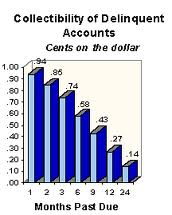 You: Hey, man- but, I don’t have the money right now. There were some… complications.
Collector: What’s going on?
. Our office take these cases in California . Call 925-957-9797 The Law offices of Timothy McCandless
You: Well, it seems the payment I was counting on won’t happen for another two months. My bad.
Collector: Is there anyone you can borrow it from now and then pay them back when the money arrives in two months?
You: I don’t think so. Can I just pay you in two months?
Collector: Absolutely not.
You: Well, what happens if I don’t pay?
(Here is where the collector may indulge in false threats and other violations. Some additional questions you might ask him to keep the conversation going are: Am I going to get sued? Am I going to get garnished? If he answers with an unqualified “yes” on either of those questions, that is two more violations.
You: Well, I guess you’re just going to have to do what you have to do. I really don’t want to get in trouble but I can’t do anything else.
The collector will now try to cut his losses and get what he can.
Collector: I tell you what- maybe I can get permission to take some sort of good faith payment from you for the next couple months until you get the full balance, (the collector is now prepared to cut his losses and take what he can get)
. Our office take these cases in California . Call 925-957-9797 The Law offices of Timothy McCandless
You: Sorry, Jim-1 am completely out of money for the next two months. I couldn’t even pay you $10.1 have to eat.
Collectonfaf. this point, the collector has given up hope and will part ways with you) John, you leave me no choice but to send your account on for further action.
The above is what he should say. What he will hopefully say is this:
Collector: I have no choice but to send this to our legal department for suit (if he is from a collection agency and says this, it is a false threat)
Other variations of this would be:
“I have to send this on for legal action”
“We now have to file suit”
“I will now be recommending legal action against you”
Again, if it is a collection agency calling you, they cannot sue. If it is a law firm calling you about a debt past the SOL, they can’t sue either. Any threats- even implied threats- of legal action are false threats that will result in more $1000 fines.
Step Seven: The Insult
After he makes his final threat to you- FDCPA violation or not- he will wait to see what your reaction is before hanging up. It is now time to drop the friendly act and tear into him.
. Our office take these cases in California . Call 925-957-9797 The Law offices of Timothy McCandless
You: You are an asshole! You illiterate redneck! I’m not going to take this shit from a high-school drop-out like yourself!
Try to insult his character without crossing the line into racism or bigotry. Racist or bigoted taunts can be used against you- and remember, the collection agency is recording the call too.
What follows will hopefully be him venting all of his anger on you for wasting three days of his time.
Collector: Oh, yeah? At least I can pay my bills, you worthless deadbeat. (Violation Number…sorry, I’ve lost count)
Step Eight: The Cease and Desist
The final thing you should say to him is this:
You: You are hereby advised to cease and desist all further
contact with me.
Now hang up the phone. Immediately write a cease-and-desist letter, send it certified mail and if the collector ever contacts you again, you have him on even more violations.
Dealing with law firms who are collecting on valid debts
Again, if your debt is past the Statute of Limitations, this debt is not legally valid and the law firm in question cannot sue you. Thus, you can use the above steps I just covered to deal with these crooks.
. Our office take these cases in California . Call 925-957-9797 The Law offices of Timothy McCandless
If a law firm calls you on a valid debt that is within the Statute of Limitations, you will have to be very careful. Their threats to sue may not be false threats.
 How do we know if the threat to sue is false or not? You won’t know until you get sued (or not sued). If you file a complaint that the law firm made a false threat to sue you (because they never did sue), that law firm may at that point go ahead and sue you anyway (when they otherwise wouldn’t) just to invalidate your complaint. These sorts of law firms thus operate in a legal grey area where they can get away with making false threats and you have limited recourse against them.
In short, if a law firm calls you on a legally valid debt, you may have to pay them something. That is, of course, if you don’t beat them to the punch in filing suit against them. Let’s try to get them to break some laws so they have to pay you instead!
Where can we get these law firms to trip up? One way is by getting them to break your state laws.
Do you live in a non-community property state? A non-garnishment state? A non-spousal state? A state where calls at work are prohibited? If so, lure them into breaking these laws by using the methods I covered before. Remember to research your state laws to learn even more traps you can set for them.
In addition to using your state laws against them, you will also need to follow different steps when dealing with law firms collecting on valid debts.
. Our office take these cases in California . Call 925-957-9797 The Law offices of Timothy McCandless
Here are the eight steps when dealing with these sorts of law firms:
1. Initial Contact
2. Hard Luck Story
3. Promise the Moon
4. The Missed Deadline
5. The Third-Party Bait
6. The Closing Call
7. Cutting the Losses
8. Negotiation (Settlement/ Best Possible Arrangement)
Steps One through Six should go exactly the same as I described in the above chapter, keeping in mind to also try luring them into breaking your state laws. Step Six should go the same up until you get to the part where the debtor is ready to cut his losses. Remember where we left off- you have now fallen through on your promise to pay him that large balance because your inheritance/insurance settlement/etc. has fallen though…
Step Seven: Cutting the Losses
You: Well, I guess you’re just going to have to do what you have to do. I really don’t want to get in trouble but I can’t do anything else.
Collector: I tell you what- maybe I can get permission to take some sort of good faith payment from you for the next couple months until you get the full balance.
. Our office take these cases in California . Call 925-957-9797 The Law offices of Timothy McCandless
Step Eight: Negotiation for Settlement
 Use the following strategy only if you have enough money to pay about 30% of your balance. It is OK if you do not have the full 30% now. If you can come up with the money in the next three to six months the collector should be able to work out a deal with you. He is in “cutting his losses” mode now and is willing to take whatever he can get. [If you cannot come up with 30%, please skip to the next chapter Step Eight: Best Possible Arrangement).
Keep in mind that the lower the settlement you request- and the more months it is spread out over installments, the less likely your settlement request would be approved. Do not expect to get a 15% settlement spread out over 12 months. It just ain’t gonna happen.
Like any type of negotiation, be it haggling for goods in an open market or buying a car, you must make a very low offer at first and work your way up from there. He will most likely reject your first offer. Also, remember to play up your “hard luck story”. The collector must believe it to be true. For many of you, it very likely is true.
For your first offer, I would start off asking for a 20% settlement over 6 months. The collector will probably say “no way” and make a counter offer of 40% over 3 months. You in turn counter-offer something between those two offers- 30% in 6 months (or fewer months if you can realistically do it).
In some collectors, 30% in 6 months was generally the lowest we could go- and to get approval for that, we had to get
.
Our office take these cases in California . Call 925-957-9797 The Law offices of Timothy McCandless
permission from the creditor itself. This required submitting paperwork to the creditor to prove that the debtor could not pay any more than 30% over 6 months. Sometimes the creditor would reject the request. More times than not, however, the creditor approved it.
Of course, if you can come up with the full 30% now, you may as well get it over with and pay it.
Before you pay anything to the collector, make sure the collector faxes you the settlement terms, which you must keep for your records.
Once the settlement has been paid in full, the collection agency must fax or send you a letter stating that your debt has been paid off. YOU MUST KEEP THIS LETTER FOR YOU RECORDS, for it is not unheard of for the supposedly settled debt to be sent out to another collection agency.
The owner of the debt has 6 weeks to update your credit report accordingly. The paid-off debt will then reflect a “settled in full” status on your credit report, which looks much better than the “default” status it reflected before.
If the collector in question broke FDCPA or state laws over the course of this negotiation process, you should go ahead and settle the debt as agreed upon and then sue them. That’s called killing two birds with one stone!
. Our office take these cases in California . Call 925-957-9797 The Law offices of Timothy McCandless
A brief word about Debt Settlement Companies:
 As I mentioned earlier in the book, these companies are all scams. No exceptions. Many of them are being shut down as we speak. There will probably come a day in the near future when federal laws are passed putting them all out of business. Do not believe their advertisements that they are somehow sanctioned by the government. Or that they are a part of Obama’s stimulus package. They aren’t.
Debt Settlement Companies are supposed to do everything I just taught you how to do above: negotiate settlements with your creditors (for a high fee of course).
In practice, DSCs make your creditors wait- sometimes years-before they pay off your bills. In the meantime, your creditors may very well sue you. We sued debtors all the time who mistakenly thought that by turning their debts over to a DSC, they were protected.
Turning your debts over to a DSC DOES NOT protect you from a law suit. In fact, it makes a law suit far more likely. So stay away from them!
3. Our office take these cases in California . Call 925-957-9797 The Law offices of Timothy McCandless
Step Eight- Best Possible Arrangement
If you DO NOT have the ability to come up with 30% of your debt at anytime in the next few months, then you need to pay something. This is to keep potentially ruinous lawsuits coming your way. Offer the collector what you can- $25/mo for example. If he refuses to accept your offer, send it anyway. He probably won’t refuse it though. He is in cutting his losses mode.
Hopefully, though, you have amassed enough evidence of the collector breaking the law that you will be getting a big pay out.
Pay him the $25/mo and sue him anyway.
. Our office take these cases in California . Call 925-957-9797 The Law offices of Timothy McCandless
Gather all the paper evidence: the letters you received from the collection .agency, the post-office receipt from the cease-and-desist letter you sent certified mail (having a copy of this letter wouldn’t hurt either), the phone logs from your phone carrier, any written notes you have been taking – and most importantly-the digital recordings of all phone conversations you’ve had with the collector.
If you have strong enough evidence of law breaking (and you should if you have followed my instructions), a reputable attorney will take your case on contingency- that is, he will not charge you any money up front. Instead he makes his money by charging you a percentage (somewhere in the neighborhood of 30%) of your lawsuit settlement. Therefore, if the judge awards you $10,000, you keep $7000 and your attorney gets $3000. In the event you lose your court case, you owe him nothing.
Our office take these cases in California . Call 925-957-9797 The Law offices of Timothy McCandless
Make sure you hire an attorney only on contingency. Any attorney who asks for money upfront- or who asks to be paid even if you lose the case- is not to be trusted.
Once you have decided on an attorney, he or she will arrange a meeting with you in person where you will hand over all of the evidence and then sign a contract where you agree to the terms of representation. Now it’s time to sit back and let your attorney do his or her work.
What your attorney should do next is send a threatening letter to the collections agency in question. This letter will detail the abuses that took place and the incriminating evidence the attorney has in his possession to back up these claims. What will likely then happen is that the collections agency will offer to settle out of court. Now begins the back and forth negotiation between your attorney and the collections agency. Your attorney, getting a cut of your award, has an incentive to get the highest amount possible.
If a price cannot be agreed upon, or if the collections agency refuses to settle (they would only do this if your case is genuinely weak and the collection agency feels they could win in court), then it will go to court.
Almost all collection agencies settle out of court, even if the case against them is weak. On the small chance it does go to court, you will be expected to appear and take the stand. After both parties have argued their case, it is now up to the judge to decide what sort of payout- if any- you are entitled to. Assuming your case is valid (and it should be if you have followed my steps) then you will be getting -at the very least- $1000 for each clear cut violation that can be proven with evidence.
In the unlikely event your case does go all the way to court, you must not give the judge any impression that you intentionally entrapped the collector into breaking the law (even though you might have). The judge may not look favorably upon your case if entrapment is apparent (though you are still legally entitled to those $1000 fines no matter what. The law is the law).
In Conclusion
I hope you have found my suggestions useful.
I truly hope this book turns around the fortunes of the many struggling working people who, like me, have been hurt in this recession.
Lastly, I hope this book plays a part, however small it may be, in putting sleazy collection agencies out of business for good.
. Our office take these cases in California . Call 925-957-9797 The Law offices of Timothy McCandless
Appendix
The Technology You Will Need
I am assuming that my audience has a working knowledge of current technology, and will thus not go to much into detail here. If what I am about to explain here is beyond your technical knowledge, please have a trusted friend or family member help you get set up. This stuff is really pretty easy.
First off, you will need an old-fashioned pad and pen to document everything that happens: time and date of call, name of collector, name of collection agency, bill in question, amount of bill, and notes on what transpired between you and the collector.
Next- do you have an iPhone, Blackberry, Android or some other type of 3G phone? It will come in handy if you do. Whatever kind of phone you have, you will need one that has caller ID. You will also need a away to keep a log of all the incoming calls you receive, along with the exact time and date those calls were made. You should already be keeping track of these calls on your notepad. For legal purposes, however, it is best to have a phone log that is harder to forge. Check with your phone company to see if they can provide you with an official hard copy of all the incoming calls you receive in a billing period. Most of them will. You will also need a handheld recorder that converts recordings into MP3 format or some other type of digitized sound file format. You will need the ability to transfer these sound files from the recorder to your computer. Later, you will need to send these sound files out as email attachments to your attorney.
The handheld recorder might have inferior sound quality and there is a real risk that the recording will be so bad as to be
Our office take these cases in California . Call 925-957-9797 The Law offices of Timothy McCandless
useless in a court of law. Therefore- you must test your equipment out a few times beforehand.
Therefore, you must record a few phone calls you make to a friend or family member to test the best angle/distance/position your handheld recorder should be placed for optimal sound quality.
It is not necessary to have an iPhone, but if you do, there is an app simply called “Recorder” made by Retronyms that can be purchased via the App Store for $0.99. There are a few competing apps that have similar functions, though I cannot vouch for their effectiveness.
You will also need to purchase from Retronyms recording time for $4.99/hr. I think one hour should be enough. Your total cost (the Recorder app plus one hour of recording time) will thus be $5.98. Due to legal issues, the Recorder App only works when you call someone, not when they call you.
WARNING: The app’s default setting plays a recorded message to the other party alerting them that they are being recorded before you start talking to them. There is an option in the ‘settings’ to turn this recorded message off. If you live in one of those aforementioned 38 states, it is your legal right to do so. If you live in a One-Party Notification state, turn the recorded message off I One last thing about the Recorder app: it will only allow a file with a maximum size of 5MB to be emailed from your phone. The average recorded phone conversation will be larger than 5MB. Thus, you will need to transfer the file from your phone to your computer via a wifi signal. The app will walk you through the process.
As I mentioned before, the Recorder app only works when you make a call. When the collector calls you, you will need to record him/her with your handheld recorder.
Ideally, you should have a 3G phone AND a handheld recorder. If you can only afford one, make it the handheld recorder.
So once again, here is a list of equipment you WILL need:
1. A handheld digital recorder (that has been tested out before using on the collector)
2. a phone with caller ID
3. A computer with internet
4. A way to get time/date records of incoming calls (preferably as a hard copy from your carrier)
5. A pad and a pen
And a list of things it would be extremely helpful to have:
1. A 3G phone (iPhone is best)
2. Recorder app + one hour of recording time.
Statute of Limitations by State
There are four categories of debts, each of which have their own Statute of Limitations. These four categories are:
1. Oral Agreements- There is no written contract between you and your creditor. Oral agreements are still legally binding, though harder to prove in court.
2. Written Agreements- You agree to repay a loan under terms spelled out in a document that has been signed by you and the person loaning you money. This is usually a less formal loan between two people.
3. Promissory Note- This is a contract you have signed with a financial institution that specifically spells out the interest, monthly payments and other repayment terms. Most mortgages and car loans fall under this category
4. Open Accounts- All credit-cards fall under this category, be it a Visa or MasterCard, a department store card or a gas card. These are revolving lines of credit with varying balances and no set monthly repayment.
I imagine most of my readers’ debts will fall under the Open Account category.
Our office take these cases in California . Call 925-957-9797 The Law offices of Timothy McCandless
State Oral Agreements Written Contracts Promissory Notes Open Accounts
Alabama 6 6 6 3
Alaska 6 6 6 6
Arizona 3 5 6 3
Arkansas 3 5 6 3
California 2 4 4 4
Colorado 6 6 6 6
Connecticut 3 6 6 6
Delaware 3 3 6 3
D.C. 3 3 3 3
Florida 4 5 5 4
Georgia 4 6 6 4
Hawaii 6 6 6 6
Idaho 4 5 10 4
Illinois 5 10 6 5
Indiana 6 10 10 6
Iowa 5 10 5 5
Kansas 3 5 5 3
Kentucky 5 15 15 5
Louisiana 10 10 10 3
Maine 6 6 6 6
Maryland 3 3 6 3
Massachusetts 6 6 6 6
Michigan 6 6 6 6
Minnesota 6 6 6 6
Mississippi 3 3 3 3
Missouri 5 10 10 5
Montana 5 8 8 5
Nebraska 4 5 6 4
Nevada 4 6 3 4
New Hampshire 3 3 6 3
New Jersey 6 6 6 6
New Mexico 4 6 6 4
New York 6 6 6 6
North Carolina 3 3 5 3
North Dakota 6 6 6 6
Ohio 6 15 15 ?
Oklahoma 3 5 5 3
Oregon 6 6 6 6
Pennsylvania 4 6 4 6
Rhode Island 15 15 10 10
South Carolina 10 10 3 3
South Dakota 6 6 6 6
Tennessee 6 6 6 6
Texas 4 4 4 4
Utah 4 6 6 4
Vermont 6 6 5 6
Virginia 3 5 6 3
Washington 3 6 6 3
West Virginia 5 10 6 5
Wisconsin 6 6 10 6
Wyoming 8 10 10 8
.
Our office take these cases in California . Call 925-957-9797 The Law offices of Timothy McCandless
Get it out of Federal court 90% Dissmissed on 12 (B)(6) motion motion to remand trust holders destroy diversity
BK During Foreclosure
From: Charles Cox [mailto:charles@bayliving.com]
Sent: Tuesday, October 29, 2013 4:39 AM
To: Charles Cox
Subject: BK During Foreclosure
Attached Paper
Charles
Charles Wayne Cox
Email: mailto:Charles
Websites: www.BayLiving.com; www.FdnPro.com and www.ForensicLoanAnalyst.com
1969 Camellia Ave.
Medford, OR 97504-5403
(541) 727-2240 direct
(541) 610-1931 eFax
Paralegal; Litigation Support and Expert Witness Services; Forensic Loan Analyst; CA Licensed Real Estate Broker.
26 USC 860F – Other Rules on REMIC Prohibited Transactions (support for Glaski Opinion not Addressed)
From: Charles Cox [mailto:charles@bayliving.com]
Sent: Monday, October 28, 2013 4:45 PM
To: Charles Cox
Subject: 26 USC 860F – Other Rules on REMIC Prohibited Transactions (support for Glaski Opinion not Addressed)
In looking up argument to support the Glaski Opinion, I found the statutes in the USC for 90 days in which a REMIC to be designated as such. I also ran across this section of rules (below) I found interesting. You will find the 90 day rule in 860D and other interesting stuff in 860G.
Fourth Circuit Holds Inheritances Are Estate Property In Chapter 13 Cases
From: Charles Cox [mailto:charles@ldapro.com]
Sent: Wednesday, October 30, 2013 5:50 AM
To: Charles Cox
Subject: Fourth Circuit Holds Inheritances Are Estate Property In Chapter 13 Cases
Fourth Circuit Holds Inheritances Are Estate Property In Chapter 13 Cases
Yesterday, the Fourth Circuit Court of Appeals issued an opinion in Carroll v Logan. This will have an impact for future chapter 13 cases in this circuit.
In Carroll, the debtors filed a chapter 13 case in 2009. The Carrolls’ plan provided for a payment to unsecured creditors of approximately 3.8%, that is, each unsecured creditor who filed a claim would receive approximately 4% of what they claimed was owed.
A little over three years after the debtors’ filed bankruptcy, Mr. Carroll notified the court that he would receive $100,000.00 from an inheritance. Upon such notice, the chapter 13 trustee moved to modify their plan to provide for the $100,000.00 to be paid through the plan toward unsecured creditors. The debtors’ objected to the trustee’s motion.
At issue were two provisions of the Bankruptcy Code: Section 541 and Section 1306. Section 541 defines what property interests come into the bankruptcy estate upon filing for bankruptcy protection. In particular, Section 541(a)(5) states that any property that the debtor acquires or is entitled to within 180 days after filing bankruptcy by bequest, devise or inheritance becomes property of the bankruptcy estate. A reason for this provision is so that if a debtor knows that a family member is going to pass on soon and the debtor has lots of debts, the debtor won’t file bankruptcy immediately before the family member passes to discharge his debts and then have the full inheritance. If a debtor inherits property within 180 days after filing, the trustee can get those assets to pay creditors.
In the Carrolls’ case, they had filed for bankruptcy in 2009 and did not become entitled to inherit anything until well after the 180 days since filing had passed. As such, the debtors’ argued, they should not have to submit their inheritance to the chapter 13 trustee.
The trustee countered and the Fourth Circuit agreed that Section 1306 allows the trustee to reach the inheritance. Section 1306 states that property of the bankruptcy estate includes, in addition to the property specified in Section 541 (see above), all property that the debtor acquires after commencement of the case but before the case is closed, dismissed, or converted to a case under a different chapter. As such, under Section 1306, even though the debtor did not acquire the property within 180 days after his bankruptcy filing as set forth under Section 541, Section 1306 states that the after acquired property does come into the bankruptcy estate until the case is closed, dismissed or converted. Therefore, the debtors would be required to pay the $100,000.00 inheritance into the plan (less their exemptions, if any).
This can create another factor to carefully consider before choosing a chapter 7 case or a chapter 13 case. If you do not stand to inherit much from family members, it may not be much of a factor. If you do stand to inherit something, a chapter 13 case can go on for up to five years and any inheritance acquired could go to paying your creditors. At the same time, if you do not qualify for a chapter 7 case because you “flunk” the means test or if you must file a chapter 13 to cure mortgage arrears or other reasons, there may not be any other bankruptcy options.
A skilled bankruptcy professional such as those on this website can help you navigate the world of bankruptcy. If you are facing financial issues, contact one of us today.
RICHARD BUSHELL V. CHASE ANOTHER WIN FOR CALIFORNIA HOMEOWNER IN APPEAL COURT OCTOBER 2013 -ANOTHER LOSS FOR ALVARADO SMITH LAW FIRM AND CHASE!!!
We conclude plaintiffs have sufficiently alleged causes of action for breach of contract, promissory estoppel, and fraud based on false promise. Therefore, we shall reverse on those bases.[1]
See More
RICHARD BUSHELL et al., Plaintiffs and Appellants,v.JPMORGAN CHASE BANK, N.A., Defendant and Respondent.
No. C070643.
Court of Appeals of California, Third District, Placer.
Filed October 22, 2013.United Law Center, John S. Sargetis and Jon L. Oldenburg for Plaintiffs and Appellants.AlvaradoSmith, Theodore E. Bacon and Ricardo Diego Navarrette for Defendant andRespondent.
CERTIFIED FOR PUBLICATION
 BUTZ, J.In this action arising from a home foreclosure, the trial court sustained, without leave to amend,defendant lender’s demurrer to plaintiff borrowers’ complaint. The complaint alleges causes of action for breach of contract, promissory estoppel, and fraud based on intentionalmisrepresentation or false promise. Specifically, plaintiffs allege that defendant, under a trialmodification mortgage plan, offered to permanently modify the plaintiffs’ mortgage loan, provided plaintiffs complied with the terms of the trial modification plan by returning certainrequested documents, making timely trial modification payments, and qualifying under a federal program that seeks to reduce home foreclosures, the Home Affordable Mortgage Program(hereafter, HAMP).Two recent appellate decisions provide guidance on this subject, one from the California Courtof Appeal, Fourth Appellate District, Division Three (
West v. JPMorgan Chase Bank, N.A.
(2013) 214 Cal.App.4th 780 (
West
)) and the other from the federal Seventh Circuit Court of Appeals (
Wigod v. Wells Fargo Bank, N.A.
(7th.Cir. 2012) 673 F.3d 547 (
Wigod
)
). These twodecisions, which were issued after the trial court ruled here, concluded that when a borrower hasalleged that he or she has complied with all the terms of a trial modification plan offered under HAMP—including making all required payments and providing all required documentation— and if the borrower’s representations on which the modification is based remain true and correct,the lender or loan servicer (collectively hereafter, the lender) must offer the borrower a goodfaith permanent modification; and if the lender fails to do so, the borrower may sue the lender,under state law, for breach of contract of the trial modification plan, among other causes of action.We conclude plaintiffs have sufficiently alleged causes of action for breach of contract, promissory estoppel, and fraud based on false promise. Therefore, we shall reverse on those bases.
[1]
STANDARD OF REVIEW AND FACTUALBACKGROUND
In reviewing a demurrer-based judgment of dismissal, we determine, independently of the trialcourt, whether, assuming the facts alleged in the complaint are true, a cause of action has been or can be stated. (
Blank v. Kirwan
(1985) 39 Cal.3d 311, 318
;
Rogoff v. Grabowski
(1988) 200Cal.App.3d 624, 628.) We may also consider judicially noticeable matters and facts in theexhibits attached to the complaint. (
Picton v. Anderson Union High School Dist.
(1996) 50Cal.App.4th 726, 732-733.)The complaint at issue here, the plaintiffs’ first amended complaint, alleges the following facts.In May 2004, plaintiffs Richard and Susan Bushell obtained a loan from then defendantWashington Mutual Bank to purchase a home in Roseville. Plaintiffs executed a deed of trustencumbering the property as security. Subsequently, defendant JPMorgan Chase Bank, N.A.,acquired certain assets and liabilities of Washington Mutual, including plaintiffs’ loan and deedof trust (we will refer collectively to these defendants as Chase).
[2]
 In December 2008, plaintiffsdefaulted on their loan.In May 2009, plaintiffs received from Chase a trial modification plan (called a “Trial PeriodPlan” or TPP), which stated in part: “If you qualify under the federal government’s HomeAffordable Modification [P]rogram [(HAMP)] and comply with the terms of the [trialmodification plan], we will modify your mortgage loan and you can avoid foreclosure.” In thetrial modification plan, Chase requested that plaintiffs (1) sign and return certain documents (the plan itself, if they accepted it; a financial hardship affidavit; a tax return disclosure form; anddocumentation to verify previously stated income), and (2) submit the first trial period payment(in the amount of $1,420.31, calculated from income and loan information Chase already hadand calculations Chase had already performed pursuant to HAMP guidelines). (See U.S. Dept.Treasury, HAMP Supplemental Directive No. 09-01, Apr. 6, 2009, pp. 2-5, 8-10, 14-15(hereafter, Supplemental Directive 09-01).) Plaintiffs signed and provided all the requesteddocuments and made the first trial period payment.In June 2009, plaintiffs received a letter from Chase confirming the trial modification plan andspecifying in part: “If you make all [3] trial period payments on time [under the trialmodification plan] and comply with all of the applicable [HAMP] program guidelines, you willhave qualified for a final [permanent] modification.” The letter also contained four coupons withwhich to return the trial modification payments, and instructed plaintiffs to continue making thetrial modification payments after the first three in the event of a paperwork delay.After making the first four trial period payments, plaintiffs inquired about the status of their loanmodification. Chase advised them to continue making the trial payments. Plaintiffs did, making26 trial modification payments between June 2009 and August 2011.Plaintiffs contacted Chase multiple times between November 2009 and June 2010, inquiringabout the status of their loan modification. Between November and December 2009, Chase

indicated it was processing the paperwork. Then, on December 30, 2009, when plaintiffs againinquired, Chase told plaintiffs the loan modification had been denied “`by the investor'” andChase could not accept any more payments. In the ensuing months, plaintiffs requested writtenexplanation, but received nothing. Plaintiffs called Chase and were told to stop making payments because Chase was “`crunching the numbers'” for the modification and payment schedule, andadditional payments at that point would skew the outcome. And then in June 2010, plaintiffswere told that their file had been reviewed and cleared to resume the trial modification payments,which plaintiffs resumed. In November 2010, plaintiffs received a letter from Chase requestingupdated information. This was the first written communication from Chase since the trialmodification plan provided to plaintiffs in May 2009 and the confirming letter sent in June 2009.Plaintiffs provided the requested information in person on December 3, 2010. The next writtencommunication plaintiffs received from Chase was on January 27, 2011—a notice of trustee’ssale regarding the property (posted on their front door).
PROCEDURAL BACKGROUND
After Chase demurred to plaintiffs’ original complaint, plaintiffs filed their first amendedcomplaint alleging (1) breach of contract, including breach of the implied covenant of good faithand fair dealing, (2) promissory estoppel, and (3) fraud—intentional misrepresentation and false promise.The trial court, which ruled before
West
and
Wigod
were decided, sustained Chase’s demurrer without leave to amend and dismissed the case, finding: (1) as to breach of contract and theimplied covenant of good faith and fair dealing—the trial modification plan was not, on its face,a binding contract for a loan modification; plaintiffs did not allege they qualified under HAMP;and the implied covenant theory fell with the lack of a contract; (2) as to promissory estoppel— the alleged promise was conditional rather than clear and unambiguous as required; and plaintiffsfailed to allege detrimental reliance (damages) because monthly mortgage payments that plaintiffs were already obligated to make cannot constitute damages; and (3) as to fraud— plaintiffs failed to allege their facts with the requisite level of specificity, and similarly failed toallege detrimental reliance.This appeal followed.
 DISCUSSIONI. Plaintiffs State a Cause of Action for Breach of ContractIncluding Breach of the Implied Covenant of Good Faithand Fair DealingA. Breach of Contract

