WHAT WE STAND FOR Brutal Honesty Over Hype: Institutional Flow Analysis for Systematic Income Trading Every morning at 6:40 AM PST, we analyze real-time institutional flow through a systematic FinViz scan methodology. This isn't about guru alerts or inflated premium yields—this is about identifying when institutions are accumulating or distributing, and making disciplined trading decisions based on evidence, not hope. Real-Time Institutional Flow Signals for Protected Options Income – No YouTube Guru BS We call out the lies: No "50% monthly returns on premium." No "90% win rates." We calculate returns on TOTAL CAPITAL DEPLOYED, not misleading premium percentages. We trade the Protected Wheel strategy because capital preservation matters more than home runs. And most importantly, we tell you when NOT to trade—because sitting out is often the best trade. Tracking The Great Rotation of 2026: Morning Institutional Flow + Protected Wheel Strategy The market is shifting: Magnificent 7 tech dominance → Value/Small Caps/Industrials/Russell 2000 leadership. We're tracking this rotation in real-time through daily sector concentration analysis, Treasury yields, VIX patterns, and institutional 13F filings. Your morning scan will see the rotation before the pundits talk about it. 6:40 AM FinViz Scan Methodology: Catch Institutional Moves Before Market Open Our edge is simple: A systematic pre-market scan that identifies sector concentration and accumulation/distribution patterns. Four requirements for entry: (1) 40%+ sector concentration, (2) <20% RED distribution, (3) Clean momentum, (4) Low volatility. If these aren't met, NO TRADES. Discipline beats gambling every time
WASHINGTON — Deutsche Bank appears to have retaliated against a high-profile foreclosure fraud expert, whose years-long battle against her own foreclosure helped reveal a wave of apparent malfeasance, by suing her son.
The expert, Lynn Szymoniak, an attorney who specializes in white-collar crime, is widely considered on Capitol Hill to be one of the nation’s top experts on foreclosure law. When Deutsche Bank attempted to jack up the interest rate on the mortgage for her Palm Beach Gardens, Fla., home in May 2008, she contested the move, setting off an investigation which unveiled mountains of forged signatures and fraudulent bank paperwork associated with the foreclosure process.
Szymoniak alerted other attorneys, neighborhood advocates, lawmakers and the media about the apparent rampant fraud. She appeared on “60 Minutes” in April to discuss the broader foreclosure scandal .
Her own home has been in foreclosure since June 2008. A month earlier, she had been notified that the interest rate on her adjustable-rate mortgage was being raised, increasing her monthly payments by about $1,000. But the terms of her mortgage only allowed interest-rate hikes at certain dates.
In an interview with The Huffington Post, Szymoniak noted that Deutsche Bank was not acting within the allowed timeframe.
“They missed my adjustment date, and then when they figured it out, they just slapped that higher payment on anyway,” she said. “I paid one payment at the higher rate and then I said, ‘This is ridiculous.’ And I stopped paying and then they sued me in June ’08.”
After she’d been sued, Szymoniak said, she began investigating the documentation on Florida foreclosures, uncovering alarming irregularities, including signatures that were apparently forged. If so, those signatures allowed banks to push foreclosures through overly quickly, charge improper fees and assert improperly inflated borrower debts.
Shortly after appearing on “60 Minutes” Szymoniak won a major victory in her own foreclosure case. The court found that Deutsche Bank was unable to demonstrate ownership of her mortgage, which had originally been issued by the defunct subprime mortgage lender Option One, and threw the case out.
Deutsche Bank was permitted to refile their case if the bank could obtain proper documentation, however. And on Friday, May 6, Szymoniak received a notification from the bank’s lawyers that she was again being sued for foreclosure.
But Deutsche Bank wasn’t just going after her. The bank was also attempting to sue her son, Mark Cullen, who is currently pursuing a graduate degree in poetry at the New School in New York. Cullen hasn’t lived in Szymoniak’s house for seven years and is not a party to any aspect of her mortgage — he has no interest in either the property or the loan, and never has had any such interest, according to Szymoniak.
“It is just absolute harassment,” Szymoniak said. “He doesn’t own anything, for god’s sake! He’s getting a masters in poetry. He not only doesn’t have any money, he’s never going to have any money.”
And other Florida foreclosure experts say it’s difficult to interpret Deutsche Bank’s move as anything other than retaliation for Szymoniak’s media presence. If it is not, in fact, retaliation, they argue, then Deutsche Bank’s lawyers have demonstrated rank incompetence.
“It sounds crazy,” said Margery Golant, a principal with the foreclosure defense law firm of Golant & Golant PA in Florida. “I can think of no legitimate reason, if he doesn’t have some connection to the property or to the mortgage, to include him in an action to foreclosure.”
“It’s an intimidation tool,” said Matt Englett, a partner at the Florida law firm Kaufman Englett Lynd PLLC. “Most people, they get scared and they get nervous and I think that’s the effect that they’re trying to have on him and his mother.”
“If he’s not an owner of the house, it’s pretty clearly just vindictive,” said Joshua Rosner, the managing director of Graham Fisher & Co., a mortgage investment firm. “If they’re doing it intentionally, that’s one hell of a statement. If they’re doing it randomly, that’s still pretty incredible.”
The experts said the lawsuit against Szymoniak’s son could also have negative implications for him beyond the immediate costs of fighting the foreclosure case, even though he has no financial interest in anything related to it.
“He’s going to have a lawsuit out there against him,” Englett said, “so if someone were to do some kind of background check against him, that would come up.”
Watch Szymoniak’s “60 Minutes” interview:
Update:
Deutsche Bank maintains that it is not to blame, and notes that while it is legally listed as the plaintiff in the Szymoniak foreclosure case, another company directs the actual legal maneuvering.
“Pursuant to the aforementioned contracts for securitization trusts, loan servicers, and not the trustee, are responsible for foreclosure-related legal proceedings. The attorneys and law firms who oversee foreclosure proceedings on behalf of the trusts are engaged by loan servicers rather than the trustee. Loan servicers are obligated to adhere to all legal requirements, and Deutsche Bank, as trustee, has consistently informed servicers that they are required to execute these actions in a proper and timely manner,” said Deutsche Bank spokesman John Gallagher
Do you have skills and expertise that people are looking for? Every area of expertise you add to your profile makes you easier to find. Start adding skills and expertise.
How to Contact Chase Here is all the additional contact information we have come across. (See the bottom of this post for the latest info) If you are calling Chase’s main banking number, here is a …
People sometimes ask me why do you publish all this stuff. My slogan IF YOUR ENEMY IS MY ENEMY THAN WE ARE FRIENDS Chase-Sucks.org 2. RESOURCES — Pleadings, Orders, and Exhibits On this page you wi…
LinkedIn Network Updates, Nov 10 – Nov 17 Featured Updates View All Updates PROFILE CHANGES Timothy McCandless has an updated profile (Education) Update your profile Timothy McCandless has ad…
Some big numbers start looking smaller when you take a close look. A case in point: The $85 million Missouri has so far reaped from last February’s national mortgage settlement with big banks…
David, Here are some tips to help you make the most out of your new LinkedIn Account. See people you may know Get connected to at least 50 people. Find past colleagues and classmates to help you op…
Welcome to LinkedIn! Make sure recruiters and colleagues see all you have to offer. David Silver Add Photo Attorney at Silber Law Group Sacramento, California Area | Law Practice Current Silber Law…
From Timothy McCandless Attorney at California Justice Foundation Greater Los Angeles Area I’d like to add you to my professional network on LinkedIn. – Timothy Confirm that you know Timothy …
The LinkedIn iPad App The simplest way to prepare for your day
Designed with you in mind, see your calendar, top industry news, and network updates all in one view.
From: Charles Cox [mailto:charles@bayliving.com] Sent: Friday, November 16, 2012 7:54 AM To: Charles Cox Subject: Stopa: Summary Judgment for Borrowers!
Have you ever made an argument in a foreclosure case, and you think it’s a solid, well-taken argument, but there is no case law directly on point? It can create a sinking feeling. “I think I’m right, but how will I ever get a judge to agree with me when there aren’t any appellate court decisions which have ruled this way already?” The tendency, when presented with such a situation, can be to shy away from the argument. To back down. To let someone else try to make the argument first. “I don’t want to look foolish.” “I don’t want to be wrong.” “If this is such a good argument, why aren’t there any cases that have ruled this way already?”
While I understand this feeling, this is absolutely and unequivocally the wrong mindset.
As foreclosure defense lawyers, many of the issues with which we are confronted are novel. That’s just the nature of the beast. Just think of it this way – when, prior to now, in the entire history of America, have property values collapsed by half (or more), causing millions of Americans to face foreclosure, essentially all at once? Obviously, the answer is “never.” These are unprecedented times, so it should come as no surprise that, in the history of jurisprudence, our court system has never before been confronted with some of the legal issues with which we now deal on a daily basis. As a result, to defend homeowners the right way, we have no choice but to argue things we may have never argued before – to present arguments to judges they may have never heard before, for which there is no case law.
One such example? Asking a judge to enter summary judgment for a homeowner in a foreclosure case.
In Florida, I know of no appellate decisions that directly authorize this. Such case law may exist, for example, if it’s undisputed the homeowner paid the mortgage in full all along, but that’s not what I’m talking about here. I’m talking about cases where homeowners are behind on their mortgage payments, perhaps significantly behind, and the bank has filed suit for foreclosure, but the homeowner is entitled to prevail on that case anyway.
I introduced this concept a few months ago, via this blog post. In the ensuing months, I’ve made that same argument many times before Florida judges, often before judges who had never heard it before.
Sometimes, quite candidly, it’s not easy. A few times, the judge seemed to think I was nuts, at least at first, when I told the court that I wanted summary judgment for my client. Typically, however, once I get into the argument, and explain why my client should prevail, that initial skepticism is replaced with intrigue at the argument. Often, in fact, these judges have agreed with my position, entering orders granting summary judgment and dismissing the case.
Invariably, do you know what happens when I go back before that same judge a second time? Or a third time? It’s easier. The judge is familiar with the argument. The judge understands the legal issues and knows how they apply. I’m no longer the crazy lawyer asking for a client who hasn’t paid his/her mortgage to prevail, but the lawyer making sound, legitimate arguments that are perfectly consistent with the law.
Do you know what makes all of this a bit easier? When the judge I’m arguing before sees that other judges have agreed with my argument. That’s why, whenever I have a hearing on this issue, I bring the Orders I’ve obtained which entered summary judgments for my clients in other cases. It’s one thing for me to argue something – it’s another for the judge to see that 5, 10, or 15 other, Florida judges have agreed with my argument and dismissed the case as a result.
In the grand scheme of things, my “success” here is limited. I know that this argument isn’t being made everywhere in Florida. I know there are many capable judges who have yet to hear the argument. I can’t argue this for everyone.
It’s time to get the word out, folks.
Below are several of the Orders I’ve obtained upon making these arguments. By posting these Orders, I am not suggesting that the same result will happen in any particular case. That said, it’s certainly possible, and I have to think the chances for any particular homeowner will improve if/when the judge sees that numerous other, Florida judges have agreed with this argument. Hence, that’s the point here – to blaze a trail. To help everyone (including judges unfamiliar with the argument) realize this argument has worked, and can work in the future. Everyone in foreclosure-world should be aware of these arguments.
For those of you counting, that’s 14 different Florida judges who have entered summary judgment for a homeowner in a foreclosure case. (Undoubtedly there may be more of which I’m not aware.)
So take these arguments. Use them and apply them, as appropriate. Keep fighting. And, more than anything, realize that there are virtually always defenses that homeowners can utilize, even those facing foreclosure.
Charles
Charles Wayne Cox
Email: mailto:Charles
Websites: www.BayLiving.com; www.FdnPro.com and www.ForensicLoanAnalyst.com
1969 Camellia Ave.
Medford, OR 97504-5403
(541) 727-2240 direct
(541) 610-1931 eFax
Paralegal; Litigation Support and Expert Witness Services; Forensic Loan Analyst; CA Licensed Real Estate Broker.
From: Charles Cox [mailto:charles@bayliving.com] Sent: Saturday, November 17, 2012 3:25 PM To: Charles Cox Subject: Today’s Legal Research
I found the following I thought interesting as it related to my own case:
As I contend America’s Wholesale Lender was NOT a corporation organized and existing under the laws of New York as stated in the Deed of Trust…
A deed transferred to a corporation having no legal existence does not pass title [Copeland v. Fairview Land (1913) 165 Cal. 148, 162, 131 P. 119;but seeLanktree v. Spring Mt. Acres, Inc. (1931) 213 Cal. 362, 365, 2 P.2d 338(deed executed in favor of nonexistent corporation held to be valid when it was given to third party to be held until corporation came into existence and, subsequently, was delivered to and accepted by existing corporation)]. In California, a corporation attains legal status on the filing of its articles of incorporation. Once the articles have been filed, the corporation is an existing entity and can receive title to real property [Corp. Code §§ 200(c),207;Cavin Memorial Corp. v. Requa (1970) 5 Cal. App. 3d 345, 353, 85 Cal. Rptr. 107.]
And, related to the bogus “verifications” sent with the discovery responses I’m contesting:
Presumption Exists That Documents Signed by Two Specified Officers Were Signed on Behalf of Corporation.
A statutory presumption exists that contracts and other specified documents, when signed by at least two specified corporate officers, were validly signed on the corporation’s behalf. This presumption applies unless there is a showing that the other person had actual knowledge that the signing officers had no authority to execute the instrument [Corp Code § 313]. The presumption applies to contracts signed by the chair of the board, the president, or any vice president, and any of the following officers [Corp Code § 313]:
•Secretary.
•Any assistant secretary.
•Chief financial officer.
•Any assistant treasurer.
The statute provides a conclusive, rather than a merely rebuttable, evidentiary presumption of authority on the part of the specified corporate officers to enter into the agreement [Snukal v. Flightways Mfg., Inc. (2000) 23 C4th 754, 782, 98 CR2d 1, 3 P3d 286].
From: Charles Cox [mailto:charles@bayliving.com] Sent: Saturday, November 17, 2012 3:30 PM To: Charles Cox Subject: Lexis Forms-
Found these on Lexis doing my research today…you might (or might not) find some interesting parts in them…
Charles
Charles Wayne Cox
Email: mailto:Charles
Websites: www.BayLiving.com; www.FdnPro.com and www.ForensicLoanAnalyst.com
1969 Camellia Ave.
Medford, OR 97504-5403
(541) 727-2240 direct
(541) 610-1931 eFax
Paralegal; Litigation Support and Expert Witness Services; Forensic Loan Analyst; CA Licensed Real Estate Broker.
Deb Walden
PO BOX 15919
Wilmington, DE 19850
(302) 594-4000 office
(888) 643-9628 fax
Here is another Chase contact to try to ask for help when you can’t find anyone else to help you:
Mr. Frank Bisignano
Chief Administrative Officer
JPMorgan Chase & Co.
270 Park Avenue
New York, NY 10017-2014
Having a problem with the banking side of Chase? Here is a contact to try:
Heather Joyner
Executive Specialist
800.242.7399 ext. 51279
713-262-1279 Direct Line
FAX: 281-915-0984
heather.joyner@chase.com
Having a problem with Chase? Email Chase’s CEO Jamie Dimon for help at jamie.dimon@jpmchase.com or try executive.office@chase.com or send him snail mail at:
James Dimon
Chairman and Chief Executive Officer
JP Morgan Chase
270 Park Avenue, 39th Floor
New York, NY 10017
Phone: 212-270-1111
Fax : 212-270-1121
E-Mail Address: jamie.dimon@jpmchase.com
Charlie Scharf CEO Retail Financial Services (i.e. head of JPMorgan Chase retail banking)
Phone: 212-270-5447
Fax: 212-270-5448
E-Mail Address: charlie.scharf@chase.com
Here is a handy guide to the Chase phone tree to get to where you want quicker.
Frustrated WaMu customer Alan tells gave me this number to get directly to a live person at WaMu without any prompts: 866-394-4034. He also designed WaMu a new logo:
If you want to record your phone conversations with WaMu/Chase, read this.
Update 8/23/12: A reader gave us the helpful number:
Chase executive office 888 622 7547 ext 6773 Esmeralda Vasquez, she was very helpful and she truly was a customer advocate. She assisted me with a fraud account opened in my name and later charged off and sold to some collection agency that took me to court. She retrieved the account(that was sold over 5 years ago) and had those jerks release the judgment.
Also I got a hold of Ms. Vasquez by first calling the banking side executive office at 800-242-7399 for all of those that have issued related to banking
On this page you will find descriptions and links to various pleadings, orders, and exhibits filed by attorneys as well as individuals representing themselves. Where the outcome is known, that information is included. These documents are public records and are made available for your information, but their accuracy, competency, and effectiveness have not been verified. Only a judge can rule on a pleading and only an appellate court opinion that is certified for publication can be cited as precedent. That said, it can be both educational and entertaining to see how the great race is unfolding in the historic controversy of People v. Banks. For an entertaining public outing of history’s all-time greatest pickpockets, go see the documentary “Inside Job.”
Federal District Court
Carswell v. JPMorgan Chase, Case No. CV10-5152 GW
George Wu, Judge, U.S. District Court, Central District of California, Los Angeles Douglas Gillies, attorney for Margaret Carswell
Plaintiff sued to halt a foreclosure initiated by JPMorgan Chase and California Reconveyance Co. on the grounds of failure to contract, wrongful foreclosure, unjust enrichment, RESPA and TILA violations, and fraud. She asked for quiet title and declaratory relief. Chase responded with a Motion to Dismiss. At a hearing on September 30, 2010, Judge Wu granted defendants’ motion to dismiss with leave to amend. Plaintiff’s First Amended Complaint was filed on October 18. It begins:
It was the biggest financial bubble in history. During the first decade of this century, banks abandoned underwriting practices and caused a frenzy of real estate speculation by issuing predatory loans that ultimately lowered property values in the United States by 30-50%. Banks reaped the harvest. Kerry Killinger, CEO of Washington Mutual, took home more than $100 million during the seven years that he steered WaMu into the ground. Banks issued millions of predatory loans knowing that the borrowers would default and lose their homes. As a direct, foreseeable, proximate result, 15 million families are now in danger of foreclosure. If the legions of dispossessed homeowners cannot present their grievances in the courts of this great nation, their only recourse will be the streets.
Chase responded with yet another Motion to Dismiss, Carswell filed her Opposition to the motion, and a hearing is scheduled for January 6, 2011, 8:30 AM in Courtroom 10, US District Court, 312 N. Spring Street, Los Angeles, CA.
Khast v. Washington Mutual, JPMorgan Chase, and CRC, Case No. CV10-2168 IEG
Irma E. Gonzalez, Chief Judge, U.S. District Court, Southern District of California
Kaveh Khast in pro se
A loan mod nightmare where Khast did everything right except laugh out loud when WaMu told him that he must stop making his mortgage payments for 90 days in order to qualify for a loan modification. As Khast leaped through the constantly shifting hoops tossed in the air, first by WaMu, then by Chase, filing no less than four applications, Chase issued a Notice of Trustee’s Sale.
Khast filed a pro se complaint in federal court. The District Court granted a Temporary Restraining Order to stop the sale. Hearing on a Preliminary Injunction is now scheduled for December 3. The court wrote that the conduct by WAMU appears to be “immoral, unethical, oppressive, unscrupulous or substantially injurious to consumers,” and thus satisfies the “unfair” prong of California’s Unfair Competition Law, Cal. Bus.&Prof.Code §17200. Plaintiff has stated that he possesses documents which support his contention that Defendant WAMU instructed Plaintiff to purposefully enter into default and assured Plaintiff that, if he did so, WAMU would restructure his loan. Accordingly, Plaintiff has demonstrated that he is likely to succeed on the merits of his claim.
The court also relied upon the doctrine of promissory estoppel. Under this doctrine a promisor is bound when he should reasonably expect a substantial change of position, either by act or forbearance, in reliance on his promise. He who by his language or conduct leads another to do what he would not otherwise have done shall not subject such person to loss or injury by disappointing the expectations upon which he acted.
Edward M. Chen, U.S. Magistrate, Northern District of California Thomas Spielbauer, attorney for Ruthie Hillery
Hillery obtained a home loan from New Century secured by a Deed of Trust, which named MERS as nominee for New Century and its successors. MERS later attempted to assign the Deed of Trust and the promissory note to Consumer. Consumer and the loan servicer then sued Hillery. The court ruled that Consumer must demonstrate that it is the holder of the deed of trust and the promissory note. In re Foreclosure Cases, 521 F. Supp. 2d 650, 653 (S.D. Oh. 2007) held that to show standing in a foreclosure action, the plaintiff must show that it is the holder of the note and the mortgage at the time the complaint was filed. For there to be a valid assignment, there must be more than just assignment of the deed alone; the note must also be assigned. “The note and mortgage are inseparable; the former as essential, the latter as an incident…an assignment of the note carries the mortgage with it, while an assignment of the latter alone is a nullity.” Carpenter v. Longan, 83 U.S. 271, 274 (1872).
There was no evidence that MERS held the promissory note or was given the authority by New Century to assign the note to Consumer. Without the note, Consumer lacked standing. If Consumer did not have standing, then the loan servicer also lacked standing. A loan servicer cannot bring an action without the holder of the note. In re Hwang, 393 B.R. 701, 712 (2008).
Serrano v. GMAC Mortgage, Case No. 8:09-CV-00861-DOC
David O. Carter, Judge, U.S. District Court, Central District of California, Los Angeles
Moses S. Hall, attorney for Ignacio Serrano
Plaintiff alleged in state court that GMAC initiated a non-judicial foreclosure sale and sold his residence without complying with the notice requirements of Cal. Civil Code Sec. 2923.5 and 2924, and without attaching a declaration to the 2923.5 notice under penalty of perjury stating that defendants tried with due diligence to contact the borrower. Defendants removed the case to federal court on the basis of diversity jurisdiction. The District Court granted defendants’ motion to dismiss without prejudice, and described in detail the defects in the Complaint with directions how to correct the defects. Plaintiff filed his Second Amended Complaint on 4/01/2010.
Sharma v. Provident Funding Associates, Case No. 3:2009-cv-05968
Vaughn R Walker, Judge, U.S. District Court, Northern District of California
Marc A. Fisher, attorney for Anilech and Parma Sharma
Defendants attempted to foreclose and plaintiffs sued in federal court, alleging that defendants did not contact them as required by Cal Civ Code § 2923.5. In considering plaintiffs’ request for an injunction to stop the foreclosure, the court found that plaintiffs had raised “serious questions going to the merits” and would suffer irreparable injury if the sale were to proceed. Property is considered unique. If defendants foreclosed, plaintiffs’ injury would be irreparable because they might be unable to reacquire it. Plaintiffs’ remedy at law, damages, would be inadequate. On the other hand, defendants would not suffer a high degree of harm if a preliminary injunction were ordered. While they would not be able to sell the property immediately and would incur litigation costs, when balanced against plaintiffs’ potential loss, defendants’ harm was outweighed.
The court issued a preliminary injunction enjoining defendants from selling the property while the lawsuit was pending.
In re: Hwang, 396 B.R. 757 (2008), Case No. 08-15337 Chapter 7
Samuel L. Burford, U.S. Bankruptcy Judge, Los Angeles
Robert K. Lee, attorney for Kang Jin Hwang
As the servicer on Hwang’s promissory note, IndyMac was entitled to enforce the secured note under California law, but it must also satisfy the procedural requirements of federal law to obtain relief from the automatic stay in a Chapter 7 bankruptcy proceeding. These requirements include joining the owner of the note, because the owner of the note is the real party in interest under Rule 17, and it is also a required party under Rule 19. IndyMac failed to join the owner of the note, so its motion for relief from the automatic stay was denied.
Reversed on July 21, 2010. District Court Judge Philip Gutierrez reversed the Judge Burford’s determination that IndyMac is not the real party in interest under Rule 17 and that Rule 19 requires the owner of the Note to join the Motion.
Ronald H. Sargis, Judge, U.S. Bankruptcy Court, Sacramento Mitchell L. Abdallah, attorney for Rickie Walker
MERS assigned the Deed of Trust for Debtor’s property to Citibank, which filed a secured claim. Debtor objected to the claim. Judge Sargis ruled that the promissory note and the Deed of Trust are inseparable. An assignment of the note carries the mortgage with it, while an assignment of the Deed of Trust alone is a nullity. MERS was not the owner of the note, so it could not transfer the note or the beneficial interest in the Deed of Trust. The bankruptcy court disallowed Citibank’s claim because it could not establish that it was the owner of the promissory note.
Edstrom v. NDEX West, Wells Fargo Bank, et. al., Case No. 20100314
Superior Court of California, Eldorado County
Richard Hall, attorney for Daniel and Teri Anne Edstrom
A 61-page complaint with 29 causes of action to enjoin a trustee’s sale of plaintiffs’ residence, requesting a judicial sale instead of a non-judicial sale, declaratory relief, compensatory damages including emotional and mental distress, punitive damages, attorneys’ fees, and rescission.
Mabry v. Superior Court and Aurora Loan Services
185 Cal.App.4th 208, 110 Cal. Rptr. 3d 201 (4th Dist. June 2, 2010)
California Court of Appeal, 4th District, Division 3
California Supreme Court, Petition for Review filed July 13, 2010.
Moses S. Hall, attorney for Terry and Michael Mabry
The Mabrys sued to enjoin a trustee’s sale of their home, alleging that Aurora’s notice of default did not include a declaration required by Cal. Civil Code §2923.5, and that the bank did not explore alternatives to foreclosure with the borrowers. The trial court refused to stop the sale. The Mabrys filed a Petition for a Writ of Mandate and the Court of Appeal granted a stay to enjoin the sale. Oral argument was heard in Santa Ana on May 18, 2010.
Aurora argued that a borrower cannot sue a lender that fails to contact the borrower to discuss alternatives to foreclosure before filing a notice of default, as required by §2923.5, because §2923.5 does not explicitly give homeowners a “private right of action.” Aurora also argued that a declaration under penalty of perjury is not required because a trustee, who ordinarily files the notice of default, could not have personal knowledge of a bank’s attempts to contact the borrower. Nobody mentioned that the trustee is not authorized by the statute to make the declaration. §2923.5 states that a notice of default “shall include a declaration from the mortgagee, beneficiary, or authorized agent that it has contacted the borrower…”
The Court of Appeal ruled that a borrower has a private right of action under § 2923.5 and is not required to tender the full amount of the mortgage as a prerequisite to filing suit, since that would defeat the purpose of the statute. Under the court’s narrow construction of the statute, §2923.5 merely adds a procedural step in the foreclosure process. Since the statute is not substantive, it is not preempted by federal law. The declaration specified in §2923.5 does not have to be signed under penalty of perjury. The borrower’s remedy is limited to getting a postponement of a foreclosure while the lender files a new notice of default that complies with §2923.5. If the lender ignores the statute and makes no attempt to contact the borrower before selling the property, the violation does not cloud the title acquired by a third party purchaser at the foreclosure sale. Therefore §2923.5 claims must be raised in court before the sale. It is a question of fact for the trial court to determine whether the lender actually attempted to contact the borrower before filing a notice of default. If the lender takes the property at the foreclosure sale, its title is not clouded by its failure to comply with the statute. Finally, the case is not suitable for class action treatment if the lender asserts that it attempted to comply with the statute because each borrower will present “highly-individuated facts.”
In a petition for review to the California Supreme Court, the Mabrys noted that more than 100 federal district court opinions have considered §2923.5 and an overwhelming majority have rejected a private right of action under the statute. The petition for review was denied.
After the case was remanded to the trial court, Mabry’s motion for preliminary injunction was granted. The trial court found that the Notice of Default contained the form language required by the statute, i.e. that the lender contacted the borrower, tried with due diligence to contact the borrower, etc. However, the declaration on the Notice of Default was not made under panalty of perjury, and therefore had no evidentiary value to show whether the defendant satisfied §2923.5
Superior Court of California, Contra Costa County Thomas Spielbauer, attorney for Gloria and Carlos Moreno
Complaint for declaratory relief and fraud against lender for misrepresenting the terms of the loan, promising fixed rate with one small step after two years both orally and in the Truth In Lending Statement. Loan was actually variable rate with negative amortization. Morenos would have qualified for fixed rate 5% for 30 years, but instead received an exploding 7% ARM. Notary rushed plaintiffs through signing of documents with little explanation. Complaint requests a declaration the note is invalid, unconscionable and unenforceable and the Notice of Trustees Sale is invalid.
Changing stories about who owns a mortgage and seemingly fresh evidence from a long-closed bank led a judge to throw out a foreclosure lawsuit. It’s the second time in as many months that Circuit Judge J. Michael Traynor has dismissed with prejudice a foreclosure case where homeowners disputed who owns the mortgage. Lawyers representing New York-based M&T Bank gave three separate accounts of the ownership, with documentation that kept changing.
“The court has been misled by the plaintiff from the beginning,” the judge wrote in his order. He added that documents filed by M&T’s lawyers seemed to contradict each other and “have changed as needed to benefit the plaintiff.”
The latest account was that Wells Fargo owned the note, and M&T was a servicer, a company paid to handle payments and other responsibilities tied to a mortgage. To believe that, the judge wrote, the “plaintiff is asking the court to ignore the documents filed in the first two complaints.” He added that Wells Fargo can still sue on its own, if it has evidence that it owns the mortgage.
More and more foreclosure cases are being argued on shaky evidence, said James Kowalski, a Jacksonville attorney who represented homeowners Lisa and Larry Smith in the fight over their oceanfront home. “I think it’s very representative of what the banks and their lawyers are currently doing in court,” Kowalski said.
He said lawyers bringing the lawsuits are often pressed by their clients to close the cases quickly. But it’s up to lawyers to present solid evidence and arguments. “We are supposed to be better than that,” Kowalski said. “We are supposed to be officers of the court.”
Exhibits
Department of Treasury and FDIC Report on WaMu, 4/16/2010
The Offices of Inspector General for Department of the Treasury and Federal Deposit Insurance Corporation released its evaluation of the regulatory oversight of Washington Mutual on April 16. The table of contents tells the story. WaMu pursued a high-risk lending strategy which included systematic underwriting weaknesses. They didn’t care if borrowers could pay back their loans. WaMu did not have adequate controls in place to manage its reckless “high-risk” strategy. OTS examiners found weaknesses in WaMu’s strategy, operations, and asset portfolio but looked the other way.
How could the regulators allow this breakdown to happen? Was it really fraud when banks arranged loans for homeowners who would inevitably go into defrault, sold them to Wall Street to be bundled into securities, then purchased insurance so that the bank would collect the unpaid balances when the borrowers lost their homes? Did anybody really know that repealing Glass-Steagall and permitting Wall Street banks to get under the covers with Main Street banks would cause so many borrowers to lose their homes? The Glass-Steagall Act, enacted in 1933, barred any institution from acting as any combination of an investment bank, a commercial bank, and an insurance company. It was repealed in 1999, and the repercussions have been immense.
The Office of the Comptroller of the Currency (OCC) issued Advisory Letter 2000-7 only months after Glass-Steagall was repealed. It warned regulators to be on the lookout for indications of predatory or abusive lending practices, including Collateral or Equity Stripping – loans made in reliance on the liquidation value of the borrower’s home or other collateral, rather than the borrower’s independent ability to repay, with the possible or intended result of foreclosure or the need to refinance under duress.
Proving fraud is a painstaking process. Getting inside the mind of a crook requires a careful foundation, and admissable evidence is not always easy to obtain. Many courts will take judicial notice of official acts of the legislative, executive, and judicial departments of the United States and of any state of the United States. See Cal Evidence Code Sec. 452(c).
Here is a set of smoking guns in the form of a series of Advisory Letters issued by OCC:
Some big numbers start looking smaller when you take a close look. A case in point: The $85 million Missouri has so far reaped from last February’s national mortgage settlement with big banks.
The bulk of it, $30 million, went to short sales. But banks were doing short sales before the settlement. They’ve picked up the pace this year, but it’s not clear if the settlement was part of the reason.
Banks often save money on short sales. They save the cost of foreclosing and maintaining an empty house. That house usually sells for more in a short sale than in a foreclosure.
In metro St. Louis, for instance, short sale homes sell at a 30 percent discount to similar homes. Foreclosed hopes go at a 40 percent discount, according to figures from RealtyTrac. If the home can attract a decent offer on the market, it’s clearly in the bank’s interest to accept a short sale rather than foreclose.
Troubled homeowners prefer short sales because the banks generally forgive the remaining debt – the difference between the sale price and the amount owed on the mortgage. The $30 million from the settlement represents that forgiven debt.
That raises the question: Would the banks have forgiven that debt even without the settlement? Have banks found a nifty way to reduce the amount $25 billion they agreed to pay to settle the suit over their foreclosure practices?
The figures are similar across the nation. At least 60 percent of the money is supposed to go to homeowner relief. But the bulk of that is going for short sales.
In Missouri, 6.6 million has gone to principal reduction on mortgages, and $1.2 million was in mortgage refinancing, according to Attorney General Chris Koster’s figures. Another $7.7 million went to other, unspecified consumer relief. Koster said another $28 million was in the process of being provided to Missouri borrowers as of June 30.
The settlement was reached between five giant banks, the federal government and state attorneys general.
An electronic registry of mortgages has resulted in thousands of home foreclosures nationally. Multnomah County is now preparing to sue the mortgage giant MERS, in part to collect recording fees the county says are being avoided. Associated Press
In an action that has implications for tens of thousands of area homeowners, Multnomah County is taking on a mortgage-industry giant in hopes of recouping potentially millions of dollars in recording fees the county says have been avoided illegally.
County commissioners on Thursday will vote to make Multnomah the first county in Oregon to file a lawsuit against the Mortgage Electronic Registration Systems, a Virginia-based conglomerate created by large national banks to bundle and sell loans without having to record each new transaction.
“What MERS does is take the property recording system we have in Multnomah County and make it worthless,” said Jeff Cogen, commission chairman. “Anyone who buys, sells or owns a home in this county is affected.”
As a result of MERS’ practices, few people know who actually owns their mortgage, he said. Consequently, a public-records search alone on thousands of properties in Multnomah County may be utterly insufficient in identifying a clear title-holder.
Before the rise of MERS’ electronic registry in 1997, anyone buying a house would record the deed with the county. Those recording fees, in turn, provided the public service of making clear who owned which piece of property.
Cogen and others say the outcome of the lawsuit is far from certain. Nationally, MERS has won more suits than it has lost by arguing that it can legally be listed as a “beneficiary” on home-mortgage papers.
“It’s not a sure thing,” said Jenny Morf, Multnomah County counsel. “But we wouldn’t be here if we didn’t think we could succeed.”
The county’s lawsuit will allege that MERS has hopelessly muddied mortgage records by allowing the mortgages to be bought and sold numerous times without a recording fee being paid each time. That process shorts the county what it is due in fees, according to the county’s complaint, in addition to confusing title records.
“Maintaining these records is core to the county’s mission,” Cogen said. “We believe the banks, acting through MERS, have corrupted our public records and deprived the county of money it is entitled to.”
The county, if successful, could collect damages of anywhere from $3 million to $24 million, he said. The actual amount would depend on how many unpaid “conveyances” — selling and re-selling of mortgages among various banking interests — are determined to be involved.
If the county prevails and wins damages, Cogen said, he and other board members would use the proceeds to help county homeowners who have “suffered at the hands of MERS” through non-judicial foreclosures.
Many of the foreclosures that have hit Multnomah County homeowners since the housing meltdown that started in 2007 are a result of MERS being able to stand in as the “beneficiary” on recording documents, Cogen said. Lacking that ability, the housing giant would not have been able to proceed with the raft of non-judicial foreclosures that have left many people on the street.
Jason Lobo, MERS’ corporation communications director, declined to comment on the prospect of the county’s lawsuit.
“As a matter of regular course, we don’t comment on cases outstanding or not yet filed,” he said. “We don’t want to litigate this in the media.”
He did, however, provide information on several cases nationally that have been decided in MERS’ favor. Those include lawsuits filed in Arkansas, Florida, Kentucky and Iowa.
Attorneys advising the county say more recent outcomes have broken in favor of public and private parties suing MERS.
An Oregon Court of Appeals ruling handed down in July, for instance, found that MERS’ controversial document-registry system could not be used to get around state recording law in non-judicial foreclosures.
The Oregon Supreme Court is expected to resolve that lawsuit, filed by Rhododendron real estate agent Rebecca Niday.
A key factor in persuading county commissioners to proceed at this time is the relative lack of risk involved.
Its legal team — a Lake Oswego law firm partnering with an Alabama-based firm that has filed other anti-MERS suits nationally — is working on a contingency basis. Those firms will split one-third of any monetary award, while the county will owe nothing if the case falters.
“The county is only on the hook for a maximum of $20,000 in filing fees and associated court costs,” Cogen said. “In reality, we think the figure will be much less than that.”
Commissioner Deborah Kafoury said it makes sense for the county to take the lead on the issue since it’s county-backed homeless shelters that are now absorbing many who have lost their homes in non-judicial foreclosures over the past few years.
“The system is broken,” she said. “This is one way to start repairing it.”
From: Charles Cox [mailto:charles@bayliving.com] Sent: Tuesday, November 06, 2012 6:47 AM To: Charles Cox Subject: N. California Couple Wins ‘Dual Tracking’ Wrongful Foreclosure Suit, But Gets Hammered Anyway; Damages Limited To ‘Lost Equity’, Leaving Underwater Homeowners Empty-Handed
WELCOME TO THE HOME EQUITY THEFT REPORTER, A BLOG DEDICATED TO INFORMING THE CONSUMER PUBLIC AND THE LEGAL PROFESSION ABOUT HOME EQUITY THEFT ISSUES. THIS BLOG WILL CONSIST OF INFORMATION DESCRIBING THE VARIOUS FORMS OF HOME EQUITY THEFT AND LINKS TO NEWS REPORTS & OTHER INFORMATIONAL SOURCES FROM THROUGHOUT THE COUNTRY ABOUT THE VICTIMS OF HOME EQUITY THEFT AND WHAT GOVERNMENT AUTHORITIES AND OTHERS ARE DOING ABOUT IT.
TUESDAY, NOVEMBER 06, 2012
N. California Couple Wins ‘Dual Tracking’ Wrongful Foreclosure Suit, But Gets Hammered Anyway; Damages Limited To ‘Lost Equity’, Leaving Underwater Homeowners Empty-Handed
In Brisbane, California, the San Francisco Chronicle reports:
While Mark and Jenny Gin were making dozens of calls and submitting reams of paperwork to get a loan modification from OneWest Bank, another department of the bank proceeded to foreclose on their Brisbane home.
That’s not unusual. Thousands of homeowners have complained about such "dual tracking" – so many, in fact, that California will ban the practice starting Jan. 1, when the state Homeowners Bill of Rights takes effect.
What distinguishes the Gin family is that they sued – and won. A San Mateo Superior Court jury last month found that OneWest acted fraudulently. Legal experts said it may be the first instance of a California jury finding that a bank committed wrongful foreclosure by dual tracking.
However, the jury awarded the Gins just $13,500, which didn’t even cover their legal expenses. To get the house back, they’d have to pony up the full amount they owe on the mortgage, which they can’t do.
A cautionary tale
Their story is a cautionary tale that illuminates California’s legal landscape for the many homeowners who feel they were wrongfully foreclosed upon. Even in the rare instances where borrowers prevail against banks in court, the rewards may not be worth their trouble.
***
His attorney, Steven Finley of San Francisco’s Hennefer, Finley & Wood, explained the reasoning. The jury "found that the foreclosure was wrongful and fraudulent, but because the property was underwater, (the Gins) received no damages," he said. "Under wrongful foreclosure actions, you only get lost equity."
California offers just two remedies for wrongful foreclosure, Finley said. One is damages, but they are limited to lost equity. The other is to get the house back, but that requires tendering all the money owed on the mortgage.
"California really screws the borrower. If your house was wrongfully foreclosed and you want it back, you have to offer the whole amount," Finley said.
The jury declined to award punitive damages. "Jurors said, ‘We feel your client has been defrauded but it wasn’t directed maliciously against him,’ " Finley said.
The $13,500 awarded to the Gins was to pay them back for a remodeling project they had started. With their first child on the way, they borrowed money from relatives to make the house more child-friendly after being assured by OneWest that they would receive a loan modification, Gin said.
From: Charles Cox [mailto:charles@bayliving.com] Sent: Saturday, November 03, 2012 11:34 AM To: Charles Cox Subject: Foreclosure Reviews-"Consultants" paid $12.5k to dole out an average
Get ready to be disgusted yet again.
PricewaterhouseCoopers paid $250 million to pay out $35-60 million to harmed homeowners.
Charles
Charles Wayne Cox
Email: mailto:Charles
Websites: www.BayLiving.com; www.FdnPro.com and www.ForensicLoanAnalyst.com
1969 Camellia Ave.
Medford, OR 97504-5403
(541) 727-2240 direct
(541) 610-1931 eFax
Paralegal; Litigation Support and Expert Witness Services; Forensic Loan Analyst; CA Licensed Real Estate Broker.
This opinion is uncorrected and will not be published in the printed Official Reports.
Decided on October 4, 2012
Supreme Court, Kings County
IndyMac Federal Bank, FSB, Plaintiff,
against
Mendel Meisels et. al., Defendants.
8752/09
Plaintiff
Fein Such and Crane, LLP
Rochester NY
Defendant:
Hanna & Vlahakis
Brooklyn NY
Arthur M. Schack, J.
In this mortgage foreclosure action, for the premises located at 2062 61st Street, Brooklyn, New York (Block 5528, Lot 33, County of Kings), defendant MENDEL MEISELS (MEISELS) moves, pursuant to CPLR Rule 5015 (a) (4), to vacate the July 27, 2010 order of reference granted upon defendant MEISEL’s default, for "lack of jurisdiction to render the . . . order" to plaintiff INDYMAC FEDERAL BANK, FSB [INDYMAC FED] and then, if vacated, either dismiss the instant action, pursuant to CPLR Rule 3211 (a) (1) and (7), or grant leave to defendant MEISELS to file a late answer, pursuant to the CPLR Rule 2004 and § 3012 (d). [*2]
The Court grants relief to defendant MEISELS. In the instant action, plaintiff INDYMAC FED lacks jurisdiction. It ceased to exist on March 19, 2009, almost three weeks before the instant action commenced on April 9, 2009. If plaintiff INDYMAC FED has jurisdiction and standing it would be the legal equivalent of a vampire – the "living dead." Further, the Court is concerned that: there are documents in this action in which various individuals claim to be officers of either the "living dead" INDYMAC FED or its deceased predecessor INDYMAC BANK, FSB [INDYMAC]; and, the law firm of Fein, Such & Crane, LLP (FS & C) commenced and prosecuted this meritless action, asserting false material statements, on behalf of a client that ceased to exist 20 days prior to the commencement of the instant action.
If plaintiff INDYMAC FED is a financial "Count Dracula," then its counsel, FS & C, is its "Renfield." In the 1931 Bela Lugosi "Dracula" movie, the English solicitor Renfield travels to Transylvania to have Dracula execute documents for the purchase of Carfax Abbey, only to be drugged by Count Dracula and turned into his thrall. Renfield, before his movie death, tells Dracula "I’m loyal to you. Master, I am your slave, I didn’tBetray you! Oh, no, don’t! Don’t kill me! Let me live, please! Punish me, torture me, but let me live! I can’t die with all those lives on my conscience! All that blood on my hands!"("Memorable quotes for Dracula [1931]" at www.imdb.com/title/tt021814/ quotes). FS & C, similar to Renfield, throughout its papers and at oral argument demonstrated its loyalty by not betraying its client and Master, the "living dead" INDYMAC FED.
Further, the Court finds that it is an extraordinary circumstance for a corporate entity that ceased to exist, plaintiff INDYMAC FED, to retain counsel and proceed to foreclose on a mortgage for real property. This extraordinary circumstance requires the Court to: vacate defendant MEISELS’ default, because it is impossible for the "living dead" plaintiff, INDYMAC FED, to have jurisdiction; dismiss the instant action with prejudice; and, give FS & C an opportunity to be heard as to why the Court should not sanction it for engaging in frivolous conduct, in violation of 22 NYCRR § 130-1.1 (c) (1) and (3), because the instant action is "completely without merit in law" and "asserts material factual representations that are false."
Background
Defendant MEISELS closed on his $765,000.00 purchase of the subject property, a two-family investment property, on March 7, 2005. The deed was recorded on March 25,
2005, in the Office of the City Register of the City of New York, at City Register File Number (CRFN) 2005000175346. MEISELS, to finance the purchase, borrowed
$460,000.00 from INDYMAC and, at the March 7, 2005 closing, executed a mortgage and note for that amount. In the subject mortgage it states that INDYMAC is the "lender" and Mortgage Electronic Registrations Systems, Inc. [MERS] "is a separate corporation that is acting solely as a nominee for Lender" and "FOR PURPOSES OF RECORDING THIS MORTGAGE, MERS IS THE MORTGAGEE OF RECORD." The subject note states that INDYMAC is the "lender" and the "Note Holder" is "[t]he Lender or anyone who takes this Note by transfer." MERS, as nominee for INDYMAC, recorded the subject mortgage and note on March 25, 2005, in the Office of the City Register of the City of New York, at CRFN 2005000175347.
Subsequently, INDYMAC failed in the 2008 financial meltdown. The Federal Deposit [*3]Insurance Corporation [FDIC] stated in its December 15, 2010 "Failed Bank Information" for INDYMAC and INDYMAC FED:
On July 11, 2008, IndyMac Bank, F.S.B., Pasadena, CA was closed
by the Office of Thrift Supervision (OTS) and the FDIC was named
Conservator. All non-brokered insured deposit accounts and substantially
all of the assets of IndyMac Bank, F.S.B. have been transferred to
IndyMac Federal Bank, F.S.B. (IndyMac Federal Bank), Pasadena,
CA ("assuming institution") a newly chartered full-service FDIC-insured
institution.
Then, the FDIC, approximately eight months later, on March 19, 2009, transferred the assets of INDYMAC FED to a new bank, OneWest Bank, FSB. The FDIC stated in its December 15, 2010 "Failed Bank Information" for INDYMAC and INDYMAC FED:On March 19, 2009, the Federal Deposit Insurance Corporation
(FDIC) completed the sale of IndyMac Federal Bank, FSB, Pasadena,
California, to OneWest Bank, F.S.B., Pasadena, California. OneWest
Bank, FSB is a newly formed federal savings bank organized by IMB
HoldCo LLC. All deposits of IndyMac Federal Bank, FSB have
been transferred to OneWest Bank, FSB.
Meanwhile, MERS, as nominee for INDYMAC, on March 10, 2009, despite INDYMAC’s July 11, 2008 corporate demise, assigned the subject mortgage with "all rights accrued under said Mortgage and all indebtedness secured thereby" to INDYMAC FED. This assignment was recorded in the Office of the City Register of the City of New York, at CRFN 2009000085845, on March 25, 2009. No power of attorney authorizing MERS to assign the mortgage was attached or recorded. Further, MERS’ assignor, as Vice President of MERS, for the "living dead" INDYMAC, was the infamous robosigner
Erica Johnson-Seck. This Court, in several previous decisions, most notably in OneWest Bank, F.S.B. v Drayton (29 Misc 3d 1021 [Sup Ct, Kings County 2010]), discussed Ms. Johnson-Seck’s robosigning activities. In Deutsche Bank v Maraj (18 Misc 3d 1123 [A] [Sup Ct, Kings County 2008]), Ms. Johnson-Seck was Vice President of both assignor MERS and assignee Deutsche Bank. In Indymac Bank, FSB v Bethley (22 Misc 3d 1119 [A] [Sup Ct, Kings County 2009]), Ms. Johnson-Seck was Vice President of both assignor MERS and assignee Indymac Bank. In Deutsche Bank v Harris (Sup Ct, Kings County, Feb. 5, 2008, Index No. 35549/07), Ms. Johnson-Seck executed an affidavit of merit as Vice President of Deutsche Bank.
This Court observed in Drayton, at 1022-1023:
Ms. Johnson-Seck, in a July 9, 2010 deposition taken in a Palm Beach
County, Florida foreclosure case, admitted that she: is a "robo-signer"
who executes about 750 mortgage documents a week, without a notary [*4]
public present; does not spend more than 30 seconds signing each
document; does not read the documents before signing them; and,
did not provide me with affidavits about her employment in two
prior cases.
Moreover, in Drayton, at 1026:
Ms. Johnson-Seck admitted that she is not an officer of MERS, has
no idea how MERS is organized and does not know why she signs
assignments as a MERS officer. Further, she admitted that the MERS
assignments she executes are prepared by an outside vendor, Lender
Processing Services, Inc. (LPS), which ships the documents to her
Austin, Texas office from Minnesota. Moreover, she admitted executing
MERS assignments without a notary public present. She also testified
that after the MERS assignments are notarized they are shipped back
to LPS in Minnesota.
FS & C, as counsel for the "living dead" plaintiff, INDYMAC FED, commenced the instant action on April 9, 2009 by filing the summons, verified complaint and notice of pendency with the Kings County Clerk. These documents are all dated April 8, 2009. Plaintiff’s counsel, FS & C, incorrectly states in the April 8, 2009 complaint that: plaintiff INDYMAC FED is "existing" and "doing business in the State of New York" [¶ 1]; and "the plaintiff is now the owner and holder of the said bond(s)/notes(s) and mortgages securing the same" [¶ 11]. Mark K. Broyles, Esq., the "Renfield" for the "living dead" INDYMAC FED, in his verification of the complaint, dated 20 days after plaintiff INDYMAC FED ceased to exist, states "I am the attorney of record, or of counsel with the attorney(s) of record for the plaintiff. I have read the annexed Summons and Complaint and know the contents thereof and the same are true to my knowledge" and "I verify that the foregoing statement are true under the penalties of perjury [emphasis added]."
In his April 15, 2009 affidavit of amount due, Roger Stotts claims to be Vice President of plaintiff INDYMAC FED, despite the end of its existence on March 19, 2009, and claims, in ¶ 4, "Plaintiff is still the holder of the aforesaid obligation and mortgage" and, in ¶ 7, "I hereby certify that the foregoing statements made by me are true; I am aware that if any of the foregoing statements made by me are willfully false, I am subject to punishment." Mr. Stotts alleges that defendant MEISELS
defaulted in his mortgage loan payments on August 1, 2008. Then, in his June 2, 2009 certificate of conformity, Mr. Broyles swears that "the foregoing acknowledgment of Roger Stotts . . . and based upon my review thereof, appears to conform with the laws of the State of New York." The Court wonders why Mr. Broyles and FS & C continue the charade of representing a deceased corporation and falsely asserting its existence.
Subsequent to the Erica Johnson-Seck March 10, 2009 assignment of the subject mortgage "and all indebtedness secured thereby," from MERS, as nominee for the then "living dead" INDYMAC, to assignee INDYMAC FED, there is another assignment of the subject mortgage "and all indebtedness secured thereby," on March 30, 2011 by Wendy Traxler, as "Attorney in Fact" for "Federal Insurance Corporation [sic] as Receiver for IndyMac Bank, [*5]F.S.B." to "Deutsche Bank National Trust Company, as Trustee of the Residential Asset Securitization Trust 2005-A6CB, Mortgage Pass-Through Certificates, Series 2005-F under the Pooling and Servicing Agreement dated May 1, 2005." This assignment was recorded in the Office of the City Register of the City of New York, at CRFN 2011000132354, on April 12, 2011. No power of attorney is attached to the Wendy Traxler assignment nor is a power of attorney recorded. Moreover, Ms. Traxler, similar to Erica Johnson-Seck, executed the assignment in Austin, Texas. The Court is perplexed about why the FDIC assigned the subject mortgage and note if the assets of INDYMAC and its successor INDYMAC FED were assigned on March 19, 2009 to OneWest Bank, F.S.B.
Mr. Broyles, subsequent to this, on March 9, 2012, executed a new notice of pendency in the instant action for then almost three years deceased plaintiff, INDYMAC FED, and certified the additional notice of pendency as "an attorney licensed to practice in the State of New York, and a partner in the law firm of Fein, Such & Crane, LLP." Moreover, despite representing the "living dead" INDYMAC FED, Mr. Broyles certified that the additional notice of pendency, "to his knowledge, information and belief, formed after an inquiry reasonable under the circumstances" is "not frivolous as defined in subsection (c) of section 130-1.1 of the Rules of the Chief Administrator [22 NYCRR 130-1.1 (c)].
Non-existent corporate plaintiff’s lack of jurisdiction
In the instant action, plaintiff INDYMAC FED ceased to exist prior to the commencement of the action. The FDIC, as outlined above, sold plaintiff INDYMAC FED to One West Bank, F.S.B., on March 19, 2009. Therefore, plaintiff INDYMAC FED could not obtain personal jurisdiction over defendant MEISELS because it lacked the capacity to commence the instant foreclosure on April 8, 2009, subsequent to its corporate demise. The Appellate Division, Second Department, in Westside Federal Sav. & Loan Ass’n v Fitzgerald (136 AD2d 699 [2d Dept 1988]), quoting Sheldon v Kimberly-Clark Corp. (105 AD2d 273, 276 [2d Dept 1984]), instructed that once a banking institution has been merged or absorbed by another banking institution "the absorbed corporation immediately ceases to exist as a separate entity, and may no longer be a named party in litigation." (See Zarzcyki v Lan Metal Products, Corp., 62 AD3d 788, 789 [2d Dept 2009]).
Therefore, the "living dead" INDYMAC FED was unable to be named a party in litigation and obtain personal jurisdiction over defendant MEISELS. Thus, it follows that plaintiff INDYMAC FED clearly lacks standing. "Standing to sue is critical to the proper functioning of the judicial system. It is a threshold issue. If standing is denied, the pathway to the courthouse is blocked. The plaintiff who has standing, however, may cross the threshold and seek judicial redress." (Saratoga County Chamber of Commerce, Inc. v Pataki, 100 NY2d 801 812 [2003], cert denied 540 US 1017 [2003]). Professor David Siegel (NY Prac, § 136, at 232 [4d ed]), instructs that:
[i]t is the law’s policy to allow only an aggrieved person to bring a
lawsuit . . . A want of "standing to sue," in other words, is just another
way of saying that this particular plaintiff is not involved in a genuine
controversy, and a simple syllogism takes us from there to a "jurisdictional" [*6]
dismissal: (1) the courts have jurisdiction only over controversies; (2) a
plaintiff found to lack "standing"is not involved in a controversy; and
(3) the courts therefore have no jurisdiction of the case when such a
plaintiff purports to bring it.
"Standing to sue requires an interest in the claim at issue in the lawsuit that the law will
recognize as a sufficient predicate for determining the issue at the litigant’s request." (Caprer v Nussbaum (36 AD3d 176, 181 [2d Dept 2006]). If a plaintiff lacks standing to
sue, the plaintiff may not proceed in the action. (Stark v Goldberg, 297 AD2d 203 [1st Dept 2002]).
With the lack of jurisdiction by the "living dead" plaintiff INDYMAC FED, the Court does not have to address the numerous defects in the alleged assignments of the subject MEISELS mortgage and note. However, in the instant action, even if MERS had authority to transfer the mortgage to INDYMAC FED, the "living dead" INDYMAC, at the time of the Erica Johnson-Seck assignment, not MERS, was the note holder. MERS cannot transfer something it never proved it possessed. A "foreclosure of a mortgage may not be brought by one who has no title to it and absent transfer of the debt, the assignment of the mortgage is a nullity [Emphasis added]." (Kluge v Fugazy (145 AD2d 537, 538 [2d Dept 1988]). Moreover, "a mortgage is but an incident to the debt which it is intended to secure . . . the logical conclusion is that a transfer of the mortgage without the debt is a nullity, and no interest is assigned by it. The security cannot be separated from the debt, and exist independently of it. This is the necessary legal conclusion." (Merritt v Bartholick, 36 NY 44, 45 [1867]. The Appellate Division, First Department, citing Kluge v Fugazy in Katz v East-Ville Realty Co. ( 249 AD2d 243 [1d Dept 1998]), instructed that "[p]laintiff’s attempt to foreclose upon a mortgage in which he had no
legal or equitable interest was without foundation in law or fact." (See U.S. Bank, N.A. v Collymore, 68 AD3d at 754). [*7]
Moreover, MERS had no authority to assign the subject mortgage and note. Erica
Johnson-Seck, for MERS as assignor, did not have specific authority to sign the MEISELS mortgage. Under the terms of the mortgage, MERS is "acting solely as a nominee for Lender [INDYMAC]," which ceased to exist prior to the assignment. Even if INDYMAC existed at the time of assignment, there is no power of attorney authorizing
the assignment. In the subject MEISELS mortgage MERS was "acting solely as a nominee for Lender," which was the deceased INDYMAC. The term "nominee" is
defined as "[a] person designated to act in place of another, usu. in a very limited way" or "[a] party who holds bare legal title for the benefit of others." (Black’s Law Dictionary 1076 [8th ed 2004]). "This definition suggests that a nominee possesses few or no legally enforceable rights beyond those of a principal whom the nominee serves." (Landmark National Bank v Kesler, 289 Kan 528, 538 [2009])
The New York Court of Appeals in MERSCORP, Inc. v Romaine (8 NY3d 90 [2006]), explained how MERS acts as the agent of mortgagees, holding at 96:
In 1993, the MERS system was created by several large
participants in the real estate mortgage industry to track ownership
interests in residential mortgages. Mortgage lenders and other entities,
known as MERS members, subscribe to the MERS system and pay
annual fees for the electronic processing and tracking of ownership
and transfers of mortgages. Members contractually agree to appoint
MERS to act as their common agent on all mortgages they register
in the MERS system. [Emphasis added]
Thus, it is clear that MERS’s relationship with its member lenders is that of agent with the lender-principal. This is a fiduciary relationship, resulting from the manifestation of consent by one person to another, allowing the other to act on his behalf, subject to his
control and consent. The principal is the one for whom action is to be taken, and the agent is the one who acts.It has been held that the agent, who has a fiduciary relationship with the principal, "is a party who acts on behalf of the principal with the latter’s express, implied, or apparent authority." (Maurillo v Park Slope U-Haul, 194 AD2d 142, 146 [2d Dept 1992]). "Agents are bound at all times to exercise the utmost good faith toward their principals. They must act in accordance with the highest and truest principles of morality." (Elco Shoe Mfrs. v Sisk, 260 NY 100, 103 [1932]). (See Sokoloff v Harriman Estates Development Corp., 96 NY 409 [2001]); Wechsler v Bowman, 285 NY 284 [1941]; Lamdin v Broadway Surface Advertising Corp., 272 NY 133 [1936]). An agent "is prohibited from acting in any manner inconsistent with his agency or trust and is at all times bound to exercise the utmost good faith and loyalty in the performance of his duties." (Lamdin, at 136).
Thus, in the instant action, MERS, as nominee for INDYMAC, was INDYMAC’S agent [*8]for limited purposes. It only has those powers given to it and authorized by INDYMAC, its principal. Even if plaintiff INDYMAC FED existed and had jurisdiction, its counsel, FS & C, failed to submit documents authorizing MERS, as nominee for the then deceased INDYMAC, to assign the subject mortgage and note to the "living dead"
plaintiff, INDYMAC FED. MERS lacked authority to assign the MEISELS mortgage, making the assignment defective.
The Appellate Division, Second Department in Bank of New York v Silverberg, (86
AD3d 274, 275 [2d Dept 2011]), confronted the issue of "whether a party has standing to
commence a foreclosure action when that party’s assignor—in this case, Mortgage Electronic Registration Systems, Inc. (hereinafter MERS)—was listed in the underlying mortgage instruments as a nominee and mortgagee for the purpose of recording, but was never the actual holder or assignee of the underlying notes." The Court held, at 275, "[w]e answer this question in the negative." MERS, in the Silverberg case and in the instant MEISELS’ action, never had title or possession of the note. The Silverberg Court instructed, at 281-282:
the assignment of the notes was thus beyond MERS’s authority as
nominee or agent of the lender (see Aurora Loan Servs., LLC v
Weisblum, AD3d, 2011 NY Slip Op 04184, *6-7 [2d Dept 2011];
HSBC Bank USA v Squitteri, 29 Misc 3d 1225 [A] [Sup Ct, Kings
County, F. Rivera, J.]; ; LNV Corp. v Madison Real Estate, LLC,
2010 NY Slip Op 33376 [U] [Sup Ct, New York County 2010,
York, J.]; LPP Mtge. Ltd. v Sabine Props., LLC, 2010 NY Slip Op
32367 [U] [Sup Ct, New York County 2010, Madden, J.]; Bank of
Moreover, the Silverberg Court concluded, at 283, "because MERS was never the
lawful holder or assignee of the notes described and identified in the consolidation agreement, the . . . assignment of mortgage is a nullity, and MERS was without authority
to assign the power to foreclose to the plaintiff. Consequently, the plaintiff failed to show that it had standing to foreclose." Further, Silverberg the Court observed, at 283, "the law must not yield to expediency and the convenience of lending institutions. Proper procedures must be followed to ensure the reliability of the chain of ownership, to secure the dependable transfer of property, and to assure the enforcement of the rules that govern real property [emphasis added]."
To further muddy the waters of the instant action, there is the issue of the March 30, 2011 assignment of the subject mortgage by Wendy Traxler, as attorney in fact for FDIC as Receiver for INDYMAC FED, more than two years after INDYMAC FED ceased to exist and the FDIC sold its assets to One West Bank, F.S.B. Even if the FDIC as Receiver could assign the subject mortgage, this assignment is defective because it lacks a power of attorney to Ms. Traxler. To have a proper assignment of a mortgage by an authorized agent, a power of attorney is necessary to demonstrate how the agent is vested with the authority to assign the mortgage. "No special form or language is necessary to effect an assignment as long as the language shows the intention of the owner of a right to transfer it [Emphasis added]." (Tawil v Finkelstein Bruckman Wohl Most & Rothman, 223 AD2d 52, 55 [1d Dept 1996]). (See Real Property Law § 254 (9); Suraleb, Inc. v International Trade Club, Inc., 13 AD3d 612 [2d Dept 2004]).
Further, preprinted at the bottom of both the defective Johnson-Seck and the defective Traxler assignments, under the notary public’s jurat, is the same language, "When recorded mail to: Fein, Such and Crane, LLP, 28 East Main St. Ste.1800, Rochester, NY 14614."
Extraordinary circumstances warrant dismissal with prejudice
The chain of events in this action by the "living dead" plaintiff INDYMAC FED, with its failure to have personal jurisdiction, mandates dismissal of the instant action with prejudice. "A court’s power to dismiss a complaint, sua sponte, is to be used sparingly and only when extraordinary circumstances exist to warrant dismissal." (U.S. Bank, N. A. v Emmanuel, 83 AD3d 1047, 1048 [2d Dept 2011]). The term "extraordinary circumstances" is defined as "[a] highly unusual set of facts that are not commonly associated with a particular thing or event." (Black’s Law Dictionary 236 [7th ed 1999]).
It certainly is "a highly unusual set of facts" for a deceased plaintiff to not only commence an action and but to continue to prosecute the action. The events in the instant action are "not commonly associated with a" foreclosure action.
However, the Court is not precluding the correct owner of the subject MEISELS mortgage, whomever it might be, from commencing a new action, with a new index number, to foreclose on the MEISELS mortgage. The July 27, 2010 order of reference is vacated, pursuant to CPLR Rule 5015 (a) (4), for lack of jurisdiction by a non-existent plaintiff, INDYMAC FED. The Court’s dismissal with prejudice is not on the merits of the action.
[*10]Cancellation of subject notice of pendency
The dismissal with prejudice of the instant foreclosure action requires the
cancellation of the notices of pendency. CPLR § 6501 provides that the filing of a notice
of pendency against a property is to give constructive notice to any purchaser of real property or encumbrancer against real property of an action that "would affect the title to, or the possession, use or enjoyment of real property, except in a summary proceeding brought to recover the possession of real property." The Court of Appeals, in 5308 Realty Corp. v O & Y Equity Corp. (64 NY2d 313, 319 [1984]), commented that "[t]he purpose of the doctrine was to assure that a court retained its ability to effect justice by preserving its power over the property, regardless of whether a purchaser had any notice of the pending suit," and, at 320, that "the statutory scheme permits a party to effectively retard the alienability of real property without any prior judicial review."
CPLR § 6514 (a) provides for the mandatory cancellation of a notice of pendency by:
The Court, upon motion of any person aggrieved and upon such
notice as it may require, shall direct any county clerk to cancel
a notice of pendency, if service of a summons has not been completed
within the time limited by section 6512; or if the action has been
settled, discontinued or abated; or if the time to appeal from a final
judgment against the plaintiff has expired; or if enforcement of a
final judgment against the plaintiff has not been stayed pursuant
to section 551. [emphasis added]
The plain meaning of the word "abated," as used in CPLR § 6514 (a) is the ending of an action. "Abatement" is defined as "the act of eliminating or nullifying." (Black’s Law Dictionary 3 [7th ed 1999]). "An action which has been abated is dead, and any further enforcement of the cause of action requires the bringing of a new action, provided that a cause of action remains (2A Carmody-Wait 2d § 11.1)." (Nastasi v Natassi, 26 AD3d 32, 40 [2d Dept 2005]). Further, Nastasi at 36, held that the "[c]ancellation of a notice of pendency can be granted in the exercise of the inherent power of the court where its filing fails to comply with CPLR § 6501 (see 5303 Realty Corp. v O & Y Equity Corp., supra at 320-321; Rose v Montt Assets, 250 AD2d 451, 451-452 [1d Dept 1998]; Siegel, NY Prac § 336 [4th ed])." Thus, the dismissal of the instant complaint must result in the mandatory cancellation of the "living dead" plaintiff INDYMAC FED’s notices of pendency against the property "in the exercise of the inherent power of the court."
Possible frivolous conduct by plaintiff’s counsel
Th commencement and continuation of the instant action by the "living dead" plaintiff INDYMAC FED, with its false statements of facts, the use of a robosigner and the disingenuous statements by Roger Stotts, Mr. Broyles and his firm, FS & C, appears to be frivolous. 22 NYCRR § 130-1.1 (a) states that "the Court, in its discretion may impose financial sanctions upon any party or attorney in a civil action or proceeding who engages in frivolous conduct as defined in this Part, which shall be payable as provided in section 130-1.3 of this Subpart." Further, it states in 22 NYCRR § 130-1.1 (b), that "sanctions may be imposed upon any attorney appearing in the action or upon a partnership, firm or corporation with which the attorney is associated." [*11]
22 NYCRR § 130-1.1 (c) states that:
For purposes of this part, conduct is frivolous if:
(1) it is completely without merit in law and cannot be supported
by a reasonable argument for an extension, modification or
reversal of existing law;
(2) it is undertaken primarily to delay or prolong the resolution of
the litigation, or to harass or maliciously injure another; or
(3) it asserts material factual statements that are false.
It is clear that the instant foreclosure action "is completely without merit in law" and "asserts material factual statements that are false." Further, Mr. Broyles’ false and defective statements in the April 8, 2009 complaint and the June 2, 2009 certificate of conformity may be a cause for sanctions.
Several years before the drafting and implementation of the Part 130 Rules for
costs and sanctions, the Court of Appeals (A.G. Ship Maintenance Corp. v Lezak, 69 NY2d 1, 6 [1986]) observed that "frivolous litigation is so serious a problem affecting the
proper administration of justice, the courts may proscribe such conduct and impose sanctions in this exercise of their rule-making powers, in the absence of legislation to the contrary (see NY Const, art VI, § 30, Judiciary Law § 211 [1] [b] )."
Part 130 Rules were subsequently created, effective January 1, 1989, to give the
courts an additional remedy to deal with frivolous conduct. These stand beside Appellate Division disciplinary case law against attorneys for abuse of process or malicious prosecution. The Court, in Gordon v Marrone (202 AD2d 104, 110 [2d Dept 1994], lv denied 84 NY2d 813 [1995]), instructed that:
Conduct is frivolous and can be sanctioned under the court rule if
"it is completely without merit . . . and cannot be supported by a
reasonable argument for an extension, modification or reversal of
existing law; or . . . it is undertaken primarily to delay or prolong
the resolution of the litigation, or to harass or maliciously injure
another" (22 NYCRR 130-1.1[c] [1], [2] . . . ).
In Levy v Carol Management Corporation (260 AD2d 27, 33 [1st Dept 1999]) the Court stated that in determining if sanctions are appropriate the Court must look at the broad pattern of conduct by the offending attorneys or parties. Further, "22 NYCRR
130-1.1 allows us to exercise our discretion to impose costs and sanctions on an errant party . . ." Levy at 34, held that "[s]anctions are retributive, in that they punish past conduct. They also are goal oriented, in that they are useful in deterring future frivolous conduct not only by the particular parties, but also by the Bar at large."
The Court, in Kernisan, M.D. v Taylor (171 AD2d 869 [2d Dept 1991]), noted that the intent of the Part 130 Rules "is to prevent the waste of judicial resources and to deter vexatious litigation and dilatory or malicious litigation tactics (cf. Minister, Elders & Deacons of Refm. Prot. Church of City of New York v 198 Broadway, 76 NY2d 411; see Steiner v Bonhamer, 146 Misc 2d 10) [Emphasis added]." The instant action, with the "living dead" plaintiff INDYMAC FED: lacking personal jurisdiction and standing; using a robosigner; and, making false statements, is "a waste of judicial resources." This conduct, as noted in Levy, must be deterred. [*12]In Weinstock v Weinstock (253 AD2d 873 [2d Dept 1998]) the Court ordered the maximum sanction of $10,000.00 for an attorney who pursued an appeal "completely without merit," and holding, at 874, that "[w]e therefore award the maximum authorized amount as a sanction for this conduct (see, 22 NYCRR 130-1.1) calling to mind that frivolous litigation causes a substantial waste of judicial resources to the detriment of those litigants who come to the Court with real grievances [Emphasis added]." Citing Weinstock, the Appellate Division, Second Department, in Bernadette Panzella, P.C. v De Santis (36 AD3d 734 [2d Dept 2007]) affirmed a Supreme Court, Richmond County $2,500.00 sanction, at 736, as "appropriate in view of the plaintiff’s waste of judicial resources [Emphasis added]."
In Navin v Mosquera (30 AD3d 883 [3d Dept 2006]) the Court instructed that when considering if specific conduct is sanctionable as frivolous, "courts are required to
New York County 2004]), held that "[i]n assessing whether to award sanctions, the Court must consider whether the attorney adhered to the standards of a reasonable attorney (Principe v Assay Partners, 154 Misc 2d 702 [Sup Ct, NY County 1992])." In the instant action, counsel for the "living dead" plaintiff INDYMAC FED, Mr. Broyles and his firm, FS & C, bear a measure of responsibility for commencing and proceeding with an action on behalf of a non-existent plaintiff.
Therefore, the Court will examine the conduct of counsel for the "living dead" plaintiff INDYMAC FED, in a hearing, pursuant to 22 NYCRR § 130-1.1, to determine if plaintiff’s counsel Mark K, Broyles, Esq. and his firm, Fein Such & Crane, LLP, engaged in frivolous conduct, and to allow Mark K. Broyles, Esq. and his firm, Fein, Such & Crane, LLP, a reasonable opportunity to be heard.
Conclusion
Accordingly, it is
ORDERED, that the motion of defendant MENDEL MEISELS to vacate the July 27, 2010 order of reference, pursuant to CPLR Rule 5015 (a) (4), for the premises located at 2062 61st Street, Brooklyn, New York (Block 5528, Lot 33, County of Kings), for lack of personal jurisdiction by plaintiff INDYMAC FEDERAL BANK, FSB, is granted; and it is further
ORDERED, that because plaintiff INDYMAC FEDERAL BANK, FSB ceased to exist prior to the commencement of the instant action, the instant complaint, Index No. 8752/09 is dismissed with prejudice; and it is further
ORDERED, that the notices of pendency filed with the Kings County Clerk on April 9, 2009 and March 9, 2012, by plaintiff, INDYMAC FEDERAL BANK, FSB, in an action to foreclose a mortgage for real property located at 2062 61st Street, Brooklyn, New York (Block 5528, Lot 33, County of Kings), is cancelled and discharged; and it is further
ORDERED, that it appearing that counsel for plaintiff INDYMAC FEDERAL BANK, FSB, Mark K. Broyles, Esq. and his firm, Fein, Such & Crane, LLP engaged in "frivolous conduct," as defined in the Rules of the Chief Administrator, 22 NYCRR
§ 130-1 (c), and that pursuant to the Rules of the Chief Administrator, 22 NYCRR [*13]
§ 130.1.1 (d), "[a]n award of costs or the imposition of sanctions may be made . . . upon the court’s own initiative, after a reasonable opportunity to be heard," this Court will conduct a hearing affording: plaintiff’s counsel Mark K. Broyles, Esq.; and, his firm, Fein, Such & Crane, LLP; "a reasonable opportunity to be heard" before me in Part 27, on Monday, November 5, 2012, at 2:30 P.M., in Room 479, 360 Adams Street, Brooklyn, NY 11201; and it is further
ORDERED, that Ronald David Bratt, Esq., my Principal Law Clerk, is directed to serve this order by first-class mail, upon: Mark K. Broyles, Esq., Fein, Such & Crane, LLP, 28 East Main Street, Suite 1800, Rochester, New York 14614; and, Fein, Such & Crane, LLP, 28 East Main Street, Suite 1800, Rochester, New York 14614.
This constitutes the Decision and Order of the Court.
From: Charles Cox [mailto:charles@bayliving.com] Sent: Thursday, September 13, 2012 4:56 AM To: Charles Cox Subject: Empty Paper Bags: Loans Never Entered Pools
From: Charles Cox [mailto:charles@bayliving.com] Sent: Monday, October 29, 2012 6:23 AM To: Charles Cox Subject: Spires v Banksters
I thought it was only $43 trillion, not $73…
Charles
Charles Wayne Cox
Email: mailto:Charles
Websites: www.BayLiving.com; www.FdnPro.com and www.ForensicLoanAnalyst.com
1969 Camellia Ave.
Medford, OR 97504-5403
(541) 727-2240 direct
(541) 610-1931 eFax
Paralegal; Litigation Support and Expert Witness Services; Forensic Loan Analyst; CA Licensed Real Estate Broker.
If your landlord loses the home you’re renting to foreclosure, federal law protects you against suddenly finding yourself evicted. In some cities, you can’t be evicted because of foreclosure at all.
In others, you can usually keep your home until your lease expires. If you’re renting commercial property, such as retail space, you may have a little less protection. It depends on the terms of your lease.
You Have at Least Three Months to Move
In 2009, federal law changed to protect residential renters. Unless the person who buys your home in a foreclosure sale wants to live there, the new owner must honor your lease until it expires.
A new owner who wants to live in your home must give you 90 days’ notice to leave. Residents of a rent-controlled building can never be evicted because of foreclosure. Some cities have additional laws that protect you from eviction because of foreclosure.
Some Lenders Will Continue to Rent to You
If the home you are renting doesn’t sell in a foreclosure sale, you might be able to renew your lease from the mortgage lender. When no one bids enough in a foreclosure auction to cover the mortgage loan, the lender keeps the house.
Some lenders, such as Fannie Mae and Freddie Mac, will consider continuing your lease. You would pay rent to them rather than to your landlord. Private lenders might consider renting to you as well, at least until they find a buyer for the home.
The New Owner Might Try to Make You Leave Sooner
A new owner who buys the home you are renting in a foreclosure sale might be eager to make you move in order to facilitate resale of the property. The new owner might even be willing to pay your moving expenses.
The choice is yours. If the new owner wants to live in your home, which means you only have 90 days anyway, you might want to accept the money and move. Speak with a lawyer and make sure you get the deal in writing.
Tenants rights in Commercial Property Foreclosure
If you’re leasing retail space and your landlord’s mortgage lender forecloses on the property, the lender might be able to evict you. However, if your lease includes a non-disturbance agreement, your business is safe as long as you keep paying your rent. A non-disturbance agreement is a promise from the lender that you can continue doing business from that location, even if it forecloses on the property.
A Foreclosure Lawyer Can Help
The law surrounding the rights of tenants occupying foreclosed property is complicated. Plus, the facts of each case are unique. This article provides a brief, general introduction to the topic. For more detailed, specific information, please contact our office at the numbers listed above.
California Court Addresses
1.
SUPERIOR COURT OF CALIFORNIA
COUNTY OF LOS ANGELES
ALHAMBRA COURTHOUSE
150 W. COMMONWEALTH AVE.
ALHAMBRA, CA 91801
2.
SUPERIOR COURT OF CALIFORNIA
COUNTY OF RIVERSIDE
BANNING COURT
135 N. ALESSANDRO RD.
BANNING, CA 92220
3.
SUPERIOR COURT OF CALIFORNIA
COUNTY OF SAN BERNARDINO
BARSTOW DISTRICT
235 E. MT. VIEW AVE.
BARSTOW, CA 92311
4.
SUPERIOR COURT OF CALIFORNIA
COUNTY OF LOS ANGELES
BEVERLY HILLS COURTHOUSE
9355 BURTON WAY
BEVERLY HILLS, CA 90210
5.
SUPERIOR COURT OF CALIFORNIA
COUNTY OF SAN BERNARDINO
BIG BEAR DISTRICT
477 SUMMIT BLVD.
P.O BOX 6602
BIG BEAR LAKE, CA 92315
6.
SUPERIOR COURT OF CALIFORNIA
COUNTY OF LOS ANGELES
BURBANK COURTHOUSE
300 E. OLIVE AVE.
BURBANK, CA 91502
7.
SUPERIOR COURT OF CALIFORNIA
COUNTY OF SAN BERNARDINO
CHINO DISTRICT
13260 CENTRAL AVE.
CHINO, CA 91710
8.
SUPERIOR COURT OF CALIFORNIA
COUNTY OF SAN DIEGO
CHULA VISTA COURTHOUSE
500 THIRD AVE.
CHULA VISTA, CA 91910
9.
SUPERIOR COURT OF CALIFORNIA
COUNTY OF LOS ANGELES
CHATSWORTH COURTHOUSE
9425 PENFIELD AVE.
CHATSWORTH, CA 91311
10.
SUPERIOR COURT OF CALIFORNIA
COUNTY OF LOS ANGELES
COMPTON COURTHOUSE
200 W. COMPTON BLVD
COMPTON, CA 90220
11.
SUPERIOR COURT OF CALIFORNIA
CALAVERAS COUNTY
891 MOUNTAIN RANCH RD.
SAN ANDREAS, CA 95249
12.
SUPERIOR COURT OF CALIFORNIA
COUNTY OF RIVERSIDE
BLYTHE DIVISION
265 BROADWAY
BLYTHE, CA 92225
13.
SUPERIOR COURT OF CALIFORNIA
COUNTY OF LOS ANGELES
DOWNEY COURTHOUSE
7500 E. IMPERIAL HIGHWAY
DOWNEY, CA 90242
14.
SUPERIOR COURT OF CALIFORNIA
COUNTY OF SAN DIEGO
EL CAJON COURTHOUSE
250 E. MAIN ST.
EL CAJON, CA 92020
15.
SUPERIOR COURT OF CALIFORNIA
COUNTY OF LOS ANGELES
EL MONTE COURTHOUSE
11234 EAST VALLEY BLVD.
EL MONTE, CA 91731
16.
SUPERIOR COURT OF CALIFORNIA
COUNTY OF ALAMEDA
BERKELEY COURTHOUSE
2120 MARTIN LUTHER KING JR.
BERKELEY, CA 94704
17.
SUPERIOR COURT OF CALIFORNIA
COUNTY OF SAN BERNARDINO
FONTANA DISTRICT
17780 ARROW HIGHWAY
FONTANA, CA 92335
18.
SUPERIOR COURT OF CALIFORNIA
COUNTY OF SAN LUIS OBISPO
GROVER BEACH BRANCH
214 SO. 16TH ST.
GROVER BEACH, CA 93433
19.
SUPERIOR COURT OF CALIFORNIA
COUNTY OF ORANGE
NORTH JUSTICE CENTER
FULLERTON DISTRICT
P.O BOX 5000
FULLERTON, CA 92838
20.
SUPERIOR COURT OF CALIFORNIA
COUNTY OF LOS ANGELES
GLENDALE COURTHOUSE
600 EAST BROADWAY
GLENDALE, CA 91206
21.
SUPERIOR COURT OF CALIFORNIA
COUNTY OF RIVERSIDE
HEMET COURT
880 NO. STATE ST.
HEMET, CA 92543
22.
SUPERIOR COURT OF CALIFORNIA
COUNTY OF LOS ANGELES
HUNTINGTON PARK COURTHOUSE
6548 MILES AVE.
HUNTINGTON PARK, CA 90255
23.
SUPERIOR COURT OF CALIFORNIA
COUNTY OF RIVERSIDE
INDIO COURT
46200 OASIS ST.
INDIO, CA 92201
24.
SUPERIOR COURT OF CALIFORNIA
COUNTY OF LOS ANGELES
INGLEWOOD COURTHOUSE
ONE REGENT ST.
INGLEWOOD, CA 90301
25.
SUPERIOR COURT OF CALIFORNIA
COUNTY OF SAN BERNARDINO
JOSHUA TREE DISTRICT
6527 WHITE FEATHER RD.
P.O BOX 6602
JOSHUA TREE, CA 92252
26.
SUPERIOR COURT OF CALIFORNIA
COUNTY OF ORANGE
LAGUNA HILLS FACILITY
23141 MOULTON PKWY
LAGUNA HILLS, CA 92653
27.
SUPERIOR COURT OF CALIFORNIA
COUNTY OF KERN
DELANO-MCFARLAND BRANCH
1122 JEFFERSON ST.
DELANO, CA 93215
28.
SUPERIOR COURT OF CALIFORNIA
COUNTY OF LOS ANGELES
LANCASTER/PALMDALE COURTHOUSE
42011 4TH ST. WEST
LANCASTER, CA 93534
29.
SUPERIOR COURT OF CALIFORNIA
COUNTY OF LOS ANGELES
LONG BEACH COURTHOUSE
415 W. OCEAN BLVD
LONG BEACH, CA 90802
30.
SUPERIOR COURT OF CALIFORNIA
COUNTY OF LOS ANGELES
STANLEY MOSK COURTHOUSE
CIVIL PROCESSING
111 N. HILL ST
LOS ANGELES, CA 90012
31.
SUPERIOR COURT OF CALIFORNIA
COUNTY OF LOS ANGELES
EAST LOS ANGELES COURTHOUSE
4848 EAST CIVIC CENTER WAY
LOS ANGELES, CA 90022
32.
SUPERIOR COURT OF CALIFORNIA
COUNTY OF LOS ANGELES
WEST LOS ANGELES COURTHOUSE
1633 PURDUE AVE.
LOS ANGELES, CA 90025
33.
SUPERIOR COURT OF CALIFORNIA
COUNTY OF LOS ANGELES
MALIBU COURTHOUSE
23525 CIVIC CENTER WAY
MALIBU, CA 90265
34.
SUPERIOR COURT OF CALIFORNIA
COUNTY OF KERN
MOJAVE BRANCH
1773 HWY. 58
MOJAVE, CA 93501
36.
SUPERIOR COURT OF CALIFORNIA
COUNTY OF ALAMEDA
PLEASONTON COURTHOUSE (EAST)
5672 STONEDRIDGE DR.
PLEASONTON, CA 94588
37.
SUPERIOR COURT OF CALIFORNIA
COUNTY OF ALPINE
ALPINE COUNTY COURTHOUSE
P.O BOX 89
MARKLEEVILLE, CA 96120
38.
SUPERIOR COURT OF CALIFORNIA
COUNTY OF LOS ANGELES
PASADENA COURTHOUSE
300 E. WALNUT ST., RM 116
PASADENA, CA 91101
39.
SUPERIOR COURT OF CALIFORNIA
COUNTY OF ORANGE
HARBOR JUSTICE CENTER
4601 JAMBOREE RD.
NEWPORT BEACH, CA 92660
40.
SUPERIOR COURT OF CALIFORNIA
COUNTY OF LOS ANGELES
350 WEST MISSION BLVD
POMONA, CA 91766
41.
SUPERIOR COURT OF CALIFORNIA
COUNTY OF CONTRA COSTA
RICHMOND COURTHOUSE
100 37TH ST.
RICHMOND, CA 94805
42.
SUPERIOR COURT OF CALIFORNIA
COUNTY OF SAN BERNARDINO
RANCHO CUCAMONGA DISTRICT
8303 NO. HAVEN AVE.
RANCHO CUCAMONGA, CA 91730
43.
SUPERIOR COURT OF CALIFORNIA
COUNTY OF SAN BERNARDINO
REDLANDS DISTRICT
216 BROOKSIDE AVE.
REDLANDS, CA 92373
44.
SUPERIOR COURT OF CALIFORNIA
COUNTY OF RIVERSIDE
MORENO VALLEY DISTRICT
13800 HEACOCK ST
MORENO VALLEY, CA 92553
45.
SUPERIOR COURT OF CALIFORNIA
COUNTY OF SAN BERNARDINO
CENTRAL DISTRICT
351 N. ARROWHEAD AVE
SAN BERNARDINO, CA 92415
46.
SUPERIOR COURT OF CALIFORNIA
COUNTY OF SAN DIEGO
SAN DIEGO COURTHOUSE
330 W. BROADWAY
SAN DIEGO, CA 92101
47.
SUPERIOR COURT OF CALIFORNIA
COUNTY OF LOS ANGELES
SAN FERNANDO COURTHOUSE
900 THIRD ST
SAN FERNANDO, CA 91340
48.
SUPERIOR COURT OF CALIFORNIA
COUNTY OF SHASTA
SHASTA COUNTY COURTS
1500 COURT ST
REDDING, CA 96001
49.
SUPERIOR COURT OF CALIFORNIA
COUNTY OF LOS ANGELES
SAN PEDRO COURTHOUSE
505 SOUTH CENTRE ST.
SAN PEDRO, CA 90731
50.
SUPERIOR COURT OF CALIFORNIA
COUNTY OF ORANGE
CENTRAL JUSTICE CENTER
700 CIVIC CENTER DR., WEST
SANTA ANA, CA 92701
51.
SUPERIOR COURT OF CALIFORNIA
COUNTY OF SANTA BARBARA
SANTA BARBARA CIVIL DIVISION
1100 ANACAPA ST
SANTA BARBARA, CA 93101
52.
SUPERIOR COURT OF CALIFORNIA
COUNTY OF LOS ANGELES
SANTA MONICA COURTHOUSE
1725 MAIN ST
SANTA MONICA, CA 90401
53.
SUPERIOR COURT OF CALIFORNIA
COUNTY OF VENTURA
SIMI VALLEY COURTHOUSE
3855-F ALAMO ST.
SIMI VALLEY, CA 93063
54.
SUPERIOR COURT OF CALIFORNIA
COUNTY OF AMADOR
AMADOR COUNTY COURTHOUSE
108 COURT ST.
JACKSON, CA 95642
55.
SUPERIOR COURT OF CALIFORNIA
COUNTY OF RIVERSIDE
TEMECULA COURT
41002 COUNTY CENTER DR
TEMECULA, CA 92591
56.
SUPERIOR COURT OF CALIFORNIA
COUNTY OF IMPERIAL
220 MAIN ST
BRAWLEY, CA 92227
57.
SUPERIOR COURT OF CALIFORNIA
COUNTY OF SAN BERNARDINO
TWIN PEAKS DISTRICT
26010 STATE HWY 189
P.O BOX 394
TWIN PEAKS, CA 92391
58.
SUPERIOR COURT OF CALIFORNIA
COUNTY OF LOS ANGELES
SANTA CLARITA COURTHOUSE
23747 WEST VALENCIA BLVD.
SANTA CLARITA, CA 91355
59.
SUPERIOR COURT OF CALIFORNIA
COUNTY OF CONTRA COSTA
PITTSBURG COURTHOUSE
45 CIVIC AVE.
PITTSBURG, CA 94565
60.
SUPERIOR COURT OF CALIFORNIA
COUNTY OF LOS ANGELES
VAN NUYS COURTHOUSE
2630 SYLMAR AVE
VAN NUYS, CA 91401
61.
SUPERIOR COURT OF CALIFORNIA
COUNTY OF VENTURA
VENTURA COURTHOUSE
P.O BOX 6489
VENTURA, CA 93006
62.
SUPERIOR COURT OF CALIFORNIA
COUNTY OF SAN BERNARDINO
VICTORVILLE DISTRICT
14455 CIVIC DR. STE 100
VICTORVILLE, CA 93292
63.
SUPERIOR COURT OF CALIFORNIA
COUNTY OF FRESNO
FRESNO SUPERIOR COURT
CIVIL DEPT.
1100 VAN NESS
FRESNO, CA 93724
64.
SUPERIOR COURT OF CALIFORNIA
COUNTY OF SAN DIEGO
VISTA DIVISION (NORTH)
325 SO. MELROSE DR.
VISTA, CA 92081
65.
SUPERIOR COURT OF CALIFORNIA
COUNTY OF LOS ANGELES
WEST COVINA COURTHOUSE
1427 WEST COVINA PKWY.
WEST COVINA, CA 91790
66.
SUPERIOR COURT OF CALIFORNIA
COUNTY OF ORANGE
WEST JUSTICE CENTER
8141 13TH ST.
WESTMINSTER, CA 92683
67.
SUPERIOR COURT OF CALIFORNIA
COUNTY OF LOS ANGELES
WHITTIER COURTHOUSE
7339 S. PAINTER AVE.
WHITTIER, CA 90602
68.
SUPERIOR COURT OF CALIFORNIA
COUNTY OF KERN
METROPOLITAN DIVISION
1415 TRUXTUN AVE.
BAKERSFIELD, CA 93301
69.
SUPERIOR COURT OF CALIFORNIA
COUNTY OF LOS ANGELES
BELLFLOWER COURTHOUSE
10025 E. FLOWER ST.
BELLFLOWER, CA 90706
70.
SUPERIOR COURT OF CALIFORNIA
COUNTY OF ALAMEDA
HAYWARD JUSTICE CENTER
24405 AMADOR ST.
HAYWARD, CA 94544
71.
SUPERIOR COURT OF CALIFORNIA
COUNTY OF NAPA
NAPA COURTHOUSE
CIVIL DIVISION
825 BROWN ST.
NAPA, CA 94559
72.
SUPERIOR COURT OF CALIFORNIA
COUNTY OF LOS ANGELES
REDONDO BEACH COURTHOUSE
117 W. TORRANCE BLVD
REDONDO BEACH, CA90277
73.
SUPERIOR COURT OF CALIFORNIA
COUNTY OF SACRAMENTO
CAROL MILLER JUSTICE CENTER
301 BICENTENNIAL CIRCLE
SACRAMENTO, CA 95826
74.
SUPERIOR COURT OF CALIFORNIA
COUNTY OF LOS ANGELES
TORRANCE COURTHOUSE
825 MAPLE AVE.
TORRANCE, CA 90503
75.
SUPERIOR COURT OF CALIFORNIA
COUNTY OF KINGS
HANFORD COURTHOUSE
CIVIL DIVISION
1426 SOUTH DRIVE
HANFORD, CA 93230
77.
SUPERIOR COURT OF CALIFORNIA
COUNTY OF SANTA CLARA
191 N FIRST ST.
SAN JOSE, CA 95113
78.
SUPERIOR COURT OF CALIFORNIA
COUNTY OF SAN JOAQUIN
TRACY BRANCH
475 E. 10TH ST.
TRACY, CA 95376
79.
SUPERIOR COURT OF CALIFORNIA
COUNTY OF IMPERIAL
EL CENTRO DEPARTMENT
939 W. MAIN ST.
EL CENTRO, CA 92243
80.
SUPERIOR COURT OF CALIFORNIA
COUNTY OF SANTA CLARA
SAN MARTIN COURTHOUSE
12425 MONTEREY RD.
SAN MARTIN, CA 95046
81.
SUPERIOR COURT OF CALIFORNIA
COUNTY OF KERN
SHAFTER-WASCO BRANCH
325 CENTRAL VALLEY HWY
SHAFTER, CA 93263
82.
SUPERIOR COURT OF CALIFORNIA
COUNTY OF MENDOCINO
UKIAH BRANCH-CIVIL
PERKINS & STATE STREETS
UKIAH, CA 95482
83.
SUPERIOR COURT OF CALIFORNIA
COUNTY OF SAN BERNARDINO
NEEDLES DISTRICT
1111 BAILEY ST.
NEEDLES, CA 92363
84.
SUPERIOR COURT OF CALIFORNIA
COUNTY OF KINGS
AVENAL DIVISION
501 E. KINGS ST.
AVENAL, CA 93204
85.
SUPERIOR COURT OF CALIFORNIA
COUNTY OF PLUMAS
520 MAIN ST., RM. 104
QUINCY, CA 95971
86.
SUPERIOR COURT OF CALIFORNIA
COUNTY OF KERN
RIDGECREST BRANCH
132 EAST COSO ST.
RIDGECREST, CA 93555
87.
SUPERIOR COURT OF CALIFORNIA
COUNTY OF BUTTE
BUTTE COURTHOUSE
ONE COURT ST.
OROVILLE, CA 95965
88.
SUPERIOR COURT OF CALIFORNIA
COUNTY OF BUTTE
CHICO COURTHOUSE
655 OLEANDER AVE.
CHICO, CA 95926
89.
SUPERIOR COURT OF CALIFORNIA
COUNTY OF BUTTE
PARADISE COURTHOUSE
747 ELLIOTT RD.
PARADISE, CA 95969
90.
SUPERIOR COURT OF CALIFORNIA
COUNTY OF ALAMEDA
ALAMEDA COURTHOUSE
2233 SHORELINE DR.
ALAMEDA, CA 94501
91.
SUPERIOR COURT OF CALIFORNIA
COUNTY OF LASSEN
SUSANVILLE COURTHOUSE
220 S. LASSEN ST
SUSANVILLE, CA 96130
92.
SUPERIOR COURT OF CALIFORNIA
COUNTY OF FRESNO
FIREBAUGH DIVISION
1325 “O” STREET
FIREBAUGH, CA 93622
93.
SUPERIOR COURT OF CALIFORNIA
COUNTY OF KERN
ARVIN-LAMONT BRANCH
12022 MAIN ST
LAMONT, CA 93241
94.
SUPERIOR COURT OF CALIFORNIA
COUNTY OF SHASTA
BURNEY DIVISION
20509 SHASTA ST
BURNEY, CA 96013
95.
SUPERIOR COURT OF CALIFORNIA
COUNTY OF MONTEREY
MONTEREY DIVISION
1200 AGUAJITO RD.
MONTEREY, CA 93940
96.
SUPERIOR COURT OF CALIFORNIA
COUNTY OF MARIN
SAN RAFAEL DIVISION
P.O BOX 4988
3501 CIVIC CENTER DR
SAN RAFEAL, CA 94913
97.
SUPERIOR COURT OF CALIFORNIA
COUNTY OF SANTA BARBARA
SANTA MARIA DIVISION
312-C E. COOK ST.
SANTA MARIA, CA 93454
98.
SUPERIOR COURT OF CALIFORNIA
COUNTY OF SAN JOAQUIN
STOCKTON BRANCH
222 E. WEBER AVE.
STOCKTON, CA 95202
99.
SUPERIOR COURT OF CALIFORNIA
COUNTY OF TULARE
TULARE DIVISION
425 KERN ST.,
P.O BOX 1136
TULARE, CA 93274
100.
SUPERIOR COURT OF CALIFORNIA
COUNTY OF TULARE
VISALIA CIVIL DIVISION
221 S. MOONEY BLVD
VISALIA, CA 93291
101.
SUPERIOR COURT OF CALIFORNIA
COUNTY OF MERCED
627 W 21ST STREET
MERCED, CA 95340
102.
SUPERIOR COURT OF CALIFORNIA
COUNTY OF STANISLAUS
801 10TH STREET 4TH FL
MODESTO CA 95354
103.
SUPERIOR COURT OF CALIFORNIA
KERN RIVER BRANCH
7046 LAKE ISABELLA BLVD
LAKE ISABELLA, CA 93240
104.
SUPERIOR COURT OF CALIFORNIA
CIVIL DEPARTMENT
600 ADMINISTRATION DR
SANTA ROSA, CA 95403
105.
SUPERIOR COURT OF CALIFORNIA
COUNTY OF CONTRA COSTA
2970 WILLOW PASS RD
CONCORD, CA 94519
106.
SUPERIOR COURT OF CALIFORNIA
COUNTY OF SAN MATEO
400 COUNTY CENTER (SECOND FLOOR)
REDWOOD CITY, CA 94063
107.
SUPERIOR COURT OF CALIFORNIA
CIVIL DIVISION
400 MCALLISTER ST RM 103
SAN FRANCISCO, CA 94102
108.
SUPERIOR COURT OF CALIFORNIA
COUNTY OF FRESNO (FOWLER)
LIMITED CIVIL SELMA DIVISION
2424 MCCALL
SELMA, CA 93662
109.
SUPERIOR COURT OF CALIFORNIA
COUNTY OF TEHAMA
PO BOX 310
RED BLUFF CA 96080
110.
SUPERIOR COURT OF CALIFORNIA
COUNTY OF SOLANO
VALLEJO BRANCH
321 TUOLUMNE ST
VALLEJO CA 94590
111.
SUPERIOR COURT OF CALIFORNIA
COUNTY OF ALAMEDA
FREMONT HALL OF JUSTICE
394.9 PASEO PADRE PARKWAY
FREMONT CA 94538
112.
SUPERIOR COURT OF CALIFORNIA
COUNTY OF EL DORADO
2850 FAIRLANE COURT
PLACERVILLE CA 95667
113.
SUPERIOR COURT OF CALIFORNIA COUNTY OF YOLO
725 COURT ST RM 103
WOODLAND CA 95695
114.
SUPERIOR COURT OF CALIFORNIA
COUNTY OF MERCED
445 “I” ST
LOS BANOS, CA 93635
115.
SUPERIOR COURT OF NEVADA
COUNTY OF NEVADA
NEVADA CITY JUDICIAL DISTRICT
201 CHURCH ST SUITE 5
NEVADA CITY CA 95959
116.
SUPERIOR COURT OF CALIFORNIA
COUNTY OF FRESNO
CLOVIS JUDICIAL DISTRICT
1011 FIFTH ST
CLOVIS CA 93612
117.
SUPERIOR COURT OF CALIFORNIA
COUNTY OF STANISLAUS
MODESTO DIVISION
801 10TH STREET, 4TH FL
MODESTO, CA 95354
118.
SUPERIOR COURT OF CALIFORNIA
COUNTY OF CALAVERAS
SAN ANDREAS DISTRICT
891 MOUNTAIN RANCH RD
SAN ANDREAS CA 95249
119.
SUPERIOR COURT OF CALIFORNIA
COUNTY OF SAN BENITO
440 FIFTH ST
HOLLISTER, CA 95023
120.
SUPERIOR COURT OF CALIFORNIA
COUNTY OF MADERA
MADERA DISTRICT
209 W. YOSEMITE AVE.
MADERA CA 93637
121.
SUPERIOR COURT OF CALIFORNIA
CONTRA COSTA BAY DIVISION
100 37TH STREET
RICHMOND CA 94805
122.
SUPERIOR COURT OF CALIFORNIA
COUNTY OF ALAMEDA
OAKLAND COURTHOUSE
CIVIL DIVISION
1225 FALLON ST
OAKLAND, CA 94612
123.
SUPERIOR COURT OF CALIFORNIA
COUNTY OF PLACER
P.O. BOX 619072
ROSEVILLE CA 95661
124.
FAIRFIELD SUPERIOR COURT
600 UNION AVE., HALL OF JUSTICE
FAIRFIELD, CA 94533
125.
SUPERIOR COURT OF CALIFORNIA
COUNTY OF CONTRA COSTA
640 YGNACIO VALLEY ROAD
WALNUT CREEK, CA 94596
126.
SUPERIOR COURT OF CALIFORNIA
COUNTY OF FRESNO
2317 TUOLUMNE
FRESNO, CA 93721
127.
SUPERIOR COURT OF CALIFORNIA
COUNTY OF KERN
311 LINCOLN
TAFT, CA 93268
128.
SUPERIOR COURT OF CALIFORNIA
COUNTY OF LOS ANGELES
12720 NORWALK BLVD
NORWALK, CA 90650
129.
SUPERIOR COURT OF CALIFORNIA
COUNTY OF SONOMA
600 ADMINISTRATION DR
SANTA ROSA, CA 95403
130.
SUPERIOR COURT OF CALIFORNIA
COUNTY OF ALAMEDA
5672 STONERIDGE DR
PLEASANTON, CA 94588
131.
SUPERIOR COURT OF CALIFORNIA
COUNTY OF SANTA BARBARA
115 CIVIC CENTER PLAZA
LOMPOC, CA 93436
132.
SUPERIOR COURT OF CALIFORNIA
COUNTY OF SANTA CLARA
301 DIANA AVENUE
MORGAN HILL, CA 95037
133.
SUPERIOR COURT OF CALIFORNIA
COUNTY OF GLENN
528 SYCAMORE STREET
WILLOWS, CA 95988
134.
SUPERIOR COURT OF CALIFORNIA
COUNTY OF SANTA CRUZ
701 OCEAN ST
SANTA CRUZ, CA 95060
135.
SUPERIOR COURT OF CALIFORNIA
COUNTY OF RIVERSIDE
30755-D AULD RD
About Timothy McCandless Esq
5 likes · 7 talking about this
gebu969huta. If you don’t want to receive these emails from Facebook in the future, please unsubscribe.
Facebook, Inc., Attention: Department 415, PO Box 10005, Palo Alto, CA 94303
There are many bright Real Estate Attorneys out there. Likewise, there are many bright Bankruptcy Attorneys out there. But I don’t think there are that many bright Bankruptcy Real Estate Attorneys out there. And the few that do exist…..well, I don’t think they worked for the Mortgage Companies. Why? Well if they did, the transfer of loans would not have existed the way that it did for the past several years.
Lately, the big news in foreclosures has been the Ohio cases where Judge Boyko dismissed 14 foreclosures on October 31, 2007, and his Colleague, Judge Kathleen O’Malley of the same court, followed suite ordering another 32 dismissals on November 14, 2007. But that’s only the beginning. It gets worse.
Add a bankruptcy filing to the mix and it’s like adding gas to the fire and recipe for disaster. The reason is a little bankruptcy code section called 11 USC 544. Basically, that section allows a Trustee appointed by the Bankruptcy Court to avoid non-perfected liens.Non-perfected liens are liens that exist, but are not fully noticed to everyone, sort of like secret liens. It’s like if someone loans you $50,000 and takes a lien out on your house, but never records their lien with the county recorder. If that house sells, the lien is not paid since escrow was not aware of it. Had it been recorded by a “deed of trust” or “mortgage,” the Title Company and Escrow Company would not have closed once they saw it, unless it was paid.
Because of all the crazy real estate financing, securitization, and reselling of all the mortgages, sort of the same thing has happened with all the mortgages and trust deeds, but on a much larger scale. Normally, most states require that when a mortgage or real estate loan is sold or transferred to another lender, certain things must happen to maintain perfection, that is, in order to make sure that lien gets paid at a later date. Generally, the purchaser of the Mortgage has it recorded at the County Recorders Office. This is usually done thru a recorded assignment of the underlying note and mortgage or a new Mortgage being recorded and transfer of the Note. The Note is the most important part of any Mortgage or Deed of Trust. The Mortgage or Deed of Trust is useless without the Note, and usually can not exist without it. It’s a negotiable instrument, just like a check. So when it’s transferred, it needs to be endorsed, just like a check. So essentially, all real estate has documents recorded to evidence the lien, and which are linked to the “checks.” Well, this is where the problem lies.
In most of the Mortgage Transfers which took place recently, the Mortgage or Deed of Trust was transferred, but not the Note. Whoops! Why? It was just too expensive to track down every note for every mortgage since they were all bundled up together and sold in large trusts, then resold, resold, etc. Imagine trying to find 1 note among thousands, which were sold in different trust pools over time. Pretty hard to do! So shortcuts happened. Soon enough, shortcuts were accepted and since there were very little foreclosure activity during the last 7 year real estate bubble, no one really noticed in the few foreclosures that took place. Until recently. That’s where the Ohio cases come in. Times have now changed. That little shortcut stopped the foreclosures in Ohio since the most basic element of any lawsuit is that the party bringing the lawsuit is the “real party in interest.” That is, they are the aggrieved party, injured party, relief seeking party. So in Ohio, the Judge dismissed all the cases since they did not possess the Notes or Assignments on the date of filing, and technically were not the real party in interest to file the suit at the time.But that maybe only a temporary problem until they find the note or assignment. At that point, they will probably just file the foreclosure lawsuit again. So it’s just a delay.
But the bigger problem exists in Bankruptcy. You see, once a Bankruptcy Case is filed, the Automatic Stay goes into effect. Everything is frozen. Mistakes can no longer be corrected. And if the lender did not have the note or recorded assignment when the bankruptcy case was filed, it was an “unperfected lien” at the time of filing. Unperfected liens get removed in Bankruptcy. So finding the note or recording an assignment after filing will no longer fix the problem! Finding the note or or recording an assignment is now simply too late and futile. That $12 shortcut may now have cost the lender a $500,000 mortgage!The Bankruptcy Trustee now is in charge, puts his 11 USC 544 hat on, and voila, removes the mortgage! Yes, that house that once had no equity worth $450,000 with $500,000 owed on it, is now FREE AND CLEAR! He sells it, and disburses all the proceeds to the creditors.
Attorneys representing homeowners in all 50 states must undoubtedly feel that their states do not do enough to protect homeowners from preventable foreclosures. In non-judicial states like California, the lack of oversight in the foreclosure process at all levels has led to rampant abuse, fraud and at the very least, negligence. Our courts have done little to diffuse this trend with cases like Chilton v. Federal Nat. Mortg. Ass’n holding: “(n)on-judicial foreclosure under a deed of trust is governed by California Civil Code Section 2924 which relevant section provides that a “trustee, mortgagee or beneficiary or any of their authorized agents” may conduct the foreclosure process.” California courts have held that the Civil Code provisions “cover every aspect” of the foreclosure process, and are “intended to be exhaustive.” There is no requirement that the party initiating foreclosure be in possession of the original note.
Chilton and many other rulings refuse to acknowledge that homeowners have any rights to challenge wrongful foreclosures including Gomes v Countrywide, Fontenot v Wells Fargo, and a long line of tender cases holding that a plaintiff seeking to set aside a foreclosure sale must first allege tender of the amount of the secured indebtedness. Complicating matters further is the conflict between state, federal and bankruptcy cases regarding Civil Code 2932.5 and the requirement of recording an assignment prior to proceeding to foreclosure.
While the specific terms are still evolving, the http://www.nationalmortgagesettlement.com/ information website has released the Servicing Standards Highlights that set forth the basic changes that the banks and servicers have agreed to as part of the settlement. When the AG Settlement is finalized, it will be reduced to a judgment that can be enforced by federal judges, the special independent monitor Joseph Smith, federal agencies and Attorneys General. This judgment can be used by attorneys to define a standard and therefore allow us to fashion a remedy that will improve our chances of obtaining relief for our clients.
Lean Forward
Many have opined about the deficiencies in the AG Settlement, from the lack of investigation to inadequacy of the dollars committed to compensate for wrongful foreclosures, principal reduction or refinancing. The reality is, as tainted as it may be, the AG Settlement leaves us better off than were were for future cases. It does not however, address past wrongs in any meaningful way. The terms make it abundantly clear that this is not the settlement for compensation; if there is any remote possibility of compensation it must be sought in the OCC Independent Foreclosure Review and the homeowner must meet the extreme burden of proving financial harm caused by the wrongful foreclosure. For California, the AG Settlement at best, improves our ability to request crucial documents to challenge wrongful foreclosures which previously were difficult if not impossible to obtain. This will allow us to negotiate better loss mitigation options for clients.
Loan Modification 2008-2011
The homeowner submits an application 10 times, pays on 3 different trial plans, speaks to 24 different representatives who give him various inconsistent versions of status. After two years, and thousands of default fees later, he is advised that the investor won’t approve a modification and foreclosure is imminent. Actually, the truth was that the homeowner was in fact qualified for the modification, the data used for the NPV analysis was incorrect and the investor had in fact approved hundreds of modifications according to guidelines that were known to the servicer from the beginning. How could the AG Settlement not improve on this common scenario?
Foreclosure Rules
14 days prior to initiating foreclosure, the servicer must provide the homeowner with notice which must include:
facts supporting the bank’s right to foreclose
payment history
a copy of the note with endorsements
the identity of the investor
amount of delinquency and terms to bring loan current
summary of loss mitigation efforts
A prompt review of the 14 Day Pre Foreclosure Notice and investigation regarding the securitization aspects of the case can result in the filing of a lawsuit and request for TRO if all terms have not been complied with or the documents provided do not establish the right to foreclose. There will be no issue of tender, prejudice or show me the note that can be raised in opposition by defendants and this is an opportunity that we have not been afforded under current case law. Additionally, a loan level review will reveal improper fees and charges that can be challenged. Deviation from the AG Settlement Servicing Standards should be aggressively pursued through the proper complaint channels.
Loan Modification Guidelines
Notify the homeowner of all loss mitigation options
Servicer shall offer a loan modification if NPV positive
HAMP trial plans shall promptly be converted to permanent modifications
Servicer must review and make determination within 30 days of receipt of complete package
Homeowner must submit package within 120 days of delinquency to receive answer prior to referral to foreclosure (could be problematic since most homeowners are more than 120 days late)
After the loan has been referred to foreclosure, the homeowner must apply for a loan modification within 15 days before sale. Servicer must expedite review.
Servicer must cease all collection efforts while a complete loan modification package is under review or homeowner is making timely trial modification payments
Other significant terms include the requirement that the servicer maintain loan portals where the homeowner can check status which must be updated every ten days, assign a single point of contact to every loan, restriction on default fees and forced placed insurance, modification denials must state reasons and provide document support and the homeowner has 30 days to appeal a negative decision.
Short Sales Will Now Really Be Short
The rules regarding short sales will greatly increase the chances that short sales will be processed in a timely manner and accordingly, will result in more short sales being closed.
Banks/servicers must make short sale requirements public
Banks/servicers must provide a short sale price evaluation upon request by the homeowner prior to listing the property
Receipt of short sale packages must be confirmed and notification of missing documents must be provided within 30 days
Knowledge of all of the new requirements for processing foreclosures, loan modifications and short sales can greatly increase our chances of obtaining successful outcomes for clients. Resolution is the goal, and now, we may have leverage that did not exist before.
For all those who have found out the hard way that judges do not like a breach of HAMP contract cause of action, here is a way around it: sue for negligent handling of the HAMP application and use this citation in your opposition to demurrer:
“It is well established that a person may become liable in tort for negligently failing to perform a voluntarily assumed undertaking even in the absence of a contract so to do. A person may not be required to perform a service for another but he may undertake to do so — called a voluntary undertaking. In such a case the person undertaking to perform the service is under a duty to exercise due care in performing the voluntarily assumed duty, and a failure to exercise due care is negligence. [emphasis added]” Valdez v. Taylor Auto. Co. (1954) 129 Cal.App.2d 810, 817; Aim Ins. Co. v. Culcasi (1991) 229 Cal. App. 3d 209, 217-218.
I was reading tentatives while waiting for courtcall this morning, and saw the following, which may be helpful to y’all. This is in Burbank, judge Donna Fields Goldstein.
How could a lady with a nice name like Donna be such a wench when it comes to this:
Case Number: EC056981 Hearing Date: May 25, 2012 Dept: B
Demurrer and Motion to Strike
Case Management Conference
The Complaint alleges that the Plaintiffs obtained a loan under a promissory note secured by a deed of trust that was recorded on their real property. The Plaintiffs sought a permanent modification of their loan. When the Plaintiffs could not get an answer from the Defendants regarding the status of a permanent modification, the Plaintiffs stopped making payments. The Defendant then issued a notice of default. The Plaintiffs again sought a modification, but the Defendant advised them that the Plaintiffs were not eligible. A notice of trustee’s sale was issued on August 29, 2011. The Plaintiffs’ home was sold on November 23, 2011. A notice to quit was served on the Plaintiffs on December 12, 2011. Plaintiff alleges the following causes of action in his Complaint:
1) Breach of Written Contract; 2) Breach of Covenant of Good Faith and Fair Dealing; 3) Estoppel; 4) Negligent Misrepresentation; 5) Negligence; 6) Violation of Business and Professions code section 17200; 7) Violation of Civil Code section 2923.6
8) Declaratory Relief; 9) Accounting
The Plaintiffs’ First Amended Complaint includes the following facts in the pleadings and in the exhibits attached to the pleadings:
1) the Plaintiff borrowed $410,000 under a promissory note secured by a deed of trust on their property;
2) a notice of default was recorded on August 17, 2010 on the Plaintiffs’ property that indicated that $13,253.55 was due as of August 16, 2010;
3) a notice of trustee’s sale was recorded on August 29, 2011; and
5) the property was sold on November 23, 2011 at a trustee’s sale to Aurora Loan Services, LLC.
This hearing concerns the demurrer of the Defendants, Aurora Loan Services, LLC and Aurora Bank FSB, to the First Amended Complaint. The Defendants argue that the Plaintiffs cannot maintain any of their claims because the Plaintiffs do not allege that they tendered the amount due. To plead any cause of action for irregularity in the sale procedure, there must be allegations showing that the plaintiff tendered the amount of the secured indebtedness to the defendant. Abdallah v. United Sav. Bank (1996) 43 Cal. App. 4th 1101, 1109 (affirming an order sustaining a demurrer without leave to amend in a case claiming that the foreclosure and sale of a home was improper). A valid tender must be nothing short of the full amount due the creditor. Gaffney v. Downey Sav. & Loan Ass’n (1988) 200 Cal. App. 3d 1154, 1165. The Court of Appeal found that the following summary of the tender rule describes this requirement:
The rules which govern tenders are strict and are strictly applied, and where the rules are prescribed by statute or rules of court, the tender must be in such form as to comply therewith. The tenderer must do and offer everything that is necessary on his part to complete the transaction, and must fairly make known his purpose without ambiguity, and the act of tender must be such that it needs only acceptance by the one to whom it is made to complete the transaction.
Id.
The underlying principle for the tender rule is that “equity will not interpose its remedial power in the accomplishment of what seemingly would be nothing but an idle and expensively futile act, nor will it purposely speculate in a field where there has been no proof as to what beneficial purpose may be subserved through its intervention.” Karlsen v. American Sav. & Loan Assn. (1971) 15 Cal. App. 3d 112, 118.
Further, this applies to any cause of action implicitly integrated with the voidable sale. Id. at 121. In Karlsen, the Court found that causes of action for breach of an oral agreement to delay the sale, for an accounting, and for a constructive trust failed because the plaintiff had not made a valid tender. In Arnolds Management Corp. v. Eischen (1984) 158 Cal. App. 3d 575, the Court found that causes of action for fraud and negligent misrepresentation based on the claim that the defendant had misrepresented the sale date failed because the plaintiff had not made a valid tender. The Court in Karlsen reasoned that absent an effective and valid tender, the foreclosure sale would become valid and proper. Karlsen, 15 Cal.App.3d at 121.
A review of the Plaintiffs’ First Amended Complaint reveals that each cause of action is implicitly integrated with the foreclosure proceeding:
1) The first cause of action for breach of contract claims that the foreclosure sale was caused because the Defendants breached an agreement to modify the loan;
2) The second cause of action for breach of the implied covenant of good faith and fair dealing claims that the foreclosure sale was caused because the Defendants breached an implied covenant in the agreement to modify the loan;
3) the third cause of action for estoppel claims that the foreclose sale was caused because the Defendants did not keep a promise to modify the loan;
4) the fourth cause of action for negligent misrepresentation claims that the foreclosure sale was caused because Defendants negligently misrepresented that the Plaintiffs would receive a permanent loan modification;
5) the fifth cause of action for negligence claims that the foreclosure sale was caused by the Defendants’ breach of a duty of care when they did not provide a permanent loan modification to the Plaintiffs;
6) the sixth cause of action for violation of Business and Professions code section 17200 claims that foreclosure sale was caused by the Defendants unfair business practice of depriving the Plaintiffs of their home and of monthly mortgage payments even though the Plaintiffs expected to obtain a permanent loan modification;
7) the seventh cause of action for violation of Civil Code section 2923.6 claims that the foreclosure sale violated Civil Code section 2923.6 because the Defendants did not provide a loan modification;
8) the eighth cause of action for declaratory relief claims that there is an actual dispute as to the ownership of the property because the foreclosure was wrongful; and
9) the ninth cause of action for an accounting seeks an accounting of the moneys paid and owing on the loan that was subject to the foreclosure proceedings.
Each of these causes of action is implicitly integrated with the foreclosure sale because each of them is based on allegations that the sale of the Plaintiffs’ property was improper. Accordingly, an essential element of each of the causes of action is an allegation that the Plaintiffs satisfied the tender rule.
A review of the Plaintiffs’ First Amended Complaint reveals that they did not plead that they tendered the amount due.
In their opposition, the Plaintiffs argue that they need not plead that they satisfied the tender rule because the tender rule is an equitable rule and their complaint includes legal claims. However, as noted above, to plead any cause of action for irregularity in the sale procedure, there must be allegations showing that the plaintiff tendered the amount of the secured indebtedness to the defendant. Abdallah v. United Sav. Bank (1996) 43 Cal. App. 4th 1101, 1109. There is no distinction between legal and equitable causes of action.
The Plaintiffs also argue that requiring the tender would be inequitable because the Defendants’ breach of contract and negligence caused the Plaintiffs to lose their home. Under California law, the tender rule does not apply when it would be inequitable, such as when the instrument is void. Fleming v. Kagan (1961) 189 Cal. App. 2d 791, 797. If the plaintiffs’ action attacks the validity of the underlying debt, a tender is not required since it would constitute an affirmation of the debt. Onofrio v. Rice (1997) 55 Cal.App.4th 413, 424. However, when the plaintiffs’ action claims that there was fraudulent conduct in the foreclosure procedure, then tender is required. See Arnolds Management Corp. v. Eischen (1984) 158 Cal. App. 3d 575 (holding that causes of action for fraud and negligent misrepresentation based on the claim that the defendant had misrepresented the sale date failed because the plaintiff had not made a valid tender).
There are no allegations that the deed of trust is void. There are no allegations that the underlying debt is void. Instead, the Plaintiffs’ claim is that the foreclosure occurred because the Defendants declined to provide a loan modification. This is not grounds to find that it would be inequitable to require a tender.
Further, the Plaintiffs’ allegations demonstrate that the foreclosure proceedings occurred because they stopped making payments on their loan. In paragraph 17, the Plaintiffs allege the following:
Plaintiffs stopped making payments when they could not get an answer from Defendants regarding the status of a permanent modification following the successful completion of their trial modification.
This demonstrates that the foreclosure proceedings occurred because the Plaintiffs did not make the required payments on the loan.
As noted above, the principle underlying the tender rule is that “equity will not interpose its remedial power in the accomplishment of what seemingly would be nothing but an idle and expensively futile act, nor will it purposely speculate in a field where there has been no proof as to what beneficial purpose may be subserved through its intervention.” Karlsen v. American Sav. & Loan Assn. (1971) 15 Cal. App. 3d 112, 118. If the Plaintiffs cannot tender the amount that they owe on their note, there is no beneficial purpose to intervening because the Defendants would simply begin the foreclosure proceedings again. This would result only in an unjust benefit to the Plaintiffs, who would continue to stay in a property that they agreed to use as security for a loan on which they stopped making payments. Accordingly, it is equitable to require the Plaintiffs to satisfy the tender rule in their pleadings.
Therefore, the Court sustains the Defendants’ demurrer to each cause of action in the First Amended Complaint.
The Court does not grant leave to amend because the copy of the loan modification agreement contradicts the allegations in the complaint. Allegations contradicted by the exhibits to the complaint or by matters of which judicial notice may be taken are not assumed true for the purposes of a demurrer. Vance v. Villa Park Mobilehome Estates (1995) 36 Cal. App. 4th 698, 709. Such facts appearing in exhibits attached to the complaint are given precedence over inconsistent allegations in the complaint. Dodd v. Citizens Bank (1990) 222 Cal.App.3d 1624, 1627.
In the third cause of action for estoppel, the Plaintiffs allege that the Defendant promised to provide a loan modification. The Plaintiff alleges in paragraph 50 that the Defendant made a written promise to provide the Plaintiffs with a permanent modification provided that the Plaintiffs made all of the payments under a trial modification.
However, a review of the loan modification agreement, a copy of which is attached as untabbed exhibit A to the First Amended Complaint, reveals that the Plaintiffs’ allegations are inconsistent with the written promise that was actually made in the agreement. Paragraph 3 on page 2 of the agreement, which is labeled “The Modification”, provides that the Defendant will send a modification agreement if 1) the Plaintiff’s representations in section 1 of the agreement are true, 2) the Plaintiff complies with the requirements in section 2 of the agreement, 3) the Plaintiff provides all required information and documents, and 4) the lender determinates that the Plaintiff qualifies. This demonstrates that the Defendant agreed to provide a modification if four conditions were satisfied. This is inconsistent with the Plaintiffs’ allegation that the Defendant promised to provide a modification if the Plaintiffs made all their payments under the trial modification.
Further, the cause of action for promissory estoppel must plead the following elements:
1) the defendant made a promise;
2) the defendant should have reasonably expected that the promise will induce action or forbearance of a definite and substantial character on the part of the plaintiff;
3) the plaintiff was induced into an action or forbearance; and
4) injustice can be avoided only by enforcement of the promise.
C & K Engineering Contractors v. Amber Steel Co. (1978) 23 Cal. 3d 1, 7-8.
Promissory estoppel is a doctrine that uses equitable principles to replace the requirement that both parties provide consideration to make an agreement legally enforceable. Id. For example, in C&K Engineering, the plaintiff solicited bids from defendant and other subcontractors for the installation of reinforcing steel in the construction of a waste water treatment plant. The plaintiff included defendant’s bid in its master bid to the public sanitation district, which accepted the bid. The defendant then refused to perform in accordance with its bid because it claimed that it had miscalculated its bid. The defendant argued that its bid did not create an enforceable contract because the plaintiff has not paid any money to the defendant.
The plaintiff brought an action to recover damages for the defendant’s refusal to perform in accordance with its bid. The Court of Appeal found that the doctrine of promissory estoppel applied to make the defendant’s bid enforceable. Promissory estoppel was shown in the circumstances because the defendant had made the bid, the defendant could reasonable expect that its bid would induce the plaintiff to act, the plaintiff was induced to act by including the bid in its master bid for the project, and injustice could be avoided only by enforcing the defendant’s bid. The doctrine of promissory estoppel was necessary to make the bid enforceable because neither party had provided consideration.
As mentioned above, the purpose of promissory estoppel is to make a promise binding, under certain circumstances, without consideration in the usual sense of something bargained for and given in exchange. Youngman v. Nevada Irrigation Dist. (1969) 70 Cal. 2d 240, 249. The doctrine is inapplicable, therefore, if the promisee’s performance was requested at the time the promisor made his promise and that performance was bargained for. Id.
In Youngman, the Supreme Court found that no promissory estoppel claim was pleaded because the allegations showed that the plaintiff had provided consideration to the defendant. The plaintiff alleged that the defendant promised him that he would be granted a merit step increase in his pay each year and that plaintiff relied upon this promise in accepting employment with the defendant, continuing in its employ, and refraining from accepting a job elsewhere. Under these allegations that the defendant’s promise that the plaintiff would receive an annual raise was part of the bargain under which the plaintiff entered the defendant’s employ. The plaintiff provided consideration when he remained in his position and rendered satisfactory service to the defendant under the employment contract. The Court found that there was no need to rely upon the doctrine of promissory estoppel in these circumstances.
The same defect exists in the pending case. The modification agreement requested the Plaintiff to make payments under the trial modification agreement and to provide information and documents. The Plaintiff’s performance was bargained for because it was required in order to satisfy the requirements needed to obtain the final modification of the loan. This demonstrates that the Plaintiff’s performance was requested at the time the Defendant made the promise to make the modification and that the Plaintiff’s performance was bargained for. Accordingly, the doctrine of promissory estoppel is inapplicable in this case and the Court does not grant leave to amend the third cause of action.
Under California law, the Plaintiffs must show in what manner they can amend their complaint and how that amendment will change the legal effect of their pleading. Goodman v. Kennedy (1976) 18 Cal.3d 335, 349. The Plaintiffs cite this legal authority on page 10 of their opposition papers. However, they do not then follow this legal authority by presenting the means by which they can amend their pleading in order to satisfy the tender rule. At the hearing, if the Plaintiffs cannot demonstrate that they can tender the amount owed, then they cannot plead an essential element of their causes of action and the Court will not grant leave to amend.
Further, the Court does not grant leave to amend the seventh cause of action for violation of Civil Code section 2923.6 because section 2923.6 does not impose an affirmative duty on the Defendant to modify any loan. See Mabry v. Superior Court (2010) 185 Cal. App. 4th 208, 222 (finding that section 2923.6 “merely expresses the hope that lenders will offer loan modifications on certain terms). Accordingly, the Plaintiffs cannot plead a claim for violation of section 2923.6 because the Defendant’s alleged failure to provide a loan modification cannot violate the statute.
In addition, the Court does not grant leave to amend the ninth cause of action for an accounting because the Plaintiffs do not identify a balance due from the Defendants to the Plaintiffs. In order to plead a claim for an accounting, the Plaintiffs must that the Defendants caused losses and are liable to the Plaintiffs and that the true amounts of losses owed to the Plaintiffs cannot be ascertained without an accounting. Kritzer v. Lancaster (1950) 96 Cal. App. 2d 1, 6 to 7. Here, there are no allegations that the Defendants owe money to the Plaintiffs. Instead, this case arises because the Plaintiffs owe money to the Defendants and their house was sold because they did not make the required payments. Accordingly, no cause of action for accounting can be pleaded against the Defendants because they do not owe money to the Plaintiffs.
Finally, in light of the recommended ruling, the Court takes the motion to strike off calendar.
*9 Plaintiff also fails to plead sufficient facts to support a UCL claim for “unlawful, unfair, or fraudulent business act or practice.” Cal. Bus. & Prof.Code § 17200. Because the framers of the UCL expressed the three categories of unfair competition in the disjunctive, “each prong of the UCL is a separate and distinct theory of liability,” each offering “an independent basis for relief.” Kearns v. Ford Motor Co., 567 F.3d 1120, 1127 (9th Cir.2009). Furthermore, a claim under Section 17200 is “derivative of some other illegal conduct or fraud committed by a defendant, and [a] plaintiff must state with reasonable particularity the facts supporting the statutory elements of the violation.” See Benham v. Aurora Loan Servs., No. 09–2059, 2009 WL 2880232, at *4 (N.D.Cal. Sept.1, 2009). “A complaint based on an unfair business practice may be predicated on a single act; the statute does not require a pattern of unlawful conduct.” Brewer v. Indymac Bank, 609 F.Supp.2d 1104, 1122 (E.D.Cal.2009).
There is little question that the execution of documents in connection with a Deed of Trust constitutes a “business act or practice.” As for the nature of the conduct alleged, while the Complaint alludes to all three prongs of this statute generally, Plaintiff does not specify the theory on which she bases her claim, nor does she address the elements of any one of these theories. Compl. ¶ 41 (“[T]he instances mentioned in paragraphs 32–26[sic] above are unfair, deceptive, untrue acts, which are prohibited by California Business And Professions Code § 17200.”). Other courts have dismissed UCL claims on these grounds. See, e.g., Jensen, 702 F.Supp.2d at 1200 (dismissing plaintiff’s UCL claim because his UCL allegations “do not specify the basis for his claim, i.e., whether it is based on unlawful, unfair, or fraudulent practice”). However, in an effort to construe the factual allegations in a light most favorable to Plaintiff, this Court will consider the adequacy of the Complaint under each prong separately.
a. “Unlawful” Prong
The “unlawful” prong of the UCL requires a plaintiff to demonstrate that the defendant’s conduct violated some other law. Chabner v. United of Omaha Life Ins. Co., 225 F.3d 1042, 1048 (9th Cir.2000). In effect, Section 17200 “borrows” violations of federal, state, or local law and makes them independently actionable. Id. To state a claim for relief under this theory, a plaintiff must “state, with reasonable particularity, the facts supporting the statutory elements of the violation.” Jensen, 702 F.Supp.2d at 1189.
Aside from the cause of action for breach of contract, Plaintiff alleges no violation of federal, state, or local law in her Complaint that could be actionable under Section 17200. Courts consistently conclude that a breach of contract is not itself an unlawful act for the purposes of the UCL. Puentes v. Wells Fargo Home Mortgage, Inc., 160 Cal.App.4th 638, 645, 72 Cal.Rptr.3d 903 (2008); Gibson v. World Sav. & Loan Ass’n, 103 Cal.App.4th 1291, 1302, 128 Cal.Rptr.2d 19 (2002) (“Contractual duties are voluntarily undertaken by the parties to the contract, not imposed by state or federal law.”). Only when the act constituting breach is unfair, unlawful, or fraudulent for some additional reason may that act also violate the UCL. Smith v. Wells Fargo Home Mortgage, Inc., 135 Cal.App.4th 1463, 1483, 38 Cal.Rptr.3d 653 (2005). Here, Plaintiff fails to demonstrate how the facts alleged to support breach are, apart from the breach, wrongful.
*10 Contractual considerations aside, to the extent that Plaintiff bases a theory of “unlawful” conduct on defendant Aurora’s lack of authority to substitute a trustee or CalWestern’s lack of authority to initiate foreclosure proceedings, her cause of action fails. California Civil Code Sections 2924 through 2924k, “[t]he comprehensive statutory framework established to govern nonjudicial foreclosure sales” are intended to be “exhaustive.” Moeller v. Lien, 25 Cal.App.4th 822, 834, 30 Cal.Rptr.2d 777 (1994). Section 2924(a)(1) provides that a “trustee, mortgagee, or beneficiary, or any of their authorized agents may initiate the foreclosure process.” Gomes v. Countrywide Home Loans, Inc., 192 Cal.App.4th 1149, 1155, 121 Cal.Rptr.3d 819 (2011). Thus, even a breach of contract theory invalidating Cal–Western’s appointment as trustee does not also bar Cal–Western from initiating foreclosure as an agent of the trustee. Only the alleged breach, and not a violation of California law, could potentially render the Defendants’ conduct illegal.
Furthermore, California Civil Code Section 2934a(a)(1)(A) provides that “a trustee under a trust deed … may be substituted by … all of the beneficiaries under the trust deed, or their successors in interest.” Again, while Aurora’s attempt to appoint Cal–Western as the new trustee may have breached the terms of the Deed of Trust, it did comply with California law.7
Thus, to the extent Plaintiff predicates her UCL claim on a violation of another law, this cause of action fails.
b. “Unfair” Prong
The California Supreme Court has yet to establish a definitive test that may be used in consumer cases to determine whether a particular business act or practice is “unfair” for the purposes of the UCL. Drum v. San Fernando Valley Bar Ass’n, 182 Cal.App.4th 247, 253–54, 106 Cal.Rptr.3d 46 (2010) (citing Cel–Tech Commc’ns, Inc. v. Los Angeles Cellular Tel. Co., 20 Cal.4th 163, 187 n. 12, 83 Cal.Rptr.2d 548, 973 P.2d 527 (1999)). As a result, three tests have developed among state and federal courts. See Vogan v. Wells Fargo Bank, N.A., No. 11–02098, 2011 WL 5826016, at *6 (E.D.Cal. Nov. 17, 2011); Davis v. Ford Motor Credit Co., 179 Cal.App.4th 581, 593–97, 101 Cal.Rptr.3d 697 (2009) (detailing the split in authority in handling consumer UCL cases).
One test, which has garnered the most attention from the Ninth Circuit, limits unfair conduct to that which “offends an established public policy” and is “tethered to specific constitutional, statutory, or regulatory provisions.” Davis, 179 Cal.App.4th at 595, 101 Cal.Rptr.3d 697; Lozano v. AT & T Wireless Servs., 504 F.3d 718, 736 (9th Cir.2007) (holding that unfairness must be tied to a “legislatively declared” policy). The second test contemplates whether the alleged business practice is “immoral, unethical, oppressive, unscrupulous or substantially injurious to consumers,” and requires the court to “weigh the utility of the defendant’s conduct against the gravity of the harm to the alleged victim.” Davis, 179 Cal.App.4th at 594–95, 101 Cal.Rptr.3d 697; McDonald, 543 F.3d at 506; Progressive West Ins. Co. v. Yolo County Sup.Ct., 135 Cal.App.4th 263, 285–87, 37 Cal.Rptr.3d 434 (2005). The third test, which borrows the definition of “unfair” from the Federal Trade Commission Act, requires that “(1) the consumer injury must be substantial; (2) the injury must not be outweighed by any countervailing benefits to consumers or competition; and (3) it must be an injury that consumers themselves could not reasonably have avoided.” Davis, 179 Cal.App.4th at 597, 101 Cal.Rptr.3d 697.
*11 Plaintiff’s complaint does not, in any meaningful way, address the considerations presented by these tests. She fails to link her claim to a “legislatively declared” policy as required under the first test. Under the second and third tests, the Complaint fails because Plaintiff does not allege that Defendants’ conduct caused any injury, to the Plaintiff or others. Even under the second test, which a California Court of Appeal admits is “fact intensive and not conducive to resolution at the demurrer stage,” Plaintiff’s claim under this theory cannot proceed without allegations of its fundamental requirements. Progressive West, 135 Cal.App.4th at 287, 37 Cal.Rptr.3d 434.
Thus, to the extent that Plaintiff attempts to state a claim under the “unfair” prong of the UCL, this cause of action fails.
c. “Fraudulent” Prong
“Fraudulent acts are ones where members of the public are likely to be deceived.” Sybersound Records, Inc. v. UAV Corp., 517 F.3d 1137, 1151–52 (9th Cir.2008). In response to the new eligibility requirements for private actions under Section 17200 enacted through Proposition 64, a UCL claim under the “fraudulent prong” requires a plaintiff to have “actually relied” on the alleged misrepresentation to his detriment. In re Tobacco II Cases, 46 Cal.4th at 326, 93 Cal.Rptr.3d 559, 207 P.3d 20 (2009).
Under the Federal Rules of Civil Procedure 9(b), the “circumstances constituting fraud” or any other claim that “sounds in fraud” must be stated “with particularity.” Fed.R.Civ.P. 9(b); Vess v. Ciba–Geigy Corp. USA, 317 F.3d 1097, 1103–04 (9th Cir.2003). The Ninth Circuit has explained that this standard requires, at a minimum, that the claimant pleads evidentiary facts, such as time, place, persons, statements, and explanations of why the statements are misleading. See In re GlenFed, Inc. Sec. Litig., 42 F.3d 1541, 1547–48 (9th Cir.1994) (en banc).
The Complaint does, with particularity, allege several instances that could plausibly constitute acts of fraud. Specifically, Plaintiff argues that MERS committed fraud under the UCL by causing Stacy Sandoz, who is neither Vice President as stated nor authorized to act on behalf of MERS in this capacity, to execute the Corporate Assignment. Compl. ¶¶ 19, 38, 43; Compl. Ex. 2. The Complaint makes identical allegations against Aurora regarding Vice President Michele Rice, as stated on the Substitution of Trustee. Compl. ¶¶ 26, 45; Compl. Ex. 6. The Plaintiff similarly maintains that First American’s use of the name “Derrick Sue” on the Notice of Default and Election to Sell was fraudulent conduct, owing to the fact that “no such person by that name exists or is employed by First American.” Compl. ¶¶ 22, 40; Compl. Ex. 5. The Complaint also claims that Cal–Western fraudulently represented Megan Cooper as having the authority to execute the Affidavit of Mailing Substitute Trustee, since no such person exists, is employed by Cal–Western, or signed said document. Compl. ¶¶ 27, 46; Compl. Ex. 6. Such detailed accounts may very well satisfy the particularity requirement under 9(b) because they appear to allege the who, what, when, and how of the alleged “deceptive business acts.” Compl. ¶ 36. But see Jensen, 702 F.Supp.2d at 1189 (granting defendant JP Morgan’s motion to dismiss plaintiff borrower’s UCL claim for failure “to specify what particular role JP Morgan played in the fraudulent scheme, when and where the scheme occurred, or details of the specific misrepresentations involved”).8
*12 Defendant argues that Plaintiff fails to state that the alleged fraudulent statements “were disseminated to the public [such that] reasonable consumers are likely to be deceived.” Mot. at 10 (quoting Sybersound, 517 F.3d at 1151–52). This argument, while accurate in pointing out Plaintiff’s failure to address the distinct features of a fraud-based UCL claim, is questionable considering the fact that all challenged documents were publicly recorded and notarized. While Plaintiff does not attempt to demonstrate that Defendants have likely deceived the public under the Sybersound test, recording documents with the county may be sufficient “dissemination to the public.”
More problematic, however, Plaintiff does not and likely cannot plead actual reliance on the Defendants’ alleged fraud. The Complaint does not indicate that Plaintiff ever believed in the alleged misrepresentations or that they caused her to take any action to her detriment. As discussed above with regard to UCL standing, Plaintiff fails to plead loss of money or property, let alone a causal correlation of a loss with the Defendants’ alleged fraud.
To the extent that Plaintiff attempts to state a claim under the “fraudulent” prong of the UCL, the cause of action fails.
For the foregoing reasons, the Court GRANTS Defendants’ Motion to Dismiss Plaintiff’s UCL claim without prejudice to provide an opportunity to establish standing and more clearly articulate the basis for this cause of action.
Ford v. Lehman Bros. Bank, FSB, C 12-00842 CRB, 2012 WL 2343898 (N.D. Cal. June 20, 2012)
However, Plaintiff’s third UCL theory, Recontrust’s continual advertising of Plaintiff’s foreclosure after this Court’s preliminary injunction went into effect, is flawed because it is unclear what damage such conduct caused Plaintiff. While she alleges emotional damages, she does not allege any loss of money or property—either threatened or realized—as a result of Recontrust’s advertising. See Cal. Bus. & Prof.Code § 17204 (requiring a private litigant to have “suffered injury in fact and [ ] lost money or property as a result of the unfair competition” in order to bring a UCL claim); Cf. Sullivan v. Washington Mut. Bank, FA, C–09–2161 EMC, 2009 WL 3458300, at *4 (N.D.Cal. Oct.23, 2009) (finding standing where “foreclosure proceedings have been initiated which puts her interest in the property in jeopardy”). Accordingly, the Court will dismiss this UCL claim.
Tamburri v. Suntrust Mortg., Inc., C-11-2899 EMC, 2012 WL 2367881 (N.D. Cal. June 21, 2012)
DEBRUNNER REDUX
January 2008, Debrunner and his co-investors filed a notice of default, presumably for Chiu’s inability to remain current on the second-position loan. Debrunner, supra, 204 Cal.App.4th at 436, 138 Cal.Rptr.3d 830. A trustee’s sale of the Los Altos property was scheduled for May 2008, but was delayed after Chiu’s business entity petitioned for Chapter 11 bankruptcy protection in June 2008. The bankruptcy court granted Debrunner’s and his co-investors’ motion for relief from the bankruptcy stay, allowing them to foreclose upon the property and obtain a trustee’s deed upon sale in March 2009. Id. But back in August 2008, before the sale was completed, Saxon—the servicer on the first-position loan—had also filed a notice of default, which was rescinded because of the bankruptcy proceedings. Deutsche Bank—the assignee of the first deed of trust—moved for relief from the bankruptcy stay in July 2009 in order to file a new notice of default, although its motion was taken off calendar after the bankruptcy case was closed in August 2009. Old Republic Default Management Services (Old Republic), the foreclosure trustee, then recorded a new notice of default on the Los Altos property in September 2009. In the accompanying Fair Debt Collection Practices Act Notice, Old Republic named Deutsche Bank as the creditor and Saxon as its ‘ “attorney-in-fact’ “ and informed the debtor that payment to stop the foreclosure could be made to Saxon. Id. On January 5, 2010, the same day the assignment from FV–1 to Deutsche Bank was recorded, a ‘ “Substitution of Trustee’ “ from Chicago Title Company to Old Republic was recorded. This document had been signed and notarized by Saxon on behalf of Deutsche Bank on September 2, 2008. Id. at 436–37, 138 Cal.Rptr.3d 830.
In November 2009, Debrunner brought an action against Deutsche Bank, Saxon and Old Republic to stop the foreclosure proceedings on the first deed of trust, contending the defendants had no right to foreclose because Deutsche Bank did not have physical possession of or ownership rights to the original promissory note executed by Chiu. Debrunner, supra, 204 Cal.App.4th at 437, 138 Cal.Rptr.3d 830. Deutsche Bank and Saxon demurred to the complaint, contending possession of the original note was not required under California’s non-judicial foreclosure statutes, Cal. Civ.Code §§ 2924 et seq. In opposition, Debrunner contended that “any assignment of the deed of trust was immaterial because a deed of trust ‘cannot be transferred independently’ of the promissory note, which must be ‘properly assigned’ and attached,” and that “ ‘[a] deed of trust standing alone is a nullity,’ and thus cannot provide authority for a lender to foreclose.” Id. The trial court sustained Deutsche Bank’s and Saxon’s demurrer without leave to amend, id. at 438, 138 Cal.Rptr.3d 830, and the Court of Appeal affirmed.
On appeal, Debrunner reiterated his argument that an assignment of the deed of trust was ineffective and a legal nullity unless the assignee also physically received the promissory note and endorsed it, and that the beneficiary of the deed of trust must physically possess the note to initiate foreclosure proceedings. Debrunner, supra, 204 Cal.App.4th at 439, 138 Cal.Rptr.3d 830. The court rejected this contention: “As the parties recognized, many federal courts have rejected this position, applying California law. All have noted that the procedures to be followed in a nonjudicial foreclosure are governed by sections 2924 through 2924k, which do not require that the note be in the possession of the party initiating the foreclosure. [Citations.] We likewise see nothing in the applicable statutes that precludes foreclosure when the foreclosing party does not possess the original promissory note. They set forth a ‘comprehensive framework for the regulation of a nonjudicial foreclosure sale pursuant to a power of sale contained in a deed of trust. The purposes of this comprehensive scheme are threefold: (1) to provide the creditor/beneficiary with a quick, inexpensive and efficient remedy against a defaulting debtor/trustor; (2) to protect the debtor/trustor from wrongful loss of the property; and (3) to ensure that a properly conducted sale is final between the parties and conclusive as to a bona fide purchaser.’ [Citation.] Notably, section 2924, subdivision (a)(1), permits a notice of default to be filed by the ‘trustee, mortgagee, or beneficiary, or any of their authorized agents.’ The provision does not mandate physical possession of the underlying promissory note in order for this initiation of foreclosure to be valid.” Debrunner, supra, 204 Cal.App.4th at 440, 138 Cal.Rptr.3d 830.
*5 Plaintiffs further contend the April 29, 2009 notice of default and September 18, 2009 notice of sale recorded by NDEx were invalid because no substitution of trustee was ever recorded naming NDEx as the trustee under the deed of trust. Not so. Pursuant to Plaintiffs’ motion, the Court has consulted the official Fresno County Recorder website (http://www.co.fresno.ca.us) and notes that on June 29, 2009 (two months after the notice of default but three months before the notice of sale), a substitution of trustee naming Deutsche Bank National Trust Company as grantor and NDEx as grantee appeared to have been recorded as document # 2009–00879966–00. To the extent Plaintiffs intend to suggest a preliminary injunction should issue because the notice of default recorded by NDEx was defective in that it listed NDEx as the trustee even though there was no recorded substitution of NDEx as a trustee at the time, the claim likewise fails. An identical argument was raised and rejected in Debrunner. Debrunner had alternatively contended the notice of default in that case was defective because it listed Old Republic as the trustee even though there was no recorded substitution of Old Republic as a trustee at the time the notice of default was recorded. Debrunner, supra, 204 Cal.App.4th at 443, 138 Cal.Rptr.3d 830. The court disagreed, observing that “[California Civil Code] section 2934a provides for the situation in which a substitution of trustee is executed but is not recorded until after the notice of default is recorded.” Id. at 443–44, 138 Cal.Rptr.3d 830 (citing Cal. Civ.Code, § 2934a, subd. (b)).3 Plaintiffs have provided no argument or evidence to suggest a substitution of NDEx as trustee had not been executed at the time NDEx recorded the April 29, 2009 notice of default.
Even if there were a defect in NDEx’s commencement of the foreclosure proceedings, Plaintiffs have failed to allege prejudice. In Debrunner, the court concluded that a failure to show or assert prejudice resulting from an alleged defect in the foreclosure process was fatal to the plaintiff’s claims. Debrunner, supra, 204 Cal.App.4th at 443, 138 Cal.Rptr.3d 830. “ ‘[A] plaintiff in a suit for wrongful foreclosure has generally been required to demonstrate [that] the alleged imperfection in the foreclosure process was prejudicial to the plaintiff’s interests.’ [¶] … [¶] … [T]here was no allegation in the first amended complaint that plaintiff’s ability to contest or avert foreclosure was impaired. Even in his opposition to the demurrer and on appeal he has not identified the harm he suffered from any asserted violation of section 2934a, subdivision (b), again preferring to assume that he is entitled to judgment without any showing of prejudice.” Id. at 444, 138 Cal.Rptr.3d 830 (quoting Fontenot v. Wells Fargo Bank, N.A., 198 Cal.App.4th 256, 271, 129 Cal.Rptr.3d 467 (2011)). In this case, as in Debrunner, Plaintiffs have provided no argument or evidence of harm resulting from the failure to record a substitution of NDEx as trustee before NDEx filed its notice of default. Accordingly, the Court finds no basis for injunctive relief on this ground. A substitution would simply have replaced one trustee with another without modifying Plaintiffs’ obligations under the note or deed of trust. Under these circumstances, Plaintiffs would be hard pressed to show any conceivable prejudice, given Plaintiffs have offered no facts to suggest the substitution of NDEx (or the allegedly improper recording thereof) adversely affected their ability to pay their debt or cure their default.
Ghuman v. Wells Fargo Bank, N.A., 1:12-CV-00902-AWI, 2012 WL 2263276 (E.D. Cal. June 15, 2012)
ADD AGENT TO DESTROY DIVERSITY
Like Golden West, Defendant LSI is a citizen of California. The Wells Fargo Bank Defendants contend that LSI’s “citizenship should be ignored for purposes of diversity jurisdiction” on the grounds that LSI did nothing more than facilitate the recording of the Notice of Default on behalf of NDeX. Defs.’s Resp. to OSC at 4. The pleadings are not a model of clarity, and LSI’s precise role in connection with the claims alleged is not entirely clear. However, it appears that Plaintiffs are alleging, inter alia, that LSI, among others, failed to comply with California law in proceeding with the foreclosure in accordance with California Civil Code section 2923.5. See SAC at 2.
*5 Section 2923.5 provides a private right of action to postpone a foreclosure sale. Mabry v. Superior Court, 185 Cal.App.4th 208, 2141, 110 Cal.Rptr.3d 201 (2010). Under section 2923.5, “a mortgagee, trustee, beneficiary, or authorized agent” must follow certain procedures in the context of a foreclosure. Cal. Civ.Code § 2923.5. Plaintiffs allege that LSI acted as an agent for Wells Fargo and was involved in the preparation of forged and fraudulent foreclosure notices, including the Notice of Default, Substitution of Trustee and Notice of Trustee’s Sale. See Notice of Joinder for Inclusion of LSI Title Company, Dkt. 25. These allegations support the conclusion that Plaintiffs may have a potential claim against LSI under section 2923.5, and that LSI is not merely a nominal party as Wells Fargo Defendants now contend. See Cheng v. Wells Fargo Bank, N.A., No. SACV10–1764–JST (FFMx), 2010 WL 4923045, at *1 (C.D.Cal., Dec.2, 2010) (finding that LSI was not fraudulently joined in a mortgage fraud action removed from state court where plaintiffs alleged that LSI was acting as an agent for Wells Fargo in connection with the allegedly fraudulent foreclosure of their home). Thus, even if there was complete diversity at the time of removal, Plaintiffs’ subsequent joinder of LSI destroyed diversity jurisdiction and requires remand. See 28 U.S.C § 1447(e).
Boggs v. Wells Fargo Bank NA, C 11-2346 SBA, 2012 WL 2357428 (N.D. Cal. June 14, 2012)
NBA IS WEAKER THAN HOLA
Defendants cite to only one case holding that the NBA has preemptive effect over certain California laws relating to foreclosure. See Acosta v. Wells Fargo Bank, N.A., C 10–9910JF (PVT), 2010 WL 2077209 (N.D.Cal. May 21, 2010). In Acosta, Judge Fogel analogized the NBA to the Home Owners’ Loan Act (“HOLA”), which some courts have found to preempt state laws relating to federal savings banks. Id. at *8 (finding that the NBA preempted § 2923.5 because “several district courts within the Ninth Circuit have determined that the Home Owners’ Loan Act (“HOLA”), 12 U.S.C. § 1464–which contains the nearly identical language at 12 U.S.C. § 1464(b)(10)-preempts Section 2923.5”).
However, the analogy between the NBA and HOLA is flawed. Unlike the NBA, which contains only a conflict preemption clause, HOLA contains a broad field preemption clause. Specifically, 12 C.F.R. § 560.2(a) provides, in relevant part,
To enhance safety and soundness and to enable federal savings associations to conduct their operations in accordance with best practices (by efficiently delivering low-cost credit to the public free from undue regulatory duplication and burden), [the Office of Thrift Supervision (“OTS”) ] hereby occupies the entire field of lending regulation for federal savings associations. OTS intends to give federal savings associations maximum flexibility to exercise their lending powers in accordance with a uniform federal scheme of regulation. Accordingly, federal savings associations may extend credit as authorized under federal law, including this part, without regard to state laws purporting to regulate or otherwise affect their credit activities, except to the extent provided in paragraph (c) or § 560.102 of this part.
paragraph (c) is intended to be interpreted narrowly. Any doubt should be resolved in favor of preemption.
Parcray v. Shea Mortg. Inc., CV–F09–1942OWW/GSA, 2010 WL 1659369, at *7–8 (E.D.Cal. Apr.23, 2010) (quoting OTS, Final Rule, 61 Fed.Reg. 50951, 50966–50967 (Sept. 30, 1996) (emphasis added)). Thus, the savings clause comes into play only if the law at issue is not listed in the preemption section.
Such broad preemption language is absent from the NBA. In contrast to 12 C.F.R. § 502.2(b) of the OTS/HOLA regulations which broadly declares categories of state law that are preempted per se, 12 C.F.R. § 34.4(b) declares categories that are not preempted if they have an incidental effect on bank’s lending powers. Indeed, the Ninth Circuit has concluded that, while the OTS/HOLA regulations described above permit a court to consider the savings clause of § 560.2(c) only if the law at issue does not fall within the express preemption provisions of § 560.2(b), the OCC/NBA regulations “require[ ] the court to consider both the express preemption and savings clauses together” in the first instance. Aguayo v. U.S. Bank, 653 F.3d 912, 922 (9th Cir.2011) (emphasis added) (internal citations omitted).
As the Ninth Circuit held in Aguayo v. U.S. Bank, “while the OTS [HOLA] and the OCC [NBA] regulations are similar in many ways, the OCC has explicitly avoided full field preemption in its rulemaking and has not been granted full field preemption by Congress.” 653 F.3d at 921–22 (internal citations omitted). “Because of this difference in field preemption, courts have been cautious in applying OTS analysis to OCC regulations.” Id. at 922 (internal citations omitted). HOLA’s strict field preemption analysis therefore bears little relation to the NBA’s more flexible conflict preemption analysis. See also Gerber v. Wells Fargo Bank, N.A., CV 11–01083–PHX–NVW, 2012 WL 413997 (D.Ariz. Feb.9, 2012) (“[T]he [NBA] rule only preempts the types and features of state laws pertaining to making loans and taking deposits that are specifically listed in the regulation.”) (quoting OCC Interpretive Letter No. 1005, 2004 WL 3465750 (June 10, 2004) (emphasis added); citing Martinez v. Wells Fargo Home Mortg., Inc., 598 F.3d 549, 555 (9th Cir.2010) (“The [NBA] (and OCC regulations thereunder) does not ‘preempt the field’ of banking.”)).
The distinction between HOLA’s field preemption, on the one hand, and NBA’s mere conflict preemption, on the other, renders cases construing HOLA preemption inapposite to the question of whether NBA preemption applies. It is likely for this reason that almost no courts have addressed NBA preemption in the context of foreclosure litigation, despite the growing body of foreclosure cases circulating through the state and federal court systems.
*8 Aside from the one case Defendants cite which, in this Court’s view, erroneously applies the HOLA preemption analysis in the context of the NBA, Defendants provide no other authority for the proposition that Plaintiff’s state law claims, including § 2923.5, are preempted by the NBA. The few courts that have examined the NBA’s application to state foreclosure laws have concluded that “state laws regulating foreclosure are [ ] not preempted by NBA.” Gerber v. Wells Fargo Bank, N.A., CV 11–01083–PHX–NVW, 2012 WL 413997, at *8 (D.Ariz. Feb.9, 2012). Gerber reached this conclusion after an extensive analysis of the NBA’s preemption provisions, and concluded that “there has never been a federal presence [ ] sufficient to displace the various types of state statutes governing foreclosure procedures. Indeed, foreclosure practices govern ‘acquisition and transfer of property,’ an area which the Supreme Court has already confirmed lies within states’ presumed powers to regulate.” See id. at *5 (quoting Watters, 550 U.S. at 11) (addressing NBA preemption and concluding that banks remain subject to state laws regarding, e.g., “acquisition and transfer of property”). Gerber also concluded that “foreclosure” was not among the NBA’s expressly preempted state laws in 12 C.F.R. § 34.4(a). Although the regulation listed “servicing,” the court found that “foreclosure” was not sufficiently related to “servicing” because “[t]he OCC went to the trouble of specificity concerning other phases of the loan’s existence (e.g., ‘processing,’ ‘origination’) but did not list ‘foreclosure,’ and it is therefore difficult to assume that it meant to include it within a ‘servicing’ catch-all.” Id. at *8. The court noted that such a reading would create the implausible result of “bring[ing] down … probably every state’s laws regarding foreclosure.” Id. See also Loder v. World Savings Bank, N.A., No. C11–00053 TEH, 2011 WL 1884733, at *7 (N.D.Cal. May 18, 2011) (expressing concern, in the context of a HOLA preemption argument, that “a broad interpretation of what it means to ‘service’ or ‘participate in’ a mortgage could operate to preempt most all California foreclosure statutes where the foreclosing entity is a national lender”).
The Court finds Gerber persuasive and adopts its reasoning with respect to Plaintiff’s state law claims asserted here, including under § 2923.5. As the Supreme Court has explained, the NBA leaves national banks “subject to the laws of the State,” and banks “are governed in their daily course of business far more by the laws of the State than of the nation.” Atherton v. FDIC, 519 U.S. 213, 222, 117 S.Ct. 666, 136 L.Ed.2d 656 (1997) (quoting Nat’l Bank v. Commonwealth, 75 U.S. 353, 362 (1869)). The Supreme Court has also noted the states’ longstanding interest in regulating the foreclosure process, and has imposed a clear statement rule on any statutes that could potentially be construed to impinge on that interest. See BFP v. Resolution Trust Corp., 511 U.S. 531, 541–44, 114 S.Ct. 1757, 128 L.Ed.2d 556 (1994) (describing long history of state regulation of the foreclosure process and declining to read a provision of the Bankruptcy Code as disrupting “the ancient harmony that foreclosure law and fraudulent conveyance law … have heretofore enjoyed”).
*9 The OCC itself has confirmed that state foreclosure laws are not generally within the scope of NBA preemption. See Bank Activities and Operations; Real Estate Lending and Appraisals, 69 Fed.Reg.1904–01, at 1912 & n. 59 (Jan. 23, 2004) (OCC final rule describing state foreclosure laws as generally among laws that “do not attempt to regulate the manner or content of national banks’ real estate lending, but that instead form the legal infrastructure that makes it practicable to exercise a permissible Federal power”).
If there were any doubt as to whether preemption under HOLA was equivalent to preemption under the NBA, the recent Dodd–Frank legislation lays such doubt to rest. The Dodd–Frank Act changed the above-described HOLA preemption analysis and mandates that HOLA preemption would now follow the more lenient NBA conflict preemption standard. See Settle v. World Sav. Bank, F.S.B., ED CV 11–00800 MMM, 2012 WL 1026103, at *13 (C.D.Cal. Jan.11, 2012) (“The Dodd–Frank Act provides that HOLA does not occupy the field in any area of state law and that preemption is governed by the standards applicable to national banks.”) (quoting Davis v. World Savings Bank, FSB, 806 F.Supp.2d 159, 166 n. 5 (D.D.C.2011); citing Pub.L. No. 111–203, 2010 HR 4173 § 1046 (“Any determination by a court or by the Director or any successor officer or agency regarding the relation of State law to a provision of this chapter or any regulation or order prescribed under this chapter shall be made in accordance with the laws and legal standards applicable to national banks regarding the preemption of State law…. Notwithstanding the authorities granted under sections 4 and 5, this Act does not occupy the field in any area of State law.”). Thus, not only is HOLA preemption inapplicable to NBA cases, it is no longer applicable at all to any post-Dodd-Frank transactions.
ii. No Conflict Preemption
Under NBA conflict preemption, Plaintiff’s § 2923.5 claim does not impose any constraints on banks’ lending or servicing powers. Rather, it “only incidentally affect[s] the exercise of national banks’ real estate lending powers” by requiring certain procedural hurdles before a bank may foreclose on real property and transfer said property to a new owner. See 12 C.F.R. § 34.4(b) (exempting from NBA preemption any state laws that incidentally affect banks and concern, inter alia, contracts, torts, rights to collect debts, or acquisition and transfer of real property); Mabry v. Superior Court, 185 Cal.App.4th 208, 231, 110 Cal.Rptr.3d 201 (2010) (finding that § 2923.5 does not create a right to loan modification and that failure to comply with its requirements can only result in a delay in foreclosure).
Other cases are in accord and confirm that Plaintiff’s state common law claims are similarly outside the scope of NBA preemption. See, e.g., Lucia v. Wells Fargo Bank, N.A., 798 F.Supp.2d 1059, 1065–66 (N.D.Cal.2011) (White, J.) (finding that UCL, state contract, and Rosenthal Act claims arising out of failed modifications of home mortgage loans under HAMP were not preempted because the “theories upon which the claims are based do not necessarily impinge upon the bank’s obligations under the NBA” because they are “state laws of general application”); Sutclife v. Wells Fargo Bank, N.A., C–11–06595 JCS, 2012 WL 1622665, at *23 (N.D.Cal. May 9, 2012) (same); see also Gutierrez v. Wells Fargo & Co., C07–05923 WHA, 2010 WL 1233885 (N.D.Cal. Mar.26, 2010) (finding that UCL claims based on banks’ alleged deceptive business practices related to fees and other servicing conduct are not preempted when they do not challenge “a bank’s right to establish a fee,” but rather challenge, e.g., “a bank’s right to deceive or unfairly induce customers into paying them”) (citing Martinez v. Wells Fargo Home Mortg., Inc., 598 F.3d 549, 555 (9th Cir.2010) (“State laws of general application, which merely require all businesses (including national banks) to refrain from fraudulent, unfair, or illegal behavior, do not necessarily impair a bank’s ability to exercise its [federally-authorized] powers.”)).3
*10 Indeed, as noted above, if the Court accepted Defendant’s arguments, it would be questionable whether any of California’s (or other states’) foreclosure laws could avoid preemption. Yet federal law provides no legal framework for foreclosure. Mabry, 185 Cal.App.4th at 231, 110 Cal.Rptr.3d 201. Thus, Defendant essentially asks the Court to eviscerate decades of state foreclosure regulation. The Court finds no authority to do so.
Tamburri v. Suntrust Mortg., Inc., C-11-2899 EMC, 2012 WL 2367881 (N.D. Cal. June 21, 2012)
INTERESTING ATTORNEY FRAUD ALLEGATION IN 5.1M TIBURON SHORT SALE AFTER F/C SUIT IN MARIN
Plaintiffs allege that on January 12, 2012, the day the short sale was to close, Michael Zhao, Buyer Defendants’ real estate agent, informed SPS that defendants were attempting to defraud plaintiffs. Id. at ¶ 34. The FAC alleges that Zhao told SPS that defendants prepared two sets of purported short sale documents. Id. One set, which was given to SPS for its review, provided that no proceeds from the sale would be directed to the Attorney Defendants or would be used to satisfy any junior liens on the property. Id. at ¶ 35. The second set of documents, which reflected a higher purchase price than the documents presented to SPS, provided that some proceeds would go to the Attorney Defendants as well as other junior lien holders. Id. Plaintiffs allege that defendants intended the second set of documents to be recorded as the actual transaction. Id.
Select Portfolio Servicing v. Valentino, C 12-0334 SI, 2012 WL 2343754 (N.D. Cal. June 20, 2012)
Connect with Facebook to share articles you read on ProPublica. Learn more »
17
inShare
The idea behind the Independent Foreclosure Review seems simple. During the peak of the foreclosure crisis, the banks broke laws and made errors that hurt homeowners. In response, the government mandated they compensate the victims.
But there is growing evidence some banks are playing a major role in identifying the victims of their own abuses, raising the question of whether the review is compromised by conflicts of interest.
Our FAQ on the Foreclosure Reviews
Answers to homeowners’ questions about the Independent Foreclosure Review.
Do You Work in Mortgage Servicing or as a Foreclosure File Reviewer?
If you’ve worked for a servicer or on the Independent Foreclosure Review, contact our lead reporter.
ProPublica’s Foreclosure & Loan Mod Facebook Page
Ask questions, share your experiences, and connect with fellow homeowners on ProPublica’s new foreclosure Facebook page.
Resources
The State of HAMP
See the performance of all the mortgage servicers.
Making Home Affordable.gov
The administration’s web site for the foreclosure prevention program. Provides an FAQ, homeowner examples, and other tools to see whether you might qualify for the program.
Foreclosure Avoidance Counselors
A list of HUD-approved housing counseling agencies nationwide.
FTC Tips for Mortgage Servicing Consumers
Tips for homeowners from the Federal Trade Commission.
Program Guidelines for Mortgage Servicers
These rules lay out how mortgage servicers are supposed to conduct the program.
Calculated Risk
A finance and economics blog that provides news and metrics on the state of the housing market.
Did Your Bank Wrongfully Seek to Foreclose on You?
We’d like to hear from current and former homeowners who wrongfully faced foreclosure in the last couple of years.
Do You Work in Mortgage Servicing or as a Foreclosure File Reviewer?
If you’ve worked for a servicer or on the Independent Foreclosure Review, contact our lead reporter.
Last week we reported that Bank of America, according to bank employees and internal memos and emails, is performing much of the work itself. Now, a ProPublica examination of contracts that outline what work the banks would do on the review shows that America’s four largest banks all planned to participate heavily in evaluating whether homeowners were harmed. Three of the four banks would even help set how much compensation victimized homeowners would receive.
The four banks — Wells Fargo, Citibank, JPMorgan Chase, and Bank of America — together account for about three quarters of the 4.4 million homeowners eligible for the program.
The review was designed to work like this: Each bank or mortgage servicer would hire an “independent consultant” to evaluate that bank’s foreclosure cases, identify who was harmed and determine how much compensation each victim deserved. The maximum cash compensation a homeowner can receive through the review is $125,000. No money has been awarded yet.
However, the secrecy of the program makes it impossible to know for sure how it’s actually being conducted. After being pushed by Congress and borrower advocates, bank regulators publicly posted the contracts between each bank and the consultant each hired last year to provide the “independent” review of foreclosure cases. It’s these contracts that show that the banks planned to perform much of the work themselves.
Yet the main regulator for the biggest banks, the Office of the Comptroller of the Currency (OCC), said the contracts don’t accurately describe how the reviews work now. “Much has changed,” OCC spokesman Bryan Hubbard told ProPublica.
The OCC did confirm that some banks’ mortgage servicing divisions are coming up with “self-identified findings of harm/no harm” and presenting them to the independent consultants. But the OCC would not specify which banks are doing this.
Moreover, said Hubbard, any such finding by the banks “does not influence the consultant.”
Advocates disagree. “It’s hard to imagine that it doesn’t influence the outcome,” said Alys Cohen of the National Consumer Law Center. “The consultant is supposed to act like an arbiter between the mortgage servicer and the homeowner — except the consultant is not only paid by the servicer, the servicer can put their finger on the scale. Meanwhile, the homeowner is totally in the dark once they send in their application.”
What the Contracts Say
Like Bank of America, the other three big banks hired their “independent consultants” last year. Their contracts all describe a similar process for handling homeowner claims: After a homeowner submits a form detailing the bank’s ostensible errors or abuses, the bank itself would perform a review of the case to determine if the homeowner was victimized by the bank’s own practices. The bank would then pass on its findings to the consultant, which would make the final decision of how much compensation, if any, the homeowner would receive. The program launched in November of 2011, a couple of months after the contracts were signed.
Two companies — Promontory Financial Group and PricewaterhouseCoopers (PwC) — won half of the contracts awarded so far: Promontory is handling the reviews for three banks, PwC for four.
Wells Fargo’s contract with Promontory states that the bank would “process the complaint, prepare a recommended disposition, and provide the complaint, the recommendation, and supporting documentation to Promontory for independent review and decisioning [sic].”
Promontory, which is also serving as the consultant for Bank of America’s foreclosure review, referred ProPublica back to the same comment it made in response to our previous story and declined to comment further. In response to Bank of America internal documents that indicated Promontory would be relying on Bank of America’s analysis for its determinations, a Promontory spokeswoman called the bank’s work merely “clerical” and said Promontory employees analyze the material assembled by Bank of America “independently with no involvement from the servicer.”
Wells Fargo did not directly respond to ProPublica’s questions about whether its employees were analyzing homeowners’ files. Instead, spokeswoman Vickee Adams said the bank’s role “is focused on providing relevant documents and information to the independent consultants, clarifying or confirming facts or findings and providing all details surrounding the events that occurred related to the foreclosure process.”
Citibank’s contract language with its consultant, PwC, is very similar to Wells Fargo’s. “It is the responsibility of Citibank to prepare the case file and conduct the initial review of the complaint,” it states. “Citibank will then forward the in-scope complaints, a report of Citibank’s findings and its proposed resolution to PwC for independent review.”
A PwC spokesperson declined to comment. Citi spokesman Mark Rodgers said only, “We are compliant with the process we agreed to with the regulators.”
Chase’s contract with Deloitte & Touche (D&T) is a little different. It says that the consultant would do its own review of homeowner complaints, while Chase “will also conduct its own review. D&T may consider the results of [Chase’s] review in preparing its findings.”
Neither Chase nor Deloitte responded directly to ProPublica’s questions about the bank’s role in the reviews. “We continue to work closely with the Independent Consultant, the regulators and the consortium [of banks involved in the program] on the final steps in the Independent Foreclosure Review process,” was the entire response from Chase spokeswoman Amy Bonitatibus.
“We are conducting an independent review of the files and it is that review alone that will drive our recommendations,” said Deloitte spokesman Jonathan Gandal. “Beyond that, we are not at liberty to discuss matters pertaining to our services.”
Smaller Banks
The contracts of many smaller banks are different. The contracts of four banks — Ally Financial/GMAC, MetLife Bank, U.S. Bank, and Sovereign Bank — have clauses that say the banks would gather documents for the consultant’s review, but there is no mention of their employees actually analyzing the files and forwarding recommendations to the independent consultants. One bank, OneWest, had no language at all in its contract about bank employees gathering documents or reviewing files. OneWest declined to comment.
The contract between GMAC Mortgage, the fifth largest servicer, and PwC states that GMAC is “responsible for assembling the documents necessary for the review” and should see which files require “immediate action.” (The parent company for GMAC Mortgage, which declared bankruptcy earlier this year, is Ally Financial.)
GMAC spokeswoman Susan Fitzpatrick said the servicer only reviewed complaints when the homeowner had not yet been foreclosed on. The purpose of those reviews, she said, was to postpone the foreclosure sale before it occurred if it appeared that any errors had taken place. Regulators have said homeowners who submit complaints while still in foreclosure will “receive expedited attention.”
GMAC is not reviewing the files of homeowners who have already lost their homes, said Fitzpatrick, and the servicer “will not propose borrower resolutions,” she said. PwC alone makes the final assessment, she said.
PwC declined to comment.
Regulators Differ
The OCC is the primary regulator for most of the 14 banks conducting the foreclosure reviews, but the Federal Reserve oversees four of them. The Fed says that none of its banks are performing regular analyses of the borrower complaints.
But some of the banks overseen by the Fed do have language in their contracts saying the banks themselves would be reviewing the homeowners’ complaints. SunTrust, for instance, has language in its contract very similar to what’s in Bank of America’s. The Fed is also overseeing the review for a subsidiary of Chase, EMC Mortgage Corporation, which has the same language in its contract that Chase does for its main servicing divisions.
Federal Reserve spokeswoman Barbara Hagenbaugh said that regardless of the contracts, none of the servicers it is overseeing are forwarding analyses of the homeowner files to the consultant. “For a brief period of time early in the process, we understand one servicer forwarded a preliminary analysis of files to its consultant,” she said. “The consultant has assured us these files were not relied on for its assessments and those analyses are no longer forwarded.
“Federal Reserve examiners are monitoring the consultants and servicers closely to ensure the process remains independent.”
By contrast, the OCC described a general procedure followed by the banks it oversees that includes the bank analyzing the homeowners’ files and forwarding that analysis to the consultant.
“[The] servicer generally performs its own review of how it administered the file, and will communicate its rationale and self-identified findings of harm/no harm to the independent consultant,” the OCC’s Hubbard wrote in an email to ProPublica. “The independent consultant may review the servicer’s rationale/findings, but will conduct its own review and draw its own conclusions.”
Editor’s Note: like the post before this one, it is astonishing how these settlements fall so far short of the actual damage that was created by the banks by their intentional illicit and criminal behavior.
This one “relates to conduct at Greenwich Capital, the R.B.S. unit that bundled mortgages into securities and sold them to investors. Nevada found that R.B.S. worked closely with Countrywide Financial and Option One, two of the most aggressive lenders during the boom.” They were categorized as sub-prime even if the borrower was not sub-prime. That way they loaned less of the investor money at a higher nominal rate, charged the borrower for additional underwriting risk when there was no underwriting at all, and kept the excess interest, the excess funding that should have gone into standard loans properly underwritten according to industry standards.
The trap was teaser rates that borrowers could never decipher: “From 2004…
It really isn’t much different than the way the foreclosures themselves are done. After a roulette spin on the LPS Desktop program for foreclosures, a “lender” is selected and appoints itself through a series of LPS generated documents. Now we have a new beneficiary or a new mortgagee.
Then we have the new beneficiary designate the trustee who acts as a foreclosure agent instead of a trustee. Despite the fact that the trustor disputes the substitution of trustee and notice of default and notice of sale, the beneficiary has essentially appointed itself as the trustee, contrary to every known law allowing non-judicial foreclosure.
Then comes the requirement for “independent foreclosure review” which is as independent as the above-described foreclosure process. This should be challenged in court for breach of the statutory duties under the note and mortgage (and add…
From: Charles Cox [mailto:charles@bayliving.com] Sent: Friday, October 19, 2012 7:03 AM To: Charles Cox Subject: TILA does not require a loan servicer to identify who owns a loan, unless the servicer owns the loan by assignment
TILA does not require a loan servicer to identify who owns a loan, unless the servicer owns the loan by assignment
In Gale v. First Franklin Loan Services, 686 F.3d 1055 (9th Cir. 2012), the Ninth Circuit held that a borrower has no right under the federal Truth in Lending Act (“TILA”) to require a loan servicer to identify the owner of a loan obligation. TILA requires a servicer to identify the owner of the loan only when the servicer owns the loan, and only when the servicer owns the loan by assignment.
In Gale, the borrower refinanced his home mortgage with First Franklin Loan Services, which both originated the loan and serviced it. After the borrower became delinquent, he demanded First Franklin identify the “true” owner of the obligation. First Franklin ignored the requests and proceeded with foreclosure. The borrower filed suit claiming, in part, a violation of TILA. The trial court dismissed the TILA cause of action as a matter of law, and the Ninth Circuit affirmed.
On appeal, the borrower argued that the plain language of TILA, 15 U.S.C. Section 1641(f)(2), required First Franklin to respond to his inquiries regarding the identity of the owner of the loan. That section states that upon written request, “the servicer shall provide the obligor . . . with the name, address, and telephone number of the owner of the obligation . . .” The Ninth Circuit explained that this provision does not apply to all loan servicers, but only those servicers who are owners of the loan by assignment after loan origination. In this case, First Franklin was both the original lender and the servicer, so this section did not apply.
The Ninth Circuit also noted that, since a 2010 amendment to the Real Estate Settlement Procedures Act, all servicers must identify the owner of a real estate loan if requested, under all circumstances. This change, however, does not apply retroactively to claims (like the claim in Gale) that accrued prior to 2010.
From: Charles Cox [mailto:charles@ldapro.com] Sent: Monday, October 15, 2012 8:01 AM To: Charles Cox Subject: Weekly legal newsletter – Leave to Amend Pleading or Compulsory Cross-Complaint
By Stan Burman:
The topic of this issue of the newsletter is a brief discussion about requesting leave of court to file a compulsory cross-complaint in the State of California. Many times during the course of litigation, particularly during the discovery process, a party will discover facts that support affirmative claims for relief which evolve from "a series of acts or occurrences logically interrelated", which are therefore related causes of action subject to forfeiture if not pleaded in the action.
Code of Civil Procedure § 426.50 states that, “A party who fails to plead a cause of action subject to the requirements of this article, whether through oversight, inadvertence, mistake, neglect, or other cause, may apply to the court for leave to amend his pleading, or to file a cross-complaint, to assert such cause at any time during the course of the action. The court, after notice to the adverse party, shall grant, upon such terms as may be just to the parties, leave to amend the pleading, or to file the cross-complaint, to assert such cause if the party who failed to plead the cause acted in good faith. This subdivision shall be liberally construed to avoid forfeiture of causes of action”.
Note that section 426.50 also allows a party to request leave of court to amend their cross-complaint to add additional causes of action at any time during the course of the action.
A California Court of Appeal has ruled that a motion for leave of court to file a cross-complaint at any time during the course of an action must be granted unless bad faith of the moving party is shown.
See Silver Organizations Ltd. v. Frank (1990) 217 Cal.App 3d 94, 98-99 which stated that, “The legislative mandate is clear. A policy of liberal construction of section 426.50 to avoid forfeiture of causes of action is imposed on the trial court. A motion to file a cross-complaint at any time during the course of the action must be granted unless bad faith of the moving party is demonstrated where forfeiture would otherwise result. Factors such as oversight, inadvertence, neglect, mistake or other cause, are insufficient grounds to deny the motion unless accompanied by bad faith”
The Court also ruled in Silver Organizations Ltd. v. Frank, at 100, that “Our review of the entire record fails to reveal, directly or inferentially, any substantial evidence of bad faith by the appellants. Looking at the entire period between the filing of the complaint and the denial of the section 426.50 motion, a time frame of less than six months, we find nothing in appellants’ words or conduct remotely suggesting dishonest purpose, moral obliquity, sinister motive, furtive design or ill will”.
In Silver Organizations Ltd. v. Frank the Court of Appeal ruled that a time period of less than six months between the filing of a complaint and a motion to file a compulsory cross-complaint did not constitute bad faith
While other cases have ruled that a lengthy delay of over six months may constitute bad faith, the decision in Silver Organizations Ltd. v. Frank has not been disapproved or otherwise disagreed with in any other published case in the State of California as of the date of this newsletter. In fact, several up to date legal treatises mention Silver Organizations Ltd. v. Frank in their 2012 edition, including the Rutter, Cal. Practice Guide: Civ. Pro. Before Trial CH. 6-D, D. Cross-Complaint, and California Civil Practice Procedure s 9:125, Time for filing cross-complaints.
Howver a party should file their motion within six months or less to avoid the possibility of the court denying their motion.
The author of this newsletter, Stan Burman, is a freelance paralegal who has worked in California civil litigation since 1995.
From: Charles Cox [mailto:charles@bayliving.com] Sent: Tuesday, October 02, 2012 3:42 PM To: Charles Cox Subject: Defense Trends in Unlawful Detainer Actions
These public interest law firms are not the traditional law firm in that they their specific goal is to impede the landlord’s efforts in favor of the ‘downtrodden’ tenant. They employ marginal legal tactics in order to effectuate favorable settlements from landlords who cannot afford high litigation costs. This often results is the landlord not only forgiving sizable amounts of rent, but also paying large settlements or allowing tenants additional time to vacate at the landlord’s expense. Their typical tactics include extensive written discovery, long depositions and requesting jury trials.
The demand for jury trial is the most difficult tactic used. Often attorneys must appear three or more times to get a room for trial, due to the reductions at the courts, in general. The trials can cost $10,000 and more. There is the additional risk that a sympathetic jury will side with the ‘poor’ tenant as many of the jurors are themselves renters. All this once again tips the scales of justice in the renter’s favor and creates the environment wherein landlords pay additional costs and add great frustration to obtain justice in our legal system.
How dare you employ such despicable and “marginal legal tactics” such as propounding “extensive written discovery;” conducting “long depositions;” and of all things, “requesting jury trials.” Just think, it may now cost them $10,000 or more to steal your house; perish the thought!
Charles
Charles Wayne Cox
Email: mailto:Charles or Charles
Websites: www.BayLiving.com; and www.LDApro.com
1969 Camellia Ave.
Medford, OR 97504-5403
(541) 727-2240 direct
(541) 610-1931 eFax
Paralegal; CA Licensed Real Estate Broker; Forensic Loan Analyst. Litigation Support and Expert Witness Services.
Since the Fed can create unlimited money, why not pay off every mortgage in the land? That’s only $9.7 trillion, and if the Fed wanted to unleash an orgy of spending, that would certainly do it. Trillions in losses would be filled with “free money,” since the Fed would pay the full value of all mortgages. —- Charles Hugh Smith, Of Two Minds
It is really up to each of us to demand, require and force an accounting for the money that has been taken out of the system and stolen from creditors and borrowers BEFORE we allow another foreclosure. — Neil F Garfield, www.livinglies.me
Editor’s Note: The article below by Charles Hugh Smith from Of Two Minds, strikes with great clarity at the heart of the nonsense we are calling “foreclosure”, and which is corrupting title for decades, taking the confidence in the U.S. economy and the U.S. dollar down with it.
This is the first article I have received that actually addressed the issue that the mortgages, especially the worst ones, were paid off in full. They were paid in full because the supposed mortgage bonds that included shares of the mortgage loans were sold to the Federal Reserve 100 cents on the dollar. Now either those mortgage bonds were real or they were not real. There is nothing in between. What we know for a fact is that the entire financial industry is treating them as real.
The ownership of the bonds was transferred from the trusts, therefore, to the Federal Reserve. While there is little documentation we can see that reveals this, there is no other logical way for the Federal reserve to even claim that it was “buying” the mortgage bonds and the loans.
Either each trust became a trust solely for the Federal Reserve, or the Federal Reserve, bought the bonds directly from the investors. But since everyone is treating the trusts as valid REMIC entities that do not exist for tax or other business purposes, then the trust did not own the bonds, and only the investors owned the bonds. But they were not paid. The Banks were paid and still allowed to foreclose — but for who?
If the banks took payments on behalf of the REMICs, then they owe a distribution to the investors whose losses, contrary to the reports from the banks become fully cured. That means the creditor on on the mortgage bond has been paid off in whole or in part. That in turn means, since a creditor can only be paid once on a debt, that the amount that SHOULD have been credited to the investors SHOULD have reduced the receivable. The reduction in the receivable to the creditor should correspondingly reduce the payable due from the borrower. Thus no “principal reduction” should be required because the loan is already PAID.
Why then, is anyone allowing foreclosure of the mortgage loans except in the name of the Federal Reserve? This article explains it. For the full article go to Smith Article on Rule of Law
From the Smith Article: In a nation in which rule of law existed in more than name, here’s what should have happened:
1. The scam known as MERS, the mortgage industry’s placeholder of fictitious mortgage notes, would be summarily shut down.
2. All mortgages in all instruments and portfolios, and all derivatives based on mortgages, would be instantly marked-to-market.
3. All losses would be declared immediately, and any institution that was deemed insolvent would be shuttered and its assets auctioned off in an orderly fashion.
4. Regardless of the cost to owners of mortgages, every deed, lien and note would be painstakingly delineated or reconstructed on every mortgage in the U.S., and the deed and note properly filed in each county as per U.S. law.
That none of this has happened is proof-positive that the rule of law no longer exists in America. The term is phony, a travesty of a mockery of a sham, nothing but pure propaganda. Anyone claiming otherwise: get the above done. If you can’t or won’t, then the rule of law is merely a useful illusion of a rapacious, corrupt, extractive, predatory neofeudal Status Quo.
The essence of money-laundering is that fraudulent or illegally derived assets and income are recycled into legitimate enterprises. That is the entire Federal Reserve project in a nutshell. Dodgy mortgages, phantom claims and phantom assets, are recycled via Fed purchase and “retired” to its opaque balance sheet. In exchange, the Fed gives cash to the owners of the phantom assets, cash which is fundamentally a claim on the future earnings and productivity of American citizens.
Some might argue that the global drug mafia are the largest money-launderers in the world, and this might be correct. But $1.1 trillion is seriously monumental laundering, and now the Fed will be laundering another $480 billion a year in perpetuity, until it has laundered the entire portfolio of phantom mortgages and claims.
The rule of law is dead in the U.S. It “cost too much” to the financial sector that rules the State, the Central Bank and thus the nation. Once the Fed has laundered all the phantom assets into cash assets and driven wages down another notch, then the process of transforming a nation of owners into a nation of serfs can be completed.
Here’s the Fed’s policy in plain English: Debt-serfdom is good because it enriches the banks. All hail debt-serfdom, our goal and our god!
In case you missed this:
The Royal Scam (August 9, 2009):
Once all the assets in the country had been discounted, the insiders then repatriated their money and bought their neighbor’s fortunes for pennies on the dollar, finding cheap, hungry, competitive labor, ready to compete with even 3rd world wages. The prudent, hard-working, and savers (the wrong people) were wiped out, and the money was transferred to the speculators and insiders (the right people). Massive capital like land and factories can not be expatriated, but are always worth their USE value and did not fall as much, or even rose afterwards as with falling debt ratios and low wages these working assets became competitive again. It’s not so much a “collapse” as a redistribution, from the middle class and the working to the capital class and the connected. …And the genius is, they could blame it all on foreigners, “incompetent” leaders, and careless, debt-happy citizens themselves.
But how is this legal plunder to be identified? Quite simply. See if the law takes from some persons what belongs to them, and gives it to other persons to whom it does not belong. See if the law benefits one citizen at the expense of another by doing what the citizen himself cannot do without committing a crime. Frederic Bastiat, 1850
The complexity and shroud of mystery surrounding claims of securitizations, assignments etc can be simplified if you just look at the money. This is why I have forensic auditors who chase this information down. Call living lies customer service 520-405-1688 if you can’t find an adequate analyst of your own who REALLY dig in.
What money was paid to whom? When? How? Who is a witness that can authenticate and verify the documents used (ACH, Wire transfer, check) the documents used for money transfer?
If the creditor already settled with the investment bank, then is the claim for collection or foreclosure on the mortgage still viable?
How was the settlement allocated as to the investor-lenders?
If the investor-lenders received all or part of the money from the investment bank, how much is owed by the homeowner and to whom?
Editor’s Comment: “Reckless?” No, it was intentional. And THAT lies at the heart of the media and government perception of this entire securitization scam. The worse the loan, the more money they made. By insuring it for 100 cents on the dollar they received total payback, plus they probably got the honor of foreclosing on the home, when they never funded or purchased the loan in the fist place. Since they were not the creditor, they were neither entitled to foreclose nor to receive insurance proceeds which should have gone to investors. But the investors are probably long gone having settled their claims with the investment banker that sold them bogus mortgage bonds.
On a side note, I have read the Master contract with Fannie and Freddie several times and I cannot tell if the agency was giving a guarantee of the bond given to investors or the loan, or…
Editor’s Comment: Barry Fagan is pulling out the stops and challenging the CA AG to do her job. I am surprised that those who specialize in administrative law have not used the presumed findings of several Federal and State agencies as to a pattern of conduct that is fraudulent and which requires forgery to proffer in court and perjury to testify as to the foundation that would authenticate the invalid documents. Such administrative findings usually carry a presumption of validity.
Here Barry takes it one step further. He is using one specific case and the documents pertaining to only that case to raise the issues that clearly accuse Wells Fargo of criminal misconduct. Such conduct is the custom and practice of the entire foreclosure industry. Notice that I didn’t say the “mortgage industry,” because the foreclosure industry is predicated on getting a deed on foreclosure based upon a false credit…
Division of Supervision and Consumer Protection’s Supervisory Actions Taken for Compliance Violations
September 2006
Report No. 06-024
AUDIT REPORT
Background and
Purpose of Evaluation
The FDIC has supervisory responsibilities for ensuring that the financial institutions it supervises comply with fair lending, privacy, and various other consumer protection laws and regulations. The FDIC uses its compliance examination process to ascertain the effectiveness of an institution’s program for complying with consumer protection laws and regulations. The compliance examination and follow-up supervisory attention to violations and other deficiencies help to ensure that consumers and businesses obtain the benefits and protection afforded them by law.
The objective of our audit was to determine whether the FDIC’s Division of Supervision and Consumer Protection (DSC) adequately addresses the violations and deficiencies reported in compliance examinations to ensure that FDIC-supervised institutions take appropriate corrective action.
Results of Audit
DSC identified and reported 9,534 significant compliance violations during 2005. Of the 1,945 financial institutions examined in 2005, 1,607 (83 percent) had been cited with compliance violations deemed significant by the FDIC. Also, 837 (43 percent) of the 1,945 financial institutions examined had repeat, significant violations, of which 708 (85 percent) institutions were rated “1” or “2.”
According to DSC officials, of the institutions examined in 2005, 96 percent were rated “1” or “2,” indicating a strong or generally strong compliance position, while 4 percent were rated “3,” “4” or “5,” indicating various levels of concern. DSC officials stated that the FDIC’s supervisory approach is to increase the level of attention as an institution’s compliance position worsens, and during 2005, DSC downgraded 297 institutions’ compliance ratings, issued 72 informal and 36 formal enforcement actions for compliance, and made 43 compliance referrals to the Department of Justice or other authorities.
However, DSC had not adequately ensured that the financial institutions in our sample had taken appropriate corrective actions for repeat, significant violations that had been cited during examinations. In many cases, consistent with the flexibility allowed by DSC guidance for “1” or “2” rated institutions, DSC waited until the next examination to follow up on repeat, significant compliance violations that had been identified in multiple examinations before taking supervisory action. Specifically, we found that:
of the 51 reports of examination (ROE) we reviewed for 14 sampled institutions, DSC had cited 431 significant violations related to 8 consumer protection laws and regulations;
47 of the 51 ROEs reviewed identified significant compliance violations;
5 of the 47 ROEs resulted in informal supervisory actions and prompted follow-up activities, and 1 visitation for a new FDIC-supervised institution also prompted follow-up activities, but DSC did not follow up on the remaining 41 ROEs until the next examination;
11 of the 14 sampled institutions had repeat, significant violations; and
all 14 sampled institutions had deficiencies and weaknesses noted in their compliance management system (CMS) in at least 1 ROE. Also, DSC had identified serious deficiencies and weaknesses in some of the institutions’ CMSs that remained uncorrected for extended periods.
As a result of repeat, significant violations, consumers and businesses of the affected institutions may not obtain the benefits and protection afforded them by consumer protection laws and regulations. We also identified certain other matters for DSC’s attention relating to (1) performance goals associated with supervisory actions taken for compliance violations and (2) consideration of an institution’s training program in compliance ratings.
Recommendations and Management Response
The report makes three recommendations for DSC to strengthen its monitoring and follow-up processes by revising guidance on follow-up, considering supervisory action when an institution’s corrective action is not timely or when significant violations recur, and revising its performance goal. DSC’s management will reevaluate applicable guidance; analyze the prevalence and scope of repeatedly cited, significant violations over the next year; and make enhancements or clarifications as necessary. Management’s planned actions are responsive to the recommendations.
TABLE OF CONTENTS
BACKGROUND
RESULTS OF AUDIT
FOLLOW-UP FOR COMPLIANCE VIOLATIONS
DSC Compliance Examination Guidance
Follow-up on Identified Violations
Repeat, Significant Violations
Supervisory Actions
Compliance Management System
Examples of Repeat, Significant Violations; CMS Deficiencies; and Supervisory Actions
Conclusion
Recommendations
OTHER MATTERS
DSC’s 2005 Performance Goals
Recommendation
Ratings Consideration of Institution Compliance Training
CORPORATION COMMENTS AND OIG EVALUATION
APPENDIX I:
OBJECTIVE, SCOPE, AND METHODOLOGY
APPENDIX II:
CONSUMER COMPLIANCE RATING SYSTEM
APPENDIX III:
SIGNIFICANT AND CONSECUTIVE SIGNIFICANT VIOLATIONS CITED FROM JANUARY 1, 2005 TO DECEMBER 31, 2005
APPENDIX IV:
CONSUMER PROTECTION LAWS
APPENDIX IV:
CORPORATION COMMENTS
APPENDIX IV:
MANAGEMENT RESPONSE TO RECOMMENDATIONS
TABLES
Table 1: Total Significant Violations for the Sampled Institutions
Table 2: Supervisory Actions Taken for Significant Violations
DATE:
September 29, 2006
MEMORANDUM TO:
Sandra L. Thompson, Acting Director
Division of Supervision and Consumer Protection
FROM:
Russell A. Rau [Electronically produced version; original signed by Russell A. Rau]
Assistant Inspector General for Audits
SUBJECT:
Division of Supervision and Consumer Protection’s
Supervisory Actions Taken for Compliance Violations
(Report No. 06-024)
This report presents the results of our audit of the FDIC Division of Supervision and Consumer Protection’s (DSC) supervisory actions taken for compliance violations of consumer protection laws and regulations. The overall audit objective was to determine whether DSC adequately addresses the violations and program deficiencies reported in compliance examinations to ensure that FDIC-supervised institutions take appropriate corrective action. Over 20 consumer protection laws and related regulations are addressed by FDIC compliance examinations. For purposes of this audit, we focused on compliance violations related to eight specific areas.[ 1 ] Appendix I of this report discusses our objective, scope, and methodology in detail.
BACKGROUND
The FDIC has supervisory responsibilities for ensuring that the financial institutions it supervises comply with fair lending, privacy, and various other consumer protection laws and regulations. The compliance examination is the primary means by which the FDIC determines the extent to which a financial institution is complying with these requirements. The FDIC also conducts visitations and investigations. Visitations are used to review the compliance posture of newly chartered institutions coming under FDIC supervision or to follow up on an institution’s progress on corrective actions. Investigations are used to follow up on a particular consumer’s inquiries or complaints.
The compliance examination and follow-up supervisory attention accorded to violations and other program deficiencies[ 2 ] helps to ensure that consumers and businesses obtain the benefits and protections afforded them by law. In addition, violations of some of the laws and regulations give rise to possible civil liability for damages and, in TILA cases, administrative adjustments for understated finance charges or annual percentage rates (APR) on loans. For example, TILA requires institutions to reimburse customers when disclosure errors are identified involving an inaccurate APR or finance charge and that error has resulted in “gross negligence” or a “clear and consistent pattern or practice of violations.” These violations, in certain cases, can also result in civil money penalties. Effective examinations and supervision should help to identify violations and preclude or minimize their recurrence, thereby reducing the potential for penalties or reimbursements.
The presence of violations and the absence of an effective compliance management system (CMS)[ 3 ] to manage a financial institution’s compliance responsibilities also reflect adversely on the institution’s senior bank management and board of directors and may carry over into other areas of management responsibility. Additionally, DSC considers compliance with fair lending, privacy, and other consumer protection requirements when reviewing an application for entry into or expansion within the insured depository institution system.
DSC examiners follow the revised Compliance Examination Procedures (Transmittal No. 2005-035, dated August 18, 2005) in examining institutions for compliance with consumer protection laws and regulations. The FDIC’s compliance examinations blend risk-focused and process-oriented approaches. Risk focusing involves using information gathered about a financial institution to direct FDIC examiner resources to those operational areas that present the greatest compliance risks. The compliance examination procedures state that “a financial institution must develop and maintain a sound CMS that is integrated into the overall management strategy of the institution.” Concentrating on the institution’s internal control infrastructure and methods, or the “process,” used to ensure compliance with federal consumer protection laws and regulations acknowledges that the ultimate responsibility for compliance rests with the institution and encourages examination efficiency.
Compliance examinations are conducted every 12-36 months, depending on an institution’s size and the compliance and Community Reinvestment Act (CRA) ratings assigned at the most recent examination. The FDIC follows the Uniform Interagency Consumer Compliance Rating System approved by the Federal Financial Institutions Examination Council (FFIEC) in 1980. Appendix II discusses the rating system and describes how consumer compliance ratings are defined and distinguished.
RESULTS OF AUDIT
DSC identified and reported 9,534 significant[ 4 ] compliance violations during 2005.[ 5 ] Of the 1,945 financial institutions examined in 2005, 1,607 (83 percent) institutions had been cited with compliance violations deemed significant by the FDIC. Also, 837 (43 percent) of the 1,945 financial institutions examined had repeat,[ 6 ] significant violations, of which 708 (85 percent) institutions were rated “1” or “2.”
According to DSC officials, of the institutions examined in 2005, 96 percent were rated “1” or “2,” indicating a strong or generally strong compliance position, while 4 percent were rated “3,” “4” or “5,” indicating various levels of concern. DSC officials stated that the FDIC’s supervisory approach is to increase the level of attention as an institution’s compliance position worsens, and during 2005, DSC downgraded 297 institutions’ compliance ratings, issued 72 informal and 36 informal enforcement actions for compliance, and made 43 compliance referrals to the Department of Justice or other authorities.
However, DSC had not adequately ensured that the financial institutions in our sample had taken appropriate corrective actions for repeat, significant violations that had been cited during examinations. In many cases, consistent with the flexibility allowed by DSC guidance for “1” or “2” rated institutions, DSC waited until the next examination to follow up on repeat, significant compliance violations that had been identified in multiple examinations before taking supervisory action. Specifically, we found that:
of the 51 reports of examination (ROE) we reviewed for 14 sampled institutions, DSC cited 431 significant violations related to 8 consumer protection laws and regulations;
47 of the 51 ROEs reviewed identified significant compliance violations;
5 of the 47 ROEs resulted in informal supervisory actions[ 7 ] and prompted follow-up activities, and 1 visitation for a new FDIC-supervised institution also prompted follow-up activities, but DSC did not follow up on the remaining 41 reports until the next examination;
11 of the 14 sampled institutions had repeat, significant violations; and
all 14 sampled institutions had deficiencies and weaknesses noted in their CMS in at least 1 ROE. Also, DSC had identified serious deficiencies and weaknesses in some of the institutions’ CMSs that remained uncorrected for extended periods.
As a result of these repeat, significant violations, consumers and businesses of the affected institutions may not obtain the benefits afforded them by consumer protection laws and regulations.
We also identified certain other matters that warrant management attention relating to (1) performance goals associated with supervisory actions taken for compliance violations and (2) consideration of an institution’s training program in compliance ratings.
FOLLOW-UP FOR COMPLIANCE VIOLATIONS
DSC often identified and reported significant compliance violations and program deficiencies in multiple examinations over a period of years before taking supervisory action to address repeat violations. DSC’s guidance does not require follow-up between examinations or enforcement actions for institutions that repeatedly violate consumer protection laws and regulations in a manner cited as significant by FDIC examiners. Instead, DSC’s guidance gives staff the flexibility to wait until the next examination to follow up on significant violations, unless the institution is rated a “4” or “5.” As a result, consumers and businesses of the affected institutions may not obtain the benefits and protection afforded them by these laws and regulations.
DSC Compliance Examination Guidance
DSC’s revised Compliance Examination Procedures state that compliance examinations are the primary means the FDIC uses to determine whether a financial institution is meeting its responsibility to comply with the requirements and proscriptions of federal consumer protection laws and regulations.
The Compliance Examination Procedures do not require follow-up between examinations on significant compliance violations. Significant violations include those violations that meet any of the following criteria:
recurrent and outstanding for an extended period of time;
affect, or could affect, a large number of transactions or consumers in a way that has, or could have, severe consequences for the consumers or the financial institution;
continuation of a violation cited at the previous examination and is repeated in exactly the same manner at the current examination; or
willful act or omission to defeat the purpose of, or circumvent, law or regulation.
The Compliance Examination Procedures state that recommendations by the examiner-in-charge (EIC) for corrective actions that address the specific deficiencies noted in the narrative of the ROE should be appropriate in light of the size and complexity of the institution’s operations. The recommendations should enable the institution to resolve current CMS deficiencies and regulatory violations and to minimize future violations by making improvement to its CMS. Ultimately, the board of directors and management of the institution are responsible for determining the actions they will take to address the examination findings. The EIC should consider identifying by name those individuals who commit to specific corrective actions, in order to assist in follow-up at future examinations.
Follow-up on Identified Violations
For 41 (80 percent) of the 51 ROEs in our sample, DSC did not follow up until the next examination, usually 2 or 3 years later, to determine whether the institution had corrected its significant violations. Of the remaining 10 ROEs, 5 ROEs resulted in informal supervisory action, such as bank board resolutions (BBR)[ 8 ] and memoranda of understanding (MOU)[ 9 ] requiring banks to provide DSC with memoranda or progress reports documenting corrective actions; 2 ROEs were visitations;[ 10 ] and 3 ROEs contained no significant violations.
As shown in Table 1 below, of the 431 significant violations we reviewed, 111 (26 percent) violations were TILA violations and 103 (24 percent) violations were for RESPA violations. Both of these statutes are intended to provide consumers with certain rights dealing with credit and real estate transactions. TILA requires that institutions disclose their terms and cost to consumers who receive credit. The statute also gives consumers the right to rescind certain credit transactions that involve a lien on a consumer’s principal dwelling, regulates certain credit card practices, and provides a means for fair and timely resolution of credit billing disputes. RESPA requires that institutions provide consumers with pertinent and timely disclosures regarding real estate settlement costs. Further, RESPA is intended to protect consumers against certain abusive practices, such as kickbacks, and places limitations on the use of escrow accounts.
Table 1: Total Significant Violations for the Sampled Institutions
Consumer Protection Laws
Chicago Regional Office
(4 Institutions)
Kansas City Regional Office
(6 Institutions)
Boston Area Office (4 Institutions)
Total
EFTA
6
12
13
31
ECOA/FHA
14
34
13
61
Flood Insurance
9
21
14
44
HMDA
7
17
9
33
Privacy
0
2
1
3
RESPA
24
41
38
103
TILA
37
68
6
111
TISA
7
25
13
45
Total
104
220
107
431
Source: OIG analysis of ROEs for the 14 sampled institutions.
Repeat, Significant Violations
Of the 14 institutions we selected for review, 11 (79 percent) had repeat, significant violations. Seven institutions violated the same consumer protection laws and regulations during three or more consecutive examination cycles. No informal actions were taken for 6 of the 11 institutions. The remaining five institutions were subject to informal supervisory actions. Further, three of the five institutions were again cited with repeat, significant violations when the informal actions were terminated by DSC management.[ 11 ] Consequently, the supervisory actions were not always effective in ensuring that these institutions were in compliance with consumer protection laws and regulations.
According to DSC, examiners consider the circumstances in determining whether a violation is a repeat violation and indicative of a weakness in procedures or a failure to take appropriate corrective action. Often, a violation code can be used in ROEs many times, but its use could be indicative of a number of distinct issues, problems, or causes. DSC violation codes were developed broadly, and DSC stated that a repeat violation at one examination can result from a different set of circumstances than had been in place at the prior examination. Repeat violations may also arise when regulatory requirements are changed or amended. For example, the bank may have corrected the previous issue, but a regulatory change could result in a new infraction of the same code.
However, the FDIC’s Compliance Examination Procedures specifically state that violations are significant if they had appeared in the Significant Violations section of the ROE for the previous examination and are repeated in exactly the same manner at the current examination. Isolated repeat violations are not categorized as significant in the examination reports. Further, for our analysis of the repeat, significant violations involving 11 institutions, we relied on the examiners’ description of the significant violations as “repeat violations” in the Significant Violations sections of the ROEs.
Supervisory Actions
Supervisory actions taken by DSC did not always ensure that institutions had corrected repeat, significant violations. Of the 14 institutions we reviewed, 5 institutions were subject to informal supervisory actions once their rating had changed from a “2” to a “3.” Table 2 below provides a summary of the actions.
Table 2: Supervisory Actions Taken for Significant Violations
Institution
Type of Action
Year of Action
Follow-up Visitation by DSC
Year of Subsequent Examination
Repeat, Significant Violations Cited, and Action Terminated at Subsequent Examination
Institution A
MOU
2003
No
2005
Yes
Institution B
BBR
2004
No
2005
Yes
Institution C
BBRa
2005
NAb
NA
NA
Institution D
MOU
2003
Yes
2005
Yes
Institution E
BBRa
2005
NA
NA
NA
a These supervisory actions were still in effect as of the date of our review. b NA designates not applicable.
As shown in Table 2, repeat, significant violations still had not been corrected at three of the five institutions subject to informal supervisory actions when these actions had been terminated. Further, DSC concluded that the institutions had adequately complied with the provisions of the actions, even though the examinations of the institutions continued to identify repeat violations. Pages 8-10 of this report discuss, in detail, examples of the institutions in our sample that had been subject to informal supervisory actions and cited with repeat violations at the subsequent examination when the actions were terminated.
DSC’s revised Formal and Informal Action Procedures (FIAP) Manual, dated December 9, 2005, states that the FDIC generally initiates formal or informal corrective action against institutions with a composite safety and soundness or compliance rating of “3,” “4,” or “5,” unless specific circumstances warrant otherwise. Informal action is generally appropriate for institutions that receive a composite rating of “3” for safety and soundness or compliance. This rating indicates that the institution has weaknesses that, if left uncorrected, could cause the institution’s condition to deteriorate. Formal action[ 12 ] is generally initiated against an institution with a composite rating of “4” or “5” for safety and soundness or compliance if there is evidence of unsafe or unsound practices and/or conditions or concerns over a high volume or severity of violations at the institution. In more serious situations, however, formal action could be considered even for institutions that receive composite ratings of “1” or “2” for safety and soundness or compliance examinations to address specific actions or inactions by the institution. The FIAP manual also states that informal actions are particularly appropriate when the FDIC has communicated with bank management regarding deficiencies and has determined that the institution’s managers and board of directors are committed to, and capable of, taking corrective action with some direction but without initiation of a formal corrective action. However, informal actions are voluntary and not legally enforceable. As shown in Table 2 on the previous page, imposing informal actions does not necessarily result in the correction of repeat significant violations.
Compliance Management System
DSC did not adequately ensure that the financial institutions in our sample corrected compliance program deficiencies. All 14 institutions we reviewed had deficiencies and weaknesses noted in at least 1 ROE. In addition, as discussed in the next section of our report, DSC identified serious deficiencies and weaknesses in some of these financial institutions’ CMSs that remained uncorrected for extended periods.
To determine whether an institution has an effective CMS, DSC evaluates three interdependent elements, including (1) board management and oversight; (2) the institution’s compliance program, including training and monitoring; and (3) a compliance audit.[ 13 ] According to the Compliance Examination Procedures, when all elements are strong and working together, an institution will be successful at managing its compliance responsibilities and risks now and in the future. Noncompliance of consumer protection laws and regulations can result in monetary penalties, litigation, and formal enforcement actions. The responsibility for ensuring that an institution is in compliance appropriately rests with the institution’s board of directors and management.
Although the Compliance Examination Procedures do not cite a regulation requiring FDIC-supervised institutions to have a CMS, the FDIC expects every FDIC-supervised institution to have an effective CMS adapted to its unique business strategy. In June 2003, the FDIC issued guidance related to the Compliance Examination Procedures, informing institutions that the Corporation had revised its approach to examining institutions for compliance with consumer protection laws and regulations.[ 14 ] The new approach combined a risk-based examination process with an in-depth evaluation of an institution’s CMS.
Examples of Repeat, Significant Violations; CMS Deficiencies; and Supervisory Actions
The following examples illustrate repeat, significant compliance violations; CMS program deficiencies; and cases in which DSC supervisory actions were not always effective in ensuring that institutions took timely and complete corrective action.
From 1997 to 2005, DSC cited 47 significant violations for Institution A, in our sample, that included 13 (28 percent) repeat violations. During examinations conducted in 1998, 2001, and 2003, Institution A was repeatedly cited for RESPA, TILA, HMDA, and TISA violations. As a result, DSC downgraded the institution’s compliance rating from a “2” to a “3,” and imposed an MOU in 2003, about 5 years after the initial citations. During the subsequent 2005 examination, the institution was cited for the fourth consecutive time for the same RESPA violation that had been cited in the 1998, 2001, and 2003 examinations and was cited for the third consecutive time for the same TILA and HMDA violations that had been identified in the 2001 and 2003 examinations. However, DSC concluded in its 2005 ROE that the MOU had proven to be an effective tool for correcting the deficiencies identified at previous examinations. As a result of the improvements, DSC recommended that the MOU be terminated. In addition, DSC reported continued program deficiencies, which included training, during two consecutive examinations.
From 1997 to 2005, DSC cited 77 significant violations for Institution B, in our sample, that included 17 (22 percent) repeat violations. During examinations conducted in 1999, 2001, and 2003, Institution B was repeatedly cited for flood insurance, RESPA and HMDA violations.[ 15 ] As a result of the 2003 examination, DSC downgraded the bank’s compliance rating from a “2” to a “3.” The bank adopted a BBR in 2004, about 5 years after the initial citations, requiring that bank management correct all violations listed in the compliance report and initiate appropriate procedures to prevent their recurrence. In its March 2005 ROE, DSC states that Institution B had adequately addressed the requirements of the BBR, even though DSC cited the bank for the fourth consecutive time for the same HMDA violation that had been cited in the 1999, 2001, and 2003 examinations. Further, DSC reported program deficiencies in five consecutive examinations, citing weaknesses in the CMS program that included a lack of comprehensive review procedures, training, and the bank’s audit function.
From 1997 to 2005, DSC cited 44 significant violations for Institution F, in our sample, that included 5 (11 percent) repeat violations. During examinations conducted in 1998, 2000, and 2003, Institution F was repeatedly cited for RESPA violations. In the 1998 examination, when the initial citation was made, the bank promised future compliance. However, the same violation was cited at the subsequent 2000 examination and again in the 2003 ROE. During the 2005 examination, Institution F was also cited for repeat TISA and ECOA significant violations. Program deficiencies were also noted during two consecutive examinations. DSC recommended that the institution adopt a written CMS program and internal review procedures to prevent the recurrence of the violations.
From 1997 to 2005, DSC cited 44 significant violations for Institution C, in our sample, that included 7 (16 percent) repeat violations. During examinations conducted in 1997, 2003,[ 16 ] and 2005, Institution C was repeatedly cited for TILA violations. In the 1997 ROE, when the initial citation was made, bank personnel promised future compliance. However, the same violation was subsequently cited for the third time in the 2005 ROE when DSC downgraded the bank’s compliance rating from a “2” to a “3” and the bank adopted a BBR. In addition, DSC described the institution’s CMS as lacking a compliance program and internal monitoring procedures and having inadequate training and review procedures identified by three consecutive examinations.
From 1997 to 2005, DSC cited 58 significant violations for Institution D, in our sample, that included 6 (10 percent) repeat violations. During examinations conducted in 1997, 1999, and 2002, Institution D was repeatedly cited for RESPA and other significant violations. The total number of significant violations more than doubled between the 1999 and 2002 examinations and were categorized by DSC as “more serious.” As a result, DSC downgraded the compliance rating for Institution D from a “2” in 1999 to a “3” in 2002. The 2002 ROE stated that the prior ROE informed the bank’s board and management that the number of violations had doubled and repeat violations had occurred because the written compliance policy had not been implemented and effective program tools such as monitoring, audit, and training had not been established or implemented. An MOU was imposed on the institution in 2003, and DSC conducted a visitation during 2004 to assess the bank’s compliance with the MOU. In response, the bank corrected a majority of the violations cited during the 2002 examination, but some violations had not been corrected. For example, during the 2005 examination, the institution was cited for the third consecutive time for the same flood insurance violation that had been cited in the 1999 and 2002 examinations.
Conclusion
The FDIC’s Deputy to the Chairman and Chief Operating Officer has said publicly that the FDIC’s supervision and enforcement of consumer laws and regulations are part of ensuring public confidence in the banking system. Without effective enforcement, consumers and businesses may not obtain the benefits and protection afforded them by such laws and regulations. Consumer protection laws are intended to deter financial institutions from committing such acts as:
discrimination based on race, color, religion, national origin, sex, marital status, and age in any aspect of a credit transaction, including residential real-estate-related transactions, such as making loans to buy, build, repair, or improve a dwelling;
failure to provide borrowers with pertinent and timely disclosures regarding the nature and costs of the real estate settlement process; and
inaccurate and unfair credit billing, credit card, and leasing transactions.
In addition, violations of consumer laws and regulations can give rise to civil liability for damages and, in TILA cases, administrative adjustments for understated finance charges or annual percentage rates.
Recommendations
We recommend that the Director, DSC, strengthen guidance related to the monitoring and follow-up processes for compliance violations by revising:
The Compliance Examination Procedures to require follow-up between examinations on repeat, significant compliance violations and program deficiencies.
The FIAP manual to require consideration of supervisory actions when any institution’s corrective action on repeat, significant violations is not timely or when repeat, significant violations are a recurring examination finding.
OTHER MATTERS
DSC’s 2005 Performance Goals
DSC does not have a performance goal[ 17 ] associated with the supervision of institutions rated “1,” “2,” and “3” that are cited with repeat, significant compliance violations. Instead, one of DSC’s 2005 annual performance goals was to take prompt and effective supervisory action to monitor and address problems identified during compliance examinations of FDIC-supervised institutions that receive a “4” or “5” rating for compliance with consumer protection and fair lending laws. However, of the 837 institutions with repeat significant violations in 2005, 708 (85 percent) institutions were rated “1” and “2” and 126 (15 percent) institutions were rated “3.” Only three institutions were rated “4,” and none were rated “5.”
Examiners are instructed to document, for each violation and CMS program deficiency, corrective actions taken by management during the examination and commitments for future corrective action. DSC does not require a response from bank management on corrective actions unless the institution is rated a “3,” “4,” or “5.” According to DSC, a “1” or “2” rating indicates that the institution has a CMS that is sufficient for correcting violations and deficiencies in the normal course of business. However, examinations of institutions rated “1” or “2” are identifying numerous instances of repeat, significant violations. As a result, the FDIC’s performance goals did not address the majority of repeat, significant violations.
Recommendation
We recommend that the Director, DSC, revise:
DSC’s performance goals to focus more broadly on institutions with repeat, significant violations.
Ratings Consideration of Institution Compliance Training
As summarized in Appendix II of this report, each financial institution is assigned a consumer compliance rating predicated upon an evaluation of the nature and extent of its present compliance with consumer protection and civil rights statutes and regulations and the adequacy of its operating systems designed to ensure compliance on a continuing basis.
The FDIC’s compliance ratings standards specifically state, “An institution that is assigned a rating of ‘2’ is in generally strong compliance. Management is capable of administering an effective compliance program. Compliance training is satisfactory, and there is no evidence of practices resulting in repeat violations.”
While we are not questioning the assigned rating or the relative weighting given to the training component of the compliance program, we are nonetheless concerned about the apparent inconsistency between the ROEs and the ratings’ definitions. Specifically, we observed that the narratives for 29 (81 percent) of the 36 ROEs for institutions in our sample assigned a “2” rating appeared inconsistent with the definition of a “2” rating. All 29 of the ROEs identified the lack of training as the cause or a contributing factor for the significant violations identified in the ROEs. However, compliance ratings standards state that training has to be satisfactory for a “2” rating. In addition, 11 of the 14 institutions in our sample that were rated a “2” had repeat significant violations as identified by DSC. The examples below illustrate that the ROE narratives for these 29 institutions were not consistent with the definition of a “2” rating.
Institution G’s 2005 ROE summary states, “The bank’s training program is generally adequate; however, several of the violations noted in this report are attributed to a lack of training. The lack of appropriate monitoring procedures and training has resulted in 15 violations including reimbursable violations of [TILA], repeat violations of Equal Credit Opportunity and Consumer Protection in the Sales of Insurance, and violations of Home Mortgage Disclosure and Flood Insurance, among others.”
Institution H’s 1998 ROE summary states “The compliance program deficiencies include weak monitoring, poor audit coverage and response time, as well as inefficient training.” DSC cited seven significant violations, including RESPA, Flood Insurance, EFTA, and HMDA violations.
During its 1997 examination, Institution D was cited for 18 significant violations that were attributed to management oversight and being unaware or misunderstanding the specific compliance requirements. In 1999, DSC cited Institution D for 19 violations, including a repeat RESPA violation. DSC reported that “The bank has a written, Board-approved compliance policy that calls for the development of compliance procedures, staff training, and periodic testing. However, the policy has not been implemented to any significant degree.” DSC further reported that “bank management should take immediate steps to reinforce the bank’s compliance efforts through some form of systematic training and the establishment of internal monitoring procedures.” In 2003, over 3 years later, DSC imposed an MOU on the bank, recommending that training be improved. DSC conducted a visitation in 2004 and reported that the institution had made good progress in improving its training system. The institution’s rating was upgraded to satisfactory in 2005, even though four significant violations were cited, and one was a repeat violation cited in the previous two examinations.
We are not making any recommendations on this observation. DSC officials told us that an FFIEC task force is reviewing the definitions of the compliance ratings for institutions. We encourage DSC to share our observation with the task force for its consideration when revising the compliance rating definitions.
CORPORATION COMMENTS AND OIG EVALUATION
On September 29, 2006, the Acting Director, DSC, provided a written response to a draft of this report. The DSC response is presented in its entirety in Appendix V. Overall, DSC agreed to take corrective actions that are responsive to the recommendations. Appendix VI contains a summary of management’s response to the recommendations. The recommendations are resolved but will remain open until we have determined that the agreed-to actions have been completed and are effective.
In response to recommendations 1 and 3, DSC stated that it intends to analyze the prevalence and scope of repeatedly cited, significant violations to determine whether any changes in DSC policies and/or performance goals are necessary. DSC will complete this analysis and implement appropriate actions by September 30, 2007.
In response to recommendation 2, DSC stated that current FDIC guidance already permits DSC to consider taking supervisory action against highly rated banks. Further, DSC stated that the FIAP manual presents a clear statement of DSC policy as follows:
In more serious situations, however, formal action could be considered even for institutions that receive composite ratings of “1” or “2” for safety and soundness or compliance examinations to address specific actions or inactions by the institution.
Nonetheless, DSC agreed to reevaluate current FDIC and FFIEC guidance to determine whether enhancements or clarifications are needed. DSC will complete this process by September 30, 2007. With regard to this recommendation, we encourage the FDIC to consider the full range of supervisory actions available to address repeat, significant compliance violations, not just formal actions as addressed in the FIAP manual.
In addition to specifically addressing the recommendations in our report, DSC’s response included general comments regarding our findings. The response also discussed DSC’s commitment to consumer protection and its response to significant violations discovered during compliance examinations.
In discussing its commitment to consumer protection, DSC stated that, during the 8-year period covered by our audit, DSC issued 1,075 formal and informal enforcement actions to ensure that institutions under FDIC supervision complied with consumer protection laws and regulations. DSC also stated that, over the same period, it required banks to refund over $10 million to 220,567 consumers as a result of TILA violations and to make over $5 million in reimbursement to consumers harmed by unfair and deceptive practices prohibited by the Federal Trade Commission Act.
With respect to violations discovered during compliance examinations, DSC pointed out that, although our report focused on repeat, significant violations cited in examination reports, all but five of these reports were assigned either a “1” or a “2” compliance rating to the banks involved. DSC further stated that it believes that institutions with a “1” or “2” compliance rating have “strong” or “generally strong” compliance programs and are capable of addressing problems. At the next examination, consistent with FDIC examination procedures, DSC follows up on institution efforts to correct violations. In addition, DSC believes that some violations represent less risk to consumers, which DSC takes into consideration as part of the evaluation process to determine the need for follow up.
While we take no exception to these comments, our view is that repeat, significant violations should be considered more serious for purposes of supervisory action and follow-up on corrective action by institutions. As noted in our report, our review of the 14 institutions in our sample found that 11 (79 percent) institutions had repeat, significant violations. As shown in our examples, the institutions repeatedly violated the same laws and regulations for several years before DSC took any supervisory action.
With respect to our report’s observation on ratings, DSC stated that the FDIC strives diligently to present examination findings in a consistent manner and validates the processes by secondary review and a strong internal control program. DSC also stated that each rating is based on a qualitative analysis of the factors comprising that rating, with some factors given more weight than others, depending on the situation. Finally, in its response to our report, DSC states that we say the ratings observation is outside the scope of our audit. In our report, we did not question the assigned rating or the relative weighting given to the training or other components of the compliance program or the process that resulted in those ratings. While these matters are within the scope of the audit, our intent was only to express concern about the possible inconsistency between the assigned ratings and the ratings’ definitions. We acknowledge that the FFIEC has a task force reviewing the ratings definitions and hope that this information is useful in that regard.
APPENDIX I
OBJECTIVE, SCOPE, AND METHODOLOGY
Objective
The objective of this audit was to determine whether DSC adequately addresses the violations and program deficiencies reported in compliance examinations to ensure that FDIC-supervised institutions take appropriate corrective action. For purposes of this audit, we made a distinction between corrective actions taken by bank management to address compliance violations and actions taken by the FDIC to ensure compliance. The FDIC’s actions include efforts to follow up with bank management after examinations, including correspondence, follow-up visitations or examinations, and the use of supervisory action. Supervisory action includes informal supervisory actions (such as BBRs or MOUs) and formal enforcement actions (such as cease and desist orders) to prompt management action. We performed our audit from January 2006 through July 2006 in accordance with generally accepted government auditing standards.
Scope and Methodology
We judgmentally selected for review 14 institutions with significant compliance violations in 2004 or 2005 from 3 DSC regions. The 14 institutions had a total of 431 significant violations for the period January 1, 1997 to December 31, 2005 and ranged in asset size from $34 million to $6.5 billion. We have provided the names of the referenced institutions to DSC under separate cover. We analyzed DSC’s process for identifying, reporting, and referring compliance violations and program deficiencies for appropriate corrective actions, and we assessed the adequacy of DSC actions to follow up and evaluate corrective actions promised and/or taken by bank management.
To achieve the audit objective, we interviewed FDIC officials in:
DSC’s headquarters in Washington, D.C., and the Kansas City and Chicago Regional Offices responsible for conducting supervisory compliance examinations.
In addition, we did the following:
Reviewed a prior OIG audit report, which is summarized in the Prior Coverage section of this appendix.
Reviewed applicable FDIC rules and regulations, FDIC procedure manuals, DSC Regional Directors Memoranda, FILs, and DSC Internal Review Reports related to compliance examinations.
Reviewed other government agency Web sites for information on laws and regulations pertaining to consumer rights and compliance violations.
Verified with DSC our selection of the following categories of consumer protection laws and regulations:
EFTA
ECOA/FHA
Flood Insurance
HMDA
Privacy
RESPA
TILA
TISA
Reviewed the FDIC Strategic Plan for 2005-2010 for performance measures related to consumer protection.
Consulted the Counsel to the Inspector General to assist in verifying applicable criteria and researching potential legal issues.
Internal Controls
We identified DSC’s internal controls related to the risk-focused examination process for compliance examinations, including the identification of and follow-up on significant compliance violations and program deficiencies. We reviewed and assessed controls related to DSC follow-up on significant compliance violations and program deficiencies. Our review identified weaknesses in these areas as described in the findings section of our report. We did not assess the adequacy of controls over DSC’s examination process or the compliance ratings assigned during the examination. We also did not determine whether DSC should have taken more stringent enforcement actions (i.e., formal actions) with respect to significant repeat consumer violations.
Reliance on Computer-based Data
We determined through interviews and information available on the DSC Web site that the DSC SOURCE system is the primary tool DSC uses to track and document compliance examinations of FDIC-supervised institutions. During the audit, we conducted limited testing of SOURCE data to determine its accuracy as it related to tracking significant compliance violations identified in ROEs. Of the 431 violations reviewed in our sample, we identified 1 significant compliance violation that was reported during an examination but was not included in SOURCE. We brought this item to DSC’s attention. For the purposes of the audit, we did not rely on SOURCE system data. Our assessment centered on reviews of hardcopy ROEs, examination workpapers, and other documents such as progress reports and correspondence files. We also determined that DSC performs internal reviews to ensure that SOUCE data are accurate.
Compliance With Laws and Regulations
We reviewed DSC’s revised Compliance Examination Procedures (Transmittal No. 2005-035, dated August 18, 2005) to identify guidance for examiners to use when assessing an institution’s CMS, which must adequately address (through oversight, policies and procedures, training, monitoring, complaint process, and audit) all areas related to compliance rules and regulations. For purposes of this audit, we reviewed eight statutes: EFTA, ECOA/FHA, Flood Insurance, HMDA, Privacy, RESPA, TILA, and TISA. We did not identify any instances of FDIC noncompliance with these laws and regulations although our audit identified areas for strengthening DSC’s supervisory efforts for implementing and enforcing institution compliance with these laws.
Performance Measures
The Government Performance and Results Act of 1993 directs Executive Branch agencies to develop a strategic plan, align agency programs and activities with concrete missions and goals, manage and measure results to justify appropriations and authorizations, and design budgets that reflect strategic missions. In fulfilling its primary supervisory responsibilities, the FDIC pursues two strategic goals:
FDIC-supervised institutions are safe and sound, and
consumers’ rights are protected, and FDIC-supervised institutions invest in their communities.
The FDIC’s strategic goals are implemented through the Corporation’s Annual Performance Plan. The annual plan identifies performance goals, indicators, and targets for each strategic objective. DSC’s 2005 Annual Performance Plan contained one goal related to the scope of our audit — to take prompt and effective supervisory action to monitor and address problems identified during compliance examinations of FDIC-supervised institutions that receive a “4” or “5” rating for compliance with consumer protection and fair lending laws. The Other Matters section of our report discusses our review of this area.
Fraud and Illegal Acts
The objective of this audit did not lend itself to testing for fraud and illegal acts. Accordingly, the survey and audit programs did not include specific audit steps to test for fraud and illegal acts. However, we were alert to situations or transactions that could have been indicative of fraud or illegal acts, and no such acts came to our attention.
Prior Coverage
In September 2005, the OIG issued Audit Report No. 05-038, Division of Supervision and Consumer Protection’s Risk-focused Compliance Examination Process. The overall objective was to determine whether DSC’s risk-focused compliance examination process results in examinations that are adequately planned and effective in assessing financial institution compliance with consumer protection laws and regulations. We found that examination documentation did not always show the transaction testing or spot checks conducted during the on-site portion of the examinations, including testing to ensure reliability of the institutions’ compliance review functions. Also, examiners did not always document whether the examination reviewed all the compliance areas in the planned scope of review.
APPENDIX II
CONSUMER COMPLIANCE RATING SYSTEM
By order of the Federal Financial Institutions Examination Council (FFIEC) in November 1980, each financial institution is assigned a consumer compliance rating predicated upon an evaluation of the nature and extent of its present compliance with consumer protection and civil rights statutes and regulations and the adequacy of its operating systems designed to ensure compliance on a continuing basis. The rating system is based on a scale of “1” through “5.” An institution rated a “1” represents the highest rating and has the lowest level of supervisory concern, while a “5” rating represents the lowest, most critically deficient level of performance and, therefore, the highest degree of supervisory concern. Consumer Compliance Ratings are defined and distinguished as follows.
A “1” Rating
An institution in this category is in a strong compliance position. Management is capable of, and staff is sufficient for, effectuating compliance. An effective compliance program, including an efficient system of internal procedures and controls, has been established. Changes in consumer statutes and regulations are promptly reflected in the institution’s policies, procedures, and compliance training. The institution provides adequate training for its employees. If any violations are noted, they relate to relatively minor deficiencies in forms or practices that are easily corrected. There is no evidence of discriminatory acts or practices, reimbursable violations, or practices resulting in repeat violations. Violations and deficiencies are promptly corrected by management. As a result, the institution gives no cause for supervisory concern.
A “2” Rating
An institution in this category is in a generally strong compliance position. Management is capable of administering an effective compliance program. Although a system of internal operating procedures and controls has been established to ensure compliance, violations have nonetheless occurred. These violations, however, involve technical aspects of the law or result from oversight on the part of operating personnel. Modification in the bank’s compliance program and/or the establishment of additional review/audit procedures may eliminate many of the violations. Compliance training is satisfactory. There is no evidence of discriminatory acts or practices, reimbursable violations, or practices resulting in repeat violations.
A “3” Rating
Generally, an institution in this category is in a less than satisfactory compliance position. A “3” rating is a cause for supervisory concern and requires more than normal supervision to remedy deficiencies. Violations may be numerous. In addition, previously identified practices resulting in violations may remain uncorrected. Overcharges, if present, involve a few consumers and are minimal in amount. There is no evidence of discriminatory acts or practices. Although management may have the ability to effectuate compliance, increased efforts are necessary. The numerous violations discovered are an indication that management has not devoted sufficient time and attention to consumer compliance. Operating procedures and controls have not proven effective and require strengthening. This may be accomplished by, among other things, designating a compliance officer and developing and implementing a comprehensive and effective compliance program. By identifying an institution with marginal compliance early, additional supervisory measures may be employed to eliminate violations and prevent further deterioration in the institution’s less-than-satisfactory compliance position.
A “4” Rating
An institution in this category requires close supervisory attention and monitoring to promptly correct the serious compliance problems disclosed. Numerous violations are present. Overcharges, if any, affect a significant number of consumers and involve a substantial amount of money. Often, practices resulting in violations and cited at previous examinations remain uncorrected. Discriminatory acts or practices may be in evidence. Clearly, management has not exerted sufficient effort to ensure compliance. Management’s attitude may indicate a lack of interest in administering an effective compliance program which may have contributed to the seriousness of the institution’s compliance problems. Internal procedures and controls have not proven effective and are seriously deficient. Prompt action on the part of the supervisory agency may enable the institution to correct its deficiencies and improve its compliance position.
A “5” Rating
An institution in this category is in need of the strongest supervisory attention and monitoring. It is substantially in noncompliance with the consumer statutes and regulations. Management has demonstrated its unwillingness or inability to operate within the scope of consumer statutes and regulations. Previous efforts on the part of the regulatory authority to obtain voluntary compliance have been unproductive. Discrimination, substantial overcharges, or practices resulting in serious repeat violations are present.
APPENDIX III
SIGNIFICANT AND CONSECUTIVE SIGNIFICANT VIOLATIONS CITED FROM JANUARY 1, 2005 TO DECEMBER 31, 2005
Region
Number of FDIC-Supervised Institutionsa
(a)
Number of Institutions Examinedb
(b)
Number of Institutions Examined with Significant Violations
(c)
Percentage of Institutions Examined with Significant Violations
(d=c/b)
Number of Institutions with Consecutive Significant Violations
(e)
Percentage of Institutions with Consecutive Significant Violations
(f=e/c)
Atlanta
742
216
187
87%
86
46%
Chicago
1,090
416
341
82%
180
53%
Dallas
987
387
310
80%
134
43%
Kansas City
1,367
590
547
93%
331
61%
New York
602
188
130
69%
68
52%
San Francisco
467
148
92
62%
38
41%
Total
5,255
1,945
1,607
83%
837
52%
Source: OIG analysis and DSC’s tracking system, SOURCE. a As of July 26, 2006. b Represents examination period January 1, 2005 through December 31, 2005.
APPENDIX IV
CONSUMER PROTECTION LAWS
The primary consumer-protection statutes and associated regulations discussed in this report are summarized below. There are other consumer-protection laws and regulations, but based on input from DSC, we limited our work to the following:
Electronic Fund Transfer Act (EFTA) – This Act establishes the basic rights, liabilities, and responsibilities of consumers who use electronic fund transfer services and of financial institutions that offer these services. The primary objective of the Act is the protection of individual consumers engaging in electronic fund transfers. The FRB’s Regulation E implements this statute.
Equal Credit Opportunity Act (ECOA) – ECOA prohibits creditor practices that discriminate based on race, color, religion, national origin, sex, marital status, or age. The Federal Reserve Board (FRB) issued Regulation B, which describes lending acts and practices that are specifically prohibited, permitted, or required under ECOA.
Fair Housing Act (FHA) – The FHA prohibits discrimination based on race, color, religion, national origin, sex, familial status, and handicap in residential real-estate-related transactions, including making loans to buy, build, repair, or improve a dwelling. Lenders may not discriminate in mortgage lending based on any of the prohibited factors. The U.S. Department of Housing and Urban Development (HUD) has issued regulations to implement the FHA; the FDIC has issued regulations at Part 338 of its Rules and Regulations (12 Code of Federal Regulations (C.F.R.) Part 338) regarding advertising and recordkeeping.
National Flood Insurance Act of 1968, National Flood – This Act established a nationwide flood insurance program and requires the identification of flood-prone areas and communication of such information. The bank regulators are to require lenders to notify borrowers of special flood hazards. The financial regulators have issued regulations that prohibit banks from providing or extending loans where the property securing the loan is in an area with special flood hazards, unless flood insurance has been obtained. The FDIC’s regulations are at (12 C.F.R. Part 339).
Home Mortgage Disclosure Act (HMDA) – HMDA was enacted to provide information to the public and federal regulators regarding how depository institutions are fulfilling their obligations towards community housing needs. FRB Regulation C requires depository and certain for-profit, non-depository institutions (such as mortgage companies and other lenders) to collect, report, and disclose data about originations and purchases of home mortgage, home equity, and home improvement loans. Institutions must also report data about applications that do not result in loan originations.
Gramm-Leach-Bliley Act of 1999 (Privacy) – According to title V, Privacy, of this Act, financial institutions are required to: ensure the security and confidentiality of customer information; protect against any anticipated threats or hazards to the security or integrity of such information; and protect against unauthorized access to, or use of, customer information that could result in substantial harm or inconvenience to any consumer. This Act provides the “privacy” protections covered in our report. The financial regulators have issued implementing regulations. The FDIC’s regulations are located principally at 12 C.F.R. Part 332.
Real Estate Settlement Procedures Act (RESPA) – RESPA requires lenders, mortgage brokers, or servicers of home loans to provide borrowers with pertinent and timely disclosures regarding the nature and costs of the real estate settlement process. The Act also protects borrowers against certain abusive practices, such as kickbacks, and places limitations upon the use of escrow accounts. HUD promulgated Regulation X, which implements RESPA. Also, the FRB’s Regulation Z addresses certain residential mortgage and variable-rate transactions that are subject to RESPA.
Truth in Lending Act (TILA) – TILA requires meaningful disclosure of credit and leasing terms so that consumers will be able to more readily compare terms in different credit and lease transactions. TILA also protects the consumer against inaccurate and unfair credit billing, credit card, and leasing transactions. FRB issued Regulation Z, which implements TILA. The regulation requires accurate disclosure of true cost and terms of credit. The regulation also regulates certain credit card practices, provides for fair and timely resolution of credit billing disputes, and requires that a maximum interest rate be stated in variable rate contracts secured by the consumer’s dwelling.
Truth in Savings Act (TISA) – The TISA requires the clear and uniform disclosure of the rates of interest, which are payable on deposit accounts by depository institutions and the fees that are assessable against deposit accounts, so that consumers can make a meaningful comparison between the competing claims of depository institutions with regard to deposit accounts. FRB’s Regulation DD implements this statute.
This table presents the management response on the recommendations in our report and the status of the recommendations as of the date of report issuance.
Rec.
Number
Corrective Action: Taken or Planned/Status
Expected
Completion Date
Monetary Benefits
Resolved: [ a ] Yes or No
Open or Closed [ b ]
1
DSC intends to analyze the prevalence and scope of repeatedly cited, significant violations over the next year. The substance and level of risk to consumers related to these violations will be used to evaluate whether any changes in DSC policies are necessary.
September 30, 2007
$0
Yes
Open
2
DSC will review existing guidance related to identifying and documenting third-party residential mortgage lending relationships and, where necessary, issue revised guidance.
September 30, 2007
$0
Yes
Open
3
DSC will remind examiners to use the checklist for HMDA data reviews within the framework of the FDIC’s refocused compliance examination procedures.
September 30, 2007
$0
Yes
Open
aResolved –
(1) Management concurs with the recommendation, and the planned corrective action is consistent with the recommendation.
(2) Management does not concur with the recommendation, but planned alternative action is acceptable to the OIG.
(3) Management agrees to the OIG monetary benefits, or a different amount, or no ($0) amount. Monetary benefits are considered resolved as long as management provides an amount.
bOnce the OIG determines that the agreed-upon corrective actions have been completed and are effective, the recommendation can be closed.
Orange County (Cali) Superior Court Judge Firmat posted these notes on
the law and motion calendar to assist attorneys pleading various
theories in wrongful foreclosure cases etc. Some interesting
points….
FOOTNOTES TO DEPT. C-15 LAW AND MOTION CALENDARS
Note 1 – Cause of Action Under CCC § 2923.5, Post Trustee’s Sale –
There is no private right of action under Section 2923.5 once the
trustee’s sale has occurred. The “only remedy available under the
Section is a postponement of the sale before it happens.” Mabry v.
Superior Court, 185 Cal. App. 4th 208, 235 (2010).
Note 2 – Cause of Action Under CCC § 2923.6 – There is no private
right of action under Section 2923.6, and it does not operate
substantively. Mabry v. Superior Court, 185 Cal. App. 4th 208,
222-223 (2010). “Section 2923.6 merely expresses the hope that
lenders will offer loan modifications on certain terms.” Id. at 222.
Note 3 – Cause of Action for Violation of CCC §§ 2923.52 and / or
2923.53 – There is no private right of action. Vuki v. Superior
Court, 189 Cal. App. 4th 791, 795 (2010).
Note 4 – Cause of Action for Fraud, Requirement of Specificity – “To
establish a claim for fraudulent misrepresentation, the plaintiff must
prove: (1) the defendant represented to the plaintiff that an
important fact was true; (2) that representation was false; (3) the
defendant knew that the representation was false when the defendant
made it, or the defendant made the representation recklessly and
without regard for its truth; (4) the defendant intended that the
plaintiff rely on the representation; (5) the plaintiff reasonably
relied on the representation; (6) the plaintiff was harmed; and, (7)
the plaintiff’s reliance on the defendant’s representation was a
substantial factor in causing that harm to the plaintiff. Each element
in a cause of action for fraud must be factually and specifically
alleged. In a fraud claim against a corporation, a plaintiff must
allege the names of the persons who made the misrepresentations, their
authority to speak for the corporation, to whom they spoke, what they
said or wrote, and when it was said or written.” Perlas v. GMAC
Mortg., LLC, 187 Cal. App. 4th 429, 434 (2010) (citations and
quotations omitted).
Note 5 –Fraud – Statute of Limitations- The statute of limitations for
fraud is three years. CCP § 338(d). To the extent Plaintiff wishes
to rely on the delayed discovery rule, Plaintiff must plead the
specific facts showing (1) the time and manner of discovery and (2)
the inability to have made earlier discovery despite reasonable
diligence.” Fox v. Ethicon Endo-Surgery, Inc., 35 Cal. 4th 797, 808
(2005).
Note 6 – Cause of Action for Negligent Misrepresentation – “The
elements of negligent misrepresentation are (1) the misrepresentation
of a past or existing material fact, (2) without reasonable ground for
believing it to be true, (3) with intent to induce another’s reliance
on the fact misrepresented, (4) justifiable reliance on the
misrepresentation, and (5) resulting damage. While there is some
conflict in the case law discussing the precise degree of
particularity required in the pleading of a claim for negligent
misrepresentation, there is a consensus that the causal elements,
particularly the allegations of reliance, must be specifically
pleaded.” National Union Fire Ins. Co. of Pittsburgh, PA v. Cambridge
Integrated Services Group, Inc., 171 Cal. App. 4th 35, 50 (2009)
(citations and quotations omitted).
Note 7 – Cause of Action for Breach of Fiduciary Duty by Lender –
“Absent special circumstances a loan transaction is at arm’s length
and there is no fiduciary relationship between the borrower and
lender. A commercial lender pursues its own economic interests in
lending money. A lender owes no duty of care to the borrowers in
approving their loan. A lender is under no duty to determine the
borrower’s ability to repay the loan. The lender’s efforts to
determine the creditworthiness and ability to repay by a borrower are
for the lender’s protection, not the borrower’s.” Perlas v. GMAC
Mortg., LLC, 187 Cal. App. 4th 429, 436 (2010) (citations and
quotations omitted).
Note 8 – Cause of Action for Constructive Fraud – “A relationship need
not be a fiduciary one in order to give rise to constructive fraud.
Constructive fraud also applies to nonfiduciary “confidential
relationships.” Such a confidential relationship may exist whenever a
person with justification places trust and confidence in the integrity
and fidelity of another. A confidential relation exists between two
persons when one has gained the confidence of the other and purports
to act or advise with the other’s interest in mind. A confidential
relation may exist although there is no fiduciary relation ….”
Tyler v. Children’s Home Society, 29 Cal. App. 4th 511, 549 (1994)
(citations and quotations omitted).
Note 9 – Cause of Action for an Accounting – Generally, there is no
fiduciary duty between a lender and borrower. Perlas v. GMAC Mortg.,
LLC, 187 Cal. App. 4th 429, 436 (2010). Further, Plaintiff (borrower)
has not alleged any facts showing that a balance would be due from the
Defendant lender to Plaintiff. St. James Church of Christ Holiness v.
Superior Court, 135 Cal. App. 2d 352, 359 (1955). Any other duty to
provide an accounting only arises when a written request for one is
made prior to the NTS being recorded. CCC § 2943(c).
Note 10 – Cause of Action for Breach of the Implied Covenant of Good
Faith and Fair Dealing – “[W]ith the exception of bad faith insurance
cases, a breach of the covenant of good faith and fair dealing permits
a recovery solely in contract. Spinks v. Equity Residential Briarwood
Apartments, 171 Cal. App. 4th 1004, 1054 (2009). In order to state a
cause of action for Breach of the Implied Covenant of Good Faith and
Fair Dealing, a valid contract between the parties must be alleged.
The implied covenant cannot be extended to create obligations not
contemplated by the contract. Racine & Laramie v. Department of Parks
and Recreation, 11 Cal. App. 4th 1026, 1031-32 (1992).
Note 11 – Cause of Action for Breach of Contract – “A cause of action
for damages for breach of contract is comprised of the following
elements: (1) the contract, (2) plaintiff’s performance or excuse for
nonperformance, (3) defendant’s breach, and (4) the resulting damages
to plaintiff. It is elementary that one party to a contract cannot
compel another to perform while he himself is in default. While the
performance of an allegation can be satisfied by allegations in
general terms, excuses must be pleaded specifically.” Durell v. Sharp
Healthcare, 183 Cal. App. 4th 1350, 1367 (2010) (citations and
quotations omitted).
Note 12 – Cause of Action for Injunctive Relief – Injunctive relief is
a remedy and not a cause of action. Guessous v. Chrome Hearts, LLC,
179 Cal. App. 4th 1177, 1187 (2009).
Note 13 – Cause of Action for Negligence – “Under the common law,
banks ordinarily have limited duties to borrowers. Absent special
circumstances, a loan does not establish a fiduciary relationship
between a commercial bank and its debtor. Moreover, for purposes of a
negligence claim, as a general rule, a financial institution owes no
duty of care to a borrower when the institution’s involvement in the
loan transaction does not exceed the scope of its conventional role as
a mere lender of money. As explained in Sierra-Bay Fed. Land Bank
Assn. v. Superior Court (1991) 227 Cal.App.3d 318, 334, 277 Cal.Rptr.
753, “[a] commercial lender is not to be regarded as the guarantor of
a borrower’s success and is not liable for the hardships which may
befall a borrower. It is simply not tortious for a commercial lender
to lend money, take collateral, or to foreclose on collateral when a
debt is not paid. And in this state a commercial lender is privileged
to pursue its own economic interests and may properly assert its
contractual rights.” Das v. Bank of America, N.A., 186 Cal. App. 4th
727, 740-741 (2010) (citations and quotations omitted).
Note 14 – Cause of Action to Quiet Title – To assert a cause of action
to quiet title, the complaint must be verified and meet the other
pleading requirements set forth in CCP § 761.020.
Note 15 – Causes of Action for Slander of Title – The recordation of
the Notice of Default and Notice of Trustee’s Sale are privileged
under CCC § 47, pursuant to CCC § 2924(d)(1), and the recordation of
them cannot support a cause of action for slander of title against the
trustee. Moreover, “[i]n performing acts required by [the article
governing non-judicial foreclosures], the trustee shall incur no
liability for any good faith error resulting from reliance on
information provided in good faith by the beneficiary regarding the
nature and the amount of the default under the secured obligation,
deed of trust, or mortgage. In performing the acts required by [the
article governing nonjudicial foreclosures], a trustee shall not be
subject to [the Rosenthal Fair Debt Collection Practices Act].” CCC §
2924(b).
Note 16 – Cause of Action for Violation of Civil Code § 1632 – Section
1632, by its terms, does not apply to loans secured by real property.
CCC § 1632(b).
Note 17 – Possession of the original promissory note – “Under Civil
Code section 2924, no party needs to physically possess the promissory
note.” Sicairos v. NDEX West, LLC, 2009 WL 385855 (S.D. Cal. 2009)
(citing CCC § 2924(a)(1); see also Lomboy v. SCME Mortgage Bankers,
2009 WL 1457738 * 12-13 (N.D. Cal. 2009) (“Under California law, a
trustee need not possess a note in order to initiate foreclosure under
a deed of trust.”).
Note 18 – Statute of Frauds, Modification of Loan Documents – An
agreement to modify a note secured by a deed of trust must be in
writing signed by the party to be charged, or it is barred by the
statute of frauds. Secrest v. Security Nat. Mortg. Loan Trust 2002-2,
167 Cal. App. 4th 544, 552-553 (2008).
Note 19 – Statute of Frauds, Forebearance Agreement – An agreement to
forebear from foreclosing on real property under a deed of trust must
be in writing and signed by the party to be charged or it is barred by
the statute of frauds. Secrest v. Security Nat. Mortg. Loan Trust
2002-2, 167 Cal. App. 4th 544, 552-553 (2008).
Note 20 – Tender – A borrower attacking a voidable sale must do equity
by tendering the amount owing under the loan. The tender rule applies
to all causes of action implicitly integrated with the sale. Arnolds
Management Corp. v. Eischen, 158 Cal. App. 3d 575, 579 (1984).
Note 21 – Cause of Action for Violation of Bus. & Prof. Code § 17200 –
“The UCL does not proscribe specific activities, but broadly prohibits
any unlawful, unfair or fraudulent business act or practice and
unfair, deceptive, untrue or misleading advertising. The UCL governs
anti-competitive business practices as well as injuries to consumers,
and has as a major purpose the preservation of fair business
competition. By proscribing “any unlawful business practice,” section
17200 “borrows” violations of other laws and treats them as unlawful
practices that the unfair competition law makes independently
actionable. Because section 17200 is written in the disjunctive, it
establishes three varieties of unfair competition-acts or practices
which are unlawful, or unfair, or fraudulent. In other words, a
practice is prohibited as “unfair” or “deceptive” even if not
“unlawful” and vice versa.” Puentes v. Wells Fargo Home Mortg., Inc.,
160 Cal. App. 4th 638, 643-644 (2008) (citations and quotations
omitted).
“Unfair” Prong
[A]ny finding of unfairness to competitors under section 17200 [must]
be tethered to some legislatively declared policy or proof of some
actual or threatened impact on competition. We thus adopt the
following test: When a plaintiff who claims to have suffered injury
from a direct competitor’s “unfair” act or practice invokes section
17200, the word “unfair” in that section means conduct that threatens
an incipient violation of an antitrust law, or violates the policy or
spirit of one of those laws because its effects are comparable to or
the same as a violation of the law, or otherwise significantly
threatens or harms competition.
Cel-Tech Communications, Inc. v. Los Angeles Cellular Telephone Co.,
20 Cal. 4th 163, 186-187 (1999).
“Fraudulent” Prong
The term “fraudulent” as used in section 17200 does not refer to the
common law tort of fraud but only requires a showing members of the
public are likely to be deceived. Unless the challenged conduct
targets a particular disadvantaged or vulnerable group, it is judged
by the effect it would have on a reasonable consumer.
Puentes, 160 Cal. App. 4th at 645 (citations and quotations
omitted).
“Unlawful” Prong
By proscribing “any unlawful” business practice, Business and
Professions Code section 17200 “borrows” violations of other laws and
treats them as unlawful practices that the UCL makes independently
actionable. An unlawful business practice under Business and
Professions Code section 17200 is an act or practice, committed
pursuant to business activity, that is at the same time forbidden by
law. Virtually any law -federal, state or local – can serve as a
predicate for an action under Business and Professions Code section
17200.
Hale v. Sharp Healthcare, 183 Cal. App. 4th 1373, 1382-1383 (2010)
(citations and quotations omitted).
“A plaintiff alleging unfair business practices under these statutes
must state with reasonable particularity the facts supporting the
statutory elements of the violation.” Khoury v. Maly’s of California,
Inc., 14 Cal. App. 4th 612, 619 (1993) (citations and quotations
omitted).
Note 22 – Cause of Action for Intentional Infliction of Emotional
Distress – Collection of amounts due under a loan or restructuring a
loan in a way that remains difficult for the borrower to repay is not
“outrageous” conduct. Price v. Wells Fargo Bank, 213 Cal. App. 3d
465, 486 (1989).
Note 23 – Cause of Action for Negligent Infliction of Emotional
Distress – Emotional distress damages are not recoverable where the
emotional distress arises solely from property damage or economic
injury to the plaintiff. Butler-Rupp v. Lourdeaux, 134 Cal. App. 4th
1220, 1229 (2005).
Note 24 – Cause of Action for Conspiracy – There is no stand-alone
claim for conspiracy. Applied Equipment Corp. v. Litton Saudi Arabia
Ltd., 7 Cal. 4th 503, 510-511 (1994).
Note 25 – Cause of Action for Declaratory Relief – A claim for
declaratory relief is not “proper” since the dispute has crystallized
into COA under other theories asserted in other causes of actions in
the complaint. Cardellini v. Casey, 181 Cal. App. 3d 389, 397-398
(1986).
Note 26 – Cause of Action for Violation of the Fair Debt Collection
Practices Acts – Foreclosure activities are not considered “debt
collection” activities. Gamboa v. Trustee Corps, 2009 WL 656285, at
*4 (N.D. Cal. March 12, 2009).
Note 27 – Duties of the Foreclosure Trustee – The foreclosure
trustee’s rights, powers and duties regarding the notice of default
and sale are strictly defined and limited by the deed of trust and
governing statutes. The duties cannot be expanded by the Courts and
no other common law duties exist. Diediker v. Peelle Financial Corp.,
60 Cal. App. 4th 288, 295 (1997).
Note 28 – Unopposed Demurrer – The Demurrer is sustained [w/ or w/o]
leave to amend [and the RJN granted]. Service was timely and good and
no opposition was filed.
Failure to oppose the Demurrer may be construed as having abandoned
the claims. See, Herzberg v. County of Plumas, 133 Cal. App. 4th 1,
20 (2005) (“Plaintiffs did not oppose the County’s demurrer to this
portion of their seventh cause of action and have submitted no
argument on the issue in their briefs on appeal. Accordingly, we deem
plaintiffs to have abandoned the issue.”).
Note 29 – Responding on the Merits Waives Any Service Defect – “It is
well settled that the appearance of a party at the hearing of a motion
and his or her opposition to the motion on its merits is a waiver of
any defects or irregularities in the notice of the motion.” Tate v.
Superior Court, 45 Cal. App. 3d 925, 930 (1975) (citations omitted).
Note 30 – Unargued Points – “Contentions are waived when a party fails
to support them with reasoned argument and citations to authority.”
Moulton Niguel Water Dist. v. Colombo, 111 Cal. App. 4th 1210, 1215
(2003).
Note 31 – Promissory Estoppel – “The doctrine of promissory estoppel
makes a promise binding under certain circumstances, without
consideration in the usual sense of something bargained for and given
in exchange. Under this doctrine a promisor is bound when he should
reasonably expect a substantial change of position, either by act or
forbearance, in reliance on his promise, if injustice can be avoided
only by its enforcement. The vital principle is that he who by his
language or conduct leads another to do what he would not otherwise
have done shall not subject such person to loss or injury by
disappointing the expectations upon which he acted. In such a case,
although no consideration or benefit accrues to the person making the
promise, he is the author or promoter of the very condition of affairs
which stands in his way; and when this plainly appears, it is most
equitable that the court should say that they shall so stand.” Garcia
v. World Sav., FSB, 183 Cal. App. 4th 1031, 1039-1041 (2010)
(citations quotations and footnotes omitted).
Note 32 – Res Judicata Effect of Prior UD Action – Issues of title are
very rarely tried in an unlawful detainer action and moving party has
failed to meet the burden of demonstrating that the title issue was
fully and fairly adjudicated in the underlying unlawful detainer.
Vella v. Hudgins, 20 Cal. 3d 251, 257 (1977). The burden of proving
the elements of res judicata is on the party asserting it. Id. The
Malkoskie case is distinguishable because, there, the unlimited
jurisdiction judge was convinced that the title issue was somehow
fully resolved by the stipulated judgment entered in the unlawful
detainer court. Malkoskie v. Option One Mortg. Corp., 188 Cal. App.
4th 968, 972 (2010).
Note 33 – Applicability of US Bank v. Ibanez – The Ibanez case, 458
Mass. 637 (January 7, 2011), does not appear to assist Plaintiff in
this action. First, the Court notes that this case was decided by the
Massachusetts Supreme Court, such that it is persuasive authority, and
not binding authority. Second, the procedural posture in this case is
different than that found in a case challenging a non-judicial
foreclosure in California. In Ibanez, the lender brought suit in the
trial court to quiet title to the property after the foreclosure sale,
with the intent of having its title recognized (essentially validating
the trustee’s sale). As the plaintiff, the lender was required to
show it had the power and authority to foreclose, which is
established, in part, by showing that it was the holder of the
promissory note. In this action, where the homeowner is in the role
of the plaintiff challenging the non-judicial foreclosure, the lender
need not establish that it holds the note.
Note 34 – Statutes of Limitations for TILA and RESPA Claims – For TILA
claims, the statute of limitations for actions for damages runs one
year after the loan origination. 15 U.S.C. § 1640(e). For actions
seeking rescission, the statute of limitations is three years from
loan origination. 15 U.S.C. § 1635(f). For RESPA, actions brought
for lack of notice of change of loan servicer have a statute of
limitation of three years from the date of the occurrence, and actions
brought for payment of kickbacks for real estate settlement services,
or the conditioning of the sale on selection of certain title services
have a statute of limitations of one year from the date of the
occurrence. 12 U.S.C. § 2614.
150,000 people are receiving letters now telling them that their second tier mortgages are “eliminated.” Whether BOA has the authority to do this depends upon whether they are the creditor in those loans. They may be the creditor in some of them but I suspect that the loans cannot be proven in any chain of title, chain of documents or chain of money transfers.
It eliminates, the possibility that the second tier mortgage holder could move into first position — if this is really effective — in the event that the first tier mortgage is shown to have been defective —- i.e., that the mortgage lien was never perfected. It also clears the way for short-sales that might leave the short-seller handing with one lender saying yes and the other saying no.
The announcement says that the entire unpaid principal balance will be eliminated from their BofA owned OR SERVICED…
From: Charles Cox [mailto:charles@bayliving.com] Sent: Tuesday, September 25, 2012 4:21 PM To: Charles Cox Subject: Attorney General Kamala D. Harris Announces Final Components of California Homeowner Bill of Rights Signed into Law
Attorney General Kamala D. Harris Announces Final Components of California Homeowner Bill of Rights Signed into Law
SACRAMENTO — Attorney General Kamala D. Harris today announced that the final parts of the California Homeowner Bill of Rights have been signed into law by Governor Jerry Brown.
“California has been the epicenter of the foreclosure and mortgage crisis,” said Attorney General Harris. “The Homeowner Bill of Rights will provide basic fairness and transparency for homeowners, and improve the mortgage process for everyone.”
The Governor signed:
Senate Bill 1474 by Senator Loni Hancock, D-Berkeley, which gives the Attorney General’s office the ability to use a statewide grand jury to investigate and indict the perpetrators of financial crimes involving victims in multiple counties.
Assembly Bill 1950, by Assemblymember Mike Davis, D-Los Angeles, which extends the statute of limitations for prosecuting mortgage related crimes from one year to three years, giving the Department of Justice and local District Attorneys the time needed to investigate and prosecute complex mortgage fraud crimes.
Assembly Bill 2610 by Assemblymember Nancy Skinner, D-Berkeley, which requires purchasers of foreclosed homes to give tenants at least 90 days before starting eviction proceedings. If the tenant has a fixed-term lease, the new owner must honor the lease unless the owner demonstrates that certain exceptions intended to prevent fraudulent leases apply.
Previously signed into law were three other components of the Homeowner Bill of Rights. Assembly Bill 2314, by Assemblymember Wilmer Carter, D-Rialto, provides additional tools to local governments and receivers to fight blight caused by multiple vacant homes in neighborhoods.
Two additional bills, which came out of a two-house conference committee, provide protections for borrowers and struggling homeowners, including a restriction on dual-track foreclosures, where a lender forecloses on a borrower despite being in discussions over a loan modification to save the home. The bills also guarantee struggling homeowners a single point of contact at their lender with knowledge of their loan and direct access to decision makers.
All aspects of the California Homeowner Bill of Rights will take effect on January 1, 2013.
From: Charles Cox [mailto:charles@bayliving.com] Sent: Friday, September 21, 2012 6:37 AM To: Charles Cox Subject: Recent Ninth Circuit decision emphasizes importance of remaining vigilant – and current – in connection with consumer finance regulation compliance
Recent Ninth Circuit decision emphasizes importance of remaining vigilant – and current – in connection with consumer finance regulation compliance
· Allen Matkins Leck Gamble Mallory & Natsis LLP
· Joshua A. del Castillo and Rachel M. Sanders
· USA
·
· September 17 2012
OVERVIEW
In the wake of the mortgage crisis, loan servicers are receiving increasing numbers of borrower inquiries made pursuant to a variety of federal statutes, including the Truth in Lending Act ("TILA") and the Real Estate Settlement Procedures Act ("RESPA"). A recent Ninth Circuit decision – Gale v. First Franklin Loan Servs., 2012 U.S. App. LEXIS 18545 (9th Cir. 2012) – emphasizes that loan servicers must remain vigilant and stay current on their statutory obligations.
SUMMARY OF CASE
In Gale, the plaintiff brought suit against his loan servicer pursuant to Section 1641(f)(2) of TILA – as it existed in 2008 when the suit was commenced – on the grounds that his servicer had failed to provide the name and address of the true owner of his loan or holder of his promissory note, along with the original note and an explanation of his servicer’s relationship to the owner of his loan. The plaintiff maintained that Section 1641(f)(2) of TILA, which provided in pertinent part that "[u]pon written request … the servicer shall provide … the name, address, and telephone number of the owner of the obligation, or the master servicer of the obligation[,]" required his servicer to provide the requested information and that its failure to do so gave rise to a cause of action for a TILA violation.
The Ninth Circuit disagreed, finding that the plaintiff’s position required reading the relevant TILA section totally out of context, stating that "[Plaintiff] places emphasis on the final sentence of § 1641(f)(2), but the context of the sentence within [the] subsection … and within § 1641 as a whole, indicates that liability for failing to respond attaches only to those servicers who are also assignees of the loan." (emphasis original). The court went further, emphasizing that only loan servicers who were actual assignees – as opposed to administrative assignees – bore any liability in connection with failing to respond to a request made under Section 1641(f)(2). In arriving at this conclusion, the court referred to the legislative record (H.R. Rep. No. 104-193) which stated that "[t]his provision clarifies that the loan servicer … is not an ‘assignee’ under the TILA unless the servicer is [also] the owner of the loan obligation." The Ninth Circuit concluded from this that "Congress did not intend that all servicers who owned loans would be liable as assignees … [and that] servicers who are only nominal assignees (that is, when a servicer is assigned ownership of the loan solely for ‘administrative convenience’) would not be liable on the same basis as actual owners of the loan." The court declined to accept the plaintiff’s argument that the term "creditor" in Section 1640(a) of TILA broadened liability to all creditors, including original creditors.
The Gale decision does not relieve loan servicers of their responsibilities to respond to borrower inquiries, however, including inquiries substantially similar to those made by the plaintiff in the case. Rather, the Ninth Circuit closed its analysis of TILA by observing that "[t]he servicer is often the only entity that the consumer is in contact with after the loan issues – unless the servicer is forthcoming, the homeowner may not know with whom to negotiate." It emphasized that, therefore, "Congress [has since] recognized the importance of" information such as that requested by the plaintiff, and directed the reader to Section 1463 of the Dodd-Frank Wall Street Reform Act, which amended RESPA "to require all servicers to respond to requests for information[.]" (emphasis added). Indeed, RESPA, 12 U.S.C. § 2605(k)(1)(D), now requires all servicers of a federally related mortgage to "respond within 10 business days to a request from a borrower to provide the identity, address, and other relevant contact information about the owner or assignee of the loan." Failure to comply with RESPA may lead to liability for actual and statutory damages.
LESSONS
At least two lessons can be drawn from the Ninth Circuit’s decision in Gale. First, lenders and loan servicers are subject to multiple regulatory obligations, which may or may not impose the same obligations and limitations. Thus, the mere fact that certain conduct is not required or prohibited by one statute does not mean that it is not addressed by another. Second, consumer finance laws are an area of significant focus for the current legislature (and enforcement agencies) and thus are developing rapidly at this time. It is therefore critical that lenders and loan servicers remain abreast of developments in this rapidly changing area of the law.
From: Charles Cox [mailto:charles@bayliving.com] Sent: Wednesday, September 26, 2012 8:33 AM To: Charles Cox Subject: Are you interested? Hearing tomorrow on formation of a homeowner committee in the Res Capital – GMAC B/R
Posted by April Charney:
The attached (nonlawyer) amicus brief is the most recent to come across the internet. Matt Weidner is involved and has blogged about this case and his involvement and the need for the lawyers and their affected RES CAP/GMAC clients to make contact and to get involved. My understanding is that the lawyer bringing the motion is Robert Brown 718-979-9779.
Aug 27, 2012 … Homeowners with mortgages serviced by Residential Capital LLC want to form an official committee in the company’s bankruptcy case, which …
4 days ago … Residential Capital LLC will square off Thursday with homeowners … a Manhattan bankruptcy judge to appoint an official committee to fight for …
Sep 10, 2012 … Homeowners with mortgages serviced by Residential Capital LLC want to form an official committee in the company’s bankruptcy case, which …
Sep 18, 2012 … There have been notices sent to homeowners with GMAC mortgages to … to the formation of a homeowner’s committee in the ResCap bankruptcy. … The case is In re: Residential Capital LLC, U.S. Bankruptcy Court, Southern …
Countdown to banks forcing Congress to protect MERS in 3,2,1…
—
State Court Ruling Deals Body Blow to MERS
Reprinted with permission.
(Reuters) – The highest court in the state of Washington recently ruled that a company that has foreclosed on millions of mortgages nationwide can be sued for fraud, a decision that could cause a new round of trouble for the nation’s banks.
The ruling is one of the first to allow consumers to seek damages from Mortgage Electronic Registration Systems, a company set up by the nation’s major banks, if they can prove they were harmed.
Legal experts said last month’s decision from the Washington Supreme Court could become a precedent for courts in other states. The case also endorsed the view of other state courts that MERS does not have the legal authority to foreclose on a home.
“This is a body blow,” said consumer law attorney Ira Rheingold. “Ultimately the MERS business model cannot work and should not work and needs to be changed.”
Banks set up MERS in the 1990s to help speed the process of packaging loans into mortgage-backed bonds by easing the process of transferring mortgages from one party to another. But ever since the housing crash, MERS has been besieged by litigation from state attorneys general, local government officials and homeowners who have challenged the company’s authority to pursue foreclosure actions.
A spokeswoman for MERS said the company is confident its role in the financial system will withstand legal challenges.
The Washington Supreme Court held that MERS’ business practices had the “capacity to deceive” a substantial portion of the public because MERS claimed it was the beneficiary of the mortgage when it was not.
This finding means that in actions where a bank used MERS to foreclose, the consumer can sue it for fraud. If the foreclosure can be challenged, MERS’ involvement would make repossession more complicated.
On top of that, virtually any foreclosed homeowner in the state in the past 15 years who feels they have been harmed in some way could file a consumer fraud suit.
“This may be the beginning of a trend,” says Elizabeth Renuart, a professor at Albany Law School focusing on consumer credit law.
The company’s history dates back to the 1990s, when banks began aggressively bundling home loans into mortgage-backed securities. The banks formed MERS to speed up the handling of all the paperwork associated with recording the filing of a deed and the subsequent inclusion of a mortgage in an entity that issues a mortgage-backed security.
MERS allowed the banks to save time and money because it permitted lenders to bypass the process of filing paperwork with the local recorder of deeds every time a mortgage was sold.
Instead, banks put MERS’ name on the deed. And when they bought and sold mortgages, they just recorded the transfer of ownership of the note in the MERS system.
The MERS’ database was supposed to keep track of where those loans went. The company’s motto: “Process loans, not paperwork.”
But the foreclosure crisis revealed major flaws with the MERS database.
The plaintiffs in the Washington case, homeowners Kristin Bain and Kevin Selkowitz, argued that the problems with the MERS database made it difficult, if not impossible, to determine who really owned their loan. It’s an argument that has been raised in numerous other lawsuits challenging the ability of MERS to foreclose on a home.
“It’s going to be very easy for consumers to say they were harmed because it’s inherently misleading,” says Geoff Walsh, an attorney with the National Consumer Law Center. If consumers can’t identify who owns their loan, then they don’t know whom to negotiate with, and can’t even be certain of the legitimacy of the foreclosure.
In a statement, MERS spokeswoman Janis Smith noted that banks stopped using MERS’ name to foreclose last year. She added that the opinion will “create confusion” for homeowners in the state of Washington while the trial courts consider its effect on pending cases.
Meanwhile, MERS is attempting to remake itself. The company has a new chief executive and a new branding campaign. In Washington D.C. federal lawmakers have recognized the need to create a national mortgage-recording database that would track all U.S. mortgages. MERS is lobbying to build it.
The case is Bain (Kristin), et al. v. Mortg. Elec. Registration Sys., et al., Washington Supreme Court, No. 86206-1.
Proposed pleading submitted to me for review. The difference is subtle to the casual reader but it is the difference between giving the Judge a chance to rule in your favor and giving him no opportunity to rule in your favor. Once you have tacitly or explicitly admitted the connections and validity of any of the documents upon which the co-venturers in the Ponzi scheme relied upon to foreclose, you are tying a bow around the case of the would-be forecloser. The more facts you allege in your pleading, the more you will be required to prove. The more you deny what is either plead or presumed in the foreclosure, the better your chances of getting cancellation of the instruments.
Paragraph submitted to me:
However, the wire transfer evidenced to this court clearly shows that the money wired into Plaintiffs’ escrow came from a different bank altogether, Centennial Bank of…
Full circle (or spiral). What is the end result? You start off with the investors having money and now they don’t. You also start with people who own their homes and now they don’t or won’t soon enough if these fake Foreclosures are allowed to continue. You start off with banks being strictly intermediaries with no stake in the transaction. But in the end, the intermediaries own all the homes and have all the money. What is wrong with this picture?
Editor’s Note: Hera research conducted an interview with Neil Barofsky that I think should be read in its entirety but here the the parts that I thought were important. The After Words are from Hera.
After Words
According to Neil Barofsky, another financial crisis is all but inevitable and the cost will be even higher than the 2008 financial crisis. Based on the way that the TARP and HAMP programs were implemented, and on the watering down of the Dodd-Frank bill, it appears that big banks are calling the shots in Washington D.C. The Dodd-Frank bill left risk concentrated in a few large institutions while doing nothing to remove perverse incentives that encourage risk taking while shielding bank executives from accountability. Neither of the two main U.S. political parties or presidential candidates are willing to break up “too big to fail” banks, despite the gravity of the problem. The assumption…
Whether you’re a foreclosure defense attorney or a bankruptcy lawyer whose clients are frequently struggling with mortgage debt, thoroughly familiarizing yourself with the uniform Fannie Mae and Freddie Mac documents is a must for both client service and your own efficiency. Of course, Fannie and Freddie hold a huge percentage of residential mortgage loans—Fannie alone had a 41% market share in 2011. But use of the uniform documents is much broader; most players in the residential mortgage industry use these same instruments because it makes it facilitates sale in the secondary market.
Fortunately, unlike the Fannie and Freddie servicing guides, the uniform instruments don’t change often. And, the document itself includes the date of the form. Just a quick glance at that information will tell you quite a bit about your mortgage. For example, Fannie and Freddie didn’t buy daily interest mortgage loans after January, 2001, so if you’re looking at a form dated 01/01, you know that it’s a scheduled payment loan.
Reading the whole Uniform Note and Uniform Security Instrument several times and understanding them thoroughly will save a lot of legwork in the long run, since you’ll be operating under those same terms and definitions again and again. While it’s important to do that full analysis yourself, here are a few key points to look out for:
The definition of “loan” integrates the note and the security agreement, arguably destroying negotiability.
The definition of “applicable law” contains no language that would exclude the U.S. Bankruptcy Code and associated rules, despite the arguments often set forth by opposing counsel.
Understand the application of payment requirements set forth in Uniform Covenant 2; it’s standard for servicers not to comply with these provisions, but that failure gives rise to a breach of contract claim.
Examine the legal fee provisions contained in Uniform Covenant 9. Fee applications submitted by servicers are often in no way “reasonable and appropriate”—for example, a $200 legal fee for submission of a supplemental Proof of Claim for a $50 property inspection.
These few provisions are only the beginning. The Uniform Covenants are filled with rights and responsibilities for borrowers that consumer lawyers routinely overlook, not to mention the protections afforded by TILA, Rule 3002.1 and other state and federal laws. So long as servicers aren’t challenged on those issues, they have no incentive to comply with these requirements and play fair with consumers. It’s up to us as consumer lawyers to general enough inconvenience, legal fees, penalties and other pain points to make it unprofitable for servicers to continue the routine practices that harm homeowners across the country on a regular basis. One important step in that direction is ensuring that you are well versed in what is required by the Fannie and Freddie uniform instruments and what remedies are available to your client when those obligations are breached.
Consider this an add-on to the workbook entitled Whose Lien is It Anyway also known as Volume II Workbook from Garfield Continuum Seminars.
Several Attorneys, especially from California are experimenting with a cause of action in which an instrument is cancelled — because it throws the burden of proof onto the any party claiming the validity or authenticity of the instrument.
I have been researching and analyzing this, and I think they are onto something but I would caution that your pleadings must adopt the deny and discover strategy and that you must be prepared to appeal. There is also a resurgence of tacit procuration doctrines, in which the receiver of communication has a definite duty to respond.
Here is Part I of the analysis: There will be at least one more installment:
Cancellation of Void Instrument
In most cases loans that are later subject to claims of securitization (assignment)…



 Skills & Expertise

 Add
Add





 An electronic registry of mortgages has resulted in thousands of home foreclosures nationally. Multnomah County is now preparing to sue the mortgage giant MERS, in part to collect recording fees the county says are being avoided. Associated Press

 If your landlord loses the home you’re renting to





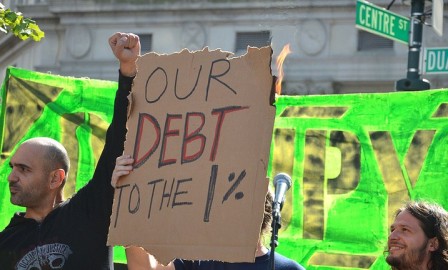

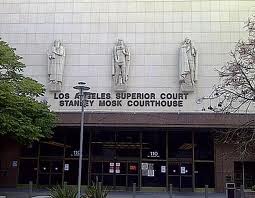

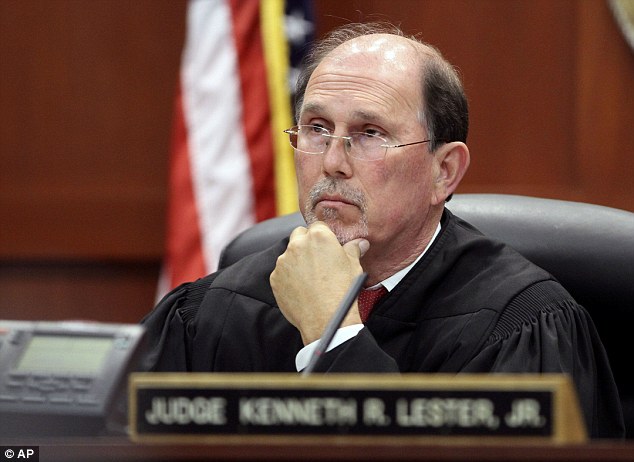





 The Hedge